Author: admin

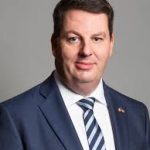
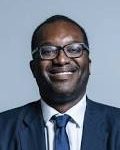
  • Kwasi Kwarteng – 2022 Statement on Sizewell C

    Kwasi Kwarteng – 2022 Statement on Sizewell C

    The statement made by Kwasi Kwarteng, the Secretary of State for Business, Energy and Industrial Strategy, in the House of Commons on 27 January 2022.

    The UK was the first major economy to legislate for a target of net zero greenhouse gas emissions by 2050. As set out in the net zero strategy and the Prime Minister’s 10-point plan for a green industrial revolution, nuclear will continue to be an important and reliable source of clean electricity as we strive to decarbonise the UK economy. By 2050, we expect that the electricity system will be built on a foundation of renewables such as wind and solar, but these will need to be bolstered by reliable low-carbon power. The UK Government recognise that large-scale nuclear is the only proven technology available to provide continuous, low-carbon electricity at scale. Ministers are therefore firmly committed to deploying new nuclear in order to strengthen Britain’s energy security and reduce our exposure to volatile global gas prices, provided there is clear value for money for consumers and taxpayers.

    In 2016 we took the decision to enter into a contract for difference over Hinkley Point C in Somerset, which is currently under construction and expected to begin generating power by 2026, when it will start providing 3.2 GW of electricity. However, with five of the UK’s six nuclear stations scheduled to close by 2028, the Government have made a commitment to bring a further large-scale nuclear project to a final investment decision during this Parliament, subject to value for money and all relevant approvals. To facilitate this, we have introduced legislation for a new financing mechanism, the regulated asset base (RAB) model, through the Nuclear Energy (Financing) Bill. It is estimated that RAB could lower the cost of each new large-scale nuclear power project by more than £30 billion, compared to the existing contracts for difference model. The RAB model is also expected to reduce Britain’s reliance on overseas developers for finance by substantially widening the pool of private investors to include British pension funds, insurers and other institutional investors from like-minded countries.

    After Hinkley Point C, the Sizewell C project in Suffolk is the most advanced nuclear project in the UK. As a replica of Hinkley Point, Sizewell offers a high level of design maturity and an identified supply chain. The company developing the project has applied for both a development consent order and nuclear site licence and believes it can begin construction during this Parliament. If built, the new plant could deliver around 7% of the UK’s current electricity needs (enough to power the equivalent of around 6 million homes) and create tens of thousands of jobs across the country. New nuclear is not only at the heart of our plans to ensure greater energy independence, but to drive economic growth.

    The Government entered into Sizewell C project discussions in January 2021. Following significant investment from EDF, the project requires additional financial support to further mature it to a point where other private investors (and, subject to value for money considerations and relevant approvals, the Government) could consider a direct investment in the project development company. Sufficient early development funding prior to the construction of major projects is a key determinant of subsequent project performance, and to this end the Prime Minister’s 10-point plan committed in 2020 to provide nuclear development funding for this purpose.

    I am pleased to announce that I will today enter into an option agreement with EDF Energy Holdings Ltd, which provides Government with an option over the land at Sizewell C and conditionally over the shares in the development company in exchange for an option fee of £100 million. EDF Energy Holdings Ltd will invest that £100 million in further developing the Sizewell C electricity infrastructure project. Should the project reach a successful final investment decision, subject to value for money and all relevant approvals, the Government would recover this funding together with a financing return, either through an equity stake in the project, or in cash.

    This agreement represents an important milestone for both the Government’s nuclear strategy and the project, which has the potential to significantly contribute to the UK’s decarbonisation and security of supply objectives. However, I am clear that this agreement does not represent a Government decision that the Sizewell C project will progress. Neither is it an indication that similar commercial arrangements would necessarily be desirable for other prospective nuclear projects. Decisions on the Sizewell C Project will be dependent on decisions in respect of planning and designation under the Nuclear Energy (Financing) Bill if passed into law.

    Noting that the future of the Sizewell C project is not confirmed, the agreement the Government have reached with EDF provides the taxpayer with downside protection should the project not proceed. In return for the £100 million, the Government will be granted an option on the Sizewell site and conditionally over the shares in certain circumstances of the development company. In the event the negotiations with EDF do not successfully result in a positive investment decision satisfactory to all parties, then subject to certain conditions, taxpayers would be entitled to seek acquisition of either EDF’s shares in the Sizewell C development company or the site itself, or if neither can be delivered by EDF, the taxpayer would be entitled to a reimbursement of the £100 million with a financing return. This in turn would provide Government with the possibility of proceeding with alternative nuclear or low-carbon infrastructure, and therefore support the realisation of our net zero objectives.

    Today’s announcement further demonstrates our commitment to energy security, investing in our thriving nuclear sector and creating thousands of jobs.
  • Priti Patel – 2022 Comments on Windrush Compensation

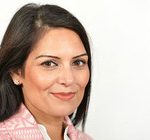
    Priti Patel – 2022 Comments on Windrush Compensation

    The comments made by Priti Patel, the Home Secretary, on 27 January 2022.

    Since I overhauled the Windrush Compensation Scheme, the Home Office has been able to secure compensation for more people more quickly. £41 million has now been offered to Windrush victims, with more claims being finalised as quickly as possible.

  • Chloe Smith – 2022 Comments on the British Sign Language Bill

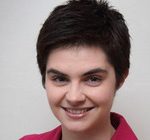
    Chloe Smith – 2022 Comments on the British Sign Language Bill

    The comments made by Chloe Smith, the Minister for Disabled People, Health and Work, on 28 January 2022.

    Effective communication is vital to creating a more inclusive and accessible society, and legally recognising British Sign Language in Great Britain is a significant step towards ensuring that deaf people are not excluded from reaching their potential.

    Passing the Bill will see government commit to improving the lives of deaf people, and will encourage organisations across the nation to take up the BSL mantle, benefitting both themselves and the deaf community.

  • Alex Sobel – 2022 Speech on Holocaust Memorial Day

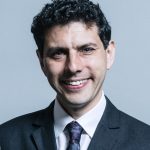
    Alex Sobel – 2022 Speech on Holocaust Memorial Day

    The speech made by Alex Sobel, the Labour MP for Leeds North West, in the House of Commons on 26 January 2022.

    First, I wish to thank my right hon. Friend the Member for Barking (Dame Margaret Hodge), the right hon. Member for Newark (Robert Jenrick), and my hon. Friend the Member for Warrington North (Charlotte Nichols) for having secured this debate. It is a privilege to follow the right hon. and gallant Member for Beckenham (Bob Stewart), whose speech, giving first-hand witness testimony to genocide, is so important in this place. It is always a privilege and an honour to listen to him speak on Holocaust Memorial Day and on other occasions when he recounts his service, not just to our country but to the Bosnian Muslim community. This debate is always a difficult debate for me personally, as a descendant of victims of the holocaust, so I apologise if at any point, I get a little emotional and have to pause for a second or two. I am sure that everybody in the Chamber understands.

    As others have done, I thank the Holocaust Educational Trust, the Holocaust Memorial Day Trust, Yad Vashem, the POLIN Museum—which is actually in the Warsaw ghetto—the Holocaust Exhibition and Learning Centre near me in Huddersfield, and those organisations that fight antisemitism today such as the Antisemitism Policy Trust, HOPE not hate, the Community Security Trust, and others. There are many organisations that both keep the holocaust alive today and fight antisemitism, and we should be grateful to them all.

    This year’s theme, as we know, is “One Day”, and for me, that means that we have hope that there may be one day in the future with no genocide. It is also about one day in the lives of victims of genocide, when they themselves are facing that genocide every day, and know that that day might be the last day they live. They wake with that thought beguiling their senses, and if they are fortunate enough to survive that trauma, the trauma lives with them and becomes intergenerational trauma. I am not sure how many generations that trauma persists for, as two generations separated, I still feel that trauma, especially on days like this. I hope my children do not feel it, and are not driven by some of the same fears that generations of Jewish and other people have felt.

    One of my drivers here in Parliament is that genocide must end and that we must strive for human rights for all, so I speak out for the Rohingya and the Uyghurs, and act as the chair of International Parliamentarians for West Papua. A genocide against one people is a genocide against all people, and we must stand together against genocide wherever and whenever it occurs, without any thought of our own interests. Benny Wenda, from the Free West Papua Campaign, gave me this message for Holocaust Memorial Day. He is exactly the same age as me, so in context, this is 30-odd years ago that he is talking about:

    “When I was a child, my village was bombed by the military and many of my family members were killed. I have witnessed my own aunties being raped and dying of their injuries and my mother being brutally beaten in front of my eyes.

    Although we carry this burden, we also carry great hope. Our hope is for the next generation to be free from persecution, free from violence, and free from oppression. One day. We carry the hope of peace, and we look to the lessons of our shared history to guide the way.”

    I hope that more Members present might join the all-party parliamentary group on West Papua, and find out more about the genocide that is carrying on there to this day.

    I want to finish by telling the story of one part of my own family. My paternal great-grandfather was David Laks. He was murdered by the Nazis in the Belzec death camp in 1942. Teresa, my maternal great-grandmother, died of natural causes in 1938 before the start of the war. David and Teresa had five children. Salka and Fanka were the eldest daughters. They lived in central Poland and were murdered, along with their families, in unknown circumstances—I really did not think I would get this emotional; I am sorry—by the Nazis.

    Jim Shannon (Strangford) (DUP)

    We all greatly appreciate the good work that the hon. Gentleman does in this House, but we are also very aware of the good work that he does in Papua New Guinea; I think he has been an inspiration to us all. I hope that that gives him the chance that he needs to continue.

    Alex Sobel

    I am grateful to the hon. Member for giving me that chance to pause and collect myself. It is very useful in debates such as this to have colleagues who will do that.

    The middle child was called Zygmunt; I will come back to him later. The fourth child was my grandmother Regina, who survived the war and lived into old age. The youngest sibling was my great-aunt Marisia, whom I have spoken about in a previous Holocaust Memorial Day debate.

    I am going to describe one day in the life of Zygmunt Laks and his family—his wife Guta and their son Karol, who was born in 1939. Zygmunt Laks lived in the Łódź ghetto and worked in a garage after the Nazis took away the family restaurant. The situation in the ghetto worsened; Zygmunt stopped work and just sat in the ghetto apartment with a large axe, waiting for the Nazis to come and take them away. There was an easing in the situation in the ghetto, so he decided to go back to work, but the next day he returned from work and his wife and son were gone. On that day, an SS officer shot Karol, who was just two years old, in the head in front of his mother.

    Karol was my uncle—a child who never got to see adulthood, an uncle I never met. I often think about how small my family is: I am an only child of only children, with very few relatives. A lot of our family are just ghosts—just ghosts of the past who were taken away from us by the holocaust.

    Guta was never seen or heard of again, but it is assumed that she, too, was taken to Belzec death camp and never returned. Belzec is one of the lesser-known death camps, but it is estimated that as many as 800,000 may have perished there in the very short period—just two years—in which it was in operation. Zygmunt eventually escaped the ghetto to Ukraine, but was killed by a bomb as the war was ending and never returned home.

    That this part of my family history survives is due to my aunt, Aviva Hay, who compiled her father’s memoir into a book, “We Are What We Remember”, a holocaust memoir of our family. My father, who I know is watching at home, contributed to this account and very much keeps alive the deep and scarring memories of our family’s experience in the Shoah.

    The most tragic thing for me is that the fate of the Laks family is not unique or rare; it is the common story of European Jewry. Today is so important, because we have one day each year that we can share and remember—one day to say that we will not forget—but we have every other day to do all we can to strive for a better world and no more genocide.

  • Bob Stewart – 2022 Speech on Holocaust Memorial Day

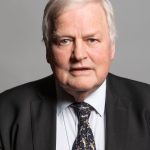
    Bob Stewart – 2022 Speech on Holocaust Memorial Day

    The speech made by Bob Stewart, the Conservative MP for Beckenham, in the House of Commons on 26 January 2022.

    Instances of genocide continue, and, very sadly, I have been witness to them—in particular, in Bosnia during 1992-93, when I commanded the battle group of the 1st Battalion, The Cheshire Regiment. Let me give the House an example.

    On 22 April 1993, I learnt that women and children had been massacred in a village in the Lašva valley. I did not believe it, so I went there, taking about 30 men and about six vehicles. As I approached the village of Ahmići from the south, I was struck by what a beautiful place it was, or had been. The first building I saw was the mosque, which was new, but wrecked. The minaret had been broken by explosions, and it was pointing at the sky like a pencil. Most of the other buildings in the village—it was a linear village, about a mile in length—had been destroyed by fire. Some had not been destroyed; we later discovered that they belonged to Bosnian Croats, not Bosnian Muslims.

    Each building had been destroyed by fire, explosions or shooting. The windows had black marks around them, and the roofs had collapsed. Only later, because we did not see it immediately, we discovered that bodies were underneath the roofs. Outside the houses, the gardens looked kind of normal, except for the detritus of war: downed cables, bricks, burnt-out cars, and dead pets. Everywhere was the disgusting smell which comes from the chemical reactions that accompany death. It was cloying and it was foul.

    I went all the way to the far end of the village, the north end. I deployed my men, and we started looking. We did not see bodies initially—until we came to house number seven. The murderers had failed to disguise what had happened there. At an entrance to the house, there was a man and a boy. They were dead. They looked like they had been burnt. They did not seem to have clothing on them. The little boy, or the teenage boy, had his arm upwards in front of his face, and his fist was balled, and the bones had been burnt through.

    My soldiers said, “Look behind the house, Sir.” I went into a cellar. The cellar had agricultural tools and strings of onions or vegetables on the walls. In the middle, there was this mass—this greyish, blackish mass. I did not really understand what I was looking at—then I did! The first thing that hit me was the disgusting smell, and then I realised I was looking at bodies—at least two adults, several children. One of the women, and they were women, presumably being protected by the men who were killed at the door, had her back so arched back. Her back was bent—she was lying, and her head was back. God! She was burnt. Everything was burnt, except for her eyes. Her eyes were not burnt. I fell back in horror at what I had found. I rushed outside and was violently sick.

    Later, one of my soldiers, and he was a bandsman, because we used the band as stretcher bearers and I asked the band to help clean up, was shovelling the remains—shovelling the remains—of a human being into a bag on a stretcher, and he turned to me and said, “Sir, this is Europe in 1993, not Europe in 1943.” I did not know what to say.

    On the memorial in that village, which I am going to visit shortly—at Easter—there are 116 names of everyone killed, as far as can be ascertained. My men and I dug a mass grave and put, as far as we could tell, over 104 bodies into that mass grave. They were Bosnian Muslims; there was not a Bosnian Croat among them.

    We did not just discover them, but found families lined up—shot down. One little girl was holding a puppy. The puppy was dead, and so was she, killed presumably by the same bullet. We took that family to the local morgue. Next day, we went back and discovered that the bodies had been put back at the house because it was the wrong morgue. We had taken them to a Croat morgue, not a Muslim morgue.

    Within a month, I was in Srebrenica and watched more genocide occurring, this time with Bosnian Serb artillery firing at human beings. There were about 20 people killed around us as we went. Some of my soldiers were slightly wounded, no one killed.

    You see, I consider Holocaust Memorial Day to be so incredibly important not just because of the people who were killed in the second world war in the 1930s and the 1940s. It was not just the second world war: the Germans, or the Nazis—forgive me, I am not talking about the Germans; I am talking about the Nazis—managed to start doing it before the second world war. Then we have had instances since, with Darfur, Bosnia that I have witnessed, Rwanda and Cambodia.

    My mother visited Belsen in 1945. She was in the Special Operations Executive. I did not know that until a few years before she died. I did not know she was a spy. Women are always much better at keeping secrets than men. I said to her, “Why, mum, have you never told me that you went to Belsen in 1945 looking for SOE officers?” She said, “Robert, I was ashamed.” I said, “Why were you ashamed? You did things like learn to parachute when you were 22 and put yourself in danger. You did everything you could.” Colleagues, she said, “I was ashamed because it happened in my generation.”

    The purpose of Holocaust Memorial Day, and the memorial of all those people who died in the second world war and all those who have died in genocides since, is for us to feel collective responsibility for stopping it from happening again. That is why this day, and this memory of all those innocents who have died, is so incredibly important.

  • Diana Johnson – 2022 Speech on Holocaust Memorial Day

    Diana Johnson – 2022 Speech on Holocaust Memorial Day

    The speech made by Diana Johnson, the Labour MP for Kingston upon Hull North, in the House of Commons on 26 January 2022.

    I start by paying tribute to all those who have secured this debate and those who have already spoken so movingly, thoughtfully and powerfully. I say to the right hon. Member for Newark (Robert Jenrick), who opened the debate, how moved I was by what he disclosed about the comments made to him and his family. I agree with my hon. Friend the Member for West Ham (Ms Brown) that the solidarity of the House is with the right hon. Gentleman and his family. I also pay tribute to my right hon. Friend the Member for Barking (Dame Margaret Hodge) for all her work in this area, over so many years.

    Today marks the 77th anniversary of the liberation of Auschwitz-Birkenau. Today, we remember those 6 million Jewish men, women and children murdered during the holocaust, alongside millions of other people killed under Nazi persecution and in all subsequent genocides. This Holocaust Memorial Day is as important as ever in marking the memory of those terrible events.

    I was reflecting that I visited Auschwitz some years ago with the Holocaust Educational Trust. One of my most striking memories is of the huge piles of luggage, dolls and toys, shoes and other ordinary, mundane items, which were probably those that meant the most to the people who were murdered in that camp. I will always remember that about Auschwitz—the ordinary and mundane alongside the most evil.

    The holocaust is fading from lived memory, with the gradual passing of those who suffered and survived and of those in the greatest generation, who fought the Nazis and liberated the camps and Europe. It is up to all of us to ensure that this history and its lessons are never forgotten. I, like many others, pay tribute to the Holocaust Educational Trust for the brilliant work that it does, and to the Holocaust Memorial Day Trust, as well.

    After the events of recent years with covid, I look forward to once again meeting Hull’s remaining Jewish ex-servicemen and the community in Hull who gather every Remembrance Sunday to mark these events, and the immense contribution of the Jewish community to our country and to our very survival. As a member of the Commonwealth War Graves Commission, I am proud of the work that we do in maintaining the graves of so many Jewish ex-servicemen and women who fell while defending our country.

    As we know, we need to be vigilant as there are those who still seek to deny the facts about the holocaust, a form of fake news spread for decades by antisemites, challenging whether the holocaust actually happened or the magnitude of it, and more recently questioning the internationally agreed definition of antisemitism. Remembering what happened in the holocaust is even more important, as we have seen a rise in antisemitism abroad and here in the United Kingdom. The first half of 2021 saw the highest number of antisemitic incidents in a six-month period recorded by the Community Security Trust. It is important that we note the work that trust does, day in, day out, providing security and keeping the people of the Jewish faith safe.

    We must ask ourselves, why is that trust still required and why have we failed to combat the pernicious hatred of Jews that lingers, particularly online? Online disinformation often parrots long-standing antisemitic tropes that demonise Jewish people as happened in Germany in the 1930s; now they are spread by digital technology. The right hon. Member for Newark set out some shocking statistics about what can be found on social media platforms. This House must do something about that. Other hon. Members have talked about antisemitic messages around the covid anti-vaxxers, which are sadly too prevalent on social media.

    We must be aware of the different forms that antisemitism takes in the United Kingdom. It is no longer just the far right and skinheads trying to sell National Front publications in Brick Lane. Shamefully, in recent years my party allowed the stain of antisemitism to find a home in the party. Under the leadership of the current leader of the Labour party, we are working very hard indeed to combat that.

    The horror of the holocaust has reshaped our understanding of international law, human rights and collective security after 1945. We have a responsibility to people throughout the world to protect them from persecution, but I regret to say that we have too often failed. I chair the all-party parliamentary group on human rights, and we are only too well aware of the growing breaches of human rights around the world. We know that too many genocides have been carried out since the holocaust—in Cambodia, Rwanda, Bosnia and Darfur, to name but a few—and we should also be shamed by the current genocide being carried out against the Uyghurs in China, the plight of Christians in some countries, what happened to the Yazidi women, and what is happening now to the women in Afghanistan. Of course, there is also the stain of Islamophobia, which is still around in our communities and institutions and which needs far more attention. It is the “othering” of groups that we need to be vigilant about and take action to tackle, and we need to recognise where that “othering” can lead.

    The theme of this year’s Holocaust Memorial Day is “One Day”, but we must continue the work to eradicate antisemitism and hatred, in this country and throughout the world. Antisemites, of whatever variety, are invariably the enemies of peace, freedom, democracy and the rule of law. Only by defeating them, and all those who peddle hatred and prejudice, can we live in confidence that we will never see another holocaust.

  • Nicola Richards – 2022 Speech on Holocaust Memorial Day

    Nicola Richards – 2022 Speech on Holocaust Memorial Day

    The speech made by Nicola Richards, the Conservative MP for West Bromwich East, in the House of Commons on 26 January 2022.

    I quote:

    “I have a request of you: this is the real reason why I write, that my doomed life may attain some meaning, that my hellish days and hopeless tomorrows may find a purpose in the future.”

    These chilling words are those of Zalman Gradowski, a Polish Jew deported to Auschwitz-Birkenau and forced to be a cog in a factory of death. Zalman was forced to be a member of the sonderkommando, a group of Jewish prisoners forced to perform a variety of duties in the gas chambers and crematoriums. In October 1944, Zalman led this group in revolt and managed to destroy one of the crematoriums. He was murdered during this revolt. Knowing he would soon be killed, Zalman wrote his first-person account of what he described as the “inferno of death” that he was living in and hid these words in the ashpit of crematorium 3, hoping that one day a citizen of the free world will find them and tell the story of him and his family. Zalman asks in his writings:

    “Can the dead mourn the dead? But you, unknown ‘free’ citizen of the world, I beg you to shed a tear for”

    my family

    “when you have their pictures before your eyes. I dedicate all my writings to them—this is my tear, my lament for my family and people.”

    I wish to now grant Zalman’s wish and list the names of his murdered family members for all to hear, know and remember in this place: his mother, Sarah; his sister, Libe; his sister, Esther Rokhl; his wife, Sonia; his father-in-law, Raphael; and his brother-in-law, Wolf. They were all killed on 8 December 1942, gassed and incinerated. They have no grave. Zalman also mentions his father, Shmuel, his two brothers, Eber and Moyshl, and his sister Feygeleh, who were all taken and never seen again. This was his entire family, and they will never be forgotten.

    An estimated 1.3 million Jewish people were deported to Auschwitz-Birkenau, and 1.1 million were murdered. When allied troops liberated the concentration and death camp 77 years ago today, just 9,000 prisoners were found alive. All in all, an estimated 6 million Jewish men, women and children were murdered in the holocaust.

    The holocaust was not the birth of antisemitism, and sadly neither was it the end. It is the world’s oldest form of hatred and has taken on many forms over the centuries. However, the same themes always seem to prevail: Jews are made scapegoats, forced to answer for the actions of others, and they are depicted as both weak and all powerful.

    Just two weeks ago, a British man walked into a synagogue in Texas and took the rabbi and three congregants as hostages. Why? Because he believed that the Jews of that small congregation had the power to grant his demands. I saw the effect that the incident had on my Jewish friends: they stayed glued to their phones and TVs all night praying for a peaceful outcome; they went to sleep not knowing whether they would wake up to yet another massacre of fellow Jews in their sacred house of worship.

    It is a sad state of affairs when synagogues all over the world are still forced to be guarded by soldiers, police or security and when Jewish schoolkids in this country must still take part in regular terrorist drills and be prepared for the worst in case it happens. I pay tribute to the incredible work of the Community Security Trust and its volunteers, who work tirelessly to keep the UK Jewish community safe.

    The Secretary of State for Education rightly calls antisemitism a virus that continues to mutate. As we know, the best way to deal with a mutating virus is to vaccinate. Education will always be the vaccine against all forms of hatred. For that reason, I commend the work of the amazing charities, organisations and their staff who dedicate their time to ensuring that the next generation are taught about the evils of antisemitism and where that hatred can lead.

    The Holocaust Educational Trust is an amazing charity and one I was proud to work for myself. I am glad that two of my staff members, Alex Moore and Bradley Langer, are ambassadors for the trust; Bradley also works for them. Holocaust Memorial Day might just be one day a year, but the staff of the trust work hard all year round, travelling to schools across the country and teaching about the horrors of the holocaust. They have now taken over 41,000 young people to visit Auschwitz-Birkenau through their Lessons from Auschwitz project, giving them the opportunity to see that historical site for themselves. They campaign tirelessly against those who try to deny or distort the holocaust and they help survivors share their testimony with anyone who will listen.

    I also commend the innovative work of George Salter Academy, in my own constituency, as part of the University College London Beacon School programme—a flagship initiative led by the UCL Centre for Holocaust Education. They are truly leading the way in holocaust education in West Bromwich East.

    I also pay tribute to Freddie Knoller BEM, who very sadly passed away yesterday aged 100. Freddie was an Auschwitz survivor and a resistance fighter, and his work and fight against antisemitism will never be forgotten.

    Sadly, one day in the near future, the holocaust will move from being living history to just history. All of us who have had the honour of hearing a survivor share their testimony are now their witness. It is up to us to carry on their legacy, to say to our children, “I met a Holocaust survivor; I listened to their testimony. It happened to them and their family, and it must never be allowed to happen again.”

    I would like to end this speech on a positive note by also celebrating the incredible Lily Ebert BEM. At age 20, when she was deported to Auschwitz, she made herself the promise that if she survived she would tell everyone the truth of what happened to her and her family. She has made millions of people around the world her witness and continues to jump at every opportunity to share her story. I wish Lily a huge “Mazal tov” on the arrival of her 35th great-grandchild, and I echo her remark that the Nazis did not win.

  • Charlotte Nichols – 2022 Speech on Holocaust Memorial Day

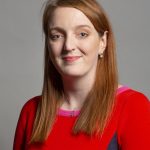
    Charlotte Nichols – 2022 Speech on Holocaust Memorial Day

    The speech made by Charlotte Nichols, the Labour MP for Warrington North, in the House of Commons on 27 January 2022.

    I rise to speak today to commemorate Holocaust Memorial Day, which, on the anniversary of the liberation of Auschwitz-Birkenau, commemorates the 6 million Jews murdered during the holocaust, alongside the millions killed under Nazi persecution of other groups, including Roma and Sinti people, Slavic people, LGBT and disabled people and political and religious minorities. On this day, we also remember the subsequent genocides in Rwanda, Cambodia, Dafur and Bosnia.

    As the holocaust fades from living memory, I want to put on record my gratitude to all of the survivors whose testimonies are at the heart of holocaust education, but which come at huge personal cost. It is impossible to comprehend the abjectness of the horrors that they experienced, the trauma that follows them through their lives, or the sacrifice that bearing witness entails. Marceline Loridan-Ivens said:

    “If you only knew, all of you, how the camp remains permanently within us. It remains in all our minds, and will until we die”

    Similarly, Shlomo Venezia, said:

    “Everything takes me back to the camp. Whatever I do, whatever I see, my mind keeps harking back to the same place. It’s as if the “work” I was forced to do there had never really left my head…Nobody ever really gets out of the Crematorium”.

    Those who survived the camps were greeted with

    “incredulity, indifference, and even hostility”

    upon their return to their communities. Although the allies won the war against Nazism in Europe, antisemitism has never been defeated, and fascism grew rapidly in the UK in the post-war years, contrary to the narrative of triumph over Hitler.

    Jewish soldiers such as Morris Beckman and Jules Kanopinski returned to London to find fascists staging outdoor rallies in the east end,

    “shouting out the same antagonism and the same filth as before the war, and now even worse—they were saying the gas chambers weren’t enough”.

    The anti-fascist 43 Group that they and their comrades established, and the later 62 Group, would be breaking up, on average, 15 fascist meetings a week and engaging in regular physical confrontation with fascists, including in the battle for Ridley Road, which was memorialised this year in a BBC drama. The irony is not lost on me that, in the very week that Ridley Road was released, my synagogue in Manchester, where much of it was filmed, had our Friday night service gate-crashed by the far right. It may be a historical drama, but the hatred in it is very much contemporary.

    I have sat in synagogue while fellow Jews have been slaughtered elsewhere in the world for practising their faith, as I am, and so to proclaim our faith proudly, to stand as proud Jews, is itself an act of defiance. As the partisan vow declares, “Mir veln zey iberlebn”, which means, we will outlive them. From generation to generation, the Jewish spirit endures.

    In Kveller, Rachel Stomel writes:

    “In the context of Jewish law, remembrance is not a reflexive, passive process directed inwards. Our sages teach us that the way we fulfil the Torah’s commandment to remember the Sabbath—’Zachor et Yom HaShabbat le’kodsho’ (remember the sabbath day to keep it holy)—is by active declaration in the performance of the kiddush, the Shabbat blessing over wine. We are commanded to remember the Amelikites brutal massacre of our people—’Zachor et Asher asah lecha Amalek’ (remember what the Amalek did to you)—through intentional, public, verbal affirmation, and by ridding the world of the evil that they represent. Neither of these Torah commandments can be fulfilled by quiet contemplation, memorialisation must manifest through specific action.”

    The theme for this year’s Holocaust Memorial Day is “One Day,” both as a call to action for that one day when we have eradicated the hatred that leads to genocide and because one day, as a snapshot of what happened, can be helpful in seeking to understand and process the enormity of the holocaust. The brutality and the hopelessness of the concentration camps and the lengths to which the Nazis went to extinguish any faint glimmers of hope are summed up in this quote from the survivor Shlomo Venezia, who was forced to work in the Sonderkommando at Auschwitz, emptying the gas chambers of bodies, including those of family members, processing their hair and teeth, and loading them into the ovens for cremation. He said:

    “One day, while I was presenting my testimony at a school, a young girl asked me if anyone had ever emerged from the gas chamber alive. Her schoolmates laughed at her, as if she hadn’t understood a thing. How could anyone survive in those conditions, when the deadly gas used had been carefully developed to kill everyone? It’s impossible. In spite of everything, however absurd her question may seem, it was quite relevant, since it did indeed happen.

    Few people ever saw and can relate this episode, and yet it is true. One day when everyone had started working normally after the arrival of a transport, one of the men involved in removing the bodies from the gas chamber heard a strange noise. It wasn’t so unusual to hear strange noises, since sometimes the victims’ bodies continued to emit gas. But this time he claimed the noise was different. We stopped and pricked up our ears, but nobody could hear anything. We told ourselves that he’d surely been hearing voices. A few minutes later, he again stopped and told us that this time he was certain he’d heard a death rattle. And when we listened closely, we, too, could hear the same noise. It was a sort of wailing. To begin with, the sounds were spaced out, then they came more frequently until they became a continuous crying that we all identified as the crying of a newborn baby. The man who had heard it first went to see where exactly the noise was coming from. Stepping over the bodies, he found the source of those little wailings. It was a baby girl, barely two months old, still clinging to her mother’s breast and vainly trying to suckle. She was crying because she could feel that the milk had stopped flowing. He took the baby and brought it out of the gas chamber. We knew it would be impossible to keep her with us. Impossible to hide her or get her accepted by the Germans. And indeed, as soon as the guard saw the baby, he didn’t seem at all displeased at having a little baby to kill. He fired a shot and that little girl who had miraculously survived the gas was dead. Nobody could survive. Everybody had to die, including us: it was just a matter of time.”

    Elie Wiesel speaks of watching Jewish babies thrown alive into the vast ditches where bodies were burned, confirmed by Telford Taylor at the Nuremberg trials. Lily Ebert testifies of witnessing babies torn from their mothers’ arms and dashed against walls. I have seen the piles of teeth, hair and shoes that represent a tiny fraction of those who passed through Auschwitz-Birkenau, and how small those chambers were, with up to 1,200 people piled into a tiny space so that no poison gas would be wasted. This was not, as we might imagine, a quick process, with it taking up to 12 minutes to be poisoned to death, crushed in among hundreds of panicking people, desperately trying to cling to life, trying to break or claw their way out. Seven hundred Jews were murdered in the gas chambers on the very day before they were set to be liberated and many more died by disease or by suicide in the months following liberation. There are some things that a human just cannot endure.

    These survivors witnessed day in, day out what no human being should ever be condemned to see: the very depths of man’s cruelty and inhumanity towards his fellow man laid bare. The Hasidic mystic, the Baal Shem Tov, said:

    “If a man has beheld evil, he may know that it was shown to him in order that he learn his own guilt and repent; for what is shown to him is also within him.”

    If man can sink to these depths once, to industrialise the brutalisation and murder of their fellow humans, they can and will do so again.

    Indeed, “never again” rings hollow with the genocides that have taken place since the holocaust, and our failure as a nation to learn the lessons of the past as this Government turn away refugees from other parts of the world knowing full well the fate of the refugees from the holocaust denied safe passage to Britain and the US, and returned to their deaths.

    We allow a minority in public life to degrade and debase the memory of the holocaust—to make inappropriate comparisons with modern day events as though there can be any parallel drawn, rhetorical or otherwise, between, for example, those who choose not to be vaccinated, or a particularly poor performance in the football, and the experience of the victims of Nazi persecution. We still see the cancer of antisemitism in our communities, with the threat of hate crime in person and online a daily reality that we should not have to live alongside.

    Today we honour the victims, the survivors, the heroes and the martyrs of the holocaust. We cannot change the past, but by bearing witness we can change the course of the future. Ira Goldfarb said of his father, the survivor Aron Goldfarb, that

    “throughout my father’s life, survival adopted a new meaning. Survival to my father was carrying the nightmares of his childhood and choosing to find joy, humor, and compassion in life every single day. Survival was seeing the worst of humanity and still offering his last piece of bread to someone who needed it more, still building lifelong friendships, and being a devoted husband and father.”

    It is hard not to be moved by photos of a beaming Lily Ebert celebrating her 98th birthday in lockdown with thousands of cards sent by well-wishers, or welcoming the birth of her 35th great-grandchild. I can think of few people more deserving of happiness. May we draw strength from their strength, and courage from their courage, as we build a more decent, respectful and inclusive society where all of us can live in peace, harmony and security.

  • Andrew Percy – 2022 Speech on Holocaust Memorial Day

    Andrew Percy – 2022 Speech on Holocaust Memorial Day

    The speech made by Andrew Percy, the Conservative MP for Brigg and Goole, in the House of Commons on 27 January 2022.

    It is an honour to follow the hon. Member for West Ham (Ms Brown) after her excellent speech and my right hon. Friend the Member for Newark (Robert Jenrick), whom I congratulate on securing this debate. I join everybody in the Chamber in thanking the Holocaust Memorial Day Trust, the Holocaust Educational Trust and everybody else who works in this area. I particularly pay tribute to the Antisemitism Policy Trust and its chief executive, Danny Stone, who does so much in supporting and providing the secretariat for the all-party group against antisemitism, which I and the hon. Member for Newcastle upon Tyne North (Catherine McKinnell) co-chair.

    I will attend the Holocaust Memorial Day ceremony in Brigg in north Lincolnshire this Sunday, which will take place at our new memorial there. It is a town I have spoken about before that has little to zero Jewish population but which, through its town council and particularly Councillor Rob Waltham, decided that it wanted to do its bit and to do more to ensure that the memory of the holocaust is never forgotten. That is why, just a few years ago, following a competition in which local schools took part, a local pupil designed a fantastic new memorial in Brigg, and the town will come together on Sunday to ensure that we never forget.

    I thank Demeter House School in Brigg, a special educational needs school that has been working with the University College London Centre for Holocaust Education to build its confidence in teaching its children about the holocaust. It is one of 165 schools across England taking part in that initiative, and I pay tribute to it for that.

    Why is this debate so important? Sadly, the scourge of antisemitism continues to plague our society and others around the world. As my right hon. Friend the Member for Newark said, we have seen that in the past year with the case of Professor Miller at the University of Bristol, which failed to protect its students swiftly. This was a racist, antisemitic professor targeting Jewish students, accusing them of effectively being in the pay of the state of Israel—a classic antisemitic trope. In calling that out, as we did not so long so ago in an Adjournment debate, members of the all-party parliamentary group were singled out and attacked as being Zionist agents, agents of the state of Israel or in the pay of Israel.

    Why is this debate necessary? As other Members have said, people visiting any social media platform over the past couple of years will have found antisemitic posts linking covid and the development of vaccines to Israel, to Jews, to the classic international conspiracy. We have seen, as has been referenced, the sickening sight of people on anti-lockdown protests wearing yellow stars.

    Christian Wakeford (Bury South) (Lab)

    Will the hon. Gentleman give way?

    Andrew Percy

    Of course I give way to the vice-chair of the APPG.

    Christian Wakeford

    Just last week we saw swastikas on the streets of Bury in protest against covid passes. It is depressing that we even need to say this in this House, but there is no place for antisemitism, these tropes or this hatred on our streets, campuses and society, and it needs a debate such as this to call it out and say, “No more.” [Hon. Members: “Hear, hear.”]

    Andrew Percy

    Absolutely—I could not agree more. Too many people throughout this coronavirus period have casually linked the necessary measures to Nazi Germany. My constituents are largely very sensible people—they have sent me here four times, which proves how sensible they are; and they have done so, I might add, in ever increasing numbers and with a higher percentage of the vote, but I digress—but I am afraid to say that even a small number of my constituents have sent me some of this material. One of them even sent me a photograph of the Nazi health pass, likening it to the vaccine mandate, even though the Nazis and Hitler himself were against vaccine mandates.

    That is absolutely why this debate is necessary. We have this debate every year, and each time we can all trot out a whole range of different experiences and examples from the preceding year, as Members have done today—I will not repeat them—which prove the sad necessity for this debate and for the ongoing work we have to do on antisemitism.

    Bob Blackman (Harrow East) (Con)

    Will my hon. Friend give way?

    Andrew Percy

    I will, but I am conscience of your guidance, Madam Deputy Speaker.

    Bob Blackman

    I will be very brief. My hon. Friend is taking an impassioned view of antisemitism. Is he aware that just yesterday Jewish shopkeepers in Stamford Hill were attacked? There is a video of the incident and a police investigation is taking place, but it is clear that antisemitism is rife in our society today.

    Andrew Percy

    I was not aware of that particular incident, but I am sorry to say that this is happening time and again. Anyone who visits social media or other online platforms, including sales sites such as Amazon, will be able to find books that minimise and question the holocaust. The APPG has raised this many times, in repeated meetings, with the social media platforms and through direct approaches to Amazon and others, but anyone who looks today will be able to find holocaust denial and revisionist material for sale on Amazon.

    In the few minutes I have left, I want to talk, in a more positive sense, about some of those heroes who did so much to help save people in the holocaust. This year I came across a book called “The Bravest Voices”, written by Ida Cook. She was one of two sisters, Ida and Louise Cook, who have been described as plain and dowdy English spinsters in the 1930s. They were huge fans of opera, and they took it upon themselves to rescue Jews and non-Jews from Nazi Germany. They did that by flying out on a Friday evening from Croydon airport, and returning overnight on Sunday via train and boat from the Netherlands, so as to be back at work at their desk jobs in the civil service in London on Monday morning. As I said, they fell into that through their love of opera, and they met people who were trying to get out of Germany. They would go through the border on the way into Germany dressed very plainly, and they would come out dressed in the furs—they often sewed new labels into those—jewels and valuables of the people they were rescuing, which would then be sold in the UK to raise the funds required at the time for the sponsorship of Jews who wanted to get out.

    They did that in a very matter of fact way, and the book written by Ida Cook is wonderful in its modesty. They do not talk about “rescuing”; they talk simply about “getting people out”, “pulling people out”, or “dragging people out”—it is well worth a read. They used their English spinster act. Neither of them ever married. The pen name of Ida Cook was Mary Burchell, who was a famous Mills and Boon author. They enlisted church groups, and others, to facilitate their work, and they assisted countless numbers of people, rescuing them from Nazi Germany. We learn some of the names, and others we know simply by their first name, including a lady referred to simply as “Alice”, who refused to sell a hat to von Ribbentrop’s wife, and who they managed to rescue successfully.

    The case that most struck me was that of a young Polish Jewish boy who they rescued at the very last minute in 1939. He was expelled from Germany in October 1938 for being a Polish Jew, and was one of those caught up at the Polish border because of the refusal to allow people into Poland at that time—that is not a criticism of Poland, as borders were closing to Jews all across the world at that time. The boy spent the winter in the Zbaszyn improvised prison camp on the Polish border. By some means, which the Cook sisters did not know when they wrote their biography in the 1950s and never learned, he contacted them, and they received a letter asking if they could raise a guarantee to get him out. The tribulations over the next few months as they tried to rescue him are an interesting and emotional read. They had trouble getting money to him and getting the necessary permits. He had a permit number that would have put him 500 above the permits that were allowed in at that time, but a friendly civil servant here in London did the necessary work. At last, two weeks before the outbreak of war, the Cook sisters were out in Germany meeting the next group of people who they wanted to rescue, when they got word that, by assisting one of the last children’s transports out of Poland, this young boy was able to get to a boat. As they described, he was literally:

    “The last man to board the last boat that left Gydnia”.

    just a couple of days before the outbreak of war.

    That is a very moving story, as is my last point, which is that the Cook sisters downplayed their own role in all this, and constantly throughout the biography play up the role of others. That includes the consul general at Frankfurt during Kristallnacht, who opened up the British consulate to Jews, day and night, and provided food, since Jews had been banned from purchasing food in the days running up to Kristallnacht. He even went out on the streets giving food to Jews. Ida Cook describes that at the end:

    “It was a piece of Britain”.

    I think that is something we should all reflect on today when we think about other refugee crises, including that we have seen in Afghanistan. It was a piece of Britain, Madam Deputy Speaker, and today when we face other crises we should ask ourselves this: what is the piece of Britain that we want to project around the world?

  • Lyn Brown – 2022 Speech on Holocaust Memorial Day

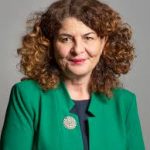
    Lyn Brown – 2022 Speech on Holocaust Memorial Day

    The speech made by Lyn Brown, the Labour MP for West Ham, in the House of Commons on 26 January 2022.

    I thank the right hon. Member for Newark (Robert Jenrick) for his powerful and moving opening speech. May I say how sorry we were to hear of his family’s recent experiences? He has solidarity on the Opposition Benches against those racists.

    Every day on my Twitter feed, I see the Auschwitz memorial’s images of people murdered. Those that grab me particularly are the faces of the babes in arms, toddlers, children and teens who were murdered in the gas chambers. Every single day, I wonder how those faces could be treated as the enemy, having their very humanity denied. Every single day, I wonder how it is possible that human beings could do this to such innocents. Every single day, I have genuinely no idea how it happened.

    Today, I want to tell the story of Rena Quint, who survived the holocaust at just nine years of age. Rena lived with her mother, father and two brothers. She remembers that across the street was a kiosk that sold ice cream; she remembers her brothers pulling her through the snow on a sledge. She was just three years old when Germany invaded Poland. Her home was in the new ghetto: it took in many sick and hungry strangers, and people died before her eyes.

    Then, one day, there was a round-up. All the women and children were brutally forced into the synagogue. Rena, her mum and her brothers were among them. She describes it as a scene out of hell, but she remembers a man at an outside door who beckoned to her, called her by name and told her to run. She still does not quite understand why she let go of her mum’s and her brothers’ hands, but she ran. Rena says that maybe the hand of God pushed her, because all those women and children were transported to Treblinka, and they were murdered.

    Rena was given a new name. She was dressed as a boy and joined her father’s forced labour group. She has no idea how she was able to pretend for so long, but pretending kept her alive. She had to work at a glass factory at just five or six years of age, carrying heavy loads in extreme heat all day long.

    In 1944, when it was decided that their slave labour was no longer needed in the factory, Rena and her father were packed into freezing cattle cars to Bergen-Belsen. They had no food, no water and no toilets, and they were locked in for three days with the dead and the dying. When they arrived, her father knew that they would be forced to strip for inspection, so they were forced to separate. Rena never saw her father again. She endured the utter horror of the camp for many months, with nothing to eat but sawdust bread and sometimes thin, greasy soup, with cold and disease all around. Rena never cried in response to any of the thousands of deaths that she would have witnessed. Murder was her every day.

    And then, one day, when Rena was sick with typhus, she remembers lying under a tree. She felt that it was impossible to get up and she just wanted to fall asleep forever, but then there was a commotion. British soldiers had arrived and they were liberating the camp. Rena remembers getting some milk and bread and going into a hospital tent and being cared for.

    Rena has lived a long and flourishing life to this day, but she was so young when her birth family were murdered that she no longer remembers their faces. Rena’s account reminds us of the systemic inhumanity that so many millions of Jews were subjected to during the holocaust, and it speaks of how the innocence of children was so completely disregarded and destroyed by the Nazis.

    Rena had to behave as an adult from as young as five years of age while having to deal with things that no adult, still less any child, should experience. We must never forget her story. Her story reminds me of the children growing up today in the Rohingya refugee camps. It makes me think of the children in Bosnia now facing the same rising threat as their parents and grandparents. What are we going to do to stop these young lives being brutalised, too?

    This year’s theme is “One Day”. My hope is that, one day, children will no longer be dehumanised or treated as enemies, targets or soldiers. But even when that day comes, as I pray it does, we must remember Rena’s life and her family’s lives and all the other millions murdered.