Author: admin

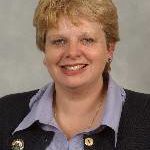
  • Lisa Francis – 2004 Speech on Wales Needing a National Art Gallery

    Lisa Francis – 2004 Speech on Wales Needing a National Art Gallery

    The speech made by Lisa Francis, the then Conservative AM for Mid and West Wales, in the Welsh Assembly on 27 May 2004.

    The Assembly Government’s policy to ensure free access to museums and galleries has proved to be extremely popular and the Conservative Party supports that policy.

    Since this policy was implemented and entrance fees abolished, the number of visitors to St Fagans has doubled. St Fagans charges parking fees in order to cover the museum and car park maintenance costs.

    However, since the entrance fees were abolished, people expect the whole package to be free. Therefore, charging for parking makes the Assembly’s policy laughable.

    People now expect free entrance, which encourages families with children to visting educational sites and we should all support that.

    Given that St Fagans is outside the city centre and since public transport is so poor, people have to use their cars to reach the museum.

    St Fagans is the largest visitor attraction in south Wales and this policy of charging for car parking will hit those on low incomes, old people and students and so on. Therefore, this policy means that entrance to St Fagans is no longer free of charge.

    While public transport to St Fagans remains poor, we need to raise concerns about any car parking charges.

    The Welsh Conservative Party wishes to take this opportunity to pay tribute to the importance of the work of all those in the national museums and galleries industry and to acknowledge the many improvements that have been made and which will, hopefully, continue in the future.

    We also need to realise that, in Wales, a third of permanent museum collections are described as being in unsuitable stores by their curators, with several commenting on the poor environmental conditions and lack of space, according to the Council of Museums in Wales.

    Research has shown that the vast majority of museum stores in Wales are too full and that none have more than 10 years of growth capacity.

    Storage facilities at the National Museums and Galleries of Wales are in such poor condition that The Western Mail reported on 22 April that a member of staff had fallen through the floor of one building, which had sustained water damage.

    As has been said, a report by the Auditor General for Wales found that almost half the museum’s collection is at risk because of inadequate storage. That document, published on 21 April, revealed that only one-third of the museum’s collection is held on computerised records.

    At the Museum of Welsh Life in St Fagans, many storage areas are so full that they cannot be accessed by staff. It would take 20 members of staff 20 years to clear the museum’s conservation backlog. With less than 1 per cent of the museum’s collection of 4.7 million items on display at any given time, it means that millions of pounds worth of objects, from paintings and locomotives to shells and coins, are therefore kept in storage.

    Surely, it is high time, Minister, that you fulfilled the Labour Government’s manifesto commitment of providing Wales with a dedicated national art gallery. You indicated that it was a manifesto commitment in your exchange with Nick Bourne in the Chamber on 5 May.

    The Arts Council of Wales has not included a funding bid for that in its current corporate plan, as it was regarded as a medium-term strategy.

    Exactly when, Minister, will this strategy come to fruition between now and the end of your Government’s tenure of office? We need an answer.

    The public in Wales is being denied the chance to see some of the country’s greatest works of art because of the lack of a dedicated national art gallery.

    Such an institution would be a huge asset. It is a gallery that would be linked to other galleries in Wales, and where Welsh art could be displayed. Wales’s art collections cannot be truly appreciated if items are locked in vaults, swathed in dust-proof covers, or, worse still, inaccessible to curators and, more importantly, liable to damage.

    We believe that a national art gallery for Wales should be managed by a single organisation, comprising the national museum and the national art gallery, which would be connected, as I said, to a network of museums and galleries around Wales.

    Such a move would not take anything away, or detract from, the other galleries in Wales, such as Oriel Môn, Oriel Mostyn or the Glynn Vivian Art Gallery.

  • PRESS RELEASE : Brussels rebukes booming Ireland (2001)

    PRESS RELEASE : Brussels rebukes booming Ireland (2001)

    The press release issued by the Conservative Party on 13 February 2001.

    Brussels rebukes booming Ireland

    Irish rebuke by the European Commission gives valuable ammunition to British opponents of the euro

    OPPONENTS of British membership of the euro were given valuable ammunition yesterday when Ireland was “reprimanded” by the European Commission for not doing enough to control inflation and Gordon Brown was ticked off for allowing the British economy to move into the deficit.

    The Chancellor made plain that he would take no notice of the Commission’s strictures and continue to increase public investment, while the Irish Finance Minister, Charlie McCreevy, voiced anger at being told to change his plans for the booming Irish economy to prevent it overheating.

    Mr Brown called for a “sensible interpretation” of the growth and stability pact that lays down the rules for eurozone countries to keep their budgets broadly in balance.

    Countries inside the euro face sanctions if they allow their budget deficits to go beyond 3 per cent of GDP. Those outside can be mildly rebuked.

    Francis Maude, the Shadow Foreign Secretary, said the more that was learnt about the euro, the more the reasons to keep the pound mounted up. The Commission should not have the right to tell the Britain what levels of borrowing it should undertake, he said.

  • PRESS RELEASE : Byers – UK Fine Without Euro (2001)

    PRESS RELEASE : Byers – UK Fine Without Euro (2001)

    The press release issued by the Conservative Party on 19 February 2001.

    BYERS: UK FINE WITHOUT EURO

    Cabinet member concedes that Britain is thriving outside the single currency

    TRADE supremo Stephen Byers yesterday performed an incredible U-turn on the single currency.

    Mr Byers – the Cabinet’s euro cheerleader – admitted it will be virtually impossible to persuade voters to ditch the Pound because it would jeopardise the economy.

    And for the first time, the Trade Secretary declared there is no end in sight to the record number of foreign firms rushing to set up shop in Britain.

    His change of heart shows the massive doubts at the highest level of government over the crucial issue of signing up to the euro.

    And it is a bitter blow to pro-euro campaigners but a clear sign Tony Blair wants to kill off discussion about the Pound’s future in the run-up to the election.

    Mr Byers had warned that £51billion-a-year of foreign investment in Britain would dry up and millions of jobs would be at risk unless we scrapped the Pound.

    But yesterday Mr Byers said: “It is a great irony that in terms of convincing the British people to join the single currency, one of the problems is the success of our economy.

    “Because people will say we are the fourth biggest economy in the world, inflation is down at 1.8 per cent, interest rates are coming down, unemployment is down to the lowest it has been for 25 years. And people will say, ‘Are you going to put all that at risk by joining the single currency?’”

    He added: “I think it will be a hard campaign – if there is a campaign – when the tests are met, to persuade people joining the single currency is going to be in the long-term interests of our country.

    “I genuinely can’t see any sign of inward investment dropping off because of Britain not being in the euro. How long that will last for, I don’t know.”

  • PRESS RELEASE : 56,000 WEIGH IN WITH `KEEP THE POUND’ CALL (2000)

    PRESS RELEASE : 56,000 WEIGH IN WITH `KEEP THE POUND’ CALL (2000)

    The press release issued by the Conservative Party on 24 November 2000.

    56,000 WEIGH IN WITH `KEEP THE POUND’ CALL

    Conservative MP Richard Shepherd today presented a Keep the Pound petition signed by a massive 56,286 people to the Commons

    The petition, carried into the chamber in boxes marked Keep the Pound, urges the Government to listen to the people and retain Britain’s currency.

    We the people are being led into a federal state which we do not wish to be part of. We wish to remain an independent sovereign state with the economy run for the benefit of our own citizens,” the petition said.

    Mr Shepherd (Aldridge Brownhills) said: “The petition has been gathered and signed by people supporting all the political parties and those supporting none.

    It is a genuine expression from across the West Midlands of deep concern for democracy and our control over the economy. It expresses a sense of country.”

  • PRESS RELEASE : Eddie George warns of dropping £ (2000)

    PRESS RELEASE : Eddie George warns of dropping £ (2000)

    The press release issued by the Conservative Party on 29 November 2000.

    Eddie George warns of dropping £.

    The euro would mean a return to the dark days of the 70s, warns Bank of England boss Sir Eddie George.

    Workers face being thrown back to the dark days of the ’70s if Tony Blair dumps the Pound, Britain’s leading moneyman suggested yesterday.

    Bank of England boss Sir Eddie George warned there could be tough rules on wage rises and higher taxes as the Government battled the inflation caused by a switch to the euro.

    Experts said it would be just like the depressed ’70s when Britain was the sick man of Europe.

    Then, the Government had to introduce rules to keep WAGES down as inflation soared to 26 per cent.

    There was a year-long waiting list for MORTGAGES and HOLIDAYMAKERS were only allowed to take £50 out of the country.

    Even getting a LOAN for a car, like the popular Ford Capri, became a problem due to restraints.

    Unemployment rose to more than a million for the first time since the 1940s.

    The crisis was fuelled by outrageous pay demands from hardline union bosses.

    Britain ended up on a three-day week, there were picket lines and power cuts.

    Then in 1976, Labour Chancellor Denis Healey went cap in hand for a loan of $2.3billion to the IMF to avoid bankruptcy.

    Sir Eddie, giving evidence to the Treasury Select Committee, said that once Britain joined the euro “the techniques for influencing domestic inflation would have to look more to fiscal rather than monetary policy.”

    He said that would bring about a “need to control inflation.”

    His remarks are the clearest sign yet that he believes the euro zone’s one-size-fits-all economy – where interest rates are set for 11 countries by bankers in Frankfurt – would be a disaster for Britain.

    Andrew Haldenby, of Business for Sterling, said: “In a few crisp sentences Eddie George has summed up the entire case against joining the euro.

    “Giving up control of interest rates, the central lever of economic management, would take us back to 1970s-style tax rates and pay policies.

    “If we had joined at the start, Britain would now be suffering a job-destroying inflationary boom.”

    And Shadow Chancellor Michael Portillo said: “If we joined the euro, Britain would be forced into adopting these failed policies that produced boom and bust in the 1970s.”

    Ireland has already been forced to strike a three-year wage restraint deal with unions after joining the euro. The country has seen its inflation rocket to a 15-year high of 6.8 per cent since it signed up.

    Sir Eddie recently blew a hole in the PM’s drive to ditch sterling when he insisted Britain MUST keep the Pound. He told world bankers the UK is thriving and the Pound’s future is a purely political issue.

    Mr Blair says the decision to join the euro will only be based on economics. This week a poll showed a record 71 per cent of Britons want to keep sterling.

  • PRESS RELEASE : Foreign Firms Flocking to Britain (2000)

    PRESS RELEASE : Foreign Firms Flocking to Britain (2000)

    The press release issued by the Conservative Party on 30 November 2000.

    Foreign Firms Flocking to Britain

    New report shows Britain is no.1 for overseas investment – proving we can thrive outside the euro.

    The latest research from leading business information group Dun and Bradstreet concludes that 28,777 foreign-owned companies are doing business in Britain compared to 23,300 in 1998. The report knocks Tony Blair’s warnings that we risk our economy unless we ditch the £.

    The number of French firms doing business in Britain rocketed by a third and Dutch business rose by a quarter.

    Investment in Britain from Holland, France and Germany has shot up since they joined the euro 18 months ago as high taxes and red tape cripple businesses. American firms make up the biggest slice of foreign input, followed by Holland, France, Germany, Japan, Switzerland, Ireland, Sweden, Australia and Canada.

    This report comes only 2 days after Honda decided to double car production at Swindon. Last year outside companies ploughed £252.2 billion into Britain – up from £204 billion in 1998.

    This trend is echoed by finance experts who predict that Denmark’s economy will be boosted by a No vote in next month’s euro referendum.

  • PRESS RELEASE : Home Secretary praises ‘true’ football fans and urges respect at games

    PRESS RELEASE : Home Secretary praises ‘true’ football fans and urges respect at games

    The press release issued by the Home Office on 20 August 2022.

    The Home Secretary Priti Patel has visited Brentford’s Gtech Community Stadium to see the valuable work that football clubs, the police and sport bodies are doing to prevent antisocial behaviour and increase fans’ enjoyment of the game after disorder at matches last season.

    The Home Office is working closely with the police and football bodies to ensure the matchday enjoyment of the majority of fans and families is not ruined by the selfishness of a few who invaded football pitches, threw flares, and abused players and fans at matches in England and Wales last season.

    The Home Secretary met officials from the Premier League and Brentford Football Club, which came top of a recent Premier League survey for matchday fan experience, and saw the new safe standing areas within the Gtech Community Stadium for fans, toured the control room and spoke with the security team about the valuable work they do to ensure match days are positive experiences for spectators.

    She also spoke with staff members who work on programmes such as Premier League Kicks, which has been working in local communities to inspire thousands of young people. Premier League Kicks started in 2006 – with Brentford one of 4 pilot clubs – and has a long history of using the power of football and the value of sports participation to help youngsters in some of the country’s most high-need areas.

    The Home Secretary urged football fans across England and Wales to respect others’ enjoyment of the game, and the law, or risk receiving a football banning order (FBO) preventing them from attending home and away matches, including potentially the World Cup in Qatar, if they attack or abuse other fans, staff, players or managers.

    Home Secretary, Priti Patel, said:

    “There is no place for the ugly scenes we saw at some matches in England and Wales last season and it is good to see the positive work being done by clubs like Brentford to ensure our stadia are safe places for families and children to enjoy the beautiful game.

    I am determined not to let a small minority ruin matches for true fans as the football season gets under way and we are working closely with the police and the football authorities to tackle antisocial and criminal behaviour.

    I wholeheartedly support the extra measures all football bodies and clubs are bringing to keep fans safe and would encourage police and the courts to make full use of Football Banning Order legislation which we have recently extended to online abuse and will be shortly bringing in to root out class A drugs at matches.”

    FBOs are a preventative behavioural order designed to prevent violence, disorder and harm and are imposed by a court, following an application or on conviction for a football-related offence.

    Nearly 1,400 troublemakers have already been targeted by FBOs and banned by the courts.

    In the last 12 months the government has significantly expanded the scope of FBOs in order to crack down on disorder by:

    – adding football-related online hate crime to the list of offences for which a FBO can be imposed on conviction so that those who are convicted of online racism and other hate crimes connected to football can be banned from stadia, in the same way that violent offenders are barred from grounds

    – committing to add football-related class A drugs crimes to the list of offences for which a FBO can be imposed on conviction, sending a strong signal to those who use class A drugs in and around football matches that their behaviour will not be tolerated and that they will no longer be able to attend games

    In addition, FBOs have recently been extended to the women’s domestic game, showing that regardless of which games fans are attending, violence and hate will not be tolerated.

    Recently the Football Association (FA), Premier League and English Football League (EFL) announced they were introducing new measures and stronger sanctions across the game to tackle the increased antisocial and criminal behaviours seen at football grounds last season and to underline the importance of a safe matchday environment. The football bodies are making it clear such acts are dangerous, illegal and have severe consequences.

    From the start of season 2022 to 2023, all offenders will be reported by clubs to the police and prosecution could result in a permanent criminal record, which may affect their employment and education, and could result in a prison sentence. The FA will also be enforcing a tougher charging and sanctioning policy for clubs, which will reinforce these measures.

    Furthermore, anyone who enters the pitch, and those carrying or using pyrotechnics or smoke bombs, will now receive an automatic club ban. These bans could also be extended to accompanying parents or guardians of children who take part in these activities.

    Premier League Chief Executive, Richard Masters, said:

    “Everyone should feel safe and able to enjoy a football match. In coming together with clubs and partners across football, we are making clear the type of incidents we saw last season must stop. If we don’t take collective and sustained action, it may only be a matter of time before someone is seriously injured, or worse.

    The new measures introduced at the start of this season are a strong response to a significant increase in fan behaviour issues, but we know it is the minority who have behaved unacceptably and unlawfully.”

    Premier League football should be a fantastic experience for everyone and we don’t want matches to be marred by these sorts of events.

    Culture Secretary, Nadine Dorries, said:

    “We are on the side of football fans and understand the passion and emotion that comes with supporting a team.

    As the new season gets into full swing we want to remind people we will not tolerate antisocial behaviour and have strengthened the powers under our football banning order legislation to tackle drug use and hate crimes.

    Together with the work being done by the football authorities, we are helping root out those who seek to disrupt match days so proper fans can enjoy a fantastic football experience.”

  • Priti Patel – 2022 Comments on Football Fans

    Priti Patel – 2022 Comments on Football Fans

    The comments made by Priti Patel, the Home Secretary, on 20 August 2022.

    There is no place for the ugly scenes we saw at some matches in England and Wales last season and it is good to see the positive work being done by clubs like Brentford to ensure our stadia are safe places for families and children to enjoy the beautiful game.

    I am determined not to let a small minority ruin matches for true fans as the football season gets under way and we are working closely with the police and the football authorities to tackle antisocial and criminal behaviour.

    I wholeheartedly support the extra measures all football bodies and clubs are bringing to keep fans safe and would encourage police and the courts to make full use of Football Banning Order legislation which we have recently extended to online abuse and will be shortly bringing in to root out class A drugs at matches.

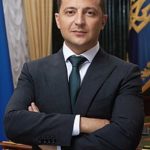
  • Volodymyr Zelenskyy – 2022 Address to University Community of Chile

    Volodymyr Zelenskyy – 2022 Address to University Community of Chile

    The address made by Volodymyr Zelenskyy, the President of Ukraine, on 17 August 2022.

    Dear Mr. Rector!

    Dear students and university teachers who joined our conversation today!

    Dear journalists and everyone present!

    I am grateful for the opportunity to address you and tell you what is happening in Ukraine and why the Russian war against our country is still going on. Why there is no peace.

    A full-scale war, a full-scale Russian invasion of the territory of Ukraine has been going on for 175 days. For 175 days, millions of Ukrainians have defended the independence of our state.

    But not only independence. This is a struggle not only for the state and not only for the opportunity of our people to independently decide their future.

    Indeed, the primary motive of Russian aggression against Ukrainians is purely colonialist – the Russian leadership wants its domination over Ukrainian land and over our resources. And for a long time it was heard in Moscow that they would not restore the Russian empire without seizing the territory of Ukraine.

    However, it became a much deeper struggle than any imperial or geopolitical intentions. Russia is literally waging a war against the lives of our people, against the very right to life of Ukrainians.

    And this war started not 175 days ago. On February 24 of this year, Russia switched to massive aggression – to attacks from the north, from the east, and from the south at once; all our ports on the Black Sea and the Sea of Azov were blocked; massive missile strikes were launched throughout the territory of Ukraine.

    But it was a continuation of the war. The war that began in 2014. It began when Russia occupied the Crimean peninsula, ignited the confrontation in Donbas, which claimed thousands of lives. They were thousands.

    Therefore, when we talk about Russia’s war against Ukraine, we are talking about eight years and 175 days. And when we talk about the victims of this war, about Ukrainian losses, we do not start the story from February 2022. We start it in 2014, when Ukrainians began to be killed simply because they were Ukrainians.

    For the Ukrainian flag. For a pro-Ukrainian position. For defending the Ukrainian territory. Even simply for the suspicion that a person supports the Ukrainian state.

    Today I want to tell you about one such person. About a guy who would have turned 25 this fall, and he would probably be a lot like you right now.

    His name was Stepan Chubenko. He was from the city of Kramatorsk in Donbas. Bright young man. He was remembered as kind and very active – if he had entered a university similar to yours, he would probably have become one of the student leaders. Perhaps he would not have betrayed his dream and chosen the path of a sports career – and he would have been able to become the goalkeeper of one of the teams you know.

    I ask you to look at these photos now – that’s the kind of guy he was.

    He was killed on July 27, 2014. He was killed by militants – one of those whose hands Russia used to wage a hybrid war in Donbas and whom it is now using in the full-scale war.

    They detained Stepan when he was returning home. They saw a yellow and blue ribbon on his backpack – the colors of our flag. And that was reason enough for them to grab the boy. He was beaten for several days, tortured, and shot.

    Only in the middle of August of that year, weeks after the murder, Stepan’s mother managed to find out what happened to her son. But she was not given his body.

    Only in November 2014 it was possible to bury him.

    Stepan’s mother has the last text message from him: “I’ll call you later, I love you.”

    His killers hid in the territory of Russia and Crimea occupied by Russia. They received sentences from the Ukrainian court. But the terrorist state Russia protects them from being prosecuted.

    Them and thousands of other such murderers.

    Those who shot people simply because they were Ukrainians. Simply because they were Ukrainians in Ukraine.

    Those who shot men and women in the back of the head for the mere suspicion that the person was defending our state.

    Those who shot at residential buildings, at schools and hospitals point blank from tanks.

    Those who used artillery to bombard peaceful cities.

    It started back then – in 2014, and 175 days ago it reached the maximum scale that the Russian army, Russian mercenaries from the so-called military companies, which are de facto part of the secret services of the terrorist state, are capable of.

    Russia really wants to seize the territory of Ukraine. And it needs this territory without Ukrainians.

    The destroyed Mariupol and dozens of other cities and villages of Ukraine, the Bucha massacre and other cities in the occupied territory are not exceptions to the general Russian strategy, this is what it is – the Russian strategy towards Ukraine and Ukrainians.

    Tens of thousands of our people are kept for months in the so-called “filtration camps” set up by the Russian military.

    Thousands of Ukrainian children were deported from the territory entered by the Russian army. They are taken to Russia, and Russian officials are trying to do everything so that these children lose all contact with their families and simply forget who they are.

    Monuments and museums that simply remind of Ukraine are being destroyed on the occupied territory. They destroy books. They do everything so that people are forced to give up their national identity, their aspirations, dreams, and obey violence and robbery or die.

    Ukraine has already lost the lives of tens of thousands of its people in this war. Very small children – one-month-old babies, who were killed by Russian missiles, shells and bullets. Teenagers. Men and women. Elderly people.

    Russia does not care who to kill and who to abuse. Everyone is equally its target. And these are not excesses of war. This is its conscious policy.

    Therefore, we have no other choice but to fight for the lives of Ukrainians, so that in Ukraine they are not killed for a yellow-blue ribbon on a teenager’s backpack. And this struggle can last only until victory.

    I can’t count how many times before February 24 I suggested to Russia to end the war and negotiate peace. In different formats, through different mediation.

    It took many years to negotiate.

    But the leadership of Russia chose terror, not an agreement. They chose what they did in Mariupol, in Bucha, not peace. And when Moscow saw that the world would not turn a blind eye to Russian atrocities, they wanted to bring the whole world to its knees.

    That is why the food crisis has become so acute. That is why Russia is deliberately destabilizing the energy markets. That is why Russian policy is deepening the crisis of the cost of living in many countries for mercenary motives. And this is why we must jointly resist Russian aggression.

    When a state turns energy poverty or hunger into a weapon, it is a blow to everyone in the world. When a state tries to conquer another because it wants to be a colonizer, it is a threat to all who value their independence. And when people are killed simply because they are, because they belong to their people, because they do not give up their homeland, it is a threat to humanity as such.

    Can you stay away? Can you stay indifferent? I don’t believe that.

    That is why you are here today, because you value the truth.

    And I’m not asking too much of you. I ask you to spread only the truth – spread the truth about this war in your country and in your region. It is necessary to oppose Russian propaganda.

    Demand full accountability for Russian murderers and executioners. Every war crime must receive its verdict by a competent and honest court.

    Support sanctions against Russia – because the aggressor must pay the highest price for aggression.

    And most importantly, value peace, value life, value your freedom and always, when you have such an opportunity, help defend peace, life and freedom by protecting those from whom they want to take it.

    I am very grateful to each of you, thank you for your attention!

  • David Frost – 2022 Article on Devolution and Nationalism in Scotland

    David Frost – 2022 Article on Devolution and Nationalism in Scotland

    Part of the article on devolution and nationalism in Scotland, written by David Frost and published in the Daily Telegraph on 19 August 2022.

    In 1995, the then shadow Scottish secretary, George (now Lord) Robertson, made one of the worst political predictions of all time when he said that “devolution will kill nationalism stone dead”. We saw the result of this terrible misjudgment in the hate-filled mob outside the Tory leadership hustings on Tuesday night. Many people in England will have watched those television images and thought, “Why would I ever go to Scotland if that is what they think of us?” That is, of course, what the SNP wants. Those of us who believe in our country need to start fighting back.

    To be fair, Robertson was not alone in his opinion. It was the conventional wisdom in 1999 when the Scottish Parliament was established. We now know, of course, that one of the doubters, in private, was Tony Blair. Showing, as so often, that he was a more far-sighted politician than most of his critics, he described devolution in his memoirs as a “dangerous game … you can never be sure where nationalist sentiment ends and separatist sentiment begins”. He was right.