Author: admin

  • PRESS RELEASE : HRT Taskforce presents recommendations to support future supply

    PRESS RELEASE : HRT Taskforce presents recommendations to support future supply

    The press release issued by the Department of Health and Social Care on 30 August 2022.

    • Recommendations are to be taken forward by Department of Health and Social Care to help ensure continued HRT supply meets demand
    • Forms part of wider work to support menopausal women access the health and care they need and tackle the gender health gap

    Action will be taken to make supplies of hormone replacement therapy (HRT) more resilient as Head of the HRT Taskforce Madelaine McTernan presents her key recommendations to support future management of the supply chain.

    The recommendations will inform the work of the department and the UK wide menopause taskforce as Ms McTernan has returned to working full time as the Director General of the Vaccine Taskforce as preparation for the autumn booster campaign ramps up.

    Improving access to HRT forms part of the government’s wider commitment to tackle the gender health gap, including support for menopausal women. The Women’s Health Strategy, published earlier this year, includes the menopause as a key area.

    Access to HRT has improved following decisive actions to increase supply and manage demand including issuing Serious Shortage Protocols on HRT products to limit dispensing to three months’ supply and allow specified alternative products to be supplied if necessary.

    Following positive engagement across the supply chain, suppliers have also moved to secure additional stock and expedite deliveries of HRT products experiencing supply issues. Suppliers are building future capacity to support continued growth in demand.

    These combined actions have resulted in improvement in supply of products including Oestrogel gel. The number of packs of Oestrogel delivered to the UK in July was double the monthly average for the first quarter this year demonstrating a very substantial increase.

    Health and Social Care Secretary Steve Barclay said:

    Women’s health is a priority for this government, and we are ensuring everyone who needs HRT is able to access it.

    Madelaine’s work and that of her taskforce and the department has been vital, and her recommendations will ensure progress in HRT supply continues.

    Core recommendations from the HRT taskforce include:

    • Continued dialogue with industry both via continuing the successful model of regular industry roundtables as well as individual engagement
    • Continued use of Serious Shortage Protocols when appropriate to manage shortages as steps are taken by suppliers to increase production
    • Continued assessment whether NHS formularies may be impacting access to HRT

    Taking steps to action these recommendations 12 of the 13 Serious Shortage Protocols (SSPs) in place for HRT have been extended to help provide ongoing stability as HRT products that have experienced supply issues increase stock levels. The department has also established quarterly industry roundtables with key suppliers to ensure continued dialogue and help industry to plan for the future.

    Outgoing Head of the HRT Taskforce Madelaine McTernan said:

    I am pleased to see the situation with HRT supply is improving across the country. I want to thank suppliers and manufacturers for their engagement and positive action to tackle this serious issue.

    I have presented my key learnings on how the department can continue to manage HRT supply and work with the industry as it continues efforts to meet rising demand.

    Further recommendations to help ensure continued HRT supply to meet rising demand:

    • Improved access to data on prescriptions to more easily see where there are shortfalls between HRT packs prescribed and HRT packs supplied by manufacturers; and
    • Taking lessons from the HRT supply chain work to inform broader medicine supply work

    Minister for Women’s Health Maria Caulfield said:

    We are taking steps across the board to tackle the gender health gap and ensure women can access the health and care services they need – including access to HRT.

    I thank Madelaine and her team and I look forward to taking forward her recommendations as part of the ongoing work of the department.

    The taskforce has held two roundtables and has ongoing discussions with key suppliers to understand issues and engage on plans to meet demand.

    It has issued Serious Shortage Protocols (SSPs) to restrict dispensing of certain products to three months and allow pharmacists to substitute certain products for alternatives.

    Following a return to good availability, Premique Low Dose is no longer subject to an SSP.  The MHRA, have delivered workshops to ensure manufacturers and pharmacists are aware of guidance to help them manage stock levels and worked with the NHS to understand and communicate the role of formularies (a list of recommended medicines) in terms of access to HRT.

    Government has also taken action to reduce costs of HRT. The creation of a prepayment certificate will mean women can access HRT on a month-by-month basis if needed, easing pressure on supply, paying a one-off charge equivalent to two single prescription charges (currently £18.70) for all their HRT prescriptions for a year. This system will be implemented by April 2023.

    The Menopause Taskforce, which meets every two months, will continue to tackle issues surrounding the menopause including increasing access to treatment, and ending the taboos and stigmas that still surround conversations about the menopause, including in the workplace.

    Dame Lesley Regan has also been appointed the first ever Women’s Health Ambassador for England to support in the implementation of the Women’s Health Strategy and improve women’s experiences of the health and care system in England.

  • PRESS RELEASE : East Midlands local economy to be levelled up with historic billion pound devolution deal

    PRESS RELEASE : East Midlands local economy to be levelled up with historic billion pound devolution deal

    The press release issued by the Department for Levelling Up, Housing and Communities on 30 August 2022.

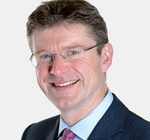
    Levelling Up Secretary Greg Clark will sign an historic devolution deal with Derbyshire and Derby, Nottinghamshire and Nottingham.

    • Historic devolution deal agreed with Derbyshire and Derby, Nottinghamshire and Nottingham with directly elected mayor
    • Powers and budgets will be devolved from central government to the East Midlands through a new Mayoral Combined County Authority
    • More than £1 billion investment fund over 30 years to help boost employment, families, and schools in the area

    Local leaders in large parts of the East Midlands will be given new powers to improve transport, boost skills training and build more attractive and affordable homes through a historic, first of a kind county devolution deal signed with the government today.

    Levelling Up Secretary Greg Clark will sign the deal with Derbyshire and Derby, Nottinghamshire and Nottingham, which will see the area appoint a directly elected mayor, responsible for delivering local priorities, backed by a new £38 million per year investment fund, totalling £1.14 billion over 30 years.

    The deal delivers on a commitment made in the government’s Levelling Up white paper published early this year to shift in powers and resources away from Whitehall to local communities.

    In addition to the agreed funding being under local control rather than control from Whitehall, a new Mayoral Combined County Authority will be created, with control over the core adult education budget, to boost skills in the region, as well as the ability to increase control over transport infrastructure.

    The new mayor will also be granted powers to drive regeneration, with compulsory purchase powers and the ability to designate Mayoral development areas and establish Mayoral Development Corporations to promote growth and build new homes.

    Levelling up Secretary Greg Clark said:

    The East Midlands is renowned for its economic dynamism and it has the potential to lead the Britain’s economy of the future. For a long time I have believed that the East Midlands should have the powers and devolved budgets that other areas in Britain have been benefitting from and I am thrilled to be able to bring that about in Derby, Derbyshire, Nottingham and Nottinghamshire.

    I am impressed by the way councils in the region have come together to agree the first deal of this kind in the country, which will benefit residents in all of the great cities, towns and villages across the area of Derbyshire and Nottinghamshire.

    Taking decisions out of Whitehall and putting them back in the hands of local people is foundational to levelling up and this deal does that.

    The new East Midlands Combined County Authority will also be granted control of over £17 million of additional funding for the building of new homes on brownfield land in 2024/25, subject to sufficient eligible projects for funding being identified, and a further £18 million has been agreed to support housing priorities and drive Net Zero Ambitions into the area.

    In a joint statement, Ben Bradley MP, Leader of Nottinghamshire County Council, Barry Lewis, Leader of Derbyshire County Council, Chris Poulter, Leader of Derby City Council, and David Mellen, Leader of Nottingham City Council, said:

    We welcome the £1.14 billion devolution deal from the government on offer for our region. It’s fantastic news.

    We want to make the most of every penny so this can be used to make a real difference to people’s lives.

    As Leaders, we have all fought for a fairer share for our cities and counties, and a bigger voice for our area, to give us the clout and the influence we deserve, and to help us live up to our full potential.

    This deal would help make that a reality, creating more and better jobs through greater investment in our area, with increased economic growth, better transport, housing, skills training, and an enhanced greener environment, as we move towards being carbon neutral. These are what we all want to see, and we will work together for the common good of the East Midlands.

    We haven’t always had the same level of funding or influence as other areas, which has held us back. This is a golden opportunity to change that and put the power to do so in our own hands.

    There is a lot still to be agreed, and this is the beginning of the journey, not the end. We’re determined to build on this deal over time, as other areas have done.

    This will be the first ever Mayoral Combined County Authority, a new model of devolution provided for in the Levelling Up and Regeneration Bill. Implementation of this deal is dependent on Parliamentary approval of the Bill and necessary secondary legislation, as well as a public consultation.

    This marks another important milestone in the government’s commitment to ensure that every area in England that wants a devolution deal can get one by 2030, as promised in the Levelling Up white paper published earlier this year.

    New powers will help to improve local skills which will meet the specific needs of the local economy, helping to boost the region financially. In addition, there will be greater powers to drive regeneration creating more affordable housing for local people, making the area a more desirable place to live, work and visit.

    Further information

    This will be the first ever Mayoral Combined County Authority, a new model of devolution that includes upper tier local authorities only. Both the government and the upper tier councils place high importance on working with the 15 district and borough councils across the region to ensure their voices are represented.

    This new institutional model is subject to Royal Assent of the provisions within the Levelling Up and Regeneration Bill – the model was first introduced in the Levelling Up and Regeneration Bill which is currently progressing through Parliament.

    There is a statutory process which includes consultation by the councils of their detailed proposals, ratification by the councils and Parliamentary approval to secondary legislation establishing a combined county authority with the powers outlined. It is hoped that, subject to Parliamentary agreement the first mayoral election could take place in May 2024.

  • Greg Clark – 2022 Comments on Levelling Up the East Midlands

    Greg Clark – 2022 Comments on Levelling Up the East Midlands

    The comments made by Greg Clark, the Secretary of State for Levelling Up, Communities and Housing on 30 August 2022.

    The East Midlands is renowned for its economic dynamism and it has the potential to lead the Britain’s economy of the future. For a long time I have believed that the East Midlands should have the powers and devolved budgets that other areas in Britain have been benefitting from and I am thrilled to be able to bring that about in Derby, Derbyshire, Nottingham and Nottinghamshire.

    I am impressed by the way councils in the region have come together to agree the first deal of this kind in the country, which will benefit residents in all of the great cities, towns and villages across the area of Derbyshire and Nottinghamshire.

    Taking decisions out of Whitehall and putting them back in the hands of local people is foundational to levelling up and this deal does that.

  • Liz Truss – 2016 Speech to the Food and Drink Industry Dinner [Warning of Dangers of Brexit and Leaving Single Market]

    Liz Truss – 2016 Speech to the Food and Drink Industry Dinner [Warning of Dangers of Brexit and Leaving Single Market]

    The speech made by Liz Truss, the then Secretary of State for Environment, Food and Rural Affairs, on 19 May 2016.

    Thank you very much Fiona. It’s a great pleasure to be here at the Food and Drink Federation dinner. You’re a fantastic organisation and this is a fantastic part of our economy. Food and drink is our biggest manufacturing sector. It’s bigger than cars and aerospace put together. We had a celebration at Number 10 last week where we have these fantastic posters up and we had food and drink manufacturers and producers from across the UK. And the Prime Minister gave a speech at the end of the event and he said that he knew that food and drink was our largest manufacturing sector, because I have mentioned this at Cabinet on several occasions.

    So I think the message is getting through to my Cabinet colleagues, but as we say in politics, when people are starting to get bored of a message, it’s just when you need to start repeating it even more. So I’ll be saying it even more and making that case right across our government, but also right across the wider economy, across the media, because food and drink deserves to have an even higher profile than it’s got at the moment. We have some of the world’s best chefs who are all involved in the Great British food campaign whether that’s Ken home or Angela Hartnett.

    We have some of the most innovative companies and we produce more new products every year in food and drink than France and Germany put together and we also have some of the world’s best farmers producing fantastically high yields with the best animal welfare standards in the world as well. Creating a brilliant landscape which we all enjoy, whether it’s the Lake District where I’ve been today, whether it’s the South Downs National Park, and we should be tremendously proud of what we do and that is why we launched the Great British food campaign this year. That’s also where we introduced the great British food unit, which is all about exporting our fantastic food right around the world.

    Now it’s a bit difficult before the 23rd of June, not to mention the EU referendum. I’m sure people in this room would be horrified if I didn’t talk about it. But I do think that the decision on the 23rd of June probably will have a greater impact on the food and drink industry than it would have on any other parts of the economy. That’s because if we look at trade, the food and drink industry exports 60% of all its products to the EU. If we look at particular areas like lamb, 40% of all the lamb that is produced here in the UK goes into the EU, into the EU market that represents 97% of lamb exports. Now why is that? Well, it’s because that we have the single market. And what we know is that countries outside the single market, whether it’s the US where I was recently or whether it’s China, still don’t allow quite a lot to our fantastic British food stuffs into those markets.

    And of course the great British food unit is working to get entry for new products. But that is why that European market is so precious. Because we share the same regulations, we share the same rules over things like food safety, over animal health and welfare, over bottles. And the white whiskey industry and I’ve been doing a bit of a UK tour recently, the whiskey industry will tell you how important it is that because we share those regulations over bottling labelling. They can simply export their products to Paris just as easily as they can sell them in a supermarket in Preston. Now, if we were to leave that EU single market, what that would mean is that those products would face additional costs and getting them into those markets. It would mean in some cases that we could see markets closed and I’ve had a lot of people say to me, ‘well surely the European Union won’t close its markets’. But it’s fairly recently that of course the French closed its markets to UK beef, and we had to fight in the European Court of Justice to get British beef back on French menus because there is a policing mechanism in the European single market to make sure that if a product is complying with those European rules that we’ve all agreed, then we are able to sell it. So that is a very important message.

    And this campaign has been dominated by some quite strong statements, some quite major warnings. But what I think is really important is we get the message across to people and that’s the people in your companies. It’s the people that we all work with, it’s the people in the entire food chain, which employs a massive amount of people across this country, that we get the message across about just how difficult it would become to do business. If we are a country  like Norway, we’d have to fill in 50 boxes every time on a form every time we went to export something. In products like agricultural products, there’s a regime of quotas and tariffs.

    I know how difficult it is getting products into markets like the US and China. DEFRA has just filled in an 1,000 page form which is one part of an eight stage process to get British beef and lamb and we’ve still got to get a resolution passed by Congress to allow that British lamb into the market. So I think we’ve got to be very careful about taking that single market for granted and being outside that single market, and the single market isn’t something that is a sexy, exciting thing to explain. But it is really crucial to the amount of growth we’ve seen in food and drink exports over the past 40 years. It is really crucial to that.

    The second point I want to make is about investment. And I’ve just been over in the US talking to some of our major investors. We’ve got some of our major investors in the UK economy here in this room companies like Nestle or Mondelez putting huge amounts of research, of expertise, of new capital and machinery into our economy, improving the productivity of our food and drink sector which is so vital and I’m delighted that the Food and Drink Federation is focusing on productivity. We know that’s a challenge for the UK economy.

    Now the reason many of those investors want to invest in the UK market is because we have access to 500 million consumers. Yes, the UK is a hotbed of innovation, but we are also a passport into that wider market. Now I’ve spoken to many investors who are saying that they would be concerned if they invested in the UK, whether it’s in R&D, whether it’s in capital to improve our productivity, whether it’s in new production, and I want to see more investment in areas like dairy processing capacity, I think we’ve got massive potential here in the UK. They will be worried about whether or not those investments continue to have access to the single market. And the Out Campaign has been very clear. They said they don’t want to be part of the single market. I think that’s a real worry for investment and I do want to see more capital investment in food and farming.

    And what I would say to you is there are some people in this room who said to me, yes, we are concerned about this, but we don’t want to necessarily take a position. I can understand that as businesses, but I do think it’s in all of our interests to communicate the real impact on the ground. The real impact this would have on jobs on livelihoods, because what we know is less trade would mean fewer and fewer investments. It will mean fewer jobs, and that will feed through to people’s incomes. And that doesn’t just affect you and me in this room, that affects all of us in the overall economy. So even if you’re in a company that doesn’t export, the company that does export will be buying less of your services. And I think that’s the message we really need to get across in the closing weeks of this campaign.

    But I have great faith in the British people. I think the British people are sensible people. They understand fundamentally, that economically Britain will be better off staying in a reformed EU. I’m very grateful for the Food and Drink Federation publicly coming out and saying that, of course the National Farmers Union have also come out and said that. I think getting that message across is really important over the next few weeks.

    But what I want to do is following, I hope an in vote, is to really focus on what we can do next to bring this industry up to the next level, to really make sure this industry, the biggest manufacturing industry in our economy, an industry with huge potential, because we know the demand for food is growing across the world. We know demand for high quality, healthy, innovative food is growing across the world. I think we can do even more.

    So one of the things we’re focusing on is apprenticeships. At the moment I think the average part of the economy has 2.3% of its employees in apprenticeships across food and drink. That’s just 1%, that’s partly because we have a lot of small companies in the sector. But I’m very pleased to say that recently the Department of Business has said the apprenticeship levy can be used to support jobs right through the food chain. So I think there’s a huge opportunity for food manufacturers, for supermarkets and for others involved in the food industry to support apprenticeships in primary production to support apprenticeships in other suppliers as part of that supply chain. And to really make sure we upskill the industry.

    I had a recent round-table on International Women’s Day with some fantastic women farmers who were telling me that 75% of all the people they now need to recruit have STEM skills. This is a high skill industry, it’s a technically advanced industry. And what we need to do is get that message across to the wider public so that when people think about food, they don’t just think about the brilliant chefs, the fantastic products, our great protected food names, whether it’s Halen Môn sea salt, or whether it’s Scotch smoked salmon, but they also think about some of the innovation, the technology, the precision farming, the robotics that I saw at the Mr. Kipling factory, putting together those amazing cakes, which I’ve since been selling in Washington DC. We had an event in Washington and we were selling both curry and cakes. It was an interesting combination, but it went down very well with the Americans.

    The final thing I’d like to say is about Brand Britain, because what has become clear to me when I travel the world is how appreciated the British brand is. The Union Jack on the pack really does mean something to people overseas. It stands for quality. It stands for heritage, it stands for safety, and it stands for innovation, and that is a really important message that we need to get across. We’ve been consulting extensively with our lawyers, and we can use the term British to promote our food, whether it’s by the government backed AHDB, which is the farming levy body, whether it’s by our campaigns which we run as a government, and I think what’s happening now is we’re seeing different parts of the food industry, the manufacturers, the farmers, the retailers, the hospitality industry, work much more closely together to get that message across about British food, both here in the UK, and in those overseas markets that have such huge potential.

    It’s fantastic to be here today Fiona, to celebrate your success with you but also to say that I think we’ve got huge potential over this industry. Let’s get through the 23rd of June, on the right side of the argument and then we will be launching our food and farming 25 year plan. We will be having a major food business summit where we talk about how we’re going to get more investment into the food industry. And I think this can really be an exciting springboard for the future. Thank you.


  • PRESS RELEASE : President held a meeting on the current situation in the Kharkiv region and the recovery of the region from the effects of the war

    PRESS RELEASE : President held a meeting on the current situation in the Kharkiv region and the recovery of the region from the effects of the war

    The press release issued by the President of Ukraine on 29 May 2022.

    A working meeting on the situation in the Kharkiv region and Kharkiv was chaired by President of Ukraine Volodymyr Zelenskyy.

    The Head of State heard reports from Head of the Kharkiv Regional Military Administration Oleg Synegubov, Kharkiv Mayor Ihor Terekhov, the military command and the leadership of law enforcement agencies in the region.

    The Head of the Kharkiv RMA informed the President that currently 31% of the region’s territory is temporarily occupied, 5% has been liberated from Russian invaders.

    “We are not yet able to fully inspect some of the liberated settlements, conduct full-fledged demining and begin rebuilding critical infrastructure, as shelling continues. Where we can do it remotely – we do it,” said Oleg Synegubov.

    According to him, the actions of the Russian army led to the destruction of 2,229 high-rise buildings, of which 225 were completely destroyed. In Kharkiv, the northern and eastern districts of the city suffered the most damage and destruction – 30.2% of the total housing stock.

    During the working trip, Volodymyr Zelenskyy, among other things, inspected the destroyed residential buildings in the Saltivka district of Kharkiv.

    During the meeting, the President proposed to analyze the feasibility of restoring damaged panel buildings, in particular, taking into account the program of thermal modernization of housing.

    “If this is already the case with the war, then it is worth considering the possibility of removing panel buildings across the country, especially in the destroyed areas,” he said.

    According to the Head of State, this is also an opportunity to modernize the country and cities, to build modern housing.

    Volodymyr Zelenskyy noted that new houses must be built with bomb shelters.

    “We have to find funds, credit lines. The state must ensure this in terms of guarantees, and the leaders of cities and regions must find great projects and money,” said the President.

    In addition, during the trip, Volodymyr Zelenskyy inspected the administrative buildings of Kharkiv, which were destroyed by Russian missiles.

  • PRESS RELEASE : President held a meeting with members of the Government of Ukraine

    PRESS RELEASE : President held a meeting with members of the Government of Ukraine

    The press release issued by the President of Ukraine on 27 May 2022.

    President of Ukraine Volodymyr Zelenskyy held a working meeting with members of the Cabinet of Ministers on topical issues of the executive branch. The meeting was also attended by the Deputy Heads of the Office of the President.

    Among the most pressing issues discussed were the situation with the supply of fuel to Ukraine, price control and availability of fuel at gas stations amid growing consumption, economic recovery and preparation of farmers for the harvest campaign.

    Officials reported to the President on steps being taken to meet fuel demand and accumulate reserves.

    In addition, Volodymyr Zelenskyy was informed about what has been done and what is planned to be done regarding the accounting of destroyed property in order to attract donor funds and confiscated assets of the Russian Federation. He was also informed about the data on frozen Russian funds all over the world.

    Particular attention was paid to the preparation of a program for the return of temporarily displaced citizens to Ukraine, in particular the creation of jobs for them. It was stressed that the state must return its citizens immediately.

    The parties also discussed the organization of the government’s work regarding the temporarily occupied territories of Ukraine.

    Among the important issues of the President’s meeting with government officials were the end of the school year, conducting an external independent evaluation and admission campaign, as well as prospects and proposals for organizing the educational process in the country starting from September 1.

  • PRESS RELEASE : President – Thanks to journalists, we managed to unite Ukrainian society and the whole world

    PRESS RELEASE : President – Thanks to journalists, we managed to unite Ukrainian society and the whole world

    The press release issued by the President of Ukraine on 27 May 2022.

    President Volodymyr Zelenskyy thanked the entire journalistic community for objectively covering the events in Ukraine since the first days of the full-scale Russian invasion and for conveying truthful information to people around the world. The President made this statement during an online meeting at the Foreign Policy Community of Indonesia think tank.

    “I want my voice to be heard by the world. Only thanks to journalists we managed to unite the world, and we united ourselves within our state,” the President stated.

    According to him, in this struggle of Ukraine against Russian aggression, honest and truthful journalists are no less important than weapons.

    Volodymyr Zelenskyy said that he was impressed by the fact that since the first days of the war, 6,000 media representatives from different countries have been constantly working in empty Kyiv.

    “I have never seen such a thing: an empty city, civilians left, the military fought and there were journalists everywhere. They have done a great job,” he said.

    At the same time, the Head of State stressed that the war is not over, in some areas an active stage of hostilities is underway, and somewhere everything is just beginning. Therefore, Volodymyr Zelenskyy called on journalists to continue working to cover events in Ukraine and bring truthful information to the world, as this brings the victory of our state closer.

    “I want to ask you not to leave us, because you are bridges between Ukraine and other countries. This information saves our lives. This is something we can’t live without. This is a great job, and I am thankful to the entire journalistic community. There are no orders here – just say what you see. Tell the truth, and I’m sure we will win. Because the truth will win anyway,” Volodymyr Zelenskyy urged.

    The President also expressed his condolences to the relatives and friends of the media representatives – journalists, cameramen, technicians who died during this war.

  • PRESS RELEASE : Pauline Wallace appointed as permanent UK Endorsement Board Chairman

    PRESS RELEASE : Pauline Wallace appointed as permanent UK Endorsement Board Chairman

    The press release issued by the Department for Business, Energy and Industrial Strategy on 30 August 2022.

    Pauline Wallace has been appointed as the first permanent Chairman of the UK Endorsement Board (UKEB).

    The UK Endorsement Board was set up to endorse and adopt new or amended international accounting standards on behalf of the UK.

    Pauline has held the role of Chairman on an interim basis since September 2020 and has led the establishment of the Board and its early work. This has included the UKEB’s adoption of International Financial Reporting Standard 17 Insurance Contracts, a major new international accounting standard relating to insurance contract accounting which was adopted for use in the UK on 16 May 2022.

    Pauline’s 3-year term as Chairman will officially commence on 11 September 2022.

    Lord Callanan, Minister for Corporate Responsibility, said:

    I am delighted that Pauline Wallace will continue in her role as Chairman of the UK Endorsement Board. Pauline has demonstrated strong leadership during her interim appointment, including overseeing the UKEB’s endorsement and adoption of IFRS 17 Insurance Contracts, a transformative standard for the insurance industry. I look forward to the next 3 years of the UKEB’s work with Pauline at the helm.

    Pauline Wallace, UK Endorsement Board Chairman, said:

    It has been my privilege to serve as the UKEB’s interim Chairman and to lead it through a successful inaugural year. As permanent Chairman I look forward to working with the Board and all of our stakeholders to continue to build upon the solid foundations that we put in place in 2021 to 2022. I am proud of what we achieved in our first year and confident that the UKEB will continue to maintain the UK’s position as a thought leader and key influencer of international financial reporting.

    About Pauline Wallace

    Pauline has over 30 years’ experience in accounting standards, both as a practitioner and as a national standard setter in the UK and Hong Kong. Prior to her work with the UKEB, Pauline was a partner in PwC where she established and led the global financial instruments team during the transition of EU listed companies to IFRS and throughout the global financial crisis. She was PwC’s UK head of public policy and regulatory affairs until her retirement in 2013. Since retiring from PwC, Pauline served 2 terms as a member of the FCA’s Regulatory Decisions Committee and is currently a member of the Determinations Panel of the Pensions Regulator. Pauline was a member of the UK Accounting Standards Board from 2010 to 2016 and a member of the ICAEW’s Regulatory Board from 2015 to 2019.

    About the UK Endorsement Board

    • The UKEB is responsible for the adoption of international accounting standards (IAS) for use in the UK following the delegation of functions relating to IAS under the International Accounting Standards (Delegation of Functions) (EU Exit) Regulations 2021
    • the UKEB currently consists of 11 Board members, including Pauline Wallace as its Chairman
    • UK-adopted international accounting standards are mandatory in the UK for listed companies when preparing their consolidated financial statements
    • further information on the UKEB and UK-adopted international accounting standards is available on the UKEB’s website
  • PRESS RELEASE : Tim Smith appointed industry chair of Food and Drink Sector Council

    PRESS RELEASE : Tim Smith appointed industry chair of Food and Drink Sector Council

    The press release issued by the Department for Environment, Food and Rural Affairs on 30 August 2022.

    Tim Smith was appointed as the new industry chair of the Food and Drink Sector Council today (Tuesday 30 August).

    He will take up the role immediately and will share the chair with the Government chair, Food Minister Victoria Prentis.

    The Food and Drink Sector Council is a formal industry partnership with the Government which works to address challenges faced by the sector and build a more productive and sustainable food and drink system.  The Council will also take the on the role of delivering some of the measures outlined in the recent Food Strategy for industry and the Government. The co-chair’s role is primarily to lead and challenge the Council in order to inspire and create change from within the sector, as well as looking for opportunities for cooperation in the wider Government agenda.

    Mr Smith takes on the role from outgoing co-chairs Terry Jones and Ian Wright and will be joined by the Food Minister.

    Food Minister Victoria Prentis said:

    Tim brings an unrivalled experience of the food and drink sector from his time across a number of different organisations and a fantastic enthusiasm to drive forward the council’s agenda of meeting the challenges currently faced by the industry at large.

    I want to thank out-going co-chairs Ian Wright and Terry Jones for their expert direction – taking the council through the difficulties of the Covid pandemic and our ongoing recovery.

    Tim Smith said:

    The food and drink sector is facing challenges which are unprecedented in my time. It is imperative that industry and the Government continue to work in partnership to ensure we have a food system fit for the future.

    The Food and Drink Sector Council must help provide the strategic oversight to create that system and I’m delighted to take on the role of industry co-chair. I look forward to working with the Ministerial co-chair to identify the key issues facing the sector and to find practical actions to address them.

    Biography

    Tim is the Chairman of Cranswick plc. For over three decades Tim had leading roles as CEO with manufacturers in the food sector including Northern Foods, Sara Lee, Express Dairies and latterly Arla Foods where he was plc CEO. In 2008 Tim became Chief Executive of the Food Standards Agency (FSA).

    From 2012 until 2017, Tim was Group Quality Director at Tesco. He then acted as a senior adviser to retailers and manufacturers until joining Cranswick.

    He has served as a Non-Executive Director at Cranswick plc for three years and since May 2019 has been a Non-Executive Director at Pret A Manager. He sits on the Boards of the University of Leeds, Farm Africa and other charities. Recently he has been the Chairman of the Government’s Trade and Agriculture Commission. He was awarded the CBE in January 2022 for services to food and agriculture.

    The tenure of the chair is two years and follows an open recruitment process.

  • PRESS RELEASE : Tough new rules confirmed to protect UK telecoms networks against cyber attacks

    PRESS RELEASE : Tough new rules confirmed to protect UK telecoms networks against cyber attacks

    The press release issued by the Department for Digital, Culture, Media and Sport on 30 August 2022.

    The new telecoms security regulations will be among the strongest in the world and will provide much tougher protections for the UK from cyber threats which could cause network failure or the theft of sensitive data.

    The Telecommunications (Security) Act, which became law in November, gives the government powers to boost the security standards of the UK’s mobile and broadband networks, including the electronic equipment and software at phone mast sites and in telephone exchanges which handle internet traffic and telephone calls.

    Currently, telecoms providers are responsible for setting their own security standards in their networks. However, the government’s Telecoms Supply Chain Review found providers often have little incentive to adopt the best security practices.

    The new regulations and code of practice, developed with the National Cyber Security Centre and Ofcom, set out specific actions for UK public telecoms providers to fulfil their legal duties in the Act. They will improve the UK’s cyber resilience by embedding good security practices in providers’ long term investment decisions and the day-to-day running of their networks and services.

    The substance of the final regulations has been confirmed by the government following a response to a public consultation on them published today. The regulations are to make sure providers:

    – protect data processed by their networks and services, and secure the critical functions which allow them to be operated and managed
    protect software and equipment which monitor and analyse their networks and services

    – have a deep understanding of their security risks and the ability to identify when anomalous activity is taking place with regular reporting to internal boards

    – take account of supply chain risks, and understand and control who has the ability to access and make changes to the operation of their networks and services to enhance security

    Digital Infrastructure Minister Matt Warman said:

    “We know how damaging cyber attacks on critical infrastructure can be, and our broadband and mobile networks are central to our way of life.

    We are ramping up protections for these vital networks by introducing one of the world’s toughest telecoms security regimes which secure our communications against current and future threats.”

    NCSC Technical Director Dr Ian Levy said:

    “We increasingly rely on our telecoms networks for our daily lives, our economy and the essential services we all use.

    These new regulations will ensure that the security and resilience of those networks, and the equipment that underpins them, is appropriate for the future.”

    The regulations will be laid as secondary legislation in Parliament shortly, alongside a draft code of practice providing guidance on how providers can comply with them.

    Ofcom will oversee, monitor and enforce the new legal duties and have the power to carry out inspections of telecoms firms’ premises and systems to ensure they’re meeting their obligations. If companies fail to meet their duties, the regulator will be able to issue fines of up to 10 per cent of turnover or, in the case of a continuing contravention, £100,000 per day.

    From October, providers will be subject to the new rules and Ofcom will be able to use its new powers to ensure providers are taking appropriate and proportionate measures to meet their security duties and follow the guidance within the code of practice. This includes:

    – identifying and assessing the risk to any ‘edge’ equipment that is directly exposed to potential attackers. This includes radio masts and internet equipment supplied to customers such as Wi-Fi routers and modems which act as entry points to the network

    – keeping tight control of who can make network-wide changes

    – protecting against certain malicious signalling coming into the network which could cause outages;

    – having a good understanding of risks facing their networks

    – making sure business processes are supporting security (e.g. proper board accountability)

    Providers will be expected to have achieved these outcomes by March 2024. The code of practice will set out further timeframes for completion of other measures. The code will be updated periodically to ensure it keeps pace with any evolving cyber threats.