The press release issued by the Foreign Office on 11 June 2026.
Joint statement from the Foreign Ministers of the UK, Australia and Canada on the launch of the International Peace Fund for Israelis and Palestinians.
Today, we the Foreign Ministers of the United Kingdom, Australia and Canada are pleased to announce that we will establish a new International Peace Fund for Israelis and Palestinians, a multi-donor initiative to support peacebuilding efforts to establish the conditions for a lasting peace.
We are doing so at a moment of acute crisis in Israel and Palestine. The last three years have exacted a devastating and dehumanising toll on civilians and deepened mistrust and division between communities. At the same time, civil society has faced increasing restrictions and unprecedented pressure.
As prospects for a two-state solution remain challenging in the short term, there is an urgent need to invest in the conditions that can make future peace possible, through sustained dialogue and vital grassroots engagement.
We remain committed to a just and lasting resolution to the Israel-Palestine conflict, based on a negotiated two-state solution in which Israeli and Palestinian people can live in peace, security and dignity.
The fund will help strengthen the voices of moderates and marginalise the extremists, including Hamas.
As we have learned from other entrenched conflicts around the world, peace cannot be achieved through political and security measures alone. It also requires sustained effort to rebuild trust, to strengthen cooperation, and to highlight the shared humanity of people.
The Peace Fund will invest in programmes that advance a two-state solution, help reduce division, strengthen civil society, and support dialogue and cooperation within and between Israeli and Palestinian communities, building the foundations for peace.
The Fund will complement existing diplomatic, humanitarian and development efforts by helping to build the relationships, confidence and shared understanding needed for successful negotiations.
Funding contributions underscore strong international commitment to this initiative. As such, we will each be contributing initial seed funding equivalent to £1 million over three years. Once established, the Fund will be open to additional financial contributions from international partners committed to advancing peace.
Funding will be directed to trusted civil society organisations (CSOs) in both Israel and Palestine, with demonstrated expertise in peacebuilding and dialogue. Additional information on the fund, and its modalities will be announced shortly.
We call on our international partners to support this initiative and invest in the long-term foundations of peace. We also urge all parties to the conflict to take steps to reduce tensions, protect civilians, including humanitarian workers, and uphold international law.
The United Kingdom, Australia and Canada remain committed to working with partners to advance a two-state solution, as the only viable option for peace, security and dignity for Israelis and Palestinians.
The comments made by Ben Wallace, the former Secretary of State for Defence, on 11 June 2026.
John Healey shadowed me for over 4 years. While I didn’t agree with everything he did I know he tried his best and had the interests of the Armed Forces at his heart. I know he loved the job and it will have not been easy to resign. His loyalty to his Party and PM was not reciprocated by them when it mattered and I think he was left with no choice. I wish him the very best. His resignation was one of principle.
The press release issued by the Department for Work and Pensions on 11 June 2026.
Thousands of disabled people and those with health conditions and more complex barriers have moved closer to work following support from the Government’s landmark Supported Employment scheme.
14,000 disabled people and those with health conditions already receiving personalised, specialist support through Connect to Work — with starts already ramping up and set to grow significantly as the programme expands.
First official statistics show encouraging early signs, with more than a thousand people helped into secure employment -positive results given the programme is still in its infancy.
Programme on track to support 300,000 people by the end of the decade, as part of the Government’s mission to break down barriers to opportunity and move from a welfare state to a working state.
Launched last year – and backed by £1 billion over this parliament – the Connect to Work Programme is breaking down barriers to opportunity by helping sick or disabled people, and those with more complex barriers, move out of poverty and into secure employment.
The programme funds support in all areas across England and Wales. Participants – who don’t need to be receiving benefits – can access intensive, one-to-one support from specialist advisers who work around them – meeting in GP surgeries, local cafés, parks or community hubs, wherever feels right for the individual.
The first tranche of data published today shows that despite only being in its first year and most areas opening their services in the later stage of 2025/26:
Between April 2025 and March 2026, 14,000 participants started on the programme. Numbers grew steadily throughout the year, reaching 4,200 new starters in March 2026.
1,600 of those who were out-of-work started in a job, thanks to the programme.
Between April 2025 and March 2026, over a quarter of people who received Connect to Work support were aged 16 to 24.
It’s part of the Government’s drive to move from a welfare state to a working state and fix the broken system it inherited, with 2.8 million people currently out of work due to ill-health.
Work and Pensions Secretary Pat McFadden said:
For too long, disabled people and those with health conditions were written off – denied the chance to work and the financial security that comes with a good job.
Connect to Work is built on a simple belief that with the right support, built around the individual, people can and do get into work.
Today’s figures prove it. Thousands of people are now closer to working, earning and building better lives, and this is just the beginning.
In total, 14,000 people have received tailored support to move closer to employment. With the programme still in its early stages, numbers are expected to grow substantially – rising to 300,000 people across England and Wales by the end of the decade.
Advisers take time to understand each person’s health condition, complex barriers and circumstances, then work with them to remove whatever stands in the way of work, including by: * matching people to jobs that suit their individual needs and circumstances providing practical skills support, such as CV writing, to help people get into and progress at work * working directly with employers to recruit and retain disabled workers continuing to offer support once participants are in work, to help them stay in their role
Mandy Skinner, Chief Executive of Hounslow Council and Chair of the West London Alliance – A Connect to Work delivery area- Health & Employment Board said:
This programme shows what’s possible when health and employment systems truly work in partnership.
We are proud to have pioneered the approach of fully integrating services across primary and secondary care here in West London.
The next phase is about deepening that approach to support more residents into sustainable work.
Cllr Stephen Cowan, Leader of Hammersmith & Fulham Council said:
It’s simply excellent that supporting people to access meaningful work is at the heart of the government’s programme for a fairer Britain.
For some years now, the councils that make up the West London Alliance have been working together on this agenda to pioneer new approaches which are local, integrated and people-centred.
Today, the Government also confirmed the final funding agreement for South East Wales – up to £32.5 million to support around 9,100 people into work by 2030, so every area is now mobilising support across England and Wales.
Connect to Work sits at the heart of the Government’s wider £3.5 billion employment support package, which includes the national rollout of WorkWell, a proven work and health support service that will help up to 250,000 people get back to health and move closer to work.
Additional information
Connect to Work Official Statistics are published on GOV.UK, labelled as Official Statistics in Development, and will be published quarterly.
Data covers activity April 2025 to March 2026 across England and Wales – during this period delivery was rolling out and ramping up.
The published data reports delivery on the 41 Connect to Work delivery areas that were open to participants by end March 2026. Of these, only 14 areas have delivery data for six months or more for the 2025/26 financial year.
Data for Greater Manchester Mayoral Strategic Authority is not included as they are using their Connect to Work funding to pilot their Prevention Demonstrator, so there are differences in programme funding and structure.
The South East Wales funding agreement is worth up to £32.5 million, supporting around 9,100 people until 2030.
This brings the total funding confirmed to local areas for Connect to Work to £1.2bn; £1.1bn to England and £64.1m to Wales.
Connect to Work runs across England and Wales. The programme funding has been granted to 49 Delivery Areas*.
Programme rollout up to 31 March 2026:
Date area opened to first participant starts**
Connect to Work Delivery Areas
28/04/2025
Greater London – West London Alliance
16/06/2025
East Sussex
30/06/2025
Kent & Medway
01/07/2025
Hertfordshire, Gloucestershire
14/07/2025
Greater Lancashire
21/07/2025
Greater London – Central London Forward
01/08/2025
South Yorkshire
11/08/2025
Greater Essex
01/09/2025
Greater London – Local London, Solent
22/09/2025
Herefordshire, Shropshire, Telford and Wrekin
30/09/2025
West Midlands Combined Authority
01/10/2025
Suffolk, Worcestershire, North East
14/10/2025
Warwickshire
15/10/2025
Surrey
03/11/2025
West Sussex & Brighton, South Midlands
12/11/2025
Devon, Plymouth and Torbay, Oxfordshire
19/11/2025
Norfolk
24/11/2025
Staffs and Stoke on Trent
02/12/2025
Greater London – South London Partnership
12/12/2025
South West Wales
15/12/2025
Leicester, Leicestershire and Rutland
05/01/2026
Cumbria
12/01/2026
Tees Valley, Mid Wales
19/01/2026
Hampshire, Swindon and Wiltshire, Cheshire and Warrington
26/01/2026
Berkshire
16/02/2026
West Yorkshire
02/03/2026
East Midlands
06/03/2026
Greater Lincolnshire, Liverpool City Region
10/03/2026
York and North Yorkshire
17/03/2026
West of England
23/03/2026
Dorset
30/03/2026
Cornwall and Isles of Scilly
*The Greater Manchester Combined Authority is included as a Connect to Work delivery area but will not feature in statistical releases as they are using their Connect to Work funding to pilot their Prevention Demonstrator via their Integrated Settlement.
**This is the date a Connect to Work service opened for participants in that area. Many Connect to Work areas have chosen a phased approach to opening their services, to fit with other local provision and ensure effective roll out. Local services may become fully operational across the area at a later date than listed here, depending on local plans.
The press release issued by the Foreign Office on 11 June 2026.
Ambassador Holland reaffirmed the UK’s strong support for the Council of Europe and its partnership with the OSCE, highlighting shared commitments to human rights, democracy and rule of law, and underlining the importance of accountability for Russia’s war against Ukraine and strengthened institutional co-operation.
Thank you, Mr Chair.
Secretary General, welcome back to the Permanent Council. Thank you for your presentation and for your continued leadership at the Council of Europe, which remains central to the UK’s human rights and foreign policy agenda.
The UK values the longstanding relationship between the OSCE and the Council of Europe, grounded in our shared commitment to human rights, democracy, and the rule of law. These principles underpin our work in Vienna and Strasbourg and are essential to both individual freedoms and economic prosperity.
We meet at a time of serious challenge to European multilateralism, with Russia’s unprovoked and unjustified war in Ukraine presenting a challenge to the rules by which we all agreed to abide. We urge all OSCE participating States to uphold our shared commitments. We must not allow aggression to undermine the international rules-based order.
The UK strongly supports Ukraine’s accountability efforts. We were proud to Chair the Conference of Participants for the Register of Damage until last week, which now includes over 160,000 claims. We commend the Council of Europe’s leadership on the Claims Commission Convention, which was opened for signature in December, and welcome the adoption in Chisinau last month of the resolution establishing the Enlarged Partial Agreement on the Special Tribunal for the Crime of Aggression against Ukraine by 34 Council of Europe member States including the UK, as well as the EU, Australia and Costa Rica.
The Council of Europe and the OSCE have complementary roles in promoting democratic values, including media freedom, gender equality, and free elections. Our memberships are not the same but both organisations face similar challenges such as democratic backsliding. It is therefore more important than ever to coordinate effectively, to minimise duplication and overlap and focus on the two organisations’ respective mandates and comparative strengths to maximise impact, particularly in a time of constrained resources. We would be interested in your reflections on that.
In this spirit we welcome your initiative to create a New Democratic Pact for Europe, bringing stakeholders together to address democratic backsliding, impunity, and authoritarianism.
Secretary General, the UK remains a steadfast supporter of both organisations. We wish you and your team every success.
Ofqual has fined Cambridge English £875,000 after incorrect results were issued to thousands of candidates taking international English language tests. The regulator said computer automated marking errors affected the International English Language Testing System, known as IELTS, between August 2023 and September 2025.
The errors related to the listening and reading components of tests taken on screen, where responses were marked by a computer system using predefined answers set by human experts. Ofqual said 93,865 responses were incorrectly marked among 7.7 million tests, with 62,794 learners later issued corrected listening or reading results. A total of 21,717 candidates received a corrected overall qualification score.
Ofqual said 1,108 affected candidates had taken the Secure English Language Test version of IELTS, which is used for UK visa and immigration purposes, although the regulator said that figure did not confirm whether the qualification was used in a visa application. Cambridge English accepted the breaches and entered into a settlement agreement. Ofqual said the organisation had spent more than £6 million on correcting the errors, compensation, customer support and measures to prevent a recurrence.
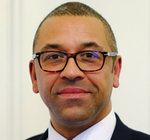
The comments made by James Murray, the Secretary of State for Health and Social Care, on 11 June 2026.
My thoughts are with the families who have suffered such unimaginable loss. These deaths are a heartbreaking reminder that measles is not a harmless childhood illness.
Measles can lead to serious complications that can be fatal, and the MMR vaccine, which has saved countless lives, remains the best protection we have against this highly infectious disease.
I urge all parents and carers to check that their children are up to date with their vaccinations as it is never too late to catch up – even if you miss a dose. By ensuring our children are vaccinated, we not only protect them but also help safeguard the most vulnerable in our communities.
The press release issued by the Foreign Office on 11 June 2026.
The UK, Australia and Canada have launched a peace fund to complement broader efforts towards a two-state solution.
Fund will prioritise long-term peacebuilding between Israelis and Palestinians to address root causes of conflict and support a sustainable two-state solution
Initiative jointly announced during meeting of three foreign ministers at Chevening
Will complement existing efforts to provide humanitarian support in Palestine, crack down on violent settlers, and support the 20-point Gaza peace plan
Ministers reiterate commitment to tackle antisemitism around the world, and end the security threat from Hamas
The UK is stepping up efforts to tackle the root causes of the Israel-Palestine conflict and support a path to a two-state solution by launching a new International Peace Fund.
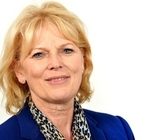
The announcement came as UK Foreign Secretary Yvette Cooper hosted her Australian and Canadian counterparts, Penny Wong and Anita Anand, for talks at Chevening on the Strait of Hormuz, the drive for peace in the Middle East, Ukraine and Sudan, and the global crisis of violence against women and girls.
The Peace Fund announcement forms part of the UK’s wider effort to use all available diplomatic, humanitarian and practical levers to support peace in Israel and Palestine. In partnership with Australia and Canada, the Fund will support practical, grassroots initiatives that bring communities together in order to rebuild trust, and reduce the divisions that harm the prospect of long-term peace.
As well as supporting existing programmes to improve their reach and capability, the Fund will also invest in new ventures, spanning all levels of society, from local community projects to support for dialogue between future leaders. Funding will go to a range of projects, particularly those that include youth groups, civil society organisations and women, with an emphasis on relationship building and creating opportunities for engagement that can underpin future peace negotiations.
Foreign Secretary Yvette Cooper said:
Peace, justice and security in the Middle East depends on a two-state solution and it is why our countries have recognised the State of Palestine alongside the State of Israel.
But too often Middle East peace is seen as an issue only of international diplomacy. When generations of Israelis and Palestinians have grown up with cycles of conflict and violence, we also need to support the local community organisations who are building dialogue, peace and trust across communities.
That is why the UK is launching the International Peace Fund with Australia and Canada, to support those working tirelessly to foster understanding between Israeli and Palestinian communities and create the conditions for the two states to live side-by-side in peace.
Alongside our international partners, we are clear that a negotiated two-state solution remains the only viable route to a just and lasting peace, with security and dignity for Israelis and Palestinians alike. This Fund will help support progress towards that goal from within those communities themselves.
The announcement reinforces the UK’s longstanding leadership in the field of peacebuilding, drawing on experience from similar efforts in Northern Ireland and ongoing work in the Western Balkans to address the underlying drivers of conflict.
This is the latest action taken by the UK to support peace in lockstep with international partners. On Tuesday, alongside Australia and Canada, the Foreign Secretary announced new sanctions on violent settlers in the West Bank to protect Palestinian human rights and clamp down on those harming prospects for peace.
Meeting at Chevening, the three ministers also affirmed their commitment to ensure that Hamas should be disarmed, disempowered and dismantled as part of the 20-point Gaza peace plan, so it can play no part in the future governance of Palestine, and pose no future threat to the security of Israel.
They also discussed the global rise in antisemitic hatred and violence, and reiterated their commitment to protect the freedom and safety of the Jewish communities that have been the target of appalling attacks in the UK, Australia and Canada over the past year.
Background
The UK, Australia and Canada have each put in £1m to launch the Fund. Once operational, the Fund will seek to bring on other donors and scale up efforts.
The Fund will complement diplomatic and humanitarian efforts by investing in the social and civic foundations needed for a sustainable peace and working with partners to mobilise wider international support.