Author: admin

  • PRESS RELEASE : Illustrious businessman Liew Kee Sin awarded top UK Honour [October 2022]

    PRESS RELEASE : Illustrious businessman Liew Kee Sin awarded top UK Honour [October 2022]

    The press release issued by the Foreign Office on 4 October 2022.

    Tan Sri Dato’ Sri Liew Kee Sin, Executive Chairman of Eco World Development Group Berhad, has been named an honorary Commander of the Most Excellent Order of the British Empire (CBE). Liew was honoured for his services to successful regeneration and development projects in the UK and for his contribution to the UK-Malaysia trade and investment ties.

    Liew, who was the Chief Executive of S P Setia Berhad, brought together a consortium including Sime Darby Berhad and the Employees’ Provident Fund Board in successfully bidding to redevelop the Battersea Power Station from an electricity-generating station lain dormant for decades into an integrated retail, office, leisure and housing real estate. He was appointed as the first Chairman of the Battersea Project Holding Company in 2012, a position he held until September 2015. Under his stewardship, the Battersea project was the largest ever inward investment from Malaysia into the UK.

    Liew also founded EcoWorld International Berhad (EcoWorld International), another prominent property developer in Malaysia. EcoWorld International has over the last decade entered into joint ventures with UK companies Ballymore and Willmott Dixon to deliver large development projects in the UK. Under Liew’s leadership, EcoWorld International has also helped to bring into the UK several new Asian lenders such as UOB and Bangkok Bank, in addition to existing Malaysian banks such as CIMB and Maybank who had been operating in the UK, as well as engaging UK companies in its supply chain procurement contracts.

    Reflecting on the honorary award, Liew said:

    I am deeply honoured to receive this award and would like to acknowledge the contributions of so many of my current and former colleagues, as well as bankers and business partners, in everything that we have collectively achieved together. I would also like to thank the British and Malaysian Government for their generous and unwavering support when the various projects and ideas for development, inbound and outbound investments were presented to them, which have contributed immeasurably to the success of both the Battersea consortium as well as EcoWorld International today in the UK. This treasured award will certainly motivate me to do more to make a positive difference as we all endeavour play a meaningful role to help make our shared planet a better place.

    H.E. Charles Hay, British High Commissioner to Malaysia, congratulated Liew:

    I am pleased that Tan Sri Liew has been recognised for his immense contribution to the bilateral trade and investment ties between the UK and Malaysia. The iconic Battersea regeneration development and other projects in the UK that he led, have created huge economic benefits as well as tremendous value in the green and regeneration agenda. His remarkable acumen, vision and determination are attributes admired by his peers and inspirational to others.

    Hay will present the honorary award to Liew on behalf of His Majesty King Charles III at a later date.

    Liew was also recognised as UK-Malaysia Business Personality of the Year by the British Malaysian Chamber of Commerce at their inaugural Business Excellence Awards in 2018.

  • PRESS RELEASE : Pakistan – EU allocates €30 million in humanitarian aid as Commissioner Lenarčič visits the country [October 2022]

    PRESS RELEASE : Pakistan – EU allocates €30 million in humanitarian aid as Commissioner Lenarčič visits the country [October 2022]

    The press release issued by the European Commission on 4 October 2022.

    Commissioner for Crisis Management, Janez Lenarčič, is visiting Pakistan this week following the unprecedented flooding emergency that resulted in a rapid deteriorating of the humanitarian situation. During his visit, the Commissioner announced €30 million in new EU humanitarian aid for Pakistan. This new funding aims to address urgent needs such as shelter, water and sanitation, food and nutrition, health, protection, education in emergencies and cash assistance, focusing on the most affected areas of the country, notably Sindh, Balochistan, Punjab, and Khyber Pakhtunkhwa. Given the scale of the crisis, psychological support needs will also be addressed.

    Commissioner Lenarčič said: “People in Pakistan are suffering the devastating consequences of an unprecedented flooding emergency. Our thoughts are with those who lost family members, friends and their own homes. What is more, many livelihoods have been lost. With this new funding, the EU reaffirms its continued support to Pakistan and stands by the most vulnerable to help them fulfil basic needs. Once again, however, nature reminded us of the impact of global warming. Mainstreaming disaster preparedness and prevention in EU funded projects will therefore remain our top priority within the provision of humanitarian assistance.”

    During his visit, the Commissioner met with Pakistan Prime Minister Shehbaz Sharif, Minister of State for Foreign Affairs Hina Rabbani Khar, and representatives of UN agencies. He also visited the water purification plant sent by Denmark through the EU Civil Protection Mechanism and an EU funded project supporting the response to the floods in one of the most affected areas in Sindh province. After this visit, he also met with humanitarian organisations and partners to discuss about the current situation.

    Background

    Since the start of heavy precipitations in mid-June 2022, the National Disaster Management Authority of Pakistan reported the death of over 1,600 people and over 12,800 people injured, and a staggering estimated total of more than 33 million people affected by the emergency and almost 8 million people displaced.

    The most affected districts are located in Sindh, Balochistan and Khyber Pakhtunkhwa, where floods caused widespread displacement, economic losses and other damages. Thanks to its solid presence on the ground, EU humanitarian staff performed missions to Sindh, Balochistan and Khyber Pakhtunkhwa to assess the situation and identify how the EU could best support Pakistan and its people.

    In the immediate aftermath of the emergency the EU released over €2.35 million in humanitarian aid and has been coordinating incoming aid offers from its Member States including Belgium, Sweden, France, Denmark, Austria, Greece and Slovenia.

    Following the request of assistance from Pakistani authorities, the European Civil Protection Mechanism also deployed one Liaison Officer and a team of experts to support operations and help coordinating the arrival of further assistance. The EU’s Copernicus satellite service has been activated to collect data to support the assessment of the situation in the most affected areas.

  • PRESS RELEASE : UN Human Rights Council 51 – Statement for the Interactive Dialogue on the High Commissioner’s Oral Update on Ukraine [October 2022]

    PRESS RELEASE : UN Human Rights Council 51 – Statement for the Interactive Dialogue on the High Commissioner’s Oral Update on Ukraine [October 2022]

    The press release issued by the Foreign Office on 4 October 2022.

    The UK Permanent Representative to the UK in Geneva, Ambassador Simon Manley, delivered a statement on the High Commissioner’s Oral Update on Ukraine.

    Thank you Mr President.

    Thank you Director for your admirably objective update.

    Two weeks ago the Commission of Inquiry confirmed that war crimes have indeed been committed in Ukraine, days after the liberation of areas in Kharkiv oblast revealed yet more Russian atrocities.

    Last week, President Putin purported to annex four regions of Ukraine – a blatant violation of Ukraine’s sovereignty and territorial integrity and of international law – and then used Russia’s veto to try to avoid the scorn of the Security Council.

    Today, you have made clear the horrors and the scope of Putin’s violations of human rights law and international law in the course of his war of aggression.

    Hospitals, schools, places of worship destroyed. Millions denied their basic rights to health, education and religion or belief.

    Sexual violence and rape, including of children. Civilians shot dead in the street trying to gather fuel, food or medicine.

    There are apparently no limits to Putin’s disregard for International Law, or to the Ukrainian people’s unspeakable suffering. And in Russia, those enough to protest the war and mobilisation face arrest and abuse in detention. Aggression abroad, repression at home.

    There is one simple way to end the suffering in Ukraine. President Putin: bring your troops home. End the war. Respect the law.

    Director,

    Faced with Russia’s continued flouting of international law, how can the OHCHR minimise the devastating impact on ordinary people.


  • PRESS RELEASE : Reforming teachers’ pay: government sets out case [May 2012]

    PRESS RELEASE : Reforming teachers’ pay: government sets out case [May 2012]

    The press release issued by the Department for Education on 16 May 2012.

    Education Secretary Michael Gove has today submitted evidence to the School Teachers’ Review Body (STRB) – the independent body which makes recommendations on teachers’ pay reforms.

    He has set out a strong case for reform, to free up the current system of teachers’ pay to ensure that teaching is a rewarding and attractive career.

    The evidence highlights that in order to drive up the quality of teaching and standards in schools, we need arrangements for teachers’ pay which:

    • reward good performance and attract the highest performing graduates and professionals into the profession;
    • give schools as much freedom as possible to spend their money as they see fit to meet their pupils’ needs;
    • ensure the best teachers are incentivised to work in the most challenging schools; and
    • provide the best value for money for the taxpayer.

    Earlier this month, a major survey of teachers found widespread support for a link between teachers’ pay and their performance, with three-quarters of teachers believing that annual salary increases should be linked to performance.

    Evidence shows that improving the quality of teaching is essential to driving up standards in schools. Pupils taught by good teachers score nearly half a GCSE point more per subject than pupils taught by poor teachers. The impact is even more significant for pupils from disadvantaged backgrounds, according to the Sutton Trust. For poor pupils, the difference between a very good teacher and a bad teacher may be a whole year’s education.

    The Government’s initial teaching training (ITT) strategy – Training our next generation of outstanding teachers – published last year set out reforms to attract the best graduates into the profession. However, the current teachers’ pay system is too rigid, complex and difficult to navigate. It does not support schools in recruiting and retaining the best into the profession.

    Under the current system:

    • automatic pay progression means there is a poor link between a teacher’s performance and reward;
    • national pay scales mean schools in some parts of the country struggle to recruit and retain good teachers, while others may be paying salaries which are significantly above local professional pay levels; and
    • a number of other barriers prevent schools from responding to local labour market conditions.

    In February this year, the Secretary of State commissioned the STRB to consider how reforms could be made to address this, along with teacher shortages in specific subjects and in certain areas of the country.

    As a first stage in the process, the STRB has called for evidence from a wide range of stakeholders, including the Government and teacher and head teacher unions.

    The Government sets out a number of possible options for reform for the STRB, as the experts, to consider. These include:

    • varying level of prescription in national pay arrangements;
    • setting a minimum and or maximum pay level; and
    • exploring the possibility of having local pay zones.

    Education Secretary Michael Gove said:

    Ensuring there are enough teachers, and that those teachers are of the highest quality, is critical to driving up standards in our schools.

    Reform of the current pay system for teachers is fundamental to driving up teacher quality. The current pay system is rigid, complex and difficult to navigate. It does not support schools to recruit and retain the high quality teachers or leaders they need to address specific shortages and benefit their pupils.

    I look forward to the STRB’s recommendations in due course.

    Following careful consideration of all the evidence submitted, the STRB will make recommendations for reform to the Secretary of State in the autumn. He will then, after considering the recommendations and having listened carefully to the profession’s view, ask the STRB to produce more detailed recommendations for implementation of the preferred options for reform. It is expected that the accepted recommendations will start to be implemented from September 2013.

  • PRESS RELEASE : Charlie Taylor speaks about behaviour at the Academies Show [May 2012]

    PRESS RELEASE : Charlie Taylor speaks about behaviour at the Academies Show [May 2012]

    The press release issued by the Department for Education on 16 May 2012.

    Charlie Taylor, the government’s adviser on behaviour, speaks at the Academies Show on helping children who are in difficulty.

    In our society when a child becomes ill we reach out to them, we instinctively keep them close and look after them. This response is sadly not always the case when children become emotionally distressed, especially when this distress is communicated through violence and aggression. Rather than being helped, children in difficulty are often pushed away and ignored. Let’s look at the numbers, only 1.4 per cent of pupils who go to PRUs leave with five good GCSEs, that is one fortieth of the percentage for children in mainstream school. The Ministry of Justice in research after the riots revealed that 86 per cent children in the criminal justice system had been in alternative provision.

    Don’t get me wrong, these children can be extremely difficult to manage and they take an enormous toll on their teachers and their classmates. Many cannot, nor should remain in mainstream school, but we must have a system that gives them what they need to change. If we don’t then we will all pay a heavy price as we saw last summer.

    In September last year as a result of the riots, Michael Gove asked me to conduct a review into Alternative Provision (AP) including Pupil Referral Units (PRUs). Many of the children in the riots had been excluded from school and were growing up on the streets. Children like these who crave boundaries and companionship look elsewhere for it, and for many, a local gang provides the structure and a sense of belonging that has been missing at home or school.

    In many cases schools send pupils who are in danger of exclusion to an alternative provider. This provision can be anything from a day a week doing car mechanics to a full-time college course. The best are terrific, but in my travels round the country for the review I was been shocked by what some schools are doing. They find the cheapest provider, irrespective of quality. Sometimes they pay less money than they receive from the government for each pupil.

    There is virtually no accountability in the system for the way schools use AP. With a lack of incentive or direction from schools, the worst alternative providers are little more than holding pens to keep children quiet until they leave school. They become prolific at pool or sit on Facebook all day, without making academic or any other meaningful progress.

    Commissioning is piecemeal, there are no follow up meetings and no targets set for the alternative provider or the pupil. The message is pretty clear – “I don’t care what you do with this pupil as long as I never have to see him again.”

    Children who are excluded from school usually end up in a PRU. The best PRUs do a remarkable job of engaging their pupils, helping them to change their behaviour and providing outstanding teaching which helps the pupils to move successfully on to the next phase of their life.

    But many are bleak, depressing places where children fail to make any meaningful progress.

    Often these PRUs are the council’s provision of last resort for children who, for all sorts of reasons, aren’t in mainstream education. There is a one-size-fits all approach that means that children with severe behavioural issues are in the same unit as, for example, a girl who has been severely bullied.

    PRUs are often remote from the schools from where they have inherited pupils. There is not sharing of expertise from PRUs to schools on improving behaviour – or from schools to PRUs in improving learning.

    Schools fund their local PRU through a top slice of their Dedicated Schools Grant whether they use it or not and irrespective of whether it is any good.

    The Government is trying out a new approach to exclusions whereby schools remain responsible for the education of children they permanently exclude, but they, rather than the local authority receive the funding.

    Cambridgeshire has developed this approach and the results have been impressive. The PRU has fallen in size from 700 places to just 150. Schools are using the money to make early provision for children before they have gone so far off the rails that exclusion becomes the only option.

    This policy provides great opportunities for academies, they can now open alternative provision free schools in order to support these children. In September, East Birmingham Network free school will open. A group of mainstream schools have got together, pooled resources and expertise in order to provide for their most challenging children. What a fantastic, creative solution – imagine the possibilities nationally: the best academies bringing their academic rigour and first class teaching combine to create bespoke, effective provision for their most difficult and vulnerable children. They know their pupils, they know what they need to flourish and they will create free schools that will make a significant difference to the life chances of these children. More applications from groups of schools and academy chains to open alternative provision free schools are in the pipeline as head teachers begin to realise the possibilities.

    From September this year the first PRUs will convert to become alternative provision academies. They are going to follow a range of routes from multi-academy trusts, to sponsored solutions to stand alone academies. In PRUs there are some of the best leaders in the education world and as academies they will be able to grow and adapt to the needs of their pupils and to those of local schools. No longer will they have to be pushed and pulled by the whims and priorities of local authorities as many currently are. They will sit in the heart of their communities using their expertise to help schools to help our most difficult children to succeed.

    This government is changing the education world in England, the opportunities are limitless. We are already seeing how academies are transforming the lives and the life chances of our children. But as we head onwards we must not leave our most vulnerable children trailing in our wake. By setting up free schools or supporting or sponsoring their local PRUs academies will ensure that truly no child is left behind.


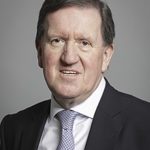
  • George Robertson – 2022 Tribute to HM Queen Elizabeth II (Lord Robertson of Port Ellen)

    George Robertson – 2022 Tribute to HM Queen Elizabeth II (Lord Robertson of Port Ellen)

    The tribute made by George Robertson, Lord Robertson of Port Ellen, in the House of Lords on 10 September 2022.

    My Lords, ordinarily on such occasions the repetition of words and sentiments can be tedious and unproductive. Too often we hear, “Everything’s been said, but not yet by everyone”, or the House of Lords equivalent, which is, “Everything’s been said, but not yet by me.” However, in the last 48 hours the repetition of such words as duty, service, honour, decency, commitment and dedication does not jar at all; it seems both appropriate and fitting when they apply to the 70 year-long reign of the late Queen Elizabeth. She set a standard and a vector against which all who serve in public life can and indeed should be measured, and we should be profoundly grateful for that example, as well as for so many other things. Indeed, she was the gold standard—the glue that kept a fractious country together when multiple pressures of populism and extremism were tearing, but never destroying, our communal fabric. With our latest Prime Minister and the nation facing serious crises in energy, the cost of living, health and a foreign war, her example of cool, clear thinking is more necessary than ever it was.

    As these two days of debate have shown, we all have memories of Her Majesty the Queen, especially those of us who had the opportunity to meet her. My latest one was of returning last year the insignia of the Chancellor of the Order of St Michael and St George by Zoom. I have to say that she was a lot more comfortable with the situation then I was. “Come forward”, she demanded, “I can’t see you”, as I nervously walked towards the screen at the end of the long room.

    However, I have another vivid memory, of her visit in 1996 with the Princess Royal to Dunblane after the ghastly murders in the primary school. The noble Lord, Lord Forsyth, was the Scottish Secretary at the time and the local MP. I was his shadow and both a local resident and a parent. We were, at that time anyway, tough political adversaries, but we had been welded together by the tragedy in that small community. We witnessed that day the monarch, with just her presence and simple words, speak to and for a grieving town and indeed a shell-shocked nation. It helped immeasurably to bind some of the gaping wounds of that time, and that was her powerful effect.

    Another, more pleasant memory I have is of when, as Defence Secretary, I brought the then Crown Prince of Saudi Arabia, Crown Prince Mohammed, to Balmoral to meet the Queen. After our lunch, he accepted an offer from her to see the estate but, boy, was he astounded, coming from a country which banned women from driving, to find the Queen behind the wheel of the Land Rover and rolling off without the rest of the party. I was at the castle entrance when they all came back. She looked at me and said, “I think he thought I was driving too fast.” I said nothing at all. Then she said, “I also think he thought I was lost.” I bravely said, “Well, you can’t get lost. You’re the Queen, and where you are is where you’re supposed to be.” She frowned at me and then said emphatically, “Quite right”, and marched away. Soon after that, the Crown Prince became King of Saudi Arabia, and belaboured every visiting Brit with stories of the Queen’s mad driving.

    My final point is to talk about the Queen’s deep loyalty to the Commonwealth; my noble friend Lord Boateng also mentioned that. When she made that famous pledge to preserve and protect the Commonwealth at the point when she took the Throne, it was not some nominal pledge or promise, it was to her a sacred commitment. That passionate commitment to the unique and precious club of like-thinking nations that is the Commonwealth was to matter to her over all her years, especially those years when not a few irritated politicians would quite happily have strangled the organisation. Getting past the Queen, dispassionate and non-partisan as she might well have been, would have required a lot more tenacity and political force than is possessed by any mere politician yet to be born. The Commonwealth survives and thrives because of Her Majesty and her promise.

    Last night, as so many have said, the new King spoke to the nation with raw personal feeling about the loss caused by the Queen’s death and what it meant to the Royal Family. It was a moving and incredibly significant address. The fact is, however, that we are all her family, and he spoke for us in our loss as well. He becomes King at a momentous time and we must, with memories of his mother fresh in our minds, wish him the very best in his demanding new role. The family that is his nation is with him.

  • George Carey – 2022 Tribute to HM Queen Elizabeth II (Lord Carey of Clifton)

    George Carey – 2022 Tribute to HM Queen Elizabeth II (Lord Carey of Clifton)

    The tribute made by George Carey, the former Archbishop of Canterbury, in the House of Lords on 10 October 2022.

    My Lords, I was not intending to contribute to the tributes today until last night, when I realised that we are weaving a tapestry that all our memories, recollections and stories can be part of and which other generations can read in years to come, learning from the mistakes as well as the lessons that our generation can contribute in the light of the Queen’s amazing reign. I was her fifth Archbishop of Canterbury. We have had 15 Prime Ministers, but we archbishops seem to endure a little longer than our political colleagues. Long may that endure. However, that means that if you are an archbishop or a bishop, you have very close relationships with the Royal Family.

    I see it as like a hive in which there are lots of parts. Obviously there is Westminster, Sandringham, Windsor and the clergy, which together form a generous establishment. That generosity came out in the most reverend Primate the Archbishop’s speech yesterday when he referred to the umbrella. During the Queen’s time she gave access to that. She made us all feel very welcome. This is no longer the Church of England dominating. We have a Catholic presence in this country that is strong and vigorous, and we saw the impressive contribution that our present King Charles has made to Muslim-Christian secular dialogue.

    In my decades I had no royal wedding, sadly, and I even missed two baptisms because I was abroad. However, I had more than my fair share of funerals, such as that of Princess Margaret, who became a very dear friend. I anointed her on her deathbed, and my wife Eileen, who is here, was with me on that occasion. I spent a lot of time with the Queen Mother and learned a lot from that very loving and distinguished lady, who died at the age of 101, and I was able and privileged to preach at her funeral service.

    Princess Diana’s death moved me in a very sad way. I saw through her something of the value of a verse in Jeremiah 1 about the role of politics to destroy at times but then to build up. I have to say—I have discussed this with Her Majesty and members of the Royal Family—that I saw Her Majesty’s strong faith and fortitude as she resisted all the destructive power that could have destroyed the Royal Family but which did not because of her strength of character. However, I also saw something that is important for our own time as we now support King Charles III, which is to do with the fourth estate: the power of the press to destroy as well as to build up. I hope that we as part of Parliament can make our contribution to building up, strengthening and getting behind our King, as well as giving thanks to a remarkable woman, but also to say to the press today, “It’s your job also to join us in building up so that we can pass on the real lessons of what it is to be a land that is focused on building up the young and the strong today.” We give thanks to Her Majesty and we pray for King Charles III.

  • Alex Neil – 2022 Comments on the Death of Ian Hamilton

    Alex Neil – 2022 Comments on the Death of Ian Hamilton

    The comments made by Alex Neil, the former SNP MSP for Airdrie and Shotts, on Twitter on 4 October 2022.

    Very sorry to hear that Ian Hamilton has passed away. Ian’s daring recovery of the Stone of Destiny along with Kay Matheson and others will be remembered for a thousand years. He was a man of distinction, a great thinker and a true patriot.

  • Caoimhe Archibald – 2022 Comments on Conservative’s Economic Policy

    Caoimhe Archibald – 2022 Comments on Conservative’s Economic Policy

    The comments made by Caoimhe Archibald, the Sinn Fein’s Economic Spokesperson, on 3 October 2022.

    The British Chancellor has again defended his outrageous mini-Budget that will line the pockets of the rich, push up mortgages and do nothing to support ordinary people.

    And to add insult to injury, the Tory chancellor has now announced his intention to attack public services with cuts amounting to £18 billion following a decade of Tory assaults on health and other services.

    Rather than u-turning on just one part of their scandalous budget, the Tories should scrap the whole thing and instead invest in our public services and help workers, families and small businesses who are struggling.

    We need an Executive up and running immediately so that locally elected ministers can work together to put money in people’s pockets. The DUP must end its cruel boycott now.

  • John Finucane – 2022 Comments Calling for DUP to End Boycott of Executive

    John Finucane – 2022 Comments Calling for DUP to End Boycott of Executive

    The comments made by John Finucane, the Sinn Fein MP for North Belfast, on 4 October 2022.

    DUP representatives are tripping over themselves to double down on their shameful boycott of the Executive and dereliction of duty during a cost-of-living emergency.

    Inflammatory language such as what was used today is irresponsible and does nothing to help reach a resolution.

    They are also clearly having trouble respecting democracy and refusing to accept the democratic outcome of the Assembly election.

    Sabre-rattling and threats do nothing for people who are suffering on hospital waiting lists and people who are struggling to heat their homes.

    It’s time Jeffrey Donaldson’s party stopped sitting on their hands, ended its cruel boycott and turned up for work on behalf of the people who elected them.

    Sinn Féin is ready to form an Executive today, to work together with others, and put money in the pockets of workers and families. They need help now.