Author: admin

  • Cledwyn Hughes – 1967 Statement on Aberfan Inquiry

    Cledwyn Hughes – 1967 Statement on Aberfan Inquiry

    The statement made by Cledwyn Hughes, the then Secretary of State for Wales, in the House of Commons on 26 October 1967.

    I beg to move, That this House takes note of the Report of the Tribunal appointed under the Tribunals of Inquiry (Evidence) Act 1921 to inquire into the disaster at Aberfan (House of Commons Paper No. 553). Just over a year ago this House and the whole world was shocked to learn of the dreadful tragedy which had occurred at Aberfan, a small mining village near Merthyr Tydfil. Hundreds of thousands of tons of colliery waste suddenly moved down the steep mountainside and overwhelmed a large part of the junior school and a number of houses in the vicinity. Desperate efforts at rescue were made by those nearby, who were joined by others who poured into Aberfan from all over South Wales and beyond, but no one was taken out of the ruins alive later than two hours after the first movement of the tip, and a hundred and forty four persons, the majority of them young children, lost their lives.

    As soon as news of the tragedy reached me I went immediately to Aberfan to see whether I could be of use. After seeing the site my first concern was to clarify the division of responsibility for the work that was going on. The Chief Constable of Merthyr had been placed in overall operational charge, and I confirmed this. The National Coal Board was asked to concentrate on the stabilisation of the tip, and the local authority was asked to take full responsibility for all the rescue work. The other local authorities, who had so readily and promptly come to help, willingly accepted my invitation to put their resources temporarily under the control of the officials of the Merthyr Tydfil Borough Council.

    Later that evening I was joined by my right hon. Friend the Prime Minister, who made it clear that the whole of the resources of the Government were at my disposal for the rescue operation. Other colleagues in the Government also came to the site.

    I have already in this House thanked all those who took part in the rescue operation for the splendid work which they performed in the most harrowing circumstances.

    No time was lost in setting up a Tribunal of Inquiry into all the circumstances of the disaster and we were fortunate to secure the services as Chairman of Lord Justice Edmund Davies, a Welshman born and bred in a neighbouring valley and renowned for his distinction as a lawyer and for his humanitarian sympathy, and as members of the Tribunal with him, Mr. Harold Harding, the eminent civil engineer, and Mr. Vernon Lawrence, the greatly respected former Clerk to the Monmouthshire County Council.

    Lord Justice Edmund Davies promptly visited the scene of the disaster and arrangements were quickly made for the Tribunal to sit at Merthyr Tydfil and a preliminary meeting was held on 8th November. The proceedings were opened on 29th November by my right hon. and learned Friend the Attorney-General, and so began what was to prove the longest inquiry of its kind in British legal history.

    Written statements were taken by the Treasury Solicitor from all who wished to give evidence, about 250 witnesses in all, and of these 136 gave oral evidence also, being examined and cross-examined by counsel and questioned by members of the Tribunal. Including the preliminary meeting the Tribunal sat in public for 77 days, first at Merthyr Tydfil and later at Cardiff, and commanded, I believe, universal admiration for their patience and thoroughness in elucidating the facts. The Tribunal finally rose at the end of April and the members then addressed themselves to the massive task of sifting the evidence and drawing up their report and recommendations.

    As the House knows, the Chairman placed a copy of the Tribunal’s Report in my hands in the latter half of July and it was printed by order of the House and published on 3rd August. It is not my intention to go through the Report, but I am sure that it would be the wish of the House that I should express our admiration for the high sense of duty with which the Tribunal applied itself to its most onerous task and our gratitude for its findings and for its recommendations on the measures needed to prevent a recurrence of such a disaster. These findings and recommendations, as has been made clear already, have commanded general acceptance by Her Majesty’s Government. We are all much indebted to Lord Justice Edmund Davies and his colleagues who have performed a great public service.

    Before I come to action taken on receipt of the Report, I should like to say a word or two about action taken during, and even before, the sittings of the Tribunal. Immediately after the disaster the National Coal Board ordered an inspection of all tips, active or disused, in the Board’s ownership and my right hon. Friend, the Minister of Housing and Local Government and I invited local authorities in England and Wales, invoking the assistance of the National Coal Board as necessary, to arrange for an inspection of all tips in private ownership. These measures disclosed potential instability in several tips and appropriate precautions were taken and remedial action put in hand at once.

    The incidents which occurred during the heavy rains of last week, however, although relatively minor in character, demonstrated that some tips can still present problems and that much remains to be done. As hon. Members will hear from my right hon. Friend who hopes to wind up this debate, the efforts of the National Coal Board, the Government, and all concerned, are being directed to ensure that all problems, both large and small, can be foreseen and promptly dealt with.

    One of the results of the disaster at Aberfan was to give a new stimulus also to the effort to clear up the land left derelict by industrial processes of the past, a problem of which everyone has long been uncomfortably aware, especially in the mining valleys of South Wales. The objective of this effort is not only to reclaim land now useless so that it may be available for industry or housing or other beneficial use, but also to make these areas more attractive to incoming industry and for those who live in them. To pursue this objective more effectively, shortly after the disaster I set up in the Welsh Office in Cardiff a Derelict Land Unit to work closely with the local authorities in preparing schemes of rehabilitation and getting them carried out.

    With the co-operation of the Board of Trade, progress has already been made to an extent which is, I think, most encouraging. So far, the unit has had discussions with 60 local authorities and has visited 115 derelict sites, covering approximately 2,650 acres, in 42 of these local authority areas. The unit has been asked to help by preparing outline proposals for 48 sites, covering about 1,000 acres, and has prepared such proposals for 10 of these sites and is at present engaged on preparing them for others.

    The first stage of one large tip scheme has been completed and work on others is well under way—for example, work on the huge Lewis Merthyr tip in the Rhondda, being done in conjunction with a coal recovery operation. Achievement of the objective inevitably takes a very long time. One cannot heal in a day the scars of great wounds made over generations. It is a task of great magnitude. But during this past year much more work has been done or started than in the whole of the preceding five years—and the way has been prepared for a much accelerated rate of progress in the future.

    The National Coal Board has also changed its basic structure and now has three levels of authority instead of the former five. This change, which was in hand before Aberfan for other reasons, should go a long way to reducing the difficulties of communication to which the Tribunal drew attention. This reorganisation took effect from the beginning of April this year. The Board’s civil engineering organisation has also been strengthened and a post of area civil engineer has been created in each area. The many detailed measures which the Board has taken to improve its organisation and avoid blurring of responsibilities are summarised in a note which has been made available in the Vote Office by my right hon. Friend the Minister of Power.

    Now to return to the Report. The oral evidence tendered to the Tribunal was recorded in a daily transcript which was made available to all the parties appearing before the Tribunal, and of course, to the Tribunal members. Copies of the written evidence received a similar circulation so far as the number of copies available permitted. The Tribunal, in its Report, quotes freely from both the oral and the written evidence and the Report promised the publication of the papers recording the results of the investigations carried out, in view of their scientific interest and importance.

    Arrangements for the publication of this material are well forward, but I must tell the House that the volume is unlikely to appear before next Easter. The reason for this is that it is necessary to redraw, so as to render them suitable for printing, the large number of maps, diagrams and drawings which accompany the text. To publish the text alone would be simpler, but useless, as much of it is a commentary on the illustrations drawings and diagrams. The work is going ahead with all speed and I am told that those who are familiar with the processes of printing scientific documents will be well satisfied if the date I have mentioned can in fact be met.

    Now I come to the Tribunal’s lessons and recommendations and the action which is being taken, or has already been taken, to implement them. Some, as the Tribunal pointed out, require legislation and this is being prepared with a view to its being introduced next Session.

    One of the Questions to be considered is what should be done about the remaining tips at Aberfan. I say “remaining tips” because, during the course of the very extensive work which has been done by the National Coal Board since the disaster, to ensure safety, the rest of the disaster tip has virtually disappeared, and the area of hillside over which it slipped has been cleaned up and covered with a new growth of grass.

    In the spring of this year, the National Coal Board commissioned a landscape consultant, who has lived 20 years in Wales, to prepare a scheme taking into account all the considerations. This scheme, illustrated by a large scale model, was explained to representatives of the Aberfan Parents and Residents’ Association, accompanied by their expert advisers, and to representatives and officials of the Merthyr Tydfil Corporation, at a meeting in the Welsh Office a week ago, under the chairmanship of my hon. Friend the Under-Secretary of State. The model is now on display in the village of Aberfan.

    This scheme incorporates all the further safety measures proposed by all the expert advisers who gave evidence before the Tribunal. Apart from these further safety measures, the proposals involve reducing the height of the tips, smoothing the contours, and sowing and planting the whole area below the area of burning tip material with grass, gorse, broom and a variety of trees, including some fairly large transplanted trees.

    I understand that the preliminary civil engineering works—that is to say, the further drainage measures, the removal and redisposition of substantial quantities of tip material, and the terracing—can be completed in about a year. If a beginning is made soon, perhaps all and certainly the greatest part of the sowing and planting can then be done in the planting season of the winter of 1968–69; and, by the spring of 1969, not only would the whole of the tips complex be greatly altered in outline, but also the whole of the area below the burning tips would be green.

    Most of the Tribunal’s recommendations are of general application. First of all, the Tribunal stated that tips should all be regarded as potentially dangerous, although the Tribunal recognises that the dangers mainly arise with active working tips; secondly, tips should all be treated as engineering structures and, therefore, the procedures of preliminary site investigation and subsequent control customary in other branches of civil engineering should be applied. These two propositions are accepted by the National Coal Board and are already being acted on. I commend them to all who are in any way concerned with spoil heaps, whether connected with the coal industry or not.

    I have already mentioned the new structure of the National Coal Board, which will improve, among other things, the state of internal communications. The observations of the Tribunal upon this aspect are not, I am sure, unheeded by many—and I am not now referring only to the coal industry—who have had occasion to consider how their own conduct would have stood up to a similar searching inquiry. I am sure that all hon. Members would agree that there is a lesson here for us all, for everybody engaged in any enterprise where more than a handful of people are involved.

    My right hon. Friend the Minister of Power proposes to appoint a National Tip Safety Committee to advise him, and perhaps other Ministers, also, on problems affecting the stability of tips. Discussions are now going on as to the terms of reference such a Committee might have and I hope to see it constituted in the very near future. The Committee, when set up, will be asked as one of its first tasks to consider a standard code of practice.

    The Tribunal’s recommendations which require legislation fall mainly within the field of my right hon. Friend the Minister of Power, who will be replying to this debate on behalf of the Government, though there is one matter affecting local authorities which is in the field of my right hon. Friend the Minister of Housing and Local Government and myself.

    My right hon. Friend the Minister of Power is preparing legislation to amend the Mines and Quarries Act, 1954, so as to give effect to those of the Tribunal’s recommendations which require new legislation. He will give the House details of his proposals and the House may take it that they will be comprehensive. Broadly speaking, the Ministry of Power and the Mines Inspectorate will be given the additional powers and duties recommended by the Tribunal and tips forming part of active mines and quarries will be regularly inspected by persons competent to judge their stability.

    I should like myself to say something about the powers and responsibilities of local authorities, although details will need to be worked out in consultation with local authority associations. If any local authority has any reason to fear that a working tip presents a hazard, it should at once inform the Ministry of Power or the local Inspector of Mines. The Ministry will immediately make an investigation and, if need be, require the owner to carry out tests or remedial work. If the local authority is still not satisfied, the matter can be referred to an independent arbiter, who will be empowered to order further work to be done.

    In the case of a disused tip which gives cause for anxiety, a local authority should also get in touch with the Ministry and obtain the advice of the Mines Inspectorate. In the light of this advice, the local authority could decide whether there was a prima facie case of instability. The authority would be empowered to require the owner to carry out specified tests and to furnish a report and also to carry out specified remedial work. The local authority would also have default powers to carry out tests or do the works themselves or appoint contractors to do so. If the owner objected to any test or remedial work, he could appeal to the Minister of Power.

    These proposed arrangements should go far to ensure that local authorities are fully empowered to protect the inhabitants of their area—a protection which, as the Tribunal pointed out, it is every citizen’s right to expect.

    Besides safety, there is the question of the general appearance of working tips. The local planning authorities are able to control this by imposing conditions when they grant planning permission. This applies both to tipping operations and also to the recovery of material from disused tips.

    I now turn to a subject on which the Tribunal very properly made no recommendation, though no small part of its Report was concerned with it, namely, the responsibility of individuals for the disaster and the strictures passed on other individuals whose conduct was censured by the Tribunal. This aspect of the Report has received long and anxious consideration by the Government, by my right hon. Friend the Minister of Power and by the National Coal Board. My right hon. and learned Friend the Attorney-General came to the conclusion that the facts disclosed by the Report did not justify the institution of criminal proceedings. My right hon. Friend the Minister of Power did not accept the offered resignation of the Chairman of the National Coal Board and made known his reasons for asking Lord Robens to continue in office. Those individuals named in the Report who are still in the service of the National Coal Board have been moved to other work.

    In paragraph 210 of the Report the Tribunal referred to “the vastly disagreeable task of censure” which the sense of public duty of its members obliged it to carry out. In a moving passage in paragraph 207, the Tribunal expressed its belief that Whether or not named or adversely referred to in this Report, there must be many today with hearts made heavy and haunted by the thought that if only they had done this, that or the other the disaster might have been averted. Of these, some will blame themselves needlessly; others, while blameworthy in some degree, will condemn themselves with excessive harshness; yet others must carry the heavy burden of knowing that their neglect played an unmistakeable part in bringing about the tragedy. There, in my view, the matter ought now to be allowed to rest.

    Finally, I should like to speak of the village of Aberfan as it is today. A sad anniversary has just passed and renewed the poignancy of grief for those who lost loved ones. But life must go on, and Aberfan is bravely facing the task of physical reconstruction and its families the no less difficult task of restoring mental tranquillity. Thanks to the wonderfully generous response of the public to the appeal for the Aberfan Fund, the resources are not lacking. But if the inhabitants are to find peace, they need a period away from the glare of publicity to which they have been exposed for so long. I appeal to everyone to give them the quiet they need to bear their burden of grief and to rebuild their shattered lives.
  • Emlyn Hooson – 1966 Comments on Aberfan

    Emlyn Hooson – 1966 Comments on Aberfan

    The comments made by Emlyn Hooson, the then Liberal MP for Montgomeryshire, in the House of Commons on 24 October 1966.

    On behalf of my right hon. Friend and my hon. Friends I would like to be associated with the expressions of sympathy which have followed this appalling tragedy. It is an appalling tragedy for the Welsh nation apart from anything else.

    May I also congratulate the right hon. Gentleman the Secretary of State for Wales on his appointment of Lord Justice Edmund Davies to conduct the inquiry. No one is better qualified to carry it out.

    I would also like to associate myself with the thanks and appreciation expressed in the House to all of those who have given such unstinting help in this terrible situation.

    Does the right hon. Gentleman not feel that it would be wiser, since this inquiry has now been ordered, if no one made statements as to the cause of this tragedy? It should be a matter for the tribunal to investigate rather than for anyone, however eminent, to make statements. Would he also reassure the House that the inquiry will not confine itself to the dangers from existing slag heaps in South Wales? From my own knowledge I can tell of one slag heap in North Wales, not owned by the National Coal Board, which gave some trouble some years ago. I am sure that the House is very pleased to hear the Secretary of State say that the legal position with regard to responsibility for these tips is being investigated by the Lord Justice Edmund Davies committee.

    Mr. Hughes The possible causes of the accident are a matter for the inquiry, and it is inappropriate and improper for me or anyone else to comment upon them.

    We are taking similar action in relation to tips in North Wales.

  • Kay Andrews – 2022 Tribute to HM Queen Elizabeth II (Baroness Andrews)

    Kay Andrews – 2022 Tribute to HM Queen Elizabeth II (Baroness Andrews)

    The tribute made by Kay Andrews, Baroness Andrews, in the House of Lords on 10 September 2022.

    My Lords, it has never been a greater privilege to be a part of this House and listen to some extraordinary speeches; they will last as long as this House does, I think. With humility, I want to share some of my own experiences.

    Last night, when we heard that extraordinarily magisterial and immensely moving speech from the new King, King Charles III, he made us remember some different aspects of our late Queen. He spoke of

    “a promise of destiny kept”

    and renewed that same promise of lifelong service. Of course, one of those promises that the Queen made was the one she made to the people of Aberfan, after the disaster in 1966 when 116 children and 28 adults died, that she would return. It was one of the defining moments of her reign and was not without controversy. For those of us who come from those valleys, it marked an extraordinary relationship. At that terrible time, the people of Aberfan were immensely and uniquely comforted by her. She was deeply affected; she sat quietly with them, sometimes quite silently.

    One of the bereaved families said, “She was with us from the beginning”, and she more than kept her promise to return. She went back four times, once to open the new school. She understood and paid tribute to the dignity and the indomitable spirit that characterises the people of that village and the surrounding valleys, and that rare gift exemplified so much of what made her so special to everyone she met. She understood grief. She had been brought up never to show her emotions, but she knew what people felt, and people knew that she knew. She knew that silence is more eloquent than words and she taught us that there is a unique value in silence.

    She also had a terrific zest for life. I experienced that because I am a member of the trade union of previous Baronesses in Waiting. She treated us with enormous respect and helped us understand the role. The humility in being present to greet a distinguished overseas Head of State who is expecting to meet the Queen and finds himself instead meeting an overenthusiastic and completely unknown Baroness is something you never quite forget. It teaches you a life lesson about expectations.

    Her Majesty honoured her promises and the sweep of history in so many other ways. One of the charities with which she had the longest association was the Charterhouse, the great medieval charity in the City so well known to Members of this House—there are many of its previous governors in this House. The Charterhouse has stood for 400 years as a symbol of philanthropy, one of the four buildings in London that Elizabeth I would recognise. There have been royal governors for 400 years. Elizabeth I made her base there after the death of Mary. For 400 years, Thomas Sutton’s will has been honoured in the community of elderly men and women who live out their final days there. I am privileged to be a governor and to have that duty of care now.

    The late Queen’s first visit was in 1958, after the restoration following the Blitz. Her final visit, some 60 years later in 2017, was to open our new museum, which revealed the Charterhouse in its full 700-year history. Like every governor, she would have had three brothers in her care. She caused some confusion occasionally by referring to them. Yesterday, our brothers honoured her and the love they feel for her when they tolled the Charterhouse bell 96 times for their royal governor, who joined hands over the centuries with that other great Elizabeth, 400 years ago. I have an image of those two Elizabeths sitting in the great chamber at the Charterhouse, conspiring together about how to get the best from their councillors.

    She also honoured her people in other ways. During her 60th Jubilee, in 2012, the first excursion that she made was to Burnley, on a freezing day. She travelled up the canal on the “Pride of Sefton”, with Prince Philip and the then Prince Charles, to see the transformation of Burnley mill into a new centre of technical education. It was one of many such projects to which our present King was committed for so long and with such success, and it enabled us at the Prince’s Regeneration Trust and English Heritage to bring back to life and to repurpose significant historic buildings which could bring new life to communities such as Burnley. The mill was put to work again, for another generation to learn how to master the future.

    That day, in that mill, on the threshold of its new life, the Queen spoke of her immense pride in all that her son had achieved, not just in the restoration of our physical heritage but in empowering so many young people, through the Prince’s Trust, to find the confidence and success to make their own place in history.

    It is no wonder that we have all felt so completely overwhelmed by hearing the accounts of people we have met, or those people I saw at Victoria Station this morning armed with bunches of flowers and on their way to Buckingham Palace. We are unmoored by the death of a Queen for whom duty was her signature on a page of history, as well as her love. We now have a new King who shares her values and who will, as he said last night, bring loyalty and love, warmth and empathy in connection. We are extremely lucky to have lived in her reign, and we will be lucky to live in his.

    God save the King.

  • PRESS RELEASE : When we challenge discrimination and progress gender equality, everybody benefits – UK statement at UN Third Committee [October 2022]

    PRESS RELEASE : When we challenge discrimination and progress gender equality, everybody benefits – UK statement at UN Third Committee [October 2022]

    The press release issued by the Foreign Office on 4 October 2022.

    Statement by Richard Croker, UK Ambassador to the General Assembly, at the Third Committee meeting on advancement of women.

    Thank you Mr Chair,

    Multiple and interconnected barriers are preventing women and girls from reaching their full potential. Where women and girls are unable to reach their potential, whole countries suffer. We know that when we challenge discrimination and progress gender equality, everybody benefits.

    The UK is committed to protecting and promoting women and girls’ rights and freedoms at home and abroad so that they can have their voice, choice and control over all aspects of their lives.

    Women’s rights are human rights, as enshrined by numerous conventions that the UK supports. Our ambition remains higher than ever, and we cannot be complacent when reviewing our progress.

    That is why we have committed to placing women and girls at the heart of our foreign and development policy, prioritising action on 3 areas: Educating girls; Empowering women and girls; and Ending violence.

    We know that achieving gender equality is fundamental to building democracies and accelerating progress on securing freedoms, prosperity and trade, as well as strengthening global security and resilience. Women’s knowledge and leadership strengthens decision-making, driving better, more sustainable, and fairer policies that benefit whole communities.

    Together, over many years, we have made real, hard-won progress on this agenda. There are more girls in school; fewer girls forced into early marriage; more women serving in high political offices and private sector leadership positions; and there have been encouraging legal reforms in many countries to address inequalities.

    However, progress has stalled. At the current rate, it will take 135 years to close the gender gap worldwide. Women and girls are, and continue to be, disproportionately impacted by crises, be it the COVID pandemic, conflict, or climate change.

    Take COVID as an example. At a global level, we have witnessed women shouldering the unpaid care burden and being hardest hit economically, deepening poverty for women and girls. There has been a global surge in gender-based violence, reduced access to sexual and reproductive health and rights; and increases in child marriage and adolescent pregnancy. An estimated 20 million girls will never return to school because of COVID.

    Recent months have also shown the deep resilience of the human spirit and of free societies, with women and girls on the frontline of and being affected by multiple brutal conflicts, including most recently due to Russia’s illegal invasion of Ukraine.

    Increasing authoritarianism is undermining democratic values, human rights and effective institutions and placing these hard-won gains under threat. Systematic attempts by several actors to roll back and reverse women’s and girls’ rights have gained momentum at the international and community level.

    In Afghanistan, twenty years of progress on women’s rights have been reversed. Afghan girls have been largely banned from secondary school for over a year, the only country in the world where this is the case.
    In Iran, the death of Mahsa Amini is a shocking reminder of the repression faced by women. No one should face violence because of what they wear, how they practice their beliefs or any expression of fundamental rights.

    The UK stands steadfast in its commitment to protect and promote women’s and girls’ rights. In particular, we must respect the bodily autonomy of women and girls throughout their lives by supporting them in exercising their sexual and reproductive rights, preventing all forms of gender-based violence and eliminating harmful practices including female genital mutilation and child, early and forced marriage.

    The UK has a long record of leading the charge against gender-based violence, including conflict-related sexual violence. This November, the UK will host a major international conference to promote prevention, justice and support for survivors, and strengthening the global response.

    Mr Chair,

    We are prepared to do things differently, to think differently, and to work differently to achieve true gender equality. We must act across multiple sectors and disciplines simultaneously and tackle the many forms of disadvantage that women and girls face, spanning age, race, disability, economic status, gender identity, religion/belief and geographical location.

    And we cannot do this alone. We will continue to work with our partners, including women’s rights organisations who are at the frontlines of this work, to deliver for women and girls everywhere.

    I thank you.

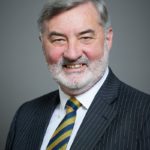
  • John Alderdice – 2022 Tribute to HM Queen Elizabeth II (Baron Alderdice)

    John Alderdice – 2022 Tribute to HM Queen Elizabeth II (Baron Alderdice)

    The tribute made by John Alderdice, Baron Alderdice, in the House of Lords on 10 September 2022.

    My Lords, it is a truism of politics generally—and, no doubt, of your Lordships’ House—that it is easier to make a long speech than a short one. In respect of Her late Majesty, all of us could speak at length with enthusiasm, passion and not a little sadness about our experiences of her, both closely and at a distance. I will restrict myself to two comments about not the personal relationship with her but what she achieved and represented. One is about international relations, which are an important matter for me. The other is about the Irish peace process, to which the noble Baroness, Lady Coussins, just referred.

    When Her Majesty came to the Throne, after two World Wars, there was a huge focus on creating an international rules-based order. There was a particular focus on the United Nations. For a long time, that was and continued to be an inspiring hope—perhaps until relatively recent times—because the United Nations Security Council is and was to be the pinnacle of international law. Now we find that two of its permanent members are, by any account, guilty of crimes against humanity. Were that to be the case of any of the members of our Supreme Court, we would lose faith in that jurisdiction.

    Others of Her Majesty’s Ministers focused a great deal on getting us into the European project or, more latterly, getting us out of it. But she had a different focus during all those years. She was supportive of what her Governments were doing, of course, but it was the Commonwealth that was her particular passion, as the noble Lords, Lord Boateng and Lord Robertson of Port Ellen, and the noble Baroness, Lady Coussins, rightly said. It is my conviction that, had it not been for her passionate commitment and that of the rest of the Royal Family, we probably would not have a Commonwealth today. Instead, we have an important network of relationships that some countries that were not even members of the British Empire have applied to join.

    Yesterday, I got off a plane to hear of Her Majesty’s death after a visit to Singapore at the invitation of the Singaporean Government. I have often found myself being critical of them. It seemed to me that they were not living up to some of the principles I felt were important. I came back, however, with a different set of feelings. They understand China in a way that we do not. They have a fellow feeling with India that we cannot have. They understand Asia and the West. If we are not to fall into a terrible war with China and others in the East, we desperately need that depth of understanding. It is an understanding that Her late Majesty the Queen had very deeply.

    I speak of the Irish peace process. In her Golden Jubilee year, 2002, Her Majesty visited not just the Parliament here but the Senedd in Wales and the Parliament in Scotland. I was advised by the Northern Ireland Office, however, that she would not be visiting the Northern Ireland Assembly of which I was Speaker because the Northern Ireland Office felt that it would cause difficulties. I said, “I see. You’re wanting to create a constitutional crisis.” “Oh no,” they said, “We’re trying to avoid trouble.” I said, “Well, how do you think unionists will respond if Her Majesty can go to every other Parliament but not to Stormont?” They said, “But it won’t go well.” I replied, “Just back off for a little while and give me a chance to talk to those involved.”

    I talked to Dr Paisley, who was very wroth because he was convinced that it would not be possible. I talked to others. Eventually, I talked to Alex Maskey, the then Chief Whip of Sinn Féin. I said, “Alex, you know, I want to be able to invite the Irish President here but I cannot invite her if Her Majesty cannot come.” “Ah,” he said, “We’ll have a chat about it.” So the ard chomhairle of Sinn Féin got together. You can imagine them speaking in Dublin about Her Majesty’s visit to Belfast. They came back to me, and the answer was clear: “We will deal with it with a dignified detachment. We won’t be able to be there but we won’t create trouble.”

    On the morning of Her Majesty’s visit, Gerry Kelly was interviewed on the BBC. My first response was a sinking heart. What would Gerry say? He was asked whether he would meet her. He said, “Well, if she’s going to hand the place over, I’d be very happy to meet with her, but I don’t expect that’s what she’s coming for. So we will deal with it with a dignified detachment.” Of course, that is what happened; they dealt with it appropriately.

    We went on to have the remarkable visit to Dublin and the meeting with Mary McAleese. Then, in 2012, we had the visit to Belfast where Her Majesty shook hands with Martin McGuinness. In 2002, it was dignified detachment. In 2012, it was dignified engagement. None of that would have happened had she not, by her whole life, person and example, demonstrated dignity in relations and respect for and mutual recognition of those with whom she and her country disagreed. She was a remarkable person. She has given those of us in my part of the United Kingdom a remarkable legacy, but we are fortunate because King Charles III is also part of her legacy. God save the King.

  • PRESS RELEASE : President of Ukraine had a phone call with the Prime Minister of India [October 2022]

    PRESS RELEASE : President of Ukraine had a phone call with the Prime Minister of India [October 2022]

    The press release issued by the President of Ukraine on 4 October 2022.

    President of Ukraine Volodymyr Zelenskyy had a phone call with Prime Minister of India Narendra Modi.

    During the conversation, the Head of State emphasized the importance of strengthening the Ukrainian-Indian partnership against the backdrop of Russian aggression against Ukraine.

    The holding of the so-called referenda by Russia in the temporarily occupied territories of our country was also discussed. The President noted that all the aggressor’s decisions aimed at attempting illegal annexation of Ukrainian territories are null and void and do not change reality.

    Volodymyr Zelenskyy emphasized that under such conditions, Ukraine will not conduct any negotiations with the current President of the Russian Federation, and noted that our state has always been committed to a peaceful settlement through dialogue.

    “However, Russia did not stand for dialogue and put forward ultimata instead deliberately undermining this process. During my speech at the session of the UN General Assembly, I outlined our clear formula for peace. We are ready to work together with our partners to achieve it,” added the President of Ukraine.

    Volodymyr Zelenskyy thanked Narendra Modi for India’s support of Ukraine’s sovereignty and territorial integrity, and also emphasized the importance of the Indian leader’s recent statement that now is not the time for war.

    The Head of State noted the significant humanitarian aid provided by the government and the private sector of the Republic of India to Ukraine.

    Volodymyr Zelenskyy and Narendra Modi separately discussed the issue of global food security. The President of Ukraine emphasized that our state is ready to continue acting as a guarantor of the world’s food security. In this regard, the support of the entire international community, in particular India, for the further implementation of the grain initiative is important.

    The interlocutors paid due attention to the issue of nuclear safety.

    “Nuclear blackmail by Russia, in particular regarding the Zaporizhzhia NPP, is a threat not only to Ukraine, but also to the whole world,” Volodymyr Zelenskyy said.

    Separately, the President of Ukraine and the Prime Minister of India discussed cooperation within international organizations, primarily the UN.

    During the conversation, the parties noted mutual interest in deepening regular full-scale Ukrainian-Indian contacts, as well as implementation of tasks on the agenda of bilateral relations of comprehensive partnership.

    The Head of State renewed the invitation to the Prime Minister of the Republic of India to visit Ukraine.

  • PRESS RELEASE : Andriy Yermak met with the President of the Republic of Poland Andrzej Duda [October 2022]

    PRESS RELEASE : Andriy Yermak met with the President of the Republic of Poland Andrzej Duda [October 2022]

    The press release issued by the President of Ukraine on 3 October 2022.

    During his stay in Warsaw, Head of the Office of the President of Ukraine Andriy Yermak met with President of the Republic of Poland Andrzej Duda.

    Andriy Yermak noted that Ukraine highly appreciates everything that Poland has done and is doing so that our country can endure and win a full-scale war with Russia.

    The Head of the President’s Office thanked Andrzej Duda for his steadfast support of our country and condemnation of the new attempt to annex the temporarily occupied territories of Ukraine by Russia.

    Andriy Yermak emphasized that the sham referenda held by the Russian Federation are worthless and do not change reality.

    “Ukraine will return what’s ours. The territorial integrity of Ukraine will be restored,” he emphasized.

    The interlocutors discussed further steps of the international community in response to Russia’s recent attempt to annex the temporarily occupied territories of Ukraine. The Head of the President’s Office emphasized that such steps should involve complete international isolation of Russia, strengthening of global sanctions, designation of the Russian Federation as a state sponsor of terrorism, further defense and macro-financial support for our country.

    Andriy Yermak and Andrzej Duda also discussed the interaction of Ukraine and Poland within NATO, in particular in the context of Ukraine’s application for membership in the Alliance.

    “We rely on Poland’s proactive support in the issue of Ukraine’s membership in NATO and the provision of international security guarantees to our state,” said the Head of the President’s Office.

    In this regard, Andriy Yermak separately emphasized the recommendations prepared by the International Working Group on Security Guarantees for Ukraine concerning the Kyiv Security Compact, the implementation of which the Ukrainian side will work together with partners.

    The interlocutors discussed the continuation of security aid to the Ukrainian army, as well as the urgent needs of the defense forces of Ukraine.

    In addition, the Head of the President’s Office emphasized the importance of prompt provision of defense support and its strengthening.

    Special attention was paid during the conversation to the issues of energy security and bilateral cooperation in the energy sector.

    The parties exchanged views on current issues of bilateral relations. Andriy Yermak positively assessed the progress achieved in increasing the capacity of checkpoints on the Ukrainian-Polish border and noted the importance of introducing joint border and customs control at all checkpoints.

    The Head of the Office of the President of Ukraine also thanked Andrzej Duda for being awarded the high state award of the Republic of Poland – the Grand Cross of Order of Merit of the Republic of Poland.

    “It is a great honor for me to receive this high award. I consider it as an award for the entire Ukrainian people,” emphasized Andriy Yermak.

  • PRESS RELEASE : Pursuant to the instruction of the President, Andriy Yermak presented the Gold Star Orders to five defenders of Azovstal, who were awarded the title of Hero of Ukraine [October 2022]

    PRESS RELEASE : Pursuant to the instruction of the President, Andriy Yermak presented the Gold Star Orders to five defenders of Azovstal, who were awarded the title of Hero of Ukraine [October 2022]

    The press release issued by the President of Ukraine on 3 October 2022.

    During a visit to Turkey, Head of the Office of the President Andriy Yermak, pursuant to the instructions of President Volodymyr Zelenskyy, presented the Gold Star Orders to five servicemen – defenders of Mariupol and Azovstal, who were awarded the title of Hero of Ukraine.

    The President awarded the highest state award to commander of the “Azov” separate special purpose regiment of the National Guard Denys Prokopenko (call sign Redis), his deputy Svyatoslav Palamar, acting commander of the 36th separate brigade of marines Serhiy Volynskyi (call sign – Volyna), senior officer of “Azov” Oleg Khomenko and commander of the 12th brigade of the National Guard Denys Shlega.

    The awarding ceremony took place during the meeting of Andriy Yermak and First Lady Olena Zelenska with Azovstal defenders and members of their families in Türkiye.

    “The units you led made an invaluable contribution to the future victory of Ukraine. You and your subordinates managed to bind the enormous forces of the enemy. Forces that were lacking for the occupation of larger territories,” said Andriy Yermak, presenting the order to Denys Prokopenko.

    The Head of the Office of the President emphasized that the defenders of “Azovstal” saved many lives in those territories that the enemy did not reach.

    “You won time, and this time was not wasted. And now we are returning our territories and our people. Ukraine will be free and united,” he said.

    During the meeting, a video call by President of Ukraine Volodymyr Zelenskyy was held. The Head of State congratulated the servicemen and thanked them for performing an important combat mission on the defense of Mariupol.

    “We are all proud of you. And I am extremely happy that your relatives are with you, I am happy that we have you. You are not just heroes, you are living heroes, and that is very important. I thank each and every one of you. And we will do everything to return your brothers-in-arms who are now in captivity. I am proud that we live in the same country, fight for it together and will definitely win. Glory to Ukraine!” said the Head of State.

    “The battle for Mariupol and everything that happened to us, the release from captivity, is a Ukrainian miracle in spite of everything. Everyone perfectly understands what would have happened to us. There are people here who know what Russian torture and Russian captivity is. And this award is the award of our warriors. This is the award of our Ukrainian people. I am very proud to be Ukrainian. This is the coolest nation in the world! And the coolest government and the coolest military,” said Svyatoslav Palamar, deputy commander of the Azov National Guard regiment.

    Olena Zelenska also congratulated the warriors on behalf of all Ukrainian citizens whom they protected and presented valuable gifts.

    The President’s wife conveyed to the defenders and their families a blessing from His All-Holiness Ecumenical Patriarch Bartholomew, whom she met the day before in Istanbul.

    “The main thing is that Ukraine fights and will fight for all our people. There are still many of them in Russian captivity – men and women, military and civilians. And we need each and every one. Alive,” said the First Lady.

    The defenders of “Azovstal” asked to hand over to Volodymyr Zelenskyy the flag of Ukraine with the signatures and wishes of five commanders and the motto “There is no glory without a fight.”

  • PRESS RELEASE : Head of Office of Ukraine’s President meets with chief adviser to President of Türkiye, adviser to US President on national security issues [October 2022]

    PRESS RELEASE : Head of Office of Ukraine’s President meets with chief adviser to President of Türkiye, adviser to US President on national security issues [October 2022]

    The press release issued by the President of Ukraine on 2 October 2022.

    As part of his visit to Turkey, Head of the Office of the President of Ukraine Andriy Yermak held a tripartite meeting with Chief Adviser to the President of the The Republic of Türkiye İbrahim Kalın and National Security Adviser to the President of the United States of America Jake Sullivan.

    The parties discussed the situation at the front and the coordination of measures to respond to the latest aggressive actions of the Russian Federation.

    The head of the President’s Office emphasized the need for Ukraine to obtain reliable international security guarantees before our country becomes a member of NATO.

    Yermak recalled that the International Working Group on Security Guarantees for Ukraine, which he heads together with former NATO Secretary General Anders Fogh Rasmussen, has prepared recommendations regarding the Kyiv Security Compact, the conclusion of which should provide the Ukrainian side with effective security guarantees for this transitional period.

    The head of the Office of the President emphasized the importance of a tough reaction to Russia’s holding of so-called “referendums” on the temporarily occupied Ukrainian territories and the adoption of an illegal decision on their annexation.

    “These referendums are worthless, they do not change reality. The territorial integrity of Ukraine will be restored. This is the principled position of President Volodymyr Zelenskyy, the entire military-political leadership of Ukraine and the Ukrainian people,” the head of the President’s Office said.

    The parties discussed the continuation of security assistance to the Ukrainian Armed Forces, the urgent priority needs of the defense forces of Ukraine, and the importance of promptly receiving such support and increasing it.

    Also, during the visit, Yermak held separate meetings with İbrahim Kalın and Jake Sullivan in bilateral formats.

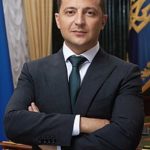
  • Volodymyr Zelenskyy – 2022 Statement on the Situation in Ukraine (04/10/2022)

    Volodymyr Zelenskyy – 2022 Statement on the Situation in Ukraine (04/10/2022)

    The statement made by Volodymyr Zelenskyy, the President of Ukraine, on 4 October 2022.

    Ukrainians!

    Today, I will also begin my address with a message about what happened in Türkiye.

    Finally, we managed to organize a meeting of our boys, commanders from “Azovstal”, with their relatives. The meeting is in Türkiye, where our warriors stay in accordance with the agreement on their release.

    They are completely safe – with the guarantees of President of Türkiye Erdoğan. They are provided with proper conditions. And now they can see their relatives.

    They have not seen each other for many months. And now I thank everyone who made it possible for them to be with their families again.

    And we will do everything to make such a meeting possible for the families of all Ukrainians who are still in Russian captivity one day – a meeting with their relatives.

    Ukraine appreciates people. Saves people. And helps all those who need help. These are fundamental rules for our state. And it will always be so.

    A large group of our officials continues the work on providing the necessary assistance to all those released from Russian captivity. As you understand, there are a lot of issues. This is not only treatment and rehabilitation, but also a large volume of social issues, often legal. The state will certainly help solve all of them.

    At the same time, everything is being done quite intensively at various levels of government to restore normal life in the areas liberated from the occupiers.

    In total, these are more than 450 settlements in the Kharkiv region alone – those that were liberated thanks to the defense operation that began in September and is still ongoing.

    The work of transport, post office, police, normal supply of water, gas, electricity is being restored – as much as possible. The occupiers left many mined areas, many tripwires, almost all infrastructure was destroyed. The damage is colossal.

    But life is returning – it is returning wherever the occupiers were driven out. We also make social payments – pensions, salaries. In particular, to the teachers who remained loyal to Ukraine and did not switch to the curriculum of the occupiers.

    This is actually very important. Russian propagandists intimidate people in the areas still under the control of the occupiers that Ukraine will allegedly consider almost everyone who remains in the occupied territory as collaborators. Absolute nonsense.

    Our approach has always been and remains clear and fair. If a person did not serve the occupiers and did not betray Ukraine, then there is no reason to consider such a person a collaborator. These are elementary things. If the teacher remained a Ukrainian teacher and did not lie to the children about who is the enemy… Or if a person remained a Ukrainian employee of the Ukrainian utilities service and, for example, helped preserve the energy supply for people, then such a person cannot be blamed for anything.

    Hundreds of thousands of our people were in the temporarily occupied territory. Many helped our military and special services. Many simply tried to survive and waited for the return of the Ukrainian flag.

    Of course, there were those who betrayed Ukraine. But such cases are quickly established by the Security Service of Ukraine and are not massive. Russia did not meet mass support in Ukraine, and this is a fact.

    Today, the offensive movement of our army and all our defenders continued. There are new liberated settlements in several regions.

    Fierce fighting continues in many areas of the front. But the perspective of these hostilities remains obvious – more and more occupiers are trying to escape, more and more losses are being inflicted on the enemy army, and there is a growing understanding that Russia made a mistake by starting a war against Ukraine.

    Of course, there are many fanatics out there. Those who will never admit the obvious, that this is a pointless war for Russia that Russia cannot win. Because it is impossible to defeat a nation that preserves unity and knows what they are fighting for.

    The same cannot be said about the people of Russia as about the Ukrainian people. None of those who are now being sent to war after criminal mobilization will be able to explain: what is the point of this for him personally? Why should he risk his life?

    Among the dead occupiers we can already see those who were taken just a week or two ago. People were not trained for combat, they have no experience to fight in such a war. But the Russian command just needs some people – any kind – to replace the dead. And when these new ones die, more people will be sent. This is how Russia fights. That’s how it will lose as well.

    No sham referenda, announcements about annexations, conversations about the borders they invented and drew somewhere, will help them.

    There is a clear and internationally recognized border of Ukraine. There are lives we must protect. There is security we must restore. And all this will happen. We are doing all this.

    And one more thing.

    Today, Russia was ultimately removed from decision-making in world aviation. There will be no more representatives of the terrorist state in the governing body – the Council of the International Civil Aviation Organization. This is a crucially important world institution, a specialized agency of the UN, and this is a quite eloquent signal to all other international organizations.

    A state that has violated so many norms of international law cannot be kept in any international organizations as a supposedly normal participant. Russia has no place in the global community.

    I thank everyone who helps us defend freedom!

    Glory to all who fight for Ukraine!

    Glory to Ukraine!