Author: admin

  • PRESS RELEASE : Opening remarks by Commissioner Simson at the press conference of the Energy Council [October 2022]

    PRESS RELEASE : Opening remarks by Commissioner Simson at the press conference of the Energy Council [October 2022]

    The press release issued by the European Commission on 25 October 2022.

    Thank you, Jozef, and good afternoon, everyone.

    Exactly a week ago, the Commission presented the most recent package of proposals to tackle the energy crisis, dedicated to gas prices in particular. Following the endorsement and guidance of the European Council last week, we now had a more detailed discussion with the ministers on how to move forward.

    The package has a number of important elements that we will jointly work on, to be ready for adoption at the next Extraordinary Council.

    First, making joint purchasing of gas a reality. There was strong support for this idea among the ministers and a keen interest in the details of the set-up. It is clear that combining our strength on the global market is to our advantage. If the proposed two-step model will be agreed at the November Council, we will be ready to jointly buy gas to refill the storage after this heating season.

    This process will cover at least 13.5 billion cubic meters of gas, enough to be attractive to the suppliers and meaningful for the market. In parallel, we will continue negotiations with our partners to secure necessary supplies for this winter and beyond. I will be in Norway after tomorrow for a High-Level Energy Dialogue.

    Second, addressing the high gas prices. With our proposal, we ask ACER to develop by 31 March a new complementary EU gas benchmark that adequately reflects the current market situation. There is a broad consensus that this is a useful step to take to increase transparency and predictability of prices.

    While the new benchmark will be ready by the next filling season, we have also proposed to establish a dynamic cap on TTF that can be used immediately to address excessively high gas prices. Based on the constructive discussion today, the Commission will swiftly work on the details of the proposal. As we develop this short-term tool, we must ensure security of supply and avoid increasing gas consumption.

    In addition to these two measures, the Commission has tasked ESMA with developing circuit breakers for intra-day derivatives trading.

    The third pillar of the package is strengthening solidarity between Member States in case of severe supply disruption in the coming winter. Our proposal includes default rules that will apply in case there is no bilateral solidarity agreement in place. We will also propose a mechanism for the allocation of gas between Member States for which an emergency has been declared.

    Following the European Council conclusions, we will further examine the cap on gas used for electricity production, including a cost-benefit analysis. The Member States have received a Commission analysis of the measure as input for today’s discussions.

    The European Council conclusions also invite a fast-track simplification of permitting procedures for renewables and grids, including through emergency measures.  As you know, the Commission already proposed in May measures to streamline and speed up the permitting process. I am calling on both the Council and the European Parliament to have their position ready by early November.

    As we are tackling the current energy crisis, we cannot forget about our longer-term plans. I therefore very much welcome today’s discussion on the hydrogen and gas markets decarbonisation package. Scaling up green hydrogen and biomethane will help us to phase out Russian fossil gas fully and for good. Today’s discussion makes me confident that the Council can agree on its position by December.

    We took one step closer to a more energy-efficient future with the Council reaching a political agreement on the Energy Performance of Buildings Directive. Buildings consume 53% of gas in the EU, making it a key sector for decarbonisation and energy security, as well as reducing energy bills. Today’s agreement is less ambitious than the original Commission proposal. But it is a step forward and a basis for engaging in the negotiations with the Parliament as soon as possible – to give the necessary certainty to people and businesses involved.

    Finally, today’s Council gave me the opportunity to inform Ministers about the critical energy situation of two countries in our European family.

    In Ukraine, Russia’s recent shelling has targeted energy infrastructure and caused severe damage. 30% of Ukrainian equipment, such as transformers, circuit breakers and power lines have been destroyed, causing mass outages.

    It is urgent that the EU steps up its support to quickly replace the damaged infrastructure. What is at stake, is the protection and well-being of tens of thousands of households, vulnerable people, children and elderly this coming winter. I have written to all the ministers and called for their urgent support in this.

    As you remember, we have set up months ago a fund at the Energy Community Secretariat, dedicated to repairing specific energy infrastructure in Ukraine. We have now collected 20.5 million euros in donations, but we clearly need more. I recalled that Member States have another option available to help Ukraine’s energy repair and reconstruction. This is to donate energy equipment through Commission’s Emergency Response Coordination Centre. This mechanism has already facilitated more than 60 energy-related donations.

    Private companies have also been generous and delivered supplies worth over 10 million euros. We are encouraging them to do even more and can help with transporting the donated equipment to Ukraine. Besides energy equipment, we need to continue supplies of gasoline and diesel.

    In Moldova, the situation is also increasingly challenging. Moldova relied on Ukraine for 30% of its electricity imports. The forced suspension of electricity exports from Ukraine poses a major problem for Moldova

    Last week, Moldova was also informed that gas flows from Gazprom will be further reduced and so will the electricity supplies from Transnistria. This is another clear example that Russia is weaponising energy supplies. Moldova has secured some alternative supplies from Romania for a limited period, but this is not enough.

    We are working with the Energy Community to ensure Moldova can import gas and electricity from alternative sources other than Transnistria. But the challenge is not only the access to supply, but the financing as well.

    We are looking into ways of stepping up the EU support.

    This Council was in the end about solidarity and a united response to the crisis. I am glad that today’s discussions, and the decisions taken on the EPBD, show that we remain united both in driving forward our Green Deal agenda and in shaping effective solutions to the energy crisis, both for the EU Member States  and our neighbours.
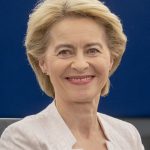
  • Ursula von der Leyen – 2022 Press Conference at International Expert Conference on the Recovery, Reconstruction and Modernisation of Ukraine

    Ursula von der Leyen – 2022 Press Conference at International Expert Conference on the Recovery, Reconstruction and Modernisation of Ukraine

    The press conference held by Ursula von der Leyen, the President of the European Commission, in Berlin on 25 October 2022.

    Good morning,

    This is a very interesting conference. And thank you again, Chancellor, for enabling us to organise it together. It’s a pleasure, Denys, to have you here. It’s very important for us to approach the reconstruction of Ukraine in a structured way. And that is why this conference is so important in order to bring together – and learn from – the world’s very best experts on reconstruction on such a scale, which is a colossal task.

    It’s pleased me greatly that we agree on so much at this conference. And, above all, on the three main themes. Firstly, the here and now: what is important in order to support Ukraine. Above all, there is a strong consensus that Ukraine now needs regular, grass-roots financial support. That means, quite simply, salaries for teachers, doctors, but also soldiers and police officers, for example, as well as the pensions that have to be paid – in other words, the absolute minimum. But things that are necessary. And that is why we, within the European Union, have been discussing – and will continue to discuss – how we can make our fair contribution to this. I know, Prime Minister, dear Denys, that it is very important for you that a reliable and stable financial contribution is possible from January onwards, so that Ukraine can be confident that it can bear the financial burdens of everyday life in these days of war.

    Secondly, all of us here at the conference are of course aware that we cannot wait for this terrible war to be over to begin the reconstruction. Some of it has to start right now. We call it ‘rehabilitation’ because we can see that President Putin is specifically targeting civilian infrastructure in order to paralyse Ukraine and terrorise its people. We will not let that happen. So we are also looking at what can already be repaired, schools for example. Many schools have been so devastated that the pupils have had to be moved far away. So we are providing school buses, for example – very practical things. We are also providing support and funding to repair the energy infrastructure that Russia is targeting with its bombs, and support for the winter too, for example, creating accommodation for people who have lost their belongings, their home and a roof over their head.

    Then the third big task is indeed to rebuild. The aim of this conference is above all to shed light on what the best structure is for getting as much as possible into this platform, how to organise the platform to ensure that it is reliable and predictable and that the funding is used well and properly. And lastly to decide which step we need to take first and where, and then to build on that for the further recovery.

    It is heartening to see the broad consensus we have reached, because the fact is that we need everyone on board. This is a huge task. And the right approach is to invite all friends of Ukraine. Because we all know that the brave people of Ukraine are fighting not only for freedom and independence and the integrity of their country, but also for our values. They are fighting for compliance with international rules. They are fighting to ensure that the UN Charter is observed. In other words, they are fighting for all of us. And so the least we can do is to stand by them and support them for as long as necessary.

  • Ursula von der Leyen – 2022 Closing Remarks at the International Expert Conference on the Recovery, Reconstruction and Modernisation of Ukraine

    Ursula von der Leyen – 2022 Closing Remarks at the International Expert Conference on the Recovery, Reconstruction and Modernisation of Ukraine

    The closing remarks made by Ursula von der Leyen, the President of the European Commission, on 25 October 2022.

    Ladies and Gentlemen,

    This was an excellent conference and I really thank you for all the contributions, all the wisdom, all the expertise that you brought to the table. The main message of the day for me today is that Ukraine has everything it takes for a successful reconstruction. It has determination; it has a vibrant civil society; many friends around the globe who want to support – this was visible today; and an impressively resilient economic base despite this atrocious war – for example the Ukrainian banking sector or the IT sector.

    For me, dear Denys, the level of digitalisation that you have in Ukraine is always impressive. Listen to this: After Estonia, Ukraine is probably the most digitised country in Europe – and that is something. This really allows public services to function despite the war. And this is our daily experience in the Commission when we work together with you: You have a functioning administration despite a war around you. This is basically because you are so much digitised. I do not want to reflect on the topics that we have mentioned this morning in the welcome addresses anymore. But allow me to focus on a few takeaways from today’s discussion.

    The first one is: Give ownership to the locals, creating trust in the reconstruction process. It was interesting for me to hear that the original Marshall Plan was successful because independent experts were embedded into ministries. They ensure transparency over key decisions. And we know money cannot solve everything, you need the right institutions. So scrutiny is not only needed to ensure good governance but also – and that was interesting for me – to monitor the influence of donors. And Ukraine’s civil society is well equipped to take over this role.

    My second takeaway: To tap into the full power of Ukraine’s human capital and to accelerate the green and the digital transition, there should be continuity of decentralisation. Because the regions and the municipalities are also economic powerhouses. This decentralisation, together with the necessary judicial and anti-corruption reforms, would of course also facilitate private investment across the country.

    The third point: Reconstruction linked with a dynamic EU accession process can function as a catalyst, as it was said here today, for necessary reforms and at the same time – and this is certainly true – as a strong motivator to implement these reforms. Because there is a goal you want to go to and therefore you understand why you have to do these reforms.

    The fourth point, which is self-explanatory, a new Marshall Plan for Ukraine has to match the European Green Deal. This is the opportunity to leapfrog into a modern, competitive and sustainable economy.

    I like the fifth point that I came across: Donors’ coordination should prevail over donors’ competition. And the better the reconstruction plan is explained, the easier it is for donors to contribute.

    Finally, today, and that is absolutely clear, we saw that we will be in this for a long time. Support fatigue might be a challenge. But one participant brought up an interesting counter-argument, it is about the importance of communication. She mentioned that politics cannot and should not be separated from the reconstruction process.

    Putin’s brutality is causing tremendous suffering and destruction in Ukraine. But at the same time, these ruthless deeds are backfiring. People’s disgust with Putin is a powerful recruiter for Ukraine’s rehabilitation efforts. It fuels the new Marshall Plan. And Denys, I must say that, when I listened to you this morning, I was again really moved and touched by the pictures, the videos you showed us. This is the reality on the ground that you are experiencing every day. But when you see it again, it really touches you. And the way President Zelenskyy and you are communicating to the public is contributing a lot to keep Ukraine on top of the world’s agenda and to mobilise lasting support for your country on the world stage. And Ukraine deserves it.

    Slava Ukraini.

  • Jake Berry – 2022 Comments on Suella Braverman Breaking the Ministerial Code on Numerous Occasions

    Jake Berry – 2022 Comments on Suella Braverman Breaking the Ministerial Code on Numerous Occasions

    The comments made by Jake Berry, the outgoing Chair of the Conservative Party, on Piers Morgan Uncensored on 26 October 2022.

    INTERVIEWER:

    [Was it right that Suella Braverman came back to the Cabinet?]

    JAKE BERRY:

    Six days is a long time in politics. It’s for the new Prime Minister and he must be free to appoint whoever he wants. However, what I would say is from my own knowledge, there were multiple breaches of the ministerial code

    INTERVIEWER:

    [Multiple?]

    JAKE BERRY:

    Multiple breaches of ministerial code. It was sent from a private email address to another Member of Parliament, she then sought to copy in that individual’s wife and accidentally sent it to a staffer in Parliament. To me, that seems a really serious breach and especially when it was documents relating to cybersecurity as I believe that seems a really serious breach. The cabinet secretary had his say at the time, I doubt he’s changed his mind in the last six days, but that’s a matter for the new Prime Minister

    INTERVIEWER:

    [Did she hold her hands up to it?]

    JAKE BERRY:

    I wasn’t at the meeting, but as I understand it the evidence was put to her and she accepted the evidence rather than the other way around.

  • PRESS RELEASE : EU increases support for border and migration management in the Western Balkans [October 2022]

    PRESS RELEASE : EU increases support for border and migration management in the Western Balkans [October 2022]

    The press release issued by the European Commission on 25 October 2022.

    The Commission adopted a recommendation to the Council to authorise the opening of negotiations of upgraded European Border and Coast Guard Agency’s (Frontex) status agreements between the EU and Albania, Serbia, Montenegro, as well as with Bosnia and Herzegovina. The Commission is also adopting today a new assistance package worth €39.2 million under the Instrument for Pre-Accession Assistance (IPA III) to strengthen border management in the Western Balkans.

    Commissioner for Home Affairs, Ylva Johansson, said: “We are committed to supporting our partners in the Western Balkans and strengthening our cooperation on migration management on the ground. Therefore, we propose to negotiate status agreements under the new legal framework that would allow for the deployment of Frontex to all four partner countries with the full power of its mandate, to ensure that their borders continue to be respected and protected in line with European best practices.”

    Commissioner for Neighbourhood and Enlargement, Olivér Várhelyi, said: “This package is timely, as migration remains an area where we need to work even more closely with our Western Balkan partners. Given the increased migratory pressure in the region, we are focusing on strengthening border protection, fighting the smuggling networks and stepping up returns from region. To this end, we will provide increased political and financial help. Between 2021 and 2024, we intend to increase our funding by 60% in total, to at least €350 million for our Western Balkan partners. This will support the Western Balkans in all areas of developing effective migration management systems, including asylum and reception, border security and returns. We count on the commitment our Western Balkan partners to make these actions a success.”

    With today’s proposal, the Commission with the support of Frontex will strengthen the capacity of the Western Balkans’ partners in their migration management, fight against smuggling and ensuring security. Under the currently existing status agreements between Frontex and Albania, Serbia and Montenegro, deployment of the standing corps may only take place at the countries’ borders with the EU and without exercising executive powers. Under the new legal framework, the status agreement will allow Frontex standing corps to be deployed in the third country both at the EU border and at the borders with the third countries and exercise the executive powers. Therefore, new status agreements will better support and strengthen cooperation on border management in the Western Balkans.

    The assistance package adopted today follows a detailed assessment of needs established with the Western Balkan authorities. The support targets the region’s border management capacities mainly through the provision of specialised equipment. It includes mobile surveillance systems, unmanned aerial vehicles, biometric devices, training and support to establish and operationalise National Coordination Centres. The support also covers the operationalisation of migration facilities, including reception and detention facilities. This package brings the total bilateral and regional support adopted in this area under IPA III to €171.7 million.

  • Ursula von der Leyen – 2022 Opening Remarks at the International Expert Conference on the Recovery, Reconstruction and Modernisation of Ukraine

    Ursula von der Leyen – 2022 Opening Remarks at the International Expert Conference on the Recovery, Reconstruction and Modernisation of Ukraine

    The opening remarks made by Ursula von der Leyen, the President of the European Commission, on 25 October 2022.

    Herr Bundeskanzler,

    Herr Bundespräsident Cassis,

    Prime Minister Shmyhal, dear Denys,

    Prime Minister Morawiecki,

    Ministers,

    Excellencies,

    Ladies and Gentlemen,

    Distinguished friends of Ukraine,

    We want to discuss the reconstruction of Ukraine today. Thousands of destroyed houses. Several hundred schools turned to rubble. Countless bridges, roads, power stations, railway infrastructure and industry bombed. For Ukrainians, these are not just statistics. This is their everyday experience. It is about having a roof over their heads, a warm place in the winter and classrooms where their children are safe. It is about going to work, bringing food home, and making a living. These are hard, scary and painful days for Ukrainians. But Ukrainians are showing us that they have hope and confidence in the future, and they will keep fighting for it. And it is their future that brings us here today.

    Europe has been supporting Ukraine from day one. We can never match the sacrifices Ukrainians are making every day. But we can stand by their side. We have introduced the toughest sanctions against Russia. Overall, the European Union, Member States and European financial institutions have provided Ukraine with more than EUR 19 billion in assistance, and this is without military assistance. We are working hard to increase Ukraine’s access to our Single Market, because this creates revenues for Ukraine. And what is more, Europeans have opened their hearts and their homes to more than eight million Ukrainians who have fled Putin’s bombs and four million Ukrainians who asked for temporary protection in our Member States. And I would like to thank the millions of citizens who are giving the most noble help to their neighbours in need. This is Europe at its best. Today, we want to discuss how to step up our ongoing support for Ukrainians, and how to make the reconstruction of their beautiful country a resounding success.

    For me, three points are key. First, we need to make sure that Ukraine at all times gets the support it needs – from relief, to rehabilitation, to long-term reconstruction. Second, we need the right architecture in place to make support as broad and as inclusive as possible. And third, as Ukraine has achieved candidate status to access the European Union, we need to firmly embed Ukraine’s reconstruction efforts as part of its path towards the European Union.

    Let us have a look at the first point: And that is Ukraine needs relief, fast rehabilitation and reconstruction. Relief for the daily survival. To be able to pay the bare minimum every single day: salaries for military and security forces, salaries for teachers and doctors in the hospitals and in the countryside, pensions for the pensioners and other indispensable payments. According to the international financial institutions and Ukraine, there is a need of EUR 3 to 5 billion a month just to cover these recurrent running costs. Here, reliable support is needed from the European Union, from our friends in the United States and of course from the international financial institutions. I believe it is only right if the European Union assumes its fair share. I am working with our Member States so that the Union could support Ukraine with up to EUR 1.5 billion every month of the war, which would be in sum round about EUR 18 billion in 2023.

    In parallel, Ukraine needs fast rehabilitation right now, as we speak, especially as Russia is deliberately leading targeted attacks on civilian infrastructure with the very clear aim to cut off men, women and children of water, electricity and heating as the winter is approaching. These are pure acts of terror, and Russia tries to paralyse Ukraine. But we will not let this happen. In addition, we know that there are around 11 million internally displaced people in Ukraine. They need shelter, heating, water and electricity. Their children need to go to school. Therefore, we need to repair houses, schools and infrastructure already right now. As European Commission, we have announced to support this rehabilitation of damaged Ukrainian schools or the repair of electricity infrastructure. And through the Union Civil Protection Mechanism, we have provided tents and over 600,000 items for shelter. But we all know that more has to be done. This phase of fast rehabilitation is essential to ensure that life can continue in Ukraine.

    This brings me to our overall important topic of today, and that is the reconstruction effort. At the Lugano Reconstruction Conference, representatives from more than 40 countries and international organisations agreed on the so-called Lugano principles: Ukraine owned; reform focused; transparency, accountability and rule of law; democratic participation; gender equality and inclusion; and sustainability. I think these are very good principles. But now we have to fill them with life. For doing that, we need the best and the brightest on reconstruction. That is why we have invited you.

    Now it is time to bring the platform to action, together with the international donors, international businesses and, of course, civil society. We have no time to waste. The scale of destruction is staggering. The World Bank puts the cost of the damage at EUR 350 billion. This is for sure more than one country or one Union can provide alone. We need all hands on deck. The G7, the European Union, Europe, strong partners like the United States, Canada, Japan, the UK, South Korea, Australia, New Zealand and many more. And of course, we need the expertise of our partners from the European Investment Bank and the EBRD to the World Bank and the IMF. We will discuss today how to involve these sectors and actors, how to map investment needs, how to coordinate action, and, of course, how to channel resources in a reliable and accountable way. The coordination platform that the international community has been discussing in the past months needs to get off the ground as soon as possible, preferably before the end of the year or early next year. We stand ready to offer the European Commission to provide the secretariat to the platform. We want the work to start and to be done.

    That leads me to my final point. Ukraine will be in the lead. I think this is paramount. Because our action will be driven by the aspirations and the desires of the Ukrainian people. And Ukraine has a very clear vision and decided to become member of the European Union. Ukraine has achieved candidate status. And with the ongoing relief and rehabilitation, Ukraine will combine investment and reforms with the aim to become a vibrant part of Europe’s sustainable and digital future. With the laws and institutions in place, to uphold the rule of law, to fight corruption and to have good governance standards of all partner countries and our European Union. Because the road to reconstruction is at the same time Ukraine’s path towards its vision. It is a strong anchor to become a modern and prosperous country.

    Ladies and Gentlemen,

    For all this, we need you. We need you and your expertise, your insights that are key for us to succeed. This is why I am specially looking forward to this Conference today. From the bottom of my heart, I thank you for being here with us. Every euro, every dollar, every pound, every yen we spend is an investment in Ukraine but it is also an investment in the democratic values around the globe. And all this is urgently needed. But it is also a statement, if we are successful with that. It is a statement that the free and democratic nations of this world stand together, and that we stand up for our values. The courageous Ukrainian men and women are fighting for their independence but they are also fighting for the international order. And we will stand by their side as long as it takes.

    Slava Ukraini. Long live Europe.

  • PRESS RELEASE : Competition – Eurobarometer surveys show strong support among EU citizens and SMEs for competition policy [October 2022]

    PRESS RELEASE : Competition – Eurobarometer surveys show strong support among EU citizens and SMEs for competition policy [October 2022]

    The press release issued by the European Commission on 25 October 2022.

    Today, the European Commission has published the 2022 Eurobarometer surveys dedicated to EU competition policy. The surveys show strong support among citizens and Small and Medium Enterprises (‘SMEs’) for both competition policy and its enforcement.

    Executive Vice-President Margrethe Vestager, in charge of competition policy, said: “The results from the survey are clear: competition improves the daily life of citizens and SMEs, bringing better prices, more choice and increased innovation. This support is consistent across the EU, and it is a reminder that fair competition is as important as ever.”

    Main findings 

    The Eurobarometer surveys published today show that Europeans support the main goals of competition policy, recognising its important contribution to the European economy. In particular, respondents confirmed that in their view competition policy:

    • encourages innovation (82% of citizens and 89% of SMEs);
    • allows for better prices (74% of citizens and 81% of SMEs) and more choice (83% of citizens and 84% of SMEs);
    • helps EU companies become more competitive on global markets (72% of citizens and 73% of SMEs).

    The vast majority of citizens and SMEs participating to the survey strongly support different measures to improve competition even further. They believe that competition has a key role to prevent players across market sectors from abusing their market power (87% of citizens and SMEs) and to fight cartels (84% of citizens and SMEs). 76% of citizen’s and 73% of SMEs believe it is important to prevent mergers and acquisitions that reduce competition. Finally, Europeans think it is important to take advantages away from competitors subsidised by non-EU governments (70% of citizens and 74% of SMEs) and by EU governments (69% of citizens and 73% of SMEs).

    A majority of respondents recognise competition policy and its enforcement as a key tool in facing the challenges ahead. As an example, 66 per cent of SMEs agree that regulation, such as the Digital Markets Act, can be an effective solution in markets with systemic issues. For what concerns the achievement of the Commission’s policy priorities, a majority of citizens believe that competition encourages the digital transformation of the economy and society (73%), as well as the offer of more environmentally friendly goods and services in the EU Single Market (54%).

    For what concerns citizens, more than 50 per cent (54%) have experienced issues caused by a lack of competition, such as higher prices, less choice or lower quality. When asked about the areas in which they believe competition enforcement should play an even stronger role, citizens expressed their concerns for the lack of competition in the energy sector (27%), followed by food retailing (20%). In the last Eurobarometer survey, published in 2019, telecommunications and Internet access were at the top of citizens’ concerns (26%), while today only 18% of respondents have identified this as an area in which competition should be improved.

    When asked about the competition-related difficulties experienced, SMEs mentioned high prices (57%), as well as powerful suppliers and buyers being able to impose unfair conditions (experienced by respectively 57% and 42% of respondents). For what concerns specific sectors, SMEs expressed their view that stronger competition in the provision of raw materials (12%) would be of the essence, as well as in the provision of energy (8%) and in the use of digital platforms to reach customers (8%).

    European citizens and SMEs stay on top of the news concerning competition enforcement mostly through newspapers (including online) (52% of citizens and 51% of SMEs) and TV (48% of citizens and 41% of SMEs). However, social media has proven to be an increasingly relevant source of information for citizens on competition (rising from 24% in 2019 to 39% in 2022), as well as for SMEs (37% in 2022).

  • Ursula von der Leyen – 2022 Speech at the Grand Challenges Annual Meeting

    Ursula von der Leyen – 2022 Speech at the Grand Challenges Annual Meeting

    The speech made by Ursula von der Leyen, the President of the European Commission, on 24 October 2022.

    Dear Prime Minister De Croo,

    Dear Bill Gates,

    Distinguished guests,

    It is so good to see you again Bill, because the last time we met was just a month ago in New York at the Global Goalkeepers event. I was very moved by your foundation’s recognition of Europe’s leadership on global health and the fight against the COVID-19. The award is truly a collective one. It belongs to all Europeans who showed such dedication during the pandemic – from the frontline workers in our hospitals and essential services, to the scientists who developed the life-saving vaccines.

    Today, we are joined by many of you here, from around the world, who are committed to global health and equity. So I would like to use this occasion to reflect on the experience of the pandemic, not from a medical point of view but from the point of view of a policymaker. And I would like to give a sober assessment of what I think went well and where we need to do better in future. I have six lessons that we took.

    The first lesson, not surprisingly, is the utmost importance of solidarity and cooperation. Let me start with the European experience. When the COVID-19 virus made landfall in Europe, things got really tough at the beginning. Some Member States chose to close their borders for life-saving material and equipment. There was painful competition for protective equipment, ventilators and other medical supplies between the different Member States. Vaccine nationalism became the norm around the world. I can tell you – we Europeans had our tough and painful public discussions. But at a certain point, the European Union decided to take a different path – the path of solidarity and openness. We convinced Member States not to close their borders but to share equipment and personnel. We decided to buy vaccines together and not to compete with each other. We started the vaccination campaign on the exact same day in all our 27 Member States – yes, we started with low numbers, and that was heavily criticised, but we had a fair distribution. Regardless whether you are a larger Member State or a small one, a wealthy one or a not so wealthy one. We decided not to close our borders for vaccine exports but to introduce a transparency mechanism. And at this point, many, many thanks to you Prime Minister, dear Alexander De Croo. You have been insisting on staying open for exports because you knew how important that is for the trust of the pharmaceutical industry, depending on where they are located. Today, over 80% of the European Union’s adult population is fully vaccinated. While at the same time, we have exported two-thirds of the vaccines produced in Europe to the rest of the world. Solidarity and openness were the absolute pre-conditions to this success.

    My second lesson: Science does not exist in a vacuum. I believe it was no coincidence that the safest and most effective vaccines were developed and rolled out rapidly in open societies. Science depends on cooperation, it depends on education, on the protection of intellectual property rights, of course on proper data sharing. But it also depends on individual mobility for example, freedom to move, and of course on the regulatory environment and on translating results into products, services and policies. All these factors empower scientists to do their best work, and enable society to reap the benefits. My colleagues and I benefited enormously from the collective wisdom of scientific advice – from you, Professor Peter Piot, you were my personal COVID-19 advisor, the way you gave me guidance and advise on a daily basis was outstanding; from my group of COVID-19 science advisors, handpicked by you, Peter; and also from the platform of 27 Member State government advisors we created. So it is transparency and accountability, our freedom of speech and the freedom of science that enable good policymaking and innovation. These are the values that democratic societies depend on and nurture. So it was democracies that developed the life-saving effective vaccines and that were best able to support their citizens when they needed our help the most.

    My third lesson is about the miracle of vaccines themselves. As a medical doctor by training, the importance of research and development is not news to me. But the pandemic made it very real for all of us. As you know, the outstanding mRNA vaccines did not come out of the blue. Their discovery, like all innovation, relies on long-term investment in scientists and their research. In fact, the European Commission had been investing in mRNA vaccine research since the early 2010s. However, in Europe we did not have a BARDA, like in the United States, which prepares for the case of an emergency. I must say, this was an obvious disadvantage. So we learnt it the rough way. And during the pandemic, we created HERA to anticipate threats and potential health crises. HERA works closely with our Horizon Europe research programme to close the circle from blue sky discovery all the way to scaling up life-saving measures.

    Global cooperation in research and development is crucial for discovery. That is why, for example, HERA and CEPI – the Coalition for Epidemic Preparedness Innovations – have recently signed a letter of intent. They will cooperate on developing next generation vaccines, including for COVID-19, as part of our Vaccines 2.0 Strategy. Horizon Europe is providing on a yearly basis contributions of EUR 35 million. And I am very pleased that our clinical trials partnership for HIV/AIDS, tuberculosis and malaria between European and developing countries has recently agreed to co-run calls for proposals with the Bill & Melinda Gates Foundation.

    Which takes me to lesson four: manufacturing capacity. Having safe and effective vaccines is not enough – we all know that. We badly needed manufacturing capacity, as well as open supply chains. I vividly remember that, at the height of the pandemic, we saw shortages of all kinds across the whole vaccine value chain, from bioreactor bags to vials, from lipids to even syringes. So we set up a Task Force to work with industry, with global partners, to remove these bottlenecks. This helped ramp up the monthly production capacity in the European Union, from 20 million vaccine doses per month at the beginning of 2021 to around 300 million vaccine doses per month by the second half of the year. Having learnt this lesson, we have now set up the EU-FAB, which is an ever-warm network of production capacities to quickly ramp up vaccines production in the future.

    Ladies and Gentlemen,

    So far Europe has sent more than 2.5 billion COVID-19 vaccine doses to 168 countries worldwide. This is our fifth lesson: cooperation and solidarity must be global. At the start of the pandemic, there was no appropriate global framework to allow for fair sharing of vaccines and other medical countermeasures. So we helped set up the ACT-Accelerator and COVAX, which we financed with EUR 3 billion, and we donated half a billion vaccine doses to lower-income countries. But clearly, this was not a sufficient approach, more had to be done and more can be done. This is why we took a different approach now. We are supporting developing countries directly: through financing, through regulatory capacity-building, and technology transfer, to build up their own vaccine manufacturing capacity. We are working with Senegal, Rwanda, South Africa and Ghana to produce mRNA vaccines that are made in Africa, for Africans. And we are taking a similar approach now with Latin America. They have been asking us to do the same. And of course, we responded positively. Because this is the way to go. Regional resilience is the solution that builds global health resilience.

    The sixth and final lesson concerns, indeed, the global health system. Over the years, global health has been consistently underfunded and neglected. Not by the likes of the Bill & Melinda Gates Foundation, which is doing exemplary work, but by the governments. The key is to be prepared, and this means keeping up the investment and keeping the focus in global health, at all times. Even now, in these difficult times, with a completely different focus. I am glad that we finally agreed to create a Pandemic Preparedness and Response Fund. The European Commission, together with the United States, have each committed USD 450 million. And this is just the start. With this reinforced funding, we will step up globally the surveillance of cross-border health threats, the strengthening of health systems, and most importantly the support in training and education.

    Ladies and Gentlemen,

    I know we still have a long way to go, but thanks to all of you and your dedication to global health and equity, I believe we are on the right track. Next month, the European Commission will bring forward the EU Global Health Strategy – it is our proposal to the world on how to work better together in partnership, to advance the common goal of global health. And of course, it will draw on the lessons I have just outlined to you. I look forward to continuing our close work together. And I wish you a rewarding and thoughtful conference.

  • PRESS RELEASE : European Health Union – building a stronger EU health response [October 2022]

    PRESS RELEASE : European Health Union – building a stronger EU health response [October 2022]

    The press release issued by the European Commission on 24 October 2022.

    Today, the Council has adopted the final building blocks of the European Health Union: the Regulation on Serious cross-border health threats, the Regulation on the extended mandate of the European Centre for Disease Prevention and Control (ECDC) and the Emergency Framework Regulation to provide extra powers to the European Health Emergency Preparedness and Response Authority (HERA). These new rules complete the European Health Union, building a powerful legal framework to improve the EU’s capacity in the vital areas of prevention, preparedness, surveillance, risk assessment, early warning, and response.

    Welcoming the adoption, Vice-President for Promoting our European Way of Life, Margaritis Schinas, said: “Today’s adoption by the Council of the three Regulations is a major achievement, and strengthens the EU Health Security Framework. With these new regulations, we have shown that we can move forward together, decisively, and fast. This legislation will work hand in hand with the financial support provided through the EU4Health Programme and the Recovery and Resilience Facility to ensure more resilient health systems across the EU. Collaboration and solidarity are key for the challenges ahead of us.”

    Commissioner for Health and Food Safety, Stella Kyriakides, said: “The central pillars of our European Health Union are now in place. The pandemic has shown the need for more Europe in public health, and a stronger capacity to protect citizens from health threats. With a stronger ECDC, an empowered HERA and a reinforced role for the EU in preventing, preparing for, and managing cross-border health threats, we now have additional tools to quickly react and respond to emerging health crises, decisively and with unity”.

    With the adoption of the Serious cross-border threats to health Regulation, the EU will have:

    • a robust preparedness planning and a more integrated surveillance system;
    • a better capacity for accurate risk assessment and targeted response;
    • solid mechanisms for joint procurement of medical countermeasures;
    • the possibility to adopt common measures at EU level to address future cross-border health threats.

    A stronger ECDC will not only issue recommendations to Member States regarding health threats preparedness, but also host a new excellence network of EU reference laboratories and establish an EU Health Task Force for rapid health interventions in the event of a major outbreak.

    To be effective and operational in times of public health emergencies, the Emergency Framework Regulation will allow the establishment within HERA of a Health Crisis Board. This Board will rapidly coordinate at EU level the supply of and access to medical countermeasures. The Regulation also enables the activation of the EU fab facilities, emergency research and innovation plans and access to emergency funding.

    Next steps

    Following today’s adoption of the three Regulations, they will be published in the Official Journal and will enter into force in November 2022.

  • PRESS RELEASE : Ukraine – International Expert Conference hosted by the Commission and G7 Presidency reaffirms unwavering commitment to support Ukraine’s recovery [October 2022]

    PRESS RELEASE : Ukraine – International Expert Conference hosted by the Commission and G7 Presidency reaffirms unwavering commitment to support Ukraine’s recovery [October 2022]

    The press release issued by the European Commission on 24 October 2022.

    omorrow, European Commission President Ursula von der Leyen and Chancellor Olaf Scholz, in his given capacity as German Presidency of the G7, will co-host the International Expert Conference on the Recovery, Reconstruction and Modernisation of Ukraine in Berlin. This conference is another important step in the series of global events, which demonstrate unwavering support from the Commission and the international community to Ukraine in the face of Russia’s unprovoked and unjustified war of aggression. It also highlights that the Commission and the international community will continue to support Ukraine beyond its immediate needs, and on its path to EU accession.

    Given the scale of the challenge at stake, the recovery efforts need to be an inclusive multi-stakeholder process, involving both public and private sectors, as well as international organizations. That is why the conference will bring together world-renowned experts across various disciplines and backgrounds, international organisations, senior government representatives, think tanks and academics, as well as representatives from civil society and the private sector, together with the Ukrainian government. The participants will discuss key matters for the recovery, reconstruction and modernisation of Ukraine. These discussions will contribute to shaping global efforts on the way ahead for Ukraine’s green, resilient, prosperous and democratic future.

    President Ursula von der Leyen said: “The courageous Ukrainian men and women of Ukraine are fighting for their independence and the rules-based international order.  We will be at Ukraine´s side as long as it takes. The road to reconstruction is at the same time Ukraine’s path towards its vision to become a more modern, democratic and prosperous country. Every euro, every dollar every pound and every yen spent will be an investment in Ukraine and democratic values around the globe. At the same time the broad support for the brave people of Ukraine is a strong statement that the free and democratic nations of this world stand together.”

    Following the opening remarks from President von der Leyen and Chancellor Scholz, President of Ukraine Volodymyr Zelenskyy will deliver a keynote address. During the opening plenary, participants will hear from Ukrainian Prime Minister Denys Shmyhal and other high-level speakers about the international perspectives on Ukraine’s geopolitical and economic outlook and the scale of the recovery and reconstruction needs.

    The morning sessions will cover a range of topics beginning with lessons learned from historical reconstruction efforts like the Marshall Plan in Europe and taking stock of the current situation in Ukraine and the sequencing of recovery and reconstruction needs. Discussions will then focus on the financing of recovery and reconstruction, exploring possible frameworks for governance and emphasising strong Ukrainian ownership in the process of mobilising resources and private sector involvement.

    The afternoon sessions will be devoted to key priorities for Ukraine’s sustainable growth, development, and stability, including with a view to EU accession. These sessions will focus on institutional transformation and good governance, macroeconomic and financial stability, industrial policy and sustainable development, and inclusiveness.

    The event will be live-streamed and will be available here. The press conference will take place at +/- 10:30 CEST and can be followed on EbS.

    Next Steps

    Targeted expert recommendations will be published on the website of the International Expert Conference as an outcome document. These recommendations will feed into bilateral, European, and multilateral discussions with Ukrainian counterparts, as support shapes up. These fora include the annual Ukraine Recovery/Reform Conference, to be hosted by the UK mid-next year.