
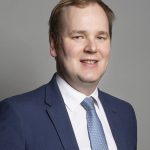
Tag: William Wragg

  • William Wragg – 2023 Speech on the Budget

    William Wragg – 2023 Speech on the Budget

    The speech made by William Wragg, the Conservative MP for Hazel Grove, in the House of Commons on 20 March 2023.

    On the earlier theme, it is important that I declare that I do not have a science degree, but it would impress the shadow Secretary of State, the hon. Member for Manchester Central (Lucy Powell), to know that my degree, being as it is, does indeed come from the University of Manchester.

    I put in to speak in the debate less on the allocated subject matter and more in the forlorn belief that the best time to speak in a Budget debate is after a set of Sunday newspapers, because they often allow the detail to percolate through. To the credit of my right hon. Friend the Chancellor of the Exchequer, very little seems to have come up in them to trip him up.

    We have had all sorts of talk this afternoon of macroeconomic forces, my right hon. Friend the Member for Haltemprice and Howden (Mr Davis) spoke of banking crises across the world, and we have heard a great deal about artificial intelligence—presuming that is what “AI” stands for—but, in the age-old Back-Bench tradition, I want to talk about very parochial matters.

    I know that the House will have noted with great enthusiasm and interest, on page 72 of the magnificent Budget document, the announcement of a new community hub in Stockport—the Marple leisure hub. There was some bashfulness at the talk of swimming pools during the speech by my right hon. Friend the Chancellor of the Exchequer. I am not fussed about swimming pools in Richmond, Yorkshire, or indeed about general donations from the Treasury to keep the pool temperature in different leisure centres toasty warm; what I am concerned about is the success—finally—in securing the Marple leisure hub.

    The hub will be a magnificent boost for Marple and surrounding districts in my constituency. It will deliver a gym, a fitness studio, a new library, a community space and a five-lane swimming pool. When I saw the artist’s plan at an earlier stage, I noted that there were only four lanes, but we have achieved five—a massive 25% productivity increase, delivered overnight by my right hon. Friend the Chancellor of the Exchequer. I am absolutely enthused. The artist’s impression even has an inflatable flamingo. What could go wrong?

    In all seriousness, I am very pleased that that levelling-up bid was successful for my constituency. I should pay credit—those on the Opposition Benches may enjoy this—to the then Labour minority-led Stockport Council, which agreed with me that that was the right bid for the Hazel Grove constituency. It will not surprise the House—I cannot spot any Liberal Democrats in the Chamber—that a few more have claimed credit for it who had, it is fair to say, very little to do with it. I will tone down my language for the sake of Hansard, but success has many parents and failure has fewer—let us put it that way.

    I have been quite cheerful so far—those on the Treasury Bench must think, “What on earth has happened?”—but in the time remaining to me I will speak briefly about something else that lurks in the Budget document: Greater Manchester devolution. I am a contrarian. I can see many colleagues from Greater Manchester on the Opposition Benches. They must rejoice when the Mayor is given further powers and the ability to exercise them—

    Mike Kane (Wythenshawe and Sale East) (Lab)

    Hallelujah!

    Mr Wragg

    Indeed, indeed. Whether he exercises them wisely is a matter for debate—I think even some Opposition Members would concede that point.

    All I ask is that the Government pay attention to those of us who have the great honour to represent parts of Greater Manchester. Having been to a so-called briefing meeting with my right hon. Friend the Secretary of State for the Department for Levelling Up and whatever else it is called these days, I was somewhat perturbed and worried that I was, in the words of his WhatsApp message to the former Health Secretary, my right hon. Friend the Member for West Suffolk (Matt Hancock), simply in a therapy session, whereby our concerns would be heard but no action would be forthcoming.

    In the spirit of cheerfulness, I simply say to the Government that if I and my colleagues from Greater Manchester are simply to be subjected to therapy sessions, then I shall make sure that I turn up at Delegated Legislation Committees in the same cheerful vein to argue against aspects of this so-called deal. I urge the Government to pay attention to Greater Manchester Conservative MPs—indeed, to any Member of Parliament from Greater Manchester—when they bring forward this tranche of powers that have no legitimacy and very little demand.

  • William Wragg – 2016 Parliamentary Question to the Ministry of Justice

    William Wragg – 2016 Parliamentary Question to the Ministry of Justice

    The below Parliamentary question was asked by William Wragg on 2016-03-24.

    To ask the Secretary of State for Justice, what steps his Department is taking to improve prisons’ engagement with employers; and if he will make a statement.

    Andrew Selous

    Supporting offenders into meaningful employment is a vital aspect of the Government’s approach to rehabilitation.

    We already work with a wide range of employers in prison through One3One Solutions and engagement by Prison Governors. And we want Governors to do more so we are putting the tools to drive this change in the hands of those at the frontline who best know what works.

    We are keen to increase the number of employers who can provide valuable vocational work for offenders while in prison and who are able to offer them support in preparation for release and employment opportunities following their release.

    I regularly meet businesses across the country including at two successful roadshows at HMP Sudbury and HMP/YOI Drake Hall, and most recently at HMP Wayland where local media have supported our campaign. New businesses are now coming on board as a consequence. The Employers Forum for Reducing Reoffending brings together employers willing to employ offenders and we are working with the Department for Work and Pensions to increase the involvement of more businesses.

    The Prime Minister has announced changes to recruitment practises across the civil service to ensure that people are considered on their merits and not on their criminal conviction and we want to encourage more employers to do the same.

  • William Wragg – 2016 Parliamentary Question to the Department for International Development

    William Wragg – 2016 Parliamentary Question to the Department for International Development

    The below Parliamentary question was asked by William Wragg on 2016-03-24.

    To ask the Secretary of State for International Development, what steps she is taking ensure that UK overseas aid is spent effectively and transparently.

    Mr Desmond Swayne

    As set out in the aid strategy, UK aid: tackling global challenges in the national interest, the government will ensure that every penny of money spent delivers value for taxpayers, and projects that do not will be cancelled. Departments follow good financial management principles set out in HM Treasury guidance in ‘Managing Public Money’ for all their expenditure. In addition, ODA spend is subject to scrutiny by the Independent Commission for Aid Impact. The UK Aid Strategy also commits all departments to achieving greater levels of transparency in aid spend.

    DFID has robust internal processes such as strong ministerial oversight, mandatory reviews on all programmes, detailed management information for use at all levels of the organisation including on project performance and quality. Other departments will have their own arrangements and DFID will continue to share good practice advice with them.

  • William Wragg – 2016 Parliamentary Question to the Cabinet Office

    William Wragg – 2016 Parliamentary Question to the Cabinet Office

    The below Parliamentary question was asked by William Wragg on 2016-04-27.

    To ask the Minister for the Cabinet Office, what discussions his Department has had with representatives from the higher education and further education sector on the EU referendum.

    John Penrose

    Details of Ministers’ meetings with external organisations are routinely published in transparency returns available on the Gov.uk website.

  • William Wragg – 2016 Parliamentary Question to the Cabinet Office

    William Wragg – 2016 Parliamentary Question to the Cabinet Office

    The below Parliamentary question was asked by William Wragg on 2016-05-26.

    To ask the Minister for the Cabinet Office, if he will place in the Library copies of all letters, leaflets and other material from 10 Downing Street circulated to (a) stakeholders and (b) members of the public on the EU referendum; what the costs of the production and distribution of that material has been since 1 January 2016; and what he estimates the cost of any further production and distribution of such material will be between 6 May 2016 and 23 June 2016.

    John Penrose

    Copies of the Government’s published documents on the Referendum are available in the Libraries of both Houses. It is not normal practice to publish letters to members of the public and stakeholders. Costs relating to the Referendum will be accounted for in the usual way in Annual Report and Accounts.

  • William Wragg – 2016 Parliamentary Question to the HM Treasury

    William Wragg – 2016 Parliamentary Question to the HM Treasury

    The below Parliamentary question was asked by William Wragg on 2016-06-03.

    To ask Mr Chancellor of the Exchequer, for what reasons the HM Treasury analysis: the long term economic impact of EU membership and the alternatives did not include an assessment of the potential effect on the UK economy of a potential reduction in GDP in the EU.

    Mr David Gauke

    The main estimates in the HM Treasury analysis are based on the EU as it is today, without further reform. The total cost of leaving is likely to be higher. If the economic benefits of reform are realised this could increase UK GDP by up to a further 4% – which equates to £2,800 for every household in the UK. With the UK outside the EU these economic reforms would be less likely to happen. So the cost of exit in terms of the potential loss of GDP would be correspondingly greater.

  • William Wragg – 2016 Parliamentary Question to the Ministry of Justice

    William Wragg – 2016 Parliamentary Question to the Ministry of Justice

    The below Parliamentary question was asked by William Wragg on 2016-10-07.

    To ask the Secretary of State for Justice, what safeguards are in place to protect the privacy of victims and witnesses in historic sex abuse cases.

    Dr Phillip Lee

    Victims of specific sexual offences, including historical sex abuse cases, are automatically provided with lifetime anonymity, by way of reporting restrictions, from the point of complaint. Anonymity is granted in recognition of the nature of the offence against them and to encourage other victims to come forward.

  • William Wragg – 2016 Parliamentary Question to the Department for Transport

    William Wragg – 2016 Parliamentary Question to the Department for Transport

    The below Parliamentary question was asked by William Wragg on 2016-03-24.

    To ask the Secretary of State for Transport, what provisions his Department has put in place to improve rolling stock as part of the rail franchise package for the North West.

    Andrew Jones

    The new Northern and TransPennine Express franchises commenced on the 1st April. By the end of 2019, they will have introduced significant improvements in Rolling Stock.

    The Northern franchise will deliver:-

    • 281 new carriages including 55 new Diesel and 43 new Electric trains – the first ever new trains specified for the Northern franchise
    • Additional diesel units cascaded from other franchises – refurbished to ‘as new’ standard
    • Removal of all Pacer trains by October 2019
    • All retained trains will be refurbished as new including Wi-Fi, media servers, passenger information systems, CCTV and accessible toilets with baby-change facilities

    This means that 30% of this expanded fleet will be new and will operate 2000 more services per week –a 12% increase. The additional trains will provide a 37% increase in morning peak capacity into the North’s 5 major cities by December 2019.

    The TransPennine franchise will deliver:-

    • 220 new carriages
    • All existing trains will be refurbished as new including Wi-Fi, additional power sockets, and real-time passenger information systems

    This means that 70% of fleet is new, the fleet size increases by two-thirds, provides 13million more seats, an 80% increase in morning peak seats by the end of 2019.

    These delivery plans as bid by the two operators during the Invitation to Tender process have been contracted within the franchise agreements.

  • William Wragg – 2016 Parliamentary Question to the Department for Culture, Media and Sport

    William Wragg – 2016 Parliamentary Question to the Department for Culture, Media and Sport

    The below Parliamentary question was asked by William Wragg on 2016-04-18.

    To ask the Secretary of State for Culture, Media and Sport, what steps his Department is taking to encourage corporate sponsorship of the arts at a local level.

    Mr Edward Vaizey

    The Government believes that a thriving arts sector is vital for the cultural landscape of this country. We highlighted in the recent Culture White Paper that we would like to see a rejuvenated approach to corporate sponsorship of the arts. We are working with Arts Council England and other partners on this agenda, including looking at local level partnerships.

    Arts Council have already commissioned a new Private Investment Survey and is currently inviting all arts and cultural organisations in England to take part by April 29th. The new survey will be published in the autumn and will provide an updated overview of private investment in England’s cultural sectors, including at the local level. It will also bridge the gap in terms of data on how the sector has developed since the last survey was published covering data for 2011/12, which recorded business investment in the arts as £113 million.

  • William Wragg – 2016 Parliamentary Question to the Cabinet Office

    William Wragg – 2016 Parliamentary Question to the Cabinet Office

    The below Parliamentary question was asked by William Wragg on 2016-04-27.

    To ask the Minister for the Cabinet Office, if he will publish details of all the correspondence between his Department and the Britain Stronger in Europe campaign since 1 September 2015.

    John Penrose

    It will not be possible to answer this question within the usual time period. An answer is being prepared and will be provided as soon as it is available.