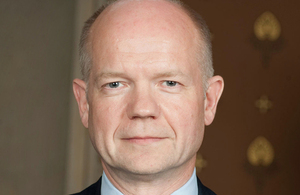
Tag: William Hague

  • William Hague – 2013 Speech on Western Diplomacy

    williamhague

    Below is the text of the speech made by the Foreign Secretary, William Hague, at the Ronald Reagan Presidential Library in California in June 2013.

    In 2011 Nancy Reagan invited me to take part in the celebrations of the centenary of the birth of President Reagan.

    On a beautiful summer morning, with Condoleezza Rice and with Bob Tuttle, I helped to unveil a statue to him in London’s Grosvenor Square.

    I am proud we found a home in our capital city for Ronald Reagan – a great American hero, one of America’s finest sons, and a giant of 20th Century history.

    He was the President, who restored American confidence with inspirational leadership abroad and economic revival at home.

    A man of conviction, who knew it was right to go to Berlin and say “Mr Gorbachev, tear down this wall”, when that seemed impossible.

    The statesman who won the Cold War, Margaret Thatcher said, “by inviting enemies out of their fortress and turning them into friends”.

    And the man of warmth and compassion, whose words live on in our memories and will be remembered for generations.

    Having taken part in that moving occasion, it was an even greater honour when Nancy Reagan invited me to speak here, at the Presidential Library they built together.

    I thank her, and pay tribute to her: the equal partner in all President Reagan’s endeavours, and the person he said could make him lonely just by leaving the room.

    We also remember Ronald Reagan gratefully for his friendship and warmth towards the United Kingdom.

    We are immensely proud of our alliance with the United States, and what our two nations stand for and have achieved together.

    We remember Churchill and Roosevelt, and the triumph over Nazi tyranny.

    And we think of Thatcher and Reagan, when the fall of the Berlin Wall unleashed the 20th century’s single greatest advance in human freedom.

    As a teenager I was motivated to come into politics by Margaret Thatcher’s vision and leadership. In one decade, and with the indomitable will of one woman, she confronted multiple dangers facing Britain, and, put simply, she rescued our country.

    Two months ago, we mourned her passing. But I know that here in the Reagan Presidential Library her memory will always be preserved and cherished.

    President Reagan and Prime Minister Margaret Thatcher were often controversial leaders, and both had bitter enemies as well as devoted followers.

    But both stood up fearlessly for their countries and raised them in the estimation of other nations.

    These qualities and this leadership will forever make them stand out in history.

    And millions of people who still say they object to their policies, nevertheless still benefit from the prosperity and security they stood for and assured.

    A few minutes ago I saw the piece of the Berlin Wall on display here.

    Today, communism is like that piece of masonry: an artefact of a failed ideology, torn down and discarded – although we should never forget the gulags and deprivation in North Korea, where it clings on in isolation and decay.

    I’m told of one family visiting here with their small daughter, who turned to her parents and asked, “what is communism?

    It is because we stood firm in the Cold War that today’s children can ask that question in tranquillity.

    This Library is a place to be inspired by how that dangerous era – that long repression of the human spirit for the sake of a soulless and drab uniformity – was finally ended.

    We live now in a world of almost unlimited access to information, at least in democratic societies.

    But we need our libraries just as much as in distant times when they were the only storehouses of knowledge. And we need to take time to absorb the lessons they hold for us.

    This Library reminds us of fundamental truths about humanity.

    This place tells us that individual men and women can change the course of history through their ideas, example and constancy – as we all remember today as our thoughts dwell on Nelson Mandela and his family. We are not merely the victims of socio-economic trends; through our own will and determination we can accelerate positive change and avert disasters.

    These walls remind us that change for the better does not simply arise in the world; it comes from powerful exertion and example. Millions of people can have good intentions but their efforts may be disconnected, ineffective or accidentally destructive without transformational leadership.

    And this Library testifies that it is not enough to believe in our values, we have to defend them and be a beacon of them – all the more so in periods where those values are threatened.

    Not all countries are willing to exert themselves to defend the freedoms they enjoy, but in the United Kingdom and the United States of America we are.

    President Reagan in his Farewell Address to the nation told the story of an American sailor on the carrier Midway, patrolling in the South China Sea, in the 1980s. The sailor spied a small leaky boat full of refugees, hoping to get to America. Then one of the refugees stood up, and called out “hello, American sailor. Hello, freedom man.” Freedom man. That the United States still stands as a beacon of freedom in the world should be a cause of immense pride.

    There is no greater bastion of freedom than the Transatlantic Alliance, and within it the Special Relationship, always solid but never slavish.

    Our alliance is strong and enduring because it is built on the belief in human freedom, in democracy and in free markets and individual enterprise.

    The ability to channel our power and ingenuity in defence of our values has led to many of our greatest achievements over the generations: the liberation of Europe, the Berlin Airlift, the founding of NATO, the end of the Cold War and our efforts side by side, even when dogged by controversy, in Kuwait, Kosovo, Iraq, Afghanistan and in Libya.

    This is not nostalgia for the past or starry-eyed idealism: it is our hard-headed national interest.

    And it is undiminished by the fact that both of our countries are adapting our foreign policy to the 21st century.

    Some say it is not possible to build up our countries’ ties in other parts of the world without weakening those ties between us. But I say these things go together.

    The stronger our relationships are elsewhere in the world the more we can do to support each other and our allies.

    Foreign policy is not a zero-sum game – we can pursue parallel efforts keeping our alliance as Western nations at the centre of our thinking and endeavours.

    The foundations of the Special Relationship are sunk deep on both sides of the Atlantic, like those of a mighty building: invisible to the naked eye, but forming an immensely strong and unshakeable structure.

    Anyone holding office in Britain or the US feels the strength of those foundations beneath their feet:It is there as a mainstay of our economies – and will be an even greater source of prosperity if we can fulfil the immense promise of a Transatlantic Trade and Investment Partnership.

    It is a pillar of our Armed Forces, who train together, plan operations together, and fight together.

    It is there in our unique nuclear cooperation, and the trust between the Foreign Office and the State Department.

    It is that fortifying source of mutual strength at times of decision and crisis; what Margaret Thatcher called the “two o’clock in the morning courage”, that only a friend or ally can furnish.

    And it is the fundamental underpinning of our security.

    We should have nothing but pride in the unique and indispensable intelligence-sharing relationship between Britain and the United States.

    In recent weeks this has been a subject of some discussion. Let us be clear about it.

    In both our countries intelligence work takes place within a strong legal framework. We operate under the rule of law and are accountable for it. In some countries secret intelligence is used to control their people – in ours, it only exists to protect their freedoms.

    We should always remember that terrorists plan to harm us in secret, criminal networks plan to steal from us in secret, foreign intelligence agencies plot to spy on us in secret, and new weapons systems are devised in secret. So we cannot protect the people of our countries without devising some of the response to those threats in secret.

    Because we share such strong habits of working together, political leaders in our countries can always share their thinking about how to maintain clear leadership, bold thinking and decisive foreign policy in a shifting world.

    It is in that spirit that I speak here tonight, offering my thoughts about the lessons of foreign policy in recent years and how we should apply them for the future: being confident without being arrogant; leading without monopolising; and taking pride in own societies while deepening our understanding of others; in keeping with the finest qualities of our open societies.

    We are living through sobering hours in world affairs.

    Many Western nations face an immense economic challenge, accelerated by the financial crisis. We need to strengthen our enterprise economies, to educate our young people, and make new advances in competiveness, or we risk being left behind in the global race taking place around us.

    This economic challenge is intensified by the surge forward of many emerging economies – which brings with it a challenge to our values.

    We see this in modern kleptocracies, where those in power take the benefits for themselves within an imitation of a free-market economy.

    Or in today’s crony capitalist systems which discredit or damage free enterprise.

    Or in those countries pursuing state capitalism without political freedom.

    By failing to develop the open democracies or opportunity for all that go with a stable free enterprise economy, each of these is storing up social discontent for the future and will prove to be unsustainable.

    We know that capitalism and free markets only work properly when there are safeguards against monopoly of power, when information is freely available and everyone who works hard or has a brilliant idea can share in success, underpinned by strong, independent political institutions.

    Alongside these challenges in the world we can see the geopolitical landscape shifting and old certainties changing.

    We see the diffusion of power away from governments and into the hands of citizens, speeded by technology.

    We see the spreading of economic power and influence around the world to many more countries, many of which do not fully share our values.

    This makes it harder in the short term to deal with the many crises and problems confronting us, which include a much more fragmented but still dangerous terrorist threat, on a wider front, from Afghanistan to the Horn of Africa and the Sahel.

    Those problems also include an even more unsettled Middle East, where to old sores new dangers are being added: social and political turmoil, new variants of terrorism and extremism, dangerous sectarian tensions, growing humanitarian crises and the threat of nuclear proliferation.

    Taken together, we are living through an exceptionally turbulent and unpredictable period in world affairs, which may endure for decades to come.

    Facing all these threats and changes some people think and argue that Western nations face more pressures than they can cope with and must be less ambitious.

    I draw the opposite conclusion – that it is time to reenergise and extend our diplomacy and seek to lead and work with others in new ways, and I want to set out five principles which should guide us through the turbulent decades ahead.

    First, we must reject the idea that Western nations face inevitable decline.

    Some predict gloomily that as emerging powers rise, so we in the West must fall.

    But our free and open societies are better placed to make the most of changes in the world; to adjust to it and to cope with turbulence.

    We are not threatened fundamentally by the interconnected world with its flow of information and the empowerment of citizens.

    The demand for openness and change has hit autocratic states in North Africa and the Middle East so hard because they were so obviously failing to provide democracy, dignity, accountability and economic opportunity for their people.

    But in different ways the same demand for accountability will make itself felt in many other countries, and is doing so already on several continents.

    If these trends sometimes put us under pressure, think how worried it makes the autocratic regime that relies on keeping its people in the dark in order to stay in power.

    And if state capitalism is an economic challenge, our response should be to revitalise our own countries through extending our lead in human capital, by reinforcing a culture of work, and by releasing to the full the ingenuity, dedication, loyalty and diversity that only a truly free society can fully benefit from and mobilise.

    That is why in the United Kingdom in the last three years under our Coalition Government we have begun the biggest education reforms in our modern history; we are making it pay to work by reforming our welfare system; and have reduced jobs in the public sector by half a million already while creating a million and a quarter new jobs in the private sector.

    We do not need to accept sleepwalking into decline any more than Reagan and Thatcher did before us. We need to remind ourselves of the advantages that we possess.

    I sometimes urge British diplomats to imagine that we had just woken up today to find our country had been planted in the world overnight, and that we’d been given 60 million industrious citizens, a language that is spoken throughout the world, a seat on the UN Security Council, membership of the European Union, NATO and the Commonwealth, a diplomatic network that is the envy of many nations, a nuclear deterrent, some of the finest Armed Forces in the world and one of the largest development programmes in the world, all of which we have in the United Kingdom. And on top of that, we had all the ingenuity, creativity and resilience that is such an ingrained part of our national character. We would rejoice in our good fortune, not be filled with gloom that others have strengths as well.

    Much the same and more could be said of the United States.

    We have centuries of experience in building up democratic institutions – from our courts to our free media – that other countries wish to draw on and adapt from Burma to North Africa.

    We have the soft power and cultural appeal to attract and influence others and win over global opinion.

    We have our entrepreneurs, lawyers, scientists, journalists, academics, artists and activists sharing their knowledge and connecting with other nations, outside of government but forming part of our international contribution.

    We have not yet exhausted all the means of building up and extending our influence.

    It is not so much the relative size of our power that matters in the 21st century, but the nature of it, and how agile and effective we can be in exerting it.

    So while it will inevitably be a time of anxiety about dangers and our collective place in the world, it is also a time to be fired by a sense of optimism and opportunity, and to extend our connections across the globe and use the inherent strengths of our societies to the full.

    This leads to my second point: that in this turbulent and interconnected environment we need more engagement with the world, not less; and we must build more connections with other countries, adapting our global role, not pulling back from it.

    At a time of spending reductions and financial pressures in the United Kingdom we have decided to do what some might feel is counter-intuitive and which has not yet been noticed by everyone.

    And indeed we are the only European country to take this approach.

    We have embarked on re-opening Embassies and consulates we once closed and opening new ones – up to 20 in total at the moment – spreading British diplomacy to places that have not felt it in decades, while significantly strengthening our presence in many other locations.

    When I stood in Mogadishu two months ago and watched our flag being raised for the first time in 22 years, we were the first European country to open an Embassy there since all the calamities in Somalia of recent years.

    Our diplomats at our new Embassy in Haiti, which opened two weeks ago, are our first there since the 1960s.

    From El Salvador to Paraguay, and from Côte d’Ivoire to Kyrgyzstan, British Embassies are opening instead of closing.

    We are reversing our retreat from Latin America.

    We now have more diplomatic posts in India than any other nation.

    And we now have an Embassy in every ASEAN country, one of the world’s largest new markets.

    We already have one of the most extensive diplomatic networks in the world, but we have decided to enlarge it.

    We do this in part to facilitate the export of British goods and services, because it is only through the growth of trade that we will lift up the world economy.

    But it is also because over the coming decades we need to do more to promote our values rather than assume we can impose them.

    It is also because we understand that there are more centres of decision-making than ever before and we need to be present in them.

    This reflects one of the paradoxes of the globalised world, which is that while retail products become more homogenised, people are also freer to be different, and we need to deepen our understanding of, not neglect, the culture, politics and identity of other nations and work with the grain of them.

    That is why in the reform of my department I have brought back historians to the centre of the work of the Foreign Office, and am opening a new language school this summer, and we are investing much more in geographic knowledge, cutting-edge diplomatic skills and economic understanding.

    We will all have to go further afield for our prosperity. We all face threats which if we do not address them at their source will affect us at home, and so we are extending our cooperation in countering terrorism to new partners.

    Not only is it not profitable to shrink away in the world, it is not safe to do so, for no nation or group of nations is going to increase the protection they offer to us. So we have to resist the temptation to turn inwards.

    Our vision for Britain in the world is of a nation committed to an international, global role.

    An outward-looking and reliable partner; that values and nourishes its traditional alliances with United States with European Countries but also with Canada, Australia, New Zealand, France, and the Gulf states.

    A country that makes the most of every network it is part of, including the Commonwealth, and that makes the case for a reformed European Union that is more competitive, more responsive to the needs of its citizens and more effective in using its weight in the world.

    And a nation that is expanding its diplomatic reach; a powerful force for development and human rights with a renewed ability to make the most of a world, not of blocs, but of networks.

    This leads naturally to my third point, that we must be willing to create more overlapping networks of countries that work together on specific issues even when they differ with us on others.

    That is to take nothing away from the importance of NATO, the cornerstone of our security. Multilateral diplomacy is vastly important in a world of 200 countries with so many connections between them.

    But the ability of groups of countries to work together on the basis of strong bilateral relationships with each other is now more, not less, important.

    Despite globalisation it is still nations, their leaders and their people who take the decisions that determine their futures.

    And the problems of the world are now so complex and centres of decision-making now so diverse that we have to move on fully from the idea that we live in a world of blocs of allies who agree with each other about everything.

    Instead, we will find that there are countries we need to work with us on some issues even though we disagree strongly on others.

    Whether it is our close and successful cooperation with Liberia and Indonesia to move beyond the Millennium Development Goals;

    Our work with Mexico on climate change;

    Our successful efforts with the Russian, Indian and Chinese navies to counter piracy off the Horn of Africa;

    Our work with Nordic-Baltic nations to promote freedom of expression on the internet;

    Or our burgeoning cooperation with Brazil and China on international development.

    While NATO played a vital role in the military intervention in Libya, the network of relationships between the UK, France, US, Qatar and the UAE was fundamental to its success. And now that Libya needs to move to the next stage of its stability, we formed a partnership last week at the G8 with France and Italy for our countries to collaborate on security reform.

    So this new global reality requires Western countries to build up bilateral relationships not weaken them, open Embassies not close them, and deepen the skills of their diplomats not to rely on others to do it for them.

    We need to be able to create new partnerships at speed, and few nations are better placed than ours to do so.

    I believe that any country that does not invest in this way in bilateral diplomacy in this way is making a major error, and will be at a strategic disadvantage when it comes to defending their national interests over the long term.

    Building these networks does not mean turning away from our traditional alliances – far from it. Doing so is essential to our security and success.

    Fourth, we should always show leadership based on the values of our own societies, and all Western nations should be ready to join in doing so.

    I am not one of those people who expect the US to do everything in the world.

    I subscribe to the view that reliance on the US for security has become too great in some countries.

    We have continued in the UK to spend 2% of our GDP on defence, and have never shirked our responsibilities in NATO and to wider peace and security. We retain the fourth largest defence budget in the world and have some of the best-equipped and deployable Armed Forces. We will continue to be a robust ally of the U.S. for the future and a first rate military power.

    But I believe some European countries and others who are part of our transatlantic alliance yet have reduced their spending below that level, will ultimately have to increase it again.

    When President Obama decided that the US would do certain things in Libya but leave it to others to take the lead, I thought it was a fair policy and an effective one.

    Nevertheless there will be issues, and there are some now, on which only the US has the leverage and can deliver the resources to do what is essential.

    It is an immense credit to the US that under different administrations it has been prepared to do so.

    The single most positive fact in world affairs is that the United States – that has within it such a vast range of cities and states far removed from the most troubled parts of the world – is prepared to stir itself in the face of serious international crises because it has an intelligent understanding that it is not secure if its allies are not secure.

    We have welcomed and supported for years the efforts by successive administrations to settle the Israel-Palestinian conflict, and I pay tribute to Secretary Kerry now for his efforts.

    But other countries also have to show leadership on difficult issues, as our Prime Minister did at the G8 last week with new agreements on tax, trade and transparency; and as we have shown by leading a major effort over two years to turn around Somalia.

    And in the networked, highly connected world, it is more important than ever to demonstrate leadership in upholding our values.

    I am proud that I have come here having presided over the UN Security Council where I was pursuing our global campaign to end the use of rape as a weapon of war. Foreign policy is not just about resolving today’s crises, but also about improving the condition of humanity.

    When our campaigns are based on our values we can stir the conscience of the world and change the lives of millions, and we should be inspired that we retain that capacity.

    And I believe we need to particularly apply this to that great moral battleground and strategic prize of the 21st century – the advancement of full economic, social and political rights for women everywhere.

    The United Kingdom and United States share an interest in making the most of the restless activism of our democracies. We will find that millions, indeed billions of people in other countries will aspire to do the same.

    We must never water down our convictions in the face of a more complicated global landscape.

    Far from it, we must strive at all times to live up to them ourselves so that we retain and strengthen our moral authority – an indispensable component of future influence and security.

    Fifth, we must work over the long term to persuade other nations to share our values and develop the willingness to act to defend and promote them.

    The truth is that many ‘emerging powers’, as we have come to call them, still have foreign policies based on non-intervention or driven by what we would consider a narrow definition of national interest, which limits their contribution to international peace and security.

    They do not share our sense of a Responsibility to Protect, or readiness to intervene militarily as a last resort when human rights are violated on a massive scale.

    We will not change this by lecturing them, or forgetting to develop our understanding of their cultures and societies. We will change it by inspiring them and their citizens to join us over time.

    This requires not the exercise of tough lectures and hard power but allowing our soft power – those rivers of ideas, diversity, ingenuity and knowledge – to flow freely in their direction.

    And in return we should be open to their own good ideas, understanding that we have no monopoly of wisdom, and indeed it is our greatest strength that we start from that assumption.

    Our challenge is to find a way to accommodate new voices within international institutions while also increasing their effectiveness and strengthening a rules-based world and universal values – an expanded United Nations Security Council would only work if we can achieve this goal.

    So we need to open the sluice gates of our language and values and let them flow across the networked world, drawing on all our immense assets and the advantages of the English language, to spread the best of our ideas across the world, and to bring talented young people into our countries.

    Our two countries are the top destinations in the world for international students and the numbers in Britain are rising. The British Council is teaching English in more than 50 countries, and the BBC World Service has added 26 million to its audience figures in the last two year, reaching its highest ever levels – our influence in the world is expanding, not declining.

    So these are my five proposals for Western nations:

    Reject the psychology of decline, deliberately increase your engagement with the world, construct strong overlapping networks, do not be afraid to show leadership in the world based on our values, and persuade without lecturing more countries to work with us in defending and advancing these values. If we do all of these things we will possess influence that flows rather than power that jars.

    We need to bring all this activism, resolve and understanding to bear on the pressing problems we face today.

    We need to make every effort to persuade a new Government in Iran to pursue diplomacy over its nuclear programme, while not weakening our resolve to prevent proliferation.

    We must take what may be the last opportunity to achieve a two state solution in the Middle East Peace Process. The region will be immeasurably more dangerous and unstable – for Israelis and Palestinians themselves – if we do not succeed.

    Despite all the dangers, we should not lose faith in the aspirations of the people of the Arab world, and help those countries to make a success of their long transitions.

    We need to press on with the new phase in our support for Afghanistan, so that the Afghan lead in security is underpinned by real progress in political reconciliation.

    And all the time we must maintain our commitment to the development of poorer nations. In the UK we are proud that we are living up to our commitment to spend 0.7% of GDP on international development, for that way lies long-term security and prosperity for us all.

    But of course the most pressing international crisis of all today is Syria, which presents a growing threat to the region and to our own security.

    In Syria the demand for democracy and accountability has been met with state violence, murder and torture, destroying whatever legitimacy the Assad regime once enjoyed.

    The tragedy of Syria’s people, millions of whom are now in desperate need, is the most complex and difficult crisis yet thrown up by the Arab revolutions but it is not one from which we can turn aside.

    On its current trajectory, it is a crisis that will lead to even more death and suffering, a humanitarian catastrophe, the growth of extremism and the destabilising of neighbouring countries.

    The answer, sooner or later, can only be a political solution, in which a transitional government is agreed in a settlement bringing peace and rights for all Syrians. That is what we hope for from a second Geneva Conference.

    Yet there will be no such solution if the regime believes they can destroy legitimate opposition by force. That places a duty on nations dedicated to international peace and security, to bolster that opposition, saving lives and promoting a transition in the process.

    Whether in Syria today or new conflicts in the future, we have to set a lead in confronting dangers and seizing the opportunities just as we did in the days of Thatcher and Reagan.

    And we should do so not out of a sense of nostalgia or excessive idealism, but because that is the only way we ensure our safety and protect our values.

    Winston Churchill once said, “the future is unknowable, but the past should give us hope”.

    When we look at all that has been achieved since President Reagan held office, and remember the great advantages we have and the capabilities and freedom our nations have created over centuries, we should be fired with the confidence to build up our economies, adapt our foreign policy and renew our strength.

    Never surrendering to events, but retaining our belief in our ability to shape them.

    Never talking ourselves into decline, but confidently working to expand our diplomacy and prosperity.

    Not returning to the past, but renewing our thinking, purpose and confidence in our values.

    In the 21st century we must have the same breadth of mind to apply the best of the lessons of Ronald Reagan’s time: that decline is not inevitable, that global problems can be solved and that democratic values can prevail, and that even in the face of new threats and dangers, our countries can look, and go, confidently outwards to the rest of the world.

  • William Hague – 2013 Speech on Scottish Independence

    williamhague

    Below is the text of the speech made by the Foreign Secretary, William Hague, during a visit to Edinburgh on 20th June 2013.

    After three years as Foreign Secretary and visits to more than 70 countries, I am in no doubt whatsoever that we are safer together, stronger together and that we achieve more in the world together as the United Kingdom.

    And in this speech today, I want to describe the foreign policy issues that the Scottish people will need to carefully consider, given that the one certainty of a vote for independence is that it wouldn’t be business as usual: it would be a vote for substantial change.

    Travelling from Afghanistan to Brazil, and from Canada to Australia, I encounter bafflement that anyone would try to break up a union that has been so resilient, so successful and so admired as ours.

    When outsiders look at the United Kingdom, they see one of the world’s most successful examples of stable democratic government, economic development and diplomatic influence.

    They speak in awe of our institutions, our civil service, and our legal systems. The admire the richness and diversity of our culture, language, history, sport and traditions, and indeed we were ranked number one in the world for ‘soft’ power in one recent global survey.

    It is of course up to people in Scotland to decide in 2014 which way they want to go. It is my sincerest hope that Scotland votes to remain in the United Kingdom. But I am not here to make dire predictions or to issue dark warnings. However I do believe that this decision involves a clear choice in foreign policy:

    On the one hand, is continued membership of the world’s sixth largest economy, represented at the G7, G8 and G20, with a permanent seat of the UN Security Council, and an established, influential and growing diplomatic network that is increasingly focused on trade and building up links with the Commonwealth and the fastest-growing parts of the world economy.

    On the other is an uncertain future where Scots would have to face the inconvenience and tremendous burden of having to start again in world affairs, with a different passport for future generations, without that global network and enviable diplomatic position in the world, and without automatic entry to NATO and the EU.

    The G8 Summit in Northern Ireland this week is tangible proof that the United Kingdom’s seat at the top table of international decision-making matters. We have a voice on the major issues of the day: from international trade to human rights and counter-terrorism.

    The UK is not a passive observer. We are active players. We are at the heart of global events. We help shape the world we live in, and our voice matters and it is listened to.

    Our Embassies promote the whole of the UK – that means Scottish architectural companies, Scottish environmentally-friendly products, Scottish agricultural equipment and Scottish food, in some surprising destinations, such as the 1,000 tonnes of Scottish salmon imported into Lebanon each year with the active support of our Embassy.

    And when adventure turns to misadventure for UK nationals overseas – when there is a terrorist attack or a natural disaster, when criminals strike or British children are forced into marriage overseas – that is when we all feel the benefits of being able to turn to one of our missions in 267 posts in 154 countries and twelve territories worldwide.

    As part of the United Kingdom Scotland derives – and will continue to derive – many benefits from being part of this global diplomatic network, instead of having to rely on inevitably fewer, smaller Embassies which would take time and resources to establish.

    The United Kingdom is one of the few nations in the world with the global reach and influence that means that we can ‘turn the dial’ on major global issues, as we have done in recent years in Somalia.

    For foreign policy is not just about dealing with the crises of the moment, it is about improving the condition of humanity, something we are engaged in together as a global player, and we would be less able to do that if we were not the UK.

    In all these areas the UK should stay together because we achieve more together.

    The cost of creating new institutions would place an enormous burden on the Scottish taxpayer; it would also take years to develop the infrastructure and qualified personnel that are needed to deal effectively with the array of threats that we all face. And Scotland would lose the benefits that come from having some of the most capable and professional armed forces and intelligence services in the world. Within the United Kingdom we have one set of intelligence services and one set of armed forces, benefitting from significant economies of scale and years of institutional development now provide a far higher level of security for the Scottish people.

    So not only is Scotland safer in the UK, but the UK is one of the world’s leading nations in human rights, development and trade because we stand strongly together: a force for good in the world, with the ability to protect the interests of our citizens at home and abroad.

  • William Hague – 2013 Speech on EU – US Free Trade Agreement

    williamhague

    Below is the text of the speech made by the Foreign Secretary, William Hague, on free trade between the EU and the US. The speech was made at Lancaster House in London on 18th March 2013.

    Good evening ladies and gentlemen and welcome to Lancaster House. This Reception comes at the start of what I hope will be a successful but obviously challenging journey towards the historic prize of a transatlantic trade agreement, and I am particularly pleased that so many leaders from the business community are able to join us – as it is essential that we listen and understand your priorities before the negotiations with the United States begin. Senior officials from the FCO, UKTI and BIS are here so please give your opinions to them in order for us to be able to understand your priorities.

    We are still grappling with the effects of the biggest economic crisis since the Great Depression, and there are significant challenges that all European economies must overcome before they can return to the path of sustainable and long-term economic growth. But that growth has to be built on the strong foundation of expanding trade, and not a mountain of debt.

    So we need a competitive and open European market, one that attracts significant overseas investment and is committed to free and fair trade. The conclusion of ambitious trade agreements that unlock commerce, jobs and investment are vital to that process.

    Since the 18th Century, this country has been leading the fight for free trade across the globe. From Adam Smith’s Wealth of Nations and the repeal of the Corn Laws, to Bretton Woods and the completion of the European Single Market, we have been at the forefront for most of the last 250 years in calling for the removal of trade barriers. Our argument is simple: open markets mean that people can sell their products to the highest bidder. By reducing tariffs, subsidies and quotas, and making sure that regulations are kept to a minimum, you can improve the lives of billions of people now, including those in developing countries.

    And the conclusion of a Transatlantic Trade and Investment Partnership would be the biggest possible milestone in the progress to a more open global trading system.

    Now of course we have a mountain to climb. Previous efforts between the EU and US Administrations have failed: President Clinton’s New Transatlantic Agenda was swept aside by pressing security issues in the Balkans; President Bush’s Transatlantic Economic Council has been weighed down by technical disputes.

    But an agreement has never been so necessary, or as achievable, as it is now. National leaders on both sides want it, CEOs of major companies are calling for it, and the people of America and the EU need it more than ever. And if this moment is not seized, then it could pass quickly and not be seen again for a generation.

    We need to work hard to ensure that this opportunity is not lost, as the benefits of an agreement between the world’s two largest economies, which account for half of global GDP and almost a third of global trade, are too big to ignore:

    First, a successful agreement should add over £100bn a year to the economies of the EU, secure millions of jobs on both sides of the Atlantic, and give a much needed boost to global growth.

    Although the UK and Britain alone have almost one trillion dollars invested in each other’s economies, supporting over 1 million jobs in both countries, we should not underestimate the obstacles that some British businesses face when trying to enter the US market. This is especially true for those that operate in sectors where the states set the rules. And so each barrier removed will help British companies export more goods and services to America.

    Second, an ambitious agreement would also send a powerful message to the rest of the world that we are willing to show leadership on trade liberalisation and to shape global economic governance in line with our values. We could agree common standards and rules fit for the 21st century – particularly in new and emerging areas such as online intellectual property – and these would set an example that could inspire others to follow, generating much needed momentum for broader trade liberalisation around the world.

    Third, a trade deal with the United States would be a step towards demonstrating that the EU is relentlessly focused on delivering prosperity for its people, and responding to what they need the most: jobs and growth. It would also show that the collective weight of the EU enables us to negotiate trade deals that bring benefits to British people, thereby contributing to a more positive achievement of the EU in this country.

    And finally, a Trading Partnership would reinvigorate the historic transatlantic ties and put the EU’s relationship with the United States on a more modern footing, one that is fit for this Century. We have always had close trading relations, but a proper agreement that integrates our markets further and is ambitious in scope would show that the relationship is capable of adapting to the most urgent needs of our people.

    There will be significant obstacles along the way, such as agriculture, and the convergence of standards and regulations. But we have comparable markets and should be able to trust each other’s rules and standards.

    Now is the best chance to reach a deal, and we must sustain the current political momentum, work hard to overcome our differences, and take bold decisions. This Government will do everything we can to ensure a successful outcome. Our diplomatic network across the US and Europe will be lobbying and negotiating, and the promotion of trade is one of the main objectives of our G8 Presidency, which we will use to build even greater momentum.

    We also want the business community in the UK to be as involved as possible. An agreement will only be good for Britain if it is good for British business. So tell us what would be in your interests; what would benefit you the most; and we will work hard to meet those needs.

    We need an agreement that removes shackles of regulation and eliminates unnecessary barriers to trade, injects energy into the British and European economies at a critical time. This would be a historic and transformative deal, one that shows the world that the EU and US are serious about opening markets and liberating business, and could provide an impetus for new free trade initiatives worldwide. We need to work together to grasp this opportunity. If we concentrate our effort, overcome obstacles, and focus on the end goal, then I am confident that we will succeed.

  • William Hague – 2013 Speech at the British Chambers of Commerce AGM

    williamhague

    Below is the text of the speech made by the Foreign Secretary, William Hague, at the AGM of the British Chambers of Commerce. The speech was held at Central Hall, in Westminster, London, on 14th March 2013.

    It is a great pleasure to be here this morning. I am very grateful to the British Chambers of Commerce for all you do to promote UK business overseas, and for your excellent relationship with the Foreign and Commonwealth Office.

    Your campaign theme this year is ‘business is good for Britain’. And our Government could not agree more strongly. Business is not only good for Britain, it is part of what makes our country great.

    And when British companies succeed, Britain prospers. And it will be the enterprise, the ingenuity and the innovation of companies like yours here today that help to power our country out of difficult economic times.

    Now as a Government we are exerting every sinew at home and abroad to create the conditions for that success.

    And first and foremost this means, as you know, having the political courage to tackle our country’s problems head-on. That’s the only way to lay the foundations for real growth, not a mirage of growth.

    That mirage was the idea that growth can be built on consumption fuelled by debt and on government spending built on debt, and together with problems in our financial sector it dragged our country to the brink.

    Sustainable growth will only come from our country expanding its trade with the world, and being a magnet for inward investment from across the globe.

    Because as the Prime Minister says, we are in a global race for jobs and for wealth.

    We have to make extra efforts to maintain our prosperity, our standards of living, and sources of jobs for the next generation, and that is the Coalition Government’s defining purpose.

    The Foreign and Commonwealth is central to this effort. Foreign policy is not something separate to our domestic economic strategy; it is the other side of the same coin:

    At home, we have to strengthen the ability of UK business to compete by dealing with debts to safeguard low interest rates, rebalance our economy, cut business taxes and burdensome regulation, reform education so we turn out the brightest graduates and school leavers, reform welfare so it pays to work, and implement a modern industrial strategy to get behind the high growth industries of the future. We have to do all of that at home.

    But overseas, we have to equip business to take full advantage of these reforms by connecting them and the British people with the fastest-growing parts of the world: opening new Embassies, striking new relationships beyond our traditional alliances, seeking ambitious Free Trade Agreements that unlock billions of pounds of new commerce. We have to fight protectionism, we have to press for international regulation that is fair and evenly applied, and we have to tackle immense threats to our competitiveness such as those stemming from cyberspace. In all these areas our diplomats and staff are working as hard to support the British economy, they work as hard to do that as they do to defend Britain’s security in a turbulent world.

    Getting both things right – our strategy at home and our promotion of Britain overseas – is our national challenge. It is hard, there are no shortcuts. But it’s absolutely necessary.

    Today I want to emphasise five areas where this government is equipping and strengthening Britain to succeed in the 21st century: building stability, increasing UK competitiveness, boosting trade and investment, fighting for a global market that is fair and open, and investing in international security, including for business.

    First, ensuring stability is a necessary precondition to growth and competing in the global race. That stability comes from international confidence in our country’s ability to pay its way in the world.

    We can’t shy away from the scale of the debt problem facing Britain. The unsustainable build up of debt over the last decade meant that total household, corporate and public sector debt had reached five times the size of the entire economy – the biggest increase in recent times of any major economy in the world.

    When this Government came into office, Britain was forecast to have the largest budget deficit of any major economy and the highest outside the circumstances of war.

    That is why dealing with the deficit is an absolute priority, and in just two years, why we have brought down our deficit by a quarter.

    Of course, the scale of the global economic challenges that we face means that the task is more difficult than we thought. But the Moody’s downgrade was a stark reminder that we have to stay the course. By dealing decisively with our debt problem, we will increase overseas confidence in the UK economy and attract greater foreign investment to our shores.

    Second, we need to make Britain fit to thrive in a far more competitive international marketplace. To take just one example, Brazil, Russia, India and China now account for 20 per cent of world economic output. That figure has doubled in ten years, and is still rising.

    That is why we have cut small business taxes to encourage future entrepreneurs and support existing companies by reducing the burden of taxation. And so instead of sticking with the plan we inherited to put the small profits rate up to 22 per cent, we have cut it to 20 per cent.

    We’ve cut the main rate of corporation tax from 28 per cent to 24 per cent, and it is set to fall further to 21 per cent in 2014 – the lowest rate of any major western economy.

    We’ve reformed the planning system to favour growth and jobs, not delay and objection.

    We’ve increased annual investment in infrastructure, through year on year increases since the June 10 budget to £33 billion pounds, so it is now higher than the Labour plans we inherited.

    We have put a billion pounds into a Business Bank for small and mid-sized businesses.

    And as Foreign Secretary I see repeatedly in meetings with business communities abroad just how important they are to perceptions of this country as a place to start a business and to invest.

    That increased competitiveness is shown in the result of the recent KPMG survey, where in just two years the UK has gone from near the bottom to one of the most competitive corporate tax systems in the world; as well as the World Economic Forum competitiveness rankings, where we are up from 12th to 8th since 2010.

    Third, we need to convert this increased competitiveness into actual results by increasing our exports and overseas trade and taking advantage of immense opportunities in new markets.

    Of the $20 trillion of growth that the IMF forecasts in the world economy over the next five years, almost $13 trillion will be in emerging markets. And while long term forecasts are often wrong, as we all know, in a generation, China’s middle class is on course to be over three times the size of Western Europe’s, and by 2030, on current trends Central and Latin America’s middle class will be as big as North America’s.

    There are huge opportunities for British companies to produce the high-tech and luxury goods that these new consumers want to buy. And it’s the job of this Government to help companies do just that.

    One of my first acts as Foreign Secretary was to simplify dramatically the Foreign Office’s list of objectives. Before it had more than the people who worked at the Foreign Office could remember. We now have just three: protecting our security, supporting British nationals overseas and promoting our economy.

    By 2015 we will have opened up to 20 new Embassies, consulates and trade offices, and deployed 300 extra staff in more than 20 countries, particularly in Asia, Latin America and parts of Africa, so that Britain is linked up to the world’s fastest growing economies.

    And here in London and in all our 250 posts overseas we are focussed relentlessly on supporting jobs and growth alongside all our other responsibilities. I inherited a situation where commercial work was not part of some Embassies’ objectives. Now all Embassies support this work, except in those countries where there are sanctions that prevents such activity.

    We have increased training in economics and commercial diplomacy for Foreign Office staff, and are using programme fund investments to build stronger ties with government and societies in emerging markets, so that we strengthen our influence where it really counts.

    And we are taking a much more coherent and determined strategic approach to Ministerial visits to help expand Britain’s market share. And 22 visits to China and 21 to India in the last twelve months. The Prime Minister led an enormous trade delegation during his recent visit to India.

    This changing culture in the Foreign Office is helping to achieve results for British companies. Our engagement with Brazil on the back-to-back London and Rio Olympics, and their hosting of the 2014 FIFA World Cup, has already helped UK companies to win Olympics and World Cup contracts worth over £100 million; and successful lobbying from Foreign Office Ministers and officials led to Russia lifting – and I was celebrating this yesterday with the Russian Foreign Minister – a 17-year ban on imports of British beef, lamb and mutton.

    Our goods exports to the major emerging economies have also doubled since 2009 and, for the first time since the UK joined the Common Market in the 1970s, we now export more goods to countries outside the European Union than to countries inside it. Our bilateral trade with China is set to double to US$100bn by 2015, and is growing faster than our EU competitors, at 40 per cent a year over the past 2 years.

    So, we are moving in the right direction on these things, but we have a great deal more to do.

    We still lag behind European competitors in the market share of exports to emerging markets. In 2010, for example, Germany had 5 per cent of the Chinese market share compared to our 1 per cent, while for Brazil Germany had 7 per cent and the UK 2 per cent.

    And to close this gap, in the last Budget speech the Chancellor announced the launch of a new £1.5 billion export finance facility to support the purchase of British exports, as well as a 25 per cent increase in funding for UK Trade and Investment.

    British SMEs are currently less likely to export than their European competitors. Our ambition is to see as many as 100,000 more exporters by the year 2020.

    But we know that this will not happen unless SMEs have greater support from government, as well as from business organisations. That is why Lord Green is leading a new Chambers Initiative to increase that support significantly in 20 high growth and emerging markets. A stronger domestic network of business support organisations, matched by an effective overseas network working closely with our Embassies, will offer UK business a genuinely attractive mechanism for increasing export led growth in our economy.

    Fourth, we need to work constantly to ensure an open international environment that supports increased and more transparent trade. This starts in Europe, where we are working hard in the EU to complete the single market, address the crisis in competiveness, and conclude ambitious Free Trade Agreements with the US, Japan, Canada and India that will bring billions of pounds and millions of jobs potentially into the European economy.

    The Single Market is the core of the EU, but when it remains incomplete in services, energy and digital – the very sectors that are the engines of a modern economy – it is only half the success it could be. So we are pressing for completion of that, as well as urging the EU as a whole to address excessive and unnecessary regulation that holds back innovation.

    A comprehensive trade agreement between the EU and the US could boost the European economy by more than £75bn, which is more than any of the other trade deals currently underway. The EU and US account for about half of world GDP, and one third of global trade flows already. We are determined to use our Presidency of the G8 this year and our voice in the EU to secure an ambitious deal that will help break down the remaining trade barriers and bring benefits for businesses on both sides of the Atlantic, as well as boosting growth around the world.

    And our diplomatic network will continue to fight other barriers to trade such as corruption, disregard for intellectual property rights, and creeping protectionism, all of which threaten investment. We have to promote a rules-based system so that our companies can compete in foreign markets on an equal basis, and not with one arm tied behind their backs.

    That is why we are also using our G8 presidency to fight for freer trade, fairer taxes and greater transparency. We want the G8 to accelerate progress on fighting the evasion and aggressive avoidance of taxes that deprives governments of the revenue they need to provide public services, to ensure the rule of law, and stimulate investment and private sector growth. We also want the G8 to agree to ambitious new transparency standards for business, so that all companies play by the same rules.

    Fifth and finally, we are investing in international security to help combat threats to security which undermine trade and commerce, including terrorism, piracy and conflict. To take just one important example, only two years ago Somalia appeared locked in a downward spiral of violence and lawlessness, but last year we brought fifty countries together to secure new action on piracy and persuade that country’s political leaders to make progress on the ground. As a result, the number of ship hijackings off the coast of Somalia has halved in the last year, and a second Somalia Conference will be held later this year so that we can ensure that progress continues. Our diplomatic efforts to support a politically open and economically prospering Middle East and North Africa, to head off threats to security – particularly business security – in cyberspace, and to combat terrorism from Asia to the Sahel, all underpin a more secure environment for business and trade.

    So we are tackling our problems at home and using foreign policy to seek out new economic opportunity for our country.

    We have all the attributes for success as a nation. The openness, the inventiveness and the daring that is hardwired into us in Britain helps to explain why we are still the sixth largest economy in the world when we only make up 1 per cent of its population.

    And as Lord Green often reminds the Government, we export cheese to France, sushi to Japan, caviar to Russia, sand to Saudi Arabia and potato chips to America. Now this requires enormous ingenuity on behalf of British businesses involved.

    It will be talented and hardworking British people and companies who propel our country towards a prosperous future, and our government – as you can gather from what I have briefly described – will give them every support and assistance. We welcome your ideas: challenge us, criticise us and tell us how we can do more.

  • William Hague – 2013 Speech on Countering Terrorism Overseas

    williamhague

    Below is a text of a speech made by the Foreign Secretary, William Hague, on 14th February 2013 at the Royal United Services Institute.

    On January 16th a terrorist group linked to Al Qaeda in the Islamic Maghreb attacked a gas production facility in the Algerian desert.

    Thirty-nine hostages from nine countries died, including six British nationals. It was the largest and most complex attack affecting UK citizens since the 7/7 bombings.

    It naturally raises questions about the threat posed by Al Qaeda and its affiliates, and how we work with others to reduce that threat.

    The United Kingdom has a long experience of confronting terrorism, and we have some of the finest Intelligence Agencies and police forces in the world. They stop terrorists from entering our borders, they detect and stop terrorist attack plans, and prevent potential recruits from being radicalised. Thanks to their efforts there have been no successful attacks on our mainland since 2005.

    But unless our foreign policy addresses the circumstances in which terrorism thrives overseas, we will always fight a rearguard action against it.

    We will never give up for a moment of course our right to defend ourselves, including through military force if needed. But there is rarely, if ever, a purely military solution to terrorism.

    And we are in a long, generational effort to deny terrorist groups the space to operate, to help vulnerable countries develop their law enforcement capabilities, to address the injustice and conflict which terrorists exploit, and to combat their ideology.

    We must never forget that those who suffer the most are the citizens of countries blighted by terrorism and extremism: the women and children killed by Al Shabaab suicide bombings in Somalia; the girls who cannot go to school in Pakistan, because of Pakistani Taliban intimidation; or the communities devastated by Al Qaeda attacks in Iraq.

    Muslim communities are bearing the brunt of terrorism worldwide, at the hands of people who espouse a distorted and violent extremist interpretation of a great and peaceful religion.

    There can never be any justification for terrorism. The indiscriminate targeting of civilians is contemptible in any shape or form and our resolve to defeat it must never weaken or falter even for a day.

    But in standing up for freedom, human rights and the rule of law ourselves, we must never use methods that undermine these things.

    As a democracy we must hold ourselves to the highest standards. This includes being absolutely clear that torture and mistreatment are repugnant, unacceptable and counter-productive.

    Our bottom line is always that we are determined to uphold the law. Any allegation of UK complicity in the sorts of practices I’ve just mentioned must be investigated fully.

    So to tackle terrorism we need to combine creative work from our Intelligence Agencies and police with intelligent diplomacy. We have to help build stability and the rule of law in other countries, living up to our values at all times. And we need to make common cause with peoples and governments that reject this violence. This combination of intelligence, diplomacy, development and partnership with other nations is the only way to defeat terrorism over the long term. We must be resolved, decisive and principled.

    Twelve years after 9/11 the greatest source of the terrorist threat to the United Kingdom remains Al Qaeda and its ideology. But the nature of the threat has changed, in three principal ways:

    First, it is geographically more diverse. We face a determined ‘Al Qaeda core’ in Pakistan and Afghanistan’s border region, and multiple groups inspired by Al Qaeda in the world’s most fragile regions.

    Al Qaeda in Pakistan is diminished and under severe pressure. Nonetheless, it is still capable of devising sophisticated attacks. As in other parts of the world, it exploits the presence of those Westerners drawn to the region for extremist purposes, and it abuses diaspora links, including to the UK, which are in other ways such an asset to our country. At the same time Al Qaeda affiliates in Yemen, Somalia and other parts of Africa are capable of mounting dangerous attacks. Al Qaeda in the Arabian Peninsula has attempted multiple attacks on aircraft that would have caused mass casualties if they had been successful, such as the attempted printer cartridge bomb.

    Second, the threat is more fragmented. Al Qaeda does not control a franchise of groups all operating to the same agenda, however much they would like us to think this. We should not make the mistake of overstating their support or coherence. Al Shabaab in Somalia for example ranges from those who object to the presence of African troops and aspire to establish an Islamist state, to others seeking ‘a greater Somalia’ in the region, to foreign fighters who regard Somalia as a platform for global terror. However, this fragmentation of the threat means that each group has to be tackled separately and across a far wider area, making for a more complex effort and difficult choices about the prioritisation of resources.

    Third, terrorism today is based even more closely on the exploitation of local and regional issues. Terrorists are constantly searching out new areas where they have the greatest freedom to plan external attacks. They take advantage of unresolved conflicts to infiltrate local communities who otherwise would be likely to reject them. In this way, like a virus, the threat spreads where local defences are weakest.

    For example, since its emergence as an Al Qaeda affiliate in the middle of the last decade, Al Qaeda in the Islamic Maghreb has exploited a sense of exclusion amongst the Tuareg people across the region. From northern Mali they plan and conduct terrorist operations, kidnapping foreigners for ransoms to fund their activities. Before the intervention of France we faced the prospect of the Malian state being destroyed by terrorists.

    The Arab Spring revolutions were a grievous blow, of course, to extremist ideology. The idea that that change can be accomplished by the people of a country demanding political and economic freedom contains the seeds of Al Qaeda’s irrelevance.

    Creating the building blocks of stable democracy – the rule of law and the independence of the judiciary, constitutions that respect the rights of women and minorities, security forces that can maintain order without repression, and economic development – all takes a long time.

    The assassination of an opposition leader in Tunisia and the attacks on the US consulate in Benghazi demonstrate the security challenges in Arab Spring countries. And that is why we are providing the new Libyan government with advice and technical assistance on police and defence reform, public security, and building justice systems that protect human rights.

    We should not lose faith in the people of the region. Any suggestion that the repression of the past would somehow be better for the region is wrong. The worst outcome of all would be a lapse back into authoritarianism or conflict. There is no substitute for painstaking work to build a new political order, so we are also devoting £110 million through our Arab Partnership Initiative to civil society and economic reform in the region.

    But in the short term extremists and terrorists will take every opportunity to try to hijack these revolutions. Syria is the most acute case of all.

    The vast majority of people opposing the Assad regime are Syrians, fighting for the future of their country. But Syria is now the number one destination for jihadists anywhere in the world today. This includes a number of individuals connected with the United Kingdom and other European countries. They may not pose a threat to us when they first go to Syria, but if they survive some may return ideologically hardened and with experience of weapons and explosives. The longer the conflict continues, the greater this danger will become, a point that should not be lost on policy makers in Russia and elsewhere. More innocent lives will be lost, extremists will be emboldened, sectarianism will increase and the risk of the use of Chemical or Biological Weapons will grow.

    A negotiated agreement leading to a new government formed of the opposition and elements of the regime, on the basis of mutual consent, is the best way to chart a way out of Syria’s divisions. We want Russia and China to join us in achieving this transition, backed by the United Nations Security Council.

    But there is a serious risk that the violence will worsen and we must keep open options to help save lives in Syria and to assist opposition groups that are opposed to extremism. So we are working with other European countries now to amend EU sanctions so that the possibility of additional assistance is not closed off.

    We also believe the EU must also take robust action in response to the terrorist attack on a bus carrying Israeli tourists in Bulgaria last year. The Bulgarian investigation has indicated that Hizballah’s military wing was responsible. The European Union must demonstrate that no organisation can carry out terrorism on European soil without consequences.

    And as we work to eliminate safe havens for terrorists further afield, we must be clear that no state should allow terrorist groups to operate from its territory and that terrorism as a tool of foreign policy is always unacceptable.

    If we know that the threat we face from terrorism is likely to come from a wider range of fragile countries; that plots against the United Kingdom are frequently prepared overseas; and that we cannot disrupt such plots without working with nations where the risk originates, then a long term, coordinated international approach is the only way we can defeat terrorism.

    The Government’s counter-terrorism strategy, CONTEST, combines a full range of international and domestic responses, ranging from the overt to the covert, from security to development, through to working with our communities at home.

    We have maintained and where necessary increased police, intelligence and other counter terrorist capabilities.

    We are ensuring that we have the powers in place to detect, investigate disrupt and prosecute terrorist activity through legislative changes, and we have made significant improvements at our borders to reduce threats to their security and to civilian aircraft.

    We are also making continuous improvements to improve the complex, coordinated response needed from our police, agencies and emergency services if acts of terror do take place, learning lessons from attacks such those in Mumbai in 2008, in Norway in 2011 and in Toulouse in 2012.

    In the 12 months leading up to July last year, more than 220 people were arrested in the UK for terrorism-related offences, so the threat from home grown terrorism remains challenging. So we also work to prevent people from becoming terrorists or supporting terrorism. This includes resisting the efforts of those who actively seek to stoke tensions with Muslims in Britain. The Government and all communities need to continue to work together so that we can reject messages of division, hate and extremism, wherever they originate.

    But a large part of our effort to counter terrorism is now overseas where terrorists train and plan for attacks against the UK or our interests abroad. We cannot do this without working with other countries.

    First of all, we must address the conditions in which terrorism thrives, whether it is restarting the Middle East Peace Process or intensifying our conflict prevention work to help fragile countries become more stable and secure.

    Helping Somalia is a major priority for our government. Two years ago Al Shabaab controlled large parts of the country, piracy was booming and the threat from terrorism was growing. Today, a coordinated effort by the international community has seen African and Somali troops drive Al Shabaab out of its strongholds; the creation of a new and legitimate government; and the reduction of piracy to its lowest levels since 2008. In May, there will be a second conference here in London to plan support to rebuild Somalia’s armed forces, police, coastguard, justice system and public finances.

    We must never assume that what works in one country will work exactly in another. But the key features of what is working in Somalia are helping a new legitimate government, African troops bringing peace and security, with the international community giving constant diplomatic, financial and humanitarian support.

    This should be the model that we follow elsewhere in Africa wherever we can, including in Mali, where a full and inclusive democratic process, including talks with non-violent groups in the north and support for Malians to rebuild their livelihoods, is urgently needed. As a country we give generous humanitarian assistance to countries affected by conflict, including £13 million in Mali, £55 million in Yemen and £80 million in Somalia, in the current financial year.

    We must also strengthen the ability of states to counter terrorism, while protecting human rights, as called for by the UN. This is extremely difficult and challenging work, since the threat from terrorism is greatest in the countries where the rule of law and human rights are weakest.

    And that is why today I wish to set out a clear direction the Government will follow over the coming years.

    When we detect a terrorist plot originating in a third country, we want to be in a position to share information to stop that planning, and do it in a way that leads to the arrest, investigation and prosecution of the individuals concerned in accordance with our own legal obligations, and with their human rights respected at every stage.

    This gives rise to extremely difficult ethical and political decisions, such as whether to pass on information which might save lives and disrupt an imminent attack, but which could also create a risk of someone being mistreated if detained.

    Our Secret Intelligence Service has the lead responsibility for sharing intelligence with foreign partners on terrorist threats. Requests to share intelligence in these difficult and finely-balanced circumstances come to me.

    Where there are serious risks, it is right that it is the Foreign Secretary who takes the ultimate responsibility for these decisions, just as it is right that our Parliament and ultimately the Courts hold government to account.

    In many cases, we are able to obtain credible assurances from our foreign partners on issues such as detainee treatment and legal processes that give us the safeguards we need, and the confidence that we can share information in this way. Where this is not the case, we face a stark choice. We could disengage, or we can choose to cooperate with them in a carefully controlled way while developing a more comprehensive approach to human rights adherence. This approach brings risk, but I am clear that the risks of the first option, of stepping back are greater still, placing our citizens at greater risk of terrorist attack.

    The need to cooperate with other countries is growing for all the reasons I have described. So I am convinced that we need to have a coherent approach that is sustainable for the long term, that upholds our laws and has safeguards, and that works to strengthen the ability of other countries to observe human rights and meet their own obligations. How we go about this will have to vary from country to country depending on the scale and nature of the challenge. But we will seek justice and human rights partnerships with countries where there is both a threat to the United Kingdom’s security, and weaknesses in the law enforcement, human rights and criminal justice architecture of these countries.

    These are not one-off initiatives or stand-alone agreements, but rather – as the name suggests – a systematic process of working with the authorities in question to identify shortcomings in capability, and to address these through the provision of British assistance and expertise, over many months or years.

    The sorts of measures we will take include:

    – Building up the counter-terrorism capacity of overseas security services to improve compliance with the law and human rights and to make them more effective;

    – Working with local investigators to improve the ability to build cases based on evidence rather than on confessions;

    – Supporting prosecutors and judges to ensure that they are capable of processing terrorism cases through the court systems, effectively, fairly and in line with the rule of law;

    – And working to improve and where appropriate monitor conditions in detention facilities so that convicted terrorists can be held securely and their treatment meets with international standards.

    We are already doing many of these things. In Somalia for example, we are already working with the UN Office on Drugs and Crime to construct prisons to hold convicted pirates in facilities that meet international standards.

    What I am making clear today is that given the changing nature of the threat I have described, and given our determination to uphold human rights and the law, we will be doing more of this and developing more of these partnerships.

    But crucially we are creating a strong and systematic framework for this work, with strong safeguards, with five safeguards:

    First, we will only engage in such efforts where there is serious and potentially long-running threat to the UK or our interests abroad, such as that flowing from terrorist networks in South Asia, Yemen, and parts of North and West Africa.

    Second, all our counter-terrorism capacity building work will be carefully considered in line with our Overseas Security and Justice Assistance Guidance in order to assess and to mitigate human rights risks, and specifically designed to improve human rights standards and strengthen the rule of law in that country.

    Third, it will not be carried out in isolation, but will be part of UK and international diplomatic and development efforts in that country.

    Fourth, the intelligence dimension will be subject to the same robust scrutiny and oversight that exists in other areas of Intelligence activity and always be in accordance with the law.

    Fifth, every aspect of this work requires Ministerial oversight and approval. If I or another responsible Minister see any credible evidence that our support is being misused we will take immediate action. Any work that would involve breaking our legal obligations simply would not go ahead.

    So this is a framework of accountability and human rights to ensure that our counter-terrorism work supports justice and the rule of law as well as our security, with the goal of creating the long term conditions for better observance of human rights in countries that have a poor record and where the threat from terrorism is strong.

    We believe that the British people can have confidence in this framework; that it puts UK capacity building overseas onto a surer footing; and that it will give greater confidence that UK and international law and our democratic values are upheld. Even with these safeguards in place, there may be some people who say that this approach is wrong.

    But we cannot keep our country safe if we are not cooperating at all with countries that don’t fully live up to our standards. Only a minority of countries in the world do that. We have to work with other countries. Justice and human rights partnerships will be a powerful framework for doing so.

    Without such partnerships our ability to tackle threats before they reach the United Kingdom would be severely limited. And there are good arguments that by introducing important legal and human rights concepts and professional ways of tackling terrorism, and by insisting on the highest standards ourselves, we can encourage better human rights observance in those countries.

    Achieving security, justice and advances in human rights together will not always be straightforward and despite our best efforts we may not always succeed. But it will always be our aim.

    This is consistent with one of our first acts as a Government on this issue, which was to issue Consolidated Guidance to Intelligence Officers and Service Personnel on the Detention and Interviewing of Detainees Overseas, to ensure their actions uphold our domestic law and our international obligations. Additionally the Prime Minister also asked the Intelligence Services Commissioner to oversee compliance with the Guidance.

    We are also taking steps to strengthen Parliamentary scrutiny and oversight of the agencies through the Justice and Security Bill currently being considered by Parliament. This also aims to ensure, where strictly necessary, that judges in civil cases relating to matters of national security will be able to consider all relevant material, including sensitive material, to ensure that justice is done while upholding national security. The objective is not to hide away the actions of the most secret parts of the State, but precisely the opposite: to strengthen their accountability and public confidence in them as they go about their difficult, dangerous and necessarily secret work.

    Few if any countries have a stronger system of clear guidance, Ministerial decision-making, and strength of legal considerations in the area of counter-terrorism than we do. We are a world leader in upholding the highest possible standards.

    But we are also a country that needs to be able to keep people safe and that is threatened by many who would do great harm to our citizens. Therefore we also intend to be foremost in the world in how we develop partnerships that are effective in protecting our security while upholding human rights. Far from being contradictory, these two concepts go together.

    In tackling terrorism overseas we must approach the world as it is, rather than as we would like it to be. But that does not mean that we should not try to shape it and improve it and, when necessary, find means of working with others in ways that are consistent with our values: the very values which terrorism is intent on destroying.

    So this is our government’s approach to tackling terrorism overseas:

    Governments, agencies, police and prosecutors working together in a coherent, long term manner to address immediate threats from terrorism and the causes of terrorism;

    Combating terrorism while upholding our values, within a framework of strong democratic accountability, seeking greater respect for human rights in other countries;

    And using foreign and development policy to build stability in fragile countries.

    This is how we enable the greater global cooperation that is essential to eliminating the risk from international terrorism over time, and support a safe, secure and prosperous future for our country.

  • William Hague – 2012 Speech at Bletchley Park

    williamhague

    Below is the text of the speech made by the Foreign Secretary, William Hague, on 18th October 2012 at Bletchley Park.

    It is truly an honour to be here at Bletchley Park. I am very grateful to Sir John Scarlett, the Trustees and Bletchley staff; to the many volunteers who have given their time here over the years; and to Iain Lobban and all our guests today.

    But I am most grateful of all to the Bletchley Park veterans who have joined us. I have just had an inspirational tour of some of the huts and blocks that you worked in. And I am not going to forget being guided through the workings of the Bombe machines by two of your colleagues. I believe I speak for many of us working in government and politics today when I say that we strive to live up to and build on your generation’s achievements on behalf of our country.

    Bletchley Park was the scene of one of the finest achievements in our nation’s history: the systematic deciphering of encrypted enemy communications throughout the Second World War – including the supposedly ‘unbreakable’ Enigma cipher and the even more challenging Lorenz machine – through mathematical genius, technological innovation and sheer hard work.

    This Park was the nerve centre of all British code breaking activities during War. Communications intercepted here in Britain and as far away as Australia and India were brought here for decoding and deciphering, and then sent in great secrecy to the government in London and all over the world to support British and Allied military planning.

    The Chief of SIS, “C”, personally delivered boxes of intercepts to Winston Churchill throughout the war. And the connection with the Foreign Office was particularly close.  On average more than 1,000 decrypted reports were sent to the Foreign Office each month on scores of countries from Abyssinia to Yugoslavia, many of them to be read directly by the Foreign Secretary Anthony Eden.

    Today we are releasing for the first time a letter Eden sent to “C” marked “personal and most secret” after he read particular telegrams enciphered in the German diplomatic code. They had just been broken after months of effort. From the warmth of the message and his decision to write immediately you gain a strong sense of just how important Bletchley’s work was to the war effort.

    And it was done here, in cold, cramped and unheated huts, in the most Spartan of conditions, in utter secrecy, and while the whole country was engaged in a struggle for national survival.

    1943, for example, was the year in which Montgomery’s Eighth Army defeated Rommel’s forces in North Africa and invaded Sicily and Italy; when the Battle of the Atlantic between British merchant ships and German U-Boats reached its climax; when RAF 617 Squadron launched the ‘Dambuster’ Raids; when British midget submarines crippled the battleship Tirpitz at anchor in Norway, and when Churchill, Roosevelt and Stalin met in Tehran to agree plans for the invasion of Europe. During that time more than 14,000 cables were decrypted for the Foreign Office while a much greater number of people were working here against the Axis military targets.

    We can only imagine what it must have been like for everyone who laboured to break codes under the intense pressure of those events, knowing that the encrypted messages they held in their hands contained information that could save British and Allied lives if only they could decipher it in time. And we can only marvel at the skill needed to adapt the information obtained into a form that would enable it to be used without giving away the fact that the codes had been broken.

    The men and women of Bletchley truly are heroes for our nation; and for those of us looking back on their achievements they will always be giants in our history.

    Without the code-breaking geniuses of Bletchley Park our country would have been at a devastating disadvantage during the war. And without the men and women of GCHQ and our other intelligence agencies we could not protect Britain today. There is an unbroken chain connecting their achievements.

    The story of Bletchley is only really now being told in full because it was shrouded in secrecy for so long. More than 30,000 people in total had worked in Sigint or had received ULTRA intelligence by the end of the war, but not a single one of them breathed a word of Bletchley’s secrets in the thirty years that followed. That is another measure of their ethos and their service to our country, and one that can never be measured in codes broken and telegrams deciphered.

    But it is also equally true of the men and women of GCHQ and of our other intelligence agencies today.

    I have the immense privilege of being responsible for GCHQ and SIS as Foreign Secretary.  I know that their dedication, technical brilliance and remarkable achievements more than live up to the accomplishments of Bletchley Park, and that they too keep vital secrets of behalf of our nation.

    Today, Bletchley Park’s wartime achievement symbolise our country’s ability to draw on the very best intelligence-gathering capability, individual creative genius, cutting-edge technology and international partnerships to overcome serious threats to our country.

    The patient accumulation of ideas, experience and analysis including from partners in Poland and France; the constant improvement of technology; the gradual modifying of approach and scaling up our effort with the United States; and of course flashes of sheer inspiration; these were the things that lay at the heart of Bletchley Park’s success.

    And such accumulation of expertise is indeed the foundation of all that our country excels at in the world; in diplomacy, security and defence as much as in science or culture.

    Our Government believes that we must value and take pride in British history, and ensure that that where Britain has built up a strategic advantage or capability in the world we invest in it, to be absolutely sure that we retain it for the future.
    It is part of the living legacy of Bletchley Park that Britain today is an international leader in cyber security.

    In the years since the Second World War GCHQ’s international reputation and technological capabilities have grown to embrace a world in which we are dependent on computer and communications networks in every area of life, and in which we face constant and growing threats from crime and attacks in cyberspace.

    So in celebrating Bletchley and our past we are also celebrating world-beating skills and capabilities which continue today and Britain’s international role. Our Government is determined to preserve this and to build on it for the future.

    In early March we announced the establishment of Academic Centres of Excellence in Cyber Security Research and in September the first Research Institute for the Science of Cyber Security was established.

    We have decided to give £480,000 in Foreign Office funding for the preservation and restoration of Bletchley Park for the nation. This has unlocked £5 million of Heritage Lottery Funding, which will allow the Trust to restore many more of the code-breaking buildings and exhibit more of the work that was done here, and provide an even richer educational experience for the thousands of people that come to Bletchley Park today.

    And we are launching or intensifying three schemes to ensure that our country invests in the next generation of young mathematical and computer science geniuses.

    In the year in which we celebrate the centenary of the birth of Alan Turing, one of the finest mathematical minds our country has ever known and a leading light at Bletchley, we want to step up our efforts to find the most talented people to help sustain and secure the UK’s code-breaking and cyber expertise for the future.

    Young people are the key to our country’s future success, just as they were during the War. When Churchill visited Bletchley after the war and addressed staff on the front lawn he said “I knew you were all mad but I didn’t realise you were quite so young”.  It will be the young innovators of this generation who will help keep our country safe in years to come against threats which are every bit as serious as some of those confronted in the Second World War.

    Today we are not at war, but I see evidence every day of deliberate, organised attacks against intellectual property and government networks in the United Kingdom from cyber criminals or foreign actors with the potential to undermine our security and economic competitiveness. This is one of the great challenges of our time, and we must confront it to ensure that Britain remains a world leader in cyber security and a preeminent safe space for e-commerce and intellectual property online.

    So today, I am announcing a new development programme for Apprentices, which will help to identify and develop talent in school and university age students and give opportunities to 70 new recruits for GCHQ and our other Intelligence Agencies.

    Second, this year’s National Cipher Challenge starts today, an annual competition run by the University of Southampton and sponsored by GCHQ for schools to get involved in learning about cyber skills, including ciphers and code-breaking.

    Third, GHCQ will introduce a new recruitment policy aimed at attracting a wider pool of cyber expertise by moving to an open-door and continuous recruitment strategy. GCHQ will no longer only recruit annually, and it will be looking not only for those with a university degree but those with relevant experience or vocational qualifications so that we attract a wider pool of cyber talent.

    One of my favourite stories about Bletchley Park, which Iain drew to my attention, was the decision by the Admiralty to post one Geoffrey Tandy here because he was believed to be an expert in cryptograms or messages signalled in code. In fact, he was an expert in cryptogams, which are plants like mosses, ferns and seaweeds. Happily he turned out to have excellent advice on preserving documents rescued at sea, which just goes to show how useful wide expertise can be. Although it has to be said that of all the issues Iain has raised with me over the last two years, a shortage of seaweed experts at GCHQ has not been among them.

    And as a symbol of the contribution that GCHQ makes to our international relationships today as well as of our pride in the past, I have decided that the Enigma machine which they have kindly agreed to give to the Foreign Office will be displayed in the Ambassador’s Waiting Room next to my own office, where every guest who comes to see me will be able to see it.

    This all comes on top of our continuing work to protect the United Kingdom’s networks from threats in cyberspace including cyber attack and cyber crime through our National Cyber Security Strategy, and our diplomatic efforts to secure international agreement on behaviour in cyberspace which began with the London Conference on cyberspace last year and continued in Budapest earlier this month. We are investing in ways of sharing our cyber capability with countries with weaker defences than our own, and we are calling for a new consensus about protecting human rights and freedom of expression online.

    So we are working to draw on the UK’s history and reputation, on our skills and capabilities in cyberspace, on our talented young people, on our operational intelligence partnerships with other countries, and on our ability to give international diplomatic leadership to keep our country safe, secure and prosperous in the long term. By doing this we can confidently preserve and build on all that the men and women of Bletchley Park worked so hard themselves to secure for our nation.

  • William Hague – 2012 Speech at Launch of New Crisis Centre

    williamhague

    The below speech was made by the Foreign Secretary, William Hague, on 16th October 2012 at the Foreign Office and Commonwealth Office in London.

    It gives me great pleasure to be able to join you here today for the opening of our new Crisis Centre here at the Foreign and Commonwealth Office.

    I would like to start by paying tribute to the work of the Crisis Management Department and our whole Consular Team. They work tirelessly, day in and day out, in the evening and at weekends, to make sure that when Britons are in trouble overseas, their safety and security remains our central priority.

    As Foreign Secretary, my objective is to strengthen the Foreign Office as an institution; striving to achieve excellence in every area of our work. We have launched the biggest drive to enhance cutting edge abilities and diplomatic skills that this Department has ever seen. We are re-opening the language school next year, and spending £1 million pounds more each year teaching languages to our staff. It is why we are strengthening our diplomatic network and, at a time when many countries are closing posts we are opening new Embassies and Consulates around the world and the launch of the new Crisis Centre is another example of that constant drive to be the best at what we do.

    The way that most members of the public come into contact with the Foreign Office is through our consular service. These services really matter to members of the public, who find themselves in difficult and unfamiliar circumstances. That is why we have made the provision of modern and efficient consular services to British nationals around the world one of the FCO’s three central objectives.

    It is also why we are trying to make sure that the consular service that we provide is constantly evolving, even if that evolution comes from crisis and sometimes even tragedy.

    Just a few days ago, on the 10th anniversary of the bombings in Bali, the families and relatives of the victims of that terrible crime, met at the memorial outside the Foreign Office to remember those who were injured and lost their lives. That horrific tragedy led to the creation of our Rapid Deployment Teams; trained volunteers who are prepared to deploy anywhere in the world at a moment’s notice.

    Over the last ten years they have been deployed more than 50 times to support our staff at post; helping locate missing people, printing emergency travel documents and providing a safe route home for hundreds of nationals who have found themselves caught up in events beyond their control.

    In the last year our staff, both here in the UK as well as overseas have done their utmost to help those in trouble. For example, they worked painstakingly alongside local authorities to identify the seven Britons who were amongst those killed in the plane crash in Kathmandu.

    They made sure that when a fire broke out on a cruise ship in Germany with 106 British nationals on board, that the injured were visited in hospital and emergency passports were issued so that everyone could travel home.

    And when 22 British and Commonwealth nationals were trapped by civil unrest in Tajikistan we worked with other European missions to organise an international convoy to make the difficult 15-hour road journey to safety and ensure that everyone was successfully evacuated.

    These are just a few of many examples.

    The opening of the crisis centre here today is indicative of the effort and drive that we put into ensuring that we have one of the most complete and advanced consular services in the world.

    By their very nature crises are unpredictable events. Last year the Foreign Office experienced a perfect storm of international incidents that required a crisis response. The earthquake in New Zealand, Tsunami in Japan and the events of the Arab Spring all occurred within three months of each other and all of the consequences took place at the same time.

    All of these events have been described as once in a lifetime. None of these events were predictable. All involved large numbers of British nationals and all presented their own unique issues and challenges.

    These challenges, however, provided us with an invaluable opportunity to learn the necessary lessons and refine our approach in crisis management, so that in the future, we are better able to cope with the huge demands that such events place on the Foreign Office, and offer the best possible service to British nationals in trouble overseas.

    Following the evacuation of our nationals from Libya I launched a review of our evacuation procedures to make a thorough and objective assessment of what had gone well and what we could do to further improve.

    From that review there were two main areas in which we felt we could strengthen our crisis response. The first was in procedures and preparedness and the second was in resource and capacity.

    On procedures and preparedness we have adopted a crisis response system used by the emergency services that offers more agile and clearer decision making in a crisis.

    We have also raised our game on training, running 13 live exercises over the past 12 months at some of our most high risk posts. Set alongside the launch of new guidance for handling a crisis and better support for our diplomatic posts on how to handle a crisis, we are better prepared for when the unexpected happens.

    On resource and capacity, we have created a new Rapid Deployment Team for the Middle East and South Asia and now have more than 170 trained volunteers who we can deploy, across the globe, to deal with any unfolding crisis. We have increased the number of staff in the Foreign Office dedicated to crisis work from 16 to 26 and have increased the capacity of the crisis centre more than 50% to 110 people.

    With this new Crisis Centre, for the first time we will be able handle two large scale events simultaneously; operating a centralised command structure, bringing different departments from across Government into a single place, with the right technology available, so that we can help those in trouble overseas.

    The launch of the Crisis Centre today is another step in a cycle of continuous improvement in the way that we deliver services to the British public. With increasing numbers of British nationals living, working and travelling abroad, and to a more and more diverse range of places, we’ve got to ensure that we are innovative and make the most of emerging tools of communication, such as Twitter and Facebook, so that we can reach and help as many people as possible in a crisis.

    In the last year alone, these new approaches and our new capacity has been tested no fewer than thirteen times, including evacuating our diplomats and their families from Tehran, helping those involved in the sinking of the Costa Concordia and dealing with the coach crash in France earlier this year. They are proving to be flexible and resilient procedures so far. I hope that we can continue to improve the services and support that we provide, supporting the public when they need us and moving towards our objective of becoming the best diplomatic service in the world.

  • William Hague – 2012 Speech at the Budapest Conference on Cyberspace

    williamhague

    Below is the text of a speech made by the Foreign Secretary, William Hague, at the 2012 Speech Budapest Conference on Cyberspace on 4th October 2012.

    I congratulate the Government of Hungary for hosting this conference. Prime Minister Orbán, Hungary has provided important leadership to maintain the momentum from the London Conference on cyberspace, and I also thank the Korean Government for agreeing to build on our efforts in 2013.

    We are here to address one of the greatest global and strategic challenges of our time: how to preserve and expand the benefits of the digital age.

    We should never be pessimistic about this. The internet has been an unprecedented engine for growth, for social progress and for innovation, across the globe and in all areas of human endeavour.

    But there is a darker side to it, and in the United Kingdom we believe it is time to shine a strong light on those shadows.

    We are calling for a new international consensus on rules of the road to guide future behaviour in cyberspace, and to combat the worst abuses of it.

    We are not calling for a new Treaty between governments which would be cumbersome to agree, hard to enforce and too narrow in its focus.

    Instead, last year I proposed a set of seven principles as a basis for more effective cooperation between states, business and organisations. These are:

    •        The need for governments to act proportionately in cyberspace and in accordance with international law;

    •        The need for everyone to have the ability to access cyberspace, including the skills, technology, confidence and opportunity to do so;

    •        The need for users of cyberspace to show tolerance and respect for diversity of language, culture and ideas;

    •        The need to ensure that cyberspace remains open to innovation and the free flow of ideas, information and expression;

    •        The need to respect individual rights of privacy and to provide proper protection to intellectual property;

    •        The need for us all to work together collectively to tackle the threat from criminals acting online;

    •        And the promotion of a competitive environment which ensures a fair return on investment in networks, services and content.

    There are three reasons why we believe this remains an urgent, unavoidable and essential task.

    One is that cyberspace is emerging as a new dimension in conflicts of the future. Many nations simply do not yet have the defences or the resources to counter state-sponsored cyber attack. If we do not find ways of agreeing principles to moderate such behaviour and to deal with its consequences, then some countries could find themselves vulnerable to a wholly new strategic threat: effectively held to ransom by hostile states.

    The second, and currently much larger threat, is from organised cyber crime. It has never been easier to become a cyber criminal than it is today. It is now possible to buy off-the-shelf malicious software, designed to steal bank details, for as little as £3,000, including access to a 24-hour technical support line.

    As Foreign Secretary I see frequent evidence of deliberate and organised attacks against intellectual property and government networks in the United Kingdom.

    Earlier this year, a well-protected international company was breached via a foreign subsidiary. Hackers used a spear-phishing email attack to gain access to the subsidiary’s network. From there, they stole many thousands of passwords, including those for the parent company’s file servers. From that file server, they were able to steal 100GB of the parent company’s sensitive intellectual property, roughly equivalent to a document made up of 20 million pages of A4.

    In another case, a large international manufacturer was targeted during a period of negotiation with a foreign government. We do not know how the company’s networks were initially penetrated. But the company later identified that the hackers had accessed the accounts of the company’s entire leadership team during the negotiations. Their significant commercial interests were clearly threatened by this loss of confidentiality.

    Attacks of such scale and severity continue to compromise many millions of pounds of investment in research and development, damaging a company’s ability to defend its Intellectual Property Rights and wiping away years of sensitive negotiations and commercial positioning. If these attacks are left unchecked they could have a devastating impact on the future earning potential of many major companies and the economic wellbeing of countries.

    These attacks are not aimed solely at commercial organisations. This summer one particular group targeted over 200 email accounts at 30 of the UK’s 47 government departments, in a single attack. They too sent a spear-phishing email with a malicious attachment which, if opened, would install malware on the user’s machine.  Without good protective security the attackers might have gained unfettered access to sensitive government information.

    Such attacks are criss-crossing the globe from North to South, East to West, in all directions, recognising no borders, and with all countries in the firing line.

    In the UK we are determined to remain a world leader in cyber security. We want to our country to be a pre-eminent safe space for e-commerce and intellectual property online. We are significantly increasing our cyber capabilities and have committed an extra £650 million of government funding over a four year period. We successfully defended our core networks against a range of threats throughout the Olympics and Paralympics, working seamlessly across the government and private sector to do so.

    And last month we shared for the first time detailed information about cyber attacks against British companies with the CEOs of our major firms, launching new guidance for British businesses developed with our Security and Intelligence Agency GCHQ, to help them to comprehend the scale of the problem and to secure their networks.

    But some countries lack the infrastructure and expertise to police their cyberspace and we need to do more to increase the capabilities of others. Cyber criminals and terrorists should have no refuge online, just as they should have no sanctuary off-line.

    I can therefore announce today that the UK is developing a new Centre for Global Cyber-Security Capacity Building in the United Kingdom, and we will be investing £2m a year to offer countries independent advice on how to build secure and resilient cyberspace, improving co-ordination and promoting good governance online.

    This practical initiative will help close the gap between supply and demand for capacity building and to ensure we make better use of the skills and resources available internationally. My colleague Francis Maude will discuss the full details of this announcement shortly.

    I also welcome the work that has been done since the London conference on creating a framework of norms to help reduce the threat of conflict in cyberspace, in the OSCE, in the ASEAN Regional Forum and at the UN.  We need to be able to communicate in this area with more than just our closest allies. As the importance of cyberspace grows and the threats are magnified we will all need cyber hotlines to each other.

    A great deal can be achieved through relatively simple measures such as improved crisis communications, greater cooperation between national computer emergency response teams and collaboration on tackling e-crime and responding to cyber attacks.

    These two reasons of crime and state sponsored cyber attack should be reason enough for states to come together. But there is a third factor, in itself part of the problem, which makes our task more urgent. This is the growing divergence of opinion and action between those countries seeking an open future for the internet and those who are inching down the path of state control.

    We believe that it is not simply enough to address economic and security threats on the internet without also taking steps to preserve the openness and freedom which is the root of its success.

    We see growing evidence of some countries drawing the opposite conclusion. Some appear to be going down the path of state control of the internet: pulling the plug at times of political unrest, invading the privacy of net users, and criminalising and legislating against legitimate expression online.

    We are all aware of the countries where YouTube is permanently blocked as are webpages mentioning ‘democracy’ or ‘human rights’. In some countries the websites of human rights organisations have come under cyber attack themselves. Some countries are considering going down the route of build their own national, ghettoised internets for a variety of reasons. And following the Arab Spring, we see growing numbers of people ending up in jail for blogging and tweeting about issues we would consider to be legitimate political debate and freedom of expression.

    We believe that efforts to suppress the internet are wrong and are bound to fail over time. Governments who attempt this are erecting barricades against an unstoppable tide, and acting against their own long term economic interests and their security. This debate needs to be part of international efforts to protect the future of cyberspace.

    We accept that no country has a perfect record. And we are under no illusions about how difficult these issues can be when they flare up as crises, even in established democracies.

    The protests around the world against the anti-Islam trailer were a compelling example of this. This was a contemptible piece of work, designed to provoke outrage and we deplore the fact that innocent people died in the violence that followed.

    But democratic governments must resist the calls to censor a wide range of content just because they or others find it offensive or objectionable. If we go down that path, we begin to erode the hard won rights of freedom of expression. We will always argue that is its necessary to err on the side of freedom.

    So in the United Kingdom we aspire to a future cyberspace that is characterised by openness and transparency. A future where safe, trusted and reliable access to the internet is the norm irrespective of where you are born, in which we are able to harness the power of new technologies to close the digital divide, to spur growth and innovation, to protect cultural diversity and to increase accountability and transparency. A future where the flow of business and ideas drives down barriers to trade and increases choice for citizens. A future where human rights are respected online as well as offline. And a future where cooperation between nations makes it harder for people to abuse the internet for crime, terrorism, cyber attack or political ends. This is what we hope the process begun in London and taken forward in Budapest and Korea can take us closer to agreeing.

    And we will do all we can in Britain to support such agreement: promoting the social and economic benefits of the internet and human rights and freedom online; developing our own skills, capabilities and defences at home, sharing that expertise with others abroad, and working with our allies to help win the argument that an open internet is the only way to support security and prosperity for all.

  • William Hague – 2011 Speech on Independence of South Sudan

    williamhague

    Below is the text of the speech made by the Foreign Secretary, William Hague, at the independence of South Sudan ceremony in Juba, South Sudan, on Saturday 9th July 2011.

    It is an immense honour to represent the United Kingdom of Great Britain on this momentous occasion, and to show our wholehearted support for The Republic of South Sudan as it joins the community of nations as an independent, sovereign nation and celebrates its first Day of Independence.

    We congratulate the people of South Sudan on this historic achievement. It represents the triumph of peaceful negotiation over conflict and adversity, and is a moment of hope and optimism for the future.

    In Britain we are proud to be among the first nations in the world to recognise the new Republic of South Sudan, and I thank His Excellency Salva Kiir Miyardit for his invitation to attend today. I offer you my heartfelt congratulations, Mr President, on behalf of my Prime Minister David Cameron and the whole of the British Government, as you become the first President of the Republic of South Sudan.

    The Government of the United Kingdom stands with the people of South Sudan as they seek a future of stability and prosperity; one we hope of lasting peace with their neighbours, full integration into the region, and strong cooperation with Britain and other nations represented here today. We look forward to South Sudan taking its place as a full member of the United Nations.

    We pay tribute to the enormous progress South Sudan has made since the signing of the Comprehensive Peace Agreement six and a half years ago. The 98% vote for secession in January’s referendum showed the unity of the people of South Sudan in their desire for self-government: today, that dream has become a reality. And we remember all those who died or were bereaved during the conflict. Their sacrifices should redouble the determination of all of us to support a peaceful future for South Sudan.

    I commend all those in North and South who have been part of the painstaking negotiations that brought us to this point; and President Thabo Mbeki, the AU High Level Panel, the African Union and the Inter-Governmental Authority on Development for their irreplaceable role in these efforts.

    The people of the Republic of South Sudan and the Republic of Sudan now have a chance to coexist peacefully as neighbours and to settle their remaining differences.

    We urge the leaders of both countries to maintain their commitment to the continuing negotiations, which are essential to building a lasting peace for all the peoples of both Sudans, and to lose no time in addressing the considerable challenges which still remain. They will have the support of the Britain and the international community as they do this.

    To the people of the South Sudan, I say that the United Kingdom understands the challenges your new country will face. We will work with you as you face those challenges. As a demonstration of that support and our confidence in your future, we have today opened a new British Embassy in Juba and appointed the first British Ambassador to South Sudan, Dr Alastair McPhail. We will use this enhanced diplomatic presence to work alongside you as you build your nation and seek to meet the aspirations of your people.

    And I also say to their neighbours in the north, the people of Sudan, that the United Kingdom wants to develop our relations with you and to help you too to build a better future.

    Thank you very much, and happy Independence Day.

  • William Hague – 2008 Speech on Iran’s Nuclear Programmes

    williamhague

    Below is the text of the speech made by William Hague on 3 November 2008.

    Tomorrow, the people of the United States of America will choose a new President.

    He will very quickly have to grapple with the urgent need to head off Iran’s dash towards nuclear weapons capability.

    The stakes are considerable: If Iran acquires a nuclear weapon, we are likely to face a nuclear arms race in the Middle East, the shattering of the Nuclear Non-proliferation Treaty which has been a cornerstone of our collective security for the last four decades, and the rise of a new era of insecurity in the Middle East.

    We know full well that Iranian support of Hezbollah enabled it to rain down missiles on Israeli cities in 2006. If Iran acquires a nuclear weapon, its ability to destabilise the region will be dangerously enhanced.

    Iran has paid no serious penalty for its defiance of the Security Council and its abuse of the NPT. It is isolated, but only marginally. It has revelled in high oil revenues. It faces sanctions, but they have not yet bitten into the finances or freedom of movement of those responsible for Iran’s actions. Whatever anyone says, the fact that the Security Council failed to agree a single new sanction on Iran in the last seven months sends a terrible signal of weakness and disunity.

    A successful policy towards Iran cannot be achieved by either Europe or America acting in isolation. The experience of past years suggests that America alone can offer the incentives to form a long-term settlement with Iran – Europe has tried, but without success. But no American President can do this unless European countries muster the will to back diplomacy with meaningful sanctions. Direct US engagement with Iran has the potential to be a decisive factor in bringing Iran to the negotiating table. But it is not a panacea. Unless we can demonstrate to Iran that it has to come to the table or else face serious consequences, the offer of talks will probably attract a derisory response from Tehran and encourage it to think that the world is caving into its demands. To succeed, negotiations must take place from the strength that a truly united strategy would bring, one based on the exertion of peaceful but meaningful pressure.

    European countries must summon the will to impose new sanctions, and do so quickly. There should be a ban on new investment in Iranian oil and gas, an end to European export credit guarantees which subsidise trade with Iran and a freeze on those Iranian banks which have abused the international financial system.

    We will be encouraging Britain to work with the new American President to join up the European and American approaches to Iran’s nuclear programme, and to bring our other vital partners on board. Because the strategy of western nations is currently drifting, there is a danger of fissure between governments about what approach to pursue, and divisions amongst the Security Council members are once more coming to the fore. Many in Europe appear to be sitting back, hoping for a dramatic initiative by America that will take this difficult problem from our hands. This is wishful and irresponsible thinking. Nuclear proliferation threatens all countries. It is imperative that all countries recognise this and act.