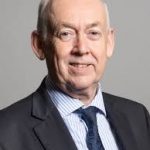
Tag: Wayne David

  • Wayne David – 2024 Speech on Freedom and Democracy in Iran

    Wayne David – 2024 Speech on Freedom and Democracy in Iran

    The speech made by Wayne David, the Labour MP for Caerphilly, in the House of Commons on 1 February 2024.

    I commend the hon. Member for Harrow East (Bob Blackman) for introducing this debate and the Backbench Business Committee for allowing the time for it.

    This debate is important and timely. Although we have had only a few contributions, they have been significant and important. The hon. Member mentioned the Ashraf 3 camp in Albania, and although it is not entirely clear what has happened there it is important to note his point that the Inter-Parliamentary Union, for which I am on the executive of the British group, will be sending a delegation to Albania. I will make a point of making sure, as best I can, that the delegation raises the matter in its visit.

    At the start of my contribution, I make the point that the authoritarian and theocratic regime in Iran presents and presides over a reprehensible repressive state. As has been said, there is little real democracy in today’s Iran. At the beginning of March, there will be elections to the Iranian Parliament and the Assembly of Experts. As has been the case in the past, the Council of Guardians will prevent candidates standing whom the Supreme Leader does not approve. We expect that those who are blocked will be moderate and reforming candidates.

    The elections will rightly attract a great deal of attention, not least because they are the first to be held since the widespread protests in Iran following the death of 22-year-old Mahsa Amini. As I am sure many Members are aware, her death in September 2022 occurred in police custody after she had been arrested for not complying with strict Islamic dress code. Following her death, there were widespread protests across Iran for a number of months. They were cruelly repressed by the regime, but it is important to remember and to pay tribute to the many thousands of women and girls who were brave enough to take part. Indeed, I was proud to speak in an event in this House organised by the Azadi Network. Speakers were from all parties in this House, and they demonstrated a real solidarity, which all parties have clearly expressed, and I stress that that is so important. It was the House of Commons saying to the Iranian people, “We are with you.”

    The protests were subject to appalling brutality in Iran, meted out by the Iranian authorities. It is estimated that at least 20,000 people were detained, including many children. It is estimated, too, that more than 500 people were killed, and many more were seriously injured. The violence did not stop with the end of the demonstrations: there have been many allegations of torture and appalling treatment of detainees, including reports of sexual and gender-based violence against women, men and children.

    As has been said, Amnesty International has reported that Iranian security forces are guilty of using the most terrible sexual violence against people who are merely peaceful protesters. It is important to note the comments made by the hon. Member for Strangford (Jim Shannon), who spoke eloquently about the lack of human rights and pointed out the lack of religious freedom in today’s Iran.

    If the Iranian regime is repressive at home, it is guilty of aggression abroad. In fact, it is among the world’s foremost state sponsors of terrorism. Iran, through its so-called proxies, is guilty of helping to initiate violence across much of the middle east. Iran has supplied huge support to Hamas in Gaza. It has supplied and supported Hezbollah in Lebanon and is still doing so. In Iraq—including in Kurdistan—and in Syria, Iranian sponsored militants have attacked US forces. On Sunday, an Iran-backed group was responsible for a drone attack on a US military base in Jordan that resulted in the death of three American soldiers and the injury of many other people.

    As we all know, the Houthis, who again are closely linked to the Iranian regime, have been conducting missile and drone attacks on international shipping in the Red sea. Of course, the US and the UK have been undertaking surgical strikes against Houthi targets in Yemen, and Labour is on record as supporting that proportionate action. Further afield, the Iranian regime has developed close links with Russia and has supplied a large number of drones that are being used in Ukraine, so there can be absolutely no doubt about the Iranian regime’s malign influence across the middle east and the world.

    On Tuesday, I raised Iran’s destructive activities across the globe with the Minister of State, Foreign, Commonwealth and Development Office, the right hon. Member for Sutton Coldfield (Mr Mitchell), at FCDO questions. He indicated that the Foreign Secretary was in the region that day and holding meetings on the very issue. He also said that the Government were

    “working extensively with Jordan, Egypt, Qatar, Israel, Saudi Arabia and America.”—[Official Report, 30 January 2024; Vol. 744, c. 710.]

    I would be appreciative if the Minister indicated in his reply how those meetings went and how the ongoing discussions will proceed on this important issue.

    We are aware that Iran is active in this country. As a number of hon. Members, including the hon. Member for Harrow East, said, the head of MI5 has previously referred to potential threats by Iran to kidnap or kill British or UK-based people. In 2015, the police discovered an Iranian-linked bomb factory in London. Since the beginning of 2022, Iranians have been responsible for at least 15 potential threats against British or UK-based individuals. That was recognised by a number of hon. Members in the Chamber.

    Earlier this week, The Times reported that a number of members of the Iranian diaspora who have spoken out against the Iranian regime have been warned by counter-terrorism police that they face an increased threat. It is also important to note that the Iranian authorities have been systematically targeting BBC Persian staff, intimidating their families in Iran as well as intimidating staff in this country. Since the protests in Iran in 2022, the BBC security team has reported that the risks to BBC Persian staff have “increased”. Because of those very real threats, I believe that the sanctions introduced, and the further ones announced, should be welcomed. I hope, however, that the Government will closely examine other ways in which pressure can be brought to bear on the appalling Iranian regime.

    One additional measure ought to be the total proscription of the Islamic Revolutionary Guard Corps. I understand that there is ongoing debate in Government about this, but if they do not bring forward appropriate measures that would lead to a total ban of the IRGC in this country, Labour will do so if it forms a Government. If the Government do that now, Labour will support it. I hope that the Government will respond in a truly positive way.

    This has been an important debate with excellent contributions. This issue should unite all of us who believe strongly in democracy, freedom and human rights in this country and throughout the world.

  • Wayne David – 2023 Speech on the Budget

    Wayne David – 2023 Speech on the Budget

    The speech made by Wayne David, the Labour MP for Caerphilly, in the House of Commons on 20 March 2023.

    I think it is fair to say that there are few surprises in the Budget. Many of the announcements were expected, and quite a few of them were borrowed from the Labour party, but a significant rabbit was pulled out of the hat—and it was a really big one. It was announced that there will be a £1 billion tax cut for the richest 1% through changes to tax allowances. Someone with a £2 million pension pot will now get a tax cut of more than a quarter of a million pounds when they take their tax-free lump sum. Moreover, there will be no limit on how much the rich can put into their pension pots tax-free. That is not all: they will be able to pass that on to their heirs tax-free through the creation of a local inheritance law.

    I am told that a competition is now under way in my Caerphilly constituency to find out whether anyone at all will benefit from those tax allowance changes. The odds are that not one single individual there will. The justification for that generous tax cut is that it will encourage people into work. Frankly, it is unlikely that that will happen judging by the reaction from a large number of commentators. As has already been said in the debate, if the measure is aimed specifically at doctors, why not have a proposal that is tailor-made for them?

    If the Government really want to get people into work, I urge them to tackle economic inactivity effectively. Figures in the 2021 census indicated that of the 10 local authority areas in Wales and England with the highest levels of economic inactivity, five were in the south Wales valleys—because individuals are sick or disabled. Blaenau Gwent has the highest proportion—36.1%—of working-age residents who are economically inactive. Then, there is Merthyr Tydfil and the Caerphilly County Borough Council area, where the figure stands at 34%. The legacy of coalmining and heavy industry generally has much to answer for, but it is fair to say that in those areas there is a chronic lack of well-paid jobs and chronic ill health. The responsibility for that situation lies squarely with central Government.

    Unfortunately, the measures in the Budget will do little, if anything at all, to tackle those issues. What they will do is make the rich richer and reinforce the trends that we have seen over the last 13 years. It is worth pointing out, though, that, if anything, the gap between the rich and the poor is growing. There were 147 billionaires in this country in 2020, for example; now, there are 177. At the same time, as the OBR has confirmed, there has been a huge fall in living standards over the last two years—the worst figures since comparable records began.

    The crisis in living standards has had a hugely negative impact on my constituents. Like so many people across the country, my constituents are facing huge levels of inflation, as well as significant increases in their energy bills. The real hardship is manifested in a host of different ways, but I will cite just one for the moment: food banks.

    Citizens Advice has recorded that between April and September 2020, 23,905 emergency food parcels were distributed in south-east Wales alone, which includes my Caerphilly constituency, and that 34% of those who accessed Citizens Advice and requested a food bank parcel were in work but facing real financial difficulties. This is in-work poverty. Unfortunately, the Government are doing little about it.

    My local authority, Caerphilly County Borough Council, through its “Newsline”, is giving clear advice to people on how to claim the benefits they are entitled to and how to relieve the suffering they are going through. For many people, this Budget offers little at all, if anything. My conclusion is unavoidable and straightforward: we need a Labour Government who put people first, and we need that Government as soon as humanly possible.

  • Wayne David – 2015 Parliamentary Question to the Home Office

    Wayne David – 2015 Parliamentary Question to the Home Office

    The below Parliamentary question was asked by Wayne David on 2015-11-26.

    To ask the Secretary of State for the Home Department, what assessment her Department carries out of the needs of Syrian refugees who are admitted to the UK to ensure they receive the support they need.

    Richard Harrington

    The UNHCR identifies refugees for potential resettlement under the Syrian VPR scheme using their vulnerability criteria. Once our security processes have been completed, a full medical assessment is conducted by the International Organisation for Migration in the host country. Local Authorities are provided with case details of all referrals so they can consider whether they have the infrastructure and support networks needed to ensure appropriate care and integration of refugees.

  • Wayne David – 2016 Parliamentary Question to the Department for Work and Pensions

    Wayne David – 2016 Parliamentary Question to the Department for Work and Pensions

    The below Parliamentary question was asked by Wayne David on 2016-05-04.

    To ask the Secretary of State for Work and Pensions, what criteria his Department has set to ensure that people who carry out personal independence payment assessments for Capita are fully qualified medically.

    Justin Tomlinson

    All Health Professionals (HPs) undertaking assessments on behalf of DWP must be registered practitioners who have also met requirements around training, experience and competence.

    Approval to work as an HP must be conferred by the DWP Chief Medical Adviser on behalf of the Secretary of State for Work and Pensions.

    For the delivery of Personal Independence Payment (PIP) assessments, they must be an occupational therapist, level 1 nurse, physiotherapist, paramedic or doctor. They must also be fully registered and have at least two years’ post full-registration experience.

    In addition to their profession, the Department recognises the importance of ensuring that individuals also have sufficient experience, skills and training to carry out their duties and PIP providers are required to ensure that the HPs carrying out assessments have knowledge of the clinical aspects and likely functional effects of a wide range of health conditions and impairments. This means that all HPs receive comprehensive training in disability analysis which includes a functional evaluation as to how medical conditions and the long-term medical treatment of those conditions affect an individual’s ability to perform day-to-day activities. Prior to carrying out an assessment the HP routinely refreshes their knowledge of any condition with which they are not fully familiar.

  • Wayne David – 2015 Parliamentary Question to the Ministry of Justice

    Wayne David – 2015 Parliamentary Question to the Ministry of Justice

    The below Parliamentary question was asked by Wayne David on 2015-12-08.

    To ask the Secretary of State for Justice, with reference to paragraph 2.149 of the Spending Review, where he expects job cuts in his Department; and how many such jobs he expects to be cut.

    Dominic Raab

    The Secretary of State for Justice has set out his vision for a one nation justice system, with swift and certain justice in a reformed courts system and transformed prisons that become places of rehabilitation, not just incarceration. Those on the frontline will be empowered to make the right decisions for those who use their services.

    This means a smaller and smarter Whitehall department with less bureaucracy, including savings which do not impact on staff numbers, such as changes to our estate, our major contracts and better use of technology.

    We also expect to reduce headquarters and administrative headcount and costs over the course of the parliament. This will include reduced reliance on contractors and contingent labour and fewer staff based in expensive London premises.

    Final decisions on the scale of staff reductions have not yet been reached.

  • Wayne David – 2015 Parliamentary Question to the Ministry of Justice

    Wayne David – 2015 Parliamentary Question to the Ministry of Justice

    The below Parliamentary question was asked by Wayne David on 2015-12-08.

    To ask the Secretary of State for Justice, with reference to paragraph 1.143 of the Spending Review and Autumn Statement 2015, what the evidential basis is for the statement that whiplash claims cost the country £2 billion per year.

    Dominic Raab

    The government received and analysed data from numerous sources when formulating the announcement in the Chancellor’s Autumn Statement. The quoted figures were arrived at by combining published industry estimates along with data from government and other sources.

  • Wayne David – 2015 Parliamentary Question to the Ministry of Justice

    Wayne David – 2015 Parliamentary Question to the Ministry of Justice

    The below Parliamentary question was asked by Wayne David on 2015-12-08.

    To ask the Secretary of State for Justice, how many whiplash claims there have been in each of the last five years.

    Dominic Raab

    Government data is compiled by the Compensation Recovery Unit at the Department for Work and Pensions. The figures for the number of whiplash claims are shown in the table below:

    Year

    Total Motor PI Claims

    Total Whiplash (including claims for neck and back)

    2010/11

    790,000

    740,000

    2011/12

    830,000

    760,000

    2012/13

    820,000

    750,000

    2013/14

    770,000

    700,000

    2014/15

    760,000

    690,000

    The Government remains concerned about the number of claims and the impact they have on motor insurance premiums. Despite an overall decrease since 2011/12, claims volumes are still at historically high levels, being some 50% higher than in 2006. In his Autumn Statement the Chancellor therefore announced tough new measures to control costs and reduce the number of unnecessary whiplash claims made.

  • Wayne David – 2015 Parliamentary Question to the Ministry of Justice

    Wayne David – 2015 Parliamentary Question to the Ministry of Justice

    The below Parliamentary question was asked by Wayne David on 2015-12-08.

    To ask the Secretary of State for Justice, what assessment his Department has made of the effect on families of prisoners of the sale of inner-city prisons and their replacement with out of town buildings.

    Andrew Selous

    In looking at our strategy for the future configuration of the prison estate, we will consider a range of factors including the ability of families to access visits. Beyond the closure of HMP Holloway, no decision on further closures, or where any new prisons will be sited, has been made.

  • Wayne David – 2015 Parliamentary Question to the Department of Health

    Wayne David – 2015 Parliamentary Question to the Department of Health

    The below Parliamentary question was asked by Wayne David on 2015-12-10.

    To ask the Secretary of State for Health, how many prisoners are taking part in drug and alcohol treatment programmes (a) in total and (b) in each prison in England and Wales.

    Jane Ellison

    Public Health England provides local information for performance monitoring in the restricted access section of the National Drug Treatment Monitoring System website, but does not publish national data centrally.

  • Wayne David – 2015 Parliamentary Question to the Ministry of Justice

    Wayne David – 2015 Parliamentary Question to the Ministry of Justice

    The below Parliamentary question was asked by Wayne David on 2015-12-10.

    To ask the Secretary of State for Justice, what estimate his Department has made of the number of children in England and Wales who have a parent in custody.

    Andrew Selous

    The information requested is not held centrally.