Tag: Vicky Foxcroft

  • Vicky Foxcroft – 2016 Parliamentary Question to the Department for International Development

    Vicky Foxcroft – 2016 Parliamentary Question to the Department for International Development

    The below Parliamentary question was asked by Vicky Foxcroft on 2016-03-24.

    To ask the Secretary of State for International Development, what proportion of the UK aid budget will be allocated as (a) grants and (b) loans in 2016-17.

    Mr Desmond Swayne

    The information requested is not available for 2016-17.

  • Vicky Foxcroft – 2016 Parliamentary Question to the Home Office

    Vicky Foxcroft – 2016 Parliamentary Question to the Home Office

    The below Parliamentary question was asked by Vicky Foxcroft on 2016-04-18.

    To ask the Secretary of State for the Home Department, if her Department will put safeguards in place to ensure that (a) out of country entry clearance applications are rigorously checked, (b) all supporting documents for such applications are fairly considered and (c) applicants’ details are not confused with other cases.

    James Brokenshire

    All out of country entry clearance applications are subject to an extensive range of mandatory and discretionary checks. These include, but are not limited to, biographic and biometric identity checks against national and international police records and against previous immigration history, as well as document verification.

    Applications are submitted at a Visa Application Centre (VAC) and are individually bundled. The bundles are sent to Decision Making Centres to be assessed by an Entry Clearance Officer, before being returned to the VAC. The application remains in individual bundles throughout the process to prevent applicants’ details being confused with other cases.

  • Vicky Foxcroft – 2022 Parliamentary Question on Prosecution Rates on Violence Against Women and Girls

    Vicky Foxcroft – 2022 Parliamentary Question on Prosecution Rates on Violence Against Women and Girls

    The parliamentary question asked by Vicky Foxcroft, the Labour MP for Deptford, in the House of Commons on 7 December 2022.

    Vicky Foxcroft (Lewisham, Deptford) (Lab)

    What steps she is taking to increase the proportion of cases relating to violence against women and girls that are prosecuted.

    Kate Osborne (Jarrow) (Lab)

    What steps she is taking to increase the proportion of cases relating to violence against women and girls that are prosecuted.

    Geraint Davies (Swansea West) (Lab/Co-op)

    What steps she is taking to increase the proportion of cases relating to violence against women and girls that are prosecuted.

    The Solicitor General (Michael Tomlinson)

    The Government are committed to tackling violence against women and girls, and we have enacted a multitude of new offences designed to target predatory behaviour and to ensure that perpetrators are brought to justice. That includes stalking, coercive and controlling behaviour and upskirting. Further, in the year ending June 2022, prosecutions for rape offences were 49% higher compared with pre-covid levels.

    Vicky Foxcroft

    Lewisham has some of the highest domestic abuse-related crime levels in London and that appears to be increasing. One of the main challenges in capturing accurate pictures of the levels of violence against women and girls in Lewisham is due to under-reporting by victims. A critical issue for my constituents remains the lack of trust in the system, so what are Ministers doing to restore public trust and increase prosecution rates? The low levels of prosecutions cannot continue.

    The Solicitor General

    I am grateful to the hon. Lady for her question, and she is right that we need to see an increase in prosecution rates. The rape review action plan is looking at three key metrics: referrals, charge volumes and Crown court receipts. In each case, she will be pleased to know that the figures are up and moving in a positive direction. She is also right about the issue in relation to victims, and independent sexual violence advisers will help in that regard.

    Kate Osborne

    The commitment to introducing specialist rape courts has not been met. Instead, there is a pilot scheme in just four locations, yet survivors cannot select where their cases are heard. Each day in the UK, there are around 300 rapes, of which around 190 are reported. Of those, only three rapists will see the inside of a courtroom, never mind a prison cell, and the rest will be free to abuse and rape again. Over the Christmas period, the number of rapes rises, so will resources be put in place to ensure that cases reported to the Government’s new 24-hour hotline are actually prosecuted?

    The Solicitor General

    I am grateful to the hon. Lady for mentioning the new hotline. It is right that, overall, prosecutions are up 49% and convictions for rape are up 41%, but she is right in what she says. There are three pilot areas for rape courts, but each and every Crown court can take on rape cases, and I am determined to see prosecutions and convictions rise.

    Mr Speaker

    I call Geraint Davies—not here. I call Dr Caroline Johnson.

    Dr Caroline Johnson (Sleaford and North Hykeham) (Con)

    For women who have been raped, the time that that takes to come to court, when it does come to court, is too often long and traumatic. What is my hon. Friend doing to ensure that the time is shorter for all concerned?

    The Solicitor General

    I am grateful to my hon. Friend for raising that issue. Timeliness is clearly important in ensuring that victims stay with and continue to support prosecutions—she is absolutely right. As for the number of days between police referral and Crown Prosecution Service charge, that has been moving in the right direction and was 29 days faster in the last quarter. However, to strike a note of caution, it is important to ensure that the evidence is right and, on occasions, that can take time.

    James Daly (Bury North) (Con)

    I acknowledge the progress that the Government are making on this issue, but at the heart of the matter is the lack of referrals from the police to the CPS, especially in rape cases. At present, we have a charge-out rate of around 1.7%, and that has to change.

    The Solicitor General

    I pay tribute to my hon. Friend, who brings considerable experience to the Chamber and to the Justice Committee. As he will have heard, charge rates are one of the key metrics. The overall figure is 72.8%. In comparison, the figure for all crime is 78.8%, which is not that far off. He will be pleased to know that, in his local area, the charge rate is increasing.

    Sir James Duddridge (Rochford and Southend East) (Con)

    Although I welcome the absolute increase in the number of rape prosecutions in Essex, the percentage of prosecutions is still pitifully low. What more can the Attorney General do to help excellent police and crime commissioners such as Roger Hirst and Members of Parliament across Essex to improve the situation?

    The Solicitor General

    I thank my hon. Friend for his question and for championing his local area, and he is right. One thing that we can do is to support victims, and we are doing that, not least through the ISVAs. When victims have that help and support, they are 49% more likely to stay with the programme and to continue to support and progress through the criminal justice system.

    Mr Speaker

    I call the shadow Attorney General.

    Emily Thornberry (Islington South and Finsbury) (Lab)

    I believe that the Solicitor General is now an old hand at this, but may I welcome the new Attorney General to her place?

    As the Solicitor General will know, an estimated one in five women in this country have experienced the daily misery of being stalked and the constant fear that their stalker may one day attack them. In the year ending March 2022, almost 120,000 stalking offences were reported to the police, but less than 6,000 of those reports resulted in a charge. That is a charge rate of just 5%, compared with 7% the year before. Does the Solicitor General think that is good enough?

    The Solicitor General

    I am grateful to the right hon. Lady for her warm welcome to me and to the Attorney General. She is right to raise the issue. I would gently point out that stalking was created an offence under this Government; I pay tribute to my predecessor, my hon. and learned Friend the Member for Cheltenham (Alex Chalk), for all his work in the area.

    The right hon. Lady is right to highlight that prosecution rates and charge rates are not high enough. She will have seen from the action plan that I have referred to that we are determined to see them increase. The Attorney General and I keep a very close eye on the matter.

    Emily Thornberry

    I appreciate the seriousness with which the Solicitor General approaches these issues but, as he will know, a formal complaint has been submitted by the Suzy Lamplugh Trust and 20 other members of the National Stalking Consortium, asking for an investigation into the overall handling of stalking cases. Whatever the outcome of that process, may I ask him to take on board the recommendations that the consortium has submitted alongside its complaint and to ensure that, at every level of the criminal justice system, stalking is treated with the seriousness it deserves?

    The Solicitor General

    I pay tribute to the right hon. Lady for the tone that she is striking. She is absolutely right to highlight this issue. The Attorney General and I will look at it incredibly closely, of course, and we will do exactly as the right hon. Lady says.

    Mr Speaker

    We now come to the SNP spokesperson.

    Angela Crawley (Lanark and Hamilton East) (SNP)

    May I also take the opportunity to welcome the Attorney General to her place? A commitment to protecting women and girls should mean protecting all women and girls. Safeguards protecting against gender-based violence must be extended to migrant women. What representations has the Attorney General made to the Home Office to ensure that migrant women are offered the same protections as other women in the UK, and to ratify the Istanbul convention fully and without reservation?

    The Solicitor General

    I know that my right hon. Friend the Attorney General will be very grateful for the hon. Lady’s welcome. The Attorney General works incredibly closely with the Home Office on the issue; more broadly, in relation to victims, she works incredibly closely with the Home Office and with the Ministry of Justice. It is not in isolation, but with our three Departments, that we can make progress.

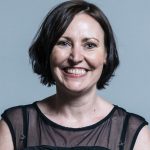
  • Vicky Foxcroft – 2022 Speech on Southeastern Railway Timetable Changes

    Vicky Foxcroft – 2022 Speech on Southeastern Railway Timetable Changes

    The speech made by Vicky Foxcroft, the Labour MP for Lewisham Deptford, in Westminster Hall, the House of Commons, on 6 December 2022.

    It is an absolute pleasure to serve under your chairpersonship for the first time, Ms Harris. I congratulate my hon. Friend the Member for Eltham (Clive Efford) on securing this important debate and on his speech. He has made many key points with which I wholeheartedly agree.

    Like many colleagues, I have worked closely with local transport users during my time as an MP, and I am here today to share the concerns of constituents who have contacted me following the publication of the amended timetable. As we have heard from many Members, it is fair to say that there has been widespread anger with the Department for Transport for allowing Southeastern to press ahead with the changes without consulting its passengers.

    Although I can appreciate the removal of the requirement during the pandemic so that operators could bring in changes more quickly, most Members would agree that we are now at a point at which passenger numbers have restabilised. In response to a written question from my hon. Friend the Member for Sheffield, Heeley (Louise Haigh), the Department stated:

    “There will be less than 1% fewer typical weekday passenger services across the…network compared to the current timetable.”

    Well, I can tell the Chamber that users of St Johns station in my constituency are expecting to lose 19 services per day thanks to the rerouting of the Hayes line’s trains to Charing Cross.

    I have received representations from two very active local organisations: St John’s Society and Brookmill Road Conservation Area Society, as well as from individual constituents. St Johns has had its services reduced in recent years, and the walk to nearby stations—New Cross and Lewisham—is long and uphill for many, causing difficulties for disabled people and those with young children.

    Lewisham in particular suffers, as has been mentioned by many colleagues, with overcrowding at peak times and a woefully inaccessible station. The situation will only get worse as further large residential developments are completed in Lewisham, as Members have referenced in relation to their own constituencies. When the remaining peak-time trains reach St Johns—the next stop on the line—they might be too full for passengers to be able to join them. There are environmental considerations, too, if people are forced to use their car when previously they would have opted to travel by train.

    Similarly, users at Blackheath station in the constituency of my hon. Friend the Member for Lewisham East (Janet Daby), just over the border from my constituency, have been hit with the news that there will be no direct services to London Charing Cross during off-peak hours, and many peak trains will also be cut.

    I will conclude my comments. While the overall number of services might not be significantly reduced, that 1% figure in no way reflects the impact that the changes will have on individual stations and communities.

  • Vicky Foxcroft – 2015 Parliamentary Question to the Ministry of Justice

    Vicky Foxcroft – 2015 Parliamentary Question to the Ministry of Justice

    The below Parliamentary question was asked by Vicky Foxcroft on 2015-10-21.

    To ask the Secretary of State for Justice, if he will make an assessment of the effect on children of court-ordered contact with a perpetrator of domestic abuse.

    Caroline Dinenage

    The family courts take the issue of domestic violence extremely seriously. Where domestic violence is an issue in the family court, judges follow guidance in Practice Direction 12J. This guidance makes clear that where violence or abuse is admitted or proven, any child arrangements order must protect the safety and wellbeing of the child and the parent with whom the child is living, and must not expose them to the risk of further harm. In particular, the court must be satisfied that any contact ordered with a parent who has perpetrated violence or abuse is safe and in the best interests of the child.

    Where the court does conclude that direct contact is safe and beneficial for the child, it can impose conditions such as supervised contact to protect the child.

  • Vicky Foxcroft – 2015 Parliamentary Question to the Department for Communities and Local Government

    Vicky Foxcroft – 2015 Parliamentary Question to the Department for Communities and Local Government

    The below Parliamentary question was asked by Vicky Foxcroft on 2015-10-20.

    To ask the Secretary of State for Communities and Local Government, what steps he is taking to improve supported accommodation for homeless young people in (a) Lewisham Deptford constituency, (b) London Borough of Lewisham, (c) London and (d) England.

    Mr Marcus Jones

    The Government is committed to preventing homelessness and is taking specific action across England to support young homeless people into stable accommodation, education, training or employment.

    We have invested £14 million to enable Crisis to support 10,000 vulnerable single people into privately rented tenancies, of which 41 projects are specifically targeted at young people.

    Our £15 million Fair Chance Fund payment by results scheme is supporting 1,600 vulnerable homeless 18-25 year olds into accommodation, education, training and employment. Projects for the scheme are being delivered across England including Greenwich.

    In addition, the Government is investing £40 million in Platform for Life, a lower rent shared accommodation programme to provide young homeless people with a stable base for work and study.

    We have also implemented the ‘Youth Accommodation Pathway’ good practice model that supports young people to remain in the family home where it is safe to do so and offers tailored support for those who cannot. This has been disseminated across all English local authorities.

  • Vicky Foxcroft – 2015 Parliamentary Question to the Department for Education

    Vicky Foxcroft – 2015 Parliamentary Question to the Department for Education

    The below Parliamentary question was asked by Vicky Foxcroft on 2015-10-20.

    To ask the Secretary of State for Education, how many children aged between four and seven in (a) Lewisham, Deptford constituency, (b) the London Borough of Lewisham and (c) London received free school meals in each of the last five academic years.

    Mr Sam Gyimah

    Prior to the 2014/15 academic year, the department did not collect data on the number of free school meals given out to pupils below school level. The department does not, therefore, hold information on receipt of free school meals by pupils of different ages for earlier years.

    Data from the January 2015 school census at regional and local authority level can be found in table 8e of ‘Schools, Pupils and their Characteristics: January 2015 statistics’[1]. Constituency level data can be obtained by aggregating the underlying school level data from the same publication. This is available in the ‘SFR16_2015_Schools_Pupils_UD’ file within the underlying data, which contains information on each school within constituencies and the number of infant pupils who took a free school meal on census day.

    [1] https://www.gov.uk/government/statistics/schools-pupils-and-their-characteristics-january-2015

  • Vicky Foxcroft – 2015 Parliamentary Question to the Department of Health

    Vicky Foxcroft – 2015 Parliamentary Question to the Department of Health

    The below Parliamentary question was asked by Vicky Foxcroft on 2015-10-20.

    To ask the Secretary of State for Health, pursuant to the Answer of 23 July 2015 to Question 7788, whom his Department has consulted on the matter of compensation packages for people affected by NHS contaminated blood.

    Jane Ellison

    The Department is considering wider reform of the ex-gratia financial assistance and other support for those affected with HIV and/or hepatitis C by infected NHS-supplied blood or blood products. We are doing this within the context of the spending review and in a way that is sustainable for the future.

    In order to help develop the shape and structure of any new scheme, we plan to consult publicly on scheme reform soon. The Department has alrady engaged with representative groups of infected/affected individuals. These individuals were nominated from the Contaminated Blood Campaign, Tainted Blood and The Haemophilia Society. The event was held in a neutral venue and had an independent facilitator. A report from this one off event will be made public soon. Discussions are ongoing with other interested parties.

    While we are working to establish a full and fair resolution, liability has not been established in the majority of cases, so it would not be appropriate to talk about payments in terms of compensation, particularly on the scale that some may envisage.

  • Vicky Foxcroft – 2015 Parliamentary Question to the Cabinet Office

    Vicky Foxcroft – 2015 Parliamentary Question to the Cabinet Office

    The below Parliamentary question was asked by Vicky Foxcroft on 2015-10-20.

    To ask the Minister for the Cabinet Office, how many people have taken their own life in (a) Lewisham, Deptford constituency, (b) the London Borough of Lewisham and (c) Greater London in each of the last three years.

    Mr Rob Wilson

    The information requested falls within the responsibility of the UK Statistics Authority. I have asked the Authority to reply.

  • Vicky Foxcroft – 2015 Parliamentary Question to the Home Office

    Vicky Foxcroft – 2015 Parliamentary Question to the Home Office

    The below Parliamentary question was asked by Vicky Foxcroft on 2015-10-20.

    To ask the Secretary of State for the Home Department, what recent (a) meetings and (b) correspondence she has had on the setting up of buffer zones around abortion clinics; and if she will make a statement.

    Mike Penning

    I refer the Hon Member to the answers I gave to 5385 and 7247 on 13 July and 22 July 2015. We have also received correspondence from Members of Parliament on behalf of their constituents on this issue. The Home Office has not issued guidance to the police on this matter.