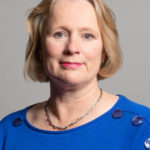
Tag: Vicky Ford

  • Vicky Ford – 2023 Speech on International Women’s Day

    Vicky Ford – 2023 Speech on International Women’s Day

    The speech made by Vicky Ford, the Conservative MP for Chelmsford, in the House of Commons on 9 March 2023.

    It is absolutely wonderful to be back in the House today—if I am a bit bleary, it is because I have just got off the all-night redeye and have had only a couple of hours’ sleep—and it was wonderful to be present at the annual conference of the Commission on the Status of Women, along with Members in all parts of the House, including my right hon. Friend the Member for Basingstoke (Dame Maria Miller), and to see much joy among so many thousands of women. This was the first time the commission had met in person for four years. There was a particularly moving moment yesterday when a very informal lunch was attended by a handful of British parliamentarians from both Houses, a Canadian senator, two young Mexican Members of Parliament, three Afghan women’s rights champions, and two Ukrainian MPs. Madam Deputy Speaker, the sisterhood is strong.

    There is so much that I want to say that I thought I would try to keep myself ordered by giving the House an A to Z, so here it is: some of it happy, and some of it sad.

    A is for Afghanistan, with 4 million girls not at school, women not allowed to work, and women subjected to public floggings, rape and torture. It is gender apartheid at its worst. As the Afghan women said to me yesterday, if an Afghan girl cannot go to school and an Afghan woman cannot leave her home, why can the Taliban send their daughters not just out of their homes but out of their country to go to school in other countries? What they ask of the UK Government is that we and our allies impose travel bans on the Taliban, and do more to sanction their assets.

    B is for a network of paths in Chelmsford called the “Bunny Walks”. It used to be overcrowded, overgrown, dark and dangerous—a no-go zone for women—but, thanks to the Government’s safer streets fund, it now has lights and CCTV, the undergrowth has been cut back, and it is being enjoyed by women and men and, indeed, people of all ages. I would encourage colleagues, if they have dangerous parts of their constituency, to look at the safer streets funding, because it makes a huge difference.

    C is for contraception. Some 257 million women want access to contraception, but cannot get it. If a woman cannot control her own body, she has no control over the rest of her life. Women’s rights to sexual health and reproductive services are being pushed back across the world. Yesterday I visited the United Nations Population Fund, which does amazing work to prevent maternal mortality and to ensure that women have access to contraception. That vital organisation would like to pass its thanks to the UK Government for our leadership in the support that we give it.

    D is for domestic abuse, the most hideous of crimes. But there is really good news from Essex, where reports of domestic abuse are down 8% this year. I thank Essex police, under the leadership of our police, fire and crime commissioner, Roger Hirst, for the huge focus they have put on tackling domestic abuse.

    E is for education. A child whose mother can read is 50% more likely to live beyond the age of five, 50% more likely to be immunised, and twice as likely to attend school as the child of a mother who cannot. I thank the Foreign, Commonwealth and Development Office for prioritising girls’ education in the women and girls strategy yesterday.

    Mrs Flick Drummond (Meon Valley) (Con)

    My right hon. Friend is making an excellent speech. Going back to Afghanistan, is it not very short-sighted of the Taliban not to educate girls, considering that an educated mother educates her children, and an educated child then contributes to a very productive society?

    Vicky Ford

    This is exactly the point. Educating girls creates benefits for the girls themselves and for the whole society—not just greater economic growth, through women being able to go out and work and create their own incomes, but societal benefits such as the health benefits I have just mentioned.

    F is for freedom. Last month I met a survivor of domestic abuse who had just escaped from her violent partner with her three children. As a Member of Parliament, I said to her, “Is there anything more that we could do for you?” She looked me in the eye and said, “No, Vicky —I’ve got everything. I’m free!”, with her arms in the air. May we have more of those free women.

    G is for girls. They are our future, but we should not think that the experiences they face today are the same as the experiences we had growing up. Adolescent girls are disproportionately negatively affected by online harassment. We need to listen to them, understand their experiences and let them inform us, especially as we seek to make laws and policies that affect them.

    H is for the hijab and headscarves, and for the brave women of Iran who are prepared to risk their own lives because they believe in the right to choose whether they should have to wear one.

    I is for impunity. Women as young as four and as old as their 80s have been raped by Russian soldiers in Ukraine—barbaric sexual violence committed by order of military commanders. We must hold the perpetrators to account, take them to court and break the cycle of impunity on conflict-related sexual violence.

    J is for Julia Jeapes, my association chairman. None of us would be here without the volunteers in our parties.

    K is for Kaja Kallas, the Prime Minister of Estonia. We need more strong women leaders in this world. K is also for Kenya, Somalia and Ethiopia, where the rains have just failed for the fifth season and more than 20 million people, mostly women and children, are living in extreme food insecurity.

    L is for levelling up, which is not just a north-south issue. In Mid Essex from 1 April women will have access to IVF on the NHS for the first time. I thank Health Ministers for ending the postcode lottery of health funding.

    M is for marriage; child marriage sometimes sounds as if it could be a romantic and beautiful thing, but it is so far from that. A child entering into marriage often faces rape and a life of slavery. I say thank you and congratulations to my hon. Friend the Member for Mid Derbyshire (Mrs Latham), and the noble Baroness Sugg in the other place on the work that they have done pulling through the Marriage and Civil Partnership (Minimum Age) Act 2022, to make sure that no person under the age of 18 can get married in this country.

    N is for numeracy. I am a mathematician; there are not many mathematicians in this place and certainly not many women mathematicians. We must end the stigma that suggests that girls do not do maths. I am celebrating the fact that year after year we see more and more girls doing maths A-levels; we should encourage them to continue to do more.

    O is for online safety. There are some excellent measures in the Online Safety Bill to protect women; the UN special rapporteur on violence against women and girls gave the UK a shout-out for our legislation in a meeting yesterday, particularly the measures to prevent deepfake porn videos.

    P is for pornography. We need to do much more to tackle the online pornography that our children are coming across and watching; often they just stumble across violent pornography, as a result of which, girls are increasingly being subjected to violent sex. I hope the Government will look favourably on the amendments that the noble Lord Bethell will be tabling to the Online Safety Bill in the other place.

    Q is for queens. I miss our late Queen deeply. As the Foreign Office Minister at the time, I had the honour of meeting foreign leaders as they came to sign the condolence books, and the deep grief amongst women leaders was huge. The late Queen wrapped her own arm around women leaders across the world, and I wish our new Queen all the best as she prepares for her coronation.

    R is for rape. The rate of prosecution for rape is on its way up, but it is still too low and the Government must keep focusing on it. S is for the abhorrent Stephen Bear, a violent, abusive, misogynistic man who has just been sent to jail for revenge pornography—and long may he stay there. So much praise must go to the brave Georgina Harrison, who was determined to see him stand trial for what he has done.

    T is for thank you. The late Madeleine Albright said there was a “special place in hell” for a woman who does not support other women, but I think there is a special place in heaven for men who put their own heads above the parapet to defend women’s rights. I thank the Father of the House in particular for being here today.

    U is for Ukraine and the women of Ukraine. Despite the rapes, despite the 6,000 children who have been abducted, despite the deaths of children, partners, sons and grandparents, the women of Ukraine continue to stand firm and brave and fight for their freedom. Their fight for freedom is the world’s fight for freedom and we will stand with them, not only on International Women’s Day, but every day for as long as this takes.

    V is for violence in politics. Online violence makes women MPs silence our voices and puts women off standing. Too many women in the UK face real threats to their safety. We must stop the hate speech and make it clear that violence will not be tolerated in our politics.

    W is for wonderful. We often complain about all the challenges women have, but we often forget to say that being a woman is wonderful and I would not have it any other way. X and Y are chromosomes and Zs are for sleep, so I thank hon. Members for listening and not falling asleep.
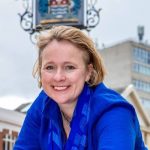
  • Vicky Ford – 2023 Speech on the International Day of Education

    Vicky Ford – 2023 Speech on the International Day of Education

    The speech made by Vicky Ford, the Conservative MP for Chelmsford, in Westminster Hall, the House of Commons, on 26 January 2023.

    I beg to move,

    That this House has considered the International Day of Education.

    It is a pleasure to serve under your chairmanship, Mr Sharma. It is a huge honour to open this debate to recognise the importance of the International Day of Education, a day that is dedicated to raising the importance of education for all. As the UN Secretary-General said this week,

    “education is a fundamental human right and the bedrock of societies”.

    In my Chelmsford constituency, the vast majority of children and young people can access excellent education. In fact, in the Chelmsford district, 94% of our schools are graded good or outstanding by Ofsted. That is well above the England average, which is also high at 89%. Essex children outperform the national average in key areas such as early reading. Enriching out-of-school activities can also enhance educational attainment. During the school holidays, I am delighted that Chelmsford children from more disadvantaged backgrounds can also access enriching activities through the holiday activities and food programme, which I am deeply proud to have set up during my time as Children’s Minister.

    However, during the pandemic, we saw so starkly in our country that when children cannot access school, their education suffers, as does their mental wellbeing. It is therefore good news that, on the whole, education for the children of Chelmsford and elsewhere across the country has now returned to what we consider normal, but that is not the case for so many children in other parts of the world. Currently, an estimated 222 million children are in need of urgent educational support across regions affected by emergencies and protracted crises. Some 78 million children are not in school or receiving any form of education. That figure of 222 million is an increase from 75 million in 2016.

    The educational gulf is greatest in the world’s poorest countries. World Bank research from back in 2019 showed that pre-pandemic, 90% of children in low-income countries could not read proficiently. Education Cannot Wait’s report from last June reminds us that pre-covid, only 9% of crisis-affected early grade children achieved minimum proficiency in maths, and only 15% in reading, yet maths and reading are the vital building blocks on which all education is founded.

    The covid pandemic further widened educational disparities, and girls are disproportionately affected. Nearly two thirds of the figure for global illiteracy is made up of women. The Malala Fund estimates that 130 million girls are out of school today. However, when girls are educated, it strengthens economies and creates jobs. World Bank research shows that, on average, women with secondary school education earn almost twice as much as those with no education at all.

    Educated girls tend to be healthier citizens who raise healthier families. A girl who has been educated is much more likely to ensure that her children are vaccinated, she is less likely to marry young or contract HIV, and she is more likely to have healthy, educated children. Each additional year of school that a girl completes cuts infant mortality and child marriage rates. Furthermore, when girls are educated, communities are more stable and can recover faster from conflict.

    Investing in girls’ education is good for our planet. The Brookings Institution calls secondary schooling for girls the most cost-effective and best investment against climate change. Research also suggests that girls’ education reduces a country’s vulnerability to natural disasters. Save the Children estimates that universal secondary education for girls could avert 50 million child marriages by 2030.

    This year, on the International Day of Education, we have been thinking particularly of the 3 million girls in Afghanistan who were previously in education but are now out of school, because the Taliban will not allow girls to attend secondary school or university. The recent ban on female aid workers will mean that even more Afghan girls are denied their right to education, as the Taliban insist that girls can be taught only by female teachers. That will mean that yet more Afghan girls face forced marriages and poverty. I am therefore concerned to hear from Save the Children that the Foreign, Commonwealth and Development Office is considering ending its “Supporting Afghanistan’s Basic Services” programme, which provides health, education, WASH—water, sanitation and hygiene—and nutrition to around 300,000 people. We must not pull the rug out from under the women and girls of Afghanistan.

    We know that in many developing countries, girls face extra barriers in accessing education. During my year as an FCDO Minister, I travelled to 15 African countries. So many girls told me at first hand about the challenges that they face: the fear of violence, including sexual violence, on long walks to school; the lack of water and sanitation, which can make it impossible for girls to attend school when they have their period; and the constraints on family finances, which so often mean that any money that can be scraped together for school fees is reserved for sons.

    However, I also heard from these girls their determination to learn. I met girls who dreamt of becoming doctors, teachers and even pilots. I also saw the many projects that the UK has invested in to help girls to overcome these barriers. Girls told me about the mentoring project in Malawi, where young women who have completed their secondary education give advice to other girls and help them through their own school experience. I saw the joy on girls’ faces when I opened a clean water well and lavatories in Lesotho. I remember the seriousness of the young woman in Sierra Leone who explained how our project to reduce violence had completely changed the culture of her school, ensuring that girls could learn without fear. And the whole community—thousands of people—came together to celebrate the launch of the Shule Bora programme in Tanzania. That programme has a special emphasis on girls, children living with disabilities and those living in the most deprived areas. They came to celebrate because they knew what we know: when one focuses on helping the most marginalised girl to access education, every child is helped.

    We should all be very proud of the UK’s track record in supporting education in developing countries, and especially, in supporting girls’ education. We have championed the campaign for 12 years of education for every girl. Each year, we host the Education World Forum, with delegates coming to London from across the world to discuss how to learn from one another and how to improve education standards in their countries.

    During the pandemic, the UK co-hosted the Global Partnership for Education summit, raising $4 billion for education in some of the world’s poorest countries; our pledge was £430 million. During our leadership of the G7, the world’s richest countries committed to getting 40 million more girls into school and 20 million more girls reading by the age of 10, with all that to be done by 2026.

    Girls who are not in school do not have a voice of their own, so it is vital that the UK continues to lead from the front on girls’ education and to use our voice for them. I urge the Minister to make sure that all FCDO Ministers—including the Minister with responsibility for development, my right hon. Friend the Member for Sutton Coldfield (Mr Mitchell)—continue to champion that cause. We need to champion it at the World Bank development meetings this spring, at the meetings of the UN’s Commission on the Status of Women in New York in March and at other international fora. I also urge the Minister to work with other FCDO Ministers to publish, with urgency, the long-awaited FCDO women and girls strategy.

    The UK is also a co-founding member of Education Cannot Wait. Its recent analysis indicates that 84% of out-of-school crisis-impacted children live in areas with protracted crises. The vast majority of those are in countries specifically targeted through ECW’s investments, including Afghanistan, the Democratic Republic of the Congo, Ethiopia, Mali, Nigeria, Pakistan, Somalia, South Sudan, Sudan and Yemen. The war in Ukraine is pushing even more children out of school, with recent estimates—according to UNICEF’s report of 17 January—indicating that the conflict has impacted more than 5 million school-age children.

    The FCDO tells me that ECW is already delivering quality education to over 7 million children across more than 30 crisis-affected countries. We will not reach the target that we have committed to of getting 40 million more girls into school without the work of ECW. All across the world, funding needs are growing due to conflict, climate change and the pandemic. Across UN-led humanitarian appeals, the education sector was funded at just 22% of what it needed in 2021—that is half what was achieved in 2018.

    Next month, ECW will hold its high-level financing conference. If we are to help the 222 million children and young people to receive the education that they deserve—to unlock the potential of the world’s children —we must unlock the financial resources to make it happen. Governments, the private sector, philanthropic foundations and individual donors need to work together to find the resources. I know that our official development assistance budgets are tight—very tight—but UK leadership is key. If we step away from the promises that we have made to the children of the world, to the girls of the world, other donors may also step back and reduce or delay their investments.

    Children across the world get just one chance at their education; they cannot wait. I therefore urge the Minister and the FCDO to dig deep into our pockets at the pledging conference next month and to make sure that Education Cannot Wait has the resources that it needs to deliver for our children.

  • Vicky Ford – 2022 Speech on the Online Safety Bill

    Vicky Ford – 2022 Speech on the Online Safety Bill

    The speech made by Vicky Ford, the Conservative MP for Chelmsford, in the House of Commons on 5 December 2022.

    It is great that the Bill is back in this Chamber. I have worked on it for many years, as have many others, during my time on the Science and Technology Committee and the Women and Equalities Committee, and as Children’s Minister. I just want to make three points.

    First, I want to put on the record my support for the amendments tabled by my right hon. Friend the Member for Basingstoke (Dame Maria Miller). She is a true, right and honourable friend of women and girls all across the country. It is vital that women and girls are protected from intimate image abuse, from perverse and extreme pornography, and from controlling and coercive behaviour, as well as that we make a new offence to criminalise cyber-flashing.

    Secondly, I want to talk about new clause 16 and self-harm, especially in relation to eating disorders. As I said in this place on Thursday, it is terrifying how many young people are suffering from anorexia today. The charity Beat estimates that 1.25 million people are suffering from eating disorders. A quarter of them are men; most are women. It also reminds us that anorexia is the biggest killer of all mental illnesses.

    It is very hard to talk about one’s own experiences of mental illness. It brings back all the horrors. It makes people judge you differently. And you fear that people will become prejudiced against you. I buried my own experiences for nearly 40 years, but when I did speak out, I was contacted by so many sufferers and families, thanking me for having done so and saying it had brought them hope.

    There may be many reasons why we have an increase in eating disorders, and I am sure that lockdown and the fears of the pandemic are a part of it, but I do remember from my own experience of anorexia 40 years ago how I had got it into my head that only by being ultra-thin could I be beautiful or valued. That is why images that glamorise self-harm, images that glamorise eating disorders, are so damaging. So it is really concerning to hear in recent surveys that more than one in four children have seen content about anorexia online. It is great that Ministers have promised that all children will be protected from self-harm, including eating disorders. When it comes to adults, however, I understand that Ministers may be considering an amendment similar to new clause 16 that would make it illegal to encourage self-harm online, but that it might not cover eating disorders, because they are just considering giving adults the right to opt out of seeing such content.

    I was lucky that by the time I turned 18 years old I was over the worst of my anorexia, but when I look back at my teenage self, had I been 18 at the peak of my illness and had access to social media, I do not think I would have opted out of that content; I think I might have sought it out. It is incredibly important that the definition of self-harm absolutely recognises that eating disorders are a form of self-harm and are a killer.

    My third point is that I welcome the measures to protect children from sexual abuse online and join my voice with all those who have thanked the Internet Watch Foundation. I have been honoured to be a champion of the foundation for over a decade. The work it does is so important and so brave. The Everyone’s Invited movement exposed the epidemic of sexual violence being suffered by young women and girls in our schools. As Children’s Minister at the time, I listened to their campaigners and learned from them how online pornography normalises sexual violence. There must be measures to prevent children from accessing all online porn. I was worried that Barnardo’s contacted me recently saying that more needs to be done to address the content that sexualises children in pornography. I hope the Minister will work closely with all children’s charities, including the wonderful Children’s Commissioner, as the Bill goes through the rest of its stages.

  • Vicky Ford – 2022 Parliamentary Question on Benefit Fraud

    Vicky Ford – 2022 Parliamentary Question on Benefit Fraud

    The parliamentary question asked by Vicky Ford, the Conservative MP for Chelmsford, in the House of Commons on 5 December 2022.

    Vicky Ford (Chelmsford) (Con)

    What steps his Department is taking to reduce benefit fraud.

    The Secretary of State for Work and Pensions (Mel Stride)

    Dealing with fraud is, of course, a key mission for the Department. We have recently announced two tranches of additional investment totalling £900 million to prevent more than £1 billion-worth of fraud by 2024-25.

    Vicky Ford

    At difficult economic times like this it is particularly important for us to protect taxpayers’ money, so I welcome the Government’s further investment to tackle fraud, but what efforts are they making to address organised crime in the benefits system?

    Mel Stride

    My right hon. Friend has raised an extremely important matter. Unfortunately, fraud does not happen just at the level of the individual, but involves organised crime as well. Since July 2019, the Department has secured the removal of 1,500 social media accounts, many of which were related to organised crime, and since May 2020 it has suspended 170,000 claims.

  • Vicky Ford – 2022 Speech on the International Day for the Elimination of Violence Against Women

    Vicky Ford – 2022 Speech on the International Day for the Elimination of Violence Against Women

    The speech made by Vicky Ford, the Conservative MP for Chelmsford, in Westminster Hall, the House of Commons on 1 December 2022.

    In Chelmsford, we were very grateful to receive more than £500,000 from the Government’s safer streets fund. I thank Roger Hirst, our police, fire and crime commissioner, for his leadership. The Bunny Walks is a network of green footpaths that weave through Chelmsford, connecting homes, the university and the city centre, but the footpaths were overgrown, the lighting was terrible, drug dealers were frequently spotted in the undergrowth, and women, children and families felt unsafe. Now, the overgrowth has been cut back, lighting and CCTV cameras have been installed, and the paths are busy again because safety has returned. But there is so much more to be done.

    The Everyone’s Invited campaign, which went viral early last year, had shocking revelations of the abuse suffered by girls in our schools. As Children’s Minister at the time, I met the campaigners and we promised to shift the dial, so it is welcome news that the Online Safety Bill will come to Parliament next week, with children at its heart. The measures to protect children from online content that promotes self-harm and anorexia need to be implemented urgently, as do measures to prevent children from accessing online pornography.

    As my hon. Friend the Member for Redditch (Rachel Maclean) said, the VAWG strategy has done many great things, but I was really concerned to hear recently of two rape cases, one of a 14-year-old and the other of a 16-year-old, where the victims felt that if they went to the police, their stories would be smeared all over social media and they would not get justice. I have raised that with Essex police, because we must do more to support girls who have been victims of rape and help them to get justice.

    In Essex, the number of rape cases prosecuted has risen from just 22 cases three years ago to 70 last year. That is out of more than 2,500 reported. The proportion of cases taken to court is far too low. One major issue is the huge delays. Victims sometimes have to wait for two years, maybe even longer, and the waiting list for Essex courts is more than double what it was pre-covid. It is absolutely vital that these court delays are stopped.

    I, too, attended this week’s conference on preventing sexual violence in conflict. As Ukraine’s First Lady, Olena Zelenska, reminded us so bravely, a child aged as young as four years old was raped by soldiers in Ukraine. From Ukraine to Ethiopia and so many other countries around the world, rape is being used systematically as a weapon of war.

    During the conference, the Nobel laureate Denis Mukwege also came to Parliament to speak to MPs and Lords. He reminded us that we must not sacrifice justice on the altar of peace, because without justice, the peace will not last. I hope the conference does make a lasting difference to ending impunity and enabling survivors to get justice.

    Women and girls who have been raped also need access to healthcare. Rape is the cruellest of crimes, but forcing the woman who has been raped to have no choice but to carry the child of her rapist is also incredible cruelty. All too often in conflict-affected areas and humanitarian situations, a woman who has been raped has no choice, and no health support. Dr Mukwege said that if a woman can access health support in his country within 72 hours of that rape, they can have treatment to prevent them from getting AIDS and sexually transmitted diseases, and can take the morning after prophylactic, but all too often supplies are not available.

    The UK is one of the few countries that helped to fund access to contraception and women’s health clinics from its development budget. During my time as Minister for Africa, I visited 15 African countries and also visited many women’s health clinics. Many of the women I spoke to were in loving relationships and the clinics were giving women the chance to choose whether they brought another child into their family. I heard at first hand from women and men about how having that choice was life-changing not just for the woman but the family and the entire community, but it is even more important that we get support to the woman who has been raped.

    In October I visited Afar, the neighbouring province to Tigray in Ethiopia. Many women in Afar were raped when the conflict spilled out of Tigray earlier this year. At the hospital, I saw the clinic that the UK had quietly funded. That clinic offered abortions to the women who had been raped in that war. The lead doctor at the hospital told me the service was vital.

    There have been huge cuts in our development budget. So much of our overseas budget is being spent here in the UK, so it is devastating to think that around the world, in some of the poorest countries, the doors to women’s health clinics are shutting. Across the world, women’s rights to sexual and reproductive health are being rowed back. Roe v. Wade is just one example in one of many countries. We will not tackle violence against women and girls without also making sure that we stand firm in defending a woman’s right to health.

  • Vicky Ford – 2022 Comments on Ethiopia

    Vicky Ford – 2022 Comments on Ethiopia

    The comments made by Vicky Ford, the Minister of State for Development in the Foreign, Commonwealth & Development Office, on 19 October 2022.

    Back in Ethiopia with two priorities: conflict in the north and the drought.

    As International Development Minister, look forward to seeing UK aid supporting the humanitarian responses but will also express UK’s deep concerns over renewed fighting. Ceasefire needed now.

  • Vicky Ford – 2022 Speech on Blasphemy Laws and Allegations in Commonwealth Countries

    Vicky Ford – 2022 Speech on Blasphemy Laws and Allegations in Commonwealth Countries

    The speech made by Vicky Ford, the Minister for Development, in Westminster Hall on 11 October 2022.

    It is, as ever, a pleasure to serve under your chairmanship, Sir Charles. I join others in expressing how grateful I am to the hon. Member for Strangford (Jim Shannon) for securing this debate and for all he does with the all-party parliamentary group for international freedom of religion or belief. I thank all hon. Members for their insightful contributions. I will try to cover a number of the points they raised.

    Let me begin by underlining the Government’s deep concern that the use of blasphemy laws undermines the right to freedom of religion or belief, the right to freedom of expression, and often the right to gender equality as well. My remarks today will cover the broad spectrum of the UK’s work on freedom of religion or belief, of which our work to tackle the misuse of blasphemy laws is an important part.

    Freedom of religion or belief is the right of every person to hold any faith or belief, or none at all, and the freedom to change if they choose. It is the very foundation of a free and open society. People should not live in fear of persecution for what they hold in their hearts or how they choose to express it. For these reasons, the UK Government remain committed to defending freedom of religion or belief for all. Promoting these rights is one of the UK’s long-standing human rights priorities.

    The use of blasphemy laws that undermine human rights, including freedom of religion or belief and freedom of expression, is deeply concerning. The laws generally limit freedom of expression and are compatible with international human rights law in only very narrow circumstances. The Government regularly apply diplomatic pressure on countries that misuse blasphemy laws, often through private lobbying as that can be the most effective way to resolve a sensitive case or bring about longer-term change.

    Hon. Members have drawn particular attention to the Commonwealth. We are proud to be part of the Commonwealth alliance, which is united behind the shared values of sovereignty, democracy and human rights. In June this year, member states reiterated those values at the Commonwealth Heads of Government meeting in Kigali, where they

    “noted that freedom of religion or belief are cornerstones of democratic societies.”

    However, despite the agreed values, there remain counties where a person may be imprisoned, fined or even sentenced to death for leaving a religion or expressing a dissenting opinion about a religion.

    As a matter of principle, this Government oppose the death penalty in all circumstances. Our position is well known to Commonwealth members, including Brunei, Malaysia, Maldives, Nigeria and Pakistan. We do not shy away from challenging those who we believe are not meeting their obligations, whether publicly or, when we believe it is most effective, in private.

    Hon. Members spoke about Pakistan and Nigeria, so I will turn to those two countries. In Pakistan, we strongly oppose the use of blasphemy laws against both Muslims and non-Muslims. In June, Lord Ahmad impressed upon Pakistan’s Minister of Foreign Affairs the need to uphold freedom of religion or belief. The British high commissioner regularly lobbies the Pakistani authorities to guarantee the rights of all people, particularly the most vulnerable, including women, minorities and children. We strongly condemn forced marriage and forced conversion of Hindu, Christian and Sikh women and girls, which is an important part of our engagement with the Government. Forcing women and girls into marriage is a serious abuse of women’s rights that often robs them of the right to choose their own future.

    A number of hon. Members mentioned the Ahmadiyya Muslims. We remain very concerned about the reports of discrimination and violence against religious communities in Pakistan, including the Ahmadiyya Muslim community. We continue to urge the Government of Pakistan, at senior levels, to guarantee the fundamental rights of their citizens, regardless of their belief. Some individual cases have been mentioned, particularly that of Tahir Naseem. We strongly condemn the shocking murder of Mr Naseem while he was on trial for blasphemy in 2020, and we are very clear that the perpetrators of such crimes must be brought to justice.

    In Nigeria, the right to freedom of thought, conscience, religion and expression is enshrined in the constitution, but blasphemy is still a punishable offence under both secular and sharia law. The murder of Deborah Samuel in Sokoto state in May, following an allegation of blasphemy, was a barbaric and heinous act. I expressed my condemnation in public at the time and urged the relevant authorities to ensure that the perpetrators faced justice in line with the law. I again condemn that attack today and again urge that the perpetrators face justice. Hon. Members may be interested to know that when the Sultan of Sokoto came here to the ministerial conference on freedom of religion or belief in July, he pointed to good inter-faith relations in Sokoto between Muslims and Christians, but he also underlined the point that the action was criminal and has no religious legitimacy.

    Jim Shannon

    I thank the Minister for her strong response on blasphemy laws, which I expected. In relation to wee Deborah Samuel, there is a strong evidential base—it is available in some media, and many people have it. Has it been reinforced to the Nigerian Government that that evidential base, which we believe to be emphatic, could be used to try people not just for some minor crimes, but for murder?

    Vicky Ford

    The hon. Member makes a strong point. As I said just now, the sultan of the area condemned that act as criminal. We condemn all violence against civilians in Nigeria. Christians have been victims of violence, but civilians of all faiths—including many Muslims—have also suffered devastating harm at the hands of extremist groups.

    Mubarak Bala was, as Members have mentioned, arrested in 2020 for alleged blasphemy and has been sentenced to 24 years in prison. I have raised this case personally with the Nigerian Foreign Minister, to whom I have stressed that defending freedom of religion or belief—including non-belief—is a human rights priority. We are following Mr Bala’s case closely, and last week officials from our high commission in Abuja again raised his case with the National Human Rights Commission of Nigeria.

    I know that hon. Members have a keen interest in our broader work on such issues, so I will highlight three pieces of work. First, we are collaborating with and influencing international partners because we know that we cannot bring positive change alone. In March last year, we joined Australia and 50 other countries in a statement condemning the existence of the death penalty as a punishment for blasphemy. In July this year, we hosted the international ministerial conference on freedom of religion or belief here in London. I thank in particular my hon. Friend the Member for Congleton (Fiona Bruce) for the huge amount of work she did for that conference, which brought together more than 100 faith and belief leaders and human rights actors, and, I believe, delegations from 100 different Governments, including from around the Commonwealth. The sessions provided opportunities for participants to delve into the challenges created by blasphemy laws and their impact on freedom of expression and freedom of religion or belief.

    Secondly, we are actively working with multilateral organisations such as the International Religious Freedom or Belief Alliance, which is chaired very ably by my hon. Friend the Member for Congleton.

    Thirdly, we are working with the G7 and the United Nations to ensure that states uphold their human rights obligations. Just over a fortnight ago, for example, my noble Friend Lord Ahmad spoke at the United Nations urging the international community to call out Iran for systematically targeting members of minority communities, to press Afghanistan to protect minorities who are targeted for their beliefs, to challenge the discriminatory provisions in Myanmar’s citizenship laws, and to hold China to account for its egregious human rights violations in Xinjiang.

    Finally, we are working hard to bring diplomacy and development together on these issues. During the international ministerial conference, my noble Friend Lord Ahmad announced that the UK will extend the hand of partnership to countries that are prepared to take action on their freedom of religion or belief challenges, including by helping with funding or expertise to implement legislative changes. A number of Members, including the hon. Member for Strangford, mentioned the need to make legislative changes in some areas. We are also working with Advocates for International Development, a UK-based non-governmental organisation, to match experts from across the UK with requests from willing Governments about implementing changes in blasphemy laws and access to justice, gender equality, health and education.

    This is a complex area, but change is needed. The Government have a firm belief that no one should suffer because of what they believe or how they express their beliefs.

    Brendan O’Hara

    Before the Minister sits down, will she say a few words about what the Government have done to advocate on Mubarak Bala’s behalf directly with the Nigerian Government? When is the last time the Government spoke to the Nigerians about Mubarak?

    Vicky Ford

    As I said, I have raised the case directly with the Nigerian Foreign Minister, and officials from our high commission in Abuja again raised it with the National Human Rights Commission last week. We will continue to raise it, and I will certainly let the Foreign Minister know that the case of Mubarak Bala has been raised by Members of all parties. I thank them for their support on this journey.

  • Vicky Ford – 2022 Comments on Ethiopia

    Vicky Ford – 2022 Comments on Ethiopia

    The comments made by Vicky Ford, the Minister of State for Development in the Foreign, Commonwealth & Development Office, on Twitter on 5 October 2022.

    Just met with Ambassador Teferi.

    Very disappointed that the Ethiopian Govt has asked me to postpone my visit this week to raise profile of terrible regional drought.

    But encouraged at commitment to peace talks and urge all parties to seize chance to end the conflict.

  • Vicky Ford – 2022 Statement on the Rohingya Crisis

    Vicky Ford – 2022 Statement on the Rohingya Crisis

    The statement made by Vicky Ford, the UK Minister for Development, at the United Nations General Assembly on 22 September 2022.

    Your Excellency Prime Minister Hasina; distinguished guests.

    Thank you for the opportunity to join you today to remember the tragic events of 5 years ago. And for the chance to press for a durable solution, and to mobilise adequate resources to support the Rohingya until they can return to Myanmar.

    Prime Minister Hasina, your government and the people of Bangladesh have our upmost respect. You have generously hosted one million Rohingya refugees for 5 years. And I pay tribute to your leadership and humanitarian values.

    Friends and colleagues. Nobody should be forced to flee their home or their country of birth. It is a tragedy that so many have been unable to return to their communities, that so many lives have been stalled, and that there has been no accountability for the atrocities endured.

    Confronted by so much pain and hardship, the courage, resilience, and spirit that the Rohingya continue to display is all the more admirable.

    I wanted to reiterate our deep concerns by the increasing violence in Myanmar. In Rakhine state, Rohingya communities are caught in the cross fire of recent fighting between the Myanmar Armed Forces and Arakan Army.

    I am saddened to hear about the horrendous attack on a school in Sagaing. We condemn the killings. There can be no justification for the killing of children and innocent civilians.

    Since 2017, the UK has provided £340 million of support to the Rohingya and neighbouring communities in Bangladesh. And £25 million for the Rohingya and other Muslim communities in Rakhine State. This has provided lifesaving food, water, shelter, healthcare and protection.

    We continue to be a major contributor to the core funding of humanitarian agencies, providing £108 million this year, which underpins their ability to respond to the crisis. Our total portfolio of support makes us one of the largest global humanitarian donors.

    International Financial Institutions have an important role to play in sustaining the Rohingya response, and we welcome their continuing dialogue with your government.

    We will continue to support the Rohingya and, importantly, the local communities around the camps.

    Preparing the Rohingya to return to Myanmar, when it is safe and sustainable to do so, is vital.

    So we are pleased that the Government of Bangladesh has endorsed the rollout of the Myanmar Curriculum and a new Skills Framework. This will have a positive impact, and should be followed by expanded livelihood opportunities in Cox’s Bazar and on Bhasan Char, to better equip refugees for their sustainable return to Myanmar.

    Prime Minister, we agree with you that the international community must play its part to create the conditions for safe, voluntary and dignified returns.

    We will continue to work alongside the international community to improve conditions for the Rohingya in Myanmar, and mitigate the risk of further atrocities. This includes using targeted sanctions and building a global coalition of countries committed to tackling the flow arms to Myanmar.

    This year we marked 5 years since the military led ethnic cleansing of the Rohingya people. We used the importance of this tragic anniversary to hold to account those responsible for atrocities in Rakhine state.

    We have not forgotten what they did, and last month the UK announced a further round of sanctions to target businesses with close links to the Myanmar military, who funded the clearance operations in 2017.

    Accountability for these atrocities is vital to end the cycle of violence, which is why we intend to intervene in the International Court of Justice case brought by The Gambia, of which we are a longstanding supporter.

    To achieve true justice for the Rohingya, their citizenship in Myanmar must be restored. The systematic human rights violations they have suffered for decades must end. And Rohingya people must be meaningfully included in future visions of Myanmar society.

    We will use all available opportunities, including at the G7 and with our ASEAN partners, to push for a long-term solution to the crisis and its root causes. We will also use our role as penholder to keep the situation in Myanmar on the UN Security Council’s agenda, and explore all available Council tools.

    We will continue to do all we can to ensure the Rohingya can voluntarily, safely and sustainably return home, when conditions allow. And help the people of Myanmar enjoy the peace, justice and prosperity they deserve.

    Thank you.

  • Vicky Ford – 2022 Speech to the Global Funds Replenishment Pledging Session

    Vicky Ford – 2022 Speech to the Global Funds Replenishment Pledging Session

    The speech made by Vicky Ford, the Minister of State for Development, at the United Nations General Assembly on 21 September 2022.

    Excellencies, colleagues, friends.

    What the Global Fund has achieved to date is nothing short of extraordinary.

    Saving 50 million lives, investing billions in healthcare systems and providing leadership on COVID-19. The UK was a founding supporter of the Global Fund, and we are its third largest ever donor having contributed more than £4.4 billion to date. This is just one important part of our contribution to fighting preventable diseases.

    We have invested over £2 billion in Gavi – the vaccine alliance – helping them to save 15 million lives and help countries prepare for the roll out of new malaria vaccines. UK expertise in R&D gives us a unique ability to drive forward innovation that can make a step-change in progress.

    We have invested around £400 million in Product Development Partnerships, harnessing the best of British scientific excellence to fight diseases of poverty.

    Our support for the Innovative Vector Control Consortium, helped it develop ground-breaking technologies which have averted up to 27 million cases of malaria including a novel type of bed net, that kills mosquitoes resistant to traditional insecticides.

    And our £500 million investment in Unitaid supported innovations that cut the cost of the best paediatric HIV medicines by 75%.

    This year, we set out our approach to strengthening global health in our International Development Strategy. As part of that we will continue to be a strong supporter and contributor to the Global Fund, helping to save lives, strengthen health systems and help countries prepare for and prevent pandemics.

    We will work with the Global Fund to fight for what counts, and make the world a safer place for everyone.