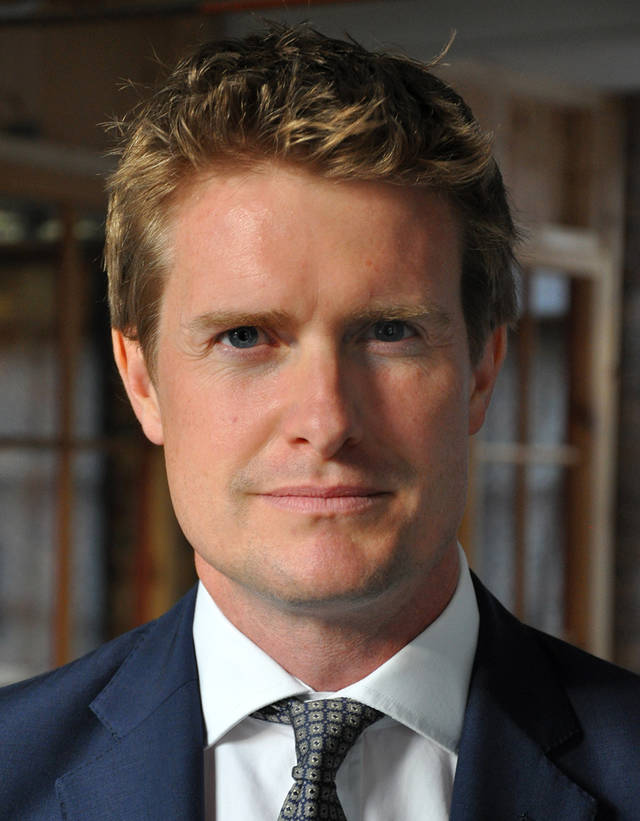
Below is the text of the speech made by Tristram Hunt, the Shadow Secretary of State for Education, on 12th February 2014.
THE VALUE OF SCHOOLING
Thank you.
I would like to begin by thanking Andrew and AQA for organising this conference on a very important theme. They are at the forefront of developing new ways to make assessment imaginative, rigorous and deliverable – which, as we know, can sometimes be challenging in the creative subjects.
It is also a great pleasure to be here at the Institute of Education, an institution established in that golden period of London’s history – the heroic phase of municipal socialism under the LCC.
Dockers’ leader and London County Councillor John Burns put it best, when he said that what he and his fellow Progressives were struggling for was ‘a revived municipal ideal’; the goals of the LCC were ‘to do for all what private enterprise does for a few. It is the conscious ordering of the city, through ownership of public services, of its own comfort, happiness, and destiny.’
For with the nuts and bolts of municipal socialism – the trams and the public health – came a commitment to learning, art and recreation. By 1907 over £10,000 p.a. was spent on some 1,200 summer concerts. The LCC Chair, Lord Meath, thought the council should offer music ‘of a high and noble character’, because such music served an educational purpose and could ‘be brought to bear in a very agreeable manner on large masses of people.’
These themes of education, creativity and character are what I want to touch on today.
In recent weeks I have been setting out how teaching and learning fits in with the Labour Party’s wider purpose of building a strong society and a growing economy.
From Michael Barber to Andreas Schleicher, respected educationalists have repeatedly pointed out that no education system can exceed the quality of its teachers.
So that is our starting point: we believe that raising the status, elevating the standing and enhancing the standards of the teaching profession is the surest way to improve our children’s attainment and give them the start in life they deserve.
However, today I want to talk to you about the institutions of change – schools – and argue that the demands of the 21st century will require charting a markedly different approach to schooling.
Because though my first priority as Education Secretary in the next Labour Government would be to make sure we have ‘a world class teacher in every classroom’ I realise that it will not be enough just to raise the quality of individual teachers.
Evidence from disciplines such as organisational psychology and economic geography shows that collaboration is crucial to innovation and creativity.
So I begin from the premise that we should celebrate the fact we educate our children in a supportive social environment; that there is something intrinsically valuable in schools as dedicated learning communities – where young people learn from each other in addition to the foundations of knowledge from teachers.
This is not a banal declaration – such is the awesome technological power being unleashed by the internet that it will not be too long before somebody proposes an institution-less model of schooling.
Indeed, one only has to look at the popularity of Massive Open Online Courses to imagine how that might look.
Yet one of the many attractions of Ed Miliband’s ‘One Nation’ approach to our politics is a revival of an older argument that everything of value is not reducible to price.
Real value, as John Ruskin wrote in Unto this Last, “depends on the moral sign attached…. There is no wealth but life”.
And for the Labour Party, the value of schooling, its social ethos and its moral purpose, is immeasurable.
What is more, this is far more important than the name emblazoned upon the school gates. Indeed, beyond some fundamental prerequisites necessary to raise standards – autonomy with local oversight, good leadership, financial transparency and qualified teachers – we are not overly interested in passing judgement on different school types.
What exercises us is a school’s quality, its ethos and the values of schooling we want our education system to embody.
Yet to preserve these values in our brave new, digitally enhanced world we need to re-emphasise two fundamental educational capabilities that are in serious danger of being crowded out.
These qualities are, I believe, vitally important in preparing young people for the economy of the future.
They are important in our push to raise academic attainment and deliver educational excellence for all.
But most of all they are important because they are valuable in terms of the type of education we want our young people to enjoy in order to reach their fullest potential.
They are: character and creativity.
CHARACTER IN THE CLASSROOM
Let me start first with character. And not just because, “The historian’s first task is the elucidation of character”.
No rather I start with character because I believe that is where schools should also start.
Because it seems to me that sometimes the managerial, target-driven performance culture that has permeated our education system in recent years, can threaten the social ethos of schooling we hold so dear.
Do not mistake me: I am zealot for minimum standards, rigorous assessment and intelligent accountability.
I am supportive of a dynamic and interventionist Ofsted, tasked with a commitment to rooting out underperformance wherever it lies.
But as with so many things we need to strike a balance.
And if we choose to focus upon exam results and league tables to the detriment of everything else, then surely we are guilty of misunderstanding the purpose and nature of education?
We should begin then with a deeper question: what do we want for and from our young people?
First and foremost, the Labour Party wants young people who are equipped with the academic or vocational skills they require to succeed in an ever more competitive global market-place.
More than that, we want young people who are confident, determined and resilient; young people who display courage, compassion, honesty, integrity, fairness, perseverance, emotional intelligence, grit and self-discipline.
We want our young people to have a sense of moral purpose and character, as well as to be enquiring, reflective and passionate learners.
Of course saying that character should be the focus of schooling is the easy part. The trickier question is how do we deliver it?
However, this is where it gets really interesting. Because emerging research from people like Professor James Heckman at the University of Chicago and Professor James Arthur at the University of Birmingham clearly demonstrates that character can be taught.
And as the excellent manifesto published yesterday by the All Party Group for Social Mobility demonstrates, there is a burgeoning debate about how best we can do that.
But what is clear is that this is about more than bolting-on some music lessons or sports clubs to the school day. “No, this is about learning from the rigorous academic discipline that is character education and implementing a holistic approach that goes beyond extra-curricular activities and into the classroom.
So I am calling upon initial teacher training providers to include character education in initial teacher training.
And we should encourage all schools to embed character education and resilience across their curriculum.
Of course this focus harks back to some ancient educational ideals. From the Stoics, Plato and Aristotle, to Milton, Samuel Smiles and the Arnolds; for more than 2000 years schooling has been primarily concerned with the formation of character.
‘The noblest heraldry of Man,’ as Smiles called it – ‘that which forms the conscience of society, and creates and forms its best motive power.’
As Matthew Arnold – a truly independent schools inspector – wrote, schools should be seen “not as a mere machine for teaching, reading, writing and arithmetic, but as a living whole with complex functions, religious, moral and intellectual.”
Indeed, the 2002 Education Act required the National Curriculum to “promote the spiritual, moral, cultural, mental and physical development of pupils at the school and of society”.
So we do not have to look too far into the distant past to a find a time when such values were promoted.
Yet, I would argue that the contemporary context makes the cultivation of character even more important.
One only has to look at, for example, the research of Professor Avner Offer at Oxford University, to find a persuasive argument that ‘the flow of novelty’ in contemporary society is so strong that higher levels of commitment, discipline and self-control are needed to ensure that long-term wellbeing is not repeatedly sacrificed upon the altar of short-term gratification.
Our young people grow up in complex times. Incidents of mental illness appear to be rising, technology and social media appear to be making it more difficult to concentrate for long periods, whilst some might argue that respect for education itself is in decline.
The benefits of delayed gratification, attentiveness and patience must be more clearly articulated.
Moreover, research clearly shows that vulnerable and disadvantaged young people are far more likely to deal with the consequences of failure and setbacks in a negative way.
Character is not best taught through adversity – its study belongs in the supportive, dedicated and aspirational communities that the best schools provide.
Now I am not the kind of politician to tell professionals how to do their job – how many lines pupils should write or litter they should pick up.
But what I hope I am doing is using my position as a democratically elected politician – and aspirant Secretary of State – to indicate what matters to a forthcoming Labour government and what evidence is available to endorse it.
By prioritising character, moral purpose and the education of well-rounded individuals as well as academic attainment, the Labour Party is demonstrating its commitment to taking some of those deeper cultural challenges head on.
CREATIVITY IN THE CURRICULUM
But character is not the only virtue we need to re-emphasise in a contemporary vision of schooling.
We need to keep working on developing creativity in our schools too.
Let’s start with some cold hard economic facts.
Our creative industries are worth £36 billion a year to our economy, employing 1.5m people, and generating around 10% of our total exports.
Moreover, they currently represent the fastest growing sector in the economy; they are a vital conduit of our soft-power right around the world.
We are the country of Danny Boyle, Harry Potter, Adele, Robbie Williams, EL James and Stella McCartney.
We have remarkable reservoirs of creativity in our DNA. And so there is a pretty basic economic argument for encouraging creativity in the curriculum.
However, once more it is technology that makes this increasingly imperative.
We know that digital revolution has made the entire history of human achievement.
We know too that this globalisation of knowledge that opens up enormous possibilities for creativity and innovation both economically and educationally.
But what might not be so well known is that this is already changing the way we work – a recent study by Princeton University showed a sharp increase in the workplace demand for non-routine analytic and interactive skills. Employers reported that they needed people who were innovative, flexible, creative team-players.
We have seen this too in the emergence of the STEAM agenda, which recognises the economic importance of the arts in education as well as science, technology, engineering and maths.
As Steve Jobs famously said: “It is in Apple’s DNA that technology alone is not enough. It’s technology married with liberal arts, married with the humanities that yields the results that make our hearts sing”.
And whilst I do not agree with everything Sir Ken Robinson says, his definition of creativity – that it is “the process of having original ideas that have value” – makes it crystal clear why it is so relevant to a modern economy.
Yet the truth is that preparing our children for the jobs of the future is an even more daunting challenge. As Andreas Schleicher of the OECD has said:
“Because of rapid economic and social change, schools have to prepare students for jobs that have not yet been created, technologies that have not yet been invented and problems that we don’t yet know will arise.”
That is why from 2015 the OECD will start testing collaborative problem-solving alongside reading, maths and science in the next round of PISA assessments.
Of course that does not mean undermining the importance of knowledge.
I want to make it absolutely clear that I would never give an inch on getting the academic basics right.
Literacy and numeracy skills are vital 21st century skills, fundamental to the life chances of all young people. Particularly the disadvantaged.
Furthermore, as the work of Daniel T Willingham from the University of Virginia has shown, there is a vital relationship between critical thinking and knowledge.
Thought processes are intertwined with what is being thought about. Knowledge enhances cognitive processes like problem solving and reasoning.
However, again it is question of striking the right balance. And in practically every other country, ‘broad’ educational frameworks are currently being drawn up that, in the words of former US Secretary of State Condoleeza Rice, “combine a mix of ‘old-fashioned skills and knowledge’, such as numeracy and literacy, with ‘twenty-first-century’ skills”.
And uppermost in the vast majority of 21st century skill frameworks? Creativity and innovation.
So, I am encouraged that the Government has made a step in the right direction with its focus on the ‘Best Eight’ of subjects for GCSE bench-marking.
However, right across the new curriculum proposals we are seeing a narrowing of assessment criteria, with an emphasis on the theoretical over the practical and the creative.
Geography fieldwork, practical lab-work in science, extended projects; the speaking and listening component of English GCSE; and the practical elements of music and art – all of these are under threat, which can only impact negatively upon young people’s development as rounded, inquiring, creative individuals.
However, what really concerns me with this narrowing of the scope of education may actually begin to affect attainment in core subjects such as English and Maths.
Because there is a growing body of evidence to suggest that not only do creative subjects have a positive impact on young person’s overall development but that they actually boost attainment across the board.
The imagination and visualisation skills inherent in drawing, painting and the visual arts have been shown to help writing skills and the interpretation of texts.
Representing Stoke-on-Trent I am particularly taken by studies showing that the dexterity of medical surgeons benefit from working with clay.
Music has been found to have strong connections to improving spatial reasoning and understanding complex mathematical concepts.
This should not surprise us – in the real world information is interwoven, layered and sophisticated. It is not experienced in isolated subject blocks.
So, just as with character, a broad and balanced education requires that creativity is embedded right across the curriculum.
NO SURRENDER ON STANDARDS
Of course absolutely vital to delivering on this promise will be a highly qualified, self-motivating and dedicated teaching profession.
And the changing economic and educational necessities only further demonstrate the importance of regular professional development, of making sure that teachers’ skills and knowledge are up-to-date with the latest pedagogical and technological expertise.
That, as I have said, is the surest way to raise standards in our schools.
Nevertheless, there may be those who say that a contemporary vision of schooling which stresses character and creativity alongside attainment is a surrender on standards.
Let me say very clearly: I see absolutely no reason why we need to make a choice between taking academic rigour seriously or developing character and creativity.
As Andreas Schleicher from the OECD made clear when he presented the PISA survey in December, success in the 21st century will depend as much upon what you can do with what you know, as what you know.
And I have seen this creativity at work in the sports ethos of Sir Thomas Telford City Technology College; the Hairspray rehearsals at the Ormiston Sir Stanley Matthews Academy; and the rich, glorious displays of children’s artwork on the walls of St Mary’s Redcliffe, Bristol and Divine Mercy Roman Catholic School, Manchester.
They have shown the ethos, excellence and culture of high expectations we want to see spread to all schools.
And as any employer will tell you – outstanding qualifications, on their own, are no guarantee of the wider aptitudes required for the world of work.
So preparing our young people, equipping them with the character and creativity needed to succeed in this most demanding and competitive of centuries, is an essential partner to raising standards.
Literacy and numeracy, creativity and character – these are the themes we want to pursue in office.
It speaks to our tradition within the Labour movement and to the modern demands of a global economy.
And it has been done in the past. Let me end by returning to the past.
In 1936, the Mayor of West Ham looked back on the great era of municipal socialism in London: In my early days there were no municipal recreation grounds or playing fields: no municipal college, secondary, central, special, open air or nursery schools; no municipal libraries, baths, tramways or electricity undertakings; no municipal hospitals, maternity and child welfare clinics or school medical clinics. Truly there has been a wonderful growth of educational and public health services: those twin handmaidens, which have brought to our citizens healthier, happier and longer lives.
Education as the handmaiden of a healthier, happier and longer life – that seems to me a worthy ambition.