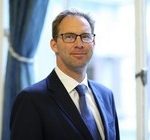
Tag: Tobias Ellwood

  • Tobias Ellwood – 2023 Speech on the Armoured Cavalry Programme – Sheldon Review

    Tobias Ellwood – 2023 Speech on the Armoured Cavalry Programme – Sheldon Review

    The speech made by Tobias Ellwood, the Conservative MP for Bournemouth East, in the House of Commons on 15 June 2023.

    May I immediately associate myself with your kind words about Glenda Jackson, Madam Deputy Speaker?

    We now have in the Chamber not one, but three current or former procurement Ministers who bear the scars of this project. I am pleased that we are able to discuss the matter so openly and I commend the recent work that the MOD has done to get on top of the issue.

    Ajax is now a case study that the MOD and DNS should use on how not to do procurement. This is all about the British Army’s recce vehicle. The current one being used, the Scimitar, was introduced in 1971. It is good to hear that the soldiers the Minister met said that the replacement is better than the last—that is brilliant, because it was built in 1971. Ajax’s journey has been miserable. It started in 2010 and the delivery date was 2017, yet it is not expected to enter service until 2030. Something very serious has gone wrong.

    I absolutely welcome Clive Sheldon’s report. The Committee will look into that in more detail and, rather fortuitously, a Sub-Committee study on procurement, by my right hon. Friend the Member for Rayleigh and Wickford (Mr Francois), is currently under way. I am sure that he will have more words on how we will digest the report in more detail.

    The Minister covered some of the issues. Concerns include the relationships between different entities within, or associated with, the MOD. The senior responsible officer has been criticised for not being a single point of contact or owning the actual project itself but having to have a number of projects going concurrently. Concerns got stuck because of people taking a rigid view of their remits. It is not just with Ajax that there is a problem; there is also with the land warfare capability. We have similar problems with the main battle tank and the armoured fighting vehicle. I hope that those problems will be addressed when the defence Command Paper comes out.

    James Cartlidge

    I am grateful to my right hon. Friend the Chairman of the Select Committee. Of course, we are absolutely committed to engaging with his Committee and, indeed, with the Sub-Committee, before which I will appear next week. I was born in 1974. He makes a striking point about the existing vehicle being from 1971—it is the same age as my elder brother. I take his point that one might therefore expect servicemen to say that it is night and day.

    I put great store by meeting those on the frontline, and I will always continue to do that. It was a great privilege to go to Bovington. One of the soldiers I sat next to in the Ares version had been in a Challenger 2 when it was hit by an IED—I think it was in Iraq or Afghanistan; he did not say. He felt confidence in the protection. It is so important that we interact with the soldiers on the frontline. Ultimately, that is the point: we want to deliver a better acquisitions system for them and I look forward to working with my right hon. Friend’s Committee to that end.

  • Tobias Ellwood – 2023 Speech on Ukraine

    Tobias Ellwood – 2023 Speech on Ukraine

    The speech made by Tobias Ellwood, the Chair of the Defence Committee and Conservative MP for Bournemouth East, in the House of Commons on 16 January 2023.

    This conflict will not end any time soon. Putin is moving his country to a war footing as he prepares for a spring offensive. Tactically speaking, it is very welcome that we are finally seeing some serious, NATO-standard tracked hardware gifted to Ukraine. It is another example of the UK leading and ever pushing the envelope of international support for Ukraine.

    As other nations follow our lead, maintaining so many NATO variants of vehicles and equipment—tanks, armoured personnel carriers and artillery pieces—will not be practical in the long term. Will the UK consider leading again by establishing a western-funded, Ukrainian-operated weapons factory and assembly line in eastern Poland so that Ukraine can become self-sufficient in procuring and replenishing the military kit and munitions it needs for its long-term security, without fear of the facility being targeted by Russia?

    Mr Wallace

    My right hon. Friend’s suggestion is correct. He is right to say that, unless there is a supply chain or, indeed, a sustainability package behind all this gifting, these vehicles and artillery pieces will become junk on the battlefield when they run out or wear out, so it is important that we think in that way. That is why we will be putting in some recovery vehicles with the Challenger 2 donations. There is a lot of thought going on right now about the sustainability of supply chains, which ties into the international fund, as I am looking for intelligent application of the fund to stimulate just that.

    Ukraine has shown itself to be incredibly successful either at reverse-engineering what it captures from Russia or at designing and developing its own equipment. It recently opened a production line for 155 mm or 152 mm shells, and it is now manufacturing within the country. We will get to where my right hon. Friend wants to be by using the international fund or Kindred to fund supply chains over the border. If Ukraine approaches us with ideas for transferring intellectual property so that we can make equipment for Ukraine, or so that Ukraine can make the equipment here or anywhere else, I would be very open to doing that.

  • Tobias Ellwood – 2022 Speech on Ukraine

    Tobias Ellwood – 2022 Speech on Ukraine

    The speech made by Tobias Ellwood, the Chair of the Defence Committee, in the House of Commons on 20 December 2022.

    Mr Tobias Ellwood (Bournemouth East) (Con)

    It is fair to say that there has been a bit of domestic turbulence in British politics over the past six months or so, but, as we saw in our Defence Committee visit to Ukraine, the support that Britain provides is so appreciated. That is largely down to the leadership, commitment and consistency from the Defence Secretary. It is important to put that on the record.

    Bearing in mind the huge contribution that Britain has provided in allowing a series of counter-offensives to take place, does my right hon. Friend agree that the threat from Russia remains? Putin is mobilising more of his forces and retooling many of his industries, potentially for a spring offensive. He is increasingly framing this conflict as, to use his own words, “a wider struggle against a hostile west”. Does my right hon. Friend agree that this is therefore not just a Ukraine war, but a European one? The longer it lasts, the more it will damage not just Ukraine but our own security and economy—all the more reason why it is important that we put this fire out.

    Mr Wallace

    My right hon. Friend and I totally agree that it is important that Putin fails in Ukraine, because if he were successful the consequences would be felt right here in the United Kingdom and right across Europe. Yes, it is a battle of European geography, given that Ukraine was invaded illegally, but it is also a battle of European values. From Putin’s point of view, the people of Ukraine seem to have had the cheek of looking towards Europe and wishing to share its values, and he felt that that was one of the reasons to invade.

    Of course, the west is not buying the almost monthly recasting of Putin’s reasons for invading, which have varied over time. At one stage, it was to denazify and get rid of gays, apparently; if that was the case, the gay people of Ukraine are doing a fantastic job of beating that view—more power to their elbows. Then the reason was that NATO was threatening Russia, although of course when Sweden and Finland chose to join NATO that no longer seemed to be the core issue. The latest narrative is that it is the US versus Russia, with all the rest of us between those great powers—I suspect that that is how Putin sees it. That moving narrative is a sign of Russian desperation.

    At heart, my right hon. Friend is absolutely right: Russia as a threat is not going away. It has exposed itself as having no regard for international human rights, for the rule of law, for minorities or for the respect of sovereignty—whether that of a neighbour or further afield. It seems to have no regard for the consequences on its own soldiers, who are being lost in their thousands because of incompetent generalship.

  • Tobias Ellwood – 2022 Parliamentary Question on Grain Ships Safely Leaving Ukraine

    Tobias Ellwood – 2022 Parliamentary Question on Grain Ships Safely Leaving Ukraine

    The parliamentary question asked by Tobias Ellwood, the Conservative MP for Bournemouth East, in the House of Commons on 17 November 2022.

    Mr Tobias Ellwood (Bournemouth East) (Con)

    I strongly welcome the Prime Minister’s words at the G20 in condemnation of Russia’s aggression in Ukraine. I have just returned with the Defence Committee from Odesa, where there is huge appreciation for British efforts in support of Ukraine at this time, but just one fifth as many grain ships have been able to get out since the war.

    With Russia’s maritime force severely diminished, Odesa is calling out for a new, more efficient grain deal. Will the Prime Minister meet me to look at securing a UN General Assembly resolution, bypassing the Security Council, to grant Odesa humanitarian safe haven status, along with the formation of a UN-led maritime force so that vital grain ships can be escorted safely out of Odesa?

    The Prime Minister

    My right hon. Friend is right to highlight the importance of the grain shipments through Odesa. I am very pleased that, after concerted efforts on our part and from other allies with the United Nations Secretary-General, the grain deal, which just days ago was in some doubt, has indeed been extended. That demonstrates the pressure put on Russia by the international community. My right hon. Friend knows the importance of the free flow of food and fertilisers to the developing world through those ships. I would be delighted to meet him to see what more we can do, but I think for now we should be very pleased that the grain deal is being extended. It is already leading to a decline in wheat prices, which will bring some alleviation to the food inflation that we are seeing, particularly in the African continent.

  • Tobias Ellwood – 2014 Parliamentary Question to the Department for Business, Innovation and Skills

    Tobias Ellwood – 2014 Parliamentary Question to the Department for Business, Innovation and Skills

    The below Parliamentary question was asked by Tobias Ellwood on 2014-05-01.

    To ask the Secretary of State for Business, Innovation and Skills, if he will introduce legislative proposals to clarify the obligations that fairground attractions meet when publishing the price of rides.

    Jenny Willott

    There is already legislation, the Consumer Protection from Unfair Trading Regulations 2008 (CPRs) which requires traders to provide consumers with the information they need to make informed decisions. The Regulations prohibit commercial practices which omit or hide material information which the average consumer needs, according to the context, to decide how they meet these obligations in relation to the prices they charge, but having a clearly visible price list would be a relatively easy way of ensuring that consumers have access to relevant information. The CPRs also make it a criminal offence to give misleading price information.

  • Tobias Ellwood – 2014 Parliamentary Question to the Ministry of Defence

    Tobias Ellwood – 2014 Parliamentary Question to the Ministry of Defence

    The below Parliamentary question was asked by Tobias Ellwood on 2014-05-01.

    To ask the Secretary of State for Defence, what his policy is on the use of Bay Class Royal Fleet Auxiliary ships; and if he will make a statement.

    Mr Philip Dunne

    The Royal Fleet Auxiliary, working closely with the Royal Navy, is an integral part of the United Kingdom’s maritime capabilities. The Bay Class amphibious landing ships are used as required to support naval operations.

    This use is in accordance with the extant health and safety, Merchant Navy, and international maritime regulations.

  • Tobias Ellwood – 2014 Parliamentary Question to the Department for Work and Pensions

    Tobias Ellwood – 2014 Parliamentary Question to the Department for Work and Pensions

    The below Parliamentary question was asked by Tobias Ellwood on 2014-06-17.

    To ask the Secretary of State for Work and Pensions, what recent estimate he has made of the level of youth unemployment in (a) the UK and (b) Bournemouth East constituency; and if he will make a statement.

    Esther McVey

    Excluding full-time students, nationally there were 565,000 unemployed under-25s in February-April 2014, a fall of nearly 100,000 since the 2010 election. Latest figures show 5,700 unemployed under-25s in Bournemouth East in January-December 2013, a fall of 900 compared to the same period in 2010.

  • Tobias Ellwood – 2022 Comments on Rishi Sunak Becoming Prime Minister

    Tobias Ellwood – 2022 Comments on Rishi Sunak Becoming Prime Minister

    The comments made by Tobias Ellwood, the Conservative MP for Bournemouth East, on Twitter on 21 October 2022.

    The free market experiment is over – it’s been a low point in our Party’s great history.

    The reset begins.

    Time for centrist, stable, fiscally responsible Government offering credible domestic and international leadership.

    Honoured to be the 100th Tory MP to support Rishi Sunak.

  • Tobias Ellwood – 2022 Speech on Ukraine

    Tobias Ellwood – 2022 Speech on Ukraine

    The speech made by Tobias Ellwood, the Independent MP for Bournemouth East, in the House of Commons on 22 September 2022.

    I also pay tribute to our armed forces, and their contribution to the incredible events that we saw play out on television over the past few days. It was no easy feat, and we can salute all our armed forces, but particularly those pallbearers who did such a magnificent job. I believe that a worthy way to immortalise Queen Elizabeth and what she did for our country as our longest-serving monarch would be to rename one of our bank holidays to Elizabeth day. That debate is for another day, but I hope we can return to it.

    It is an honour to follow the speech of my right hon. Friend the Member for Uxbridge and South Ruislip (Boris Johnson). He and I did not see eye to eye on everything, but in the case of Ukraine, I hope he recognises that I have always supported what he has done, and indeed, the nation can be proud of it. As I have seen on all my visits to Ukraine, the work Britain has done in stepping forward, more so than many other NATO nations, is recognised. Thanks are due to my right hon. Friend for leading that charge.

    I want to step back from what is happening in Ukraine for a second and look at the bigger picture. We must ask ourselves a fundamental question, one that I pose on a regular basis: is our world likely to become more or less dangerous over the next few years? I think the answer is very clear: it is the former. This is not just about Ukraine, but a worrying growth in authoritarianism versus democracy across the globe, and the emergence of a new alliance—one that is not so obvious yet—between Russia and China. They share a mutual disdain for not only our international rules-based order, but for the west and the United States in particular. They are challenging the status quo that we have enjoyed since the end of the cold war. We have enjoyed that relative peace for three decades, but we have become complacent in nurturing our democratic values, and authoritarian states are becoming bolder and more assertive in promoting their own agenda. Consequently, our world is becoming more siloed and more protectionist, and we have become more risk averse.

    Our actions now—what we do and how we handle Ukraine, given that the conflict is now moving into a darker chapter—will determine how the next decade plays out. China is watching our response carefully, given that it has its sights on Taiwan. Seven months on from Putin’s unprovoked invasion, the west is, I think, starting to wake up to the reality that state-on-state aggression is back, but our institutions built to constrain rogue actors are vulnerable, and new technology has given autocrats new forms of leverage. The art of conflict itself is consequently changing, with not just cyber-attacks, as mentioned already, but economic attacks, including the unprecedented use of international sanctions. All those things have global consequences for the way we do business.

    Mr Jonathan Djanogly (Huntingdon) (Con)

    Do we therefore need to look again at what constitutes going to war, not least because we can now destroy other societies without a single bullet being fired—through the use of cyber, for instance?

    Mr Ellwood

    This is moving into the area of Clausewitz and what exactly war is—whether it is simply the military on the battlefield, or the politics and the economics. We have not really woken up to that, but Putin is using politics and economics to harm the rest of Europe with oil and gas, as well as grain. There is an irony here: we will have a debate in this place tomorrow, as we absolutely should, about supporting people through the cost of energy crisis we are facing here, but many of our problems are actually in Europe. Sorting those out would be a huge step towards dealing with some of the local problems we are facing.

    We need to work more collectively and be less risk averse. We get spooked by some of the rhetoric that comes from Putin, and he has done it again by wanting to go down this avenue of using nuclear weapons. As has been touched on before, Russian doctrine includes the use of tactical nuclear weapons, and we need to understand that doctrine. The Minister refused to answer the question of my right hon. Friend the Member for Chingford and Woodford Green (Sir Iain Duncan Smith)—others are saying, “Quite right.”

    We need clarity on what our doctrine is because it needs to be confirmed with our allies as well. We could cross a threshold here and we would not necessarily know what to do. I am afraid that Putin has taken advantage of our risk-averseness and of the fact that we have put red lines in, such as over chemical weapons in Syria, and then not responded. People can shake their heads as much as they like. This is an awkward conversation that needs to be had as to what Britain, NATO and the United States will do if a low-yield tactical nuclear weapon is used in the Donbas region. I pose that as a question. We can take it behind the scenes and not discuss it, and then it will actually happen and we will look at each other and say, “What do we actually do?”

    Russia needs to know that we are willing to stand up to what Putin is doing, otherwise he will continue, as will other adversaries, to take advantage of our collective weakness. We have done well to provide the weapons systems to Ukraine to advance it in what it is doing. We now need to take it further and leverage that ability to push forward, as my right hon. Friend the Member for Uxbridge and South Ruislip said, to make sure that we can conclude what goes on in Ukraine. If we do not put out this fire in Ukraine, it will spread elsewhere.

  • Tobias Ellwood – 2022 Tribute to HM Queen Elizabeth II

    Tobias Ellwood – 2022 Tribute to HM Queen Elizabeth II

    The tribute made by Tobias Ellwood, the Independent MP for Bournemouth East, in the House of Commons on 9 September 2022.

    These are indeed the saddest of times for us to gather here today to pay tribute to Her late Majesty the Queen. I suspect that we will all remember where we were yesterday when the news came that doctors were gravely concerned about Her Majesty’s health. Our world was suddenly put on hold, and then came the announcement that we had dreaded hearing. Our rock, our stability, the one person who came to symbolise the very best of Britain, was no longer with us.

    Her Majesty’s sense of duty to serve was especially appreciated by our armed forces. That phrase “for Queen and country” is not just a catchphrase; it is the allegiance that you pledge when you join Her Majesty’s armed forces. The Queen was our commander-in-chief, and, having served herself, she was only too aware of the sacrifices that personnel were willing to make, all done in her name.

    This emptiness that we now feel is a testament to the admiration, the respect and the affection that we all had for her. Indeed, we have not known a Britain without her. Perhaps we can consider ourselves fortunate that the nation was able to come together this year to mark the Queen’s platinum jubilee, and celebrate with her a most incredible life of service, from the street parties that took place across the country—including those in my constituency—to that wonderful celebration outside Buckingham Palace, when the Queen and Paddington Bear stole the show.

    On only one occasion did I have cause to write formally to Her Majesty, and that was to ask her if she would agree to Parliament’s Clock Tower being renamed the Elizabeth Tower, to mark her diamond jubilee 10 years ago. I was truly honoured when she accepted. The name was formally changed, and we now have a constant parliamentary landmark honouring Her Majesty.

    As we now mourn the person we knew, we should reflect on the fact that the constant is also the monarchy itself: the British monarchy that has matured over centuries and allowed our great country to advance, to mature, to thrive as a democracy. Her loss does of course leave a mark—it marks the end of an era—but in our new King, who is well prepared to serve, the monarchy will continue to play its role in how our state functions. So yes, we do mourn the loss of our Queen, but we also transfer our faith and allegiance to our new King, His Majesty Charles III. Long live the King.