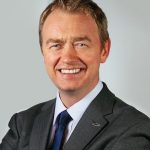
Tag: Tim Farron

  • Tim Farron – 2015 Parliamentary Question to the Home Office

    Tim Farron – 2015 Parliamentary Question to the Home Office

    The below Parliamentary question was asked by Tim Farron on 2015-10-15.

    To ask the Secretary of State for the Home Department, what steps she is taking to encourage diversity in the police service.

    Mike Penning

    It is vital that the police reflect the communities they serve and the Government is determined to improve BME representation in all 43 forces in England and Wales.

    Decisions on when and how to recruit individuals are for the chief officer of a police force. It is important that they use equalities legislation, including positive action provisions, to make better progress in terms of recruitment of under-represented groups.

    My Rt Hon. Friend, the Home Secretary announced on 22 October the publication of data showing the gender and ethnicity of police officers by force area. This will make it easier for the public to access the data they need to see how representative their force is compared to the local population. It is clear that the current representation of women and officers from minority ethnic backgrounds in the officer ranks is not good enough and the Home Secretary has challenged forces to do more.

    The Government’s reforms have already made improvements. For example, we set up the College of Policing, which has embarked on a major programme of work, BME Progression 2018, looking at recruitment, retention and progression of black and minority ethnic officers, including the development of an evidence base of successful approaches used by forces.

    As part of this programme the College recently published Positive Action Practical Advice, which advises forces on the use of lawful positive action to support the recruitment, retention and progression of officers from under-represented groups, and it has published case studies from forces showing what can be done.

    We have also developed innovative schemes such as Direct Entry and Police Now. These are increasing the number of BME recruits to the police, showing that you can achieve better representation while attracting the best and the brightest into policing.

    Of the nine direct entry superintendents who began their superintendent training on November 2014 four (44%) are women and two (22%) are from an ethnic minority background. This is significantly more representative than the current make up of the superintendent rank which is comprised of 17% women and 4% ethnic minority.

    Police Now, implemented in the Metropolitan Police, appointed 69 people to start their training, up from an anticipated 50 owing to the high calibre of applicants. Of these, 43% are women and 9% are from a BME background, compared to the national BME proportion of 5.5%.

    With the joint leadership of the Mayor’s Office for Policing and Crime and the Commissioner, the Metropolitan Police also introduced its London residency criteria for recruits in August 2014. Recent Metropolitan police figures show that in the three months from June to August 2015, 26% of new Metropolitan police recruits came from a black or minority background, more than double the 12% recruited in the same quarter of 2014, and the 12% of Metropolitan police officers currently from a black and minority ethnic background.

  • Tim Farron – 2022 Speech on Levelling Up Rural Britain

    Tim Farron – 2022 Speech on Levelling Up Rural Britain

    The speech made by Tim Farron, the Liberal Democrat MP for Westmorland and Lonsdale, in the House of Commons on 9 November 2022.

    Thank you, Madam Deputy Speaker. I pay tribute to the hon. Member for North Devon (Selaine Saxby), who set out an important case.

    It is to be blessed to live in a community such as Cumbria and Westmorland, and to enjoy the beautiful scenery of South Lakeland, Eden, the dales and the Lake district. It is something I feel hugely privileged to be able to enjoy. Nevertheless, it is important to say—it is a bit of a cliché—“You cannot eat the view.” Many people in our communities are struggling, now more than ever, to make ends meet. Public services are struggling to do the same because, as we know, in rural communities public services cost more money to run. We are running them over much larger areas, serving a smaller number of people. It is clear that this Government, in terms of the funding given to our rural communities, do not yet get that in any practical way. Those living in communities such as Cumbria feel overlooked and taken for granted by this Government and that must end. The Rural Services Network looked at the Government’s own metrics for levelling up and applied them region by region. It noted that, on the Government’s own metrics, rural England is the poorest region of England.

    Let us start on housing. In my community, over the past two years, the number of holiday lets has increased by more than a third. We can see a clearing out of the long-term private rented sector, which means that families and individuals are being not just evicted from their homes, but ejected from their communities. That means hundreds and hundreds of people who are coming to me for help are unable to work and have to take their children out of school. They move out of the area altogether. Without action to tackle excessive second home ownership and excessive numbers of holiday lets in communities such as ours, the community will cease to exist.

    We have a bed-blocking rate of 32% in our local hospital trust at present, because the places where care workers would have been able to live are no longer available or affordable for them. So it is more than high time that the Government accept amendments I introduced in the Bill Committee, and will put again on the Floor of this House, for local authorities and national parks to have powers to decide that second homes, holiday lets and domestic residences are three separate categories of planning use to control and preserve homes for local people and families. Words will not cut it—action is what is needed.

    On health, in our community in South Lakeland, we have seen a 16% reduction and in Eden a 17% reduction in the number of GPs serving in the last six years. When we see huge waiting times for people to see a GP, that is not the fault of GPs—let us not level it at their door. It may be the fault of the Government, who removed the minimum practice income guarantee, which makes surgeries such as the Central Lakes surgery in Ambleside and Hawkshead unsustainable, with GPs handing back their contract. Unless the Government consider proposals such as mine for the sustainable small surgeries fund that will allow small surgeries to survive, we will see more and more GPs leaving our area and more and more rural communities without a GP.

    There is not a single NHS dentist place in the whole of Cumbria at this moment. Only a third of adults and barely a half of children have seen a dentist in the last two years. It is obvious that the unit of dental activity treadmill that is applied is pushing dentists out of the NHS, particularly in rural communities such as mine.

    On cancer services, in South Lakeland, 41% of people with a cancer diagnosis are not getting treatment for more than two months, and in Eden in the north of Cumbria 59% of people with a cancer diagnosis are not being seen within 62 days. That is in no small part down to the Government’s failure to invest in the diagnostics and treatment needed. We have been asking for years for a satellite radiotherapy unit at the Westmorland General Hospital in Kendal that would meet those people’s needs and save lives. The Government could easily provide that. Levelling up means nothing if it does not deliver services that will save the lives of the people who live in rural communities.

    On transport, in rural communities, one of the features that unites us is that there are huge distances between where people live, work and study and the services they use. It just takes a long time. Therefore, it is all the more important that the Government take action to ensure that we do not have failing rail services. One of the reasons many of us are still here at this time on a Wednesday is that we could not reasonably get home because of the failure of west coast rail, the Avanti service, at present.

    Let us look at what levelling up means for rural stations. The footfall for rural stations such as Staveley, Grange, Windermere, Oxenholme and Penrith, Appleby, and Cark and Cartmel is relatively small and, therefore, funding is hard to get hold of. Staveley station has 28 steps to get up to it. It is totally and utterly inaccessible for anyone with a pram or disability, yet no form of funding pot that exists already will ever give a station of that kind the funding needed to make it accessible to the people who live close by. Levelling up means the Government recognising that they have to provide funding for those kinds of services, or else we will not get them.

    Let us think of the threat to our ticket offices at Oxenholme, Penrith on the main line and places such as Grange, Windermere and Appleby. Those are vital ticket offices for the people who use those stations, yet because they are relatively small and because the Department for Transport continues to give sanction to the rail companies to look at scaling back those ticket offices, they are under threat. If the Government were committed to levelling up rural communities, they would recognise that communities such as ours are a special case and put an end to that.

    I will say something about farming. The movement towards the environmental land management scheme is a positive thing, or at least the aim is. But the fact that only 1% of farmers have the sustainable farming incentive so far shows that the transition is bogged down and is forcing farmers out of the industry altogether. That is why the Government need to plough ahead with ELMS but make it fair and accessible to everyone, ensuring that active farmers get the money, not wealthy landowners who do not farm. They must ensure that we do not have a situation where people lose their basic payment before they get the new payment.

    It is a wonderful thing to be a farmer. What do they do every morning? They wake up and have on their to-do list to feed the country and save the planet. What an awesome task it is that we give our farmers. We should be grateful to them, yet the Government’s botching of the transition to the new system and their signing of unfair trade deals that throw our farmers under the bus show how little they value our farmers.

    Finally, rural schools are smaller. Their budgets are smaller to start off with and the unfunded pay rises and unfunded increases in energy costs mean that every single one of the schools I have spoken to in my constituency over the last week are planning staff reductions. That will only hurt our children. The Government do not understand that they need to support rural school funding, and it is only the children who will suffer.

    We have fewer than half a million full-time residents in Cumbria, and more than 20 million visitors. We are not funded to pay for the services that those visitors use. We are delighted that the visitors come, but if levelling up is to mean anything, the Government must respect places such as Westmorland, the lakes and dales—the whole of Cumbria—so that we have the resources to meet the needs of the community that lives there full time and those who visit.


  • Tim Farron – 2014 Parliamentary Question to the Foreign and Commonwealth Office

    Tim Farron – 2014 Parliamentary Question to the Foreign and Commonwealth Office

    The below Parliamentary question was asked by Tim Farron on 2015-01-15.

    To ask the Secretary of State for Foreign and Commonwealth Affairs, what recent assessment he has made of human rights in North Korea; and if he will make a statement.

    Mr Hugo Swire

    We remain deeply concerned by the UN Commission of Inquiry’s findings of widespread and systematic state sanctioned human rights violations in the Democratic People’s Republic of Korea (DPRK). We have seen no evidence to suggest the human rights situation has improved since the Commission published its report in February 2014.

    On 22 December, following a request by the UK and others, the UN Security Council formally recognised the human rights situation in the DPRK as a potential threat to international peace and security and held a first discussion of this new agenda item. During this meeting the UK repeated its serious concern at the human rights situation in the DPRK and its belief that if the DPRK will not hold human rights violators to account, then the international community must be ready to do so.

    We also reitarated that the DPRK authorities bear primary responsibility for protecting human rights in DPRK and expressed our regret that the DPRK had withdrawn the offers of engagement made ahead of the UN General Assembly Third Committee resolution in November 2014.

  • Tim Farron – 2014 Parliamentary Question to the Foreign and Commonwealth Office

    Tim Farron – 2014 Parliamentary Question to the Foreign and Commonwealth Office

    The below Parliamentary question was asked by Tim Farron on 2015-01-15.

    To ask the Secretary of State for Foreign and Commonwealth Affairs, when he next plans to meet the Sri Lankan Minister of External Affairs.

    Mr Hugo Swire

    I hope to engage with the Sri Lankan Minister of External Affairs, and other representatives of the newly appointed Sri Lankan government, at the earliest opportunity. The UK looks forward to working with the new government and reinvigorating the long standing partnership between the UK and Sri Lanka.

  • Tim Farron – 2014 Parliamentary Question to the Foreign and Commonwealth Office

    Tim Farron – 2014 Parliamentary Question to the Foreign and Commonwealth Office

    The below Parliamentary question was asked by Tim Farron on 2015-01-15.

    To ask the Secretary of State for Foreign and Commonwealth Affairs, what recent discussions he has had with his Mexican counterpart on (a) the kidnapping of students in Iguala in September 2014 and (b) human rights in that country; and if he will make a statement.

    Mr Hugo Swire

    We have been closely monitoring the tragic events in Guerrero and both Ministers and officials have raised the case with their Mexican counterparts. I personally raised the case of the missing students in Iguala with the Mexican Foreign Minister during the UK-Mexico High Level Political Talks that took place in Mexico in November 2014.

    We stand ready to support the Mexican government in their efforts to tackle violence and impunity and will continue to engage in constructive bilateral dialogue on human rights issues.

  • Tim Farron – 2014 Parliamentary Question to the Department for Environment, Food and Rural Affairs

    Tim Farron – 2014 Parliamentary Question to the Department for Environment, Food and Rural Affairs

    The below Parliamentary question was asked by Tim Farron on 2014-06-24.

    To ask the Secretary of State for Environment, Food and Rural Affairs, if his Department will assess the viability of using Kielder Water as a water source and linking it to the national water grid.

    Dan Rogerson

    We have been working closely with Ofwat and the Environment Agency to consider how we can promote connectivity in our water supply system of which the establishment of a national water grid is only one option. The infrastructure investment needed for a grid is considerable. Water is also heavy, difficult and costly to move. Relatively local connections are likely to be the best options, incrementally building a wider and more integrated network.

    Water companies are already joining up sources of supply to build resilience and are strongly encouraged to consider options for interconnections in their Water Resources Management Plans (WRMP), alongside other options, such as demand management. All water companies have statutory WRMPs, which look ahead at least 25 years. The Water Act 2014 includes provisions that will make it easier for water companies to make bulk supply arrangements between their networks.

    Kielder Water has a very large capacity and offers security of supply to customers in the Northumbrian Water Limited operating area. Other water companies outside the area have investigated ways of using Kielder as part of their 2014 WRMPs. The water companies found that local solutions offered better value for both customers and the environment.

  • Tim Farron – 2014 Parliamentary Question to the Foreign and Commonwealth Office

    Tim Farron – 2014 Parliamentary Question to the Foreign and Commonwealth Office

    The below Parliamentary question was asked by Tim Farron on 2015-01-15.

    To ask the Secretary of State for Foreign and Commonwealth Affairs, what discussions he has had with his Mexican counterpart on strengthening UK-Mexico business relations.

    Mr Hugo Swire

    I visited Mexico from 2 to 5 November and held High Level Political Talks with Mexican Foreign Minister Jose Meade and Deputy Foreign Minister Carlos de Icaza. We discussed a broad range of topics which included our respective efforts to tackle Ebola, countering extremism across the globe, human rights, as well as strengthening UK-Mexico business relations. The UK and Mexico are committed to doubling bilateral trade from 2010 levels by the end of this year.

  • Tim Farron – 2014 Parliamentary Question to the Department for Environment, Food and Rural Affairs

    Tim Farron – 2014 Parliamentary Question to the Department for Environment, Food and Rural Affairs

    The below Parliamentary question was asked by Tim Farron on 2014-06-24.

    To ask the Secretary of State for Environment, Food and Rural Affairs, if his Department will assess the viability of limiting the extraction of water from Windermere and Ullswater only when flow levels are high to reduce the risk of over-extraction and flood control.

    Dan Rogerson

    The Environment Agency limits United Utilities to abstracting water from Windermere and Ullswater to periods when there is adequate flow in the downstream rivers. Recent studies of Windermere and Ullswater have concluded that both abstraction licences are sustainable. Current abstraction levels would not have a material impact on flood risk as the total daily abstraction would only equate to approximately 1 percent of the flow during a flood.

  • Tim Farron – 2014 Parliamentary Question to the Foreign and Commonwealth Office

    Tim Farron – 2014 Parliamentary Question to the Foreign and Commonwealth Office

    The below Parliamentary question was asked by Tim Farron on 2015-01-15.

    To ask the Secretary of State for Foreign and Commonwealth Affairs, what recent representations he has made to the Egyptian government on freedom of religion in that country for (a) atheists and (b) Christians.

    Mr Tobias Ellwood

    We deplore all discrimination against religious minorities and constraints on their freedom to practise what they believe. Most recently, I raised the importance of protecting the human rights enshrined in Egypt’s constitution, which include freedom of belief and worship, with a number of senior figures in the Egyptian Government during my visit to Cairo on January 12-16. UK officials also discussed the importance of religious freedom with the Egyptian Deputy Assistant Minister for Human Rights, Dr Mahy Abdel Latif on 14 January 2015.

  • Tim Farron – 2014 Parliamentary Question to the Foreign and Commonwealth Office

    Tim Farron – 2014 Parliamentary Question to the Foreign and Commonwealth Office

    The below Parliamentary question was asked by Tim Farron on 2015-01-15.

    To ask the Secretary of State for Foreign and Commonwealth Affairs, when he next expects the Friends of Syria Group to meet next.

    Mr Tobias Ellwood

    The Core Group of the Friends of Syria are due to meet in London on 22 January at senior official level, following the meeting of the Global Coalition to Counter ISIL.