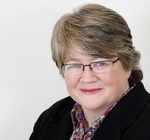
Tag: Therese Coffey

  • Therese Coffey – 2023 Speech on the Environment Improvement Plan

    Therese Coffey – 2023 Speech on the Environment Improvement Plan

    The speech made by Therese Coffey, the Secretary of State for Environment, Food and Rural Affairs, at Camley Street Natural Park on 31 January 2023.

    Welcome everyone to Camley Street Natural Park for the launch of our Environment Improvement Plan.

    And thank you to the London Wildlife Trust for hosting us.

    I was at another of your sites yesterday – Woodberry Wetlands – and I also recently visited Suffolk Wildlife Trust’s Hazlewood Marshes which after a breach of its walls by the tidal surge a decade ago is a great example of mitigation and adaptation actually leading to a rejuvenated nature reserve.

    I am delighted to support the important work that you do in every part of the country, both conserving nature and connecting nature to people – in the heart of the city or the countryside.

    As MP for Suffolk Coastal, I am really blessed to represent a very special part of our country with many precious habitats and protected sites, on land and offshore.

    I always said it felt like I had six years of a perfect apprenticeship before I became the Environment Minister in 2016.

    During that three years I was in office then I am proud of much of what we achieved or got going: the Clean Air Strategy, the Resources and Waste Strategy, progress on flood defences, tackling illegal wildlife trade, and much much more.

    The standout legacy from that time was our 25 Year Environment Plan, which set out our vision and the ten complementary goals designed to leave the environment in a better state than we inherited.

    I am delighted to be back now as Secretary of State, supported by a great team of ministers and civil servants here today, to present our Environmental Improvement Plan the delivery plan to achieve our ambitious, stretching environmental targets the most critical of which is to halt the decline of nature by the end of this decade.

    We can and must achieve this – both here in the UK and globally, and we have a heck of a lot to do to make that happen.

    Back then, we had anticipated that 2020 would be the magical year for bringing together the golden triangle, the triumvirate of climate change, nature and the ocean – with COP26, CBD15 and the UN Ocean Conference – especially at the time with the UK trying to secure the presidency for Climate COP26 and our intention to integrate nature.

    2020 would have started the roaring twenties – the decade for delivery for the planet. Then Covid hit.

    We saw first-hand the risk of zoonoses and pandemics. And WHAT an impact it had.

    Speaking selfishly for the environment, it was a real body blow as all the progress that had been made into turning our vibrant economy into a circular economy was somewhat derailed, understandably, in the quest to tackle the greatest public health crisis that I will ever witness.

    The silver lining, if any can be had, was the power of science and collaboration around the world to create the vaccine in record time while for the environment, it was an opportunity for us to reconnect with nature providing that break from the lockdown hell that we endured.

    Even then, initially, it was a tale of two cities – as families with no garden were shut out of their local park. That is why I am particularly pleased by our pledge in this plan to bring access to a green or blue space within 15 minutes’ walk of everyone’s homes – whether that be through parks, canals, rivers, countryside or coast.

    But nature cannot wait any longer.

    The IPBES report from 2019 set that out clearly. So, we will need to catch up at pace.

    We started in late 2021 by putting nature at the heart of (the UN Climate Summit) COP26 in Glasgow, and that has continued in Egypt and is now embedded in future climate COPs.

    The multiple pledges, coalitions for ambitions and the commitment of finance all were critical to unlocking transition to a greener future, including nature-based solutions, and keeping 1.5 alive.

    As the Prime Minister said at COP27, ‘there is no solution to climate change without protecting and restoring nature’.

    And indeed, one look at the marvellous mangroves – it wouldn’t be a speech of mine if I didn’t mention mangroves, those brilliant blue forests that capture carbon, protect coastlines and communities from storm surges, and provide vital nurseries for fish, including critical commercial stocks.

    That shows us that investing in nature is an essential, effective, cost-effective way to take on a multitude of challenges, including the causes and impacts of climate change.

    In 2022, the UN Ocean conference produced a call for action but undoubtedly, the key achievement of 2022 was the agreement of the Global Biodiversity framework at the UN’s Nature Summit – the CBD COP15 held in Montreal, to halt the decline of nature by 2030, protect 30% of the world’s land and ocean by 2030, unlock the benefits of DSI – digital sequencing information re on genetic resources, and much, much more – including a financing package to make this the decade of global action to put nature on a road to recovery.

    Our expert negotiators, including our ministers, empowered by our world-renowned scientists and UK jewels like Kew Gardens and the Natural History Museum were all critical in delivering this global agreement and we will keep up the pace.

    But why does any of this matter?

    It still remains a challenge to explain why a particular bug or beetle matters in the global web of life, or why people are so passionate about reintroducing the beaver which has been out of our domestic environment for hundreds of years.

    Nature is a crucial part of our islands’ story and our shared future. We know what is special with our rare habitats, our iconic species, and we also know the pressures it is under.

    We rely on our natural capital for a secure supply of food, for clean air, and for clean water, as well as for leisure and genuine joy.

    However, nature has been taken for granted for too long, used freely as a resource with little thought for the consequences.

    We have to reverse that and respect nature. And while the full force of nature can bring us challenges and I am mindful of 70 years ago today of the Great Flood of 1953 in which over 300 people died in our country nature can help us tackle some of our great challenges, and so we need to help protect nature too.

    I know there is much more to do to restore the natural world and to level with you, some of these challenges are not always so easy to fix as we might all hope.

    Yet, I can assure you though that with our new legal duty to consider biodiversity, guided by our Environmental Principles Policy, we are embedding nature in the heart of every decision that government will take – for the long haul.

    This is a plan for the whole of government and this is a national endeavour. And we have already started the journey, and we have seen improvements.

    Our transformation on support for farmers and landowners to prioritise improving the environment, reducing carbon emissions and enabling sustainable food production is absolutely symbiotic and truly world-leading.

    We have cleaner air. I want it to be even cleaner. Now, I would have loved to have made our target to achieve 10 micrograms by 2030, not 2040.

    Many parts of the country already enjoy this but the evidence shows us that with the best will in the world, we cannot achieve that everywhere by the end of the decade – particularly in London.

    Councils ask for a lot of powers.

    I need them to use the powers they already have, including on tackling litter and fly-tipping, rather than just asking for more.

    I will be publishing what they are doing and seeking to share best practice across the country.

    On trees, we have to accelerate our planting rate.

    The Forestry Commission will start growing their estate and increase planting fulfilling their original statutory obligation, to help rejuvenate the forestry and timber industry.

    We have strengthened the financial support through ELMS and we will continue to promote urban tree planting so children everywhere can enjoy their local woods.

    On our water bodies, without the specific uPBT chemical issue, nearly all of them are in good condition. those persistent chemicals, none currently reach the new standards – which is also the case in Germany.

    The science and modelling is clear that it will take decades for those to recover and heal. There is little if anything we can do about that specific issue but we will continue to put the spotlight on water quality and get industry to clean up its act.

    We have already seen a huge improvement in our bathing waters.

    Last year nearly 3 in 4 beaches were deemed excellent and fewer than 3% deemed poor, when it was only about half excellent back in 2009 and over 10% were poor.

    And I can tell people that I do care about the sewage in our waters. That is why we – a Conservative government – have turned on the monitoring and is why we are holding industry to account on fixing this.

    Indeed, when it comes to tackling storm overflows, we have set clear expectations on improvements that we will track against performance

    The next formal review will be in 2027 so if we can go further, faster, then that’s exactly what we will do.

    Today, the new environmental targets come into law as they were agreed by Parliament, though bizarrely the Opposition tried to vote them down.

    I am also aware of the concerns people have about EU retained law. I spent a lot of time post-Brexit putting all that into domestic law and after nearly 50 years in the EU, it is no surprise that there is a lot of legislation on our statute books.

    Nor should it be a surprise though that a lot of that legislation is actually superfluous to our needs, as rather a lot of it has nothing to do with the UK at all or no longer does in terms of we do not need to report to various agencies.

    A lot of the legislation is absolutely key to what we do which is why we will be keeping it. To avoid any doubt, I have already set out our approach to Parliament.

    We will remove legislation superfluous to the UK, review the effectiveness of EU regulation in achieving environmental outcomes and we will retain, by default, environmental legislation for the UK to achieve existing environmental outcomes.

    But this is also an international endeavour.

    We have a globally recognised track record of action helping communities protect and restore their national treasures, reinforced by our science expertise and financial support, we already help the nature around the world.

    And we will continue to do so as the impacts elsewhere can and do have consequences here in the UK.

    Having committed to doubling UK international climate finance to 11.6 billion pounds, and to spending at least 3 billion on nature, we are building on decades of action, backing efforts to take on the whole host of threats that now face the world’s flora and fauna – well beyond climate change alone.

    We do that through the Blue Belt programme, protecting an area of ocean larger than India around our biodiverse Overseas Territories, our world-renowned 39 million pound Darwin Initiative, and the Illegal Wildlife Trade Challenge Fund.

    Now, we are ploughing all that expertise and experience into our newly established 500 million pound Blue Planet Fund, and our 100 million pound Biodiverse Landscapes Fund to help some of the world’s poorest and most vulnerable communities restore, protect, and connect globally important but fragile habitats.

    And I am so proud that we are UK is leading, co-leading, and actively supporting the global coalitions that are committed to securing the maximum possible ambition, and achieving the greatest possible impact, on everything from taking on the scourge of illegal, unregulated, and unreported fishing, to persuading countries to agree a new, legally-binding global treaty to end plastic pollution, by 2040, or supporting efforts to establish a global gold standard for taking nature into account across our economies.

    As you can probably tell, I could spend hours talking about nature, about our mission, about what we have already achieved.

    And indeed here are many more parts to our plan – on sustainable use of resources, on biosecurity, on resources, on sustainability, on adaptation, on access to nature, on green finance, and so on.

    But we have work to do.

    I am determined to make this a decade of delivery for Defra, for the whole government and most importantly, for the environment.

    Driven by data and dashboards, I expect the whole Defra family to be working together – our agencies, delivery partners and regulators.

    And in all this, our aim is to catalyse action across government, across the economy, and across the country.

    And together, we can achieve this. And whether you live in a city or town, in the countryside or on the coast, I invite you to join us, because we all have a part to play, in this truly national endeavour.

    Nature needs us to accelerate and scale up our help if we want to enjoy nature and have its help for generations to come and that is exactly what we are going to do.

  • Therese Coffey – 2022 Statement on the Convention on Biodiversity COP15

    Therese Coffey – 2022 Statement on the Convention on Biodiversity COP15

    The statement made by Therese Coffey, the Secretary of State for Environment, Food and Rural Affairs, in the House of Commons on 19 December 2022.

    With permission, Mr Deputy Speaker, I will update the House on the outcomes of COP15 on the convention on biodiversity, which was held in Montreal and from which I have just returned.

    For too long, nature has been overlooked as the Cinderella of the story, but flora and fauna are important in and of themselves. Nature is both the essential foundation and a powerful engine of our economy, and helping nature to recover is one of the most cost-effective ways of tackling so many challenges, including the causes and impacts of climate change, thirst, hunger and ill health. and of bolstering peace and prosperity.

    Early this morning, the world came together to secure the strong, ambitious global framework we need to catalyse a decade of environmental action. The framework is on the scale of the Paris agreement, as required, and puts nature firmly on the map. The agreement includes global targets to protect at least 30% of the world’s land and at least 30% of the global ocean by 2030, and to see natural systems restored, species populations recovering and extinctions halted. It includes reporting and review mechanisms that will hold us all to account for making timely progress on bringing our promises to life, and commitments on digital sequence information to make sure communities in nature-rich countries feel the benefit of sharing the solutions that we know their flora and fauna can provide.

    Behind the scenes, over many months, we have been working with Ecuador, Gabon and the Maldives to develop the credible 10-point plan for financing biodiversity during this decade that played a critical role in getting the agreement over the line, by giving nature-rich countries confidence in our collective willingness and ability to secure the investment needed to protect the natural wonders on which their people and, in many cases, the whole world depends. On the back of those efforts, public, private and philanthropic donors committed billions of dollars to new investment in nature.

    The agreement includes commitments to create a new international fund for nature, to increase investment in nature from all sources to $30 billion a year by 2030, and to accelerate the vital shifts that are already under way to make sure our economies underpin our survival and our success. I thank our team of Ministers and pay tribute to all our UK civil servants from across Government and our world-leading scientists from a range of British institutions, including Kew Gardens and the Joint Nature Conservation Committee.

    We have been on this journey since the CBD COP14 in Egypt in 2018, which I attended. In meetings with delegations from around the world, time and again, we heard praise for how the UK’s world-class negotiators helped to broker this agreement. We know from our experience here in the UK that, when we set ambitious targets, we see an acceleration in action to meet them across Government, sectors and communities, which is why we have worked so hard to secure these global targets.

    Just before I set off for Canada, I announced that we have taken the next steps towards leaving the environment in a better state than we found it, by putting a set of new stretching domestic targets into UK law under the Environment Act 2021 on air, water and waste, as well as nature, land and sea, to improve the state of the environment in our country. These targets will be challenging to meet, but they are achievable. The global coalitions of ambition that we have been leading, co-leading and supporting will now shift towards supporting the implementation of the new international nature agreement.

    The UK is committed to playing our part now and in the months and years ahead. Although no country can solve this alone, if we work together to make this a decade of action, we not only stand to avoid the worst impacts but, by securing the abundance, diversity and connectivity of life on Earth, we stand to build a better future for every generation to come.

    I commend this statement to the House.

  • Therese Coffey – 2022 Statement on Environment Act 2021 – Final Environmental Targets

    Therese Coffey – 2022 Statement on Environment Act 2021 – Final Environmental Targets

    The statement made by Therese Coffey, the Secretary of State for Environment, Food and Rural Affairs, in the House of Commons on 19 December 2022.

    I am repeating the statement made by my noble Friend the Minister for Biosecurity, Marine and Rural Affairs, Lord Benyon, on Friday 16 December.

    Final Environmental Targets under the Environment Act 2021

    This Government are committed to leaving the environment in a better state than we found it. Following our consultation earlier in the year, we are confirming an ambitious suite of targets to deliver on that commitment.

    These targets will tackle some of the biggest pressures facing our environment. They will ensure progress on clean air, clean and plentiful water, less waste and more sustainable use of our resources, a step change in tree planting, a better marine environment, and a more diverse, resilient natural environment.

    The 13 targets that will be laid through statutory instruments are as follows:

    Biodiversity on land

    To halt the decline in species abundance by 2030.

    To ensure that species abundance in 2042 is greater than in 2022, and at least 10% greater than 2030.

    Improve the red list index for England for species extinction risk by 2042, compared to 2022 levels.

    To restore or create in excess of 500,000 hectares of a range of wildlife-rich habitat outside protected sites by 2042, compared to 2022 levels.

    Biodiversity in the sea

    70% of the designated features in the marine protected area network to be in favourable condition by 2042, with the remainder in recovering condition.

    Water quality and availability

    Abandoned metal mines target: halve the length of rivers polluted by harmful metals from abandoned mines by 2038, against a baseline of around 1,500 km.

    Agriculture target: reduce nitrogen, phosphorus and sediment pollution from agriculture into the water environment by at least 40% by 2038, compared to a 2018 baseline.

    Wastewater target: reduce phosphorus loadings from treated wastewater by 80% by 2038 against a 2020 baseline.

    Water demand target: reduce the use of public water supply in England per head of population by 20% from the 2019-20 baseline reporting year figures, by 2037-38.

    Woodland cover

    Increase total tree and woodland cover from 14.5% of land area now to 16.5% by 2050.

    Resource efficiency and waste reduction

    Reduce residual waste—excluding major mineral wastes—kilograms per capita by 50% by 2042 from 2019 levels.

    Air quality

    An annual mean concentration target for PM2.5 levels in England to be 10 µg m-3 or below by 2040.

    A population exposure reduction target for a reduction in PM2.5 population exposure of 35% compared to 2018 to be achieved by 2040.

    The suite of targets that we consulted on was the result of significant scientific evidence collection and development over preceding years that included input from evidence partners and independent experts, supported by over 800 pages of published evidence. We have full confidence in the final suite of targets, which represents the robust analysis already undertaken.

    These targets are stretching and will be challenging for us to meet, whether that is through Government, through business or indeed at home in our individual lives through choices we make. In turn this will support action to tackle climate change, restore our natural capital and protect our much-loved landscapes and green spaces.

    We will set out more details about our plans to deliver them in our environmental improvement plan: our manifesto for the environment for the next five years. We will publish this by 31 January, as required by law.

    The Government response to the consultation will be published on www.gov.uk.

  • Therese Coffey – 2022 Speech at CBD COP15 Held at Natural History Museum

    Therese Coffey – 2022 Speech at CBD COP15 Held at Natural History Museum

    The speech made by Therese Coffey, the Secretary of State for Environment, Food and Rural Affairs, at the Natural History Museum in London on 7 December 2022.

    Thank you for joining us bright and early and thank you to the staff of the Natural History Museum for hosting us here before they open their doors to the public this morning as they have done for generations.

    We are proud to be backing your important work. And we are fortunate to have this cathedral of nature consecrated to 4.5 billion years of natural history to the pursuit of science and to the study and appreciation of the world’s flora and fauna right here, in our capital city.

    So it’s hard to think of a more inspiring place for us to meet as I call on all of you to help us come together to secure the future of life on earth and a better future for every generation to come.

    When I visited the Museum recently some of the scientists here reminded me that just five years ago, in Hintze Hall a diplodocus would have greeted us.

    But it is right that we are now dwarfed by the awesome, twenty-five-metre skeleton of a blue whale the largest animal that has ever existed bigger even than the biggest dinosaur.

    Forty years ago – following a coordinated campaign from schoolchildren and conservation experts alike – including many of the organisations you represent, sea-going nations from around the world came together at the Metropole Hotel in Brighton and agreed a moratorium on commercial whaling.

    In a global move to bring species back from the brink of extinction and find more peaceful ways of appreciating these wonderful creatures.

    As Environment Minister, a few years ago I had the privilege of watching humpback whales from a boat in Petite Passage, Nova Scotia and it was a profoundly moving experience.

    And while this work is ongoing, we should take heart from what we have achieved and our commitment to seeing it through. Because it seemed impossible until it was done.

    Because with blue whale populations now recovering Sir David Attenborough is right to say that ‘Hope’ is an important emblem of what we can achieve.

    And because sharing success is so important at a time when we need to steel our resolve to work together to solve so many challenges when we need to renew the trust between people and power around the world and when we must make the most of the UN nature conference, CBD COP15 in Montreal.

    For far too long the Cinderella of the story, it’s cinderellas time to shine but now rightly recognised by all of us here – as our best chance yet to secure the decade of action we need.

    I am proud that the UK laid the groundwork for success in Montreal through our presidency of COP26 – the climate COP – in Glasgow.

    Together, we brought nature – land and ocean – and effective, cost-effective nature-based solutions from the margins of the global debate into the heart of our collective response to the causes and impacts of climate change for the first time securing unprecedented investment in nature – land and ocean from all sources, public, private and philanthropic

    , including greater global backing for natural wonders on which the whole world depends from the Amazon to the Congo Basin and accelerating the economic shifts that are already underway to make sure every dollar in our economies takes us closer to our shared goals.

    At COP27 in Egypt, I saw the legacy of COP26 alive and kicking not least in the way countries and companies are now honouring their commitments – including on forests – and building on them as well.

    We are engaging the United Arab Emirates as hosts of COP28 next year to make sure we

    And in all of this, our ability to lead depends on our longstanding, ongoing commitment – across government to identify and then use every lever we have to leave the environment in a better state than we found it

    From the way we work with the private sector, including the financial sector

    – to secure the public good – to the way we use public money to support the production of food. Something I spoke to our famers about last week so we make the most of our newfound freedoms and our landmark legislation to make timely progress on meeting our domestic targets to reach net-zero by 2050 and halt the decline of nature by 2030.

    In support of that target I am delighted to announce that, this spring we will launch a new multi-million pound fund to create and restore wildlife-rich habitats, including on protected sites from scrub, to wetlands and grasslands where each investment will secure multiple benefits for nature, climate, and people and encourage opportunities for private funding by backing underfunded projects that give us the biggest bang for our buck.

    By making good on our commitment to double UK international climate finance to 11.6 billion pounds and to spend at least 3 billion on nature, including through our newly established 500 million pound Blue Planet Fund and our 100 million pound Biodiverse Landscapes Fund.

    We are building on decades of experience backing efforts to take on the whole host of threats that now face the world’s flora and fauna – well beyond climate change alone through the Blue Belt programme, protecting an area of ocean larger than India around our biodiverse Overseas Territories, our world-renowned 39 million pound Darwin Initiative and the Illegal Wildlife Trade Challenge Fund.

    And whether it’s taking on illegal, unregulated, and unreported fishing persuading countries to agree a new, legally-binding global treaty to end plastic pollution, by 2040 or supporting efforts to establish a global gold standard for taking nature into account across our economies on the world stage and behind the scenes the UK is leading, co-leading, and actively supporting the global coalitions that are committed to securing the maximum possible ambition and achieving the greatest possible impact.

    That includes our approach to the UN nature conference that kicked off yesterday.

    Our world-class UK negotiating team are in the hot-seat building on four years of talks with the support of our world-class scientists from a range of institutions, including Kew Gardens and JNCC.

    And later this week, I will lead a team of ministers from Defra, the FCDO and the Treasury, working as one to persuade our counterparts from around the world to give their negotiators the political backing they need to build consensus around a robust, ambitious global framework for action that will put nature on a road to recovery, this decade.

    That must include targets to protect at least 30% of the world’s land and at least 30% of the global ocean, by 2030 and to see natural systems restored, populations of species recovering, and extinctions halted by 2050 alongside strengthened reporting and review mechanisms that will hold all of us to account for the promises we make and commitments to work in partnership with indigenous peoples and local communities, who depend on nature most directly and understand it so deeply so we make sure everyone feels the benefit of seeing this through.

    And we know that demonstrating our collective willingness and ability to close the finance gap for nature is key to unlocking the ambition we need in Montreal.

    And that is why the UK has been working with our friends in Ecuador, Gabon, and the Maldives to develop a 10 Point Plan for Financing Biodiversity, an ambitious, credible blueprint for action that increases our chances of achieving consensus by making sure that any government approaching the negotiations in good faith will be able to see a potential solution to their concerns.

    Our Plan commands the confidence of developed and developing countries spanning five continents – and counting.

    We are doing all we can to persuade others to endorse it.

    And I hope that you too will help us to gather further support in this final furlong – and beyond.

    Ultimately, we all know that there is a long road between where we stand today, and where we need to be.

    In national parks in South Africa I have seen how the illegal wildlife trade pits people and wildlife against one another with devastating consequences for all.

    On visits to small island states I have heard what it means for communities when their homelands face an existential threat.

    And the evidence for why this is so urgent is now all around us in the wisdom of indigenous people and local communities, in the science and in events on every continent.

    But I genuinely believe that if we work together to make the road ahead a road to recovery, we stand not just to avoid the worst impacts but to save precious species by securing the diversity, abundance and connectivity of life on Earth that will also help to bolster the peace and prosperity we all want to see and fundamentally to improve the lives of people at home and around the world for generations to come as well.

    The UK is committed to playing our part and to continuing to work with all of you and our friends around the world to see this through.

    The action you take can have a massive impact and you have the power to inspire others to step up as well.

    So once again, I want to thank you for joining us and I urge you to keep up the good work.

    Thank you very much.

  • Therese Coffey – 2022 Speech to the CLA Business Conference

    Therese Coffey – 2022 Speech to the CLA Business Conference

    The speech made by Therese Coffey, the Secretary of State for Environment, Food and Rural Affairs, at the Oval cricket ground in London on 1 December 2022.

    It is a great pleasure to be to here with you today making my first public outing outside of Parliament since returning to Defra.

    I’ve always found the CLA to be a sensible voice at local and national level, and it’s had the great judgement to hiring Sarah Hendry as your director general, who was one of my best civil servants I ever worked with, during my first time at Defra when I spent 3 years there. It’s good to be back.

    The CLA have been at the forefront of thinking imaginatively, ambitiously, and practically about the future of farming for well over a hundred years now never mind since the British people voted to leave the European Union. You’re right Mark to reference your Rural Powerhouse Report. And it’s important that we continue to use documents like that with potential policy ideas and long may it continue.

    I thought it might be worth turning straight away to some of the comments made by Mark Tufnell and Professor Sally Shortall now. Some may not know this, when I was first in the role at Defra as Environment Minister, I asked to do more about rural life, and so I actually created the extra bit of rural life opportunities, and it is important that we have that focus in our department. Lord Benyon is our Rural Affairs Minister but I can assure that we all represent rural areas, we’re very conscious of the points that you’ve laid out. In Cumbria I think is the situation with the 16 plus bought instead of the daily trips to and from the college, recognising the opportunities to have. And indeed, some of the work I did at DWP, when we were in the framing of the levelling up framework that Michael Gove of course, pioneered, former Defra Secretary of State, and is leading once again in Government. One of the things I pointed out to my colleagues is that quite often you see a map of where people are considered to have really low income, and are not very well off and not particularly productive, and it really surprised them to hear that the district council areas with lowest median salary, were all rural, including the Prime Ministers own constituency, his council, was the third lowest median salary in the country. And that recognises quite a lot of the fact that the predominant sectors there are agricultural and tourism. And if you’re working in there rather than perhaps being the owner of one of the enterprises then the salaries are not as high as we’d like I’m sure.

    I want to stress that I will be having this important focus, and I know that all our Ministers are similarly engaged, recognising that we want to make sure that the prism of rural life is reflected and considered, particularly in things like levelling up, and the shared prosperity fund as we move forward.

    Turning to what Mark said, as he’s pointed out, overcoming barriers to business success is the main theme of this conference today, and while most of my comments will be about the farming side of your members interests, I think it’s a reflection that it’s absolutely critical that we get growth going again in this country and I do see the rural economy as a part of that. And I like to think that what we have done in the last 12 years, it may not be all complete I get that, but extending internet and broadband access that’s largely done; we still need to improve the mobile phone connection; I know that for farmers they welcome the fact that we’re adjusting taxes so that we can spread over 5 years instead of the annual tax return. And I thought that would be useful towards the cash flow challenges that sometimes come, as we see different outcomes every season.

    But indeed also, we have rightly kept the inheritance tax exemption under agricultural. But I think we’ve also tried to strive to help businesses find more sector diversify. I know that we’ve already changed planning rules and guidance to allow more use of our buildings, and I do want to point out that primarily it is the local government and local councils that make decisions on individual local planning applications, and to some extent the national planning policy framework will of course help guide that, but it is their decision on exactly where and how through their local plans they support the rural economy to thrive.

    And as I say, Lord Benyon is the rural affairs Minister, and I can assure you my time in 12 years as being a member if Parliament for Suffolk coastal where I’ve seen Grade 4 land – I’m not quite sure if Grade 5 land has been used – but Grade 4 land is used for very productive production of much of the food that gets eaten in this country, and indeed extending the seasons to get through crops of potatoes every year I think is particularly special. I continue to learn and I do see the CLA, pretty much every year at the Suffolk Show, and I’m very delighted to go and meet them as well as other my constituents.

    Now turning to the more broad substance, I know that there are many pressures that are coalescing right now that impact your businesses, whether that’s flooding and droughts that we’ve seen, outbreaks of pests and diseases, or indeed the global challenges affecting prices, energy and supply chains and we should be very clear the aftershock of covid I’m afraid will still be with us for some time and I cannot give you any timeline exactly on how long the illegal invasion of Ukraine will carry on but we know there will be consequences and there are consequences right now and that’s why the Government is making changes to its energy strategy to try and mitigate.. Those things will not come straight away apart from some of the support schemes that are already in place.

    But it is why we have set out urgent new measures and change on how we’ve dealt with avian influenza.

    It’s why we hope that the support we’re trying to give to farmers, recognising the rising input costs for feed and energy through a range of measures, whether that’s continuing the mini budget last year reinstated, the fuel duty and VAT cuts, and in terms of action to reduce business rates and indeed the businesses energy support scheme.

    So, knowing cashflow is probably the critical thing that we will help an enterprise keep going or not, it’s why to support farmers’ cashflows we changed BPS payment to twice a year, for the first time ever, and that’s only thanks to leaving the EU that we’ve been able to make those changes.

    We paid out £677 million out to you earlier this year. And a further £620 million will be paid from today. And I want to assure you that the Farming Minister, Mark Spencer, is meeting retailers and processors regularly, to encourage them to recognise that the burden of higher input costs is falling heavily on farmers.

    Thinking of these global impacts, I don’t think anywhere in the world has felt these more keenly than in Ukraine, traditionally the breadbasket of Europe.

    Amidst the turmoil of war, it is truly extraordinary that the farmers of Ukraine have managed to get so much of the harvest in. And at time when Ukrainians themselves are suffering so much I was really pleased that we were able to support this initiative to get grain from Ukraine to some of the poorest and most vulnerable people in the world. And I genuinely think that what they’ve done is an act of global humanity at its very best.

    That’s why at the weekend I was proud to join the conference and to send a contribution of £5m to Ukraine to support this initiative on behalf of the Government, the British people, and indeed particularly on behalf of farmers.

    Now I’m less than 2 months into the role, there is still a lot that I’m still working through at Defra. And while having spent 3 years in the department before I’m now the Secretary of State and have a much wider range of issues to tackle.

    But I felt it was important for me to be clear about our intentions for the future. So, I’ll cut to the chase.

    As we made clear in our manifesto, one of the biggest bonuses of leaving the EU, was the opportunity to free our farmers from the bureaucratic Common Agricultural Policy and move to a system as we set out in our manifesto based on spending public money in a way that helps us to secure the public good.

    I like to think we have already started cutting back the red tape that has held you and us back, scrapping the three-crop rule and greening requirements that really did so little for nature, because that actually caused real headaches for you without really much outcome.

    We certainly have guaranteed the annual farming budget over this Parliament but in return we want to support you to farm in a way that safeguards high standards of animal welfare and protects and enhances our natural environment. So we make timely progress towards meeting our vital targets to halt the decline of nature in our country during this decade and ultimately to reach net zero by 2050 – making progress with every carbon budget, securing the clean and plentiful water that we need to build the resilience of our businesses, our food system, and our whole country to the impacts of a changing climate, so that we can secure the strong foundation of our whole economy – and the engine of our rural economy as well.

    Farming is the backbone of our second largest manufacturing sector, it bring jobs to every county, and does play a vital role in rural communities across our country.

    That is why we decided, in good faith, to review our plans, to make sure that we achieve the greatest possible impact for our environment, that we would secure the biggest bang for our buck in the way we spend tax payer’s money, and so that it is easy and attractive for farmers get involved.

    I know you need certainty, you need to plan ahead for future investment cycles. But I also want to be clear we recognise the needs that we may need to be agile and retain the dynamism that we have set in motion so we make sure that we are funding schemes that work in terms of the outcomes and in terms of take up.

    That is why we will continue to work together to iterate and improve our approach over time.

    And I think back to when I was in the role before and I was told how HLS was the best designed scheme in Europe, and the problem was hardly anyone took it up, and that’s something we really need to avoid.

    So turning to the next steps, where decades, even generations of hard-won experience have given us a strong sense of what already works. I’m very clear we don’t need to reinvent the wheel.

    It’s important that we support your stewardship of our shared stock of natural capital across our brilliant landscapes and reflect the immense contribution you make to your communities and also respect the way of life that you cherish.

    I am pleased to tell you that the review is now complete and that we are moving ahead with the transition, on the same timescale and with three schemes.

    All the funding that we are taking out through reductions in BPS over time will continue to be made available to farmers through a combination of one-off grants and ongoing schemes and the advice you need to get your business on the right footing for the future.

    As we make those planned, steady reductions to BPS payments, we will offer payment to you to take action through our three environmental land management schemes.

    And our aim, across those schemes, is not ‘one size fits all’ but a range of options so everyone can find a combination that works for them.

    So whether you’re a commoner, upland farmer, or small family farm, and whether you’re a landowner or a tenant farmer recognising elements of the Rock review.

    As your president said, the choice is not producing food or doing environmental schemes, it’s about making space for nature and that must go alongside sustainable food production.

    They are not mutually exclusive. They can be symbiotic.

    And we need to embrace the complexity that holds the key to getting the critical decisions right on how we can make the most of our land to achieve all the things we want to do from planting forests and protecting peatlands to producing food.

    We can bolster sustainable, resilient food production and protect our shared natural heritage and our rural heritage. We need to build more of the homes that people need while we also get on with tackling the causes and the impacts of climate change as well as improving the state of nature.

    And we will have those honest conversations with you about how we maximise those multiple benefits for land.

    So, turning to our three schemes.

    As we reduce the amount being spent on BPS we will be adding options to our current offer so that by 2024, farmers will have access to the full range of actions they can be paid to take on their land.

    For our Sustainable Farming Incentive – our aim is to get as many of you as possible signed up.

    The initial phase is now live – and is focused specifically on securing the health of our soil that is critical to food production and to reducing inputs so that we support the natural world from the ground up.

    And we will build on that with more standards each year so you can choose more options for your business.

    I’m really pleased that over 30,000 farmers are now involved in our simplified, streamlined, and I hope overall, enhanced Countryside Stewardship scheme – that’s a 94% increase in three years. Something must be working.

    We have listened to your concerns, we’ve learned from your experiences and I hope we’ve made a lot of improvements – but we know there’s a lot more to do.

    I want to build on that success, by developing Countryside Stewardship, so we achieve the same ambitious outcomes that we intended to deliver through Local Nature Recovery but instead to have an enhanced version of the Countryside Stewardship scheme that is already part of thousands of farm businesses rather than introducing a whole new process.

    That is the right thing to do and the smart thing to do with public money as we develop the markets that will draw in finance from all sources.

    With the first 22 Landscape Recovery pilot projects up and running for our third scheme that holds true at scale as well.

    And it seems to me to be common sense that when communities come together locally or businesses come together to create the sort of wildlife corridors that are critical to the connectivity as well as the diversity and abundance of species and to the health of our waterways, the impact that they achieve together will be greater than the sum of its parts and as a consequence you will be rewarded accordingly.

    My priority is to make sure that we make it as simple and straightforward as possible for us succeed and, let’s be straight forward about this, in my view, farmers are the original friends of the earth. You are the stewards; you are the custodians of our countryside.

    I will tell anyone that will listen that our British farmers are outstanding in their field. We produce high quality food that is well-known around the world and working with nature – not against it is the natural instinct of every farmer I have ever had the pleasure of meeting.

    You look after more than 70% of our land. We cannot make these changes to improve the environment or get to net zero without you

    That’s why we want to work with you to tackle this together so we help the environment, backing the frontrunners and helping everyone to bring up their baseline.

    Sadly, there will still be and still are polluters who let the side down and end up threatening these collective efforts.

    And frankly if they don’t accept our support, we will tackle them head on, but we want to focus on all of you and help you take your businesses into the future.

    So, we are getting you the cutting-edge kit and the expert advice you need to improve productivity, health and welfare.

    We are investing in your connectivity, with new trials confirmed today to beam broadband into the hardest to reach rural areas directly from satellites in space

    As well as tripling the value of vouchers available under the Gigabit Broadband Voucher Scheme from early next year.

    We are funding the Institute for Agriculture and Horticulture so we can create the conditions we need to retain generations of experience, develop promising talent, and indeed attract fresh blood into the sector.

    And of course, we will back the world-class British science and innovation that is key to improving productivity and resilience, and we will make the most of new legislation that will confirm our newfound freedom to make sure British expertise leads the way on the precision breeding that is so important for food security around the world.

    In all of this, I am committed to making sure that we give you the clarity, certainty and support that I know you need.

    So early in the new year, I can’t make the announcements today, we will be saying more about what we’ll be offering to pay you to do in the next phase of all the schemes.

    And with the time it takes to get an SFI application done and dusted, it’s already been slashed from 6 months during the pilot to under 2 weeks for the full scheme – and often much less than that. My hope is that you will find it relatively quick and easy to identify a set of actions that works for your business, sign up for payments and crack on with your plan to make your business more resilient, more sustainable, more profitable, and indeed more productive in the months and years ahead.

    Lastly, I want to thank all of you who are working with us on the development of these schemes and for your continued engagement – as well as for all the other sterling work that you do.

    I can assure you we remain as ambitious as ever – on all fronts and it is essential that we continue to work together to get this done and get it right.

    I know we can do it.

    And we have to make this work, to tackle climate change, improve the state of nature, support our rural communities and to make sure the way we produce food is sustainable and resilient for the future.

    Thank you – and I wish you all the best for the rest of your conference.

  • Therese Coffey – 2022 Statement on Funding for Woodlands and Timber Industry

    Therese Coffey – 2022 Statement on Funding for Woodlands and Timber Industry

    The statement made by Therese Coffey, the Secretary of State for Environment, Food and Rural Affairs, in the House of Commons on 29 November 2022.

    Today we announced £20 million of funding to improve tree planting stocks, woodland resilience and domestic timber production, and to accelerate tree planting across England.

    The £10 million has been awarded through the Woods into Management Forestry Innovation Funds and the Tree Production Innovation Fund to support projects that explore new technologies and business models to improve tree planting stocks and woodland resilience.

    In addition, 57 local authorities have been awarded nearly £10 million to accelerate tree planting.

    These initiatives will see hundreds of thousands of trees planted in communities across England. They represent another step forward in the Government’s drive to treble tree planting rates across England by the end of this Parliament.

    The Local Authority Treescapes Fund and the Urban Tree Challenge Fund will reopen for new applications early in 2023.

    Applicant Total Grant £
    Oxfordshire County Council 150,000
    Lancashire County Council 300,000
    Tees Valley Combined Authority 299,996
    Nottinghamshire County Council 149,845
    Kent County Council 299,642
    West of England Combined Aut. 299,738
    Rotherham Metropolitan BC 107,000
    North Yorkshire County Council 150,000
    City of York Council 149,800
    Warwickshire County Council 150,000
    City of Trees 299,880
    Gateshead Council 147,886
    Wakefield Metropolitan DC 147,921
    Gloucestershire County Council 149,853
    Lambeth Council 142,024
    London Borough of Enfield 144,042
    London Borough of Hillingdon 148,712
    East Riding of Yorkshire Council 103,153
    City of Bradford Metropolitan DC 150,000
    Portsmouth City Council 147,116
    Calderdale Borough Council 55,332
    Devon County Council 298,476
    Lincolnshire County Council 283,387
    Doncaster Council 138,108
    Shropshire Council 149,618
    Hertfordshire County Council 148,500
    Halton Borough Council 148,402
    Knowsley Metropolitan BC 150,000
    Newcastle City Council 290,000
    Buckinghamshire Council 144,778
    North Somerset Council 150,000
    Kirklees Council 80,524
    Worcestershire CC 149,708
    North Lincolnshire Council 149,932
    Surrey County Council 150,000
    London Borough of Islington 146,411
    Haringey Council 88,296
    Somerset County Council 296,948
    Sheffield City Council 147,520
    Leicestershire County Council 149,577
    London Borough of Barnett 100,000
    Walsall Council 149,624
    Cheshire West and Chester Council 144,520
    Royal Borough of Greenwich 135,488
    Wirral Council 85,274
    Hampshire County Council 150,000
    Norfolk County Council 148,225
    Leeds City Council 125,176
    Central Bedfordshire 140,028
    Solihull MBC 149,215
    Wiltshire Council 294,800
    Bedford Borough Council 150,000
    Cambridgeshire County Council 300,000
    St Helens Council 149,000
    North Northamptonshire 150,000
    City of London Corporation 88,292
    Peterborough City Council 149,809
  • Therese Coffey – 2022 Statement on COP27 Biodiversity Day: UK Action to Support Nature and Climate

    Therese Coffey – 2022 Statement on COP27 Biodiversity Day: UK Action to Support Nature and Climate

    The statement made by Therese Coffey, the Secretary of State for Environment, Food and Rural Affairs, in the House of Commons on 16 November 2022.

    Today, I am making a number of announcements on biodiversity day at COP27. This builds on the leadership the UK has shown throughout our COP26 presidency. We brought nature to the heart of COP for the first time in Glasgow—with more than 140 world leaders, representing 91% of the world’s forests, committing to halt and reverse forest loss and land degradation by 2030. The UK Government are continuing to demonstrate international leadership on nature and climate by:

    Committing £30 million of seed finance into the Big Nature Impact fund, a new public-private fund for nature in the UK which will unlock significant private investment into nature projects;

    Pledging an additional £12 million to the Ocean Risk and Resilience Action Alliance to mobilise investment in coastal and ocean natural capital;

    Committing a further £6 million to provide capacity building support to developing countries to increase commitments to nature and nature-based solutions;

    Announcing a new UK climate finance contribution of £5 million toward the Inter-American Development Bank’s (IDB) multi-donor trust fund for the Amazon to help tackle deforestation through community-led projects, while providing sustainable business opportunities to indigenous people whose livelihoods depend on them;

    Spotlighting the vital importance of mangroves and their role in coastal resilience by endorsing the Mangrove Breakthrough led by the UNFCCC high-level champions and the Global Mangrove Alliance;

    Highlighting the climate benefits of blue carbon through continued support for the new Global Ocean Decade Programme for Blue Carbon (GO-BC), which has now launched a new global graduate scheme for early career blue carbon researchers.

    Global momentum is now behind plans to halt nature’s decline. I will be urging countries to build on progress at COP27 to renew action on nature and come together to agree a robust global plan for tackling nature loss at next month’s meeting of the United Nations convention on biological diversity (CBD) in Montreal.

  • Thérèse Coffey – 2014 Parliamentary Question to the Ministry of Justice

    Thérèse Coffey – 2014 Parliamentary Question to the Ministry of Justice

    The below Parliamentary question was asked by Thérèse Coffey on 2014-06-25.

    To ask the Secretary of State for Justice, if he will make it his policy that civil partnerships can be dissolved at any county court.

    Mr Shailesh Vara

    As of 22nd April 2014, the County Court no longer has the jurisdiction to consider divorce or civil partnership dissolution applications. These are now considered by the Family Court.

    Hearings in divorce and civil partnership dissolution cases are rare, but from April 2015 if a hearing is required then it can be accommodated at any Family Court venue with the appropriate judicial expertise.

  • Thérèse Coffey – 2014 Parliamentary Question to the Department of Health

    Thérèse Coffey – 2014 Parliamentary Question to the Department of Health

    The below Parliamentary question was asked by Thérèse Coffey on 2014-06-09.

    To ask the Secretary of State for Health, what assessment he has made of the performance of Public Health England in reducing inequalities of health outcomes by making improvements in (a) housing conditions and (b) employment capability.

    Jane Ellison

    Housing and work are two areas that influence health outcomes. In his strategic review of health inequalities, Professor Sir Michael Marmot reminded us all of the link between people’s health and “the conditions in which they are born, grow, live, work and age”.

    Public Health England (PHE) has a key role in highlighting the health impact of these issues on health outcomes and health inequalities. It is undertaking a range of work on housing, homelessness and health issues to support and inform national and local stakeholders, including its National Conversation on Health Inequalities, which will help focus future work in this area.

    PHE also launched the Healthy People, Healthy Places programme in November 2013 – helping to improve the nation’s health through better planning and design to reduce the impact of a poor physical and natural environment is a PHE priority.

  • Thérèse Coffey – 2014 Parliamentary Question to the Department of Health

    Thérèse Coffey – 2014 Parliamentary Question to the Department of Health

    The below Parliamentary question was asked by Thérèse Coffey on 2014-06-12.

    To ask the Secretary of State for Health, how many xx-positive cases have been recorded in the UK in each of the last 30 years.

    Jane Ellison

    The Food Standards Agency (FSA) advises that no Trichinella infection has been found in United Kingdom domestic livestock in the past 30 years. Trichinella infection in food producing animals is controlled by European Union regulations, which are directly applicable in the UK. UK industry routinely tests export pigs as required by their export markets, and all sows and boars, horses and feral wild boar going through approved establishments for Trichinella (which currently amounts to about 3–4 million pigs a year), alongside a FSA programme of surveillance in wildlife.

    Monitoring for evidence of Trichinella infection in foxes has been carried out in the UK since 1999. Foxes are tested because they are a good indicator of the presence of infection. There have been only two incidences of Trichinella Spiralis found in foxes in Northern Ireland, one in 2007 and one in 2009, and just one incident of Trichinella Pseudospiralis in a fox in Great Britain in 2013.

    In terms of human infections, Trichinellosis in humans is notifiable to the Department and any case that occurs is investigated and where possible the source of infection is identified. There have been no human cases acquired from meat produced in the UK for more than 30 years.

    Ten cases of trichinellosis were diagnosed in the UK between 2000 and 2012, including an outbreak of eight cases in England and Wales in 2000. Eight of these cases were associated with the consumption of imported meat products. The remaining two cases were travel related where infection was acquired abroad: one case in 2001, and the other 2010.