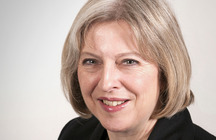
Tag: Theresa May

  • Theresa May – 2008 Conservative Party Conference Speech

    theresamay

    Thank you Michael for that kind introduction and also for your excellent session earlier today. It’s good to know that our education policy is in such good hands.

    And thank you to Hillary and to Elizabeth Burton Phillips for your presentations. I think you’ll all agree that they really made us think about families today, the pressures they are under and the problems parents have to deal with.

    I would just like to say this about Elizabeth. She is a constituent of mine so I have known her now for some years. I am a patron of her charity Drug Fam. I have heard Elizabeth speak on a number of occasions. Her speeches always get to the heart of the matter because what she says is not theoretical. It’s not some academic work; it’s not the product of bureaucrats in Whitehall. What she says is real life. That’s what happened to her and her family and it is happening to too many families up and down this country.

    Elizabeth has set down her story in her book, ‘Mum Can You Lend Me Twenty Quid?’ She went through a personal tragedy. What has come out of it is a charity helping many thousands of other families to deal with drugs and we hope avert the tragedy that befell Elizabeth’s family.

    Her visit to the Four Dwellings High School and the work to set up family support on the Welsh House Farm Estate will I hope leave a lasting legacy that will help countless families.

    And we must help them, as Elizabeth is doing, to deal with addiction when they meet it face to face, but we must also do more to take people off drugs and to make sure they don’t get sucked into the downward spiral of drug addiction in the first place. It is ruining too many lives.

    Supporting families has been a long standing principle for us as Conservatives. Families today come in all sorts of shapes and sizes, the problems they face have changed and we must adapt our policies to make that principle work in today’s world.

    Maria spoke about how we would support relationships and families in the home. But that’s not all we need to do. Our aim is to make Britain the most family friendly place to do business. People want to have more scope to manage the balance between their work and home life better. They want to be more in control. To make Britain truly family friendly the workplace has to change. For young people today – Generation Y as they are known – there are no longer the same boundaries between work and home. They expect to be able to vary their hours at work, but they might also do work from home late into the evening. Technology makes this easy. Today’s generation demand more flexibility in how they work and in the workplace.

    But it’s more than that. Flexible working isn’t some woolly liberal politically correct policy thought up by a focus group. For many, flexibility is an economic necessity. Many families need that extra second income to pay the mortgage and Brown’s stealth taxes. And how many older people find that their pension won’t support them in the way they expected so they have to carry on working long beyond when they had planned to retire. They look for flexible working too. And if we are serious, as Chris Grayling said, about getting more people off benefits and into work then we must accept that for some, say with certain long term health conditions, that’s only possible with flexible working.

    So it’s time to explode the myths about flexible working.

    First the myth that flexible working means part time work and part time work means part time commitment. Flexible working covers a wide range of work. It includes part time but it also covers job sharing, using flexible hours, working from home and all sorts of other arrangements. And by the way, people who work part time aren’t giving part time commitment. You often find that part time workers with flexible working arrangements or job sharers put far more into the job than someone working so called normal hours.

    The second myth is that flexible working is only for mothers. Yes, flexible working can benefit women with children but it also benefits those caring for older relatives. It helps the father separated from his children who needs some flexibility so he can have regular access to them. It enables people with disabilities to access a wider range of jobs.

    And the final myth we must explode is that flexible working is only ever costly and bad for business. That flies in the face of the facts. Studies have shown that those employers who use flexible working benefit from better retention, better productivity and a happier workforce.

    In these difficult times, businesses need the best people for the job and across the country companies who recognise this are rolling out better working practices improving choice, promoting fairness and increasing profitability.

    There doesn’t have to be a conflict between helping business and helping people.

    We need a revolution in the workplace, accepting that its not just mothers who want to spend more time with their children but fathers too. That’s why at the Party’s Spring Forum George Osborne and I announced our policy of flexible parental leave. Under these plans, parents will have 52 weeks of leave on the birth of a child which they will be able to divide between them as they see fit. So if fathers want to take more of a role they can, if mothers feel the need to return to work earlier they can. If both parents want sometime at home together at the birth of their child, helping each other out in those first few weeks then they can. What matters is that they have the choice.

    Likewise with our proposal to extend the right to request flexible working to all parents with children under the age of 18. Having children is one of the most important and challenging roles in an adult’s life and we want to support parents in that role. And that means both parents, not just mothers. More and more fathers want to take an active part in bringing up their children and so our flexible working policy is a step to help them achieve that.

    If the culture of the modern workplace could adapt to accommodate the culture of the modern life then I believe we could all benefit. And choice would be at the heart of those changes. A choice to be a stay at home mum – or dad. The choice to look after your elderly parents or volunteer for a few hours a week. The choice to manage your business in the best way that suits you, your clients and your staff.

    But there is more to be done to improve the workplace particularly for women. We’ve still got to address the shameful pay divide between men and women in this country. That’s why earlier this month I launched a campaign to tackle the pay gap. It’s on facebook – Theresa May for Equal Pay. If you agree then sign up to my group. We aim to introduce a bill in December that would strengthen the law against discrimination on pay and we’re calling for cross party support. Because this issue isn’t about party political point scoring. It should cross party lines. This is about treating women fairly.,.

    How we can hope to raise the low levels of aspiration amongst young women in this country if they think they won’t get treated fairly when they get to the work place? We need to encourage young women to go down the path of work and career rather than the path of benefits and dependency. And that means being positive about the role women play in business, in politics, in the public sector. Let’s stop talking about the problems women face and start talking about the enormous benefits women bring to business and politics.

    The demands of modern life are changing and the challenges we face are changing too.

    As Conservatives, we want to remove the barriers to achievement for everyone. We want to give people the choice to live their lives the way that suits them best.

    Labour talk about being family friendly.

    They boast about their achievements. They claim they are the only party that understands women today.

    But we know better.

    We know it is the Conservative Party that has led the debate on flexible working.

    It is the Conservative Party that is leading the campaign on equal pay; and it is the Conservative Party that has taken up the challenge and will bring in flexible parental leave.

    Because only the Conservatives know the importance of personal choice and only the Conservatives are willing to propose the new policies that take us forward in the 21st century, confident in the decisions made by women and families and willing to trust the people.

  • Theresa May – 2004 Speech to Guild of Business Travel Agents

    theresamay

    Below is the text of the speech made by Theresa May to the Guild of Business Travel Agents on 20th January 2004.

    Mr Chairman, I am honoured that the Guild of Business Travel Agents has invited me to speak at this lunch. Members of this Guild play an important role in our economy – and a role that is very often forgotten. When the term travel agent is mentioned most people think only of tourism and leisure travel forgetting that business travel plays a key role in underpinning our economy. For a trading nation like ours business travel is an essential aspect of business life.

    With some 75% of corporate travel spend going to members of this Guild you do indeed have a central role to play and as such the standards of your industry are very important. I know from my own past experience in the City where I did quite a lot of business travel the importance of being able to rely absolutely on the travel arrangements made. And I was pleased to learn that this Guild certifies the only professional qualifications in the industry.

    Members of this Guild along with others in the travel sector have been at the forefront of an often unremarked but indeed remarkable revolution over the last fifty years, the revolution in people’s freedom to travel.

    As a result of this revolution people have more choice than ever before over where they live, spend their leisure time and holidays and where they conduct their business. As an example of the choices people make today which would have been unheard of in the past, I met a constituent on Saturday who lived in Maidenhead but who had worked for a number of years in Bradford. He flew to and from Bradford every week. Proximity to Heathrow was doubtless a benefit as it indeed is to many of my constituents.

    This element of choice is important not only in opening up opportunities for people, but also in giving them the freedom of more control over their lives and of offering enhanced economic opportunities. But it is this very element of choice that is too often the first casualty when governments decide to interfere.

    Your job is to make sure that wherever people live and work and wherever they want to do business they are able to travel to where they need to be in a way that is cost-effective and fits their individual circumstances. You want the transport system that meets people’s needs. Yet too often government policy is trying to do the opposite. It tries to fit people to the transport system rather than the other way round. Government wants to decide how people should travel and change their behaviour where necessary, rather than asking what people need and trying to deliver accordingly.

    Of course there are areas where Government needs to play a role and there are always balances to be struck. For example, I believe that more people should be able to travel by air in the future. I also believe that a balance needs to be struck between further growth in opportunities to travel by air and the need to preserve the quality of our environment. But the need to strike a balance in this and other cases does not mean that government of whatever hue should be given carte blanche for centralisation and political interference.

    If I may be allowed to spend a moment or two musing on the wider aspects of the industry, as living standards have risen, people have chosen to spend more of their time and money on travel. And the travel revolution has broadened the horizons of us all. While this is true of all forms of travel it is perhaps most true of air travel. In the last half-century air travel has been transformed from a luxury available to a few to a service available to all. In 1952 air travel accounted for just 0.1% of all travel, today it is almost 8%. Today 90% of us have flown at least once in our lives and half of us took a flight in 2001 alone.

    This revolution has also made an enormous contribution to our economy. It has been estimated that aviation generates and supports more than half a million jobs in the UK. But as members of the Guild will know, the economic benefits of air travel are also indirect. The benefits of air travel to tourism which is one of the two biggest contributors to Britain’s invisible earnings might be obvious, but the other major contributor to our invisible earnings is the financial services sector which also benefits from air travel.

    That travel is something people enjoy and is vital to our economy may seem obvious. Yet, substitute the word ‘transport’ for ‘travel’ and a very different picture comes to mind. The word transport conjures up images of traffic jams, delays and cancellations. The very word ‘transport’ suggests that rather than being a matter of personal choice and pleasure and in providing economic opportunities, travel is actually nothing more than a logistical chore.

    The current government’s ’10 year plan for transport’, with its targets for almost every aspect of travel, was the logical outcome of such an approach. Evidence of the government’s failure confronts us on a daily basis, yet the Government still puts much effort into trying to suppress it. Last week, it blocked the publication of a report by the Strategic Rail Authority. A leaked copy catalogued, in depressing detail, the true state of our rail network.

    The Commission for Integrated Transport, the very body the Government set up to further its 10 year plan for transport, has been stripped of its power to monitor progress after making it clear that the government was failing to deliver.

    Air travel has generally provided a refreshing contrast to the growing problems that beset surface transport. This is largely because it has had the freedom to respond to increases in consumer demand that government direction has denied elsewhere. In fact, air travel has shown the fastest growth of any type of travel in recent years with dramatic reductions in fares and charges. These improvements have been the result of increased competition made possible by liberalisation of the European air market.

    The London to Glasgow route is a good illustration of the impact of these changes. The advent of low-cost operators meant that the number of carriers on this route doubled between 1995 and 2001 and the total capacity on the route has increased by around 80%. In fact, competition has become so intense that some passengers find they pay more in airport charges and taxes than they do for their ticket.

    That air travel has been so successful undermines the fallacy behind Labour’s policy that transport must be subject to planning and centralisation. Indeed, one could not think of a more complex and decentralised form of travel than air travel. Many different carriers compete for passengers. Services are provided by an array of travel agents, airport operators, national air traffic systems and others. Even though the amount of people handled by British airports almost doubled between 1990 and 2000, there was no related increase in accidents and air travel remains by far the safest way to travel.

    I believe there are important lessons from the experience of air travel that should be applied elsewhere, but recent actions suggest that the long period of certainty and stability that has resulted is now under threat.

    The publication of the Aviation White Paper in December was due to give a long-term coherent view of the development of air transport in the UK. I fear that far from doing that it has introduced yet more uncertainty.

    As you know the first new runway in the South East is to be at Stansted. Most of the growth at Stansted has been in the kind of low-cost flights that have done so much in recent years to increase people’s opportunity to travel. Yet a new runway at Stansted will mean higher charges, which may drive away these low-cost operators. Indeed, it is not clear that a new runway at Stansted is commercially viable.

    At the same time we are told that Heathrow may also get another runway, but not yet. A new runway at Heathrow depends on action to reduce emissions to meet EU standards. That requires action on road traffic as well as in the air. Yet the Government has given no indication of whether it is going to do anything towards meeting the target. Moreover Stansted will need improvements to rail access and any expansion at Heathrow would if not require then certainly benefit from improved rail access certainly to the west and south. Here again Government has given no indication of any firm plans to do anything – and the Strategic Rail Authority doesn’t have the money to make the improvements needed. The airport operator is being asked to provide funding – but there undoubtedly will be a limit to the extent to which they are prepared to fund rail improvements that are of more general use. With possible legal challenges on the Government’s proposals there is still much uncertainty about the future.

    Another area where Government is impacting on air travel currently is the whole area of safety. We support the Government’s plans to introduce armed ‘sky marshals’. We must do everything we can to improve security on flights and to reassure passengers. Yet the way the Government chose to announce this move was disappointing and again symptomatic of its bureaucratic and centralist approach.

    Alistair Darling told the House of Commons that Government had announced they were going down this route a year ago. If so why was it that when they made their announcement after Christmas they had not had or completed the necessary discussions with airlines and pilots. They had a year why weren’t the protocols in place? For passengers to feel more secure they need to know that pilots are happy with the scheme.

    The issue of safety is one where Government needs to balance the issues carefully. They have a duty to citizens to provide for their security. But there is of course a need to examine carefully the impact of any new measures and assess their benefits. The passenger flying out for a two week holiday may not mind some extra delay in the name of security. But the business traveller for whom time is usually of the essence may take a different view. It is the business traveller who may well decide to use technology to access their client or supplier rather then flying to meet them if the delay is too great.

    I therefore welcome the moves being made by the Guild to take a more active role in lobbying government, in putting the case for business travel. It is important that Government understands the impact of its decisions not just on air travel but on issues affecting surface travel too.

    The Guild has an important role to play in that and I wish you the best in all that you do in future.

  • Theresa May – 2004 Speech to Conservative Party Spring Conference

    theresamay

    Below is the text of the speech made by Theresa May to the Conservative Party Spring Conference on 6th March 2004.

    What an extraordinary year it has been since we were last here – for you, for me, and for the Conservative Party.

    Now of course we all know that politics can be a rough old ride. And sometimes we even find ourselves asking, “Why do we do it?”

    But then you have days like yesterday. Yesterday, I visited All Saints Junior School in Maidenhead. I sat in with a class of ten-year-old boys and girls. The class was persuasive writing. The childrens’ project had been to write an advert for products they wanted to be invented in the future.

    I heard about the ‘sugar sprouts’ – all the goodness of sprouts – but with a sweet taste! I heard about ‘dinner gum’. A traditional roast dinner in a single bubble gum. And then I heard about the ‘Zippo car’. The Zippo Car would get you to Australia in just 60 seconds.

    Imagine the possibilities! Of course, there had to be a question or two. What would your question have been? I know what mine was – how much would this amazing car cost? A fortune surely? Well not for these children.

    Rather than ask how much it would cost or how many would be available, the first question was – does it pollute? The answer by the way was sadly yes, the Zippo car does pollute – it emits chocolate!

    But the answer does not alter the fact that the most important question was about the environment. These young primary school children already understand what’s really important.

    They truly care about the environment we live in. And they will expect us to tackle their concerns. So there you are. We don’t have to guess what it is that future generations want. We should just ask them. But you can’t just listen to what they want. You have to understand it.

    And that’s the problem with Labour. They listen, but they don’t understand. They don’t know what it would take to improve our environment, sustainably, for all time. Tony Blair ‘proved’ his green credentials by signing up to endless European Environmental directives that he has no idea how to implement.

    That’s why today there are mountains of fridges piled up across the country – because we don’t have the systems to dispose of them. That’s why our towns are scarred by fly tipping and abandoned cars that Labour do nothing about, while our countryside is being blighted by the construction of ten thousand wind turbines.

    Of course, the headline was Labour’s commitment for 10% of Britain’s energy to be from renewable sources. But Labour doesn’t understand that it isn’t helping the environment if you ruin the natural beauty of our countryside in the process. And you see, there’s the problem.

    Labour say they are environmentally friendly, but they don’t know the half of what really makes up our environment.

    It’s the air that we breathe. The land we walk on. The view we look at. The place we live. It’s our quality of life! If you fail to protect, or worse still destroy, parts of it as you improve something else, then you are achieving nothing.

    And we cannot afford to gamble with our future. That’s why we have a right to demand honesty from this Government over GM crops.

    Of course, we know that this Government doesn’t understand our rural way of life either. They know what they think is most important for our countryside – they’re going to ban hunting.

    This is a government that doesn’t know and doesn’t care what matters for our countryside.

    We’ve got to make Tony Blair understand.

    You don’t create a better planet, a better environment, a better countryside just by generating better headlines. Labour’s 20th Century approach to Government – controlling, interfering, narrow-minded, just isn’t working.

    Not on health and education.

    Not on crime.

    Not on the economy.

    Not on our society.

    And certainly not on the environment.

    If we are to deliver the sustainable future for generations to come, we, 21st century conservatives – we will have to find a new way.

    A way to start treating the planet as if we intended to stay. Not as if we were just passing through. And we are working hard to do just that. Not only me, but also my excellent Environment team.

    I would like to say thank you for all the work they do – Caroline Spelman, James Gray and Anne McIntosh on environment.

    John Whittingdale, and Owen Patterson on Agriculture.

    And of course Damian Green, Chris Chope, and Greg Knight on transport.

    We have only been up and running for a matter of months, but already this new team is working hard to tackle these difficult issues.

    Sometimes it’s things that aren’t always sexy or exciting, but just sometimes plain necessary if we are going to put together a credible plan for tackling the challenges we will face in government.

    And it’s not just them, but also our MEPS in the environment and agriculture committees out in Brussels, who are playing such an important part in the Conservative Environment team.

    And finally of course there are our Conservative councillors across the country, who are daily forced to deal with the raft of targets and requirements forced on them by this Government.

    It will be no surprise to anyone in this room to learn that 8 out of the top 10 councils across the country for recycling are Conservative ones. And it should be no surprise to hear the Conservative Party focusing so seriously on the environment.

    After all, it was our leader, Michael Howard, who represented Britain at the landmark Rio Summit back in 1992.

    And we’re going to keep doing it.

    There are issues we must tackle, as a Party and as a country, if we are to secure a better future for the generations to come.

    What we do about GM crops. How we deal with mounting problems of waste. The creation of a roadmap to a sustainable balance of environmental priorities.

    Under the leadership of Michael Howard, we have embarked on the most radical and wide-ranging consultation this Party has ever engaged in on the environment.

    And we want your views too so please get involved today.

    Ladies and Gentlemen, we all know that we are the party of the countryside.

    We must continue to be that.

    But we must demonstrate too that we are the party of the environment.

    Because we can be. And we should be.

    We must capture the imagination and respect of the children like those in All Saints Junior School.

    Young people are the voters of tomorrow, the voters of the future. They live in a world of aspirations and dreams. Our job, as Conservatives, is to work to realise those dreams.

  • Theresa May – 2003 Speech to Conservative Spring Conference

    theresamay

    Below is the text of the speech made by Theresa May at the 2003 Conservative Spring Conference on 15th March 2003.

    Today, we meet in the shadow of great and terrible events.

    The situation currently unfolding in the Gulf dominates all our thoughts.

    British servicemen and women are preparing to risk their lives to disarm Saddam Hussein and to uphold the rule of international law.

    The debt we owe them is immense.

    Let us send them a message today: we’re thinking of you. We back you. We believe in you.

    But while we support what our armed forces are doing, we shouldn’t kid ourselves. There is widespread concern about war. Many people feel the Government’s actions should be opposed and they ask us why we aren’t doing it.

    The reason is because we believe Tony Blair is taking a risk to make the world safer. And as a matter of principle, he deserves support.

    But I know we need to continue to make the case. Leadership isn’t just about embarking on a course and expecting others to follow. It’s also about explaining. It’s about taking people with you. It’s about being open and honest.

    We must set out point-by-point why this conflict is necessary.

    And we owe it to the people of this country to take their concerns seriously and explain why it is right, indeed it is moral, for Britain to act.

    So let’s firstly be clear about what this war is not about.

    This is not about oil and profit.

    If it were we could achieve our aims far easier by striking a trade deal with Saddam Hussein.

    This is not a war against Islam.

    Many Muslims would like nothing more than to see the back of this evil dictator.

    And above all this is emphatically not about American global domination.

    Critics often accuse Americans of being isolationist. Now they accuse them of Imperialism.

    But can anyone really question why – today – Americans are determined to act against those who have shown a willingness to do them harm?

    No. When people ask what this conflict is about, we must be clear and honest.

    This is about forcing Saddam Hussein to comply with international law.

    This is about forcing him to disarm.

    Above all, this is about the safety and security of Britain.

    On September 11th, billions of people around the world saw for the first time the immense destructive power of the new terrorism.

    We now all know, in a way that many didn’t realise before, that there are people and organisations that have no moral limits, who are prepared to butcher totally innocent people, however young, however helpless, just to advance their own fanatical cause.

    The new terrorists are well organised, lavishly funded and highly motivated.

    They are actively seeking terrible new weapons of mass destruction.

    And, let’s not kid ourselves, we are a target.

    Not because of anything we’ve done. But because of who we are.

    The new terrorists of Al-Qaeda are at war with the West because our free societies are everything they hate.

    The question we must ask ourselves is this:

    Should we wait…

    Or should we take action now to stop it happening?

    You only have to ask the question to know the answer.

    The western democracies must have a proactive strategy for identifying and neutralising terrorists.

    And not only those who carry out the atrocities – but those who have the means, the mentality and the motive to help them.

    I believe Saddam Hussein is such a man.

    Any objective observer attempting to identify those who might have the means and the motivation to supply weapons of mass destruction to Al-Qaeda or other similar groups would have his name right at the top of their list.

    He has shown he does not recognise the rule of international law.

    Some people say we have known about his evasion for years. Why act now?

    To them I would say one thing: Remember September 11th.

    ‘Why now’, cannot – and should not – mean not now.

    Resolution 1441 didn’t just ask Iraq to work with the weapons inspectors. It demanded full compliance and active cooperation so there could be no conceivable doubt.

    Since that Resolution was passed, Saddam Hussein has done everything in his power to resist full compliance and delay active co-operation. His time is running out: of that, there can be no conceivable doubt.

    It is time for him to disarm by choice or by force.

    Our policy on Iraq is based above anything else on this country’s national interest.

    And over the past months, we have been fortunate to be led by Iain Duncan Smith who has shown the capacity to look beyond passing newspaper headlines and tackle the big challenges of our time.

    Iain has been warning of the threat from Saddam Hussein since 1995. He has consistently advocated strong international action to force him to disarm.

    After I have finished speaking, Iain will address the international situation. We’re lucky to have as our Leader a man who is not afraid to take a stand of principle on the really big issues.

    At times of crisis like this people expect their politicians to be able to put aside short-term party advantage in the country’s interests.

    But, the problem for most people is why, when major crises pass, do politicians go back to point-scoring rather than working together…

    Bad mouthing rather than supporting others when they know they’re right…

    Mud-slinging when what people want are ideas and solutions.

    Britain is changing. The public have become more discerning. A world in which most people are automatically Labour or Conservative no longer exists.

    We could just accept this as a new fact of life in the 21st Century.

    But I believe this is an opportunity – an opportunity to show people we have solutions to their problems.

    And we must seize the opportunity to build a bridge to the millions of people who feel their voice is simply not being heard.

    People who hope that by paying extra taxes they will get the operation they need when they need it – but fear they will not.

    People who hope their savings will provide them with a secure future – but fear their pension will be worth nothing.

    People who hope their child’s hard work will be rewarded by a university place – but fear they won’t be able to afford it.

    People who hope that their children are safe going out at night – but fear that they are not.

    These are the voiceless millions who hope for a party to speak for them.

    We must be their voice.

    We must be that Party.

    This Government has dashed people’s hopes and played on their fears.

    We must show that we are a credible alternative to this Labour Government.

    That means working together as one party united.

    It means talking the people’s language – living in their world.

    It means showing that we agree with them that everyone should have a fair chance to fulfil their potential.

    It means showing that we care passionately about the things they care about.

    It means being 21st Century Conservatives.

    Conservatives who are open and honest, clear about where we stand, and ready to take the tough decisions necessary to make this country better.

    It means challenging the artificial divisions that have built up in politics in this country and that have so bedevilled our chance to get things right.

    There is no contradiction between helping young criminals off the conveyor belt to crime and putting more police on the streets.

    There is no contradiction between supporting businesses and helping the vulnerable.

    There is no contradiction between a low tax economy and better public services.

    You see, we understand how to improve public services without wasting taxes, because that is what Conservative Councils do.

    Over the past few months, I have seen a great example of the Conservative Party in action at its very best. Our councillors at work.

    They’ve been working hard to provide a fair deal for local people.

    But don’t take my word for it. Look at what the Audit Commission has to say. Conservative councils are the best. They take less of your money but deliver better services than others.

    A real record of success. Conservatives in Government delivering results.

    Our Conservative councillors record helps us show that Conservatives in government can make people’s lives better.

    It will be a great help when it comes to persuading people of our case at the general election.

    But it won’t be enough.

    We have to show in everything that we believe, say and do that we are 21st Century Conservatives.

    Conservatives whose belief in freedom makes them cherish the diversity it brings.

    Conservatives who know the virtue of paying your own way but believe in helping those who can’t.

    Conservatives who believe in their country and recognise that Britain is at its best when it is helping to build a better world.

    The people who have supported this party through thick and thin know these things in their hearts. But this Party has always been at its best when our appeal has extended beyond those who think of themselves as life’s Conservatives.

    When our hopes have matched people’s hopes and we’ve worked together to realise them.

    Helping people from across the spectrum, because the right policies give a fair deal for everyone – regardless of background, income, gender, religion or race.

    The Conservative Party is at its best when at its broadest.

    We must show people now that we have the policies and the commitment to deal with the problems of today.

    Challenges where Conservative values point the way forward.

    Challenges in health.

    The challenge of one million people on waiting lists.

    People waiting for hours in accident and emergency when they would be seen much quicker in other parts of Europe.

    But only Conservatives have the vision to learn from abroad how those values could be better delivered.

    Challenges in Education.

    The challenge of one in four children leaving primary school unable to read, write and count properly.

    30,000 children finishing school without a single GCSE.

    It’s the Conservative belief in standards, discipline and effective teaching methods that points the way out.

    Challenges in law and order.

    The challenge of a crime being committed every five seconds.

    Criminals with only a one in forty chance of being caught.

    It’s the Conservatives who are looking at innovative ways to help young people off the conveyor belt to crime.

    And trusting local people when they say they want more police on their streets.

    In every area of our lives, Conservative values can deliver results.

    That’s why people in today’s Britain should be at home with today’s Conservative Party.

    People who are determined to help the poorest in society, and who believe that penalising the rich for being rich helps no one.

    People who believe they have a duty to pay their taxes, and who believe that the Government owes it to them not to waste their money.

    People who want a successful NHS for everyone, and who believe that people let down by the NHS should be helped to go elsewhere.

    People who hope the best possible schools for their own children, and for everybody else’s.

    People who believe that Britain is a force for good in the world and that we can learn from other countries too.

    That’s what people in 21st Century Britain believe, and what we as 21st Century Conservatives believe.

    Our job now is to build a bridge between us.

    And the careful and sensible way we have been developing our programme over the past 18 months helps us to do just that.

    We have begun to build that bridge.

    We have an ambitious and progressive agenda for government.

    Our country faces huge challenges in the years ahead.

    We must be open, honest and clear.

    Clear about who we are and what we stand for.

    Clear about what we can deliver and what we want to achieve.

    To those people who feel the country is going in the wrong direction…

    To those who feel let down or betrayed…

    To those who feel they are being ignored…

    We say simply ‘join us. Come with us.

    We will be your voice’.

    Together we can build a bridge to a better future.

    Let’s show them we can do it.