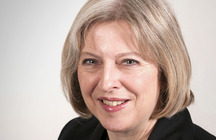
Tag: Theresa May

  • Theresa May – 2018 Passover Message

    Below is the Passover message issued by Theresa May, the Prime Minister, on 30 March 2018.

    Today marks the beginning of Passover, as Jewish families around the world come together at the seder table to tell the story of their ancestors’ deliverance from slavery.

    Here in the UK, we can all take the opportunity to celebrate the incredible and enduring contribution made by our Jewish community, in every corner of the country and in every walk of life.

    Of course, the Exodus from Egypt did not mark the end of anti-Semitic persecution. For millennia, the descendants of those Moses led to freedom have continued to face hatred, discrimination and violence. It’s a situation that continues to this day, including, I’m sad to say, here in Britain.

    It’s something I have consistently taken action to tackle, both through investing in security to protect our Jewish communities and through education, with the creation of a National Holocaust Memorial to remind us all where hatred can lead if left unchecked.

    The story of Passover teaches us that, while wrong may triumph for a time, the arc of history always bends to the righteous. So, at this special time of year, let us all pledge to stand up and make our voices heard in the face of anti-Semitism.

    After all, as Elie Wiesel said, “Silence encourages the tormentor, never the tormented.”

    I wish you all a very happy and peaceful Pesach – chag kasher v’sameach.

  • Theresa May – 2018 Statement on European Council

    Below is the text of the statement made by Theresa May, the Prime Minister, in the House of Commons on 26 March 2018.

    Introduction

    Mr Speaker, before I turn to the European Council, I am sure the whole House will join me in sending our deepest condolences to the families and friends of those killed in the appalling terrorist attack at Trèbes on Friday.

    The House will also want to pay tribute to the extraordinary actions of Lt-Col Arnaud Beltrame who, unarmed, took the place of a hostage and gave his own life to save the lives of others. Son sacrifice et son courage ne seront jamais oubliés.

    Mr Speaker, just last week we marked the first anniversary of the attack on Westminster and remembered the humbling bravery of PC Keith Palmer.

    It is through the actions of people like PC Palmer and Lt-Col Beltrame, that we confront the very worst of humanity with the very best.

    And through the actions of us all – together in this Parliament and in solidarity with our allies in France – we show that our democracy will never be silenced and our way of life will always prevail.

    European Council

    Mr Speaker, turning to the Council, we discussed confronting Russia’s threat to the rules-based order. We agreed our response to America’s import tariffs on steel and aluminium, and we also discussed Turkey and the Western Balkans, as well as economic issues including the appropriate means of taxing digital companies.

    All of these are issues on which the UK will continue to play a leading role in our future partnership with the EU after we have left. And this Council also took important steps towards building that future partnership.

    Russia

    First, on Russia, we are shortly to debate the threat that Russia poses to our national security – and I will set this out in detail then.

    But at this Council, I shared the basis for our assessment that Russia was responsible for the reckless and brazen attempted murder of Sergei and Yulia Skripal in Salisbury – and the exposure of many others to potential harm.

    All EU leaders agreed and as a result the Council conclusions were changed to state that the Council “…agrees with the United Kingdom government’s assessment that it is highly likely that the Russian Federation is responsible and that there is no alternative plausible explanation.”

    Mr Speaker, this was the first offensive use of a nerve agent on European soil since the foundation of the EU and NATO.

    It is a clear violation of the Chemical Weapons Convention and – as an unlawful use of force – a clear breach of the UN Charter.

    It is part of a pattern of increasingly aggressive Russian behaviour – but also represents a new and dangerous phase in Russia’s hostile activity against Europe and our shared values and interests.

    So I argued that there should be a reappraisal of how our collective efforts can best tackle the challenge that Russia poses following President Putin’s re-election.

    And in my discussions with President Macron and Chancellor Merkel, as well as other leaders, we agreed on the importance of sending a strong European message in response to Russia’s actions – not just out of solidarity with the UK but recognising the threat posed to the national security of all EU countries.

    So the Council agreed immediate actions including withdrawing the EU’s ambassador from Moscow.

    And today 18 countries have announced their intention to expel more than 100 Russian intelligence officers from their countries.

    This includes 15 EU Member States as well as the US, Canada, and the Ukraine.

    And this is the largest collective expulsion of Russian intelligence officers in history.

    I have found great solidarity from our friends and partners in the EU, North America, NATO and beyond over the past three weeks as we have confronted the aftermath of the Salisbury incident.

    And together we have sent a message that we will not tolerate Russia’s continued attempts to flout international law and undermine our values.

    European nations will also act to strengthen their resilience to chemical, biological, radiological and nuclear-related risks as well as bolstering their capabilities to deal with hybrid threats.

    We also agreed that we would review progress in June, with Foreign Ministers being tasked to report back ahead of the next Council.

    Mr Speaker, the challenge of Russia is one that will endure for years to come.

    As I have made clear before, we have no disagreement with the Russian people who have achieved so much through their country’s great history.

    Indeed, our thoughts are with them today in the aftermath of the awful shopping centre fire in Kemerovo in Siberia.

    But President Putin’s regime is carrying out acts of aggression against our shared values and interests within our continent and beyond.

    And as a sovereign European democracy, the United Kingdom will stand shoulder to shoulder with the EU and with NATO to face down these threats together.

    US steel tariffs

    Turning to the United States’ decision to impose import tariffs on steel and aluminium, the Council was clear that these measures cannot be justified on national security grounds, and that sector-wide protection in the US is an inappropriate remedy for the real problems of overcapacity.

    My Rt Hon Friend the Secretary of State for International Trade travelled to Washington last week to argue for an EU-wide exemption.

    So we welcome the temporary exemption that has now been given to the European Union, but we must work hard to ensure this becomes permanent.

    At the same time we will continue to support preparations in the EU to defend our industry in a proportionate manner, in compliance with WTO rules.

    Brexit

    Turning to Brexit, last week the Secretary of State for Exiting the European Union reached agreement with the European Commission negotiating team on large parts of the draft Withdrawal Agreement.

    This includes the reciprocal agreement on citizens’ rights, the financial settlement, aspects of issues relating to Northern Ireland such as the Common Travel Area, and crucially the detailed terms of a time-limited Implementation Period running to the end of December 2020.

    I am today placing copies of the draft agreement in the House libraries and I want to thank the Secretary of State and our negotiating team for all their work in getting us to this point.

    The Council welcomed the agreement reached – including the time that the Implementation Period will provide for governments, businesses and citizens on both sides to prepare for the new relationship we want to build.

    As I set out in my speech in Florence, it is not in our national interest to ask businesses to undertake two sets of changes.

    So it follows that during the Implementation Period they should continue to trade on current terms.

    Whilst I recognise that not everyone will welcome continuation of current trading terms for another 21 months, such an Implementation Period has been widely welcomed by British business because it is necessary if we are to minimise uncertainty and deliver a smooth and successful Brexit.

    For all of us, the most important issue must be focussing on negotiating the right future relationship that will endure for years to come.

    And we are determined to use the Implementation Period to prepare properly for that future relationship – which is why it is essential that we have clarity about the terms of that relationship when we ask the House to agree the Implementation Period and the rest of the Withdrawal Agreement in the autumn.

    Mr Speaker, there are of course some key questions that remain to be resolved on the Withdrawal Agreement – including the governance of the Agreement, and how our commitments to avoid a hard border between Ireland and Northern Ireland should be turned into legal text.

    As I have made clear, we remain committed to the agreement we reached in December in its entirety.

    This includes a commitment to agree operational legal text for the “backstop option” set out in the Joint Report – although it remains my firm belief that we can and will find the best solutions for Northern Ireland as part of the overall future relationship between the UK and the EU.

    I have explained that the specific European Commission proposals for that backstop were unacceptable because they were not in line with Belfast Agreement and threatened the break-up of the UK’s internal market. And as such they were not a fair reflection of the Joint Report.

    But there are many issues on which we can agree with the Commission and we are committed to working intensively to resolve those which remain outstanding.

    So I welcome that we are beginning a dedicated set of talks today with the European Commission – and where appropriate the Irish Government – so that we can work together to agree the best way to fulfil the commitments we have made.

    We have also been working closely with the Government of Gibraltar to ensure that Gibraltar is covered by our EU negotiations on withdrawal, the Implementation Period and future relationship.

    I am pleased that the draft Agreement published jointly last week correctly applies to Gibraltar, but we will continue to engage closely with the Government of Gibraltar and our European partners to resolve the particular challenges our EU withdrawal poses for Gibraltar and for Spain.

    Mr Speaker, following my speeches in Munich and at the Mansion House setting out the future security and economic partnerships we want to develop, the Council also agreed guidelines for the next stage of the negotiations on this future relationship which must rightly now be our focus.

    While there are of course some clear differences between our initial positions, the guidelines are a useful starting point for the negotiations that will now get underway.

    And I welcome the Council restating the EU’s determination to “have as close as possible a partnership with the UK” and its desire for a “balanced, ambitious and wide-ranging” free trade agreement.

    For I believe there is now an opportunity to create a new dynamic in these negotiations.

    The agreements our negotiators have reached on the Withdrawal Agreement and the Implementation Period are proof that with political will – and with a spirit of co-operation and a spirit of opportunity for the future – we can find answers to difficult issues together.

    And we must continue to do so.

    For whether people voted leave or remain, many are frankly tired of the old arguments and the attempts to refight the referendum over the past year.

    With a year to go, people are coming back together and looking forward.

    They want us to get on with it. And that is what we are going to do.

    And I commend this Statement to the House.

  • Theresa May – 2018 Statement on National Security and Russia

    Below is the text of the statement made by Theresa May, the Prime Minister, in the House of Commons on 26 March 2018.

    Mr Speaker, I beg to move the motion on the order paper standing in my name.

    Three weeks ago, the Russian Federation was responsible for an attempted murder here in our country.

    This was not only a crime against Sergei and Yulia Skripal.

    It was an indiscriminate and reckless act against the United Kingdom, putting the lives of innocent civilians at risk.

    It was an assault on our fundamental values and the rules based international system that upholds them.

    And it was part of a pattern of increasingly aggressive Russian behaviour, but which – with the first offensive use of a nerve agent on European soil since the foundation of NATO – also represents a new and dangerous phase in Russia’s hostile activity within our continent and beyond.

    So this debate is taking place, Mr Speaker, because there is no greater responsibility for this House – for this government and for me as Prime Minister – than recognising threats to our national security and acting to meet them.

    So let me set out for the House what we now know about the recklessness of this act and its exposure of innocent people to potential harm, the evidence that Russia was indeed responsible, the wider pattern of Russia’s illegal and destabilising actions within our continent and beyond, the extensive actions this government has already been taking, and our determination to work with our international partners to confront the evolving nature of this threat, to defend the rules based international system and to keep our people safe.

    Mr Speaker, let me start by updating the House on the situation in Salisbury.

    Sergei and Yulia Skripal remain critically ill in hospital.

    Sadly, late last week doctors indicated that their condition is unlikely to change in the near future and they may never recover fully.

    This shows the utterly barbaric nature of this act – and the dangers that hundreds of innocent citizens in Salisbury could have faced.

    An investigation continues into all the locations where the Skripals had been present on Sunday 4th March.

    As a result, we now have a fuller picture of the recklessness of this act against our country.

    While Public Health England have made clear that the risk to public health is low – and this remains the case – we assess that more than 130 people in Salisbury could have been potentially exposed to this nerve agent.

    More than 50 people were assessed in hospital, with Detective Sergeant Nick Bailey taken seriously ill.

    I know everyone in the House will welcome the news that he has been discharged and continue to hold him and his family in our thoughts as he makes his recovery.

    Mr Speaker, we are quite clear that Russia was responsible for this act.

    As I set out for the House in my statements earlier this month, our world-leading experts at the Defence Science and Technology Laboratory at Porton Down positively identified the chemical used for this act as a Novichok – a military-grade nerve agent of a type developed by the Soviet Union.

    We know that Russia has a record of conducting state-sponsored assassinations – and that it views some former intelligence officers as legitimate targets for these assassinations.

    And we have information indicating that within the last decade, Russia has investigated ways of delivering nerve agents probably for assassination – and as part of this programme has produced and stockpiled small quantities of Novichoks.

    Clearly that is in contravention of the Chemical Weapons Convention and so it is right that we have been working closely with the Organisation for the Prohibition of Chemical Weapons whose team arrived in the UK last week and collected samples.

    This is a normal part of us discharging our obligations under the Convention, although we are clear as to what the evidence is.

    As a Permanent Member of the UN Security Council, upholding these non-proliferation regimes with our partners is central to our international security, while Russia has recklessly undermined and violated them.

    In conclusion, as I have set out, no other country has a combination of the capability, the intent and the motive to carry out such an act.

    There is no other plausible explanation.

    And that is not just the view of the UK government.

    It was the unanimous view of every single leader at last week’s European Council.

    And the view of our Allies in NATO and around the world.

    Mr Speaker, I know there are some who question whether there could be alternative explanations.

    So let me be absolutely clear.

    We have been led by evidence not by speculation.

    And when faced with the evidence we gave the Russian government the opportunity to provide an explanation.

    But they did not do so.

    They provided no explanation as to why Russia has an undeclared chemical weapons programme in contravention of international law.

    No explanation that could suggest they had lost control of their nerve agent.

    And no explanation as to how this agent came to be used in the United Kingdom.

    Instead they have treated the use of a military grade nerve agent in Europe with sarcasm, contempt and defiance.

    Incredibly, they have deployed at least twenty-one different arguments about it.

    They have suggested that they never produced Novichoks; or that they produced them but then destroyed them.

    They have tried to claim that their agents are not covered by the Chemical Weapons Convention.

    They have pointed the finger at other countries – including Slovakia, Sweden and the Czech Republic – and even tried to claim that the United Kingdom was responsible for a chemical attack on our own citizens.

    For a nation state like Russia to resort again to peddling such preposterous and contradictory theories is unworthy of their people and their great history.

    It is merely an effort to distract from the truth of Russia’s violation of international law.

    And this unlawful use of force by the Russian state against the United Kingdom, is a clear violation of the Chemical Weapons Convention and a breach of the UN Charter.

    This act against our country is the latest in a pattern of increasingly aggressive Russian behaviour attacking the international rules based system across our continent and beyond.

    Russia’s illegal actions in Crimea were the first time since the Second World War that one sovereign nation has forcibly annexed territory from another in Europe.

    Since then Russia has fomented conflict in the Donbass, repeatedly violated the national airspace of several European countries, and mounted a sustained campaign of cyber espionage and disruption.

    It has meddled in elections and hacked the Danish Ministry of Defence and the Bundestag among many others.

    It is seeking to weaponise information, deploying its state-run media organisations to plant fake stories and photo-shopped images in an attempt to sow discord in the West and undermine our institutions.

    During his recent State of the Union address, President Putin showed video graphics of missile launches, flight trajectories and explosions, including the modelling of attacks on the United States with a series of warheads impacting in Florida.

    And of course Russia used radiological substances in its despicable assault here in London on Mr Litvinenko.

    Russia is also failing to honour its responsibilities in the international community as a permanent member of the UN Security Council.

    In particular, Russia has covered up for the Assad regime’s use of chemical weapons in Syria – especially in its attempts to impede the OPCW’s Joint Investigative Mechanism. This has allowed the Syrian Regime to continue to perpetrate atrocities against the Syrian people.

    For the last month, in contravention of UNSCR 2401, Russian airpower and military coordination has enabled the Regime offensive in Eastern Ghouta, causing more appalling suffering and impeding the heroic efforts of the humanitarian relief agencies.

    Indeed, over the course of many years of civil war, hundreds of thousands of Syrians have died and many times that number have been displaced. Yet Russia has repeatedly failed to use its influence over the Syrian Regime to bring an end to this terrible suffering.

    Mr Speaker, from the outset, the UK has been at the forefront of the European and transatlantic response to these actions.

    In response to the annexation of Crimea, we led the work with our EU and G7 partners in constructing the first sanctions regime against Russia.

    We have stepped up our military and economic support to Ukraine, including directly training almost 7,000 Ukrainian Armed Forces personnel.

    We are the second largest contributor of monitors to the OSCE Special Monitoring Mission.

    We are driving reform of NATO to better deter and counter hostile Russian activity and our commitment to collective defence and security through NATO remains as strong as ever.

    Indeed, our armed forces have a leading role in NATO’s Enhanced Forward Presence with British troops leading a multinational battlegroup in Estonia.

    In the Western Balkans, we stepped up our support to our newest ally, Montenegro, when it suffered an attempt by Russia to stage a coup.

    While our Western Balkans Summit in July will enhance our security co-operation with all our Western Balkans partners, including on serious and organised crime, anti-corruption and cyber security.

    We are building up our defences against Russia’s cyber threat more broadly – investing almost £2 billion in our National Cyber Security Strategy and have opened a new National Cyber Security Centre which is actively working with international partners, industry and civil society to tackle this threat.

    We are also working with our European partners to support the Centre of Excellence for Countering Hybrid Threats in Helsinki.

    We are calling out Russia’s malign behaviour in cyber space – as we did last month when together with the US and other allies we attributed the NotPetya cyber-attack to the Russian military.

    And we are investing millions in countering Russian disinformation efforts – including more investment in public service and independent media operating in the Russian language, both through projects in the Baltic States, Ukraine, Moldova and Georgia. And through reinvigorating the BBC Russia Service as an independent source of news for Russian speakers.

    As the House knows, we already have the largest Defence budget in Europe and second largest in NATO, meeting the 2% standard and set to increase every year of this Parliament.

    We have also commissioned the National Security Capability Review, which will report shortly, and the Modernising Defence Programme to ensure that our Defence and Security capabilities are optimised to address the threats we face, including those from Russia.

    Following the incident in Salisbury we have of course taken further measures.

    We are dismantling the Russian espionage network in our country and we will not allow it to be rebuilt.

    We are urgently developing proposals for new legislative powers to harden our defences against all forms of Hostile State Activity.

    This will include the addition of a targeted power to detain those suspected of such activity at the UK border; and considering whether there is a need for new counter-espionage powers to clamp down on the full spectrum of hostile activities of foreign agents in our country.

    We are making full use of existing powers to enhance our efforts to monitor and track the intentions of those travelling to the UK who could be engaged in activity that threatens the security of the UK and our allies.

    This includes increasing checks on private flights, customs and freight and freezing Russian state assets wherever we have the evidence that they may be used to threaten the life or property of UK nationals or residents.

    We are also cracking down on illicit and corrupt finance, bringing all the capabilities of UK law enforcement to bear against serious criminals and corrupt elites – neither of whom have any place in our country.

    We have given our law enforcement agencies new powers in the Criminal Finance Act and we will table an amendment to the Sanctions Bill to ensure that the UK cannot be a home for those who trade illicit finance or commit human rights abuses.

    And crucially, Madam Deputy Speaker, because this threat from Russia is an attack on the whole international rules based system and the collective security of the UK and its allies, so we must continue to work closely with all our international partners.

    That includes through the new security partnership we want to build with the European Union as part of our new relationship after we have left.

    And as I said in my speech in Munich, when we leave the EU it is right that the UK will pursue an independent foreign policy. But around the world the interests that we will seek to project and defend will continue to be rooted in our shared values.

    And nowhere is this more true than in standing up to Russia’s hostile actions and refuting its attempts to undermine the international rules based order.

    As President Macron said on Friday, Russia’s actions in Salisbury were “…an act of aggression against the sovereignty of an ally, which demands a reaction.”

    And as I set out in my statement earlier, the EU and its Member States have already taken some immediate actions, including withdrawing the EU’s ambassador from Moscow.

    And as I announced today, 18 countries have announced their intention to expel more than 100 Russian intelligence officers, including 15 EU member states as well as the US, Canada and the Ukraine.

    And this is the largest collective expulsion of Russian intelligence officers in history.

    Madam Deputy Speaker, if the Kremlin’s goal is to divide and intimidate the Western Alliance then their efforts have spectacularly back-fired.

    Today’s actions by our allies clearly demonstrate that we all stand shoulder to shoulder in sending the strongest signal to the Kremlin that Russia cannot continue to flout international law and threaten our security.

    As I argued at last week’s European Council, we must reappraise how our collective efforts can best tackle the challenge that Russia poses.

    But we must and will proceed on a rigorous and legally sound basis, which is why the Council mandated Foreign Ministers to consider how best to proceed and to report back ahead of the next Council.

    Madam Deputy Speaker, as I have made clear before, we have no disagreement with the Russian people who have achieved so much through their country’s great history.

    Indeed, our thoughts are with them today – and especially the friends and families of those who died in that awful shopping centre fire in Kemerovo in Siberia.

    Neither should we wish to be in a permanent state of perpetual confrontation with Russia.

    Many of us looked at a post-Soviet Russia with hope.

    We would much rather have in Russia a constructive partner ready to play by the rules.

    But while we should continue to keep open this possibility, we must also face the facts. President Putin’s regime is carrying out acts of aggression against our values and interests within Europe and beyond.

    The challenge of Russia is one that will endure for years to come.

    As a European democracy, the United Kingdom will stand shoulder to shoulder with our allies in the European Union and NATO to face down these threats together.

    We will defend our infrastructure, our institutions and our values against attempts to undermine them.

    And we will act to protect our national security and to keep our people safe.

    And I commend this motion to the House.

  • Theresa May – 2018 Salisbury Attack Statement

    Below is the text of the statement made by Theresa May, the Prime Minister, in the House of Commons on 14 March 2018.

    With permission, Mr Speaker, I would like to make a statement on the response of the Russian Government to the incident in Salisbury.

    First, on behalf of the whole House, let me pay tribute once again to the bravery and professionalism of all the emergency services, doctors, nurses and investigation teams who have led the response to this appalling incident, and also to the fortitude of the people of Salisbury. I reassure them that, as Public Health England has made clear, the ongoing risk to public health is low, and the Government will continue to do everything possible to support this historic city to recover fully.

    On Monday I set out that Mr Skripal and his daughter were poisoned with Novichok—a military-grade nerve agent developed by Russia. Based on this capability, combined with Russia’s record of conducting state-sponsored assassinations—including against former intelligence officers whom it regards as legitimate targets—the UK Government concluded it was highly likely that Russia was responsible for this reckless and despicable act. There are only two plausible explanations: either this was a direct act by the Russian state against our country; or, conceivably, the Russian Government could have lost control of a military-grade nerve agent and allowed it to get into the hands of others.

    It was right to offer Russia the opportunity to provide an explanation, but its response has demonstrated complete disdain for the gravity of these events. The Russian Government have provided no credible explanation that could suggest that they lost control of their nerve agent, no explanation as to how this agent came to be used in the United Kingdom, and no explanation as to why Russia has an undeclared chemical weapons programme in contravention of international law. Instead it has treated the use of a military-grade nerve agent in Europe with sarcasm, contempt and defiance.

    There is no alternative conclusion other than that the Russian state was culpable for the attempted murder of Mr Skripal and his daughter, and for threatening the lives of other British citizens in Salisbury, including Detective Sergeant Nick Bailey. This represents an unlawful use of force by the Russian state against the United Kingdom. As I set out on Monday, it has taken place against the backdrop of a well-established pattern of Russian state aggression across Europe and beyond. It must therefore be met with a full and robust response beyond the actions we have already taken since the murder of Mr Litvinenko and to counter this pattern of Russian aggression elsewhere.

    As the discussion in this House on Monday made clear, it is essential that we now come together with our allies to defend our security, to stand up for our values and to send a clear message to those who would seek to undermine them. This morning I chaired a further meeting of the National Security Council, where we agreed immediate actions to dismantle the Russian espionage network in the UK, urgent work to develop new powers to tackle all forms of hostile state activity and to ensure that those seeking to carry out such activity cannot enter the UK, and additional steps to suspend all planned high-level contacts between the United Kingdom and the Russian Federation.​
    Let me start with the immediate actions. The House will recall that, following the murder of Mr Litvinenko, the UK expelled four diplomats. Under the Vienna convention, the United Kingdom will now expel 23 Russian diplomats who have been identified as undeclared intelligence officers. They have just one week to leave. This will be the single biggest expulsion for over 30 years and it reflects the fact that this is not the first time that the Russian state has acted against our country. Through these expulsions, we will fundamentally degrade Russian intelligence capability in the UK for years to come, and if Russia seeks to rebuild it, we will prevent it from doing so.

    We will also urgently develop proposals for new legislative powers to harden our defences against all forms of hostile state activity. This will include the addition of a targeted power to detain those suspected of hostile state activity at the UK border. This power is currently only permitted in relation to those suspected of terrorism. And I have asked the Home Secretary to consider whether there is a need for new counter-espionage powers to clamp down on the full spectrum of hostile activities of foreign agents in our country.

    As I set out on Monday, we will also table a Government amendment to the Sanctions and Anti-Money Laundering Bill to strengthen our powers to impose sanctions in response to the violation of human rights. In doing so, we will play our part in an international effort to punish those responsible for the sorts of abuses suffered by Sergei Magnitsky. I hope, as with all the measures I am setting out today, that this will command cross-party support.

    We will also make full use of existing powers to enhance our efforts to monitor and track the intentions of those travelling to the UK who could be engaged in activity that threatens the security of the UK and of our allies. So we will increase checks on private flights, customs and freight. We will freeze Russian state assets wherever we have the evidence that they may be used to threaten the life or property of UK nationals or residents. Led by the National Crime Agency, we will continue to bring all the capabilities of UK law enforcement to bear against serious criminals and corrupt elites. There is no place for these people, or their money, in our country.

    Let me be clear. While our response must be robust, it must also remain true to our values as a liberal democracy that believes in the rule of law. Many Russians have made this country their home, abide by our laws, and make an important contribution to our country which we must continue to welcome. But to those who seek to do us harm, my message is simple: you are not welcome here.

    Let me turn to our bilateral relationship. As I said on Monday, we have had a very simple approach to Russia: engage but beware. I continue to believe that it is not in our national interest to break off all dialogue between the United Kingdom and the Russian Federation. But in the aftermath of this appalling act against our country, this relationship cannot be the same. So we will suspend all planned high-level bilateral contacts between the United Kingdom and the Russian Federation. This includes revoking the invitation to Foreign Minister Lavrov to pay a reciprocal visit to the UK and confirming that there will be no attendance by Ministers, or indeed members of the royal family, at this summer’s World cup in Russia.​

    Finally, we will deploy a range of tools from across the full breadth of our national security apparatus in order to counter the threats of hostile state activity. While I have set out some of these measures today, Members on all sides will understand that there are some that cannot be shared publicly for reasons of national security. And of course there are other measures we stand ready to deploy at any time should we face further Russian provocation.

    None of the actions we take is intended to damage legitimate activity or prevent contacts between our populations. We have no disagreement with the people of Russia, who have been responsible for so many great achievements throughout their history. Many of us looked at a post-Soviet Russia with hope. We wanted a better relationship, and it is tragic that President Putin has chosen to act in this way. But we will not tolerate the threat to the life of British people and others on British soil from the Russian Government. Nor will we tolerate such a flagrant breach of Russia’s international obligations.

    As I set out on Monday, the United Kingdom does not stand alone in confronting Russian aggression. In the last 24 hours I have spoken to President Trump, Chancellor Merkel and President Macron. We have agreed to co-operate closely in responding to this barbaric act and to co-ordinate our efforts to stand up for the rules-based international order which Russia seeks to undermine. I will also speak to other allies and partners in the coming days. I welcome the strong expressions of support from NATO and from partners across the European Union and beyond. Later today in New York, the UN Security Council will hold open consultations where we will be pushing for a robust international response. We have also notified the Organisation for the Prohibition of Chemical Weapons about Russia’s use of this nerve agent, and we are working with the police to enable the OPCW to independently verify our analysis.

    This was not just an act of attempted murder in Salisbury, nor just an act against the UK. It is an affront to the prohibition on the use of chemical weapons, and it is an affront to the rules-based system on which we and our international partners depend. We will work with our allies and partners to confront such a

  • Theresa May – 2018 Statement on Salisbury Attack

    Below is the statement made by Theresa May, the Prime Minister, in the House of Commons, on 12 March 2018.

    With permission, Mr Speaker, I would like to update the House on the incident in Salisbury – and the steps we are taking to investigate what happened and to respond to this reckless and despicable act.

    Last week my Rt Hon Friends, the Foreign and Home Secretaries, set out the details of events as they unfolded on Sunday the 4th of March.

    I am sure the whole House will want to once again pay tribute to the bravery and professionalism of our emergency services and armed forces in responding to this incident, as well as the doctors and nurses who are now treating those affected.

    Our thoughts, in particular, are with Detective Sergeant Nick Bailey who remains in a serious but stable condition. In responding to this incident, he exemplified the duty and courage that define our emergency services; and in which our whole nation takes the greatest pride.

    Mr Speaker, I want to pay tribute to the fortitude and calmness with which people in Salisbury have responded to these events and to thank all those who have come forward to assist the police with their investigation.

    This incident has, of course, caused considerable concern across the community. Following the discovery of traces of nerve agent in Zizzi’s restaurant and The Mill pub, the Chief Medical Officer issued further precautionary advice. But as Public Health England have made clear, the risk to public health is low.

    Mr Speaker, I share the impatience of this House and the country at large to bring those responsible to justice – and to take the full range of appropriate responses against those who would act against our country in this way.

    But as a nation that believes in justice and the rule of law, it is essential that we proceed in the right way – led not by speculation but by the evidence.

    That is why we have given the police the space and time to carry out their investigation properly.

    Hundreds of officers have been working around the clock – together with experts from our armed forces – to sift and assess all the available evidence; to identify crime scenes and decontamination sites and to follow every possible lead to find those responsible.

    That investigation continues and we must allow the police to continue with their work.

    Mr Speaker, this morning I chaired a meeting of the National Security Council in which we considered the information so far available. As is normal, the Council was updated on the assessment and intelligence picture, as well as the state of the investigation.

    It is now clear that Mr Skripal and his daughter were poisoned with a military-grade nerve agent of a type developed by Russia.

    This is part of a group of nerve agents known as ‘Novichok’.

    Based on the positive identification of this chemical agent by world-leading experts at the Defence Science and Technology Laboratory at Porton Down; our knowledge that Russia has previously produced this agent and would still be capable of doing so; Russia’s record of conducting state-sponsored assassinations; and our assessment that Russia views some defectors as legitimate targets for assassinations; the Government has concluded that it is highly likely that Russia was responsible for the act against Sergei and Yulia Skripal.

    Mr Speaker, there are therefore only two plausible explanations for what happened in Salisbury on the 4th of March.

    Either this was a direct act by the Russian State against our country.

    Or the Russian government lost control of this potentially catastrophically damaging nerve agent and allowed it to get into the hands of others.

    This afternoon my Rt Hon Friend the Foreign Secretary has summoned the Russian Ambassador to the Foreign and Commonwealth Office and asked him to explain which of these two possibilities it is – and therefore to account for how this Russian-produced nerve agent could have been deployed in Salisbury against Mr Skripal and his daughter.

    My Rt Hon Friend has stated to the Ambassador that the Russian Federation must immediately provide full and complete disclosure of the Novichok programme to the Organisation for the Prohibition of Chemical Weapons.

    And he has requested the Russian Government’s response by the end of tomorrow.

    Mr Speaker, this action has happened against a backdrop of a well-established pattern of Russian State aggression.

    Russia’s illegal annexation of Crimea was the first time since the Second World War that one sovereign nation has forcibly taken territory from another in Europe.

    Russia has fomented conflict in the Donbas, repeatedly violated the national airspace of several European countries, and mounted a sustained campaign of cyber espionage and disruption. This has included meddling in elections, and hacking the Danish Ministry of Defence and the Bundestag, among many others.

    During his recent State of the Union address, President Putin showed video graphics of missile launches, flight trajectories and explosions, including the modelling of attacks on the United States with a series of warheads impacting in Florida.

    While the extra-judicial killing of terrorists and dissidents outside Russia were given legal sanction by the Russian Parliament in 2006.

    And of course Russia used radiological substances in its barbaric assault on Mr Litvinenko. We saw promises to assist the investigation then, but they resulted in denial and obfuscation – and the stifling of due process and the rule of law.

    Mr Speaker, following Mr Litvinenko’s death we expelled Russian diplomats, suspended security co-operation, broke off bilateral plans on visas, froze the assets of the suspects and put them on international extradition lists. And these measures remain in place.

    Furthermore our commitment to collective defence and security through NATO remains as strong as ever in the face of Russian behaviour.

    Indeed our armed forces have a leading role in NATO’s Enhanced Forward Presence with British troops leading a multinational battlegroup in Estonia.

    We have led the way in securing tough sanctions against the Russian economy.

    And we have at all stages worked closely with our allies and we will continue to do so.

    We must now stand ready to take much more extensive measures.

    Mr Speaker, on Wednesday we will consider in detail the response from the Russian State.

    Should there be no credible response, we will conclude that this action amounts to an unlawful use of force by the Russian State against the United Kingdom.

    And I will come back to this House and set out the full range of measures that we will take in response.

    Mr Speaker, this attempted murder using a weapons-grade nerve agent in a British town was not just a crime against the Skripals.

    It was an indiscriminate and reckless act against the United Kingdom, putting the lives of innocent civilians at risk.

    And we will not tolerate such a brazen attempt to murder innocent civilians on our soil.

    I commend this Statement to the House.

  • Theresa May – 2018 Speech on International Women’s Day

    Below is the text of the speech made by Theresa May, the Prime Minister, on International Women’s Day on 8 March 2018.

    For more than 100 years, International Women’s Day has called on us to stand together and celebrate the tremendous achievements of women in every country around the world.

    This year, it is particularly significant for us here in the UK because it coincides with a very significant centenary, the moment when some women were given the right to vote here in the UK.

    Today, it may seem extraordinary to us that women in this country were not only denied the right to vote until that time, but had to fight so hard for it.

    And yet despite the huge political, social and economic strides that we’ve taken forward since, we know there are areas where things are simply not right.

    Over the past year we have seen something of a watershed moment.

    I am of course referring to the women who have broken the silence on pervasive sexual harassment with the powerful “Me Too” movement;

    Spoken out about instances where – incredibly – a pay difference still exists between themselves and men carrying out the same work.

    And called out the bullying and harassment some – particularly those in public life – face online.

    Much work remains to be done in all those areas, but today I want to turn to another issue.

    Because today everybody gathered in this room is here because we are all united in one single aim: bringing an end to abhorrent and life-shattering domestic abuse.

    Across the country thousands of women endure unimaginable abuse in their homes, there are women who know what that means on a daily basis, often at the hands of those they are closest to, every single day.

    I believe we need nothing short of a complete change across the whole of society in the way we think about and tackle domestic abuse. That’s why today we are launching a consultation on our proposals for new laws, stronger powers and new prevention measures.

    And the trouble is too often women and men – although mainly women – suffer in silence and endure the most terrifying behaviour.

    We’ve tended to always think of it in terms of violence, but sometimes it means other forms of abuse that may not involve physical harm but certainly should be criminal. And so for the first time the Bill will provide a statutory definition of domestic abuse that includes non-physical abuse such as economic abuse. And we won’t let anyone trivialise these forms of abuse.

    The Bill will recognise the devastating impact domestic abuse has on families, by creating a statutory aggravating factor which will allow for tougher sentences in cases involving children. For too long, the approach was taken that children are not affected. It is time we recognise that they are.

    It will create new Domestic Abuse Protection Orders, drawing on the strongest powers from existing orders to allow police and courts to intervene earlier.

    It will establish a Domestic Abuse Commissioner, to hold public bodies to account, and act as a national champion for victims.

    And we will build upon the work I started at the Home Office – putting Clare’s Law – the Domestic Violence Disclosure Scheme which allows anyone to ask if their partner has a violent history – onto a statutory basis; giving victims of domestic abuse the same range of protections in courts as those who have suffered from modern slavery or sexual offences; and further strengthening the ground-breaking offence of controlling and coercive behaviour in a family relationship, which we introduced in 2015.

    I am grateful for the work that so many of you do with the police, and those in the criminal justice system and other public services, to ensure that victims are given the support that they need, when they need it. I know that, for too many years, too many people in power did not take this issue seriously. That is why, as Home Secretary, I commissioned Her Majesty’s Inspectorate of Constabulary to inspect every police force on their response to domestic abuse, ensuring that each force took action wherever the law enforcement response fell short of what it needed to be.

    I also understand just how important it is for those fleeing violent partners to have a safe place to go, and our recent injection of £20 million for accommodation-based services is already providing 2,200 additional beds in refuges and safe accommodation benefiting 19,000 victims.

    But I know there are concerns about our proposals on how supported housing will be funded in the future. So I want to make clear that I am committed to delivering a sustainable funding model for refuges and to ensuring that there is no postcode lottery when it comes to provision across the country. That is why I want to work with all the charities and organisations working on the front line to get your ideas on how we can get this right.

    And we want your input. Those working with those affected and those who have gone through it. You know what will work and what will not.

    This morning I visited Safe Lives and heard first-hand the harrowing accounts of women who have suffered at the hands of abusers.

    And I would like to pay tribute to all those survivors here today and beyond who show such bravery in speaking out, and to all of you working so hard to support victims and raise awareness. Thank you. You do an incredible job, often in very difficult circumstances.

    This is an issue that unites us all – whatever your background or political party. I am grateful to MPs and Peers of all parties for their tireless campaigning on behalf of survivors, and hope that we can work together to build a real consensus around these proposals.

    We need to get this legislation right. We need to hear from the widest range of voices possible: experts, charities, frontline professionals, and as many people affected by abuse, from as many walks of life, as possible. So I urge all of you here today to encourage others to contribute with this consultation.

    Every year many lives are ruined. Children witness appalling scenes and suffer lasting trauma and emotional damage.

    No woman and no child should ever spend their days living in fear, suffering domestic abuse and fearful of speaking out.

    A century ago, women fought for their independence, for their right to be heard. Today, we have come a long way but the fact we are gathered here today to talk about the continued issue of domestic abuse shows we still have a long way to go.

    We also have a great challenge. So, a hundred years on, let’s fight with the same vigour, the same determination. And let’s be the ones to consign domestic abuse to the past.

  • Theresa May – 2018 Speech on Housing

    Below is the text of the speech made by Theresa May, the Prime Minister, in London on 5 March 2018.

    On my first day as Prime Minister, I spoke on the steps of Downing Street about my desire to make this a country that works for everyone.

    A country where, regardless of where you live, your race or religion, or what your parents do for a living, you have a fair chance to get on and build a life for yourself and your family.

    It’s a philosophy that shapes everything this government does, and, over the past 18 months, we’ve done much to help turn vision into reality.

    We’re reforming schools, colleges and universities so that all children and young people get the education that’s right for them.

    We’re addressing failures in the justice system, making it more transparent so that racial disparities can be identified and ironed out.

    We’re raising the national living wage, increasing the income tax personal allowance, and capping energy bills so that people are able to keep more of the money they’ve worked so hard to earn.

    And, as I said at Mansion House on Friday, we’re negotiating a Brexit deal that works for the whole of the UK, so that nobody feels they have been left behind.

    It’s all about making this country a fairer place for all, breathing fresh life into the British dream that every generation has a better future than the last.

    But we cannot fulfil that dream, we cannot bring about the kind of society I want to see, unless we tackle one of the biggest barriers to social mobility we face today: the national housing crisis.

    The causes and manifestations vary from place to place but the impact is all too clear: in much of the country, housing is so unaffordable that millions of people who would reasonably expect to buy their own home are unable to do so. Others are struggling even to find somewhere to rent.

    The root cause of the crisis is simple. For decades this country has failed to build enough of the right homes in the right places.

    It’s a problem that has plagued successive governments of all colours since post-war housebuilding peaked under the first Wilson administration.

    But it was from the mid-1990s that the failure to match demand with supply really began to push prices upwards. In 1997, the average home cost 3.5 times the average wage. By 2010, that ratio had more than doubled.

    Higher prices brought with them higher rents, so prospective first-time buyers found themselves able to save less and less even as the size of the deposit they needed grew and grew.

    The result is a vicious circle from which most people can only escape with help from the Bank of Mum and Dad. If you’re not lucky enough to have such support, the door to home ownership is all too often locked and barred.

    Talking to voters during last year’s election campaign, it was clear that many people, particularly younger people, are angry about this.

    Angry that, regardless of how hard they work, they won’t be able to buy a place of their own. Angry when they’re forced to hand more and more of their wages to a landlord to whom their home is simply a business asset. Angry that, no matter how many sacrifices they make to save for a deposit, they’ll never be able to compete with someone whose parents have released equity from their own home to help their children buy.

    They’re right to be angry. Income inequality is down since 2010, thanks in part to increases in the personal allowance and the National Living Wage. But wealth inequality continues to rise. And, as figures such as Matthew Rognlie argue, it is housing wealth – unearned, and offering huge returns – that lies at the heart of this growing disparity.

    But the impact of rising prices goes beyond the simple division between housing haves and have-nots. This crisis of un-affordability is also creating a crisis of almost literal social immobility.

    Think of the skilled, experienced worker who is offered a promotion but can’t afford to take it up because it would mean moving to a town or city where he can’t afford to live.

    Think of the talented young woman from a working-class background who can’t afford to take an entry-level professional job because she wouldn’t be able to live nearby.

    It’s not so hard to accept that door-opening internship in London if your parents own a large house in central London. It’s a much greater challenge if you share a room with your siblings in a North Wales terrace.

    So the shortage of housing in this country reinforces inequality. It prevents social mobility and stops people fulfilling their potential. It creates and exacerbates divisions between generations and between those who own property and those who do not.

    And it undermines something more, something less tangible but just as important. The sense of community, of belonging, of responsibility that comes with owning your own home or having an affordable, secure, long-term tenancy.

    I still vividly remember the first home that I shared with my husband, Philip. Not only our pictures on the walls and our books on the shelves, but also the security that came from knowing we couldn’t be asked to move on at short notice.

    And because we had that security, because we had a place to go back to, it was that much easier to play an active role in our community. To share in the common purpose of a free society.

    That is what this country should be about – not just having a roof over your head but having a stake in your community and its future. All that is put at risk by the mismatch between housing supply and housing demand and the soaring prices that have resulted.

    Now, this Government is already taking action to help hard-pressed buyers. We’re putting an extra £10 billion into Help to Buy, giving another 135,000 families a step up the property ladder. We’re scrapping stamp duty for 80 per cent of first-time buyers, and looking at ways to make the whole process of buying and selling homes quicker, easier and cheaper.

    But to stop the seemingly endless rise in house prices, we simply have to build more homes – especially in the places where un-affordability is greatest.

    Getting more homes built: new planning rules

    Doing so requires action on many fronts, and at the very heart of the matter is the planning process. Planning professionals may not be as visible as the bricklayers and carpenters and roofers. But we cannot build the homes we need without them.

    Because if there’s one thing I learned from my time working on housing at Merton Council, it’s that good planning is all about detail. It’s very easy for a politician to stand up and say he or she will build however many homes in however many years. But it’s an empty promise if they don’t also address the hundreds of smaller issues that underpin it.

    Where in the country will they be built? In which communities? On what sites? What kind of homes will they be? What infrastructure will be needed to support them? Will these plans be imposed from above, or will local people have a say on what happens in their area?

    These are the kind of questions that need to be answered by anyone who is serious about getting homes built. They’re the kind of questions that are asked every day by planning professionals. And they’re the kind of questions this government is answering with the new, fairer, more effective planning rules that we’re launching today.

    When used incorrectly, as was the case for so many years, planning policy creates barriers to building, tying up councils in red tape and allowing developers to game the system. But in the right hands it can be a powerful tool with which to shape, regulate and drive the construction of homes in this country.

    So this government is rewriting the rules on planning. With the major overhaul being published today, we’re giving councils and developers the backing they need to get more homes built more quickly. More homes at prices that are affordable for first-time buyers. More homes for the NHS staff, teachers, firefighters and other key workers on whom all communities depend. More homes for rent on family-friendly, three-year tenancies.

    We’re streamlining the planning process, so that much-needed homes aren’t held up by endless appeals and bureaucracy.

    We’re making it easier for neglected and abandoned commercial sites to be turned into housing.

    And we’re making sure councils do all they can to find sites, grant planning permissions and build homes. That includes creating a nationwide standard that shows how many homes authorities need to plan for in their area – making the system fairer and more transparent.

    Our new rules will also see to it that the right infrastructure is in place to support such developments. When people oppose large-scale development in their area, it’s often because they’re worried their village or town simply won’t be able to bear the weight of hundreds of new arrivals.

    Their schools are already full, their roads are already congested, the waiting list at their GP is already too long. They want to know that any new homes will be accompanied by appropriate new facilities and infrastructure.

    Under our new planning rules, that’s exactly what will happen. And local communities will be put at the heart of the planning process by seeing to it that all areas have an up-to-date plan.

    Turning planning permissions into homes

    Yet we must not lose sight of the fact that planning for the homes we need is not the same as building the homes we need. After all, families can’t live in a planning permission. A well-designed local plan won’t keep your children safe and warm at night.

    The reforms driven forward under our last Prime Minister led to a great and welcome increase in the number of planning permissions granted. But we did not see a corresponding rise in the number of homes being built.

    All that is changing.

    The Secretary of State for Housing, Sajid Javid, along with his ministerial team and their officials, are doing incredible work in tackling failings at every level of the housing sector.

    And I’ve taken personal charge of meeting the housing challenge, leading a task-force that brings together ministers and officials from every corner of Whitehall to attack the crisis on every front.

    Because, while planning reform is part of the answer, all the evidence shows that just reforming planning and expecting the existing developers to build all the homes we need is pie in the sky.

    Of course they have a clear and vital role to play, but the government must also step in homes are going to get built.

    So we’re committing at least £44 billion of capital funding, loans and guarantees to support our housing market. We’ve changed the rules so authorities facing the greatest affordability pressures can access the finance they need to build more council homes for local people.

    We’ve given Homes England a more muscular, proactive role in the process of site assembly, bringing together patches of land to create a coherent site suitable for development.

    We’re investing in innovative modern construction methods that get more homes built more quickly.

    The £5 billion Housing Infrastructure Fund has already made its first awards, investing almost £900 million in the roads, cycle paths, flood defences and other essential works that will allow for the construction of up to 200,000 homes that would otherwise not get built.

    And we’ve put an additional £1.5 billion into the Home Building Fund, helping smaller developers deliver homes that don’t attract finance from the private sector. As one builder put it after finishing a development in Derbyshire: “The banks were very sceptical and very unhelpful. The Home Building Fund finance made all the difference.”

    The results are clear. In 2016/17 net additions to England’s housing supply reached some of the highest levels seen for a generation. More than 217,000 homes of all types and tenures providing a place to live for couples, families and individuals right across the country.

    The number of people buying their first home has reached its highest level in more than a decade: 365,000 last year, with an average age of 30.

    A challenge for developers

    Yet there remains much to do. The gap between permissions granted and homes built is still too large. The new, fairer planning rules we’re publishing today will help to close it. But it’s also time for builders and developers to step up and do their bit.

    The bonuses paid to the heads of some of our biggest developers are based not on the number of homes they build but on their profits or share price. In a market where lower supply equals higher prices that creates a perverse incentive, one that does not encourage them to build the homes we need.

    Oliver Letwin is currently reviewing the causes of the planning permission gap. If he finds evidence of unjustifiable delay, I will not rule out any options for ending such practices.

    That may include allowing councils to take a developer’s previous rate of build-out into account when deciding whether to grant planning permission. I want to see planning permissions going to people who are actually going to build houses, not just sit on land and watch its value rise.

    Where councils are allocating sufficient land for the homes people need, our new planning rulebook will stop developers building on large sites that aren’t allocated in the plan – something that’s not fair on residents who agree to a plan only to see it ignored.

    And, by ending abuse of the “viability assessment” process, we’re going to make it much harder for unscrupulous developers to dodge their obligation to build homes local people can afford.

    The Government will make sure land is available for homes and make sure our young people have the skills needed to build them. In return, I expect developers to do their duty for Britain and build the homes our country needs.

    Public investments in infrastructure and schemes such as Help to Buy have provided a real boost to house builders. If they want that to continue, they will have to raise their game.

    Protecting the green belt

    But that doesn’t have to mean destroying the country we love.

    This is not an overcrowded nation. Only around 10 per cent of England has been built on. We are not faced with a zero-sum choice between building the homes people need and protecting the open spaces we treasure.

    That’s why the answer to our housing crisis does not lie in tearing up the Green Belt. Barely 13 per cent of this country is covered by such a designation, but it serves a valuable and very specific purpose.

    Not protecting beautiful scenery, unique wildlife or accessible landscapes. For that we have National Parks, Areas of Outstanding Natural Beauty, heritage coastline and more. Indeed, our new planning rules also include stronger protections for ancient woodland and historic coastlines everywhere.

    No, the defining characteristic of Green Belt land is not its beauty or its greenness, but its openness. Green Belts exist not to preserve landscapes but to prevent urban sprawl. That is what they were created for in the 1950s and that is the valuable purpose they still serve today.

    Where cities surrounded by Green Belts still need more homes, we can increase housing density, make better use of brownfield sites, build upwards rather than outwards.

    Our new planning rules make it easier to do this, allowing for minimum densities around transport hubs and city centres so that more homes can be built in areas with the highest demand.

    They also support conversions of empty spaces over shops and upward extensions, allowing planners to make the most efficient use of available space and helping families to extend their homes.

    Planning rules already say that Green Belt boundaries should be changed only in “exceptional circumstances”. But too many local authorities and developers have been taking a lax view of what “exceptional” means. They’ve been allocating Green Belt sites for development as an easy option rather than a last resort.

    To prevent this, we’re strengthening existing protections so that authorities can only amend Green Belt boundaries if they can prove they have fully explored every other reasonable option for building the homes their community needs.

    In the handful of cases where land does have to be removed, councils and developers will have to find ways to offset the impact.

    And our 25-year environment plan commits us to leaving the natural environment in a better state than we found it. So we’ll expect any development, whether in the Green Belt or outside it, to look first at sites that have previously been built on rather than opting immediately for virgin countryside.

    I’d rather see an ugly, disused power station demolished and replaced with attractive housing than a wood or open field concreted over – even if the former is in the Green Belt and the latter is not.

    A fairer deal for tenants

    This concerted action, in planning and beyond, will get more homes built and bring home ownership back within the grasp of ordinary people.

    But while ownership is a wonderful thing, there is nothing inherently wrong with renting your home. More than a third of English households rent at present, and almost all of us will do so at some point in our lives – I know I have.

    Yet the tragedy of Grenfell Tower shone a spotlight on experiences shared by too many tenants. The fire took place in a local authority tower block, but the stories we’ve heard from the people who lived there – concerns not being acted on, voices not being listened to, needs being ignored – were all too familiar to tenants in all kinds of homes across the country.

    Whether you’re renting by choice or necessity, you’re not any less of a person for doing so and you should not be treated as such. But the rise in houses prices has helped create a rental market in which bad practice can flourish, where people can be exploited, and where tenants are all too often seen as an inconvenient commercial necessity rather than as individuals with rights and needs.

    Private landlords play an important role in the housing market. Talk to tenants, however, and you’ll repeatedly hear complaints that people are paying more and more for less and less. So this government is taking action to clean up the rental market and bring down the cost of renting.

    Too many tenants have got used to being hit with rip-off fees by letting agents, facing huge upfront bills to check references or sign contracts. That’s simply not fair, so we’re banning letting agents from charging most tenants any fees at all.

    Families face being uprooted every six months when their leases expire, so we’re working to make longer tenancies the norm.

    Rogue landlords have been flouting rules that protect tenants’ rights and safety. So we’ve given local authorities new powers to crack down on such behaviour, and we’re backing legislation that will ensure all rental properties are fit for human habitation.

    With no regulation in property management, the door has been open to cowboy agents – with tenants, leaseholders, freeholders and honest agents all paying the price. That’s why we’re working with reputable property managers and their clients to clean up and regulate the sector.

    Our new planning rules encourage providers to build more homes specifically for rent, so supply goes up and rents come down.

    And, later this year, our social housing green paper will look at what more can be done to ensure everyone living in social housing is treated fairly.

    Whether in the private or social sector, renting your home should be affordable, safe and fair – and I’m working hard to make sure that’s the case.

    Tackling homelessness

    Just as Grenfell highlighted failings in parts of the housing sector, so the tragic deaths of rough sleepers have reminded us of the plight of those forced to live on the streets.

    And let me take this opportunity to thank the thousands of council staff, charity workers, volunteers and members of the emergency services who have done so much to help rough sleepers during the recent cold weather.

    In 2018, in one of the world’s largest, strongest economies, nobody should be without a roof over their head. This isn’t just a British problem – in recent years homelessness has risen across Europe – but it is source of national shame nonetheless.

    That’s why we pledged in our manifesto to halve rough sleeping by 2022 and eliminate it altogether by 2027. We’ve already committed £1 billion to help bring this about, and are piloting the Housing First approach in three of our great cities to see how it can work in this country.

    We’re also implementing the Homelessness Reduction Act, to help more people sooner. We’ve changed the rules around funding so local government can use £400 million to help prevent homelessness, instead of just responding to it. And we’ve changed the law so councils can place families into private rented accommodation – meaning they get a safe, secure suitable place sooner.

    But it’s not just about housing. Homeless people often have complex needs, so we’re taking unprecedented action across the board to help address them.

    Here in London, 47 per cent of rough sleepers have mental health needs. That’s why we’re spending record levels on mental health support.

    Forty four per cent need help to overcome alcoholism, so we’re spending around £200 million on treatment for alcoholism every year.

    And 35 per cent need help for drug misuse, which is why our new Drug Strategy will protect the most vulnerable and help them turn their lives around.

    There’s undoubtedly more to do. But we’re taking action that will make a real difference.

    Because this is a government that isn’t afraid to uncover and face up to challenges. And that’s exactly what we’re doing with homelessness, and with the wider housing crisis.

    A property owning democracy

    More than 70 years ago, Anthony Eden told the world that “the ownership of property is not a crime or a sin, but a reward, a right and a responsibility that must be shared as equitably as possible among all our citizens.”

    This country agrees with him. For decades after, home ownership steadily grew as more and more people acquired and passed on not just a patch of land but a stake in their communities, a piece of our shared society.

    Yet ownership peaked in 2003. With prices rising and affordability falling, we became a nation where buying your own home went from a shared aspiration to a distant dream. Where rising rents led to an increasingly rootless population. Where housing wealth coalesced in the hands of those lucky enough to be on the property ladder, creating division, increasing inequality and undermining communities.

    The British dream is about each generation being better off than the last, but today’s young people are forced to spend three times more of their income on housing than was the case for their grandparents.

    The picture we see today is the result of many failures by many people over many years. Fixing it won’t happen overnight. But the size of the challenge is matched only by the strength of my ambition to tackle it.

    More home ownership. A rental market that works for tenants. Greater fairness for all.

    That is what the people of this country need.

    That is what will make this a society that truly works for everyone.

    And, as Prime Minister, that is what I am determined to deliver.

  • Theresa May – 2018 Keynote Speech on Brexit

    Below is the text of the speech made by Theresa May, the Prime Minister, at the Mansion House in London on 2 March 2018.

    I am grateful to the Lord Mayor and all his team at the Mansion House for hosting us this afternoon.

    And in the midst of the bad weather, I would just like to take a moment before I begin my speech today to thank everyone in our country who is going the extra mile to help people at this time.

    I think of our emergency services and armed forces working to keep people safe; our NHS staff, care workers, and all those keeping our public services going; and the many volunteers who are giving their time to help those in need.

    Your contribution is a special part of who we are as a country – and it is all the more appreciated at a moment like this.

    Five tests

    Now I am here today to set out my vision for the future economic partnership between the United Kingdom and the European Union.

    There have been many different voices and views in the debate on what our new relationship with the EU should look like. I have listened carefully to them all.

    But as we chart our way forward with the EU, I want to take a moment to look back.

    Eighteen months ago I stood in Downing Street and addressed the nation for my first time as Prime Minister.

    I made this pledge then, to the people that I serve:

    I know you’re working around the clock, I know you’re doing your best, and I know that sometimes life can be a struggle.

    The government I lead will be driven not by the interests of the privileged few, but by yours.

    We will do everything we can to give you more control over your lives.

    When we take the big calls, we’ll think not of the powerful, but you.

    When we pass new laws, we’ll listen not to the mighty but to you.

    When it comes to taxes, we’ll prioritise not the wealthy, but you.

    When it comes to opportunity, we won’t entrench the advantages of the fortunate few.

    We will do everything we can to help anybody, whatever your background, to go as far as your talents will take you.

    We are living through an important moment in our country’s history. As we leave the European Union, we will forge a bold new positive role for ourselves in the world, and we will make Britain a country that works not for a privileged few, but for every one of us.

    That pledge, to the people of our United Kingdom is what guides me in our negotiations with the EU.

    And for me that means five things: First, the agreement we reach with the EU must respect the referendum. It was a vote to take control of our borders, laws and money. And a vote for wider change, so that no community in Britain would ever be left behind again. But it was not a vote for a distant relationship with our neighbours.

    Second, the new agreement we reach with the EU must endure. After Brexit both the UK and the EU want to forge ahead with building a better future for our people, not find ourselves back at the negotiating table because things have broken down.

    Third, it must protect people’s jobs and security. People in the UK voted for our country to have a new and different relationship with Europe, but while the means may change our shared goals surely have not – to work together to grow our economies and keep our people safe.

    Fourth, it must be consistent with the kind of country we want to be as we leave: a modern, open, outward-looking, tolerant, European democracy. A nation of pioneers, innovators, explorers and creators. A country that celebrates our history and diversity, confident of our place in the world; that meets its obligations to our near neighbours and far off friends, and is proud to stand up for its values.

    And fifth, in doing all of these things, it must strengthen our union of nations and our union of people.

    We must bring our country back together, taking into account the views of everyone who cares about this issue, from both sides of the debate. As Prime Minister it is my duty to represent all of our United Kingdom, England, Scotland, Wales and Northern Ireland; north and south, from coastal towns and rural villages to our great cities.

    So these are the five tests for the deal that we will negotiate.

    Implementing the decision of the British people; reaching an enduring solution; protecting our security and prosperity; delivering an outcome that is consistent with the kind of country we want to be; and bringing our country together, strengthening the precious union of all our people.

    A crucial moment

    We are now approaching a crucial moment.

    There is no escaping the complexity of the task ahead of us. We must not only negotiate our exit from an organisation that touches so many important parts of our national life. We must also build a new and lasting relationship while, given the uncertainty inherent in this negotiation, preparing for every scenario.

    But we are making real progress.

    At the end of last year, we agreed the key elements of our withdrawal.

    We are in the process of turning that agreement into draft legal text. We have made clear our concerns about the first draft the Commission published on Wednesday – but no-one should be in any doubt about our commitment to the Joint Report we agreed in December.

    We are close to agreement on the terms of an implementation period which was a key element of December’s deal.

    Of course some points of difference remain – but I am confident these can be resolved in the days ahead.

    Both the UK and the EU are clear this implementation period must be time-limited and cannot become a permanent solution. But it is vital to give governments, businesses and citizens on both sides the time they need to prepare for our new relationship.

    With this agreed, I want both sides to turn all our attention and efforts to that new relationship.

    But before we can do that, we need to set out in more detail what relationship we want, building on my Lancaster House and Florence speeches.

    So last month, I spoke in Munich about the security partnership we seek.

    And today, I want to talk about the other pillar of that relationship: how we build our economic partnership.

    Existing models will not work

    In my speech in Florence, I set out why the existing models for economic partnership either do not deliver the ambition we need or impose unsustainable constraints on our democracy.

    For example, the Norway model, where we would stay in the single market, would mean having to implement new EU legislation automatically and in its entirety – and would also mean continued free movement.

    Others have suggested we negotiate a free trade agreement similar to that which Canada has recently negotiated with the EU – or trade on World Trade Organisation terms.

    But these options would mean a significant reduction in our access to each other’s markets compared to that which we currently enjoy.

    And this would mean customs and regulatory checks at the border that would damage the integrated supply chains that our industries depend on and be inconsistent with the commitments that both we and the EU have made in respect of Northern Ireland.

    This is a wider issue in our negotiations and I want to dwell on this for a minute.

    Successive British governments have worked tirelessly – together with all the parties in Northern Ireland and with the Irish Government – to bring about the historic achievement of peace.

    This is an achievement that we should all be proud of, and protect. That is why I have consistently put upholding the Belfast Agreement at the heart of the UK’s approach.

    Our departure from the EU causes very particular challenges for Northern Ireland, and for Ireland. We joined the EU together 45 years ago. It is not surprising that our decision to leave has caused anxiety and a desire for concrete solutions.

    We have been clear all along that we don’t want to go back to a hard border in Ireland. We have ruled out any physical infrastructure at the border, or any related checks and controls.

    But it is not good enough to say, ‘We won’t introduce a hard border; if the EU forces Ireland to do it, that’s down to them’. We chose to leave; we have a responsibility to help find a solution.

    But we can’t do it on our own. It is for all of us to work together.

    And the Taoiseach and I agreed when we met recently that our teams and the Commission should now do just that.

    I want to make one final point. Just as it would be unacceptable to go back to a hard border between Northern Ireland and Ireland, it would also be unacceptable to break up the United Kingdom’s own common market by creating a customs and regulatory border down the Irish Sea.

    My personal commitment to this is clear.

    As Prime Minister of the whole United Kingdom, I am not going to let our departure from the European Union do anything to set back the historic progress that we have made in Northern Ireland – nor will I allow anything that would damage the integrity of our precious Union.

    Facing up to some hard facts

    So existing models do not provide the best way forward for either the UK or the EU. But before I turn to what a new and better model might look like, I want to be straight with people – because the reality is that we all need to face up to some hard facts.

    We are leaving the single market. Life is going to be different. In certain ways, our access to each other’s markets will be less than it is now. How could the EU’s structure of rights and obligations be sustained, if the UK – or any country – were allowed to enjoy all the benefits without all of the obligations?

    So we need to strike a new balance. But we will not accept the rights of Canada and the obligations of Norway.

    The second hard fact is that even after we have left the jurisdiction of the ECJ, EU law and the decisions of the ECJ will continue to affect us.

    For a start, the ECJ determines whether agreements the EU has struck are legal under the EU’s own law – as the US found when the ECJ declared the Safe Harbor Framework for data sharing invalid.

    When we leave the EU, the Withdrawal Bill will bring EU law into UK law. That means cases will be determined in our courts. But, where appropriate, our courts will continue to look at the ECJ’s judgments, as they do for the appropriate jurisprudence of other countries’ courts.

    And if, as part of our future partnership, Parliament passes an identical law to an EU law, it may make sense for our courts to look at the appropriate ECJ judgments so that we both interpret those laws consistently.

    As I said in Munich, if we agree that the UK should continue to participate in an EU agency the UK would have to respect the remit of the ECJ in that regard.

    But, in the future, the EU treaties and hence EU law will no longer apply in the UK. The agreement we reach must therefore respect the sovereignty of both the UK and the EU’s legal orders. That means the jurisdiction of the ECJ in the UK must end. It also means that the ultimate arbiter of disputes about our future partnership cannot be the court of either party.

    The next hard fact is this. If we want good access to each other’s markets, it has to be on fair terms. As with any trade agreement, we must accept the need for binding commitments – for example, we may choose to commit some areas of our regulations like state aid and competition to remaining in step with the EU’s.

    The UK drove much of the policy in this area and we have much to gain from maintaining proper disciplines on the use of subsidies and on anti-competitive practices.

    Furthermore, as I said in Florence, we share the same set of fundamental beliefs; a belief in free trade, rigorous and fair competition, strong consumer rights, and that trying to beat other countries’ industries by unfairly subsidising one’s own is a serious mistake.

    And in other areas like workers’ rights or the environment, the EU should be confident that we will not engage in a race to the bottom in the standards and protections we set. There is no serious political constituency in the UK which would support this – quite the opposite.

    Finally, we need to resolve the tensions between some of our key objectives.

    We want the freedom to negotiate trade agreements with other countries around the world. We want to take back control of our laws. We also want as frictionless a border as possible between us and the EU – so that we don’t damage the integrated supply chains our industries depend on and don’t have a hard border between Northern Ireland and Ireland.

    But there are some tensions in the EU’s position too – and some hard facts for them to face as well.

    The Commission has suggested that the only option available to the UK is an ‘off the shelf’ model.

    But, at the same time, they have also said that in certain areas none of the EU’s third country agreements would be appropriate.

    And the European Council’s Guidelines aspire to a balanced, ambitious, and wide-ranging deal, with common rules in a number of areas to ensure fair and open competition.

    This would not be delivered by a Canada-style deal – which would not give them the breadth or depth of market access that they want.

    And it is hard to see how it would be in the EU’s interests for the UK’s regulatory standards to be as different as Canada’s.

    Finally, we both need to face the fact that this is a negotiation and neither of us can have exactly what we want.

    Future economic partnership

    But I am confident we can reach agreement.

    We both want good access to each other’s markets; we want competition between us to be fair and open; and we want reliable, transparent means of verifying we are meeting our commitments and resolving disputes.

    But what is clear is that for us both to meet our objectives we need to look beyond the precedents, and find a new balance.

    As on security, what I am seeking is a relationship that goes beyond the transactional to one where we support each other’s interests.

    So I want the broadest and deepest possible partnership – covering more sectors and co-operating more fully than any Free Trade Agreement anywhere in the world today. And as I will go on to describe we will also need agreements in a range of areas covering the breadth of our relationship.

    I believe this is achievable because it is in the EU’s interests as well as ours.

    The EU is the UK’s biggest market – and of course the UK is also a big market for the EU. And furthermore, we have a unique starting point, where on day one we both have the same laws and rules.

    So rather than having to bring two different systems closer together, the task will be to manage the relationship once we are two separate legal systems.

    To do so, and to realise this level of ambition, there are five foundations that must underpin our trading relationship.

    First, our agreement will need reciprocal binding commitments to ensure fair and open competition.

    Such agreements are part and parcel of any trade agreement. After all, why would any country enter into a privileged economic partnership without any means of redress if the other party engaged in anti-competitive practices?

    But the level of integration between the UK and EU markets and our geographical proximity mean these reciprocal commitments will be particularly important in ensuring that UK business can compete fairly in EU markets and vice versa.

    A deep and comprehensive agreement with the EU will therefore need to include commitments reflecting the extent to which the UK and EU economies are entwined.

    Second, we will need an arbitration mechanism that is completely independent – something which, again, is common to Free Trade Agreements.

    This will ensure that any disagreements about the purpose or scope of the agreement can be resolved fairly and promptly.

    Third, given the close relationship we envisage, we will need to have an ongoing dialogue with the EU, and to ensure we have the means to consult each other regularly.

    In particular we will want to make sure our regulators continue to work together; as they do with regulators internationally. This will be essential for everything from getting new drugs to patients quickly to maintaining financial stability. We start from the place where our regulators already have deep and long-standing relationships. So the task is maintaining that trust; not building it in the first place.

    Fourth, we will need an arrangement for data protection.

    I made this point in Munich in relation to our security relationship. But the free flow of data is also critical for both sides in any modern trading relationship too. The UK has exceptionally high standards of data protection. And we want to secure an agreement with the EU that provides the stability and confidence for EU and UK business and individuals to achieve our aims in maintaining and developing the UK’s strong trading and economic links with the EU.

    That is why we will be seeking more than just an adequacy arrangement and want to see an appropriate ongoing role for the UK’s Information Commissioner’s Office. This will ensure UK businesses are effectively represented under the EU’s new ‘one stop shop’ mechanism for resolving data protection disputes.

    And fifth, we must maintain the links between our people.

    EU citizens are an integral part of the economic, cultural and social fabric of our country. I know that UK nationals are viewed in entirely the same way by communities across the EU. And this is why at every stage of these negotiations, I have put the interests of EU citizens and UK nationals at the heart of our approach.

    We are clear that as we leave the EU, free movement of people will come to an end and we will control the number of people who come to live in our country.

    But UK citizens will still want to work and study in EU countries – just as EU citizens will want to do the same here, helping to shape and drive growth, innovation and enterprise. Indeed, businesses across the EU and the UK must be able to attract and employ the people they need. And we are open to discussing how to facilitate these valuable links.

    Reciprocal commitments to ensure fair and open competition, an independent arbitration mechanism, an ongoing dialogue, data protection arrangements and maintaining the links between our people. These are the foundations that underpin the ambition of this unique and unprecedented partnership.

    It will then need to be tailored to the needs of our economies.

    This follows the approach the EU has taken with its trade agreements in the past – and indeed with its own single market as it has developed.

    The EU’s agreement with Ukraine sees it align with the EU in some areas but not others. The EU’s agreement with South Korea contains provisions to recognise each others’ approvals for new car models, whereas their agreement with Canada does not. Equally, the EU’s agreement with Canada contains provisions to recognise each others’ testing on machinery; its agreement with South Korea does not.

    The EU itself is rightly taking a tailored approach in what it is seeking with the UK. For example, on fisheries, the Commission has been clear that no precedents exist for the sort of access it wants from the UK.

    The fact is that every Free Trade Agreement has varying market access depending on the respective interests of the countries involved. If this is cherry-picking, then every trade arrangement is cherry-picking.

    Moreover, with all its neighbours the EU has varying levels of access to the Single Market, depending on the obligations those neighbours are willing to undertake.

    What would be cherry-picking would be if we were to seek a deal where our rights and obligations were not held in balance.

    And I have been categorically clear that is not what we are going to do.

    I think it is pragmatic common sense that we should work together to deliver the best outcome for both sides.

    Goods

    Let me start with how we do this for goods.

    This is the area where the single market is most established and both the UK and the EU have a strong commercial interest in preserving integrated supply chains that have built up over forty years of our membership.

    When it comes to goods, a fundamental principle in our negotiating strategy should be that trade at the UK-EU border should be as frictionless as possible.

    That means we don’t want to see the introduction of any tariffs or quotas. And – as the Secretary of State for Exiting the European Union set out in his speech in Vienna last week – we must ensure that, as now, products only need to undergo one series of approvals, in one country, to show that they meet the required regulatory standards.

    To achieve this we will need a comprehensive system of mutual recognition.

    The UK will need to make a strong commitment that its regulatory standards will remain as high as the EU’s. That commitment, in practice, will mean that UK and EU regulatory standards will remain substantially similar in the future.

    Many of these regulatory standards are themselves underpinned by international standards set by non-EU bodies of which we will remain a member – such as the UN Economic Commission for Europe, which sets vehicle safety standards. Countries around the world, including Turkey, South Africa, South Korea, Japan and Russia, are party to the agreement.

    As I said in my speech in Florence this could be achieved in different ways.

    Our default is that UK law may not necessarily be identical to EU law, but it should achieve the same outcomes. In some cases Parliament might choose to pass an identical law – businesses who export to the EU tell us that it is strongly in their interest to have a single set of regulatory standards that mean they can sell into the UK and EU markets.

    If the Parliament of the day decided not to achieve the same outcomes as EU law, it would be in the knowledge that there may be consequences for our market access.

    And there will need to be an independent mechanism to oversee these arrangements.

    We will also want to explore with the EU, the terms on which the UK could remain part of EU agencies such as those that are critical for the chemicals, medicines and aerospace industries: the European Medicines Agency, the European Chemicals Agency, and the European Aviation Safety Agency.

    We would, of course, accept that this would mean abiding by the rules of those agencies and making an appropriate financial contribution.

    I want to explain what I believe the benefits of this approach could be, both for us and the EU.

    First, associate membership of these agencies is the only way to meet our objective of ensuring that these products only need to undergo one series of approvals, in one country.

    Second, these agencies have a critical role in setting and enforcing relevant rules. And if we were able to negotiate associate membership we would be able to ensure that we could continue to provide our technical expertise.

    Third, associate membership could permit UK firms to resolve certain challenges related to the agencies through UK courts rather than the ECJ.

    For example, in the case of Switzerland, associate membership of the European Aviation Safety Agency means that airworthiness certifications are granted by its own aviation authority, and disputes are resolved through its courts. Without its membership, Swiss airlines would need to gain their certifications through another member state or through the Agency, and any dispute would need to be resolved through the ECJ.

    Fourth it would bring other benefits too. For example, membership of the European Medicines Agency would mean investment in new innovative medicines continuing in the UK, and it would mean these medicines getting to patients faster as firms prioritise larger markets when they start the lengthy process of seeking authorisations. But it would also be good for the EU because the UK regulator assesses more new medicines than any other member state. And the EU would continue to access the expertise of the UK’s world-leading universities.

    And, of course, Parliament would remain ultimately sovereign. It could decide not to accept these rules, but with consequences for our membership of the relevant agency and linked market access rights.

    Lastly to achieve as frictionless a border as possible and to avoid a hard border between Northern Ireland and Ireland, we also need an agreement on customs.

    The UK has been clear it is leaving the Customs Union.

    The EU has also formed a customs union with some other countries.

    But those arrangements, if applied to the UK, would mean the EU setting the UK’s external tariffs, being able to let other countries sell more into the UK without making it any easier for us to sell more to them, or the UK signing up to the Common Commercial Policy. That would not be compatible with a meaningful independent trade policy. It would mean we had less control than we do now over our trade in the world. Neither Leave nor Remain voters would want that.

    So we have thought seriously about how our commitment to a frictionless border can best be delivered. And last year, we set out two potential options for our customs arrangement. Option one is a customs partnership between the UK and the EU. At the border, the UK would mirror the EU’s requirements for imports from the rest of the world, applying the same tariffs and the same rules of origin as the EU for those goods arriving in the UK and intended for the EU. By following this approach, we would know that all goods entering the EU via the UK pay the right EU duties, removing the need for customs processes at the UK-EU border.

    But, importantly, we would put in place a mechanism so that the UK would also be able to apply its own tariffs and trade policy for goods intended for the UK market. As we have set out previously, this would require the means to ensure that both sides can trust the system and a robust enforcement mechanism.

    Option two would be a highly streamlined customs arrangement, where we would jointly agree to implement a range of measures to minimise frictions to trade, together with specific provisions for Northern Ireland.

    First, measures to ensure the requirements for moving goods across borders are as simple as possible.

    This means we should continue to waive the requirement for entry and exit declarations for goods moving between the UK and the EU.

    And we should allow goods moving between the UK and the rest of the world to travel through the EU without paying EU duties and vice versa.

    Second, measures to reduce the risk of delays at ports and airports. For example, recognising each other’s “trusted traders” schemes and drawing on the most advanced IT solutions so that vehicles do not need to stop at the border.

    Third, we should continue our cooperation to mitigate customs duty and security risks.

    And fourth, measures to reduce the cost and burden of complying with customs administrative requirements, including by maximising the use of automation.

    And recognising the unique circumstances in Northern Ireland, and our shared commitments to avoiding a hard border, we should consider further specific measures.

    80% of North-South trade is carried out by micro, small and medium sized businesses.

    So for smaller traders – who as members of the community are most affected but whose economic role is not systemically significant for the EU market – we would allow them to continue to operate as they do currently, with no new restrictions.

    And for larger traders we would introduce streamlined processes, including a trusted trader scheme that would be consistent with our commitments.

    Both of these options for our future customs arrangement would leave the UK free to determine its own tariffs with third countries – which would simply not be possible in a customs union.

    I recognise that some of these ideas depend on technology, robust systems to ensure trust and confidence, as well as goodwill – but they are serious and merit consideration by all sides.

    So to conclude on goods, a fundamental principle in our negotiating strategy is that trade at the UK-EU border should be as frictionless as possible with no hard border between Northern Ireland and Ireland.

    We believe this can be achieved via a commitment to ensure that the relevant UK regulatory standards remain at least as high as the EU’s and a customs arrangement.

    We recognise this would constrain our ability to lower regulatory standards for industrial goods. But in practice we are unlikely to want to reduce our standards: not least because the British public would rightly punish any government that did so at the ballot box.

    Agrifood and fisheries

    This approach to trade in goods is important for agriculture, food and drinks – but here other considerations also apply.

    We are leaving the Common Agricultural Policy and will want to take the opportunity that brings to reform our agriculture and fisheries management.

    The UK has among the highest environmental and animal welfare standards of any nation on earth. As we leave the EU we will uphold environmental standards and go further to protect our shared natural heritage. And I fully expect that our standards will remain at least as high as the EU’s.

    But it will be particularly important to secure flexibility here to ensure we can make the most of the opportunities presented by our withdrawal from the EU for our farmers and exporters.

    We are also leaving the Common Fisheries Policy.

    The UK will regain control over our domestic fisheries management rules and access to our waters.

    But as part of our economic partnership we will want to continue to work together to manage shared stocks in a sustainable way and to agree reciprocal access to waters and a fairer allocation of fishing opportunities for the UK fishing industry.

    And we will also want to ensure open markets for each other’s products.

    Services

    Just as our partnership in goods needs to be deeper than any other Free Trade Agreement, so in services we have the opportunity to break new ground with a broader agreement than ever before.

    We recognise that certain aspects of trade in services are intrinsically linked to the single market and therefore our market access in these areas will need to be different.

    But we should only allow new barriers to be introduced where absolutely necessary. We don’t want to discriminate against EU service providers in the UK. And we wouldn’t want the EU to discriminate against UK service providers.

    So we want to limit the number of barriers that could prevent UK firms from setting up in the EU and vice versa, and agree an appropriate labour mobility framework that enables UK businesses and self-employed professionals to travel to the EU to provide services to clients in person and that allows UK businesses to provide services to the EU over the phone or the internet. And we want to do the same for EU firms providing services to the UK.

    And given that UK qualifications are already recognised across the EU and vice versa – it would make sense to continue to recognise each other’s qualifications in the future.

    There are two areas which have never been covered in a Free Trade Agreement in any meaningful way before – broadcasting and, despite the EU’s own best efforts in the Transatlantic Trade and Investment Partnership, financial services.

    But we have some ideas for how we can do this – and it is in all our interests to explore these.

    On broadcasting, we recognise that we cannot have exactly the same arrangements with the EU as we do now. Currently, because of the “country of origin” principle, a company based in the UK can be licenced by Ofcom and broadcast into any EU member state and vice versa. The relevant directive will not apply to the UK, as we leave the EU, and relying solely on precedents will hurt consumers and businesses on both sides.

    The UK’s creative hub leads to the development of products that European consumers want – the UK currently provides around 30% of the channels available in the EU. But equally, many UK companies have pan-European ownership, and there are 35 channels and on-demand services, which are offered in the UK but licensed in the EU.

    So we should explore creative options with an open mind, including mutual recognition which would allow for continued transfrontier broadcasting – recognising the enriching role that British broadcasters and programme makers play, not only in British – but more broadly in our common European – culture.

    Similarly, on financial services, the Chancellor will be setting out next week how financial services can and should be part of a deep and comprehensive partnership. We are not looking for passporting because we understand this is intrinsic to the single market of which we would no longer be a member. It would also require us to be subject to a single rule book, over which we would have no say.

    The UK has responsibility for the financial stability of the world’s most significant financial centre, and our taxpayers bear the risk, so it would be unrealistic for us to implement new EU legislation automatically and in its entirety.

    But with UK located banks underwriting around half of the debt and equity issued by EU companies and providing more than £1.1 trillion of cross-border lending to the rest of the EU in 2015 alone, this is a clear example of where only looking at precedent would hurt both the UK and EU economies.

    As in other areas of the future economic partnership, our goal should be to establish the ability to access each others’ markets, based on the UK and EU maintaining the same regulatory outcomes over time, with a mechanism for determining proportionate consequences where they are not maintained. But given the highly regulated nature of financial services, and our shared desire to manage financial stability risks, we would need a collaborative, objective framework that is reciprocal, mutually agreed, and permanent and therefore reliable for businesses.

    There are many other areas where the UK and EU economies are closely linked – including energy, transport, digital, law, science and innovation, and education and culture.

    On energy, we will want to secure broad energy co-operation with the EU. This includes protecting the single electricity market across Ireland and Northern Ireland – and exploring options for the UK’s continued participation in the EU’s internal energy market. We also believe it is of benefit to both sides for the UK to have a close association with Euratom.

    On transport, we will want to ensure the continuity of air, maritime and rail services; and we will want to protect the rights of road hauliers to access the EU market and vice versa.

    On digital, the UK will not be part of the EU’s Digital Single Market, which will continue to develop after our withdrawal from the EU. This is a fast evolving, innovative sector, in which the UK is a world leader. So it will be particularly important to have domestic flexibility, to ensure the regulatory environment can always respond nimbly and ambitiously to new developments.

    We will want our agreement to cover civil judicial cooperation, where the EU has already shown that it can reach agreement with non-member states, such as through the Lugano Convention, although we would want a broader agreement that reflects our unique starting point. And our agreement will also need to cover company law and intellectual property, to provide further legal certainty and coherence.

    The UK is also committed to establishing a far-reaching science and innovation pact with the EU, facilitating the exchange of ideas and researchers. This would enable the UK to participate in key programmes alongside our EU partners. And we want to take a similar approach to educational and cultural programmes, to promote our shared values and enhance our intellectual strength in the world – again making an ongoing contribution to cover our fair share of the costs involved.

    In all these areas, bold and creative thinking can deliver new agreements that are in the very best interests of all our people – both in the UK and across the EU.

    And in the face of a worrying rise in protectionism, I believe such agreements can enable us to set an example to the world.

    Post-Brexit Britain

    For the world is watching.

    We should not think of our leaving the EU as marking an ending, as much as a new beginning for the United Kingdom and our relationship with our European allies.

    Change is not to be feared, so long as we face it with a clear-sighted determination to act for the common good.

    Nor is Brexit an end in itself.

    Rather, it must be the means by which we reaffirm Britain’s place in the world and renew the ties that bind us here at home. And I know that the United Kingdom I treasure can emerge from this process a stronger, more cohesive nation.

    A United Kingdom which is a cradle for innovation; a leader in the industries of the future; a champion of free trade, based on high standards; a modern, outward-looking, tolerant country, proud of our values and confident of our place in the world.

    This is an optimistic and confident future which can unite us all.

    A Global Britain which thrives in the world by forging a bold and comprehensive economic partnership with our neighbours in the EU; and reaches out beyond our continent, to trade with nations across the globe.

    The approach I have set out today would: implement the referendum result, provide an enduring solution, protect our security and prosperity, helps us build the kind of country we want to be, and bring our country together by commanding the confidence of those who voted Leave and those who voted Remain. It is an approach to deliver for the whole of our United Kingdom and our wider family of overseas territories.

    I am in no doubt that whatever agreement we reach with the EU, our future is bright. The stability and continuity of centuries of self-government, our commitment to freedom under the rule of law, our belief in enterprise and innovation, but above all, the talent and genius of all our people – and especially our young people – are the seeds of our success in the future, as they have been the guarantors of our success in the past.

    I look forward to discussing our future partnership with our European friends. Because although we are leaving the EU – and in that regard we will become separate – we are all still European and will stay linked by the many ties and values we have in common. And because it is only by working together that we will find solutions that work for all our peoples.

    Yes, there will be ups and downs in the months ahead. As in any negotiation, no-one will get everything they want. We will not be buffeted by the demands to talk tough or threaten a walk out. Just as we will not accept the counsels of despair that this simply cannot be done. We will move forward by calm, patient discussion of each other’s positions. It is my responsibility as Prime Minister to provide that leadership for our country at this crucial time. By following the course I have set out today, I am confident we will get there and deliver the right outcome for Britain and the EU.

    A generation from now what will be remembered is not the rough and tumble of negotiation but whether we reached an enduring solution cast in the interests of the people we are all here to serve. So my message to our friends in Europe is clear.

    We know what we want.

    We understand your principles.

    We have a shared interest in getting this right.

    So let’s get on with it.

  • Theresa May – 2018 Speech on St. David’s Day

    Below is the text of the speech made by Theresa May, the Prime Minister, at Downing Street in London on 1 March 2018.

    Good afternoon everyone and croeso i Stryd Downing.

    It’s a pleasure to have you all here to celebrate Wales’ national day alongside Welsh people from every walk of life and every part of the country.

    We have great figures from the worlds of business, culture and sport.

    And I’d like to echo the comments made by Alun about the great effort so many of you made to get here today, despite the weather.

    And I hope you’ve all had a chance to try out some of the wonderful Welsh produce on display.

    Today is a great showcase for a great part of the United Kingdom, a part of the world that is no longer Europe’s best-kept secret.

    Every year millions of people are seeing for themselves just how much Wales has to offer.

    That includes myself and my husband, who are regular visitors to Snowdonia, we love to go walking there.

    And while the world is coming to Wales, Wales is also reaching out to the world.

    Many of the companies represented here tonight are exporting across Europe and around the globe.

    But also in sport, the whole world saw the amazing medal-winning performance by Wrexham’s Laura Dais in the Winter Olympics.

    And next month well over a hundred Welsh men and women will be heading to Australia for the Commonwealth Games.

    They will include Anna Hursey, who is lighting up the world of table tennis despite being just 11 years old.

    Anna and her teammates will be proud to be competing under the red dragon – just as I’m proud to see it flying over Downing Street today.

    I’m proud because it is a reminder that Wales makes the UK the country it is.

    And we wouldn’t be the same without it.

    The nations of the UK each have their own unique characters, cultures and needs.

    But when we come together as one, we are all the better for it.

    As my colleague David Lidington said in Broughton earlier this week, when we are united at home we are stronger abroad.

    That’s why I’m working with Alun to help Wales be all it can be, to help Welsh businesses and people reach their full potential.

    And that does include abolishing the Severn Crossing Tolls, investing over £600 million in City Deals for Cardiff and Swansea and committing to a growth deal for the north.

    This is a government that is working hard for everyone in every part of Wales, from Haverfordwest to Holyhead.

    It’s an exciting time for Wales, there’s much to look forward to, many opportunities on the horizon.

    So, tomorrow let’s get out there and make sure the world knows all about Wales and what it has to offer.

    But tonight, let’s celebrate the very best of Welsh life – and of course the very best of Welsh food and drink!

    Enjoy the rest of the reception, and Dydd Gwyl Dewi hapus.

  • Theresa May – 2018 Chinese New Year Speech

    Below is the speech made by Theresa May, the Prime Minister, for Chinese New Year on 21 February 2018.

    Good evening everyone, welcome to Downing Street, and a very happy Chinese New Year to each of you.

    It’s an honour to have you here this evening to celebrate not just the start of the Year of the Dog, but also the deepening links between the UK and China.

    As many of you know, I have recently returned from an important trip to China, strengthening the Golden Era of relations between our countries.

    I had the privilege of visiting three wonderful cities: Wuhan, and Beijing, and Shanghai.

    I had fruitful discussions with President Xi and Premier Li.

    And I saw first-hand the growing strength of the trade and investment relationship between our two countries.

    And I was delighted to take a 50-strong business delegation with me, and I think the visit helped to secure more than £9 billion of commercial deals that will benefit people here at home and in China. Those deals will create 2,600 jobs in the UK.

    But the ties that bind our two countries are about more than just business.

    They’re also about people. The 150,000 Chinese students currently studying in the UK. The growing number of young British people studying or working in China.

    The hundreds of thousands of tourists who travel between our countries each year.

    And of course the thriving Chinese community in the UK, who do so much to make the UK the country it is today.

    Confucius wrote that “Virtue is not left to stand alone – he who practises it will have neighbours.”

    I think it’s a powerful message for all of us seeking inspiration for the year ahead. And it exemplifies the contribution made by so many Chinese people in this country.

    I’m thinking in particular of people like James Wong from Birmingham.

    James chairs the committee that runs one of the UK’s largest Chinese New Year festivals, bringing tens of thousands of people together every year.

    And he’s also an absolute pillar of his local community, combatting loneliness by bringing elderly people together to enjoy free meals in the restaurant that he runs.

    And last year James was officially voted “Brummie of the Year”, which speaks volumes about the face of modern Britain and the contribution and integration of the UK’s Chinese community.

    And in January James also received a ‘Points of Light’ award to recognise his work.

    And he’s here with us today to help celebrate. Many congratulations James!

    Now, when I was in China President Xi, quoting Shakespeare, said of UK/China relations that “What’s past is prologue”. And I, like him, am committed to building on the progress of recent years to deepen our relationship yet further.

    For many years, many people have worked hard to bring the UK and China closer together – indeed, many of them are here with us tonight, including the Chinese ambassador.

    The result of their work is the Golden Era we are living through today.

    And, when I look around this room, when I see the passion, commitment and enthusiasm of so many people, I know for sure that the next 12 months will be another auspicious year for our businesses, for our governments, and above all for our peoples.

    Have a very happy and prosperous new year.

    Xin Nian Kuai Le.