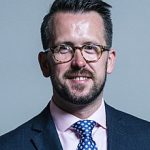
Tag: Stewart McDonald

  • Stewart McDonald – 2023 Speech on Unpaid Work Trials

    Stewart McDonald – 2023 Speech on Unpaid Work Trials

    The speech made by Stewart McDonald, the SNP MP for Glasgow South, in the House of Commons on 29 March 2023.

    I beg to move,

    That this House has considered the matter of the use of unpaid work trials.

    It is always good to see you in the Chair in Westminster Hall, Mr Hollobone. You will remember, because I think you might have been present, that I introduced in the previous Parliament a Bill to amend the National Minimum Wage Act 1998 in order to outlaw the practice of unpaid work trials. I will come back to the substance of that Bill, which is now a piece of history, but I want to begin with the genesis of this entire issue and why I decided to take it up as a Member of Parliament in the private Members’ Bills selection.

    There is a bubble tea company called Mooboo, which had an outlet in Glasgow that was offering unpaid work trials—the practice of inviting applicants to apply for a job and making them work for a trial period for which they are not paid. Although there are many variations on what an unpaid work trial looks like, this was perhaps the most extreme version that I have come across, because the applicants were invited to work for a full 40 hours without payment, at the end of which they were or were not offered a job. That is a particularly egregious and extreme example, but when I decided to take up the case on behalf of a constituent who went through that process, I started to find that this practice was rife and much more common than I had first thought. As I mentioned, it presents itself in many guises.

    Although that example is at the extreme end of the practice of unpaid work trials, there are many intricacies and differences in the way it presents itself. When I started to talk about this issue publicly and wrote to Ministers and His Majesty’s Revenue and Customs, I started to gather in my inbox various horror stories about the practice of unpaid work trials across the country. A study in November 2017 by Middlesex University and the Trust for London, called Unpaid Britain, shows that unpaid work trials contribute to about £3 billion in missing wages in the United Kingdom. That figure is six years old, and I do not know what it is today—perhaps the Minister has a better idea—but I would wager that it is probably higher now than it was then. Polling from YouGov shows that 65% of Brits say that such a practice is unfair and only 24% think it is fair.

    The way in which unpaid work trials present themselves is often different, as I mentioned, but it is none the less insidious. Quite often an applicant will apply for a job where the trial period may be an hour or two, so that they can come in and show what they are made of—whether that is in a restaurant, a cocktail bar, a hotel, a retail setting or whatever it might be. I discovered that quite often those trials were being offered to applicants for jobs that did not actually exist. Applicants were being exploited to cover staffing shortages and busy periods, such as Christmas trading. Those poor people had often spent hours applying for jobs, sending in CVs and filling out application forms, often going through the soul-destroying process of hearing nothing back. They were being invited to unpaid trials for jobs that did not exist, that were never going to materialise and that they would never be offered.

    I suspect the Government position is the same as it has always been—that legislation is not required. I think we can all agree that that it is an egregious thing to ask somebody seeking employment to go through. It is fraud; it is morally fraudulent and must almost certainly be legally fraudulent—except it is not. I have no ambition to relitigate the Government talking out my Bill. The Minister who did so is no longer a Member of Parliament, and I am, so I like to think I won that fight with that Member at the time. When I talked to Ministers and officials about this at the time, we all agreed it was an abhorrent and unacceptable practice, but the Government position was that legislation was not required to fix it.

    I would say to the Government today that the fine guidance they produced for employers on unpaid work trials has not had the effect that we all wanted, which was that they would not be used at all and certainly not used in the egregiously fraudulent way that I described. At the time, there was some good will on the Government side, among Labour colleagues and on my own side, which even in today’s Scottish National party environment still exists.

    The fact that the practice is still going on and partly contributing to billions of pounds in missing wages that people should rightfully receive—

    The Parliamentary Under-Secretary of State for Business and Trade (Kevin Hollinrake)

    I am listening carefully to the hon. Member’s speech, and he is making some very valid points. I agree that such behaviour is egregious. Is the £3 billion he quotes for unpaid work trials or unpaid work? There is an important difference between the two.

    Stewart Malcolm McDonald

    Yes—and no, in terms of the Minister’s final point about there being a difference. The unpaid work trials contribute to the figure of £3 billion. I am not saying that the trials are worth £3 billion, but the study by the university concluded that that was part of the bigger £3 billion picture. I confess I do not think there has been an updated study. I do not know if the Government have anything to share with us this afternoon. I would be amazed if that figure had not grown since that study was done six years ago.

    Among all the good will to try to stop this miserable exploitation, the Opposition and the Government arrived at different conclusions. I was of the view, supported by colleagues in the Opposition, that legislation was required —an amendment to the National Minimum Wage Act 1998—to outlaw the practice. The Government took the view that guidance was adequate, but it is not. It was proven not to be as recently as December last year in a court ruling. The ruling in Ms P Karimi and Ms C Patricio v. Fadi Ltd, published by His Majesty’s Courts and Tribunals Service on 2 December 2022, found that the claimant was entitled to the minimum wage for all hours worked during the trial period. Reasoning the judgment, the employment judge, Judge D Wright, stated that the

    “legislation does not give explicit guidance”

    as to how long these unpaid trial shifts may last.

    An exploitation had taken place, whereby someone had worked in an unpaid trial, and the tribunals service determined that they should have been paid for it, but the judge said that the guidance is not sufficient on the regulation of work trials. I am not against work trials. I entirely support an employer’s right to say to someone, “Come in and show us what you are made of. Come in and show us that you actually have the skills and experience that you set out in the interview process.” What I do not support is exploiting people for jobs that do not exist, or for covering staffing shortages and doing so for 40 hours, as in the extreme examples that I mentioned at the start of my remarks.

    Forty hours is an extreme and unusual example. What I thought I would find initially was that the norm would be two or three hours—half a shift or a morning. What I found more often than not was that the time was longer, and the physical experience of the unpaid work trial was demeaning. The number of people—mostly young people—who would work their unpaid trial shift and then just be left, not told whether they had a job, confused as to what was supposed to happen next, clearly tells us that better regulation of trial periods needs to be forthcoming from the Government. I do not think that that is too much to ask in this day and age. A fair day’s work for a fair day’s pay; it could even be said that it is a broadly Conservative value. It is something that even my colleague, the hon. Member for Glasgow South West (Chris Stephens) can rally around.

    Let us be clear about what my proposed legislation was not; it was not about banning trial periods, and it did not concern itself with things like unpaid internships. Although I find them objectionable, I felt that would require its own piece of separate legislation. The aim of my proposal—the banning of exploiting people through unpaid work trials—remains an entirely just one.

    Chris Stephens (Glasgow South West) (SNP)

    I thank my good friend and constituency neighbour for giving way. There is another way of dealing with this issue. As my hon. Friend will be aware, the Government have been promising an employment Bill for the last six years. For some reason it is yet to become a reality. Does he agree that if the Government were to put forward an employment Bill, that would allow both of us to table amendments to address this topic?

    Stewart Malcolm McDonald

    With all things around employment law, in my party I defer to my hon. Friend. He has a strong history of standing up for employment practices and a knowledge that surpasses mine when it comes to the detail of modern-day employment law.

    To conclude my remarks, I think the aim of my Bill —although I suppose it is now an ex-Bill—was entirely just and reasonable. It has been shown in the time that has passed since the falling of that proposed legislation that the guidance the Government produced, although perfectly sensible and reasonable, is not enough. I still get emails, as do many Members from across the House, from people who are being exploited by unpaid work trials or, worse, fake work trials for jobs that do not even exist.

    I will end with the example of a young Glasgow student, Ellen Reynolds, who petitioned Parliament a few years ago. She successfully gained the number of signatures required to have a debate in Westminster Hall on an unpaid trial shift that she was asked to take part in. There was no guarantee of a job at the end of it and she even had to buy here own uniform to take part in that unpaid trial shift. That is not an uncommon experience. All across Britain today, there are people working a couple of hours, half a shift, or half a morning —whatever it is—to show what they are made of, and they are not being paid for it, and they should be paid for it. They are not getting expenses for it, and they should be, at the very least.

    We have a quirk of the system here, where exploitation is rife. I would bet that every person who can hear the sound of my voice knows somebody who has gone through an unpaid work trial at some point in their life, especially if they know groups of young people. The Government and this House have a duty to bring this exploitation to an end. That would not cost industry enormous amounts of money. It would bring in a bit of regulation that is right and proportionate. It would give some dignity to applicants, and some dignity into the workplace that is currently missing.

    This is a small gap in the broad structure of employment law, but one that very much needs attention and could very easily fixed be with an amendment to the National Minimum Wage Act 1998. When the Minister gets to his feet today, I suspect he will not be able to furnish the House with new legislation, but I hope he will be able to say something positive on statutory changes to end the exploitation of unpaid work trials and closing that loophole, which at the minute means that people do not get a fair day’s pay for a fair day’s work.

  • Stewart McDonald – 2023 Speech on the Budget

    Stewart McDonald – 2023 Speech on the Budget

    The speech made by Stewart McDonald, the SNP MP for Glasgow South, in the House of Commons on 20 March 2023.

    Thank you, Madam Deputy Speaker. It is a sign that God is shining on the House to see you back in the Chair—healthy and feisty as ever, I am sure. You will recall that, when I joined the House in May 2015, Conservative Members would regularly cheer the Chancellor and various Front-Bench Ministers when they uttered the words “long-term economic plan”. That was the No. 1 talking point of the Cameron Government, but of course, as we have seen since that Government left office, the Conservative party had no such thing. Indeed, it is somewhat telling that, in last week’s Budget, the Chancellor stood at the Dispatch Box, content to let the applause wash over him because

    “the UK will not now enter a technical recession this year.”—[Official Report, 15 March 2023; Vol. 729, c. 833.]

    Such is the mess that the Conservative party has created that it is managing to celebrate a slightly lower level of decline for the economy.

    The Chancellor’s myopia is what worries me most, because he stood at the Dispatch Box like a sailor patching a leaky tap, not quite matching the moment in the way that one would expect from Britain’s Finance Minister. By stark contrast, the United States steams ahead with almost $400 billion of green subsidies to rewire its economy for the 21st century in the shape of the Inflation Reduction Act. The short-sightedness of this year’s Budget has instead condemned the United Kingdom to another year of falling living standards and slow economic decay. Closer to home, the European Union also announced bold and strategic plans in the shape of the Net Zero Industry Act, which will similarly mobilise billions and billions of euros to reshape the economy of the world’s largest single market so that it can produce at least 40% of the technology it needs in order to achieve its own climate and energy targets. While two of the world’s major economic powers set out plans to meet the moment, this Government instead celebrate—I quote again—that

    “the UK will not now enter a technical recession this year.”

    Rather than championing a bold economic plan to improve living and working conditions, the Chancellor—clearly unable to meet the moment—settled for tax breaks for research and development, urging us to cheer on his efforts to turn the UK into a life science superpower. While that aim is entirely laudable, and one that every single Member of the House could undoubtedly sign up to, the Chancellor needs to engage with the reality here in this country. As I mentioned earlier, the gulf between ambition and reality was summed up by the Manchester-based Nobel prize winner Andre Geim when he said that the reason that researchers are not staying in the UK or being attracted to the UK is the low living standards here. They can come here and suffer higher costs and lower salaries, or go elsewhere for better opportunities.

    That neatly sums up the running theme of this Conservative Government, who seem oblivious to the fact that firms and institutions are made up of human beings—human beings who need modern public services, a healthy public realm, and a Government who can offer them the prospect of a bright future. What the reality looks like has been mentioned in this debate: to quote Torsten Bell from the Resolution Foundation,

    “the worst parliament on record for living standards. By a country mile.”

    The numbers were laid bare in today’s Financial Times. The Office for Budget Responsibility is predicting that UK households’ real income per person will still be below pre-pandemic levels in 2027-28, meaning hardly any improvement in living standards for the better part of 20 years. Jumana Saleheen, the chief economist at Vanguard Europe, has said that, on three key measures of living standards—household income, gross domestic product per capita, and real wages—

    “we’ve seen stagnation over the last 15 years.”

    According to the Office for National Statistics, average UK real household income is broadly unchanged since 2007. Paul Johnson, the director of the Institute for Fiscal Studies, has said:

    “We are in the middle of a decade in which incomes are barely rising at all, with very feeble growth for two…decades.”

    UK wages adjusted for inflation increased by 23% in the eight years to 2008, but fell by 5% in the following eight years, again according to the ONS.

    Having the ambition to be a life science superpower is one thing. It is perfectly laudable, and all of us can agree and sign up to it. However, so long as we have living standards in this country that are grossly behind our western European counterparts—we have higher costs, higher prices, lower wages and a public realm that physically just does not work, if we are completely honest—the Government can completely forget being a superpower in anything other than a brain drain. If anything that Ministers have said from the Dispatch Box is to mean anything, they need to fix the living standards problem every household is dealing with.

  • Stewart McDonald – 2023 Comments on the Resignation Announcement of Nicola Sturgeon

    Stewart McDonald – 2023 Comments on the Resignation Announcement of Nicola Sturgeon

    The comments made by Stewart McDonald, the SNP MP for Glasgow South, on Twitter on 15 February 2023.

    Nicola Sturgeon is the finest public servant of the devolution age. Her public service, personal resilience and commitment to Scotland is unmatched, and she has served our party unlike anyone else. She will be an enormous loss as First Minister and SNP leader. Thank you!

  • Stewart McDonald – 2015 Parliamentary Question to the HM Treasury

    Stewart McDonald – 2015 Parliamentary Question to the HM Treasury

    The below Parliamentary question was asked by Stewart McDonald on 2015-10-27.

    To ask Mr Chancellor of the Exchequer, what assessment he has made of the quality of the information available for HM Revenue and Customs claimants to distinguish between genuine communications from Concentrix and phishing scams.

    Mr David Gauke

    HM Revenue and Customs (HMRC) undertakes a wide range of work to protect customers from websites which attempt to unlawfully obtain information. This includes:

    • maintaining a portfolio of domains which could be used to confuse customers
    • proactively monitoring the internet daily to identify sites which infringe on the brand, and taking appropriate legal action against them
    • providing a mailbox service for the reporting of suspected phishing emails and websites.

      HMRC’s pages on GOV.UK make clear that Concentrix works on behalf of HMRC, and that some tax credits customers will receive a letter showing both logos. Neither HMRC, nor agencies working for HMRC, will ever ask for online banking or other information via email or over the phone that would enable an unauthorised person to access bank accounts or otherwise commit fraud.

  • Stewart McDonald – 2015 Parliamentary Question to the Department for Environment, Food and Rural Affairs

    Stewart McDonald – 2015 Parliamentary Question to the Department for Environment, Food and Rural Affairs

    The below Parliamentary question was asked by Stewart McDonald on 2015-11-02.

    To ask the Secretary of State for Environment, Food and Rural Affairs, what assessment she has made of the effect on air quality of levels of emissions from motor vehicles.

    Elizabeth Truss

    We have been open about the difference between real world and laboratory testing for diesel cars and our modelling takes into account the gap between laboratory testing and real world emissions. The UK government is committed to taking action on emissions testing. We see real world testing as the ultimate solution and a vital step in tackling air pollution. The vote to introduce RDE in 2017 is an important milestone but we will continue to press at EU level for a comprehensive approach to emissions testing to restore consumer confidence and deliver our wider air quality and climate objectives.

  • Stewart McDonald – 2015 Parliamentary Question to the HM Treasury

    Stewart McDonald – 2015 Parliamentary Question to the HM Treasury

    The below Parliamentary question was asked by Stewart McDonald on 2015-11-18.

    To ask Mr Chancellor of the Exchequer, for what reasons the £2,000 employment allowance is not allotted to NHS dentists employed as independent contractors.

    Mr David Gauke

    The Employment Allowance is an annual cut of up to £2,000 from the employer National Insurance Contributions bill of businesses and charities throughout the UK. As announced by the Chancellor in his Summer Budget, the allowance will increase to £3,000 from 2016-17.

    The allowance is designed to back businesses looking to grow and take on new people by reducing the costs of employment. Where businesses are already funded wholly or mainly by the public sector, they already benefit from public funds and as a result are not eligible for the Employment Allowance.

  • Stewart McDonald – 2015 Parliamentary Question to the Department for Energy and Climate Change

    Stewart McDonald – 2015 Parliamentary Question to the Department for Energy and Climate Change

    The below Parliamentary question was asked by Stewart McDonald on 2015-11-18.

    To ask the Secretary of State for Energy and Climate Change, what steps her Department is taking to encourage energy providers to join the Warm Home Discount Scheme.

    Andrea Leadsom

    Participation in the Warm Home Discount Scheme is mandatory for energy suppliers with 250,000 or more domestic customer accounts. The scheme includes a provision which allows non-obligated energy suppliers to voluntarily provide rebates to a Core Group of low income pensioners.

  • Stewart McDonald – 2015 Parliamentary Question to the HM Treasury

    Stewart McDonald – 2015 Parliamentary Question to the HM Treasury

    The below Parliamentary question was asked by Stewart McDonald on 2015-10-21.

    To ask Mr Chancellor of the Exchequer, what assessment he has made of the effect on small investors of planned restrictions on the relief on finance costs for landlords of residential property.

    Mr David Gauke

    The government does not expect the restriction to tax relief for finance costs to have a significant impact on small investors, with only 1 in 5 landlords affected. Overall, the OBR believe the impact on the housing market will be small and, taking account of the other measures in the Summer Budget, have not adjusted their forecast for house prices. The Productivity Plan published alongside the Summer Budget will also increase the number of opportunities available to small investors. It includes a number of measures to make the planning system quicker, cheaper and more responsive to local needs.

  • Stewart McDonald – 2022 Speech on Climate Change and Human Security

    Stewart McDonald – 2022 Speech on Climate Change and Human Security

    The speech made by Stewart McDonald, the SNP MP for Glasgow South, in Westminster Hall on 3 November 2022.

    I am grateful. It is a pleasure to see you in the Chair, Mr Efford, and I congratulate the hon. Member for Bath (Wera Hobhouse) on securing the debate. It was a pleasure to be a co-sponsor—or whatever the correct terminology is—in the application to the Backbench Business Committee. Though the issue is serious, nothing says taking climate security seriously like the acres of empty green chairs before us on a Thursday afternoon in the House of Commons.

    Nothing says taking climate change seriously like, after being the host country for COP26—as was mentioned by my hon. Friend the Member for Glasgow North (Patrick Grady), from north of the Clyde; we were only too pleased to host that conference in my home city of Glasgow—a grudging Prime Minister sulking his way to Egypt for the COP27 conference. Nothing says taking climate security seriously like stripping the COP President and the Minister present today of their places in Cabinet. Indeed, if all that was not bad enough, even the King—a man who, in this country at least, is perhaps uniquely credible on the international stage on climate change and the environment—was banned from going to COP27, not just by the former Prime Minister, but the new Prime Minister. Come Monday next week, maybe a new Prime Minister will have changed that. As well as having a practically empty Chamber, I am willing to bet that this debate, which is scheduled to last 90 minutes, will not go the full way and we will adjourn early. [Interruption.] I can hear some challenges to that behind me.

    Turning to climate security, I know the Minister takes his portfolio extremely seriously and I do not aim this at him—in fairness, it may have been down to how the application was made—but it would have been good to have an FCDO or even a Defence Minister to respond to the debate.

    Richard Foord (Tiverton and Honiton) (LD)

    Does the hon. Member agree that the failure of the UK Government to invest properly and sufficiently in renewable energy in recent years has damaged our ability to see security through the lens of human security, rather than what matters to Governments? Does he agree that the £4.5 billion of energy exports to the UK that Russia profited from last year emboldened that country to sustain its traditional state-centric view of security and, in that sense, has exacerbated climate change?

    Stewart Malcolm McDonald

    I agree with the hon. Gentleman and will come to some of those points in turn. I want to speak about how I view climate security and where it fits in the broader issue of the security strategy across Government. We can learn great lessons from countries such as Sweden, which follows what is called a total defence concept, where the dynamic and changing threat picture that countries and national Governments face is given commensurate space in their national security strategy. Whether that is the hard military invasion, a pandemic, a shock weather event or a virus, the dynamic threat picture is represented in that national security strategy.

    As my party’s spokesperson on defence, I have found it difficult to criticise the MOD over the past 10 months, not least in what it has done to support Ukraine, as have many Members across the House. However, we now have a situation where the integrated review, which can only be two years old, was going to be reviewed and then was maybe going to be reviewed, and I understand that it will now definitely be reviewed under this Prime Minister. We have an opportunity to get this right and give climate change and climate security the representation it deserves in the overall national security posture of the UK. I have an interest in this as a Scottish Member of Parliament. There are unique factors about climate change for our part of the country but, as hon. Members have said, this is a matter for the planet as a whole. In thinking about how we work on that, there are three key areas when it comes to defence and security. Climate change is a threat multiplier. The secretary-general of NATO, Jens Stoltenberg, gave an eloquent speech earlier this year on how that threat multiplier can and should be taken seriously by NATO member states. Indeed, it runs through NATO’s strategic concept, and NATO is one of the twin pillars of European security.

    The second pillar is the European Union’s strategic compass. Traditionally, the European Union has not done as much in the area of defence and security, but it is doing more. When NATO leads on hard security—military security—the European Union absolutely complements it as the second twin pillar for things such as disaster management and resilience, and for dealing with climate change and other shock events that its member states will experience. That makes the case for the British Government to take off the blinkers and pursue a comprehensive defence and security treaty with the European Union in which it can partner with a major role-setter. About half a billion others on our shared continent can partner on a strategy for climate change.

    Even more importantly, the European Union can help pursue a strategy that gives the global south its rightful place at the table. For all the experiences we have in this country—whether it is in the high north of Scotland, or the extreme weather in July this year—those in the global south feel ignored not just on climate, but on much else. To see the manifestation of that, we only have to look at the votes at the United Nations in condemnation of Russia and in support of Ukraine. Across the global south, the pattern of abstentions and voting against the interests of European and Ukrainian continental security, or against sanctions on the Russian regime being deepened and widened, is a product of our ignoring the global south for far too long.

    I will end by talking about an issue that the hon. Member for Glasgow North rightly mentioned: climate scepticism. I want to go slightly further and talk about climate disinformation. We will all be asking our constituents to do more as we try to achieve our climate goals. We will be asking them to do more now, as the cost of switching on the boiler and leaving on the lights goes up and up and up. What an opportunity there is for climate deniers, sceptics or whatever we want to call them to pursue political strategies, much like we have previously seen in other policy areas in this country and elsewhere, not least the United States. What an opportunity there is to pursue disinformation strategies against what is a major threat to the people on this planet: climate change. What an opportunity there is for those on the extreme right—I certainly do not include the Minister in that—to sow disinformation, increase polarisation and set democratic countries off course in what they have to do on climate change. That is why it is really important that we have a national strategy to counter disinformation on this issue and much else, and that we build as much information resilience as possible across the population.

    Wera Hobhouse

    Is it not true that we really need unmitigated support from the Government? Otherwise, we will not tackle the immense problem that we are facing.

    Stewart Malcolm McDonald

    Yes, and that is perhaps a neat way for me to conclude my remarks. We do need that support, and we need all the parts of the state architecture working in concert with devolved Governments, the private sector and many other actors to pursue a national strategy for robust climate security that is at the centre of a broader national security strategy that works in concert with European and NATO allies and gives the countries of the global south their rightful place at the table.

  • Stewart McDonald – 2022 Speech on Ukraine

    Stewart McDonald – 2022 Speech on Ukraine

    The speech made by Stewart McDonald, the SNP MP for Glasgow South, in the House of Commons on 22 September 2022.

    I am grateful, Madam Deputy Speaker.

    I nodded along in agreement with much of what the former Prime Minister, the right hon. Member for Uxbridge and South Ruislip (Boris Johnson) said. I think it fair to say that when the February invasion took place, he and his Government, particularly the Defence Ministers on the Front Bench today, got the calls on Ukraine right. It is important to acknowledge that. Based on his remarks, I think he will do well in his new role as my warm-up act here in the Chamber.

    I pay tribute to the new Under-Secretary of State for Defence—the hon. Member for Wrexham (Sarah Atherton), who is not in her place right now—and congratulate those colleagues who have managed to stay in position amid the many changes. I also wish the right hon. Member for Tonbridge and Malling (Tom Tugendhat) well as the new Minister for Security. He was formerly the Chairman of the Foreign Affairs Committee, of which I am a member; I think we will be in for various auditions for his replacement as this afternoon’s debate goes on.

    Before I come to the crux of my remarks, I should also draw the attention of the House to my entry in the Register of Members’ Financial Interests.

    It was a pleasure, just two weeks ago, to be back in Ukraine and back in Kyiv—with some colleagues who I hope we shall hear from this afternoon—a country and a city that I have come to know and love over a few years now. On this occasion I was there to attend the annual YES—Yalta European Strategy—conference, which brings together civil society, political leaders, military leaders, academics, and others from around Europe to discuss Ukrainian and European security. There were many facets to the fascinating set of discussions that we had during the two days that our delegation spent there. It was also a real pleasure to meet members of Ukraine’s armed forces—who have so heroically not just fought for their country, but fought for what we all stand for and have cherished since 1945—and of course, the man himself, President Volodymyr Zelensky, who, as the former Prime Minister said, embodies everything that is noble in Europe right now.

    Here we are, seven months on from this wave of a war that started in 2014, in which we have witnessed a level of barbarism and butchery that few of us could have imagined. Hospitals, schools and people’s homes have been the targets. We have seen, in Bucha and also more recently, evidence of some of the most heinous war crimes imaginable.

    Wera Hobhouse

    I did not have the opportunity to ask the former Prime Minister about his commitment to treating sexual crimes as war crimes. Can we all, on both sides of the House—including the hon. Gentleman—come together in viewing sexual violence as a war crime like any other?

    Stewart Malcolm McDonald

    Yes, I think we can come together and agree on that. I am sure that other colleagues will want to discuss it in great detail.

    So here we are, seven months on from this invasion, and—as was mentioned by the former Prime Minister—much in the world has changed. Sweden and Finland have joined NATO, unity among western countries is something like never before, and, indeed, unity in this House is something like never before. In fact, we may have been only partly joking with our Ukrainian counterparts, during a recent visit, in saying that supporting Ukraine might well be the only issue that unites this House. Given the noises coming from the new Government, I suspect that that will be even more the case, but it is important for that unity to be maintained and developed in support of Ukraine.

    Back in February the German Federal Chancellor, Olaf Scholz, told us that not just his country but all of Europe was at a turning point: a Zeitenwende, as they say in Germany. Seven months on, however, it seems to me less like a turning point and more like Gramsci’s interregnum, in which the old is dying but the new cannot yet be born. At the moment, we are in a messy flux. While I think that the unity of purpose that we have is serving us well to get through the tumult that we are going through and Ukraine is going through, I also think that there is much in our own record—the record of all of us in the House and across the west—that we need to assess, going back, yes, to 2014, but also to 2008. I have to say to the former Prime Minister that we should consider the issue of how Russian money has been treated in this country.

    I think it takes a lot to admit it when one has got things wrong, and I think it only fair that we, as staunch partisans at times, give our opponents the space to make that admission. It is easier said than done, but if the new world that is incubating in the messy time in which we are currently living is to be born, that is the way in which I think we have to approach it.

    There is another important point to be made. As the winter bites and energy prices go through the roof, and as what in some quarters has been called “Ukraine fatigue” may start to settle in, there is a particular group of people in society of whom I think we should be mindful: those whom the Germans call the Putinversteher, the “Putin whisperers”, who would seek to apologise for, or contextualise, or somehow make excuses for Russian “legitimate” interests in Ukraine. They should be thoroughly ignored. Since the February invasion, they have, temporarily and rather embarrassingly, been silent, but they are undoubtedly starting to rear their heads again.

    Dame Nia Griffith (Llanelli) (Lab)

    Does the hon. Gentleman accept that many of those people are being fed by Putin’s cyber-warfare and that this country and our allies really need to invest in counter-offensive material?

    Stewart Malcolm McDonald

    Yes, I agree. The hon. Lady is absolutely spot on. One of the most insidious arguments from that particular group—and they can be found on the extreme left or the extreme right, in every country and in Parliaments, National Assemblies, the media, think-tanks and elsewhere—is that we should stop arming Ukraine. I am sure that I speak for everyone that I was in Ukraine with recently when I say that we could see and hear up close what a difference arming Ukraine is making.

    That support has to continue for three main reasons, which I will outline as briefly as possible. First, I do not believe that it is possible to negotiate with Vladimir Putin. We should look at his record not just in Ukraine right now but in Georgia and Syria. This is a Government who practise the famous double-tap strike, whereby the Russian armed forces hit an area, wait for the first responders to arrive and then hit it again. I do not think that it is possible to negotiate with a regime that carries itself in that way.

    The former Prime Minister is absolutely right to say—this is another important point—that anything we do going forward has to be on President Zelensky’s terms. Ukrainians do not want to negotiate with the regime in the Kremlin. We only have to look at the sheer joy on their faces when Ukrainian armed forces turn up in their towns and villages to liberate them and save them what has been experienced in Bucha, Mariupol and Kherson. The emotional scenes that we have seen and, I am sure, will continue to see tell us that we have got our support for Ukraine right. They should also put paid to the ideas of extremists—that is the only way to describe them—who would seek to divvy up Ukraine on a map. I would love to hear them tell me which towns they would like to see handed over to the Kremlin.

    When we were in Ukraine, we met a young 15-year-old guy and his father. I am sure that Members will have read about Andriy Pokrasa and his father. When Russians were surrounding his village, he had the bravery and ingenuity to launch his own drone into the air to take photographs of Russian positions and send them to the Ukrainian armed forces. Members can imagine what happened to those Russian positions soon afterwards. He is now back at school studying. It was an honour to meet him. I would love to see one of these armchair extremists tell him that he should instead have gone out and negotiated with the Russians at the end of his street. Imagine what would have happened had he been caught. They knew the danger, but still they did everything they could to defend not just their own hometown but their country as well.

    Lastly, the war is not just a war on territory. It is a war on values, liberalism, democracy, sovereignty and everything that we have cherished since 1945. I do not think that that is the kind of thing that can be negotiated away lightly. The Putin whisperers must be ignored. They must feel the complete contempt of those of us who want to see Ukraine win. The war could stop tomorrow if Russia stopped fighting, but if Ukraine stops fighting, the country will cease to exist. A Russian victory would be a disaster for everyone in Europe, and it is something that we should not even consider. Russian soldiers and now this latest group of conscripts will be fighting solely for their wages, while Ukrainian soldiers fight for their future and for ours. We all remain united in this House. Ukraine must win. We must continue to support them. And it is in that vein that I offer that support to the Government this afternoon.