Tag: Steve Brine

  • Steve Brine – 2023 Speech on NHS Winter Pressures

    Steve Brine – 2023 Speech on NHS Winter Pressures

    The speech made by Steve Brine, the Conservative MP for Winchester and Chair of the Health and Social Care Select Committee, in the House of Commons on 9 January 2023.

    There is no doubt that, in some places more than others, patient flow in acute hospitals is the issue gumming up the system, and the Secretary of State is right to say that demand far outstrips supply, in part because of the very high flu numbers. Today’s injection of funding is very welcome as is the additional surge capacity the Secretary of State spoke about in his statement. His mention of prevention is especially welcomed by me; let us do so much more on this. Another £250 million is a lot of the public’s money. What real-time oversight does he have to ensure that NHS England spends it wisely, and may I make a plea that domiciliary care is not overlooked, because the lack of care in people’s homes is every bit as much the enemy of patient flow as the lack of care home places that he has identified today?

    Steve Barclay

    My hon. Friend raises an important issue about getting flow into the system, not least because delays in ambulance handovers lead to the highest risk in what is a whole-of-system issue where the patient is not seen and treatment is delayed. That is why flow through discharge is so important, because, while that often concerns the back door of the hospital, it is actually the pressure at the front door that is most acute. The Government recognised that in the autumn statement and that is why there was additional funding with the £500 million for delayed discharge. That has taken some time to ramp up, but we recognise that because of the flu there is an immediacy in the pressure on A&E that we need to address.

    My hon. Friend’s point speaks to one of the key lessons from the covid period. It is not simply about releasing patients from hospitals who are fit to discharge; it is also about the wraparound services provided for those patients so that they do not get stuck in residential care for longer, and they are still able to go home and get the domiciliary care packages. NHS England is focused on that so that they have the wraparound services alongside that discharge.

  • Steve Brine – 2016 Parliamentary Question to the Department for Education

    Steve Brine – 2016 Parliamentary Question to the Department for Education

    The below Parliamentary question was asked by Steve Brine on 2016-06-08.

    To ask the Secretary of State for Education, what guidelines her Department issues on inset days at schools in England.

    Nick Gibb

    This is a matter for schools to decide. We have empowered schools to lead the delivery of high-quality professional development for their teachers through the creation of the national network of teaching schools, and we are supporting this through the development of a new Standard for Teachers’ Professional Development. Decisions relating to teachers’ professional development rightly rest with schools, head teachers, and teachers themselves, as they are in the best position to judge their own requirements.

    The School Teachers’ Pay and Conditions Document specifies that teachers must be available for work for 195 days each year and that they may only be required to perform duties other than teaching pupils on five of those days. It is for schools to decide for themselves how best to make use of those five days, including whether they should be used for in-service training.

  • Steve Brine – 2022 Speech on the Government’s Preparations for Industrial Action in the NHS

    Steve Brine – 2022 Speech on the Government’s Preparations for Industrial Action in the NHS

    The speech made by Steve Brine, the Conservative MP for Winchester, in the House of Commons on 12 December 2022.

    With your indulgence, Mr Speaker, may I send our heartfelt sympathies to the parents of the little boys who have lost their lives in the west midlands overnight and say thank you to the emergency service workers, many of whom will have been from the NHS? I am sure they have done their best for those they pulled out and those they were unable to save.

    The Minister is right that we have an independent pay review process, but it seems that we are coming to an interesting junction point: either we believe in an independent pay review process, or we do not. We cannot be in a situation where everything is agreed until it is simply not, and then Ministers are negotiating pay. That is not what Ministers do.

    I am glad the Minister mentioned patients them at the end of his remarks. We must keep them as our focus. I have more information about my train services over the next few weeks than I do about health services. Is the Minister satisfied that patients have enough information about what is being affected and when, and how much it will impact on the backlog? I suspect none of this will help the workload pressures that are impacting our NHS.

    Will Quince

    I thank my hon. Friend for his question, and I echo his comments on the tragic events in Solihull, the boys who lost their lives and the heroic actions of those in the emergency services.

    My hon. Friend is also right to say that we have an independent pay review body, and we either agree and accept that that is the process, or we do not.

    On advice to the public, my hon. Friend is right that we have more to do in this space. Derogations are still being worked through with both individual unions and trusts. Patients should continue to call 999 as normal if it is an emergency and someone is seriously ill or injured. If they do not have life-threatening conditions, they should use NHS 111. Ambulances will still be responding to 999 calls. If patients have appointments, they should please turn up unless advised not to do so. He is right to make the point about communications, and I will be ramping this up when we know more about derogations.

  • Steve Brine – 2022 Speech on Cancer Services

    Steve Brine – 2022 Speech on Cancer Services

    The speech made by Steve Brine, the Conservative MP for Winchester, in the House of Commons on 8 December 2022.

    I beg to move,

    That this House has considered the Twelfth Report of the Health and Social Care Committee, Session 2021-22, Cancer services, HC 551, and the Government Response, HC 345.

    I am very grateful to the Liaison Committee for selecting this topic for debate in the Chamber today. We know that one in two people in the UK will develop cancer at some point in their lives. It is no exaggeration to say that this is an issue that affects everyone in the House—indeed everyone in the country in one way or another—and it has touched my life for the worse many times, as I will talk about later. That is why the Health and Social Care Committee produced a report on cancer services earlier this year, and I pay tribute to my predecessor as Chair, my right hon. Friend the Member for South West Surrey (Jeremy Hunt), for his leadership in producing that work. That awful statistic is also why I have made cancer a priority as the new Chair of the Committee.

    Our report found great strides had indeed been made in improving survival from cancer. Thanks to the tireless work of our scientists, researchers, doctors and nurses and others, including Ministers, over many years, more than half of people diagnosed with cancer now live for five years or more, compared with only one in three people 50 years ago.

    We also heard that cancer survival in England, and indeed in the rest of the UK, continues to lag behind comparable countries around the world. The International Cancer Benchmarking Partnership explains that just under 60% of people diagnosed with bowel cancer in England, for instance, will live for five years or more, compared with 66.8% in Canada and almost 71% in Australia. The pattern is seen in many other cancer types, including lung cancer, which, of course, took our great friend James Brokenshire last year; pancreatic cancer, which took my own father, who was diagnosed in September 2019 and was dead three days after the general election that December; and ovarian cancer, which has also touched my family and so many people.

    The charity Target Ovarian Cancer came to the House last month—my good friend the hon. Member for Washington and Sunderland West (Mrs Hodgson), who chairs the all-party parliamentary group on ovarian cancer, led the reception downstairs in the Churchill Room—and launched its pathfinder study, “Faster, further, and fairer”. The study notes that 4,000 women a year still lose their lives to ovarian cancer. I highly recommend that excellent report to Members.

    We know that one of the biggest reasons for the survival gap—I have just quoted some comparative figures—is that the NHS tends to diagnose fewer cancers at an early stage, when cancer is, of course, much more treatable. Early diagnosis is cancer’s magic key, as has been said so many times from these Benches. NHS England has set a target of diagnosing 75% of cancers at an early stage by 2028, compared with about 54% today. We say that achieving that would make a huge difference to outcomes. I agreed that target when I was the Minister with responsibility for cancer a few years ago, and I firmly believe that it is the right target to give more people the best possible chance of surviving their cancer. But we need to be much more ambitious and get upstream of many cancers—I will return to that point.

    Last month, Dame Cally Palmer, the excellent national cancer director who also works at the Royal Marsden, told us in a special topical session of the Select Committee that she remained “cautiously optimistic” that the 75% target would be met, and told us about some great progress being made on programmes such as targeted lung screening—we have all heard about the supermarket checks—which is diagnosing lots of early-stage lung cancers in the pilot studies and is showing great promise. Dame Cally’s optimism was not, I have to say, entirely shared by many of the experts who gave evidence to our inquiry on cancer services. John Butler, a specialist in ovarian cancer, thought it was “extremely unlikely” that the 75% would be reached, and Dr Jeanette Dickson, an oncologist, said the NHS was doing “very badly” against the target. That is a worry. Regrettably, we concluded in our work that the NHS is not on track to meet the 75% target, and that judgment was shared by the Committee’s independent panel of experts, who evaluated Government progress on cancer services.

    The Government said in their response to us that it was premature to say that progress towards that target is off-track, but the National Audit Office found that, so far this year, 56% of patients are being diagnosed at stages 1 or 2, which is the same proportion as when I made the target in 2019. Of course, that is below the level of improvement required to reach that three-quarters target of early diagnosis by 2028. I do not agree that it can ever be premature to call for more to be done to make progress on early diagnosis when failing to achieve the target could mean many hundreds of thousands of people missing out on early diagnosis and, of course, on a better chance of surviving their cancer and living for longer.

    The Committee heard extremely powerful examples of why it is so important to make more and faster progress on diagnosing cancers earlier. In December 2020, Andrea Brady’s daughter Jess died of stage 4 adenocarcinoma at the age of just 27 years old. Before her diagnosis, Jess had been passed from pillar to post, consulting repeatedly with multiple GPs and other clinicians before her mother was finally forced to pay for a private consultation just to get Jess a diagnosis. By that point, tragically, it was too late. Jess passed away in hospital three and a half weeks after she was diagnosed.

    Meeting the target of diagnosing 75% of cancers at an early stage would mean giving thousands of people a better chance of surviving their cancer, and thousands fewer families having to suffer such terrible losses. That is why we called in our report for the then promised 10-year cancer plan to kickstart progress on early diagnosis. We called for it to consider more radical proposals on how to diagnose more cancers at an early stage, and to include an associated workforce plan to reduce diagnostic bottlenecks in the system.

    Good work is ongoing, and I know that the Minister will talk about it later. New research, such as the NHS-Galleri blood test trial, could be transformative. Indeed, last month our colleagues at NHS England would not be drawn on whether there is a need for a new 10-year cancer plan, as previous Governments have promised. They seemed to imply that a new plan was not needed given the focus of the long-term plan on early diagnosis. I contest that. The consultation on a new 10-year cancer plan was responded to by the sector, charities, royal colleges and many other organisations, and it has set many hares running and created great expectation about a future cancer plan. We on the Committee—I see other Committee members here—are concerned about that. We are not hung up on plans, but in my experience of being a Minister, the NHS loves a plan, the NHS needs a plan, and critically, that would allow this House to see where we are against the plan.

    Achieving early diagnosis is not just about what NHS England can do from the centre. It is also about improving public awareness about the many signs and symptoms of cancer across all communities. It is about making sure that GPs have good systems in place for managing patients with possible cancers and are able, without barriers, to refer them on for tests. It is about the continuous improvement of screening programmes, and hard work—really hard work—in local areas to encourage people to come forward. Of course, one of the great promises of the new integrated care systems is to work with the cancer networks and alliances to deliver on that system of early diagnosis and prevention.

    Achieving early diagnosis is also about focusing research and innovation on developing new ways of detecting cancer—especially cancers that are hard to diagnose—and ensuring that the NHS is set up to roll out new tests quickly. I referred to Galleri earlier, and mentioned upstream cancer. Next year, we will do a piece of work that I loosely call “Future cancer”. It is, of course, important that we diagnose cancers early—that is the basis of my remarks. At the moment, however, we largely diagnose cancers and treat them when they are symptomatic, and we hope to catch those symptoms and treat them early. Many cancers, but not all, are preventable, and I am interested in future cancer. Where can we get upstream of this? Where can we use the NHS’s new genomics strategy? Where can we use biomarkers to get ahead of that? That poses big moral and ethical questions to us as a society, but that is no reason not to go there or not to have that ambition.

    All this is about making sure that there are enough staff and machines in the system to do even more tests and give many more people the best possible chance of being diagnosed with cancer at an early stage. The 10-year cancer plan should look again to make sure that the Government are truly pulling out all the stops to get to 75% early-stage diagnoses by 2028. I hope the Minister will confirm that the Government are still committed to doing that work.

    Early diagnosis means little if there is not sufficient capacity to provide people with the right treatments at the right time. Unfortunately, the latest data suggests that there has been a decline in the NHS’s ability to provide this treatment. While the vast majority of people do still receive timely treatment following a cancer diagnosis, in September nearly 10% of people waited more than a month for their first treatment following their diagnosis, compared with less than 5% in 2019. That is more than 2,400 people having to wait more than an entire month to begin their cancer treatment—more than double the number who were waiting that long two years prior. As the former cancer director, Professor Sir Mike Richards—a giant in this area—often says, when someone is waiting for a cancer diagnosis or treatment, it is not the 31 days that really matter, but the 31 nights. I know that people around the country will understand that.

    Grahame Morris (Easington) (Lab)

    I commend the hon. Member, the Chair of the Select Committee, on an excellent report and an excellent analysis of the problems and the way forward, but he referred to the latest cancer waiting times. It is timely that we are having this debate, because the new cancer stats have been published by NHS England today. They show that the position is worsening. In October this year, 39.7% of cancer patients waited beyond 62 days between urgent referral and cancer treatment. There is an urgency in addressing some of the issues that the Chair raises.

    Steve Brine

    Indeed. The reason why we had Dame Cally and Professor Peter Johnson, who is the national clinical director for cancer, into the Select Committee a couple of weeks ago is that the NHS has set itself a deadline of next spring—it was this spring—to get back to the 62-day wait. I have everything I have crossed that they can get there, but they need to make it happen. I know they are relentlessly focused on that, and the Minister is relentlessly focused on that, but we have got to help them get there.

    The Committee also heard about the challenges facing surgery and radiotherapy services, which makes it rather timely that the hon. Gentleman intervened on me at that point, as I suspect he will speak about it later. Professor Pat Price, who he and I are going to meet early in the new year, is a consultant oncologist at Imperial College in London. She told us that radiotherapy services were lacking staff and machines to be able to deliver the best possible care and that services were struggling to deliver the level of activity needed to catch up with the cancer backlog. I will let the hon. Gentleman expand on that a bit later. Professor Mike Griffin, professor of surgery at Newcastle University, also highlighted workforce shortages as a significant barrier to effective cancer surgery, but he also told us about the organisation of services. Because cancer surgery is often co-located within general, acute and emergency care, it can be subject to delay because of capacity shortage, and that was a particular problem during covid in some places, but not everywhere.

    My trust, Hampshire Hospitals, did a brilliant job to keep cancer surgery on track at all times by doing it offsite. I pay tribute to Alex Whitfield and her team at Hampshire Hospitals for the way they organised with Sarum Road private hospital in particular to ensure that patients continued to get their cancer treatment. Professor Griffin called for more ringfenced hubs to be developed so that cancer surgery can continue even when there are severe pressures on acute care, and I hope the Minister refers to that when she winds up.

    Growing the workforce, investing over the long term in machines and IT and reorganising services to create more cancer surgery hubs are all in the Government’s gift, which is why we recommended that they consider those actions in developing the 10-year plan. Without a wider focus on removing the barriers to the NHS delivering the best possible cancer treatments, the potential gains of earlier diagnosis might not be realised. Given the number of people presenting with suspected cancer at the moment—it is good that they are presenting, and many of them will turn out not to have cancer— if it is found that they do have it, we need to move on that. That is why treatment is the other side of the same coin.

    Just as further progress on early diagnosis will depend on research and innovation to develop new tests, improving cancer treatments will require new and more advanced techniques to be developed and implemented by the NHS. We found in the Committee report that the UK is a genuine world leader in research. There are unique aspects to the NHS that make it an effective partner for research organisations. We also heard that there are significant barriers to researchers accessing the data they need for quick and equitable patient recruitment to clinical trials and for staff having the time they need to take part in research. The Government have set out several steps they are taking to improve access to data and improve flexibility for staff wanting to take part in research, and that is welcome, but research by Cancer Research UK has found that the UK’s recovery from the pandemic in clinical trials continues to be outpaced by other comparable countries.

    NHS England told us that supporting clinical research into cancer is not its responsibility, so it is clear that a wider effort is needed to make sure that cancer research taking place in the NHS is well supported and aligned with the priorities for cancer services. That is another reason why the plan is important.

    Finally, we heard that there is significant variation in outcomes for people diagnosed with cancer, depending in part on the type of cancer they are diagnosed with, but also demographic factors. The Government told us that they would be addressing these differences through the levelling-up White Paper, but also through the health disparities White Paper, by addressing issues such as smoking and obesity, which are more prevalent in our more deprived communities.

    On that, there is a story in today’s press which suggests that Britain has the biggest increase in early onset diabetes in the western world. That is a huge concern. I am not suggesting that diabetes is cancer; I am saying that we have many suggested actions to reduce obesity around junk food advertising and stuff that follows on from the sugar tax. Much of that has still not been implemented. Rumours abound—there are always rumours around here—that the Government are seeking to delay junk food advertising restrictions until 2025. I hope that is wrong. I invite the Minister to respond to that when she winds up and, if not, to take that away.

    Maggie Throup (Erewash) (Con)

    Will my hon. Friend give way?

    Steve Brine

    I give way to somebody who possibly shares that view.

    Maggie Throup

    I agree 100% with his concerns about the potential watering down of the much-needed anti-obesity measures. Does he agree that it is important that we reflect what the public want? The public are in agreement with banning advertising on TV for particular foods that cause obesity. If we want to keep the public on our side, surely we have to follow their wishes, as well.

    Steve Brine

    I think that is right. The public are clear on this. I get that there are different views across this House and that there are those who disagree with much of the work that my hon. Friend and I did in government to push some of those measures on preventing obesity. I could agree with them, but then we would both be wrong. At the end of the day, obesity is a driver of diabetes, and obesity is a driver of certain cancers. We must take that seriously. Next year, the Select Committee will be doing a huge piece of work on prevention, and we will be returning to that. I hope that Ministers are aware of that.

    The recognition of the importance of health in the levelling-up White Paper is welcome, but without specific actions to address health disparities, this agenda will be at risk, so it is vital that the Government take up the prevention agenda again to stop people developing cancer in the first place. I hope the Minister will have some good news for us on that front, and I recommend that she returns to the prevention Green Paper that we published back in 2019, which contains lots of helpful ideas in that respect.

    Richard Foord (Tiverton and Honiton) (LD)

    On that point about health disparities and levelling up, I want to draw attention to the Royal Devon University Healthcare NHS Foundation Trust, which serves my constituency. The staff who work there do a fantastic job of cancer diagnosis but, given that the target for the number of people seeing a cancer specialist within two weeks is 93%, it is tragic that only fewer than 60% of people who are served by that trust see a cancer specialist within two weeks of a referral. Does the hon. Member agree that we need to level across, as well as level up, and think about health disparities across the country?

    Steve Brine

    Yes, of course. I hate the term, but this should not be a postcode lottery. We do have integrated care systems and cancer networks, and good, strong, experienced MPs should be driving those local health economies to ensure that they level themselves up and make use of what is there in the system to deliver as well for their population as other parts of the country do. There could be a lot more sharing among us of how we use that ability as Members of Parliament to drive our systems. I do it in my area, and I am sure the hon. Member does it in his. I thank him for his intervention.

    There are issues of variation affecting cancer specifically, such as proper screening uptake among certain groups, lower referral rates for some cancers and in certain areas, and higher rates of less survivable cancers among more deprived groups. We called for NHS England and the Office for Health Improvement and Disparities to produce an action plan for addressing disparities in cancer and for the much talked about 10-year cancer plan to include a specific action schedule for rarer and less survivable cancers. That remains, for us, a vital aspect of improving cancer services, and we hope that the long-term cancer plan—should one arrive—makes that part of its work.

    Last month, NHS England made it clear to us that it was focusing on delivering the NHS long-term plan for cancer. In many ways, that emphasis on delivery is welcome. The programmes being implemented as part of that work are positive, and I have covered some of them today, but recent research from the International Cancer Benchmarking Partnership has shown that national cancer plans are worth far more than the paper they are written on. The ICBP found that the countries that have made the biggest improvements in cancer since 1995 are those that have ambitious, detailed and costed plans for improving cancer services that are open to scrutiny by those whose job it is to do that—namely, us. Denmark and England used to be at the bottom of the league table for cancer, but thanks to consistent national cancer plans with associated long-term investment, the Danes have made rapid improvements, and they now leave us lagging behind.

    In conclusion, the Health and Social Care Committee’s report on cancer services found that there are many areas where the Government and the NHS are doing really good work and using the unique benefits of our national health service, but there are too many other areas where we can go further and faster to improve cancer services and outcomes. I hope the Minister will confirm that the Government intend to do so through the promised 10-year cancer plan.
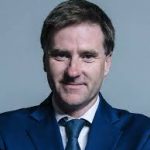

  • Steve Brine – 2022 Speech on the NHS Workforce

    Steve Brine – 2022 Speech on the NHS Workforce

    The speech made by Steve Brine, the Conservative MP for Winchester, in the House of Commons on 6 December 2022.

    It has been interesting to hear the exchanges between the Front Bench speakers, although I am surprised that there are not more Members in the Chamber for what is a very important debate. [Interruption.] Actually, where are they on both sides of the House? Given that this is the No. 1 priority of the Opposition, where are they?

    Richard Burgon (Leeds East) (Lab)

    Is it not the hon. Gentleman’s No. 1 priority?

    Steve Brine

    Without the heckling from the back row of the Labour Benches, I can say that this has always been my No. 1 priority.

    Back in July, the Health and Social Care Committee, which I now chair, published a crucial report entitled, “Workforce: recruitment, training and retention in health and social care”—I urge colleagues across the House to take a look at it, if they have not already done so. We looked at workforce issues right across the NHS, and the findings were stark. The report found that the NHS workforce is facing the biggest challenge in its history. It made the same point about the social care workforce. Although social care is not the focus of today’s debate, it is important to stress, as others have during today’s opening exchanges, that the two sectors are closely intertwined and the workforce problems in the NHS cannot be considered in isolation.

    We had NHS Providers before the Select Committee this morning to discuss the industrial action. I asked them whether they support the independent pay review process. I would have intervened on the shadow Secretary of State with that question, but his speech had already gone on for an hour, so I thought he deserved to sit down. More than 1 million NHS workers under Agenda for Change have had, as the Secretary of State said, a £1,400 pay rise this year. That has come out of the independent pay review process. The question I asked NHS Providers this morning, to which the answer was yes, was: do they still believe in the independent pay review process?

    Either we have that process, we believe in it and we respect it, or we do not. Are we saying that we have that process and it sticks until something else comes along? If Ministers then become directly involved in negotiating pay for NHS workers, that is a very different proposition. That is not the place we want to be, although the Select Committee is very happy to scrutinise that proposal if it is coming from the Treasury Bench. I would be interested to hear in the winding-up speeches what the Labour party’s position is on the independent pay review process, because it is independent for a reason.

    The Committee’s report cited research by the Nuffield Trust suggesting that the NHS in England could be short of 12,000 hospital doctors and more than 50,000 nurses and midwives. The number of people on a waiting list for treatment rose to a record of just over 7 million in September, and the 18-week target for treatment has not been met, as is well known and is on the record, since 2016. Yet, as our report noted, the demand on the sector continues to grow relentlessly. There are estimates that an extra 475,000 jobs will be needed in health by the early part of the next decade.

    One of the Committee’s most urgent recommendations was that the Government should do proper workforce planning. We noted that without workforce plans that are independently verified and publicly available, there would be little confidence among the public, the profession or NHS workers themselves that the Government have a grip on the problem.

    I must say that the Select Committee has not yet had a Government response to our workforce report—it is a little overdue. The Secretary of State is on the Front Bench, and I know he is busy, but hopefully he will take that back to his officials. We look forward to receiving that response, because it is important that Select Committees get responses to reports in as timely a manner as possible, notwithstanding the fact that there has been a change of Administration.

    However, I am encouraged that the Government are paying attention to what the Committee recommended, and I was delighted to hear my predecessor in this role, now Chancellor of the Exchequer, say in his autumn statement that he agreed with himself—his words—and that the Government would now be publishing an independently verified workforce plan for the NHS for the next five, 10 and 15 years, something the Committee has long called for. The Treasury outlined that the plan would

    “include measures to make the best use of training to get doctors, nurses and allied health professionals into the workforce, increase workforce productivity and retention.”

    Excellent—that is progress.

    Questions remain, however—maybe the Minister can touch on this in her winding-up speech—about what the independent workforce planning will look like in practice. We need to know more about who will provide the independent verification once the work has been done. I understand the work has largely been done by the NHS, but we need to know who will be doing the independent verification, when it will be published and how regularly it will be reviewed. When we know that, we will look forward to talking to him or her in the Select Committee.

    Our report contained a number of other important and detailed recommendations about how to tackle the NHS workforce crisis. I do not want to go into all of them today—as I have said, the report is on the record and published in the House—but among them I wanted to highlight the radical review of working conditions that was touched on by both the shadow Secretary of State and the Secretary of State.

    Work conditions are critical. We talked about the need to reduce the intensity of work felt by so many people in the service—which I hear about both as a constituency MP and as Chair of the Select Committee—and the need to boost retention and of course recruitment of people who are looking at where they might work when they have done training. We recommended that the review should start with an overhaul of flexible working, which would mean that NHS workers were not driven to join agencies or become locums to gain control over their working lives. I often hear those words, “We just need control over our working lives.”

    We also said it is a huge problem that senior doctors are being forced to reduce their working contribution to the NHS or to leave it entirely because of the long-standing problem around pension arrangements, which was a problem when I was a Minister in the Department. We accept that the Government have made some progress on pensions, with changes to the taper rate and the annual allowance, and credit to them for that, but we note that the problem persists and have called on the Government in our workforce report to address it.

    In that context, to give credit where it is due, I was very pleased to see on Monday that the Government have announced plans to amend NHS pension rules to retain senior doctors and encourage staff to return from retirement. The Secretary of State was slightly mocked when he said that was subject to a consultation, but that is how government works. If the hon. Member for Ilford North (Wes Streeting) were to become Secretary of State—I like him very much, but I hope he does not—he would also publish consultations, because that is how proper government is done, and he knows that. We look forward to seeing the Government response to that consultation, which I know the Secretary of State is keeping a keen eye on.

    The Secretary of State is right to say that there are a record number of doctors in training, with five new medical schools, two of them focused on training GPs. That is true, but the Select Committee will return to our workforce work next year, and we will be taking evidence from anyone who wishes to contribute about the cap on training places. I have said to Ministers and to No. 10 that I think the Government are going to have to look again at that issue. I hear in my constituency from bright young boys and girls who wish to train as medics, whose parents have maybe worked in the profession and who have that ambition for themselves. The cap is a problem.

    My other point is about demand. We had somebody from the British Medical Association’s GP committee before the Select Committee this morning, as part of our ongoing inquiry into integrated care systems, who was talking about the NHS being underfunded. That depends on which end of the lens we look at, does it not? We spend £150 billion or so of taxpayers’ money on the NHS. We could spend £300 million; that would be a choice. We would have to fund it, of course, because we know what happens when people make unfunded spending pledges from the Dispatch Box—the markets go into meltdown, and rightly so.

    We need to have a serious and honest conversation with ourselves about how much of our national wealth we wish to spend on our health service and whether that would achieve the desired outcomes. We are the fifth-largest spender on health services in the OECD, but we do not get the fifth-best outcomes. I can give the House a bit of an exclusive here, because in the new year the Select Committee will be launching a big inquiry into prevention. Anyone who knew me when I stood at the Dispatch Box as a Minister will know that cancer and prevention are the two things that most get me out of bed in the morning, so we will do a big piece of work on prevention.

    My view and the view of many others is that the NHS will have long-term sustainability challenges if we do not get serious about prevention. I do not just mean returning to the argument around obesity and all the things I wrote about in the child obesity plan when I was a Health Minister, although they are important and I urge the Government not to backtrack on any of those policies but to implement them, because weight is a major problem in our ill health. We need to get upstream of ill health.

    I will say more about this in the debate in the House on Thursday, but when the Committee returns to cancer work, we must look at future cancer and at getting upstream of cancers. At the moment, we want to diagnose quickly, but people have to have symptoms in order to be diagnosed quickly and then we need to treat very quickly as well, within the 28-day standard. The Secretary of State and I have talked several times already about how we need to get far ahead of that.

    We need to bring together predictive medicines, biomarkers and some of the life sciences work that is going on with the NHS’s genomic strategy, and get ahead of some of the illnesses that drive ill health in our country. Without that, in my humble opinion, the NHS has long-term sustainability problems.

    Emma Hardy

    This is a perfect point for me to lobby the hon. Gentleman on also looking into diagnosis times for people with endometriosis, who are waiting on average seven and a half years to receive a diagnosis, and women’s health treatment generally. That would be a wonderful inquiry for his Select Committee to look into and take under observation.

    Steve Brine

    Duly lobbied, thank you. The hon. Lady has mentioned this to me many times before; I take the point on board and other members of the Committee in the Chamber will have heard her too.

    In all the work that we are doing on the Select Committee, whether on ICSs, prevention or cancer, or the work done by my predecessor chairing the Committee, workforce is without question the common theme that runs through all of that. We cannot get away from that. I think there are encouraging signs that the Government are listening to the Committee, and of course we have a great advocate in No. 11 Downing Street and in the Secretary of State, who I was pleased to see reappointed to his position.

    I urge the Government to continue to listen to the Select Committee. We are a cross-party Committee, looking at things in a sober, calm, evidence-based way, and we look forward to the Secretary of State coming to see us soon to talk about these issues. The invitation is always there, as he knows.

    The workforce challenges that the NHS faces are the bottom line. Without tackling them, we are not going to move forward on many of the challenges that I know the system has. I welcome this debate; I hope we can keep it sober, keep the party politics out of it and focus on the NHS, because ultimately that is what our constituents demand of us.

  • Steve Brine – 2022 Speech on Early Years Childcare and Staff-Child Ratios

    Steve Brine – 2022 Speech on Early Years Childcare and Staff-Child Ratios

    The speech made by Steve Brine, the Conservative MP for Winchester, in Westminster Hall, the House of Commons, on 14 November 2022.

    It is a pleasure to see you and your pink hair in the Chair, Ms Harris. It is not often that is said in this Chamber. I thank the petitioners, including a number of my constituents, for signing the e-petition. I thank those in the Public Gallery who have come to watch, and, of course, Zoe and Lewis for being here today. They are very brave.

    I speak as constituency MP for Winchester, and in my capacity as chair of the all-party parliamentary group for childcare and early education. I will start with what I always say in these debates: early years education should be thought of and seen in terms of quality, not in terms of quantity. Investment early in a child’s life pays dividends later on as they move through the system. The impact upon a child’s future is priceless. Internationally, the UK has the second lowest level of Government investment in the early years, but the highest level of investment from parents. Thus, parents have every right to ask for the very best. I know that is what the early education professionals, whom I speak to all the time, seek to provide. I declare my interest in that I am married to an early years worker—so I had better be good.

    My view is that increasing ratios would have an adverse effect on that quality. Seeing as the ratios are where they are now, it is incumbent on those who propose to change them to explain why I am wrong in that thesis. The stated intention of the last Prime Minister and the Prime Minister before last to change the ratios—potentially abolishing them altogether—would not, as hoped for, improve flexibility or reduce the cost of childcare. Research from Coram suggests that a full-time nursery for children under the age of two costs almost 66%—two thirds—of a parent’s weekly take-home pay in England.

    As the hon. Member for Newcastle upon Tyne North (Catherine McKinnell) set out in her excellent opening remarks, if the proposed reforms are to save money for parents in the cost of living crisis—a perfectly sensible and laudable aim—the evidence to back that up has to be laid before us and the Government have to show their workings out. I am not deaf to those arguments; I am perfectly willing to hear them and happy to see those figures—but see those figures, I must.

    Early years settings have expressed concerns to me, and to those of us on the all-party group, that the relaxation of staffing ratios raises the risk of accidents for young children due to fewer staff needing to provide the same quality of care to a greater number of children.

    Vicky Ford (Chelmsford) (Con)

    I thank my hon. Friend for everything he does for the early years sector. I also give my condolences to Zoe and Lewis for their tragic loss. In my constituency of Chelmsford, people want to have outstanding childcare, and, like others across the country, they care about the safety of their children. As a mother who once had three under four, I know what tight ratios mean. But people are also concerned about the affordability of childcare. Does my hon. Friend agree with me that when looking at the issue of international comparisons on ratios, one should try to compare apples with apples? We have to look at not just the staffing numbers but the investment in qualifications. Does he agree with me that the Minister is right to look at rations, but needs to ensure that those comparisons are done on a level playing field, taking into account those other considerations too?

    Steve Brine

    I absolutely agree with my right hon. Friend, the former Minister. As set out in the opening speech, the situation is very different in Scotland; there are different qualification levels. Also, in Scotland practitioners have to register with the Scottish Social Services Council in order to work in early years, and they have to commit to continuing professional development qualification levels to do that. The hourly rate is also higher. I do think it is different. My right hon. Friend referred to having had three children—I only have two. Yes, it is about the qualification, but it is also simply a numbers game and about having eyes on the child. Our two children are 12 and 15 next week—it is a busy month—but when they were small, my wife and I would divide and rule. We had a 1:1 ratio. When we were looking after their cousins, the ratio went up and it was more challenging. Clearly, I am not suggesting a 1:1 ratio in early years education, but why on earth would we want to go the other way in a setting where children potentially spend seven or eight hours a day for five days a week? I question it but, as I say, show me the money. Show me the evidence, show me the workings out and show me the savings, and then we can make an informed judgment.

    There are concerns among providers and parents about settings having the capacity to support children with any additional needs, such as children with SEND, who may need more, rather than less, time with educators. I know the Minister will touch on this issue in her remarks. My fear, and that of providers and parents, is that a further ratio reduction would reduce the capacity and parental confidence even further, potentially driving more exclusion in early years education.

    Another point is that current staffing ratios reflect the requirements for facilities and space set out in the Ofsted framework, which is very clear. It would therefore be troubling if the Department contradicted the guidance of the official regulator. If we were to proceed with reducing staff to child ratios, do Ministers intend to consult on changing the Ofsted framework? Of course, that would require a statutory consultation.

    I have said that good early years education is vital to supporting our young people to develop, and Ofsted has identified children aged two to three as needing a particular focus on speech and language in order to build necessary communication skills for later in life. More children per staff member can only mean less time per child. Why is that particularly acute right now? Because of the pandemic, young children who started nursery in September do not have the socialisation skills that my children had in the years before they started in early years education, so I would suggest that that is even more important than ever right now.

    Let me give some figures. Some 52% of early years staff say their workload and a lack of work-life balance are a cause of stress or unhappiness for them. With the existing ratios, staff are under pressure—I hear that every night at home—and they tell me they are worried about the time they are able to give each child in their care. We face a staffing challenge in the early years sector, and staff are leaving the sector, with many choosing careers in retail with fewer hours but similar, or even greater, levels of pay. Data from the University of Leeds shows a post-pandemic net loss of workers from the sector above and beyond the usual churn of staff, and I often make the point that dog-sitters in my area are often paid more than the people who look after our most precious asset. Dogs are precious too, but they are not our children.

    On Saturday I was out in my constituency, talking to constituents. I spoke to a lady in Winchester who said that she was very worried about the nursery round the corner—I will not identify it, for obvious reasons—because it is losing the key worker who looks after her young daughter. It is really disruptive for her young daughter, and she is very worried about it. The nursery is losing that key worker because she is going to work in an office job, as she can get paid better and probably have a lot less stress. This is the reality of life. As the new Minister—obviously, she is a constituency MP as well—gets out and about, I dare to say that she will hear that more and more from the people she meets in the sector.

    I would suggest that increasing the number of children each member of staff is working with or responsible for will only increase the pressure and stress within the workforce, and more of these vital workers will leave the sector, which already faces a recruitment and retention crisis. That will drive up costs for parents and exacerbate the financial problems in the sector, with over 84% of providers telling the APPG on childcare and early education that they expect to operate at a loss or merely break even this year—up from just over half in 2018. Nursery and early education providers said it is more difficult to recruit, and some 20% of childminders told us that they did not think they would be working in the sector in six months’ time. Many of those people are concerned about working with new ratios, in what they regard as potentially unsafe conditions.

    One nursery worker wrote to me to say that the changes to ratios gave her “nightmares”; she said that the situation was like an episode of “Crimewatch”. Another said that she was “extremely concerned” about the additional pressure on staff, “both physically and emotionally”. I have seen figures that suggest that almost two thirds of practitioners could leave the sector if ratios went in the wrong direction. That is not just a figure; parents across the country will be unable to find good childcare and early education for their children to enable them to go to work and feed the workforce—a challenge in many other parts of the economy. This is not just a childcare story. Childcare is to the economy what social care is to the NHS. If we do not get this right, the economy will slow down, and heaven knows that right now we need the economy to speed up. We need growth.

    Staff are referencing workload, stress and burnout as key concerns. I am not defending the current way of working as being perfect—far from it. The all-party group that I chair has for a while been calling for a wholesale review of childcare and early education, and we will write to the new Chair of the Education Committee when they are elected on Wednesday to request that review. I have already spoken to some of those standing for that position, two of whom are in this room.

    In conclusion, we do not need a change in ratios. We need a wholesale, fact-based review of childcare and early education that focuses on the workforce, parents and, ultimately—the most important stakeholder—children. Our children deserve nothing less. I have already spoken to the new Minister, the Under-Secretary of State for Education, my hon. Friend the Member for East Surrey (Claire Coutinho), about the issue. I congratulate her on her position. She is a thinker and a serious person, and I really look forward to working with her. I respectfully ask her to meet my all-party group as soon as possible; we look forward to that conversation.

  • Steve Brine – 2022 Tribute to HM Queen Elizabeth II

    Steve Brine – 2022 Tribute to HM Queen Elizabeth II

    The tribute made by Steve Brine, the Conservative MP for Winchester, in the House of Commons on 9 September 2022.

    Madam Deputy Speaker, I concur with what you said after listening to our new sovereign King. What a privilege it was to sit here together in this House of Commons Chamber and listen to that address. It gives a whole new meaning to the expression, “Not a dry eye in the house.” He put it beautifully, as always.

    I want to say a few things on behalf of my constituents in Winchester and Chandler’s Ford. Yesterday was, of course, one of the saddest days imaginable. We have known it was coming for a while now, not least after yesterday’s comment from the palace on Her late Majesty’s health—something they never do—but the sense of shock we feel today is palpable. The sense of loss for our great country and the Commonwealth—I too was at the conference in Halifax, Nova Scotia, last month—is vast. This is a national moment but, as my hon. Friend the Member for South Dorset (Richard Drax) said, it feels intensely personal, and it is.

    Her late Majesty spoke movingly of her late husband, the Duke of Edinburgh as her “strength and stay”, as my hon. and learned Friend the Member for Cheltenham (Alex Chalk) said earlier, but the truth is that she was our strength and stay, and that is why we are going to miss her so greatly.

    I was extremely honoured to meet the Queen in 2012 at Buckingham Palace as a relatively new MP. We all lined up with our partners as nervous as one can possibly be, as those who were there will remember, but as so many have said—I have sat through pretty much every speech today—the nerves disappeared as soon as we interacted with Her Majesty, so we need not have worried. The Queen asked me which constituency I represent, so I said Winchester, and we briefly discussed how the city was—still is—searching for the remains of King Alfred, our favourite son. The Queen loved that and, with that trademark smile and much-mentioned twinkle in the eye, said, “They’ve just found one of my ancestors under a car park in Leicester!” It was not untrue, as she was, of course, referring to the remains of Richard III.

    Our late Queen visited Winchester many times, including in 1959 to officially open Elizabeth II Court, the home of Hampshire County Council, and for the Maundy service in April 1979 in our great cathedral. It is the focal point of our county and the diocese and has been the scene of several services today and will be for many more over the weekend. We had the new King in Winchester just a few months ago to unveil—this is a mark of how he will wear the Crown—a statue of a famous Jewish figure in Winchester history called Licoricia. It was a pleasure to have him in Winchester that day.

    I often remind my constituents that Back-Bench MPs and maybe even some on the Front Bench—I have been there too—do not really have that much power, but we do have quite a bit of influence. The longer we do this job, the better we get at using it for the benefit of our constituents. Our late Queen, as a constitutional monarch, did not hold any executive power—in fact, she could not even vote—but boy did she wield great influence through her vast experience, about which we heard from her Prime Minister and her former Prime Ministers, her knowledge, and the respect she rightly commanded all over the world.

    There has been a lot of replaying overnight of the words spoken by the young Princess Elizabeth on her 21st birthday while in South Africa. The famous section of that speech was, of course, when she said that her whole life

    “whether it be long or short shall be devoted to your service and the service of our great imperial family”.

    However, a lesser-known passage of that speech reads:

    “But I shall not have strength to carry out this resolution alone unless you join in it with me, as I now invite you to do”.

    I have always been struck by that comment as incredibly revealing and brave, because I think our then future Queen was saying, “I don’t embody the divine right of Kings and Queens”—so fabled in British history—“I have to earn it and keep it. I need your support.” I think she reigned in that spirit every single day of her 70 years —never lost in the majesty of it all, like some of her famous predecessors, but always knowing that she had to draw that strength from the support of her people and that she had to constantly be seen to be believed. Maybe those two famous appearances on the balcony of Buckingham Palace, at either end of that fabulous platinum jubilee weekend earlier this summer, showed that she knew that right until the very end. I am so glad that the country and the world had those incredible moments.

    We have heard a lot today about schoolchildren and how they ask us if we have ever met the Queen. I get that too. I was with a school here probably a decade ago, when I was a relatively new MP, and as we were leaving one of the schoolchildren said to me, “Mr Brine, can I ask you a question that I didn’t want to ask in front of all the other children?” I said, “Yes, of course”, and this young lad said to me, “How did God save the Queen?” I still maintain that that is the best question I have ever been asked. For those who want to know my answer, it was “That’s one for your teachers”; but maybe our late sovereign lady now knows the answer.

    As a Christian in this House, I believe that everyone—whether they live on the planet for a matter of hours, or for 96 hugely influential years as one of the most famous people ever to walk on it—changes our world by their presence in it. As others have said today, we are so, so lucky to have had Queen Elizabeth II in our lives. We are changed by it, and will evermore be so. So thank you, Queen Elizabeth II; it has been a privilege—and God save the King.

  • Steve Brine – 2021 Speech on Covid-19 Restrictions

    Steve Brine – 2021 Speech on Covid-19 Restrictions

    The speech made by Steve Brine, the Conservative MP for Winchester, in the House of Commons on 14 December 2021.

    Here we are again, and this time, two weeks on, the concept of “learn to live with covid” is as dead as anything I know. In July, we were told many, many times from the Dispatch Box, and from the podium in No. 10, that we were on an irreversible road map to freedom. Do we all remember that? I thought it was an unwise hostage to fortune when it was said, and so it has proved.

    When I vote tonight, I will consider the legislation before us. I completely agree with the hon. Member for Ellesmere Port and Neston (Justin Madders) that it should have been published long before this, less than 24 hours before the debate. That is why I did not tell anybody in the media how I was going to vote today—because I am rather old-fashioned and like to actually read the legislation before I decide how I am going to vote. I wish those on the official Opposition Front Bench had done the same. I look at the legislation and I also look at the intention behind it, so what is the intention here? Is it to stop omicron? Is it to slow the spread? That is clearly not happening now, so I guess the question we then have to ask is whether these four SIs are going to do that. Working from home is not in an SI; it is guidance. We are told that people need to work from home where they can, but they can meet the very same people in the pub that evening and every evening. Is that going to slow the spread? I do not think so.

    I abstained on the SI on mask-wearing two weeks ago and I will do so again this evening. I have no issue with wearing a mask. It does not impact on my life or on my freedoms. Many of my constituents have been wearing masks in plenty of situations, indoors and out, for a long time throughout the pandemic. I think it is a bit of a crutch, but if people believe that it makes them safer, that is fine. In many ways, it is an instrument of people feeling they are safe. Today’s SI says that we have to wear a mask in certain shops but not in pubs or in restaurants, and some of the exemptions make a mockery of it, but I will not stand in its way.

    On the covid passport, if we were to put aside the practicalities and the moral arguments, which I do not, and many of my constituents writing to me certainly do not, then a vaccine still does not stop people getting this and passing it on. Professor Whitty said to MPs on a call this lunchtime that there is a minimal impact on transmission with regard to all our vaccines.

    Last Wednesday, when the Secretary of State made his late-night statement, I expected him to bring forward a devastating piece of science that basically said, “The drugs don’t work.” That is not what he said; he said that we are moving to plan B on the basis of some modelling. We have SAGE’s gloomy predictions and yet a confirmation that vaccines do work with two jabs, even better with a booster. I completely agree. Today we have a study that says that the Pfizer vaccine has 70% efficacy against the omicron variant. Last Wednesday’s statement should have been about the national booster effort that was announced in the live TV broadcast on Sunday night. I cannot say how many of my constituents have contacted me furious at the frightening nature of that broadcast that sent their children off to bed terrified.

    If we truly mean the “learn to live with covid” mantra that we continue to hear, the booster campaign is 100% where our focus should be. We should be focusing on an ongoing plan to keep immunity high. We probably need a new primary care infrastructure, because “panic stations and cancel all else” is not a plan. Yesterday I spoke to three of the four primary care networks that cover my constituency. They are going to do their absolute everything to offer the booster to all eligible over-18s by the end of this month, but it will be really difficult. They are scrabbling around for venues in the week of Christmas. This is not the long-term thinking that we need.

    I am ambivalent about regulation No. 1400 on face coverings and I will not stand in its way. On isolation moving to tests, I will support that if there is a Division, although I suspect there will not be. However, if people cannot get the lateral flow tests, as they have not been able to today and yesterday, as I raised in an intervention on the Secretary of State, then we get the pingdemic anyway, so we need to sort that supply out. I will not support the vaccine passport because it crosses a Rubicon. Italy began in exactly this way saying that it was all about providing lateral flow tests, and I think it will move, and move quite quickly. On the mandating of health staff, I will support that to be consistent with the mandating of vaccines in the care sector. If you work in the health service, working with vulnerable people, surely you have to believe in science above all else, and there is a precedent because of hepatitis B. So it is a mixed bag for me: I will support some of the measures before us today but not others.

  • Steve Brine – 2020 Speech on Covid-19

    Steve Brine – 2020 Speech on Covid-19

    Below is the text of the speech made by Steve Brine, the Conservative MP for Winchester, in the House of Commons on 11 May 2020.

    I want to make three brief points. First, I welcome the Prime Minister’s statements last night and here today. For me, this is about making a balanced assessment of risk and learning to live with risk while exercising our judgment and—as the Prime Minister put it very well—good, old-fashioned British common sense about how our actions could impact our society and, yes, the NHS.

    I have to say that I am saddened by the different emphasis from different parts of the UK overnight, but nations will exit lockdown at different speeds, as the infection rate varies. That is fine; it is called devolution. If we could not cope with difference within the United Kingdom, we should not have gone down the road of ​devolution in the first place. Having questions and stress testing a political decision is right. That is our job here on the Back Benches. Constantly picking for political advantage, and having what I suspect is a far worse argument in public than in private, is not.

    Secondly, on the help offered, there has been a herculean effort on behalf of the Government on the furlough scheme and the self-employed help scheme. I welcome the fact that the latter is there as a safety blanket for over 90% of self-employed workers. However, that is not the case for those new to self-employment. I have a constituent who was made redundant less than a year ago and who put all his redundancy money into his new business. He is a wealth creator, but he is not eligible. If people are earning over the £50,000 profit limit—not a huge amount of money in many parts of the country—they are not eligible. Equally, if someone is the director of a limited company, they are not eligible. I understand that it is difficult, and as I have said to the Chancellor in this House before, the answer may be inelegant, but there has to be an answer. Her Majesty’s Revenue and Customs is not averse to taking back what it thinks has been wrongly claimed. We need to get help to people now.

    On the furlough scheme, I have to say that if we are to avoid the cliff edge as it draws to the end of its natural life, in its original form anyway, flexibility has to be the key—flexibility on the percentage paid perhaps, but only if that goes hand in hand with flexibility on the “no work while furloughed” rule; and flexibility on sectors, too, if the Treasury goes down that route. For instance, a food manufacturer in my constituency whose principal customers are classed as hospitality would be stuck between a rock and a hard place if the furlough scheme were withdrawn for manufacturing only. Flexibility must surely see the furlough scheme extended to hospitality businesses and their suppliers in that example. The Prime Minister hinted today about a statement from the Chancellor tomorrow on the furlough scheme, and I will be listening carefully.

    Finally, the Royal Hampshire County Hospital is in my constituency, one of Florence Nightingale’s original hospitals, and I cannot praise it enough. The leadership, under Alex Whitfield, and staff there—many are my constituents—have just gone, as always, above and beyond. We, the local MPs, have a weekly call with the acute sector, primary care, the commissioners and the director of public health for Hampshire, and they keep us beautifully updated on the work that they are doing. The progress on delayed discharge in my hospital has been nothing short of remarkable. My trust is down to single figures on its delayed discharge numbers, and that is unheard of. Why? Because we have flattened the division between the decision making and the money trail within the NHS. We must not, we cannot go back: if it is to be health and social care, we cannot go back. On cancer, we must remember the people who have not presented to the NHS during this pause. We do not want to ditch the 75% ambition on cancer in the long-term plan.

  • Steve Brine – 2020 Speech on the Coronavirus Bill

    Below is the text of the speech made by Steve Brine, the Conservative MP for Winchester, in the House of Commons on 23 March 2020.

    I echo what a beautiful maiden speech that was from my hon. Friend the Member for High Peak (Robert Largan). I will be rather novel and speak about the Bill. Before I do that, I want to say that the package announced thus far and in the Budget last week was incredibly welcome, but I echo what so many Members have said so far today: we need to deal with the self-employed next, please. Many of my constituents are desperate for the Government’s help.

    I rise to speak in support of the Bill receiving its Second Reading. Nobody wanted to be here, but it is an essential and urgent piece of legislation. We may be discussing the Coronavirus Bill today, but for some it is in large part the pandemic influenza Bill. I was very much involved in that when I was fortunate enough several years ago to be the public health Minister. The legislation will not make covid-19 suddenly vanish, as President Trump bizarrely proclaimed the other day, but it will help the state and our Government do what they have consistently stated is their primary objective, which is to protect the NHS and save lives.

    As the Secretary of State made clear, these are extraordinary times and these measures are being pursued as a result. I, too, have had lobbying this weekend saying that the Bill goes too far and is a disproportionate power-grab by the Government, but it is worth saying that these measures were not dreamt up on the hoof by the Secretary of State over the past week. The “UK Influenza Pandemic Preparedness Strategy 2011” sets out our preparedness for a severe pandemic. It was tested in 2016 through a major three-day exercise called Cygnus, which involved about 1,000 organisations and the devolved Administrations. It demonstrated a number of things that we do well as a country and a number of things that we need to improve upon, one of which was the drafting of the draft pandemic influenza Bill, which forms the basis of the legislation today.

    The scrutiny we are giving this legislation on the Floor of the House is not what we do in normal times, of course, but these are not normal times. Parliament needs to work swiftly and with deftness of touch to match what pretty much everyone else is doing right now. I am satisfied that the legislation is, as was always intended, time-limited. It makes it clear that it is neither necessary nor appropriate for all the measures to come into force immediately. What is more, the lifetime of the Bill, once an Act, can itself be ended early, if the available scientific evidence supports that, and we can extend the lifetime of the Act for a further temporary period if that is prudent.

    I want to home in on a couple of areas. Increasing the health and social care workforce is obviously mission critical, so the Bill introduces new registration powers for the registrars of the Nursing & Midwifery Council and the Health and Care Professions Council. That is absolutely right, but we need to hear from Ministers, ​as mentioned in the impact assessment, exactly how the Department of Health and Social Care plans to engage with the professional regulators to ensure that sufficient infrastructure is in place to allow the policy to be implemented.

    I note the sensible move to allow the early registration of final-year students studying to become nurses, midwives, paramedics and social workers. The Government’s assumption is that all 28,100 of the students estimated to be in their final year in England will be willing to join the register early. What evidence do we have that that is likely to be the case, and are the costs noted in the impact assessment covered so as to give the regulators total confidence that they can get on with this?

    I am pleased that the Department for Environment, Food and Rural Affairs holds responsibility for food supply, as a critical national infrastructure. It of course has to maintain our high standards, working with the Food Standards Agency, but I do not think the legislation goes far enough in protecting stock on the shelves. Like all of us, I have been contacted by hundreds of constituents in recent days, on many different subjects, but a consistent message is that what they are hearing from Ministers and the supermarkets about there being enough food is jarring with what they are seeing on the ground and, more importantly, online when they try to book a delivery slot.

    Of course, the Government are not to blame for the change in our food policy, from the policy of “Dig for victory” of the last century, backed up by local food networks, to the centralised distribution controlled by the big five supermarkets we have now, but how sad it is that we have literally put all our eggs in one basket, and that we are reaping what we have failed to sow now that we need it most.

    Richard Graham (Gloucester) (Con)

    My hon. Friend is making a very good speech on different aspects of the Bill. On his first point, about reassuring the self-employed, does he agree that no single scheme will be able to cover every single situation perfectly, and that the crucial point at this moment is the reassurance that something will be done to help everybody who is self-employed?

    Steve Brine

    Yes, I do agree. I understand why we have to do this through pay-as-you-earn first, because employers are making decisions about job losses this weekend, but I completely agree that we need to hear something from the Prime Minister on that. I understand that he will be addressing the nation this evening—we can probably all guess what is coming—when he could say something reassuring to the self-employed and to sole traders, which would be very welcome.

    Finally, on emergency volunteering leave, the provisions for which are set out in clauses 7 and 8, the unpaid statutory leave that the Secretary of State has mentioned is very welcome. Clause 8 states:

    “The Secretary of State must make arrangements for making payments to emergency volunteers by way of compensation –

    (a) for loss of earnings;

    (b) for travelling and subsistence.”

    Could the Minister tell the House at what level that might sit? There seems to be a norm of 80% for the coronavirus job retention scheme, so are we looking at the same for this? I think it is a smart move, as many of our volunteers come from the older generation, so we have to find a way of filling that gap.​

    We need ruthless, determined, collection action to protect the NHS and to save lives, combined with scientific progress. The Bill is part—only part, I have to say—of that national effort. I have listened carefully to the many voices lobbying us on the Bill over the weekend, but I am comfortable that it is a well-judged piece of legislation that will provide the powers needed to respond to the pandemic and the national crisis that we face.