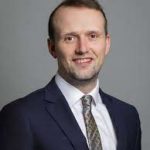
Tag: Stephen Flynn

  • Stephen Flynn – 2024 Speech on the Loyal Address

    Stephen Flynn – 2024 Speech on the Loyal Address

    The speech made by Stephen Flynn, the Leader of the SNP, in the House of Commons on 17 July 2024.

    I begin by congratulating the Prime Minister on his first King’s Speech. I am sure it is an incredibly important moment for him and his family and I wish him well over the months to come. I am sure it will be an incredibly challenging time, but I repeat my best wishes to him and all his new colleagues beside him on the Government Benches.

    I want to reflect first that, at Prime Minister’s questions on the day the election was called, I perhaps goaded the former Prime Minister in respect of calling a general election—indeed, I think I referred to him as being feart should he not do that. I am not sure entirely who out of the two of us fared worse from his decision to do so; maybe that is something we can both reflect upon in due course.

    The opportunity now in front of this Labour Government is enormous. They have a parliamentary majority that will go down in history, and that majority affords them something incredibly important: the ability to deliver change. What that change looks like, and perhaps more importantly what it feels like, for people in their homes is so important. My colleagues and I on the SNP Benches will do everything we possibly can to be as constructive as we can—[Interruption.] We will! However, I was a bit disappointed today, not necessarily by some of the things that were in the King’s Speech, but by some of those things that were not.

    In that regard, I bring the House’s attention to the amendment that my colleagues and I, ably supported by other Members from across the Chamber, have tabled in relation to the two-child benefit cap. That iniquitous, heinous policy was brought in by the former Conservative Government in 2015. Each and every one of us in this Chamber notes that it retains children in poverty—hundreds of thousands of children across these isles. In Scotland alone, it impacts 27,000 households and it is estimated that 14,000 children would immediately be taken out of poverty were it to be scrapped, but it was not mentioned in the Government’s programme for government today.

    Instead, all we have heard is that a taskforce will be created, with no timeframe for that taskforce and no indication when it will conclude. All the while, those children will remain in poverty. Surely it should be the bare minimum expectation of a Labour Government that they would seek to do everything they possibly can immediately to lift children out of poverty, and I am particularly interested in the views of Scottish Members of Parliament from the Labour party in this regard.

    Barry Gardiner (Brent West) (Lab)

    Could the hon. Gentleman explain to the House why the SNP Government in Scotland, who have the power to do that, have not?

    Stephen Flynn

    I would be more than happy to enlighten the hon. Gentleman in that regard. As he knows, in the UK, we have reserved policies and we have devolved policies, and some 70% of welfare policies are reserved to this Parliament. The Scottish Government have sought over recent years to mitigate the worst excesses of the Conservatives. With some £8 million-worth of money that we could spend on other things, we choose to mitigate Tory policies—including, of course, the likes of the bedroom tax; I am sure he would be keen to see those on his own Front Bench mitigate and end that particular policy.

    However, we do that within the confines of the financial remit set, in large part, by this place.

    If the hon. Gentleman is suggesting—and I am sure some of his Scottish colleagues would agree with him—that the Scottish Government should mitigate, he and the Government should outline where that money should come from. Should it come from Scotland’s NHS, our schools, our police or our budget for young people? The reality is that the constraints placed upon Scotland by this place do not afford us the opportunity to mitigate, and frankly, I find it absurd and deeply disingenuous to suggest that the remit of Scotland’s Parliament should be to mitigate Westminster. Our horizons should be so much greater than that.

    I return to the point that I was making. Scottish Labour Members supposedly agree with the Scottish National party that the two-child cap should and must be scrapped, so how will they vote? Will they follow the lead of their Prime Minister in London, or will they follow the lead of the leader in Scotland and respect the views of the people they were sent here to represent?

    Despite my great disappointment, there is one area in which I hope the Prime Minister can put a smile on my face: GB Energy. I am moderately surprised that we have not yet had an announcement that it is to be headquartered in Aberdeen—perhaps in the Aberdeen South constituency that I represent. Indeed, Aberdeen and Grampian chamber of commerce hired a van that has been patrolling the streets outside Parliament today calling for it to come home—that is the only time I will ever use those words—and it should come home straight to the energy capital of Europe.

    Although I would welcome GB Energy’s placement in Aberdeen, I also want to see much more detail about what it will deliver. If I have read correctly, a cumulative £8.3 billion will go towards GB Energy over the next five years—£1.6 billion each and every year—but one hydro pump storage project in Scotland would almost blow that entire budget apart. We know that GB Energy will not sell energy, we know that it will not distribute energy, and it appears that it will not generate energy. It has been suggested that it will be an investment vehicle for projects to go forward, but if it is capped at £1.6 billion a year, I must question the Government’s ambition. How does that deliver the change that is required? The change that they previously agreed to requires some £28 billion each and every year. What a contrast with the ambitions that they once had. Of course, net zero will be absolutely crucial to our economic future—to the growth and prosperity that we all want—but ultimately that growth can come about only through productivity.

    I would like to hear more from the Labour Government, who have a significant majority, about what they will do to reverse some of the Conservative party’s policies on migration. Migration dramatically and drastically impacts on higher education institutions in Scotland and in the constituencies of each and every Labour Member. We know that universities are a key driver of productivity. I wish to seek consensus across the House on migration, which might be moderately difficult given some of the people who now sit behind me. We need to stand up and be bold and brave in the face of those who seek to demonise migration and other those who come to work in our public and private sectors, care for us in our hospitals and teach our children. We should seek to increase migration, increase our economic output, grow our economy and enhance our communities. Brave politicians would do that, and I hope that Labour Members share that bravery.

    Of course, our economy is not just about net zero, productivity or migration; it is also intrinsically linked to our relationship with the European Union. I look forward to seeing what the Government come forward with in respect of their proposed new relationship with our friends and allies in Europe. We should be seeking to rejoin the European single market; we should be seeking to rejoin the European customs union. It makes sense to all of us. The politicians in this House are afraid of doing so, but they will come to realise that the only way to achieve the aims that they want to achieve is to do just that.

    On all those issues and so many more, we will seek to be a voice of reason in this House and to work constructively with Government Members. Over the coming hours and days, I look forward to hearing their contributions and what they intend to bring to our national discourse, as we all try to improve the lives of the people who we are so fortunate to represent.

  • Stephen Flynn – 2024 Speech in the House of Commons at Start of New Parliament

    Stephen Flynn – 2024 Speech in the House of Commons at Start of New Parliament

    The speech made by Stephen Flynn, the SNP MP for Aberdeen South, in the House of Commons on 9 July 2024.

    Thank you very much, Mr Speaker-Elect. I wish to begin by welcoming all new Members to the Chamber, in particular those from Scottish constituencies. There are probably a few more new Members from Scottish constituencies than I would have liked, but I look forward to working constructively with them to deliver in the best interests of the people we are all so fortunate to represent.

    To you, Mr Speaker-Elect, I think it is safe to say that you and I did not always see eye to eye during the course of the last Parliament. But in politics, and in life, it is important to let bygones be bygones and to focus on the future. Events of that time showed us that we have quite a lot in common, both then and at the general election, because despite the best efforts, and indeed the best intentions, of certain people, we both managed to hang on to the seats that we hold so dear. I look forward to working constructively with you over the coming weeks, months and years, to allow us to best represent the people we respect and the finest traditions of this House.

  • Stephen Flynn – 2024 Speech on Ceasefire Vote Controversy in the House of Commons

    Stephen Flynn – 2024 Speech on Ceasefire Vote Controversy in the House of Commons

    The speech made by Stephen Flynn, the SNP MP for Aberdeen South and the party leader, in the House of Commons on 22 February 2024.

    Last evening, we saw the best of this House in its ability to debate, and we also saw the worst of this House as it descended into farce. I think I speak for everyone in the Chamber now, and yesterday, when I express my deep sorrow that that was able to happen, given the content of what we were debating.

    Nevertheless, Mr Speaker, it descended into farce because of a decision that you—and you alone—made to ignore the advice that was given to you by the Clerks. In doing so, on the Opposition day of the Scottish National party, my colleagues and I were denied the ability to vote on a matter which is of grave concern to us, and which, over recent months, we have sought to raise in this Chamber at every available opportunity. It ultimately turned into a Labour Opposition day. That, quite frankly, is not acceptable. As I have expressed to you privately, prior to today’s proceedings, we do not, on these Benches, believe that you can continue in your role as Speaker. We do not have confidence in your ability to do so. I would therefore welcome clarity, either from you or the Leader of the House, about how we can best facilitate the earliest possible vote in this Chamber to that effect.

  • Stephen Flynn – 2023 Speech on the Loyal Address

    Stephen Flynn – 2023 Speech on the Loyal Address

    The speech made by Stephen Flynn, the Leader of the SNP, in the House of Commons on 7 November 2023.

    Thank you, Mr Speaker; was it something I said? Like snaw aff a dyke.

    I wish to begin, as is customary, by passing on my thanks to King Charles and the Queen for their most Gracious Speech today. I am sure it was a momentous occasion for them both. I have been goaded a wee bit about my flower, but notwithstanding that, I intend to start by offering some consensus across the Chamber, because I believe that is incredibly important in these times. First, in relation to Ukraine, it is fast approaching the two-year anniversary of Vladimir Putin’s decision to enter Ukraine in an extremely forceful manner—to start a war, to kill civilians and to attack Ukraine’s democracy, building upon the steps that he had taken in 2014 by invading and annexing Crimea. It has been said in the public domain that the resolve of the west is perhaps shaking in the face of the fact that the conflict continues; but I think we are all united across this Chamber, right across parties, in our steadfast commitment to the Ukrainian people in their fight to protect their democracy against that most abhorrent of tyrants.

    We say that because these are our values. It is what we believe in. We believe in peace, we believe in protecting civilians and we believe in democracy. Of course, that view extends beyond just Ukraine; it extends to the situation in Israel and Gaza, too. I know I am at risk of repeating myself here—as indeed many of us do in this Chamber from time to time—but it is important to reiterate that all of us in this Chamber are united in our unequivocal condemnation of what Hamas did exactly a month ago. There can never be a justification for the senseless killing of men, women and children in the way that that terrorist organisation did. What we have seen off the back of that on our streets is equally—not perhaps equally—concerning. We all have grave concerns about the rise of antisemitism and the fear so many people have walking the streets of these isles. I want to send my heartfelt support to all those in the Jewish community and to make it very clear—if, indeed, it ever needed to be clear—that we all oppose antisemitism, no ifs and no buts.

    Finally on that point, I think what we all so urgently want to see is diplomacy in action to release the hostages who are still under Hamas’s control. There can be, as I said in relation to other matters, no justification for that and we all want to see those people returned to their families as quickly as possible. As I have said previously, I wish the Prime Minister well in that diplomatic pursuit.

    The conflict in Israel and Gaza cannot be forgotten without mentioning what we are seeing in Gaza itself. Thousands upon thousands of people have been killed. People do not have access to food. They do not have access to clean water. They do not have access to fuel. They cannot turn on the lights. They do not have access to medicine. In many instances, the hospitals they go to no longer exist, the schools they once went to no longer exist, the universities they once went to no longer exist. What we are seeing—this is perhaps where the agreement across the Floor goes away—is collective punishment. What we so badly need to see is a humanitarian ceasefire. No, not a humanitarian pause, which fills people’s bellies, only for them to be blown up in the days to follow. What we believe in unequivocally is a humanitarian ceasefire. I sincerely hope that Members across the Chamber will join us in coming to that position in the not too distant future, because those are our values. We believe in peace and we believe in the protection of civilians.

    To the King’s Speech itself, I was listening very closely, like others were, and I heard the term “economic growth”. That intrigued me, because we all know that Britain is broke and Brexit broke it, and we so obviously need economic growth. For those of us on the SNP Benches there is an obvious solution on that front. There are perhaps three or four things that we could and should do. They may not be popular with Members—certainly not with those on the Government Benches, or indeed with some in the Official Opposition—but they are necessary. All of us, I think, would agree that to have economic growth we need the tax base to expand. The easiest way to do that is to actually increase working age migration to these isles.

    Beyond migration, the easiest way is to ensure that the businesses we all want to thrive are able to export directly to the biggest markets possible. In our case, there is one sitting just across the channel: the EU single market. We should be more robust and confident about saying that we need not only more migration to these isles but access to the EU single market. The argument the Prime Minister puts forward is that the trade deal reached with our friends in Asia is the start of something better. Well, I had a wee look, and that trade deal is worth 0.08% of GDP. The Government would need 50—50—of those trade deals just to match the 4% hit caused by leaving the European Union.

    Beyond migration and access to the single market, another way to guarantee economic growth is to enshrine the rights of workers into law through the likes of an employment Bill. It is a damned disgrace that since 2017 this Government have been promising an employment Bill and have still not delivered.

    Another strand to achieve economic growth, if colleagues were so willing, would be to double down on investment in net zero—to do as the Americans are doing, and to follow the lead of Joe Biden with the Inflation Reduction Act. It makes sense. It makes sense to invest in the technologies of tomorrow, so that we are not left behind and can compete for the decades to come. Net zero is not a hindrance; it is a growth opportunity.

    I am pleased that in the speech we heard today we were given an indication that the grid was to be upgraded—that is to be welcomed, long overdue as it is—but what we do not have is any insight into to whether there will be a financial mechanism to deliver pumped storage hydropower in Scotland, in Cruachan or Coire Glas. There was no indication that there would be further or new financial mechanisms to support tidal power in Scotland, which is world-leading. There was no indication that there would be financial mechanisms to deliver green hydrogen at scale, not just for people in these isles but throughout the European continent. There was no indication whatsoever that this Government were going to fix the failure of the offshore wind auction round, which delivered not a single bid this year: a shameful indictment, and damaging, oh so damaging, to Scotland’s burgeoning renewables sector.

    For folk sitting at home, none of this is tangible, none of it is real, because people living in Scotland, an energy-rich nation, are nevertheless living in fuel poverty. We already produce six times more gas than we consume, yet people cannot afford to turn on their heating. In 2022 we produced enough energy, enough electricity, to power all the homes in Scotland for three and a half years, yet people cannot afford to keep the lights on. There are two things that the Government could have done to support those people. First, they could have finally separated the cost of gas from the cost of electricity to protect consumers immediately. Secondly, they could and should have reinstated the £400 energy bill rebate, because we know that people are going to be worse off this year than last. Those are the facts. They may not be popular in this place, but we will continue to champion them, because they are our values.

    The challenges that people face, however, extend beyond just their energy bills; they involve their mortgage bills as well. Why is there no action in relation to mortgage relief? Why is there no action in relation to a price cap on some staple foods in the supermarkets? It was suggested by a member of the Government that that would be communism. Someone should have told Emmanuel Macron, because the French have done it: they have managed to protect their citizens. Why is it good enough for them, but not good enough for us?

    When we look at the cost of living crisis in its entirety, we see that ultimately it exists because of decisions made in this place. People cannot afford to pay their energy bills because of decades of incompetence on energy policy in this place. People cannot afford to pay their mortgage bills because the Tories crashed the economy. People cannot afford to pay their food bills because Brexit pushed up the prices—and that was delivered by politicians in this place. We have had enough of it.

    Douglas Ross (Moray) (Con)

    The hon. Gentleman spoke at length about energy, and never once mentioned oil. He represents Aberdeen North. I wonder whether, when the Government’s Bill on oil and gas licences comes to this Chamber, he will stand up for his constituents and vote with the Government, or support the position of the Scottish National party, which is to turn its back on oil and gas workers.

    Stephen Flynn

    The hon. Member for Moray is always one for detail, but I represent Aberdeen South, not Aberdeen North.

    It is just seven days since the Government announced 27 licences for offshore oil and gas, and now they have come forward with a proposal to do so on an annual basis. [Interruption.] I hear the hon. Gentleman chuntering from a sedentary position like a wee dafty. If he chooses to listen, I will get to my point. What he knows I believe is that there must be an evidence-based approach to oil and gas extraction—an evidence-based approach which is anathema to this Government. We need to be considering our energy security and our commitment to net zero, to jobs and opportunities and, of course, to our investment in renewables. What I would like to see the Government do—I am sure that the hon. Gentleman would agree with me in this regard—is to ensure that in regard to the pre-existing licences for the likes of offshore wind, where the Government have failed, we see improvements to ensure that this actually happens.

    When the people of Scotland see the cost of living challenges, they know that they emanate from the decisions taken in this place and their minds are very much refocused on the fact that where power is devolved, power is retained. What we so badly need to see is the powers over our economy, energy policy and employment law transferred from this place to Holyrood, and here is why. When we look at the record of Holyrood in comparison to this place, the difference could not be more stark. If you are a young person in Scotland, you will be born into a baby box; if you go to nursery, you will receive 1,140 hours of care; if you go to primary school, you will get free school meals; if you go to secondary school and want to go into higher education, that will be paid for you; and if you enter the workplace in Scotland and become a nurse, you will be paid more than you would be paid here.

    The majority of Scots pay less tax than those in England. They pay less council tax than those living in England, and they will be able to get crisp, clean water included as part of that bill. Of course, if you want to be—[Interruption.] The hon. Member for Moray is very keen. Would he like to rise to his feet?

    Douglas Ross

    I am grateful to the hon. Gentleman for giving way again. He has spoken a lot about economic growth. Does he agree with several SNP Back Benchers that there should be no place in the SNP Scottish Government for the Greens because they are anti-economic growth?

    Stephen Flynn

    I believe that I was talking about nationalised water in Scotland, and it is not just water that is nationalised in Scotland; our railways are nationalised as well. If you want to open a business in Scotland, you will have access to the small business bonus, and as you get older you will be able to live in comfort, knowing that you will have access to free personal care.

    All those things came about because those are our values. They are tangible and real, and what the Scottish Parliament has done is deliver them. What it is going to deliver next is the council tax freeze—a council tax freeze that comes in the face of some Labour councillors in Scotland advocating for a 32% rise in council tax. Only the SNP, using the powers that we have, is protecting the Scottish people during the cost of living crisis, in stark contrast to the failing establishment in front of us here. But of course, it is not all bad news. We do have one glimmer of hope: the fact that this is not just the Prime Minister’s first King’s Speech; it is the Prime Minister’s last King’s Speech.

  • Stephen Flynn – 2023 Speech on Israel and Gaza

    Stephen Flynn – 2023 Speech on Israel and Gaza

    The speech made by Stephen Flynn, the SNP Leader at Westminster, in the House of Commons on 16 October 2023.

    Rabbie Burns once poignantly wrote that

    “Man’s inhumanity to man makes countless thousands mourn!”

    It is with those words echoing in all our hearts that we send our thoughts and prayers to all those suffering in the middle east. The abhorrent terrorist attack by Hamas on the Jewish people and the Israeli state was a crime against our common humanity, and it must be condemned unequivocally. What more powerful response can we have than to seek to protect the shared innocence and shared humanity of both Israeli and Palestinian civilians?

    That will require a lot. It will require the defeat of Hamas; it will require the safe return of all those hostages who have been taken; it will require the opening of humanitarian corridors, so that people can escape Gaza and aid can get in; and it will require medicine, water and electricity for hospitals, so that people who are injured can be treated. It will require no collective punishment. Making all of that happen will require international leadership and diplomacy. On these isles, that responsibility will fall to the UK Prime Minister, and I very much wish him well in making that happen.

    Right across this Chamber, we all need to be very conscious that history will judge us on our response not just to these abhorrent attacks but to the humanitarian crisis that is undoubtedly unfolding in Gaza. Let us not be on the wrong side of history.

    The Prime Minister

    I thank the hon. Gentleman for his remarks, and I agree that this crisis demands that the United Kingdom steps up diplomatically to make a difference—to bring about peace and stability. That is what we have done over the past week, as I alluded to in my statement. The Foreign Secretary was the first person to visit Israel and has spoken to multiple counterparts. In the same vein, I myself have been working with allies across the region to make sure that we can work together to bring about a successful and peaceful resolution. We also recognise the scale of the humanitarian situation that is unfolding and are playing a leading role in helping to alleviate it, not least with our announcement today of considerably more aid for the Palestinian territories, building on our strong track record as one of the leading providers of aid to the region. That will continue.

  • Stephen Flynn – 2022 Speech on Illegal Immigration

    Stephen Flynn – 2022 Speech on Illegal Immigration

    The speech made by Stephen Flynn, the SNP Leader at Westminster, in the House of Commons on 13 December 2022.

    I wish to begin by passing on my thoughts and those of my colleagues to the families and friends of those impacted by the terrible tragedy in Solihull.

    I am going to start by saying something that I think many on the Benches behind the Prime Minister wish they could say. Nobody is illegal. Indeed, there is no such thing as an illegal asylum seeker. But what we all agree on is that the UK’s system is broken and we cannot escape from the fact of who has broken it. To address some of the problems that are faced, I welcome some of what the Prime Minister said. I have personally visited hotel accommodation and seen the damaging impact that those long stays have had on people within it, so I hope we can all agree on the positive words about speeding up the process.

    However, I have grave concerns about the proposed legislation, about the proposals on accommodation and about the one-size-fits-all approach to asylum seekers emanating from Albania. In that regard, I ask the Prime Minister a simple question: has he consulted with the United Nations High Commissioner on Refugees in respect of these proposals? If not, why not?

    Ultimately, the solutions lie not in any of the above proposals but in ensuring that safe and legal routes exist. The Prime Minister made extensive reference to safe and legal routes, so let him rise to his feet and outline one single safe and legal route—perhaps for a family member of an asylum seeker in Afghanistan. The Home Secretary of course could not do so last week.

    It would be remiss of all of us in the Chamber not to reflect on the independent Migration Advisory Committee’s report from this morning, which detailed how important migration is to our public sector, our private sector and indeed our economy. How on earth does the Government’s hostile approach to migration assist with that proposal?

    The Prime Minister

    I am happy to tell the hon. Gentleman that the Development Secretary met the UN High Commissioner for Refugees last weekend. A point of difference between us and the Opposition parties is that we believe that we should not need the permission of someone outside to control our own borders.

    The hon. Gentleman also asked about Albania and our approach. I gently point out to him that what we are doing is in line with what almost every other European country already does with regard to Albanian migrants.

    Lastly, the hon. Gentleman made the frankly absurd claim that we do not have safe and legal routes into the UK. In the last few years, we have made offers of over 450,000 places to welcome people from Afghanistan, Syria, Hong Kong and, most recently, Ukraine. That is because this is a compassionate, tolerant country, and it always will be.

  • Stephen Flynn – 2022 Comments on Becoming SNP Leader at Westminster

    Stephen Flynn – 2022 Comments on Becoming SNP Leader at Westminster

    The comments made by Stephen Flynn, the SNP MP for Aberdeen South, on Twitter on 6 December 2022.

    A massive thank you to everyone for their kind messages, to Ian [Blackford] and Kirsten [Oswald] for the example they have set and also to Alison and Stuart – two of the most talented and compassionate people I’ve the good fortune to know.

    Now, time to deliver ???????!

  • Stephen Flynn – 2022 Speech on Energy Price Capping

    Stephen Flynn – 2022 Speech on Energy Price Capping

    The speech made by Stephen Flynn, the SNP MP for Aberdeen South, in the House of Commons on 8 September 2022.

    I paid particular attention to the very small note that came out from the Secretary of State for Business, Energy and Industrial Strategy earlier, especially the line that says:

    “This will save the typical household £1000 a year.”

    One thousand pounds a year? It is almost as if the cap that is being put in place at £2,500 a year is not double what energy prices were just last summer. It is almost as if the Government do not understand the sheer scale of the financial problems facing households right across the country. It is not just about energy prices. Inflation is at a 40-year high, interest rates are at a 30-year high and wages are at a 20-year low, yet we are being told that we should be happy about energy bills being frozen at £2,500 per year. It is absurd.

    Obviously it is not just households that will struggle, but businesses. A number of businesses have been spoken about today, and I have spent most of the summer getting emails from businesses that are being utterly crippled by the costs in front of them. Up to now, the Government have not even lifted a finger, and what they are proposing will not go far enough. Businesses will continue to close because of energy prices.

    This whole debate really frustrates me for a particular reason, which is that I happen to represent a constituency famed for oil and gas production. Somewhat ironically, it was the Unionist parties in this Chamber that told us in 2014 that oil and gas were running out, yet now they tell us that 100 additional new licences will be given out. Barring that irony, however, is it not absurd that energy-rich Scotland, which produces six times more gas than we use, is even having to face an energy prices crisis? Gas makes up just 14.4% of our electricity production, yet the price of that gas dictates all.

    The fact that the vast majority of our electricity comes from low-carbon sources means absolutely nothing. The fact that it comes primarily from renewables means absolutely nothing when it comes to the costs being imposed on the people of Scotland by this UK Government and the continued failure of their energy policy. If the UK Government want to do just one thing, here is a suggestion for the new Secretary of State: will this Government finally decouple renewables from gas prices? That would make a huge difference, and it would not cost a single penny.

  • Stephen Flynn – 2020 Speech on the Immigration Bill

    Stephen Flynn – 2020 Speech on the Immigration Bill

    Below is the text of the speech made by Stephen Flynn, the SNP MP for Aberdeen South, in the House of Commons on 18 May 2020.

    Thank you, Mr Deputy Speaker, for the opportunity to take part in these proceedings tonight. As one of the final speakers in the debate, I have had the opportunity—or perhaps the misfortune—to sit patiently and listen closely to the arguments of the Secretary of State and her colleagues behind her on the Conservative Benches, and it is safe to say that I have rarely felt so disappointed or downhearted. I say that because we have heard Member after Member of this House rejoicing at the fact that they are going to end the ability of future generations to enjoy the same freedoms that we have all enjoyed to travel freely across the continent of Europe. Indeed, the Secretary of State listed all the constituencies where she believed that people voted for her Government in order to end free movement.

    Unsurprisingly, she did not mention a single Scottish constituency, probably because she has finally accepted that the people of Scotland do not support her Government’s actions on this key issue.

    Beyond that, we have heard an almost celebratory tone in respect of bringing to an end what the Government refer to as low-skilled migration. Such dog-whistle politics is unbecoming at the best of times, but given the fact that we are in the midst of a global pandemic, it is simply unforgivable. After all, it is those very migrant workers, whom the UK Government class as low-skilled, who have helped to prevent the UK from grinding to a halt. They are the people who have been working on the frontline in our care homes and our hospitals as nurses, cleaners and porters, and the people who have been working in our supermarkets and food processing plants and on our agricultural land. The reality is that they are the glue that has helped to hold our society together. They may be paid less than they deserve, but they deserve our respect and our appreciation.

    The damage of this attack on immigration will be felt for generations to come, particularly in Scotland. I say that because, as things stand, Scotland faces a demographic time bomb. Our pension-age population is growing, while our working-age population declines. There are two solutions to this issue. The first is for people to have more children, and quickly. The second and slightly easier solution is that we increase inward migration. On that front, we have been clear that EU nationals are wanted and welcome in Scotland. Indeed, we have actively sought to encourage people to make Scotland their home. Aside from the obvious social and cultural benefits that they bring to our nation, the reality is that the average EU national living in Scotland adds £10,400 to Government revenue and over £34,000 to GDP each year. They contribute far more than they will ever receive.​

    It is for those reasons that the Scottish Government have sought proactively to engage with the UK Government on immigration to find a solution that meets the needs of Scotland. The clearest example of that was a proposal to introduce a Scottish visa, an additional route through which we could attract workers to Scotland. Such immigration variance has worked in Canada and Australia, yet the proposal was dismissed out of hand in less than 20 minutes. That should not necessarily come as a surprise, as it has been clear for a long time that the policies of this UK Government on immigration are not driven by a desire to meet the needs of Scotland. They are driven by the desire to play the role of little Englander, but the consequences of their actions will be great.

    Locally here in Aberdeen, we are proud of our international outlook. There can be no doubt that workers from across the EU have had a key role to play in our economic success. One such success story is John Ross Jr, a company that processes and hand-prepares Scottish smoked salmon using traditional brick kilns. The company exports to over 30 countries and its staff are predominantly Polish, Latvian, Czech and Estonian. Its CEO is Christopher Leigh. On 27 February, he wrote to me about the importance of EU nationals to his company. He stated:

    “The reality is that if it were not for freedom of movement afforded by the European Union, John Ross would not be where it is today.”

    He went on to say:

    “Closing the door on European workers now would be a case of the UK cutting its nose off to spite its face. It would also be disastrous for businesses, devastating for the communities in which they operate and catastrophic for the UK economy.”

    “Catastrophic”. Just one word, but a word that should weigh heavily on the minds of the UK Government.

    Ultimately—I think we can all agree on this point—the scale of the economic recovery facing all corners of the United Kingdom is going to be unprecedented. If we do not have an immigration system in place that attracts workers and meets the needs of businesses, we clearly run the risk of doing further harm. So I say to the UK Government: continue down this route and the people of Scotland will neither forgive nor forget.