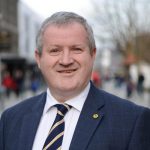
The statement made by Stephen Farry, the Alliance MP for North Down, in the House of Commons on 19 July 2022.
I beg to move amendment 44, in clause 7, page 5, line 5 insert—
“(1A) This section applies only if the following conditions have been met.
(1B) The first condition is that a Minister of the Crown has consulted appropriately with representatives of Northern Ireland business organisations on the option to choose between dual routes.
(1C) The second condition is that a Minister of the Crown has reached an agreement with the European Union on the option to choose between dual routes.
(1D) The third condition is that the Northern Ireland Assembly has approved by resolution the option to choose between dual routes.”
This amendment would impose conditions before the option to choose between dual routes could be implemented.
The Second Deputy Chairman of Ways and Means (Mr Nigel Evans)
With this it will be convenient to discuss the following:
Clause stand part.
Amendment 45, in clause 8, page 5, line 24, at end insert—
“only if the conditions in subsection 7(1A) to (1D) have been met.”
This amendment is linked to Amendment 44.
Clause 8 stand part.
Amendment 36, in clause 9, page 5, line 27, leave out “the Minister considers appropriate” and insert “is necessary”.
This amendment changes the threshold for giving a Minister power to make regulations under this Clause. The threshold is amended to make it objective rather than subjective.
Amendment 28, page 5, line 34, at end insert—
“(3) Before making regulations under this section, a Minister of the Crown must carry out an economic impact assessment of the proposed regulations, and conduct a consultation on the proposed regulations with any stakeholders whom the Minister of the Crown considers appropriate.
(4) The Minister of the Crown making regulations under this section must lay before each House of Parliament with a copy or draft of the regulations a copy of the relevant economic impact assessment and a report of the relevant consultation.”
This amendment would require an economic impact assessment to be carried out before a Minister could make any provisions for the dual regulatory regime.
Clause 9 stand part.
Clauses 10 and 11 stand part.
New clause 13—Report on dual access—
“A Minister of the Crown must, at least once in every three months from the day on which this Act is passed, lay before each House of Parliament a report stating what, if any, steps are being taken by Her Majesty’s Government to promote, uphold, support and facilitate dual access to the British market and European markets for Northern Ireland businesses either as a consequence of the exercise of the powers conferred by this Act or by alternative means.”
This new clause requires a Minister of the Crown to lay a report before each House of Parliament stating what, if any, steps the Government is taking to promote, uphold, support and facilitate access to both British and European markets for Northern Ireland businesses, pursuant to the powers conferred by this Act and any other powers.
New clause 14—UK-EU Joint Committee: duty to give primary regard to North-South proposals—
“A Minister of the Crown must respect, reflect and support in UK-EU Joint Committee meeting proposals relating to the regulation of goods made by the North-South Ministerial Council and other North-South Implementation bodies to the Specialised Committee on the implementation of the Protocol on Ireland and Northern Ireland pursuant to Article 14(b) of the Northern Ireland Protocol.”
This new clause seeks to require a Minister of the Crown representing the United Kingdom in UK-EU Joint Committee meetings to respect, reflect and support proposals made by the Strand Two Belfast/Good Friday Agreement bodies acting in their capacity as set out in Article 14(b) of the Northern Ireland Protocol.
New clause 15—UK-EU Joint Committee: report to Parliament—
“(1) When the UK-EU Joint Committee has discussed regulation of goods in connection with the Northern Ireland Protocol, a Minister of the Crown must lay a report before each House of Parliament detailing those discussions within 21 days of the meeting of the UK-EU Joint Committee at which those matters were discussed.
(2) Each such report must include information on how UK representatives adhered to and sought agreement with representatives of the European Union on relevant proposals—
(a) agreed by the Northern Ireland Executive or endorsed by the Northern Ireland Assembly, or both, and promoted by the First Minister and deputy First Minister acting jointly, or
(b) agreed by the North-South Ministerial Council or North-South Implementation bodies and made to the Specialised Committee, pursuant to Article 14 (b) of the Northern Ireland Protocol.”
This new clause would require a Minister of the Crown to report to each House of Parliament on meetings between the UK and EU in the Joint Committee within 21 days of each meeting and to include information on the regard afforded to any submissions from the Strand One and Strand Two institutions of the Belfast/Good Friday Agreement by UK and EU respectively.
Stephen Farry
Earlier in the debate on this Bill, we discussed solutions on which I think it is fair to say that there was some common ground, such as the idea of red and green channels. The problem was the means of getting there: threats or unilateral action from the Government, versus building trust and using negotiation. Never mind the means, however; dual regulation is fundamentally a very bad idea. The business community in Northern Ireland has expressed significant concerns about this aspect of the Bill. Notably, this includes the Dairy Council for Northern Ireland, the Northern Ireland Meat Exporters Association, the Northern Ireland Food and Drink Association, and Manufacturing Northern Ireland.
There are many motivations behind the Bill. However, the claim that it responds to the wishes of the people of Northern Ireland or the interests of the business community in Northern Ireland does not stand up to scrutiny. I remain very critical of the so-called engagement process from both the Foreign and Commonwealth and Development Office and the Northern Ireland Office. They have sought an echo chamber to reinforce their own agenda rather than consulting widely.
Ian Paisley (North Antrim) (DUP)
I thank the hon. Member for tabling amendments so that the issue can be debated properly and thoroughly, but this is where I start to disagree with him. One of the conditions laid down in amendment 44 is
“that a Minister of the Crown has reached an agreement with the European Union on the option to choose between dual routes.”
Does he seriously suggest that a Minister of the Crown—of Her Majesty’s Government—must seek the permission of the European Union on how we should trade within the boundaries of the United Kingdom of Great Britain and Northern Ireland? That is effectively what is being asked for.
Stephen Farry
Indeed. Unfortunately this is the outworkings of Brexit, which the hon. Member pursued. We have a protocol in place to manage the fall-out from that decision, and a whole host of implications will flow from it. I am very sceptical, as indeed is the business community, about the notion of dual routes, but if that were to be conceded in relation to any one set of products or commodities, it would have to be by negotiation with the European Union. If not, that flow of trade would not have recognition and it would not work for the business sector in question.
On consultation, I want to highlight the current run of propaganda videos coming from the Northern Ireland Office. We are joined by the new Secretary of State, whom I welcome to his place. Those videos focus very heavily on haulage, which of course does have some particular concerns, but that comes at the expense of other interest groups in the business community where there is a very different narrative. Of course businesses recognise the need for some modifications to the protocol, but more and more say that the protocol is working for them and they do not want those aspects to be compromised, undermined or ditched. Those are the voices that the Government are not listening to, never mind seeking to promote.
Jim Shannon (Strangford) (DUP)
On the programme “Countryfile” on Sunday night, a farmer from my constituency, Sam McChesney, outlined very clearly that the Northern Ireland protocol is affecting him, and his lamb and beef. He cannot sell beef cattle across the water to the mainland in the way that he once did. He said that he wants to see changes to the nitty-gritty of the bureaucracy, red tape and small print that is affecting his business, and that if this continues as it is, he will not be in business. Will the hon. Member take a deep breath and think about what Sam McChesney said, and then he will think the same as us and ask for the changes that he wants to see?
Stephen Farry
I advise the hon. Gentleman to reflect on some of the things that the Ulster Farmers Union has been saying about this aspect of the Bill. He should listen to what the Northern Ireland Meat Exporters Association is saying—so if the gentleman he mentions is exporting meat, that is what his trade body is saying. Of course there should be no obstacle for anyone in Northern Ireland selling into Great Britain, but we are in danger of losing the ability for meat producers in Northern Ireland to sell into the Republic of Ireland and onwards into the European Union. [Interruption.] I will come to that in a moment, if the hon. Gentleman wishes to have some degree of patience.
We will also talk about the interests of the dairy sector in Northern Ireland. If the hon. Gentleman wants to reflect the views of his constituents, he will be aware that one of the major employers in his constituency is Lakeland Dairies, which, along with the wider dairy sector, is extremely exercised about this aspect of the Bill.
Jim Shannon
I have met the chief executive of Lakeland Dairies on a number of occasions, and I do so regularly, because it is a major employer in my constituency. He says that he can work with this process, and if changes to the Bill come through, he can also work with that. There are factories south of the border and north of the border. Lakeland Dairies wants a workable system and says that it can work with this. I am not sure who the hon. Member is talking to, but I talk to the chief executive regularly and he tells me that he can deal with the system and with the issues as they come forward.
Stephen Farry
We will talk about the dairy sector in much greater detail shortly. Indeed, it has given significant evidence to Committees in this Parliament. Whenever we talk about the dairy sector, it is important to bear in mind that this idea of the hon. Gentleman’s that we will end up with segregated production, north versus south, is not feasible. If that was to be introduced, the lead-in time would potentially be two to three years, and the costs would be between £200 million and £250 million, so the notion that this is an easy option is a major fallacy. Indeed, the notion that we want to spend extra money to reorientate an industry that works quite successfully at the moment is for the birds.
Colum Eastwood (Foyle) (SDLP)
I am grateful to the hon. Member for giving way. Does he agree with me and with Mike Johnston, the chief executive of the Dairy Council for Northern Ireland, that the Bill risks making rural areas poorer by cutting off £600 million of trade?
Stephen Farry
Indeed, and the dairy sector in Northern Ireland is absolutely clear. The provisions in this Bill are an existential threat to their business model, and we will come shortly to the consequences of that.
Sammy Wilson (East Antrim) (DUP)
I thank the hon. Member for giving way; he has been quite generous, but it is important that we scrutinise the amendment. Will he explain to me how the dairy sector, or whatever other sector wished to trade with the Irish Republic, would be disadvantaged if it agreed to dual regulation—in other words, if it complied with EU regulations for the products that it wished to trade with the Irish Republic? Is the EU going to say, “We will not accept your goods, even though you’ve accepted all our regulations, you’re applying those regulations and your goods are safe to enter the EU”?
Stephen Farry
I strongly encourage the right hon. Gentleman to engage with the Dairy Council and listen directly to what it is saying. The issues and complications are manifold in this respect. They come, first of all, from the inputs to the dairy sector—we are talking about the grain, the veterinary medicines—
Ian Paisley
Will the hon. Gentleman give way on that point?
Stephen Farry
Let me finish the first point and then someone else can come in.
If those inputs are not compliant with EU regulations, the raw milk that is then produced cannot be accepted or certified by Department of Agriculture, Environment and Rural Affairs vets as complying with annex 2 to the protocol, which sets out the various regulations that apply in that regard. Therefore, raw milk from Northern Ireland will not and cannot be accepted for processing in the rest of Ireland. A third of the milk produced in Northern Ireland currently goes south for processing, and that will be dropped.
Ian Paisley
I thank the hon. Member for giving way. I should just put on the record that I represent one of the largest farming constituencies in Northern Ireland; I was previously the Chairman of the Northern Ireland Agriculture and Rural Development Committee in Stormont; I have been one of the longest serving members of the British Veterinary Association in Northern Ireland; and, for the record, my son-in-law is one of Northern Ireland’s largest dairy farmers, so I have some knowledge of the agricultural sector.
The hon. Member has touched on the issue of veterinary products for Northern Ireland. Is it not the case that the European Union has strategically blocked the sales and advantage that would come to Northern Ireland as a result of Brexit, because it does not want Northern Ireland agriculture to be a success? Northern Ireland agricultural businesses are in direct competition with businesses in the Irish Republic, and up to 40% to 50% of all agri-medicines for veterinary products, agricultural use and pet use will be blocked at the end of this year, because the European Union wants to block it. The EU is not interested in talking or making a deal with Britain on this matter. In fact, the representative agency, the National Office of Animal Health, has said that more time is no longer required. We need this Bill to solve these matters with regard to veterinary science.
The Second Deputy Chairman of Ways and Means (Mr Nigel Evans)
Order. I want to establish right from the outset that interventions should be brief by their very nature, not speeches in themselves. Mr Paisley, that was longer than some of the speeches I have made in this place.
Stephen Farry
I will briefly respond, and then hopefully I will make some progress. What the hon. Member has said is utter nonsense. The notion that there is some sort of conspiracy or plot to undermine the Northern Ireland agriculture sector is for the birds. The threat actually comes from this Bill and from Brexit. It does not come from the protocol; it comes from the notion of scrapping some provisions in the protocol, which are working on behalf of the sector. The sector is diverse and some people may have a different perspective on it, but I urge Members to listen to the representative business organisations that reflect the views of their members. The Dairy Council is adamant and very vocal in this regard.
Tony Lloyd (Rochdale) (Lab)
The hon. Member is making a very good speech. It is not the EU that wants to change the rules; rather, we hear from some contenders for the Conservative leadership that they want to change the rules. They want to strip away regulation, as indeed do some members of the DUP. Is that not a concern for the agricultural sector?
Stephen Farry
Absolutely; I concur very much with what the hon. Member says. Regulation sometimes has a negative connotation, but it is there to protect everyone’s interests and it is there for often very good and valid reasons. It is noticeable that we do not have the Foreign Secretary with us today—or indeed for any stage of the Bill, apart from the first hour—even though she has been very keen to promote it, for whatever agenda she has.
Jim Shannon
It is because it is right.
Stephen Farry
If I can make some progress, clause 7 essentially introduces a dual regulatory system for regulated classes of goods to which any provision of annexe 2 to the Northern Ireland protocol applies, including manufactured goods, medicines and agri-food. It envisages businesses having a choice over the regulatory route between UK requirements and EU requirements, or both.
On the surface, that sounds benign, but it is in fact unworkable. To be clear, there is an implicit element of acceptance that there will be different regulatory regimes, and maybe standards, in the concept of a red-green lane for Northern Ireland customer final destination goods that pose no threat to the single market. It is important to acknowledge that subtlety, but we are focusing in this debate on dual regulation that covers ingredients, components and goods that may enter the single market via further processing or as a final good. More and more businesses in Northern Ireland are exporting to the Republic of Ireland and the rest of the European Union. Since Brexit, this trade has grown significantly. That is market forces in operation, reacting to changing conditions. There is nothing malign about it whatsoever.
If this dual regulation were implemented, it would have major consequences. It would create chaos in many sectors of the Northern Ireland economy and increase the risk of economic crime, including smuggling. Even the Bill itself entails uncertainty for investment decisions, never mind the implications of its full application. It would mean Northern Ireland losing access to the single market for goods, both in practice, as companies in the Republic of Ireland or the rest of the EU would see Northern Ireland products as risky, and as a matter of law.
Such moves would threaten the comparative advantage that Northern Ireland goods currently have from unfettered access to both the Great Britain market and the EU single market. More widely, they raise the question as to how and where the interface between the UK economic zone and the EU single market will be managed. There is a commonality of consequences from the Government unilaterally trying to impose dual regulation, alongside similar measures to disapply article 5 of the protocol and annexe 2 to the protocol, and also the marginalisation of the European Court of Justice, which we will talk about tomorrow.
No doubt the Government and others will argue that GB and EU regulations will in practice be the same, just as they argued that their version of the management of movements between GB and Northern Ireland would protect the EU single market, but this neglects the fundamental point, which relates to the legal regime, in which there has to be either dynamic alignment or mutual recognition. That can be created and maintained only via negotiation, with an agreed means of enforcement. Many sectors of the Northern Ireland economy have both supply chains and sales that operate on both an east-west and a north-south basis. That can only be managed with one set of regulations.
Let us explore one particular sector in depth, the dairy sector, which a number of Members have already drawn me on. The dairy sector is heavily integrated across the island of Ireland. That reflects specialisation and economies of scale. It is an entirely sensible set of arrangements. Every year, about 800 million litres of raw milk, about a third of the entire output, goes to the Republic of Ireland for processing. There is full traceability of that milk. The milk is then often mixed with raw milk from south of the border. It can be mixed, as both Northern Ireland and Republic of Ireland milk is produced to the common EU standards and, crucially, recognised as such. It then goes in to final products, or sometimes into intermediate products that come back to Northern Ireland for final processing, for example at Lakeland Dairies in the neighbouring constituency of Strangford.
Ian Paisley
Can the hon. Member perhaps explain how the mixing of that milk will be changed by this Bill?
Stephen Farry
The mixing of the milk will not happen, because milk from Northern Ireland will not be accepted for mixing, because—
Ian Paisley
That is unreasonable.
Stephen Farry
It is not unreasonable. It is basically common sense, because the milk cannot be certified as being in compliance with EU regulations, and therefore it will not be accepted.
Ian Paisley
But it’s coming from the same cows, being milked by the same machines.
Stephen Farry
The hon. Member may say it is coming from the same cows and the same machines. The issue here is that—
Ian Paisley
This is just nonsense—this is bureaucracy at its worst.
The Second Deputy Chairman
Order. The same noise is coming from the same mouth, as well—let us stop that, please.
Stephen Farry
The hon. Gentleman tempts me to refer to the time when his father famously said that the people of Northern Ireland may well be British,
“but our cows are Irish”,
which recognised the integration of animal health and agriculture on the island of Ireland. It was certainly a wise comment from the hon. Gentleman’s father.
Final products go right across these islands, into the European Union and further afield. The Bill is a threat to the sector in that it would allow products to enter Northern Ireland that are not produced to EU standards. The biggest issue relates to grain, around 400,000 tonnes of which are imported in Northern Ireland annually, but seeds and veterinary medicines may also cause complications. Even if the imported grain, seeds and veterinary medicines are in practice produced to the same standards as the European Union, that still misses the point in terms of the legal regime.
According to the Dairy Council, if any of those inputs were used in the production of milk, it would mean that the raw milk could not be supplied to customers in the EU, as Department of Agriculture, Environment and Rural Affairs vets would not be able to sign the necessary certificates to demonstrate that the milk had been produced in accordance with EU regulations and standards. Such an outcome would pose an existential threat to the Northern Ireland dairy industry.
The notion of trying to segregate inputs such as grain or milk produced to different standards or under different legal regimes is simply not realistic. Segregation would involve separate production, storage and cleaning. Tankers may collect milk from five to 10 farms into one tanker. The sector is already very efficient and works to very tight margins of 3% to 4%. It cannot absorb the additional costs of managing such segregation, and to do so would anyway make no sense. Indeed, it would involve substantially more paperwork and red tape, something I understood Brexit was designed to cut back on.
Sir Jeffrey M. Donaldson (Lagan Valley) (DUP)
I have listened intently to the hon. Member and I am left confused by what he has to say. As I understand it, the dual regulatory system is a voluntary one, so what is to stop the co-operatives, which dairy farmers are part of, voluntarily agreeing to follow EU regulations under this system and abide by EU rules? The farmers are sending the milk in tankers to be processed in Monaghan, so it is processed within EU territory. What happens between the milk’s leaving the farm and its arriving at the processing centre in Monaghan that makes that milk incompatible with EU standards?
Stephen Farry
I think perhaps the right hon. Member was not listening fully. The point relates to the inputs in terms of grain, seeds and veterinary medicines. That is where the particular issue is. My point is that, if people decide not to do that, the scale of the segregation that would be involved in trying to accommodate that choice would lead to costs that the sector simply cannot afford.
Sir Jeffrey M. Donaldson
Will the hon. Gentleman give way?
Stephen Farry
I have already given way to many DUP Members.
Sir Jeffrey M. Donaldson
I can answer his point.
Stephen Farry
No doubt the right hon. Gentleman will have a chance to speak shortly.
The outcomes here will pose an existential threat to the Northern Ireland dairy sector. We are talking about potentially 800 million litres of milk that need to be accommodated somehow. The cows, of course, still need to be milked, and that begs the question as to where the surplus milk will go; that could pose considerable environmental challenges. It is simply not sustainable for farmers to retain animals that no longer have an economic purpose, so we could face a brutal cull of healthy cows. It would cost between £200 million and £250 million to create alternative processing capacity in Northern Ireland, and could take three years. Even if it made any sense to do so, by then the markets for Northern Ireland products would be long gone.
It is worth stressing that the island of Ireland has always been treated as a single unit for animal health. That makes huge sense, but dual regulation undermines it; there has not been dual regulation in the recent past. The same dynamic that applies to the dairy sector also applies to other aspects of agrifood, such as Northern Ireland’s very successful meat exporting industry. Any dual regulation in relation to feedstuffs and medicines undermines the ability to access the European Union in accordance with EU regulations.
Again, it is not realistic to segregate certain fields or farms for domestic Northern Ireland or Great Britain markets from those for EU markets, because—this may address the point by the right hon. Member for Lagan Valley (Sir Jeffrey M. Donaldson)—we will not have a situation where one farm says, “We’re only going to do Northern Ireland and Great Britain forever.”, and one says, “We are going to do the European Union.”
Sir Jeffrey M. Donaldson
Why not?
Stephen Farry
Because in a free market situation, businesses want to maximise their sales. No business wants to shut off one half of a market when it does not need to.
Overall, the Northern Ireland Food and Drink Association estimates that agrifood provides £4.9 billion in terms of value added to the Northern Ireland economy and supports more than 100,000 jobs. Agrifood may be a small aspect of the economy across the United Kingdom, but it is massive in Northern Ireland, and it is worth noting that, if this Bill destroys the business model for many, there will be few alternatives for employment in many rural areas.
The same dynamic applies to manufacturing. Very few manufacturers seek to service a domestic market only. Any components in goods that are manufactured or processed in Northern Ireland that do not comply with the relevant parts of EU law will not be certified for export into the EU either for further processing or for final sale. Dual regulation may make things easier for suppliers in Great Britain supplying Northern Ireland. However, the needs of Great Britain’s suppliers would be better addressed via improved information and guidance, and of course the delivery of sustainable solutions around the red and green channel and a sanitary and phytosanitary agreement—or, even better, a full UK-EU veterinary agreement.
There are strong reservations, through to outright opposition, to this proposal for dual regulation within the Northern Ireland business community, and I urge hon. Members to listen to them. The amendment therefore provides significant safeguards against dual regulation in broad terms, but also the potential to facilitate dual regulation for any set of products or sectors where it makes sense. Consultation with the Northern Ireland business community is vital, as it has the expertise and on-the-ground knowledge. Agreement with the EU is necessary, as without a proper legal regime it would not work and indeed would be self-defeating. So is the agreement of the Northern Ireland Assembly, since this is notionally for the good of Northern Ireland and the Assembly represents a much more balanced perspective of the political views of the people of Northern Ireland.