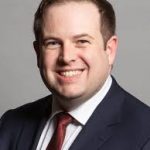
Tag: Stephen Doughty

  • Stephen Doughty – 2025 Speech at the Antalya Diplomacy Forum

    Stephen Doughty – 2025 Speech at the Antalya Diplomacy Forum

    The speech made by Stephen Doughty, the Minister for Europe, in Antalya on 12 April 2025.

    The principles are fundamental, and they are what is at stake here. And as Andrea said, this is not just a situation where we see a complete violation of those principles that were in the Helsinki Final Act, that we all stood by, and we have stood by for those 50 years. But it’s also the UN Charter that is fundamentally under threat by Russia’s aggression.

    And of course, this isn’t just the aggression we’ve seen against Ukraine. It’s the other hybrid and destabilizing activities that they prosecute across our continents against our democracies more generally, and whether that’s disruptions, attempted disruptions, in the Western Balkans or in Moldova or elsewhere.

    This has consequences for all of us, and this matters for everybody in this room. It matters for everybody in the room if those principles of territorial integrity and sovereignty are not abided by, and it matters deeply for all of our people. Most importantly for the people of Ukraine at the moment, but for all of us.

    I was in Kyiv just a few weeks ago, and I could hear in the background the alarm going off there. For Ukrainians in the room, this would probably be the air raid alarm on their on their phones, because Ukraine is seeing that escalation every night, civilians being attacked and killed.

    I was in Bucha, which saw some of the worst, appalling atrocities that we’ve seen since the start of this conflict, and seeing those mass graves and others, but also hearing about how just the night before, how drones have come and killed civilians, and how children and others have been taken away and still no idea where those where those young people and those civilians are. That is a brutal attack on the values that all of us in this room stand for. So I think we must absolutely recognize what’s at stake here.

    That’s why we as the UK are 100% ironclad in our support behind Ukraine, not just for now, but for 100 years into the future. It’s why we’re working with our NATO partners and allies here. And it’s a genuine pleasure to be with friends – it’s a genuine pleasure to be here in Antalya and to be hosted by our Turkish allies and friends. And it’s why we must double down, not only on the support for Ukraine, but also for European, Euro-Atlantic security more generally – that’s what we’re doing.

    That’s the leadership the Prime Minister and President Macron are showing, working with President Trump on that secure and sustainable peace for Ukraine. Which Ukraine again has come forward from, and yet we do not see that same response from Moscow. And President Erdoğan very clearly set out yesterday the importance that that peace has to be sustainable. And that’s going to come through those of us who are willing to get in there, to put boots on the ground, to get the support to ensure that Ukrainian forces are able to defend, deter against future aggression. But also that we as NATO partners are stepping up, particularly European partners here, for our own defence.

    That is what we’re doing with our spending. That’s what we’re doing with our commitments. But this matters not just for us. It matters for the globe. It matters for us in this room, because these are fundamental principles that have been attacked here by Moscow.

  • Stephen Doughty – 2025 Speech at the Aurora Forum

    Stephen Doughty – 2025 Speech at the Aurora Forum

    The speech made by Stephen Doughty, the Minister of State at the Foreign Office, on 11 March 2025.

    Well thank you very much, David.

    In the genuine spirit of bipartisanship, David was an absolutely excellent Minister for Europe, albeit from a different political philosophy.

    And I certainly look to his example in trying to do this role today in very difficult and challenging times.

    And really it is genuinely an honour to host you all here in this beautiful venue.

    And thanks to Aurora Forum and Wilton Park and everybody else here at Goodwood who’s helped put this together.

    And all the sponsors, all the different governments who participate, and we come here very much as friends and likeminded counterparts in some very, very challenging times.

    And indeed Goodwood House itself has witnessed many centuries of history, and we’re obviously here at a pivotal moment not only for Ukraine but for the security of our Continent and indeed the whole world.

    I’ve just come from another conference down the road at Wilton Park with Ukrainian friends and colleagues, with Ministers, members of the Rada and others, talking about Ukraine’s economic resilience and economic recovery needs and all our shared commitments on that.

    But obviously to be able to move to that more hopeful future, we need to ensure Ukraine’s security and sovereignty now.

    And that is a moment in which we stand united in a desire for a strong, just and a lasting peace.

    Determined to contain Putin’s reckless actions and continue to put pressure on the Kremlin, while stepping up to ensure that Ukraine has the support, including the military support, that it needs.

    And I was in Kyiv just about ten days ago under yet another bombardment in the night of drones and missiles.

    I visited Bucha, which many of you will know saw some of the worst atrocities that we have seen in Europe in decades.

    And to see, yet again, drones having attacked that small town that’s endured so much suffering just hours before I arrived killing civilians, a journalist and others just shows us the stark reality of what Ukrainians are facing every single day.

    But their strength and resilience is absolute, as it has been throughout this conflict.

    We also have to be looking very closely at how we invest in our own defences – which is why the UK has announced our own biggest sustained increase in spending since the Cold War.

    And that we need to pull together as Europe to drive urgent action, but also working with the United States and our other partners across the Atlantic and Ukraine to make progress.

    We all know that that is vital for our Continent’s future security.

    On a more personal note, support for Ukraine is a cause that I care deeply about.

    It’s one that’s personal to me, there are many ties between Ukraine and my own home area of South Wales. My own city was twinned with Luhansk.

    It was a Welshman that helped found one of the cities in the Donbas, Donetsk, and we even of course have a Sebastopol in the South Wales valleys harking back to the Crimean war when Welsh troops fought in a different era.

    And it’s also one I have a personal connection to. In my own time I taught English in Lviv many years ago and I’ve had many friends and counterparts from Ukraine over the years.

    And each time I have been back since this barbaric, unprovoked conflict began, I have witnessed again that courage and resilience of the Ukrainian people.

    This morning before joining with all of you I spoke with the Ukrainian Deputy Prime Minister, Stefanishyna, and reiterated the United Kingdom’s unwavering support.

    And this afternoon, we are going to discuss our collective support in detail at our Ministerial roundtable, and it’s great to welcome fellow ministers, many of whom I’ve had the pleasure of working with over recent weeks and months, and I hope that  will become a regular feature of Aurora.

    Not that we’re just coming together, discussing very important issues, sharing perspectives but we’re also agreeing joint plans of action.

    And we all hope for positive steps forward at the talks in the next few days. We’re going to do all that we can to put Ukraine in the strongest possible position for lasting peace, and the ability to deter and defend against future aggression.

    And in that endeavour, and indeed in the wider European security endeavour, it has never been more important for the UK and our Nordic-Baltic partners to work together.

    We have a lot of shared experience, a lot of likeminded approaches, and we act as a bedrock and a base for wider European security.

    It is a huge honour to be the UK minister responsible for relations with this part of the world, one I know well.

    I have many deep Nordic-Baltic connections in my own family and my own history. I’ve worked in Denmark, my brother studied in Norway, and I was taught Finnish folk music by one of our own participants here today when I was a 16-year-old in Canada which is a very unique and deep connection!

    I’ve had the pleasure to visit nearly every country in the Nordic-Baltic region before coming into office and since. I haven’t yet been to Latvia, the Faroes or Greenland but it won’t be long before I do, I’m sure.

    And you know, it is very clear, we see the reality, we see the threat from Russia, we see the threat to European security, we know the history.

    Putin’s war, his imperialist ambitions, are close at hand.

    We recognise that, we recognise the very serious threats to all of you, your border is our border, and your security is our security. And that’s why we stand with you as the United Kingdom.

    And I have seen for myself that new iron curtain between Lithuania and Belarus – and I’ve met the border force who are resolutely monitoring the security of our NATO border there.

    I’ve had the privilege to join British Royal Marines training with their Norwegian counterparts in Northern Norway.

    I’ve conducted a tour in NATO’s Northern flank with the Norwegian Coast Guard with Maria and her colleagues recently.

    And I also was, I think, the first British Minister in ten years to attend the Arctic Circle Assembly in Reykjavik, where I thought it was very important to show our shared ambitions to work alongside you all in the Arctic region and indeed in the Polar regions more generally, not only for the science and peacefulness of those regions but also their security against hostile threats.

    And of course, my colleague the Foreign Secretary travelled to this region on his first trip in the job, to Sweden.

    We feel your sense of threat. We hear your concerns. And that’s why we’re stepping up our collective partnerships with all of you in this room, across Europe and beyond for the sake of our security, and to better face global challenges.

    That includes seeking an ambitious new security pact, a new partnership, with the EU to strengthen co-operation on defence, security, energy, climate and much more.

    But, of course, this goes far beyond the EU and encompasses our ironclad commitment to NATO and indeed the Joint Expeditionary Force, the JEF, which the UK is proud to lead.

    And the Prime Minister was glad to attend the JEF leaders’ summit in Tallinn a few months ago, discussing further measures to support Ukraine.

    He and the Defence Secretary have made a point of visiting and thanking British military personnel – indeed your military personnel – deployed in the region in recent months. Because together with our allies we stand ready to defend NATO’s eastern flank and to uphold European stability.

    And, as I speak, our JEF nations are working side-by-side to combat the risk of sabotage, of hybrid activity, in the Baltic and indeed to monitor the Russian shadow fleet, which we all know does so much damage.

    And we are working together to constrain the activities with not only economic implications but wider maritime security implications.

    We’re also intensifying our efforts together to counter Russian hybrid threats, including sabotage, cyber attacks, disinformation.

    And the Maritime Capability Coalition, led by the UK and Norway, is transforming the Ukrainian navy.

    Those are just a few short examples of the UK promise to step up and put our money, our boots and our actions where our mouths are on European security, and of course we will discuss that in more detail during this forum.

    But of course, there is much more to our relationships than security and defence, vital as those are.

    Our economic and trade ties and the strong links between our citizens and our cultures are all part of the rich mix that strengthens our bonds.

    It is the UK government’s number one mission to advance economic growth to build a more secure and prosperous future for citizens here.

    And in this, we hugely value our links with our Nordic-Baltic partners.

    Our trading relationships with the eight countries here today are worth more than 95 billion pounds a year and rising.

    And there is huge appetite to invest and work in mutual collaborations in each other’s economies.

    Take the UK’s ambitious new Green Industrial Partnership with Norway as just one example.

    By combining our world-leading capabilities on clean energy to drive economic growth we have the potential to create thousands of new skilled jobs in both of our countries.

    This is an important part of the UK’s plan to secure home-grown energy and put us on track to make Britain a green and clean energy superpower by 2030.

    And, of course, together our countries are also at the forefront of innovations – indeed, the UK and many of the countries in this room regularly feature on lists of the most innovative nations on earth. And we are particularly proud to co-host NATO’s Diana initiative with Estonia.

    Our collective experience in AI, quantum technologies, drone technology and innovation will be crucial in protecting our societies and developing new capabilities in the future.

    And the countries, businesses and academics in this room count themselves, rightly so, as world leaders. We’re delighted that you are all here.

    I could speak at length about wider partnerships on everything from climate finance to digital government. But I know we are all keen to get down to business, to get down to discussions, so I hope this forum will be an important moment to galvanise those efforts. At ministerial level, between those in think tanks, the academic space, between businesses and the other partners in this room.

    We’ve all got to continue to learn from each other, urgently, and to work together, urgently, as we write the next chapter in our partnerships as strong supporters of Ukraine, strong defenders of European security.

    Standing together to defend our security and values at this critical moment, and, fundamentally, to advance the causes of prosperity and peace.

    Thank you very much.

  • Stephen Doughty – 2016 Parliamentary Question to the Foreign and Commonwealth Office

    Stephen Doughty – 2016 Parliamentary Question to the Foreign and Commonwealth Office

    The below Parliamentary question was asked by Stephen Doughty on 2015-12-16.

    To ask the Secretary of State for Foreign and Commonwealth Affairs, what recent assessment he has made of the human rights situation of (a) women, (b) journalists, (c) the LGBT community and (d) religious minorities in the Gambia.

    James Duddridge

    The UK remains concerned about the human rights situation in The Gambia. Since July The Gambia has taken some steps to address human rights concerns, including banning female genital mutilation and the dismissal of cases against members of the Lesbian, Gay, Bisexual and Trans-sexual community by the Gambian courts. However, more needs to be done. We continue to monitor the situation closely and press the Gambian government for improved respect for human rights.

  • Stephen Doughty – 2016 Parliamentary Question to the Home Office

    Stephen Doughty – 2016 Parliamentary Question to the Home Office

    The below Parliamentary question was asked by Stephen Doughty on 2016-01-18.

    To ask the Secretary of State for the Home Department, what additional funds will be provided for armed response police in South Wales; and what proportion of the total additional funding those funds represent.

    Mr John Hayes

    As announced in the Police Grant Report for England and Wales Written Ministerial Statement on 17 December 2015, this Government will provide £34 million in 2016-17 to enable a national uplift in armed policing capability and capacity to respond more quickly and effectively to a firearms attack. Decisions over where this money will be distributed are yet to be made, however for reasons of national security we do not publically disclose the detailed allocation of funding for counter terrorism by force area or by capability.

  • Stephen Doughty – 2016 Parliamentary Question to the Ministry of Defence

    Stephen Doughty – 2016 Parliamentary Question to the Ministry of Defence

    The below Parliamentary question was asked by Stephen Doughty on 2016-02-01.

    To ask the Secretary of State for Defence, what the country of manufacture is of each type and item of military uniforms in each branch of the armed services.

    Mr Philip Dunne

    I refer the hon. Member to the answer I gave on 27 November 2014 to Question 215763.

  • Stephen Doughty – 2016 Parliamentary Question to the Ministry of Defence

    Stephen Doughty – 2016 Parliamentary Question to the Ministry of Defence

    The below Parliamentary question was asked by Stephen Doughty on 2016-02-23.

    To ask the Secretary of State for Defence, how much and what proportion of his Department’s overseas development assistance budget his Department spent was subject to the International Development Act 2002 in each of the last three years.

    Mr Julian Brazier

    Ministry of Defence (MOD) expenditure on overseas development assistance is governed by the Supply and Appropriation Acts.

    MOD spending on overseas development assistance over the last three calendar years has been £3.0 million in 2013 and £2.2 million in 2014. The 2015 figure is currently undergoing an assurance process and is scheduled to be published on 1 April 2016. This expenditure has mainly been on humantarian assistance and defence education.

  • Stephen Doughty – 2016 Parliamentary Question to the Department for International Development

    Stephen Doughty – 2016 Parliamentary Question to the Department for International Development

    The below Parliamentary question was asked by Stephen Doughty on 2016-02-29.

    To ask the Secretary of State for International Development, when she plans to publish the (a) multilateral and (b) bilateral aid review.

    Justine Greening

    The outcome of the Bilateral and Multilateral Aid Reviews will be set out this spring.

  • Stephen Doughty – 2016 Parliamentary Question to the Department for Transport

    Stephen Doughty – 2016 Parliamentary Question to the Department for Transport

    The below Parliamentary question was asked by Stephen Doughty on 2016-03-21.

    To ask the Secretary of State for Transport, what discussions he has had with (a) Network Rail and (b) train operating companies on minimising disruption from the planned closure of the Severn Tunnel for electrification.

    Claire Perry

    Ministers regularly meet with Network Rail and the train operating companies to discuss a range of issues, including the need to ensure that the investment programme to enhance the network results in the minimum necessary disruption to passengers.

  • Stephen Doughty – 2016 Parliamentary Question to the Department for Business, Innovation and Skills

    Stephen Doughty – 2016 Parliamentary Question to the Department for Business, Innovation and Skills

    The below Parliamentary question was asked by Stephen Doughty on 2016-04-25.

    To ask the Secretary of State for Business, Innovation and Skills, whether his Department has produced an implementation plan for the Sustainable Development Goals.

    Anna Soubry

    The Government intends to produce a report in due course that will set out how the UK is contributing to the Sustainable Development Goals.

  • Stephen Doughty – 2016 Parliamentary Question to the Foreign and Commonwealth Office

    Stephen Doughty – 2016 Parliamentary Question to the Foreign and Commonwealth Office

    The below Parliamentary question was asked by Stephen Doughty on 2016-09-05.

    To ask the Secretary of State for Foreign and Commonwealth Affairs, what discussions he has had with his South Sudanese counterpart on tackling recent violence in Jonglei state in South Sudan; and if he will make a statement.

    Mr Tobias Ellwood

    We regularly urge the South Sudanese Government to fully implement the August 2015 peace agreement and bring an end to the continual cycle of violence in all parts of the country. Most recently, the UK’s Deputy Permanent Representative to the United Nations made this clear with Ministers of the Transitional Government of National Unity during the UN Security Council’s visit to Juba in early September 2016.
