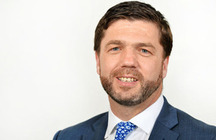
The speech made by Stephen Crabb, the Conservative MP for Preseli Pembrokeshire, in the House of Commons on 16 October 2023.
May I thank you, Mr Speaker, for the step that you took at the beginning of last week in lighting up this Palace in the colours of blue and white as an act of solidarity with the Israeli victims of Hamas terrorism? I know that it was appreciated by those British families mourning loved ones who were slain in that action as well as by families living with unimaginable fear right now because they have family members who have been taken hostage in Gaza. Some of those family members are with us in the Gallery.
Does the Prime Minister agree that after the acts of barbarism by Hamas, there is no going back to the situation before where, right under the noses of the international community, Hamas were allowed to rearm time and again? They were allowed to misappropriate aid into terrorist infrastructure, building those tunnels, amassing armaments and hiding them behind civilian families. Does he agree that the international community must take a stand and not allow the Gaza strip to go back to becoming a terrorist statelet?
The Prime Minister
First, I thank my right hon. Friend for everything he does to support the Jewish community here and overseas. I agree that no country can or would tolerate the slaughter of its citizens and simply return to the conditions that allowed that to take place. Israel has the right—indeed, the obligation—to defend itself and to ensure that this never happens again.
On a point of order, Mr Deputy Speaker. I thank the hon. Member for Liverpool, Riverside (Kim Johnson) for making that statement in her point of order, but my understanding is that the use of language such as “apartheid” and “fascist” is not just insensitive but a breach of the International Holocaust Remembrance Alliance definition of antisemitism.
Mr Deputy Speaker, what advice will you and the Speaker’s Office be providing to the leaders of all the parties in this House about the language we use here and the importance of tackling deep-rooted antisemitism in our political culture, which at this point in time is so evident on the left of politics? It is less than a week ago that you sat in the Chair when we were here for the annual debate on Holocaust Memorial Day. You ended that debate with very powerful words. It is incumbent upon us to tackle this deep-seated problem, is it not?
It is a pleasure to follow the new hon. Member for Stretford and Urmston (Andrew Western). I congratulate him on an excellent maiden speech, delivered in the very best traditions of the House. We wish him all the very best for his time serving his constituents.
It is a privilege to speak in this debate to mark Holocaust Memorial Day, a date that has become hugely important in our national life and in our parliamentary calendar. I congratulate my right hon. Friend the Member for Bromsgrove (Sajid Javid) on leading the debate and on his outstanding contribution, which struck exactly the right tone as we gather to remember the victims of the holocaust. I also want to put on record my thanks to him for the work he did in a succession of ministerial roles. He was consistently excellent and consistently reliable in fighting antisemitism. I think of his work in support of the Community Security Trust. I think of the work he did to ensure that Hezbollah was proscribed in its entirety. He has been a consistent champion for this cause and it is fitting that he opened the debate.
I also want to put on record my thanks and pay tribute to the tireless work of the Holocaust Educational Trust, the Holocaust Memorial Day Trust and other organisations that work in this area, as well as the remarkable survivors who are prepared to recall the tragic and unimaginable experiences that they endured to ensure that the horrors of the past are not repeated and that lessons continue to be learnt.
Holocaust Memorial Day is a moment to remember again the 6 million Jewish men, women and children murdered by the Nazis and their collaborators, and all those who were murdered by the Nazis, including Roma and Sinti people, gay men, disabled people, political opponents and many others. We use this day to remember all those killed in subsequent genocides in Cambodia, Rwanda, Bosnia and Darfur.
As Members have highlighted, the theme for this year’s Holocaust Memorial Day is ordinary people. That is a thought-provoking theme when we think about some of the survivors we have met in this House and the stories we have learnt about what people endured. There is nothing ordinary about that period of history; nothing ordinary about the scale of the suffering or the depth of the evil visited on Jewish people at the time. As we have heard, what really comes out from listening to the testimony of the survivors and listening the stories about family members, as described by the right hon. Member for Barking (Dame Margaret Hodge) in her contribution, is that these were all ordinary individuals from ordinary families living in ordinary communities.
It was an honour to be at the Foreign, Commonwealth and Development Office on Tuesday to hear the very moving testimony given by Manfred Goldberg, who spoke incredibly powerfully about the events of that period. He spoke about his family, his mother and father, and he spoke in detail about what he personally endured. What came across in his speech was his extraordinary spirit, his extraordinary capacity to hope and to survive, and his capacity, like so many of the survivors we have met, to look back not with bitterness but with grace and forgiveness, and to look forward to the future and play his part in helping to ensure that future generations of young people are informed, are taught and learn the truth about what happened during the holocaust.
In June, the all-party parliamentary group on holocaust memorial hosted Mala Tribich MBE in Portcullis House. I know a number of Members were there in that room when we listened to her testimony of what she endured, surviving Nazi deportation and finally being liberated from Bergen-Belsen. I listened in awe to her testimony, which was really powerful and remarkable—ordinary people enduring extraordinary evil and coming through it with extraordinary grace, strength and optimism for the future.
It is important that we put on record those survivors of the holocaust who sadly passed away this year. We remember Iby Knill BEM, Freddie Knoller BEM, Freda Wineman BEM and, most recently, Zigi Shipper BEM, to whom my right hon. Friend the Member for Bromsgrove referred. They all worked incredibly hard with the Holocaust Educational Trust to share their stories. May they rest in peace. We thank them for their courage and bravery for sharing their experiences.
We in this House have an extraordinarily privileged position and it is right that we mark Holocaust Memorial Day with debates such as this. It is right that we attend events, light candles and wear badges. That is all part of the collective remembering and marking of the event. It is our responsibility, I believe, to ensure that this is not just a one-day affair, but that every day that follows we try to use our extraordinarily privileged position to ensure that the horrors of the past are never repeatedly, and to face down and tackle antisemitism. That goes for all forms of discrimination, wherever it occurs, at a national level and most particularly in our own communities and constituencies—in our own parties, even. We must use our voices and actions to that end.
I would like to finish in that spirit by urging the Government to press ahead with the commitments they have made in this field. I am delighted to see the Minister in her place. I know from our discussions that she takes these issues to heart and shares the strong commitment that the Government should continue to fight antisemitism and all forms of discrimination. I would encourage her to press ahead with the work on legislation to clamp down on boycotts, divestment and sanctions and the pernicious use of those avenues, because I believe they can be antisemitic. I look forward to seeing that legislation.
I do not want to make a contrarian point, given the remarks of the Father of the House, my hon. Friend the Member for Worthing West (Sir Peter Bottomley), but I do believe that the national holocaust memorial and learning centre should be built in Victoria Tower Gardens. There is a very strong cross-party consensus that that should be done.
There are other issues. Iran has effectively declared war on the Jewish people in Israel, and we should be doing everything we can with our international partners to ensure that Iran never acquires a nuclear weapon. There are so many other fields where there is practical action that we as a Government and we as politicians can take. It is a privilege to contribute to this extraordinarily important debate.
The speech made by Stephen Crabb, the Conservative MP for Preseli Pembrokeshire, in the House of Commons on 18 October 2022.
I beg to move,
That this House has considered delivery of floating offshore wind projects.
It is a pleasure to serve under your chairmanship, Sir Christopher, and I am grateful to have secured time for a debate on the delivery of floating offshore wind power, which is one of the most interesting and exciting energy developments in play. It is good to see colleagues from across the United Kingdom and I look forward to hearing their contributions. I put on record my thanks to RenewableUK, the Crown Estate and many of the developers for reaching out ahead of the debate to provide briefing and insight.
This is a timely moment to discuss the role of floating offshore wind in the UK’s energy mix and to consider what further steps the Government need to take to facilitate the emergence of that new industry. The twin challenges of net zero and energy security mean that the strategic imperative around this home-grown clean energy solution is becoming ever stronger.
Floating offshore wind—or FLOW, to use the shorthand—harnesses the power of wind by using turbines based on floating structures rather than fixed. It offers an opportunity to deploy enormous turbines in larger, deeper, more exposed offshore areas where the overall wind potential is higher and therefore more energy can be generated.
There is a high level of expectation that floating wind is going to become an increasingly important part of our energy mix. The Government have set a target of 5 GW of FLOW to be installed by 2030, and Offshore Renewable Energy Catapult estimates that we could have up to 95 GW of floating wind in UK waters by 2050. At that point, the majority of the wind turbines in UK waters would be floating, not fixed to the seabed as they are today.
The UK is already home to the largest floating wind farm in the world—Kincardine, off the coast of Aberdeen in the North sea—which is using the highest-capacity turbines ever installed on floating platforms. The success of Kincardine should give both industry and Government confidence that the technology works and is scalable, and that it can be replicated elsewhere.
Floating wind will be critical to achieving the Government’s energy security targets, and if we do not choose to industrialise FLOW we will have to generate at least 15 GW of power by 2035 using other means. Indeed, it is difficult to see how the overall expansion of offshore wind envisioned by the Government’s targets would be technically possible without doing floating wind in a very big way. That industrialisation of floating offshore wind will create the pathway for cost reduction, as has been proven with fixed-bottom offshore wind.
Floating wind offers a huge opportunity for the world to harness offshore wind power, not just those limited regions with shallow sandbanks close to shore. Globally, the UK Government have set the most ambitious targets for developing floating offshore wind, but other countries are catching up fast. Spain has announced a target of 1 GW to 3 GW of FLOW by 2030. Similarly, France, Norway, Japan, Ireland and parts of the United States have set clear and ambitious targets. The world will therefore develop floating wind for sure. The UK is well positioned as the leading marketplace for investors, but if those targets are not followed through, I fear that the UK is likely to be left behind as other countries move to seize on the new technology.
Along with parts of the North sea, the Celtic sea—located off the coasts of south-west Wales, Devon, Cornwall and southern Ireland—is one of those areas with the greatest potential to deploy FLOW. It is attracting enormous interest from developers and investors, and I am delighted that my hon. Friend the Member for North Devon (Selaine Saxby), chair of the all-party parliamentary group for the Celtic sea, is here today. I look forward to hearing her remarks.
Floating offshore wind in the Celtic sea represents a multibillion pound economic development and investment opportunity for Wales, the south-west of England and the whole UK. The area has excellent wind resource infrastructure and local industry for potential supply chain development. The Crown Estate’s Celtic sea leasing programme aims to deliver 4 GW of new floating offshore wind by 2035. It could provide power for almost 4 million homes, and the project will kick start an innovative new industry in the area, with the Celtic sea assessed to have the economic potential to accommodate up to an additional 20 GW by 2045. Just last week, the Crown Estate announced that it is seeking to accelerate the leasing process for that first stage of development, recognising the importance of bringing floating wind onstream as soon as possible, and will be looking to launch the tender process in the middle of next year.
For us in west Wales—I represent a Welsh constituency —floating offshore wind represents a hugely exciting and valuable prospect. It is another stage in the evolution of Milford Haven port in my constituency. Shared with my right hon. Friend the Member for Carmarthen West and South Pembrokeshire (Simon Hart), Milford Haven is one of the UK’s most important energy ports, beginning in the late 18th century when whale oil was imported for use in streetlamps. The late 20th century brought oil refining and trade in petroleum products, and the early 2000s brought liquefied natural gas imports. Strategically, Milford Haven plays an incredibly important role in our energy mix, and I believe that the coming decades at Milford Haven will be about floating offshore wind and hydrogen.
Early analysis by Cardiff Business School suggests that floating offshore wind, hydrogen and sustainable fuels investment could add an additional 3,000 Welsh jobs to the 5,000 already supported by the Milford Haven waterway. Floating offshore wind will facilitate the transition to a vital new green energy era, supporting the continued evolution of that major hub for another 50 years. On the Milford Haven waterway, we already have a number of very active projects: we have Blue Gem Wind, a joint venture between Simply Blue and TotalEnergies, which is looking to establish the first demonstrator projects in the Celtic sea. We have DP Energy, a joint venture involving EDF, and RWE—which has a major gas-fired power station on the Milford Haven waterway—is looking at floating offshore wind opportunities, in conjunction with exploring the possibilities of producing hydrogen and moving its entire operation in Pembrokeshire to a lower carbon future.
Simon Hart (Carmarthen West and South Pembrokeshire) (Con)
Does my right hon. Friend agree that the much-rumoured and long-awaited freeport status for places such as Milford Haven—even in conjunction with Neath Port Talbot or similar—would accelerate all of the exciting initiatives he has referred to?
Stephen Crabb
I will mention freeport opportunities a bit later, but my right hon. Friend is exactly right. So often when people talk about freeports, it is in the context of an answer looking for a question; what we have in Milford Haven—together with Port Talbot, I might say—is a solution. It is something that will help facilitate a new industry, and if we can use the freeport process to help support that—I am looking towards the Minister—then that would be excellent indeed.
Stephen Kinnock (Aberavon) (Lab)
The right hon. Gentleman is making an excellent speech, and I congratulate him on securing the debate. Building on his point about freeports, one of the key advantages of our freeport bid is that it is in synergy with the floating offshore wind opportunity. That will deliver a huge amount of added value through the manufacturing opportunities and long-term sustainable job opportunities that will come out of it, so the freeport offer is a strategic offer, not just transactional.
Stephen Crabb
As is typical, the hon. Member has gone right to the heart of the matter. Floating offshore wind is going to happen in a big way in UK waters— I absolutely believe that. The challenge that we need to get our heads around is how much real economic value and content can be captured and secured for the UK. The hon. Gentleman is exactly right that a collaborative bid between Port Talbot and the port of Milford Haven provides a potential framework to allow that industrialisation and capturing of domestic content to happen.
FLOW presents an important economic opportunity for the whole of the UK—for ports, industry and energy infrastructure, and by driving up investment and regional and national growth, as well as increasing the numbers of skilled jobs and career opportunities. The levelling-up opportunities are enormous: tens of thousands of people are already working in the offshore wind industry and supply chain in places such as Hull and Hartlepool. That is the kind of domestic content and supply chain opportunity that we want to deliver for Wales and the whole of the Celtic sea region. With large-scale projects in the Celtic sea perhaps five to 10 years away, there is an opportunity now for the development of the appropriate infrastructure and supply chain capability, which will deliver significant local opportunities in the region and, in turn, drive regional economic growth.
While we are talking about Port Talbot, I should say that I was excited to see RWE recently announce a new partnership with Tata Steel in the constituency of the hon. Member for Aberavon (Stephen Kinnock). That will explore how steel manufactured in south Wales could be used for floating wind projects, which is exactly the kind of innovative thinking that we need to achieve everything to which we aspire.
I hope to have outlined the scale of the vision and opportunity in front of us. It is ambitious and exciting, and in my view it is achievable. There is enormous private sector interest. However, along with the scale of the opportunity, there is an enormous delivery challenge. Ensuring that we have the appropriate offshore and onshore capabilities to deliver this is a big and complicated challenge. The 5 GW by 2030 target is ambitious. The industry is confident that it can respond to the challenge, but it will require a lot of work. Think about the sheer scale of what we are talking about: hundreds and hundreds of enormous new turbines being manufactured and towed out to sea. We have also to think about all of the onshore infrastructure around the turbine: the port infrastructure, new grid capacity, new grid connections, all the supply chain work that we have talked about, the financial architecture around it—contracts for difference—and, of course, the planning regimes in which the projects operate.
Projects cannot happen without the underpinning physical infrastructure—grid and ports—and the right policy architecture. Creating the right frameworks will require a lot of collaboration between the public and private sectors.
Stephen Kinnock
The right hon. Gentleman is absolutely right about all of the wraparound and complexity. One thing he may have mentioned—I may have missed it—is maintenance and servicing. Once the structures are in place, they require regular maintenance and servicing, which in itself is a huge employment-generating opportunity.
Stephen Crabb
The hon. Gentleman is exactly right about the operations and maintenance role. That is not just a job creator; they are valuable jobs. There is real economic value in those support services.
I come back to the delivery challenges around this big, complicated opportunity. The first challenge relates to leadership and co-ordination. As with the early development of fixed-bottom offshore wind, the support of the UK Government will be crucial in driving forward the political, regulatory and financial support frameworks that are needed to maximise the flow opportunities. I welcome recent positive statements by the Government, but there needs to be much more visible engagement from Ministers when it comes specifically to the Celtic sea opportunity. I have been impressed by the leadership that the Crown Estate has shown, and the work that it is doing to create robust frameworks around the tender process and environmental protections. However, there is a role for UK Government, over and above what the Crown Estate is doing, to push forward the Celtic sea programme. That role starts with setting credible, ambitious targets. We are in a relatively strong position when it comes to the UK’s clear pipeline of offshore projects, which is backed up by a firm commitment from Government. That is critical in increasing investor confidence in the UK market, but Ministers should be going further, perhaps by setting supplementary, longer-term targets to strengthen signals to investors and developers. Ministers should be clear about the UK’s intentions to scale up the sector rapidly in the coming 10 years.
The next area of challenge is getting the right financial architecture in place: a market environment that encourages price competition and industrial development. The contracts for difference have been incredibly effective at reducing the costs of renewable energy projects by reducing wholesale price risk, but the weakness of the structure of the CfD auction scheme is that it considers only the price of projects, and not wider industrial and economic considerations or future cost reductions. The Government should look to reform the CfD system to create a premium or incentive that recognises projects that make substantial commitments to industrial and economic development in the UK and to innovation in the UK. The aim of these reforms should be focused on fostering a market environment in which investment, innovation and economies of scale are incentivised. Consideration should also be given to what form of support can be provided to combined FLOW and hydrogen production projects, which cannot really be assessed alongside conventional FLOW from a cost perspective. I mentioned the work that RWE is doing in Pembroke, looking at the role of floating offshore wind to support hydrogen development, and there probably needs to be a different way of looking at that in terms of price support.
At the heart of the infrastructure challenge are ports. Floating offshore wind will require a lot of port infrastructure. No port close to the Celtic sea is currently ready to handle the key activities for deploying floating offshore wind, but we have a window of opportunity now to address this and ensure that the economic value of deploying these vast structures can be captured for the UK. The FLOWMIS—floating offshore wind manufacturing investment scheme—funding that the Government are making available will help. As far as I am aware, the Government have not yet announced how that money will be used, but a good chunk, if not the lion’s share, should be devoted to supporting the development of the Celtic sea industry.
Given the targets that we are looking to achieve and the scale of activity that will be required, there will be enormous opportunities for all ports across south-west England, Wales and Northern Ireland. There is a clear starting point, and we have already discussed it: the ports of Milford Haven and Port Talbot. Independent reports from the likes of ORE Catapult and FLOW developers have identified Pembroke Dock in the port of Milford Haven and Associated British Ports at Port Talbot as potential anchor ports for floating offshore wind. However, without collaboration and significant investment at both ports over the next decade, the vast majority of the potential £4 billion of benefits could simply go overseas. A combined, dual port solution, with close proximity to the Celtic arrays, has enormous potential to accelerate the deployment of floating offshore wind and increase prospects for UK Government generation goals.
Stephen Kinnock
The right hon. Gentleman is being very generous in giving way, and I thank him for that. He is right that port infrastructure is vital, but another key part of our infrastructure is the national grid. Does he agree that there are real concerns about the capability of the national grid to deliver the power that we need from offshore wind, and that the UK Government need to get round the table with National Grid and Ofgem to make that happen?
Stephen Crabb
I swear I have not shared a copy of my speech with the hon. Gentleman, but he anticipates the next section extremely well. I will just finish this point about the freeport bid. I am not expecting the Minister to comment—it is a live bidding process—but as I said on the Floor of the House yesterday in Levelling Up, Housing and Communities questions, I hope that Ministers will look closely at what is coming forward from Milford Haven, Pembroke Dock within that port, ABP at Port Talbot and the two relevant local authorities, because it is genuinely exciting and represents something different. We should not get hung up on freeport labels; it is about doing something innovative and collaborative that can help to unleash the full economic potential of this opportunity.
Let me get on to grids, before I bring my remarks to a close. The hon. Member for Aberavon (Stephen Kinnock) is exactly right: potentially even more challenging than delivering port upgrades is achieving a serious step change in the way we increase grid capacity and make available new grid connections here in the UK. The planning and consenting processes are ridiculously slow and difficult—they are not fit for purpose. We on the Welsh Affairs Committee in recent months have been taking evidence on the grid infrastructure in Wales. Our report on that will be coming out soon, so I will not pre-empt that. I was pleased in the evidence we took to hear about steps that are being taken by Government to reduce the offshore wind consenting times, but the truth is that we need to see far more urgent action from Government to address grid capacity. The danger is that developers will increase their capabilities and be able to construct and deploy large-scale renewable energy infrastructure way ahead of the planning process, and that cannot be acceptable. We need more anticipatory investment so that new grid networks are built in time for those major new sources of generation and for demand. We could talk about other planning challenges: in the Welsh context, we have the devolved body Natural Resources Wales. Developers are concerned that Natural Resources Wales should be fully equipped to be able to handle the volume and complexity of the planning jobs that they will be asked to do, to assess the impact on seabeds and things like that.
Floating offshore wind represents a major, exciting opportunity for the UK to tackle a number of critical issues: wholesale prices, energy security, job generation, levelling up and net zero. It is an exciting package. Floating offshore wind presents a compelling answer to all those challenges. The key challenges for us to consider are the risks and potential difficulties around delivery, and achieving the scale of offshore and onshore capabilities and systems that will be required just a few years from now. I look forward to hearing from colleagues and the Minister.
The tribute made by Stephen Crabb, the Conservative MP for Preseli Pembrokeshire, in the House of Commons on 9 September 2022.
It is a pleasure to follow the excellent speech from the hon. Member for Bethnal Green and Bow (Rushanara Ali).
I rise on behalf of all my constituents in Preseli Pembrokeshire to convey our condolences to His Majesty King Charles III and all members of the royal family at this sad time, and to say thank you for a wonderful, long and full life, and an extraordinary reign, which has been a blessing to our nation for seven decades.
Queen Elizabeth II was loved and respected all across the historic county of Pembrokeshire, where her family of course had ancestral roots through the Tudor line. We enjoyed her visits to Pembrokeshire—to St Davids cathedral, and to so many of the excellent charities and community groups that we have in the constituency.
For millions of adults, and certainly for children, whom we meet on constituency school visits, Queen Elizabeth absolutely had something of the mystique and magic that we perhaps associate with an earlier Queen Elizabeth or with a Disney fairy-tale queen. But as we have heard so often today, her reign was also extraordinarily human and personal, shaped as it was by her amazing capacity to touch people at a very individual level—to raise their self-esteem and to touch their hearts in a very special way, which left lasting, lifelong memories.
For now, the joy that Queen Elizabeth gave to the nation—to people she met in all our constituencies—gives way to grief and sadness. In time we will remember her reign with joy once again, but in the meantime, we ask God to bless her and to save the King.
The speech made by Stephen Crabb, the Conservative MP for Preseli Pembrokeshire, in the House of Commons on 8 September 2022.
While the thoughts of the House are first and foremost with Her Majesty the Queen this afternoon, it is important that we take the opportunity to debate these challenges today.
I welcome the speed with which the Government have moved to bring forward a very strong package of measures that have been announced today. I welcome the substance of the package. It provides a very strong platform to help get families through this immediate price crisis. For me, it meets the test of scale, it meets the test of timeliness and it provides certainty for those families who, frankly, have been living in a state of anxiety thinking about the enormous bills coming their way. I welcome the assurance from the Prime Minister today that the package will cover everybody and that there will not be gaps. It will cover the more than 50% of households in my constituency that have homes off the gas grid and rely on heating oil and liquified petroleum gas. I also want to ensure that people who live in park homes can access the support they need and that there are no gaps.
I still think we will need to take further measures to strengthen some of the social protection for those on the very lowest incomes, despite the measures that have been announced today. I think there are some easy wins for the Government on freezing or limiting the deductions we take from people’s social security payments. We should look again at the benefit cap and, most importantly, it would be good for the new Administration to reiterate the commitment of the previous Government to a full social security uprating in the new year.
It is important that the measures also cover businesses. I have heard from so many small businesses in my constituency during the summer, particularly food manufacturers, breweries, and hospitality and tourism businesses. For them, this is an existential issue. These are good businesses, but if prices go the way that are being predicted, then thousands of good companies up and down the country in all our constituencies will be put out of business.
Finally, I strongly welcome the measures announced today on the strategy for improving UK energy supply. A number of Members have raised different energy sources that they want more movement on. I will just flag up the enormous opportunity that is opening up on the Celtic sea, with floating offshore wind. This is a really good, timely moment for the Government, working with the Crown estate, to accelerate progress on those projects. However, none of that, including the new nuclear power stations that some Members want to see, is an immediate answer. There are not many levers immediately available to the Government this winter, with a potential energy supply crisis. We are looking at gas supply, and I encourage the Government to sharpen their strategy on the procurement of more liquified natural gas cargoes, so we can guarantee that we can get the energy coming into our system to keep the lights on this winter.
The speech made by Stephen Crabb, the Conservative MP for Preseli Pembrokeshire, in the House of Commons on 28 January 2021.
I beg to move,
That this House has considered Holocaust Memorial Day 2021.
It is a privilege to open this important debate to mark Holocaust Memorial Day, which took place yesterday, 27 January, the anniversary of the liberation of Auschwitz-Birkenau, which remains one of the most dark and horrific crime scenes of world history. I would like to thank in particular the right hon. Member for Barking (Dame Margaret Hodge) and the hon. Member for East Kilbride, Strathaven and Lesmahagow (Dr Cameron) for co-sponsoring this debate.
Over the past 20 years, Holocaust Memorial Day has become an important part of our national life, with the numbers of events growing every year. That is largely down to the incredible work of the Holocaust Memorial Day Trust, and the Holocaust Educational Trust, which both work tirelessly to ensure that the collective memory of the holocaust is renewed and strengthened with every passing year. The pandemic has meant that this memorial day has been marked in different ways, but nevertheless thousands of activities have taken place across the country, using resources that the HMDT developed to support online commemorations.
Normally, Members from across the House would have had the opportunity to sign a book of commitment organised by the Holocaust Educational Trust, in which we remember the victims of the holocaust, and pledge to fight against hatred, racism and antisemitism, wherever we see it. Last night we were all able, wherever we were in the UK, to participate in the first fully digital national holocaust commemorative ceremony.
Holocaust Memorial Day is when we remember the millions of people murdered under Nazi persecution, and in the genocides that followed in Cambodia, Rwanda, Bosnia, and Darfur. The theme this year is “Be the light in the darkness”, and at the close of the ceremony last night we lit candles. Those candles symbolised the lives of those who were murdered in the death camps and subsequent genocides, as well as the lives of the survivors who still live and walk among us, and those who have passed away.
The candles also represented hope—the hope that comes from a collective determination never to allow such atrocities to take place again; the hope that comes from standing together against antisemitism and all forms of prejudice. As the years pass by, the number of men and women who witnessed and survived the holocaust sadly gets smaller, and it is an incredible privilege to meet those survivors and hear their extraordinary testimonies. They are stories of courage, survival, hope, and forgiveness, in the face of unthinkable horror and suffering.
A few years ago I had the privilege of meeting Lily Ebert, now aged 97, who survived Auschwitz. Lily is a remarkable woman, a true survivor. Just last week she went for her first walk, having recovered from covid-19. Susan Pollack moved many of us to tears at the Conservative conference in 2018, by recounting her experiences as a young girl in both Auschwitz and Bergen-Belsen. Many have said this before, and it is so true, that meeting these survivors is an unforgettable experience. I am always left stunned and humbled by their capacity for forgiveness, and the choice to love those who showed them only hate and violence. That is light in darkness.
I pay tribute to the work of the Holocaust Educational Trust, which enables young people to understand the past, and empowers them to stand up against antisemitism and prejudice in all its forms. In March last year, due to the pandemic it was forced to suspend its overseas projects and in-person educational programmes, but the trust has quickly adapted to ensure that its work is continued at an impressive scale online, with survivors using video calls to share their testimonies. The responses shared on social media afterwards show how strikingly powerful those sessions are, especially for young people.
Holocaust Memorial Day is about remembrance, but it should also be a moment that moves us to consider the darkness still around us today. I am talking about the cancer of antisemitism that even now eats away inside some of our institutions, and that spawns and thrives on social media, and casts dark shadows across our own society and those of some of our closest neighbours.
Take, for example, the Halle synagogue attack in Germany in October 2019. The synagogue was targeted in an antisemitic attack, and the armed attacker unsuccessfully tried to enter the synagogue, before fatally shooting two non-Jewish victims and injuring two others. The perpetrator espoused radical far-right views. He was an antisemite and holocaust denier. He live-streamed his actions so that they could be celebrated in dark places online.
Even closer to home, we could look at what is happening in our universities. I am sure that some colleagues will want to raise that this afternoon. How can it be that Jewish students in this country do not feel protected by our institutions, places of openness and learning turned into dark corners where Jewish young people experience fear? The adoption of the International Holocaust Remembrance Alliance modern definition of antisemitism should merely be the first step in tackling rising levels of antisemitism, yet even that is seen as too much to ask for from some universities, whose academics spuriously claim that the definition would shut down legitimate debate about Israeli Government policies.
We must not shy away from the reality that modern antisemitism invariably morphs into anti-Zionism and the demonisation of Israel itself. The late Rabbi Lord Sacks, a man of extraordinary wisdom and kindness, once said:
“One of the enduring facts of history is that most anti-Semites do not think of themselves as anti-Semites. ‘We don’t hate Jews’, they said in the Middle Ages, ‘just their religion’. ‘We don’t hate Jews’, they said in the 19th century, ‘just their race’. ‘We don’t hate Jews’, they say now, ‘just their nation state’.”—[Official Report, House of Lords, 13 September 2018; Vol. 792, c. 2413.]
I have had the privilege of visiting Yad Vashem, Israel’s holocaust memorial, on numerous occasions, and I find each experience deeply moving. On leaving the museum, visitors walk out on to a balcony overlooking a vista of Jerusalem, and it is impossible not to reflect on the place of sanctuary and refuge that the nation state of Israel continues to provide for Jews still fleeing persecution today.
Holocaust Memorial Day is also about remembering the other genocides the world has witnessed. I think about the people I met in 1998 in the Bosnian town of Foča, a town described by Human Rights Watch as a “closed, dark place”, which saw the systematic removal of its Muslim population by Serb forces in a brutal campaign of ethnic cleansing. It saw forced detention, rape, expulsions, murder on a horrific scale, and destruction of historic mosques and other cultural sites.
I think too of the victims and the survivors of the Rwandan genocide, which happened right under the noses of the international community in 1994. I, along with numerous colleagues in my party, used to spend part of my summer recess in Rwanda with Project Umubano, which was founded by my right hon. Friend the Member for Sutton Coldfield (Mr Mitchell). On each of those visits, we would visit the genocide memorial in Kigali, where we would lay a wreath. We had the opportunity to hear the testimonies of survivors—people such as the wonderful Freddy Mutanguha, who was one of the 95,000 children and teenagers in Rwanda orphaned during those terrible three months between April and July ’94. In Rwanda, the dark places of genocide were the beautiful green hillsides, the churches, the sports grounds.
One of the lessons of those visits is that genocides do not happen by accident. They follow a pattern. They require planning. It requires powerful people to deliberate and take calculated decisions to persecute and, ultimately, visit death upon entire communities. Weapons and implements of torture and murder need to be bought, acquired, constructed. Genocides require ideologies to flourish that focus on differences between people and groups—ideologies that glorify strength and superiority, that systematically dehumanise minorities. Those ideologies infect school rooms, universities, bars and individual homes. They are ideologies that create those dark places where the unthinkable somehow becomes justifiable and even normal.
It requires methods of mass communication and propaganda—radio, television and, in our own age, the unregulated channels of social media—to turn communities against each other. Most of all, genocides require people to turn a blind eye—neighbours, work colleagues, friends, even family members. Genocides require people to turn away. They require good people to do nothing.
I believe that darkness threatens every new generation. Old hatreds resurface time and again. Maybe they never fully go away and are just waiting for vehicles to emerge to legitimise and breathe new life into them at opportune moments. Being light in darkness means staying vigilant against that, it means having the clarity to identify it, and it means having the courage to confront it and push back wherever possible—in our national institutions, in our own political parties, on social media, in our own constituencies. None of those is an easy thing to do, but on Holocaust Memorial Day we take renewed strength from being able to stand together, reflect on the events of the past and pledge to honour the memory of those whose lives were taken, by doing more—by doing what we can—to stand up against prejudice, antisemitism and hatred in all its forms.
The speech made by Stephen Crabb, the Conservative MP for Preseli Pembrokeshire, in the House of Commons on 18 January 2021.
The performance of universal credit during this crisis has been one of the truly stand-out successful parts of the Government’s response to the pandemic. The fact that our welfare system did not topple over in the way that some had predicted is to the enormous credit of the whole DWP organisation, and not least of the Under-Secretary of State for Work and Pensions, my hon. Friend the Member for Colchester (Will Quince), who has spoken from the Front Bench today. When it comes to the totality of our financial response to covid-19, I would challenge anyone to point to another country where there has been such an extensive range of support to protect families’ incomes. The measures that the Chancellor has put in place are historic and effective, and the evidence shows that they have reduced the impact of the crisis on those on the lowest incomes, with the poorest working households protected the most.
I appreciate that the kind of extra spending we have seen in the past year is beyond the capability of almost any Government to lock in permanently, but the question for us right now is whether the end of March this year—just 10 weeks away—is the right moment to begin unwinding this support, and specifically to remove the extra support for universal credit claimants. I do not believe that this is the right moment. I have been clear about the importance of the £20 per week uplift in supporting family incomes right at the bottom of the income scale. It is made an enormous difference to those who sadly lost their jobs during this crisis, but also to all those on the lowest wages who carried on working throughout the pandemic. We forget that more than a third of all universal credit claimants are working: they are the workers we support.
The truth is that the labour market is a horrible place for many people right now. Opportunities for people to find new work, increase their hours, boost their earnings and improve their family finances have been massively curtailed by the economic impact of the public health emergency, and that is the context for this discussion about cutting back the £20 a week uplift. That is why I believe the uplift is so important right now, and why I believe it must be extended for a further 12 months. I am not blind to the public expenditure pressures facing the Chancellor, and I have no qualms about defending difficult decisions when they are based on a clear plan with clear justifications, but the truth is that I do not believe we have such a plan right now. There is no decision yet, even with the proposed change being less than 12 weeks away.
People need certainty about their family finances for the coming year, so I find myself in agreement with the motion before the House tonight. I want to see the Chancellor commit to a further extension to the uplift, to 12 months, to enable us to put the pandemic well and truly behind us and to provide an opportunity for economic activity to pick up and for labour market opportunities to improve. I hope that the Chancellor and the Prime Minister are listening.
Below is the text of the speech made by Stephen Crabb on 24 October 2006.
Today, Burma’s democracy leader, Nobel Laureate Aung San Suu Kyi, will mark a total of 11 years under house arrest.
It is therefore highly appropriate that the House consider once again the current situation in Burma, the gross violations of human rights perpetrated by the military regime there, and the actions Her Majesty’s Government can and should take to address the growing crisis. And it’s been more than a year since we had a debate in this House on this subject.
There are other factors, too, which make this is a particularly timely moment for Members to have this debate.
Last month the UN Security Council formally discussed Burma for the first time. And last week the UN Special Rapporteur on the human rights situation in Burma, Paulo Pinheiro, presented his report to the UN General Assembly.
This debate has attracted much interest from various NGOs and I am particularly grateful to Christian Solidarity Worldwide (CSW), Human Rights Watch, Amnesty International, the Burma Campaign – among others – who have asked me to consider various research notes and other pieces of evidence as I have prepared for this debate.
I am sure I am not the only one who thinks that 90% of everything said from a platform during party conference season is instantly forgettable. And I am sure that this applies equally to all the parties.
But at the beginning of this month, in Bournemouth, I listened to one of the most confident, passionate and meaningful speeches I have ever heard in any political forum. It didn’t come from one of our Shadow Cabinet, or from one of our rising star A-list candidates, or even from one of our elder Tory statesmen.
The speaker was a 25 year old Burmese woman, named Zoya Phang, who used an appearance at the conference to make a heart-cry for her people and for her country.
Zoya spoke of how, at the age of 14, she witnessed a savage assault on her village by troops of the Burmese regime; she spoke of mortar bombs exploding and soldiers opening fire; of her family running, carrying what they could, leaving their home behind. And she spoke of her memories of those killed on that day and the smell of black smoke as her village was destroyed behind them.
But she also brought questions to our conference: Why has it taken 16 years for the United Nations Security Council to even discuss Burma? Why are there no targeted economic sanctions to cut the economic lifeline keeping this regime afloat? Why is there is not even a UN arms embargo against her country?
It was Zoya Phang’s testimony, more than anything, which made me ask for this debate today. And I would like to use my contribution to bring these questions, and others, to the Minister.
Aung San Suu Kyi has spent the last 11 years of her life in detention. Despite an overly optimistic assessment of the situation by UN Under-Secretary General Ibrahim Gambari, who was permitted a brief audience with her in May this year, her detention was extended by a further year just days later.
In addition to the detention of Aung San Suu Kyi, there are over 1,100 other political prisoners in jail in Burma today. They face widespread and horrific forms of torture – and since December last year, the International Committee of the Red Cross has been forced to suspend all its prison visits, due to the restrictions imposed by the State Peace and Development Council (SPDC).
During that month, the Assistance Association for Political Prisoners in Burma published a report, The Darkness We See, detailing the different forms of torture used. And many political prisoners do not survive the harsh conditions and torture they face in Burma’s prisons.
Another report, Eight Seconds of Silence, details the deaths of at least nine political prisoners since last year. And last week, it emerged that another prisoner, Ko Thet Win Aung, aged 34, died in Mandalay Prison.
Will the Minister and his colleagues demand an independent investigation into the causes of his death and for the findings to be made public?
The 27th September this year marked the 18th anniversary of the establishment of the National League for Democracy (NLD). Yet, even at the same time as messages of support were being sent to the NLD from politicians of all parties around the world, several leading dissidents in Burma – who had already spent many years in prison and had been released – were being re-arrested, including Min Ko Naing, Ko Gyi and Htay Kwe.
Could the Minister please tell the House what action he is taking to raise the issue of these arrests with the SPDC and to secure the prisoners’ release?
Burma has the highest number of forcibly conscripted child soldiers in the world, according to Human Rights Watch. Over 70,000 children have been forced to join the Burma Army.
According to the human rights group Christian Solidarity Worldwide (CSW), which has interviewed former child soldiers who have managed to escape, these children – some as young as 10 or 11 – are taken from bus stops or train stations, or from the street on their way home from school.
I know, from hearing previous answers given by the Minister for Human Rights, that he feels passionate about this specific issue of child soldiers.
Please could the Minister with us today update us on what the Government’s most recent actions have been to challenge the regime on their use of child soldiers.
As if the suppression of democracy, the widespread use of torture, the imprisonment of people for their political beliefs, and the forcible conscription of child soldiers were not enough, the human rights violations perpetrated by the SPDC against the ethnic nationalities, in particular the Karen, Karenni and Shan, amount – according to many analysts – to crimes against humanity and, arguably, genocide.
Since 1996, over 2,800 villages in eastern Burma alone have been destroyed. This has been reported by human rights organisations for several years. Last week, in his report to the UN General Assembly, the UN Special Rapporteur for Human Rights in Burma acknowledged this figure for the first time.
It is estimated that over one million people are Internally Displaced within the jungles of Burma – on the run, “hunted and shelled like animals” in the words of one report, without adequate food, medicine or shelter.
This year, the number of IDPs rose still further. In the SPDC’s biggest and most savage offensive against Karen civilians in almost a decade, over 20,000 Karen civilians had to flee their villages.
Reports from the Free Burma Rangers and the Karen Human Rights Group reveal horrifying atrocities, including beheadings, severe mutilations and the shooting of civilians at point-blank range. A nine year-old girl was shot, after seeing her father and grandmother killed.
It is essential that we see this campaign for what it is. The European Union and others in the international community have been, in my view, far too timid in the language they have used. They have described this year’s events as an offensive against the Karen National Union (KNU), the Karens’ resistance organisation.
But in reality it was nothing less than a genocidal assault on the Karen people themselves. The vast majority of the victims were innocent, unarmed civilians who had nothing to do with the resistance.
And evidence of the widespread, systematic use of rape continues to mount. Documented in reports such as Licence to Rape by the Shan Women’s Action Network, and others by the Karen Women’s Organisation and the Women’s League of Chinland, it is clear that there is a pattern that wherever SPDC troops are stationed, women are extremely vulnerable.
A Kachin woman told Christian Solidarity Worldwide that rape is “very common” and that “rape happens in every area where there is an SPDC army camp”.
The Kachin have a ceasefire with the SPDC, so rape cannot simply be dismissed as a consequence of “counter-insurgency” operations. Similarly in Mon state, where there is also a ceasefire, women are taken as sexual slaves for the army, as described in the devastating report Catwalk to the Barracks.
In his report the Special Rapporteur says: “Serious incidents of sexual violence against women continue to be reported throughout Myanmar (Burma). Women and girls in ethnic minority areas remain particularly susceptible to rape and harassment by State actors.”
In light of UN Security Council resolution 1674, passed this year, which calls for the protection of civilians in armed conflict and resolution 1325 on women, peace and security, what action is the Minister considering at an international level to bring the regime to justice for these crimes?
Will the Minister assure the House that in the debate at the Security Council in two days time on resolution 1325 on women, peace and security the United Kingdom will raise the situation in Burma, and encourage other countries to do so too?
Will the United Kingdom call on the SPDC to bring an end to the system of impunity for grave violations committed by State actors, including rape and sexual violence?
I would like now to focus on the deteriorating humanitarian situation in Burma.
In September, the Backpack Health Workers Team – a group of courageous medics who work in the conflict zones of eastern Burma, at huge risk to their lives, to deliver medical assistance – published a report, Chronic Emergency: Health and Human Rights in Eastern Burma. The findings in the report are an indictment of the regime – and of the international community’s failure to respond.
According to this report, and a similar one published earlier in the year by John Hopkins University, Burma is facing a dire public health crisis, caused by the regime’s lack of investment in health care and its violations of human rights. Eastern Burma, in particular, is now one of the world’s worst health disasters
Chronic Emergency claims that the situation is as bad as the poorest countries in Africa – and yet Burma receives only a fraction of the aid and attention given to Africa. Malaria, tuberculosis and HIV/AIDS have reached epidemic proportions.
Infant mortality rates and deaths from treatable diseases are among the worst in the world. Yet Burma’s regime, which spends over 40% of its budget on the military, invests less than $1 per person per year in health and education combined. In the World Health Organisation’s assessment of health care, Burma is ranked 190 out of 191 states. Only Sierra Leone has a worse record of caring for its citizens.
There continues to be a debate about the most effective ways to deliver aid to the people of Burma. Undoubtedly we want to avoid channelling money through the SPDC. I do not intend to try to address all the complexities here – but I want to raise one very simple point.
I am aware that the Department for International Development is in the final stages of carrying out a review of its policy on Burma. I welcome the fact that they have had a review, and I look forward to hearing the outcome. I hope very much that DFID will find a way to provide substantial and much-needed assistance to the over one million IDPs who are as yet unreached by DFID funds.
There are outstanding organisations carrying out life-saving work – groups such as the Backpack Health Worker Teams whose report I have just referred to – and they deserve our support. There is a precedent, as I understand that four other Governments do fund such humanitarian groups. I hope that DFID will join them.
I want to turn now to current political developments – first, within Burma, and then internationally. Just two weeks ago, the SPDC began the final session of its National Convention to draw up a new Constitution for the country.
I hope the Minister will assure the House that Her Majesty’s Government does not give the SPDC’s National Convention one iota of credibility and that he will recognise it for what it is: a sham, and a desperate bid by a brutal military regime to rubber-stamp its own agenda and give itself a civilian face.
The delegates at the National Convention are handpicked and threatened with severe penalties if they criticise the process. The NLD and the major representatives of most of the ethnic nationalities are excluded.
The SPDC plans to put the new Constitution to a referendum. Nobody has any confidence that it will be a free and fair referendum.
What plans does the Minister have to put pressure on the SPDC to invite international and truly independent monitors, not just on the day of the referendum but in the run-up to it?
What hope does he have that there will be a proper period of public awareness raising, information, education and consultation, including freedom for groups to campaign for a “no” vote?
Following a referendum, as I understand it, the SPDC then plans to hold new elections. Only this time they don’t want a re-run of their defeat in 1990. So they have ensured that the proposed Constitution assures them victory. A third of the seats in the legislature will be reserved for the military.
The President must be someone with at least 15 years’ experience in the military. The regime’s civilian militia – the Union Solidarity and Development Association (USDA) – is expected to be used by the SPDC to contest the seats that are not already reserved for the military. The USDA, it should be remembered, are the thugs who attacked Aung San Suu Kyi in Depayin three years ago, during which more than a hundred of her supporters were beaten to death. This is the new face for Burma?
Does the Minister agree with the UN Special Rapporteur, who described the National Convention as “meaningless and undemocratic” and added: “It will not work on the moon … it will not work on Mars”?
Does he also agree that the only way forward for real change and national reconciliation in Burma is tripartite dialogue between the SPDC, the NLD and the ethnic nationalities. The NLD and the ethnic nationalities have repeatedly stressed their willingness to talk. What action is he taking to push for meaningful tripartite dialogue?
Just over a year ago, the former Czech President Vaclav Havel and the former Archbishop of Cape Town Desmond Tutu commissioned an international law firm to assess the case for bringing the issue of Burma to the UN Security Council agenda.
Their report, Threat to the Peace, concluded that there was an overwhelmingly strong case for bringing Burma to the Security Council agenda. It concluded that Burma meets all of the major criteria for Security Council action.
It recommended a Security Council discussion, and a binding resolution which would require the SPDC to release all political prisoners, to open the country to international human rights monitors and humanitarian aid organisations without restriction or interference, and to engage in meaningful tripartite dialogue and a transition to democracy.
And last month, a year after Threat to the Peace was published, the UN Security Council formally discussed Burma for the first time. This followed two informal UN Security Council discussions on Burma which have taken place over the last year.
I am aware that the United Kingdom, along with the United States and others, worked very hard to bring Burma to the formal agenda, and I wish to express my appreciation for the Government’s efforts and welcome the successes that have been achieved. However, I also want to urge the Minister that the need for a binding resolution on Burma has never been greater. The discussion at the Security Council recently is a very significant step forward. But talk is not enough.
The UN Special Rapporteur recommends specifically to the UN General Assembly to call on the Security Council to: ‘respond to the situation of armed conflict in eastern Myanmar (Burma) where civilians are being targeted and where humanitarian assistance to civilians is being deliberately obstructed, and to call on the Government of Myanmar to authorise access to the affected areas by the Special Rapporteur, the United Nations and associated personnel, as well as personnel of humanitarian organisations and guarantee their safety, security and freedom of movement’.
Does the Minister support the Special Rapporteur’s recommendations? What action is the United Kingdom taking to bring about a binding resolution, and to ensure the support of other Security Council members?
I wish to conclude by looking at some other steps which the United Kingdom could take. I applaud the robust statements made in the past by the Minister for Human Rights, and I reiterate my gratitude to the Government for the efforts made within the UN Security Council to seek a stronger international position. But I wish to suggest that there are some additional steps that could be considered.
Firstly, with great respect to the efforts of the Honourable Member for Makerfield, I would like to see greater engagement in the issue of Burma at a higher level in the Government – by the Prime Minister and the Foreign Secretary.
I recognise that there are many challenges on the international scene at the moment, but given Britain’s history with Burma, and given the severity and the duration of the suffering of the people of Burma, I hope that the Prime Minister and the Foreign Secretary will give the situation a higher priority than they have done so far.
Secondly, the UK is the second largest source of approved investment in Burma. Although most major British companies which previously invested in Burma have withdrawn, companies all over the world use Britain to invest in Burma via British-dependent territories such as the British Virgin Islands and Bermuda. The Government could introduce legislation to ban investment in Burma from Britain or British-dependent territories.
Thirdly, the Minister should consider ways to strengthen the EU Common Position when it is reviewed this year.
Will the Minister tell the House why, despite the Common Position’s provision for a freeze of assets held in Europe by listed regime officials, less than £4,000 has been frozen across all 25 EU member states?
What action is the Government taking to address this within the EU?
The strongest feature of the EU Common Position is a limited investment ban, introduced in 2004. European companies are banned from investing in a number of named state-owned enterprises. But on this list of named state-owned enterprises are a pineapple juice factory and a tailor shop, but no enterprises in the key sectors of oil, gas, mining and timber.
The military regime in Burma is propped up by oil, gas, timber and gems – surely not by pineapple juice?
Fourthly, DFID provides no financial support for Burmese pro-democracy and human rights operating in exile but carrying out vital work in documenting and disseminating information – groups such as the Shan Women’s Action Network and the Karen Women’s Organisation who have helped to bring the issue of rape to the world agenda; media organisations such as the Democratic Voice of Burma (DVB) Radio and Television stations which broadcast news into Burma and provide an essential source of information; and democracy organisations such as the Government-in-Exile, the National Council of the Union of Burma or the trade union movement.
If developing democracy and civil society is to be a priority, why does DFID not fund this kind of work for Burma?
Finally, it is becoming increasingly obvious that what is occurring in eastern Burma, particularly to the Karen, Karenni and Shan, amounts to more than just the “counter-insurgency” that the SPDC call it.
The crimes of widespread rape, forced labour, mass displacement, torture, use of human minesweepers, destruction of villages, destruction of livelihoods and destruction of lives, surely amount to war crimes and crimes against humanity. There is a strong case to be considered of genocide, or attempted genocide.
Article 2c of the Genocide Convention provides as one definition of genocide: “deliberately inflicting on the group conditions of life calculated to bring about its physical destruction in whole or in part”. Genocide does not have to involve the destruction of a whole race. Nor does it even entail mass killing.
Earlier this month the Hon Member for Cardiff North asked the Minister, by way of written of PQ, if genocide is being committed inside Burma. His answer expressed no view on this. At the end of June, to the Hon. Member for Buckingham, he said that ‘there is currently insufficient evidence to establish that the intent to commit genocide exists.’
I would like to ask again whether it is the view of HMG that the Burmese regime is committing genocide.
Does the Minister agree that there is a need to thoroughly investigate allegations of crimes against humanity and genocide or attempted genocide? If so, what action is he taking?
In describing the current situation in Burma, I have barely begun to scratch the surface of the regime’s legacy of fear and suffering.
I have not, for example, described the use of forced labour; nor have I detailed the lack of religious freedoms which blight the lives of Christians among the Karen, Kachin and Chin ethnic groups, and the Muslims among the Rohingya.
But it is clear that, across the full range of basic human rights, the Burmese dictatorship systematically restricts, denies and undermines the freedoms that should be enjoyed all peoples in Burma.
In his book, The Case for Democracy, Natan Sharansky describes the differences between freedom societies and those he calls ‘fear societies’ which are ruled by regimes which deny freedoms to their peoples and suppress human rights.
A community of free nations throughout the world will not, he says, emerge on its own. ‘It will require both the clarity of the democratic world to see the profound moral difference between the world of freedom and the world of fear, and the courage to confront fear societies everywhere.’
We have a duty to confront – in the ways I have described – the fear society that has been imposed by the regime in Burma.
I will close with the words of Zoya Phang at the Conservative Conference three weeks ago: ‘Promoting human rights and democracy is not imperialist. It is not a cultural issue. It is everyone’s business.’
We need to use our privileged position here in the UK to make the situation in Burma the urgent business of the international community.
Below is the text of the speech made by Stephen Crabb at the Welsh Conservative Party Conference held in Llandudno on 4 March 2006.
One year ago this conference met at the Millennium Stadium – Wales was running away with one of the most stylish rugby Grand Slams of recent times.
And Michael Howard was knocking us all into shape to fight an election campaign which brought our Party its first increase in Westminster representation in 22 years and our first seats here in Wales since 1992.
Now, whatever problems our national rugby squad may currently be having in terms of leadership and on-field performance, and we hope they are a temporary blip.
Under David Cameron, our Conservative Team is building strongly on Michael Howard’s success and taking us closer to Government than we have been for a very long time.
They liked the policies, but not the party. We have made considerable progress in the last twelve months. But let’s not pretend that winning the next election will be easy. There is still a lot of ground to make up.
One of my most frustrating experiences during the general election campaign was to regularly come across voters who would tell me, passionately, that they could not wait to see the back of Tony Blair, and that they supported our policies for more police or our policies for to help pensioners, or our stance on immigration…
… then only to be told by these very same people that they still would not be voting Conservative on May 5th.
And a lot of my colleagues in Parliament encountered exactly the same thing: many people just could not bring themselves to vote Conservative despite the huge and manifest failures of the Labour Government.
There is no question that our campaign themes were high on the public’s agenda; and no question that they liked what we were offering.
So why couldn’t they vote for us?
Let me suggest one reason: In the society we live today, there are many voters who just cannot and will not lend their support to a party which they feel does not embody their own fundamental values and aspirations.
No matter that we had some strong headline policies which they liked a lot. They want to support a party that is on their side.
And currently, there is a perception – a misperception – that the Conservative Party is not.
Too many people feel – wrongly – that the Conservative Party just does not exist for them;
Three months ago David Cameron was elected Leader of this great, historic Party with a mandate to ‘Change to Win’.
A mandate to go out there and demonstrate to the British public that our Party is able to renew itself; is able to adapt to the changing world; and understands just what needs to be done to improve life in early 21st century Britain.
And at the heart of that mission to reconnect with a wider audience in the country is a mission to tackle poverty and social injustice.
As the Leader himself said ‘I want the next Conservative Government to care about every Briton’s quality of life… Patriotism is about the crown, the flag and our nation’s institutions but it is also about believing in justice for everyone… People are crying out for a change, for fairness and opportunity’.
And this part of the Conservative package cannot be a bolt-on extra.
This mission – to address the most difficult social questions of our time – has to be at the centre of everything we say, and everything we stand for, in the months and years ahead.
Because, without it, I am afraid too many people will still think we are on someone else’s side.
We need to ‘Change to Win’.
But let’s not think the social justice message is just part of some clever plan to get us the keys of Downing Street.
It’s at the heart of the new agenda for our Party precisely because we are living in such a damaged, broken society where too many people are denied the opportunity to achieve their full potential.
And, here in Wales, we don’t have to look very far to see just how enormous is the task we face.
If the Welsh Conservative Party is looking for a mission for the coming Assembly elections – then this is it – to re-focus public services in Wales in accordance with a radical, social justice imperative because Wales desperately needs new thinking and new action.
Take homelessness.
National Assembly figures show that the number of people recorded as homeless is continuing to rise.
The number of homeless households in Wales doubled between 2000 and 2004. And Shelter Cymru estimates that at least 50,000 people experience homelessness in Wales every year.
Since Labour came into power in 1997 the use of temporary accommodation has trebled.
And if these figures aren’t bad enough, just remember that Wales also has the worst housing conditions in the UK, with an estimated 225,000 people living in unfit accommodation.
Take dentistry.
Wales is only just waking up to the social justice implications of the collapse in NHS provision in many parts of Wales.
As increasing numbers of adults – and children – now find themselves without access to any dentist, what will be the consequences for oral health among the poorest and most vulnerable in society?
Ladies and gentlemen, if you had told the people of Pembrokeshire back in 1997 that, within 8 years, they would see the near-wholesale disappearance of NHS dentistry in their County under a Labour government they would not have believed you.
Yet, this is exactly what has happened; and is happening in many other parts of the country. And I predict Labour will reap a whirlwind because of it.
Or we can look at low pay.
Low pay, especially among women, is an increasingly significant cause of poverty in Wales.
One in four women in full-time jobs and 60 per cent of those in part-time jobs are paid less than £6.50 and hour.
Rural communities like Pembrokeshire, Gwynedd and Powys are among the worst affected, where too many women – especially single mums – cannot afford to go out to work because of childcare, travel and other costs.
This is just one of the reasons why 27 per cent of children in Wales are living in poverty, a figure higher than the British average.
We also need to examine closely the link between disability and poverty.
Why is it that the proportion of disabled adults living in poverty is double that of people who do not have disabilities?
Why are three quarters of all those receiving the main out-of-work benefits for two years or more disabled?
Why is it that a disabled person with a degree is more likely to looking for work than a non-disabled person with no qualifications?
And why is it that a disabled person is paid, on average, 10% less than a non-disabled person for doing exactly the same job?
Never again must we go into an election with the majority of disabled people thinking that the Conservative Party does not stand for them.
We could look at so many other areas and see the negative social impacts created by Labour’s failure in Wales:
Farming – where thousands of farmers earn a wage that would be illegal in any other industry – being brought to its knees by a Government that has ignored every opportunity it has had to get a fairer deal for Welsh farming families.
Or Education – where the number of children achieving GCSE grades is lower in Wales than in the rest of the United Kingdom, and truancy rates are unacceptably high.
Or Household Debt – where too many Welsh families face crippling levels of debt. A quarter of all households in Wales now have consumer credit commitments amounting to more than 10% of their annual income.
All these must be key battlegrounds for us at the next election.
Building social justice starts with an agenda to restore competitiveness to the UK economy and to capture more of the fruits of the enormous increase in global trade.
It requires policies that encourage stable families and gives relationships – especially where children are involved – every chance of success.
And, yes, it requires action to remove the disincentives created by the tax and benefit system that serve to undermine marriage in our society.
It will also mean unleashing the dynamism and creativity of the voluntary sector in a way we have not seen for many years.
So many of the really effective projects I see providing solutions to social problems are not linked to the state at all, but are organised by motivated and focussed voluntary groups which have a deep understanding of the communities in which the are working.
And building social justice will require radical reform of our public services.
Gordon Brown has tried the old fashioned model of just pouring huge sums of money into services with the result that public sector employment has increased massively at the expense of commerce and productivity has declined.
Too few benefits are being seen at the sharp-end by the people whose lives depend on high quality public services.
This has to change.
Conference, I believe that the Conservative mission for this country is to ensure there is a safe floor beneath which no man or woman can fall, but also no ceiling above which no man or woman can rise.
Today in Wales, far too many people are finding that the floor is not at all secure and that there is a very low ceiling indeed, trapping them in their circumstances.
Even one of Labour’s very own think tanks now admits that inequality is increasing under this Government.
We must make this our agenda.
We have always been the Party of opportunity
We must show now that we are also the Party of social justice.
That we stand for everyone in society, especially those on the margins.
That we want to make sure that everyone can fulfil their own unique potential;