Tag: Shailesh Vara

  • Shailesh Vara – 2022 Comments Changing Support to Rishi Sunak in Conservative Leadership Contest

    Shailesh Vara – 2022 Comments Changing Support to Rishi Sunak in Conservative Leadership Contest

    The comments made by Shailesh Vara, the Conservative MP for North West Cambridgeshire, on Twitter on 24 October 2022.

    With Boris Johnson out of the leadership race I will be supporting Rishi Sunak.

    Rishi led us as Chancellor through the pandemic and I believe he is now the right person to lead us in these difficult times.

  • Shailesh Vara – 2022 Tribute to HM Queen Elizabeth II

    Shailesh Vara – 2022 Tribute to HM Queen Elizabeth II

    The tribute made by Shailesh Vara, the Conservative MP for North West Cambridgeshire, in the House of Commons on 9 September 2022.

    I rise on behalf of myself and my constituents in North West Cambridgeshire to pay tribute to Her late Majesty the Queen.

    It is fair to say that all of us in this Chamber have had Her Majesty as part of our lives, and I mean that quite literally. She demonstrated an extraordinary sense of duty and commitment to public service. Her Majesty has left an imprint not only on our country and the Commonwealth, but across the world. She holds the world record for being featured on the most global currencies, and her passing is being marked across the world. For example, in India they will have a national day of mourning this Sunday.

    As well as being our Queen, she was, of course, a global figure with a global understanding. This was summed up when she spoke at the Commonwealth Heads of Government meeting in Kampala, Uganda, in November 2007, when she said:

    “Recognising that each one of us is made up of layer upon layer of identity and that each of our unique personalities has ties to culture, religion, community, country and beyond, is the essence of open and tolerant communities.”

    Like many others, I was very fortunate to meet Her Majesty on a number of occasions. The last time was on 8 July at Windsor castle, when I was sworn into the Privy Council before receiving the seals of office for Northern Ireland. I will treasure her wonderful smile to me as I shook her hand and as I took the oath of allegiance holding the Bhagavad Gita, the Hindu book used on such occasions. After the ceremony, I was allowed to keep the copy on which I had taken the oath. The occasion is all the more special for me because, while there was subsequently a virtual swearing into the Privy Council, I was the last person to be sworn personally by Her Majesty into the Privy Council.

    It is extraordinary that so many global leaders confess in their biographies that on meeting Her Majesty, they were so nervous, and then they add that she very quickly put them at their ease, often with a joke. We will miss her.

    I conclude by saying that my prayers and thoughts are very much with the royal family at this difficult time, and particularly with King Charles as he takes on his enormous responsibilities. God save the King.

  • Shailesh Vara – 2022 Speech to the British-Irish Association Conference

    Shailesh Vara – 2022 Speech to the British-Irish Association Conference

    The speech made by Shailesh Vara, the Secretary of State for Northern Ireland, in Oxford, England on 2 September 2022.

    It is a great pleasure to be addressing you this evening in these beautiful surroundings for the annual conference of the British-Irish Association.

    I would like to start by thanking Dominic for his kind invitation and his words of welcome. I would also like to express my gratitude to Francesca Kay and all of her team for their hard work and dedication in organising this conference.

    Since 1972, the BIA has played a key role in bringing people together – politicians, civil servants, academics and faith leaders. Also people from the world of business, journalists, commentators and many more, all of whom have sought to promote dialogue, understanding and good relations throughout these islands as we work to shape a better future together.

    So at the outset, I would also like to thank the BIA for everything it has done and will no doubt continue to do in the years ahead.

    Over the past two years, we have sadly lost two monumental figures of the peace process in Northern Ireland. In their careers and in their lives, John Hume and David Trimble demonstrated just how much progress could be made on challenges that were deemed insurmountable by coming together and seeking compromise.

    They put Northern Ireland’s future ahead of party interests, taking enormous personal and political risks to deliver peace. In coming together here this weekend, not only are we reminded of that spirit, but we should look to reignite it as we work together on the challenges in the months ahead.

    Belfast/Good Friday Agreement

    Nearly 25 years on from the Belfast/Good Friday Agreement, we shouldn’t lose sight of the magnitude of what was achieved in 1998.

    The Agreement marked an extraordinary achievement for Northern Ireland, laying the foundation for the more peaceful and prosperous society that we see today.

    The approaching 25th Anniversary of the Agreement offers an opportunity for all communities to come together and recognise that shared achievement.

    As we prepare to mark this historic moment, let us be mindful of our responsibilities, particularly to young people, and to future generations in Northern Ireland, and to do all we can to build upon the remarkable progress that has been made in the last quarter century, and to make sure that it endures into the future.

    Northern Ireland has so much to offer and huge potential for an exciting and prosperous future.

    Strategic Challenges ahead

    Of course, there are issues that we currently face, including the Northern Ireland Protocol, dealing with the legacy of the past, restoring a stable Executive and tackling the cost of living – these are extraordinary challenges.

    But they are not insurmountable. With constructive engagement and proper understanding, these challenges can be solved, especially as we already share a common goal – to secure the very best possible outcomes for people in Northern Ireland and across these islands.

    The UK Government remains committed to the Belfast/Good Friday Agreement and will continue to work with the Northern Ireland parties and the Irish Government to deliver our vision of reconciliation, equality and respect for all.

    We are proud of the progress that we have made in this respect since this conference last met.

    However, that is not to say there are not serious challenges ahead.

    There are difficult issues like the Northern Ireland Protocol and addressing the legacy of the past where I know there are strong differing views. I understand that – these are complex and sensitive issues and if there were easier solutions they would have been found long before now.

    What I can say is the spirit and intent of what we are doing is to deliver a better future for Northern Ireland.

    Northern Ireland Protocol

    The Northern Ireland Protocol was put in place to deal with the “unique circumstances” of Northern Ireland, recognising that a solution needed to be found that recognised Northern Ireland’s place as a sovereign part of the United Kingdom and its internal market, which of course is important, in particular to those with unionist identity, as well as to the commercial life of so many businesses. And of course, the Protocol serves the equally important purpose, not just for nationalists, of preserving frictionless trade across the land border through providing access for Northern Ireland to the EU Single Market.

    We also accept the importance of preserving the integrity of the EU Single Market, as well as our own. And we accept fully that the economic prosperity of Northern Ireland benefits from trade both East-West and North-South.

    However, there are real issues with how the Protocol is currently operating. Those issues increase cost and complexity, and reduce choice regardless of someone’s views on the constitutional position of Northern Ireland.

    We are determined to fix those problems, through negotiation and agreement with the EU if at all possible, and thus to deliver stability for businesses and citizens across Northern Ireland. But with legislation if we cannot.

    Our aim with the legislation on the Northern Ireland Protocol is to put in place an insurance policy so that we can ensure we have a way of resolving the issues with the Protocol. Like all insurance policies, they are better if they’re not invoked but we must bring about a resolution.

    There is also a bigger picture here. We need to get back to finding some common understanding and a relationship of trust between friends and neighbours with a spirit of good intent and a willingness to make things better.

    A stronger UK/Ireland and UK/EU relationship is in all our interest, not least given the wider geostrategic challenges we face. Individuals and businesses look to their political leaders, on both sides, to make their lives easier rather than more burdensome.

    As politicians, and as legislators, if something isn’t working, we make changes to find a solution. That is what we do – day in, day out, we find the possibilities and the room to make things better for the people we are elected to serve.

    I accept that the politics around this is difficult. But given the political will, this can be resolved. And of course the Protocol itself foresees the prospect of it being amended and evolving. We should aim to find a new balance through a new negotiation. And then we can all move on.

    Move on to so many other issues that deserve our urgent attention – such as continuing to deal with the Russian aggression which is making Europe more dangerous now than it has ever been since the Second World War, issues concerning the rising cost of living, the rise in energy prices and concerns over food security.

    I also recognise that the UK leaving the EU was a significant change. But it is time now to reach a place of acceptance, and focus on our future relationship as neighbours, as friends, and as allies.

    I believe that if we all hold to a commitment and spirit of good intent and put people and businesses first we can make this work.

    Legacy

    That same genuine commitment underpins our approach to dealing with the legacy of Northern Ireland’s troubled past. It is clear that the system as it stands is not delivering truth or justice to people who are still living with the pain from the years of violence and bloodshed.

    We have introduced legislation which we believe will address the concerns of those impacted by the Troubles – including those seeking answers and those who served – and so assist in the process of healing and reconciliation. I want to add that we are in listening mode, and my colleagues and I continue to engage directly with the representatives of victims and survivors as the Bill proceeds through Parliament.

    Identity, language and culture legislation

    In like manner, we believe the identity and language legislation which we have introduced, will support greater cultural inclusion, tolerance and openness.

    Abortion

    And we are determined to ensure that girls and women in Northern Ireland have equal access to healthcare. It cannot be right that in 2022 they do not have the same reproductive healthcare facilities as girls and women in the rest of the UK.

    Economic Investment

    That ambition for a better future lies behind the unprecedented levels of financial support and investment we have delivered in Northern Ireland, to help strengthen and grow the economy, along with our contribution to ensure a safer Northern Ireland where the security threat level has reduced for the first time in over a decade.

    So whilst there are challenges, there is much we can coalesce around and work together on to help make Northern Ireland a great place to live, work and invest.

    Executive Formation

    Principal to achieving this goal is of course having a functioning devolved government.

    I therefore urge all Parties, in the strongest possible terms, to work together to form an Executive and address the issues that matter most to people.

    There are people in Northern Ireland right now who are suffering. Some don’t know how they are going to put food on the table for their families and themselves. I believe it is the duty of their elected representatives to ensure there is an Executive and Assembly up and running so they can start spending the money that is waiting to be spent.

    The New Decade, New Approach agreement provided a lengthy period for politicians in Northern Ireland to restore functioning devolved institutions.

    But let me be clear, if the Parties do not make full use of that time to earnestly engage to restore a fully functioning Executive, then I will have to call an election at the end of October.

    This is not something that the people of Northern Ireland want or need, especially given the present economic circumstances.

    What people want is a fully functioning Executive, taking decisive action to tackle the cost of living crisis, improve healthcare, improve education and drive the economy to its full potential.

    I am in no doubt that Northern Ireland has the best of both worlds when it has a stable Northern Ireland Executive backed by the support and strength of the UK Government.

    And this Government believes firmly in the Union and Northern Ireland’s place within it.

    I believe that all people and all communities benefit from being part of a strong United Kingdom, a place where everyone is welcome and can live, work and thrive together.

    Concluding remarks

    I believe that our relationships across these Islands – be they political, business, family or friendships are one of our Union’s greatest strengths.

    These relationships are what have got us through difficult times in the past – and will get us through the challenging times ahead.

    It is the strength and power of these relationships that gave us the Belfast/Good Friday Agreement.

    So as we look to the 25th Anniversary of that agreement next year, let us continue to foster and strengthen our relationships to reach compromises and solutions for the benefit of all our people. And let us take inspiration from the great leaders that have gone before – so we can deliver our shared vision of an inclusive, safe and prosperous Northern Ireland.

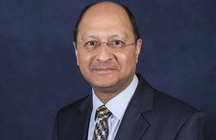
  • Shailesh Vara – 2022 Comments on First Visit as Northern Ireland Secretary

    Shailesh Vara – 2022 Comments on First Visit as Northern Ireland Secretary

    The comments made by Shailesh Vara, the Secretary of State for Northern Ireland, on 8 July 2022.

    It was fantastic to visit the Prince’s Trust on my first visit to Northern Ireland as Secretary of State today and learn more about how the charity supports young people by developing their confidence and the skills needed to succeed through education, training and employment.

    As we build a fairer, more equal, and tolerant society in Northern Ireland, the Government remains committed to increasing respect, understanding and reconciliation between communities in Northern Ireland, and helping to build a better environment for future generations.

  • Shailesh Vara – 2021 Loyal Address Speech

    Shailesh Vara – 2021 Loyal Address Speech

    The speech made by Shailesh Vara, the Conservative MP for North West Cambridgeshire, in the House of Commons on 11 May 2021.

    I beg to move,

    That an humble Address be presented to Her Majesty, as follows:

    Most Gracious Sovereign,

    We, Your Majesty’s most dutiful and loyal subjects, the Commons of the United Kingdom of Great Britain and Northern Ireland in Parliament assembled, beg leave to offer our humble thanks to Your Majesty for the Gracious Speech which Your Majesty has addressed to both Houses of Parliament.

    It is indeed a great honour and privilege for me and my constituents to move the Loyal Address, especially in this, Her Majesty’s 96th year. Her Majesty’s commitment and dedication to service of our nation is an example to all of us. Given Her Majesty’s age, may I say that by comparison the rest of us are no more than mid-career?

    I also take this opportunity to welcome our new colleague to the House—my hon. Friend the Member for Hartlepool (Jill Mortimer), with whom I, for one, very much look forward to working.

    We meet at a time unprecedented in our history—a time when there is a dark shadow over not only our country but across the globe as we deal with the covid-19 pandemic. Far too many lives have been lost and far too many people have suffered, both in the UK and across the world. When this is over—and it will be, at some point—the family of nations must work together so that if something similar happens again in the future we are better prepared. The heartbreaking scenes on our television screens from India are a constant reminder that no one is safe until we are all safe. Sadly, there are similar outbreaks in other countries too, such as Nepal, Thailand and Cambodia.

    As we continue our fight against the virus, I am pleased that we have been able to offer help to others. We were the first country in the world to provide India with practical help, sending vital medical equipment to save precious lives. It is good that the UK has committed £548 million to the global COVAX initiative.

    Over the past year, new speaking arrangements have meant that often when Members put in to speak, they do not get called, or if they are called, they have no more than about three minutes to say their piece. Mindful of the 17 speeches I was unable to give, and mindful of the broad nature of the Gracious Speech and the fact that there is no time limit on me today, I would like to put on the record those 17 speeches. On second thoughts, Mr Speaker, that look in your eye tells me that perhaps I had better save it for another day, when I very much hope I will be called.

    Today marks the 11th anniversary of the Conservative-Lib Dem coalition being formed in 2010. Since then, the Conservatives have cemented their position as the party of Government, Labour as the party of protest, and the Lib Dems as a party that can all gather in this Chamber and still maintain social distancing.

    When the Chief Whip asked me to propose the Gracious Speech, as well as being hugely honoured, I also felt a sense of humility. All of us have had our own individual journeys in being elected to this House. In my case, I was born in Uganda at a time when Uganda was still part of the British empire. My family came here in the early 60s, when I was still a young child, unable to speak a word of English. We settled in a deprived area in inner-city Birmingham, where I went to a local primary school. My father worked as a joiner on building sites. Those were tough times. It was legal to discriminate against people on grounds of race, and people did. Racial intolerance and prejudice were rife. The Prime Minister of the day was Harold Wilson, leading a Labour Government.

    Getting elected to Parliament was not without incident. When I was a candidate in 2000 in Northampton South, the sitting Labour MP, Tony Clarke, tried to use my race and my Hindu faith against me in his efforts to get re-elected. Not surprisingly, he was roundly criticised in the national media. On the subject of my faith, there is a memorable moment that I have from when I was a Northern Ireland Minister, before I resigned over Brexit. I recall one particular visit in Belfast, when I was with a group of people, and we were discussing each other’s faiths. When I mentioned that I was a Hindu, a kindly looking gentleman smiled and asked me, “Mr Vara, would that be a Protestant Hindu or a Catholic Hindu?” Fortunately for me, we were distracted by the barman, who brought another round of drinks.

    It has been a real privilege to serve the people of North West Cambridgeshire since 2005. It is because they selected me that I was able to be the Conservative party’s first non-white Minister in the House of Commons, and the party’s first non-white person to speak from the Dispatch Box. The point I am making is very simple: for someone with my background to be proposing the Loyal Address shows what a truly great and magnificent country we all live in.

    North West Cambridgeshire is a relatively new constituency, and I am only its second Member of Parliament. As with all constituencies, it has its high and low points. In fact, on the low side, Holme Fen is 7 metres below sea level and is the lowest point in Britain, and it is in my constituency. On the high side, it is wonderful that Peterborough United, otherwise known as Posh, have just been promoted to the championship. That being said, my other team, Arsenal, are clearly on a low point. Along with many others, we just live in hope.

    My constituency is steeped in history. In 969 AD, Ramsey Abbey was founded, and it prospered for many centuries—that is, until news of its wealth reached King Henry VIII and his chief minister, Thomas Cromwell, who dissolved the monastery in 1539, and its possessions were claimed by the Treasury. I suppose that that was the 16th century precursor to nationalisation.

    We also have the Bell Inn in Stilton, one of England’s oldest and most famous coaching inns. As well as its association with Stilton cheese, it is where the infamous highwayman Dick Turpin is believed to have hidden for nine weeks while on the run in the 18th century. I am reliably informed that his ghost still resides at the inn. He will doubtless be pleased with the Government’s pledge to give greater protection to tenants. His ghost, however, is not on the electoral roll, and getting an ID card will be a serious problem, but he certainly continues to bring in the tourists.

    Moving to modern times, there is a strong military presence, with RAF Molesworth in the south and RAF Wittering in the north. The size of my constituency is some 300 square miles, with plenty of farms producing the finest food in the country. My constituents are good, decent, hard-working people, ambitious for themselves and their families. They want a society that has equality of opportunity and allows them to rise as high as their ability and talent will take them, irrespective of their background.

    This Gracious Speech delivers for the people. It is in the tradition of Conservative Governments, who have always sought to better people’s lives, especially the working class and the underprivileged. In the 19th century, the Conservative Lord Shaftesbury was leading the way. He pushed through various pieces of legislation to improve conditions for the mentally ill and children who were forced to work under appalling conditions, as well as championing education for poor children. An interesting point is that, in Shaftesbury’s first three years in Parliament, he saw four Conservative Prime Ministers: Lord Liverpool, George Canning, Viscount Goderich and the Duke of Wellington. I suspect that the 2015 intake can sympathise with the frequent turnaround of Conservative Prime Ministers, although I should make it clear that this Prime Minister is not going anywhere for a very long time. Disraeli spoke passionately about one nation Conservatism, and Margaret Thatcher encouraged home ownership for people who would otherwise be paying rent all their lives.

    This Gracious Speech is for all the four nations: England, Scotland, Wales and Northern Ireland. After the massive financial support during the pandemic, I welcome the measures to create more jobs and drive economic growth, and the drive to build back better and level up opportunities across the country. On the health front, there will be additional funds for the NHS, tailored care for individual patients closer to home and improved mental health services, and the UK will lead the world in seeking new treatments for diseases such as cancer.

    Education is for everyone at all stages of life. That means prioritising the early years and ensuring that the pupils who have missed out in the past year will be able to catch up during this parliamentary term, and 11 million adults will be able to benefit from the lifetime skills guarantee.

    With COP26 in Glasgow later this year, it is great to see that the UK is leading the world in promoting new green initiatives to help to safeguard the environment. Protecting their citizens is a key role for any Government. I welcome the tough new measures that will be introduced, including the new draft victims bill, legislation for greater internet safety and a fairer immigration system, and tough measures to deal with people smugglers.

    Speaking on the subject of law and order, I am reminded of the Chief Whip. Earlier today, he basically said to me that, if I were to cause a constitutional crisis today, it would be the Tower of London for me and execution. Actually, my constituency has form with the Tower of London and executions. In 1941, Josef Jakobs, a German spy, parachuted and landed near Dovehouse farm outside Ramsey in my constituency. Unfortunately for him, he broke an ankle and was unable to move. The following morning, he was found by two local farmers, who handed him over to the local Home Guard. Jakobs was tried and then executed at the Tower of London, but the significant point is that he was the last person to be executed at the Tower of London. I appreciate that it is the season of by-elections, but I have no intention of causing a constitutional crisis and adding to the Chief Whip’s woes.

    Turning to the Gracious Speech again, I was also very pleased with the Government’s continued support for our armed forces and our strengthening of trade links with the rest of the world as we pursue our interests of global Britain. This Gracious Speech recognises the work required to deal with the pandemic. It respects our manifesto and the trust placed in my right hon. Friend the Prime Minister and his Government by the public.

    I have known the Prime Minister since well before we were elected to this House. I have shared debating platforms with him, campaigned with him and campaigned for him. In all those years, one thing has been clear: he stands out because he really gets it and, importantly, he delivers. He really understands the working people of this country, what drives them, what their aspirations are for themselves and what they want for their country. That is why the people trust him. They did so when he was elected twice as Mayor of London, and when he led the Brexit campaign and then delivered on Brexit. At the last election, they trusted him by giving him the largest Conservative majority since Margaret Thatcher’s victory in 1987. In the same election, the Conservative party received the largest number of votes ever received by a single British political party in history. Over the past few days, in various electoral contests, that trust in my right hon. Friend has been reinforced, including in the recent by-election in Hartlepool; I referred earlier to my new hon. Friend the Member for Hartlepool.

    This House is at its best when we work together. All of us are in the business of improving the lives of our fellow citizens. We may differ in our approach, but the aim is the same. There are on both sides many Members who have experienced inequality, poverty, racism and much more. So let us recognise that fact, and direct our energies less in divisive arguments and less on personal attacks, and more on constructive engagement. That is not to say that we should not have robust and challenging debate in order to deliver the best for the people of our country, whom we are here to serve. As for personal attacks, let us remember what Margaret Thatcher said:

    “if they attack one personally, it means they have not a single political argument left.”

    At this critical time in our history, it is especially important that we work together to rebuild as the United Kingdom emerges from this dreadful pandemic. There is every reason for optimism, and with this ambitious legislative programme,, set out in the Gracious Speech, we have a bright and prosperous future. I commend the Gracious Speech to the House.

  • Shailesh Vara – 2016 Statement on HM Courts and Tribunals Estate

    shailehsvara

    Below is the text of the speech made by Shailesh Vara, the Parliamentary Under-Secretary of State, Minister for the Courts and Legal Aid and Parliamentary Under Secretary of State, on 11 February 2016.

    The government is committed to modernising the way in which justice is accessed and delivered. We are investing over £700m over the next 4 years to update the court and tribunal estate, installing modern IT systems and making the justice system more efficient and effective for modern users.

    Working closely with the judiciary, we have begun installing Wi-Fi and digital systems in our criminal courts but much more needs to be done. We want to make the entire justice system more accessible to everyone – witnesses, victims, claimants, police and lawyers – by using modern technology including online plea, claims and evidence systems and video conferencing, reducing the need for people to travel to court.

    As part of this modernisation, the court and tribunal estate has to be updated. Many of the current 460 court buildings are underused: last year 48% of all courts and tribunals were empty for at least half their available hearing time. These buildings are expensive to maintain yet unsuitable for modern technology.

    Court closures are difficult decisions; local communities have strong allegiances to their local courts and I understand their concerns. But changes to the estate are vital if we are to modernise a system which everybody accepts is unwieldy, inefficient, slow, expensive to maintain and unduly bureaucratic.

    On 16 July 2015 I therefore announced a consultation on proposals to close 91 courts and tribunals in England and Wales. Over 2,100 separate responses were received, along with 13 petitions containing over 10,000 signatures. I am grateful to all who took the time to provide their views. It is clear from the responses that the service our courts and tribunals provide continues to be highly valued.

    Having considered carefully all responses to the consultation, we have decided to close 86 of the 91 courts and tribunals. 64 sites will close as proposed in the consultation. A further 22 closures will take place but with changes to the original proposals. These changes, many suggested by respondents, include the identification of suitable alternative venues, such as local civic buildings; or different venues in the HMCTS estate to those originally proposed. I am very grateful to all those who engaged with the consultation to help us to reach the best solutions.

    On average, the 86 courts we are closing are used for just over a third of their available hearing time. That is equivalent to less than 2 days a week. It will still be the case that after these closures, over 97% of citizens will be able to reach their required court within an hour by car. This represents a change of just 1 percentage points for both criminal and County Courts. The proportion able to reach a tribunal within an hour by car will remain unchanged at 83%.

    For each proposal in the consultation, we have considered access to justice; value for money; and efficiency. The consultation response, which is being published today, contains details of all the decisions and changes including an indicative timetable for closures, and will be placed in the Libraries of both Houses.

  • Shailesh Vara – 2016 Speech on Family Justice

    shailehsvara

    Below is the text of the speech made by Shailesh Vara, the Parliamentary Under-Secretary of State, Minister for the Courts and Legal Aid and Parliamentary Under Secretary of State, on 21 January 2016.

    Just prior to the Christmas recess, an error was identified in an online version of Form E.

    This is the form provided by Her Majesty’s Courts and Tribunals Service (HMCTS) in order to enable people to disclose financial information during divorce and similar proceedings.

    This fault meant that the automatic calculator in the form calculated the wrong total for an individual’s net assets by failing to deduct certain liabilities.

    The Ministry of Justice (MOJ) was alerted to the fault on 10 December 2015 and a corrected version of the form was put online on 14 December. However the wider implications of the faulty form were not immediately recognised.

    As soon as I was made aware of this issue on 16 December, I ordered an urgent investigation.

    The investigation found the faulty formula was present in versions of Form E which were online between April 2014 and mid December 2015 and between April 2011 and January 2012.

    A total of 36,527 cases contain a version of Form E filed from these periods. HMCTS staff have now reviewed all these cases and found that 3,638 files – 10% – contained the faulty calculator version of Form E with an incorrect figure for net assets figure in the summary table.

    1,403 of these cases are still live, allowing HMCTS to intervene immediately to clearly flag these cases to the courts in order to avoid the error affecting the final orders in these cases.

    The remaining 2,235 files – 6.1% – were closed cases. Although the faulty form was used in these cases, it will not necessarily have had any effect on the ultimate outcome. Form E is only a part of the material used by the parties and the court and is used at an early stage, so the information is often disputed or superseded by further information introduced during proceedings.

    Following the error coming to light, HMCTS established a dedicated email address which people could use if they were concerned about their own case: formE@hmcts.gsi.gov.uk. This email address was advertised on our website and also in all responses to media enquiries. As of 21 January, 51 members of the public have emailed us about their case.

    I have instructed HMCTS to write to all parties in the 2,235 closed cases. The letter expresses our sincere regret for the error, sets out what happened and explains that, although Form E is just one part of the evidence used in their case, there remains a possibility that the error affected the final outcome.

    The letter sets out options available to people involved in these cases. Some may wish to do nothing, if, for example, they know that the error was corrected during the proceedings or they do not wish to re-open their cases. If people think they have been affected by this error then they can apply to the court to vary or set aside their order. My officials consulted the President of the Family Division about the court rules and procedures that would apply to such applications or for any other proceedings that might be open to the parties. My officials also consulted the President on the development of a specific form for such applications. We have provided a link to the new form in our letter to the parties, as well as guidance on how to complete the form.

    I have instructed that no court fee will be charged for making this application, and this is also made this clear in the letter from HMCTS.

    We are also uploading a new version of Form E which makes clearer how the calculation of net assets should be made. We will also consider the future of Form E as part of our broader court reforms and the automatic calculator function will be disabled during this process.

    This failure should not have happened. Divorce proceedings can be very difficult and I sincerely apologise for this situation and any distress it may have caused.