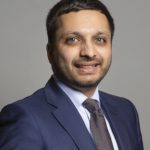
Tag: Saqib Bhatti

  • Saqib Bhatti – 2024 Speech on the Economy, Welfare and Public Services

    Saqib Bhatti – 2024 Speech on the Economy, Welfare and Public Services

    The speech made by Saqib Bhatti, the Conservative MP for Meriden and Solihull East, in the House of Commons on 22 July 2024.

    I start by wishing His Majesty the very best of health on behalf of myself and my constituents. As we welcome many new Members to the House, His Majesty sets a clear standard for public service that we can all hope to emulate. I have had the privilege of listening to a number of maiden speeches from across the House—all fantastic, all unique. I am sure all new Members will have received countless pieces of advice, so I will just say this: none of us, new or returning Members, should ever forget what a privilege it is to serve in this House and in this Parliament, the mother of all Parliaments.

    We on the Conservative Benches have much to be proud of in the legacy of the last 14 years. Just last week we have seen inflation remain at the Bank of England target rate of 2%. We created more than 800 jobs a day for the last 14 years. It was under the Conservative Government that, in 2023, the UK became the third most valuable tech economy in the world, worth $1 trillion. We also boast more billion-pound companies than France, Germany and Sweden combined. As has been repeatedly mentioned, we have the fastest-growing economy in the G7.

    I want to address the notion that the Government are trying to push, where they talk down the economy, paving the way for tax rises. It clearly does not stack up. If the Chancellor insists on pushing this alternative narrative, as we have heard today, some questions need answering, because surely all those promises made during the election cannot have been made by the Chancellor, or the shadow Chancellor as she was then, flying blind, especially when the OBR provides the transparency that she now denies she had.

    Throughout the campaign, we heard about how the Government’s policies were fully funded. If the Chancellor did not use the OBR forecasts, what was she using to make those promises in the first place? I do not think anyone is fooled by this narrative or these tactics. Most importantly, if they are going to raise taxes, which will they raise? They need to come clean about that, because the British people deserve the truth, not whatever the Government are trying to peddle to justify their tax and spend policies. The Government can be assured that the Opposition will do our duty and hold this Government to account.

    I want to address a number of things in the King’s Speech. I have to say I was astonished by the lack of respect in the King’s Speech to rural communities. A lot of my communities in my rural area felt incredibly disrespected, and it was incredibly disappointing. I am also disappointed and deeply concerned by the Government’s focus on building on the green belt. We have some of the most precious green belt land in Meriden and Solihull East, not least the Meriden gap, which is a hugely important throughway for migrating wildlife. It is not clear how the Government will protect the Meriden gap.

    In fact, the only thing that has been clear in the early days of this Government is that they are willing to set aside local community opinions, and anyone who challenges that will be accused of being a nimby. My villages in Balsall Common, Hampton in Arden, Marston Green, Knowle, Dorridge, Chadwick End and Hockley Heath have already made huge sacrifices when it comes to green-belt land, not least because of HS2. These top-down targets and vague references to grey-belt land are already causing huge anxiety. This matters because when it comes to setting aside community opinion and disenfranchising whole communities, the tactics that the Government are already employing are the best way to do it. I am deeply concerned by that. We on the Opposition Benches will ensure that we hold this Government to account.

    The title of this debate includes public services, and one of my key campaign pledges was to restore A&E services to the borough of Solihull. My argument on that is simple: we have about 220,000 people in the borough, and if there is an emergency, my constituents have to go all the way to Heartlands hospital or Warwick hospital, which are way too far away. It is clear to me that the case is strong. One thing I will be campaigning for in this Parliament, whether it takes five or 10 or 15 years, if I am lucky enough to be returned repeatedly—I make no assumptions on that, of course—will be to get that A&E service. I will be working with the integrated care board to achieve that.

    I will finish on this: my constituents and the British people have been clear. As we discharge our duties as His Majesty’s official Opposition, their expectations are that we do so with integrity and humility, but always with courage and boldness in what we stand for and who we are. I assure my constituents that for the sake of our country we shall not falter.

  • Saqib Bhatti – 2023 Speech on Holocaust Memorial Day

    Saqib Bhatti – 2023 Speech on Holocaust Memorial Day

    The speech made by Saqib Bhatti, the Conservative MP for Meriden, in the House of Commons on 26 January 2023.

    I associate myself with the sentiment of the hon. Member for Stockport (Navendu Mishra) on social media companies doing more. They simply do not do enough, but they have the resources to do so. I pay tribute to my right hon. Friend the Member for Beckenham (Bob Stewart) for his moving speech. Every time I hear him speak about his experiences, there is never a dry eye. I congratulate the hon. Member for Stretford and Urmston (Andrew Western) on his maiden speech. He was doing so well up until the fifth minute—as a Manchester United fan, I am sure that we will have many sparring sessions inside and outside the Chamber, but I wish him well.

    I thank my right hon. Friend the Member for Bromsgrove (Sajid Javid), the right hon. Member for Barking (Dame Margaret Hodge) and all Members who have contributed to ensuring that we have this really important debate. I pay tribute to the Holocaust Educational Trust for all its work, the Holocaust Memorial Day Trust and the Community Security Trust. I also visited a school in north London and got to see at first hand the sad situation of our children—and they are our children—who are struggling to be educated without fear. I wish we did not have to live in a society where that is the case. I am sure that we will all work together to make that so.

    I thank Solihull Council, which had its civic reception this morning as part of its holocaust remembrance events. I urge all Members to spend some time going through the Holocaust Memorial Day Trust website, to read the stories of those who survived and those who perished—the mothers, fathers, sons, daughters, brothers and sisters.

    “Never again.” So many times we have heard that phrase, and when speaking not only of the holocaust but, sadly, of subsequent genocides, such as those in Rwanda, Cambodia and Srebrenica, as my right hon. Friend the Member for Bromsgrove said. I am a patron of Remembering Srebrenica. In the week that the doomsday clock moved 10 seconds closer to midnight, and when incidents of mass murder and atrocities are unveiled with too much regularity—whether in Ukraine, Xinjiang or in the stories of harrowing abuse suffered by the Rohingya communities—this debate seems particularly poignant. Sadly, that list was not exhaustive. One thing is clear: we cannot be complacent. We cannot assume that it will never happen again. We cannot forget.

    The theme today is ordinary people. I want to speak about the extraordinary Paul Oppenheimer, who settled in my constituency after the war, in the village of Marston Green. He was born in Berlin in 1928 and lived in my constituency after the war for over 40 years. In 1940 his family moved to Amsterdam and, within six months of the German invasion, the persecution of the Jewish communities in Holland had started. He was only able to complete one term in the local grammar school before the Nazis banned Jewish children from attending non-Jewish schools. In January 1942, it was decreed that Jews could only reside in Amsterdam, and from April 1942 it was decreed that Jews must wear a Jewish star. The Nazis then went block by block, clearing Jewish families and taking them by train to the Westerbork transit camp, before they were sent on to other camps such as Auschwitz, Sobibor and Bergen-Belsen.

    The Oppenheimers were exempt from wearing the yellow star by virtue of a small piece of fortune. In 1936, Paul Oppenheimer visited England with his parents. During their visit, his sister, Eve, was born, and therefore she had entitlement to recognition as a British subject. It was due to Paul’s father’s foresight in registering Eve as a British citizen that the whole family were treated differently, with blue exemption cards. They were kept in the slightly—slightly—better star camp, where they did not have to shave their heads, could wear civilian clothes and would often be protected from the random beatings and shootings, by virtue of that citizenship.

    But they were not safe from the unsanitary conditions, and disease was rife. Paul lost his mother and father to disease in 1945, but he and his brother and sister eventually survived and found their way to England. Later in life, Paul checked to see what happened to those who were sent on transit trains to camps from Westerbork. Of the 34,143 people who left Westerbork for Sobibor camp, only 19 survived. Of the 58,380 who left for Auschwitz, 854 survived.

    The thing about this story is that, in line with the theme of Holocaust Memorial Day this year, you would never have known it about Paul. He started as an engineering apprentice in Marston Green in my constituency and ended up working in an automotive company on braking systems for passenger cars. In fact, he was so good that his work on anti-locking brakes, which are standard in cars today, earned him an MBE in 1990. It was only when he got that award and journalists started asking him about his life that the horrors he had seen and his story became clear. Paul was the ordinary neighbour. He was the ordinary co-worker. He was the one who ploughed his efforts into rebuilding his life here in Britain. Paul settled in my constituency of Meriden. He brought up his children just streets away from where I live. That is when it hits us how the extraordinary evil of the holocaust touched the lives of so many ordinary people.

    As I conclude, I wonder about all the Pauls who did not survive and all the Oppenheimers who did not make it to a place of safety, all the engineers who did not make it, all the doctors, intellectuals and artists, and all the great contributions that could have been made. They were not just a loss to their families; they were a loss to humanity, at the hands of a warped and evil ideology. Whether it is Xinjiang, the Rohingya community or Ukraine, one thing is clear: we must all come together and work with our international partners as a coalition of free, democratic countries and make sure that “never again” is not just something we say but something we live by.

  • Saqib Bhatti – 2022 Tribute to HM Queen Elizabeth II

    Saqib Bhatti – 2022 Tribute to HM Queen Elizabeth II

    The tribute made by Saqib Bhatti, the Conservative MP for Meriden, in the House of Commons on 9 September 2022.

    That was an excellent tribute, like so many tributes today; it just goes to show that we are all united in our grief. The heartfelt speeches from across the House have echoed the pain and sorrow that have been felt across the country and the Commonwealth since the devastating news yesterday. On behalf of my constituents in Meriden, I express our heartfelt condolences to the royal family as they mourn the loss of a beloved mother, grandmother and great-grandmother. Our nation weeps with them and for them.

    Her Majesty holds a special place in the hearts of my constituents, because it was on a spring morning in 1971 when she opened Chelmsley Wood shopping centre, and most of the village of Chelmsley Wood turned out to greet her. The royal party was running behind schedule that day, but the Queen was undeterred and took time to speak to local residents. That same day, the Queen and the Duke of Edinburgh were shown the proposed site of the National Exhibition Centre. They would return five years later, in 1976, to open the NEC, where excited members of staff stood in line to greet Her Majesty. This is particularly apt, because the NEC was a major venue for the Commonwealth games.

    Her Majesty always demonstrated kindness, generosity and dedication. I have my own experience of this, because in March 2007, when I was finishing my degree at the London School of Economics, I was invited to meet Her Majesty on Commonwealth Day. I was nervous and excited, and she was very gracious with her time. It was only later when I asked a friend, “How did I do?” that he said, “You said a lot, but none of it made any sense.” [Laughter.] I hope my tribute is better today, but Her Majesty never let on and she wished me all the best in my endeavours.

    For decades, Her Majesty has been a cool-headed constant steward of our great nation. She was always there when we needed her. She showed us what it meant to keep calm and carry on. I will never forget how, in the pandemic, she gave reassurance to the whole nation and told us that we would meet again. We were blessed to have her and she really was the best of us. She lived a dedicated life of service and devotion to her husband, her family, her country and the Commonwealth. Every single one of us in this House would do well to emulate her lifetime of selflessness and public service.

    Today, we mourn a monarch and we pray for her. As we reflect on her legacy and we look to the future, I say only this: may she rest in peace. May we always be grateful to have experienced her reign. To God we belong and to God we return. God save the King.