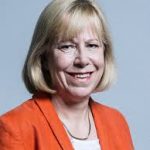
Tag: Ruth Cadbury

  • Ruth Cadbury – 2024 Speech on the Economy, Welfare and Public Services

    Ruth Cadbury – 2024 Speech on the Economy, Welfare and Public Services

    The speech made by Ruth Cadbury, the Labour MP for Brentford and Isleworth, in the House of Commons on 22 July 2024.

    It is an honour to be re-elected for the fourth time to the redrawn seat of Brentford and Isleworth, and to follow such impressive maiden speeches, particularly that of my hon. Friend the Member for Cities of London and Westminster (Rachel Blake), in whose constituency we all work.

    After nine years sitting in Opposition it is a pleasure to be on the Government side of the Chamber and to support this Government’s legislative programme, which brings hope, opportunity and change for my constituents and for the country at last. I will focus my response to the King’s Speech on the Government’s ambitious proposals around transport policy—not only because it is an area I have long been involved with, having served on the Transport Committee for five years and chaired five all-party parliamentary groups on transport, but because transport was brought up regularly on the doorsteps in this last election.

    The theme of today’s debate is economy, welfare and public services. Effective transport policies are essential to the change we need to see in all three areas, as well as in addressing our climate crisis, so I am pleased to see the bold and ambitious plans set out by my right hon. Friend the Member for Sheffield Heeley (Louise Haigh) and her team to do just that. For access to work, education and health services, for supplying our manufacturing and retail sectors and for supporting our wellbeing and family life, decent transport choices are essential, and nowhere are they more needed than in the new communities that will be built, if the traffic on the roads to and around them is not to grind to a halt. Whether in city, town or countryside, we need the full range of transport options—ones that are affordable, accessible, efficient and environmentally sound.

    On buses, I am delighted that, through the better buses Bill, the Government will end the ideological and control-freakery policy of banning local authorities from running their own municipal bus companies. Such companies were killed off by the Thatcher Government in a bout of ideological rage, with only London retaining a regulated bus service. The rest of England should have what we have in London: regular day, evening and weekend services, simple fare structures, and high standards of safety, accessibility and passenger information. Those are being developed by the Mayor of Greater Manchester, Andy Burnham, and I look forward to seeing other local authorities—of all parties, I am sure—following his example.

    To be an alternative to driving, and for us to cut road congestion and pollution, rail travel must be reliable. I am therefore delighted to see Bills to create Great British Railways and to bring train operations into public ownership. That is essential for a simplified and unified rail system that focuses on improving passenger services while getting value for the taxpayer. Our constituents, and many Members of this House, have had terrible experiences of cancelled trains, or of sitting on the floor for hours despite booking a seat. We will now see a Government and a Department that do not use transport as a cudgel in our culture wars, or as a crude electoral hammer to override local authorities that want to introduce sensible measures to encourage cycling and walking.

    Transport is at the heart of the challenge of national renewal that we have set ourselves: kickstarting economic growth, boosting jobs and living standards, and building sufficient homes in sustainable communities. Of course there are challenges ahead—not least in further growing capacity in our overloaded rail network. I welcome the plan to improve east-west connectivity across the north of England, but funding further increases in rail capacity will unfortunately be financially unsustainable until we see the economic growth that the Chancellor is working on. Aviation expansion is acceptable only if it passes the four tests that we set ourselves in opposition: cutting carbon dioxide emissions, overcoming local environmental impacts, providing regional benefits across the UK, and deliverability. I know that the new Secretary of State and ministerial team will work across our travel and transport sectors to improve transport connections to the benefit of our country as a whole.

  • Ruth Cadbury – 2023 Speech on the Independent Review of Net Zero

    Ruth Cadbury – 2023 Speech on the Independent Review of Net Zero

    The speech made by Ruth Cadbury, the Labour MP for Brentford and Isleworth, in the House of Commons on 9 February 2023.

    I thank the right hon. Member for Kingswood (Chris Skidmore) for his work on the report and for his speech, which will have given many people across the House and across the country a lot of hope—something that the actions and words of the Government leave to be desired.

    Perhaps the most important constituency work that we do as Members of Parliament is meeting students from schools and colleges. Whether they are little ones in years 1 and 2, arriving in their hi-vis jackets, or sixth-formers who are passionate about the world on which they are about to have a say, it is a huge honour to speak to so many of them and to hear about their worries, their concerns and their hope for the world. The one message I always take away, above all else, is their absolute determination to ensure that as politicians we take the climate crisis seriously and, more importantly, that we act.

    It is not enough for politicians to stand up and talk about the climate crisis; it is time to act. We have a responsibility to act, yet over the past decade of Conservative rule, we have seen an approach to the climate crisis that has too often put the need for short-term political gain ahead of the needs of our planet—the planet that our children and grandchildren will inherit.

    The irony is that the review’s second conclusion is that the UK

    “must act decisively to seize the economic opportunities”,

    but as the right hon. Member points out, the UK is now dropping back from the economic leadership role it once had on climate change and net zero across the world. If only the Government had listened to that message over the past decade, the country might now be in a different position. On Heathrow expansion, for example, they have not ruled out a third runway, despite the undeniable climate impact of the project.

    On onshore wind, British businesses have been leading the way in developing the newest turbines, yet because of the decade-long ban on further onshore wind developments, UK companies have been exporting that technology rather than building it for projects on the hills of the UK to join the ones we already have, like the one my brother can see from his house. The UK could have been a wind superpower by now. We know that more wind power means cheaper bills for our constituents, yet the Government did not act.

    Home insulation is another example. Homes in the UK leak three times as much heat as those in Europe, which means that energy bills are far higher than they should be. That adds to the cost of living crisis that our constituents face. The last Labour Government rolled out a plan to insulate new homes and retrofit old ones, but thanks to the Conservative Government’s promise to cut the “green crap”, the programme was massively scaled back.

    Almost a decade after coming to power, the Government realised the scale of the crisis and finally introduced a green homes grant programme. My constituents were overjoyed, as were local businesses, but what happened? The scheme was a disaster: it closed down early, and many small businesses lost a lot of money. No wonder the Public Accounts Committee wrote a report on the grant and called it a “slam dunk fail”—a fitting epitaph for the Government’s climate agenda, perhaps. The most frustrating part of that slam dunk fail is that I know from listening to my constituents that they want to see action on the climate crisis.

    Electric vehicles are another example. My inbox is full of emails from constituents who want to be able to buy electric cars or vans for their business, but who face hurdle after hurdle. From blocks of flats and residential streets to the strategic road network, there are so many gaps in the EV charging infrastructure that the Government are taking too long to address.

    There is inadequate support for local authorities and elected Mayors, who are doing their best. Let me give a couple of examples of good work that is going on. The Mayor of London’s ambition is to cut emissions and pollution and to move to net zero. It is useful to know that all new bus contracts in London include a requirement to use zero-emission buses. My council, Hounslow, has done a lot of work on climate change: all new council homes built will be ultra-low emission, for example. But local elected leaders need national leadership, they need tools and sometimes they need funding from the Government, and too many of them say that they are not getting it. Unfortunately, short-termism and austerity have been the Government’s approach to net zero, which is why I believe the UK has been failing.

    I am sure Conservative Members will ask what a Labour Government would do. No doubt my hon. Friend the Member for Bristol East (Kerry McCarthy) will cover that, but I am very pleased that my right hon. Friend the Member for Doncaster North (Edward Miliband) has set out the bold action that a Labour Government would take to tackle the climate crisis. We would create Great British Energy to champion green and clean energy, we would invest in wind power, we would insulate 19 million homes, we would lower bills, we would improve our energy security, and, most important, we would work to tackle the climate crisis.

    I think back to the dozens of students I have heard from throughout my constituency who are desperate for the Government, and indeed the world, to do much more to tackle the climate crisis. Many of them will be voting in the next general election, and the rest will vote in subsequent general elections. We owe it to them to go beyond words and to take action. It is nearly four years since the House declared a climate emergency, and I was proud to be an MP at that time. We know that we are living in a climate emergency: we see the flash floods, the displacement and the degradation of biodiversity across the planet, and we see the implications of all those developments. We can all see the damage that is being done. What we need to do is act now, but it is such a shame that action was not taken a decade ago.

  • Ruth Cadbury – 2016 Parliamentary Question to the Department for Transport

    Ruth Cadbury – 2016 Parliamentary Question to the Department for Transport

    The below Parliamentary question was asked by Ruth Cadbury on 2016-01-18.

    To ask the Secretary of State for Transport, whether the Government plans to carry out (a) a full health impact assessment for each of the airport expansion proposals under review and (b) an assessment of the effect on different sections of society of each such proposal.

    Mr Robert Goodwill

    An appraisal of the impacts on people, including health impacts and the impact on different sections of society, for each of the short-listed schemes will be carried out as part of the work on preparing the building blocks for an Airports National Policy Statement. The Airports Commission has already made its own assessment of these impacts and we are considering these carefully.

  • Ruth Cadbury – 2016 Parliamentary Question to the Department of Health

    Ruth Cadbury – 2016 Parliamentary Question to the Department of Health

    The below Parliamentary question was asked by Ruth Cadbury on 2016-02-03.

    To ask the Secretary of State for Health, whether the grants available for children’s hospices will continue to be paid to them through NHS England.

    Ben Gummer

    NHS England is responsible for the annual grant to children’s hospices and for determining how it will be allocated each year. The palliative care currency is designed to provide a basis for local commissioning discussions, by clearly identifying the costs of care. The currency is being tested by NHS England locally, to ensure it makes sense to commissioners and providers, and the results will be published later in the year. The intention is that there will be an appropriate transition to local commissioning of children’s hospices, but they have pledged to continue the grant until a sustainable alternative means of local funding is in effect.

  • Ruth Cadbury – 2016 Parliamentary Question to the Department for Transport

    Ruth Cadbury – 2016 Parliamentary Question to the Department for Transport

    The below Parliamentary question was asked by Ruth Cadbury on 2016-03-17.

    To ask the Secretary of State for Transport, how many reports of lasers being shone into the cockpits of passenger aircraft landing or taking off from Heathrow Airport there have been in the last three years.

    Mr Robert Goodwill

    The table below details the number of reports received by the Civil Aviation Authority of laser incidents targeted against aircraft landing or taking off from London Heathrow Airport.

    Year

    Number of reported incidents

    2012

    150

    2013

    144

    2014

    165

    2015

    95**

    ** A final analysis of laser occurrence reports received for the 2015 period will be available by the end of April 2016.

  • Ruth Cadbury – 2016 Parliamentary Question to the Department for Transport

    Ruth Cadbury – 2016 Parliamentary Question to the Department for Transport

    The below Parliamentary question was asked by Ruth Cadbury on 2016-03-24.

    To ask the Secretary of State for Transport, if he will make an assessment of the effect on traffic congestion in (a) Brentford and Isleworth constituency and (b) the London borough of Hounslow of the proposed third runway at Heathrow.

    Mr Robert Goodwill

    The Airports Commission undertook a range of detailed assessments to support its Final Report published in July 2015. The analysis included a detailed assessment of transport network impacts for each of the Commission’s three short-listed options.

    Copies of the Commission’s Surface Access: Dynamic Modelling Report its Local and Strategic Roads Modelling Study for the Heathrow Airport North West Runway Proposals, and the Commission’s Freight Impact Study were published alongside its Final Report, and are available from the Commission website at the following links:

    https://www.gov.uk/government/uploads/system/uploads/attachment_data/file/437460/surface-access-dynamic-modelling-report-heathrow-airport-north-west-runway.pdf

    https://www.gov.uk/government/uploads/system/uploads/attachment_data/file/437459/surface-access-local-and-strategic-roads-modelling-study-heathrow-airport-north-west-runway.pdf

    https://www.gov.uk/government/uploads/system/uploads/attachment_data/file/437276/surface-access-freight-impacts-study.pdf

    The Government will carefully consider all the evidence set out when making a decision on the location of additional runway capacity.

  • Ruth Cadbury – 2016 Parliamentary Question to the Department for Transport

    Ruth Cadbury – 2016 Parliamentary Question to the Department for Transport

    The below Parliamentary question was asked by Ruth Cadbury on 2016-05-04.

    To ask the Secretary of State for Transport, what plans he has to source additional funding for any shortfall in funding between what Heathrow Airport Limited commits to pay for a third runway and the estimated cost.

    Mr Robert Goodwill

    All of the promoters have proposed privately-funded schemes, and as privately-owned companies we expect airports to fund the development of new airport capacity fully.

  • Ruth Cadbury – 2016 Parliamentary Question to the HM Treasury

    Ruth Cadbury – 2016 Parliamentary Question to the HM Treasury

    The below Parliamentary question was asked by Ruth Cadbury on 2016-10-19.

    To ask Mr Chancellor of the Exchequer, if he will allocate additional funding to the Cycling and Walking Investment Strategy.

    Mr David Gauke

    At the Spending Review in 2015, the Government set out its plans to invest more than £300m to support the Cycling and Walking Investment Strategy. This will increase cycling and walking by improving infrastructure and encouraging active travel, particularly in children.

  • Ruth Cadbury – 2016 Parliamentary Question to the Department for Transport

    Ruth Cadbury – 2016 Parliamentary Question to the Department for Transport

    The below Parliamentary question was asked by Ruth Cadbury on 2016-01-18.

    To ask the Secretary of State for Transport, what account the Government’s forthcoming review of the night noise regulations for Heathrow, Gatwick and Stansted airports will take of the WHO Europe’s recommendation that noise at night should not exceed 40 dB Leq.

    Mr Robert Goodwill

    The WHO’s 2009 Night Noise Guidelines for Europe do not refer solely to noise from aviation, but are based on the Lnight,outside indicator which measures the average noise that individuals are exposed to over all nights of a year – including from all transport sources and non transport sources such as industry and the neighbourhood.

    One of the environmental objectives of the current night flight restrictions is to limit and where possible reduce the number of people significantly affected by aircraft noise at night. This is based on the measure of the area and number of people within the 6.5 hour night quota period contours, and in particular the 55dB LAeq contour. This is the threshold also used in the WHO Night Noise Guidelines for Europe. This is also consistent with the Government’s overall policy on aviation noise to avoid significant adverse impacts.

    The Government’s proposals for the night flight restrictions from October 2017 will continue to take account of the latest evidence on the health impacts of night flights.

  • Ruth Cadbury – 2016 Parliamentary Question to the Department of Health

    Ruth Cadbury – 2016 Parliamentary Question to the Department of Health

    The below Parliamentary question was asked by Ruth Cadbury on 2016-02-03.

    To ask the Secretary of State for Health, what the effect of the palliative care currency will be on statutory funding for children’s hospices.

    Ben Gummer

    NHS England is responsible for the annual grant to children’s hospices and for determining how it will be allocated each year. The palliative care currency is designed to provide a basis for local commissioning discussions, by clearly identifying the costs of care. The currency is being tested by NHS England locally, to ensure it makes sense to commissioners and providers, and the results will be published later in the year. The intention is that there will be an appropriate transition to local commissioning of children’s hospices, but they have pledged to continue the grant until a sustainable alternative means of local funding is in effect.