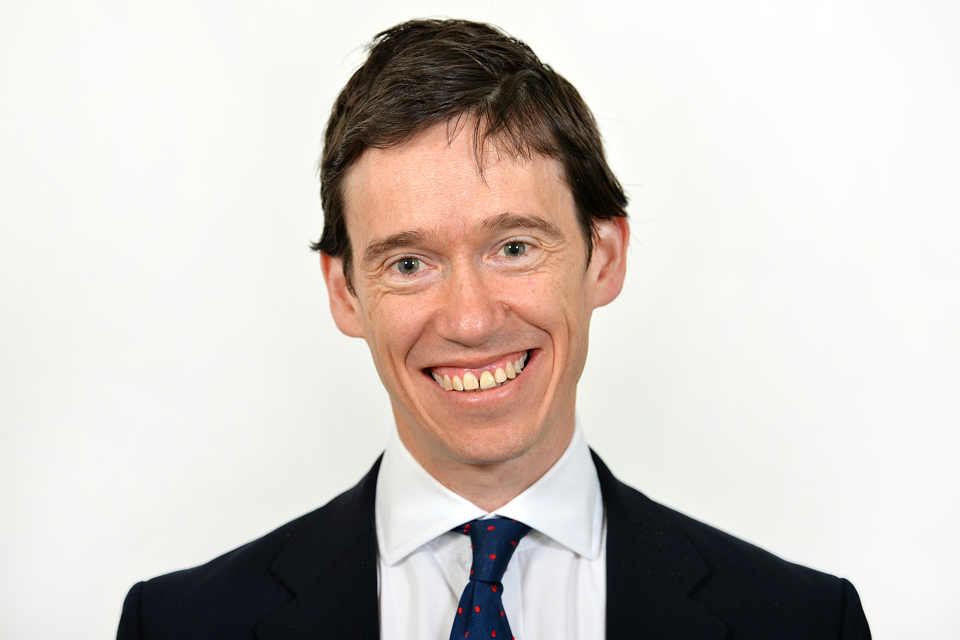
The speech made by Rory Stewart, the then Parliamentary Under-Secretary of State for Environment, Food and Rural Affairs, in the House of Commons on 10 November 2015.
Multa novit vulpes, verum echinus unum magnum, Madam Deputy Speaker.
Tom Tugendhat (Tonbridge and Malling) (Con): In every happy home is a hedgehog, as the Pashtuns would say. I urge my hon. Friend to encourage our Pashtun community in this country to follow that example.
Rory Stewart: I am very grateful for that Pushtun intervention, but my hon. Friend refers, of course, to the Asian variety of the hedgehog rather than the western hedgehog, which is the subject of our discussion today.
The fox knows many things, but the hedgehog knows one big thing.
I am extremely pleased to have the opportunity to respond to my hon. Friend the Member for Plymouth, Sutton and Devonport (Oliver Colvile). I believe that this is the first time that Parliament has discussed hedgehogs since 1566, when the subject was famously raised in relation to the attribution of a bounty of tuppence for the collection of the hedgehog throughout the United Kingdom.
The hedgehog has undergone an extraordinary evolution. The year 1566 seems very recent, but the hedgehog was around before then. It was around before this Parliament. The hedgehog, and its ancestor, narrowly missed being crushed under the foot of Tyrannosaurus rex. The hedgehog was around long before the human species: it existed 56 million years ago. It tells us a great deal about British civilisation that my hon. Friend has raised the subject, because the hedgehog is a magical creature. It is a creature that appears on cylinder seals in Sumeria, bent backwards on the prows of Egyptian ships. The hedgehog has of course a famous medicinal quality taken by the Romany people for baldness and it represents a symbol of the resurrection found throughout Christian Europe.
This strange animal was known, of course, in Scotland, Wales and Ireland originally in Gaelic as that demonic creature, that horrid creature, and is the hedgehog celebrated by Shakespeare:
“Thorny hedgehogs, be not seen…
Come not near our faerie queen”,
and famously of course in “Richard III” there is that great moment when Gloucester is referred to as a hedgehog. It tells us something about Britain today; it represents a strange decline in British civilisation from a notion of this magical, mystical, terrifying creature to where it is today, and I refer of course to my own constituent, the famous cleanliness representative of Penrith and The Border, Mrs Tiggy-Winkle.
I want to be serious for a moment. The hedgehog is of course an important environmental indicator, with its habitat, its ability to occupy 30 hectares of land, and its particular relationship to the hibernaculum, by which I mean the hedgehog’s ability, almost uniquely among animals in the United Kingdom, to go into a state of genuine hibernation. Its heartbeat goes from 240 a minute to only two a minute for six months a year. It has a particular diet—a focus on grubs and beetles. The street hedgehog initiative, which my hon. Friend has brought forward, reminds us that, by cutting holes in the bottom of our hedges, we can create again an opportunity for hedgehogs to move.
The hedgehog provides a bigger lesson for us in our environment—first, a lesson in scientific humility. The hedgehog has of course been studied for over 2,000 years. The first scientific reference to the hedgehog is in Aristotle; he is picked up again by Isidore of Seville in the 8th century and again by Buffon in the 18th century, and these are reminders of the ways in which we get hedgehogs wrong. Aristotle points out that the hedgehog carries apples on his spine into his nest. Isidore of Seville argues that the hedgehog travels with grapes embedded on his spine. Buffon believes these things might have been food for the winter, but as we know today the hedgehog, hibernating as he does, is not a creature that needs to take food into his nest for the winter.
Again, our belief in Britain that the five teeth of the hedgehog represent the reaction of the sinful man to God—the five excuses that the sinful man makes to God—is subverted by our understanding that the hedgehog does not have five teeth. Finally, the legislation introduced in this House, to my great despair, in 1566 which led to the bounty of a tuppence on a hedgehog was based on a misunderstanding: the idea that the hedgehog fed on the teats of a recumbent cow in order to feed itself on milk. This led to the death of between of half a million and 2 million hedgehogs between 1566 and 1800, a subject John Clare takes forward in a poem of 1805 and which led my own Department, the Ministry of Agriculture, in 1908 to issue a formal notice to farmers encouraging them not to believe that hedgehogs take milk from the teats of a recumbent cow, because of course the hedgehog’s mouth is too small to be able to perform this function.
But before we mock our ancestors, we must understand this is a lesson for us. The scientific mistakes we made in the past about the hedgehog are mistakes that we, too, may be mocked for in the future. We barely understand this extraordinary creature. We barely understand for example its habit of self-anointing; we will see a hedgehog produce an enormous amount of saliva and throw it over its back. We do not understand why it does that. We do not really understand its habit of aestivation, which is to say the hedgehog which my hon. Friend referred to—the Pushto version of the hedgehog—hibernates in the summer as well as the winter. We do not understand that concept of aestivation.
For those of us interested in environmental management, the hedgehog also represents the important subject of conflict in habitats. The habitat that suits the hedgehog is liminal land: it is edge land, hedgerows and dry land. The hedgehog is not an animal that flourishes in many of our nature reserves. It does not do well in peatland or in dense, heavy native woodland. The things that prey on the hedgehog are sometimes things that we treasure. My hon. Friend mentioned badgers.
Rebecca Pow: Does the Minister agree that the successful survival of our hedgehog population is a direct reflection of how healthy and sustainable our environment is? It is important that we should look after the environment, because the knock-on effect of that will be that our hedgehog population will be looked after.
Rory Stewart: That is an important point. The hedgehog is a generalist species, and traditionally we have not paid much attention to such species. We have been very good at focusing on specialist species, such as the redshank, which requires a particular kind of wet habitat. The hedgehog is a more challenging species for us to take on board.
As I was saying, the hedgehog is a good indicator for hedgerow habitat, although it is not much use for peatland or wetland. The hedgehog raises some important environmental questions. One is the question of conflict with the badger. Another is the question of the hedgehog in the western isles, which relates to the issue of the hedgehog’s potential predation on the eggs of the Arctic tern.
Patrick Grady (Glasgow North) (SNP): On the point about the hedgehog in the western isles, we have established that hedgehogs are a devolved matter. My hon. Friend the Member for Na h-Eileanan an Iar (Mr MacNeil) is not in the Chamber at the moment. Scottish Natural Heritage is doing careful work to humanely remove hedgehogs from the Hebrides, and it would be interesting to hear how the UK Government intend to support that work.
Rory Stewart: This is an important reminder that things that matter enormously to our civilisation, our society and our hearts—such as the hedgehog—have to be in the right place. In New Zealand, hedgehogs are considered an extremely dangerous invasive species that has to be removed for the same reasons that people in Scotland are having to think about controlling them there. It does not matter whether we are talking about badgers, hedgehogs or Arctic terns—it is a question of what place they should occupy.
Finally—and, I think, more positively—what the hedgehog really represents for us is an incredible symbol of citizen science. The energy that my hon. Friend the Member for Plymouth, Sutton and Devonport has brought to the debate is a great example of British, or perhaps English, eccentricity, and it is on the basis of English eccentricity that our habitat has been preserved. Gilbert White, the great 18th century naturalist, was himself an immense eccentric. It has been preserved thanks to eccentrics such as my hon. Friend and, perhaps most famously of all, Hugh Warwick, the great inspiration behind the British Hedgehog Preservation Society. He has written no fewer than three books on the hedgehog, and he talks very movingly about staring into the eyes of a hedgehog and getting a sense of its wildness from its gaze. These enthusiasts connect the public to nature, sustain our 25-year environment programme and contribute enormously to our scientific understanding of these animals. This is true in relation to bees, to beavers and in particular to Hugh Warwick’s work on hedgehogs. I am also pleased that the hon. Member for East Kilbride, Strathaven and Lesmahagow (Dr Cameron) mentioned national hedgehog day in an earlier intervention.
Ultimately, we need to understand that the hedgehog is a very prickly issue. The reason for that is that my hon. Friend the Member for Plymouth, Sutton and Devonport has raised the question of adopting the hedgehog as our national symbol. Some hon. Members will remember that the hedgehog was used by Saatchi & Saatchi in an advertising campaign for the Conservative party in 1992 general election. We should therefore pay tribute to the hedgehog’s direct contribution to our election victory in that year. But I would like to challenge my hon. Friend’s assertion that the hedgehog should become our national symbol. I ask you, Madam Deputy Speaker, as I ask those on both sides of this House, because this question concerns not only one party, but all of us: do we want to have as our national symbol an animal which when confronted with danger rolls over into a little ball and puts its spikes up? Do we want to have as our national symbol an animal that sleeps for six months of the year? Or would we rather return to the animal that is already our national symbol? I refer, of course, to the lion, which is majestic, courageous and proud.
If I may finish with a little testimony to my hon. Friend and to those innocent creatures which are hedgehogs, perhaps I can reach back to them not as a symbol for our nation but as a symbol of innocence to Thomas Hardy. He says:
“When the hedgehog travels furtively over the lawn,
One may say, ‘He strove that such innocent creatures should come to no harm,
But he could do little for them; and now he is gone.’
If, when hearing that I have been stilled at last, they stand at the door,
Watching the full-starred heavens that winter sees,
Will this thought rise on those who will meet my face no more,
‘He was one who had an eye for such mysteries’?
Madam Deputy Speaker (Mrs Eleanor Laing): I paused because I wanted to encourage some more positive noises for the Minister, who has just made one of the best speeches I have ever heard in this House.
The below Parliamentary question was asked by Rory Stewart on 2014-06-27.
To ask the Secretary of State for Defence, how many Afghan interpreters have been granted asylum since he announced in 2013 that the resettlement package for Afghan interpreters would extend to any interpreter serving for a year continuously up to December 2012.
Mr Mark Francois
The ex- gratia redundancy scheme for locally engaged civilians (LECs) which was announced on 4 June 2013, includes a bespoke immigration arrangement specifically for Afghan LECs which is unrelated to the UK asylum system.
The ex-gratia scheme includes an offer of relocation to the UK for LECs who meet the relevant eligibility criteria. We estimate that up to 600 LECs will be eligible to apply for relocation via the ex-gratia scheme; the majority of these individuals will have been interpreters. Two have been granted visas; visa applications are being processed for another 269. Further applications will be processed as our remaining LECs are made redundant. We expect the first LECs to arrive in the UK later this summer.
The below Parliamentary question was asked by Rory Stewart on 2014-05-07.
To ask the Secretary of State for Business, Innovation and Skills, what support the Government is giving to small and medium-sized businesses in Cumbria.
Matthew Hancock
We continue to work hard to provide the right support to make life easier for small and medium sized business everywhere.
www.gov.uk is the home for Government services and information online. One of the tools available is the ‘Finance and Support Finder;’ a searchable database of publicly-backed sources of finance and business support. The website www.greatbusiness.gov.uk also provides support and advice for anyone trying to start or grow a business.
In addition to on-line support, the Business Support Helpline is available to provide a quick response on queries about starting a business, or a personalised and in-depth advice service for more complex needs.
Cumbria has benefitted from a number of support schemes. The Start-Up Loan Scheme has provided business advice and 43 loans with a value of £275,000 to people starting a business. Since May 2010, 165 companies have benefitted from the Government’s Enterprise Finance Guarantee Scheme with a drawn down value of £12.1 million. 470 employer workplaces have received payments to take on an Apprentice’s through the Apprenticeship Grant for Employers Scheme (AGE 16-24).
Below is the text of the statement made by Rory Stewart, the Secretary of State for International Development, in the House of Commons on 18 July 2019.
It is nearly a year since the declaration of the tenth Ebola outbreak in the Democratic Republic of the Congo (DRC). This is the second largest Ebola outbreak and the first in a conflict zone. The risks remain very high. And we need—as an international community—to keep a relentless focus on these issues: addressing failings in public health systems, controlling cross-border transmission, working with communities, and getting the basics right on surveillance, tracing, vaccination and treatment.
Since my oral statement to the House on 20 May, the number of cases has continued to grow and despite successes in some areas, new geographic areas have been affected—including Goma in the DRC and across the border in Uganda. Yesterday the World Health Organisation declared this outbreak a public health emergency of international concern. This declaration is highly significant and will bring more focus and instruments to bear on the crisis. The UK has been a major donor since the start. This week we have announced up to an additional £50 million of support to combat the outbreak in the DRC. We have also been pushing hard at meetings of the G7 development ministers, WHO and at the UN for more support from other countries.
The affected part of the DRC has suffered from decades of conflict and under-development, is an opposition stronghold, and there is a deep mistrust of national and international institutions. Despite the best efforts of front-line health workers, the response has struggled to gain trust, and responders have been the direct target of multiple attacks. The outbreak has spread to new health zones in the current two provinces, and several areas that were previously under control are now seeing new cases again. As of 14 July, there have been 2,501 cases, of which 2,407 are confirmed and 94 are probable. In total, there have been 1,668 deaths (1,574 confirmed and 94 probable) and 700 people have recovered. This is the most complex public health emergency in recent history.
For the first time in this outbreak, three cases were confirmed in Uganda in June. This represents the sixth outbreak Uganda has had since 2000. Uganda’s Ministry of Health, with good support from the DRC and significant assistance on preparedness from the UK, reacted swiftly to this long-anticipated outbreak. While Uganda deserves praise for containing these cases, there is no room for complacency, particularly in addressing resources for health facilities where public health systems are weak.
A record number of health zones have now been affected in the DRC. The city of Goma, on the border with Rwanda, has in the last week confirmed its first case. The confirmed case in Goma is a significant development and may increase the risk of further transmission to other areas of the DRC and neighbouring countries. Goma is a significant regional trading and transport hub and we are therefore closely monitoring the situation. We are also asking the WHO to increase its focus on preparedness in the region, particularly in South Sudan and Burundi.
I am thankful for the prompt response by staff at the Ebola treatment centre in Goma, which I visited on my recent trip to the DRC. However, it was clear during my time there that some measures, such as temperature checks at the hospital entrance, are not consistently applied and could be improved. I also visited the Ebola treatment centre in Katwa that has been rebuilt after being burned down in February. This centre seemed to have a good focus on basic procedures and to be making good use of the latest technology, including transparent cubes which allow doctors and families to interact with patients without wearing full protective gear.
I want to once again commend the bravery of the Congolese and international frontline responders who are working incredibly hard to end this outbreak. But they must have adequate support. To ensure a successful response, the UK is committed to supporting the response financially, but also through sending UK-funded experts to the region, including data analysts, response co-ordinators and managers.
The WHO and the UN office for the co-ordination of humanitarian affairs (OCHA) convened a meeting in Geneva on 15 July to focus attention and signal a reset of the response. I was privileged to be able to represent the UK at that meeting, which was timely, as a new strategic response plan (SRP4) covering the next six months of the response will shortly be published.
In Geneva I made clear the UK’s ongoing support to the Government of the DRC and the region more broadly, with a new commitment of up to £50 million for the response in the DRC. So far, UK aid has provided technical experts to eastern DRC, including senior epidemiologists, data scientists and a clinical trials specialist, and previously funded the development of a vaccine, which has helped to contain the outbreak. More than 160,000 doses have been administered to at-risk people in the DRC and neighbouring countries. The vaccine has proved to be over 97% effective and is a vital part of the response in this fragile and complex environment. However, vaccination alone will not end this outbreak, and stronger community ownership is essential. We need to build trust in the response. To end this outbreak people with symptoms of Ebola need to come forward and seek treatment. Effective isolation and treatment will improve their chance of survival and allow the response to follow up quickly and vaccinate those who they have been in contact with.
I also made clear in Geneva that we expect other countries to play a bigger role in the response as a matter of urgency. They need to step up their efforts and funding. The US and UK are the two biggest bilateral donors to the response and although other countries have given some financial support, more is needed. Other countries, particularly francophone countries, which have a presence and history in the region, must support the response with funding, technical expertise and political support.
The UK will also continue to play a leading role in regional preparedness—where we are the largest donor. Events in Uganda demonstrate the value of investing in preparedness activities and health systems strengthening; quick action saves both lives and costs in the long term. Again, other countries should step up their support to avoid a crisis that destabilises the wider region.
The risk of Ebola to the UK population remains very low. Public Health England continues to monitor the situation daily and review the risk assessment on a two-weekly basis. The UK Government continue to work across all Departments to ensure all relevant expertise is brought to bear on tackling this important issue.
Below is the text of the statement made by Rory Stewart, the Secretary of State for International Development, in the House of Commons on 3 July 2019.
With permission, Madam Deputy Speaker, I will update the House on the campaign against Daesh, which recently controlled a third of Iraq and Syria—an area the size of the UK—but which has now lost its final piece of territory in Baghuz, Syria. Its sudden rise and fall—morally troubling, profoundly threatening and almost unprecedented—carries deep lessons and warnings for Britain and indeed the nations of the world.
As recently as 2003, the borders of Syria and Iraq were stable. Secular Arab nationalism appeared to have triumphed over the older forces of tribe and religion. Different religious communities—Yazidi, Shabak, Kakai, Christian, Shi’a and Sunni— continued to live alongside one another as they had for more than a millennium. Iraqis and Syrians had better incomes, education, health systems and infrastructure than most citizens of the developing world.
By 2014, all this had changed, partly because of the Iraq war, partly because of the Arab Spring in Syria, but in great part because of the astonishing rise of Daesh. Just three years after the withdrawal of the coalition in 2011, a movement initially founded by a tattooed, drug-taking video store assistant from Jordan had, following his death, captured Raqqa, Fallujah, Ramadi, Mosul and Palmyra, torn off a third of the territory of Syria and Iraq and created an independent Islamic state of eight million people. It was a state with endemic poverty and struggling public services defined not just by suicide bombs but by a vicious campaign against religious minorities. Well-established borders between nations were obliterated. A few hundred men routed three divisions of the Iraqi army. Secular nationalism was swept aside by a bizarre religious ideology.
No one in 2005, and very few in 2010, would have predicted the success of that movement. There were, of course, many reasons to fear an insurgency in north-east Syria or Iraq. People felt little loyalty to the lamentable Governments in Damascus and Baghdad, with their anti-Sunni discrimination, corruption and poor provision of services, but there was initially very little reason to believe that people would support Daesh rather than other insurgency groups.
Indeed, Daesh’s imposition of early medieval social codes and horrifying videos of slaughter of fellow Arabs seemed to most Iraqis and Syrians profoundly irrational, culturally inappropriate and deeply unappealing. Its military tactics seemed almost insane. It deliberately picked fights not only with the Syrian and Iraqi regimes, but with Jabhat al-Nusra, the Free Syrian Army, Shi’a communities as a whole, the Iranian Quds Force and the Kurds, who initially tried to stay out of the fight. It finished 2014 by mounting a suicidal attack on Kobane in Syria in the face of over 600 US air strikes, losing many thousands of fighters and gaining almost no ground.
All of this, which should have been Daesh’s undoing, seemed at times simply to encourage tens of thousands of foreign fighters to join it, and they came not only from very poor countries but from some of the wealthiest countries in the world—from the social democracies of Scandinavia as much as from monarchies, military states, authoritarian regimes and liberal democracies. Part of its success was notoriously connected to social media. It was the first terrorist movement that really flourished on short, often home-made, video clips, on Twitter rants and on Facebook posts from the frontline. It grew far more quickly, and survived far longer, than any diplomat, politician or expert analyst predicted.
The options that seemed available to defeat this kind of movement in 2008 were no longer available in 2016. Eight years earlier—or, in our case, six years earlier—there had been a full-spectrum international counter-insurgency campaign that relied on overwhelming force, huge investments in economic development, 100,000 coalition troops, eight years of coalition training packages and almost $100 billion a year of US expenditure. But that approach ultimately failed to create stability in Iraq and there was no appetite to repeat it in 2016. The US and its allies did not want to deploy troops on the ground in Syria and very few near the frontlines in Iraq, and no one was advocating nation building in the middle of another war.
Instead, the counter-attack on Daesh in Mosul was led by the Iraqi Government. Initially, this did not seem very promising. The Government appeared to lack the capacity and will to restore even the most basic services to communities in Fallujah or Ramadi. They were backed by unreliable Sunni tribal leaders and by Iranian-supported Shi’a popular mobilisation forces, which alienated and terrified the local populations. Kurdish Iraqi forces also seemed unwilling to fight Daesh in Mosul. The coalition provided training to Iraqi forces but on a much smaller scale than during the surge. Daesh had laid mines throughout the urban areas and was fighting for every inch of ground.
It is remarkable, therefore, that Daesh was ultimately defeated. This was largely due, on the Syrian side of the border, to the Kurdish-led Syrian Democratic Forces and, on the Iraqi side, to the counter-terrorism force, which at times was enduring casualty rates of almost 40% of its combatants. Iraqi forces regrouped and retook Fallujah, Ramadi and Mosul by early 2017, while the forces in Syria had retaken Raqqa and Deir ez-Zor by 2018.
Whereas during the surge the UK and its allies had been intimately involved in trying to reshape the Iraqi Government and security on the ground, our recent involvement has been less extensive. Rather than on nation building, since 2014 it has focused on £350 million of humanitarian aid in Iraq to provide healthcare, food and shelter. We have provided almost £1 billion to Syria over the last four years, including £40 million in aid to north-east Syria in 2018, which is going towards mine clearance, the immunisation of children, clean water, food and shelter.
This assistance continues. In Syria alone, there are 1.65 million people in need, while over half a million have been forced to flee their homes. Unexploded munitions and mines remain a major issue. In Iraq, 4 million people are returning home having been forced out. Nevertheless, this aid is on a much smaller scale than that which was provided by civilian officials from 2003 to 2011, our embassy and associated staff are much smaller, there are no longer coalition civilian outposts in every province, and the coalition and indeed the Iraqi Government are a long way from being able to take on the task of reconstructing the shattered remains of Mosul.
What lessons can we draw? First, the hundreds of billions of dollars and hundreds of thousands of troops committed by the coalition in Iraq from 2003, and more intensely from 2008, were not sufficient to create a stable civil service, a flourishing and sustainable economy, strong institutions, security, or any of the ingredients of a well- functioning state. This suggests that even the best-resourced foreign intervention may not be able to reconstruct a nation in the context of an insurgency. Secondly, local forces with a light foreign support may be able to achieve far more than people anticipate. Paradoxically, the Iraqi operations may have been effective not despite the lack of support from the west, but because of the lack of support. Operating with much less foreign assistance may have given the Iraqi and Syrian forces far more legitimacy, flexibility, control and sense of responsibility.
Thirdly, the sudden rise and sudden fall of Daesh illustrate the extreme fragility of many contemporary societies. The entire political-economic context was and remains so fluid and so open to exploitation, with so little deep institutional loyalty or resistance, that it was terrifyingly easy for an insurgency group to establish themselves on both sides of the border. They may have lost their territory for now, but the underlying conditions remain and could allow insurgents to establish themselves again. Even without holding territory, Daesh remains a significant terrorist threat.
Finally, in a context so inherently unpredictable and unexpected, Britain and its allies need to stand in a state of grace, preparing for the unexpected. We need to keep a close eye on countries that may seem temporarily at peace, continue to invest in the development of countries that may seem no longer to need development and continue to deepen our knowledge of countries that may not seem to be a priority today, while retaining our linguistic expertise and, above all, nurturing our relationships with people in those countries and with potential coalition partners such as the US and France and, in a different context, Germany.
Whether in north-east Nigeria, in Somalia or Libya, in Afghanistan or Mali, the key to our response will never be the amount of money that we invest or the number of troops that we deploy. It will be the depth of our understanding and the care and subtlety with which we respond: our ability to deploy development, defence, intelligence and economic levers, diplomacy and a dozen other tools, rapidly and precisely, not overruling other Governments, but supporting them in the right way at the right time with prudence and economy.
That is why I must close this Daesh statement with deep respect for the courage of our military forces, the skill of our diplomats and the generosity of our development programmes, but above all with deep respect for the people of Syria and Iraq who were in the heart of this fight, who gave their lives, who led this response and who provide us with an example of how we can act as partners with energy, but above all with humility. I commend my statement to the House.
Below is the text of the speech made by Rory Stewart, the Secretary of State for International Development, on 3 July 2019.
Can I just say please welcome my distinguished colleagues and friends, their Excellencies the Environment Ministers from the Gambia and also from Uganda. Thank you both very, very much for coming and it was a pleasure to meet you yesterday in central Lobby and I look forward to hearing your speeches. Thank you very much for coming and indeed to many, many other distinguished guests and friends.
I see his Excellency the Israeli ambassador again and some other ambassadors I suspect and also Lord Stern somewhere, wherever he’s gone and everyone, indeed many others. I apologise if I’m missing anyone else, I blame the spotlights for my blindness.
So I’m going to begin just to get this going and really I’m hoping this is much more of a discussion than my ranting on, but really hoping unapologetically, as a Secretary of State for International Development to talk about the environment, kind of, from the perspective of somebody engaged in development and from the particular perspective of somebody who is very aware of the way in which development is inherently political, by which I mean questions of power, distribution of resources, communities, are at the very centre of success and failure in the area of climate and the environment, as much as it is at the centre of any other area of development.
It would be very easy to start simply with a nice happy story and indeed there are some happy elements to the story. So to begin with the positive note before I get on the problems, I’m extremely proud that the Prime Minister has now announced that all our overseas development assistance will be Paris compliant. And we will be pushing very hard to get other people to the same place of course.
Very, very proud that Britain has now committed to going to net zero carbon by 2050. And, I as the International Development Secretary am determined to ensure that we double the amount that our department spends on climate and environment and above all that we double the effort that we to put in. So today for example I’m announcing over £190 million for a new research series of initiatives related to climate and the environment and in particular, focus on our work on resilience in the developing world.
So these are all happy stories and indeed one of the reasons I’m not only blinded but also jet lagged and feel a bit light in the head is I was lucky enough to be in Abu Dhabi this Sunday, at the conference with the Secretary General of the United Nations and perhaps some of the people in this room, which is the preparation for what then happens at the UN in September and hopefully what will then happen with the COP summit and all of the work that you do I hope is going to help us to focus our minds.
It was a a splendid conference but in a way it felt a bit like being at one of those intergalactic seminars in Star Wars, where all the ministers sit around the table with simultaneous translation reading out what is supposed to be two minute speeches that are inevitably never two minute speeches, all of us outcompeting ourselves to talk about how important climate was, but we still seem to be some way I fear, from really having a focused set of three or four issues that we really need to target in September. And as the United Kingdom Government, we will be trying to encourage one of those issues very much to be finance, another one of those to be early warning systems, and the third one is going to be ensuring that we integrate into the national development plans of everybody’s country their resilience measures in relation to climate. The problem at the end of Abu Dhabi is that we came up with about 15 or 20 of those things, so if we can try almost using soft power influence to try to get the UN system to focus on three or four we may get somewhere in September.
I’m now however coming to the ‘but’, the big ‘but’, when it comes to development, climate and the environment. So the first big ‘but’ is understanding the gap between the scale of the problem and the resources that we actually have available. So in DFID it’s very common, particularly at this time of conservative leadership battles, to talk as though we spend an eye-watering sum of money on international development. And indeed we do spend a great deal of money. We spend 0.7 per cent of our GNI. But remember that 0.7 per cent of Britain’s GNI is still only £14.5 compared to- it’s the compared to that’s the important point- compared to a global funding gap annually on the SDGs of about $2.5 trillion dollars. In other words, the amount of money that we’re putting in is one 400th of the global need. And that really means that even if you put together major donors such as Britain, such as the United States, such as Germany and others we are still only scratching the surface.
We’re still only able to scratch the surface of problems in developing countries. The problem gets even worse when you realise that the issues that we face around climate and the environment and development are not only issues in low income countries. I’ve just come back from Jordan, I was in Jordan yesterday. And Jordan is a very good example of the kind of problems we’re going to face over the next 20-30 years. Because on the surface, Jordan is in a very good place compared of course to a country like Malawi. So in Jordan for example literacy rates are well into the 90 per cent, the income per capita is at about the well in thousands of dollars a year, not in hundreds of dollars a year. And of course there is an enormous amount of infrastructure in place: they have all their energy generation, in fact they have an excess of energy. They have a good road infrastructure in place and their housing stock and water stock is far better than will exist in a country like Malawi.
Nevertheless of course when you really get on the ground and start looking at things you realize that even a country like Jordan, that seems on the surface quite well off, is facing enormous problems. Youth unemployment rates at 40 per cent, growth currently is at about 2 per cent when in fact they need to generate nearly 6 per cent growth simply to keep up with their population growth. And when you begin looking at issues that relate to climate it gets even worse. So in Za’atari camp in Jordan for example where I was two days ago, a very large project by Unicef to dig boreholes for water they went 320 meters down to try to access water. Already, within a few months into the project it is beginning to run out of water. The water table is dropping so fast that it’s very, very difficult to provide the basic needs of the refugees in Za’atari, before you even begin to think about how it could provide irrigation for the agriculture that surrounds the camp. Tomato irrigation for example which is collapsing.
Move on to tourism and you look at the wetlands around Azraq for example, a lot of energy has been put in since the early 1990s to restore this area this unique environmental area. But in fact what’s happening there too is the water stress is beginning to wipe out those wetlands and the tourism potential of those areas. Move on to renewable energy. Jordan is a fantastic place – I’m using Jordan’s example, but I obviously could apply this to about 100 countries in the world. Jordan is a country, and this is where you get politics into our questions about climate and environment, Jordan is the ideal country from which to generate solar energy. It has very, very unusually clear skies as it has very consistent sun energy and in fact over the last three-four years as you can imagine the cost of installation of these solar plants, of a 25 megawatt plant for example, has dropped threefold in just three and a half years. And in fact the feed-in tariffs have come down from 16 and a half cents a kilowatt-hour now down to two point six cents a kilowatt-hour. So it is now possible in Jordan to build a solar plant for a lower cost than a conventional fossil fuel pump. Of course it’s much cheaper to run it.
But the problem in a country like Jordan of course is that they have already an enormous amount of existing installed capacity and that existing installed capacity for fossil fuel generation is tied into forward contracts going many, many years into the future, where they’re having to pay a considerable amount of money every year whether they use that fossil fuel plant or not to generate that electricity.
And that problem which seems at the surface just a problem of contracts, from contract management and legal negotiation, of course relates to politics because the reason why all those contracts are in place goes back to the Arab Spring, goes back particularly to the fact the gas lines between Egypt and Jordan were attacked 12 times in the space of a year and the gas lines were blown up. Egypt decided to try to diversify its energy supply towards these other supplies which has now found itself in a situation that even when it has the gift of this extraordinary way of generating energy, it isn’t really able to make those investments work. If it could make those investments the potential is extraordinary, because in fact one of the major reasons for unemployment in somewhere like Jordan or the problems that businesses face in Jordan is exactly about the high cost of energy. In fact you pay more for your electricity in Jordan at the moment, than you do in the United Kingdom or the United States. It’s one of the reasons businesses can’t get off the ground. So then you would have thought the answer is for Jordan to build solar panels and export. There’s huge demand in Iraq, there’s huge demand in Lebanon, there’s huge demand in Turkey and indeed there are interconnectors running out of Jordan towards those places. But every one of those interconnectors I’ve mentioned runs through Syria. Which brings us back to the issue of politics, conflict and crisis. They simply can’t export to those countries because of politics, conflict and crisis. And I’ve used Jordan because Jordan is the easy place. You know Jordan is the place with literacy rates of over 90 percent. Jordan is the place with pretty high per capita GDP.
If you moved to the Lake Chad basin and start thinking about the challenges with the climate and environment, in Chad, Mali and Niger, in Northeast Nigeria you are looking at problems which are many, many multiples more complex than the kind of issues that I’ve looked at in a middle-income country like Jordan.
In the Chad basin you’re looking at a situation where the average number of children in a family in countries in the Sahel is as high as 7.3 or 7.6 per family. This is an extraordinarily demographic explosion. Lake Chad itself has almost vanished. This is a situation where there is an active insurgency initially with Boko Haram and now with an offshoot of the Islamic State; a situation in which the French military have been very dedicated and focussed but are still struggling to restore basic security to Mali. Most of us in this room would not wish to travel to Timbuktu at the moment, where problems of governance and corruption, where problems with the militaries of those countries, means that it’s almost impossible to access millions of people on those central border regions.
And therefore where slick conversations about energy generation, climate resilience become very very difficult because none of us in the room can actually get to the frontline to really work out what’s happened. So it doesn’t matter, and I just want to try to get to this, it doesn’t matter that those places could theoretically be fantastic places to install solar panels. If you can’t do it in Jordan for the reasons that I mentioned there are 15 times more profound and complex reasons why it’s going to be very difficult to do it in those areas.
Now let me then go to the other extreme, so I’ve jumped from Jordan back to the Lake Chad basin let me now jump forward to Britain. Even in Britain, and Britain is one of the wealthiest countries on Earth, and it’s one of the four or five richest economies on Earth. The depth of our institutions, the depth of our security, the peace, and not withstanding all of the complexities about Brexit, the maturity of our democracy, the amount of data we have available, the civil servants we have available, our ability to access every area, would have made you think that it would be very, very easy for a country like Britain to take the kind of steps that we are talking about other countries taking.
But of course as the Environment Minister in DEFRA I was deeply aware when we got into the issues of flooding just how difficult and contentious those issues were, even in Britain. How even in Britain, with the Met Office, which is one of the great meteorological offices in the world, it was astonishingly difficult to come up with accurate predictions on flood risk. How even with an incredible amount of investments in I.T. and computing, it was impossible for us to actually formally model what happens in the Lake District if you have 14 inches of rainfall, because you actually find that your entire catchment models change because the water jumps from one catchment to another. Trees come down, rivers move and all your calculations about depth and velocity of water flow change. You end up talking to communities who you’ve told are facing a 1 in 100 risk of flooding, but who’ve been flooded twice in six years.
Now of course the statisticians are very comfortable saying well the fact that you’ve been flooded twice in six years doesn’t impact the fact that you’re still only at a one in 100 risk of being flooded. And the point of view of the community, who has just seen a huge flood wall go up at enormous cost and then seen four years later the water come over the top of that flood wall, it doesn’t feel like that. And even in Britain, with an incredibly developed insurance industry, it is still quite difficult to get insurance, in fact close to impossible often to get insurance for the most exposed properties.
Even with the Government putting in a £180-200 million, passing new types of primary legislation and people are angry, right? This is something to also bear in mind. They’re angry, even in Britain. They don’t have the other reasons necessarily that you might have to be angry if you were in the Chad basin, but they’re angry here. Why is that person getting the money? Why am I not? Why are you investing in that community not in mine? How about the value of my house? What happened to the flood measures you took downstream which are now flooding me upstream?
So whether you were talking about Britain or Jordan or the Lake Chad basin, in the end many of the issues we’re talking about in climate and environment are intensely political, intensely connected with issues of security, finance, communities, preferences, decisions about whether you go for the 120,000 people on Humber who are living below sea level or the 17,000 people in an area around Keswick in Cumbria. And how you make that kind of calculation above all. How you justify that decision even to quite an educated well-informed population. So to move towards some sort of policy prescriptions coming out of this analysis. I think in moving forward, what we must resist in general is any idea that there is a purely technocratic solution to these kinds of problems. We must absolutely resist the temptation that many economists in this room will feel, to come up with a single mathematical formula, which will be able to resolve the very, very complex trade-offs between different types of, for example impact investments right? I feel very strongly that if we get into the question of how we encourage the private sector to make sustainable investments, put money in projects around the world, it would be very misleading to believe that it would be possible to come up with a single mathematical formula that would allow that company to really balance the question of whether their investment is going to emit carbon or whether their investment is going to pollute a river or whether investment is going to reduce the amount of child labour use. These are incommensurable values right? Child labour and carbon emissions are not things that can be put on a single mathematical scale.
Again, we need to be very, very cautious and imagine that any of these problems really can be resolved simply through computer models of weather or even through the most eloquently written national development plans. Because in the end the grinding reality comes down to power in a local area, politics in a local area. Why is the investment getting in here? Why is the investment not going in there? And the money. Money that is always much more limited than we think. Again, we like to tell ourselves fairy stories that all we need to do is unlock the private sector, the public sector also, all we need to do is unlock the private sector. Well having spent a lot of time as an Environment Minister in Britain trying to unlock the private sector even in a wealthy country like Britain, it’s really tough. There are many reasons why companies do not want to make the investments that we believe as the government, makes enormous sense for them to invest in.
And indeed you will hear good stories. There are good stories. But there are also, and you must push people when they start giving you good, happy stories, to tell you the bad stories. The places where we wished we were going to be able to get co-investment and we didn’t manage to get the co-investment in place.
I also think that when we think about this, the SDG framework is very helpful. The SDG framework is very helpful because what it provides is firstly a way of challenging the very, very narrow, materialistic, income-based calculations which development economists from the 1960s pursued. Very, very narrow models of growth. Which still actually exists in the Treasury and DFID itself. A real tendency to imagine that all you have to say in DFID is that we’re pro-poor and that on the basis of that you can then confidently allocate money, because really a lot of those models were based on assumptions, which now look rather dubious.
Let me take one example. One of the things that international development is currently patting itself on the back for, is the idea that somehow the international development agencies were responsible for removing hundreds of millions of people out of poverty since the early 1980s, of whom the largest number were in China.
Now my suspicion is not withstanding the fact that we did do development programmes in China. I think the Chinese government would be somewhat reluctant to accept the analysis that it was the development agencies that were responsible for removing those people from poverty. In fact I might be more provocative, that it probably was not even within the gift of the development agencies to determine whether China will grow to 7.6 or 7.8 percent a year.
However had we had a sustainable development model in our minds, had we thought about growth in a different way, it might be possible – not perhaps in a country on the scale of China but perhaps in some of these smaller countries with which we partner – to have a conversation about what type of growth you’re talking about. So we can’t affect whether your economy grows at 6.8 per cent or 7.2 per cent, but it is possible over 40 years to imagine a world in which when that growth has happened perhaps it hasn’t resulted in 1,000 gigawatts of coal fired power station. Perhaps it hasn’t resulted in massive river pollution perhaps it hasn’t resulted in the cutting down of all open forests. Perhaps it hasn’t resulted in some of the worst air pollution in the world in your capital city. These might be ways in which development agencies might think about the sustainable development and growth.
And the secret to this is not numbers. The secret to this is values.
In essence, this must be ultimately an ethical project. In the end the only purpose of DFID, the only purpose of many of the organisations we represent today, is a moral purpose. However much we try to dress it up as an exercise in economic self-interest or utilitarian calculation, it is fundamentally an issue of values and it’s only as an issue of values that it can really intersect with other local development plans in other people’s countries. And we have to take confidence from the idea that when we talk about sustainable development and the environment, this is not some post-colonial attempt by countries like Britain to lecture other people on how to treat their environment. Right? It is a shared conversation in which we acknowledge that people in those countries themselves, themselves have deep pride in their own environment, have deep pride in the ways in which they have avoided the mistakes that Britain has made – are capable of feeling. And I feel this very strongly, in Afghanistan people have enormous pride in their preservation of their own cultural heritage. In Jordan, people are taking enormous pride in their ability to generate clean solar energy.
In many parts of the world people are taking incredible pride in their ability to protect their own natural ecosystems and generate food out of those ecosystems without disrupting rainforest, peat land or any other of those spectacular landscapes which we’ve inherited.
We have to develop that sense of pride; that sense of values; that sense of a shared endeavour. And if we can get those things right then we can imagine international development, climate and the environment as a single thing. Not a series of weird trade-offs between pro-poor action on the one hand and carbon neutral action on the other, but an integrated approach in which I suspect what will link climate and development is often the notion of the environment itself, which is why I want to bring conversations about the natural landscape, conversations about biodiversity and ecosystems, conversations about species, conversations about landscape back into that linking narrative.
Let’s take, to conclude, a real life example. I want to begin with real life examples. Let’s take the kind of work that DFID for example might be able to do in Myanmar.
What we shouldn’t be doing in somewhere like Myanmar is pretending that we can determine whether or not Myanmar grows at 5.8 or 6 percent a year. Ultimately poverty in Myanmar by and large will be eliminated by the growth of the economy of Myanmar in the same way as poverty in China was eliminated by the growth of the economy in China.
But what we can do is combine investments into a richer sense of partnership between Britain and Myanmar. A partnership that might on one hand involve working with community health workers to try to encourage people to take their anti-tuberculosis medicine to make sure at the end of six months they didn’t have TB and indeed were not transmitting TB through the region but might also, might also, involve investment in sustainable forestry, which is why I’m very much encouraging DFID to go back into the issue of forestry.
How do you preserve the teak forests in Burma? How do you manage them responsibly. How do you think about their impact on climate. It might involve cash transfers to encourage mothers to provide nutrition to their children but it might also involve thinking about the ways in which sustainable tourism and the preservation of Myanmar’s cultural heritage might be a central part of helping Myanmar not only raise its economy but keep that sense of pride, that sense of values, the sense of the belief in their own landscape and environment which is going to be so central to progress.
It might involve a discussion about Chinese investment into Myanmar and the way in which the Belt and Road initiative is currently pushing for a great deal of fossil fuel generation in Myanmar. And looking at alternatives to fossil fuel generation in that country. It might involve thinking about the way the road networks and the ports for instance, but it might also involve thinking about the fact that the Irrawaddy river dolphin, this absolutely unique animal, if any have been unfortunate enough not to have seen the Irrawaddy river dolphin, the Irrawaddy river dolphin actively works with fishermen to identify where the deepest shoals of fish are. They pop up and actually point and furiously flap with their flippers to push the fishermen in each direction, but there are only about 27 of these dolphins currently doing this in the Irrawaddy River and they are on the verge of extinction.
So a grown up conversation with the Government of Myanmar from the Government of Britain could embrace all of those things and by embracing all those things find a way of expressing a world in which we do not pretend that we can on our own solve global poverty, because as I said our resources are barely one three hundredth of that issue. Where we don’t pretend that we can escape the issues of politics and power but instead we lean into the issues of politics and power, so lean into the relationship between Myanmar and China; lean in to the relationship between members of the Cabinet and the particular economic interests around the Irrawaddy river; lean into the questions that livelihoods of fishermen, lean into insurgent groups who are cutting down teak forests and smuggling across the borders; lean into issues of money; in order to achieve what we want which is a vision, a vision of what Aristotle would have called eudaimonia. In other words an idea of us working as a partner with other countries. Not just in doing well but in being well in doing well. Thank you very much.
Below is the text of the statement made by Rory Stewart, the Minister of State at the Ministry of Justice, in the House of Commons on 2 April 2019.
Today the Secretary of State and I can confirm the future plans for HMP Birmingham following the step in initiated by HMPPS and also the urgent notification received by the Secretary of State from HM chief inspector of prisons on 20th August 2018.
We have concluded with the full agreement of G4S that the best way forward now is for us to end the contract and bring back the prison under public sector management.
The situation at HMP Birmingham was totally unacceptable which is why we “stepped in” in August 2018 and why we continued to do so in February 2019. We were always clear that the prison would not be handed back until we were satisfied that sufficient progress had been made.
The prison has made some good progress—both we and G4S have however recognised that there is still much more to do to deliver further improvements. It has become increasingly clear that G4S alone is not able to make the improvements that were so badly needed, and that additional ongoing support from the public sector Prison Service is required to ensure that the prison gets the stability and continuity that will be necessary for sustained progress.
This means that on 1 July 2019, HMP Birmingham will return to public sector management. We have agreed a settlement with G4S of £9.9 million, which covers the additional cost to the MOJ of its “step in” action—meeting our previous public commitment and which also includes an amount to cover essential maintenance works.
Our responsibility is to make sure that prisons are properly run for prisoners and the public. At Birmingham, we must accelerate the good work that has already commenced to stabilise the prison for the longer term. The foundation for that is making sure that we have a clean, decent and safe prison. That is the foundation from which we can do all the other things we want to do—in particular, rehabilitate people, change lives and ultimately protect the public.
What we need to focus on now is building on the positive work achieved to date at HMP Birmingham. We are clear that we have made progress and got some of the necessary basics on the right track to drive improvement; specifically, with the deployment of experienced HMPPS staff, managers and specialists we have significantly increased staff confidence, gained greater order and control and improved day-to-day regime delivery. I am confident that we are beginning to get a grip on the issues driving violence and that we will see the results of this in the coming months.
Progress on decency has also been made; two of the three large Victorian wings which did not meet our expectations have been taken out of use. The third will also soon be fully out of use, as another newly refurbished wing builds to full occupancy. Cleanliness has improved across the site and the visitors centre is being refurbished. This work forms part of the family strategy supporting prisoners and their families to stay in touch, which is key to rehabilitation.
HMPPS staff are also tackling some of the key security risks. A dedicated search team has been introduced and improved, intelligence-led searching has been yielding good results. Specifically, a full lock down search was conducted recently in a major operation involving staff from across the wider service, which was successful in finding and confiscating contraband, and taking disciplinary action taken against the relevant prisoners as a result.
It is also important for staff and prisoners to know what the future of the prison looks like and to remove uncertainty. Paul Newton, the governor who has been running the prison during step in, will remain in post following the transfer back into the public. We will continue to work closely with G4S to support the prison and to make the transition as smooth as possible in the meantime for both staff and prisoners.
This is the right decision for HMP Birmingham but we continue to believe that prisoners and the public benefit from a mixed economy of provision. We are going to remain in a situation where the majority of our prisons will continue to be run by the public sector, but the private sector has a role to play. The private sector has delivered real value for money and some new approaches that have been really impressive.
We have now been running private prisons for 25 years. By and large, that experience has been positive. In fact, G4S’s itself, its performance at Oakwood, Parc and Altcourse has been impressive. They are good prisons. So are Bronzefield, Ashfield, Forest Bank and Thameside, run by other private sector providers.
It makes sense to us that for the next couple of new prisons we give the private sector a chance to bid, but we have set a public sector benchmark. We have explained what the costs would be of the public sector providing the quality of service we want at a prison, and if private sector bidders are not able to provide better value for money, we would look again at the public sector running those establishments.
We will of course be learning lessons from Birmingham which must support our approach to contracting for private prisons in the future.
I strongly believe that this decision is the right one for HMP Birmingham at this time. I am pleased that G4S have also recognised this and are working with us to deliver better outcomes for prisoners and a better working environment for staff. I look forward to being able to report further good progress at HMP Birmingham in the coming months.
Below is the text of the statement made by Rory Stewart, the Minister of State at the Ministry for Justice, in the House of Commons on 29 November 2018.
At the Justice Select Committee on 26 June, I reaffirmed the Government’s commitment to building up to 10,000 modern and decent prison places to replace old, expensive and unsuitable accommodation, modernising parts of our prison estate.
Also at the Committee, I confirmed the intention to launch a competition to appoint a framework of prison operators from which we could select the operator for the new prisons including further prisons following expiry of current private sector contracts.
Today I can announce the launch of the Prison Operator Services framework competition through a notice which will be published in the Official Journal of the European Union (OJEU) within the coming days.
Securing a framework of operators should reinvigorate the prison market by encouraging new providers to enter the custodial arena. It will also enable MoJ to more effectively and efficiently manage a pipeline of competition over the next decade. Once part of the framework, operators can choose to compete in shorter ‘call off’ competitions for the operation of individual prisons.
The first of these call-off competitions will be for the operation of the new build resettlement prisons at Wellingborough and then Glen Parva. These are being built using public capital, with construction expected to begin in late 2018 and late 2019 respectively.
HMPPS will not bid in the competition but will provide a ‘public sector benchmark’ against which operators’ bids will be rigorously assessed. If bids do not meet our expectations in terms of quality and cost, HMPPS will act as the provider.
This competition is not about the difference between the public and private sector. It is about driving quality and innovation across the system. I am clear that through this competition we expect bidders to provide high quality, value for money bids that deliver effective regimes to meet the specific needs of prisoners. Our aim being to help them turn their lives around to prevent reoffending.
This Government remains committed to a role for the private sector in operating custodial services. The competition launched today will seek to build on the innovation and different ways of working that the private sector has previously introduced to the system. The sector has an important role to play, and currently runs some high-performing prisons, as part of a decent and secure prison estate.
We will ensure, through the procurement and contract management processes, that we have sufficient measures in place to have confidence in the delivery and maintenance of the contracted prisons over their lifetime.
A balanced approach to custodial services provision, which includes a mix of public, voluntary and private sector involvement has been shown to introduce improvements and deliver value for money for taxpayers.
The launch of the Prison Operator Services Framework underlines this Government’s commitment to reform the prison estate, build much-needed prison places, improve standards of decency across the estate, and reduce reoffending.
Below is the text of the statement made by Rory Stewart, the Parliamentary Under-Secretary of State for Environment, Food and Rural Affairs, on 7 July 2016.
I attended the EU Environment Council in Luxembourg on 20 June along with my noble friend the Parliamentary Under-Secretary of State for Energy and Climate Change (Lord Bourne). Roseanna Cunningham MSP also attended.
I wish to update the House on the matters discussed.
EU emissions trading system (ETS)
The presidency introduced its progress report on negotiations to reform the EU ETS, framed in the context of the Paris climate agreement. The Commission saw carbon leakage rules as a priority and cautioned against over-burdening national authorities and industry. The Commission called for more ideas from industry on how best to use the innovation and modernisation funds, and supported a focus on addressing the surplus of allowances in the system rather than direct price regulation.
In the ensuing policy debate, all Ministers supported the presidency’s progress report and proposals for next steps. The UK focused on the need to balance the reducing number of free allowances with appropriate carbon leakage support, protection of the market stability reserve, strengthening of the carbon price, and reaching agreement on ETS alongside the effort share decision.
Paris ratification: presentation from the Commission and Council statement
The Commission briefly presented its proposal for a Council decision on EU ratification of the Paris agreement, published on 10 June. The presidency then invited Ministers to endorse a Council statement calling for ratification of the Paris agreement by the EU and its member states as soon as possible.
Following proposals from other member states, the presidency presented a compromise statement which included references to climate finance, and which the Council agreed by consensus.
National emissions ceilings directive: state of play
The presidency set out the state of play of the negotiations. The presidency was disappointed agreement had not yet been reached, but noted good progress was made in the four trilogue meetings which had taken place. On the key issues of 2030 limits, flexibilities and the nature of 2025 ceilings, the institutions were still some way apart. Despite this, the presidency believed a deal was close and had been in contact with the European Parliament with a view to arranging a fifth trilogue meeting. The Commission fully supported the presidency’s efforts.
The UK along with other member states encouraged the presidency to make another attempt at a first reading agreement by the end of June. However there was some difference in focus between member states in terms of ambition and the need for realistic and attainable targets. A significant number of member states expressed a clear preference for an agreement built on the most recent presidency mandate.
AOB: NOx emissions by diesel
The presidency reported on recent discussion at Transport Council. The Commission reiterated its view that the main issue was member state implementation of the Euro 5/6 regulations. It noted the progress made on the adoption of the real driving emissions (RDE) and worldwide harmonised light vehicles test procedure (WLTP) proposals. The Commission called on member states to accelerate negotiations on the type approval regulations. The Commission said it intended to provide further guidance on the implementation of the Euro 5/6 regulations by the end of the year, but added this had to be based on a transparent exchange of information gathered during national studies.
The UK underlined the urgent need to resolve the issue to ensure health benefits and for member states to fulfil their legal obligations.
AOB: endocrine disruptors
The Commission presented its recently adopted package on endocrine disruptors consisting of a communication and draft Commission acts setting out scientific criteria in the context of EU legislation on plant protection products and biocidal products.
Council conclusions on Closing the Loop: Circular Economy
The Council adopted by consensus conclusions which responded to the Commission communication on an EU action plan for the circular economy. The UK welcomed the conclusions and, in particular, the call for EU action on microbeads which was supported by several other member states.
Council conclusions on illegal wildlife trafficking
Council adopted by consensus conclusions which responded to the Commission communication on an EU action plan against wildlife trafficking. The UK intervened in support of the conclusions and called for a robust EU commitment on trophy hunting at the convention on international trade in endangered species conference of the parties in September. The UK also called for action in working towards the closure of the Chinese domestic market for ivory.
AOBs
The Council noted updates from the Commission on: negotiations on aviation emissions in the International Civil Aviation Organisation (ICAO), the outcome of which would have implications for the EU’s aviation emission trading system; the outcomes of the eighth Environment for Europe ministerial conference; and the UN Environment Assembly.
The Council noted presidency updates on: April’s “Make It Work” conference, an initiative which aims to improve EU regulation; April’s informal Council of Environment and Transport Ministers; and the recent “REACH Forward” conference on chemicals legislation.
The Council noted information provided by: the Commission regarding environmental implementation review; the German and Belgian delegations regarding the Batrachochytrium salamandrivorans (BSal) virus affecting salamander and newt populations; and the incoming Slovakian presidency, who informed member states of the key environment priorities for its presidency—climate change, biodiversity, waste and water.