Tag: Robin Cook

  • Robin Cook – 2000 ‘Guiding Humanitarian Intervention’ Speech to the American Bar Association Lunch

    Robin Cook – 2000 ‘Guiding Humanitarian Intervention’ Speech to the American Bar Association Lunch

    The speech made by Robin Cook, the then Foreign Secretary, at the QEII Conference Centre in London on 19 July 2000.

    Mr Chairman, Ladies and Gentlemen,

    I am glad that so many of you have crossed the Atlantic to be with us today. Those of us who live here were startled a couple of weeks ago to learn from Dan Rather and CBS that Britain had a higher rate of crime than the US, if we don’t count murders. So we must give a particularly warm welcome to you for leaving the relative safety of the United States for our dangerous island. On reflection, perhaps I should not be surprised that reports of a crime wave in Britain have been followed so soon by an influx of American lawyers.

    One friend who, unfortunately, could not be with us today, is Madeleine Albright. It would have been a pleasure and a privilege to share a platform again with Madeleine Albright. Since I took office in 1997, Madeleine and I have worked closely together on tackling some of the biggest foreign policy problems of our age. Continuing efforts to find a settlement to one of these, in the Middle East, have kept her in the United States today and I am sure we all support her in those efforts and hope for their success.

    Madeleine Albright has proved a steadfast ally to this country and a good friend to me. We have stood shoulder to shoulder in dangerous circumstances – I am thinking here of our joint appearance on Larry King Live.

    Her principled and courageous stand on a host of issues shows that it is possible to be an idealist and a realist at the same time. She has shown that the most powerful nation on earth should and can help the weak and the oppressed, wherever they are in the world.

    HUMANITARIAN INTERVENTION

    I would have welcomed hearing Madeleine address our topic for today – the conceptual and legal basis for intervention. How can the international community avert crimes against humanity while at the same time respecting the rule of international law and the sovereignty of nation states? The question of when it is right to use or threaten force is perhaps the most difficult issue with which political leaders have to grapple.

    No-one can claim any longer that massive violations of humanitarian law or crimes against humanity fall solely within a state’s domestic jurisdiction. The UN Charter itself was written after the Holocaust. It begins ‘We the Peoples’, not ‘We the States’. It explicitly recognises the importance of protecting and promoting the rights of individuals.

    And there is now a well-established body of international law on genocide, crimes against humanity and war crimes. The Tribunals for War Crimes in Rwanda and Yugoslavia operate in this context. So will the new International Criminal Court. They illustrate the growing international determination not to allow state sovereignty to act as a shield for war criminals.

    But it is not enough to react after the event. It is far better to prevent genocide than to punish the perpetrators after the grisly evidence and mass graves are discovered. It is not good enough to have UN Blue Helmets standing aside while acts of unspeakable cruelty are carried out. We cannot accept another Srebrenica.

    Exceptional circumstances demand an exceptional response. Just such circumstances arose in Kosovo. Regrettably, the threat of veto by two of the Permanent Members made Security Council action impossible despite majority support for our cause. But, under these exceptional circumstances, we were still justified, in every respect, in intervening as we did through NATO.

    CHALLENGE FOR THE NEW CENTURY

    Kofi Annan has said that the core challenge to the United Nations in the new century is ‘to forge unity behind the principle that massive and systematic violations of human rights – wherever they may take place – should not be allowed to stand’. He has challenged us all to ‘think anew’.

    My answer to Kofi’s challenge, and my contribution to this debate, is that we should set down guidelines for intervention in response to massive violations of humanitarian law and crimes against humanity. In doing so, I want to reinforce the Security Council’s ability to do what is right and to fulfil its duties. If we cannot do this, and the Security Council cannot respond to the most serious aspects of modern conflict, it risks becoming irrelevant. This is in no-one’s interest. The Security Council must continue to act in the interests of the members of the UN. It must do so on the basis of a common understanding that, when given circumstances arise, military action is justified and necessary.

    The stronger the likelihood that the international community will act, the more we deter future perpetrators of crimes against humanity.

    BRITAIN’S FRAMEWORK TO GUIDE INTERVENTION

    The international community is more likely to act if there are clear principles to guide us when to act. Britain has submitted to the UN Secretary General a framework to guide intervention by the international community. Today, I want to share with you six of the principles on which we can build such a framework.

    First, any intervention, by definition, is an admission of failure of prevention. We need a strengthened culture of conflict prevention. Last week I was in Japan for the G8 Foreign Ministers’ Meeting where we agreed that a ‘comprehensive approach’ integrating all the policies at our disposal is the right one for conflict prevention. We need to stop the trade in small arms, and the illicit trade in diamonds which often fuels conflict – and I am proud that Britain played a leading part earlier this month in passing a Security Council resolution aimed at doing just that. We need to use development policies to eliminate the causes of conflict – poverty above all. And we need to end the use of children as soldiers.

    Second, we should maintain the principle that armed force should only be used as a last resort. Intervention may take many forms, including mediation, as in Cyprus, sanctions, as in Angola, observer missions, as in Georgia, and international condemnation, as in more countries than I care to mention.

    Third, the immediate responsibility for halting violence rests with the state in which it occurs. Sometimes a state would like to act but cannot. Then the international community should be ready to help if asked, as we were in Sierra Leone. But other states refuse to halt the violence, or are themselves the cause of the violence – as with Milosevic’s Serbia.

    Fourth, when faced with an overwhelming humanitarian catastrophe, which a government has shown it is unwilling or unable to prevent or is actively promoting, the international community should intervene. Intervention in internal affairs is a sensitive issue. So there must be convincing evidence of extreme humanitarian distress on a large scale, requiring urgent relief. It must be objectively clear that there is no practicable alternative to the use of force to save lives. But we should act on the principle that a UN member state should not be able to plead its sovereign rights to shield conduct which is inconsistent with its obligations as a member of the UN. We need to strike the correct balance between the sovereign rights of states and the humanitarian right of the international community to intervene where necessary, as it was in Kosovo.

    Fifth, any use of force should be proportionate to achieving the humanitarian purpose and carried out in accordance with international law. We should be sure that the scale of potential or actual human suffering justifies the dangers of military action. And it must be likely to achieve its objectives.

    Sixth, any use of force should be collective. No individual country can reserve to itself the right to act on behalf of the international community. Our intervention in Kosovo was a collective decision, backed by the 19 members of NATO and unanimously by the 42 European nations which attended the Washington NATO Summit in April 1999. Our own preference would be that, wherever possible, the authority of the Security Council should be secured.

    The first and best way of dealing collectively with conflict remains the United Nations. When conflict prevention fails, the UN usually takes the blame. But failures of the UN are no more and no less than failures of the UN’s members – all of us. We need to do better if we are not to undermine the credibility of collective international efforts.

    The Security Council itself needs to be more representative of the membership of the United Nations. It cannot do its job properly in the 21st century if its membership still reflects the geopolitical realities of the 1940s. Britain has been advocating the enlargement and modernisation of the Council for some time, and I welcome the United States’ willingness to look at formulae which involve a Security Council of more than 21 members. A more effective and representative Security Council must be a key part of any strategy for modernising the UN.

    CONCLUSION

    As the world grows smaller, national interests and global interests are converging. The international community is moving towards the principle that when crimes are committed against humanity, it is in the interests of the whole of humanity to deal with them. During the dark days of appeasement that preceded the Second World War, one Prime Minister famously described Czechoslovakia as a far-away country of which we know little. In the modern world, there is no such a place as a far-away country of which we know little.

    Yet the international law under which we still operate dates from the aftermath of the Second World War. It was drawn up to deal with the threat to international order of the time – aggressive invasion by a foreign power of another country. In response, it gave central importance to the sovereignty of governments and non-interference across borders. These are vital concepts of international law and they have helped make aggressive invasion a rarity in modern times.

    But they do not help us address the more common threat to peace and stability in today’s world. Millions have died in conflict over the past decade, overwhelmingly civilians rather than combatants. They have been the casualties not of international war but of internal strife. We need new rules of the road to guide us on when to intervene to halt casualties within a nation which we would not tolerate between nations.

    When is it right for the international community to intervene and who decides that it is right? The United Nations Charter declares that ‘armed force shall not be used, save in the common interest’. But what is the common interest, and who shall define it?

    These are not questions which politicians can attempt to answer by themselves. We need a global debate on these crucial questions on how to develop international law to meet the needs of the modern world. And we need help to find answers that establish a new international consensus.

    Where better to turn for that help than to such a distinguished gathering of the American Bar. It is traditional for the speaker to end by answering questions from his audience. This time I am going to get my retaliation in first by putting those questions to my audience. And if you can help us get nearer to the answers, then I will regard my lunch break as time well spent.
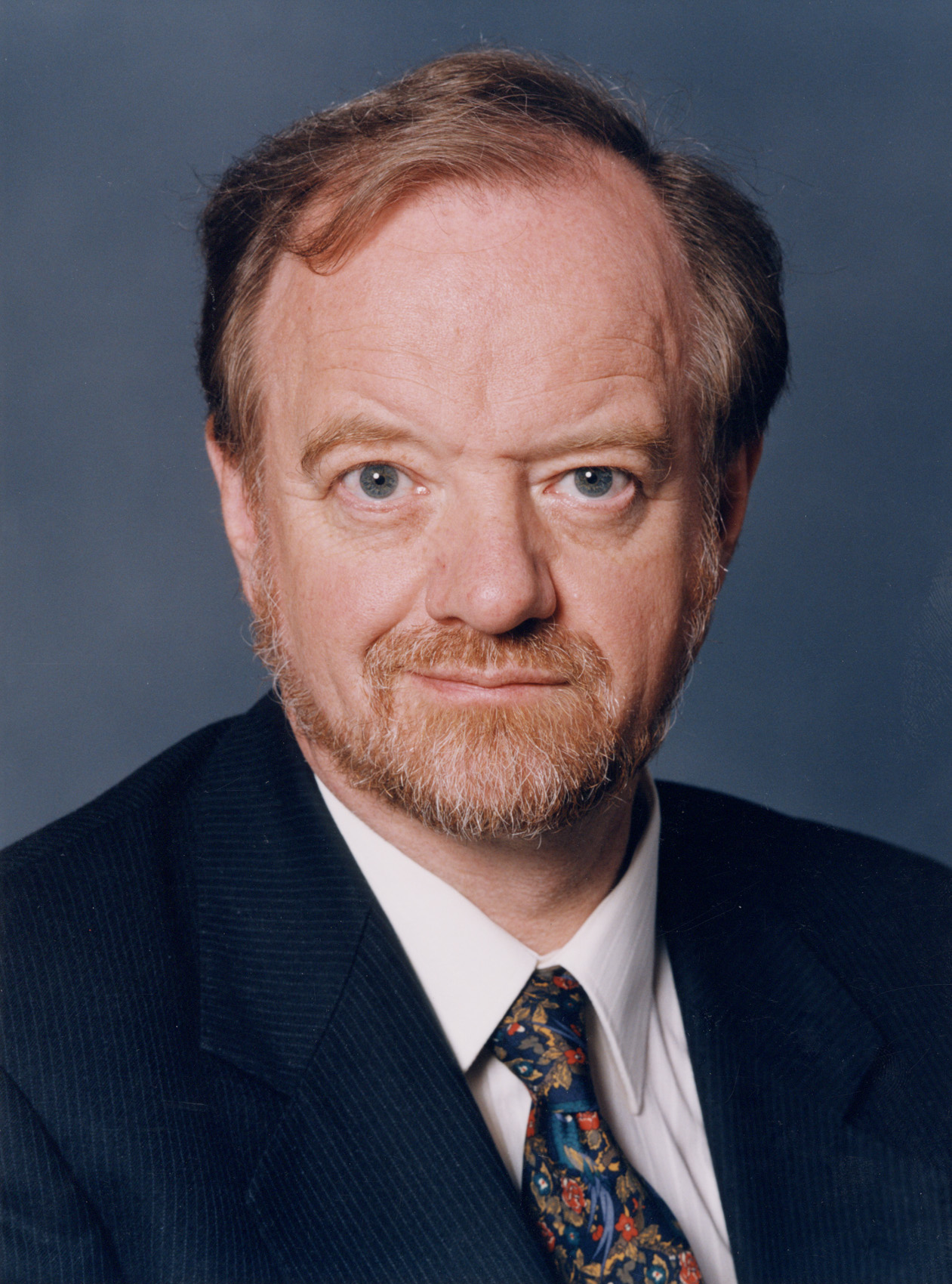
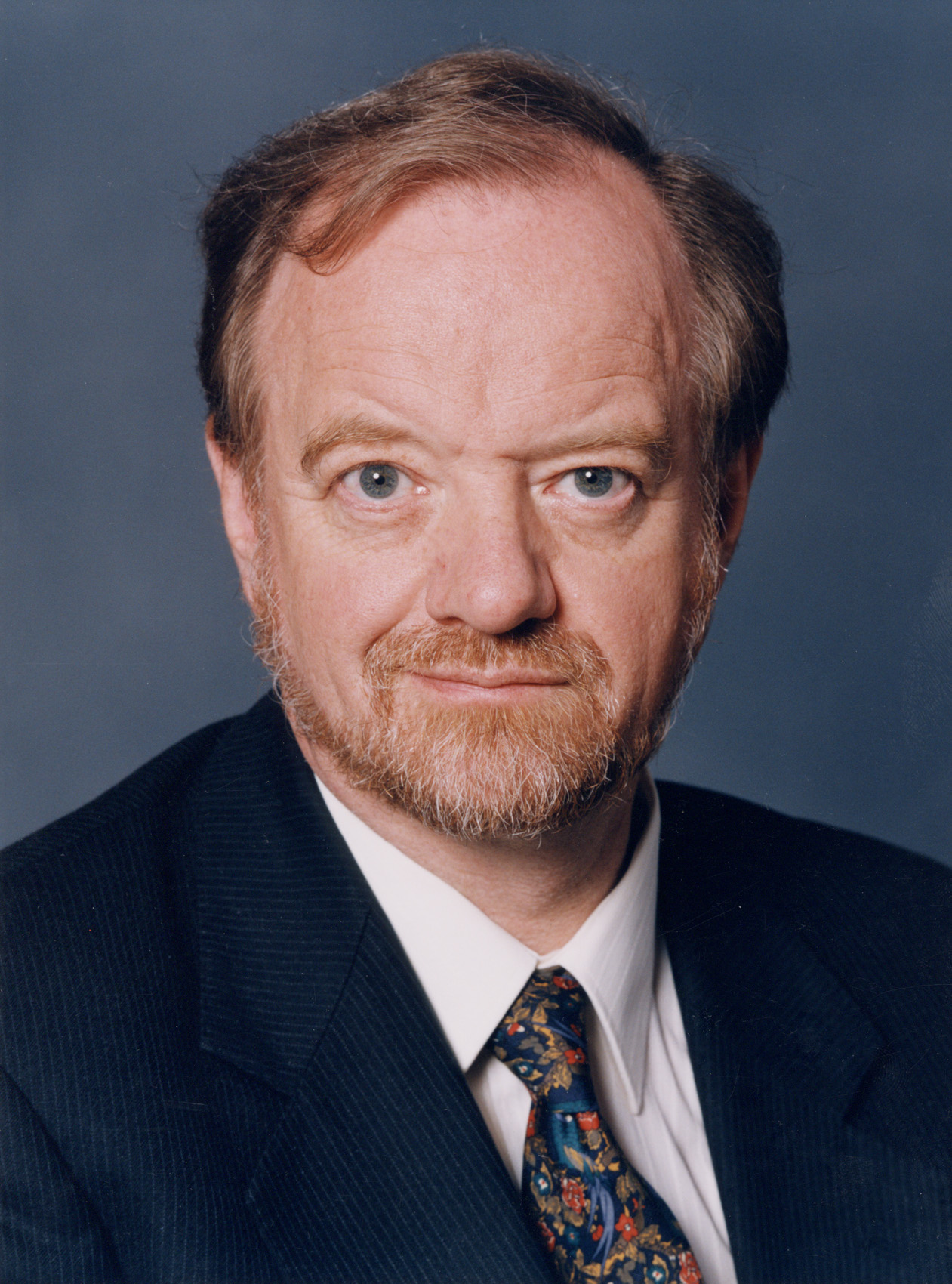
  • Robin Cook – 2000 Speech on the Diverse Face of Modern Britain in Diplomacy

    Robin Cook – 2000 Speech on the Diverse Face of Modern Britain in Diplomacy

    The speech made by Robin Cook, the then Foreign Secretary, at Ealing Town Hall in Ealing, London on 19 July 2000.

    I spend most of my time selling Britain to the world. My job this afternoon is to sell the Foreign Office in Britain to you. I want to start by stressing why it is important to you, to everybody in Britain, that we do have a top class, world class Foreign Office.

    A GLOBAL VILLAGE

    Britain depends for its prosperity on our relations with the rest of the world. We are the fifth largest trading nation of any of the world’s nations. We export more per head than Japan or the United States. We need to have a good network of contacts around the world so that we can maintain and build on that source of our own domestic prosperity. We are the third largest investor in the other countries of the world, again per head way ahead of any other single nation. And in terms of receiving inward investment, we are the second largest recipient of inward investment in the whole of the world. The factories in Britain, the technology that they use, depend on us maintaining that strong, vibrant, dynamic relationship with the rest of the global economy.

    Those of course are some of the benefits we get from our participation in the world community. Of course as our Prime Minister properly reminds us, if you are going to take the benefits and the rights of being part of a world community, you also have to accept your responsibilities and duties, and Britain has a unique position from which to fulfil those duties and responsibilities. We are the only country in the world that is a member of the UN Permanent Membership of the Security Council, of the European Union, of the G8 and of the Commonwealth. No other country has such a broad or rich range of international representation or of better opportunity to influence the world for good, and if we want a world which is secure and stable, which respects the global climate and environment, which develops a healthy playing field for trade, then Britain through its membership of all these networks is in a powerful position to achieve that outcome.

    But I would not want you to think that the Foreign Office spends its time on issues which may appear remote, abstract to the ordinary member of the public. Famously back in the Middle Ages one of our earliest diplomats defined an Ambassador as an honest man who is sent abroad to lie for his country. That was 400 years ago. We have moved on since then. Most of the time the people who work in our Embassies and our posts abroad are people who are working for the people of Britain. The largest single activity of all our staff abroad is promoting commercial contacts. 40% of all staff time in foreign posts goes into promoting British exports and assisting in promoting British investment. That is of direct importance to people in Britain who work for the companies who export, who work for the companies who have received investment from abroad.

    One of the next biggest sources of activity, of demand of business for our posts abroad is our consular work, supporting British people when they travel abroad. And let me tell you from a Foreign Office perspective, you, the rest of Britain, are travelling abroad with now alarming frequency. Last year there were 50 million visits abroad by citizens of Britain – in my brief it actually said 50 million people in Britain visited abroad, but that is not strictly right because many of them are the same people doing it several times. For myself I think I account for the first several hundred out of that 50 million. But it gives you a glimpse of the enormous scale of travel undertaken by British people either for tourism because of community ties, for business ties.

    When they travel abroad they may get into trouble, they need to have the British consular service there to help them and much of our time now is helping those who may have lost their passports, may have been involved in a coach crash or some other accident, those people need members of the staff who understand them, with whom they can identify, who can give them advice that they will find sympathetic. One of our innovations in the past year is that we were the first predominantly Christian country to send a delegation to the pilgrimage in Mecca, Saudi Arabia. We helped 2,000 British citizens attending the recent Hajj.

    Another area of activity of course is helping those who want to come to Britain. Just as there are more people travelling out of Britain, there are more people wanting to travel to Britain. Last year we granted 1.25 million visas for people to visit Britain. 94% of all applications were cleared. It is very important that we make sure that we have the staff who can handle those applications without any conscious or unconscious discrimination or cultural discrimination against those applying.

    Now I mention all that to underline the extent to which now Britain, like all the other countries, are members of the same global village, in which our peace, our prosperity depends on our relations with all the other members of that community. I firmly believe that Britain could have a great advantage in making its way, and in making contacts, and in making friendships within that global village precisely because we are ourselves a multi-ethnic society, because we contain in our country citizens of different cultures, of different religions. Here in London there are 300 different languages spoken by communities around London. Indeed we have so many different languages here in this one capital city that Air France has just relocated its ticketing service to London because it can get access to so many different and diverse languages for people to handle the calls. And let me tell you, France is a proud nation. If Air France can relocate to London for commercial advantage it really does demonstrate the great asset of that diversity of our society.

    USING THE ASSET OF DIVERSITY ABROAD

    I would like us to use that asset abroad in the same way that it can be an asset to us in our own country and economy. I want a Foreign Office that shows to the world the true face of the modern Britain. I can only do that if I have a Foreign Office staff which is representative of that modern Britain. There are a number of distinguished members of the Asian community serving with distinction in the Foreign Office. It is an Asian officer who is handling our commercial links with Madrid; it is an Asian officer who has recently been recruited from a high street bank to help handle our billion pound budget for the Foreign Office. But I want more.

    That is why I have set for the Foreign Office the target of recruiting from the ethnic minorities within Britain 10% of all our total recruitment annually for the Foreign Office. And over the past three years we have come pretty close as an average to that target. But it is not by accident, it has been because we deliberately set out to increase the recruitment. We were the first department in the whole of Whitehall to appoint a Minority Ethnic Liaison Officer. With his help we have carried out a number of open days, which has opened the doors of the Foreign Office to people who might otherwise never have thought of applying for a career with the Foreign Office, and I know that some of them then went on to do so.

    We also pursued outreach to communities where we want to discuss and meet with leaders of the local communities who can provide guidance to the young people, who can help us dispel the idea that the Foreign Office is an old-fashioned bastion which is closed to ethnic communities in Britain. It is open to every community and I want it to be representative of every community.

    That is why I want to end by asking for your help in getting me to meet that target I have set myself of 10% recruitment per annum from the minority ethnic communities throughout Britain. You can help. I appeal for that help, confident in the knowledge that the Asian community has been very successful in so many of the professions in Britain, in the law, in medicine. I remember it well from the days when I was Health spokesman how many of our hospitals depend on Asian doctors in order to make the hospitals work and to maintain the high quality of service.

    In business and commerce there is a tremendous contribution for the Asian community of Britain to the British economy and to British business. I just pose the question – why not an equally significant contribution to Britain’s diplomacy? We can do it. I want your help and together we might be able to turn that richness and diversity of Britain to an advantage in Britain’s diplomacy to the world outside.

  • Robin Cook – 2000 Speech to the Hungarian Ambassadors’ Conference

    Robin Cook – 2000 Speech to the Hungarian Ambassadors’ Conference

    The speech made by Robin Cook, the then Foreign Secretary, in Budapest on 25 July 2000.

    Ladies and Gentlemen,

    I am grateful to my colleague and good friend Janos Martonyi for his invitation to address this Conference of his Ambassadors. I am also honoured to be asked to address the Ambassadors. I know that my failures are all my own responsibility. My successes as a Foreign Minister are all my Ambassadors’ achievements and therefore I know how important it is that we should make a success of today’s conference.

    I am privileged too, to address representatives abroad of a nation that has already shown so much courage at home. A few years ago, on a private visit, I called at the military museum in the citadel. I still remember how deeply moved I was at the graphic images from the uprising against tyranny in 1956. Then the people of Hungary showed great physical courage against impossible odds. It was here in Hungary that the Iron Curtain was first undermined.

    In the past dozen years the people of Hungary have shown immense intellectual and moral courage in facing up to the challenge of transformation to a market economy and a modern democracy. I am proud that in those dozen years British companies have helped the process by investing over a billion pounds in the economy of Hungary and now employ well over 20,000 of the workforce of Hungary.

    HUNGARY’S ACCESSION TO THE EU

    And as many of you will know, Britain and Hungary work together in many international organisations from the OSCE to the OECD. And we are joint allies in NATO. British and Hungarian troops support each other in Kosovo, where they are working together to establish freedom and stability.

    I want us soon to be partners also within the European Union. I spoke in Budapest three years ago when I addressed the National Assembly. I promised then that Britain would launch the accession negotiations with Hungary while Britain was President of the EU. I kept that promise. Today I promise you that Britain will be a champion of enlargement throughout the negotiations.

    I believe the greatest challenge the European Union faces today is to complete the Reunion of Europe. We must right the wrongs of the past century. I want to see a zone of peace, prosperity, stability and democracy from the Baltic to the Black Sea and from Portugal to Poland. Another of my predecessors as Foreign Secretary once said, ‘My foreign policy is to take a ticket at Victoria Station and go anywhere I damn well please’. Enlargement will make that freedom of movement a reality throughout our continent.

    The fall of the Iron Curtain ended the division of our continent by political systems. Enlargement will end the division of our continent by standards of prosperity.

    The EU has not only brought peace to its nations. It has made us more prosperous, created more jobs and liberated our citizens to live, work, and travel anywhere within the EU’s borders. I look forward to the day when Hungarian kalacs, Polish keilbasa and Czech knedlicky are as common in British shops as croissants, salami and pumpernickel already are. As a start, we could work make Bikaver as common as Beaujolais.

    I believe the people of Hungary, and of the other applicant countries, can benefit from EU membership in the same way that the British people already have. On average, accession to the European Union could add one and a half percent to the annual growth rate of each of the Central European applicants. You will gain more opportunity from membership of the world’s largest single market.

    EUROPEAN INTEGRATION FOR MUTUAL BENEFIT

    But I think it is important those of us who are existing members of the European Union should remember that enlargement is not a project which the EU is doing as a favour to the applicants. Enlargement is in the EU’s own interests. Accession of the Central Europeans will boost the GDP of the present member states by 11 billion Euros every year.

    It will make all member states richer – because it will create by far the largest single market in the world. With half a billion people, it will be more than twice the size of the second largest single market of the United States. It will make us all stronger: because the bigger the club the bigger the clout. It will remove tension in the halls of power: because EU member states settle their differences by discussion not confrontation. It will make our streets safer: because the threats to Europeans today – crime, terrorism, drugs, pollution – can only be addressed through joint action across the continent. All member states of the European Union have a strong incentive to count the benefits of enlargement.

    European integration has been a major force for security and freedom in Europe for the last fifty years. It has made partners out of France, Germany and Britain – countries who have found themselves at war twice in the last hundred years. It has laid the ghost of fascism in southern Europe by consolidating democracy in Greece, Spain and Portugal. Enlargement will help make our continent more stable by integrating more countries into a Union that promotes the principles of democracy, good governance, the rule of law and respect for human and minority rights.

    I am conscious those are fine words, but words alone will not turn the vision into reality. It will take hard work.

    PREPARATION FOR EU MEMBERSHIP

    Hungary has already shown its capacity for hard work in its preparations for, and adaption to, membership of NATO. Now you have expressed your commitment to the new European Security and Defence Policy. Britain is keen that candidate countries who are already members of NATO should have every opportunity to contribute to the new European security initiative. Your contribution to the military capabilities available for European-led operations will be welcome. Britain wants you to have a full opportunity to put forward the contribution you can make at the forthcoming Capabilities Conference.

    Your commitment also in meeting the requirements of membership has also been impressive. There is still a lot of work to be done to complete the task of transferring 80,000 pages of EU legislation into Hungarian law. There are high standards to meet in areas like tackling organised crime, developing your public administration, protecting the environment and meeting the acquis on food safety and animal health. But Hungary has shown sustained effort in rising to the challenge.

    I believe that the EU must treat each applicant country individually on the progress it has made. Each country should be eligible to join as soon as it is ready to do so, and is not delayed while others catch up. I have no doubt that Hungary is among those at the head of the queue. Only your efforts can ensure you remain there.

    I know that you are, rightly, impatient to make progress. EU accession is on the horizon, but horizons have a tendency to recede continually before you. You want to see a map of your road to accession, and to have a clear idea of how long it will take to travel down that road.

    Target dates have played an important role in galvanising previous accession negotiations. They are a useful spur on both existing members and on applicants to make progress. Britain believes that the time is approaching when the EU could concentrate minds by setting a target date for the conclusion of negotiations with those countries ready for membership.

    And in order to meet such a target, the EU has work to do as well. At Helsinki we committed ourselves to be ready to welcome new members by 2003. Britain believes that we must keep to that commitment. There is much work still to be done.

    We need to continue the process of reforming the Common Agricultural Policy. Its reform would release more room for enlargement within our present budget. But we need to reform it also for ourselves. In the medium-term the liberalisation of world trade will compel us to reduce the protectionism of Europe’s Agricultural Policy.

    COMPLETION OF THE IGC

    The most immediate task for the EU is to complete the Intergovernmental Conference by December. We must agree all of the institutional reforms we need to make, to be ready for a larger EU.

    I fully support the determination of the French Presidency to achieve a successful conclusion to the IGC in Nice in December. I do not pretend that the issues are easy. We ducked them at Amsterdam. I was there. I vividly remember, Janos, that we reached agreement that we could go to bed on the basis that if we could not solve these problems, we would put them off until the next time. This time we cannot put them off again.

    Democratic reweighting of votes in the Council, and a manageable size for the Commission are issues which will require member states to make tough choices. But they are choices which we can and must make to enable enlargement to happen.

    Nor is the present IGC the last word on the future shape of the EU. But that future shape cannot be a question for only the present member states. We cannot change the rules before you even begin to play the game. The new members of the club must play their part in making the club’s rules. The first new members should join us round the table before decisions are taken in another IGC. And work on future IGCs must not delay work on enlargement.

    CONCLUSION

    To bring that day closer when you sit around the table as equal members, the EU must be realistic about terms of accession. Britain believes that negotiations need to go through a step change. We need to enter a new phase of solving problems through negotiation, not only identifying the problems in negotiation.

    The history of the EU is full of examples where, with imagination and hard work, we have found solutions to the most intractable problems – from the problems of Arctic farmers in Finland to the use of snuff in Sweden. I am confident that with similar certainty and effort, we can resolve the negotiating difficulties that we face today. But it will require a constructive approach by the EU to the negotiations.

    We should be fair. Existing member states benefited from transitional arrangements when they acceded. The EU should be sympathetic to requests for transitional periods from the present applicants as it has been to past applicants.

    We must be realistic. It is clearly in your own interest to be full members accepting the whole acquis once any transitional periods have expired. But the obligations of membership will be costly to implement. The EU should not expect every expensive capital investment to be completed on the date of accession.

    We should be generous. Existing members of the EU have a huge economic advantage over the applicant countries. The EU can afford to open its markets rapidly to the new members. Britain has been a firm opponent of protectionism in the EU. Britain will also be a strong advocate of terms of entry that provide generous and early market access to the new members.

    And if we take that constructive approach to negotiations, then I believe we can maintain the timetable we have set ourselves in order to make Europe ready for enlargement to help the applicants to be ready for membership. Janos, in conclusion, can I recognise the immense contribution that Hungary has made in the past century to European life and culture. Bartok made his own distinctive contribution to our range of classical music. Solti influenced how we heard the classical music of our own nations. Biro made life easier for millions across Europe whenever they needed to jot something down. And Rubik drove demented the same number of millions with his geometric device. It is a measure of the scientific and artistic talent of this country that it has produced no fewer than 11 Nobel Prize winners.

    A country so rich in talent will bring added strength to the European Union. Britain wants your future to be inside the European Union. We want it so that the Governments of Hungary and Britain can be even closer partners. And we want it also so that the people of Hungary can say with pride that they are citizens of a European Union member state.

  • Robin Cook – 1978 Speech on the Accountability of Special Branch

    Robin Cook – 1978 Speech on the Accountability of Special Branch

    Below is the text of the speech made by Robin Cook, the then Labour MP for Edinburgh Central, in the House of Commons on 24 May 1978.

    As you will be aware, Mr. Speaker, it is a year ago this month since I obtained an Adjournment debate on the operations of the Special Branch. That was the first debate that this House had had on that specific matter in 20 years, although in that same period of 20 years the number of men in the Special Branch had increased five-fold from some 200 officers to more than 1,000 officers.

    I sought this Adjournment debate because I believed that it would be for the convenience of the House if we had an opportunity to review what had happened in the 12 months since we last discussed this matter.

    I take as my point of departure the observation of my hon. Friend the Under-Secretary of State in reply to that debate that the place where we should look for information about the Special Branch was in the annual reports of chief constables. With the considerable help of the Library staff, I have been looking for that information in the annual reports of chief constables, and I have looked in vain for the information.

    Of the 36 annual reports of provincial forces which we have received, only one contains any statement on the Special Branch unit within the force. That is a particularly significant result, because it shows that the great majority of provincial chief constables are not aware of my hon. Friend’s view that the appropriate place for information about the Special Branch was in their annual reports. But it also establishes that at least one, the chief constable of Durham, felt able to give a concise statement about the number of the establishment, the officers in that establishment and the location of that establishment without feeling that it interfered with the effectiveness and efficiency of that unit.

    One of more notable examples of those who made no reference to the Special Branch was the Metropolitan Commissioner included no statement on ​ the Special Branch in his report, although we know that more than half of all the Special Branch officers in Britain are answerable to him. Of course, his report is presented to the Home Secretary and, through the Home Secretary, to Parliament, and one would have assumed that both the Home Secretary and Parliament would have a legitimate interest in knowing something about the Special Branch which operates under the control of the Metropolitan Commissioner.

    Just to rub home the point, I might add for good measure that the annual report of the Chief Inspector of Constabulary also contains no reference to the Special Branch.

    It would be a matter of only academic concern that there was so little information available on the Special Branch if there were no ground for concern about its activities. It would then be a quite proper matter for Members of Parliament to become exercised about the principles of accountability and the nature of the information which should be available so that we might have a proper open, public, democratic debate on the operations of the Special Branch. But it would not be a matter of urgent business. However, some of the incidents which have occurred and come to light in the past 12 months are disturbing.

    I should like to share with the House four of these incidents. In September of last year, there was the incident at Blackwood in Wales where, at a community college, two Special Branch officers called and requested the register and enrolment cards for a class on Marxist practice.

    In November of last year, a Special Branch officer called at Paisley College of Technology, interviewed a student in the college, and offered him what he called “tax-free payments”—I do not know what arrangement the Special Branch might have had with the Treasury—in exchange for information about the political views and activities of the other students at the college.

    In December of last year, two Special Branch officers called at Keele University and interviewed two students who were in the officer training corps and also the head porter of the students’ union, all three of whom they invited to submit information on “dangerous types”. When, subsequently, they were offered a list of 22 students, they turned it down, ​ apparently in scorn, on the ground that they had a far longer list of their own.

    What all these incidents had in common was that they occurred in educational institutions. This is particularly disturbing. Hon. Members are fond of imagining that this type of activity—of collecting information and dossiers on the political activities and views of college students—is more characteristic of Eastern rather than Western European States.

    I turn from the interest of Special Branch in educational institutions to its interest in industrial matters. Last summer the work force at Greenwich Reinforcement Steel Services occupied the factory and in the course of that occupation discovered a file containing a memorandum, signed by the works manager and dated September 1975, in which it was made quite plain that he had received information from a Mr. Meynard of Scotland Yard concerning two of the employees at the plant.

    In the first of these cases it was noted that the employee had been convicted in 1954—more than 20 years before the information was given and at a time when the man in question had been a youth of only 17. It was precisely to prevent that kind of communication that this House passed the Rehabilitation of Offenders Act 1974.

    The other employee had noted against him three complaints, each of which was no more than a collection of tittle-tattle and gossip, and all of which in different ways were inaccurate. The file included for instance, the observation that the employee had taken part in “illegal demonstrations” although, praise be, there is, as yet, no such thing in Great Britain.

    It included also the observation that he had disturbed the peace during demonstrations, although the man in question had no conviction and had never been charged. Thirdly it included the information that he had distributed “national Socialist literature” which is thought to be a reference to the International Socialists.

    The inaccuracy of these remarks underlines one of the dangers in this practice. It is precisely because of the clandestine nature of this communication that it is impossible for the employee in question who is being slandered—and, make no ​ mistake, it is slander—to rebut the changes or correct the information.

    If we had some form of democratic scrutiny of the operation of Special Branch, and if it was answerable to some form of elected body, it is a matter of speculation whether that elected body, considering the general policy of Special Branch, would or would not agree that it should collect information on college campuses about students on that campus, pass information about past convictions, or participation in demonstrations, to employers. Personally I would be extremely surprised if any elected authority anywhere in Britain agreed to such a proposition.

    However, I am certain that whatever speculation there may be about the judgment that they might reach, decisions on such matters are of a political character and as such should not be left to policemen. Here we come to the nub of the matter. Over the last decade, as well as a growth in numbers in the Special Branch there has been a parallel expansion in the scope of its activities. These are neatly illustrated by two definitions of subversion which we have had over that decade.

    In 1963, in the course of his report on the Profumo case, Lord Denning offered this definition of subversives—those who

    “would contemplate the overthrow of the Government by unlawful means.”

    Between 1963 and 1975 that definition was widened into that which was first offered in the other place, and repeated in this House by my right hon. Friend the Home Secretary in April this year, in which he defined subversion as:

    “activities which threaten the safety or well being of the State, and are intended to undermine or overthrow parliamentary democracy by political, industrial or violent means.”—[Official Report, 6th April, 1978; Vol. 947, c. 618.]

    There is a crucial distinction between the definition of Lord Denning and the one given by my right hon. Friend. In the first place Lord Denning’s definition turns on the term “unlawful means”. The word “unlawful” is capable of clear, precise and narrow interpretation, based on statute and common law. The second definition of subversion does not turn on any reference to unlawful. It is in no way restricted to unlawful activities. It is, therefore, an invitation to the police forces that police this concept of subversion to stick their nose into any form of political or industrial activity.

    I am bound to admit that it may be that times have changed. It may be that there has been an alteration in the circumstances of society that Lord Denning could not reasonably have foreseen in 1963. If that is so, the course for my right hon. Friend is plain: he should bring before the House a measure that creates a new crime of subversion, which that measure would define and interpret. It is doubtful whether the House would accept such a measure in the foreseeable future, but it would be open to my right hon. Friend to present it to us.

    What the Government cannot do is by Executive decision create a new class of what we might term quasi-crimes such as subversion, which would not in themselves lead to conviction in any court in the land but render the suspect liable to police surveillance and being placed on police records. That is the road to the Thought Police and the closed society. If any hon. Member thinks that I am going too wide in my observations, I cite in aid information that I have recently obtained from Australia, where there has recently been published a report by a senior judge on the South Australian Special Branch. In the course of the report he mentioned that half of all those held on the records of the Special Branch are there only because they were

    “suspected by Special Branch of holding or supporting subversive’ views by reason only of the fact that such organisations or persons adopted policies or opinions which were ‘radical’ or ‘to the left’ of an arbitrary centre fixed by someone in Special Branch.”

    As a result of that wide definition, members of trade unions, peace movements, the women’s liberation movement and the divorce law reform movement in South Australia were placed on the Special Branch files.

    Predictably, there were many people in universities placed on the Special Branch files. Judge White found no fewer than two armfuls of files marked “University Matters”. In view of what I said earlier about the involvement of the Special Branch in education campuses it may be helpful if I quote Judge White’s conclusion. He said:

    “I gained the impression that nearly all of the material was entirely irrelevant to security issues.”

    That evidence from South Australia cannot be lightly dismissed. The South ​ Australian Special Branch was reorganised and re-formed in 1949 with the advice and assistance of Sir Percy Sillitoe, who was then head of MI5 in Britain. Moreover, the Commissioner for Police in South Australia for the past five years was the former Chief Constable of the North and East Ridings of Yorkshre. At both ends—at the creation of the organisation and at its control over the past five years—there is a clear British involvement. It is not unreasonable to take inferences from that report about the practice of the Special Branch in Britain.

    I am aware that there is another hon. Member who wishes to intervene and so I move to my close. Before doing so I make two matters plain. It is no criticism of the men who work in the Special Branch to say that the decision on whether someone is subversive is not properly their decision. It is not a matter for which they have had any training and not a matter on which many of them would claim to have expertise.

    Nor is it a personal attack on my right hon. Friend the Secretary of State for the Home Department. I take this opportunity of saying that I much appreciate the fact that he has decided personally to reply to the debate. It is not in any way a personal attack on my right hon. Friend, or on his competence or good faith, to say that it is not adequate to run a system on the basis of the judgment and integrity of the man at the top.

    The dilemma was neatly summed up in a reply made by my right hon. Friend in March, in which he said:

    “The Special Branch collects information on those who I think cause problems for the State.”—[Official Report, 2nd March 1978; Vol. 945, c. 650.]

    Obviously, any system which operates on the basis of one man at the top keeping control is not a safe or democratic system. Nor is it a practical system given the expansion of the Special Branch and of its range of activities.
    How do we know that the incidents at Keele, at Paisley or in Wales are isolated incidents? How do we know that they are not simply the only incidents about which we happen to have heard? How do we know whether the case at Greenwich is the only case in which the Special Branch has given information on employees or the only ​ case in which the workers happened to obtain the files? We do not know the answers to these questions. We cannot know the answers without some form of independent inquiry such as has been carried out in Australia. I urge the House that the time for that inquiry is now ripe.

  • Robin Cook – 1999 Statement on Yemen

    Robin Cook – 1999 Statement on Yemen

    Below is the text of the statement made by Robin Cook, the then Foreign Secretary, in the House of Commons on 11 January 1999.

    Madam Speaker, with permission I should like to make a statement on recent events in Yemen. There have been three separate developments affecting British nationals in Yemen since the House last sat. On Saturday, and again this afternoon, I have discussed those events by phone with the Prime Minister of Yemen, Dr. Iryani.

    The most recent event was the kidnapping on Saturday of Mr. John Brooke from the compound of the oil company for which he worked, in the Marib area of northern Yemen. Our ambassador was in contact immediately with the Yemeni Prime Minister and Interior Minister to insist on full consultation with us on any steps being taken by the authorities to secure Mr. Brooke’s release. This afternoon I have expressed to Dr. Iryani our strong view that the release of Mr. Brooke should be achieved through mediation, and the Prime Minister of Yemen gave me an assurance that no force would be used without consultation with us.

    We currently have in Yemen a team of police officers who are preparing an account of the previous kidnapping. Two of those officers are experienced in hostage negotiation. We have made their skills available to the Yemeni authorities.
    We have also been in contact over the weekend with the Government of Yemen about the five British nationals who have been detained there. We understand that the five men were detained on 24 December. Our embassy in Yemen first heard of the arrest of unnamed British nationals on 29 December and immediately demanded access to them, including through a succession of meetings between our ambassador and Yemeni Ministers. However, access was not granted until last Friday, when our consul-general immediately visited the prison in Aden but was given access to only three of the five men.

    On Saturday, I stressed to the Prime Minister of Yemen the vital importance to us of obtaining access to all five men under detention in order to reassure ourselves and their relatives that they are well and being properly treated. Dr. Iryani undertook to make immediate inquiries and on Saturday our consul-general was permitted access to one of the other two men. Access to the fifth man is still being denied on the ground that he has Yemeni-British dual nationality.

    However, this afternoon Dr. Iryani assured me that access to the fifth detainee will be granted today or tomorrow.
    On Saturday, I stressed to the Prime Minister that if the five men are to be charged, those charges must be brought soon. They and their relatives are entitled to know why they have been arrested, and the five men cannot defend themselves against allegations until they are charged. If they are not to be charged, they must be released. This afternoon, I sought and obtained fresh assurances from the Prime Minister of Yemen that all five men will have access to legal advice, that any charges will be subject to due process of law in open court, and that consular staff will have the right to attend.

    I now turn to the tragic events arising from the seizure of 16 tourists in southern Yemen. Twelve British nationals, two Australians and two Americans were ​ kidnapped by an armed group on 28 December. According to the Yemeni authorities, the kidnappers’ key demand was the release of a number of Yemenis and foreigners arrested by the Yemeni authorities. As soon as we learned of the kidnapping, the British ambassador spoke to the Yemeni Interior Minister, Hussain Arab. He made clear our paramount concern for the hostages’ safety. He pressed on the Yemeni authorities our strong wish that no precipitate action be taken which could endanger the hostages’ lives.

    The next day Yemeni security forces encircled the kidnappers and their hostages. There was a firefight, in which four of the hostages were killed. Three were British. I am sure that the whole House will join me in extending our deep sympathy to the families who grieve for those who were killed. The testimony of the survivors confirms more forcefully than any hon. Member can that all the hostages conducted themselves with the greatest courage and concern for each other.
    There is still much confusion about how the firefight started and about whether hostages had been killed before the security forces intervened. At the request of the Foreign Office, a team of British police officers went to Yemen on 1 January. In close co-ordination with the visiting Federal Bureau of Investigation team, they are preparing a full account of what happened.

    On Saturday, I expressed to the Prime Minister of Yemen the importance of full co-operation between our Governments in the investigation. We agreed that the best way for us to maintain sound bilateral relations was to work closely together in establishing the truth and in bringing the full truth into the open. It would be wrong to prejudge the police investigation or to anticipate what it may conclude about the handling of the rescue attempt by the Yemeni authorities. Let us be clear, however, that the primary responsibility for what happened rests with the armed gang who seized the hostages in the first place. Those responsible for seizing the hostages, and for the death of four of them, must be pursued and brought to justice.

    I pay tribute to the British ambassador, Vic Henderson, to Consul-General David Pearce and to their small team. They have responded with professionalism and with total commitment to a succession of demanding events.

    Two areas of public policy require to be reviewed in the light of recent events. The first relates to the travel advice issued by the Foreign Office. Our travel advice in relation to Yemen has for some time warned of the risk of kidnapping. Following the recent tragic deaths, our travel advice has been strengthened to advise

    “against all non-essential travel to Yemen”.

    Following the recent kidnapping of Mr. Brooke, our ambassador has today met representatives of the British community to impress on them the need for heightened vigilance, and to discuss with them the implications for their safety of recent events. All British nationals are being encouraged to re-register urgently with the embassy.

    Our system of travel advice is widely held up as a model of good practice by other countries. It already tends to the side of caution, although it is necessary that it should not veer to over-reaction if it is to retain credibility among the public. We are constantly looking for ways of improving distribution of that advice. We need to be sure that it is seen by anyone thinking of travelling to dangerous parts of the world.

    I am therefore inviting tour operators and other members of the travel industry to the Foreign Office to discuss how we can further improve the distribution of our travel advice. We hope to develop with them a voluntary agreement on advice to clients booking holidays to countries where there is a risk. We would wish such an agreement to include a commitment to notify our consular division when tours are being organised to dangerous countries.

    The second area of public policy that we must review in the light of recent experience is how we can improve our support to other countries in handling the seizure of hostages. I can announce that the Foreign Office will appoint a police expert with experience in hostage negotiations as a consultant to the Foreign Office on counter-terrorism work. Our intention is that he or she will travel abroad to discuss the training needs of foreign Governments, and to offer advice on their handling of hostage-taking.

    We shall also launch a global series of seminars and consultations to share best practice in handling terrorist incidents with countries around the globe. Last November, we held such a seminar within the G8 to pool expertise on handling kidnap cases. Now we must make sure that the expertise pooled at that London seminar is shared more widely with countries outside the G8. These initiatives reflect the two principles that must guide the conduct of our consular duty: first, that the safety of British nationals is our paramount concern; and secondly, that only we can succeed in securing their safety from terrorism only by close international co-operation in defeating the terrorists.

    The whole House will wish to record its condemnation of terrorism. Kidnapping is a crime. It is the same crime whether it is committed for financial gain or for political reward, and it is as much a crime under Islamic law as it is anywhere else. I invite all hon. Members to join me in sending the firmest possible message to terrorists that we are determined to protect the safety of our nationals and to be robust in combating terrorism wherever it occurs.

  • Robin Cook – 1986 Speech on Housing in Livingston

    Below is the text of the speech made by Robin Cook, the then Labour MP for Livingston, in the House of Commons on 11 March 1986.

    I am grateful for the opportunity to raise a matter of serious and growing concern to my constituents—the forward housing programme of Livingston development corporation. On the whole, I do not quarrel with the priorities of the corporation, and usually agree with the judgments that it makes within the resources available to it. My point, for which the Government must take full responsibility, is that its resources are not adequate to do the job that if faces.

    There are two separate issues. The first is the amount of capital allocation available to LDC to tackle the upgrading of the existing housing stock. The second is the Government’s ban on general needs building by the new towns, including the LDC. The two are linked, as, were that ban to be lifted, the new towns would require an even more generous capital allocation than they need for the upgrading of existing stock. Both cases stand on their own merit, so I shall address myself to them as separate issues.

    This debate, and my application for it, were prompted by the reduction in the capital allocation for the LDC in the forthcoming year. For the current year, it received £2–4 million net capital allocation for housing purposes. Next year, it will receive only £1.7 million, which is effectively a reduction of one third in real terms. It is difficult for those of us who know and seek to grapple with the housing problems of Livingston, to understand what possible basis there could be in the reality on the ground for that reduction in the net capital allocation for LDC.

    Livingston, by its nature, has a large number of houses that were built in the 1960s, when system building was extremely fashionable among architects. Those houses have proved inappropriate wherever they have been built, but they have proved particularly inappropriate in Livingston, which is on an exposed hillside in Scotland, 500 ft above sea level. Some aspects of the housing stock desperately needs urgent attention if it is to provide acceptable housing into the 21st century, and if it is to stop deteriorating before the 20th century comes to an end.

    First, a large number of houses have flat roofs. Unfortunately, in the 1960s, architects forgot that flat roofs do not allow the rainwater to run off. I have constituents who have reported 14 or 15 times that their roofs are leaking. To be fair to the LDC, quite often the tenants have been visited 14 or 15 times, and have had more patches put on the fiat roof above them. That is no solution. The only solution to the problem faced by the tenants and the LDC is to provide the houses with proper pitched roofs. If the rain does not get in through the roof, it gets in through the Bison cladding. The Minister will be familiar with the problems of Bison-built houses, and he will be aware that where such buildings are in an exposed position, as in Livingston, the case is as strong as anywhere else for urgent treatment of that form of building.

    My next point concerns the provision of the heating systems in those houses. Unfortunately, many of the houses were built at a time when architects blithely ​ assumed that energy, and particularly electricity, would be cheap indefinitely. They therefore built houses that were cheap on insulation, and which are now expensive to run.

    A number of houses in Livingston are recognised by the DHSS as exceptionally hard to heat houses. The LDC, to its credit, perfectly properly wants to replace the heating systems in those houses and provide heating systems that the tenants can once again afford. That is a matter of concern not only to the tenant but to the landlord as, while the houses are not heated, they deteriorate as a result of the familiar problems of condensation.

    In addition to all these problems with the existing housing stock, there is the further quite distinctive issue of the upgrading programme for Knightsridge 4. I will not weary the Minister with the details of that tonight, as he was good enough to meet me and the local councillor, Maureen Ryce, a fortnight ago and we much appreciate the fact that since then he has been able to make a decision approving that upgrading programme.

    That upgrading programme alone requires a capital expenditure of £3·6 million spread over two years. Therefore there will be an annual expenditure of £1·8 million. That figure compares to the total net capital allocation for Livingston for the current year of £1·7 million. In other words, that project alone would swallow up the entire net capital allocation. If we add the other expenditure to which I have referred, Livingston requires and can readily absorb a net capital allocation some two or three times the figure that has been offered for the current year.

    The Minister could perfectly properly argue that the net capital allocation is not the sole capital resource available to Livingston. The LDC can also apply to capital expenditure the receipts that it obtains from the sale of houses. The fact is, however, that those receipts are on a declining profile. We are over the hump in public sector housing sales. In Livingston in the past year there has been a marked reduction in interest in purchases of corporation houses. That is not surprising, since more than half the tenants in Livingston are on housing benefit and are not in a position to purchase their houses. There is bound to be finite point to the demand for council house sales and we appear to be approaching that point.

    It is possible that the Housing (Scotland) Bill, which is currently before the House, will stimulate a fresh wave of applications for purchase, should it complete its passage. That, however, will be a one-off effect. The LDC expects that its receipts from house sales will decline from £2·5 million in the current year to £1.1 million in 1990. That estimate was prepared by a development corporation which takes no view on the rights or wrongs of selling public housing and which has proved itself willing and energetic in marketing the sale of such houses. That corporation nevertheless expects to be able to achieve only a declining revenue from the sale of its houses.

    In other words, the LDC is faced with a declining capital revenue from the sale of its housing stock and a declining net capital allocation from the Scottish Office. On that basis, it is impossible for the LDC to tackle the grave housing problems that it has inherited. In the immediate future that means that it does not have enough resources to meet committed expenditure in the coming financial year. In the longer term, it means that some of my constituents will continue to live with flat roofs, with Bison-clad buildings and with heating that is too expensive for them to use, until beyond the year 2000 on the present ​ resources available to LDC. That is the situation in a housing authority for which the Secretary of State is directly responsible.

    It would not require resources beyond the bounds of imagination to tackle the problems at Livingston. The capital programme of the LDC in 1978–79, the last year of the Labour Government, was double the capital programme in the current financial year. Moreover, none of that expenditure was financed by sales of the housing stock.

    I do not expect miracles. I do not expect the Under-Secretary of State to be able to return us to those halcyon days and the expenditure of 1978–79. I do not think that he has brought his cheque book with him. However, I ask him to give serious and sympathetic consideration to the representations from LDC and to look at them with a genuinely open mind. The hon. Gentleman has been willing—I appreciate this—to recognise the problems in the Knightsridge 4 area of Livingston. He has been prepared to admit that there is a case for expenditure. I put it to him that having recognised those problems, he must now will the means to tackle them.

    I am concerned also about the ban imposed by the Scottish Office on construction of general needs housing in the new towns. That ban was imposed by the Minister’s predecessor three years ago. Since then, no general needs housing has been started in Livingston or in any other Scottish new town. The hardship caused by that moratorium has become increasingly evident during those three years.

    When I was first elected to the seat of Livingston and went to my surgeries there, I had few, if any, cases of people coming to me who were not able to obtain rehousing. I have to admit that it made a refreshing contrast to my previous constituency in central Edinburgh where such cases were the stock in trade of my surgery. However, over the three years, first a steady trickle and now a steady stream of people have come to my surgeries unable to obtain the housing that they urgently and desperately need. I share that experience with local councillors. Yesterday, West Lothian district council carried a resolution requesting the Scottish Office to lift the moratorium on the construction of general needs housing in Livingston, precisely because of the experience of local councillors in finding an increasing number of constituents coming to them whom they could not assist.

    To understand the pressure on the waiting list, it is necessary to remember that Livingston is a new town which has been constructed over the past 20 years. We now have a large number of second generation residents reaching their 20s, getting married and understandably seeking a house in which they can set up their family home. Forty six per cent. of the applicants on the LDC’s waiting list are under 25. The houses are just not there for them. The waiting list grew steadily until December 1984 when the LDC decided, perhaps understandably, that it would have to close the waiting list, except for priority cases. Even so, the average waiting time lengthened dramatically during the subsequent 18 months. The average time that must elapse before a first offer can be made exceeds a year. Many people on that waiting list cannot afford to wait a year. One hundred applicants a year involve cases where families have split up, often in desperate circumstances, occasionally in violent circumstances.

    Bluntly, LDC is caught between the twin pressures of diminishing housing stock from the sales and an increasing demand from the new generation reaching maturity and seeking a family home of their own. The only way out of those conflicting pressures is a building programme of general needs housing. I am not asking for a massive programme. I am not seeking an enormous new estate. I am asking for LDC to have the flexibility to provide a steady responsible programme of perhaps 200 houses a year.

    Some private sector house starts are being carried out in Livingston, and it is welcome, but they do not match the needs of the local community. In the past seven years, the average number of starts in Livingston by the private sector has been 137. It is estimated that we require 350 homes a year. Moreover, the people buying those houses come overwhelmingly from outside the new town. They are attracted by houses in an attractive, modern environment and are welcome to the new town. However, the houses constructed by the private sector do not and cannot meet the needs of the young couples of Livingston who cannot afford to purchase them.

    I hope the Minister will agree that I have put my case in a rational, reasoned and dispassionate manner. I ask him in return to give a reasoned and dispassionate response to my case for lifting the moratorium, but I do not want him to give an instant response tonight if it will be no. He will have adequate opportunity to respond. The five district councils representing Scottish new towns have formed a joint forum which has been examining, among other issues, the housing needs of the new towns. The unanimous view of those councils is that the moratorium should be lifted, and they will be placing a report before the Minister within a couple of months.

    I hope that when he receives that report, he will reflect on my remarks tonight and will, in the light of the evidence that they and I have given, be willing to consider lifting the moratorium. By definition, a moratorium should be only a temporary pause. I hope the Minister will agree, when he receives the report from the five councils, that the time for lifting the moratorium is long overdue.

  • Robin Cook – 1985 Speech on Suicide of a Constituent

    Below is the text of the speech made by Robin Cook, the then Labour MP for Livingston, in the House of Commons on 28 June 1985.

    wish to raise a matter of the greatest gravity, arising out of the suicide of a constituent. This issue has moved me deeply, but I shall try to place it before the House in as dispassionate matter and with as little partisan flavour as possible. I am anxious that when the Minister for Social Security replies to the debate he should do so not in a spirit of seeking to justify what his Government have done but in a spirit of honestly examining the effect of the regulations. His junior Minister, the Under-Secretary of State for Health and Social Security, was challenged on this matter last weekend but did not show a willingness honestly to examine the effect of the regulations. He said:

    “The whole campaign of opposition to the proposals is no more than political brouhaha … Nobody in need can slip through that net of exemptions. Opposition is coming solely from those individuals who cannot be bothered to look for jobs and prefer to live without effort off the B and B allowance.”

    I hope that it will be felt at the conclusion of my speech that that view is profoundly mistaken and gratuitously insulting.

    The facts concerning my constituent can be briefly stated and are not in dispute. He was 23 years old. His mother had remarried and lived with Brian’s stepfather and stepbrother in my constituency. Brian had a history of psychiatric illness and had been a resident, on and off, for the best part of three years at Bangour village hospital in my constituency. In November he was discharged as fit and, as the phrase goes, returned to the community. He then went into board lodgings in Edinburgh, where he remained thereafter. His medical social worker drifted out of touch with him in January, but he was encouraged by the fact that Brian obviously wished to be independent and was seeking to get beyond reliance on the mental health system.

    Brian appears to have lived reasonably satisfactorily for the next six months. Then on 17 May his world collapsed. He received a notice advising him that his weekly benefit would be reduced from £69·50 to £25·75 on 27 May. We know that thereafter he approached the Edinburgh housing department to seek rehousing, but for a number of years Edinburgh district council has built no new council houses and as a result has an enormous waiting list. There was no prospect of it being able to rehouse Brian and it was under no duty towards him, as a single person, under the Housing (Homeless Persons) Act 1977.
    Brian was put out of the hotel where he was staying at the end of the week in which his benefit stopped. He was successful in finding accommodation in another establishment for a few nights but he was put out of it on 6 June. He slept rough for the next two nights and was last seen alive in the all-night cafeteria of Waverley railway station. Thereafter, he climbed on to the north bridge and threw himself off it. He went through the roof of the railway station on to the platform below. There is no doubt that he committed suicide and there is no doubt in my mind that it was induced by the state of despair and homelessness to which he was reduced by these regulations.

    One of the first lessons to be learned from this case is that it is clear that Brian Brown was in one of the exemption categories but failed to get exemption from the ​ regulations. The most alarming feature of his case is not that he was an exception but that his experience is all too common among the many other people who fail to get the exemption to which they are entitled under these regulations. Since the news that I had this Adjournment debate became public, I have received much correspondence from organisations and societies. Indeed, I have never had such a large mailbag on any single issue during the 12 years I have been a Member. All those representations frequently returned to the same point—the difficulty faced by those who are exempt in securing that exemption.

    The Minister has received a list of such cases from the “That’s Life” programme, which had conducted some excellent research into the impact of these regulations. He responded on Tuesday by suggesting that those individuals who were exempt should come forward and claim exemption. There are a number of problems with that approach, and I wish to illustrate them from Brian Brown’s case.

    The reason why Brian Brown could claim exemption was that he had a history of mental illness. I find it distasteful that anyone should have to seek the right to benefit by disclosure of that type of background. We know from his case that he was trying to get beyond his mental illness and his association with the mental hospital. He may well not have wished to come forward and make a claim for exemption on that basis, knowing that the inevitable effect would be to put him back in contact with the mental health system; otherwise, there was no way in which he could prove his case for exemption. The knowledge that that contact was in prospect may well have triggered a psychological reaction that predisposed him to suicide.

    It is possible also that Brian Brown never knew that he was exempt. I have seen the application that he submitted to the housing department. It is clear that Brian was barely literate. I doubt that he read the accompanying literature or, if he read it, that he comprehended it.

    There is another possibility—that Brian could have applied for exemption and been refused. It is clear that large numbers of cases that should be exempt have been unable to obtain exemption when they applied. I turn to one case from the “That’s Life” programme which was featured last Sunday and which has been put to the Minister. It concerns a girl with severe epilepsy, suffering frequent epileptic fits, who applied for exemption on that basis. I should have thought that no hon. Member would doubt that that was qualification for exemption. By last Sunday, she had received a further letter from the DHSS stating that this did not qualify her for exemption.

    There is a wide variation in the proportion of cases getting exemption. In the north-east, 80 per cent. of claimants at one DHSS office have been granted exemption. At one Scottish local office, only 2 per cent. of claimants have succeeded in getting exemption. It is impossible to look at that extraordinary rate of variation without concluding that some people entitled to exemption are not getting it.

    There is another unsatisfactory feature of relying on the system of exemptions to make these regulations humane. It places upon these vulnerable young people a strong incentive to remain in one of the exempted categories and not get beyond it. Lothian social work department, at a ​ time when it is being encouraged—indeed, forced—to reduce its staff, has hired five additional social workers to work with those rendered homeless by the regulations. One reason is the increased number of referrals of young people from the social work department because those young people can thereby claim exemption.

    The position of those on probation is more acute. It is becoming impossible for social workers to consider discharging clients who are on probation if the effect of discharging them is to remove them from exemption and thereby render them homeless. What more absurd conclusion could there be to a period of probation, and what would be more likely to predispose them to return to a life of crime?

    The Government appear to think that those who do not qualify for or secure exemption should return to the parental home. The problem with that is illustrated by the case of Brian Brown. He was not a youngster, but a man of 23. At 23, I was married and living in my own home. It is not surprising that people of that age wish to live an independent existence and do not readily accept that they should return home to mummy. In many cases, the cosy parental home waiting to welcome them back is a myth. Frequently, the background of homeless young people is broken. A stop-over hostel in Edinburgh which caters for young single homeless people calculated that 70 per cent. of its young people have lost a parent either through death or divorce.

    One does need a degree in psychology to understand the tensions and resentment of some young people towards a stepfather who married their mother late in their lives. Sometimes, that is felt by the stepfather towards the children of the previous husband. That does not apply in this case, but it is well known among social workers that one of the main reasons why young girls and women become homeless is the sexual advances or assaults of a stepfather in the house. It is grotesque to suggest that they should return to that risk in the step-parental home because the benefit has been cut. Many of them will not go.

    Large numbers of young people in Scotland are now making shift by desperate expedients. One victim in Kirkcaldy took to living in a tent on the beach there. Others sleep in bus shelters. In Edinburgh, a public house serves as a clearing house between young men made homeless by the regulations and homosexual older men who offer them accommodation for a few nights in return for sexual favours. It is incredible that late in the 20th century we are abandoning vulnerable young people to such an existence.

    Brian Brown did not have the skills or the psychiatric stamina to survive the circumstances. He killed himself after two nights sleeping rough in the summer. There will be other such cases when cold autumn weather sets in, unless we change the system by then. I shall suggest to the Minister a number of ways to make the system more humane. If he cannot respond to them immediately, I ask him to consider them and to write to me later.

    First, if the Minister remains convinced that there is a problem of abuse, why does he not stand the system on its head, and give wider powers to the DHSS to suspend benefit where abuse is suspected, rather than suspend everybody’s benefit and oblige those who are not abusing the system to prove that they qualify for exemption? That would put the onus on the DHSS to establish abuse, not on the claimant to establish that he is not abusing the system.​

    Secondly, the Minister should consider the change, which was made between the consultation paper and the regulations, not to provide exemption for young people living locally. That has created a great deal of difficulty. Had such an exemption existed in the case of Brian Brown, he would not have been caught by the regulations.

    Thirdly, on Tuesday the Minister invited organisations working with young people to help them to claim exemption and to notify the DHSS of any cases at risk. If he is serious in inviting that assistance, the DHSS should notify such organisations of those who are likely to lose benefit and to whom notices have been sent, so that they can find out whether the young people are vulnerable and at risk and could claim exemption.

    Fourthly, as a minimum will the Minister consider including in the notice to young people reducing their benefit information on where to find organisations such as citizens’ advice bureaux and social work departments to obtain the advice, assistance and information that they may need to figure out whether they are exempt under the regulations?

    Finally, what is so impressive about the weight of evidence that I have seen this week is that it has arisen so early in the life of the regulations, which came into force only two months ago. The first evictions began only four weeks ago, when the reduction in benefit started to bite on those caught four weeks previously. In London and Glasgow, the regulations came into effect only on Monday and the first eviction will take place this weekend. The appalling crop of cases that has been gathered so far has thus come to the surface without the metropolis even being involved. The regulations are already causing suffering to an extent of which the Minister was warned but which he did not expect when the regulations were introduced. I do not expect him to say so when he replies to this debate, but I suspect that in his heart he knows that I am right.

  • Robin Cook – 2003 Resignation Statement

    robincook

    Below is the text of the resignation speech made by Robin Cook in the House of Commons on 17th March 2003.

    This is the first time for 20 years that I have addressed the House from the back benches.

    I must confess that I had forgotten how much better the view is from here.

    None of those 20 years were more enjoyable or more rewarding than the past two, in which I have had the immense privilege of serving this House as Leader of the House, which were made all the more enjoyable, Mr Speaker, by the opportunity of working closely with you.

    It was frequently the necessity for me as Leader of the House to talk my way out of accusations that a statement had been preceded by a press interview.

    On this occasion I can say with complete confidence that no press interview has been given before this statement.

    I have chosen to address the House first on why I cannot support a war without international agreement or domestic support.

    The present Prime Minister is the most successful leader of the Labour party in my lifetime.

    I hope that he will continue to be the leader of our party, and I hope that he will continue to be successful. I have no sympathy with, and I will give no comfort to, those who want to use this crisis to displace him.

    I applaud the heroic efforts that the prime minister has made in trying to secure a second resolution.

    I do not think that anybody could have done better than the foreign secretary in working to get support for a second resolution within the Security Council.

    But the very intensity of those attempts underlines how important it was to succeed.

    Now that those attempts have failed, we cannot pretend that getting a second resolution was of no importance.

    France has been at the receiving end of bucket loads of commentary in recent days.

    It is not France alone that wants more time for inspections. Germany wants more time for inspections; Russia wants more time for inspections; indeed, at no time have we signed up even the minimum necessary to carry a second resolution.

    We delude ourselves if we think that the degree of international hostility is all the result of President Chirac.

    The reality is that Britain is being asked to embark on a war without agreement in any of the international bodies of which we are a leading partner – not NATO, not the European Union and, now, not the Security Council.

    To end up in such diplomatic weakness is a serious reverse.

    Only a year ago, we and the United States were part of a coalition against terrorism that was wider and more diverse than I would ever have imagined possible.

    History will be astonished at the diplomatic miscalculations that led so quickly to the disintegration of that powerful coalition.

    The US can afford to go it alone, but Britain is not a superpower.

    Our interests are best protected not by unilateral action but by multilateral agreement and a world order governed by rules.

    Yet tonight the international partnerships most important to us are weakened: the European Union is divided; the Security Council is in stalemate.

    Those are heavy casualties of a war in which a shot has yet to be fired.

    I have heard some parallels between military action in these circumstances and the military action that we took in Kosovo. There was no doubt about the multilateral support that we had for the action that we took in Kosovo.

    It was supported by NATO; it was supported by the European Union; it was supported by every single one of the seven neighbours in the region. France and Germany were our active allies.

    It is precisely because we have none of that support in this case that it was all the more important to get agreement in the Security Council as the last hope of demonstrating international agreement.

    The legal basis for our action in Kosovo was the need to respond to an urgent and compelling humanitarian crisis.

    Our difficulty in getting support this time is that neither the international community nor the British public is persuaded that there is an urgent and compelling reason for this military action in Iraq.

    The threshold for war should always be high.

    None of us can predict the death toll of civilians from the forthcoming bombardment of Iraq, but the US warning of a bombing campaign that will “shock and awe” makes it likely that casualties will be numbered at least in the thousands.

    I am confident that British servicemen and women will acquit themselves with professionalism and with courage. I hope that they all come back.

    I hope that Saddam, even now, will quit Baghdad and avert war, but it is false to argue that only those who support war support our troops.

    It is entirely legitimate to support our troops while seeking an alternative to the conflict that will put those troops at risk.

    Nor is it fair to accuse those of us who want longer for inspections of not having an alternative strategy.

    For four years as foreign secretary I was partly responsible for the western strategy of containment.

    Over the past decade that strategy destroyed more weapons than in the Gulf war, dismantled Iraq’s nuclear weapons programme and halted Saddam’s medium and long-range missiles programmes.

    Iraq’s military strength is now less than half its size than at the time of the last Gulf war.

    Ironically, it is only because Iraq’s military forces are so weak that we can even contemplate its invasion. Some advocates of conflict claim that Saddam’s forces are so weak, so demoralised and so badly equipped that the war will be over in a few days.

    We cannot base our military strategy on the assumption that Saddam is weak and at the same time justify pre-emptive action on the claim that he is a threat.

    Iraq probably has no weapons of mass destruction in the commonly understood sense of the term – namely a credible device capable of being delivered against a strategic city target.

    It probably still has biological toxins and battlefield chemical munitions, but it has had them since the 1980s when US companies sold Saddam anthrax agents and the then British Government approved chemical and munitions factories.

    Why is it now so urgent that we should take military action to disarm a military capacity that has been there for 20 years, and which we helped to create?

    Why is it necessary to resort to war this week, while Saddam’s ambition to complete his weapons programme is blocked by the presence of UN inspectors?

    Only a couple of weeks ago, Hans Blix told the Security Council that the key remaining disarmament tasks could be completed within months.

    I have heard it said that Iraq has had not months but 12 years in which to complete disarmament, and that our patience is exhausted.

    Yet it is more than 30 years since resolution 242 called on Israel to withdraw from the occupied territories.

    We do not express the same impatience with the persistent refusal of Israel to comply.

    I welcome the strong personal commitment that the prime minister has given to middle east peace, but Britain’s positive role in the middle east does not redress the strong sense of injustice throughout the Muslim world at what it sees as one rule for the allies of the US and another rule for the rest.

    Nor is our credibility helped by the appearance that our partners in Washington are less interested in disarmament than they are in regime change in Iraq.

    That explains why any evidence that inspections may be showing progress is greeted in Washington not with satisfaction but with consternation: it reduces the case for war.

    What has come to trouble me most over past weeks is the suspicion that if the hanging chads in Florida had gone the other way and Al Gore had been elected, we would not now be about to commit British troops.

    The longer that I have served in this place, the greater the respect I have for the good sense and collective wisdom of the British people.

    On Iraq, I believe that the prevailing mood of the British people is sound. They do not doubt that Saddam is a brutal dictator, but they are not persuaded that he is a clear and present danger to Britain.

    They want inspections to be given a chance, and they suspect that they are being pushed too quickly into conflict by a US Administration with an agenda of its own.

    Above all, they are uneasy at Britain going out on a limb on a military adventure without a broader international coalition and against the hostility of many of our traditional allies.

    From the start of the present crisis, I have insisted, as Leader of the House, on the right of this place to vote on whether Britain should go to war.

    It has been a favourite theme of commentators that this House no longer occupies a central role in British politics.

    Nothing could better demonstrate that they are wrong than for this House to stop the commitment of troops in a war that has neither international agreement nor domestic support.

    I intend to join those tomorrow night who will vote against military action now. It is for that reason, and for that reason alone, and with a heavy heart, that I resign from the government.

  • Robin Cook – 1999 Speech on Kosovo

    robincook

    Below is the text of the speech made by the then Foreign Secretary, Robin Cook, at the Mansion House in London on 14th April 1999.

    May I begin, Lord Mayor, by thanking you for your hospitality and your invitation to join you again at this annual dinner. It is a tribute to this dinner that as I look around this room I see such a distinguished audience of people of calibre, status and wisdom in front of me. Never too early to invest in the goodwill of your audience.

    As I look around I see nearly all the Diplomatic Corps in front of me, and can I say to each of those familiar faces of friends from the Diplomatic Corps, I am conscious of the heavy responsibility on me. I see in your eyes as you look at me in expectation that this speech may obtain the matter for at least one reporting telegram. I see I also have with me one of my eminent predecessors, here to see if the new man is quite up to the mark of the old. And as final confirmation of the distinguished character of this event, I also see in this room all those members of staff of the Foreign Office sufficiently senior to be paid more than the Secretary of State.

    Last year I said that the Lord Mayor was one of the greatest roving Ambassadors for Britain. I have to begin this year by admitting you have more than fully kept up to that tradition, My Lord Mayor, indeed you have achieved a first, I suspect, in the history of both Lord Mayors and Ambassadors in that in one single year you have visited every capital in the European Union. And you did that in order to carry a very important message around Europe, that the introduction of a single currency for the rest of Europe does not in any way diminish the attraction and the significance of the City of London as a financial trading centre. It is a mark of the confidence that you have contributed to in the City of London as a place to do financial business that we in the City of London trade more in the euro than France, Germany, or Italy, all added together. I am proud of the fact, but I would mildly suggest that it would be helpful to our diplomatic relations if Paris, Bonn and Rome did not put that in their reporting telegram tonight.

    May I thank you, Peter, on behalf of Britain for that tremendous effort you have put in, and that contribution you have made to the continuing success of the City of London. Can I balance those thanks with one modest correction. I did read in a recent interview from you that you said: ‘When I travel abroad as Lord Mayor, I enjoy the status of Cabinet Minister, so I can get up and say what I want to say.’ I am not sure that you have quite correctly comprehended the constitutional freedoms of a Cabinet Minister, so I did ring Alastair Campbell this afternoon and asked him: ‘Could I get up and say what I want to say?’, to which I got the blunt and characteristic response: ‘Who do you think you are – the Lord Mayor of London?’ But I am happy to say I have got clearance to report to you on the conduct of our foreign policy.

    Unlike so many of the companies in the City, it has been a year of steady growth. We have increased the number of our posts around the world, we have increased the number of diplomats working in our posts around the world. We have put particular focus in that expansion on helping British business. We have doubled the number of diplomats representing us in the Caspian Basin where within the next few years 10 per cent of the world’s oil supply will come. We have created new consular posts to support our business work in Scandinavia, in China and in countries in between.

    We have mended fences with countries where we have previously had no full diplomatic relations. I am happy to say that in the past week I have been able to announce the up-grading of our relationship with Iran to full Ambassadorial status, reflecting our success in securing a commitment from the government of Iran to take no action to further the fatwah against Salman Rushdie. And that has paved the way for us to have a dialogue with the Organisation of Islamic Congress in order to make sure that we have a better understanding between both the European world and the world of Islam.

    With Libya we have achieved an historic breakthrough within the past two weeks in that we have secured the handover of those two whom we have charged with the bombing of the Pan Am flight over Lockerbie. It has not entirely cleared the way yet for normal diplomatic relations with Libya, there are other matters that are still to be resolved in our bilateral relations, particularly the killing of WPC Fletcher, but it has enabled us to proceed with our judicial process and has enabled us also to lift the United Nations’ sanctions on Libya through the immediate suspension of those sanctions and thereby remove what is becoming an increasing problem between us and countries of the Arab world.

    I am particularly pleased with one relationship which we have also improved. We have always maintained diplomatic relations with Nigeria. I have to say until last year our High Commissioner found that the diplomatic relations that he had with the country to which he was attached was mainly being summoned in to be scolded whenever the Foreign Secretary had criticised the previous military regime in Nigeria. But nothing has given me more pleasure in the past year than the visit which I paid immediately after the Presidential elections as the first western Foreign Minister to visit the new democratic Nigeria: to sense the tremendous excitement of those people as they move into a new era of democracy and away from the recent past of military rule. The goodwill that I sensed there from the people of Nigeria in part reflected their respect for our firm position during the dark years of military rule.

    While I was in Africa I also hosted a joint conference with the French Foreign Minister. Those of you here from the Diplomatic Corps from an African state will understand the full and striking novelty of the British and the French Foreign Minister hosting a joint conference in Africa. Indeed I can confirm, since the doyen of the Diplomatic Corps has pointed out, this building was constructed in 1752, even in that long time this room has never heard of a joint conference in Africa between the French and the British Foreign Ministers. But both myself and my colleague strongly feel the time has come for our two countries to put behind us the habits of competition in Africa and to base our approach to Africa on a policy of cooperation. We are both interested in securing stability and development in Africa; we both strongly believe we have a better chance of securing that if we work together rather than against each other.

    This, if I may say, is a striking example of how close cooperation now is between the government of Britain and our European partners. There are other examples. We have just held this past weekend the first summit between the Prime Ministers of Britain and of Spain. The trial that we are about to hold in the Netherlands over the Lockerbie bombing would not have been possible without the very welcome and strong cooperation with the government of the Netherlands and particularly the personal interest of my colleague, van Aartsen. With Sweden we have launched a joint programme on social exclusion. With the new Germany we have secured a commitment in Europe to an annual report on European activity on human rights. And next month our Prime Minister goes to Germany to receive the Charlemagne Prize in recognition of his contribution to European development.

    That strong standing in the capitals of Europe is a vital asset to us in European negotiations. I have to say also it is a vital asset as well to the companies of the City and elsewhere in British industry. It has enabled us to end the ban on our beef exports; it has enabled us to secure one of the biggest increases in support of structural funds for Objective One regions in the recent Agenda 2000 negotiations; it has secured for Britain a commitment that there will be a seat for the United Kingdom in the European Central Bank if and when we join the euro; and at the Berlin European Council it enabled us both to support budget discipline and retain the British budget rebate.

    Together with our partners we are building a modern Europe, a modern Europe which has two clear futures. First, barriers are coming down between us. We have learnt that we can achieve more security for our nations by integrating our markets and our economies than we ever achieved by arming frontiers that kept us apart. But secondly, it is not an homogenised, pasteurised Europe, it is a Europe which recognises that cultural diversity is a source of strength, a Europe that respects equal rights of every citizen regardless of ethnic identity. A Europe that does not just tolerate cultural difference but treasures them as part of the richness of our communities. And those two features of a modern Europe, free of barriers with equal respect for cultural diversity, those key characteristics, explain why it is that Europe is united in support for the military campaign against Yugoslavia.

    In our Grace earlier this evening we prayed for peace in our time. I hope we will secure that peace soon in our time. But meantime modern Europe cannot tolerate on its continent the revival of fascism or the doctrine of ethnic superiority and the fostering of ethnic hatred. We have seen in the past three weeks mass deportations on a scale that we have not seen since the years of Hitler or Stalin. We have seen innocent women, children and some, but not all, their men herded like cattle into railways and carried on mass deportation by shuttle service. We have seen others of their ethnic community hunted like animals across the hillside.

    When I was at Rambouillet I was introduced by our Ambassador to a young woman from Kosovo who has acted as Albanian interpreter to our Embassy in Belgrade and had accompanied us to Rambouillet. I met her again last week after she had spent a fortnight escaping from Kosovo to Macedonia. In that time she had spent several days on the hillside with many thousands of others seeking to escape from the ethnic cleansing. In those days on the hillside she saw 14 babies born under the open sky. Many of those babies died and so too did some of their mothers.

    Mercifully, many of those refugees have now made it over the border from that terror and I warmly welcome, Lord Mayor, the generous donation that you have announced tonight on behalf of the City of London, a donation which demonstrates the responsibility with which the City takes its international role. I also wish to pay particular appreciation to the enormous relief work that is being carried out by our and our Allied troops over those past three weeks. In two days alone, British troops constructed shelter in camps in Macedonia for 30,000 people. NATO is now emerging as a major humanitarian agency, assisting the victims of that ethnic cleansing at the same time as we seek by military campaign to make it more difficult for that ethnic cleansing to be conducted.

    We meet within a City of London whose very basis is respect for the rule of law. In Kosovo at the present time we witness total contempt for the rule of law. The mass graves that have been uncovered by our photographs by aerial reconnaissance are the graves not of the casualties of fighting or of war, they are the graves of the victims of war crimes. I say to you, we will hold to account those who have carried out those unpardonable crimes. We know the names of the Field Commanders, they know their responsibility for the conduct of their units and we are passing to the War Crimes Tribunal all our information and intelligence in order that they may pursue those responsible and pursue them right up the chain of command to the top in Belgrade.

    I am well aware that one should not commit servicemen to take the risk of military action unless our national interest is engaged. I firmly believe that upholding international law is in our international interest. Our national security depends on NATO. NATO now has a common border with Serbia as a result of the expansion to embrace Hungary and other countries of central Europe. Our borders cannot remain stable while such violence is conducted on the other side of the fence. NATO was the guarantor of the October agreement. What credibility would NATO be left with if we allowed that agreement to be trampled on comprehensively by President Milosevic and did not stir to stop him? Therefore we must succeed, we must succeed for our own sake but also for the sake of the refugees, we must succeed in pressing home our key objective that they should be able to return to their homes under international protection. Anything else would be a betrayal of the refugees and a reward for President Milosevic.

    One of the encouraging features of the past two weeks has been the solidarity that we have received from the other seven countries of the region. I met last Thursday with the other European Foreign Ministers. All their governments are robust that a stand must be made against President Milosevic. All of them are now in a new dialogue with each other on regional solidarity. With each of them Europe is now accelerating its contacts and deepening its economic links. This is an exciting development which must not cease with a solution to the immediate crisis in Kosovo, but which we must take forward to enable those seven countries to develop a fuller integration with the modern Europe which they want to join.

    By contrast, Belgrade still lives in the past. I visited Belgrade at the start of the Kosovo crisis and had a full discussion with President Milosevic on the looming developments in Kosovo. I have to report that he began by saying that I could not understand what was happening in Kosovo unless I started in 1389. There was something tragic about such a deep history perspective on current events. I am pleased to assure the diplomatic representatives here today that I did manage to choke back the observation that if we all went back to the 14th century, HMG would have very sound title to large chunks of France. But I did not believe that it would be in our national interest to assert that title, nor is it in the interests of Serbia to live in the Middle Ages when the rest of the world is moving on into the 21st century. And some day his people too will decide that they want to join the modern Europe and they do not want to be trapped in the time warp which President Milosevic offers them.

    The strength of our Alliance is in no large part thanks to the continued commitment of our north American allies to freedom and stability in Europe. Just before I left for this dinner I held my daily conference call with Madeleine Albright. I will share with you the thought which I did not share with her, that for once I was very glad it was not a video conference call. The past three weeks has carried with it the very important message that vital to the freedom and security of Europe is the partnership between America and Europe, a partnership which goes back to the last war. And in 1945 when together we surveyed what we found in Europe, we found death camps, we found indecent bureaucracy of the extermination programme, pathetic survivors and millions of victims and we said then: ‘Never again’. That is the pledge that we must honour in Kosovo, because in the past two weeks we have again borne witness to forced movements by train, to thousands hungry and squalid in makeshift camps, to pathetic masses shorn of their homes and their papers for no reason other than ethnic identity. Had we done nothing in response, we would have been complicit in that evil. Had we done nothing, we would have betrayed the modern Europe we are trying to build.

    President Milosevic may be beginning to grasp that we will not let him profit from the ethnic cleansing he has inflicted in Kosovo. He knows exactly what he must do to end the NATO air strikes: stop the violence, withdraw his troops and let the refugees go back with a guarantee of an international military force.

    NATO was born 50 years ago out of the defeat of fascism. 50 years later we cannot tolerate the rebirth of fascism in our continent and that is why our servicemen are in action over Kosovo, some of them risking their lives tonight as we meet in the safety of the Mansion House.

    This annual dinner is one of the many expressions of the strong traditions of the City, traditions that provide deep roots for the political and economic freedoms that have fostered the success of the City: the rule of law; equal opportunity on merit; transparency of information and the freedom of comment; a spirit of internationalism and security for trade with any part of the world. Because we possess these freedoms perhaps we do not sometimes prize them enough. Nobody has a better or a more bitter appreciation of the worth of freedom than those who are denied it, such as the people of Kosovo. It is in the hope that we can build a modern Europe in which all its peoples can be united by the same security and freedom that I now call upon each of you to join with me in a toast to the Lord and Lady Mayoress.

  • Robin Cook – 1999 Speech on the Global Environment

    robincook

    Below is the text of a speech made by the former Foreign Secretary, Robin Cook, to the Green Alliance at the Institution of Mechanical Engineers in London on 15th February 1999.

    For the past week I have been commuting to and from Rambouillet, the chateau just outside Paris where the Kosovo peace talks are going on. It is easy in foreign affairs to become preoccupied with the pressing issue of the day. But while we deal with the conflicts of today, it is crucial that we keep thinking about the kind of world we want to live in tomorrow.

    THE SIZE OF THE CHALLENGE

    If we want that world to have a healthy environment, then we have a major challenge ahead of us. For anyone who still thinks that global warming can be treated as a side-issue here are four simple statistics. The six warmest years on record have all been since 1990. Last year was the warmest ever. Thousands of square kilometres in Britain are already at risk of flooding. A fifth of the world’s population live within 30km of the coast.

    The facts are just as stark in other areas. Take biodiversity. Some people still say that the extinction of plant and animal species is a natural process. So it is. But as the malign result of human activity it is now occurring at up to a thousand times the natural rate. Well over a tenth of the plant species known to man are at risk of extinction. And that isn’t just a tragedy for those who enjoy nature. It should concern anyone who cares about our health. A quarter of all prescription drugs are derived from plants. Drugs derived from tropical forest plants are worth USD25 billion a year.

    In fact, last year the scientific journal Nature published the first ever estimate of the monetary value of the services nature provides for us. The figure the authors came up with was USD33 trillion. If he had to pay for their true value, even the hardest-nosed cynic might think twice about destroying them. It is no coincidence that New York City has found it is cheaper and more effective to restore the forest from which its water is drawn rather than build a new water treatment plant.

    Freshwater is another issue where the position is crystal clear. The demand for freshwater is doubling every 21 years. In 1994 the UN Development Programme reckoned that there was a third as much usable water per person in the world as there had been in 1970.

    Each one of these issues is a slow-moving menace with the momentum of a super-tanker bearing down on us. And I haven’t even got onto the loss of soil and spreading deserts, the state of the world’s fish stocks, the forests, the coral reefs or the ozone layer.

    There is another statistic that is pretty sobering for party politicians like me. All of Britain’s political parties together have less than a million members. The largest number of them, of course, belong to the Labour Party. But there are over five million paid-up supporters of environmental groups in Britain. This is clear evidence of the immense public interest in the environment – people putting their subscriptions where they see their interests.

    THE ROLE OF THE FOREIGN OFFICE

    I believe firmly that the agenda of foreign policy should be set by the concerns of the people. I believe it should be about the things that matter to them. I have therefore pushed the environment up the Foreign Office’s agenda.

    The environment is not a problem we can deal with on a national level alone. CFCs from Chinese fridges will cause skin cancer on this side of the globe. There are still sheep in Britain that cannot be brought to market because of the Chernobyl explosion in the former Soviet Union.

    The response therefore to the environmental challenge must be international. We need to build a coalition that unites the international community in a determination to take the action required. And the Foreign Office has a key role to play in building that coalition.

    I also believe that the environment must be central to foreign policy because it cannot be separated from other issues with which we have to grapple. The prospects for peace in the Middle East would be enhanced if the region’s freshwater were properly conserved. South-East Asia would be more stable if over-fishing were not forcing the fishermen further into the disputed Spratly islands. We strengthen our foreign policy and help make a safer world by factoring in protection for the environment.

    And the converse is true. We strengthen our environmental policy by having a foreign policy that supports democracy, human rights, accountability and openness. It is no coincidence that democratic countries tend to look after their environments better than dictatorships, or that the East European Greens were in the vanguard against communism. All across the world environmental concern is driven by the people. If the people have no voice, their leaders have no interest in the environment.

    STRENGTHENING THE ENVIRONMENT DEPARTMENT

    We have already strengthened our environment department – it is now the fastest-growing department in the Foreign Office. I can announce today that we are taking this one step further:

    We will be inviting a secondment from an environmental organisation. I want a closer dialogue between government and the environmental movement – so our foreign policy benefits from their immense expertise, and they benefit from a foreign policy that is alive to their concerns and priorities.

    We will be inviting a secondment from business. This will strengthen our partnership with business both to protect the environment and to promote exports from Britain’s strong environmental industries.

    We have agreed a series of secondments into our environment department for young future leaders from developing countries. The programme will be organised through the ‘Leadership for Environment And Development’ programme based in New York. The key to building a global consensus on the environment will be to break down the suspicion between North and South. We in the developed world need to convince the South that our concern for the environment is not a form of protectionism in disguise. We also need to listen to their legitimate wish to enjoy the same prosperity we take for granted, and work with them on models of economic development that are also environmentally sustainable. When the fifth of the world’s population in the richest countries are responsible for over four-fifths of the world’s consumption it is a bit much for the rich to lecture the poor about preserving the environment. We need to work with the South, and build their perspective into our foreign policy.

    A GREENER FOREIGN OFFICE

    The other announcement I made in November was that the Foreign Office was going to put our own house in order as well. I announced a full environmental audit of our operations, so we could ensure that it wasn’t just our policy that was green, but our buildings were as well. This is moving ahead.

    We have carried out an energy audit of our Embassies from Tokyo to Dhaka. The new Embassy we are building in Berlin will be a model in energy efficiency, and our new Embassy in Moscow will contain some of the latest environmentally-friendly building technology.

    We are preparing a Green transport plan for all our operations. We have engaged consultants to look at our home estates and our posts overseas. And we are looking at bringing the Foreign Office and all its posts into line with the criteria of ISO 14001 – the recognised world-wide standard for environmental assessment.

    MAKING A DIFFERENCE

    Our Embassies can have a real impact overseas using their political contacts and public profile to make a practical difference on the ground. All over the world our embassies are running pilot projects, organising training courses, funding consultancies and other projects that have an impact multiplied out of all proportion to our investment in them.

    In Kazakhstan, for example, our Embassy is funding a project to use British expertise to tackle mercury pollution. In Venezuela we are helping to train the National Guard and Coastguard in the enforcement of environmental law. We are providing start-up funding for the manufacture of fuel-efficient stoves to reduce chronic air pollution in the capital of Mongolia.

    I am shortly going to visit Russia. When I am there I will be going to Murmansk to visit the decommissioned nuclear submarines whose waste poses a severe environmental hazard to the region. We are already working with the Russian nuclear regulator to ensure that it has the capability it needs to deal with this problem. But there is a great deal more to be done, and I will be seeing for myself how Britain can best contribute to that.

    THE CLIMATE CHANGE CHALLENGE FUND

    By working with business, the environmental movement and developing countries, we can break the myth of conflict between the green agenda and the growth agenda. I want British business to lead the way in showing that what is good for the environment can also alleviate poverty – it is not just a rich man’s luxury.

    Today I can announce a major step forward in the way we do that work. Together with the DETR, and in cooperation with DFID and the DTI, we are launching a new climate change fund in partnership with business. It will be called the Climate Change Challenge Fund. It will help us make use of British expertise in clean technologies and renewable energies. It will fund projects that will help developing countries to build up the capacity they need to combine healthy growth with low emissions of greenhouse gases.

    To start it off the Foreign Office is putting in half a million pounds into the fund. We hope British companies with an interest in energy and the environment will at least match this sum.

    The Challenge Fund will enable young high-fliers in the key industries in these countries to spend time in British companies. It will pay for carefully targetted consultancies and training programmes.

    The authorities in Peking, for example, tell us that they would welcome British expertise in encouraging the use of gas rather than coal for heating and cooking. And a consortium led by a British company, The Solar Century, is negotiating in China to build the world’s largest factory to make solar panels. At a stroke they will be vividly illustrating the value of environmental technology to the Chinese, helping to hold back global warming, and also creating jobs for Britain. Shell are already showing what British companies can achieve by providing solar power to the townships of South Africa.

    This fund will be a model for government and business working together. It will show that being green need not put you in the red on the balance sheet. And it will show that business can be a friend of the environment and not a threat to the environment. It is a win-win solution.

    I can report that I have already received business support for the initiative. For example, British Gas, Lloyds Register, Price Waterhouse Coopers, National Power, Alstom Gas Turbines, the British Consultants Bureau, ABB UK, and the Combined Heat and Power Association have all welcomed it.

    Today I spoke to Sir Brian Unwin, the President of the European Investment Bank. The Bank is keen to work with us, funding appropriate projects that our challenge fund opens up through its well-established banking network in developing countries. And we could not hope for a better partner. The bank exists to fulfil the objectives of the European Union, and one of those objectives is to make the Kyoto agreement work. It already lends almost 7 billion euros a year on environmental projects, including 150 million euros in developing countries. We will be working together with the Bank to harness some of those resources for the projects opened up by our Challenge Fund.

    THE OTs – A PARTICULAR CONCERN

    The Foreign Office has another particular environmental responsibility, and that is for the Overseas Territories. Their ecosystems are of global significance. The British Antarctic Territory acts as a barometer for climate change and atmospheric pollution – it was there that British scientists first discovered the hole in the ozone layer. The Pitcairns contain the world’s best preserved raised coral atoll. 22 species of whales and dolphins have been recorded around the Falklands. Gibraltar is a key migration route for birds of prey.

    If Britain is worried about biodiversity, then the Overseas Territories should be our first concern – they have ten times as many endemic species as Britain itself.

    These ecosystems are under threat. Uncontrolled development and economic pressures are taking their toll. Foreign species of animals and plants threaten the delicate ecological balance. And few places face such a direct impact from global warming as our island territories.

    We will shortly be publishing a White Paper on the Overseas Territories. It will set out our renewed determination to protect their environments. We will work with their governments, with our international partners and with the environmental community and the private sector.

    Our aims are to build sustainability and proper resource management into their economies, to protect their fragile ecosystems from further degradation, and to find viable alternatives to the depletion of scarce resources.

    We will step up the policy advice we have been providing, like the Caribbean Marine Biodiversity Workshop we organised last year. We will step up the financial assistance we are providing, like the 2.5 million pounds the British Government has committed, since coming to office, to environment-related projects in the Overseas Territories. And we will ensure that the Overseas Territories have access to the expertise they need to become the guardians of their own natural heritage.

    GREENING GLOBAL GOVERNANCE

    One of the slogans of the Green Movement is ‘think globally and act locally’. It is the Foreign Office that can supply some of the thinking globally.

    The lending policies of institutions like the IMF and the World Bank can have a direct impact on the environment. We need to make sure that it is a positive and not a negative impact. The trade policy of the European Union helps determine whether it is in the interests of farmers in the South to look after their soil or not. We need to make sure that all external policies of the European Union support its expressed commitment to safeguarding the environment.

    We need to think carefully about whether there is more we can do to wire in the environment to the work of international organisations. I believe that the key to doing so is transparency. Historically, progress in the environment has been driven by the public and by their lobby groups. Concerned citizens and pressure groups can have a huge impact. Their principal weapon is fact, and so they need access to the facts.

    All international bodies, from the European Union to the United Nations, should not only conduct full assessments of the impact their activities have on the environment, but open up their workings in ways that are now the norm for international treaties on the environment.

    And transparency is also the key to accountability. When institutions take decisions that have environmental consequences we need to make sure that those who are affected by those decisions can hold them to account. To do that, they need to know how those decisions were made.

    Let me deal with two of these multinational bodies where Britain has a leading role. First, the European Union. We used our EU Presidency last year to get agreement to integrate the environment into all policy-making. Three of its Councils must submit comprehensive environment strategies by the end of this year. Opinion polls agree that the environment is one area where the British public, along with all the other citizens of Europe, want to see more rather than less concerted action.

    Today I can announce a further step in partnership in Europe on the environment. Both Joschka Fischer and I have a long commitment to the environment and we talk about it whenever we meet. We have proposed a British-German forum on the environment, to bring together not just our governments but our non-governmental organisations and our businesses as well to look at some of the strategic problems we face on the environment.

    Secondly, the Commonwealth can make a stronger contribution to international partnership on the environment. It is unique in the trust it engenders between its members, and the constructive and friendly atmosphere of its discussions. It is the ideal body for breaking down mutual suspicion on the environment between North and South.

    It was at the Edinburgh Commonwealth Heads of Government meeting that my discussion with the Malaysian Foreign Minister led to the environment initiative at last year’s Asia-Europe Meeting in London. We will be tabling proposals to the South African Government and working closely with them to ensure that the environment is central to our work at this year’s Commonwealth Heads of Government in Durban.

    TRADE AND THE ENVIRONMENT

    Lastly, let me address the question of trade and the environment. We live in a global economy, and the framework of that economy will do more than anything else to determine our global future – from the spread of prosperity and the equity of global growth to the survival of the environment and the protection of biodiversity.

    Economists have long recognised that markets do not function effectively when hidden costs are not taken into account. If our trading system ensures that the polluter pays, then we will have taken a major step to creating an economic framework that ensures both transparent markets and sustainable growth. And that is just as important for developing countries as it is for the West.

    We have made clear our support for the High Level Symposium this year on Trade and the Environment. It will help bring together policies on both trade and the environment – not to strengthen one at the expense of the other, but to create a trading system in which growth is sustainable. It will also provide a focus for our work with our EU partners to make sure that our joint concerns for the environment are fully reflected in the new trade round.

    WHY THE ENVIRONMENT MATTERS

    The pioneers of the environmental movement had to work hard to persuade people that it mattered. Today the impact of environmental stress is all too apparent. There is barely a major area of public policy unaffected by it.

    National security, once the preserve of diplomats and generals, must now take the environment into account. Boutros Boutros-Ghali predicted that the next war in the Middle East would be over water. Two-fifths of the world’s population live in multinational river basins. Nine countries, for example, share the water of the Nile.

    Our economic future is bound in with our environmental future. Our companies now know that growth must be sustainable if it is to be commercially viable in the long-term. Farmers and fishermen the world over have learnt to their cost the economic impact of exhausting the soil and the ocean.

    And the environment is a key determinant of our health. Every day our doctors see the casualties of poor air quality. It may not be too long before the hole in the ozone layer brings them more patients. And according to a recent study in the Lancet modest action on greenhouse gases now could be saving 700,000 lives world- wide a year through cleaner air by 2020.

    PROGRESS SO FAR

    We have made progress. Kyoto and Buenos Aires showed that the world can get its act together, set itself legally-binding targets and develop innovative mechanisms for protecting the environment. We have taken action on the ozone layer by phasing out the use of CFCs.

    But we are under no illusion that this is enough. We are still piling sandbags in preparation for a tidal wave. Assuming all the Kyoto commitments are met in full, global emissions of greenhouse gases will be a third more in 2010 than they were in 1990. We have started on the road to effective international action on the environment, but we have a long way yet to travel.

    A JOINED-UP RESPONSE

    It is not a job that can be delegated to one part of government. To use the vogue expression, it needs a joined-up response. And this Government is providing just that.

    Whether it is Gordon Brown at the Treasury looking after our relations with the World Bank and the IMF and reflecting environmental objectives in his budget, Stephen Byers at DTI working for British environmental technology, John Reid developing a public transport policy for Britain, or Clare Short at DfID providing a record boost to our development strategy, the environment is being integrated.

    It is being led by John Prescott and his staff at DETR. It was his leadership and strength of will that brought Kyoto back from the brink. It was he again that kept the process on track in Buenos Aires. We could not ask for a more effective and committed champion to lead the work which is supported through half a dozen other Whitehall departments.

    CONCLUSION

    But Government cannot achieve everything on its own. We are only one of many agents of change to the environment. Business and commerce have a direct impact on the environment. Together we have a responsibility to shape that impact for the good. Pressure groups and the media can be an important driving force for the education of the public. Together we need to get across the message of how their own conduct can shape their environment for the better or the worse.

    I therefore end by asking you to join with me in a global partnership, to protect our global environment. It is a partnership around one clear message – ultimately, what we do to our planet we do to ourselves and our children.

    What John F Kennedy said over thirty years ago applies even more strongly today:

    Never before has man had such capacity to control his own environment. We have the power to make this the best generation of mankind in the history of the world – or to make it the last.

    Let’s make sure that it is the best.