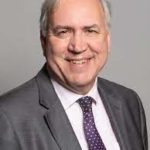
Tag: Robert Syms

  • Robert Syms – 2023 Speech on the Budget

    Robert Syms – 2023 Speech on the Budget

    The speech made by Sir Robert Syms, the Conservative MP for Poole, in the House of Commons on 20 March 2023.

    I draw attention to my entry in the Register of Members’ Financial Interests. I am in the parliamentary pension fund and I may be affected by the lifetime allowance changes.

    Listening to the debate today, one would be forgiven for forgetting the fact that we had the worst public health emergency for 100 years, in which the Government had to take actions to lock the economy down. I had my disagreements with my right hon. Friend the Member for Uxbridge and South Ruislip (Boris Johnson), but you cannot say his motives were bad. He was trying to save lives and to get through a pandemic. We did not know whether the disease was going to be deadly, mild or what. That cost a lot of money and had a big impact on many businesses. If several million people are sent to sit at home for months on end while the Bank of England is printing money, it should not be a surprise if, at the end of that, inflation is high and living standards are under some challenge. The only people who could be surprised about the fact that the last 12 or 18 months have been difficult economically are those who did not think that there would be any consequences to lockdown. There were consequences. We are getting through them and things are improving, but that means there have to be some tough and difficult decisions on issues such as tax.

    On the Government Benches, sometimes we do not like to put up taxes, but sometimes it is necessary. If we look at what the Government have done, we see that they have a plan, which is working. Between now and the next general election, there will probably be five statements or Budgets. We are at stage 2, so there are another three to go. In November, there were predictions of a recession—quite a big recession, actually—in the early part of this year, a rise in unemployment and a black hole in public spending. They have all sort of disappeared, which means the Government have stabilised the situation.

    The Government have been trying to ensure that more people can get back into the labour force, with changes to childcare. They have protected a lot of capital budgets through their decisions, and their main objective in the Budget is to keep the economy growing. I understand why people quote the International Monetary Fund, but its predictions, which are always educated guesses, were produced before the German economy went into a recession at the end of last year. At the moment, neither the French nor the German economy is performing as well as the British economy.

    The truth of the matter is that we have a spike in inflation, which should come down quite rapidly this year. There will be a crossover point, somewhere around May, June or July, at which inflation will fall below the rate of pay increases. We will then start to have an increase in living standards from this summer onwards, and some of the squeezes that families are facing will be reversed. If the public finances improve as we grow, I hope that my right hon. Friends on the Treasury Bench will be able to cut taxation. There is a lot to be said for the Budget, which is one further step in the direction of sensible economics and nursing our economy and our public and individual finances back to health, so I support what the Prime Minister and the Chancellor are doing.

    I was pleased by what my hon. Friend the Member for Ynys Môn (Virginia Crosbie) said about nuclear, particularly small modular. It is very important that we get on with that because, as always, we need a balanced range with not just renewables and gas but nuclear power.

    I am generally pleased with what the Budget has done: I think that the outlook has measurably improved. We can still see some fragility in the world economy, certainly when we look at Switzerland or the United States, so we have to take a cautious approach, but I am sure that if we do so and nurse the economy back to health, our nation will be rather the better for it in 12 or 18 months’ time.

    I say to the Opposition: if we are right, we will beat you, and if you are right, you will beat us. I keep hearing about these 13 years of misery, but we won an election in 2015, we won an election in 2017 and we won an election in 2019. We may well win the election in 2024, but it will really be determined by whether the Treasury team get it right. My view is that they probably are getting it right; the Opposition’s difficulty is that they have to sit there and watch us getting it right. I think it is going to be an interesting 18 months.

    The hospitality sector in Bournemouth and Poole thinks that VAT is too high. The Isan Thai restaurant in Poole and the Lakeside restaurant in Poole would like to see it reduced when we can afford it, not least because many restaurants do not pay VAT on food, so the real rate of VAT at 20%, when they do not have many offsets, is quite a painful thing to pay. I told them that I would raise that point in this debate.

    I think we are going in the right direction. I think we will see an improvement as we go through the year, and it will fundamentally change the politics of our country.

  • Robert Syms – 2016 Parliamentary Question to the Department for Work and Pensions

    Robert Syms – 2016 Parliamentary Question to the Department for Work and Pensions

    The below Parliamentary question was asked by Robert Syms on 2016-03-08.

    To ask the Secretary of State for Work and Pensions, what progress his Department has made on reducing the number of workless households.

    Priti Patel

    Since 2010 the number of workless households has fallen by over 680,000 to its lowest level since records began.

  • Robert Syms – 2016 Parliamentary Question to the Department of Health

    Robert Syms – 2016 Parliamentary Question to the Department of Health

    The below Parliamentary question was asked by Robert Syms on 2016-03-23.

    To ask the Secretary of State for Health, what discussions his Department has had with police forces on the level of enforcement of legislation on smoking in vehicles with children present; and if he will make a statement.

    Jane Ellison

    Discussions are ongoing between Departmental officials and the relevant authorities about enforcement action. Guidance on the enforcement process has been sent to police forces and, as with other smokefree legislation, we expect high levels of compliance with this change.

  • Robert Syms – 2016 Parliamentary Question to the Department for Business, Innovation and Skills

    Robert Syms – 2016 Parliamentary Question to the Department for Business, Innovation and Skills

    The below Parliamentary question was asked by Robert Syms on 2016-03-23.

    To ask the Secretary of State for Business, Innovation and Skills, what estimate he has made of the number of public houses which have gone out of business since 1 July 2007.

    Anna Soubry

    The Government does not compile statistics on pub closures and has made no estimate of the number of pubs that have closed.

  • Robert Syms – 2016 Parliamentary Question to the Department of Health

    Robert Syms – 2016 Parliamentary Question to the Department of Health

    The below Parliamentary question was asked by Robert Syms on 2016-03-23.

    To ask the Secretary of State for Health, what the cumulative loss in revenue to HM Treasury has been as a result of the effect of tobacco control measures over the last 10 years.

    Jane Ellison

    The Department assesses the impact of all proposed measures before laying legislation using standard government methodology. These assessments are set out in Impact Assessments which are scrutinised by the Regulatory Policy Committee before publication alongside the Statutory Instrument. Impact Assessments include a thorough analysis of the costs, benefits and risks associated with policy options.

    A number of the tobacco measures contain commitments to further review the impact of the legislation within five years of them coming into force.

  • Robert Syms – 2016 Parliamentary Question to the Department of Health

    Robert Syms – 2016 Parliamentary Question to the Department of Health

    The below Parliamentary question was asked by Robert Syms on 2016-03-23.

    To ask the Secretary of State for Health, what estimate he has made of the potential reduction in revenue to the public purse resulting from the EU Tobacco Products Directive.

    Jane Ellison

    The Department assesses the impact of all proposed measures before laying legislation using standard government methodology. These assessments are set out in Impact Assessments which are scrutinised by the Regulatory Policy Committee before publication alongside the Statutory Instrument. Impact Assessments include a thorough analysis of the costs, benefits and risks associated with policy options.

    A number of the tobacco measures contain commitments to further review the impact of the legislation within five years of them coming into force.

  • Robert Syms – 2016 Parliamentary Question to the Department of Health

    Robert Syms – 2016 Parliamentary Question to the Department of Health

    The below Parliamentary question was asked by Robert Syms on 2016-03-23.

    To ask the Secretary of State for Health, if he will postpone the start date for the introduction of standardised packaging on tobacco products in order to undertake an assessment of the implications of the post-implementation review of a similar measure in Australia on his policies in this area.

    Jane Ellison

    The Government has no current plans to postpone the introduction of standardised packaging of tobacco products. The Standardised Packaging of Tobacco Products Regulations 2015 come into force on 20 May 2016. Standardised packaging is an important public health measure and any delay in implementing the policy would also delay the health benefits from accruing. The Government continues to consider relevant information and evidence on standardised packaging, including the Post-Implementation Review of Tobacco Plain Packaging published by the Australian Government last month.

  • Robert Syms – 2016 Parliamentary Question to the Department for Business, Innovation and Skills

    Robert Syms – 2016 Parliamentary Question to the Department for Business, Innovation and Skills

    The below Parliamentary question was asked by Robert Syms on 2016-03-23.

    To ask the Secretary of State for Business, Innovation and Skills, what estimate he has made of the number of public houses which have gone out of business since 1 July 2007.

    Anna Soubry

    The Government does not compile statistics on pub closures and has made no estimate of the number of pubs that have closed.

  • Robert Syms – 2016 Parliamentary Question to the Department of Health

    Robert Syms – 2016 Parliamentary Question to the Department of Health

    The below Parliamentary question was asked by Robert Syms on 2016-03-23.

    To ask the Secretary of State for Health, what the cumulative loss in revenue to HM Treasury has been as a result of the effect of tobacco control measures over the last 10 years.

    Jane Ellison

    The Department assesses the impact of all proposed measures before laying legislation using standard government methodology. These assessments are set out in Impact Assessments which are scrutinised by the Regulatory Policy Committee before publication alongside the Statutory Instrument. Impact Assessments include a thorough analysis of the costs, benefits and risks associated with policy options.

    A number of the tobacco measures contain commitments to further review the impact of the legislation within five years of them coming into force.

  • Robert Syms – 2016 Parliamentary Question to the Department of Health

    Robert Syms – 2016 Parliamentary Question to the Department of Health

    The below Parliamentary question was asked by Robert Syms on 2016-03-23.

    To ask the Secretary of State for Health, what estimate he has made of the potential reduction in revenue to the public purse resulting from the EU Tobacco Products Directive.

    Jane Ellison

    The Department assesses the impact of all proposed measures before laying legislation using standard government methodology. These assessments are set out in Impact Assessments which are scrutinised by the Regulatory Policy Committee before publication alongside the Statutory Instrument. Impact Assessments include a thorough analysis of the costs, benefits and risks associated with policy options.

    A number of the tobacco measures contain commitments to further review the impact of the legislation within five years of them coming into force.