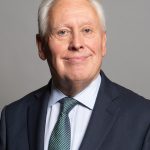
The speech made by Sir Robert Neill, the Conservative MP for Bromley and Chislehurst, in the House of Commons on 5 December 2022.
It is a pleasure but also a sadness to rise to speak in this Adjournment debate, because it is not a discussion we should be having in a society that prizes excellence, attainment and opportunity. It is about the disgraceful behaviour of Arts Council England in removing the English National Opera from the national portfolio and about what some of us perceive to be a significant underappreciation of the performing arts, as opposed to other art forms, in the way we deal with our arts and culture policy—perhaps, I regret to say, in the attitude of Arts Council England itself from time to time.
Let me set out very briefly what causes that. The English National Opera is approaching its 100th anniversary. It was founded by Lilian Baylis to deliberately make opera, in its best and most effective sense, available to everybody—I will come back to the fact that opera is not some kind of elite form in the way it is so often wrongly characterised. That is the same mission that Arts Council England was given: to make art and excellence available to everybody. Regrettably, recent decisions have put that at risk.
For 55 years or so, ENO has had its home at the London Coliseum. It has been a nurturer of talent and, for many people, as audiences and as professional singers, the gateway to opera. It has done a great deal. It has had its challenges from time to time; the Coliseum is a large theatre, and there was a time when the company struggled to find its way in a sense, artistically and financially. It also had some brilliant times, and I remember, as a young student in London, going to the ENO when it was at Sadler’s Wells, before it moved down to the Coliseum. I remember seeing fantastic productions there that opened people’s eyes to what music can do; what that extraordinary juxtaposition of theatre, music and the visual performance can do, in a way that no other art form arguably can.
The ENO’s unique thing was that it was affordable and it did it in English, so the barrier that sometimes makes operas and art forms seem remote did not exist at the English National Opera. That has always been one of its important calling cards. That has also meant that talented people—from Bryn Terfel to Susan Bullock and many others—started their careers and have worked their way to becoming international stars because of the ENO.
Tim Loughton (East Worthing and Shoreham) (Con)
I congratulate my hon. Friend on bringing this debate, although it is regrettable that we have to have it. I can attest, as somebody who has enjoyed many particularly un-highbrow productions at the Coliseum, to what he is saying. The ENO has sought to diversify and to open its doors to the less advantaged. It has given free tickets to young people and has encouraged them to get involved with the beauty of music in an accessible way and in English at such a young age. Does he not think it is ironic that the ENO is the victim of a supposed diversification programme by the Arts Council, which is giving questionable money to all sorts of politically motivated causes up and down the country, and that this could scupper the future of such a fantastic institution that has done so much to bring the arts to those who absolutely benefit from it more than most?
Sir Robert Neill
I certainly agree with my hon. Friend. The ENO has been about expanding horizons and expanding opportunities. The irony is also that, because of the hard work of its current leadership, and because of the work that has been done by its chair, Dr Harry Brünjes, by its board, and by its chief executive, it is on a sound financial footing.
The ENO was praised by the chair of the Arts Council as being never better led, and the Arts Council’s internal documents show that its governance is beyond reproach. On its financial situation, risk is seen as moderate—for any company in theatre, that is, frankly, very good. It has actually built up reserves and has done all the right things, putting the operation on a much more commercially aware basis. Those at the ENO spend time bringing in musicals to cross-subsidise some of the less accessible and more challenging work, but that is an important part of their mission, too. They have done everything expected of them in the Arts Council’s own objectives, and have ticked the box on the Art Council’s own internal assessments of the Let’s Create objective.
Why is it, then, that a company that has done everything asked of it, and succeeded, has the rugged pulled from under it by the Arts Council, on 24 hours’ notice, with no consultation, no evidence base—that we have seen—to underpin it, no strategy to underpin the approach to opera as an arts form or, generally, to the way that vocal arts are dealt with in the United Kingdom? Why is it, then, that the chorus and orchestra are threatened with redundancy and the creatives are likely to be on notice? That is all on the basis of a laudable objective of the Government to spread where the arts are found in this country. I do not disagree with that, but it is done in such a manner that the Government’s own objective is, I regret to say to the Minister, undermined and almost discredited.
Dame Margaret Hodge (Barking) (Lab)
I congratulate the hon. Gentleman on securing this debate, although as the hon. Member for East Worthing and Shoreham (Tim Loughton) said, it is sad that he had to do so. Does he not agree that this is the most scandalous decision, given every objective of the Government and of the Arts Council to widen participation and access to this unique form of art? The ENO is the one place where British young artists have the opportunity to develop their careers, to start performing to the public and to be seen by both national and international opera houses.
The Arts Council worked with the theatre that I chair in east London to put on a performance of “Noye’s Fludde” by Britten. They brought in about 50 young children from Newham and Tower Hamlets in east London, who participated as actors in that production. They managed to win an award out of it, which was absolutely tremendous. Is that not all about widening participation, opening access and levelling up?
Sir Robert Neill
The right hon. Lady is entirely right. A few statistics bear that out: 50% of the ENO’s audience come to see an opera for the first time. I was at its new production of “It’s a Wonderful Life” only last week. On Friday I went to see the last performance of “The Yeoman of the Guard”. I have never seen a younger audience in an opera house on either of those occasions. A few months ago I was at “Tosca” when it first opened and saw the same thing—standard repertoire, some would say—young people who are enthusiastic about serious art done to an international level. To undermine that would be vandalism of the very worst order.
Nickie Aiken (Cities of London and Westminster) (Con)
I congratulate my hon. Friend on securing this Adjournment debate. I was particularly concerned to hear the news of the Arts Council not supporting ENO in the way it should, particularly as the London Coliseum is based in my constituency. I have had conversations with the Arts Council and with the ENO. Does my hon. Friend agree, as I suggested to them, that the ENO should consider a model along the lines of the Royal Shakespeare Company, which has an impressive regional base but keeps its London base because London attracts international tourists as well as British tourists? It is so important for the levelling-up agenda to have a regional base but also to keep the London flagship.
Sir Robert Neill
My hon. Friend is absolutely right. That is the whole point. This should not be an either/or. The whole point is to ensure that we have a secure company in London that can do its work, but ENO has been more than willing from the very beginning to do more work outside London. It planned to do a show in Liverpool before the pandemic. As it happens, other cuts elsewhere to Welsh National Opera have meant that Liverpool will get less opera now rather than more. That is a bizarre way of going about things.
Ms Harriet Harman (Camberwell and Peckham) (Lab)
I thank the hon. Member for introducing this important Adjournment debate. I agree absolutely with the case he sets out in his speech for the Arts Council decision to be withdrawn. As the hon. Member for Cities of London and Westminster (Nickie Aiken) proposed, the decision should be reviewed, reshaped and should not go ahead. It is baffling and an absolute shame that three people who have done so much for the arts—Nick Serota, Darren Henley and Claire Mera-Nelson—should have made this wrong decision. Will he join me in urging them to withdraw the decision, recognise that they got it wrong and that the ENO has exemplified levelling up, and undo this terrible mistake?
Sir Robert Neill
The right hon. and learned Lady is absolutely right, not least because the decision was made with no notice, no prior consultation and no ability for the ENO to go through a proper consultation process with its staff, who may be rendered redundant. I suspect that lays the Arts Council open to judicial review, but I am sure it would not want to get into that position when a compromise solution is readily available.
Sir Robert Buckland (South Swindon) (Con)
I am grateful to my hon. Friend for giving way; I am conscious of the time. That is the most shocking aspect of this sorry saga: the suddenness of the decision, the abruptness of the withdrawal of funding and the failure to even consider a phased approach or a more modulated approach, as suggested by my hon. Friend the Member for Cities of London and Westminster (Nickie Aiken). Nobody wants to talk about legal action, so surely the sensible way forward is for the Arts Council to think again about the gravity of its decision and to give the ENO a fair hearing at the very least.
Sir Robert Neill
My right hon. and learned Friend is obviously right. The perhaps unprecedented number of interventions in this Adjournment debate from hon. Members on both sides of the House demonstrates how strongly people feel about the issue. That is the message to the Minister and the ENO: people support the ENO and say that the Arts Council should think again and find a way forward that achieves the objective.
Several hon. Members rose—
Sir Robert Neill
I will take the remaining interventions, then close quickly to give the Minister time to respond.
Mr Jonathan Lord (Woking) (Con)
I commend my hon. Friend for his excellent arguments and all other hon. Members who are supporting them. As MP for Woking, I have had quite a big postbag on this issue from not just opera-loving constituents, who are disgusted by the decision, but first-class musicians and singers who will effectively lose their job. I, too, appeal to the Minister to ensure that the decision is withdrawn.
Sir Robert Neill
I am massively grateful to my hon. Friend.
Jim Shannon (Strangford) (DUP)
I am grateful to the hon. Gentleman for bringing forward the debate. I believe, as he does, that it is outrageous that Arts Council England is withdrawing the funding. Does he agree that it is about ensuring the upkeep of our theatres, and encouraging people to visit the wonderful theatres that hon. Members have mentioned in their constituencies across the United Kingdom, especially after the impact of covid on the performing arts industry?
Sir Robert Neill
The hon. Gentleman is right. What I found extraordinary was the Arts Council’s suggestion that there was no growth in the audience for opera—or for “grand opera”, as it was demeaningly titled, which indicates someone who does not know much about opera. Actually, the figures from the ENO show a significant growth post covid—more than before—but the Arts Council makes no allowance for that. It has flawed figures, no strategy and a flawed consultation—a flawed approach from day one.
Sir Peter Bottomley (Worthing West) (Con)
I congratulate and thank my hon. Friend on raising the subject. Seven years ago, the Arts Council was worried about the ENO’s business plan and management. The business plan has gone well, the management have done well, and the singers and musicians have done brilliantly. Is it not time to back a British success?
Sir Robert Neill
I entirely agree with the Father of the House.
Andy Slaughter (Hammersmith) (Lab)
I may not be able to match the hon. Gentleman’s regular attendance, but the last two productions that I saw at the Coliseum either side of covid were Les Dennis in “HMS Pinafore” and Harrison Birtwistle’s “The Mask of Orpheus”, which gives an idea of the range that is on display. It is a great London, national and international institution, and it is being ruined, so I congratulate him on what he has said, and all other hon. Members. The decision has to be reversed.
Sir Robert Neill
I will conclude by asking the Minister what more he needs to hear. When I was a barrister, I would occasionally say to my clients, “The evidence is overwhelming.” He should go outside, have a word and think about it. If he was the advocate, I would say, “Have a word with your clients and tell them to reflect, because there’s time to change this.” The ENO is willing to offer a way forward: it wants to and will do more outside London and it will meet the Department’s objectives, but that cannot be done on the timescale and funding that is available.
Can we please have a proper strategy to underpin the approach to opera and a proper funding settlement to keep the ENO stable until it can go through due process? There needs to be a proper discussion about moving to a viable venue—there is all this nonsense about a place in Manchester, but no one in Manchester has even been consulted. Let us find a proper means for the ENO to perform outside London in a way that delivers good-quality art for people, and then let us sit down to consider a proper level of transition funding, as was done for the Birmingham Royal Ballet, which took five years to go and do work outside London.
Above all, I beseech the Minister that we should maintain the chorus and the orchestra. They cannot move out of London, because they have families, so they will be made redundant and the chorus and the orchestra will be destroyed. An orchestra and a chorus take years to build up. It is not a production line; it is years of work of an ensemble coming together.
Keep the ENO in being and it can do a vast amount elsewhere in the country. It will contribute to levelling up like nothing else. Please do not destroy it, through a misapplication, I am afraid, of a laudable policy; many of us do not disagree with the Government’s policy, but I am afraid it has been badly mishandled by the Arts Council. Arm’s length though it is, because the previous Secretary of State gave instructions to the Arts Council as to how it should do its funding, the Minister has a right and a duty to tell it, “Think again. Reflect. Come to a better solution.”