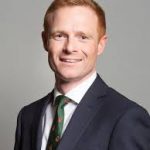
Tag: Robbie Moore

  • Robbie Moore – 2023 Speech on Planning Policy

    Robbie Moore – 2023 Speech on Planning Policy

    The speech made by Robbie Moore, the Conservative MP for Keighley, in Westminster Hall, the House of Commons on 26 January 2023.

    It is a pleasure to serve under your chairmanship, Mr Vickers.

    I congratulate my hon. Friend the Member for Isle of Wight (Bob Seely) on securing this important debate. It is important because planning policy impacts on everyone, and everyone has a view on it, whether that is negative or positive. Generally, it impacts on everyone’s life.

    I will pick up on some of the absolutely valid points made by my hon. Friend the Member for South West Hertfordshire (Mr Mohindra) about the fact that a lot of planning policy has to be community-driven. Sometimes, it has to be generated at the grassroots level, rather than top-down. As has been said, it is incredibly important that planning policy is community-led. It has to consider the environment and relate to the needs of what is required within a specific community. It is important that we develop houses that meet and enhance the health and wellbeing of the communities we all represent.

    I take a keen interest in planning policy because I studied architecture at Newcastle University and, in my year in industry, worked for a great company up in Newcastle that was involved in master planning exercises for housing regeneration schemes. One of the schemes we got involved with was in a deprived area of Sunderland, Southwick, and looked at how we could enhance a community through the quality of build of houses being developed. Indeed, I remember when I was at university, I did my dissertation on Byker and how the built environment can support communities. That is absolutely what planning policy should be about.

    There are a few issues I want to cover in my contribution. I will consider local plans and how we can ensure that the infrastructure we all like to talk about—whether that is roads, GPs, schools or parks—is supported and there to enhance people’s quality of life with regard to housing. I will also touch on affordable housing and what an industrial strategy looks like when we are talking about employment use, and I will finish by talking about telecom masts.

    My constituency of Keighley and Ilkley is going through a review of its local plan. Our local planning authority, Bradford Council, is looking at the local plan and will be putting it out for its second consultation in the not-too-distant future—I have been informed that that will happen shortly. One of the inevitable challenges is the drive to increase housing numbers across the whole of the Bradford district, which contains many different settlements, including not only Bradford city itself, but Keighley and Ilkley, which as towns are very different from the city. The complexity lies in the different make-up of those settlements and where the need is in those settlement areas.

    Through the first consultation on the local plan, it became clear that the local authority seems to have an incredible will almost to offload some of those housing numbers to the easy wins—the easy wins being most of the outlying areas in the greenfield or in green-belt areas where it might be easier to get those planning applications through at a later date. The local plans are being developed at the moment that will create the next 15-year housing strategy, which will, we hope, be adopted later this year.

    The concerns I have raised constantly are that the plan does not focus enough on prioritising brownfield development. We must refocus on those brownfield sites. Yes, they are more complex to develop—they may have contamination issues, issues with highways, challenges from some of the old mill settlements and so on—when trying to create a clean slate to drive that private inward investment into some of those sites. However, that has to be looked at because, unless we actually have a brownfield-first priority, we run the risk of not only reducing the soul of a settlement where those brownfield site holes in a settlement have been identified, but not actually developing houses where that need is identified.

    My concern is that, in several of the towns I represent, the housing numbers that have been proposed are dramatic. They are way over and above the need identified for those settlements. In some of the discussions I have been having with the local authority, I hear that it has allocated the housing numbers to those settlements based on the deliverability factor—that is, it knows it can deliver x houses in those settlements because can build it on greenfield or take green-belt land out of the green belt for housing, rather than having a proper focus on brownfield first.

    I will give some examples. There is Silsden—I should declare an interest, because that is the town that I live in. It is in the middle of the constituency, and it has had a proposed increase in housing numbers of about 580. Silsden is a relatively small settlement that has grown and grown; as we speak, we have an application from Persimmon Homes for 140 houses, to which I have put in an objection. We have had a Barratt Homes development; we have had Countrywide looking at putting in a development; we have Linden Homes currently building on site; and Skipton Properties has recently built a housing development.

    Bob Seely

    My hon. Friend is making a great speech, and I thank him so much for being here. Is not one of the problems with these big property companies, apart from the fact that they land bank, that they are interested only in really big sites? Since the great crash 10 or 15 years ago, a lot of the medium-sized and smaller building companies have gone out of business. We need to motivate smaller companies, or find financial incentives for developing smaller sites in a way that is much more acceptable to smaller towns and villages. That is better than Persimmon Homes, which, apart from anything else, has a dreadful reputation for the quality of its build, just plonking down 100 homes here or 500 homes there, and almost taking over and swamping the village.

    Robbie Moore

    That is exactly the point that I want to come on to, because Silsden is being inundated with houses. A live application for 140 houses is being considered by Bradford Council. I am completely opposed to it, but it is one of about six planning applications made over a period of time, and some of those houses are still being built. The point is that there has not been a sensible conversation about the impact on infrastructure and, as my hon. Friend pointed out, the quality of the build.

    The road infrastructure going through Silsden is not great at all. I drive through Silsden weekly, and the roads are tight and narrow. The pavements are not wide enough, let alone the roads. There are no conversations about the school, the GP services and the other facilities that the town needs in order to stay vibrant. Settlements sometimes need to grow organically; growth must be driven by the requirements of individual settlements. There sometimes needs to be a focus on brownfield sites first, or on development of niche, smaller sites, which could be grown at an organic speed and delivered in line with settlements’ need.

    In Ilkley, the average house price is somewhere around £420,000. That is very high, but local plan proposals suggest that Ilkley needs to grow by another 314 houses. I am constantly pushing back, because the community and I need to see the requirement for Ilkley to grow by that number of houses over the next 14 years.

    Just down the road, in the constituency of my hon. Friend the Member for Shipley (Philip Davies), Burley in Wharfedale has grown hugely recently—by about 700 houses. The implications for the GP service are huge. It has been a real challenge to unlock money, whether through section 106 or the community infrastructure levy, to improve the infrastructure. I have been helping out my hon. Friend with that.

    I will come on to the quality of the build, which my hon. Friend the Member for Isle of Wight made a really good point about. I have mentioned Harron Homes in this Chamber before; the quality of its build has been shocking, and it is not great to say that. I will give another example. About 50 houses were built—again, in Silsden. Other Members from across West Yorkshire have made this point in this Chamber before. The site was finished, in the developer’s eyes, yet there were huge snagging issues. The road was not even sorted out; in fact, sewage from the site had to be disposed of by a lorry that came in and emptied the tank, because the connection with Yorkshire Water were not sorted out. How can we ensure more enforcement against property developers when build is not of the quality that residents, and we representatives, expect? What can the Government do to put more pressure on developers to enhance the quality of houses, and of the master planning of the community that is being developed?

    That brings me to industrial strategy. Inevitably, when it comes to planning, everybody likes to talk about houses, because that is quite an emotive issue, but I agree with the points that my hon. Friend the Member for Isle of Wight made about the use of compulsory purchase powers. On North Street in Keighley, there are many empty buildings with fantastic architecture. How do we use compulsory purchase powers to unlock those sites, and force the owners to change them into housing, or get them into some sort of community use, so that they do not sit empty year after year? Those sites could be used by the town.

    Dalton Mills is a fantastic building. It is an old mill—one of the biggest in Keighley—that has been redundant for many a year, although “Peaky Blinders” was filmed there. The quality of the site has deteriorated over many years, and last year there was a big fire— 100 firefighters and 21 fire engines came. The building unfortunately suffered a huge amount of fire damage, although the façades seem to be structurally sound. It is a unique site just outside the centre of Keighley, but we are unable to unlock it because the landowner seems aloof—we cannot get in touch with him. We cannot get traction with some of these key sites. How can we unlock them, in planning policy terms, using compulsory purchase powers?

    Let me turn to the speed at which local authorities operate. In order to drive growth and job creation, we want light industrial units in appropriate places, but it takes too long to get the planning applications through the system and get those units built. I have been shown many examples in Keighley. About four years ago, a planning application was submitted to the local authority for eight or 10 light industrial units. It did not get any traction from the local authority until the early in the covid period. During the covid period, the units got built and occupied, and now those businesses are flourishing. The demand is there; we just need to increase the speed.

    Of course we want to drive better connectivity, but telecom masts have to be in locations where they do not have an adverse impact on the beauty of a village, and they must not be too close to residential units. There needs to be a mechanism for putting pressure on organisations such as Clarke Telecom that drive some of the applications. We must ensure that they look at where the best sites are. I will give three examples.

    Unfortunately, a telecoms mast was approved in Addingham. It has a huge impact; it does not look good on the drive into the village. There would most definitely have been a better site for it. Putting it elsewhere would not have affected connectivity. All the residents of Addingham are impacted when they drive into the village and see that ghastly telecoms mast. An applicant applied to put a telecom mast on a site in the middle of Ilkley that was not even part of the public highway; they just thought they could get away with it. They had to withdraw the scheme, which will now be reconsidered. I put a lot of pressure on them. There was an application for a mast on a roundabout in the heart of the beautiful village of East Morton. We want to drive connectivity, but we do not want random applications for masts all over the place, with applicants seeing what they can get away with. That is not acceptable.

    We have covered loads of points. I thank my hon. Friend the Member for Isle of Wight for securing this debate, because planning policy without doubt impacts all our constituents. Everyone is incredibly passionate about it.

    The Government are absolutely going in the right direction, and I commend them for listening to the many concerns that I have raised about housing numbers. The key point that I want to reiterate before I close is that planning policy has to be driven by need. What we need, rather than local authorities aiming policy at quick wins, is to create housing where it is needed, and a “brownfield first” policy.

  • Robbie Moore – 2022 Speech on Employment and the High Street

    Robbie Moore – 2022 Speech on Employment and the High Street

    The speech made by Robbie Moore, the Conservative MP for Keighley, in Westminster Hall, the House of Commons, on 7 December 2022.

    It is a pleasure to serve under your chairmanship, Mrs Cummins. I thank the hon. Member for Hornsey and Wood Green (Catherine West) for securing this really important debate; talking about small businesses and the revitalisation of high streets is undoubtedly incredibly important.

    As the hon. Member indicated, last Saturday we celebrated 10 years since Small Business Saturday was introduced—what a moment for us to be having this debate. No doubt we all spent the weekend out and about in our constituencies, supporting our many independent retail shops. I celebrated by going out and buying my Christmas tree from James and Anne, who run a fantastic business in Addingham. On Wednesday this week, they celebrate 63 years operating in Addingham, which is a huge achievement for a brilliant family-run business.

    We are all familiar with such fantastic retail businesses. I suppose this is my opportunity to encourage all my constituents, while they have time, to get involved with my small business award. Nominations close on 9 December and it is a great way to recognise the valuable support that small businesses give to our communities and their customers.

    There is absolutely no doubt that the pandemic has changed the nature of high streets, with many more people shopping online. That is a challenge that the market is driving, and it is difficult for the Government to react to it. I do not accept the blame game that says that is the Government’s fault. The way people buy items is very much market-driven, and most people now go online, which is incredibly challenging and frustrating for our many independent businesses.

    Of course, there are mechanisms that the Government or local government can use to try to keep high streets as alive as possible. I welcome the range of support that the Government have put in place to help with utility costs, and the indication that they will look at things such as business rates. As the Minister will know, I have said in this place many times that there is a case for reviewing business rates. There is a case for them to be linked more to turnover or calculated on a percentage basis, rather than relating to the area of space that a business occupies. That might take away the challenge faced by a new business occupying a large space and being exposed to business rates. But of course we know that there are reliefs in place, which have been expanded, that are helping many of our small businesses.

    I want to pick up on the point made by the hon. Member for Hornsey and Wood Green about the closure of a lot of high street banks. Unfortunately, in Ilkley, we have just had the announcement that HSBC will close its branch, Barclays has already closed, and NatWest has indicated that it will close too. We need to send a wake-up call to the banking sector. I would like to see the banks come together and have a proper conversation about banking hubs. Those could be implemented on the high street, utilising the same premises, and would remove the challenge that banks face keeping their customer base going into branches. We all know that high street banks can help customers who do not live purely in a cashless society. In common with post offices, it is important that we keep those vital facilities going, with a presence on the high street.

    In my constituency of Ilkley, and in Keighley, one of the things that causes frustration for local businesses is parking charges. Bradford Council has brought in parking charges in Ilkley, which is incredibly frustrating to a place that is driven by tourists who want to browse our many fantastic retail offerings. When people arrive, they do not know how long they want to stay, so they are faced with the challenge of spending money on car parking and then having to rush back without feeling that they have had enough time to shop and browse. Bradford Council has got it wrong in my constituency. If parking charges have to be implemented, better and more innovative schemes could be considered.

    BIDs are an important tool if they have a good culture, a good management team and a good strategy in place. I pay tribute to the Ilkley BID and its manager, Helen Rhodes, who does a fantastic job keeping the sell factor going and driving the good local stories that we have to tell in places in my constituency. On that note, I thank the hon. Member for Hornsey and Wood Green—what a brilliant debate.

  • Robbie Moore – 2022 Speech on Local Authority Boundaries

    Robbie Moore – 2022 Speech on Local Authority Boundaries

    The speech made by Robbie Moore, the Conservative MP for Keighley, in the House of Commons on 7 December 2022.

    I beg to move,

    That leave be given to bring in a Bill to make provision about changing local authority boundaries in cases where there is public support for such changes; and for connected purposes.

    Local representation matters. Individuals and communities need to have trust in their local authority, which is charged with acting in their best interest, regardless of which political party may be in charge at a local level. Residents need to be reassured that the framework, the model, the structure and, indeed, the geographical area represented mean that the local authority has the capacity and the capability of acting in their best interest.

    My Local Authority Boundaries Bill aims to re-empower local communities that feel completely disenfranchised and forgotten about by their local authority. Let us not forget that local authorities have perhaps one of the most important influences on an individual or a family’s day-to-day life than any other level of government. Whether it be sorting out highways and potholes, putting in speeding cameras, dealing with local planning policy, housing, schools, children’s services, adult services, bin collection, leisure centres, libraries and regeneration, and driving local economic growth, local authorities are incredibly important. As organisations, they must represent the entire geographical area encompassed by their boundaries, and, most importantly, deliver for local communities based on their local priorities.

    In my view, if a local authority is too large in terms of the number of residents it represents, its geographical area is too great, or a single city is getting all the attention from the local authority, with the outlying towns and villages being deprioritised, then there is a risk that communities will suffer. The sense of place is lost and people become disenfranchised or even completely forgotten about. At a local level, that is the very challenge that I face.

    I represent perhaps one of the most important and beautiful parts of the United Kingdom. Keighley, Ilkley, Silsden, Steeton, Riddlesden, East Morton, the Worth Valley and the areas in my wider constituency are full of passionate people who, quite rightly, are incredibly proud of where they live. For too long, though, the area I represent has felt completely unrepresented and ignored by our local authority, Bradford Council.

    Constituents in Keighley and Ilkley, and indeed in Shipley and Bingley, represented by my hon. Friend the Member for Shipley (Philip Davies), are fed up of living in the shadow of Bradford, getting a rough deal and having to put up with the incompetence and poor service provision from our local authority. This Bill aims to change this disconnect by giving local communities such as mine the option to have their say on refocusing and realigning local authorities to be local, and to deal with and deliver on local priorities.

    The mechanics of my Bill are simple: they place a requirement on the Secretary of State for Levelling Up, Housing and Communities to lay regulations that would enable two or more parliamentary constituency areas, such as Keighley and Ilkley, and Shipley, to form a new local authority if, when combined, they form a continuous area. Quite rightly, as part of that process, public will and deep local support would need to be evidenced, so this Bill sets out the mechanisms for a referendum to be held. A petitioning system will be created to enable electors in any constituency area to indicate their support for a referendum to be held on the creation of a new local authority. If 10% or more of the people in that constituency area give their support for a referendum, a vote will be held among the electors within those community and constituency areas.

    After the referendum is held, if the majority of those people have signalled that they want a new council to better represent them, the mechanics of setting up a new local authority will be triggered. Of course, as part of the process, it would be necessary to present a strong indication that the new and residual local authorities would be organisationally and financially viable and capable of effectively delivering services to local residents.

    Let me outline why this Bill is so important to me and my constituents. A root cause of many of the problems is that my constituents feel that they are being used as a cash cow for Bradford and getting very little back in return. Council tax and business rates are all sent from my constituency to Bradford City Hall, with nowhere near the equivalent amount of funds comes back to be reinvested in our area. The Keighley and Ilkley and Shipley constituencies generate the highest tax revenue to Bradford Council through our council tax and business rates payments. Data released by our council finds that wards such as Ilkley, Wharfedale and Craven pay the highest proportion of what is billed, while other wards within Bradford city itself pay the least and yet get the highest investment. Even though the two constituencies are the largest contributors, we undoubtedly benefit the least; cash is funnelled into Bradford city centre projects by my constituents, who are getting no benefit whatsoever.

    Hon. Members should be in no doubt that we have some huge challenges in Keighley, with deprived areas that need attention, and we need more local support from our local authority. I am talking about the local authority simply doing the basic job of providing statutory services well—getting projects off the ground while listening and taking account of local priorities.

    I will give some very quick examples. Bradford Council is still yet to deliver the Silsden to Steeton pedestrian bridge, despite money having being allocated for it by this Conservative Government. Bradford Council has delayed and delayed the project and now says it will not be delivered until 2026. The council’s recent decision to ignore a decisive public poll to keep the green space on North Street in Keighley Green and to push ahead with its development plans is contrary to what the people of Keighley want.

    Children’s services are in a dire state in Bradford. Across the district there are some exceptional problems that mark my area out from the rest of the country. Children’s services are perhaps the most important service that a local authority can provide, but Bradford Council children’s services have failed vulnerable children for far too long. At the start of this year, we heard a damning Government report on those services, which only went to show what we have all known for a long time: children in our district are not protected by those with the responsibility to do so, leading to some tragic circumstances throughout our area. I am pleased to say that earlier this year the Government stepped in and stripped Bradford Council of its children’s services so that a new trust structure can be set up. Those are just a few examples.

    In summary, this Bill would put new measures in place to ensure that local people have a say on who represents them, the very nature of the council and the geographical area in which the services will be delivered. It is only right that, if the majority of people in specific constituencies are in favour of forming a new unitary authority, they should have the opportunity to do so. Not only would that benefit my constituents in Keighley and Ilkley, but it would be very much welcomed by other Members of this place.

    Some may say that the Bill is divisive, but that is not the case at all. It is simply standing up for the community that I represent, and putting in place a plan that enables communities to be better represented at a local level, with the sole purpose of delivering on local priorities—something that, unfortunately, under the shackles of Bradford Council, my constituents have not benefited from for far too long. While I may refer to this Bill as the “Bradford breakaway Bill”, my Local Authority Boundaries Bill provides the mechanics for a smaller, more targeted, more nimble, more effective and more efficient local authority, able to deliver on local services and local priorities at speed and with a much better sense of public duty to its residents.

    Question put and agreed to.

    Ordered.

    That Robbie Moore, Philip Davies, James Grundy, Mr William Wragg, Damien Moore, Antony Higginbotham, Matt Vickers, Duncan Baker, Chris Clarkson, Dr Kieran Mullan and Sarah Atherton present the Bill.

    Robbie Moore accordingly presented the Bill.

  • Robbie Moore – 2022 Speech on the Supported Housing Bill

    Robbie Moore – 2022 Speech on the Supported Housing Bill

    The speech made by Robbie Moore, the Conservative MP for Keighley, in the House of Commons on 18 November 2022.

    I also start by commending my hon. Friend the Member for Harrow East (Bob Blackman) for bringing forward this important Bill. He has worked exceptionally hard, alongside other colleagues, on its legislative journey.

    Of course, this Bill will do so much to address the problems surrounding supported housing. We have heard today that some exempt accommodation in this country is, quite frankly, in a shocking condition for residents and occupants. The Levelling Up, Housing and Communities Committee produced a report revealing some of the horrendous conditions faced by residents, and I am pleased that the Bill aims to address some of those issues, including sexual harassment and violence by landlords under threat of eviction. There have been cases where staff and landlords have threatened residents, sold drugs to residents and been complicit in antisocial behaviour. We have to get to a position where the Government and the state enable these situations to be addressed.

    Colleagues on both sides of the House have highlighted the challenge of county lines. I represent a community in Keighley that is challenged by drug misuse and drug distribution via county lines, which filter into some of the accommodation provided through exempt housing. The report also discovered that neighbourhoods with a lot of exempt housing attracted other issues with antisocial behaviour, to do with crime, vermin and so on, and that organisations without any experience might target victims of domestic abuse and their children without offering other specialist help or a suitable and safe setting. That is why this piece of legislation is really important.

    Given all the examples that have been cited, it is absolutely vital that this House pass this piece of legislation. We need to tighten up regulations in this sector and ensure that those things are not allowed to continue. Of course, it is important to note that the Government have taken some steps to try to resolve the problems regarding supported exempt accommodation. From October 2020 to September 2021, DLUHC invested £5.3 million in five pilots in five local authorities, testing interventions to drive up quality and value for money. In the areas in which those pilots were carried out, it was shown that authorities were able to drive up the quality of accommodation and support residents; value for money was also improved through enhanced scrutiny of housing benefit claims. Through the pilots, it was possible to prevent some £6.2 million from being paid in error, which again goes to show why this Bill is so important. As my hon. Friend the Member for Harrow East said in his speech, we will be able to get better efficiency regarding taxpayers’ money, as well.

    If the Bill is passed, as I hope it will be, it will create a supported housing advisory panel, which is a huge step forward in ensuring that the sector is better supported. That panel’s mandate will be to offer information and guidance on supported exempt accommodation, as well as on their provision for regulation. The panel must comprise a broad range of individuals from the registered social housing providers, local housing authorities, social services authorities and non-profit organisations—all there to support the aims of the Bill. To pick up on some of the points that have been made by my hon. Friends the Members for Heywood and Middleton (Chris Clarkson) and for Penrith and The Border (Dr Hudson), dealing with housing is all about looking at the wider things that are associated with it—it is also about health, social care and education. That is why the direction of the Bill is so important, in trying to deal with some of the challenges related to the conditions that currently exist in exempt housing that have already been identified by the Department for Levelling Up, Housing and Communities.

    The Bill will hopefully ensure further regulation of the sector through its call for local housing strategies, placing a duty on local housing authorities to review supported exempt accommodation in their districts in light of the findings of a published supported housing strategy. That illustrates why it is so important that local authorities talk to one another and share best practice. We have seen that in other pieces of legislation—I am thinking of the private Member’s Bill introduced by my hon. Friend the Member for Darlington (Peter Gibson), the Taxis and Private Hire Vehicles (Safeguarding and Road Safety) Act 2022, which dealt with taxi licensing. That Bill was a mechanism of ensuring better sharing of dialogue and datasets between local authorities, so that we can drive good practice. This Bill will help in that area, too.

    One of the key things I am really pleased about is that the Bill will strengthen and broaden the definition of “homeless”, so that we can help more people who find themselves in dire straits. The Bill amends section 191 of the Housing Act 1996—which sets out the conditions under which someone can be treated as intentionally homeless—to establish that where someone leaves supported exempt accommodation for reasons related to the standard of accommodation, care, support or supervision provided and that accommodation does not meet the national supported housing standards, that person will not be able to be treated as intentionally homeless. That is important. As has been said, it is unfortunate that we do not have enough datasets covering a long period of time to drive forward some of the positive benefits of the Bill. I hope the Government will recognise the point that data collection is key.

    As we have all heard today, supported exempt accommodation is in dire straits. It needs to be sorted out, and I am sure the Bill will drive things forward to ensure that the next steps greatly improve the quality of provision. That will help all our constituents, and I am proud to support the Bill.

  • Robbie Moore – 2022 Speech on Rivers Achieving Bathing Water Status

    Robbie Moore – 2022 Speech on Rivers Achieving Bathing Water Status

    The speech made by Robbie Moore, the Conservative MP for Keighley, in the House of Commons on 9 November 2022.

    I start by congratulating my hon. Friend the Member for Harrogate and Knaresborough (Andrew Jones) on securing this important debate. I know how passionate he is about securing bathing water status for parts of the River Nidd in Knaresborough and I thank him for allowing me to make a short contribution.

    In December 2020, a stretch of water on the River Wharfe in Ilkley in my constituency was granted bathing water status—the first stretch of river in the UK to be awarded such a designation. I know how important that is, having heard my hon. Friend’s points about sewage getting into rivers. I put on record my thanks to the Ilkley Clean River Group, which did such a good job in getting our application off the ground in the first place and continuing with its efforts. I hope that my hon. Friend’s campaign is a success.

    Why does this matter? Simply, we all care about improving water quality and ensuring that our rivers are clean, healthy and thriving environments. Of course, achieving bathing water status on rivers provides an additional mechanism to ensure that a river ecosystem is as healthy as it can be. The River Wharfe in Ilkley has had, and continues to have, problems with pollution being discharged due to inadequate sewage infrastructure. When it rains, Yorkshire Water’s sewage treatment works in the surrounding area often spill into the River Wharfe. Residents along Rivadale View will be familiar with that, as will residents downstream of the Ashlands sewage plant. Even more damaging are storm overflows, which are frankly inadequate to deal with the high percentage of rainfall we receive. My hon. Friend has already commented on our challenges with the combined sewer system.

    Let us be clear: until now, no Government have had the willpower to tackle sewage discharge. I was pleased to vote for the Environment Act 2021, which will help tackle and put a stop to sewage discharge. I must say it was disappointing that the Opposition parties did not, like us, vote for that Act.

    Of course, having secured bathing water designation, we are provided with an additional mechanism, which will help clean up our river system by putting additional pressure on water companies—in my case Yorkshire Water. Regular testing is now required. Perhaps unsurprisingly, that has resulted in the River Wharfe being classified as poor, but the data that is collected will put additional pressure on Yorkshire Water and other water companies to secure investment in infrastructure and additional apparatus to ensure that the stretches of water where bathing water designation is secured are clean.

    Let me finish by making a couple of points about what I have learned from our experience. It is not good enough just to have a single monitoring point on a river; we must consider a stretch. I have concerns about the term “bathing water status”; I think “clean water status” would be much more apt, because that is what we are all trying to achieve, and there are some difficulties with rivers and it being safe to swim. In addition, the guidance from DEFRA needs to be updated to deal with rivers and not just coastal areas.

    I thank my hon. Friend the Member for Harrogate and Knaresborough and wish him all success in his campaign on the River Nidd. If he has the success that we have had in Ilkley, that will put more pressure on the utility companies to clean up our rivers, which is what we all want to see.

  • Robbie Moore – 2022 Comments on Penny Mordaunt Becoming Prime Minister

    Robbie Moore – 2022 Comments on Penny Mordaunt Becoming Prime Minister

    The comments made by Robbie Moore, the Conservative MP for Keighley and Ilkley, on Twitter on 21 October 2022.

    We need a fresh start, a united party and strong leadership which is solely focused on the national interest – to deliver our manifesto pledges and win the next General Election.

    That’s why I am backing Penny Mordaunt.

  • Robbie Moore – 2022 Tribute to HM Queen Elizabeth II

    Robbie Moore – 2022 Tribute to HM Queen Elizabeth II

    The tribute made by Robbie Moore, the Conservative MP for Keighley, in the House of Commons on 10 September 2022.

    I rise to speak on behalf of each and every one of my constituents across Keighley and Ilkley to pay tribute to the late Queen Elizabeth II—someone who we all had so much affection and love for, and who we admired with the rest of the nation. My constituents and I share our deepest sorrow with that of the nation, and we of course send our deepest sympathy to our new sovereign, King Charles, and the remainder of the royal family.

    Queen Elizabeth was a woman of great kindness and faith—an incredible inspiration to us all. Her dedication, devotion and commitment throughout her entire life—to public duty, to our great nation, and to the Commonwealth —was unparalleled. Her Majesty provided us all with great stability and reassurance, and she carried out her reign with enormous amounts of love coupled with incredible humility—love that was there for us all.

    The reality is that we have all grown up knowing nothing else but the Queen being there, at the very heart and soul of our nation. We welcomed her into our homes every Christmas, as we watched her give her annual Christmas address, and we looked to her for leadership and resilience through some of the darker moments in our nation’s history. We celebrated her, and with her, at national events. Only earlier this year, we all came together as a country to celebrate her marvellous 70-year platinum jubilee. Street parties were held across my constituency, as well as church services, and school children designed and drew posters of Her Majesty. The strength of feeling for her was huge. It is no wonder that we all felt that we knew the Queen and had a personal relationship with her; and that we had a personal understanding of what she was all about, and what she stood for—decency.

    I never met the Queen, but I will never forget, when I came to this place as a new Member of Parliament, leaving this Chamber for the state opening of Parliament and walking down to the other place. The hairs on the back of my neck stood up and I had goosebumps, because I could see a glimpse of Her Majesty sitting on the throne. That is a moment I will always cherish.

    The sense of loss has been strong, as we have seen in the presence of those standing outside Buckingham Palace. For decades, her Majesty has been a cool-headed, constant steward of our great nation; she has been our nation’s soul. I simply say, on behalf of each and every one of my constituents across Keighley and Ilkley, “Thank you for your service, your Majesty. May you rest in peace and rise in glory.” God save the King.

  • Robbie Moore – 2021 Speech on Child Sexual Exploitation in Bradford

    Robbie Moore – 2021 Speech on Child Sexual Exploitation in Bradford

    The speech made by Robbie Moore, the Conservative MP for Keighley, in the House of Commons on 26 October 2021.

    Madam Deputy Speaker, I thank you and Mr Speaker for granting this urgent debate on child sexual exploitation in Keighley and across the Bradford district.

    Child sexual exploitation is abhorrent, but I am afraid that the issue is being swept under the carpet. Local government leaders and people in positions of influence have a duty of care to protect the most vulnerable in society—our young children, women and girls. People need to open their eyes to this issue. We know that young children remain at risk. It is about time that we tackled these horrific, vile and criminal activities once and for all.

    In my mind, in order to move forward, it is vital that we call this issue out for what it is, hold those authorities that have failed our communities for far too long to account, grasp the scale of the problem, understand its complexities—the hierarchy, the methodology and the chain of command that sits behind these darkest and most vile acts—and get to grips with how and why communities such as the one that I proudly represent in Keighley have been allowed, under the watch of so many, to be haunted by gang-related child sexual exploitation for far too long. If we do not address these issues properly, openly and with a real willingness to deal with them, those at the centre of all this—our young children—will continue to be let down, to be targeted, and to be exploited and sexually abused by the worst individuals our society knows.

    It has now been more than 20 years since the former Member of Parliament for Keighley, Ann Cryer, first very publicly raised her concerns about grooming gangs and child sexual exploitation in the Pakistani community in my constituency. Ann deserves enormous credit for her work talking about this very difficult subject, but I am afraid that in that time, nothing has really changed. No real progress has been made in dealing with this issue across Keighley and the wider Bradford district.

    I am incredibly conscious of just how delicate this subject is, but we should not be frightened of talking about it. My view is that unless we talk openly, we are failing. So let us call this problem out for what it is: predominantly a small minority of largely Pakistani Muslim men in West Yorkshire—including, I am sad to say, in Keighley and across the Bradford district—who have been sexually exploiting young children for far too long. The Pakistani community are quite rightly outraged that the entire community is being branded with the same accusation. That is not fair and it is deeply offensive.

    Jackie Doyle-Price (Thurrock) (Con)

    My hon. Friend is making a very powerful speech and rightly shining a light on, frankly, an absolute abdication of responsibility by the authorities in his constituency. Does he agree that if the Government are serious about tackling male sexual violence against women and girls, it is absolutely imperative that we tackle cultural practices where we find them?

    Robbie Moore

    I absolutely agree with the points my hon. Friend makes so eloquently. Let us be absolutely clear: I have had to bring this debate to the Chamber because, as a representative of Keighley in the Bradford district, I am experiencing those points: failure by our local council and failure by our new West Yorkshire Mayor —who is lucky enough to be in a new position, in charge of West Yorkshire police—to tackle these issues head on.

    Mr Robert Goodwill (Scarborough and Whitby) (Con)

    This issue was first brought to light in Rotherham. At that time, many organisations such as the police and the council felt that they were maybe being racist by tackling it because it involved one particular community. Is that still a problem, or has that been cleared up?

    Robbie Moore

    This is a very delicate subject and I am acutely conscious of that. I must admit that I am nervous talking about it, but we have to address these issues. Every community across the country is different, including mine, but we have to look at the common denominator. I want to be very clear that this is not about race or pitching communities against each other. It is about looking at the facts, so we can address them head on and move forward.

    Philip Davies (Shipley) (Con)

    I am very grateful to my hon. Friend and parliamentary neighbour for giving way. I commend him for bringing forward this debate and for all the work he is doing locally to shine a light on this issue. Does he agree that this is about the victims and ensuring they get the justice they deserve, and ensuring there are no future victims of this terrible crime? Does he agree that if Bradford Council and the authorities there will not bring forward a much needed inquiry—partly because, presumably, it will expose huge amounts of wrongdoing on their part—the Government should make sure that we have an inquiry, so that we can get to the bottom of what has gone wrong and make sure it never, ever happens again?

    Robbie Moore

    I thank my hon. Friend and constituency neighbour for making those points. We must never forget who is at the centre of this debate and who is experiencing these horrific, vile acts. I will come on to some of the alarming and horrific cases experienced by many young girls across my constituency and the wider Bradford district. We need to be absolutely clear that local leaders, Bradford Council and our new West Yorkshire Mayor should be using their position to call this issue out for what it is; be clear about taking these issues forward; and be wanting to get behind resolving these issues. My view is very clear: we need a Rotherham-style inquiry to address these issues. Finally, on his point about influence from a national level going down to local leaders, I very much hope to use this opportunity to encourage the Government to use their weight to put pressure on Bradford Council and our new West Yorkshire Mayor to do the right thing.

    Lee Anderson (Ashfield) (Con)

    I thank my hon. Friend for bringing this subject to the Chamber. It is very, very important. Does he agree that the only way we will know the full scale of these vile crimes in Bradford is for a full Rotherham-type investigation? Does he also agree that certain local politicians on the council and the West Yorkshire Mayor should hang their heads in shame?

    Robbie Moore

    My hon. Friend makes a valid point. We need to understand the scale of the problem across the Bradford district, and I will come on to that later in my speech. Only this summer, in July, a light, limited, 50-page review was released, and Bradford Council and our new West Yorkshire Mayor feel that that is acceptable. We need a full Rotherham-style inquiry to look at this, so that we can get real learnings and provide reassurance for victims.

    Lucy Allan (Telford) (Con)

    I congratulate my hon. Friend on being brave enough to bring this matter forward with such passion and such force. May I suggest that he works closely with the hon. Member for Rotherham (Sarah Champion), who has been a huge support to me in tackling these issues? Local councils do not want to have inquiries. My local council vigorously opposed an inquiry, and when we eventually succeeded in getting one, with great help from the then Home Secretary, it ambushed the inquiry by deluging it with 1 million documents. Four years on, the victims in my constituency who came to me for a solution have not had their inquiry. I urge my hon. Friend the Minister to go for a Rotherham-style inquiry, which was effective and delivered what it needed to—justice for victims.

    Robbie Moore

    I thank my hon. Friend for that intervention, and I wholeheartedly agree with the points she makes. She kindly made reference to my hon. Friend—if I may say so—the Member for Rotherham (Sarah Champion). This is one of the most important debates that we must have in this House, but when I look at the Opposition Benches, I see that she is the only hon. Member who has turned up to the debate. That speaks volumes. I thank her for coming along; it is exceptionally kind. I agree that yes, we must have a full Rotherham-style inquiry to get to grips with the issue, because I certainly do not want it to continue to be swept under the carpet.

    I want to make the point that this is not about race or pitting communities against each other; it is about looking at the facts so that we can address them and move forward. Of course it is about looking at that common denominator, but it is no different from identifying other common denominators when looking at child sexual exploitation, such as we have seen in inquiries on similar subjects—regarding the Catholic church, for example. The reality is that we must understand the complexities that relate to a community so that we can move forward.

    The consequences of not acting are extremely serious. If we tiptoe around the edges or fail to talk openly about these challenges, we fail both the victims and the Pakistani community. Those victims, mainly young girls, are having their lives ruined at a young age by vile and disgusting sexual abuse, and it is all being done while authorities, including Bradford Council and West Yorkshire police, turn a blind eye and fail to take action year after year.

    Mr Goodwill

    Is it not the case that many of those girls will either be in the care of the local authorities, as looked-after children, or come from families that social workers are closely engaging with?

    Robbie Moore

    My right hon. Friend makes a worrying and accurate intervention, because that is absolutely the case. Most of the young girls we are talking about, as I will come on to later in my speech, are the very girls who are in protective care of the authorities that should be looking after them.

    Sarah Atherton (Wrexham) (Con)

    A mark of a good society is how we protect our most vulnerable. I trained as a social worker in Liverpool in 2000, and anecdotally we knew that institutional cover-ups were going on because people were too afraid to do anything. I urge my hon. Friend to go forth and continue with this campaign; I know he will see personal repercussions for it, but I am fully behind him.

    Robbie Moore

    I thank my hon. Friend for her kind intervention. As representatives, we are all elected to do the very best for our community and call out the difference between what is right and what is wrong. This is not a political issue; it is about doing the right thing to stand up for our communities.

    This summer, a limited review, which focused on just five children who had been sexually abused over the past 20 years in the Bradford district, was published. It makes horrifying reading. Let me tell the House about Anna—not her real name—who is mentioned in the review. She was repeatedly sexually abused by gangs of men while she was in care. The review says that when she was 15, she had an Islamic marriage with her abuser, and her social worker attended the ceremony.

    Ruby—not her real name—had a disrupted childhood, which included the death of her mother when Ruby was a very young child. At the age of 13, Ruby was identified as being at risk of child sexual abuse. Throughout her childhood, she experienced 14 different placements in looked-after care. She was sexually abused, and the report identifies that childcare services in Bradford

    “did not keep her safe.”

    The limited review published in the summer is only a 50-page document. To my mind, it reflects only the tip of the iceberg of what has been going on across the Bradford district. In 2016, a group of 12 men who committed serious sexual offences against two young girls from Keighley and Bradford were jailed for a collective 132 years. One of those girls was raped by five men in succession. Live cases involving grooming gangs are still working their way through the courts. Only last October, 21 men from Keighley and Bradford were arrested after being linked to offences that allegedly occurred against a young girl between 2001 and 2009.

    Decisive action is needed if we are to deal with the issue. That is why we need a full, independent Rotherham-style inquiry into child sexual exploitation in Keighley and the wider Bradford district.

    Philip Davies

    My hon. Friend is absolutely right; I commend him for everything he says. Is it not shocking that the leader of Bradford Council, Susan Hinchcliffe, has said that we should not have a Rotherham-style inquiry in Bradford because it “won’t find anything new”? Is that not shocking complacency on the part of the leader of Bradford Council? If the council has nothing to hide, it would have nothing to fear from such an inquiry; we could all know once and for all exactly what has happened, satisfy ourselves that there is nothing to hide, and make sure that nothing like this ever happens again. Is her attitude not terrible and complacent? Does it not show complete disregard for the victims?

    Robbie Moore

    I thank my hon. Friend and neighbour for his kind intervention. He eloquently makes a crucial point: the leader of Bradford Council is in a unique position to trigger a Rotherham-style inquiry. I do not understand what the council, or others such as our new West Yorkshire Mayor, should have to fear from being more open and transparent or from wanting to move things forward in the best interests of victims across our constituencies and the wider Bradford district.

    How do we get there? How do we instigate a full Rotherham-style inquiry? As happened in Rotherham, Bradford Council can and should appoint an independent chair such as Professor Alexis Jay to conduct an independent inquiry into its handling, and associated agencies’ handling, of child sexual exploitation over the past 20 years.

    We need to learn lessons locally to find out what has been going wrong with institutions such as Bradford Council, West Yorkshire police and Bradford’s child protection services. Believe me, they need addressing. Bradford’s children’s services department is in a state of chaos. In 2018 it was rated by Ofsted as inadequate, needing severe improvement. Only this summer the Government had to step in and put a commissioner in charge of the department to look at it, and only this week a further Ofsted report was released: it was incredibly damning, stating that no improvement was taking place at a sufficient pace.

    Philip Davies

    Is it not telling, given all these failings of children’s services at Bradford Council, that council leaders never take responsibility for those failings? There is a merry-go-round of children’s services directors being fired and hired, while the people at the top of the council never accept responsibility for the failings that occur on their watch.

    Robbie Moore

    Leaders of any organisation have a responsibility to do the right thing. It is unfortunate that Bradford’s children’s services department has been on the watch of not only the current council leader, but the same chief executive who has presided over those children’s services since 2015—yet here we are in 2021 with the Government having to step in and do the right thing.

    In August, as I have said, a damning report was produced, and that is why Bradford Council needs to stop sweeping this issue under the carpet and launch a full, independent, Rotherham-style inquiry. I will settle for nothing less. As Anna—one of the victims I talked about earlier—said:

    “What victims need is a full inquiry, if Rotherham had one, why are we denying it to the thousands of children here in Bradford.”

    I have received endless pieces of correspondence asking why so little has been done to tackle child sexual exploitation over the past 20-plus years across the Bradford district. Since I was elected, less than two years ago, I have raised this issue repeatedly, both locally and here in the House. I am raising it again today, and I will continue to raise it. I will not let this issue drop. I was even told that by continuing to raise it I was stoking racial tensions, but that is the nub of this issue. It is not being dealt with. This has nothing to do with stoking racial tensions. It is about the difference between right and wrong, and fundamentally it is about protecting young children.

    Those in positions of responsibility need to have the guts to take action. Too many people in positions of responsibility have ducked this issue for decades. Take my predecessor, John Grogan, who said: that an inquiry would not

    “be in the best interests of young people.”

    Our new West Yorkshire Mayor Tracy Brabin, the former Member of Parliament for Batley and Spen, is now in charge of policing in West Yorkshire. She is in a perfect position to show leadership and tackle this issue once and for all.

    Lee Anderson

    I thank my hon. Friend for giving way again: he is being very generous with his time. Does he agree that once the inquiry takes place and we get to the bottom of this, and the grooming gangs are put away—in prison, where they rightly belong—the next call will be these lazy politicians? They need locking up too.

    Robbie Moore

    I thank my hon. Friend for his intervention, and I sincerely share his frustration that local leaders are not taking this seriously.

    The person that our new West Yorkshire Mayor has put in charge of policing says that this is not a Bradford problem. Let us look across this House. Do most Members represent communities where the local council has missed “clear signs” of child sexual exploitation? Do most Members represent communities where the local children’s services department has just been taken over by the Government, who have stepped in and put a commissioner in charge, and has been the subject of two consecutive very damning Ofsted reports? Do most Members represent communities where children remain unprotected and continue to be sexually exploited? No, they do not. The Bradford district is haunted by these problems and we need to tackle them head on.

    This issue has gone on for many years, and of course the administrations at Bradford Council have changed. MPs have changed. However, those who are now in positions of responsibility need to take action. In my view, it is shocking that in responding to calls for a full, independent Rotherham-style inquiry, the leader of Bradford Council, Susan Hinchcliffe, said that an inquiry

    “would not be of additional value”

    and that she had been “personally hurt” by my comments. This is not personal. This is about calling on those who are in a position of responsibility to do the right thing. If we continue in limbo and fail to take action, the very worst of humanity will exploit this issue for their own gain. Sadly, this happened in my constituency in 2005 when the British National party made Keighley its No. 1 target seat in the parliamentary election. It came into our town, bombarded it with leaflets, held rallies and inflamed racial tensions.

    We need to think about the victims in all this: those who have been let down by the very organisations that should have been there to protect them. For Bradford Council, the police and our new West Yorkshire Mayor simply to hang their hat on a limited 50-page review that looked at only five children who had experienced these horrendous events is weak. We must never forget who is at the heart of these conversations. It is the children, the young victims, who have been let down for years by the very organisations that are there to protect them. All of us who are in positions of responsibility have a duty to do the right thing.

    In conclusion, here are the facts. Child sexual exploitation is, sadly, a big problem in Keighley and the Bradford district. It has been for many years. It is an abhorrent, disgusting and vile issue, and it needs addressing, especially in the light of the limited review published earlier this year that leaves us with far more questions than answers. Local leaders must stop sweeping this issue under the carpet and tackle it head on. They must open their eyes. I will not let this drop. We need an independent, Rotherham-style inquiry so that we can look at what has gone wrong in the past and ensure that these vile abuses come to an end. We need to reinstall trust in these authorities by the victims, their families and the wider public who have been let down by them. So let us get this done and let us make our community much safer for our children.

  • Robbie Moore – 2021 Petition to Keep Haworth Post Office Open

    Robbie Moore – 2021 Petition to Keep Haworth Post Office Open

    The petition presented to the House of Commons by Robbie Moore, the Conservative MP for Keighley, in the House of Commons on 14 September 2021.

    I rise to present a petition on behalf of my constituents in Haworth and the wider Worth valley to save Haworth’s much-loved post office. I would also like to draw the House’s attention to a separate petition on the same issue, which has been signed by 6,911 people and which I wish also formally to present tonight. I fully endorse these petitions, which state that the Post Office Ltd must not close Haworth post office on Main Street, which provides a service used by thousands of local people.

    The petition states:

    The petitioners therefore request that the House of Commons urge the Government to encourage Post Office Ltd to keep Haworth Post Office open.

    And the petitioners remain, etc.

    Following is the full text of the petition

    [The petition of the residents of the constituency of Keighley and Ilkley,

    Declares that the Haworth Post Office is a very busy post office and convenience shop needed not only by the elderly in the nearby flats but also by many of the businesses on Main Street itself; further that the elderly cannot walk down to the bottom of Haworth and need this facility; and further that many businesses use Main Street branch for parcels which we understand cannot be taken into the new co-op facility.

    The petitioners therefore request that the House of Commons urge the Government to encourage Post Office Ltd to keep Haworth Post Office open.

    And the petitioners remain, etc.

  • Robbie Moore – 2021 Speech on the Obesity Strategy

    Robbie Moore – 2021 Speech on the Obesity Strategy

    The speech made by Robbie Moore, the Conservative MP for Keighley, in the House of Commons on 27 May 2021.

    The challenge of obesity has of course been magnified by the last year’s events, and the evidence is clear, as ever, about the importance of having a healthy lifestyle and eating well. I welcome the national food strategy’s putting a better food system at the heart of the covid-19 recovery. It is worrying that one in three children who leave primary school is overweight and one in five is obese. It is crucial to rethink the food that young people are being given, and the right education is the key to the answer.

    I recently met and had a great discussion with Ruth Hall, a constituent in Addingham and a former home economics teacher, about ensuring that people know how to prepare healthy food. She showed me her old lessons plans, which included guidance on making nutritious meals at an affordable price. The people she taught over her 36 years as a teacher were given the right skills to cook, and I am sure their children are better informed about healthier eating.

    I worry that home economics as a subject for all at an early age in our schools is now lost, and I fear that a generation have now missed out on acquiring these skills, which I believe is a key reason for the worrying statistics I have mentioned. It is therefore vital for the Government to act to make sure that young people are equipped with the adequate training on and knowledge of nutrition and how to cook a decent meal—a decent, wholesome meal.

    There is a much wider discussion to be had about where people’s food comes from. I regularly speak to farmers and those working in the food production sector, who are frustrated by the lack of knowledge about that nationally in the wider population. It needs to be at the heart of our good food strategy. The Government’s intentions to change how food is advertised, displayed and promoted in shops will undoubtedly create purchase behavioural change, but I am yet to be totally reassured of the absolute benefits that will have.

    As my hon. Friend the Member for Warrington South (Andy Carter) and the Minister have said, there is no silver bullet. However, of course, in this place we cannot ignore the fact that this issue disproportionately affects those in deprived communities. Currently, children in those communities are twice as likely to be obese than those in less deprived areas. That must be addressed. I am pleased that the Government have pledged to halve childhood obesity and close that gap by 2030, but our approach cannot just be Government-centred; communities must be key, active players, and parents must take more responsibility for what they feed their children and the consequences of that. Of course, that loops back to education.

    I know that the NHS long-term plan has ring-fenced £4.5 billion to help local GPs, pharmacists and others deal with issues such as obesity, but I am sure that home economics, food nutrition, and teaching children and parents how to cook good, wholesome food will be a great start.