The letter sent by Rishi Sunak, the Prime Minister, on 20 August 2023.
Text of letter (in .pdf format)
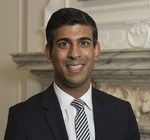
The letter sent by Rishi Sunak, the Prime Minister, on 20 August 2023.
Text of letter (in .pdf format)
The statement made by Rishi Sunak, the Prime Minister, on 13 July 2023.
When making decisions on pay, as your Prime Minister, I have a responsibility to be fair.
Fair to public sector workers, who do so much in the service of our country.
But also fair to taxpayers, who ultimately fund our public services.
And the best way we’ve found of making fair decisions about public sector pay…
…are the independent Pay Review Bodies.
They were called for by the Unions themselves.
And for over four decades, they have been the independent arbiters of what is fair and responsible.
Those bodies have considered a range of evidence about where to set this year’s pay.
And their recommendations to government are for public sector pay to go up by a significant amount.
Now clearly, this will cost all of you, as taxpayers, more than we had budgeted for.
That’s why the decision has been difficult and why it has taken time to decide the right course of action.
I can confirm that today we’re accepting the headline recommendations of the Pay Review Bodies in full.
But we will not fund them by borrowing more or increasing your taxes.
It would not be right to increase taxes on everyone to pay some people more, particularly when household budgets are so tight.
Neither would it be right to pay for them by higher borrowing…
…because higher borrowing simply makes inflation worse.
Instead, because we only have a fixed pot of money to spend from…
…that means government departments have had to find savings and efficiencies elsewhere…
…in order to prioritise paying public sector workers more.
And now there is a clear message here.
There are always choices.
Budgets are not infinite.
When some ask for higher pay, that will always create pressures elsewhere…
…costs which must be ultimately be borne by the taxpayer, or by spending less on our other priorities.
So that’s our decision.
And having honoured the independent pay review process…
…I urge all union leaders to accept these pay offers and call off their strikes.
Already, earlier this year, the NHS staff council…
…representing over half a dozen unions, and over a million NHS workers…
…made a significant decision, and voted to accept their our pay offer and suspend strikes.
I’m grateful to them and their members.
And today, in response to the news of our decision, I’m pleased to say that we’ve had another major breakthrough.
All teaching unions have just announced that they’re suspending all planned strikes immediately.
Teachers will return to the classroom.
Disruption to our children’s education will end.
And the unions have themselves confirmed that this pay offer is properly funded.
And so, they’re recommending to their members an end to the entire dispute.
So it is now clear: momentum across our public services is shifting.
The vast majority, who just want to get on with their life’s calling of serving others, are now returning to work.
And in that spirit, I want to address those yet to do so.
Now that we’ve honoured the independent pay recommendations, I implore you:
Do the right thing, and know when to say yes.
In particular, for Doctors and Consultants, I would say this:
We have a national mission for all of us to make the NHS strong again.
The government has not only made today’s decision on pay…
We’ve backed the NHS with record funding…
Delivered the first ever, fully funded Long-Term Workforce Plan…
… and met the BMA’s number one ask of government, with a pensions tax cut worth £1bn.
So, we should all ask ourselves, whether Union leaders – or indeed political leaders…
…how it can it be right to continue disruptive industrial action?
Not least because these strikes lead to tens of thousands of appointments being cancelled – every single day…
…and waiting lists going up, not down.
So: today’s offer is final.
There will be no more talks on pay.
We will not negotiate again on this year’s settlements.
And no amount of strikes will change our decision.
Instead, the settlement we’ve reached today gives us a fair way to end the strikes.
A fair deal for workers.
And a fair deal for the British taxpayer.
Thank you.
The statement made by Rishi Sunak, the Prime Minister, in Lithuania on 12 July 2023.
This summit stands out as a landmark in NATO’s long history.
We arrived here faced with a more volatile and dangerous world…
A mechanised war in Europe on a scale not seen since 1945…
And increasing aggression from authoritarian states, challenging our security in Europe and beyond.
But as we leave Vilnius, we are more confident and more united than ever.
Let me set out three reasons why that’s the case.
First, we’ve acted decisively to strengthen this alliance.
Agreeing the most fundamental transformation to NATO’s readiness since the Cold War…
Comprehensive warfighting plans to defend the UK and its allies…
Scaled up defence production to boost our stockpiles, which will benefit British industry…
And increased defence spending…
…with all allies now committed to hitting the 2% target.
And we did something here in Vilnius that not long ago seemed impossible…
We welcomed Finland to the table as a NATO member…
….and very soon we’ll be doing the same with Sweden.
We are stronger with them by our side… and in time we will be stronger with Ukraine as a NATO ally too.
This is my second point…
It is now over 500 days since Russia’s invasion.
500 days of barbarity.
Of innocent people being murdered in their homes.
Of children being killed, abducted and used as human shields.
I want to pay tribute to the Ukrainian people and to their incredible bravery and resilience.
They’re still standing strong and defiant… and the counteroffensive is making progress.
In the last few weeks, they’ve taken back more ground than Russia has taken in the last year.
We are standing with them…
…and allies are doubling down in their support.
At the Munich Security Conference in February, I called for long-term security arrangements…
…to protect Ukraine, break the cycle of Russian violence, and ultimately help to end this war.
And today we have delivered.
Together with our G7 partners we have agreed to provide the long-term bilateral security commitments that Ukraine needs.
These commitments mark a new high point in international support for Ukraine.
And I want to be clear, they are not a substitute for NATO membership.
The summit communique echoes the UK’s long-held position that “Ukraine’s future is in NATO.”
And we’ve taken a big step this week towards bringing Ukraine into the alliance.
Together we’ve shortened their path to membership…
…removing the need for a Membership Action Plan…
…and holding the first meeting of the NATO-Ukraine Council with President Zelenskyy sitting at the table, by our side, as an equal.
Finally, I‘d like to say a word about the UK’s role here.
I was struck once again this week by just how highly valued our contribution is.
The British people should know that – and they should be proud.
We are the leading European contributor to NATO.
We were one of the first to hit the 2% target and now we’re moving towards 2.5%.
We spend more than 20 other NATO countries combined, but it’s about much more than that.
It’s about our incredible Armed Forces across land, air and sea.
We’re one of the only countries that contributes to every NATO mission with RAF jets patrolling the eastern flank…
Troops on the ground in Estonia and Poland as part of NATO’s enhanced forward presence…
And the Royal Navy, including our two aircraft carriers, providing around a quarter of NATO’s maritime capability.
It’s about our deep partnerships…
With Japan and Italy we’re producing a sixth-generation fighter through our Global Combat Air Program…
…and with AUKUS, we’re working with Australia and the US to build some of the most advanced nuclear-powered submarines the world has ever known.
And it’s about leadership.
We’ve led the way on Ukraine… moving first on tanks and long-range missiles… training their troops for the counter-offensive.
Just today I’ve announced we’re providing more ammunition, 70 more combat vehicles, as well as a new rehabilitation centre for injured Ukrainian veterans.
We’re moving forward with the combat air coalition…
…and the UK starts training Ukrainian pilots next month.
And we’re using our leadership in technology to keep NATO at the cutting edge…
Hosting the European Headquarters of the Defence Innovation Accelerator in the UK…
…and holding the first global summit on AI Safety later this year.
The UK has been there since the start of this alliance.
In 1948, in the hope of avoiding another devastating war, we joined together with a handful of allies…
…to pledge that we would come to one another’s defence.
That pact was the seed of the North Atlantic Treaty.
75 years later, faced with new threats in Europe, NATO is more important than ever.
It has proved itself to be the most successful Alliance in history…
…and this week we’ve shown once again that the UK is at its heart.
Thank you.
The speech made by Rishi Sunak, the Prime Minister, at London Tech Week held at QEII Centre in London on 12 June 2023.
It’s great to be back at London Tech Week at what I think is a moment of huge opportunity.
We are an island of innovation.
But at a moment like this, when the tectonic plates of technology are shifting – not just in AI, but in quantum, synthetic biology, semiconductors, and much more – we cannot rest, satisfied with where we stand.
We must act – and act quickly – if we want not only to retain our position as one of the world’s tech capitals but to go even further and make this the best country in the world to start, grow, and invest in tech businesses.
That is my goal.
And I feel a sense of urgency and responsibility to make sure that we seize it, because one of my five priorities is to grow our economy.
And the more we innovate, the more we grow.
But this isn’t just about economics.
Like you, I believe that innovation is one of the most powerful forces for transforming people’s lives.
And right now, there is an opportunity for human progress that could surpass the industrial revolution in both speed and breadth.
I believe the UK can achieve this goal because we start from a position of strength.
We’ve created 134 unicorns in the last decade – third in the world, behind only the US and China.
We’re one of the most digitally literate societies in the world, with a higher percentage of STEM graduates than the US and 4 of world’s top 10 universities.
We’ve got extraordinary strengths in Fintech, cyber and creative industries and engineering biology – where from the Crick and the Biobank to DeepMind’s Alphafold we’re pushing at the boundaries of what is possible in health.
And the UK is the best place in Europe to raise capital with more invested in tech here than in France and Germany combined.
But today, I want to answer a simple question.
What’s the single most important reason innovators like you should choose this country?
The answer is leadership.
Do you trust the people in charge to really get what you’re trying to do?
With this government, and with me as your Prime Minister, you can.
Judge us – not by our words, but our actions.
It’s this government that’s building the most pro-investment tax regime, that’s increasing public R&D investment to record levels and that’s making our visa system for international talent one of the most competitive in the world.
We’re overhauling our listing rules to make it easier for companies to raise public funding, and changing our pensions rules to unlock new private capital.
And we’re changing the way government itself works.
I created a new department focused on science, innovation, and technology with a mission to do things differently – from bringing in world-leading experts to taking more risks in support of innovation.
And when the moment came, it was this government that acted to rescue Silicon Valley Bank.
So today, I’m proud to announce the launch of HSBC Innovation Banking the most significant global tech bank combined with HSBC’s firepower and headquartered here in the UK.
And of course, it’s the UK where Google chose to bring together its entire AI division under the leadership of a Brit – Demis Hassabis – at Google Deepmind.
And if our goal is to make this country the best place in the world for tech AI is surely one of the greatest opportunities before us.
As Chancellor, I doubled the number of AI scholarships because even back then I recognised the potential of AI as a general-purpose technology.
Now, with most things in life, the more you learn about them, the less magical they appear but the more we learn about frontier technologies like AI, the more they widen our horizons.
Already we’ve seen AI help the paralysed to walk.
And discover superbug-killing antibiotics.
And that’s just the beginning.
Combined with the computational power of quantum we could be on the precipice of discovering cures for diseases like cancer and dementia or ways to grow crops that could feed the entire world.
The possibilities are extraordinary.
But we must – and we will – do it safely.
I know people are concerned.
The very pioneers of AI are warning us about the ways these technologies could undermine our values and freedoms through to the most extreme risks of all.
And that’s why leading on AI also means leading on AI safety.
So, we’re building a new partnership between our vibrant academia, brilliant AI companies, and a government that gets it.
And we’ll do that in three ways.
First – we’re going to do cutting edge safety research here in the UK.
With £100 million for our expert taskforce, we’re dedicating more funding to AI safety than any other government.
We’re working with the frontier labs – Google DeepMind, OpenAI and Anthropic.
And I’m pleased to announce they’ve committed to give early or priority access to models for research and safety purposes to help build better evaluations and help us better understand the opportunities and risks of these systems.
Second – AI doesn’t respect traditional national borders.
So we need global cooperation between nations and labs.
Just as we unite through COP to tackle climate change so the UK will host the first ever Summit on global AI Safety later this year.
I want to make the UK not just the intellectual home but the geographical home, of global AI safety regulation.
And third, we’re going to seize the extraordinary potential of AI to improve people’s lives.
That’s why we’re already investing record sums in our capability including £900 million in compute technology and £2.5 billion in quantum.
And we’re harnessing AI to transform our public services from saving teachers hundreds of hours of time spent lesson planning to helping NHS patients get quicker diagnoses and more accurate tests.
AI can help us achieve the holy grail of public service reform: better, more efficient services.
So this is our strategy for safe AI:
To lead at home; to lead overseas; and to lead change in our public services.
All part of how we meet our goal of making this the best country in the world for tech.
And let me just conclude with this final thought.
I was recently looking through a collection held by the British Library.
And I saw a letter from Charles Babbage to the then-Chancellor, dating from the 1830s thanking him for funding his difference engine – the forerunner of the modern computer.
That was a decisive moment.
The British government broke with the conventions of the time, and for a decade, backed this breakthrough technology.
We’re at a similar moment today.
And I’m determined that when future researchers visit the British Library in 200 years’ time they will discover that this government, and all of us here in this room met this moment with the same courage, vision, and determination.
Thank you.
The opening remarks made by Rishi Sunak, the Prime Minister, in the United States on 8 June 2023.
Thank you, Mr President –
Before I begin my remarks – a word if I may on what happened in France this morning.
All our thoughts are with those affected by this unfathomable attack, including a British child and with their families.
I’ve been in touch with President Macron.
And we stand ready to offer any assistance that we can.
Mr President, Joe, it’s an honour to be here at the White House and thank you for your warm welcome.
Not for decades has the relationship between our two nations been so important.
The values we share – our belief in freedom, democracy, and the rule of law – have never changed.
They never will.
But what has changed, are the challenges we face.
And standing here together, as our predecessors have done for generations…
…I feel confident that through the strength of our relationship…
…we can shape the world once again in our pursuit of liberty, prosperity, and the possibilities of a new age.
That begins with our highest priority – national security.
Last time I was here in the US, we signed AUKUS – the most significant defence partnership in generations.
Because we recognise that the security of the Atlantic and Pacific regions are indivisible. And just a fortnight ago, in Hiroshima, President Biden and I stood with President Zelenskyy and our G7 allies in a powerful display of unity.
The UK is proud of our contribution – including providing tanks, long-range weapons, and training Ukrainian soldiers.
But let no one doubt: US leadership and resources are the decisive contribution allowing the forces of democracy and freedom to prevail.
As I said in Congress, and I say again now to President Biden – and to the American people – thank you.
And just as we collaborate to protect our national security – so we must increasingly do the same to protect our economic security, on which our prosperity depends.
Countries like China and Russia are willing to manipulate and exploit our openness…
…steal our intellectual property, use technology for authoritarian ends, or withdraw crucial resources, like energy.
They will not succeed.
Today we have agreed the Atlantic Declaration – a new economic partnership for a new age, of a kind that has never been agreed before.
Yes, a partnership that protects our citizens.
But more than that, …a test case for the kind of reimagined alliances President has spoken so eloquently about.
That means new investment.
This week alone, £14bn of new American investment has been committed into the UK, creating thousands of jobs.
It means stronger supply chains, with a new action plan on clean energy.
And it means reducing trade barriers in the technologies of the future.
With a new, secure UK-US Data Bridge – helping tens of thousands of small businesses.
An agreement to work towards mutual recognition of more professional qualifications in areas like engineering…
And we’re launching negotiations on a new Critical Minerals Agreement.
Once concluded, this will give UK companies stronger access to the US market.
And we’re building on our extraordinary, shared strengths in cutting edge future technologies…
…with joint research collaborations in areas like quantum, semiconductors, and AI.
And our job as leaders is to ensure that this technological revolution makes us more secure and not less.
Last week, the pioneers of Artificial Intelligence warned us about the scale of the challenge, as well as the opportunity.
The US and the UK are the world’s foremost democratic AI powers.
So today, President Biden and I have agreed to work together on AI safety, including multilaterally.
The UK looks forward to hosting the first global summit on AI safety, later this year.
So that we can seize the extraordinary possibilities of this new technological age – and do so, with confidence.
And we are well placed to do so.
I know some people have wondered what kind of partner Britain would be after we left the EU.
I’d say: judge us by our actions.
We’re as committed to our values as ever, as reliable an ally as ever, as attractive an investment destination as ever.
But we’re changing, too.
We’re strengthening our relationships not just with old friends like America and in Europe…
…but with new friends in the Indo-Pacific, too.
And we now have the freedom to regulate the new technologies that will shape our economic future – like AI – more quickly and flexibly.
That is the future we are creating in Britain – confident, proud, and free.
Let me close, with a personal reflection.
As Joe mentioned, he and I have seen quite a lot of each other in recent months. I gather our wives have even started to take spin classes together.
We were talking earlier about our hometowns.
Joe is very rightly proud of Scranton.
And I was telling him a bit about Southampton in England, where I’m from.
Not everyone knows this, but it was in a church in Southampton where…
…in the days before he set sail for these shores…
…that John Winthrop first spoke about his dream of building a city on a hill.
And that reminds us that the relationship between our two nations is unlike any other.
Our alliance is so strong because it is not abstract – it is rooted in our people.
And it’s never been about our history alone, but our ability to grasp the future.
We share the same beliefs, pursue the same purpose, and act according to the same ideals.
And that’s why today, as we meet the challenges of our time, we can depend upon each other with absolute conviction.
When the United States and the United Kingdom stand together, the world is a safer, better, and more prosperous place.
That’s why ours is the indispensable alliance.
Thank you.
The statement made by Rishi Sunak, the Prime Minister, on 5 June 2023.
This morning, I’ve been out in the Channel with our new Small Boats Operational Command.
And the whole experience just reinforces how tragic, morally wrong, and profoundly unfair this situation is.
We’ve got organised criminals risking people’s lives in makeshift dinghies.
Gangs trying to usurp the role of government; taking it upon themselves to decide who comes to our country.
Our asylum system is being overwhelmed with people travelling from safe countries, taking away our capacity to help those in the greatest need.
And the British people are having to spend £6 million a day putting up illegal migrants in hotels.
Earlier this year I set out five priorities: to halve inflation; grow the economy; reduce debt; cut waiting lists – and stop the boats.
Today I’d like to update you on the progress that the Home Secretary and I are making.
And my message is this – our plan is starting to work.
Before I launched my plan in December, the number entering the UK illegally in small boats had more than quadrupled in two years.
Some said this problem was insoluble or just a fact of 21st century life.
They’d lost faith in politicians to put in the hard yards to do something about it.
And, of course, we have a long way still to go.
But in the five months since I launched the plan, crossings are now down 20 per cent compared to last year.
That’s right: crossings are down 20 per cent.
This is the first time since this problem began that arrivals between January and May have actually fallen compared to the year before.
And this progress is not replicated across the Channel. Illegal migrants entering the rest of Europe have risen by 30 per cent.
But we’re not complacent because we know people smugglers are highly organised and will change their tactics if we let them.
I will not rest until the boats are stopped.
With grip and determination, the government can fix this, and we are using every tool at our disposal.
First, I promised to work closely with our international partners.
Because this is a global phenomenon.
There are 100 million people displaced around the world.
And European countries alone saw almost a million asylum applications last year.
This international approach is delivering.
Our partnership with France stopped around 33,000 crossings last year – 40 per cent more than the year before.
I’ve put co-operation on tackling illegal migration on the agenda of every international summit I’ve been to from the G7 and the Council of Europe to last week’s European Political Community Summit in Moldova.
Last week we agreed a new action plan with Bulgaria.
We began discussions on joint working with the European border agency, Frontex.
And in December I reached a deal with Albania because last year nearly a third of all those arriving in small boats were from that safe European country.
That’s delivering too.
We’ve now returned 1800 to Albania in just six months.
We’ve gone from accepting around 1 in 5 Albanian asylum cases to now just 1 in 50 – in line with our European partners.
And what is the result of all of this?
So far this year, the number of Albanian small boat arrivals has fallen by almost 90 per cent.
This is proof that our deterrence strategy can work. When people know that if they come here illegally, they won’t get to stay – they stop coming.
Second, I promised to improve enforcement.
So, we’ve doubled the funding given to the National Crime Agency for tackling organised immigration crime.
And arrests here of illegal workers have more than doubled.
Third, I promised to stop people spuriously using modern slavery claims to frustrate their removal.
And since we started asking for basic evidence to back up modern slavery claims, the refusal rate has tripled.
Fourth, I promised to clear through the backlog of people waiting for initial decision.
Numbers published today show the initial decision legacy backlog is down by over 17,000.
And we’re on track to clear it entirely by the end of the year.
Fifth, I promised we would get illegal migrants out of hotels – and into alternative sites, including military facilities.
Today, I can confirm new large sites will open at Wethersfield and Scampton with hundreds moving in over the Summer and nearly 3,000 by the Autumn.
And while we’re bringing those sites online, we’re also making more efficient use of hotels.
By asking people to share rooms, where it’s appropriate to do so we’ve found an additional 11,500 places which will save taxpayers an extra £250 million a year.
And I say to those migrants who are objecting: this is more than fair.
If you’re coming here illegally, claiming sanctuary from death, torture, or persecution then you should be willing to a share a taxpayer-funded hotel room in Central London.
To reduce pressures on local communities, we’ll also house people on ships.
The first will arrive in Portland in the next fortnight.
And we’ve secured another two today that will accommodate another 1,000.
Finally, I promised not just to reform our asylum system, but to reform our laws.
So, we’ve introduced unprecedented legislation to make clear that if you come here illegally you will be detained and removed in weeks – either to your own country or to a safe third country like Rwanda.
Our Stop the Boats Bill passed the House of Commons in weeks.
And we’re preparing now so that once any legal challenges are complete, we’ll be able to put this Bill into practice.
I am ensuring we have more detention capacity to hold those who arrive illegally, enough court capacity to process their cases and the planes to remove them to Rwanda.
I know these are tough measures.
But I make no apology for that.
We cannot allow our generosity of spirit to be used as a weapon against us or against those who are being pushed to risk their lives in the Channel by criminal gangs.
Our approach is working.
For the first time, crossings are down by 20 per cent.
But we are not complacent.
This won’t be solved overnight, and people will continue to come this summer, which is why it’s so important that we change the law.
My policy is very simple: it is this country – and your government – who should decide who comes here, not criminal gangs.
I will do what is necessary to achieve it.
I said I would stop the boats and I meant it.
The speech made by Rishi Sunak, the Prime Minister, in Japan on 21 May 2023.
Let me start by thanking Prime Minister Kishida and the people of Japan for their warm and generous welcome and hospitality.
At this pivotal moment for peace, freedom, and democracy, the G7 came together with our allies and friends to confront a more dangerous world.
We leave Hiroshima stronger and more united than ever.
And through this summit, we have advanced the priorities of the British people with two big aims – economic security and national security.
First, economic security.
On this trip, we’ve secured almost £18 billion of new investments into the UK from Japanese businesses.
That’s a huge vote of confidence in the UK – creating hundreds of new jobs, with significantly more to come as projects get underway.
All helping to grow our economy – one of my five priorities for the UK.
And alongside our unprecedented new defence and security partnership it’s clear that the UK-Japan relationship has never been closer as we work with G7 allies to support a free and open Indo-Pacific.
The G7 also demonstrated unity of purpose on China.
China poses the biggest challenge of our age to global security and prosperity. They are increasingly authoritarian at home and assertive abroad.
And, as the G7 have showed, the UK’s response is completely aligned with our allies.
This is all about de-risking – not de-coupling.
And with the G7, we are taking steps to prevent China from using economic coercion to interfere in the sovereign affairs of others.
A new theme of this Summit was also AI.
AI can bring huge benefits for our economy, society, and public services.
But of course – it needs to be developed safely, securely, and fairly.
And that will require international cooperation something the UK is in a natural position to lead.
Our second aim for this Summit was national security.
All leaders at this Summit are grappling with the issue of illegal migration.
My policy is this: it is the British government who will determine who comes to Britain.
We must stop the boats and break the business model of the criminal gangs.
This is a global issue – and it will increasingly be a focus of our international engagement.
Just last week, at the Council of Europe we agreed to strengthen cooperation with the EU’s border force.
At this Summit, we secured the G7’s agreement to deepen our work together.
And we expect this to be an important focus of the G7 next year, under Italy’s leadership.
And there is no more pressing issue facing the G7 and the world – than Ukraine.
I want to pay tribute to my friend, Volodymyr. It was a privilege to welcome him to Chequers earlier this week.
And I believe his attendance at this G7 was a moment of historic significance.
The image of the G7 and our partners standing shoulder to shoulder with President Zelenskyy sends a powerful message about the unity and determination of the G7 allies.
We will stand with Ukraine for as long as it takes, because their security is our security.
The G7’s strategy is clear:
Our military, diplomatic and economic tools are all part of the Ukrainian counter-offensive.
We’re delivering more support on the battlefield through air defence, artillery, tanks, and long-range missiles – which the UK was the first country to provide.
We’re supporting Ukraine to develop the air force it needs for the future with the UK training Ukrainian pilots, starting this summer.
And we’ve made a real breakthrough at this Summit, thanks to President Biden’s support for an international coalition to provide F-16 jets.
We’re ratcheting up the economic cost to Russia with a new package of sanctions.
And we know that Ukraine must not only win the war but win a just and lasting peace.
We’re working with allies to provide coordinated bilateral security arrangements and a collective commitment to Ukraine’s future defence, to guarantee they can deter future attacks.
And any peace settlement must be on Ukraine’s terms.
I want to just quote from the statement that the G7 and our partner countries have just agreed:
“We support a just and durable peace, based on respect for international law, the principles of the UN Charter, and territorial integrity and sovereignty.”
In other words: we must, and we will show that violent territorial aggression does not reap rewards.
There could be no more fitting place to discuss the urgent need for peace, than Hiroshima.
I was deeply moved to visit the peace memorial on Friday.
What we saw there was haunting.
A child’s tricycle, twisted by the blast.
School uniforms bloodied and torn.
And with those images in our minds, we resolved never to forget what happened here.
And at this historic summit, G7 leaders recommitted ourselves to the path of peace, freedom, and democracy.
Thank you.
The opening remarks made by Rishi Sunak, the Prime Minister, in Iceland on 16 May 2023.
Addressing a huge crowd on the streets of Strasbourg in 1949 Winston Churchill, one of the founding fathers of this Council spoke about “le génie de l’Europe.” [the genius of Europe]
He was talking about what makes our continent so successful, the values of freedom, democracy and the rule of law.
The same spirit we’ve seen again and again that led Vaclav Havel to broadcast his messages of freedom during the suppression of the Prague Spring, that brought down the Berlin Wall and that leads Ukraine to defend its sovereignty with such valour, inspiring us to stand with them all.
The Council of Europe has nurtured that spirit for three quarters of a century.
And it must do so again now.
Because today, we are facing the greatest threat to democracy and the rule of law on our continent since before the Treaty of London was signed.
With Russia waging a war of aggression on European soil, and China growing in assertiveness the world is becoming more contested and more volatile.
The challenge to our values is growing.
And the moment to push back is now.
Democracies like ours must build resilience so that we can out-cooperate and out-compete those who drive instability.
That’s why we’re working so closely with our friends across Europe through the G7, NATO, the Joint Expeditionary Force, the European Political Community and with a welcome new tone in our relations with the European Union.
Friends, the UK may have left the EU, but we have not left Europe.
We remain a proud European nation.
And we must work together to defend the values we all hold so dear.
The Council of Europe, with its huge reach, has such a vital role to play.
And we need to think about how this Council should react to the realities of today.
We showed great purpose in expelling Russia last year – acting decisively together within days of the invasion.
Let’s bring that dynamism to the issues before us now. And let’s send a message from this hall, loud and clear that we will stand by Ukraine for as long as it takes.
We will hold Russia accountable for the horrendous war crimes that have been committed.
And we must also learn the lesson of this war – by being prepared to confront threats to our societies before they become too big to deal with.
That includes acting on cyber security and AI and it means tackling illegal migration.
The moral case for action is clear.
We can’t just sit back and watch as criminal gangs profiteer on people’s misery.
Illegal migration exploits the most vulnerable. It risks crowding out those with a genuine case for asylum. And it strains the trust that our citizens have – not just in our domestic borders, but in the international system.
That’s why so many of us are already acting at the national level. And why we need to do more to cooperate across borders and across jurisdictions and to end illegal migration and stop the boats.
The Council already plays a vital role but I urge leaders to consider how we can go further.
Because we know what we can achieve together. Just look at this Council’s extraordinary legacy: protecting human rights, abolishing the death penalty in Europe, supporting media freedom and championing democracy across Central and Eastern Europe after the Cold War.
So let’s take heart from that, and keep rising to the many challenges before us, true to our enduring values and certain that, as Churchill went on tell the Strasbourg crowd, the dangers before us are great… but great too is our strength.
Thank you.
The comments made by Rishi Sunak, the Prime Minister, on 6 May 2023.
Today’s Coronation is a moment of extraordinary national pride. No other country could put on such a dazzling display. But it is not just a spectacle. It’s a proud expression of our history, culture, and traditions. It is a vivid demonstration of the modern character of our country. And a cherished ritual through which a new era is born. God Save The King.
The message issued by Rishi Sunak, the Prime Minister, on 20 April 2023.
As Ramadan comes to an end, I would like to send my warmest wishes to Muslims in the UK and around the world as they mark Eid al Fitr.
Eid is a timely opportunity to acknowledge the shared values which bind us together, particularly your compassion and dedication to contribute to charity and philanthropy. This was evident earlier this year, through the community’s outstanding response to support the victims of the earthquake in Turkey and Syria.
As families and friends come together to celebrate, I pay tribute to the incredible contribution the Muslim community makes to the country. Whether it be in business, sports, media, our public services, or of course our NHS and armed forces, British Muslims are helping to make the country the success it is.
Eid Mubarak to everyone observing it today. I look forward to welcoming representatives from the British Muslim community to Downing Street to celebrate.