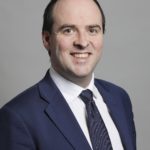
Tag: Richard Holden

  • Richard Holden – 2023 Speech on the Midlands Metro Extension

    Richard Holden – 2023 Speech on the Midlands Metro Extension

    The speech made by Richard Holden, the Parliamentary Under-Secretary of State for Transport, in the House of Commons on 26 January 2023.

    I thank my hon. Friend the Member for West Bromwich West (Shaun Bailey) for securing this fantastic Adjournment debate. It has come at a particularly appropriate moment as I was in the west midlands just earlier today. I know that this is a vital project for him and for my hon. Friend the Member for Dudley South (Mike Wood), as well as for other Members in the region. I actually visited the Black Country Living Museum, but I have never been to the zoo, so I hope my hon. Friend might be able to take me there at some point.

    I met Andy Street today, and I mentioned this and other projects to him. As Minister for roads and local transport, I am always keen to get out and about, and I pledge to visit my hon. Friend’s constituency in the near future. He was very kind in his opening comments, and I pay tribute to him for the work he has done. I can tell the House that West Bromwich West may have been forgotten for 50 years under previous Members of Parliament, but it is now one of the few places I hear about in this House.

    The Government are wholeheartedly committed to delivering on their vision of levelling up all areas of our country, not least my hon. Friend’s constituency and the broader west midlands, ensuring that we have a transport network that caters for all users, helps to drive economic prosperity and minimises environmental impacts as far as possible. Responsibility for much of the transport connectivity in the west midlands, including the metro services, rests with the West Midlands Combined Authority and Andy Street, the region’s metro Mayor. Our drive to create mayoral combined authorities has been key to joining up transport, economic development, housing and planning in our largest city regions, and empowering areas to deliver their plans for sustainable economic growth. I was glad that my hon. Friend mentioned that comprehensively in his speech, as it is his vision too.

    The west midlands has an ambitious metro programme, and the Government have provided significant funding already. As part of the transforming cities fund, my Department agreed a settlement of £321.5 million for the west midlands. The region allocated £207 million of that funding to the extension of the metro, which is very important for the whole Black Country—it is an issue that my hon. Friend the Member for Dudley South has mentioned to me too. I recognise the importance of the project in enhancing transport connectivity in the constituencies of several of my hon. Friends and the wider region, and welcome the current plans to open the first phase of the scheme to passengers within the next couple of years.

    My Department is keen to work with Mayor Street to understand the funding challenges involved in this scheme, and to identify potential solutions. The Government’s funding support for the expansion of West Midlands Metro has not been limited to the Wednesbury to Brierley Hill scheme, but has included investment in a number of other key projects, and we will continue to work with the Mayor on those as well. West Midlands Combined Authority is currently exploring opportunities with the Department for Levelling Up, Housing and Communities to make use of an in-year capital investment to fund strategically important projects, aligned with levelling up. The region’s metro extension programme is among the projects under consideration, and I understand that a funding decision is expected imminently. My hon. Friend should definitely contact my colleagues in that Department as well. I shall also seek the views of my hon. Friend the Member for Dudley South, the oracle of Brierley Hill, on this matter.

    I recognise the role that trams and metros play in our largest towns and cities, helping people to access jobs, education, healthcare and society more widely, which is why we supported our trams and metros throughout the pandemic, when the Government provided more than £250 million for the light rail system. That funding helped to keep services running and enabled key workers to get to work, and West Midlands Metro received over £13 million of it.

    England’s largest city regions, including the west midlands, are a key priority of levelling up and driving growth and productivity. Our ambition is for every region to have at least one globally competitive city at its heart. That is why we are investing £5.7 billion in transport networks through the city region sustainable transport settlements. We have agreed a five-year funding settlement from 2022, and I look forward to seeing all the transformational projects that it will bring about, particularly in the west midlands.

    More than £1 billion is going to the west midlands. My hon. Friend spoke about enhancements to the metro, but, as he also mentioned, this is not just about the metro, although the metro is a part of it. Schemes proposed in the region include an upgrade of the depot at Wednesbury, which I understand the Mayor visited earlier today, and the integrated hub at Dudley Port, which I know is vital to my hon. Friend.

    This investment programme represents the principal transport funding for eligible authorities to invest in their local priorities, and Mayors are responsible to their communities for delivering the agreed outcomes. We recognise that there will always be challenges, but I know that my hon. Friend will continue to work with me, and with local representatives, to address them. We in the Department are always willing to be flexible, while retaining—this was an important point made by my hon. Friend—the degree of transparency and oversight that must be maintained at all times to ensure that public money is always well spent.

    I agree that the extension of the metro is vital for the west midlands and my hon. Friend’s constituency. West Bromwich West could not have a more foot-slogging, hard-working, campaigning local Member of Parliament. He has addressed me regularly about these issues: he grabs me in the Tea Room, he corresponds with me by email and in person, and he collars me in the Division Lobbies. He really is batting for his constituency, and I wish him the very best of luck in getting more councillors of his ilk elected in Sandwell in the coming months.

    My Department has provided significant funds to support metro infrastructure in my hon. Friend’s region, and is committed to investing in wider improvements to its transport network over the coming years. I look forward to working with him to deliver for the people of Tipton, Wednesbury and beyond. There are acute transport needs there, and this is not a panacea, but it will be a big help. I want to go on working with West Midlands Combined Authority, and also holding its feet to the fire. With financial freedom comes financial responsibility: that important point was made by my hon. Friend.

    My door is always open to my hon. Friend if he ever wants to go on pressing the case for his region and his constituents. Transport and regeneration go hand in hand. I hope that we can get this major scheme—which is important to the region, but also to the wider country—over the line, working together: my hon. Friend and me, Mayor Street, the councillors of Dudley and Sandwell, and my hon. Friend the Member for Dudley South and other Members across the region.

  • Richard Holden – 2023 Speech on Lifeboat Services – Search and Rescue

    Richard Holden – 2023 Speech on Lifeboat Services – Search and Rescue

    The speech made by Richard Holden, the Parliamentary Under-Secretary of State for Transport, in Westminster Hall, the House of Commons on 10 January 2023.

    It is a pleasure to serve under your chairmanship, Mr Davies. The words just quoted by the Opposition Front-Bencher, the hon. Member for Wythenshawe and Sale East (Mike Kane), were very moving. I thank him for his contribution, and all hon. Members for theirs; in particular, I thank the hon. Member for Torbay (Kevin Foster) for bringing this debate to the House, and my hon. Friend the Member for Totnes (Anthony Mangnall), who has done so much work on this issue, which is extremely important. The debate highlights the role of our dedicated lifeboat services, which seek to rescue any persons in distress or difficulty around the coast of the United Kingdom.

    It is good to reflect a little on the Penlee lifeboat disaster, which the Opposition Front-Bencher brought up, and which we both mentioned on the 41st anniversary of the death of those men, just a few weeks ago.

    During these challenging times, it is extremely important that we continue to support our lifesaving services, and recognise their contribution to search and rescue across the United Kingdom search and rescue region. I thank the hon. Member for Totnes for his dedication to the subject, and for his sterling efforts over the last few years to establish an association for independent lifeboats—those that operate at sea and inland—across the United Kingdom. As a result of hon. Members’ actions, for the first time, our independent lifeboats have the opportunity to form an association, which will support their operations. The contribution of our voluntary search and rescue services is often not considered until they are called into action to save lives, so I am grateful to hon. Members for raising the subject today. The point made by several hon. Members, about whether this type of debate could take place regularly, was particularly interesting.

    I thank all those who fundraise for and support these charitable organisations in the way that hon. Members have described. That fundraising is absolutely vital; millions of pounds are raised every year. We have heard stories from many hon. Members about the impact of the RNLI on their families or their own life. I pay tribute to my great-uncle, John Clough, who left his entire estate to the RNLI when he passed away a few years ago. I welcome this opportunity to pay tribute to the volunteers in our maritime search and rescue services, who have continued to provide lifesaving operations, often in the most challenging of conditions. I especially thank our brave volunteers in independent lifeboats, as well as those who volunteer for the RNLI and His Majesty’s Coastguard, who risk their life to save others at sea and around our coastline. The UK has one of the best water safety records in the world in large part because of their personal commitment and skill. As the hon. Member for Caithness, Sutherland and Easter Ross (Jamie Stone) said, the need for search and rescue will always be there, and we need ensure search and rescue services are maintained. The conditions in which teams deploy are often challenging and potentially life-threatening, as hon. Members can imagine. I know all Members of the House will join me in thanking those who put themselves on the line.

    Our volunteer lifeboat services have a long and proud history, spanning 200 years, of contributing to the safety of lives at sea, and their volunteer ethos is a cherished cornerstone of British society. My right hon. Friend the Member for New Forest East (Sir Julian Lewis) made a fantastic speech highlighting the understated heroism of those who put themselves on the line. The United Kingdom is also proud to have approximately 40 independent lifeboats that continue to provide life-saving services around the clock; they support our emergency services and protect the environment.

    In 2022, HM Coastguard was proud to celebrate its 200th anniversary with events across the country. Our 3,500 volunteer coastguard rescue officers are proud to maintain a tradition of voluntary life-saving services, and to continue their traditional role in local communities across the country, as we heard from many Members today. It has been great to hear from my hon. Friends the Members for Aberconwy (Robin Millar) and for Moray (Douglas Ross), and from the hon. Members for East Londonderry (Mr Campbell), for Carmarthen East and Dinefwr (Jonathan Edwards), for Paisley and Renfrewshire North (Gavin Newlands) and many others about their local lifeboat services, or other lifeboat services that they wanted to recognise.

    Our esteemed RNLI is recognised the world over for its service, and for its contribution to life saving and to search and rescue operations. However, as we have heard, we are fortunate to also have a large number of independent operators who are not part of the RNLI. Those operators provide vital life-saving services both at sea and in inland waters, as many hon. Members highlighted, and face significant challenges in maintaining their operations. Through the dedication and actions of my hon. Friend the Member for Totnes, the new National Independent Lifeboat Association has been formed. The NILA was formally launched at the emergency services show in September last year, and its intention is to support independent lifeboats and provide a cohesive voice for smaller organisations that continue to support search and rescue around the clock. I welcome the development, as do the Government, of the association; it will recognise the contribution of independent lifeboats, and provide ongoing support to charities—an important point mentioned by my hon. Friend.

    Sally-Ann Hart (Hastings and Rye) (Con)

    I have not only the RNLI but two independent lifeboats in my beautiful constituency, one at Pett Level and one in Hastings. Does the Minister agree that independent lifeboats, along with the RNLI, provide an invaluable service to our local communities and save thousands of lives every year, and that it is important to highlight the challenges they face, including with funding, public awareness and long-term support?

    Mr Holden

    I could not agree more. I will come on to some of the ways the Government are trying to help independent lifeboats.

    The coastguard has been working alongside my hon. Friend the Member for Totnes to support and guide the development of the NILA, to enable independent lifeboats to apply to be represented on the UK search and operators group. That would enable those small, dedicated charities to contribute to discussions on shaping the future of our maritime and rescue services, which is vital.

    Jamie Stone

    I mentioned the East Sutherland Rescue Association. Clearly, my constituency is in a part of the United Kingdom that is far away, which means we can feel a little bit left out, but the new body is a brilliant way of making such associations feel that they are part of a much bigger whole.

    Mr Holden

    I quite agree. It was great to hear from the hon. Member for Carmarthen East and Dinefwr about how remote parts of the United Kingdom, such as Carmarthen Bay—although that is not as remote as parts of Caithness, where some of my family lived for many years—need to have a voice in a central organisation. The NILA is so important in bringing those voices together into a single voice, and recognising their broader contribution. I urge all independent lifeboat operators to join the association. I pay tribute to my hon. Friend the Member for Totnes for his support for the association, which has increased recognition of the role and dedication of independent search and rescue operators.

    Our independent lifeboats and lifeguards, who are not part of the RNLI, continue to provide support to search and rescue operators around the coast and on our inland rivers, lochs and lakes, as mentioned by the hon. Member for Strangford (Jim Shannon) and my hon. Friends the Members for Isle of Wight (Bob Seely), for Torbay, for Gosport (Dame Caroline Dinenage), and for Wyre Forest (Mark Garnier). My hon. Friend the Member for Clacton (Giles Watling) made a particularly important point about water safety, and I thank him for his vital work on that. It is a major issue. Through the National Water Safety Forum and our partners, we reach millions of people a year with advertising and information campaigns. It is particularly important that we continue to do that as drowning is, sadly, still a major cause of death, especially among young people. The UK is proud to continue to support World Drowning Prevention Day, and to promote the selfless work of lifesavers across the UK and the world to prevent drowning and push further prevention strategies.

    Our independent lifeboats are often not recognised, but they are run by dedicated volunteers and provide vital emergency services and lifesaving capability. They offer assistance to any person who may be in difficulty around our beautiful coast and countryside. My hon. Friend the Member for Torbay made the important point that these charitable organisations rely on community organisation and voluntary support, which is at the core of a lot of what they offer. As mentioned, independent lifeboats operate across England, Wales, Scotland, Northern Ireland and Jersey, and are dedicated to the appropriate tasking authority, which may ask for assistance in life-critical operations. Independent lifeboats, in common with all our search and rescue operations, are responding to an increasing number of call-outs, particularly following the pandemic, because members of the public have been holidaying in the UK and taking part in more adventurous leisure activities. As my hon. Friend the Member for Totnes mentioned, support from the Department is very much there, and I urge him to write to the Secretary of State inviting him to come and see some of the independent operators.

    I turn to a couple of the questions that have been raised. On VAT, fuel duty and the rescue grant fund, I will happily write to the Treasury about this issue, and I urge my hon. Friend the Member for Totnes to do so as well. My office will write to him when we have a response from the Treasury. It is an issue that I know hon. Members are keenly aware of, but we will require further support to get to where we want to be.

    Regarding recognition of His Majesty’s Coastguard rescue facilities, independent lifeboats operating at sea and in a coastal environment are required to meet the standards laid down in the rescue boat code, as my hon. Friend the Member for Torbay mentioned, in order to meet the appropriate construction and safety standards. However, I am pleased that, following feedback from independent operators, the RNLI and key stakeholders, the Maritime and Coastguard Agency is undertaking a review of the code to modernise and simplify the requirements, which will assist our dedicated volunteers in continuing to support search and rescue operations. The MCA hopes to complete the review of the code in the early part of this year.

    A presentation was held on the membership of the UK SAR in October 2022. Now that the NILA is fully established, membership applications would be welcomed, although I cannot confirm anything at this stage, as hon. Members will be aware. In some cases, independent lifeboats offer specialist skills that would support rescue and prevention activities, both in our cities and in remote inland locations, as hon. Members mentioned. Those operators continue to provide lifesaving operations during these particularly difficult times, saving hundreds of lives annually. I ask the House to join me in thanking them for their continued support for search and rescue services across the length and breadth of the UK.

    I am very proud to have responded to the debate on behalf of the Minister responsible for maritime search and rescue, and I hope to have the privilege of meeting some of our wonderful volunteers and dedicated teams, who continue to rise to the challenge of providing lifesaving services, whatever the circumstances and whoever needs them. I finish by thanking my hon. Friend the Member for Torbay for raising this important subject, and all hon. Members who have taken part in a very worthwhile debate highlighting the vital search and rescue services.

  • Richard Holden – 2023 Speech on Road Traffic Collisions Involving Cats

    Richard Holden – 2023 Speech on Road Traffic Collisions Involving Cats

    The speech made by Richard Holden, the Parliamentary Under-Secretary of State for Transport, in Westminster Hall on 9 January 2023.

    It is an absolute pleasure to serve under your chairmanship, Ms Harris. As the hon. Member for Gower (Tonia Antoniazzi) pointed out, Britain is a nation of animal lovers, and Members on both sides have made heartfelt speeches. I want to acknowledge the work of my hon. Friend the Member for Bury North (James Daly), who has had to leave early, on Gizmo’s law and the private Member’s Bill that he introduced. I am grateful to Members who have spoken in this debate on the subject of making it a legal requirement for drivers to stop and report collisions with cats. I also thank Olivia, and the thousands of people across the country who signed the petition that brings us here.

    As a Back Bencher, I spoke out in support of microchipping in Westminster Hall less than two years ago. I reassure right hon. and hon. Members that the Government take road safety extremely seriously; it is at the core of the Department’s agenda, and any death or serious injury on our roads is unacceptable. Our deepest condolences go out to the victims of road traffic incidents and their families. A focus of the Government is to make roads safer for all users; that will in turn help reduce the risk to all animals on them. We must all be clear about the heartbreak that the loss of pets—particularly cats, as we have discussed—cause people. For many, it is like losing a family member, as my hon. Friend the Member for South East Cornwall (Mrs Murray) said. Other Members reflected on how, during the pandemic, in what was a particularly difficult time, pets, especially cats and dogs, were particularly important to people’s mental health and physical wellbeing.

    The Department is working on the road safety strategic framework, which—to give the hon. Member for Sheffield, Brightside and Hillsborough (Gill Furniss) some assurance —we hope to publish in spring this year. That framework will be based on a safe system approach, and we are considering what supporting indicators on casualty reduction might be appropriate. The key principle in a safe system approach is to recognise that people make mistakes and things can go wrong. The approach accepts that responsibility is shared, and that collisions can be the result of a combination of factors that can be mitigated. The road safety strategic framework provides the instruction needed to deliver a safe system approach effectively and efficiently. That approach has been accepted in many other sectors, including health and safety and public health. It is already adopted as best practice in other countries that have gone on to make further significant reductions in road deaths and casualties. While Britain has some of the safest roads in the world, we can always do more, and we intend to do just that.

    Let me quickly address an issue raised by the hon. Members for Streatham (Bell Ribeiro-Addy), and for Sheffield, Brightside and Hillsborough: I have been advised by officials that primary legislation, and not a simple statutory instrument, would be required to change the law in this area. However, if that does not prove to be the case, I will write to both hon. Members to clarify further.

    Rehman Chishti

    I thank the Minister for giving way, and for all he does on road safety. On stopping and reporting after an accident, is the Minister saying that the road safety review will specifically look at what parliamentarians have said today about adding cats to section 170 of the Road Traffic Act 1988? At the moment, it is not clear whether it will.

    Mr Holden

    I am happy to take that question back to the Department, and will write to my hon. Friend about that, as well as to the hon. Member for Gower. That is something that we need to look at urgently.

    Rehman Chishti

    I am most grateful to the Minister for clarifying that the question will be taken back to the Department. The Prime Minister said in his speech in January that the Government would look at doing things differently—at innovation, and at trying new ideas. Will the Minister look at amending the legislation, so that it does not simply deal with the value of the animal or whether it is wildlife, and so that its aim is to alleviate pain and suffering and ensure parity? That would be in line with the Prime Minister’s commitment, and with what has been said today.

    Mr Holden

    I thank my hon. Friend for bringing that issue forward. It is an important issue, and I will take it back to the Department and write to him about it.

    As I have been saying, we are looking at the holistic, best-practice approach that has been adopted in other countries, and that we have adopted for public health and health and safety legislation, in order to both minimise the impact of road traffic accidents on humans, and prevent further injury and accidents involving animals. For example, not that long ago, when I was in the Department as a special adviser, we brought forward some road signage designed to protect small mammals. The change is something that the Government are prepared to look at, but as I have said, primary legislation would be required.

    I would like to speak more broadly on this issue, because Members have brought up different aspects of the legislation, including microchipping, which I would like to touch on.

    Bell Ribeiro-Addy

    Just to be clear, the Minister is saying that he is 100% sure that the change has to be made through primary legislation, so what exactly would he be getting back to us about, if that is not flexible?

    Mr Holden

    That is what I was advised, but if that is not the case, I will write to the hon. Lady and make it clear what can be done. My understanding at the moment is that primary legislation is needed.

    Bell Ribeiro-Addy

    If the change can be made through secondary legislation, will the Minister take steps to bring that forward?

    Mr Holden

    If the change can be made through secondary legislation, we would have to look at that, but I am assured by officials that it has to be done through primary legislation. That would obviously require a significant piece of legislation to go through both Houses. It is not a quick fix. We then get into timetabling and all sorts of other issues well beyond my remit as a junior Minister. On whether the change can be made through secondary legislation, I will definitely write to the hon. Lady.

    Mrs Murray

    Will my hon. Friend confirm that if primary legislation is needed, Members may be able to bring forward a ten-minute rule Bill or private Member’s Bill that amends the Act?

    Mr Holden

    My hon. Friend makes a good point. If primary legislation is needed, then the way to change the law could indeed be via a private Member’s Bill. Whether it would get Government support and time is a matter for others, but that would be a way to do it.

    While we must do all we can to improve the safety of our roads, we must be careful not to make any decisions that could make things worse or have unforeseen effects in a rush to resolve concerns about how the law operates. Hon. Members from across the House have made important points about doing the right thing. My hon. Friend the Member for Great Grimsby (Lia Nici) gave the personal example of Stevie, and set out how she stepped in and did the right thing.

    The hon. Member for East Renfrewshire (Kirsten Oswald) also said that doing the right thing is particularly important. As hon. Members have pointed out, although there is no obligation to report all animal collisions on the road, rule 286 of the Highway Code advises drivers to report any collision involving an animal to the police; if possible, they should make inquiries to ascertain the owner of a domestic animal, so as to advise them of the situation.

    As Members, including the hon. Member for Gower, have made clear, cats tend to roam unaccompanied and are likely to go out at night. Drivers may not realise that they have had a collision with a cat in some instances, as they are small animals, similar to rabbits or other wild animals that can cross roads late at night. There are also hazards associated with stopping to check whether animals are alive after people have knocked them over, especially with very small animals. A requirement to report road collisions involving a cat would be difficult to enforce, especially when, as hon. Members have made clear, Petplan suggests there might be hundreds of thousands of these incidents brought forward a year.

    In 2021, there were 348 reported road collisions in which both an animal and a person were involved directly. That is just an animal and a person. If we were talking about hundreds of thousands of cases, there would be a huge extra impact and administrative burden, especially given the free-roaming nature of cats. It is for that reason that the Government do not plan at present to make it a legal requirement for drivers to stop and report collisions with cats, but I would like to go into what we are attempting to do in this space, because we recognise how painful it is for owners to lose a pet. I remember going home from school as a youngster and learning—this was when I first realised that animals could die—that my family dog had sadly passed away. I think we have all had that experience at some point in our life.

    In the last few years, we have pushed microchipping. It is the best way of reuniting owners with pets that have been tragically killed, stolen, or had a variety of other issues. Since the introduction of compulsory microchipping for dogs in 2016, over 90% of the dog population has been microchipped. That has been particularly successful in increasing reunification rates for stray dogs.

    As hon. Members from across the House have pointed out, we have a manifesto commitment to introduce compulsory cat microchipping, and we consulted on that last year. The consultation showed that there was well over 99% support for that measure, which is fantastic. I spoke about the issue in Westminster Hall a couple of years ago, and both my hon. Friend the Member for Gillingham and Rainham (Rehman Chishti) and the hon. Member for Rutherglen and Hamilton West (Margaret Ferrier) mentioned it. We are committed to introducing it, and we will lay the legislation for England before Parliament in the coming weeks. I hope that the devolved Administrations will follow closely, as this is a devolved issue in Wales, Scotland and Northern Ireland.

    I welcome the words of the hon. Member for North Ayrshire and Arran (Patricia Gibson). She has used her platform in this place to press for similar action in Holyrood and across the rest of the United Kingdom. I recognise that it is terribly sad when a cat is injured or killed on the roads, and it does not matter what side of the border it is on.

    As the hon. Member for Gower mentioned, National Highways already requires its contractors to record details of any cats or dogs found on the roadside, and the location in which they were found. Some of that is due to the importance of strategic roads. We do not want stray animals on the national highways, so we want to know of any gaps in fences and so on. There is a different health and safety dynamic to that, but it is something that we implemented. National Highways is under the Department for Transport and so is a direct responsibility of the Government. National Highways must also scan for a microchip, and store the animal, with the aim of reuniting it with its owner where possible.

    Similarly, we understand that the overwhelming majority of local authorities have arrangements in place to scan cats and dogs found by the roadside, and to endeavour to reunite the animal with its keeper. Many pets will therefore be reunited, but we recognise that there may be challenges to successful reunification in some cases. For example, sadly reunification may not be possible if the nature of the animal’s injuries affect the functionality of the microchip, or if a microchip’s records are out of date. That is particularly the case with cats.

    Patricia Gibson

    I am delighted to hear the Minister talking about moving towards making microchipping compulsory for cats. Does he share the view put forward by Blue Cross, which is that cats should be registered on a single database, to make attempts at reunification as efficient and successful as possible?

    Mr Holden

    The hon. Member makes a very good point, and I am just about to come on to the best practice issues that she raised. The legislation on compulsory microchipping that will be brought forward is England only, because this matter is devolved to Wales, Northern Ireland and Scotland. I hope that these issues will be looked at by the devolved Administrations in the coming months.

    Local authorities may adopt different approaches to reuniting cats and dogs found by the roadside. As the hon. Member for Gower mentioned, 92% of local authorities have the necessary facilities, but only 75% use them. It is important that we address that inconsistency. To show our commitment to the issue, we will shortly commission a research project to help us better understand any barriers and to explore best practice. We will then work with local authorities and other stakeholders to develop and promote best practice in this area, which is particularly important.

    I pay tribute to Cats Protection and other volunteers, including Mandy and her team from CatsMatter, Heléna Abrahams and the team behind Gizmo’s legacy campaign, and my hon. Friend the Member for Bury North for their tireless efforts to help reunite animals found by the roadside with their owners. We recently consulted on improvements to the pet microchipping regime, which the hon. Member for North Ayrshire and Arran mentioned. We are analysing the results and will publish them soon.

    A key area of the consultation was about how to make it easier for approved users, including local authorities, to access database records, and that will be covered in the response to the consultation. We also consulted on the introduction of a single point of portal search, which would allow approved users to quickly search compliant databases for animal records without needing to contact the database operator directly, which can obviously be time-consuming and can act as a deterrent, as I found when speaking about this issue to vets in my constituency of North West Durham. Quicker access to database records also supports other campaigns that seek to make better use of microchip scanning, as we have all discussed.

    I pay particular tribute to Sue and Dawn, who are behind the Tuk’s law campaign, which would require vets to scan microchips and check for rescue back-up contact details prior to euthanising a healthy animal. Members from both sides of the House have been glad to get behind that. We worked closely with the campaign and the veterinary profession to find an approach that worked for everyone, and have incorporated the principle of scanning before euthanasia into the guidelines that underpin the code of professional conduct for veterinary surgeons. That is now in place.

    The new single point of search will also support the aims of the Fern’s law campaign, led by Debbie Matthews, which calls on vets to scan the microchip of an animal at the first presentation to check whether it is stolen. That issue can also affect cats, which, as we know, have a tendency to roam a little further than other animals.

    In summary, the Government believe that microchipping is the most effective and quickest way of returning a cat to its owner. We are progressing further with it, both through the call for evidence and through the new best practices guidelines that are coming down the line. In coming weeks, microchipping legislation for England is being introduced, and we hope to see that happen across the rest of the United Kingdom as well. We remain committed to microchipping; we look forward to the introduction of legislation that will make it compulsory, and to making further improvements later in the year.

    Tonia Antoniazzi

    Ms Harris, I know how much your cat, Benji, means to you and your beloved husband and family. I am 51 years of age, and we have always had a pet in the family; I know how much it hurts to lose a pet. I thank the Minister for what he said about the legislation on compulsory microchipping that will be introduced in the coming weeks. On behalf of our petitioner, Olivia, I hope that Members from across the House will seek to introduce a ten-minute rule Bill or private Member’s Bill to amend the Road Traffic Act 1988, because it is not fit for purpose.

    I pay tribute to the hon. Member for Bury North (James Daly) for his private Member’s Bill, which goes a long way to helping pets owners, including cat owners, to be reunited with their pet. I thank everyone who signed the petition, the Petitions Committee for bringing about the debate, and all Members who participated.

  • Richard Holden – 2022 Speech on the Expansion of the Ultra Low Emission Zone

    Richard Holden – 2022 Speech on the Expansion of the Ultra Low Emission Zone

    The speech made by Richard Holden, the Parliamentary Under-Secretary of State for Transport, in Westminster Hall, the House of Commons, on 20 December 2022.

    It is a pleasure to serve under your chairmanship, Mr Hosie. I congratulate my hon. Friend the Member for Dartford (Gareth Johnson) on securing the debate. On ultra low emissions, we heard quite a few emissions from the hon. Member for Wythenshawe and Sale East (Mike Kane), but I am not sure that any of them were really relevant to the broader debate. He seemed to praise the Mayor of Greater Manchester for what he is up to. The Mayor stopped his ULEZ. I not sure that the Leader of the Opposition and the hon. Member for Wythenshawe and Sale East are on the same page regarding the Mayor of Greater Manchester, given the Leader of the Opposition’s recent jokes at the Mayor’s expense.

    The need to tackle air pollution is something on which I hope that Members on both sides of the House—and indeed the Government and the Mayor of London—agree, to answer the question from the hon. Member for Putney (Fleur Anderson). Air pollution is a big environmental risk to human health, and the Government are determined to tackle it. As my hon. Friend the Member for Old Bexley and Sidcup (Mr French) said, that is why we have invested more than £800 million to tackle air pollution in 64 local council areas. Much more can be done, although we can be proud that air pollution has reduced significantly since 2010, with emissions of particulate matter down by 18% and nitrogen oxides down by 44%, to their lowest level since records began.

    As my hon. Friend the Member for Orpington (Gareth Bacon) made very clear in a tour de force speech, ULEZ will have only a minor or negligible impact, as the Jacobs report has said. My hon. Friend the Member for Runnymede and Weybridge (Dr Spencer) put forward various sensible solutions. My hon. Friend the Member for Ruislip, Northwood and Pinner (David Simmonds) also reflected some of the issues, particularly around accessibility of public transport. As my hon. Friend the Member for Dartford said, the expansion to the London boundary was not in the Mayor’s manifesto—a point reflected by my hon. Friends the Members for Sutton and Cheam (Paul Scully), for Orpington, and for Watford (Dean Russell). It was against the Mayor’s manifesto and against his own consultation. Those are not political points, as some Opposition Members would like to suggest; they are facts, eloquently put forward by hon. Members.

    David Simmonds

    I commend the Minister on the work that he has been doing on buses. Does he agree that the fact that the Labour group in Hillingdon Council supports the Conservatives’ campaign against ULEZ is evidence that this is not a matter of party politics but one of people putting their constituents and residents first?

    Mr Holden

    I thank my hon. Friend for that point. It was interesting to hear from the hon. Member for Feltham and Heston (Seema Malhotra), who is not in the Chamber at the moment. She seemed to be on a slightly different page from some of the other Labour Whips’ remarks from the other hon. Members present.

    Many hon. Members have spoken clearly and eloquently about the anger that their constituents feel about what is going on. I hope that the Mayor, the Labour party in London, the Lib Dems and the Greens hear that too. The Mayor of London, however, needs no agreement from the Government to pursue his proposed expansion of ULEZ. He is doing so using powers granted to him under section 295 and schedule 23 of the Greater London Authority Act 1999 to implement any road schemes that charge users within greater London. He has previously used those powers to introduce the congestion charge, the low emission zone, and the current ultra low emission zone. While he has notified my Department of his intention, he is not obliged to consult us. As hon. Members will also be aware, the Department for Transport will not provide any of the £250 million that the scheme needs in order to be set up.

    I thank my hon. Friends the Members for Sevenoaks (Laura Trott), for Mid Sussex (Mims Davies) and for Bromley and Chislehurst (Sir Robert Neill), my right hon. Friends the Members for Bexleyheath and Crayford (Sir David Evennett) and for Epsom and Ewell (Chris Grayling), and other hon. Members from across the south-east of England who have also made representations to me on this matter, and who met with me recently. Sadly, the Government do not have the power to veto the Mayor’s decision. There has been some suggestion that the Secretary of State has powers under section 143 of the GLA Act to block the measure.

    Geraint Davies

    The Minister will know that it is the 10-year anniversary of the death of Ella Kissi-Debrah, who was the first person to have air pollution listed as the cause of death on her death certificate. Will he support the Clean Air (Human Rights) Bill that went through the Lords completely, with the support of Conservatives, and its ambition to introduce World Health Organisation air quality standards, ideally by 2030?

    Mr Holden

    As I have said to the hon. Gentleman, we have already made substantial progress in that area. On the specifics of any legislation, I will write to him.

    I have been advised by my officials in the strongest terms that section 143 of the GLA Act is focused on correcting inconsistencies between national policy and the Mayor’s transport strategy. It is not intended to be used to block specific measures that the Mayor would like to introduce under the devolution settlement.

    Hon. Members raised two specific issues about councils and their land and about council consent and the environment. I will write to Members on those issues, as well as the other issues that they raised with me recently. In fact, I will write to Members across the House in the coming days.

    I understand the concerns of hon. Members. Estimates show that approximately 160,000 cars and 42,000 vans that use London’s roads would be liable for the £12.50 ULEZ charge on an average day—approximately 8% of cars and 18% of journeys. But it is not just about the charge of around £1 million a day, as hon. Members have said. It is also about the fines, as my hon. Friend the Member for Dartford said.

    In spite of the hundreds of millions of pounds that it is proposed will be raised annually, the Mayor has announced a new £110 million pound scrappage scheme to help certain Londoners prepare for expansion. The scheme will launch at the end of next month, but it will be open only to certain residents and to Londoners, not those from outside London who are affected and travel in every day, including 50% of people who work in blue light services. They will not be touched by that scheme at all. Moreover, it will only be for those on specific benefits, including universal credit. There will be no help at all for the majority of Londoners affected, with many small and medium-sized businesses, as my hon. Friend the Member for Sutton and Cheam said, left to bear that heavy burden alone.

    As the hon. Member for Putney quoted from the FSB report, I will cite it as well. For businesses that do not currently comply with the zone, 25% said that they will immediately pass any increase on to customers directly, creating further inflationary pressure, and 18% of firms—almost one in five—said that they would close their business. That is from a Federation of Small Businesses press release today.

    Fleur Anderson

    The Federation of Small Businesses has asked the Government to deal with this by topping up the scrappage scheme. Will the Minister consider topping up the scrappage scheme to help more people, as he has outlined?

    Mr Holden

    It is interesting that the Labour party would like the Government to fund that out of general taxation. I suggest that the Mayor of London should look at that. If it is his policy, he should seek to fund it.

    Mike Kane

    No leadership!

    Mr Holden

    There is certainly no leadership from the Mayor of London, as we can see from all the hon. Members here, and there is certainly no leadership from the Lib Dems, who were too scared to turn up to this debate. I think the hon. Gentleman and I can agree on that.

    My hon. Friend the Member for Carshalton and Wallington made a really important point about grace periods, because the exemptions are very limited. Points were also made by the hon. Members for East Kilbride, Strathaven and Lesmahagow (Dr Cameron) and for Feltham and Heston (Seema Malhotra), and by my hon. Friend the Member for Watford (Dean Russell), who spoke passionately about charities. Grace periods will be extended for disabled and disabled passenger vehicles as well as wheelchair-accessible private hire vehicles. Those categories will be exempt only until October 2027. Minibuses used for community transport, the charities my hon. Friend spoke about, will be exempt only until October 2025. Some of those charities are in outer London and many work across the south-east—they will not even be able to apply for the scrappage scheme.

    In addition, NHS patients may be eligible to claim back under the Mayor’s plans, but only if they are clinically assessed as too ill to travel to an appointment on public transport. It is not about whether the transport is available, but about whether they are too ill to travel on it. My hon. Friend the Member for Ruislip, Northwood and Pinner made the really good point that it is not available at all in many parts of outer London. As he said, the choice just is not there for many of his constituents, and it is not there for many other Members’ constituents, either.

    Currently, emergency vehicles are exempt from ULEZ and LEZ charges. However, the sunset period lasts only until October 2023, which is months away. Has an assessment been made of the impact on London services, including the ambulance service, the Metropolitan Police Service and the fire service? It will be interesting to see that, if there is one. There will also be an impact on the council tax bills of Londoners.

    Several Members, including my hon. Friend the Member for Dartford, asked questions about the Mayor’s authority. Specifically, they are concerned that the Mayor may apply ULEZ charges to motor vehicles that are current under the scheme today, such as compliant petrol, diesel and hybrid vehicles.

    Geraint Davies

    Will the Minister give way?

    Mr Holden

    I am sorry, but I will make further progress.

    I reassure Members that if that were to occur, the Government would explore what more could be done and consider whether the Mayor was using his authority properly and fairly, without detriment to even more people. It is clear that the Mayor is prepared to go well beyond any pledges or manifesto he was elected on in order to pursue his own objectives.

    The hon. Member for Wythenshawe and Sale East made an interesting point about there being no Government support for TfL or transport. He needs to look at the amount of support that the Government provide to the Labour Mayor of London. We understand that the pressure on Transport for London has been huge. Before covid, 70% of TfL’s revenue came from passenger fares, but passenger journeys reduced by as much as 95%. Fare income has recovered, but it is still less than nine tenths of what it was previously.

    The TfL long-term funding settlement of 30 August provided TfL with £1.2 billion until the end of March 2024. That takes total Government funding of TfL to more than £6 billion since the beginning of the pandemic, or £650 for every Londoner. What has the Mayor done with the money? The £1.2 billion matches the Mayor’s own pre-pandemic spending. It will ensure that London’s transport network remains protected against potential lost revenue and the uncertainty of post-pandemic demand. Furthermore, it will enable the delivery of a number of projects set to revolutionise travel across London, including supporting £3.6 billion-worth of critical infrastructure projects, which will benefit not just London but the wider economy.

    The Government have supported and helped passengers to benefit from major upgrades to our world-class transport network, including the Elizabeth line, which opened recently. The settlement also requires the Mayor and TfL to control their operating costs and to continue to progress initiatives to modernise, reform and become more efficient. We have been clear that the Mayor needs to put TfL on to a financially sustainable footing. In no way, however, does that require ULEZ expansion. That is clear. Taxpayers across the UK have had to support TfL continually. It is imperative that they get a fair deal.

    The purpose of devolution is that decisions are taken by elected local politicians, not in this House or in Whitehall. Labour, the Lib Dems and the Greens need to know that political decisions have political consequences, and that there are political solutions to them. Were I the Mayor of London, I would not be going down the path he has chosen—but I am not. If Londoners do not like the decisions that he has taken, they will have the opportunity to have their say in 2024. In their local elections, I am sure that hon. Members will make it clear about the Mayor of London’s policies.

    I thank my hon. Friend the Member for Dartmouth for bringing this matter to the attention of the Government. I thank hon. Members from all across the south-east for their ongoing work, and I will continue to use my role in Government to work with them. As I said, in the coming days I will write to all hon. Members across London and the south-east on the important questions asked not only in the debate, but in other recent meetings and by Members who have approached me. I also assure Members that, across Government, we will continue to ensure that the Mayor of London is held accountable for his decisions in our capital city.

    Gareth Johnson

    Briefly, I thank all hon. Members for their contributions to what has been a productive and constructive debate. I am grateful to the Minister for his efforts in challenging this whole policy of the London Mayor. No one disputes the fact that we need clean air. In Dartford, we have very poor air. Frankly, however, that is a mask used by the Mayor of London to increase taxation. It is about raising money. It just so happens that it raises hundreds of millions of pounds for him. And it just so happens that he has a black hole in his finances and wants to bring in a broader charge, taxing every motor vehicle. This is about money and not about pollution.

    I feel sick to my stomach that people who cannot vote out the Mayor of London—such as Dartfordians—cannot do a thing about this. That is not right or fair. The whole thing should be stopped, but I hear what the Minister says about his inability to do so. It is the most unfair situation that I can recall ever being put into.

  • Richard Holden – 2022 Speech on Bus Route Consultation

    Richard Holden – 2022 Speech on Bus Route Consultation

    The speech made by Richard Holden, the Parliamentary Under-Secretary of State for Transport, in the House of Commons on 20 December 2022.

    It is a pleasure to take the last Adjournment debate before Christmas. In addition to thanking my hon. Friend the Member for Watford (Dean Russell), I would like to thank the hon. Members for Strangford (Jim Shannon) and for East Kilbride, Strathaven and Lesmahagow (Dr Cameron), my hon. Friend the Member for Warrington South (Andy Carter) and my right hon. Friend the Member for Beckenham (Bob Stewart) for their contributions today. I congratulate my hon. Friend the Member for Watford on securing another opportunity to speak on the behalf of his constituents in Watford. I know he works relentlessly to champion the issues that matter to them, and local bus services are part of the suite of issues that he regularly brings to the House and to Ministers.

    I was fortunate enough to be able to visit Hertfordshire a couple of weeks ago, when I met Councillor Phil Bibby, the executive member for highways and transport, and experienced at first hand some of the great work that is going on within the county to improve bus services. I was delighted to see Arriva’s new depot in Stevenage, which will house its new zero-emission bus fleet just up the road, and to learn more about the HertsLynx demand-responsive transport service, providing vital connectivity for rural villages in the north of the county, although those are admittedly not so close to my hon. Friend’s constituency. These are things that could make a huge and positive difference in Hertfordshire and elsewhere.

    The Government are clear that bus services are vital to ensuring that people can access work and education, as well as crucial services such as healthcare, as my hon. Friend said. We also recognise the fundamental importance of ensuring that people can stay connected to their local communities. I would like to address one of the issues around late cancellations and poor communications from bus companies. I am supportive of the general public being better informed about changes to local bus services, and my Department is working with local authorities and operators to seek improvements in that area. We recognise that the sector is facing challenges at the moment, but we expect operators to provide the services that they have advertised. It is unacceptable when they do not do so, especially when they do not give proper notice of those changes. That is one reason why I am so keen to welcome this debate. Ensuring that passengers who rely solely on local bus services are easily able to provide their views to bus operators and local transport authorities when changes to services are due to be made is a key aspect of the reforms to bus services in England that we set out in the national bus strategy, one of a plethora of measures we are bringing forward.

    Crucially, we want local authorities to have greater oversight of bus service provision so that they can work more closely with bus operators to ensure the provision of bus networks that meet the needs of local people. That includes having an element of flexibility in respect of bus service plans. When things change, we need the operators to be able to change with them.

    My Department is ready and willing to work with local transport authorities and operators as they work together as part of their bus service improvement plans. I know that Hertfordshire County Council is looking forward to establishing an enhanced partnership with local operators. I am pleased that my hon. Friend the Member for Watford mentioned the £29.7 million that has already been allocated to the council.

    The issue of consultation is particularly important. I really do hope that through the enhanced partnership we will see the operators working more closely with the service providers. That will really help provision. I urge my hon. Friend to keep pressing the council and his local operators on that.

    In its guidance on enhanced partnerships and BSIPs, the Department has highlighted the importance of councils and operators working with bus-user groups and local groups when they consider how to improve services and make sure that passengers are well informed about changes to local bus routes. There will always be changes and, hopefully, improvements—that is what the plans are there to deliver.

    We have provided a capacity support grant to all local transport authorities to develop and deliver their enhanced partnerships. In addition, we are providing capacity funding to those areas that did not receive funding through the BSIP process, to ensure that they have better enhanced partnerships. Whether or not they have received the full large grant or have that working relationship, we are there for them in my hon. Friend’s constituency and in the constituencies of other Members. The Department will also provide guidance and training for teams through the planned new bus centre of excellence.

    The national bus strategy sets out a requirement for local transport authorities to create a new passenger charter—I think my hon. Friend will be interested in this —as part of developing their BSIPs. The charters are intended to give bus users the rights to receive certain standards of service, including in respect of punctuality, the proportion of services operated, information and, crucially, redress, an issue that many Members from all parties have raised with me since I took over this brief. I hope that other councils, as well as my hon. Friend’s, hear the call for better communication.

    One of the issues we face is the recovery from covid. In August, we confirmed that we would continue providing funding under the bus services recovery grant to help to protect bus services until the end of March 2023. We have also taken additional steps to prevent significant reductions to bus services. As a condition of receiving funding, bus operators are required to maintain a minimum service floor of 80% compared with pre-covid service levels. We are also working to get services and, crucially, ridership back up to provide the longer-term stability that people need.

    We know that driver shortages have been a major issue and we are working with transport industry bodies such as the Confederation of Passenger Transport. We recently held a summit on the issue that I was delighted to attend. Things like that are important. We must work to really drive home things such as the “Thank You Driver” campaign. We must encourage people to take up really important opportunities. I am really keen to continue to support such work. My hon. Friend mentioned the DVSA; I have already prioritised tests for bus drivers to help to speed up the process and provide us with valuable assistance in tackling some of the serious issues around driver shortages. I continue to ensure that that is prioritised, even as we face difficulties and strike action.

    I know that in Hertfordshire more broadly the enhanced partnership process is slightly different. The council has responsibility for the registration of bus services rather than the Office of the Traffic Commissioner. However, the statutory 42-day notice period is particularly important. I hope that those involved can look into more enhanced ways to communicate with local people.

    In closing, I congratulate my hon. Friend again. The BSIP is a major step forward, as is the £2 single fare that we are set to introduce throughout the country before the House returns in January. I look forward to that. There are undoubtedly challenges facing the sector, but we are committed to working with it to address them. I look forward to engaging with colleagues from all parties going forward.

    Finally, ahead of the Christmas break I thank my team in the Department, my team in Parliament, my team in North West Durham, the House staff, Members from all sides and you, Mr Deputy Speaker. I wish all Members a very merry Christmas and a happy new year.

  • Richard Holden – 2022 Speech on Free Bus Travel for Care Leavers

    Richard Holden – 2022 Speech on Free Bus Travel for Care Leavers

    The speech made by Richard Holden, the Parliamentary Under-Secretary of State for Transport, in Westminster Hall, the House of Commons, on 7 December 2022.

    It is a pleasure to serve for the first time under your chairmanship, Mrs Cummins. I start by thanking the hon. Member for Birmingham, Selly Oak (Steve McCabe) for bringing the debate forward, and I congratulate him on securing it. As chair of the APPG for looked after children and care leavers, he has done a huge amount in this area, and continues to do so. On a personal note, let me say more power to his elbow, because he does a great job of advocating for those who, too often, do not have a voice in this place.

    The hon. Gentleman is right that there is a cross-Government responsibility to care leavers, whether on the part of the Department for Work and Pensions, as he and the hon. Member for Strangford (Jim Shannon) mentioned, the Department for Transport, the Department of Health and Social Care or the Department for Education.

    We know that buses are the foundation of an efficient and inclusive public transport system. The hon. Member for Birmingham, Selly Oak was right that I have a healthy desire to increase public transport use, particularly following the pandemic, when we saw a drop-off in ridership, with the biggest fall happening in concessionary schemes for the elderly and disabled. I hope the hon. Gentleman will welcome some of the schemes to re-boost ridership over the coming few months. It is only through usage that we can help to keep buses sustainable for everybody to use.

    As the hon. Gentleman mentioned, buses provide important access to employment, as well as education, leisure and other crucial connections that are valued by so many, including care leavers. In England, we provide free bus travel for those who are older or who have certain disabilities, and that important scheme helps maintain the network of bus services. It is also well used and popular, with more than 860 million journeys made in the year before the pandemic and take-up of around 80%, as the hon. Gentleman mentioned.

    The Government are committed to bus services, and we provided £2 billion during the pandemic to keep them going. We have continued to provide support for the sector, which is helping to maintain services. It is not just about maintaining our existing network of bus services, but expanding it in scope and quality, through the city region sustainable transport settlements, the zero emission bus regional areas fund and, crucially, the bus service improvement plans. We aim to transform the quality of bus services across the country.

    Why do I say all of that? Free bus travel does not mean much if there is no bus service. Our approach with the national bus strategy, as well as the enhanced partnerships and franchising we have enabled under the Bus Services Act 2017, will put buses on a more sustainable, long-term footing as a key part of England’s transport network.

    Dr Dan Poulter (Central Suffolk and North Ipswich) (Con)

    The Minister is right to point out the challenges of running a bus service when there are not enough customers to fund it. There are concessions for many groups in society, so might he at least take away from this debate the potential to look at this proposal, given the vulnerabilities of care leavers? We are dealing with a vulnerable group that is disadvantaged in many ways, for whom this could be a great benefit.

    Mr Holden

    I thank my hon. Friend for that point, which I will come on to address and which has been well made by both him and the hon. Member for Birmingham, Selly Oak.

    We know that care leavers face massive challenges, including with transport. They need to get to work, education and training, as well as to have social interactions that are sometimes more difficult for them. The issue is of interest to me because of my previous life as a special adviser in the Department for Education, and I did a lot of work on it at the time. The “staying put” and “staying close” schemes have been really important in that respect. It is also important that we recognise that we have an extra responsibility to care leavers beyond the age of 18, and there has been important movement on that in recent years. That is where the Barnardo’s report is driving forwards today.

    However, we could do more across Government. We have heard about the real and significant difficulties that exist, which the hon. Member for Birmingham, Selly Oak described so well. I am happy that a number of local authorities are already providing support, and the hon. Gentleman mentioned some of them. The work Barnardo’s undertook demonstrated that only 11 local authorities of the 116 that responded provided no transport support for care leavers. So only a few provide absolutely no help but, as the hon. Gentleman mentioned, much of that is discretionary, and those authorities are under pressure.

    The hon. Gentleman mentioned the Greater Manchester scheme, which has been in place since the end of 2019 and offers free travel up to the age of 21. Many other places provide that discretionary help, but perhaps the hon. Gentleman thinks we need to look beyond bespoke pathways. Since the publication of the report in July we have also seen a pilot launch in my part of the world, the north-east, as the hon. Gentleman mentioned. More than 300 young care leavers have been offered free transport across Tyne and Wear. That pilot, which is a partnership between the councils, bus operators and the NHS, demonstrates how improving opportunities for care leavers touches many aspects of public services, as the hon. Gentleman mentioned. If the pilot is successful, it will be rolled out further locally using the BSIP funding, on which my Department is currently in negotiations with north-east authorities. That is a small part of the wider changes to bus services in the north-east, which I am keen to support as the Minister responsible. However, at the same time as praising the value of these trials, I must acknowledge that we face a tough fiscal environment, as noted by the Chancellor in his fiscal statement. Sadly, I am not sure that the Treasury would allow me to play Santa, even at this time of year.

    As the hon. Gentleman noted, providing universal bus travel would cost around £77 million—adding around 7.5% to the current concessionary schemes. I am sure hon. Members present are aware that concessionary travel is managed by local authorities. In many ways, they do not get sufficient credit for operating—sometimes almost invisibly—the complex system of transaction and reimbursement around the concessionary scheme. That scheme needs to be sustainable in the long term. I am happy to say that 76 of the 83 authorities have chosen to enhance the scheme using their own resources, above what the Government provide.

    If we wish to add further complexity to this locally run and operated system, it should meet three criteria: it has to be deliverable, effective and affordable. In many ways, the third part is enabled by the first two. The hon. Member’s proposals face some short-term challenges in terms of affordability, and I have gone into those. In terms of deliverability, the legislative regime would face challenges in simply providing for care leavers to receive free transport nationally. There would need to be changes to the Transport Act 2000. I am sure hon. Members present appreciate that that cannot be done overnight.

    In terms of effectiveness, that is perhaps where we could benefit most from further work. As I have mentioned, trials and projects are under way in England to provide free transport for care leavers. My officials have recently been in touch with officials from some of the key authorities trialling these projects. I will ask to be kept apprised of developments and any evaluation of the trials, including the impact on employment outcomes, which the hon. Member for Strangford mentioned. It is perhaps worth mentioning that these schemes do not involve the English national concessionary travel scheme or legislative change, and they are seeking to do things more quickly by getting existing smart-ticketing products to care leavers. This is something local authorities could do with their own resources, and I will be very interested to see the outcomes of the trials.

    I have previously mentioned the care leaver covenant, which is a fantastic initiative designed to provide support for care leavers, not just within Government, but across the public, private and voluntary sectors. My Department has played its part in that by participating in the civil service care leavers internship scheme. I would love to see transport providers, including bus operators, sign up to the covenant and provide free or discounted travel to care leavers to recognise the importance of inclusion across our society.

    We take seriously all requests for extensions to concessionary travel, including for care leavers—I certainly do—but we have to balance them with universal changes, the financial sustainability of the scheme, local areas’ knowledge of how their transport networks work best, and how quickly we can deliver the changes we want.

    In closing, I again thank the hon. Member for Birmingham, Selly Oak for calling for the debate, and I thank other Members for their contributions. I will meet the hon. Gentleman and Barnardo’s in the new year—possibly in Cornwall, where Barnardo’s scheme has been in place, because it would be interesting to see it on the ground. I will continue to look at the issue as part of our reviews of concessionary schemes. Perhaps there will even be a fourth-Session Bill—the hon. Gentleman could help me by lobbying broader Government in that direction. I will continue, as he asked, to engage across Government in this space, which is important, particularly in terms of employability and helping young people leaving care to make connections that will put them in good stead for the rest of their lives. This is a vital issue, and I look forward to engaging further with the hon. Gentleman and other hon. Members as we seek to improve concessionary travel across England.

  • Richard Holden – 2022 Statement on Anti-Fouling on Merchant Shipping

    Richard Holden – 2022 Statement on Anti-Fouling on Merchant Shipping

    The statement made by Richard Holden, the Parliamentary Under-Secretary of State for Transport, in the House of Commons on 7 November 2022.

    I beg to move,

    That the Committee has considered the draft Merchant Shipping (Control of Harmful Anti-Fouling Systems on Ships) Order 2022.

    It is a pleasure to serve under your chairmanship, Mrs Murray, in my first statutory instrument debate. The purpose of this order is to give the Government the powers that we need to implement in UK law amendments to the International Maritime Organisation’s 2001 convention on the control of harmful anti-fouling systems on ships, which I shall now refer to as the convention. The order relies on powers under section 128(1)(e) of the Merchant Shipping Act 1995. The draft order was laid before the House on 17 October this year. If approved, the powers in the order will be used to make a new statutory instrument next year to implement the convention amendments. The order will also allow the convention to be entirely re-implementable in regulations should that be necessary.

    Before continuing, I would like to give a small amount of background about what the Government have done regarding the convention and to outline the Government’s reasons for wanting to implement amendments to it. In doing so, I remind hon. Members that our purpose here today is to discuss the use of this order as a mechanism to provide the powers for implementation of the amendments to the convention, rather than to discuss the detail and implementation of the convention itself.

    The convention entered into force internationally on 17 September 2008, and the UK acceded to it in 2010. It aims to protect the marine environment and human health from the adverse effects of anti-fouling systems used by ships. An anti-fouling system is a coating, paint or surface treatment used by a ship to control or prevent the attachment of unwanted organisms to the ship’s hull. The convention addresses the harmful impacts of anti-fouling systems by prohibiting the use of certain substances in those systems. In 2021, the IMO adopted amendments to the convention to prohibit the use of a new compound in anti-fouling systems, and those will come into force on 1 January 2023.

    As the convention took effect 14 years ago, hon. Members may ask why we are now seeking powers to implement amendments to it. The reason is that the convention was implemented in the UK through a combination of a European Community regulation and the Merchant Shipping (Anti-Fouling Systems) Regulations 2009, but both instruments derive from EU powers and now comprise EU retained law. Consequently, implementing the convention amendments through the instruments would now require primary legislation. Therefore, to implement the amendments more efficiently in UK law, we will need to introduce an Order in Council to provide the powers required for this purpose.

    The Government consider implementation of the convention amendments in UK law an important step to ensure that the United Kingdom continues to comply with its international obligations and that our waters continue to be protected from the use of prohibited substances in the anti-fouling systems of visiting ships. The convention and its subsequent amendments were negotiated at the IMO by representatives of the Government, the shipping industry, and environmental interest groups. The Maritime and Coastguard Agency played an active role in negotiations at the IMO throughout the development of the convention and its amendments.

    The Government’s proposals for implementing the amendments to the convention by way of a new statutory instrument will be the subject of public consultation. The MCA will refine its proposals on the basis of any comments received. The amendments to the convention cannot be efficiently implemented into UK law unless the Government have the powers to do so. The draft order provides those powers.

    I will provide some information about the power we are relying on to make the draft instrument and, in turn, to implement the amendments to the convention. Section 128(1)(e) of the 1995 Act provides that His Majesty may by Order in Council make such provision as he considers appropriate for the purpose of implementing any international agreement that has been ratified by the United Kingdom and relates to the prevention, reduction or control of pollution of the sea or other waters by matter from ships.

    The draft order will authorise the making of regulations by the Secretary of State to give effect to the convention, including amendments to it. Section 128 only allows for an order to be made in respect of a convention that has been ratified by the United Kingdom, which has acceded to the convention. To ensure that the United Kingdom can fulfil its international obligations, the amendments to the convention must be implemented. To ensure that the United Kingdom’s domestic law implements its international obligations, the Government intend that the United Kingdom will submit the draft order to the Privy Council. That will ensure that the regulations can be made.

    I have highlighted the importance of the Order in Council so that we can implement the amendments to this important convention for the environmental protection of our seas and waterways. The draft order is intended to ensure that the Government have the powers to implement the convention amendments into domestic law. It is fully supported by the UK Government. I therefore propose that the order be approved. It will enable the United Kingdom to play its part in protecting the biodiversity of our oceans and seas.

  • Richard Holden – 2022 Comments on Rishi Sunak Becoming Prime Minister

    Richard Holden – 2022 Comments on Rishi Sunak Becoming Prime Minister

    The comments made by Richard Holden, the Conservative MP for North West Durham, on Twitter on 20 October 2022.

    I’m backing Rishi Sunak to be our next PM.

    I’ve already spoken to a good few colleagues who backed Liz Truss who now back Rishi.

    We face a major national challenge & need the best candidate to restore economic credibility.

    That’s the only way to unite the Conservatives and the UK.

  • Richard Holden – 2022 Tribute to HM Queen Elizabeth II

    Richard Holden – 2022 Tribute to HM Queen Elizabeth II

    The tribute made by Richard Holden, the Conservative MP for North West Durham, in the House of Commons on 10 September 2022.

    I rise today to pay tribute myself and on behalf of my constituents. There have already been some very moving reflections from many Members, and I have felt it a privilege to be in the Chamber in the last couple of days, especially for the contributions from my right hon. Friend the Member for Maidenhead (Mrs May) and the right hon. and learned Member for Camberwell and Peckham (Ms Harman), whose charming personal anecdotes about the Queen exemplified the private charm of someone who lived their life in the full public view. Those stories captured the affection and personal touches of a graceful sovereign who humour and kind heart transcended generations, languages and continents like no one else.

    Yesterday, my right hon. Friend the Member for Uxbridge and South Ruislip (Boris Johnson), in his traditional style, rightly noted that the Queen’s exemplary commitment to public service means that she will enter the annals of our history, and that of the world, as Elizabeth the Great. As the Prime Minister rightly remarked yesterday, the late Queen’s spirit of public service will serve as a shining example to empower and inspire future generations, including her son as he takes on his immense new task as His Majesty King Charles III.

    Her late Majesty did not just live by the principles and values of public service: the length, depth and breadth of her dutiful commitment, not only to the United Kingdom but to our realms across the seas, the Commonwealth and the world, made her into essentially a human embodiment of selfless public service.

    Over the past few days, one quote from Ecclesiastes has returned to me again and again:

    “To every thing there is a season, and a time to every purpose under heaven”.

    Throughout her life, as she grew with us, the Queen fulfilled many purposes as a constitutional monarch to passing generations: a friend, a mother, a grandmother and, in recent years, perhaps even a great-grandmother. Maybe we can find some purpose in her passing, too. Her late Majesty the Queen epitomised duty and public service, so much so that when we hear those words today, we see her and her example. She will be sorely missed, but she will never be forgotten. May she rest in peace and rise in glory. God save the King.

  • Richard Holden – 2021 Speech on Weardale Railways

    Richard Holden – 2021 Speech on Weardale Railways

    The speech made by Richard Holden, the Conservative MP for North West Durham, in the House of Commons on 1 November 2021.

    I am absolutely delighted to kick off this Adjournment debate on the feasibility bid for the Weardale railway. In an announcement last week, the Department for Transport agreed to that bid. I am delighted to see the Rail Minister here today, because he was one of the first people to come to Weardale to see the railway in all its glory at first hand.

    The connection is particularly important for the communities that I represent, and for my hon. Friends the Members for Bishop Auckland (Dehenna Davison), for Sedgefield (Paul Howell), and for Darlington (Peter Gibson). It is not only the Minister himself who has visited. I have also, in the past couple of weeks, had a visit from the Under-Secretary of State for Business, Energy and Industrial Strategy, my hon. Friend the Member for Mid Norfolk (George Freeman), who came up to Frosterley, Stanhope and Eastgate to see the railway and all the potential that it has to deliver transformational change not only for my constituency but other constituencies further down the line. I am particularly glad that my hon. Friends the Members for Sedgefield and for Darlington are here today. I am also grateful for the support of my hon. Friend the Member for Bishop Auckland, who has just had the excellent news that the Toft Hill bypass is finally going to happen. It was first mentioned in the 1951 Durham county plan and it has now been approved by the Government a mere 70 years later. I beg the Minister to lean on his Front-Bench colleagues also to support my bid for Crook, Willington and Tow Law, which will hopefully be coming down the line in funding rounds 2 or 3.

    It is not just hon. Members in this place who have supported the bid for the Weardale railway. The Mayor of Teesside, Ben Houchen, was also involved, along with hundreds of local people who completed my recent surveys on it, my Crook councillors elected last year—Patricia Jopling and Mike Currah—and local candidates who have been campaigning: Robbie Rodiss, Will Wearmouth and Steve Cowie. In particular, there is the group of people who have been keeping the railway going as a heritage line over the past few years—the huge number of volunteers at the Weardale Railway Trust.

    The Weardale railway ceased operation as a freight line back in the early 1990s, but it has been operating a heritage service since then. Last year it was bought by the Auckland Project after its previous owner failed. I thank Jonathan Ruffer, who has been doing so much great work down in Bishop Auckland, and the chief exec of the Auckland Project, David Madden, who has been really involved in helping me, and other hon. Members, in the project to help to transform the west of County Durham. One of the most important things that they have done is to give a private sector edge to what is going on. I also thank Durham County Council and Darlington Council for the support that they are giving more broadly to the project and to the bid.

    Bishop Auckland was first connected to the rail network back in the 1840s. The extension went further to Crook in 1844, then to Frosterley in 1845, and finally to Stanhope in 1862. In 1887, there was a further bid to extend the line from Stanhope right the way up to the top of Weardale. The budget for the entire line, as I read recently on the excellent Weardale Museum’s website, was a mere £48,627. The bid we have just put in for the feasibility study alone is £50,000 for the whole project. It is one of those interesting quirks of history that Sir Joseph Pease, the then Liberal MP, finally cut the first sod on an extension in 1893. It would be great to see the first Conservative MPs, largely, for County Durham doing exactly the same for the renewed line—if, hopefully, the feasibility study comes through—in the next few years.

    Far earlier than the railway line were the wagon ways that we had across County Durham. That is because we were part of the heart of the industrial revolution. Back in the early 19th century, we had horse-drawn wagons going all the way over the moors because we had ironstone that had to be taken to Consett. It is very much in that theme of us being at the heart of the first industrial revolution that Conservative Members now really want to press this project to provide the connectivity to help to transform our communities going into the next industrial revolution that we are currently seeing taking place under this Conservative Government.

    Unfortunately, passenger services ended on the line in 1953 and to Crook in 1965, with the freight service finally ending in the 1990s with the closure of the Eastgate cement works site, at which my hon. Friend the Member for Sedgefield worked. It is great to see him here today, supporting the bid as the Member for Sedgefield and wanting to deliver that transformational change.

    Since that closure, there has been an irregular heritage service operating locally. The bid now is not for that heritage service to come back; what we want to do is connect the communities I represent to the rest of the north-east and to improve the line further down, as my hon. Friends will mention briefly in their speeches. We have a real opportunity in Weardale, and it looks like we potentially have the second-largest lithium deposits in the country outside of Cornwall. That could provide a real freight anchor for that service. As exploration is going on, it is only right that we start to look at the feasibility of how we would transport some of that lithium, particularly as part of that proper industrial revolution with the next generation of manufacturing jobs that we are seeing up at Blyth or at Sunderland, where Nissan is putting in huge amounts of investment.

    The bid is not just about freight, however; it is also about connecting communities. We represent proud villages and towns across County Durham, and the town of Crook needs a bit of a boost at the moment. One of the main aspects of the bid is to look at the feasibility of connecting the towns of Crook and Howden-le-Wear to the line as well. At the moment, the terminus is in Bishop Auckland. We want to ensure we have a proper through-running service so that we can capture all that opportunity further up the dale. The third aspect of the bid is looking at a possible extension further up the dale. If that looks viable and a goer, I will certainly be backing that.

    The bid is about employment and ensuring that people up in Weardale can access those great jobs, particularly down in Teesside, where we are seeing massive investment in a freeport. We have the Darlington jobs hub and the Treasury. It is all coming to Teesside. I want my constituents to be able to share in that, whether they are in Crook or any of the towns and villages up in Weardale. I also want to see them able to access the best education opportunities. At the moment, that is just not possible with the transport infrastructure we have.

    The bid is also more broadly about providing that opportunity for people in both directions. That means we can help drive the economy of Weardale in heritage and tourism. We are seeing real local efforts going into places such as the Weardale museum, the Weardale Adventure Centre or the fantastic pubs around Stanhope or in the smaller villages further up the line. I want to see those jobs thriving in the long term, but it cannot just be about transport connectivity; it is also about buses, broadband and enabling people to work locally, but also to stay local, and that is part of the real drive from this side of the House on connectivity.

    Earlier in the Budget debate, my hon. Friend the Member for Darlington said, “Shy bairns get nowt.” We in County Durham from the Conservative side are always arguing for our communities. The Economist in an article recently said that I was proving expensive, but the truth is that for too long, when the north-east was represented by Mandelson, Blair and co, they took the north-east—in fact, the entire north of England, the midlands, Wales and Scotland—for granted. I do not think we are prepared to do that. We are fighting every step of the way and every day for investment in our communities. I am incredibly proud to do that, and we are going to keep pushing for that. I am delighted to be fighting for it, but as part of a package, because this railway is part of many more bids—I have already referenced what is happening in Teesside—across the north.

    I have already put in another bid, also accepted, for a connection from Consett to the Tyne. That is important, because we can do stuff to improve cycling and walking on that route, as well as on the Weardale line, but I also want to look at public transport options, and there will be a report later this year.

    I thank Ministers for the extra £10 million provided for Shotley Bridge Hospital, which will help us double beds in that community hospital from eight to 16. That is far higher than the zero beds planned before I was elected. I have also fought on the motorhomes tax, which was particularly helpful for my increasingly tourist-focused community, and on the draught beer duty to help those wet pubs that are still part of thriving communities in the north.

    The Government are really delivering for the north, including for my community in North West Durham and for County Durham. I am so glad to see the announcement that the feasibility study will happen and delighted that the Minister can support it. I am proud to represent my constituency and hope to do so for many years to come. However, the Government must deliver on the levelling up that we promised at the election. Therefore, although I am glad about the feasibility study and hopeful for the line’s future, I encourage the Minister to keep thinking of more ways to help us deliver for the people who voted for us in 2019.