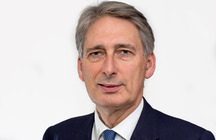
Tag: Philip Hammond

  • Philip Hammond – 2006 Speech to Conservative Party Conference

    Philip Hammond – 2006 Speech to Conservative Party Conference

    The speech made by Philip Hammond, the then Shadow Secretary of State for Work and Pensions, on 3 October 2006.

    I watched some of the Labour Conference last week. It was better than a soap opera.

    Tony Blair on his way out;

    Gordon Brown on his way up;

    And after that description of the Chancellor as “an effing disaster” – John Hutton probably on his way to JobCentrePlus.

    But during a gap in the beauty parade of leadership contenders, they did find a bit of time to talk about social justice.

    They obviously think they own that agenda.

    You know how it is with them: you can tell by the tone, by the arrogance; by the way they take people for granted.

    Now we are staking out our claim to that turf.

    So I want us to send a message to them today. And it is this: “the Tories have got their tanks on your lawn”.

    And I’ll tell you why: because Labour has failed. Failed the most disadvantaged in our society.

    In Labour’s Britain, means testing is up, social mobility is down and income inequality is entrenched.

    The poorest are paying a higher share of taxes, and receiving a smaller share of benefits than in 1997.

    And the proportion of children living in workless households is the highest in Europe.

    So much promised. So little delivered. And now they have run out of steam. Devoid of new ideas. Their top-down, centralised approach failing Britain’s most vulnerable people.

    As for fighting poverty – most of them are too busy fighting each other.

    So it falls to us to pick up the challenge of delivering social justice to the most disadvantaged.

    Those who have not shared in the growing prosperity of our society.

    Those who remain locked in a cycle of deprivation. Workless and without hope.

    The mistakes and failings of one generation repeated by the next.

    This is deep-rooted poverty – not just lack of money, but lack of aspiration, lack of self-esteem, lack of hope. It is a moral, as well as a material, poverty.

    And tackling this poverty is a moral, as well as an economic imperative for the next Conservative Government.

    It took the Labour Party almost the first hundred years of its existence to grasp that a competitive economy is the essential foundation for social justice.

    But we have always understood that.

    And we understand too that social justice is an essential foundation of a competitive, modern economy.

    Because in 21st Century Britain, our human capital is our principal natural resource.

    In the past our wealth was built on iron and coal, gas and oil.

    But in the knowledge-based economy of the future, our prosperity will be sustained by the skills and the talents of the people who live in these islands.

    So, we cannot stand by and watch children leave school without basic skills.

    We cannot allow drug addiction to destroy promising young lives.

    We cannot tolerate 5 million adults languishing on out-of-work benefits.

    And we will not.

    Social justice and economic competitiveness point us in the same direction: active support and investment to bring those excluded millions back into the mainstream of our society.

    Through education; Through training; Through healthcare; Through work- support and childcare.

    So that they can contribute to, and share in, our nation’s prosperity.

    For their benefit. For their children’s benefit. And for the benefit of our economy and our society as a whole.

    Delivering social justice and delivering the skills our economy needs.

    Of course, there is another way to meet the needs of the economy. The way that Labour has followed. To rely on an influx of migrant workers. Make no mistake, we welcome the contribution that generations of immigrants have made to our country and to our economy.

    But isn’t a continued dependence on uncontrolled migration a betrayal of the 5 million workless adults in Britain today?

    5 million adults who already have homes; 5 million adults who are already using the NHS; whose children already have school places.

    We owe it to them and, frankly, we owe it to ourselves, to make the effort and the investment that will allow them to fill the jobs that a growing economy will generate.

    In the 1980’s Margaret Thatcher tackled head on, and reversed, Britain’s long-term economic decline. And we should be proud of that success.

    But it left unfinished work: repairing the social consequences of radical economic change.

    Labour, with its state-led model has tried, and failed.

    So it’s down to us to finish the job. To tackle the deep-rooted social problems that still blight Britain today.

    With the same passion, the same commitment, the same single-mindedness, with which we tackled the economic problems of the 1980’s.

    Traditional trickle-down economics hasn’t done it. Labour’s centralised state model hasn’t done it either.

    So we need a new direction.

    A new direction that will succeed where Labour has failed.

    And I’ll tell you how – By trusting people and by sharing responsibility.

    By creating a genuinely level playing field for the private and voluntary sectors. So that they can share in the delivery of our social agenda.

    By devolving power and resources to communities. So that they can tailor local solutions to local problems.

    By creating a spirit of social responsibility, that will engage individuals, families, communities, businesses.

    And because we want to help millions more people into work – older people, carers, and people with disabilities – we must make work itself more flexible.

    Work tailored to the circumstances of the would-be workers, not workers squeezed into jobs that they don’t fit.

    So, we need change.

    But we also need continuity. Ideas and institutions that have stood the test of time.

    So the family will be at the heart of our social policy.

    Because the evidence that families provide the best environment for bringing up children is now so overwhelming that even the Labour Party has noticed it.

    But, as usual, they don’t quite get it.

    John Hutton said last week that the family is the bedrock of the welfare state.

    He was wrong. The family is much more than that.

    The family is the bedrock of our entire society.

    So, a Conservative Government will support and nurture the institution of the family and will never allow the State to supplant it.

    But, in modern Britain, families come in all shapes and sizes. We have to recognise that.

    Because we aspire to govern this country, made up of all those diverse families. And to earn that privilege, we have to show that we value them all.

    Of course, social justice isn’t only about children and families – it transcends generations, and pensioners are among the most vulnerable in our society.

    That hasn’t stopped Gordon Brown snatching £5bn a year from pension funds.

    Or extending means-testing to embrace nearly half of all pensioners.

    But he is failing the most vulnerable of them; 1.6million are not claiming the Pension Credit to which they are entitled.

    Why?

    Because it is too complicated;

    It is too intrusive;

    And because they are too proud.

    But their fuel bills and their council tax go on rising, just the same.

    We understand the needs and aspirations of older people and we will put them at the heart of our policy development process.

    Nobody should leave this hall today in any doubt that the commitment to social justice is at the very core of our new agenda for the Conservative Party. Both as an end in itself; and as a means to support a competitive modern economy.

    Economic stability.

    Growth and prosperity.

    The only long-term guarantees of social justice;

    Of jobs, for all those who can work;

    And of generous levels of support for those who genuinely cannot.

    Labour has had its chance – and failed.

    Now we must map out for the people of Britain our vision for society:

    A society where opportunity is open to all;

    And where all are genuinely able to benefit from it.

    Where there are no hidden barriers or glass ceilings.

    No sink estates written off as “no go” areas;

    No self-perpetuating underclass, left without help and without hope.

    Now is the time to take up that challenge.

    To highlight Labour’s failure.

    And to seize back the social justice agenda that they have tried, and failed, to make their own.

    Time to show the people of Britain, by our deeds as well as our words, that they can, again, trust us.

    Trust us to deliver social justice, and economic prosperity. Which together will form the foundation of the truly Great Britain that we aspire to build.

  • Philip Hammond – 2019 Statement on the Fiscal Risks Report

    Below is the text of the statement made by Philip Hammond, the Chancellor of the Exchequer, in the House of Commons on 18 July 2019.

    In accordance with the charter for budget responsibility, the Office for Budget Responsibility (OBR) has today published its second fiscal risks report (FRR). The OBR published its first FRR in 2017, which the Government responded to in 2018 through the managing fiscal risks report (MFR). FRR 2019 fulfils the OBR’s legal obligation to publish a statement setting out the main risks to the public finances at least once every two years. The report features an updated risk assessment of the original issues the OBR raised in FRR 2017, in addition to highlighting new risks to the public finances. It was laid before Parliament earlier today and copies are available in the Vote Office and Printed Paper Office.

    The UK is one of the few countries in the world to publish a standalone report on fiscal risks and the FRR is the only such report to be published by an independent agency rather than the Government itself. The UK is a world leader in fiscal risk disclosure and management and is determined to set the global standard not only for the disclosure of fiscal risks but also for the active management of those risks. The IMF’s 2018 article IV consultation noted that “The UK continues to set international standards with respect to fiscal transparency”. This report keeps the UK at the frontier of fiscal management internationally and demonstrates the Government’s commitment to fiscal transparency and accountability. The publication of FRR 2019 further strengthens the cycle of accountability that the first report started. As required under the charter for budget responsibility the Government will respond formally to the FRR 2019 within the next year.

    The Government have helped to build a stronger, fairer economy—dealing with the deficit, helping people into work, and cutting taxes for people, families, and businesses. The economy has grown continuously for the past nine years, the employment level is currently at a record high, unemployment is currently at its lowest rate and level since 1975, inflation is at the Bank of England’s target and real wages are rising. We are tackling the productivity challenge head on because it is the only way to sustainably improve living standards in the long term.

    The Government have also made substantial progress in improving the health of the public finances since 2010, which have now reached a turning point. The deficit has been reduced by more than four fifths and debt has begun its first sustained fall in a generation. At the spring statement 2019, the OBR confirmed that the Government are forecast to meet both of the interim fiscal rules early, with the structural deficit now below 2% and debt falling in every year of the forecast. The Government have achieved this through a balanced approach to fiscal policy; continuing to reduce debt, while also supporting vital public services, keeping taxes low and investing in Britain’s future.

    Within this balanced approach, the Government took the decision to make the NHS the number one spending priority, committing to an historic settlement that provides a cash increase of £33.9 billion a year by 2023-24. This record level of additional funding for our public services has been delivered within a responsible fiscal framework, ​and has been accompanied by a clear and credible NHS long-term plan, which includes measures to put the NHS back onto a sustainable financial path.

    Furthermore, the Government have taken concrete action to reduce a number of risks, which the OBR has acknowledged in FRR 2019. This includes better management of new contingent liabilities, reducing the issuance of index linked gilts and improvements in the management and reporting of legal risks in the welfare system. The Government have also made significant improvements in monitoring and transparency of their fiscal risks, including introducing stricter disclosure requirements for asset sales and revised budgetary treatment for financial transactions.

    While the Government have acted, many of the risks discussed by the OBR in its first report remain. In the medium term, the largest potential risks come from the macroeconomy and financial sector in the form of financial crises and major economic downturns. The OBR has also modelled the fiscal implications of the UK leaving the EU without a deal in its fiscal stress test. The stress test is based on the IMF’s less disruptive no-deal scenario. The OBR notes this scenario is not necessarily the most likely outcome and it is relatively benign compared to other possible scenarios (for example, assuming limited short-term border disruptions). The OBR reports that this scenario would add around £30 billion a year to borrowing from 2020-21 onwards and around 12% of GDP to net debt by 2023-24, compared with the OBR’s March forecast baseline.

    In the long term, the most significant fiscal risks come from structural economic and societal trends such as lower productivity growth, higher interest rates, changes in consumption and working practice, demographic pressures and technological change. Additionally, the report highlights new risks—such as climate change and the costs associated with measures designed to adapt and mitigate the effects. The risks the OBR has highlighted further reinforce the need for prudent management of the public finances and the reduction of debt to more sustainable levels.

  • Philip Hammond – 2019 Statement on ECOFIN

    Below is the text of the statement made by Philip Hammond, the Chancellor of the Exchequer, in the House of Commons on 16 July 2019.

    A meeting of the Economic and Financial Affairs Council (ECOFIN) was held in Brussels on 9 July 2019. The UK was represented by Mark Bowman (Director General, International Finance, HM Treasury). The Council discussed the following:​

    Early morning session

    The Eurogroup President briefed the Council on the outcomes of the 8 July meeting of the Eurogroup, and the European Commission provided an update on the current economic situation in the EU. Ministers then discussed potential new sources of revenue for the upcoming multiannual financial framework the EU’s long-term budget.

    Own resources

    The Finnish presidency gave an update to the Council on the potential new sources of revenue for the upcoming multiannual financial framework, following a discussion during the early morning session.

    Presidency work programme

    The Finnish presidency presented its work programme on economic and financial matters for July to December 2019.

    Appointment of the President of the European Central Bank

    The Council adopted a Council recommendation on the appointment of Christine Lagarde as the next President of the European Central Bank.

    European semester

    The Council adopted the 2019 country-specific recommendations as part of the European semester process.

    Any Other Business

    The Dutch Finance Minister briefed ministers on the topic of aviation taxation and carbon pricing.

  • Philip Hammond – 2019 Statement on ECOFIN

    Below is the text of the statement made by Philip Hammond, the Chancellor of the Exchequer, in the House of Commons on 24 June 2019.

    A meeting of the Economic and Financial Affairs Council (ECOFIN) was held in Luxembourg on 14 June 2019. ECOFIN was preceded by a meeting of the European Investment Bank (EIB) Board of Governors:

    Annual EIB Board of Governors meeting

    The meeting included: statements from the Chairman, President and Chairman of the Audit Committee; a governors discussion; a presentation on the annual report of the Audit Committee; and a vote for partial renewal of the Audit Committee. The UK was represented by Mark Bowman (Director General, International Finance, HM Treasury) during the EIB meeting.

    Following this, EU Finance Ministers discussed the following at ECOFIN:

    Early morning session

    The Eurogroup President briefed the Council on the outcomes of the 13 June meeting of the Eurogroup, and the European Commission provided an update on the current economic situation in the EU.

    Banking union

    The Council endorsed the progress report on the banking union.

    Financial transaction tax

    The Council received a progress update in relation to the enhanced co-operation on financial transaction tax.

    G20 follow-up

    The Romanian presidency and Commission presented the main outcomes of the G20 meeting of Finance Ministers and Central Bank Governors, which took place on 8 to 9 June in Fukuoka, Japan.

    European semester

    The Council discussed a horizontal note on the draft 2019 country specific recommendations, and progress towards the Europe 2020 targets.

    Stability and growth pact

    The Council adopted Council decisions and recommendations on the implementation of the stability and growth pact.

    Clean planet

    The Council held an exchange of views on a strategic long-term vision for a climate-neutral economy.

    Non-performing loans

    Under any other business, the Commission provided an update on the implementation of the action plan to tackle non-performing loans in Europe.

  • Philip Hammond – 2019 Speech at the Resolution Foundation

    Below is the text of the speech made by Philip Hammond, the Chancellor of the Exchequer, at the Resolution Foundation on 30 May 2019.

    Thank you Torsten, it’s a great pleasure to be here with you this morning and I welcome your latest report as a valuable contribution to this debate.

    Ten years ago, the world was in the throes of the worst financial crisis since the Great Depression.

    The banking system was broken.

    The economy was in recession.

    People were at risk of losing their jobs and their savings.

    Thanks to our economic plan, and the hard work of the British people, we have turned a corner in our long recovery from that period.

    The economy has grown now for nine straight years.

    The deficit last year was just 1.1% of GDP and our national debt is falling sustainably for the first time in a generation…

    …meaning that, going forward as a nation, we once again have genuine choices.

    And we have, of course, got a remarkable story to tell on jobs – with the employment rate at a record high and unemployment at its lowest point since 1975.

    I am proud of that record – but the job is not yet done.

    We are still dealing with the deepest scars of the recession – in the form of weakened productivity growth, and, especially, low wage growth, which remains below pre-recession levels, despite recent improvements.

    We have, of course, already acted to address the challenge of low wage growth for those on the lowest pay.

    The introduction of the National Living Wage in 2016 gave Britain’s low paid the biggest pay rise in 20 years.

    When we increased the rate again in April, 1.8 million workers were better off.

    The pay of a full-timer on national living wage has risen by £2750 a year since 2016

    And the percentage of jobs defined as low paid, as today’s Resolution Foundation report shows, is at its lowest level since 1980.

    But with around 18% of the workforce still working in low paid jobs, there is more to do.

    Despite the recent good news on wage growth, a decade of low rates of pay increase has slowed the rate of growth in living standards.

    And it has also played into a deeper sense of anxiety about our economic system, about our society and our politics.

    An anxiety which has been exploited by John McDonnell to propose statutory wage rises that would manifestly be unsustainable…

    …and deeply damaging to the interests of those they purport to benefit;

    A plan which is, in the words of the Institute for Fiscal Studies, “risky and dangerous”.

    The truth is that we have seen a gap open up – in Britain and in other developed countries – between the theory of how a market economy and free trade creates and distributes wealth, and the reality experienced by many ordinary people.

    We ignore that gap at our peril because if we do not address it, it will be filled with the reckless promises of the populists.

    But that doesn’t mean we should abandon our economic model.

    As so often is the case, the populists do not have the answers, but they are quick to identify the problems.

    So for those, like me, who believe passionately that harnessing the power of market economics is the only way to deliver progress…

    …it is imperative that we take decisive action to show that the regulated market model can respond to these challenges;

    …to deliver higher wages and higher living standards…

    …as well as providing solutions to the great societal challenges of our age.

    That means building the homes that the next generation needs;

    Supporting people of all ages to embrace technology change through retraining and reskilling, so that technology means higher living standards, not higher unemployment;

    It means closing the gap between our regions through sustained investment in infrastructure;

    And harnessing market-based solutions to show that de-carbonisation and rising living standards can go hand-in-hand.

    But above all, it means delivering rising living standards, through sustainable real wage growth, year after year.

    Of course, over the medium term, sustainable real wage growth is only possible through productivity growth.

    That’s why I have redirected government resources to that goal, through record levels of investment in infrastructure, a renewed focus on skills, and a relentless programme of support for innovation in the economy.

    But raising Britain’s productivity is a medium-term challenge. And there is some evidence to suggest that the continued availability of flexible, low-cost labour, may undermine the incentive for productivity-enhancing investment.

    So if we are going to meet our ambition of making the economy work for everyone, one of the best levers we have is to deliver carefully considered increases to the National Living Wage.

    In 2016, we set a target for the National Living Wage to reach 60% of median earnings by 2020 – and we will deliver on that, giving a pay rise to millions of workers.

    Now we need to decide where to go next.

    And as I said in the Spring Statement earlier this year, we want to be ambitious, with the goal of ultimately ending low pay altogether in this country.

    But we do not want to be reckless – taking excessive risks with the employment prospects of the lowest paid, or with our future economic growth.

    From my initial conversations with trade union and business leaders alike, it is clear that there is a broad support for that ambitious approach…

    …and broad support, too, for a careful implementation of it, avoiding unintended consequences.

    We are greatly helped of course in this country in navigating the path to a sustainable higher National Living Wage by the existence of the LPC, a highly respected tri-partite body embracing employers, unions and academics, able to act as an independent and impartial advisor on the rate of progress that is sustainable.

    So our task is to set the remit within which the LPC will work – and to ensure they have sufficient flexibility to allow them to deliver it sustainably.

    To help us identify how to do that, I asked Professor Arin Dube, as a recognised expert on minimum wage policy, to review the evidence, particularly evidence from international comparators. I’m delighted to welcome him to London this week – and I look forward to receiving his report in the autumn. And, indeed, to hearing from him in just a moment.

    Let me finish with one final thought.

    Whoever the next Prime Minister is, one of his or her central tasks will be to show a new, and sometimes sceptical, generation that a properly regulated market economy remains the most powerful force available to us for unlocking aspiration and raising living standards.

    And bold, decisive action on the National Living Wage, sustainably delivered, will be an important demonstration of the power of that argument…

    …and a necessary step to re-build confidence in the politics of the centre ground.

    Because that centre ground is under threat.

    On the left, the Labour Party characterises business as “the real enemy”;

    On the right, the argument for radical tax cuts, deregulation and smaller government is gaining ground – just as our population demographics are making them harder to do.

    And as we look to re-build the case for centre ground politics…

    …we should take a bold step in writing the next chapter in the story of statutory minimum wages in the UK – a story which began under the Labour Government of 1997…

    …but which took a giant step forward under the Conservative Government in 2016 –

    So that we demonstrate, once again, that the well-regulated market delivers for all our people.

    Now, I look forward to hearing the thoughts of Professor Dube and others about how we can turn that vision into a sustainable reality.

    Thank you.

  • Philip Hammond – 2019 Statement on ECOFIN

    Below is the text of the statement made by Philip Hammond, the Chancellor of the Exchequer, in the House of Commons on 23 May 2019.

    A meeting of the Economic and Financial Affairs Council (ECOFIN) was held in Brussels on 17 May 2019. The UK was represented by Mark Bowman (Director General, International Finance, HM Treasury). The Council discussed the following:

    Early morning session

    The Eurogroup President briefed the Council on the outcomes of the 16 May meeting of the Eurogroup, and the European Commission provided an update on the current economic situation in the EU. Ministers then discussed the possibility of the European Investment Bank developing country strategies. Lastly, the Commission updated on the state of play on negotiations on the definitive system of value added tax.

    Excise duties

    The Council discussed the directive on general arrangements for excise duty (recast), the regulation on administrative co-operation of the content of electronic registers, and the directive on the structures of excise duty on alcohol and alcoholic beverages.​

    Current financial services legislative proposals

    The Romanian presidency provided an update on current legislative proposals in the field of financial services.

    International meetings

    The Council held an exchange of views on digital taxation in the international context, and the presidency and Commission updated the Council on the outcomes of the G20, IMF and World Bank spring meetings that took place in April. The Council then mandated the Economic and Financial Committee to approve the terms of reference for the upcoming G20 meeting in June. Lastly, the Finnish delegation debriefed the Council on the first meeting of the Finance Ministers coalition for climate action.

    European semester

    The Council adopted conclusions on the outcomes of the 2019 in-depth reviews of macroeconomic imbalances in member states as part of the macroeconomic imbalances procedure; and the implementation of 2018 country-specific recommendations.

    Institutional cycle priorities

    Under the non-legislative AOB, the presidency informed the Council on the follow-up discussions in regards to priorities for the next institutional cycle in the ECOFIN area.

    Working lunch

    Following on from the discussions at April informal ECOFIN in Bucharest, EU Finance Ministers held a working lunch to discuss the challenges of labour mobility and their potential solutions, followed by an exchange of views on the way forward in areas of the economic and monetary union, specifically in regards to the reform support programme.

  • Philip Hammond – 2019 Speech at CBI Annual Dinner

    Below is the text of the speech made by Philip Hammond, the Chancellor of the Exchequer, at the CBI Annual Dinner on 21 May 2019.

    Thank you, John, for that introduction.

    It is a pleasure to be here once again in the old Whitbread building.

    And if the CBI is trying to make a cheap point by literally organising your annual piss up in a brewery, I am going to pretend I haven’t noticed it!

    Actually, this building has a fascinating history.

    For more than a hundred years, the Speaker of the House of Commons’ carriage was kept here.

    If you haven’t seen it, it is a spectacularly grand, gilded and polished affair – I am talking about the coach, not the Speaker.

    This was a working brewery until 1976. The year before I started my first job, and a time when the UK economy was fast-approaching its post-industrial revolution nadir…

    … dominated by state-owned industries; crippled by unbridled Union power and incessant politically-motivated strikes and protected by rigid exchange controls and managed exchange rates…

    …where credit was rationed by the government, and the top marginal tax rate on investment income was 98%.

    Visibly falling behind the other Members of the EEC, which we had just joined.

    And with our politics polarising to reflect the radically different solutions of left and right to the nation’s challenges.

    We have come a long way since then.

    Our economy is transformed. Our manufacturing sector once again boasts global champions;

    British design and innovation, derided back then, is now respected throughout the world;

    Our services sector has been liberated from stifling regulation and short-sighted protectionism to soar ahead as a powerhouse of the new economy;

    And the UK has become a magnet for investment, for entrepreneurship and for talent from across the globe.

    Our recovery from the fiscal consequences of the financial crisis a decade ago has reached a turning point: our deficit is now lower than it was before the crisis and our national debt is falling sustainably for the first time in a generation.

    Meanwhile, the UK has grown continuously for nine straight years, and despite domestic uncertainty and a slowing world economy, the OBR is forecasting growth for the next five as well.

    Judged against our peers, the UK economy is robust: Since 2010, we have grown as fast as Germany, and faster than France, Italy and Japan.

    On jobs, we have a remarkable story to tell,with the employment rate at a record high and unemployment at its lowest rate since 1975.

    Over 3 ½ million net new jobs since 2010. And of the nearly half a million net additional people in work over the last year, virtually all are in full time jobs.

    And there’s good news on pay, too – with the OBR forecasting wages to rise by 3% or more in each of the next five years…

    …while inflation is forecast to remain at, or very close to, the target of 2% throughout the forecast period.

    This robust economic and fiscal performance is the result of nearly a decade of hard work by the British people, and of a clear economic strategy by the government.

    My predecessor’s number one focus was, quite rightly, on fixing the public finances, inheriting, as he did, a record peacetime fiscal deficit.

    But when I became Chancellor in 2016 I recognised that, as well as getting Britain’s debt down, our continued success as a nation depends on investing in our future, supporting our public services, and keeping taxes low to attract talent and investment.

    This ‘balanced approach’ is now delivering, with the highest sustained levels of public capital investment in 40 years…

    …a Modern Industrial Strategy to respond to the long-term challenge of low productivity;

    Income tax cuts for more than 30 million people;

    …and over £150 billion of new spending commitments since 2016, including a £34bn a year increase for the NHS…

    …the single largest cash commitment ever made by a peacetime British Government…

    …but all of it anchored in a framework of fiscal responsibility, with our deficit now just1.2% and our national debt falling sustainably for the first time in a generation.

    Fiscal responsibility is a proud boast of Conservative Governments, and I know that, over the coming months, my colleagues will want to protect that reputation – and so will resist the ever-present temptation to write cheques the country cannot afford.

    Because we must not undo a decade of hard work by the British people by making unfunded commitments that would send our national debt soaring; leave the economy vulnerable to future shocks; burden future generations; and waste billions on interest payments.

    People must know they can trust Conservatives with the public finances.

    So our economy and our public finances are in far better shape than they were 40 years ago.

    Wages and living standards are dramatically improved since then.

    And yet, there are worrying echoes of the 1970’s in the re-polarisation of the political debate today.

    Populism is on the rise.

    Globalisation – which has transformed the lives of hundreds of millions across the planet, and driven rising living standards here in the UK, has become something of a dirty word;

    Free trade is under attack from all sides and the multilateral institutions which have upheld the post-war international system are challenged as never before;

    Trade tensions and the rise of protectionism are now a real threat to world trade and economic growth.

    On the left and right of politics, at home and abroad, the allure of superficially easy answers to complex problems – the political equivalent of the “free lunch” – fills the vacuum created by frustration with the politics of the centre ground.

    And Brexit continues to wrap our economy in a cloud of uncertainty – with the continued possibility of a “No Deal” exit remaining a real threat to our future prosperity.

    So I want to say a few words tonight about how we can meet this growing challenge.

    But it is worth noting that doing so today will be more complicated than it was in the 1970s.

    Because underpinning, and to some extent driving, the political malaise in Britain – and in many other developed economies, are four major, unavoidable, structural changes that are shaping the context for this debate:

    1) The inexorable shift of economic power from the West towards the Emerging Economies of Asia, and its inevitable long-term consequence for the balance of strategic power as well.

    2) The need for rapid de-carbonisation of our economy, with huge implications for the allocation of capital and the sustainability of current business models;

    3) The ageing of our populations and the implications for our economies, for migration policy and for intergenerational equity;

    4) And finally, the unparalleled scale of the technological revolution on which we are embarked – a revolution that will profoundly change our lives, our jobs, our economy and our politics.

    And all of these will be happening at once; all imposing huge demands for resources and attention – both in terms of political bandwidth and in terms of business management-time.

    So the background is challenging, to put it mildly. And against that background, we face real and present dangers to our economic well-being from populists of left and right.

    On the populist right, there are those who now claim that the only outcome that counts as a truly legitimate Brexit is to leave with No Deal.

    Let me remind them: the 2016 Leave campaign was clear that we would leave with a Deal.

    So to advocate No Deal is to hijack the result of the referendum, and in doing so, knowingly to inflict damage on our economy and our living standards.

    Because all the preparation in the world will not avoid the consequences of No Deal.

    So I will continue to fight, in the face of this polarisation, for a negotiated Brexit…

    …an outcome that respects the British people’s decision to leave, while recognising that there is no mandate for a “No Deal” exit; and that we have an absolute obligation to protect Britain’s jobs, businesses and future prosperity.

    But we need to be clear, that if we do not resolve this issue in the next few weeks, there is a real risk of a new Prime Minister abandoning the search for a deal, and shifting towards seeking a damaging No-Deal exit as a matter of policy…

    …in order to protect an ideological position which ignores the reality of Britain’s economic interests and the value of our precious Union.

    And we need to be clear, too, that lurking ever larger behind this immediate challenge of right-wing populism, is the even greater danger of left-wing populism…

    …manifest in John McDonnell’s increasingly brazen policy assault on the fundamental fabric of our modern, open, economy…

    …with proposals for nationalisation of businesses without compensation; appropriation of equity shares; direction of investment; and ruinous levels of taxation and borrowing to finance yet another experiment in market manipulation and social engineering that is doomed to fail, as it predecessors, at home and abroad, have always done…

    …and which must surely lead to capital flight and, ultimately, exchange controls.

    Both approaches offer a disaffected electorate temptingly simple solutions to the complex problems that drive their discontent.

    Neither will deliver.

    Those who believe that they can make Britain better off by increasing barriers to trade and those who think that greater prosperity and a better society can be delivered by subverting the market rather than harnessing it, are both wrong – as history will confirm.

    But the truth is that a gap has opened up – in Britain and in other developed countries – between the theory of how a market economy and free trade creates and distributes wealth, and the reality experienced by many ordinary people…

    …creating a dissatisfaction that is fertile ground for populism to grow in.

    And since populism cannot be defeated by confronting one set of simplistic, undeliverable solutions with another…

    …we have to be prepared to eschew simple answers…

    ….and make again the complex, and to some, counter-intuitive, case for well-regulated open markets, free and fair trade, fiscal discipline and market economics;

    Explaining how, as we tackle the great challenges of our economy in the 21st century – ageing, technology, climate change and productivity…

    …the mechanisms of the market and the benefits of openness will allow us to create enduring, sustainable solutions.

    Solutions that deliver real results, not empty promises.

    But defending the market economy means demonstrating how, specifically, it can meet the challenges that matter most to a generation who may be pre-disposed to believe that it cannot.

    And it means showing by doing, not by telling.

    It means delivering rising real wages and living standards year after year;

    Building the homes that the next generation needs – at prices they can afford;

    Supporting people of all ages to embrace technology change through retraining and re-skilling, so that technology means higher living standards, not higher unemployment;

    It means closing the gap between our regions through sustained investment in infrastructure, including strategic projects like HS2;

    Demonstrating that higher productivity can provide the answer to the challenge of an ageing population;

    And harnessing market-based solutions to show that de-carbonisation and rising living standards can go hand-in-hand.

    In short, it means validating the open, free-trading market economy system as “fit-for-purpose” for the challenges that we face in the 21st Century

    That’s necessary to re-build confidence in the politics of the Centre ground…

    …and it’s necessary to “re-licence” business to play the vital role that it must in our society.

    And it can only be done by Government and Business working together to deliver prosperity and opportunity in every part of Britain.

    The immediate priority must, of course, be delivering a solution to the Brexit impasse.And we made a great step forward today.

    Because the Government’s, and Parliament’s seeming inability to do so is undermining confidence in our political system…

    …and because continued uncertainty is now having a real and damaging impact on our economy.

    When I accepted this invitation to speak, back in January, I planned to speak about Britain’s future in the context of a Brexit deal that had been done!

    And I didn’t even focus on the juxtaposition with the European Elections later this week!

    The threat of “No Deal as Policy” should unite all those who reject it as reckless and dangerous.

    I was an early advocate of seeking to reach a compromise agreement with other parties and factions to break the impasse in the House of Commons.

    So, I was disappointed, but not surprised, when the Leader of the Opposition ended the formal discussions last week.

    The truth is, the incentives in our political system discourage such initiatives.

    But both of us have learned a great deal about each other’s positions from those talks…

    …and I believe that the case for compromise remains as strong as ever.

    If we are to have any hope of re-uniting our country and repairing our politics after the divisions of the last three years, we cannot have half the country feeling they have completely won and the other half, that they have completely lost.

    Britain needs a Brexit that feels like a compromise; a Brexit that delights no-one, but one that everyone, or nearly everyone, can live with.

    And in a Parliamentary democracy, which this country is, the only sustainable Brexit solution is one that can command a majority in the Parliament.

    So the right way forward is to build on what we have learned of the concerns and aspirations on the Labour side…

    …and add it to what we already know of the concerns and aspirations of our colleagues on the Government side, and others across the House who are open to a negotiated exit…

    …to craft a compromise that can deliver Brexit and settle this question, once and for all,in a Withdrawal Agreement Bill that will represent a bold, new proposal addressed to MPs on all sides of the House of Commons.

    But let me be clear on one thing: that is where the attempt at consensus with the Opposition ends.

    Because beyond Brexit, we can and must challenge head-on the anti-market, anti-business ideology of the left…

    …with its false promises and easy answers…

    …and promote instead a clear plan to build on the strengths of the British economy as we tackle the challenges and harness the opportunities of the future…

    …working in a partnership with business…

    …using the authority of Government to set the direction of travel…

    …but with the private sector as the front-line agent of change – mobilising private capital and harnessing the power of the market to ensure effective delivery.

    Working together to raise productivity as the only sustainable path – not only to higher wages and rising personal living standards…

    …but also to delivering our social objectives, and our strategic goals, such as decarbonisation.

    That means capital investment, both public and private, in infrastructure and technology…

    …and it also means a partnership to deliver the home-grown skills and training that Britain needs to prosper…

    …and a genuine collaboration to ensure a future immigration regime that supports the needs of business and the economy without unnecessary bureaucracy.

    That’s why we embarked on an unprecedented year-long consultation on the post-Brexit migration regime: we said we want to hear the views of business, and I am sure you are not going to disappoint us!

    There is no doubt that we are facing an unprecedented period of challenge in our public life.

    Uncertainty over Brexit.

    Anxiety over our economic model.

    Anger about our politics.

    All set against the backdrop of a long, and sometimes apparently conflicting list of urgent imperatives:

    Decarbonising our economy; rescuing our environment; housing our population; adopting new technology; increasing our productivity, and adapting to demographic change.

    No wonder the British people are concerned,and it would be an insult to ignore them.

    The populists do not have the answers – but they are pretty good at identifying the grievances.

    To trump them, we need an optimistic vision for the future – but one that is grounded in reality…

    …with solutions that work with the grain of our society and harness the power of markets, the energy of business and the resource of private capital…

    …to deliver answers to these multiple,simultaneous, challenges.

    And to allow us to harvest the tremendous opportunities that lie within them.

    Solutions that address the future…

    …not hark back to the past;

    That promote unity, not further division;

    That deliver real change, not simply rhetorical shift;

    And that speak to our ambition for a country whose best years, we firmly believe, lie ahead of it.

    Thank you.

  • Philip Hammond – 2019 Belt and Road Forum Speech

    Below is the text of the speech made by Philip Hammond, the Chancellor of the Exchequer, in China on 26 April 2019.

    Excellencies; Ladies and Gentlemen. It’s a pleasure to be back in China for this second Belt and Road Forum. To take stock of how the Belt and Road Initiative (BRI) has evolved over the past two years…

    …to discuss the next phase of the Initiative.

    To hear, as we have of China’s commitment to the BRI not only to deliver much-needed economic infrastructure, but to demonstrate leadership in addressing social and environmental ‎challenges too;

    We have all seen how China’s own development has lifted hundreds of millions of its citizens out of poverty in just four decades…

    …and none of us doubts that the Belt and Road Initiative has tremendous potential to spread prosperity and sustainable development – touching, as it does, potentially 70% of the world’s population.

    A project of truly epic ambition…

    …and I congratulate President Xi and the Chinese people on the scale of this vision…

    ..and the determination with which it has been pursued.

    The UK is committed to helping to realise the potential of the BRI – and to doing so in a way that works for all whose lives are touched by the project.

    The potential benefits are clear to all of us in this room;

    But to deliver them, it is essential that BRI operates to the highest international standards;…

    …with all parties working together‎ in partnership within the rules-based international system…

    …to create genuine win-win outcomes, in which host countries, investors and promoters alike benefit…

    …with fair terms…

    … sensitivity to local concerns and traditions…

    …and the highest environmental standards…

    …all delivered to international norms of good governance…

    …with full transparency around projects, and around the sustainability of the debt that partner countries are incurring to secure them;

    …Ensuring that Belt and Road is an example of how globalised, open economic cooperation can deliver benefits for all.

    And I welcome the “triple pledge” we heard from President Xi Xinping this morning to ensure the highest international standards in delivery of Belt and Road, to maintain China’s commitment to free trade and multilateralism; and to continue the reform and opening up of China’s economy.

    Two years ago, at the First ‎Belt and Road Forum, I spoke of the UK as a ‘natural partner’ in Belt and Road…

    …citing the complementarity of the UK and Chinese economies…

    …the potential of London’s deep capital markets to support the future financing needs of the BRI…

    …and of the strength of the UK’s legal, professional and technical ‎services sectors to support the design, development, contracting and delivery of BRI projects.

    And since then, I have worked to turn that vision of cooperation into a reality.

    In May 2018, I was pleased to appoint Sir Douglas Flint, former Chairman of HSBC, as HM Treasury’s Financial and Professional Services Envoy to the Belt and Road Initiative;

    Under his chairmanship, we’re bringing together UK business leaders from financial and professional services and China Development Bank, Bank of China, and China Construction Bank to establish a Belt and Road expert board in London.

    We have launched, in April 2019, a three year China Infrastructure Programme to work with China to improve infrastructure development outcomes in Africa and Asia.

    And we have worked with the AIIB to deepen our relationship and to support the development of a pipeline of high-quality infrastructure projects.

    It is clear that, to support the sheer scale of the BRI vision, private finance will need to play an ever greater role in these infrastructure projects.

    And to unlock that private finance, and reassure investors, we must create a recognised infrastructure asset class for Belt and Road projects…

    …with standardised contract terms and uniform reporting that global investors will recognise and trust.

    In doing so, we should, of course, draw on the work that G20 and other international organisations are doing to create frameworks for sustainable infrastructure investments; and I want to offer London’s world class expertise in project financing and the associated legal, professional and technical skills as a partner of choice in delivering these international-standard infrastructure projects.

    The BRI is an extraordinarily, ambitious vision. To turn that vision into a sustainable reality it must work for everyone involved.

    That means achieving the highest economic, social, governance and environmental standards;

    It means attracting the necessary private capital;

    It means ensuring that all partner countries and all their citizens can benefit.

    Our offer is to bring the best of Chinese manufacturing, engineering and construction with the best of British project design and legal, technical and financial services expertise…as we harness the “Golden Era” of UK-China relations…

    …to deliver world-class sustainable infrastructure for all for the twenty-first century.

    I look forward to working with all of you to make that happen…

    To deliver jobs, growth and higher living standards for all of our citizens.

  • Philip Hammond – 2019 Speech at the Annual Asian Business Awards

    Below is the text of the speech made by Philip Hammond, the Chancellor of the Exchequer, on 3 March 2019.

    Good evening..

    Thank you to the Asian Media Group.

    I’m delighted to be here tonight at the Asian Business Awards, 22 years after the first of these fantastic events, in 1997, the year I was first elected to Parliament.

    Quite a bit has changed since then – I’ve got a bit greyer,

    and the Asian business community in the UK has gone from strength to strength…

    …Asian markets have become more and more important to British businesses…

    …and the global balance of economic power has shifted decisively in favour of the emerging Asian economies.

    Later this year, India will overtake the UK to become the world’s fifth largest economy.

    Kalpesh, you spoke earlier about Steve Jobs’ phenomenal success. That reminded me that in 1997 Michael Dell, founder of Dell computers, gave this piece of advice: the best thing to do with Apple would be to “shut it down and give the money back to the shareholders”.

    Luckily, at number 39 on the Forbes rich list, his career progress does not appear to have impeded his judgement.

    But some things haven’t changed – my beliefs when I first became an MP are the same things that drive me 22 years later as Chancellor of the Exchequer.

    A belief in the market economy as the best, indeed, the only way to deliver future prosperity for the British people.

    A belief in Britain as an open, tolerant, outward-looking nation, confident and competitive in the world.

    And above all, a belief in the power of business – that self-starters, entrepreneurs, investors are the engine of our economy, and the bedrock of our communities.

    And our job in government is to reinforce that vision….

    and support successful business leaders like you to power up the British economy for the 21st Century.

    First, let me say a few words about the horrifying terrorist attack in New Zealand last week, and in the Netherlands just a few days ago.

    Violence of any kind against innocent people is deeply shocking…

    …and attacks based on race, ethnicity or religion are particularly abhorrent and have no place in our society.

    Our thoughts and prayers are with the people of Christchurch and Utrecht, with the families and friends of those who died in these attacks and with all those who have been injured or affected by them.

    But it is not enough only to condemn. As we confront the ideologies of hate, we must also make a positive argument for the kind of society that we want to be.

    A democracy that is built on the indivisible foundations of religious, political and economic freedom;

    A society that is confident enough in our identity and our values to embrace diversity;

    And an economy that harnesses the power of that diversity to grow.

    Market capitalism has been the greatest engine for prosperity the world has ever seen; but it has also been the driver of political freedom and stability.

    In the marketplace, the common interest of commerce means that faith or ethnicity, class, background or nationality all matter less than your ability to strike a deal, develop a brilliant new product or service, or to spot an opportunity.

    Those values of enterprise and tolerance have long been part of the British story.

    And they are a part of the British Asian story too.

    My friend and colleague, Sajid Javid, the Home Secretary, asks the rhetorical question – how many countries can genuinely say that the son of a penniless, immigrant bus driver can become the holder of one of the most powerful political offices in the land – in the space of a single generation?

    Energy, ingenuity and hard work – those are the qualities that have driven all of you in this room to become some of the most successful businessmen and women in the country.

    And that is what tonight is all about.

    A celebration of the men and women who are nominated for awards later this evening;

    A celebration of the vital role the Asian community has played in modern Britain’s success.

    And a celebration, too, of the power of business and enterprise to do good.

    And of the willingness of so many who have done so well – to plough the proceeds of their good fortune and hard work back into our society through philanthropy.

    As a Conservative I’m clear that it’s the private sector that drives growth and prosperity in our society.

    So our guiding mission, as we leave the European Union, is to make sure Britain continues to be a great place to do business…

    And we have a plan to do that.

    First, as I set out in my Spring Statement last week, despite the slowing global growth, Britain’s economy has defied expectations.

    It has grown for nine consecutive years, with the longest unbroken quarterly growth run of any G7 economy, and is forecast to continue growing in each of the next five years.

    And thanks to the hard work of the British people, our debt is now falling sustainably for the first time in a generation.

    A solid foundation as we build Britain’s future.

    Second, we have a plan to raise Britain’s productivity and boost growth.

    We are increasing public investment to its highest sustained levels in 40 years, with a £37 billion National Productivity Investment Fund…

    …and record investment in our roads, railways and broadband…

    …we are putting technical and vocational skills back at the heart of our education system – so that as digitisation of our economy changes the labour market, our workforce is ready to take on the jobs of the future…

    …and we are cutting taxes on the wages people earn and on the businesses that employ them, with 32 million people receiving a tax cut from next month, and business enjoying the lowest rate of Corporation Tax in the G20.

    But Britain’s future prosperity will be at risk if we leave the EU without a negotiated deal and a close future partnership.

    The member states of the EU are our nearest neighbours and they are our largest trading partners.

    Over 45 years, we have built close business and trading relationships…

    …and complex supply chains which criss-cross our continent.

    As business people, you will understand that it is those carefully constructed and painstakingly maintained relationships that underpin the value of a business…

    …and we must protect that investment at all costs.

    There will be change ahead as we navigate a path to a new relationship – so we will need to adapt.

    But Brexit will be our chance to show that we can combine a strong and continuing partnership with the EU, with a new focus on building on our historic overseas relationships, and forging new links with the fastest growing economies of the world, many of which are in South and South-East Asia.

    Making Global Britain a reality.

    I am acutely conscious that I am standing between 850 people and their dinner – so let me conclude with one final thought.

    Nearly three years on from the EU referendum, I know the ongoing uncertainty is damaging for business…

    …and I know every one of you in this room would like us to have resolved this issue many months ago.

    But democracy is a messy business:

    Churchill famously described it as the worst form of Government, except all those other forms that have been tried.

    But we are now in the final furlong.

    And I’m confident that we are on track to get a deal – as we must.

    And when we do, all the pieces are in place for our country to thrive:

    Strong economic foundations;

    Sound public finances;

    World-leading businesses;

    A cutting-edge tech sector;

    A Global services industry;

    A vibrant, entrepreneurial class;

    A deep commitment to free and open markets;

    An open and tolerant society;

    I look forward to the day, very soon I hope, when I, and you, can stop talking about Brexit…

    …get on with the business of business…

    …investing; creating jobs; generating wealth…

    …so that we can get back to the growth in our economy and the progress in our society that our people expect and deserve.

    I know we can do it together.

    Thank you.

  • Philip Hammond – 2019 Speech at EEF

    Below is the text of the speech made by Philip Hammond, the Chancellor of the Exchequer, on 19 February 2019.

    Thank you, for that introduction.

    I am delighted to be here tonight, as you start a new chapter in the history of EEF. And it has been a fascinating history.

    EEF as an organisation was founded in 1896, at a time when the second industrial revolution was just gathering pace; with new technologies being deployed across industry at breakneck pace.

    That was the year the first wireless radio transmission was demonstrated right here in London. I haven’t heard the recording, but I’ve no doubt a then quite young John Humphrys did a good job of grilling some hapless politician.

    As Judith also mentioned, 1896 was also the year the Daily Mail launched. What she was too diplomatic to mention was that the first ever edition carried an op-ed on the front page that confidently asserted that, and I quote: “the motor carriage will never displace the smart trotting pony or the high-stepping team”, and called for the restoration of a “two mile per hour speed limit”. Finger on the pulse – then as now!

    Just in the interest of balance, when I proposed changing the speed limit it was supported by the Mail.

    Today, we are more focused on when the motor carriage driver will be replaced by a computer. But we share with the turn of the 19th century a sense of living through a time of blistering change, as innovations in areas such as robotics, biotechnology, artificial intelligence and blockchain transform our economy – and nowhere is that truer than in the manufacturing and engineering sectors.

    So it is entirely appropriate that you have chosen this moment to change from EEF to ‘Make UK’ – reflecting the diversity of the modern manufacturing sector. And I wish you every success in your new guise.

    Let me first say a few words about last night’s news from Honda. As Greg Clark told the House this afternoon, this is clearly a bitter blow for the 3,500 skilled and dedicated workers at Honda in Swindon, and the many people whose lives will be affected – either because the companies they work for are part of the supply chain, or because they are part of the community around the plant.

    Greg has spoken with the trades unions, the local MP, the Leader of Swindon Borough Council and the Chair of the Local Enterprise Partnership…

    …and will shortly chair the first meeting, in Swindon, of a taskforce he’s put together to marshal government efforts to do everything we can to ensure that the much-valued workforce can find new opportunities to make use of their skills and experience.

    The decision of Honda is, of course, a blow.

    But despite the shock of this announcement, we must not lose sight of the fact that Britain remains a dynamic and open economy…

    …that just this morning we saw record high employment numbers, and ten-year high real wage growth figures…

    …and that we are an economy that has grown continuously for nine straight years…creating 3.4 million net new jobs in the process.

    Our challenge is to maintain that performance, at a time of transformative change in our economy, with the technology revolution changing Britain’s economy, society and, indeed, politics in ways that we can barely predict.

    But as Judith has said, the change uppermost in all our minds is, of course, our future relationship with the EU.

    I understand that the ongoing uncertainty is a challenge for many of you in this room. And that the prospect – however small – of leaving without a deal is already too great, and is having very real consequences as you make difficult decisions about managing supply chains, about hiring people, about where and when to invest.

    I understand the frustration in the business community about the pace and sometimes opacity of the democratic process.

    I cannot make that frustration go away, but what I can attempt to do is to explain what we are doing to resolve this uncertainty.

    Our priority remains avoiding a No Deal outcome, and that will be my unwavering focus. It is clear that leaving the EU without a deal would deliver a damaging short-term shock and would undermine our future prosperity and security – and in my view that would represent a betrayal of the promises about Brexit that were made during the referendum campaign.

    So the solution lies in getting the PM’s deal through Parliament. That is the only way to both respect the referendum result and also supporting the economy, protecting jobs, and allowing us to leave, via an Implementation Period, in an orderly fashion, to a continued close trading partnership with our nearest neighbours.

    Doing so means seeking a route to address the very specific objections that have been raised in the House of Commons. That’s our objective.

    A legally binding change to the Withdrawal Agreement to ensure the backstop could not persist indefinitely would not satisfy all of my colleagues – but it would deliver the core of a majority for a deal in the House of Commons.

    Such a change is not a straightforward task, and will require a spirit of compromise on both sides.

    The so-called “Malthouse” initiative to explore possible alternative arrangements to the backstop, is a valuable effort in that direction.

    It builds on an important concession we gained in the Withdrawal Agreement, in being able to propose alternative arrangements to the backstop – and it should be a major ongoing strand of our work, continuing at pace during the Implementation Period; one in which I hope and expect the EU will take an active part.

    But, however promising as an alternative arrangement to avoid entering a backstop in the future, it is clear that the EU will not consider replacing the Backstop with such an alternative arrangement now, in order to address our immediate challenge.

    The details of this initiative are still evolving, and would require significant changes to EU legislation and Customs practices that would need to be negotiated with the EU member states and others who will be affected by them.

    So over the next few days, Members of Parliament need to think long and hard about the choice before them; Our partners in the EU need to be at their pragmatic best in helping to avoid the mutual calamity of no deal; and you – and we – need to carry on explaining the implications of a no deal exit, no matter who cries “Project Fear”: Because it’s our duty to communicate the reality of the situation, to the people we represent.

    So our most urgent task is to secure a deal that will protect our future relationship with our closest neighbours and most important trading partners.

    But however close that future relationship, it will not be as close as the one we have now. So there will be change ahead.

    Our country has always seen itself as somewhat distinct from our European neighbours; somewhat more global in outlook.

    Brexit will be our chance to show that we can combine a strong and continuing partnership with the EU, with a new focus on building on our historic overseas relationships, and forging new links with the fastest growing economies of the world.

    Because that world is changing around us – a rapidly growing middle class, huge advances in innovation and technology, and a shift in the balance of wealth and power all mean the opportunities have never been so great.

    But these emerging markets are a competitive place, and the key question for the UK will be: how do we establish our competitive advantage in this fast-changing, globalised world? How do we set out our stall in the bustling international marketplace of the 21st Century?

    We have a choice:

    Some people – on both the left and right – would have us fight again the economic battles of the past: at one extreme, an agenda of widespread nationalisation, penal taxation and heavy state regulation; at the other extreme, a slashing of tax rates and shredding of regulation.

    Neither would deliver what is needed for our competitiveness as a 21st century mature economy with an ageing population.

    So, I am clear that as Britain rethinks its competitive advantage in an ever more globalised world, we must factor in the changes happening around us and engage with the world as it is, not as it once was; we must find solutions rooted in the pragmatism for which this country is rightly famous, not in populist rhetoric

    That means building on the distinctive strengths that we already have as a country. And my message to you tonight is that Britain’s modern manufacturing sector is and must remain one of those distinctive strengths and competitive advantages.

    If we can get it right, your sector can prosper under our unavoidably more global outlook in the future – and be a core part of the high-tech, high-skill ecosystem that defines the future economy we want to build.

    I want to say a few words about what we are doing – and what we need to do – to deliver on that ambition, in three specific areas – skills, innovation and infrastructure – and I hope in doing so, I may provide a worthy response to some of the challenges Judith posed in her opening remarks.

    The first priority for any business these days, as all of you know, is skills; making sure you have the right people to make your business grow.

    For too many years, our education system has been too focused on getting people into university, at the expense of other routes into work…

    …focusing on the top level skills of the few, at the expense of the more practical capabilities of the many…

    …and in doing so, we’ve hollowed out our manufacturing skills base…

    …so that all too often the demographic profile of skilled workers inside companies looks even more daunting than the demographic profile of the country as a whole.

    But we are changing that.

    We know that the skillset we need for our advanced manufacturing industry requires us to focus, not just on degree level skills, but also on a wide range of specialist, technical skills.

    That’s why we are reasserting the importance of technical education in our national life – so that we can more effectively train the next generation of engineers, to make sure that employers have the skills they need, and young people are match fit for the labour market of the future.

    To do that, we have committed £500 million a year to introducing a new system of T-level vocational training…

    …We’ve put the first £100 million into the new National Retraining Scheme, to make sure that British workers can face the challenge of technological change without fear…

    …and through the Apprenticeship Levy we are delivering 3 million high quality apprenticeships in this Parliament.

    But, of course, we want to work with industry as we deliver these reforms.

    Judith – you challenged me on progress we’re making with the apprenticeship levy.

    We have heard your concerns loud and clear – and taken action:

    halving the co-investment rate from 10 to 5%
    increased the amount you can transfer to your supply chain to 25%
    we’ve put millions into the Institute for Apprenticeships
    and we’re committed to consulting on how the levy operates in the future through an engagement process, which has already begun
    We’ve conducted a series of regional roundtables with 59 employers attending to date – including an EEF policy advisor – and it’s only the 19th of February.

    And may I also say in response to your plea for a nationwide rollout of the North West pilot of “Made Smarter”, that I am delighted by your enthusiasm for this ground-breaking programme. But it was only launched in November, and the point of piloting is to learn what works and what doesn’t. But I can absolutely promise you that what works will be rolled out in due course.

    As well as making sure that British workers have the skills they need to thrive and prosper, we must also invest in the technologies of the future.

    Our history is one of innovation – we are the nation of Stephenson, Faraday and Whittle. And today, Britain can lead the world again as we exploit a new wave of scientific and technological discovery pouring out of our world class Universities and our industrial research centres.

    I do not need to tell the people in this room about the impact of this technological progress on the economy – just think of the changes you have seen over the last twenty years in automation, materials and manufacturing techniques. And everyone is familiar with the stats that point to Britain’s leading role in scientific research: With just 4 percent of the world’s researchers, but 15 percent of the world’s most highly cited articles.

    But the leap from research lab to commercial product does not happen by accident.

    And for too long, while we’ve been brilliant at invention and discovery, we have been near the bottom of the class in exploiting that home-grown genius to drive our own industry. But I’m glad to say that is changing.

    And the manufacturing sector is at the forefront: you constitute 10% of the UK economy, but provide 66% of all business expenditure on research and development.

    Since 2016 we have committed an additional £7 billion to science and innovation. This 20% increase is the sharpest and most sustained rise in public R&D investment since records began – clear progress towards our ambition for a government-industry partnership to lift economy-wide R&D spending to reach 2.4% of GDP by 2027.

    But although government intervention is important, we understand that private enterprise is the real engine of innovation. So we are also making sure that the conditions are right for you as leaders and entrepreneurs to be able to invest in growing your businesses.

    Support for businesses through R&D tax reliefs has tripled since 2010.

    One of the areas EEF have been rightly challenging us on is capital investment incentives – and we have acted.

    At Budget 2018 I increased the Annual Investment Allowance from £200,000 to £1 million for two years, providing hundreds of millions of pounds more tax relief

    …and I also introduced a new, permanent ‘Structures and Buildings Allowance’, providing billions of pounds of new tax relief for firms investing in new non-residential buildings and structures – delivering a long-standing demand from industry.

    And what is good for individual businesses is also good for the economy and for households – increasing productivity is the only sustainable way to boost real wages – and rising real wages are the sure-fire way to sustain a contented and stable workforce – and a satisfied electorate. A coincidence of objective that business people and politicians can celebrate together.

    Today’s real wage growth figures are good news – but only sustainable if backed by productivity growth. And boosting our productivity also means investing in infrastructure, because even with the best staff and the most high-tech equipment in the world, your businesses won’t succeed without roads to transport your goods, railways to transport your staff, or fast broadband to deliver the digital lifeblood that sustains all modern businesses.

    The cornerstone of our plan to boost productivity is the National Productivity Investment Fund, £37 billion of funding through to 2023-24 on top of the core investment in roads, rail, R&D, housing, and social infrastructure – specifically targeted at raising Britain’s productivity.

    Together, these programmes are modernising our strategic roads network – which carries two-thirds of all freight

    …delivering the biggest rail programme since Victorian times…

    …and bringing our digital infrastructure up to date, with a strategy for delivering a nationwide full fibre network by 2033.

    And we are supporting industry to make the transition to a low-carbon economy, with £315 million for a new Industrial Energy Transformation Fund, which will help businesses with high energy use – like those in your sector – to cut their bills and reduce their emissions…

    …all of which together means over the next five years, total public investment will grow by 30%, to its highest sustained level in 40 years.

    Judith, to return to your challenges, I hope I have shown this evening how government understands its role in supporting UK industry through the coming tech revolution, and in driving up productivity for the benefit of our businesses and our citizens – delivering our vision of a high-wage, high-skill economy.

    The Modern Industrial Strategy encapsulates our clear commitment to play that role.

    And sets out our plan to do it:

    By putting technical skills back at the heart of our education system…

    …investing in new technologies and innovation…

    …modernising our roads and railways…

    …cutting taxes for workers and for the businesses that employ them…

    …reducing your energy costs – and your carbon footprint…

    …doing everything we can, in other words, to make sure that Britain is known around the world as a great place to be a maker.

    And I hope I have convinced you that I understand all too well the scale of the challenge that Brexit uncertainty represents for many of you…

    …and that I am committed, and the whole government is committed, to doing everything we can to dispel that uncertainty as quickly as we possibly can…

    …and that the approach I have set out tonight is the right one for Britain’s economy, regardless of Brexit.

    Laying the foundations for our future prosperity in a world that is going to look and feel very different – for many different reasons beyond Brexit.

    And in 100 years’ time, when my successor as Chancellor of the Exchequer gives a keynote speech to MakeUK’s annual conference, they won’t be talking about Brexit – or, at least, I hope they won’t!

    They’ll be talking about the astonishing transformation of our economy that occurred through the tech revolution of the second quarter of the 21st century…

    …about the remarkable achievement of a small, damp island, off the north west coast of Europe…

    …still, in 2119, a world leader in high tech manufacturing and sophisticated services…

    …a watchword for agile, flexible regulation…

    …a European beacon in an Asian-dominated global economy.

    I know we can do it.

    And I look forward to working with you all, and with MakeUK, to make it happen.

    Thank you.