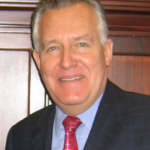
Tag: Peter Hain

  • Peter Hain – 2000 Speech on Angola and the Responsibilities of Wealth

    Peter Hain – 2000 Speech on Angola and the Responsibilities of Wealth

    The speech made by Peter Hain, the then Minister of State at the Foreign Office, on 6 July 2000.

    I was born in Africa, and grew up in Pretoria where my parents were first jailed, then banned, then forced into exile in London where I continued their struggle as a leader of the British Anti-Apartheid movement.

    And now my job as British Minister for Africa gives me again the chance to make a difference. I am determined to do so. Our goal is a proud, safe, democratic, prosperous Africa. A self-confident Africa in which the views and aspirations of all Africans can be clearly heard, and fully taken into account.

    I have been to Angola before, in 1995. As now, it was strangled by war. Images of Huambo stay in my mind: Limbless, starving people. Every shop, office, and house gutted. Hopelessness and despair on peoples’ faces. The misery of the displaced. Thirty-five years of fighting fuelled first by the Cold War ideological clash between communism and capitalism, then by the pure greed of oil versus diamonds.

    During that visit I met the Government in Luanda. Then I flew deep into the bush to Bailundo, to meet Jonas Savimbi. He promised he would honour the United Nations peace agreement he had signed in Lusaka. But at the same time as he lied to me, he was re-arming, and the war started all over again. And still there is no end: the Angolan people deserve so much better.

    I am particularly pleased that so many members of Angola’s civil society are here. We usually hear talk only of the Government, of UNITA, of the United Nations. But civil society as a whole – press, NGOs, the churches, trade unions – all have a vital, perhaps a central, role to play in Angola’s future.

    Angola has suffered from slavery, from colonisation, from the geo political rivalries of the Cold War. But the past cannot continue to be used as an excuse. Angolans cannot allow themselves to be trapped by their history. Angolans must take responsibility for their future.

    In the past, foreign interests in the USA, South Africa and Europe supported UNITA and Savimbi to prolong the war for their own interests. Today I can assure you that this is not true for Britain. I hope it is no longer true for any other country. Some foreign individuals do profit from war in Angola by buying blood diamonds from Savimbi and selling arms and fuel. But there is no reason why Angolans should allow these evil people to control your destiny. If Angolans can find a just peace, no outsider should come between them and a secure and prosperous future. Your economy could develop. Your roads and hospitals could be rebuilt. Your children could be educated. You could travel freely throughout your beautiful country.

    The rest of us would benefit too. Britain would spend less on humanitarian aid and save money on the UN. British businesses would have new opportunities for investment and trade. Angola would become a dynamic force for stability and progress in Southern Africa, instead of a dark threat to the peace and prosperity of its neighbours.

    SANCTIONS

    But for this vision to become a reality, the war has to end. What can you do? What can we do to bring peace closer? The British Government’s view is that there are two major issues to be addressed. I will describe them here:

    First, Savimbi’s power to wage war has to be blocked by sanctions, vigorously enforced. We want to stop him selling his diamonds and block his supplies of fuel and munitions, until he is forced to lay down his arms as he promised in the Lusaka Protocol in 1994.

    I have been in the forefront of the international efforts to make sanctions effective. For as long as the fighting continues the British Government will seek to tighten the sanctions against UNITA, to cut off the outward flow of diamonds and inward flow of arms and fuel that sustains the misery of the Angolan people. And we will continue to expose those involved, however high or low: from African Presidents, to European arms and diamond dealers, to African based air companies – whatever their nationality. Their dirty trade deserves international condemnation. It is also illegal, so each of these individuals should be tracked down, publicly exposed and prosecuted. The diamond dealer in Belgium receiving UNITA’s blood diamonds helps to landmine children. The arms company in Bulgaria or Ukraine helps Savimbi to kill and maim. The European or South African pilot is just as culpable. Without these guilty people, the war would be over.

    Savimbi has repeatedly broken the United Nations peace agreements he has signed. So how can we trust his word again? Could he change? Could he contribute to the search for peace? I very much doubt it. Attacking convoys taking food and shelter to the displaced, planting mines to maim those who try to raise a crop, mutilating and killing unarmed villagers – these are not the actions of a leader with a cause who wants a better Angola for his people. They are the actions of a bloodthirsty tyrant who wants personal power at all costs.

    But UNITA needs to be part of a political debate about the future of Angola. It needs to have a new policy for peace. It must lay down its arms and play an active part in a dialogue about Angola’s future. Britain is willing to help achieve this. Too much is at stake. UNITA represents an important constituency in the country, politically, rurally and ethnically. Its voice deserves to be heard – but through ballot box not through the barrel of a gun.

    The world will not tolerate any more of Savimbi’s lies and obstructions. UNITA must be part of a political process and it must naturally honour any commitments it makes. To end such a long and bitter war everyone has to compromise. It will take courage on all sides. Agreements must be honoured in full. And I promise this: Britain along with other European Union countries will back such an agreement. We will support the Angolan people in their right to peace, to live a decent life, to begin farming properly again, to begin rebuilding their shattered country.

    GOOD GOVERNANCE, DEMOCRACY AND HUMAN RIGHTS

    The second issue is good governance, democracy and human rights. These have to be made a reality for all Angolans so that they can peacefully share in Angola’s prosperity.

    There must be space for the exchange of ideas, which is fundamental to democracy. Having different ideas about the best way forward does not mean disloyalty to the state. But the debate is not just between the MPLA and UNITA. There are other political parties. As important, there is civil society.

    A strong, independent civil society is very important to sustain a healthy democracy. In every society there are groups of people who come together because of their profession, their beliefs, their interests, their ideals.

    These formal and informal groups – churches, trades unions, humanitarian societies, human rights groups and many more – are each entitled to have their voices heard when they argue for what their members believe in. The more they are seen to live up to their own ideals, the more likely they are to gain the support of their fellow citizens. Although political parties are vital in a healthy democracy, civil society groups help connect government to the people. Open debate is good for our democracies.

    Of course, those of us in Government do not enjoy being criticised. As a Minister I know only too well what it feels like to see my name in the press or hear it on the television followed by critical or ill-informed comment. But that criticism is one of the guarantors of our democracy. I urge the Government to be bold in recognising the same in Angola. In any democracy there will be protest marches. (I used to organise marches myself years ago against apartheid!). And it is a rare journalist who thinks that the Government has got it absolutely right. Open discussion in an open society: that is the way forward to success.

    I have condemned the broken promises and murderous activities of Jonas Savimbi. But I have also felt able to speak honestly to President dos Santos and his Ministers and advisers about the evils of corruption. Angola is rich country made poor by corruption and dishonesty. Her wealth must benefit all her people not just a few. The money from oil and diamonds must go to new hospitals, schools, universities and technical institutes. It must build new roads, bridges and railways. It must be used to lift ordinary Angolans out of poverty, fear and dependency. And used to ensure that they can develop both themselves and their country to their full potential.

    In five years time oil export revenues could be as much as eight billion US dollars (depending on oil prices) per annum. This compares with government expenditure in 1999 equivalent to around three billion US dollars.

    Ending corruption and making government accountable will boost international business confidence and create greater prosperity and jobs.

    Angola’s huge resources – its natural wealth and its people – must not be squandered on War. The Government’s recent offensive against UNITA has been more successful than many expected. But I do not believe that there is a purely military solution to this war. Angola has become a war economy. Huge riches from oil and diamonds are just being wasted away as lives are lost or brutalised and the country devastated almost beyond belief. We have to make a fresh start. And Britain is ready to help.

    Ending the war is not enough. We must rule out the chance of future wars. Angolans deserve open and transparent administration. No bribes. No favours. Just good, clean government. Angolans deserve to see their economy being transformed into an open market functioning within the rule of law and delivering benefits to all.

    I welcomed the news that the Government has agreed to an IMF Staff Monitored Programme. A vital first step. You need the IMF, we need the IMF. We all live in an interconnected world. I urge the Government to publish the programme soon so that civil society can play an active part in achieving its targets. The Government has demonstrated its commitment to working for economic reform. They can be justly proud of that. Let’s make it happen through open discussion and open policy making. That is the way to win popular support from the people. That is the way to increasing investor confidence and economic advancement for all.

    In the anti-apartheid struggle I remember campaigning alongside MPLA comrades during the 1960s and 1970s. In Government the MPLA made sacrifices to support the struggle of the African National Congress for freedom in South Africa. The MPLA has an honourable history as a liberation movement. It faced almost impossible odds when it took over a country ruined first by colonialists, and later by UNITA’s foreign-backed subversion, invasion and brutal war. Despite this the MPLA government managed to implement new and bold health and education policies from which so many Angolans benefited. But somewhere along the way, something went badly wrong.

    We must build a new future. And look at what the result could be. Not a country bled dry by war and poverty and corruption. But one of the great African states. You have the oil, the diamonds. You have the agricultural potential. Luanda could be as big in the international trading market as Pretoria, Lagos or Nairobi. It is long past time that you took your place with them.

    CONCLUSION

    I speak today as a friend of Angola. And it is the duty of a true friend to speak honestly. I am determined to make a difference. I care about Angola because when I see the future of peace, I see a country, which could be the breadbasket of Southern Africa, feeding not just its own people but many millions of others. I see a country of great beauty with a people of great ability and potential. I see a country of enormous wealth that could be a powerhouse in Africa. An African Lion that could help make Africa roar with success. Instead of an Angola of war and poverty and corruption, I have a vision of an Angola in which human rights, social justice, democracy and prosperity for all flourish.

    Let us pledge ourselves to realise that vision.

    Let us all join together – you, I, your African brothers and sisters, the international community – in a rising chorus demanding peace and a new beginning.
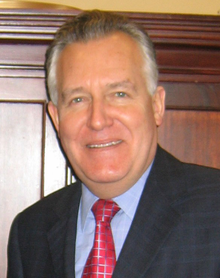
  • Peter Hain – 2000 Speech on Corruption in South Africa

    Peter Hain – 2000 Speech on Corruption in South Africa

    The speech made by Peter Hain, the then Minister of State at the Foreign Office, at the Royal Institute of International Affairs on 10 July 2000.

    Can I begin by congratulating Transparency International on its role as a scourge of corruption and bad governance, and for organising this important conference.

    Corruption is of course not unique to Southern Africa: it happens the world over and always has done. But the African continent has a particularly bad dose of it. And whereas in the past this was accepted as a fact of life – one of the legacies of colonialism and economic exploitation from which Africa has suffered so badly – today it can no longer be tolerated.

    This is not simply a moral imperative. The new factor is globalisation. Modern communications mean it is less easy to cover up. And whereas foreign investors have happily colluded with corrupt governments or public officials through the ages, today’s global investors have less interest to do so. Modern capital is so mobile it prefers to invest where corruption does not take a slice of profits. It is also much more at risk of exposure in today’s transparent and highly competitive environment.

    In Southern Africa today destabilising civil conflicts such as in Angola and the Democratic Republic of Congo have hit the region as a whole. HIV/AIDS threatens to wipe out large swathes of Southern Africa’s productive population. Drought – and more recently flooding in Mozambique and neighbouring countries – has devastated the agricultural output of the region and diverted scarce resources away from productive activities to rebuilding infrastructure and rural communities.

    These serious problems have been hugely debilitating and contributed equally hugely to Africa’s main problem: poverty. But, resolving conflicts, and eradicating poverty is badly hampered by corruption. Sustained poverty in Southern Africa is partly due to failure of governments and corruption is a central feature of this failure.

    REDUCING POVERTY THROUGH INVESTMENT

    The British government is committed to halving the proportion of people living in extreme poverty by 2015. But ultimately poverty reduction requires sustained economic growth and a key element in this is attracting foreign investment. Foreign investment delivers clear benefits: the transfer of capital and resources (including skills and know-how), new jobs, and a boost to the rest of the economy. Some African countries, such as South Africa, Botswana and Mauritius have been relatively successful in attracting Foreign Direct Investment (FDI).

    Yet Sub-Saharan Africa receives only 0.4 per cent of global FDI. And that figure is falling. Greater investment flows will only be possible if the investment climate improves, raising business confidence.

    The reasons given by businesses for not investing in Africa vary, but corruption is almost always on the list. It is difficult to quantify, although in Eastern Europe this is an extra 10 per cent tax on business according to the World Bank and EBRD. Just as important as the financial cost is that doing business is much more complex and confusing in a corrupt country. Many foreign investors will simply walk away if the environment is too difficult. Globalisation gives them plenty of alternatives.

    THE IMPACT OF CORRUPTION

    Corruption is the abuse of a position for private gain. We can draw a distinction between petty corruption and what George Moody Stuart calls ‘grand corruption’. Clearly it is right to start tackling the problem at the top with the big fish. But ultimately the aim must be to change cultures where petty corruption is viewed as normal. The causes of corruption are complex. Certain economic policies can inadvertently promote corruption. Foreign exchange or import controls often encourage corruption. There are obvious risks attached to uncontrolled deregulation as well. Too much economic power in the hands of political elites is undesirable. Africa’s leaders must shoulder some of the responsibility; Western Governments must hold their hands up and accept their share of the blame too.

    The consequences are widespread. When the law is for sale, why obey it? If your political leaders are only interested in enriching themselves, why respect them? If an official demands a bribe to perform the simplest service, why bother? The insidious result is a society whose members do not trust its institutions or even each other. Individuals and groups therefore act regardless of the consequences for others. The rule of law and with it any sense of a coherent society breaks down.

    If government decisions can be influenced by illegal or improper means, they are unlikely to be good ones. Hospitals or roads may be built in the wrong place; incompetent contractors may be given contracts which they never complete; friends and family members end up running businesses into the ground. In brief, corrupt governments do not do their job as well as honest ones.

    In the last few years – pushed and prodded by organisations such as Transparency International – we have all come to realise that corruption (and good governance in general) is not an optional extra. Without tackling corruption, the task of encouraging sustainable economic growth in Southern Africa is impossible. So what can be done?

    COMBATING CORRUPTION

    All Southern African countries should develop their own national strategies to promote good governance and eradicate corruption. Only if there is an internal drive led from the top is an anti-corruption initiative likely to be successful. Without it, no amount of help from outside experts will secure the demonstrable change necessary. There is no one model. But any strategy should include all the key players in society, public and private sectors, NGOs, civil society, political parties, foreign investors, religious leaders and financial institutions.

    Some African countries have taken the first step towards such a strategy by agreeing the Global Coalition for Africa’s Anti-Corruption Principles. I hope that other African countries sign up to these and that they can form the basis for a coherent set of national strategies. Excellent work is being done by the World Bank Institute in seven African countries to develop national anti-corruption strategies. The Institute’s approach of trying to work with a wide range of interests in each country is commendable and I understand that our Department for International Development is looking at ways to build on this work.

    Signing up to the international instruments is, while a welcome first step, is not enough. A corruption free environment must be supported by the enforcement of national laws against corruption. Those laws need to have real teeth. There will be genuine public support if serious and high level corruption is tackled vigorously.

    It is by no means an easy task, but real progress is possible, as a number of African countries have shown, for example Kenya.

    In July 1999, after years of criticism from both inside and outside the country, and a steadily declining economy, President Moi announced an Economic Recovery Strategy designed to root out corruption and inefficiency in the civil service. The Strategy included the establishment of a Change Team headed by Cabinet Secretary and Head of the Civil Service, Richard Leakey. The Team has implemented wide-ranging economic management and governance reforms. These have included:

    • the establishment of an autonomous Kenya anti-corruption authority (KACA). It is now fully operational, with 50 staff and has received 800 complaints to date;
    • dismissals and prosecution of corrupt officials, including one serving and one past Permanent Secretary;
    • key public agencies have been reorganised and management changed in response to complaints and investigation about corruption e.g. a Nairobi City Council oversight Board has been established. Top officials in the Ministry of Land have been replaced and past decisions on land disposal are being reviewed. Top managers of the ports, Kenya Coffee Board, Kenya Tea development Authority and Central Tender Board have been replaced;
    • there has been high profile naming of alleged corrupt officials in the Parliamentary Select Committee report on Anti-Corruption;
    • Cabinet approval has been given to a new public service code of conduct and declaration of assets bill;
    • There is a commitment to introduce a new Anti-Corruption and Economic Crimes Bill which substantially enhances the prosecution and investigation powers of the Kenya Anti-Corruption Authority, strengthens its preventive and advisory functions and establishes a corruption court and a Parliamentary Ethics and Integrity Committee. The statute of limitations (currently 3 years) will be abolished for serious fraud, embezzlement and corruption;
    • civil service reform (rightsizing, pay reform, improved management and performance appraisal);
    • procurement reform: restructuring of the tendering and procurement system and revamping of the Central Tender Board including the establishment of an appeals board and quarterly reporting of activities including bids received and acted upon. Development of new legislation to amend current procurement regulations and the establishment of a new independent Public Procurement Agency.

    These tough measures have already brought benefits to Kenya. As a direct result, the IMF/World Bank have resumed negotiations with the Government of Kenya for a Poverty Reduction and Growth Facility (PRGF) – the previous ESAF having lapsed in 1997 because of governance concerns.

    Although there is a long way to go, and there is obstruction by vested interests, including some Kenyan Ministers, the country has made a start and President Moi and his team deserve to be both congratulated and supported for this.

    BRITIAN’S ROLE IN FIGHTING INTERNATIONAL CORRUPTION

    Meanwhile we are looking at ourselves. Britain is in the process of reviewing the UK’s laws on corruption, and last month, the Home Office issued a discussion paper. Partly this is to ensure we meet the highest international standards, but primarily it is to ensure that we are effective in deterring British citizens from involvement in corrupt practices wherever they take place.

    We are playing a leading role internationally to promote greater efforts by all countries to stamp out corrupt practices. We strongly support the OECD’s Convention on Combating Bribery and urge all countries to sign up to it. We are also exploring with our G8 partners what else we might do to drive this work forward. Corruption will be one of the subjects discussed at the G8 Summit in Okinawa next week.

    Our Secretary of State for International Development, Clare Short, has made quite clear that tackling corruption is a very high priority for UK development assistance. Practical help for tackling corruption is now a major part of her Department’s (DFID’s) strategy in Africa and elsewhere, as indicated by their support for this event.

    Britain is a leading player within the G8 and the EU in tackling corruption and illegal diamond trade that is fuelling Angolan War. I have just returned from Angola where I pressed the Government of Angola to encourage more transparency and accountability within its budgetary process. We are also working with them to ensure that the proceeds of the legal diamond trade and oil exports are not diverted elsewhere and are channelled directly to benefit the Angolan people, not just individuals within the country. And of course, we are working with the Government of Sierra Leone to try to stop the proceeds of diamond sales financing the rebel military campaign.

    I should say that African diamonds are not synonymous with conflict. Just look at what Botswana, the world’s leading diamond producer, has achieved in using its diamond wealth to promote development. With growth of 9 per cent, it is one of the fastest growing economies in the world. What is the secret of Botswana’s success? Good governance, transparency and an uncompromising approach to corruption.

    A GLOBAL ISSUE

    Corruption is a global issue. Corruption in Southern Africa often involves participation by foreign entities, including major corporations and individuals seeking contracts and business opportunities. The UK accepts its responsibility for trying to ensure that UK nationals are discouraged from corrupt practices and we will change our legislation to be more effective in doing so. Most of our European and OECD partners do the same. All should.

    The UK is working with its partners in the IMF, World Bank and other multilateral and bilateral aid agencies to encourage them to use their influence to promote anti-corruption systems in the countries where they are working, particularly in Southern Africa. It is important that clear guidelines for promoting good governance, such as those developed by the IMF in 1998, are replicated by all organisations, including NGOs, procurement agents and other service delivery participants. Country assistance programmes and strategies should take into account and promote anti-corruption strategies at the national level. Particular attention should be paid to the level of transparency and accountability in government decision-making. There are a number of international initiatives to tackle corruption. Apart from the OECD’s Bribery Convention, there are also the Council of Europe’s Criminal and Civil Law Conventions on Corruption covering active and passive bribery of domestic and foreign public and private sector officials, including judges and members of public assemblies. I hope that Southern African countries will consider introducing similar provisions in their own legislation which explicitly criminalise corruption. Britain is willing to help.

    The Commonwealth Framework sets out some clear principles to address governance and corruption in member countries. Commonwealth Heads of Government signed up to the Framework at the Durban Summit last year. A proposed ‘code of conduct’, which could apply equally to government ministers and civil servants as well as parastatal companies and their employees, is particularly worthy of implementation. The code of conduct needs to be legally enforceable, with appropriate and robust sanctions for breaches of the code.

    The profits from corruption can be huge. But if they are to be safe, they need to be laundered and then hidden away out of reach of the domestic authorities. A key element in fighting corruption is therefore to be able to trace and seize the proceeds both to reimburse the country and to reduce the financial incentive.

    Britain has played a leading role in international efforts to tackle large-scale money laundering, whether linked to corruption or other crimes. We are supporting the Eastern and Southern Africa Anti-Money Laundering Group (ESAAMLG), established last year to strengthen legislation and regional cooperation to tackle money laundering.

    CONCLUSION

    The key role of corruption has been ignored for too long. For those of us who love Africa, it is painful to imagine what might have been achieved over the last thirty years without corruption. Honest governments working for the benefit of their people could have brought great prosperity to that continent. Instead, corrupt, selfish regimes have blocked their people from finding their way out of poverty and misery.

    But Africa can still turn itself around. If it can tackle the central problems of governance, then globalisation offers unlimited scope for attracting investment and beginning the process of catching up with the Asian Tiger economies and establishing its own successful Lion economies. The global growth in information and communication technologies will force governments to become more transparent, helping cut out corruption. As we have seen in the last two months in Zimbabwe, growing use of the internet by the Opposition MDC has helped lead to a more open, inclusive society, with stronger institutions, and a greater voice for civil society. IT can improve information flows to foreign investors. New technology (for example mobile telephones and solar panels) may provide ways round traditional obstacles to growth. African governments must look to these new ways of doing business if their development plans are to succeed.

    For, while the rest of the world has been getting richer, Africa has got poorer. We must build a new partnership between African Governments, bilateral partners and international financial institutions to find solutions for Africa’s economic problems and give the people of Africa the chance for success.

  • Peter Hain – 2000 Speech on Diamonds for Prosperity, Not War

    Peter Hain – 2000 Speech on Diamonds for Prosperity, Not War

    The speech made by Peter Hain, the then Minister of State at the Foreign Office, in Antwerp on 17 July 2000.

    To anyone expecting me to ‘name and shame’ those responsible for using illicit diamonds to fuel wars in Africa, I am sorry to disappoint you. Today I come not to ‘name and shame’ but to ‘name and praise’. To praise the International Diamond Manufacturers Association (IDMA) for the leadership it is giving to the industry to tackle the problem. To praise De Beers for the steps it has already taken to block diamonds from conflict zones.

    To praise Antwerp’s leading diamond banks: ABN-AMRO, the Antwerp Diamond bank and Artesia Bank for deciding to terminate relations with any client dealing in ‘conflict diamonds’. Other banks may have made similar moves: all should do so. To praise recent moves taken by the Belgian, Indian and Israeli trade associations to clamp down on the small minority of rogue traders in conflict diamonds who discredit the vast majority.

    I hope we can all join together to find workable solutions and agree concrete ways forward. Because this will make all the difference in reassuring increasingly worried consumers. Everyone wants to be sure that that diamond ring for the finger of their loved one has helped create prosperity not war.

    It is vital that we take urgent action to stop this. Vital because that will help block the money that finances brutal rebellions in those countries. Vital because we must safeguard the prosperity and jobs of tens of thousands of people world wide dependent upon the legitimate diamond trade.

    BREAKING THE WAR-DIAMONDS LINK

    We can – and we must – work together to break the link between war and diamonds in Africa and deny these ‘conflict diamonds’ access to world markets.

    We have all been shocked by the brutality of the RUF rebels in Sierra Leone. They, like the UNITA rebels in Angola, finance their murder and mayhem with diamonds. Angola is the worst place in the world to be a child, yet it has the mineral and agricultural wealth to be the most prosperous place in Africa. We have a moral obligation to act. We also have a commercial obligation to protect the reputation of the industry.

    Because there is no necessary link between diamonds and war in Africa. Diamonds can, and should, mean prosperity for Africa. Botswana – with one of the highest growth rates in the world last year – is a shining example of the benefits that diamond wealth can bring.

    I was born in Africa and was involved in the anti-apartheid struggle. As Britain’s Minister of State for Africa I am determined that the resolution of the ‘conflict diamonds’ problem must in no way harm post-apartheid South Africa and Namibia.

    What we all want are prosperity diamonds: for Africa’s people to experience the prosperity that diamonds can bring. But to do so, we must first bloc the ‘conflict diamonds’ which fuel the suffering of people whose lives are being decimated by war in Angola, Sierra Leone and the Democratic Republic of Congo.

    I know that many of you feel it is unfair that politicians like me, and NGOs, have been vocal on the issue of ‘conflict diamonds’. And unfair in getting a strong media spotlight on ‘conflict diamonds’. After all it is not the diamonds that cause the wars, but the men who start them; who illicitly mine and trade diamonds in order to buy arms.

    And you are right that it would be unfair, if we focused solely on diamonds. But we are not. The British Government is actively supporting the United Nations in stopping those who break sanctions on the supply of weapons and fuel. And we are very actively involved in international efforts to stop the proliferation of small arms and leverage up standards on arms export controls. We would like the international community to go further and stop the supply of weapons to non-state actors.

    But this issue just cannot be wished away. The African producer countries had the wisdom to see that by launching the Kimberley process, in which Britain is an active member.

    The British Government has done the right thing in galvanising action on ‘conflict diamonds’. With the Americans, we have got the issue high on the agenda of the G8 countries, which represent the bulk of your market.

    We have engaged with the leading producers: Russia, Botswana, South Africa, Namibia, Canada and the war-afflicted states. We have supported the unprecedented activism of Canada’s Ambassador to the United Nations, Robert Fowler, in making sanctions against UNITA bite.

    A few weeks ago we convened a meeting of the importing countries in the British Foreign Office. I was able to welcome representatives of the trade from Antwerp, Tel Aviv, Bombay, Russia, the USA and Canada to discuss how to move forward together. Most recently we have led the way in the UN Security Council to get a ban on all uncertified diamonds from Sierra Leone, with the adoption of Resolution 1306 on July 5.

    The proactive stance which IDMA, and others in the industry, are now taking can only work to the long-term benefit of the legitimate trade. And I wish to pay tribute to the leadership of individuals in this room who have acted as the catalysts for change.

    I am struck by how the mood now contrasts to nine months ago. Then, I was told by some in the industry that the there was little prospect of a new approach, of promoting greater transparency and accountability, of starving the illicit diamond trade of its pickings. But look where we are today.

    The newly agreed UN Security Council resolution 1306 on Sierra Leone requires both governments and the industry world wide to enforce the ban on all uncertified diamonds. I am very keen to explore with representatives of the national associations and companies here how we best work together to enact this.

    How can we learn from the experience of imposing sanctions on UNITA diamonds? What can we do better this time and do more quickly to help deprive the Sierra Leone rebel RUF of the means to wage war?

    What can we do together to address the wider problem of ‘conflict diamonds’? I very much agree with your President, Sean Cohen, that it’s unrealistic to expect your members – the manufacturers down the supply chain – to resolve the problem by themselves. It is clear that you can not. You need action ‘upstream’ and you need governments to be prepared to introduce the necessary controls. I think you are right that we need to strengthen the ‘front line’ of the problem by tackling the trade in ‘roughs’.

    DIAMOND CERTIFICATION

    That is why my government is actively backing attempts to introduce a certification scheme for rough diamonds. I hope the G8 Heads of Government will endorse work on this at their summit later this week.

    We are active in the Kimberley process, where industry, governments of producing and importing states and representatives of civil society are developing proposals to stop the import of all uncertified roughs.

    I am delighted to learn that leaders of the IDMA have formulated their own proposals that closely follow our thinking on the need for controls on the import and export of roughs from the producer countries. I am impressed by what you propose and I hope we can work together to achieve workable and pragmatic controls. And avoid unnecessary bureaucracies, or loading unnecessary burdens on producing countries and industry. Let’s make it simple and effective and get it in place urgently.

    You are right to challenge governments to go beyond stating their concerns to taking action. Just as we are right to say that governments cannot crack this one alone. We need the industry. You need governments. Together we can work to get the best blend of government controls and industry self-regulation.

    Our thinking on how best to take forward a certification scheme is that:

    • Producer countries would agree not to export rough diamonds without a proper certificate of origin;
    • Importing countries would only agree to import roughs with such a document
    • A credible monitoring system – simple, effective, but not overly bureaucratic.

    I believe this is achievable and will ensure consumer confidence in the diamond industry. But we need to move fast. Building on the work done in the Kimberley Working group, we need to get agreement to an inter-governmental process to work out what such a scheme might look like and whether we are all willing to commit to it.

    I can assure that the British Government will be active in putting its best efforts into making this happen. Working with other key actors – IDMA, the African producers (led by South Africa), fellow G8 members: Canada, Russia and the USA and Belgium and other EU partners.

    I am delighted that IDMA is also pointing the way forward on what more the industry itself can do. The proposal that every diamond organisation adopts a binding code of conduct on conflict diamonds, labour practices and good business practices is excellent. Especially the proposal that the codes be given teeth, through the expulsion of any member who fails to comply.

    I very much hope that the diamond bourses are thinking along similar lines and that the World Federation of Diamond Bourses will act in concert with IDMA this week. To make this week’s Antwerp World Diamond Congress an even bigger success story for the diamond industry.

    A CREDIBLE AND EFFECTIVE CODE OF CONDUCT

    Might I suggest some pre-requisites for a credible and effective code of conduct, to build on what has been proposed in the industry?

    Firstly, expulsion from a manufacturing association, or diamond bourse, has little meaning if you can carry on trading regardless. I think the industry needs to decide that only licensed manufacturers and dealers can trade. In that way the threat of expulsion can be given meaning.

    I suggest you also need to benchmark clear minimum standards and encourage best practice. On the latter, I am encouraged by the move of companies, such as De Beers, to make affirmative statements on all sales invoices that they are not dealing in ‘conflict diamonds’. If we can get meaningful controls in place to allow only certified roughs into the leading and bona fide diamond trading centres which you represent, consumers will surely demand that the trade gives them confidence through a voluntary ‘chain of warranties’. I would welcome discussion on how this might best be taken forward, with the onus on the seller to make an affirmative statement to the buyer.

    It makes no sense to disrupt the normal pattern of the trade and the way that companies add value by mixing and selling on between the different marketing centres and traders. So we must go for workable ways forward.

    But the 21st century consumer increasingly demands the right to know. The voice of civil society cannot be ignored. If NGOs are demanding greater transparency and accountability, we should all welcome their wake up call. And, like IDMA, not act defensively, but engage to get the best outcome for the industry and the consumer.

    I believe that NGOs like Global Witness have earned their place at the table. Because they have been prepared to listen and learn. And because they have networked effectively and helped bring the different actors together. The Foreign Office has been happy to contribute funding to their research into identification and certification. But that does not mean we agree with all their conclusions. We do not.

    So, I welcome forward-looking thinking in the IDMA suggesting that if an international diamond council is to be considered, it should be a tripartite body with industry, government and civil society representation. But let us avoid heavy bureaucracies, inter-governmental procrastination and look instead to light and effective models of industry self-regulation backed by both full transparency and the support of government legislation.

    I am pleased to have been able to join you at what I’m sure will prove to be a successful conference for IDMA. I hope it will be an important milestone in our efforts to give a clean bill of health to the industry by eradicating the minority of war diamonds which discredit the overwhelming preponderance of prosperity diamonds.

  • Peter Hain – 2000 Speech on Britain’s Policy in the Middle East

    Peter Hain – 2000 Speech on Britain’s Policy in the Middle East

    The speech made by Peter Hain, the then Minister of State at the Foreign Office, to the Council for the Advancement of Arab-British Understanding on 17 July 2000.

    I am grateful to you, Mr Chairman (John Austin), and to Sir Cyril Townsend, for this opportunity to address the Council for the Advancement of Arab-British Understanding, and the many members of the Arab community in London represented here.

    You have invited me to speak on Britain’s policy on the Middle East. I hope, though, you will permit me to range a little further, covering – like CAABU – the whole of the Arab world.

    The Middle East and North Africa remain central to British Foreign Policy. The region is our neighbour, our trading partner, and a strategic priority. We are in regular contact with Ministers and parliamentarians in every country. In the last year I have been to Morocco, Tunisia, Algeria, the West Bank and Gaza Strip, Israel, Jordan, Syria, Egypt, Saudi Arabia, Kuwait, the United Arab Emirates, Oman, Bahrain, and Qatar. The Foreign Secretary has visited the region. The Prime Minister has seen President Arafat, Prime Minister Barak, King Abdullah, Prince Salman of Saudi Arabia, and the Amirs of Bahrain and Qatar. Lord Levy, too, has been extremely active on our behalf.

    PEACE

    The key to the Middle East’s development is peace.

    Over the past year we have seen Syria and Israel come desperately close to peace. We have seen Israel withdraw from Lebanon. And we have seen the Palestinians and Israelis edge closer.

    I wanted to let you know how the Israelis and Palestinians were getting on at Camp David, but the Americans took away their mobile phones. So let me leave that until later, and start with Lebanon.

    The end of the Israeli occupation of Lebanon was a major step towards peace. I hope that the Government of Lebanon will now take rapid steps to assert its effective authority in southern Lebanon, including by deploying the Lebanese Armed Forces.

    There were many who refused to believe that Israel would ever withdraw. They were wrong. Israel under Ehud Barak has worked hard to comply with the requirements of the United Nations to achieve full implementation of Resolution 425. Of course, it was high time.

    I look forward to the next step, also long overdue: implementation of UN Security Council resolutions 242 and 338, in Syria, and in the West Bank and Gaza Strip.

    Syria will emerge this week from its 40 day period of mourning for Hafez al-Asad. The transition to President Bashar Al-Asad, completed today, has been very smooth, and I welcome the emergence of another leader of the new generation in the Middle East. I believe that, over the past year, Britain and Syria have laid the foundations for a new relationship between our countries. I welcome President Asad’s commitment to social and economic reform, and to the strategic choice of peace. Britain will, as an old friend, seek to help Syria in both.

    As I speak, Yasser Arafat and Ehud Barak and their teams are meeting in Camp David. They both face enormous challenges. Britain recognises the pressures on both sides. President Arafat in particular bears the burden of many expectations, in the Islamic world and beyond. But I am very hopeful of a positive result, even if a full permanent status agreement is not achieved in the next few days. I look forward to the negotiations leading to the creation of a viable, democratic and peaceful Palestinian state. It has often been said that the consequences of failure – for both sides – are too great to contemplate. The prizes of success are also too great to be discarded.

    Our efforts towards peace extend well beyond the Middle East Peace Process. You will all be aware of the terrible suffering in Sudan caused by civil war – a war that has lasted 16 years in its current phase alone. You will also be aware of Britain’s long and close association with the Sudan. That link remains strong, as I see from my mail-bag each week.

    Only a negotiated settlement can bring sustainable peace to the Sudan. That is why we have been trying to bring the parties – indeed all stakeholders – to talks. We have provided political and financial support for a permanent negotiating secretariat in Nairobi and we are in regular contact with all the parties, pressing the case for talks and explaining the benefits that peace would bring to the civilian population.

    Tomorrow I shall be meeting the Sudanese Foreign Minister, Mustafa Osman, who I gather will be visiting you at CAABU later this week. We have seen a number of positive developments in Khartoum recently, and I look forward to discussing with him the prospects for peace, and how we and the international community can help.

    Nor will we forget the Western Sahara, sometimes called the ‘forgotten war’. We have supported the UN mission in the Western Sahara consistently and unswervingly, providing civilian administrators and peace-keeping contingents, and substantial funds to underpin them. We continue to believe that a just solution to the problem depends on the people of the western Sahara having the right to express their will at the ballot box.

    A solution also requires all parties to be constructive, flexible and committed to peaceful means. We have been happy to support James Baker, the UN Secretary-General’s Personal Envoy, providing facilities for him to hold talks in London in recent months. We urge all sides to respond positively to what he has to say. I have carried the same message to Morocco and Algeria.

    As you can see, much of our diplomatic and aid effort in the Middle East and North Africa is dedicated to promoting peace and understanding between communities. Another priority is promoting the observance of human rights.

    HUMAN RIGHTS

    Human rights are fundamental and universal. They are one of the foundations of the international community, which is why all members of the United Nations accept the Universal Declaration of Human Rights. How a state treats its citizens is a matter of legitimate concern to all states and all citizens, not just the West.

    So I am wholly unapologetic about our desire to promote human rights, in the Middle East and North Africa, and right across the world.

    There is real progress. The establishment of consultative councils in the Gulf, the elections in Iran earlier this year, and the formation of a human rights committee in Bahrain, all reflect changing attitudes. The increasing rights of women in a number of countries, and the development of the Arab media in the region, in particular Al Jazeera in Qatar, also reflect a more liberal and modern approach.

    We shall continue to promote progress, through political channels, and by financing programmes – the Palestinian rights programme, for example, was the largest UK-funded human rights programme in the world last year. And we shall continue to consult Non-Governmental Organisations before visits to the region, and to raise individual and collective cases when we meet leaders from the Middle East and North Africa.

    Increasingly we work on human rights in close cooperation with the countries of the region. We look forward to working with those recently elected to the UN Commission on Human Rights, including Saudi Arabia, Syria, Algeria and Libya; and with Qatar, which continues on the Commission. Together we can improve the human rights situation throughout the world.

    PROSPERITY

    In working together to achieve peace and secure human rights, we shall also increase prosperity. Because respect for individual freedoms and good governance permit the talents of individuals to flourish, and provide the secure environment needed for investment.

    I am convinced that the Euro-mediterranean partnership, in particular the Free Trade Area, offers the best prospects for economic development. It is the agreed objective of the EU and nearly all our Mediterranean partners. I look forward to Libya joining us soon.

    With the EU, the Mediterranean partners, and the countries which have applied to join the EU, the Free Trade Area will include more than 700 million people. That is more than one in ten of the world’s population, and a much higher proportion of its wealth – an incredible and diverse community and market which will benefit us all, and the Gulf as well.

    The building blocks are gradually falling into place. Of course, much turns on progress in the Middle East Peace Process. At present flows of state money to the region are large. But following peace I am confident that investment from the private sector will dwarf aid from states. We have seen the pattern – starting from a much lower base – in Central and Eastern Europe. If the investment environment is stable and attractive, international capital quickly follows. The companies that invest bring know-how and create jobs. And it is better for the countries of the Middle East and North Africa that investment should come from a wide range of private investors, rather than as aid from a few states.

    Britain’s bilateral trade relations with the countries of the Middle East and North Africa remain very healthy. Just a few weeks ago I was privileged to address the ‘Investing in Saudi Arabia’ conference, in the presence of Prince Abdullah bin Faisal bin Turki. The two pillars of British Trade International, Trade Partners UK and Invest UK, continue their efforts to promote investment in both directions.

    Last year, no doubt partly because of the strength of the pound, and partly because of the low oil price, UK exports to the region fell, while our imports from it increased. I am pleased to say that our exports to the region are now rising again, and in January to March of this year were 4% higher than in the equivalent period of last year. Imports were a remarkable 34% higher.

    The economic links between Britain and the Arab world are increasing steadily, a welcome trend which I am confident will continue.

    IRAQ

    Iraq is an issue of great concern to many of you, as it is to us. That is why we, the UK and the UN, intensified our efforts to look creatively at the situation, resulting in the Security Council’s adoption of the ground-breaking Resolution 1284.

    This resolution for the first time provides for the suspension of sanctions in return for progress by Iraq short of full compliance.

    It offers Iraq an unprecedented opportunity to make quick progress on sanctions – an opportunity we must all encourage Iraq to take. This does not mean the international community is going soft on Saddam’s aggression. 1284 makes clear that Iraq must allow the new monitoring organisation, UNMOVIC, full access to sites still of concern. That is an exacting requirement. But it is also necessary, if we are to prevent Saddam from once again threatening his people and Iraq’s neighbours.

    As the tenth anniversary of the invasion of Kuwait approaches, none here will need reminding of the deadly results of those threats in the past. But we need to be looking forward. Resolution 1284 clearly maps out the way to the lifting of sanctions, and is the only way of doing that. I urge the Iraqi government to accept it.

    The Iraqi government are fond of claiming that they have given up their weapons of mass destruction and that they have nothing to hide. If that is so, then they have everything to gain by seizing the opportunity offered by 1284.

    In the meantime we strive to help those suffering in Iraq. Resolution 1284 contains a raft of humanitarian measures, providing a bigger and better humanitarian programme – none of it conditional on Iraq’s behaviour on weapons of mass destruction.

    There has, for example, been no ceiling on the amount of oil which Iraq can export under the ‘oil for food’ programme since December 1999. That means that more than $10 billion should be available for humanitarian relief this year alone. This will make a real difference on the ground, prompting the UN Secretary General to underline recently that the Government of Iraq is in a position to improve the health status of the Iraqi people. 1284 has also streamlined the approvals procedures for exporting ‘oil for food’ goods to Iraq. More essential goods are arriving more quickly.

    We are doing all that we can to help the Iraqi people. We urge Saddam Hussein to do the same.

    Much too has been made of claims of a UK/US bombing campaign against Iraq. Let me say here categorically: there is no bombing campaign. Nor do current UK and US patrols in the No Fly Zones represent the continuation of Operation Desert Fox. That was a limited operation to diminish Saddam’s weapons of mass destruction capability. It ended on 19 December 1998. Our aircraft now patrol the NFZs, as they have for nearly nine years, to protect the Kurds, the Shias and others from Saddam’s attacks. The patrols are not without serious risk. Iraqi forces have attacked our aircraft on more than 820 occasions. Our aircraft only respond when they are attacked. If Iraq stops its aggression, we shall stop responding. But we continue the patrols because, as a visiting Kurdish delegation told us just last week, it is only these patrols which deter Saddam from repeating his past attacks on the Kurds.

    The states in the region know the reality. We are grateful for the support of so many of our oldest friends in the Gulf. We have acted to provide a path to achieve improvement. Saddam must decide to go down it.

    CONCLUSION

    I want to end on a positive note.

    The Middle East stands on the brink of a resolution to the Arab-Israeli conflict. We all hope that Yasser Arafat and Ehud Barak can find the strength to take the last leap to achieve it. We hope that President Bashar Al-Asad will soon be able to achieve the peace that eluded his father. And we look forward to the gains from Israeli withdrawal from Lebanon being consolidated through a Lebanese-Israeli peace agreement.

    Increasingly the importance of trade, human rights and good governance in increasing prosperity is understood.

    I look forward to closer cooperation between Britain and all our friends in the states of the Middle East and North Africa, in a world where, increasingly, the international interest, the national interest and the citizen’s interest are the same.

  • Peter Hain – 2000 Speech at the Challenges for Governance in Africa Conference

    Peter Hain – 2000 Speech at the Challenges for Governance in Africa Conference

    The speech made by Peter Hain, the then Minister of State at the Foreign Office, at Wilton Park on 24 July 2000.

    Last year as the new Minister for Africa, I spoke at Wilton Park of my personal commitment born from my love of Africa to build a genuine partnership between the continent of my birth and my adopted homeland. I set out my policy commitments. We would back success and work in partnership with Africans to overcome failures. Britain would support Africans who stand up for democracy. We would help those who want economic reform. We would work with and support those who are striving for peace.

    Since then I have travelled the length and breadth of Africa – from Morocco to Mozambique, from Kenya to Namibia, from Ghana to Tanzania. It has been hard but exciting work – though I have spent too much time in Government buildings, airport lounges and High Commission residences – and not enough time experiencing the real Africa.

    A year ago, on the eve of the new millennium, there was a feeling of optimism in the air. The future looked bright. Africa had finally freed itself from colonialism and the divisive politics of the Cold War. It was ready to decide its own future. The talk was of an ‘African Renaissance’.

    But, since then – at least if we are to believe the British media – Africa has suddenly taken a nosedive. Afro-pessimism once again rules supreme. Commentators call Africa ‘the hopeless continent’, riven by conflict, bad leadership and economic failure. They seem almost relieved. Why? Because it lets the international community off the hook. If Africa is ‘hopeless’, then nothing can be done. With a shrug of the shoulders, attention can turn away.

    Of course it is hard to be an African optimist when Ethiopian and Eritrean armies battle it out pointlessly across barren land in scenes reminiscent of 1914 Europe. When there is a resurgence of brutal conflict in Sierra Leone. When conflict continues in the DRC and Angola, fuelled and sustained by the illegal trade in diamonds. When government-motivated political intimidation and violence mars elections in Zimbabwe. When there are devastating floods in Mozambique, drought in Kenya and forest fires in South Africa. When the terrifying plague of AIDS is engulfing the continent.

    It is easy to see why Afro-pessimism has dominated the headlines over the past six months. As President Mbeki has said, what happens in one part of Africa affects the continent’s image as a whole. Unfair it may be. But it is also true. During the crisis in Zimbabwe all the caricatures of Africa – tyranny, violence, corruption, and devastation of a beautiful and successful country – were bounced back into international public opinion. President Mugabe single-handedly did more to undermine both investor confidence and Africa’s reputation than anything else this past year.

    But what Africa needs is neither undue pessimism nor excessive optimism. It needs realism. I am an Afro realist. We need to look behind the sensationalist headlines of the moment. Africa is a huge, diverse and highly complex continent. The tragedies are great. The legacy is enormous: slavery, racism, colonialism, economic exploitation, crippling debt burdens and unequal trade terms. But the successes have not gone away. Britain’s policy of building on those successes is right. We remain committed to it. There is no place for complacency. But Africa’s future remains bright.

    AFRICAN SUCCESSES

    The truth is that 80 per cent of Africans are too busy fighting poverty to fight each other. Democratic pluralism is taking root. In 1973, only 3 African Heads of State were democratically elected. Last year the figure was 32 – ten times greater.

    African leaders have shown they now recognise that there is no longer a place at the table for dictators. Last year’s OAU Summit in Algiers barred from future summits unconstitutional governments who had seized power. Cote d’Ivoire and The Comores were accordingly not invited to this month’s Summit in Lomé. This is a clear rejection of coup d’etats and juntas in favour of accountable and transparent government. I applaud this.

    And there are many individual successes: Tanzania, Botswana, Senegal, Ghana, Mali, Uganda, Mauritius, to name but a few.

    In Tanzania, Mwalimu left a unified country free from the dangers of ethnic rivalry. Under President Mkapa, Tanzania continues on the path of political and economic reform, at peace with its neighbours and itself.

    Botswana and Senegal are models of democracy. Botswana has enjoyed 36 years of multiparty democracy since independence. In Senegal, after 40 years of one party rule, power passed peacefully to the new government on 19 March.

    Ghana is preparing for elections in December. For the first time since independence one democratically elected leader will hand over power to another. President Rawlings’ legacy is a democratic, economically sound state serving as an example to the continent.

    The Government of Mali is also quietly building a better future for its own citizens. It recognises that Africa’s future lies in regional and economic co-operation. As chair of ECOWAS and UEMOA, it is bringing the two organisations together. It is the author of the West Africa small arms moratorium adopted by ECOWAS. We have pledged £500,000 to help implement this far-sighted initiative. Taking its cue from Mali, the OAU is promoting an African small arms moratorium.

    In Uganda, President Museveni’s Government has led the way in fighting the scourge of AIDS. Uganda is now a model of how the threat of AIDS can be overcome. It is also a leader in poverty alleviation, working to develop an educational infrastructure to help children and the poor.

    I visited Mauritius last month and saw for myself how it continues to enjoy impressive economic growth. How it is taking advantage of its natural position as a trading route to develop a free port, along with value added services in finance and IT. And how firmly planted is democracy and the rule of law. Mauritius could be to Africa what Singapore and the other ‘Tigers’ are to China: a platform for high quality investment on the mainland. And then there are Nigeria and South Africa. Nigeria has finally emerged from 16 years of military misrule to take its rightful place as a leader in Africa and internationally. We applaud Nigeria’s peacekeeping role in Sierra Leone and the steadfast commitment Nigeria has shown to maintaining stability in West Africa. We also see Nigeria working closely with South Africa to promote democracy, peace and economic development across the continent.

    And the road of reconciliation that South Africa has travelled down since the dark days of apartheid remains an inspiration not only to Africa, but to the world. We all have much to learn from the South African experience. Cyril Ramaphosa, drawing on his experience as a chief negotiator in the peaceful revolution of 1994, is now playing a vital role in supporting the peace process in Northern Ireland. The United Kingdom is indebted to him. South Africa, not so long ago the pariah of the international world, is now a motor for African growth and a pillar of African stability and democracy.

    These success stories disprove the Afro-pessimists. Africa is not the hopeless continent. And even in those countries beset by conflict, there is hope. You can see it in the ordinary people. The civil society activists in Freetown who courageously work towards healing their society riven by civil war. The people in Zimbabwe who voted in large numbers despite the ruling party’s brutal intimidation. The sheer energy and entrepreneurial talent of market women and traders all over Africa. The resilience and ingenuity of people determined to send their children to school and work for a better future. The generosity of governments in sheltering and welcoming refugees. The continent may stand on the shoulders of its Nigerian and South African giants. But it is on the shoulders of its ordinary men and women that Africa’s future success will be built.

    THE WEST’S RESPONSIBILITIES

    The record of corruption, economic mismanagement and conflict that has marred many countries in Africa is well documented. But we in the West must also accept our share of the blame for Africa’s failings.

    Lack of access to rich markets is one of the main hindrances to African development. Agricultural subsidies among industrialised countries amount to $300 billion a year, equal to Africa’s entire gross domestic product. High tariffs, anti-dumping regulations and technical barriers to trade in industrialised countries cost sub-Saharan African countries $20 billion annually in lost exports – $6 billion more than they receive in aid.

    Despite this, Africa’s economy grew for over 30 years. And the more liberal economic policies adopted in recent times have helped some African economies achieve rates of growth among the highest in the world. In the past five years Ghana, Uganda, Cote d’Ivoire and Mozambique have recorded average growth rates of well over 5 per cent. Botswana, Senegal, Mali, Mauritius, Mauritania and, recently with its reform programme, Kenya, are successfully attracting foreign investment. These countries show that despite the challenges, wider and deeper economic success is achievable.

    But as an Afro realist I recognise that big problems remain: not only conflict, but AIDS and lack of skills.

    HIV/AIDS

    The horrifying scourge of AIDS kills 5,500 Africans every day. Of the 34 million people infected with HIV world wide, 24.5 million live in central and southern Africa. HIV/AIDS is already responsible for catastrophic falls in life expectancy. Behind each cold statistic there is a story of human tragedy. AIDS decimates families and communities. It leaves orphans. It leaves schools without teachers. It particularly hits the breadwinners and Africa’s productive sectors. It knows no boundaries – social or geographical. But – as Uganda and Senegal have shown – AIDS can be tackled and HIV infection rates lowered. Through public education. Through preventive measures. Through appropriate treatment.

    Britain is already engaged with Africa in the fight against AIDS. We are providing £14 million over five years to accelerate the pace of global AIDS vaccine research. Developing a vaccine that is safe, effective and affordable to developing countries within 10-15 years. With UNAIDS we have also played a prominent role in developing the African Partnership Against HIV/AIDS initiative. We remain ready to work with African governments to help fight this devastating disease.

    BUILDING ‘LION’ ECONOMIES

    Despite all this, and as I said at the World Economic Forum in Durban in June, Africa has the potential to produce ‘Lion’ economies able to rival East Asia’s successful ‘Tiger’ economies.

    A key lesson from the success of the Asian Tiger economies is the need to invest in people. As in Britain, that means education, education, education. Education must be one of top priorities. A continent which neglects its youth neglects its future.

    Anyone who visits Africa, knows the thirst for education that exists. Families go to great lengths and sacrifice to put their children through school. But the opportunities for many to do so are declining. In some countries in Africa, school enrolment and literacy rates are actually falling. Less than 1 in 4 rural girls attend Primary School. In five years time Africa could have over 50 million children out of education.

    This decline must be reversed. African Governments need to ensure that resources are allocated to education. So do donor nations. Education is investment. For those who think education is expensive, try ignorance. We, and the international financial institutions, need to define education as an investment not an expense. This is why more British development aid has been targeted towards schools.

    Globalisation is happening fast. Africa should not be wary of this. It should instead seize the very real opportunities offered. In this era of globalisation Africa should not, and must not, build a wall around itself.

    What are the opportunities? Global markets for goods and capital are considerably larger and more integrated today. Emerging African economies have a wider range of markets to export to. And they have a deeper pool of international capital – especially foreign direct investment (FDI) – to draw on. Governments must focus on delivering quality to international standards, and creating a political environment which attracts, rather than scares off, potential foreign investors.

    Much progress has already been achieved in promoting economic liberalisation. But it remains hard to do business in Africa. Bureaucracy, red-tape and corruption often deters. The rates of return for multinational investors in Africa are the highest in the world. But the foreign direct investment per head in sub-Saharan Africa in 1998 was just $6, compared with $123 in Latin America. The deterrents have to be broken down. Greater export opportunities drive economic growth. Free the traders. Let people sell and the markets buy.

    Africa is also well placed to exploit exciting new technologies. Somali pastoralists using mobile phones to price the cost of goats in Jeddah, allowing them to operate in the wider world outside the confines of inefficient state-owned fixed line systems, is a graphic illustration of the possibilities. Mobile phone use is growing faster in Africa than anywhere else in the world. Using mobile phones and battery-powered laptops, Africans – whether from an isolated rural village or from a town or city – now have the potential to link into, and be part of, the global market.

    Ten years from now the biggest difference between the world’s regions won’t be culture or climate, but participation in the knowledge economy. Africa must not miss this opportunity. Internet access is cheap and easy. African countries need to plan for their integration into the global e-economy, to create an e-Africa.

    The African climate provides its own opportunities. One thing Africa is not short of is sun. Photo-voltaic cells can be used to provide electricity for rural infrastructure provision, for water pumping, vaccine refrigeration, lighting for rural schools and domestic power systems. Solar power offers real potential for rural social and economic development by providing enough electricity for lighting, heating and communications – and refrigeration for drugs health centres in remote rural areas. BP Solar is leading the way. It has installed lighting and vaccine refrigeration systems in Zambian and Ethiopian health centres. Of course it is not cheap. But pre-payment systems being pioneered in southern Africa can help to avoid prohibitive capital costs, as a joint project by Shell and Eskom has demonstrated in the eastern Cape.

    The time is right for African economies to fulfil their economic potential. The opportunities are there. But the industrialised countries also need to rise to the challenge if the African lions are to roar.

    Greater access to rich markets must be opened up. At British urging the European Union is now committed to granting duty and quota free access for essentially all exports from Least Developed countries by 2005. The UK is calling for free access for all products from Least Developed Countries over the longer term. We also support the early launch of a new round of trade negotiations, which should be broad based and sensitive to developing countries’ concerns.

    On debt, 33 of the 41 countries classified as Heavily Indebted Poor countries (HIPCs) are in Africa. Debt is a heavy burden on African governments. We are working to ensure that the HIPC initiative is implemented effectively and quickly. But much more remains to be done. In the UK, we have taken the lead in pressing for debt forgiveness. Our pledge to provide 100 per cent debt forgiveness for the poorest countries which meet HIPC criteria, is now matched by all G7 countries. The world must not turn its back on Africa – Britain certainly will not do so.

    HELPING THE CAUSE OF PEACE

    Investment, development and aid will help. But Africa needs peace if it is to excel. Countries at war with themselves or their neighbours cannot move forward. Far too many sub-Saharan African countries are in conflict, causing an estimated 4,000 deaths per week.

    We are doing what we can to help the cause of peace in Africa. In Sierra Leone we have led the international response to the appalling tragedy of a vicious civil war. We helped the Nigerian-led West African force, ECOMOG, resist the rebel onslaught on Freetown. We helped broker the subsequent peace deal. We are now helping the UN and the Government of President Kabbah to restore peace once again. A lasting peace that delivers the security for which ordinary Sierra Leoneans yearn. We will help rebuild the country, including the Sierra Leonean army so that it can assume its proper role as the guarantor of the security of its own people.

    We have been active in supporting all those working towards a peaceful resolution in Africa’s continental war, in the Congo. We remain ready to support the Lusaka peace plan: with money, people, political support and a UN force.

    I visited Angola earlier this month, a country of immense natural resources that has been ravaged by three decades of war. The most urgent priority is the need for an end to the civil war. That is why I have pressed for tighter enforcement of sanctions against UNITA, and engaged the international community on tackling conflict diamonds. I have named and shamed sanctions violators. I have welcomed the Angolan Government’s new diamond certification scheme, and stressed the importance of ensuring its credibility so that it might form the model for schemes elsewhere in Africa. I have also welcomed the Angolan Government’s commitment to badly needed economic reform and the fact that it has agreed a Staff Monitored Programme with the IMF. This is vital to take Angola forward and to eradicate not just war but corruption too.

    Conflicts in Africa have been commercialised. Illicit diamonds are now bankrolling and fuelling wars in Angola, Sierra Leone and the Democratic Republic of Congo. We need to work to cut off the supply of conflict diamonds and deny the RUF and UNITA the means to wage war. But we also need to protect the legitimate trade in diamonds on which so many livelihoods depend, particularly in Botswana, South Africa and Namibia.

    That is why I hosted a meeting in London in June of representatives of the diamond industry and government officials of importing countries. We agreed plans for a global certification scheme for rough diamonds and a plan to attach warranties to all invoices stating that no ‘conflict diamonds’ are included in any shipment. There will be stiff penalties for dealers violating the code. There will be pressure on banks and insurers used by the diamond trade to push for compliance.

    The London meeting of importers complemented the African regional initiative and Working Group process set up at the Kimberley Diamond Forum. We will continue to work with African governments to find solutions to such problems and it is important that the Ministerial meeting of all the key players being held in Pretoria in September takes forward this agenda. The prospects look much brighter after the recent international conference of diamond manufacturers and traders in Antwerp. They agreed on tough measures against diamonds which fuel war whilst protecting the vast majority which fuel prosperity. The G8 countries, which import most of the diamonds in the world, have also just agreed a British initiative to tackle the problem together with a joint UK/Russian conference. Action must follow – and soon – so that rebel forces in Angola, Sierra Leone and the DRC are blocked from financing their wars by diamond sales.

    GOOD GOVERNANCE

    The theme of this Conference is the challenges for governance in Africa. A key plank of British policy towards Africa is the support and encouragement of good governance. This has been a consistent theme in my discussions over the last year with African leaders. Most recently I agreed with President dos Santos of Angola that if his country is to realise its huge potential it must promote democracy, human rights, transparency and the rule of law and pursue substantive economic policies.

    This holds true all over the continent. Yet I have been struck over the last year at the lack of urgency, sometimes even complacency, among some African leaders about the need to address Africa’s problems. I say to them, these problems exist. Let’s work together to overcome them. The rest of the world is moving on, economically and technologically. If Africa is not to get left even further behind, it must move on too, driving economic modernisation and good governance.

    So, I do not subscribe to the views of the prophets of doom on Africa. I recognise the problems. But my view is one of realism: Afro Realism. We will continue to support the success stories in Africa and remain ready to help those countries working to put behind them conflict and private greed in pursuit of peace and prosperity. If we can succeed, the 21st Century will truly be the African Century and Thabo Mbeki’s dream of an African renaissance will be fulfilled.

  • Peter Hain – 2000 Speech to the Welsh Centre for International Affairs

    Peter Hain – 2000 Speech to the Welsh Centre for International Affairs

    The speech made by Peter Hain, the then Minister of State at the Foreign Office, in Cardiff on 28 July 2000.

    Wales has never been an inward-looking nation. Wales has been active in support of democracy and human rights through the last century. Welsh miners supported the fight against fascism in Spain before the War. Welsh men and women supported the struggle against apartheid. Wales has always been an internationalist nation.

    Wales has traded internationally since the industrial revolution. Cardiff was one of the most cosmopolitan and multi-cultural cities in Britain in the early days of the last century – it remains proudly so today. International trade is vital for us. We do disproportionately well out of inward investment. Wales is part of the global economy. As the economic concept of globalisation grows in importance, engagement with the Government’s foreign policy becomes even more important for Wales. The four key objectives for our foreign policy are:

    • promoting British prosperity through free trade and international partnerships;
    • ensuring the security of the UK;
    • enhancing the quality of life through global diplomacy on the environment, drugs trade and cross border crime;
    • building respect for our values by supporting human rights, democracy and freedom.

    Our active involvement across the world becomes more and more important as the phenomenon of globalisation shrinks the world, increasing the impact on us of events and decisions taken many miles away. Critical engagement in the world’s affairs – the pursuit of political dialogue wherever it can produce benefits – is the business we are in. With some regimes (such as Iraq and Burma), this may require sanctions. With others (such as China), involvement without illusions: boycotting these may leave us with clean hands, but is unlikely to provide their people with better rights.

    Globalisation and new technology has had another impact on good governance. Regimes which govern by fear and repression will not achieve the creativity and innovation essential for successful knowledge-based economies. Respect for human rights is therefore not a luxury of growth, but the condition of that growth. Human rights make humans rich. Trade and investment require competition, transparency and the rule of law. Good governance wins international investor confidence.

    Our policy can be summed up in 20 words: to promote British interests and pursue British values by supporting democracy and human rights, wherever we can, however we can. Our policy of diplomacy for democracy is in the best British tradition of standing for democracy, free speech and the rule of law. We support human rights and democracy for other people because these are the values we demand for ourselves.

    And we reject the cynical view that, because we cannot make the world perfect, we should stop trying to make it better. We cannot put everything right, but we can make a difference. Because we cannot do everything, does not mean we should do nothing. Credit for our military intervention to protect freedom in Sierra Leone should not be withdrawn because we were unable to prevent atrocities in Chechnya.

    The global interest is becoming the national interest. In the global age it is in Britain’s national interest to promote British values of freedom, democracy and economic modernisation. Indeed, promoting our values enhances our prosperity and reinforces our security.

    Britain is uniquely able to pursue our national interests through our global interests. As the only state that is a member of the G8, the EU, NATO and the Commonwealth and with a permanent seat on the UN Security Council, we play a pivotal role.

    We are internationalists, not nationalists. That is why we support the United Nations, World Trade Organisation, NATO, and the European Union. We are multi-lateralists not unilateralists. That is why we support international treaties on nuclear, biological and chemical weapons and press all other countries to do the same.

    Promoting the international rule of law protects us. That is why we support the establishment of an International Criminal Court. We cannot protect Britain’s environmental interests without backing global action and international environmental treaties. It is through global engagement, not isolation, that we stand up for Britain and stand up for Wales.

    Globalisation requires greater humanitarian intervention: we believe that when faced with an overwhelming humanitarian catastrophe the global community should act. It is our duty to do what we can to deter aggression and defend our values, by whatever means will make a difference, whether that is by constructive engagement, or by creative diplomacy or indeed by military muscle.

    But this is not a perfect world. It is not a safe world. Nations have the right to protect their people and sometimes they choose to do that by buying British defence equipment. The British defence industry employs hundreds of thousands of people, many thousands of them in Wales. These are real people in real jobs in real places in Wales like Broughton, St Asaph and Sealand. We are not about to put them out of work by closing their industry down.

    But there are too many arms in the world and this Government has made our arms exports more accountable and transparent than almost any other country. We have established for the first time:

    • a tough code blocking exports of arms for either internal repression or external aggression.
    • a European Union arms code doing the same thing.
    • annual reports with 300 pages detailing the licences we have agreed – one of the most open exercises of its kind in the world. We have nothing to hide.

    Under this Government Britain is leading the way on arms control by:

    • banning landmines across the world.
    • banning the sale of torture equipment.
    • promoting a ban on small arms to conflict zones.
    • ratifying the nuclear Comprehensive Test Ban Treaty and seeking to strengthen the Non Proliferation Treaty.
    • promoting new international controls on chemical and biological weapons.

    EUROPE

    And on Europe, I don’t have to tell a Welsh audience that Europe is our continent. Welsh is one of the oldest European languages. The stronger Britain’s standing in our continent, the greater the leverage we will have in the other six. If Britain is stronger in Europe, we are stronger in the world. There is no point in being half-in, half out. A half-hearted Britain would deliver only half our interests in Europe.

    The European Union enables us to cope with an age in which nations are more interdependent than they are independent, more successfully than any alternative. That reality of interdependence is what underpins Objective One funding: the richer regions of Europe recognise their responsibilities to the poorer regions.

    We also have a unique, pivotal role as a bridge between Europe and America. Under this government, we are shaping not shunning Europe. Our attitude to Europe is wholehearted, not half-hearted, committed, not carping.

    Constructive engagement in Europe, as elsewhere, is best for us. Eurosceptics undermine our national interests. As we showed over Objective One, we have more influence at the heart of Europe than at the edge of Europe.

    A successful Europe means success for us. Pulling out of Europe would pull the plug on millions of jobs all over Britain. Europe is good for Welsh jobs. Out of Europe could mean out of work. Wales is better off in Europe than out.

    And, on a single currency, we could benefit from joining a successful Euro through:

    • much lower interest rates and lower mortgages
    • greater stability bringing greater growth
    • lower costs for exporters and importers
    • no need to change money so no commission charges for holiday makers
    • greater transparency for consumers to compare prices across Europe

    But under this Government we will only join if it is in our national interest, if it makes our economy stronger and more prosperous. The Euro will affect us whether or not we belong. It must be therefore in our interests to belong and be able to influence how it works and how it affects us. We would lose out by forever whinging on the fringe.

    Europe’s future is not a United States of Europe but a united Europe of interdependent states. However Europe is also becoming a Europe of regions and nations, and they need a democratic voice so that their interests can be effectively heard within the European Union’s structures.

    In the Foreign Office we are committed to ensuring that Wales’ voice is heard. We are determined we work closely with the elected authorities in Cardiff, Edinburgh and Belfast in exercising our role in the negotiation and agreement of treaties. In our dealings bilaterally or in international organisations. In our involvement in the regulation of international trade. In our provision of international development assistance. And in our promotion of Britain overseas.

    This is especially the case in Europe. Britain is a large and influential member of the European Union. By acting together Britain can use that strength to serve the interests of Wales, Scotland, Northern Ireland or England, which are sometimes distinct, but which often converge.

    Wales needs to be active in the EU too, establishing a high profile, advancing its interests, and supporting our effort for Britain as a whole. The Assembly’s exciting plans for establishing a presence in Brussels as part of the United Kingdom’s Permanent Representation – UKRep – will go a long way to achieve these aims. I understand that this new office will work in partnership with the Welsh European Centre, which has done so much for Wales in Brussels. Together the Assembly office, WEC and UKRep will enable the voice of Wales to be heard at the heart of EU decision making.

    And Wales must be active on the economic front too. Economic power might have gone global, but companies invest on a regional basis and a national-regional basis. They look to the European market and decide whether they wish to invest – not just in Spain or Italy or Germany or France or Britain – but in Catalonia or Lombardy or Rhone-Alps or North Rhine-Westphalia or Wales. So regional and national-regional economic strategies are necessary to attract capital and to allow regions and nations within states to be competitive.

    ENVIRONMENT

    But enshrined in the Assembly’s constitution is a commitment to sustainable development, and economic competitiveness does indeed need to be balanced with its environmental costs. Traditionally our foreign policy has been shaped by the fact that we need a stable world, for our security and to provide reliable markets for trade and investment. But accelerating environmental stresses – climate change, deforestation, competition for water and other increasingly scarce resources – also threaten world stability.

    So strong international environmental agreements protect our interests. This does not mean imposing first world environmental standards on third world countries. It means working with our partners to find sustainable solutions. It means that we put environmentalism at the heart of our foreign policy. Wealth today must not be at the expense of welfare tomorrow.

    OUR COMMITMENT TO WALES

    The Foreign Office is committed to serving the interests of the UK and all its constituent parts, including Wales. Indeed some of the most interesting and exciting public diplomacy opportunities to come the way of overseas posts have been courtesy of devolution, as host governments have been keen to question and probe the new constitutional arrangements. In Paris last year, our Embassy’s Queen’s Birthday party had a Welsh theme. Last November in Brunei, our High Commission – with the help of the British Council and the Welsh Higher Education International Liaison – organised a Welsh Festival of Culture and Education. In New Delhi, one of our more enterprising officers managed to organise a Welsh day at the High Commission with nothing more than a few leeks to add a Welsh flavour! And Rhodri Morgan has led very successful trade-oriented missions.

    Our posts overseas are assisting official visits by Assembly Secretaries, Scottish and Northern Ireland Ministers and by Committees. We are working together with Team Wales to promote exports and attract investors. Foreign Office resources will continue to promote the whole of the UK in all its diversity. Our extensive network of posts, 221 in all, will continue to provide commercial services for Welsh companies and identify and encourage investors to examine opportunities in Wales.

    Foreign companies wishing to use Wales as a platform for European exports will benefit enormously from the new Euro-freight terminal at Wentloog. One of my proudest achievements as a Welsh Minister was to have overcome the deadlock which had stopped progress on this for years. It will become a gateway into Europe for Welsh-based companies and both enhance competitiveness and bring environmental benefits in shifting freight off roads.

    I am however disappointed at the lack of progress on another key strategic project opening up Wales to the world. I had worked hard to achieve a proper transport link to Cardiff International Airport. After months of negotiations we achieved an agreement in principle between the airport’s owners, TBI, the Welsh Development Agency with Welsh Office funding of around £10 million matched by an equivalent commitment from TBI. This would have produced a new park and ride terminal at the M4 Llantrisant interchange, with an extra station on the main railway line, linking freight and passengers along a new widened road directly to Rhoose. I hope that this exciting project will be picked up again by the Assembly and by the WDA, TBI and Railtrack. It could transform Cardiff into one of Britain’s top airports, drawing custom from South West England as well (perhaps via a hovercraft or jetfoil link across the Severn Channel).

    To succeed, Wales has to think big and act big. As an outsider turned insider, I am continuously struck by the huge potential of Wales that is so rarely realised. We need more vision and boldness, not parochialism and caution. We have some of the most talented people in the world. But somehow that has not been collectively expressed across the nation in a way that could enable Wales to succeed in the way we deserve to.

    CONCLUSION

    I am proud to succeed many from Wales who have taken the world stage as British Foreign Ministers, including Geoffrey Howe, Selwyn Lloyd, David Owen, my friend Ted Rowlands and Peter Thomas.

    Today, our experience of reform and devolution in Wales, Scotland and Northern Ireland helps inform my foreign policy work all over the world. There are lessons for countries facing seemingly intractable problems of conflict resolution, from Kashmir to Sri Lanka to Western Sahara. None of these conflicts will be resolved without addressing the competing claims for maintaining territorial integrity on the one hand and devolution of power on the other. In Northern Ireland we have achieved peace and moved forward after one of the longest, most bitterly entrenched conflicts anywhere in the world. In Wales and Scotland we have achieved a constitutional revolution with different models for devolving power. These examples show how demands for devolution – and sometimes, full scale separation – were eventually resolved with their peoples remaining citizens of the United Kingdom while enjoying substantially increased rights. They are examples for the world.

    Over the past three years we have made bold and radical changes to the way Britain is governed. They strengthen, not weaken, our unity as a people. They are founded, not on a number of disparate nationalist ideologies, but rather on one fundamental commitment to spreading power and enhancing democracy, to involving people in the decisions affecting their lives, to giving them a voice. Devolution releases the potential for a strong Britain and a better Wales. A better Wales punching above its weight on the global stage for the benefit of all its people.

  • Peter Hain – 1994 Speech on Regulators

    peterhain

    Below is the text of the speech made by Peter Hain in the House of Commons on 20 April 1994.

    A big thank you, Madam Speaker. I beg to move,

    That leave be given to bring in a Bill to reform the accountability and other objectives of the privatised utility regulators.

    Without any serious debate, the regulation of the privatised utilities has been hived off to autocratic unaccountable directors general. The invisible hand of Ofman the regulator now guides policy for every light switched on, every bath run and every telephone call made. Regulators are independent and all-powerful, and they have extensive discretion, which has often been exercised in a highly personalised fashion.

    Oftel, Ofgas, Ofwat and OFFER cover vital services.

    Telecommunications, gas, water and electricity affect major areas of public policy and every citizen in the land.

    However, the regulators were largely afterthoughts. Regulation has evolved in an ad hoc fashion, becoming complex, over-technical, rambling and fundamentally flawed. The main beneficiaries are shareholders, whose dividends have soared–dividends had increased by 85 per cent. for water by 1992, and by a massive 63 per cent. in the first year of electricity privatisation. Industry chiefs have also enjoyed a pay and shares bonanza.

    By contrast, job losses in the privatised utilities will soon total a staggering 200,000. The National Consumer Council reports at best a mixed record on prices, with anomalies such as a £9,000 charge for a 4 ft water connection to a residential home in my constituency of Neath.

    The right-wing assumption that individual shareholder interest necessarily equates with the public interest is nonsense. Individual shareholder or consumer interests, compartmentalised from each other, do not inevitably aggregate into the general public interest. Indeed, selfishly pursued with the support of the regulator, they often thwart achievement of the general interest in such matters as the ability of strategic national companies to compete in world markets, environmental protection and the preservation of precious natural resources.

    In 1993 the electricity regulator–a public servant, not an elected representative–insisted that forcing the electricity generators to maintain existing coal volumes would infringe competition rules. He thereby vetoed an alternative energy policy, which led to the closing of dozens of pits. That public servant’s encouragement of the dash for gas for electricity power station base load is depleting North sea oil reserves by more than 15 years’ usage, and causing a most inefficient use of a critical fuel. Coal is sentenced to death, while coal imports soar and nuclear power has a £1 billion-plus subsidy. The driving objective of the regulators to promote competition almost at all costs invites foreign companies to enter the United Kingdom market on advantageous terms, while British companies are barred from reciprocal rights abroad. That is most striking in gas and telecommunications, where American-owned television companies are capturing important local markets. British Telecom cannot enter the United States market on equivalent terms, and is further penalised by being barred from offering broadcast services, such as cable television, over its lines.

    Britain’s industrial interests in that vital area of information technology are being undermined, as BT is forced to concentrate on pigmy competition in its backyard at the expense of international competition, where we are now threatened with an American takeover. Competition dogma is also tending to force the privatised utilities to concentrate on the most lucrative, fastest growing markets, where competition from new entrants is fiercest, at the expense of low- income communities. That so-called “cherry picking” means that the most profitable users get the cheapest and most sophisticated services. Telecommunications in the City of London is a good example. By contrast, there is social dumping of rural areas and poor inner city areas, where competition is limited or non-existent. Installation charges for telephones are high, well beyond the reach of many people on low incomes.
    Water disconnections trebled after privatisation, and charges soared almost as high as executive salaries and perks in the water industry. Low-income households face discrimination, with higher deposits and pre-payment systems.

    Privatised British Gas is refusing to extend the main supply an extra few miles to supply villagers–in Neath’s Dulais and Swansea valleys, for example. The new competition regime will also increase gas charges for the poor and reduce charges, relatively, for the rich, while gas showrooms are closed.

    Competition is not value free, nor is regulation a value-free, non- political exercise carried out in an objective, technical fashion. Each regulator has enormous discretion to determine public policy as he sees fit for his own industry without regard to the knock-on effect. We need to put democratic politics back in charge. The Government should take a small stake in each industry and should appoint a Government director, thus securing considerable influence at minimal cost.

    New regulators should be appointed with different objectives to ensure that policies to advance strategic national and social interests always take precedence over promoting domestic competition or shareholders’ profits. The regulators should have new performance targets, such as universal tariffs, protection of supplies to the elderly and the disabled, research and development, levels of investment and international competition. Those, rather than competition for its own sake, should be the driving objectives of the regulators.

    Democratic accountability could also be improved by establishing a parliamentary Select Committee to scrutinise the utilities, with annual debates on the Floor of the House. A utilities commission should be established to bring the regulators under one roof. That would promote policy consistency between the different regulators housed within it. We do not see that at the moment, especially in gas and electricity.

    The commission would be a quasi-judicial body, akin to the Monopolies and Mergers Commission, but with powers of scrutiny and subpoena similar to those of a Select Committee. It could be governed by a board of representatives from all sectors–from consumers, senior managers, trade unions, shareholders and academics appointed by the Secretary of State.

    Enabling the different regulators to share common resources would also bring economies. Each regulator would still be proactive and would still have considerable operational autonomy, but each would be supervised by the commission’s board. It would have an advisory role for Government on policy and strategy, and it would help to resolve disputes between the regulators in industries. Such disputes have sometimes dragged on for months.

    There must be transparency in the regulators’ decisions and the regulators’ right to silence should be abolished. They should be required to explain the reasons for their decisions, either publicly or at least privately to the industries concerned. It would also make sense for the regulators to be merged and reorganised so that we had one regulator covering communications ; telecommunications and broadcasting are increasingly converging. There should be one regulator for energy, including coal, one regulator for transport and one regulator for water.

    The customer is crying out for change and the companies themselves want consistency. Opinion-formers and utilities experts, and even some of the regulators themselves, are casting around for alternatives. The Bill would introduce regulation for the common good.

  • Peter Hain – 1991 Maiden Speech in the House of Commons

    Below is the text of the maiden speech made by Peter Hain in the House of Commons on 17 April 1991.

    Entering the House after the high profile of a by-election is rather like having been head prefect in primary school, only to be plunged into the obscure anonymity of a secondary school new boy. I am confident that that fate awaits me when I sit down today.

    It is an honour and a privilege to represent Neath, or Castell Nedd, whose importance dates from Roman and Norman times, and which has the cosiest town centre in Britain, surrounded by scenic valleys and majestic waterfalls, with, to the west, the a spectacular night-time view of Pontardawe’s unusually tall and striking church spire.

    There is a strong sense of community, an immense network of voluntary activity, and a rich culture of amateur opera, music, and male voice and ladies’ choirs. On the eastern tip of the constituency is Richard Burton’s home village of Pontrhydyfen. Amateur sport is widespread—football, athletics and, of course, the best rugby team in country. Recently I was introduced to a class of nine-year-old children at Godrergraig primary school. The teacher said, “Here is a very important person.” One of the nine-year-olds got up and asked, “Do you play rugby for Neath?” That, I thought, was a man who had his priorities right.

    I have enjoyed renewing my interests in the game at Neath’s home ground, the Gnoll. In my youth, that interest involved running on rugby pitches, both as a player and, later, in another capacity, which I shall refrain from describing, as this speech is made with your indulgence, Mr. Deputy Speaker.

    I am privileged in another way: I follow two Members, both survived by wives still living in Neath. Margaret Coleman is a highly respected figure in her own right in the community. Jenny Williams, now in her nineties, was a much-loved Labour party activist, and wife of D. J. Williams, who hailed from the close-knit village of Tairgwaith in the north-west of the constituency. In 1925, D. J. Williams wrote of the destructive impact of capitalism in the coal industry in terms that remain true today.

    Donald Coleman’s tragically premature death was not just a bitter blow to his family; it deprived Neath of a favourite son, and this House of its finest tenor. Although I will do my best to follow in his footsteps as a diligent constituency MP, I am afraid I cannot hope to match his talent for music and song. The exuberance with which he sang and preached his love for Neath reflects the intense civic pride in the town and in the villages of the Dulais, Swansea, Amman, Neath and Pelenna valleys.

    But local residents cannot survive on civic pride, mutual aid and mutual co-operation alone. They take great pride in educational achievement. I have met nobody in Neath who cannot remember how many O-levels he or she has. There is a great tradition of skill and hard work in Neath and its valleys. Much has been done in the face of Government indifference and neglect, but so much more could be done if the publicly sponsored investment in industry, infrastructure and initiative for which the people of Neath and its valleys are crying out were provided.

    Surely Neath is entitled to the seedcorn investment, decent training provision and long-term loan finance that only national Government or the Welsh Office is able to provide. The old Blaenant colliery site —headgear still erect as a monument to the last pit in Neath; one of over 30 to close in the constituency in the last 30 years —nestles beneath the village of Crynant in the picturesque Dulais valley. The old Aberpergwm washery and pit site is just below the little village of Cwmgwrach in the Vale of Neath. Both are prime industrial sites, yet both stand idle, black and gaunt, their potential wasting away as 11 people chase every job vacancy, training places are cut to the bone, and businesses go bust. Nobody in Neath wants a free ride. People want simply the opportunity to build a new future.

    That future must include high-quality health and community care provision. With its history of mining and heavy industry, the people of Neath suffer disproportionately from ill health. With a higher than average proportion of citizens of pensionable age—22 per cent. compared to 17.7 per cent. for Great Britain —there is a particular need for a properly funded health and community care network. Yet the Welsh Office and the Treasury have still not given the go-ahead for the new hospital that Neath so desperately needs, and West Glamorgan county council has been forced, under pain of poll tax capping, to close one of its old people’s homes.

    Neath borough council, meanwhile, has had to spend an extra £523,000 on collecting the poll tax, compared with the cost of collecting the rates. On top of this, the borough had to install a new computer system for processsing the poll tax, at a cost of £300,000. Neath’s 16,000 pensioners are entitled to question the priorities of a society and a Government that waste such colossal sums of money while hospital waiting lists grow, and responsibility for community care is unceremoniously dumped on local authorities without the necessary resources to finance it.

    How can we claim to be caring for citizens in need when the iniquity of the poll tax continues to penalise them so savagely? Even after the recent £140 reduction in the poll tax, residents in the Blaenhonddan area of Neath will be paying £113.66 a head. This is £85 more, incidentally, than I pay as a resident in Resolven, a few miles up the Neath valley, even though we are paying for the same local authority services, because of the discriminatory way the Welsh Office operates the transitional relief scheme.

    One resident in the Blaenhonddan area—a woman from Bryncoch—is caring for her 83-year-old mother who has Parkinson’s disease. The mother has a tiny widow’s pension and has to pay the full £113. Their combined household poll tax bill is £339, yet both she and her husband are on tiny incomes which are so widespread in the Neath area. The hypocrisy of preaching community care while practising such a pernicious policy is not lost on that woman or her neighbours in Neath. Conservative Members who turn a blind eye to her predicament call to mind Thomas Paine’s summer soldier and sunshine patriot who in a crisis shrink from the service of their country.

    How can the House claim to be safeguarding the interests of individuals such as a 72-year-old man from the village of Gwaun-cae-Gurwen, where the Welsh language is spoken with pride, whose eyesight deteriorates daily? He has waited 18 months for a cataract operation—a simple, cheap operation. Yet waiting lists for ophthalmic surgery at Singleton hospital have doubled since 1987, and there are now 1,400 local people like him awaiting in-patient treatment. Perhaps most outrageous of all, he was told that he could have the operation next week if he could go private at a cost of £3,000. He might as well have been invited to go to the moon, for that is a sum quite out of the question for someone living on the pittance that pensioners get today. He can be forgiven for noting with anger the grotesque fact that 200 people, just 0.0004 per cent. of the population, now monopolise 9.3 per cent. of the country’s economic wealth—some classless society indeed.

    Meanwhile, the quality of the environment and the standard of living continue to deteriorate, especially for our elderly. Local bus services in the Neath valleys have been cut ruthlessly. Fares are exorbitant. Yet who can afford a car on a basic retirement income, perhaps topped up by a miner’s tiny pension? It is difficult enough for senior citizens to pay their colour television licence and the standing charges on their phone, electricity or gas. It is difficult enough for them to find the money to eat properly as food bills rise remorselessly while the real value of pensions declines compared with wage earners.

    If Neath’s senior citizens had free bus passes, if standing charges on basic utility services were reduced or abolished for pensioners, if those on low incomes were entitled, like their colleagues in sheltered housing, to television licences for £5 rather than £77, if Neath and Lliw borough councils were not banned by the Government from using their combined housing capital receipts of £7.6 million to build new homes and hit by cuts in housing funding from installing universal central heating and upgrading their existing housing stock, if communities like Cwmllynfell at the heads of the four main valleys in the constituency were not choked by coal dust, disruption and heavy lorry traffic from existing and threatened opencast mines—if all those vital factors were addressed, the standard and quality of life of my constituents would be dramatically improved and, with it, there would be less need to depend upon health and community care provision.

    Furthermore, if the curse of “London knows best” were removed, local people would of their own volition radically recast their priorities. That is why decentralisation of power through newly invigorated local councils and an elected assembly for Wales are so vital. That is why a freedom of information Act and an elected second Chamber are so essential. The voice of the people must be heard, not smothered by anachronistic and elitist institutions of Government.

    During the last 12 years especially, Britain has become an “I’m all right, Jack” society, putting instant consumption before long-term investment, selfish “mefirstism” before community care, and private greed before the public good. The result is ugly to behold: the tawdry tinsel of decadence camouflaging a society rotten at the roots.

    I thank the House for its indulgence or, as we say in Neath, “Diolch Yn Fawr.”

  • Peter Hain – 2011 Speech to Labour Party Conference

    Below is the text of the speech made by Peter Hain to the Labour Party conference on 25th September 2011.

    Conference, we’ve heard today from Margaret Hodge about the magnificent campaign in Barking where she kicked out Nick Griffin and the BNP.

    A great victory for us, and a great victory for democracy.

    We’ve also heard today about the fantastic wins in Birmingham Edgbaston and Oxford East. Seats the pundits had written off, seats we should have lost.

    Suppose we had replicated their success right across all of our 100 most marginal seats.

    What would have happened?

    We could still have been in power.

    Maybe not with a majority.

    But at least as the biggest party.

    Able to protect the country from the dogma inflicted by this right wing Tory-led Government.

    Because, although on paper each of those constituencies should have been lost, they defied the massive national swing against Labour.

    They won against the tide because – through years of patient work in the community – they mobilised hundreds of supporters, and not just members, to campaign for Labour.

    They were at the heart of their communities and so people who would never have joined the Party delivered leaflets, persuaded neighbours, friends and relatives.

    They were Labour’s invisible army in these constituencies.

    They went under the radar of ferocious attacks on our Party, and Labour won.

    This is what Refounding Labour is about, and this is why it’s so important.

    It’s not just about creating a party fit for the digital era, and rooted in community organising, linked like an umbilical cord to voters.

    It is also about winning.

    Those and another dozen constituencies demonstrated what can be achieved by being in tune with the new politics.

    They denied David Cameron his majority.

    If – and only if – voters trust local Labour parties, trust our MPs, trust our candidates, and trust our councillors, they don’t necessarily go with national trends in the way they used to.

    In an age of 24-hour news and the internet, politics may have become more global and national.

    But it has also become more local.

    And that is where our opportunity lies.

    To build a vibrant movement capable of winning the next General Election, Labour also needs to transform our policy making, because that is essential to rebuilding trust and support from members, trade unionists and voters. We want to open up our process of making policy, both to give party members a greater say and to enable supporters and voters to feed in their ideas, so that the party leadership keeps in much closer touch with them.

    Revitalising our policy-making in this way will help ensure that lessons learned on the doorstep, in meetings with community groups and through discussion with our supporters, can genuinely and easily make their way from local party activists to the National Policy Forum and Annual Conference – and from there into manifestos which reflect the needs of the squeezed middle who are finding life tougher and tougher right across Britain.

    As the NEC Statement says, in the next few months we will consult on the detail.

    On how exactly we make a reformed policy making system more accessible and responsive to members, on how exactly we make a freshly empowered Annual Conference more democratic.

    We will also make it easier for members to be involved in the party.

    We will introduce clear lines of accountability to the membership and the wider public for all Labour candidates and elected representatives – from local councillors to Shadow Cabinet members.

    We will insist that every Labour candidate and elected representative signs a contract committing to probity, active service to the public and leadership in party campaigning.

    This is what we mean by Refounding Labour.

    And we will reach out to potentially hundreds of thousands of Labour supporters – people who wouldn’t join, but who could be registered as supporters.

    That’s what Barack Obama did to win in 2008 – created a peoples’ movement amongst those who never saw themselves as party animals but were with him and were vital to his victory.

    That’s what Ken is doing in London.

    This is what we mean by Refounding Labour.

    Registering thousands of new supporters is a huge opportunity, not a threat.  Members, not supporters, will still choose our MPs and councillors, still choose delegates to Conference, still make policy. Members and trade unionists will still have a much, much bigger say than supporters in leadership elections.

    But we want to open up our Party to those who won’t join but will support.

    We have to build a peoples’ movement for Labour; in our neighbourhoods, in our workplaces.

    This is what we mean by Refounding Labour.

    And let me say this to Nick Clegg who last week attacked our Party’s link with 3 million trade unionists just as his Tory master David Cameron will do next week.

    Ten days ago who was there at the very start for the trapped Welsh miners?

    The South Wales National Union of Mineworkers.

    Who is now looking after their traumatised families?

    The NUM.

    Trade unionism is vital in any society and we are proud of our union link.

    Whatever attacks come from Tories, Liberals, or next month the independent Standards Committee, we say from this conference: we will not weaken, but strengthen our links with individual trade unionists.

    But agreement on these reforms is only the beginning.

    We have to implement them so that we genuinely do ‘Refound Labour’.

    And this cannot be achieved from above, even with an Annual Conference mandate.

    It can only be delivered from below, at the grassroots of our movement, in every constituency party.

    That is the challenge for each and every one of us: to build a quite different type of party in tune with the new politics rather than remaining with the old. If we achieve this – and last year’s General Election successes in constituencies like Barking, Edgbaston and Oxford East demonstrate that we can – then we will have leapfrogged the other major parties, and left them stuck behind.

    Now let’s go out and together get on with the job of Refounding Labour to win.

  • Peter Hain – 2010 Speech to Labour Party Conference

    Below is the text of the speech made by Peter Hain, the Shadow Secretary of State for Wales, to Labour Party conference in 2010.

    Remember last year; the media and the Tories had all written us off, and the fight back started at this conference.

    Across Britain, we deprived the Tories of an outright victory when they thought they had it in the bag.

    In Wales we stopped them winning the ‘rugby 15′ seats they were boasting about – they only managed four. We stopped the Liberal Democrats in Wales taking any of the three Labour seats they had targeted relentlessly. Plaid Cymru had a truly dreadful election, they came fourth in two of their target seats, and lost their deposit in a quarter of Welsh seats.

    And we won back the old Labour stronghold of Nye Bevan and Michael Foot in style with a thumping majority. Nick Smith MP and the local Labour team did a fantastic job. And next year Alun Davies is going to take Blaenau Gwent back for Labour in the Welsh Assembly.

    You showed our opponents they can never, ever right off the Labour Party. Our ideas, our vision, our values will never be defeated. Yes – we lost the election and there’s no pretending that wasn’t a terrible result.

    But we stopped the Tories winning. And we have immediately bounced back, with council by-election victories right across the land, tens of thousands of new party members flooding in and more support in the opinion polls.

    This is not a beaten party. This is a party ready to fight and to win again.

    To fight the cruel and callous cuts being rammed through by the Tory Liberal Government.

    To stand shoulder to shoulder with our local communities, with trade unionists, with faith groups, with charities, with voluntary organisations, to lead a great peoples movement for change against this right wing government .

    We will support pensioners under attack.

    We will support disabled people being targeted.

    We will support workers faced with the sack.

    We will support citizens losing vital public services.

    Because the Government’s policies are not only harsh and unjust. They are plain wrong. Of course the deficit has to be cut. But not like this, not so fast or so deep. The Tory Lib Dem government is not cutting like this because it needs to. It is cutting like this because it wants to. Instead of using the power of government to protect our citizens, Cameron and Clegg are deliberately off loading government and leaving citizens to fend for themselves.

    And, after a Budget that was unfair to the poor, unfair to pensioners and most unfair to the poorest parts of Britain – Wales and the North East of England – now the Government are also destroying the fairness at the heart of our parliamentary democracy.

    Their new legislation changes every constituency in the land in a way that is fair only to the Conservative party. Its grossly unfair to Labour, and especially, and blatantly unfair to Wales. It is also grotesquely unfair to local communities, abolishing independent pubic inquiries: Whitehall just imposing new constituencies from the centre and depriving communities of their traditional rights.

    Over the generations, boundary commissions have worked impartially, taking proper account of local views, of community identity, of rurality and sparsity.

    The Government have abandoned this fair, practical and sensible system for a new one that is unfair, impractical and arrogant.

    Wales will lose three times the proportion of MPs as the average for the rest of the United Kingdom – a reduction in Wales’ voice in Parliament of fully a quarter from 40 to 30.

    In the vast rural areas of mid and west Wales, four constituencies – none Labour-he ld, incidentally – covering hundreds of square miles will become two monster ones, each thousands of square miles in size. It could take MPs most of a day to travel from one end to the other – they’ll be needing second homes IN their constituencies at this rate!

    It’s obvious the Tories want to fix the boundaries to benefit them at the next election.

    But most outrageous, totally unforgivable and totally unjustifiable, is that the new boundaries will be drawn up on a register excluding more than 3.5 million eligible voters, predominantly the young, poor and black and minority ethnic social groups.

    And at the same time Nick Clegg says he wants to give prisoners the vote. So some of the most vulnerable, law abiding people in society will be deprived of a vote at the same time as the Deputy Prime Minister wants convicted murderers, rapists and paedophiles to get one.

    Today let this conference say loud and clear to the Government: stop trying to rig democr acy and stop riding roughshod over local community views

    And now, with Ed Miliband, our new leader, we will rebuild the Labour Party for a new era. To rebuild trust and to rebuild our appeal to voters.

    In Wales next spring we will be fighting for outright victory to run the Welsh Assembly Government.

    And we will do so not for ourselves, not for our Party, not even just for our new leader! But for the people of Wales and Britain as a whole. Because their values are Labour’s values: the values of caring, community, solidarity, social justice, equality, fairness, liberty, democracy.

    These are the values that have always inspired this great Party of ours and these are the values that will inspire Wales to deliver a great Labour victory next year, as we begin the long march back to power in Westminster.

    And now the leader of the only Labour Government in Britain today – the man who will be leading Welsh Labour to victory in the Assembly elections next May – the leader to beat the Welsh Tories, the leader to beat the Welsh Liberal Democrats, the leader to beat Plaid Cymru.

    Give a rousing welcome to the First Minister of Wales… Carwyn Jones.