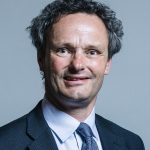
Tag: Peter Aldous

  • Peter Aldous – 2022 Loyal Address Speech

    Peter Aldous – 2022 Loyal Address Speech

    The speech made by Peter Aldous, the Conservative MP for Waveney, in the House of Commons on 10 May 2022.

    I will try my best, Mr Deputy Speaker. It is a pleasure to follow the hon. Member for Newport East (Jessica Morden). I congratulate my hon. Friend the Member for Southend West (Anna Firth) on her maiden speech and the hon. Member for East Dunbartonshire (Amy Callaghan).

    I also pay tribute to my predecessor as MP for Waveney, Bob Blizzard, who sadly passed away at the end of last week. He was a formidable political opponent, he held passionate beliefs and he was a staunch advocate for Waveney. My condolences are with his family and friends at this sad time.

    This Queen’s Speech was delivered against one of the most challenging backdrops in the past century: the war in Europe, following quickly on from the covid-19 pandemic, has exacerbated the challenges that people and businesses were already facing. Soaring energy and food prices, rising interest rates, and slowing economic growth are putting enormous pressure on budgets for families and businesses. The programme for government for the next Session cannot, on its own, address all the challenges that we will face over the next two years, but there must be a clear statement of intent and a decisive direction of travel.

    There is a need to focus on the issues that matter to people on a daily basis, such as the cost of living, the ability to pay one’s bills without spiralling into debt, and the opportunity to have a well-paid and secure job with good prospects of career progression. We do not know what lies ahead in these increasingly uncertain times, so it is important that the Government are flexible. Where there is a need to bring in measures to address a particular pressing need, they must do so without delay.

    I shall briefly highlight four issues, two of which are specifically covered in proposed Bills and two of which are not. First and foremost, on the need to address the cost of living crisis, the Government have brought in some measures to help to support families and businesses, but more targeted assistance is required to enable people to get through the coming year, which many are facing with fear and trepidation with the expectation of inflation at 10% and Ofgem’s increase in the energy cap looming in the autumn.

    In Suffolk, 135,000 people already live in poverty. A survey in the Lowestoft Journal showed that 41% of people are in debt, and Citizens Advice, local councils and local charities are already working in overdrive to assist, advise and support people. Poverty among pensioners needs a particular focus due to prevailing high inflation, with the state pension and defined benefit and defined contribution private pensions all exposed. There may well be a need for review and reform, and I urge the Government not to hold back in introducing such measures.

    Secondly, it is vital that people around the UK have the opportunity to secure a good job with good prospects for career advancement and the opportunity to realise their full potential. The schools Bill and the levelling up and regeneration Bill should help to secure that ambition. For a long time, Suffolk has received a poor education funding settlement and we must use this opportunity to address that inequality.

    There must also be a focus on improving early years and special educational needs education. Although the Skills and Post-16 Education Act 2022, which was passed in the last Session, provides the framework for improving the further education sector, that sector remains poorly funded given the vital role that it plays in preparing people for the workplace, helping to improve the UK’s overall economic performance and eliminating the productivity gap. There may well be a need for fiscal support to encourage businesses to invest in people and skills. Last week, the Learning and Work Institute recommended that smaller businesses should be able to deduct 230% of the cost of accredited training from their tax liability.

    Turning to the long-awaited levelling up and regeneration Bill, I acknowledge the enormous amount of work that the Secretary of State for Levelling Up, Housing and Communities and the Under-Secretary of State for Levelling Up, Housing and Communities, my hon. Friend the Member for Harborough (Neil O’Brien), have carried out in the relatively short period since their appointment in September to lay the groundwork in the White Paper that was published at the beginning of February. I urge them not to forget coastal communities. All around the UK, including in Waveney and Lowestoft, they are in many respects the forgotten powerhouse of the UK economy. They have a vital role to play in powering the nation as we embrace renewable energy; feeding the nation through sustainable and responsible stewardship of our fisheries; promoting global trade through our network of ports, large and small; and providing holidays at home rather than abroad.

    Thirdly, on energy, the Energy Act 2013 was good legislation that played an important role in promoting renewable energy, particularly offshore wind, in which the UK is now a world leader. There is a temptation to leave well alone a regulatory framework that has worked well, but we have new challenges that must be tackled, particularly if we are to meet the 2050 net zero target. It is therefore right to build on the foundations that were laid nine years ago.

    I briefly highlight some of the challenges that we need to address. We must promote and incentivise further investment on the UK continental shelf to add to last year’s North sea transition deal so as to ensure that that unique UK asset continues to play a lead role in powering the nation, generating rewarding and well-paid jobs, and ensuring a smooth transition to a net zero energy supply. A windfall tax would jeopardise that work, but there is a need for the major oil and gas companies to do more, following the good work of many innovative and smaller businesses. With regard to offshore wind, we need a framework that builds on the success of the last decade and that promotes investment in interconnectors and battery storage to absorb surplus wind, as well as facilitating the development of a modern onshore transmission network.

    Nuclear power is very much part of the Government’s energy strategy. The Nuclear Energy (Financing) Act 2022, which was passed in the last Session, provides the framework for Sizewell C to proceed if the development consent order is issued. That enormous national infrastructure project, located close to my constituency, can play a vital role in levelling up and regenerating local economies; providing jobs during construction; and leaving a legacy of skills that bring lasting benefits to places such as Lowestoft and Waveney. EDF is committed to that strategy, but it is vital that the national Government provide the framework to ensure that it delivers those benefits by working with local businesses, colleges, charities and councils.

    Hydrogen is the new kid on the block that presents boundless opportunities. Even at this stage, however, we do not quite know what precise direction it will take or the full scale of what it can deliver. Although the UK hydrogen strategy was published only last August, there is an urgent need for a route map if it is to realise its full potential. Community energy has an important role to play and we must remove the regulatory obstacles that prevent local communities from promoting their own projects.

    An area of energy policy where we have not succeeded in recent years is the promotion of energy saving by retrofitting our homes and business premises. The green deal did not work and the green homes grant scheme was too low in ambition and lacked the capacity to have a significant impact. In the short term, to address the challenge of fuel poverty, we should look at extending the warm home discount, the home upgrade grant and the energy company obligation.

    The Government must also produce a scheme that will deliver meaningful and significant enhancement of our whole building stock. That will probably require fiscal incentives, and local government will have an important role to play in overseeing and ensuring workforce planning, training and delivery. We need to revamp the strategy for the roll out of smart meters, which, I am afraid, has stalled.

    The fourth and final issue that I will raise is the NHS. Although no Bill directly addresses our health service, and one might argue that there is no need for one as we only recently finished debating the Health and Care Act 2022, which has just received Royal Assent, this subject is of critical importance and concern to our constituents. People are worried that they cannot see their doctor; the Government need to work with GPs to address that concern.

    NHS dentistry is the No. 1 item in my inbox. There are dental deserts all around the country, and urgent attention is required if these are not to merge into one area of Sahara proportions. There is a backlog of operations, many of them time-critical, that needs to be significantly and immediately reduced. My right hon. Friend the Secretary of State is very much aware of these challenges, and regardless of whether or not there is specific legislation, they must be given the highest priority and attention.

    In conclusion, there is a great deal to do and there are a great many challenges to confront, the like of which we have not seen during our lifetimes. We can get through this crisis, and the Government do need to have in mind the need to bring together a nation that has been divided first by Brexit and then by covid.

  • Peter Aldous – 2022 Speech on Referring Boris Johnson to the Committee of Privileges

    Peter Aldous – 2022 Speech on Referring Boris Johnson to the Committee of Privileges

    The speech made by Peter Aldous, the Conservative MP for Waveney, in the House of Commons on 21 April 2022.

    I would like to make three brief observations.

    First, Mr Speaker was quite right to decide that there was an arguable case to be examined by the Committee of Privileges. That is the issue in front of us today, not whether the Prime Minister intentionally misled the House. That is for the Committee to decide. While in many respects this situation is completely unprecedented, there have been similar cases which confirm that such a referral is the right course to pursue: the 1947 case of Mr Garry Allighan; the 1977 case involving Reginald Maudling, John Cordle and Albert Roberts; and the 2005 case of Stephen Byers, which I shall comment on further shortly.

    The second point to decide is the timing of the consideration by the Committee of Privileges. The motion states that that should not begin in a substantive way until the inquiries conducted by the Metropolitan Police have been concluded. The amendment, which will not be moved, states that any vote should wait until the police investigations have been completed and Sue Gray’s report has been concluded. In many respects, we could go round and round in circles as to which of those courses is the right one to pursue. Thus, it is welcome that the amendment is not being moved.

    Finally, I return to the case of Mr Stephen Byers and the manner in which that equivalent debate, on 19 October 2005, took place. The then Leader of the House, Geoff Hoon, concluded the debate by stating:

    “The Government support the motion because it is necessary for the House to refer possible breaches of the rules to the Standards and Privileges Committee for investigation. The Government respect the privileges of the House and we will uphold them. They are crucial to the independence of Parliament and the strength of our democracy.”

    He concluded by saying:

    “I urge Members to refrain from treating the matter as a party political question.”—[Official Report, 19 October 2005; Vol. 437, c. 849.]

    The motion was passed without Division.

    I acknowledge that in this instance the stakes are much, much higher and that hon. Members from right across the Chamber quite rightly, as we have heard this morning, hold passionate views on this matter. But that approach, I would suggest, is the right one for us to pursue

  • Peter Aldous – 2021 Speech on NHS Dentistry

    Peter Aldous – 2021 Speech on NHS Dentistry

    The speech made by Peter Aldous, the Conservative MP for Waveney, on 25 May 2021.

    Thank you, Mr Deputy Speaker.

    There has been an underlying problem with NHS dentistry in the Lowestoft and Waveney area for a long time, with dentists retiring, leading to resources and dental capacity being taken away from the area, notwithstanding the need and demand for NHS dentistry. Many, but not all, of the remaining practices have difficulties in recruiting and retaining dentists. The situation has been exacerbated by a lack of funding, with net Government spending on general dental practice reduced by a third over the past decade. In recent months the situation has reached crisis point, due partly to covid but primarily to the closure due to retirement of two NHS dentist practices in Lowestoft and the closure of the mydentist practice at Leiston in the constituency of my right hon. Friend the Member for Suffolk Coastal (Dr Coffey). The latter was due to the difficulty of recruiting dentists to work in the area.

    This is a national crisis. Official figures in March 2020 showed that 26% of new patients could not get access to an NHS dentist. The situation has worsened during covid, with more than 20 million NHS dental appointments lost nationally since the start of the pandemic. As has been reported today, the British Dental Association’s members survey reveals that almost half the respondents intend to stop working in NHS dentistry in the next 12 months, and two thirds estimate that they will not meet the new 60% activity targets they have been set. This is the worst survey that the BDA has ever carried out, and urgent action is required to stop dentists leaving the NHS in their droves.

    The situation is worse in Waveney. Community Dental Services, an employee-led social enterprise, has recently opened a new dental clinic in the old magistrates court in Lowestoft. That investment is greatly welcomed, although CDS highlights the challenges that it is facing in the area. It is concerned about the lack of access to NHS dental services. Lowestoft and Waveney is an area of high need for dental services, yet there is a serious lack of provision, which has been exacerbated by the backlog caused by covid and, as I have mentioned, by the retirement of well-established local general practitioners. The perceived remote location of the Waveney area and the distance from all the existing centres of dental training make recruitment difficult.

    CDS emphasises the need for a focus on prevention, particularly among children. The treatment of children under general anaesthetic for the removal of teeth that cannot be saved is the highest cause of admittance to hospital for general anaesthetic treatment in England and Wales. CDS advises that the reduction in local authority funding to support targeted or universal prevention—I am not attacking local authorities for this—has had a significant impact on the Waveney population due to reduced oral health improvement services. This limits CDS’s ability to reach out to all the people who need its services.

    The impact on young people needs particular focus. In Suffolk, the proportion of children who saw an NHS dentist fell by half due to the pandemic: 60% in 2019 compared with just 31% in 2020. This translates to 43,000 local children missing out on their dental appointments compared with the year before. CDS, which is a paediatric dental specialist, has a high number of referrals from other practices of children with multiple decayed teeth that require complex treatment, quite often under general anaesthetic. The lack of general dental services locally makes safe discharge difficult, if not impossible, thereby creating further pressure on services. This has a devastating impact on children’s life chances, and could well prevent them from achieving the best start in life.

    Covid has made the situation worse. The interruption of routine dental care and the subsequent reduction in patient appointments has created a backlog of patients. The pandemic has also meant the cancellation of and significant interruption to the dental general anaesthetic list at the James Paget Hospital at Gorleston in the constituency of my right hon. Friend the Member for Great Yarmouth (Brandon Lewis), which causes greater problems. The list will recommence on 1 June, and the backlog of patients needing urgent care is substantial, but this increases the pressure on dental practices, which have responsibilities for their patients’ dental care. It should also be pointed out that there has been no consultant orthodontist at the James Paget since mid-2020, resulting in patients having to travel further for care, and for children this disrupts their education.

    I am receiving approximately 10 emails a week from constituents, many of whom are in agony, looking for an NHS dentist. Some will go private, but for many who are on relatively low wages this option is not open to them and is one they cannot afford. One constituent has been quoted £2,400 for a new front tooth and £2,000 for a bridge repair. Others who are in need of urgent attention, as I have mentioned, go to A&E at the James Paget in Gorleston. There, all that the exasperated consultants can do is to prescribe them antibiotics and painkillers. This is completely unacceptable. Another constituent, who had a new denture fitted in 2019, needed it to be adjusted as it made his mouth sore and had a poor bite. He had no option but to use his old dentures, which were worn down and had a tooth missing. He has only just seen a dentist and is now awaiting the new dentures. These are just a few cases that highlight the agonies that many people are going through.

    Andy Yacoub, the chief executive of Healthwatch Suffolk, summarised the situation well. He said:

    “We are living through a dental disaster, with little to no clear sign of when these problems will ease.”

    He also said:

    “This latest review by Healthwatch England strongly supports our own local view that there is huge inequality in the availability of NHS dental care amongst our population…This includes that some people have waited unreasonable lengths of time to get an NHS dentist appointment, while being told private appointments were available within a week.”

    In Suffolk, he said that we are being

    “inundated by feedback on a daily basis from those struggling to access these services. One individual revealed to us”—

    Healthwatch Suffolk—

    “that they required urgent hospital treatment after overdosing on painkillers to combat their symptoms,”

    while another

    “told us they couldn’t find a dentist to treat a tooth which had reached a point where it was decaying.”

    Duncan Baker (North Norfolk) (Con)

    I confess I have a slight self-interest in this, because my father was the NHS dentist in Fakenham for 34 years. The problems in North Norfolk with dentistry are terrible, with long waiting lists and people not being able to be seen. The Healthwatch report from the past day or so corroborates that. It strikes me that the contracts are some of the root causes of that, as is the disparity between the private and public sectors. What can we do to try to get more people to join this profession? I have one example in North Norfolk where, for more than 10 years, no newly recruited dentist has wanted to come and work at the surgery.

    Peter Aldous

    I thank my hon. Friend for that intervention. The situation is very bad in Waveney. It is also bad in other parts of East Anglia, not least in North Norfolk and in the constituency of my hon. Friend the Member for Peterborough (Paul Bristow). It is particularly bad in East Anglia, and one reason for that is that we are perhaps a little away from the centre of things, and it can be difficult to recruit people to work in the area. My hon. Friend is right that one solution is to reform the existing contract, which dates from 2006, and I will come on to that as I look at some short and long-term solutions that need to be instigated immediately.

    In the short term, I urge my hon. Friend and Suffolk colleague the Minister to take the following actions. First, we must reduce units of dental activity targets. The previous target of 20% was appropriate, but the new 45% target is wholly unrealistic. Many practices will be forced substantially to reduce the number of emergency cases that they provide and to replace them with routine check-ups that are less time-consuming, resulting in an even longer backlog of outstanding emergency and urgent care cases.

    Money that is currently clawed back by the NHS if dentists do not deliver UDAs must be reinvested in the Waveney area. Dentists under-delivering does not indicate low local demand, and any clawback should be reinvested into local dental services, not transferred to other areas. That situation is particularly prevalent in East Anglia. In 2019-20, 9.1% of total contract value was clawed back in the region, compared with 4.8% nationally across England.

    I confess that I do not completely understand the opaque world of UDAs, but I know that the system is short-changing my constituents, many of whom are in agony. For children, there could well be lifelong consequences. Some NHS dentistry practices in the Waveney and Norfolk area want to take on more patients, but they are not able to do so as the UDAs are not available. John Plummer & Associates is a privately owned family dental practice with 10 NHS practices in Norfolk and Waveney. As NHS dental practices in the Lowestoft area have closed in recent years, dentists from those practices have joined John Plummer. Naturally, their patients would like to follow them, but because no more UDAs are now available, the dentists have been unable to treat them, as they will not be able to provide adequate treatment for their regular patients. Those UDAs are then lost to the Waveney area forever. So much more NHS dentistry could be provided in the Waveney area if more NHS dentistry was allowed. John Plummer & Associates would open a walk-in emergency NHS dental service, but it is not able to do so as it is not allowed to do any more NHS work.

    The continuing problem with covid is limiting the number of people that dentists can see each day. That can be eased by installing high-capacity ventilators in dental surgeries. That will reduce the period between appointments, during which the rooms are cleaned, but most practices cannot afford that. I recognise that there is quite a bit of devil in the detail, but the Government can directly increase access to NHS dentistry by providing capital funding for this equipment, as the devolved Administrations in Wales and Northern Ireland plan to do.

    In the long term, root-and-branch reforms need to be instigated immediately. There is a need to get more NHS dentists practising in this area, and the Association of Dental Groups has put forward a six-point plan to achieve this. First, the number of training places should be increased. Earlier this month, Healthwatch Norfolk called for a dental school to be set up: based in Norwich, it would be able to serve the Waveney area and, indeed, the constituency of my hon. Friend the Member for North Norfolk (Duncan Baker). As quickly as possible, the Government must instigate a recruitment drive, increasing the number of UK dentistry training places and introducing incentives for dentists to relocate to areas such as Suffolk and Norfolk.

    Secondly, EU-trained dentists should be recognised. Their role is vital, and there must be continued access to NHS dentistry for EU-trained professionals, thereby preventing further shortfalls from arising. Thirdly, overseas qualifications should be recognised. The General Dental Council’s recognition of dental qualifications should be automatically extended to approved dental schools outside the European economic area, ensuring a smooth process for suitably qualified dentists to work in the UK—notably those from countries such as India. That should also include the doubling of places available under the overseas registration examinations.

    Fourthly, the complex and lengthy process of completing the performers list validation by experience examinations—known as the PLVE—for overseas dentists should be speeded up, simplified and harmonised right across the country, with additional measures introduced to ensure that the process takes no longer than eight weeks.

    Fifthly, whole dentistry teams should be allowed to initiate treatments. Allied dental professionals are, at present, not able to open a course of treatment. This means that they cannot raise a claim for payment of work delivered, with many practices unable to fully utilise therapists as a result; allowing whole dentistry teams to initiate treatments would address this problem.

    The Association of Dental Groups’ sixth and final point is that the Government should create a new strategy to promote NHS workforce retention. They must reform the NHS contract, which is the major driver of dentists leaving NHS dentistry. A new contract, focused on the oral health needs of patients and targeting improved access and preventive care, should replace it.

    With regard to the forthcoming health and social care Bill, with the commissioning of dentists set to move to integrated care systems, it is vital that dentists have a voice and are properly represented on ICSs. There is a worry that the possible pooling of budgets across primary care could lead to further cuts to NHS dentistry, and everything must be done to ensure that this does not happen.

    Fluoridation of water can play a key preventive role in oral health, and it is very important that changes to the framework under which fluoridation schemes are carried out are accompanied by the capital funding that is necessary for those schemes to actually be put in place. I anticipate that we will consider this matter in more detail over the next few weeks when we debate the Bill.

    I now come to the topic of new dental contract arrangements. As mentioned, underlying most of the problems of NHS dentistry is the fact that the current contract, which dates from 2006, is inadequate and now completely unfit for purpose. It must be replaced as quickly as possible. The BDA is looking for this to happen by April 2022 at the latest, and the new contract must break with the units of dental activity, ensure that NHS dentistry is available to all those who need it and prioritise preventive care.

    My hon. Friend and Suffolk colleague the Minister is faced with a major task. From her perspective, it is unfortunate that the music has stopped on her watch. In summary, there are three things we need to be doing. I urge her, in the very near future, to provide practices, such as John Plummer & Associates, that will tackle the enormous the backlog of work with the resources to do so. We must end the cycle of retirements leading to funds being removed from the Waveney area, never to return. Secondly, we must tackle the growing scandal of children having to undergo major dental surgery. That requires much work in the short term in hospitals such as James Paget University Hospital, but in the longer term the introduction of major public awareness preventive initiatives is vital. Thirdly, the dysfunctional 2006 contract should be replaced as soon as possible.

  • Peter Aldous – 2021 Speech on Dental Services

    Peter Aldous – 2021 Speech on Dental Services

    The speech made by Peter Aldous, the Conservative MP for Waveney, in the House of Commons on 14 January 2021.

    I congratulate the hon. Member for Putney (Fleur Anderson) on securing the debate.

    Before the pandemic, my engagement with the dental sector led me to form a number of views on how it served our communities. Those who work in dentistry are highly competent and well qualified professionals, but there are problems in recruitment, and it is increasingly difficult to find an NHS dentist. When good and highly respected dentists retire, they are hard to replace. There is a lack of accountability in NHS England and NHS Improvement, and the world of UDAs—units of dental activity—is opaque and difficult to understand.

    One readily reaches the conclusion that in normal times, the system does not work in the best interests of local communities and public health. Covid-19 presents those working in dentistry with enormous challenges. They are placed in a position of significant health risk, there is a dramatic reduction in capacity, and there have been some problems with those working in the sector being recognised as key workers.

    The Government were right to set up a network of urgent dental centres, and in many respects this has worked well, although I have received a lot of complaints about where and how to find them, being kept waiting on the phone for seemingly hours on end, and then difficulties getting an appointment. Not only is there the challenge of getting through the current lockdown, but the shadow of covid will hang over the sector for a very long time. There is an enormous backlog of work, and yes, although some of that may be classed as non-emergency, it is important to bear in mind that it is often a routine visit to the dentist that picks up cancer at an early stage.

    The position has been exacerbated by the Government writing to dentists before Christmas seeking to impose a 45% target of UDAs for January, February and March. The proposal has been described to me by dentists in my constituency as “completely irresponsible”, “disrespectful”, “neglectful”, “unsafe” and “inconsiderate”. It should be dropped. The Government need to work with dentists to come up with, first, a short-term plan to get through the immediate crisis, and then a long-term plan that is easy to understand, provides proper accountability and full national coverage of NHS dentistry, and ensures the recruitment and retention of highly trained professional staff.

  • Peter Aldous – 2020 Speech on the Reopening of Zoos, Aquariums and Wildlife Sanctuaries

    Peter Aldous – 2020 Speech on the Reopening of Zoos, Aquariums and Wildlife Sanctuaries

    Below is the text of the speech made by Peter Aldous, the Conservative MP for Waveney, in the House of Commons on 11 June 2020.

    I start by paying special thanks to my hon. Friend the Member for Romford (Andrew Rosindell), who is such a champion for zoos in chairing the all-party parliamentary group, as he was in his inspirational speech. He set the scene so well and provided the framework within which we are all now talking.

    I want to speak for a few minutes about Africa Alive! in Kessingland, just south of Lowestoft in my constituency, which is run by the Zoological Society of East Anglia, which also has Banham zoo in the constituency of my right hon. Friend the Member for South West Norfolk (Elizabeth Truss). This organisation does great work in so many aspects, as I shall explain.

    The best part of my job—this tremendous job we all have—is that each summer, I spend half a day at Africa Alive! It is a wonderful experience and probably the thing I look forward to most. My hon. Friend the Member for Southend West (Sir David Amess) referred to zoos being controversial. I sense that, in many ways, we have moved on from that; we have moved on from the cages. Zoos used to be very inward-looking, and they are not now. Africa Alive! is outward-looking, and that is what so special about it and why it is a linchpin of the local community and the local economy. I want to highlight five points about it.

    Africa Alive! does great conservation work, looking after and supporting species from that wonderful continent of Africa. I have never been on a safari, and I do not think I ever will, but Africa is there on the doorstep of places like Lowestoft, Beccles and Bungay for people who will never have the opportunity to go and see those animals.

    Africa Alive! also provides employment opportunities, with highly specialist jobs as keepers. For so many people in the area I represent, it is their first rung on the employment ladder—that first job that can lead on to others. So many people I have met say, “I did my first job at Africa Alive!” There is also the education and outreach work. Schools come to it, but it also goes to the schools. The Zoological Society of East Anglia gets out across East Anglia into 1,000 schools.

    It is a tremendous tourism attraction. Tourism is very important on the Suffolk and the Norfolk coast, reaching out into the Norfolk and Suffolk broads. As part of someone’s week in our area, they want things to do, and they go to Africa Alive!, which is one of the biggest tourist attractions in East Anglia.

    I will make one final point about what Africa Alive! does. I got a number of emails over the last week. One of them was from someone I had not heard from or seen for over 40 years and who is now working in Thailand, saying, “Come on! Pull your finger out! We need to save this wonderful treasure.” The email that struck me most was one that said, “Me and my mother have had tremendous mental health anguish. Going to Africa Alive! and walking round that 70-acre wildlife park gives us the comfort, the rest and the assurance that we need to get away from some very difficult challenges for us.”

    The announcement this week was extremely welcome, and it is very good news. I think Africa Alive! would say that it gives it a fighting chance of survival, and that is wonderful. But as my hon. Friend the Member for ​Romford said, more needs to be done. Animals are not like rides—you cannot turn them off, and flexible furloughing is therefore very important. The zoos support fund is welcome, but as we heard from my hon. Friend the Member for Isle of Wight (Bob Seely), there is an issue with the conditions of it. A lot of zoos are charities, and they have requirements for the amount of money they have in the bank, which automatically precludes them from being able to access that fund. We need to look at that again, and I urge the Minister to do that. As I said, the best part of my job is going to Africa Alive! every summer. I want to be able to do that for the next few summers as well.

  • Peter Aldous – 2020 Speech on Local Electricity

    Peter Aldous – 2020 Speech on Local Electricity

    Below is the text of the speech made by Peter Aldous, the Conservative MP for Waveney, in the House of Commons on 10 June 2020.

    I beg to move,

    That leave be given to bring in a Bill to enable electricity generators to become local electricity suppliers; and for connected purposes.

    As the UK emerges from the lockdown, and as we look out across a different landscape, there is a need to rebuild local communities and local economies for the benefit of local people and local businesses and, in doing so, to meet head-on the challenge of climate change. To do that successfully, we need power—electricity in a low-carbon form, to light up and to heat our homes and workplaces and to run our transport networks and our vehicles.

    In recent years, the UK has made great strides in decarbonising our energy system, but we still have a very long way to go, and the way we regulate the supply of electricity means that we are in effect operating with one arm tied behind our backs. We currently have a system that prevents local generators from becoming local suppliers. This very short Bill would help remove that barrier. I thank Power for People, which has carried out most of the background research, campaigning and preparatory work ahead of this Bill.

    Today we face two great challenges: one immediate—the seismic economic shock created by the covid-19 pandemic —and the other looming large, which is the devastating impact of climate change. The Bill addresses both challenges. As a nation, we have made significant progress in meeting the targets under the Climate Change Act 2008, but the Committee on Climate Change is clear that ambitious new policy and regulation is needed if we are to continue to meet those targets in the future. At present, renewable electricity generation accounts for only 11% of all UK energy use, and our transport and heating networks need to be electrified to decarbonise our economy. To ensure that the dramatic rise in electricity demand that this will create is met by renewable generation, we must put the right policy and regulatory frameworks in place.

    There is tremendous potential for a significant proportion of renewable energy generation to come from new community projects right across the country, whether solar, hydro on rivers and estuaries, batteries in former factories, or wind in the uplands. Such schemes can bring many benefits to many local economies—opportunities that are desperately needed, given the devastating economic impact of the covid-19 pandemic. A Government report published in 2014 found that the community energy sector could deliver at least 3,000 MW of generating capacity, yet at present it is producing only a tenth of that, equating to less than 0.5% of our total generating capacity.

    There is a great opportunity for renewable energy to be the lead player in the economic recovery, but it is being blocked by the current energy market and licensing rules that lead to huge costs and burdensome bureaucracy being imposed on new supply entrants, with the result that some great and highly innovative schemes never see the light of day. A report by the Institute for Public Policy Research shows that the financial, technical and ​operational challenges involved in setting up a licensed energy supply company are such that the initial costs could exceed £1 million. It is a bit like someone setting up a micro-brewery, planning to deliver their beers to local pubs, off-licences and homes, and then being told that they have to pay £1 million in road tax for their delivery van.

    To solve the problem, the costs and complexity of being a licensed electricity supplier must be proportionate to the supply of the supply operation. If they are, it becomes financially viable for renewable generators to supply electricity, and suppliers will spring up all over the country. This is what happens in Germany, where there are 1,000 such supply companies, compared with 60 in the UK. Most of them are local suppliers, which are community owned and supply renewable energy. Germany’s big four control only 40% of the market. We need to empower local community groups and businesses to sell locally generated clean energy directly to local people and local companies.

    The Bill would do that by establishing a right to local supply. That would give the energy market regulator, Ofgem, the duty to establish new market rules that ensure that the set-up and running costs of selling locally generated energy directly to local consumers are proportionate to the scale of the supply business. The Bill is a first attempt to lay out a mechanism that will fix the UK’s local supply problem. It is accepted that there is scope for improvement and refinement, and new ideas are welcome for how that can be done.

    Clause 1 states the purpose of the Bill: to enable the local supply of electricity. Clause 2 states that it is generators of electricity that can become local suppliers. This is intended to achieve the aim of smaller-scale renewable generators being able to supply electricity to a local area. There is a case for amending the clause to allow any organisation to become a local licensed supplier; the logic for that is that currently licensed suppliers do not also need to be generators.

    Clause 3 goes to the heart of the Bill and gives Ofgem the task of setting up the local supplier licence process; it also requires that the process ensures that local suppliers face set-up costs and complexity proportionate to the scale of their operations. The exact details of that process are not laid out in the Bill, as it is believed that Ofgem should carry out this task. Subsection (1) requires Ofgem to set up the local supply licence mechanism to ensure that the costs and complexity of becoming a local supplier are proportionate to the size of the operation. Subsection (3) allows for the local supplier operation to be based on a radius area, although that could arguably be improved, if amended, to be a defined area.

    The result of the Bill would be that building new community-scale renewable generation infrastructure and selling the electricity direct to local people through a locally licensed energy supply company would become financially viable. The benefits would be significant. These new local energy businesses, creating local jobs and being paid by local customers, would keep significant additional value in their local economies, thereby making them stronger. There would also be the knock-on benefit of greater public support for the transition to sustainable energy. There would be improved air quality. The nation’s energy supply would be more secure and less dependent on imports. Being able to sell to local customers would reduce the need for renewable subsidies. Renewable generators would receive significantly more than their current 4p per kilowatt-hour and would be paid by their customers, not the state.

    It may sound as though I am painting a picture of utopia, but this is nothing new. It has been done before. Local amenities across the UK, such as parks, swimming pool baths and libraries, were built from the revenues of the municipal energy companies of the 19th and early 20th centuries. In this respect, we need to turn back the clock.

    One hundred and fifty-one MPs from right across the Chamber have declared their support for the Bill, from all parties. This is an advance on the 116 Members who did so when a presentation Bill was submitted in the last Session. Power for People, which is co-ordinating the public campaign for the Bill, have also mobilised the grassroots movement and brought together a broad coalition of support, including from 50 national non-governmental organisations and 43 local councils.

    In conclusion, the Bill would enable local people to come up with local solutions to meet the challenge of climate change. In doing so, they would be creating sustainable jobs and making their local economies more resilient. I am very much aware that, very often, Bills such as this do not advance very far in this and the other place, but let us work together to turn the compelling objectives of this Bill into reality. It is now time to deliver power for people.

  • Peter Aldous – 2020 Speech on the NHS Funding Bill

    Below is the text of the speech made by Peter Aldous, the Conservative MP for Waveney, in the House of Commons on 27 January 2020.

    It is an honour to follow my hon. Friend the Member for Ipswich (Tom Hunt), as Ipswich is both my birthplace and my football club.

    The main provision of the Bill is to enshrine in law the Government’s commitment to increase NHS spending by at least £34 billion by 2023-24. Some may say that this is just gesture politics, but it provides the NHS with the certainty that it needs to make long-term plans and strategic investment in front-line services. This contrasts with operating on a hand-to-mouth short-term basis, as it has often done in the past.

    If this approach is successful, then in future, as suggested by the King’s Fund, the Government should look at pursuing this approach with other items of health spending, such as capital investment, public health and staff and education training. It is one of these latter items that I wish to highlight—investment in NHS buildings and infrastructure, which is so important in providing a high-quality environment for patients and health professionals.

    As well as making commitments to revenue funding, the Government have undertaken to invest in hospital buildings—six new hospitals now and seedcorn funding to work up the plans for 38 more such developments. One of the latter is the James Paget Hospital on the Lowestoft Road in Gorleston in the constituency of my right hon. Friend the Member for Great Yarmouth (Brandon Lewis). The James Paget serves his and my constituencies as well as part of that of my right hon. Friend the Member for Suffolk Coastal (Dr Coffey).

    The James Paget is at the heart of our local health economy, and thus this investment is extremely welcome. I understand that the seedcorn funding is due to be paid over to the hospital very shortly, and that it is already mapping out its plans for the future. It has moved quickly since the announcement of the seedcorn funding was made in the autumn. Its board, liaising with the Great Yarmouth and Waveney clinical commissioning group and the Norfolk and Waveney sustainability and transformation plans, is working up its development plans. Although at an early stage, these include developing a health and social care campus, encompassing acute community primary care, mental health and care facilities, it also wishes to expand its education training, investing in its health and care staff, and also to improve its digital services.​

    As the plans for the James Paget are worked up, it is important to have in mind three requirements. First, it is important that the needs of the people who use the hospital are taken fully into account. Ours is an area with an ageing population that places pressure on local health services. In Lowestoft and Yarmouth, there are deep pockets of deprivation with serious inequalities, which must be addressed. We are a popular tourism area, which puts additional demands on the hospital and its services.

    Once the James Paget has fully worked up its provisional plans, a wide-ranging and full public consultation should take place so that the views of local people can be fully considered.

    Secondly, while the board of the James Paget is taking the lead in working up the redevelopment plans, it is important that all those involved in health and social care services in the area have their say as we, quite rightly, move towards an integrated health and social care system in which all those involved collaborate and work together. The James Paget recognises this, and doctors, mental health and social care professionals, the CCG, the mental health trust and the county and district councils must be fully involved, as well as the voluntary sector and patient representative groups. Thankfully, the silo mentality of the past is gradually being knocked down.

    Thirdly, attracting health and medical staff to the Waveney and Great Yarmouth area continues to be a challenge. The redevelopment of the James Paget provides an exciting opportunity to address that by providing centres of excellence in specialisms for which there is a need in the area. The importance of working with the University of East Anglia and the University of Suffolk cannot be underestimated. The former has a medical and health science faculty that includes the Norwich medical school, which provides clinical rotations at both the Norfolk and Norwich and the James Paget hospitals. There is also a science faculty that includes biological science and pharmacy courses. The University of Suffolk, which is more recently established, includes a school of health sciences, which has courses in adult nursing, mental health nursing and radiography, and postgraduate courses in public health nursing and advanced clinical practice. It would be great if in future more of those courses could be delivered on the Lowestoft and Great Yarmouth campuses of East Coast College.

    The seedcorn funding for the James Paget is extremely welcome. We now need to ensure that the hospital’s redevelopment takes place in a timely manner and that bespoke, high-quality facilities are provided for local people that meet their needs. By doing that, we can ensure that we have a resilient district general hospital serving the Waveney and Great Yarmouth area for many years to come.

  • Peter Aldous – 2020 Speech on the Lowestoft Tidal Flood Barrier

    Below is the text of the speech made by Peter Aldous, the Conservative MP for Waveney, in the House of Commons on 20 January 2020.

    The purpose of this Adjournment debate is to highlight the vital importance of the Lowestoft tidal flood barrier, which will provide much needed protection for many homes and businesses in Lowestoft. Moreover, it will act as a catalyst for inward investment in the offshore wind sector, the post-Brexit fishing industry and the town centre, where the high street is under considerable pressure at present and businesses need reassurance that their investments will not be at risk from flooding.

    East Suffolk Council has prepared a flood risk management project, which includes the barrier in the outer harbour. At present, the project is only partially funded and while work will be starting this year, the outstanding money needs to be secured so that the project can be completed in its entirety and it delivers its full benefits to the UK’s most easterly town, which has been exposed to the worst excesses of the North sea for far too long.

    It is appropriate that this debate is taking place at the beginning of the Environment Agency’s Flood Action Week. At the outset, I shall provide the national context. It is good news that in the Conservative manifesto at the December election and in the subsequent Queen’s Speech, which we have just concluded debating, the Government have committed an additional £40 billion to flood defences.

    The National Infrastructure Commission has highlighted that this investment is badly needed. It points out that over 5 million homes in Britain are at risk of flooding and coastal erosion; management of floods in the past has been short term and reactive, rather than preventive; and while the six-year capital programme to 2020-21 has provided certainty on funding for the issue of floods, there remains no clear long-term objective for flood resilience and defence. It makes a variety of recommendations for how the situation can be improved. First, it proposes a national standard so that by 2050 we can be sure that communities are resilient to flooding for 99.5% of the time whenever feasible.

    Ian Paisley (North Antrim) (DUP)

    As the hon. Member knows, he is my brother’s Member of Parliament, and this is an issue that affects him. I understand that one of the key questions is whether there are predictions of tidal surge in the area. If there are, how devastating an impact could they have on his constituency, and indeed my brother’s home?

    Peter Aldous

    I am grateful to the hon. Member for raising that issue; it is one I will come on to. The tidal surge in 2013 gave a clear indication of what could happen in a worst-case scenario and we need to put in place measures to avoid that devastation to people’s lives.

    Jim Shannon (Strangford) (DUP)

    I congratulate the hon. Member on bringing this matter to the House. The Ards peninsula in my constituency has 96 coastal erosion points, so this is happening in my constituency as well, and there is much concern about the erosion, the loss of land, and the impact on homes and livelihoods. Does he ​agree that the Government must find the money to address these concerns as they are quickly escalating to crisis point—that crisis point being the point of no return?

    Peter Aldous

    As I will highlight, we must not forget that some coastal areas face devastating flood risk problems too. They might not emerge quite as often as fluvial floods, but their impact on communities is very real. I will highlight the 1953 flood, which is still remembered vividly right along the East Anglian coast.

    The second point the National Infrastructure Commission raised was that the existing catchment flood management plans and shoreline management plans should be updated to take into account the commission’s new standards and should set out long-term plans for flood risk management. Thirdly, it argued that currently—at the beginning of 2020—the Government should be putting in place a rolling six-year funding programme in line with the funding profile the commission set out. This would enable the efficient delivery of projects addressing the risks from all sources of flooding. It is vital that when these improvements to the country’s flood defences are made—this comes back to the point the hon. Member for Strangford (Jim Shannon) raised—coastal communities are not overlooked. Storm surges, such as those in 1953 along the East Anglian coast and more recently in 2013, have a terrible impact from which it can take communities a long time to recover—some never do.

    Dr Dan Poulter (Central Suffolk and North Ipswich) (Con)

    I commend, as always, my hon. Friend’s tremendous advocacy for his constituents, and I am delighted that that was so well reflected in the election result in his constituency. Does he agree that the wider economic damage done by the tidal surges in East Anglia can be felt for many years and have an economic impact on businesses in his constituency, many of which have employees who live in central Suffolk and elsewhere? It is particularly important that the Government take note of this as they seek to support economic growth in and protect the economy of the east of England and Lowestoft.

    Peter Aldous

    My hon. Friend is right that these storms can have a devastating impact on homeowners and businesses, but that the supply chains of those businesses extend far outside Lowestoft into places such as his constituency.

    The 1953 floods caused devastation and loss of life all the way down the east coast—not least in Lowestoft, where the Beach Village, known locally as the Grit, ultimately had to be pulled down and made way for industrial development. Hundreds of families lost not only their homes, but their families’ fishing heritage. The 2013 storm surge, which I shall describe in more detail shortly, thankfully did not have the same impact, primarily because we have better defences than we did 60 years ago, and because we were warned. However, there is a sense in Lowestoft that we “escaped by the skin of our teeth”, and that next time we will not be so lucky.​

    The needs of coastal communities have been highlighted by the Committee on Climate Change. It has pointed out that coastal communities, infrastructure and landscapes in England are already under considerable pressure from flooding and erosion; that 520,000 properties in England are located in areas that are at risk of damage from coastal flooding; that damages as a result of flooding and erosion amount to an average of more than £260 million per year; and that coastal management around the country is covered by patchwork legislation. In short, we need to do better.

    On 5 December 2013, a storm surge caused havoc down the east coast. Lowestoft was one of the worst-affected communities, as I highlighted in another Adjournment debate in the Chamber later that month. In the Lowestoft and Oulton Broad area, 158 residential and 233 commercial properties were flooded, including 90 residential and 143 commercial properties in the low-lying central area of Lowestoft. In addition, tidal flooding resulted in the closure of key transportation links, including Lowestoft railway station, the A47 through Lowestoft and the A12 to the south. Lowestoft was essentially cut off.

    The impact on many people and their properties was dramatic. In Levington Court, which provides housing and care for vulnerable older people, 19 flats on the ground floor were evacuated. Residents’ possessions were lost, and they did not return to their homes until several months later. In the nearby Fyffe Centre, which provides accommodation for the homeless, 27 people had to leave. Again, it took many months to refurbish and repair the property.

    In adjoining residential areas, including St John’s Road and Marine Parade, many properties were hard hit, including homes in the rental sector. Some people lost all their possessions, which in many cases were not insured. The community rallied round superbly to support them, but full compensation—and I do not mean just financial compensation—can never be provided for the loss of belongings and possessions that can mean so much personally.

    Businesses were badly hit, including the Ling’s car showroom, East Coast Cinema—Britain’s most easterly cinema—and Buyaparcel. Wetherspoons’ Joseph Conrad pub in Station Square was badly damaged, and traders in Bevan Street East, close to the town centre, were dealt particularly savage blows. The doctor’s surgery in Marine Parade had to move, and has never returned.

    The challenges of rising sea levels and climate change mean that such events will take place more frequently. Sea levels along the Suffolk coast have been rising by 2.4 mm per annum since the 1950s. In Lowestoft, research carried out by Halcrow and BAM Nuttall concluded that a 1953-type flood, which was previously considered to be a one-in-1,000-years event, would now take place every 20 years. There is thus a need to move quickly, and to put proper and full flood defences in place as soon as possible. As climate change continues to drive an increase in severe weather events, significant investment in Lowestoft’s infrastructure is required to provide resilience, to facilitate regeneration plans, and to encourage businesses both to grow and to move into the area.

    If—although I should say “when”—we get another storm surge, similar to those of 1953 and 2013, the impact on the town could be profound and far-reaching. Not only could many homes and businesses be badly damaged, but vital infrastructure could, in effect, be ​taken out. That could include 38 electricity substations, three water-pumping stations, one gas facility, and multiple telecommunications and IT assets.

    Transport infrastructure could also be impacted, including Lowestoft railway station again. Up to a mile and a quarter of rail track and signals would be submerged, the bascule bridge across the port could be seriously damaged, and two and a half miles of A roads and 30 miles of minor roads could be affected. In addition, vital community assets would be impacted, including three doctors surgeries, two Government buildings, three community centres and facilities, and up to eight schools and colleges. The results would be devastating and people would quite rightly be very angry, pointing a finger at the council, at the Government and at me, saying, “You had advance warning in 2013, why have you not done anything?”

    Actually, since 2013, the council has been proactive. It has acquired temporary barriers that have been deployed on two occasions, when thankfully they were not really tested. It has also been hard at work on preparing a scheme that provides Lowestoft, its residents and businesses with the protection and peace of mind they are entitled to expect. The scheme is oven ready and ready to go, but funding has not yet been obtained for its final phase, the provision of the tidal flood barrier. That gap now needs to be filled.

    East Suffolk Council, along with Suffolk County Council, Associated British Ports, the Environment Agency and the New Anglia local enterprise partnership have developed a comprehensive flood protection scheme that brings together tidal, fluvial and pluvial flood risks under one umbrella. The project includes the tidal barrier in the outer harbour to the east of the bascule bridge, with tidal walls to the north and south of the barrier. It also includes separate but equally important work to protect a number of properties that have experienced significant flooding, especially in periods of heavy rainfall, along Kirkley stream, in Aldwyck Way and on Long Road. The project will protect vulnerable parts of the town and has strong political and community support.

    The Port of Lowestoft is owned by Associated British Ports and this includes the outer harbour. The port is undergoing a period of expansion, primarily as a result of the large number of wind farms either in operation, being constructed or being planned off the East Anglian coast. There is also the exciting prospect, post-Brexit, of a revival of the fishing industry. Lowestoft used to be the fishing capital of the southern North sea—a crown that I hope it will acquire again. The port is strategically well placed to serve the wind farms, both for project management during their construction and for their subsequent operations and maintenance. The port is the main base for the Greater Gabbard offshore wind farm and the East Anglia Array. Last year, Scottish Power opened its new £25 million operations and maintenance base in the Hamilton dock.

    The original programme for the construction of the tidal barrier envisaged the port closing for up to six months. It has subsequently become clear that this is not practical, as it would make the port unattractive to current and future wind energy companies and business would be lost that we would never be able to get back. The programme for building the barrier has thus been amended to enable it to be constructed over three short ​windows each winter, without the necessity of closing the port for any significant period. These plans are now fully developed, but the cost of amending the design and elongating the programme has resulted in the cost of the project rising from approximately £30 million to approximately £70 million. This is the funding gap that now needs to be filled.

    There are now three phases to the project. Work on the first two phases—the fluvial and pluvial works, and the tidal walls—will start this year, and the final phase of the flood barrier will be carried out once funding is in place. The project has three particular advantages. First, it is highly innovative. It involves a tidal barrier that will be installed while still accommodating a 24/7 operational port, and it will not impact on the port’s activities. Its delivery will still enable the port to attract new business that will help revitalise the town by bringing new jobs to the area.

    Secondly, the need to be low carbon is ingrained in the project’s DNA. East Suffolk Council has made a commitment to carbon neutrality in its procurement procedures and, as such, its existing and future procurement arrangements will reduce the carbon footprint of all new council development. Moreover, the scheme will help to promote the offshore wind industry, which is so important in reducing the nation’s carbon footprint.

    Finally, there will be a high level of local and UK content. Local businesses have been involved at the design stage, and their participation will be strongly encouraged and promoted during construction. Moreover, once completed, those businesses will be able to grow as part of the offshore renewables sector.

    The construction of the Lowestoft flood barrier will be a catalyst for the regeneration of the town, not only for the offshore energy sector but in fishing through the REAF—Renaissance of East Anglian Fisheries—budget. This is not just a barrier in name, but in its impact: it removes barriers to growth. The overall benefits of the barrier to the town are significant, as the protection provided will remove the risk of flooding, which will allow much-needed regeneration and redevelopment projects to proceed. In the town centre, it will allow new commercial and residential development, which is currently held back due to the risk of flooding.

    A study carried out by Mott MacDonald showed that 71% of the current economic value in the town is at risk due to flooding—a significant barrier to jobs and growth creation. The flood defence project reduces the risk to 3% over five years. The Mott MacDonald study also shows that the scheme will support the generation of 3,500 additional direct jobs locally and 8,000 indirect and induced jobs nationally. It will generate an additional £195 million per annum of gross value added. In summary, the barrier will remove barriers to the regeneration of growth in the UK’s most easterly town.

    While Lowestoft and the surrounding area are benefiting from the emergence of the offshore wind sector, the opportunity to raise funds from the many developments taking place off the East Anglian coast to improve infrastructure is currently constrained. The coastal communities fund, which is financed by money received by the Treasury from the Crown Estate out of royalties received from the granting of licences for the wind farms, runs until 2021. In reviewing the fund, I ask the Government to consider targeting projects directly related ​to the offshore wind industry, such as the Lowestoft flood barrier, that will have a significant economic impact.

    Madam Deputy Speaker, you will be pleased to hear that I have nearly finished.

    The Lowestoft tidal flood barrier provides the town’s residents and businesses with the protection and peace of mind that they are entitled to expect. It is also the key to unlocking many great opportunities for the town. I have sought to highlight some of them, and I ask the Minister to set out the pathway that East Suffolk Council and I should pursue to ensure the project secures full funding as soon as practically possible and that we build the Lowestoft tidal flood barrier without delay.

  • Peter Aldous – 2010 Maiden Speech in the House of Commons

    Below is the text of the maiden speech made by Peter Aldous in the House of Commons on 27th May 2010.

    Thank you, Mr Deputy Speaker, for giving me this opportunity to make my maiden speech. I will start by paying tribute to the hon. Member for Swansea West (Geraint Davies) for his passionate, detailed and knowledgeable speech on climate change. Indeed, it has been marvellous to listen today to some great speeches. We heard the speech of the new hon. Member for North Antrim (Ian Paisley), whose brother is a minister in my constituency, Waveney in Suffolk. We then heard the speech of the new hon. Member for Ealing Central and Acton (Angie Bray), who listed some films that had been made in the famous Ealing Studios. She actually missed out the most famous, “Kind Hearts and Coronets”, where the star had a particular way of getting into the other place. I think that constitutional reform will put an end to that.

    I chose this debate to make my maiden speech because energy and offshore renewable energy is vital to the future of my constituency-Lowestoft and the surrounding area, which have suffered from industrial decline for the best part of 30 years. I pay tribute to my predecessor, Mr Bob Blizzard, for the work that he has done over the past 13 years. He has been a passionate advocate for Waveney and a hard-working and diligent MP. I thank him for all the work that he has done.

    Waveney is the most easterly constituency in the country. Perhaps at times, we Suffolk people hide our light under a bushel and do not make the most of the virtues that we have. The constituency’s make-up is diverse. We have the coastal town of Lowestoft, famous for its fish, its maritime history, its decent, honourable people and its clean beaches. There is the fishing village of Kessingland, and the market towns of Bungay and Beccles, and wide open rural expanses in between. The people up there do at times feel that they have been forgotten down here. It is as if we were at the end of a line.

    We have been crying out for better roads and railways for what seems like many, many years. I will continue to make that cry, as other Waveney politicians have done. In November 1959, Jim Prior, now in another place, described the road and communications system in East Anglia as the Cinderella of the country. It seems as if we have not got very much further in the past 50-odd years.

    We have industries that have declined. The fishing industry is no longer what it was; shipbuilding has gone; and the canning factory has gone. That is what we need to address. I am not going to moan; offshore renewables present us with a great opportunity to bring Waveney into the 21st century. It was an opportunity that Bob Blizzard recognised, and I will be taking the baton from him to make sure that we deliver on that goal.

    We need a new and radical energy policy. If we do not have it, the lights will go out. We need to be in control of our own destiny. We need energy security. We owe it to future generations to take a major step towards a low-carbon economy. We need a mixture of energy sources-green energy sources. To me, nuclear has a vital role to play; so, too, does clean coal, and micro-energy is also of great importance, but it is offshore renewables on which I want to focus. We have to get 15% of our energy supply from renewables by 2020. We have a lot of work to do, being at just over 5% now. There are great opportunities for green jobs; I see that it is estimated that there will be 1.2 million by 2015. If we do not do the work, we will fall a long way short.

    Lowestoft has a great opportunity, and great advantages in setting about giving us those green jobs and taking us forward. It has a great location, close to where the offshore turbines will be-the East Anglia Array and the Greater Gabbard. We have a skills base, built up over many years, in fishing, in shipbuilding, and in the North sea oil and gas industry. Those skills are transferrable, and we can make best use of them in the renewables sector.

    We have to improve our training and education. We have a further education college that is delivering skills, and there is the opportunity for University Campus Suffolk to provide higher education with regard to those skills. We also need to reinvigorate the apprenticeship system, which, in Waveney and Lowestoft, has been so important in our past. There are measures in the Queen’s Speech that will help to deliver that.

    I am here to represent Waveney, but I must not be parochial. To deliver green energy, and get the renewables that we need, I have to think outside my constituency, and think about the surrounding constituencies. In East Anglia, we have great opportunities. There is a deep-sea port in Yarmouth; that will help us to bring opportunities there. There is land elsewhere in other constituencies, too. I see that my hon. Friend the Member for Great Yarmouth (Brandon Lewis) is not here at the moment; in the past, Lowestoft and Yarmouth have spent a lot of time fighting each other. We fought on opposite sides in the civil war, and we had the herring wars, but we are united now in seeking to deliver the renewable energy opportunities.

    The energy Bill will be a foundation stone; we have to build on that for the benefit of Britain, East Anglia and-to go back to being parochial for a minute-Waveney. Looking at it from Britain’s point of view, we have the opportunity to lead the world in a transition to a low-carbon economy. We owe it to future generations to grasp that opportunity.