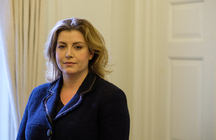
Tag: Penny Mordaunt

  • Penny Mordaunt – 2019 Speech on Sexual Health Rights

    Below is the text of the speech made by Penny Mordaunt, the Secretary of State for International Development, at Canada House in London on 8 April 2019.

    Thank you everyone for being here and thank you to Canada for hosting us.

    A lot of people have thanked me for coming along today because they know the turmoil that Parliament is in, all the stresses and strains that are going on and it is difficult times that is for sure. And quite a lot of people say to me how do you keep going, why have you stuck with it, why have you stayed there. I say something like it is my duty, the country needs us to find a way through, we need to hold Remainers and Brexiteers together. But the real reason is that I want to stay in post to attend Women Deliver.

    It is fantastic today to be able to celebrate our partnership on gender equality, announced by our Prime Ministers in 2017.

    It is wonderful to be amongst so many amazing women who it is my privilege to know a few of you and the amazing work you do. And also some amazing men as well. Dom McVey, a CDC supported entrepreneur who has done fantastic work on women’s economic empowerment and now is launching some new initiatives to help end period poverty worldwide. Thank you to all the fellas who are also doing their bit too.

    And there is a lot to celebrate. In the UK the female employment rate is at a record high and the gender pay gap is at a record low. We’ve introduced new laws to protect women from domestic abuse, FGM, stalking, and forced marriage.

    My department, the Government Equalities Office, this month moved into the Cabinet Office, the hub and the heart of Whitehall to really ensure that we are delivering. And the only female mouser the Cabinet Office cat, has received a promotion too.

    Meanwhile, in Canada you have created a Department for Women and Gender Equality. You have made gender budgeting a mandatory part of the federal budget-making process, and delivering your strategy to prevent gender-based violence, and have recently passed into law protections for pay equality, based on the UK’s gender pay gap reporting, I am delighted at that.

    But all too often, in too much of the world, women’s rights are actually being rolled back. Britain and Canada has shown real leadership together on this issue and that leadership is needed now more than ever.

    Millions of girls and women are living in poverty, denied an education, have inadequate healthcare, are routinely assaulted, unable to live full and happy lives. And no country has yet achieved gender equality.

    The Sustainable Development Goals are a vital way to drive and measure change. This year, the UK will be reporting on our progress towards implementing them, as part of our Voluntary National Review.

    Global Goal 5, on gender equality, is critical in and of itself, but without it we will never be able to deliver on the other goals. Everyone, whatever their gender, has a stake in gender equality.

    Domestically and overseas, the UK is championing efforts to better understand the situation of the poorest and most marginalised women. Just last month, I announced vital new work to end period poverty and shame in the UK and overseas. I also announced our upcoming strategy to ensure that every woman in the UK has freedom, choice, capacity, resilience, support, and protection to do whatever she wants to do.

    Freedom and choice are guiding principles for all our gender equality work. There are people around the world who want to control women, who want to restrict their choices and deny them their rights.

    That’s why it is so important that we use platforms like Women Deliver continually to renew our commitment to women’s rights and specifically to comprehensive sexual and reproductive rights for all women.

    Leadership means not shying away from the issues of access to safe abortion, when the evidence shows us that these services save women’s lives.

    Comprehensive Sexual Reproductive Health Rights (SRHR) is an area where the UK and Canada are continuing to deepen our partnership as likeminded leaders in this field.

    In January this year, we co-hosted a multi sector Safe Abortion dialogue here in London to drive progress and momentum in this absolutely critical area.

    And at the Commission on the Status of Women last month we held a strong line together, resisting the “pushback” as the Secretary General called it.

    We are united in our efforts to work with the most complex and challenging issues that threaten women’s health and lives when others are shying away from them and I thank Canada for their leadership in this area.

    Everyone should have control over their own bodies and their own futures. That means every girl and every woman having access to the information they need, the freedom to choose what’s right for them, and the services and support they need to make their own decisions.

    I am proud that thanks to UK aid, millions of women in the world’s poorest countries are able access the desperately-needed sexual and reproductive health services they need and want to use. The UK has been a world leader in this area and will proudly continue to be one.

    My Department is also supporting the deepening of civil society partnerships through our UK aid Connect programme.

    A new £42 million programme looking at SRHR will support two consortia of NGO partners on this theme, and I am pleased to announce that these will be led by Marie Stopes International and the International Planned Parenthood Federation.

    This programme will drive innovation and learning by bringing diverse partners together to work on complex and neglected issues such as increasing access to safe abortion and improving the provision of SRHR in crisis settings.

    Some of the most marginalised women and girls in the world are those living in conflict and crisis areas. Together we are pushing for a humanitarian system that responds to women and girls’ specific needs, but also sees them as active agents of change.

    We worked closely with Canada to develop the landmark G7 Whistler Declaration on Gender Equality and the Empowerment of Women and Girls in Humanitarian Action.

    We are now teaming up to implement these commitments, including through the Call to Action on Protection from Gender Based Violence in Emergencies.

    Successful societies are those where women have control over their own bodies, are places where every mother can enjoy a wanted and healthy pregnancy, where every child can live beyond their fifth birthday, where no woman or girl is forced to marry before she is ready.

    Together with our partners, including Canada, we are supporting the UNICEF and UNFPA global programme, working to end child marriage, reaching millions of adolescent girls across 12 countries, and have co-sponsored every UN resolution on ending child marriage.

    We will continue to stand shoulder to shoulder with Canada on the international stage to realise the rights of all the world’s women and girls.

    This was demonstrated recently at a joint side event at the Commission on the Status of Women on LGBT rights. I look forwards to deepening our collaboration through Women Deliver and beyond.

    We must empower women to make their own decisions. We must give women the freedom to choose what is right for them.

    We must invest in them so that they can complete their education and fulfil their full potential.

    And we should recognise gender equality as one of the great human rights issues of our time.

    Thank you.

  • Penny Mordaunt – 2019 Statement on Ebola

    Below is the text of the statement made by Penny Mordaunt, the Secretary of State for International Development, in the House of Commons on 4 April 2019.

    The number of cases of Ebola in the outbreak in the Democratic Republic of Congo (DRC) has recently passed 1000. Given this, it is both proper and timely to update the House on the steps which the UK Government are taking to continue to support the response in DRC and to ensure robust and effective preparedness in neighbouring countries.

    Since I last updated the House on 14 February, there has been an increase in the number of confirmed and probable cases of the Ebola Virus Disease (EVD) in eastern DRC. As of 31 March 2019, 1,089 Ebola cases have been recorded (1,023 confirmed and 66 probable) and 679 people have died. Twenty-one health zones have been affected and 12 are currently reporting active new cases.

    Despite the success of the response in curbing the disease in a number of health zones, the outbreak is still not under control. The last few weeks have seen a substantial increase in the number of cases reported, and the security context remains extremely challenging. In late February, two Médecins Sans Frontières Ebola treatment centres were attacked in Butembo and Katwa. The UK condemns these attacks in the strongest of terms; health workers fighting this disease should never be the target of violence and nor should patients. However, I am pleased to note that the affected treatment centres have now re-opened, run for the moment by the Government of DRC’s Ministry of Health in collaboration with the World Health Organisation (WHO) and the United Nations Children’s Fund (UNICEF), both of whom the UK is supporting.

    The attacks underline the difficulty of responding to this outbreak in an area of ongoing conflict, and the vital importance of strengthening community engagement to break the chain of transmission. Despite the challenges faced there has not been a rapid rise in cases as was seen during the West Africa outbreak in 2014-16.

    With UK support and technical advice, the response is now shifting to become more locally-owned, including through the hiring and training of more local staff, which will have the additional benefit of building longer-term health capacity and resilience. The response communications strategy has been revised to ensure that messages come primarily from local, influential leaders and figureheads.​

    The UK remains one of the major supporters of the response and DFID has recently released new funds to the third strategic response plan for this outbreak. Some of this new funding has been used to target specific areas of the response that need strengthening, particularly around infection prevention and control, and water, sanitation and hygiene. The vaccination campaign remains a key element of the response, with over 93 thousand people vaccinated in DRC so far. Once again, at the request of the Government of DRC who are leading the response I am not announcing specific funding figures to avoid putting front-line responders at further risk of attack.

    As mentioned in my statement to the House on 26 March regarding Cyclone Idai, I recently spoke with both Dr Tedros Adhanom Ghebreyesus, Director-General of the WHO, and Sir Mark Lowcock, Head of the United Nations Office for the Co-ordination of Humanitarian Affairs (OCHA), to underline UK support and urge further measures on the part of the UN system in tackling the outbreak. We welcome WHO and OCHA strengthening their leadership in-country to support the DRC Government in delivering an effective response.

    There remains a significant risk of transmission to neighbouring countries and measures are being taken to prepare accordingly. The UK is leading donor efforts to support regional preparedness. In Uganda we have supported the vaccination of 4,420 front-line health workers, with a further 1,000 planned over the next month. We have also helped establish a screening facility at the border with DRC. In Rwanda we have strengthened surveillance activities at borders, carried out infection prevention and control training, and supported the roll out of vaccinations for at-risk health workers. We have also supported similar activities including in South Sudan, and have recently deployed staff to strengthen efforts in Burundi.

    The risk of Ebola to the UK population remains very low. Public Health England continues to monitor the situation daily and review the risk assessment on a two-weekly basis.

    The UK is committed to supporting our partners to end this outbreak of Ebola as quickly as possible. We have continued our “no regrets” approach, providing both funding and expertise—recognising that this is an international crisis that both requires and deserves a sustained international response. Tackling the spread of deadly diseases in Africa is firmly in our national interest—saving lives, reducing suffering, and helping prevent transmission across borders.

  • Penny Mordaunt – 2019 Statement on Cyclone Idai

    Below is the text of the statement made by Penny Mordaunt, the Secretary of State for International Development, in the House of Commons on 26 March 2019.

    Cyclone Idai, one of the most severe cyclones ever to hit southern Africa, has devastated parts of Mozambique, Malawi and Zimbabwe, including many areas that were already affected by severe flooding. The UN estimates that over 2.6 million people have been affected across the three countries. The majority of them are in Mozambique—the country hardest hit by the disaster—where approximately 129,000 people are sheltering in accommodation centres, and where the UN estimates that 1.85 million people are in need of assistance. In Malawi, 87,000 people have been displaced. In Zimbabwe, initial UN figures estimate that 80,000 people have lost their homes entirely. On 25 March, the UN launched a $281.7 million funding appeal for the response in Mozambique.​

    The UK Government have made £22 million in aid available for the response to date, which is being led by the Governments of the affected countries and the UN. Some £18 million of this is in direct support to the response in the three affected countries and up to £4 million will be used to match the public’s generous contributions to the disaster emergency committee’s cyclone Idai appeal.

    In expectation of the extreme weather, DFID-funded partner organisations pre-positioned essential supplies such as hygiene kits and medical supplies. UK aid funding is being used to send life-saving relief supplies and equipment, including 7,550 shelter kits and 100 family tents which are now in use in Mozambique. Following an assessment of need, further supplies are being flown into Mozambique on a charter aircraft from Doncaster Sheffield airport and an RAF A400M Atlas aircraft, which arrived in Mozambique on 26 March.

    UK aid is also supporting the World Food Programme (WFP) to feed 400,000 people in the immediate aftermath of the cyclone through the distribution of emergency food and food vouchers. DFID has deployed 12 humanitarian experts to Mozambique, where they are assisting with the co-ordination of the international response. In addition, specialists in food security, nutrition, and water, sanitation, and hygiene from DFID’s Mozambique office are travelling to the affected area. A five-person UK medical assessment and co-ordination team also arrived in Mozambique on 25 March. The team will conduct a scoping visit to Beira and Chimoio this week to assess how the UK can assist in supporting emergency medical and health needs in affected areas. Four further logisticians, in addition to the three already on the ground, are due to arrive in Mozambique on 27 March, and DFID have contracted two airport handling operations experts to provide training to staff at Beira airport.

    In Malawi, the UK’s package of emergency support is funding shelter, food assistance, health, and water, sanitation and hygiene (WASH). These will be delivered through the World Food Programme, UNICEF, and the Red Cross. The funding will target the most affected areas of Phalombe, Nsanje, and Chikwawa. Some 65,000 people will be provided with emergency shelter, 150,000 people will receive food assistance for two months, 250,000 people will be provided with WASH support and 130,000 people will be helped to access health services.

    In Zimbabwe, UK aid funding has been provided for health, WASH, and child protection assistance in the worst-affected areas, including Chimanimani. DFID is also supporting the immediate provision of emergency latrines and sanitation equipment. DFID is working with leading flooding experts at the Universities of Bristol and Reading, as well as the European centre for medium-range weather forecasts, to forecast how the extent and impact of the floods might change up to 10 days in advance. With more heavy rains forecast over the coming days, and bad weather and access already posing challenges for those on the ground, this allows aid workers to plan ahead and prioritise their resources.

    The UK is currently the largest bilateral donor to the response. The UN has allocated $20 million in funding from its central emergency response fund (CERF), to which the UK was the largest donor last year. In addition, the European Commission is providing €3.5 million in support, and a number of other donors have also made ​contributions. I am in touch with international counterparts to encourage others to contribute and ensure that sufficient funding is made available. Last week, I spoke with both Sir Mark Lowcock, the UN’s emergency relief co-ordinator, and Dr Tedros Adhanom Gebreyesus of the World Health Organisation and called on them to ensure that the UN mobilises quickly and effectively. Along with the Minister of State for Africa, I will be speaking with other senior figures and ministers from other donor countries in the coming days to encourage them to contribute to the international response.

    Her Majesty the Queen, the Prince of Wales, and I have written to the Heads of State and Foreign Ministers of the affected countries to express condolences and to offer our support and expertise in disaster response.

    The UK’s response to the cyclone is a whole-of-government effort both in the affected countries and in the UK. My Department has the overall lead on the response, with support from the Foreign and Commonwealth Office, the Cabinet Office, the Ministry of Defence, the Department for Health and Social Care, and Public Health England. The Foreign and Commonwealth Office has provided consular assistance to the small number of British nationals in the affected area and has updated its travel advice to advise against all but essential travel to the affected areas in Mozambique. We continue to monitor the situation closely and stand ready to deploy further support should it be required.

  • Penny Mordaunt – 2019 Speech at AIDSfree Cities Global Forum

    Below is the text of the speech made by Penny Mordaunt, the Secretary of State for International Development, on 30 January 2019.

    Good morning everyone, the first thing I want to say is a huge thank you for you all for coming together and for our shared commitment to create an AIDS free for all.

    I am just going to go slightly off-script, don’t panic Officials but are Dean Street in the room today? I just wanted to give a shout out to Dean Street, because on my travels I have met so many people that have benefited from your amazing service. What you do is truly phenomenal and I think sometimes when we look at, what my budget is doing and DHSC’s budget is doing; we think about tests, we think about drugs and we think about all those numbers and things we can measure, what we sometimes don’t think about is health care professional time.

    The thing that everyone always says about Dean Street is that quite often very vulnerable people with very complex lives are given time with health care professionals that makes a difference to them and gave them something that their GP couldn’t do for them, that other people couldn’t do for them and that I think is absolutely fantastic. At a moment when the Health Secretary and I and other members of the Cabinet are scratching our heads and thinking about Global Britain this is what Global Britain means to me, it’s our technical expertise, it’s our fantastic NHS as well as our budgets and all that we want to lever in and it’s everything that Britain has to offer the rest of the world; but Dean Street you’re wonderful.

    I am delighted that the Department of Health and Social Care, is joining with DFID along with the the Elton John AIDS Foundation and the Evening Standard as well as the Fast Track Cities Initiative and Johnson&Johnson to achieve this fantastic partnership. And through the partnership we’ve highlighted that – while the world has made great strides in addressing HIV and AIDS – we must step up our efforts if we are to meet the Global Goal 3.3 to end AIDS by 2030.

    That battle is far from over especially in poorer countries where stigma, lack of awareness and scarcity of life-saving medicines may persist. AIDS remember, is still the biggest killer of women of reproductive age around the world.

    The UK continues to be at the forefront of the global AIDS response. In 2017, UK aid helped the Global Fund provide 17.5 million people with treatment and protect nearly 700,000 babies from infection. And our 20-year agreement with Unitaid and support to the Clinton Health Access Initiative has given the world great advancements in HIV testing and treatment, at affordable costs.

    Our task is not easy, while we continue to advance some treatment, we must also address some of the most challenging drivers of HIV infection. Through UK aid supported research we now know that we will not reduce HIV infections if we don’t also address gender inequality and violence against women and girls. That’s why DFID continues to put women and girls at the heart of everything that we do.

    In some parts of the world we are also seeing growing stigma and discrimination and a backlash against rights, all of which fuel HIV infections among some of the world’s most vulnerable people. In July last year, we proudly extended our support to the Robert Carr Civil Society Networks Fund by £6m to support populations affected by HIV.

    And we are also delivering change at home. In the LGBT Action Plan, with my other hat on, we have committed to ensuring that health and social care services better meet the needs of lesbian, gay, bi-sexual and and trans people. From appointing a National Adviser on LGBT health, to make the changes to gender identity services, and to ensure that LGBT people receive better and more appropriate care.

    In London and the UK, we have demonstrated what is possible if the right services and support are in place. We are so proud of London’s success and we are thrilled to be able to share our experiences and inspire other cities to accelerate towards their own 90-90-90 targets.

    Through the AIDSfree appeal we are proudly supporting the Elton John AIDS Foundation to expand testing and treatment in Maputo in Mozambique and Nairobi in Kenya, for vulnerable young people. Through UK Aid Match, we are doubling public donations made through the Evening Standard appeal up to £2m, for projects in these two cities.

    UK Aid Match means that every time the British public donate to the AIDSfree appeal, we will match this pound for pound and double their generosity. In this case, it will directly change – and in many cases, save – the lives of people living with HIV in those two cities. The appeal is still going so please help us publicise it.

    And also through our significant funding to Unitaid, UK aid is supporting further work by the Elton John AIDS Foundation and it’s partners in Kenya to expand HIV testing and treatment for young men. This is the first project within the MenStar Coalition an initiative launched in Amsterdam last year to tackle HIV and AIDS which I was very pleased to endorse.

    Today is about celebrating success and driving action – I applaud you for your leadership, your commitment and this partnership. We look forward to a productive day ahead, and to seeing the strides that we are going to take to achieve Global Goal 3.3: to end AIDS by 2030. Starting right here today at the Global Forum.

    The scale of our ambition is clear, we all passionately believe that we can create an AIDS free future for the world, and I know that we’re going to.

  • Penny Mordaunt – 2019 Speech at Companies to Inspire Africa 2019

    Below is the text of the speech made Penny Mordaunt, the Secretary of State for International Development, on 16 January 2019.

    Well good morning everyone, and can I first start by echoing the sympathies that David gave about those caught up in the very sad events in Nairobi, my thoughts, the thoughts of my departmental colleagues and my parliamentary colleagues, I know Andrew Selous is here to today, are very much with everyone who has been caught up in those tragic events.

    After the events of last night in the House of Commons, which were rather depressing, I felt it was very important that I did something this morning that was uplifting, constructive with inspirational people and of which we could be very proud, and represented absolutely Global Britain. So, thank you David and the London Stock Exchange Group for inviting me to launch the Companies to Inspire Africa 2019 report.

    I would like to start by congratulating all the companies featured. From 32 countries, with 7 major sectors represented, you have been nominated as Africa’s most inspiring small and medium-sized enterprises. It is you and your successes that will demonstrate globally the opportunities that are increasingly present in Africa.

    I am particularly pleased that nearly a quarter of the companies in this year’s report are led by women, almost double that of the report published in 2017.

    And we know that globally companies with greater levels of gender equality also do better in terms of income, growth and competitiveness. And today I have had the pleasure of meeting many of the inspirational female business leaders named in the report. Companies like Lioness of Africa, which aims to support 1 million African women entrepreneurs to achieve success. As female leaders you are role models that can make change happen. I applaud and admire you all.

    All of us in this room know Africa is a continent alive with opportunity. Five of the world’s fastest-growing economies are African and by 2050, a quarter of the world’s consumers will live there. This opportunity is why we saw Ghana hosting an Investment Summit last year, attended by over 50 British companies. It is why the London Stock Exchange has partnered with African Securities Exchanges like Casablanca and Nairobi. And it is why the Prime Minister recently visited the continent spending her time with business and political leaders, entrepreneurs and young people as well as throwing a few shapes – there’s still time David, there’s still time.

    They told her that they wanted a modern partnership with the UK that delivers mutual benefit. By combining African-led ambition with British expertise we can do just that – unlocking high-quality investment that delivers more opportunities, exports and jobs for both Africa and the UK.

    Global Britain is committed to this new partnership with Africa. The Prime Minister announced a radical expansion of the UK government’s presence, bringing in trade experts and investment specialists to deliver on our shared interests and find solutions to the world’s biggest challenges.

    And later this year the UK will host the UK-Africa Investment Summit, which will bring together key government and business people from the UK and Africa to strengthen our links and make the most of the fantastic opportunities that are there. We want companies like you to play your part in the Summit to make it a game-changer for investment in Africa.

    We want to leverage the UK’s reach and unique value of the City of London to make the UK Africa’s finance partner of choice.

    The London Stock Exchange Group has shown strong partnership and leadership in this area, helping to build Global Britain. Through its Africa Advisory Group, the London Stock Exchange has brought together key business leaders, policymakers and investors from across Africa to take the steps needed to develop Africa’s capital markets. We look forward to working closely with the Group this year.

    Developing Africa’s capital markets is essential for unlocking finance for infrastructure and investment that will support job creation and economic growth in the long term. But these capital markets need to be supported by a well-regulated financial sector.

    When I was at the London Stock Exchange during the Commonwealth Summit last April I announced a new DFID partnership with the Bank of England and the central banks of Ghana, South Africa and Sierra Leone to share regulatory expertise and enhance financial stability, helping promote economic growth through increased investor confidence. We will continue to scale up our work with the Bank of England throughout the course of this year.

    UK aid is mobilising the private investment needed to deliver the ]Global Goals](https://www.globalgoals.org/) and that is why CDC, the UK’s Development Finance Institution, has committed up to £3.5 billion of new African investments, and why up to £300 million has been committed from the Private Infrastructure Development Group. These partnerships will lay the foundations for new trading and business opportunities.

    And when I was last here I announced the UK’s ambition to help African countries raise debt in their local currencies. In November we celebrated the first ever Ghanaian Cedi-denominated bond to list to London, made possible through the DFID-backed Private Infrastructure Development Group.

    Investments by the DFID-backed Financial Sector Deepening Africa has supported 38 local currency bond issues by private companies and financial institutions in 16 African countries, in a range of sectors such as agriculture, energy, housing, microfinance and infrastructure. Local currency finance listings such as these are contributing to increased financial stability by ensuring that growth is fuelled by lower-risk finance over the long-term.

    And we are committed to supporting innovative African companies to make it easier for finance to flow into and across the continent. It is estimated that US$66 billion in remittances flow into Africa annually, with approximately 10% originating in the UK. The transfer of money by foreign workers to their families in their home countries is a lifeline to many in Africa. But many are losing their hard-earned money to too high remittance fees.

    That is why we are announcing £2 million investment for MFS Africa, an innovative mobile money company that makes it easier and cheaper to send remittances to and across Africa. This is a clear example of the UK honouring its commitments to the G20 and Global Goals targets of reducing those costs.

    Our investments and partnerships are already bringing benefits for both Africa and the UK. The CDC-backed company, Blue Skies, features in the report and is a leading producer of fresh cut fruits and juices and is the largest private sector company in Ghana. It sells its produce across Africa, and also trades with UK supermarkets. You can find Blue Skies products in Sainsburys, Waitrose and on Amazon Fresh – a clear demonstration that investing in African companies is good for Africa and it is good for Britain too.

    The UK values such partnerships. We bring the technical knowledge of our professionals, and we bring the values of a compassionate global nation. Our values sit at the heart of our aid spending.

    In October I announced a new campaign to find out the appetite of British people who might want their savings or their pension to be used to support the Global Goals and to potentially deliver better returns for them. Over the coming months we will be speaking to financial institutions, savers, pension holders and the wider British public to help shape new investment products to deliver the Global Goals.

    This report demonstrates that great partnerships can lead to great things. Working together, the UK and Africa can generate private sector investment, which in turn is creating business and investment opportunities for both Africa and the UK.

    2019 is the year of significant opportunities to take those partnerships further – and I very much look forward to seeing the results. Thank you all very much.

  • Penny Mordaunt – 2018 Statement on Humanitarian Situation in Idlib

    Below is the text of the statement made by Penny Mordaunt, the Secretary of State for International Development, in the House of Commons on 13 September 2018.

    The Syrian regime’s systematic and blatant disregard for international humanitarian and human rights law during the eight years long civil war has resulted in the worst humanitarian catastrophe of this century so far. An estimated 400,000 people have been killed, 13 million people are in need of humanitarian assistance, 6.2 million have been internally displaced and 5.6 million refugees have fled to neighbouring countries.

    The UK remains extremely concerned over escalating military action in the north-west of Syria by the Syrian regime and its international backers, putting at risk almost 3 million people, many of whom have fled to the region to seek shelter. The last few days has seen dozens of Russian and regime airstrikes against areas of Idlib. Last weekend, we received reports of three hospitals, two White Helmets offices and three ambulances being attacked and put out of service, leaving thousands with no access to medical care. Last month alone there were over 100 civilian fatalities, and since the start the start of this month, already 30,500 people have been displaced.

    A disaster in Idlib is still avoidable. It is not too late for the Syrian regime and Russia to change tack. The British Government continue to call on them to work with Turkey, the UN Security Council and the rest of the international community to find a negotiated way forward to avoid the needless loss of human life. If they were genuinely concerned about the presence of terrorist groups, this is what they would do. Sadly, the experience of Aleppo, eastern Ghouta and elsewhere is that this is just a pretext, and that their real intention is to reimpose regime control through brutal military means regardless of the cost.

    So, in addition to our diplomatic efforts, we are working with the UN, Turkey, humanitarian agencies and our international partners to undertake contingency planning in case the regime and Russia indeed launch a full-scale offensive against Idlib in the coming days and weeks. Our aim is to ensure that the lives of innocent Syrian civilians are saved.

    For this reason today I announce that the UK will provide additional aid funding of up to £32 million for north-west Syria. This money will help to provide shelter, clean water and sanitation, mental health services, and support heath workers and facilities. This is our second uplift of emergency funding for northern Syria in recent ​weeks. On 17 August I announced a £10 million package of support, including the provision of emergency assistance and vital support for medical centres and mobile medical clinics.

    Sadly, north-west Syria is just the latest target for the regime in eight years of devastating civil war. Over that time the UK has been at the forefront of the international response, providing life-saving and life-changing support for millions of people in places like Idlib, Aleppo, eastern Ghouta and most recently south-west Syria. We are the second largest bilateral donor and have pledged £2.71 billion to date, our largest ever response to a single humanitarian crisis. Last year our support in Idlib governorate provided approximately 653,000 people with access to clean drinking water, immunised 1,335,000 children under five, helped 321,000 children access education and provided 398,000 medical consultations.

    But money alone is not enough. We are working with the UN to ensure robust planning and preparation for north-west Syria. With our international partners, the UK continues to use our position in the UN Security Council and the International Syria Support Group to advocate above all else for the protection of civilians, and calls on all parties to allow humanitarian agencies unfettered access to deliver aid to those most in need.

    Regardless of what happens in Idlib, this sadly will not be the end of the suffering of the Syrian people. To achieve that requires a political solution, leading to an inclusive, non-sectarian Government which can unite the country and protect the rights of all Syrians. That is why we continue to support the UN-led Geneva process aimed at reaching a negotiated settlement.

  • Penny Mordaunt – 2018 Speech on Modern Slavery

    Below is the text of the speech made by Penny Mordaunt, the Secretary of State for International Development, in New York, United States, on 24 September 2018.

    Good morning and thank you all for being here. I’m Penny Mordaunt and I’m the UK Secretary of State for International Development and it’s my privilege to be chairing the session today.

    A year ago, the UK Prime Minister was joined by world leaders to launch a Call to Action to eliminate the scourge of forced labour, modern slavery and human trafficking from our societies once and for all. It is fitting that they came together here at the United Nations General Assembly because the UN is the centre of this fight.

    We are making progress. But we need more urgency. As the Secretary General has said, we need to respond to people trafficking with the same speed and sense of purpose as we do with drug and gun trafficking.

    The Call to Action is not meant to replicate existing frameworks like the Palermo Protocol to counter Human Trafficking, the Forced Labour Protocol or initiatives such as Alliance 8.7. It is here to energise all of them. To put combatting modern slavery at the top of our political agendas and to spur countries to increase their efforts. To demonstrate our collective will to deliver on our agenda and the 2030 commitment.

    I’m pleased to stand before you today to report that 77 countries, well over a third of the UN membership, have now endorsed this Call to Action. And I encourage those who have not yet done so to join us in this visible statement of intent, which will now be housed on a new knowledge platform that is being launched by the UN University today.

    I am also delighted to be joined by my esteemed co-hosts from Argentina, Australia, Bahrain, Bangladesh, Canada, Nigeria and the United States, countries who have been championing this agenda. It is a true demonstration of the need to tackle this crime in every region of the world. Shortly you will hear from them on the steps they have taken over the last year to turn that political will into action.

    Because whether it’s young girls affected by trafficking across borders for sex, men and women forced to work in factories and fields, or the child labour that goes into our smartphones, no nation is free from the terrible abuses and violence that go hand in hand with these human rights violations.

    The statistics are shocking. At least 40 million victims of modern slavery, 25 million victims of forced labour, and perhaps the most troubling – one in four victims of modern slavery is a child. And beyond those statistics are real people, enduring real suffering.

    Child slavery is truly one of the most heinous crimes imaginable . It has no place in any society. We must do more to protect and support all those at risk of falling into the clutches of people traffickers and organised criminals, but particularly those children who are most vulnerable. Children caught up in conflict, many of those who have lost parents or carers, children displaced from their homes because of war, child refugees trying to escape along the dangerous routes on their own.

    And that is why the UK is stepping up its support. Last year, our Prime Minister vowed to double the amount the UK spends on combatting modern slavery up to £150 million. And today, I can report that we are, in fact, increasing our funding to over £200 million so we can reach those most in need of our help.

    £10 million of that will go to UNICEF to protect more than 400,000 boys and girls at risk of violence and slavery in the Horn of Africa and along migratory routes in Somalia, Sudan and Ethiopia. UK Aid, working with UNICEF, will provide birth registration services so children can legally prove their age, identity and nationality. Giving them protections against forced labour and underage marriage. Our support will also educate vulnerable children against the dangers of trafficking, support social workers and carers to respond to the needs of vulnerable people, and help reintegrate victims back into society.

    And we are investing £26 million in a new regional programme to tackle child labour in South Asia. This will be alongside a £5 million to support the Government of Bangladesh fulfil its ambitious commitment to end hazardous Child Labour by 2021.

    As our Prime Minister said on her recent visit to South Africa, we have to tackle the root causes of instability and extremism that fuel people trafficking.

    That means promoting political stability and economic growth. Creating the quality jobs to meet the needs and aspirations of a growing and young population, and helping lift people out of poverty themselves.

    The UK has committed £21 million to support the Government of Nigeria in their efforts to combat trafficking, £3 million of which will provide 30,000 improved livelihoods in Edo State, a known trafficking hotspot. By providing better jobs than those traffickers and criminals promise, we hope to reduce the number of people who end up being duped and exploited.

    Traffickers thrive in fragile and conflict-afflicted states. That is why we are pledging up to £12 million, through UK Aid Connect, in areas of concern in Africa, to equip thousands of girls and boys with the knowledge and skills to help them avoid falling victim to traffickers. As well as improving livelihoods opportunities for families this funding will also support businesses to improve their supply chains to ensure child labour is eradicated.

    These are just some of the steps that the UK is taking with our partners. Working together to end trafficking is firmly in the interests of all our nations. As well as acting individually to stop abuses, we must have a more joined-up approach. That means better co-ordination between governments, UN agencies, civil society and the private sector. And it also means greater action from the development community.

    This is why the UK, alongside the US, has committed £20 million to the Global Fund to End Modern Slavery, which aims to develop new and innovative approaches to tackling slavery. The fund aims to be transformative and we hope that other donors will invest.

    Because delivering true change can only happen if we act in partnership and at scale. And this also means getting the private sector on board.

    It is shocking that forced labour is embedded in almost every supply chain. It has become ‘normalised’. When so little value reaches the people working at the end of our supply chains, it is not surprising that slavery is so widespread. It is not good enough for businesses to turn a blind eye or say they did not know.

    We need every CEO in every company to recognise this reality and place at the heart of their business plans this issue. And some companies and investors are leading that change.

    In our second panel today, you will hear more about the innovative solutions and approaches that companies are championing, such as Blockchain technology, to trace the origin of a product and its journey from source to sale. And we need more of these leaders, and to tap into the expertise of those at the forefront of technological innovation, if we are going to be successful in this fight.

    But as we do this, must also ensure our own house is in order. That is why I can announce that the UK will take action to eliminate slavery from our own public procurement practises alongside a review of our Modern Slavery Act to ensure that our legislation is as strong and effective as it can be. And the message here is clear. Doing business with the UK requires you to act responsibly.

    I hope this event today will shine a light on the encouraging progress, innovative solutions and lasting partnerships we are making, as well as the extra steps that we must take.

    Because we must not forget that as we speak, millions of men, women and children are living and working in unimaginable conditions, facing violence, abuse, exploitation on a daily basis.

    We owe it to them to put our strong words into even stronger actions, to hold ourselves accountable for our commitments, and to ensure that each day is a day closer to ending this injustice.

    And now I would now like to introduce Rani Hong – a survivor of child trafficking and a leading voice in the fight against modern slavery. Her dedication to this injustice is truly inspirational and I am delighted that she has been able to join us here today.

  • Penny Mordaunt – 2018 Speech at Global Disability Summit

    Below is the text of the speech made by Penny Mordaunt, the Secretary of State for International Development, on 24 July 2018.

    It is wonderful to have you all here today, especially you your Excellency and the first lady of Ecuador. Here at the London Olympic Park – host to the world’s largest Paralympic Games in 2012 and the spiritual birthplace of the first-ever organised sporting event for disabled athletes in 1948.

    I am delighted to be here today co-hosting this event with Government of Kenya and International Disability Alliance.

    Thank you all for joining us today – and in particular, thanks to the Disabled Person’s Organisations and people with disabilities, who have led this Summit from conception to delivery.

    Today, we have come together to work as partners and collectively step-up our efforts to improve the lives of people with disabilities around the world.

    We are here to tackle the root causes of stigma, discrimination and abuse; to work towards inclusive education and employment for all. And to harness the power of technology, innovation and assistive devices for people with disabilities across the world.

    Today we focus on moving from words to action; working together as partners; and holding ourselves and each other to account for our promises.

    We are all starting from a low base – and the UK recognises we also have work to do as well and that is why today we will launch a range of dedicated policy and programming to champion the rights of the most marginalised and vulnerable people with disabilities.

    We will launch ‘AT Scale’, a partnership for assistive technology (with partners such as USAID, WHO, UNICEF and GDI Hub) to transform access and affordability for life-changing Assistive Technology (AT) such as wheelchairs, prosthetics, hearing aids and glasses.

    Access to AT is a critical enabler for inclusive education, economic empowerment and participation in communities. But at present only 10% of the 1 billion people in the world who need assistive products and services have access to them.

    Our ambition is that 500m people globally will be being reached by essential assistive technology by 2030.

    We are launching a DFID Scale Up on Inclusive Education – with a new education policy that has a clear promise for the most disadvantaged children. Through strengthening education programming; we commit to support countries including Ethiopia, Rwanda, Pakistan, Tanzania, Zimbabwe and Jordan.

    In Ethiopia, we will transform and develop 687 Inclusive Education Resource Centres (IERCs) nationwide by 2022 to promote the inclusion of 24,000 children with disabilities.

    In Rwanda, we will train 12,000 teachers of English and Maths in inclusive education teaching methods.

    In Tanzania, we will support important reforms in primary and lower secondary schools to improve learning outcomes for all children particularly for girls and children with disabilities.

    We are also launching the Disability Inclusive Development Programme – a new six-year cutting-edge innovation and scale-up programme to find out what works, for whom, when and why.

    Through a ground-breaking consortium, led by Sightsavers, several UK International NGOs and Summit co-hosts, International Disability Alliance, the programme will deliver tangible outcomes to improve the lives of people with disabilities.

    This includes improved educational attainment and health outcomes, jobs and livelihoods and reduced stigma and discrimination.

    By 2024 we aim to enable up to 100,000 women, men, girls and boys with disabilities to access health services; up to 45,000 people with disabilities to increase their incomes; 10,000 children with disabilities to go to school and access education as well as reaching millions of people through interventions to tackle stigma and discrimination.

    We are also committed to a DFID scale up on disability inclusion over the next 5 years and we will be publishing a new disability framework later this year, setting out how we would put disability at the heart of our work. And the legacy today will be a ten point Charter for Change which I would like us all to sign up to. This plan for action will be published and fully accessible. Progress will be monitored regularly and we will all be held accountable for our pledges. Empowering people with disabilities does not just affect the individuals – it leads to better decisions and more effective outcomes for communities, for nations and for the world.

    Unless every one of our citizens can reach their full potential our nations never will. Let today be the start of our journey.

    Now is the time.

  • Penny Mordaunt – 2018 Statement on Sexual Exploitation in the Aid Sector

    Below is the text of the statement made by Penny Mordaunt, the Secretary of State for International Development, in the House of Commons on 17 May 2018.

    Following the written ministerial statement of 20 March, Official Report, column 11WS, ​I am updating the House on what the Department for International Development (DFID) is doing to protect recipients of UK aid and those working in the sector from harm—safeguarding for short—with our focus on preventing and responding to sexual exploitation, abuse and harassment.

    Ensuring DFID’s programmes meet the highest standards

    Around 60% of DFID’s funding is delivered through multilateral organisations. On 21 April I co-hosted with the Dutch Minister for Foreign Trade and Development Co-operation a roundtable with senior representatives of international financial institutions—I am placing the list of names in an annex to this document in the Libraries of both Houses—and discussed how we can pool best practice and resources to tackle this issue across the sector. All 10 institutions signed a joint statement reaffirming their commitment to preventing sexual harassment, abuse and exploitation, both within their own institutions and their operations, many of which are funded by DFID. I will be pressing for them to translate this commitment into further concrete actions in 2018.

    From my recent meetings in Washington it is clear that multilateral organisations are taking this issue extremely seriously and looking to learn from previous cases and improve their systems and processes. For example, the World Bank has strengthened its staff rules covering sexual misconduct and abuse and is rolling out staff training and a wider review of its human resources policies with respect to sexual harassment and exploitation.

    The UN Secretary-General has made clear his zero tolerance approach to both sexual exploitation and abuse and sexual harassment. In the past two weeks I have discussed safeguarding with the heads of the United Nations Development Programme and the United Nations High Commission for Refugees. At the UN system chief executives board meeting in London earlier in May, Secretary-General António Guterres led a special session with the heads of 31 UN agencies, funds and programmes on addressing sexual harassment within the UN system. This included a new 24-hour helpline for staff to report harassment and access support, so fast-tracking complaints. I am pressing for agreement to a consistent UN-wide approach on reporting, investigation and outreach, and support when cases of sexual exploitation, abuse or harassment occur.

    I am also pressing all organisations that DFID funds to learn from best and worst practice. Last month Save the Children UK withdrew from bidding for new UK Government funding while it looks to learn lessons and the Charity Commission carries out a statutory inquiry into its handling of internal cases.

    Following my letter to DFID partners seeking assurances on their safeguarding policies and procedures, I have now received responses from our top suppliers, multilateral partners, development capital partners and research partners. This is a total of 283 organisations. I will publish a high-level summary of the returns on gov.uk later this month updating the information published on 20 March on the 179 charities directly receiving UK aid. I am including the link to that document in an annex to this document in the Libraries of both Houses.

    Following the 5 March summit organised by DFID and the Charity Commission, DFID has convened four NGO working groups and an external experts group to ​develop concrete ideas. I met representatives of the working groups and the experts this week to discuss which of their initial proposals could make the biggest difference. The work is focusing on:

    accountability to beneficiaries and survivors—prioritising those who have suffered and survived exploitation, abuse and violence, and designing systems of accountability and transparency that have beneficiaries at their centre;

    how the aid sector can demonstrate a step change in shifting organisational culture to tackle power imbalances and gender inequality;

    ensuring that safeguards are integrated throughout the employment cycle, including work on the proposal for a global register/passport; and

    providing full accountability through rigorous reporting and complaints mechanisms, and ensuring that concerns are heard and acted on.

    Ensuring all UK aid meets the highest standards

    On 28 March I chaired a meeting of UK Government Departments that spend official development assistance (ODA). I updated Ministers on DFID’s work including the new safeguarding due diligence standards which I announced in March. Following a successful pilot, the new process will be rolled out to other programmes later this month. DFID will write to all other UK ODA spending departments with the details should they wish to adopt the same approach.

    This month senior DFID officials have held further meetings with opposite numbers from the Foreign and Commonwealth Office, the Cabinet Office and the Charity Commission to discuss how we can raise our own performances on safeguarding and that of others in the aid sector.

    I am in contact with the Ministry of Defence about pre-deployment training for peacekeeping operations, and DFID’s HR director has been working with colleagues across Whitehall to drive up internal HR standards.

    Working with other donors to drive up standards

    The Department is working closely with Canada as G7 presidency and at a meeting of G7 Development Ministers at the end of May I have been asked to lead a discussion on sexual exploitation, abuse and harassment.

    DFID is now chairing monthly meetings of a group of 15 donors—I am placing the list of names in the Libraries of both Houses—to seek collective action including in our key implementing partners.

    DFID is also working with the Development Assistance Committee (DAC) of the Organisation of Economic Co-operation and Development (OECD) to explore how to measure donors’ performance on sexual exploitation, abuse and harassment as part regular peer reviews. I plan to write to all DAC donors, observers and other major donors updating them on our work and seeking their suggestions.

    The UK is leading the change needed on this issue. We have made good progress since March and I will use every opportunity possible in the coming weeks and months to push for much more. I will host an international conference in London on 18 October.

  • Penny Mordaunt – 2018 Speech on Syria

    Below is the text of the speech made by Penny Mordaunt, the Secretary of State for International Development, in the House of Commons on 30 April 2018.

    Let me take this opportunity to put on record that the aid workers who have been attacked in south Sudan are very much in our thoughts. Aid workers should never be a target, and I am sure that the whole House will want to send our good wishes to them and their families at this difficult time.

    I want to update the House on the United Kingdom’s support for the people of Syria. I am keenly aware that Members are deeply concerned about the level of suffering experienced by millions of Syrians. The United Kingdom has shown, and will continue to show, leadership in the international humanitarian response.

    In the eighth year of the conflict, the plight of the Syrian people remains grave. The Syrian regime appears to have no intention of ending the suffering of its own people, although the opposition have placed no conditions on peace negotiations. The barbaric attack in Douma on innocent civilians, including young children, was yet another example of the regime’s disregard for its responsibility to protect civilians. Some may seek to cast doubt over the attack and who was responsible for it, but intelligence and first-hand accounts from non-governmental organisations and aid workers are clear. The World Health Organisation received reports that hundreds of patients had arrived at Syrian heath facilities on the night of 7 April with

    “signs and symptoms consistent with exposure to toxic chemicals.”

    Regime helicopters were seen over Douma on that evening, and the opposition do not operate helicopters or use barrel bombs.

    Assad and his backers—Russia and Iran—will attempt to block every diplomatic effort to hold the regime accountable for these reprehensible and illegal tactics. That was why the United Kingdom, together with our United States and French allies, took co-ordinated, limited and targeted action against the regime’s chemical weapons capabilities to alleviate humanitarian suffering. Britain is clear: we will defend the global rules-based system that keeps us all safe. I welcome the support that we have received from Members and from the international community. We will work with the United Nations and the Organisation for the Prohibition of Chemical Weapons to create a new independent mechanism to attribute responsibility for chemical weapons attacks. We will work with France on the International Partnership against Impunity for the Use of Chemical Weapons, and we will work with the EU to establish a new sanctions regime against those responsible for chemical weapons use.

    In wielding its UN veto 12 times, Russia has given a green light to Assad to perpetrate human rights atrocities against his own people. This is a regime that has used nearly 70,000 barrel bombs on civilian targets; a regime that tries to starve its people into submission, although the UN Security Council has called for unhindered humanitarian access; a regime that has continued to obstruct aid to eastern Ghouta and removes medical supplies from the rare aid convoys that do get in; a regime that deploys rape as a weapon of war, with nearly eight out of 10 people detained by it reported to have suffered sexual violence; and a regime that deliberately bombs schools and hospitals, and targets aid workers and emergency responders as they race to the scene to help.

    We must support the innocent victims of these atrocities. All warring parties must comply with the Geneva conventions on the protected status of civilians and other non-combatants. There must be an immediate ceasefire, and safe access for aid workers and medical staff to do their jobs.

    We also want to adapt what we do to the new reality of this war. That is why I have announced the new creating hope in conflict fund with USAID, to work with the private sector to find new technology to save lives in conflict zones. Britain will establish a humanitarian innovation hub to develop new capabilities to hinder regimes that appear determined to slay innocent men, women and children.

    Our aid has made a difference. Despite the horrific violence meted out by Assad, we have been able to prevent mass starvation and large-scale outbreaks of disease. When we are able to reach the people who need our help, our aid works. We are the second largest bilateral donor to the humanitarian response in Syria. Since 2012, our support has provided over 22 million monthly food rations, almost 10 million medical consultations, and over 9 million relief packages. But the suffering continues. Some 13.1 million people are now in need of humanitarian assistance. Over half of Syria’s population has been displaced by violence, with nearly 6 million seeking refuge in neighbouring countries. In north-west Syria, an intensification of hostilities and the arrival of an additional 60,000 people from eastern Ghouta is stretching scarce resources. Today, 65% of the population of Idlib—over 1.2 million people—have been forced from their homes.

    At last week’s conference I announced that the UK will provide at least £450 million this year, and £300 million next year, to alleviate extreme suffering in Syria and to provide vital support in neighbouring countries. This will be in addition to our support for the second EU facility for refugees in Turkey. We have now committed £2.71 billion since 2012, our largest ever response to a single humanitarian crisis.

    Our pledge will help to keep medical facilities open to save lives. We will deploy protective equipment to keep medics and rescue workers safe. We will deploy antidote stocks to treat any further victims of chemical weapons. We will train doctors and nurses to treat trauma wounds. We will focus on education, making sure that every child in the region has access to quality education even in the most trying circumstances, on steps to protect civilians, and on ensuring that those responsible for attacks face justice.

    We will help to support the millions of Syrian refugees sheltering in neighbouring countries. Our friends in the region—Jordan, Lebanon and Turkey in particular—continue to demonstrate extraordinary generosity by opening their doors to millions fleeing the conflict in Syria. We must continue to offer them our fullest support. Last week I also announced that the UK will host an international conference with Jordan in London later this year. It will showcase Jordan’s economic reform plans and aspiration to build a thriving private sector, and mobilise international investment.

    There are refugees who cannot be supported in the region: people requiring urgent medical treatment, survivors of violence and torture, and women and children at risk of exploitation. We will work closely with the UN High Commissioner for Refugees to identify those most at risk and bring them to the UK. We are helping but, with Russia’s support, Assad continues to bomb his own people, and that is why so many continue to die and so many have fled their homes.

    There can be no military solution to the Syrian civil war. As UN special representative Staffan de Mistura said in Brussels last week, the Assad regime risks a pyrrhic victory unless it and its backers engage in a genuine political process. Only this can deliver reconciliation and the restoration of Syria as a prosperous, secure and stable state. The UK will continue to support the efforts of the UN, under the Geneva process, to this end.

    The obstacles remain serious. The regime has shown no inclination to engage seriously so far, and the Security Council remains divided. But the international community cannot, and should not, resign itself to failure. The costs for Syria, for the region, and for the wider international rules-based system are too great. The Foreign Secretary was in Paris last Thursday to discuss with key partners how we should intensify our efforts to bring this conflict, and its causes, to an end. While we actively work to find a political solution, the UK will continue to stand alongside the people of Syria and the region to do what we can to alleviate human suffering, and to demand immediate access for aid workers to all those who need our help. I commend this statement to the House.