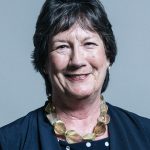
Tag: Pauline Latham

  • Pauline Latham – 2021 Speech on Foreign Aid Cuts

    Pauline Latham – 2021 Speech on Foreign Aid Cuts

    The speech made by Pauline Latham, the Conservative MP for Mid Derbyshire, in the House of Commons on 13 July 2021.

    I rise really very sadly today, because like everybody else I stood on a manifesto that said that we would honour that 0.7% commitment, and I was there when we voted on it originally. The people we are trying to protect have already been hit, because our economy declined at the beginning of the covid pandemic. They will continue to be hit by this reduction to 0.5%, because 0.7% of a figure is a lot more than 0.5%. The amount has gone down hugely already, and people are suffering.

    If we take a random family with two parents and maybe six children, four of whom are boys and two of whom are girls, the girls will be the ones who have less food and who would benefit from the nutritional programmes that we provide, but we will not be providing those programmes. The girls would normally get less food, because boys are prioritised in many families, and the boys would probably go to school, whereas the girls would not be able to go to school because they would not have the funding to enable them to afford it. The Prime Minister has stood so often on the promise that he will educate all girls with 12 years of quality education. Well, no matter how he protests, that is not going to happen now.

    I feel that we are letting down the poorest people in the world. We are devastating their futures for £4 billion, which, as we have heard, is 1% of what has already been borrowed. It is not a lot of money. We have borrowed that money and, as has been said by many, the people who we should be benefiting will not benefit. They will not have malaria treatments, they will not have the neglected tropical disease treatments and they will not have all the help they need. Especially, they will have earlier marriages and younger pregnancies because we are cutting the devastating figure of 85% of the family planning budget and the abortion budget. That is going to devastate many girls. Many girls will die in early childbirth because of this decision by the Government.

    I find it shocking that this Government are doing this. We are a Conservative Government, and we decided to spend the 0.7%. We legislated for it, and now we are letting the very poorest people down. I do not see how anybody who has heard the speeches today could in all conscience vote to support what the Government want to do with the double lock, because we will never get back to 0.7%.

  • Pauline Latham – 2020 Speech on the Domestic Abuse Bill

    Pauline Latham – 2020 Speech on the Domestic Abuse Bill

    Below is the text of the speech made by Pauline Latham, the Conservative MP for Mid Derbyshire, in the House of Commons on 28 April 2020.

    I welcome the Bill. I will cover two topics that I hope Ministers will take on board. First, we have taken a leading role internationally as a force for ending child marriage. However, our domestic law is undermining these efforts, as demonstrated by comments from Bangladesh that we are hypocritical because we allow children aged between 16 and 18 to marry, when they should be in school, completing their education.​

    When the sustainable development goals were being drawn up, with the UK led by Prime Minister David Cameron, he wanted to ensure the inclusion of child marriage within goal 5 of the SDGs. The Bill gives a timely opportunity to bring domestic legislation in line with global commitments to end child marriage, which is child abuse, which happens behind closed doors and which is also domestic violence. However, it is aided by parents and the state. The Bill should close this loophole.

    Children who are likely to live at home under the influence of their family and community, who tell them that this is their culture, are unlikely to report a forced marriage in order to be protected from it. Current civil law permits child marriage to be registered under the age of 18 in England and Wales through the legal exception of parental consent, which too often amounts to parental and community coercion. I hope that my right hon. and learned Friend the Secretary of State will look at this, to see how he can help these particular victims of domestic abuse.

    Secondly, I raise the issue of women and girls in ethnic communities. Apparently, the Home Office literature related to the campaign to help victims of domestic abuse does not speak to these victims, who are in real danger in their communities, because it suggests that they speak about and report abuse to their families and/or their communities—the very people who are often the perpetrators, which would explain why there is so much under-reporting in this area.

    There may have been increases of more than 100% in the number of calls to the national helpline that the Government have funded, but some victims have more challenges than others. For instance, translations are available on the national helpline but the victim has to wait and hang on for the translator to come on to the call. Organisations such as Karma Nirvana, which was founded in Derby some years ago, have bilingual counsellors who can relate much more to victims for whom English is not their first language. Unfortunately, the Government helpline does not always signpost this successful organisation, or many others that may be able to help the vulnerable victims of domestic abuse, forced marriage, honour-based violence or female genital mutilation, especially in respect of where they have advocated the broader domestic abuse agenda and access for victims. These vulnerable women and girls will not wait for long, because it has taken an enormous amount of courage for them to pick up the phone in the first place.

    Apparently, the head of the Government’s forced marriage unit has said that calls to its helpline have dramatically fallen: between 1 and 17 April last year, it received 72 referrals or calls; this month, it was down to only 15 calls. I believe that is because people are behind closed doors and have less access to the phone and are less able to call for help. The forced marriage unit also believes that there are girls with forced marriage protection orders who are abroad, waiting to come back to the UK. Apparently, there is only one person in a safe house. There are real concerns that there will be a surge in cases once we are no longer in lockdown. Surely this raises the question of the need for greater awareness now. We should be thinking about how we will monitor cases after lockdown—perhaps we should monitor families when the airports open more freely.​

    The Home Office has sent a letter suggesting that we disseminate information about domestic abuse among our communities—often the very communities where the problem lies. How do we, as MPs, reach these victims? It is really important that we do so. I recommend that the Minister look into these issues.