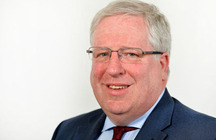
Tag: Patrick McLoughlin

  • Patrick McLoughlin – 2013 Speech on Rail Privatisation

    Patrick McLoughlin
    Patrick McLoughlin

    Below is the text of the speech made by the Secretary of State for Transport, Patrick McLoughlin, on rail privatisation. The speech was made on 12th November 2013 at the European Rail Congress.

    Thanks for that introduction.

    It’s a pleasure to join you today.

    This is an industry with an increasingly international – indeed global – outlook.

    So it’s great to welcome delegates and speakers from across Europe to London for this inaugural European Rail Congress.

    It is fitting that the subject of my speech this afternoon is “rail growth through competition.”

    Because the UK railway was privatised almost exactly 20 years ago.

    In fact the Railways Act came into effect on November 5 1993, breaking up the state-run British Rail, and transforming the face of our railway for ever.

    Nobody back then could have predicted the extraordinary changes that have taken place over the subsequent 2 decades.

    So today I want to reflect on the UK’s experience of privatisation.

    On the many benefits that it’s brought to us as a country.

    But I also want to talk about the challenges we’ve faced.

    And the lessons we’ve learnt along the way.

    Let me start by taking you back to the late 1980s.

    I was a junior transport minister in Margaret Thatcher’s last government.

    And I remember what our railway was like under a single, publicly-owned operator.

    Rail was an industry in decline.

    In fact it had been declining since the motorways were built in the 1950s and ‘60s.

    The infrastructure was in need of urgent attention.

    Reliability was poor.

    And like other monolithic state institutions, British Rail had a culture that hampered rather than encouraged innovation.

    It’s true that public subsidy under British Rail was comparatively low, but that reflected underinvestment in tracks and trains, rather than an efficient and sustainable business model.

    We knew things could be better.

    Because we’d already successfully sold off other utilities, like British Aerospace, British Gas, and Rolls-Royce.

    Introducing competition.

    Improving performance.

    Widening share-holding.

    And reducing the burden on the taxpayer.

    It was against this background that we privatised the railway.

    But expectations weren’t high.

    Rail travel had dwindled to such an extent that most people thought the private train operators would manage a decline in both passenger and freight traffic.

    How wrong they were.

    Privatisation sparked a railway renaissance.

    Since 1993, passenger journeys have doubled in the UK to a level not seen since the 1920s.

    On a network roughly the same size as 15 years ago, today our railway is running 4,000 more services a day.

    And rail freight has grown by 60%.

    Revenue is up more than £3 billion since privatisation, almost all of it due to higher passenger numbers rather than fare rises

    Safety levels are at an all time high.

    Punctuality is at near record levels.

    And passenger satisfaction is up by 10% over the past decade.

    None of this would have happened without privatisation.

    Without competition.

    Without franchises investing in better services.

    Without an industry structure promoting accountability and incentivising growth.

    Yet the job is far from over.

    We still face some considerable challenges – challenges that must be met if we’re to build on the achievements of the past 20 years.

    The first is: how to meet rising demand.

    Because we didn’t just inherit a record public deficit in 2010 – we also inherited an infrastructure deficit.

    Our main intercity network was built to serve a Victorian economy, not a 21st century one.

    Historic underinvestment left the railway ill-prepared to meet soaring demand – which was triggered not just by privatisation, but also by 15 years of subsequent economic growth.

    By 2010, the railway was in need of urgent investment, both in the short term, and in the longer term, to achieve a step change in capacity.

    We therefore embarked on an unprecedented rail modernisation programme.

    Between 2014 and 2019, infrastructure operator Network Rail will spend over £38 billion running and expanding our railway.

    Improvements include an extra 140,000 seats on peak services by the end of the decade.

    A major electrification programme.

    A multi-billion pound deal to replace intercity rolling stock.

    And a new high capacity railway for London and the south east called Crossrail.

    But even this ambitious package of improvements will not provide us with the space we need to grow.

    Major routes like the West Coast line will be overwhelmed by 2025 if we fail to act.

    So we are currently taking a Bill through Parliament to deliver HS2 – a new high speed rail network for the UK.

    With construction due to start in 2017, HS2 will connect London with Birmingham, Manchester and Leeds.

    It will boost capacity by almost 20,000 seats an hour.

    And it will slash journey times between 8 of our 10 biggest cities.

    HS2 will free up space on the existing network for more commuter services and freight.

    It will give customers more choice about how to travel.

    And it will make our railway more competitive.

    And that brings me onto the second major challenge.

    Getting down costs.

    By 2010, our railway was the most expensive in Europe.

    At a time when we faced the largest public deficit in UK history, and when we made a commitment to tackle waste and profligacy across government, reducing the cost of the railway became an urgent priority.

    We’ve made good progress.

    The rail subsidy for England and Wales fell from £4 billion in 2009 to 2010 to £3.2 billion in 2011 to 2012.

    We’ve tasked the industry to make savings of £3.5 billion a year.

    And we’ve put a lid on expensive fare rises.

    This is just the start.

    There is still a long way to go before we hit our cost saving targets, and before we can achieve our goal of ending above-inflation fare increases.

    Turning round the performance of such a huge industry is a big job.

    But it’s one we are determined to finish.

    The final big challenge is modernising the railway for the customer.

    Fares and ticketing, for example, is still complex and impenetrable.

    So we’ve recently completed a major review of the fares and ticketing system.

    By making it simpler and more user-friendly, more people will travel by rail, and they’ll also have a much better experience.

    So we’re trialling a flexible ticketing system which will meet the needs of individual travellers.

    Ultimately, we would like to see passengers use smartcards for use across the network, and on different types of transport.

    Operators are investing in better stations, better trains and better facilities.

    But to improve the railway for passengers, we’re also encouraging them to collaborate more closely with Network Rail.

    One operator, South West Trains, has joined with Network Rail to create a single management team responsible for both trains and track.

    This kind of joined-up working isn’t bad for competition.

    Neither is it an end to the market.

    It’s an example of how to make things work.

    And how to respond to the needs of passengers.

    There are enormous gains to be made from aligning objectives, so that different parts of the industry do what they do best for the benefit of passengers – whether it’s selling tickets, running signals or fixing track.

    So 20 years on, what have we learnt from privatisation?

    Well, we’ve learnt that it can transform the fortunes of the railway.

    Turning decline into growth.

    Boosting revenue, and passenger satisfaction.

    But we’ve also learnt that growth must be managed in a sustainable and responsible way.

    We failed as a country to plan for growth.

    To look beyond our immediate needs and build for the future.

    And to keep a close control of costs.

    Now we’re sorting out these problems, our railway is in a better position than it has been for decades.

    Franchising might still be criticised by those who want to turn backwards.

    Who haven’t learnt any lessons from the past.

    But now we’ve got a structure that’s working.

    Encouraging innovation through competition.

    Allowing the private sector to do what it does best.

    But also collaborating for the benefit of the customer.

    And building the capacity we need to grow.

    Rail privatisation has made Britain a better country.

    But if we heed the lessons I’ve talked about today, then we can look forward to an even brighter future.

    Thank you.
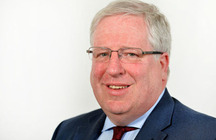
  • Patrick McLoughlin – 2015 Speech on the Midlands

    Patrick McLoughlin
    Patrick McLoughlin

    Below is the text of the speech made by Patrick McLoughlin, the Secretary of State for Transport, at Derbyshire County Cricket Club on 27 November 2015.

    Introduction

    Thank you.

    It’s good to be back with you at this ground.

    This visit has become an annual highlight for me.

    It’s the third year in a row I’ve addressed the forum.

    A run like that is rare for a Transport Secretary.

    Before my appointment in 2012, there had been 7 Transport Secretaries in 7 years.

    When you are in charge of long-term infrastructure projects, change like that doesn’t always help.

    Rail, in particular, needs the perspective that comes with experience.

    So I am delighted to be back.

    Yet there has been one change since I was last here.

    And that’s to the forum itself.

    No longer the Derby and Derbyshire Rail Forum.

    But now the East Midlands Rail Forum.

    To me, that’s a statement of intent.

    Since the forum was established in 1993 it has grown in numbers, stature and influence.

    Now it’s the largest cluster of rail firms in the world

    And the new name reflects the forum’s ambition as it increasingly represents firms across our whole region.

    Growth in the East Midlands

    In June, the Chancellor visited the premises of a member of this forum.

    Garrandale – a great rail engineering firm.

    In his speech then, he said that five years ago our country was on the brink.

    We were borrowing £1 in every £4 that we spent.

    Midlands businesses were going under at a rate of over a hundred every day.

    And nearly half a million people in the Midlands were looking for work.

    If we were to save our economy, we had to act.

    And so we took some tough decisions.

    We cut spending.

    Cut corporation tax.

    And cut red tape.

    Five years on, our economy is growing strongly again, nationally and locally.

    The East Midlands is now home to 20,000 more businesses than in 2010.

    There are more people in work here than at any time since 1992.

    And on Wednesday the Chancellor reported that the Midlands is creating jobs at a rate three times faster than London and the south east.

    So our region is making great progress.

    Rail investment

    And one of the things giving this region its edge is its great concentration of rail expertise.

    Rail supply firms in this region are benefiting as we put more money into our rail sector than at any time since the Victorian era.

    Since the forum was established in 1993, passenger numbers have more than doubled.

    Rail freight is up 75%.

    The government is investing more than £38 billion in the rail network.

    And following Wednesday’s spending review transport capital spending in this Parliament will increase by 50% to a total of £61 billion; the biggest increase in a generation.

    That’s a great settlement for transport.

    And it’s a great opportunity for the rail supply chain.

    Hendy report

    But after so many years in which rail was underfunded, investment on this scale was never going to be easy.

    In June, I announced that Network Rail’s performance on the electrification of the TransPennine and Midland Main Lines had not been good enough.

    I asked Sir Peter Hendy to review Network Rail’s programme of works.

    And alongside the spending review, Sir Peter set out his plans to put its programme back on track.

    I can say today that I have accepted Sir Peter’s plan.

    It reaffirms our commitment to our railways.

    And shows how we will achieve our aim of transforming rail journeys for passengers.

    So we are pressing ahead with Crossrail.

    HS2.

    Thameslink.

    New InterCity Express trains on the East Coast and Great Western mainlines.

    North West and Yorkshire train lengthening.

    East-West Rail.

    Cornwall re-signalling.

    Wessex and Waterloo capacity enhancements.

    West Anglia main line capacity improvements.

    And the electrification and enhancement of the Great Western, Northern Hub, TransPennine, and Midland main lines.

    No infrastructure projects have been cancelled.

    But the report shows that the need for tough decisions is not yet over.

    Some projects will take longer and cost more than originally planned.

    As we put Network Rail’s focus firmly on its core task of delivery, some of that extra cost will be covered by Network Rail asset sales and new efficiencies.

    Skills

    But innovation and efficiency isn’t the only challenge for the rail supply chain.

    We are also facing a shortage of skills.

    Our country needs more rail workers of all kinds.

    More civil engineers.

    Mechanical engineers.

    Construction workers.

    Surveyors.

    Signallers.

    And even drivers.

    In all, we need 10,000 new engineers to improve the existing network, while HS2 alone will create 25,000 jobs during construction and 3000 jobs in operation.

    Yet as things stand today, parts of the industry will lose half their staff to retirement within 15 years.

    With our plans for investment, that’s unsustainable.

    So the government is addressing this skills challenge through new training institutions, such as the flagship National Training Academy for Rail in Northampton.

    Through creating 3 million new apprentices in this Parliament.

    And through the appointment of Terry Morgan, the Chairman of Crossrail, to develop a transport skills strategy.

    But, ultimately, we need the rail industry to invest in skills in new staff and new training.

    Because although government can make plans and provide some of the funding, it will be the rail industry who will deliver for the country.

    Midlands Engine for Growth

    But while we are working to secure our economy and to transform our transport we have a clear principle.

    Wherever possible, decisions about planning, spending and services should be taken by the people who will be most affected by those decisions.

    For that, we need to devolve power from London and out to the regions.

    So last month I was pleased by the launch of the newly-strengthened Midlands Connect Partnership

    Midlands Connect is a collaboration between the Midlands’ Local Enterprise Partnerships and local authorities.

    Over the months ahead Midlands Connect will work with HS2 Ltd, with Network Rail, and with Highways England to develop investment plans for the Midlands.

    They will look at maximising the economic growth from HS2, reducing journey times between our towns and cities, and making better connections to international gateways.

    There’s no better way to make the case for investment than for it to be informed by local people.

    Local businesses.

    Local representatives.

    And that is how we will make the Midlands an engine for growth.

    Conclusion

    So in conclusion, it’s great to be back.

    As Transport Secretary.

    At this event.

    And on home turf.

    For our nation’s railways, these are rare days.

    Customer numbers have never been higher.

    Investment has never been higher.

    Expectations have never been higher.

    And so it’s an opportunity.

    But also a challenge.

    I said at the beginning that rail needs the perspective that comes with experience.

    Looking around this room I can see 176 years of rail experience and the expertise to match.

    So I’m confident that we will succeed as we build the rail network our country deserves.

    Thank you.

  • Patrick McLoughlin – 2015 Speech on Shipping

    Patrick McLoughlin
    Patrick McLoughlin

    Below is the text of the speech made by Patrick McLoughlin, the Secretary of State for Transport, at the Grosvenor Park Hotel in London on 10 September 2015.

    Thank you, ladies and gentlemen.

    It’s a pleasure to see so many of you here at this gala dinner.

    Just as it’s been a pleasure welcoming the world’s shipping industry to London this week.

    I hope you’ve found it productive and stimulating.

    And after all the meetings, trade shows, receptions and conferences.

    I’m delighted that over 800 of you are here tonight.

    For a well-earned chance to relax and enjoy the culmination of London International Shipping Week 2015.

    There have been many highlights for me.

    The international round table at 10 Downing Street.

    Where me and my ministerial colleagues welcomed key industry players from around the world.

    To discuss the most important issues faced by the sector today.

    The launch of the Maritime growth study.

    A hugely important document which sets out a future direction for how government and industry can work in partnership to boost maritime growth.

    And it was wonderful to have the royal patronage of Her Royal Highness the Princess Royal at the welcome reception on Tuesday.

    My mission as Transport Secretary has been to really position transport policy at the heart of government.

    Which means everything we do in transport must support sustainable economic growth.

    To create opportunity and prosperity.

    And maritime is an absolutely crucial part of that.

    That’s why we’ve seen billions going into UK ports.

    Felixstowe.

    Southampton.

    Dover.

    Liverpool.

    London Gateway.

    To name a few.

    And why we’re investing in better road and rail connections that supply these great shipping hubs.

    It’s why I’ve raised the profile of maritime within government.

    Why we’ve been cutting unnecessary red tape which holds this industry back.

    Why we’re investing in maritime training and apprenticeships.

    And why we strive to make London a fantastic place to do maritime business.

    But while domestic maritime policy is important.

    What really makes this industry unique is its global reach.

    Without international partnerships and collaboration, there is no maritime growth.

    This industry transcends national boundaries, national governments, and national economies.

    And that’s why this week is so important.

    We’ve been showing what London and the UK can offer.

    Efficient global trade needs strong and competitive maritime centres like London to access the full range of services and expertise.

    So we’re very proud to be a one-stop-shop for the global maritime industry.

    But London International Shipping Week is really about you.

    People from different countries coming together to talk, learn, and make new connections.

    And with more than 100 events going on this week, there’s been lots to talk about.

    Growing markets and the direction of the global economy.

    Maritime security, and international naval co-operation to improve the governance of the seas.

    And the safety of our seafarers.

    I’ve been really pleased that there’s been a lot of debate about the role of women in the maritime industry.

    To get more women pursuing maritime careers.

    And to support those women who are already involved.

    We’ve talked about international governance.

    New technologies.

    And the protection of the marine environment.

    Issues that affect every single maritime country.

    And that ultimately link us all.

    So really, this week has been a celebration of the global maritime industry.

    And what’s really made it successful is you.

    And thousands of other maritime professionals who have taken part.

    So on that note, I’d like to finish by saying thanks.

    Thank you all for coming.

    For making London International Shipping Week 2015 so special.

    And for making this gala dinner a fitting conclusion.

    Please, enjoy the rest of the evening.

    And I look forward to welcoming you back in 2017.