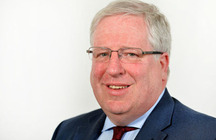
Tag: Patrick McLoughlin

  • Patrick McLoughlin – 2015 Speech on Northern and TransPennine Express Rail Franchises

    Below is the text of the statement made by Patrick McLoughlin, the Secretary of State for Transport, in the House of Commons on 9 December 2015.

    I am pleased to inform the House of the award of 2 new passenger rail franchises. Following separate, rigorous competitions I intend to award the Northern franchise to Arriva, and the TransPennine Express (TPE) franchise to First. These awards will be confirmed subject to successful completion of a standstill period of at least 10 days.

    Both franchises are due to start on 1 April 2016. The Northern franchise will run for 9 years, until 31 March 2025, with an extension of 1 year callable at my discretion. The TPE franchise will run for 7 years, until 31 March 2023, with an extension of 2 years callable at my discretion.

    My department set out ambitious plans for the new franchises in our invitations to tender earlier this year and both Arriva and First have gone well beyond them; exceeding our requirements. This means that these franchises will oversee the biggest transformation of rail journeys in the north of England in decades, with an unprecedented package of improvements for passengers.

    Together, these operators will oversee a massive £1.2 billion boost to rail services with brand-new modern trains, more seats, more services and a host of improvements to deliver a modern, 21st century passenger experience. This one nation government is committed to closing the economic gap between north and south, and these new franchises will help to bring the Northern Powerhouse to life. They will play key roles in rebalancing the economy, creating jobs, opportunity and growth, and will provide significantly better journeys across the region. Crucially, in a key step towards full devolution, these contracts will be managed in Leeds by a joint team from the Department for Transport and Rail North, which represents the region’s 29 local transport authorities.

    Across both franchises, Arriva and First will provide much needed new-build trains, with the introduction of more than 500 brand-new carriages. They will also remove the outdated and unpopular Pacer trains from across the north. These plans will create space for more than 40,000 extra passengers at the busiest times across the north and bring in thousands of extra services a week for passengers. Alongside these investments the franchises performance will be improved to meet challenging targets to reduce cancellations and short-formations.

    There will also be significant improvements for passengers’ experience, with the roll out of free Wi-Fi on trains and at stations and the installation of on-board media servers providing on-train entertainment and real-time passenger information to smartphones and tablets. Automatic delay compensation for season and advance purchase ticket-holders will be introduced across the region. First and Arriva will also invest more than £55 million in improving stations and bring them into the 21st century.

    The new franchises will also mean significant returns to the government and better value for the taxpayer. On TransPennine Express, First will pay premium to the government of around £400 million over the life of the new franchise, taking the franchise out of subsidy for the first time. On the Northern franchise, Arriva will reduce the amount of annual government subsidy required by around £140 million over 9 years.

    The award of these franchises is a hugely positive story for rail in the north of England. They are further proof that private sector competition is good for passengers, local communities and taxpayers. This government promised passengers we would give them the premium-quality rail services that a Northern Powerhouse deserves. I am delighted that these awards will deliver exactly that.
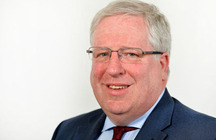
  • Patrick McLoughlin – 2015 Statement on HS2

    Below is the text of the statement made by Patrick McLoughlin, the Secretary of State for Transport, on 30 November 2015.

    HS2 and the Northern Powerhouse

    Good strategic transport links are central to the success of our country. This government — more than any before — is committed to making sure we have the infrastructure we need to deliver economic growth and rebalance the country’s economy, not just in the immediate future, but for the long term.

    I am therefore making announcements today (30 November 2015) on how transport is continuing to deliver the Northern Powerhouse through HS2 and the Northern transport strategy.

    HS2

    HS2 is a key part of the future of our country’s railways. Last week’s Spending Review announcement confirmed the government’s commitment to the scheme. This is a big step forward for HS2 and the creation of a Northern Powerhouse. This gives funding certainty to HS2. It also gives more certainty to the towns and cities that would be served by HS2 that they can plan for its arrival, and to the private sector that there will be future investment opportunities.

    HS2 will not be a separate, standalone railway. It will be the new backbone of our national rail network, with HS2 services running from London and Birmingham to cities in the north of England including Manchester, Leeds, Liverpool, Newcastle and on to Scotland. It will not only deliver significant journey time savings, but also much needed additional capacity and increased connectivity. Private sector companies will be able to bid to run HS2 services, and will also be able to use this capacity to offer a wider range of services.

    We are making good progress with HS2 Phase One (from London to Birmingham). The hybrid Bill for this part of the railway is proceeding through Parliament and we are aiming to achieve Royal Assent by the end of 2016, so that construction can begin in 2017.

    In his reports, ‘HS2 plus’ (March 2014) and ‘Rebalancing Britain’ (October 2014), Sir David Higgins recommended that we seek to build the section of the route to Crewe more quickly to deliver further benefits to the north sooner. We agree that we should realise the benefits of HS2 as soon as possible. I am therefore announcing today my decision on the section of the route from Fradley in the West Midlands to Crewe — now referred to as ‘Phase 2a’. We intend to accelerate Phase 2a so that it opens 6 years earlier than planned, in 2027. This will bring more capacity and faster HS2 services to the north-west of England, including Crewe, Liverpool, Manchester and Scotland much sooner than originally planned. Our plans will help to support growth and deliver jobs more quickly.

    Powers to build this section of the route will be sought through a separate hybrid Bill which I intend to introduce to Parliament in 2017. HS2 Ltd have now procured Professional Services Consultants (PSCs), for the purposes of supporting the hybrid Bill development.

    In the light of my decision on the HS2 route from the West Midlands to Crewe I am also today issuing safeguarding directions for that part of the route, having considered responses to the November 2014 consultation on this. The directions will ensure that new developments in this corridor do not affect the ability to build or operate Phase 2a or lead to excessive additional costs. Safeguarding also triggers the statutory blight regime. Qualifying owner-occupiers whose property is within the safeguarded zone will have the right to ask the government to buy their property by serving a blight notice. We are committed to assisting people affected by HS2. All those living within the safeguarding zone will receive a letter informing them about potential entitlements. And I am also today launching a consultation on a wider package of assistance measures for owner-occupiers, which go well beyond what we are required to do by law, for those living along this section of the route, as we have already done for Phase One.

    We set out our initial preferred route for Phase Two of HS2 in January 2013 and later that year conducted a public consultation exercise seeking the public’s views on the route. Today, we have published the independent analysis by Ipsos MORI of all the responses to the 2013 Phase Two route consultation. My route decision on Phase 2a takes account of the consultation responses regarding that section of the route; and the command paper also responds to the cross-cutting issues raised.

    We continue to progress plans for the rest of the HS2 Phase Two route. I welcome the way local authorities, most recently those in Leeds, the Northern Gateway Partnership and the East Midlands, have come together to support HS2 plans in their areas. Further work is needed on the remainder of the Phase Two route before a decision can be taken. I intend to make a decision in autumn 2016, but today I can update the House on my thinking as follows:

    Leeds: We have now received Sir David Higgins’ report on Leeds Station — which is also published today. It recommends an integrated design for the HS2 station, while maintaining a southerly route into the city. I am minded to agree with Sir David’s proposal.

    South Yorkshire: Sheffield Meadowhall was the government’s preferred station location in the Phase Two route consultation. The evidence continues to suggest that this is likely to be the best way of serving the wider South Yorkshire region and we are working with the National Infrastructure Commission and Transport for the North on the possible interfaces with Northern Powerhouse rail. However, we acknowledge there are arguments in favour of a city centre location and continue to examine relevant analysis.

    East Midlands: Sir David Higgins has confirmed that HS2 Limited recommends a hub station should be located at Toton. Toton is also supported by the East Midlands local authorities who are united behind this proposed location. The government therefore continues to support Toton as the best location for an East Midlands Hub. Last week the Chancellor announced growth funding to allow the area to start its planning for HS2. Part of this will be released this year, and the remainder would be released when a decision is made.

    Manchester: Manchester Piccadilly continues to look like the right location for HS2’s Manchester terminus. To maximise its potential to support economic growth in the region, it will be important to ensure effective co-ordination with the development of Northern Powerhouse rail to transform east-west links across the north of England. We are continuing our work through Transport for the North, and with the National Infrastructure Commission, to explore synergies and integration between the schemes, in order to develop the right rail infrastructure that delivers growth across the whole of the north of England.

    We also remain of the view that a Manchester Airport station is likely to be the right option, subject to agreeing an appropriate third party funding contribution to the costs.

    In 2014, Sir David Higgins recommended that HS2 serve a north-west hub station at Crewe. While I am not taking decisions on Crewe hub today, I do support the vision for a Crewe hub. Work is ongoing I intend to make further announcements in 2016, and any Crewe hub scheme will be subject to consultation. To support the work that the Northern Gateway Partnership is doing to develop growth and regeneration plans ahead of a decision I am releasing part of this funding this year.

    I have asked HS2 Ltd to explore options for how we might best serve Stoke and Macclesfield, including through classic-compatible trains via Handsacre Junction. Handsacre Junction is part of Phase One and will allow HS2 trains to serve Stafford.

    Scotland will benefit from reduced journey times as soon as Phase One opens (3 hours 56 minutes from London to Glasgow, compared with a typical journey time of 4 hours 31 minutes at present). Accelerating delivery of Phase 2a between the West Midlands and Crewe will further reduce the journey time from London to Glasgow to 3 hours 43 minutes. The full “Y” network will provide faster services from London to both Glasgow (3 hours 38 minutes) and Edinburgh (3 hours 39 minutes). The UK government and the Scottish government are working closely together to consider options to further reduce journey times. We hope to make a statement on next steps in the New Year.

    I have not taken any decision on the remainder of the Phase Two route. We will respond in full to consultation responses relating to the rest of the Phase Two route when a route decision is taken in 2016.

    Copies of the command Paper: High Speed Two: east and west — the next steps to Crewe and beyond and other accompanying documents have been made available in the libraries of both Houses and can be found on GOV.UK.

    – High Speed Two: east and west — the next steps to Crewe and beyond command paper

    – HS2 Phase Two: from the West Midlands to Leeds and Manchester document collection

    – HS2: government response to the Phase 2a safeguarding consultation command paper

    – HS2 Phase 2a: strategic case

    – HS2 Phase 2a: economic case

    – HS2: supplement to the October 2013 strategic case

    – HS2: rail alternatives to Phase 2a

    – High speed rail expenditure report 2014 to 2015

    The cost of HS2 has not changed since the Spending Review 2013. The Spending Review 2015 confirmed an overall budget of £55.7 billion in 2015 prices. This is consistent with the £50.1 billion (in 2011 prices) set in 2013, but has been uprated to take account of inflation.

    Transport for the North and the northern transport strategy
    Today, jointly with Transport for the North, we are publishing a progress report on the Northern Transport Strategy, which includes updates on our progress across the full range of the strategy, including international connectivity, freight, smart and integrated ticketing, strategic roads and Northern Powerhouse rail. The fast, frequent, reliable and comfortable rail service we plan will underpin the Northern Powerhouse economy. Copies of the report The northern transport strategy: autumn report have been placed in the libraries of both Houses and can be found on GOV.UK.

    The government has also taken steps to support the development of Transport for the North as an organisation that represents the whole of the north of England and can speak to government with one voice on the region’s transport priorities.

    Last week’s spending review committed £50 million of funding over this Parliament to help Transport for the North drive forward plans to transform the north’s transport links and build a single regional economy.

    Today, I am delighted to announce, jointly with Transport for the North, the appointment of John Cridland as the new independent Chair of the Transport for the North Partnership Board. Together with his Chief Executive, David Brown, John Cridland will have the responsibility for delivering the Northern Transport Strategy, working closely in partnership with Lord Adonis and the National Infrastructure Commission.

    Following advice from the National Infrastructure Commission in March 2016, schemes such as Northern Powerhouse rail will have access to a brand new £300 million national Transport Development Fund.

  • Patrick McLoughlin – 2013 Speech on Local Enterprise Partnerships

    Patrick McLoughlin
    Patrick McLoughlin

    Below is the text of the speech made by Patrick McLoughlin, the Secretary of State for Transport, on 18 April 2013.

    Thank-you. It’s a pleasure to be here today.

    As you probably know, I’ve been in politics quite a while.

    In fact I’ve been Transport Minister twice with a gap of 20 years in between.

    And in that time I’ve heard a lot of ministers speak eloquently about how things are best done locally – while doing the precise opposite.

    For decades, they’ve been preaching devolution, while planning and orchestrating it from their Whitehall offices.

    And it hasn’t worked.

    So I understand why you might be a bit suspicious whenever there’s a new outbreak of that enduring “ism” – localism.

    But today I want to talk about why something big is changing in how we run our country.

    And I want to talk about the role that transport can play in that.

    First of all, today’s conference is proof in itself that we are serious about change.

    We’re here because you represent a new force in government: local partnerships bringing business and government together to change the way we think about localism.

    Not the theoretical, unworkable localism of the past, but localism that is practical and deliverable, that responds to local conditions, and local communities, and that balances growth across the UK – not just in the south east.

    Local decision making is particularly important in transport.

    Because the transport issues that most concern people are local in nature.

    Congestion. Road safety. Bus and train services. Issues that are not just understood better by local people and businesses, but that are best solved by them too.

    That’s why the DfT has been at the front of the queue to involve and empower local enterprise partnerships (LEPs).

    I’ll be honest.

    Many in government had doubts.

    Could local partnerships succeed where others have failed in the past?

    Well you are already proving that you can.

    You’ve been helping us make the case for HS2, a scheme that has the potential to change the economic geography of the UK.

    This year you start making the decisions on where funding for local major transport schemes should be targeted from 2015.

    This is a fundamental part of our commitment to devolve responsibility for transport, and streamline government.

    Because LEPs are in the best position to target investment more effectively, and get the best value for money.

    Under the last government, local major schemes were managed through the regional funding allocation, which meant central government remained the ultimate decision maker.

    It was a top-down system with a thin veneer of localism.

    But with the new structure, we will be genuinely shifting power away from Whitehall into the hands of local transport bodies, accountable at the local level, and responsive to local economic conditions.

    You’ve also played an important role in the delivery of our £170 million Local Pinch Point Fund, which the Chancellor announced in last year’s autumn statement.

    And I’d like to thank you for your help so far.

    It’s a new way of prioritising schemes.

    And it’s already making a real difference.

    Because tackling road bottlenecks is one of the most effective ways we can remove obstacles to economic growth.

    In March I made £25 million available to get cracking with the first 10 schemes.

    The first – a £6.8 million project to increase capacity on Northampton’s ring road, and improve access to the Northampton waterside enterprise zone R1; has already begun construction.

    Work on others is starting this spring.

    They include an upgrade to the notorious A40 and A4010 Chapel Lane junction in Buckinghamshire, and improvements to the Clock Tower junction in Harlow, Essex.

    Four of the 10 schemes will boost transport links around enterprise zones – reflecting our commitment to support local economies.

    We’ve also announced a further 58 pinch point schemes to reduce congestion on Highways Agency roads – again, with your help.

    And we’re delivering a programme of 24 major road schemes – including 4 new ones announced in the autumn statement.

    For example, the £60 million A30 Temple to Higher Carblake scheme in Cornwall will relieve congestion, reduce journey times, and improve links between Cornwall and the rest of the country.

    Another vital project is the A453 dualling between M1 Junction 24 and the A52 Nottingham ring road.

    This is a major stretch of road serving the East Midlands and East Midlands Airport – and the £150 million improvements will not only help address congestion, but also make the route safer.

    Of course devolved transport isn’t just about roads.

    We are also moving ahead with plans for further rail devolution.

    And earlier this year we also launched the competition for local transport authorities to become designated as Better Bus Areas.

    All this means there will be tremendous opportunities for devolved bodies over the next few years.

    Not just in transport, but across government.

    And I’m sure that later today Lord Heseltine will expand on those opportunities in the light of his “no stone unturned” report.

    Government has now accepted the majority of Lord Heseltine’s recommendations.

    This includes the single local growth fund to cover housing, transport and vocational training.

    The clear message from government is that there certainly won’t be any slowing down in the rate of decentralisation.

    On the contrary, we’ll be looking to accelerate.

    So the work to set up local transport bodies (LTBs) – and to prioritise transport schemes by this summer – will go ahead as planned.

    The strategic growth plans which LEPs are currently preparing will be integral to the deal that we negotiate with each local partnership.

    We have set out the criteria we will use in those negotiations.

    But the scale of the resources available will depend on the current spending round.

    So there is an opportunity over the next few weeks for LEP chairs to make clear which spending programmes they think should be included in the Single Local Growth Fund.

    So, to sum up.

    This is a time of great fluidity in government: a time or innovation and new ideas.

    The challenges we face as a country are very different to those we faced a few years ago.

    And we need to translate thoughts and policies into jobs and growth faster than ever before.

    How we do that involves not just central government.

    But everyone here today.

    LEPs are uniquely positioned to help us get devolution right.

    Making the trade offs that will deliver the best value results for your areas.

    Using the knowledge and experience of businesses and local authorities.

    Supporting economic growth from the ground up.

    With your help, we can set local government in Britain on a new course.

    And emerge with a model of localism that will change this country for good.

    Thank you.

  • Patrick McLoughlin – 2016 Speech to Rail Delivery Group

    Patrick McLoughlin
    Patrick McLoughlin

    Below is the text of the speech made by Patrick McLoughlin, the Secretary of State for Transport, at the Rail Delivery Group annual conference on 2 February 2016.

    Opening remarks

    Thank you.

    And good afternoon everyone.

    It’s a pleasure to be here – and to have this opportunity to address an expert rail audience.

    20 years ago this Thursday, the 05.10 early morning service pulled out of Twickenham station on its way to London Waterloo.

    As far as train journeys go, it was unremarkable.

    But it was in fact a landmark in the history of the British railway.

    The first scheduled service run by a private operator in this country for almost half a century.

    Looking back, not even the most fervant advocates of privatisation could have predicted its impact on the railway.

    20 years in which passengers have doubled.

    Investment’s increased.

    Costs come down.

    And in which standards have improved to such a degree that we now have the safest railway in Europe.

    Something we never take for granted.

    And something we always have to guard and watch.

    Continued progress

    But as you’ve heard this morning, things are going to change even faster over the next 20 years.

    We’re only at the start of a unprecedented construction and modernisation programme, which will make Britain the leading rail investor in the western world.

    Who would have thought that a few decades ago.

    And it’s in this Parliament when we really get cracking with that programme.

    Finishing Crossrail.

    Starting HS2.

    Completing Northern Hub.

    Getting rid of old train like Pacers.

    And introducing new ones – like Intercity Express on the Great Western and East Coast lines.

    All evidence of how we’re investing to transform journeys for passengers.

    But building a better railway is not just about investment.

    It’s also about changing poor public perceptions.

    Being more transparent.

    And treating passengers as valued customers, like the very best service providers do.

    The challenge is to create a culture that’s relentlessly focused on the customer.

    It’s also about controlling costs more effectively.

    Delivering more for less.

    Like industries across the economy were forced to do in one of the longest and deepest recessions in our history.

    And it’s about joined up thinking.

    The railway coming together.

    Speeding up and improving long term planning.

    Setting clear objectives.

    And being accountable for achieving them.

    The industry is at a stage in its evolution where there are huge opportunities to do all these things.

    But it needs better leadership and direction.

    And the Rail Delivery Group is absolutely fundamental to that process.

    The Shaw Report may provide some answers.

    But we need to face up to the fact that there may still be challenges ahead.

    And we need to be ready to meet them.

    Learning lessons

    Some of these issues came to a head last year.

    For example when we had to pause the electrification of the Midland Main Line and Transpennine.

    But then we worked together, with particular credit going to Sir Peter Hendy and his team, to get Network Rail’s infrastructure programme up and running again.

    Delivery of that full programme on time and on budget is crucially important.

    Not just for rail users.

    But for the industry itself.

    This is about making the railway more professional and answerable.

    If challenges crop up, then the industry must confront and tackle them.

    My first job as Secretary of State was to sort out the West Coast franchise mess.

    The first step was to accept responsibility on behalf of the department.

    The next was to take swift action.

    And 3 years on, franchising is in a much better place.

    In fact it’s at the heart of improving our railway.

    So the key objective now for us all I hope is to learn lessons, and make the railway more resilient.

    That’s why we’re looking at regulation and structure.

    Network Rail has a capability plan, which reflects the changes made to the enhancement programme.

    And which will take into account feedback from Colette Bowe’s review, and the ORR.

    We’re currently consulting on that.

    And in the light of the Bowe Review, it’s also a timely chance to consider the duties of the ORR again, to make sure they’re appropriate for regulating Network Rail – so improvements can be made reliably.

    We’ll consult with the industry again on options for structural change after the Shaw Report is published.

    And we’ll provide clarity on our plans as early as possible.

    Supply chain and skills

    Improving resilience takes many forms. But there are 2 I’d like to highlight today, which I believe are immensely important to Network Rail’s programme, and in which the Rail Delivery Group has a direct interest.

    First, the supply chain.

    Yesterday I attended the launch of the Rail Supply Group’s sector strategy, the first agreed plan for how the supply chain will grow as we modernise the railway.

    I know the RDG has excellent links now with the Rail Supply Group and the wider supply chain.

    And that relationship is going to get stronger as we progress.

    Second, the skills challenge.

    Training the workforce is the single biggest construction and engineering challenge of this age, with huge implications for the railway.

    We need a new generation of rail engineers, designers and construction professionals.

    And highly skilled people to operate the networks once they’re open.

    That’s why last week we announced our transport skills strategy.

    Led by Terry Morgan, chairman of Crossrail, the strategy sets out how we’ll provide 30,000 apprenticeships in roads and rail up to 2020, and I hope leave a legacy of skills for the next generation.

    We’re also investing in new training centres like the National Training Academy for Rail and the National College for High Speed Rail as well.

    And in 2018, to coincide with the finishing of Crossrail, we’re going to have a period of celebrating engineering, to excite a new generation of brilliant minds.

    Franchises and ticketing

    I’ve spoken mainly about the big rail issues today.

    But we must also keep focused on the things that matter most to passengers in their daily journeys.

    And one of the areas where’s there’s massive potential for improvement is ticketing.

    Frankly, the process is still impossible to fathom out.

    The railway is still light years behind other industries on this issue.

    Though some good progress has been made.

    For example on smart ticketing through the South East Flexible Ticketing programme.

    What’s important is that we’ve now reached a point where future development can be led by the private sector.

    Now we need to see more operators coming together.

    Getting different IT systems to talk to each other.

    Providing a seamless travel experience across boundaries.

    That’s why we made smart ticketing an integral part of franchise competitions.

    So we can expect to see some exciting proposals from bidders in the months and years ahead – starting with the competition for Southwestern and the West Midlands in the spring.

    We cannot claim to have truly modernised our railway if we don’t also transform ticketing.

    And I know that’s something the Rail Delivery Group is working on.

    Conclusion

    So to sum up.

    Two decades since the railway entered a new era of enterprise and competition – yet also 2 decades in which rising demand has tested the capacity and resources of the industry like never before – we are now in a position to complete the job of modernising the railway.

    For an industry that was in decline for so long, our objective is to make Britain’s railway the equal of any in the world.

    It will take several Parliaments to achieve.

    But it will be this Parliament.

    And this period of opportunity.

    When the future course of the railway is irreversibly set.

    So now is the time to show the industry is changing.

    Controlling costs.

    Putting customers first.

    Conquering problems every day.

    Uniting as one industry, but serving the public in different areas.

    In partnership with government. Inspired by the leadership of the Rail Delivery Group.

    Grasping the opportunity together.

    Thank you.

  • Patrick McLoughlin – 2016 Speech on the Rail Supply Group

    Patrick McLoughlin
    Patrick McLoughlin

    Below is the text of the speech made by Patrick McLoughlin, the Secretary of State for Transport, at The Manufacturing Technology Centre, Ansty Park, Coventry on 1 February 2016.

    Introduction

    Thank you.

    It’s a real pleasure to be here today (1 February 2016) for the launch of the Rail Supply Group’s sector strategy.

    This strategy comes at an important moment for the rail industry.

    In the 20 years since privatisation, customer numbers have doubled.

    Rail freight has grown by 75%.

    And our rail supply chain has created the safest network in Europe.

    It is a remarkable achievement.

    More people are using our railways than ever before.

    More even than in their pre-Beeching heydays.

    We have begun a new era of the railway.

    An era in which record passenger numbers are being matched by record government investment.

    To maintain and enhance our existing network, we are spending £38 billion.

    We are spending £15 billion building Crossrail.

    We are building new stations and refurbishing old ones.

    We are laying new tracks, electrifying more than 850 miles of the network and bringing thousands of new train carriages into service.

    And on top of all that, we are on target to start building HS2 just next year.

    For the supply chain, all this means a steady stream of work for decades to come.

    It’s a huge challenge.

    But a huge opportunity.

    Now we need the supply chain to pull together and to plan for the future.

    The RSG sector strategy

    And that’s what this strategy is: a plan.

    For the first time, the rail supply chain has an agreed plan for how it will grow in numbers, productivity and expertise.

    A plan for how, by 2025, the industry will more than double exports, attract new talent, develop new technology, harness the energy, drive and innovation of the sector’s SMEs, and become a global leader in high speed rail.

    It’s a plan with some great ideas, such as for a rail supplier excellence scheme, to recognise the best firms, services and products.

    Ideas for working with the Small Business Commissioner, to find ways of speeding up payments to small businesses.

    And ideas for creating a Rail Supply Chain Finance Forum, to improve banks’ understanding of the sector and reduce the cost of finance.

    Skills shortage

    But I am particularly pleased that the strategy faces up to our greatest challenge; the need for new skills, and new entrants to the industry.

    As things stand today, parts of the rail industry will lose half their staff to retirement within the next 15 years.

    And yet for the improvements to our existing network, we estimate we need 10,000 new engineers.

    And we expect HS2 alone to create 25,000 jobs during construction and 3000 jobs in operation.

    If we do nothing, the supply chain simply won’t be able to get the work done.

    As the strategy explains, the skills shortage is already driving up costs and delaying projects, with the cost to government estimated at over £350 million pounds a year.

    And without action, it will keep getting worse.

    Shared response to skills shortage

    So I am pleased that the Rail Supply Group will produce a rail skills plan, will co-ordinate a service so people can apply for jobs across the sector, and will support the sector in hiring more engineers, planners, technicians and project managers.

    All this builds on the government’s own ‘Transport infrastructure skills strategy’, led by Terry Morgan, and published just last week.

    Our skills strategy will help create 30,000 apprenticeships in the road and rail sector by 2020, through requiring contractors to either hire 1 apprentice for every £3 to £5 million spent on the contract, or to ensure that for every 200 people employed 5 apprenticeships will be created each year.

    So there’s much shared purpose between the RSG sector strategy and the government’s skills strategy.

    Women in rail

    But both strategies also recognise that we need more women in the industry.

    Women make up 47% of the national workforce, but less than 20% of the rail workforce.

    In some roles women are hardly represented at all.

    For example, women make up only 4% of engineers and train drivers.

    It’s a challenge that both the government and the rail supply chain must address together.

    We have already set a target to increase the number of women in the industry in line with the number of women at work in the wider economy.

    And through ‘returnship’ programmes, we want to make it easier for women to return to work after time out.

    So it’s very good news that the Rail Supply Group’s strategy has now committed to raising the profile of the industry and to attracting a more diverse workforce.

    Conclusion

    So, in conclusion.

    I am delighted with the publication of this strategy.

    It’s a clear sign that the rail supply chain is grasping the challenges ahead and that there is great unity of purpose between government and the industry.

    We know where we are heading – to a future in which railways are even more in demand than they are now.

    A future in which we will have electrified our main-lines, built Crossrail, and finished HS2, among much else.

    And now, thanks to this plan, the rail supply industry also knows how it’s going to get us there.

    It will be a great journey, and you can count on the government’s support.

    Thank you.

  • Patrick McLoughlin – 2016 Speech on Aviation Capacity

    Patrick McLoughlin
    Patrick McLoughlin

    Below is the text of the speech made by Patrick McLoughlin, the Secretary of State for Transport, at the British Air Transport Association annual dinner on 27 January 2016.

    Introduction

    Thank you Sir Michael.

    I’m delighted to join you this evening.

    And I’m grateful to BATA for giving me this opportunity to say a few words.

    A lot has happened since I last spoke at this dinner in 2014.

    UK airlines have enjoyed sustained growth.

    Passenger numbers at our airports have reached record levels.

    And Britain itself is in a much stronger position.

    A much reduced deficit.

    A flourishing economy.

    A majority government.

    We put infrastructure investment at the top of our manifesto.

    Infrastructure investment

    If anyone doubted our commitment.

    In November 2015, the Chancellor confirmed that we’ll spend 50% more on transport this Parliament than in the previous 5 years.

    Wherever we can, we’re improving transport as fast as possible.

    But we’re also doing something that this country hasn’t seen for many decades.

    Planning and delivering a long-term transport infrastructure programme.

    Building the capacity to fulfil the needs of future generations.

    And when you consider investments that will help Britain thrive …

    Airport capacity in the south east is about as important as it gets.

    Aviation growth

    Our prosperity today is intimately linked with the global ties we built in the past.

    We still have the third largest aviation network in the world.

    We also have fantastic, innovative, world-leading airlines.

    Investing in new aircraft and routes.

    More people fly with British airlines each year than carriers from any other country outside the US and China.

    That’s thanks to you.

    The success of UK aviation is also reflected in our airports.

    Last week I was at Luton.

    Which is investing £110 million developing facilities.

    And celebrating record passenger numbers in 2015.

    But that sort of investment and growth is being replicated at airports around the country.

    A billion pound programme at Manchester.

    Edinburgh.

    Bristol.

    New routes from regional airports to fast growing global destinations.

    I could go on.

    But growth at these airports will be in addition to growth in the south east, not instead of it.

    Nothing will change the fact that without action, London’s aviation network will be full by 2040.

    But constrained capacity is already costing us business and jobs.

    With every new air route to the Far East or South America, Paris, Frankfurt and Dubai are making themselves more attractive to investors.

    The advantage we’ve enjoyed for so long.

    Through the strong global connections provided by Heathrow and Gatwick.

    Is becoming less of an advantage as time goes on.

    So sorting out the capacity issue is critical.

    Delayed decision

    That is why I asked Sir Howard Davies to lead the Airports Commission review.

    And that is why.

    Before Christmas.

    The government accepted his case for expansion.

    That in itself was a big step forward.

    It showed that the debate’s moved on.

    From whether a new runway should be built, to where.

    We also agreed to choose 1 of the 3 short-listed schemes.

    And we intend to meet the Commission’s requirement for an additional runway by 2030.

    Of course I know that many in the industry were disappointed that we delayed the final decision.

    It wasn’t something we took lightly.

    But when opponents of expansion hailed the delay as some sort of victory.

    They could not have been more wrong.

    The decision was delayed because it was the right thing to do …

    The responsible thing to do.

    To make sure we’re fully prepared.

    So we know from the outset that we will get the job finished.

    You understand more than most.

    That Britain’s deep-seated, infrastructure-averse culture.

    Has a history of de-railing vital transport schemes.

    And although we are slowly changing that culture.

    To risk any chance of failure at this stage would be unacceptable.

    It’s why we’ve been so thorough with HS2.

    Six years of intense planning.

    The biggest consultation in government history.

    Perfecting the design.

    Building the case, town by town, region by region.

    Getting the widest possible public and political support.

    Making sure the HS2 project is the very best it can be.

    With minimum impact on the countryside and people’s lives.

    And that’s what we’re doing with aviation capacity.

    Does the delay mean we lack the evidence today to make a convincing decision?

    Absolutely not.

    We’re using this time to make the case for new capacity even more watertight.

    It means we can test the Commission’s work further against the government’s new air quality plan.

    This is additional work to test compliance.

    And build confidence that expansion can take place within legal limits.

    We’re also doing more work on carbon.

    To address concerns on sustainability, particularly during construction.

    We’re dealing with concerns about noise.

    To get absolutely the best outcome for residents.

    We want to make sure that communities get the best possible mitigation deal.

    Finally, we’re carrying out extra economic analysis.

    To assess the runway’s potential locally and nationally.

    So it can deliver more jobs, more growth and more apprenticeships.

    Local UK growth

    And this is crucial.

    We don’t just need new runway capacity so Heathrow or Gatwick can better compete with Paris, Frankfurt or Dubai.

    We also need it for the benefits it will bring to the wider UK economy.

    One of the most persuasive arguments for new capacity is the links it will provide to the north, the south west, Wales, Scotland and Northern Ireland.

    Opponents have tried to suggest that a new runway would somehow undermine our domestic network.

    In fact the reverse is true.

    Wherever we decide to build new runway capacity.

    You can be sure that local economies throughout the UK will benefit.

    With more flights, more routes, and more connections.

    So as we complete our work this year.

    Let’s make sure these localised benefits are articulated.

    From the airports and airlines that serve the regions.

    Your voice is a powerful one.

    And BATA members understand better than most the importance of domestic flights to every part of the UK.

    So let’s keep beating the drum for the regions in this debate.

    New BATA Chairman

    Before I finish, I’d like to offer my congratulations to Jane Middleton.

    BATA’s new chairman.

    Jane, I look forward to working with you.

    Conclusion

    So, as you can imagine, there is a huge amount going on in the department at the moment.

    But there’s also a real sense of purpose.

    To do the job as thoroughly and effectively as we can.

    And to maximise the opportunities that new capacity will bring.

    Opportunities for passengers.

    For the aviation industry.

    And for every part of Britain which relies on air links to the south east.

    Of course I understand the concern and impatience within the industry.

    But getting this decision right.

    So the benefits are widely appreciated.

    So environmental impacts are clearly mitigated.

    And so it’s supported by a majority of cross-party MPs and Peers.

    Is absolutely paramount.

    So let me assure you.

    We will make a decision once this work is finished.

    It will be the right decision for Britain.

    And it will ensure that the Commission’s timetable for delivering the capacity can be met.

    Thank you.

  • Patrick McLoughlin – 2014 Speech on HS2

    Patrick McLoughlin
    Patrick McLoughlin

    Below is the text of the speech made by Patrick McLoughlin, the Secretary of State for Transport, on 16th June 2014.

    Good morning.

    I’m delighted to have been invited to the Institute of Directors this morning (18 June 2014).

    You might have noticed that the World Cup has started.

    We are just a short distance from where the foundations of the global game were laid. The FA was formed in 1863.

    At the time British entrepreneurs and engineers crossed the world. Building railways and bringing the beautiful game wherever they went.

    For decades, England and Scotland, were the preeminent footballing nations. But the FA’s focus was on its own committees not keeping up with the competition.

    Instead of investing in training coaches and improving pitches we relied on the legacy that had been left by previous generations.

    So when the time came to compete on the global stage in 1950 we fell at the first hurdle.

    I’m sure you can see what I mean.

    To compete internationally, we can’t rest on our laurels, we need to keep innovating and pushing forward.

    And we need to invest in the infrastructure that’s needed for that to happen.

    Long Term Economic Plan

    Thanks to our long term economic plan the economy is recovering from the years of borrowing beyond our means.

    Our growth rate has been the fastest in the G7 over the last year.

    You have created a record number of jobs.

    And we are on course to cut the huge deficit we inherited by half.

    But as the tide of the financial crisis recedes the sands of the global economy have shifted.

    Brazil, Russia, India and China more than tripled their share of world trade over the first decade of this century. While the European Union’s declined by around 10% over the same period.

    That rapid growth of emerging markets is set to continue. Over the next two decades, the global middle class is expected to expand by another 3 billion.

    I believe that presents a fantastic opportunity. Britain has enormous entrepreneurial spirit and energy. And I think British businesses can compete in those new markets.

    Just yesterday we signed a Memorandum of Understanding with the Chinese to promote further co-operation on rail projects in both countries.

    This will ensure British firms have a fair opportunity to compete for business in the massive development of High Speed Rail in China.

    To help you succeed, we need a competitive domestic business environment.

    First, we need lower taxes and to cut unnecessary regulation. That’s why we have already cut corporation tax from 28% to 21%.

    And from next year it will be just 20% – the joint lowest in the G20.

    Building better infrastructure

    The second thing we need to do is improve Britain’s essential transport infrastructure.

    Two-thirds of IoD members say that transport is poor value for money.

    That is the result of years of short term thinking.

    Investment was lower than in 1998 in every year until 2011.

    So it is no surprise that our roads and railways are among the most congested in Europe.

    That’s why we are prioritising improving our national infrastructure.

    In total, £24 billion will be invested in the strategic road network in this Parliament and the next. That’s enough to resurface 80% of the strategic road network. And by 2021 we will be spending £3 billion each year on improvements and maintenance.

    This is the most significant upgrade of our roads ever.

    We have also reformed the CAA to deliver better airport facilities and cut costs.

    We are improving land access to our airports – including major investments at Gatwick and Manchester.

    And we have established the independent Airports Commission to look at what capacity is required in the south-east over the short, medium and long term.

    The Office of Rail Regulation confirmed recently that more passengers are using our railways that at any point in history.

    That’s why we will also be investing £38 billion to improve and expand our railways.

    Improvements include an extra 140,000 seats on peak services by the end of the decade, a major electrification programme, Crossrail, Thameslink, the Northern Hub and a multi-billion pound deal to replace intercity rolling stock.

    But even that investment will not be sufficient to meet the projected demand.

    That is why we need High Speed 2.

    HS2

    HS2 will be the first north-south railway for a century.

    It will be the most significant upgrade in the links between London, Birmingham, Manchester and Leeds since the construction of the motorways and it will return over £2 worth of benefit for every £1 invested.

    As I travel around the country, people’s questions about HS2 fall into three broad areas.

    The first is whether it is actually needed.

    The second is whether HS2 will simply suck more economic activity into London and the South East.

    And the third is whether, when budgets are tight, we can afford to build it.

    Let me take each in turn.

    Everyone agrees that Britain’s railways are reaching capacity but people quite rightly ask whether the money we are spending on HS2 would be better spent elsewhere.

    The first thing to remember is, as I have said, we will be spending £38 billion upgrading Britain’s railways over the next 5 years.

    So this isn’t an either or question.

    But even that record investment will not provide the capacity needed.

    The West Coast mainline is one of the busiest stretches of mixed use railway in the world.

    We’ve spent £9 billion upgrading it over recent years. But it still twists and turns too much to be efficient because it was never a dedicated north-south railway. It was the result of stitching together a patchwork of Victorian tracks in the 1920s. And as well as high speed intercity services, it carries stopping commuter services and huge amounts of slow moving freight.

    That’s why even on moderate forecasts it will be full by the mid-2020s.

    Adding further capacity would be difficult, expensive and result in years of disruption. So instead of spending more money upgrading the existing railway and getting diminishing returns, we are better off building a new dedicated north-south link.

    As well as faster, more frequent high speed connections between our major cities, HS2 also frees up the existing railway for new uses.

    We can run far more commuter services to fast growing towns like Milton Keynes or between Birmingham and the Trent Valley.

    It means we can run more services across the Pennines.

    It means that towns that don’t currently have direct links could do so with the capital.

    And it means we can carry much more freight than is possible today.

    The next question I’m asked is whether building HS2 instead of helping rebalance the economy will simply increase the dominance of London and the South-East.

    It was William Cobbett who first described London as the Great Wen in the 1820s. Some still see the capital as a scar on the landscape.

    I don’t.

    We’re lucky London is one of the true global cities. McKinsey estimate that, by 2025, London will be one of the four largest city economies in the world.

    So while some argue we need to restrict London’s growth to rebalance the economy between north and south, I think that would be a grave error.

    When we talk about rebalancing the economy the aim shouldn’t be to make London and the South East worse off.

    It should be to harness the potential of London as a motor for Britain’s economy. At the moment businesses locate in the capital because they want to be closer to their competitors and markets. That supports a thriving economy. But it also means that London and the south east are also increasingly full up. They are caught in a circle of rising house prices, some of the most expensive commercial rents in the world and transport congestion.

    Transport infrastructure is among the most important things overseas business leaders look for when deciding where to invest. Great cities like Birmingham, Manchester, Sheffield, Leeds, Liverpool want to grow. So we can help by improving their connections with the capital and, perhaps more importantly, their connections with one another.

    Finally, there is the question as to whether HS2 is affordable. Taxpayers want to know that we will be spending their money wisely.

    Over two decades, the cost of HS2 works out at around £2 billion a year – around the same amount we are spending on Crossrail.

    Crossrail is already demonstrating that we can build major infrastructure on time and on budget.

    Thanks to Sir David Higgins’ leadership, I am confident the same will be true of HS2.

    David has made clear that the best way to help him do so is to reduce any remaining uncertainty surrounding the project. That is why I am pleased there was a consensus on all sides of the House at Second Reading and we are on track for the Bill to be in Committee shortly.

    So to sum up, I think we have a choice to make.

    Our economy is growing again. But the world we live in is changing.

    We could choose gentle, but steady, relative decline.

    Or we can have the confidence to go for growth.

    Personally, I am an optimist.

    Britain has the incredible ideas, entrepreneurs and engineers and the world class businesses we need to compete.

    We want to back you by providing the infrastructure you need.

    That includes HS2.

    I look forward to working with you to help that to happen.

    Thank you for listening.

  • Patrick McLoughlin – 2014 Speech on Rail Industry Day

    Patrick McLoughlin
    Patrick McLoughlin

    Below is the text of the speech made by Patrick McLoughlin, the Secretary of State for Transport, at the Rail Industry Day on 9th April 2014.

    Ladies and gentlemen – welcome to the QEII centre and Rail Industry Day 2014.

    I’d particularly like to extend a warm welcome to colleagues who have joined us from overseas.

    You will be hearing a lot of the detail behind our plans for improving and expanding Britain’s railways over the next few hours.

    So I thought I would start with the big picture.

    We are here today (9 April 2014) because we are ambitious for Britain’s railways and the rail industry.

    Over the past 20 years they’ve been a major success story.

    But we all know our railways can and must improve further.

    They will need carry more people and more freight.

    They will need to become more punctual and reliable.

    And they will need to continue to build on their excellent safety record.

    Doing so requires a long term commitment to investment.

    That’s why we are backing Britain’s railways with £38 billion through control period 5.

    It will fund projects across the whole of the UK to give us the modern, efficient railways that we need to compete.

    We are also going to build High Speed 2.

    The first north-south line for a century.

    Our ambition for Britain to have world-class railways.

    Will generate huge opportunities for your businesses to grow further.

    To compete both here and overseas.

    And to create and sustain thousands of jobs.

    All of which will boost the economy.

    We’re not just investing in the infrastructure.

    We’re also investing to help people get the skills the industry needs.

    For example, Crossrail’s Tunnelling and Underground Construction Academy is already training people like Rudy Nieddu.

    He’d previously been self-employed as an electrical labourer.

    But there were times when the work just wasn’t there and he didn’t get paid.

    He’s now undertaking his apprenticeship with BBMV building Whitechapel station.

    Providing Rudy with a secure income and a skilled job.

    And BBMV with an enthusiastic and highly skilled employee.

    HS2 will see the creation of the first new further education college for 2 decades.

    Supplying the additional skilled professionals required to make HS2 a success.

    Our ambitious rail programme is also attracting new inward investment.

    From companies like Hitachi, which is moving their global rail business to the UK.

    Joining big manufacturers like Alstom, Bombardier and the many others who are already based in Great Britain.

    Hitachi plan to double the size of their business and to sell more here and export abroad.

    It’s a real vote of confidence in engineering and manufacturing in Britain.

    The investment along will create almost 2000 jobs in the north-east.

    But it also means there are even more opportunities for the UK supply chain.

    So our rail programme is not only good for people who use the railway, it’s good for the health of the economy too.

    Finally, I’d just like to say a brief word about the new Rail Executive.

    Because it’s not just about the size of the investment we are making in Britain’s railways.

    It’s also about getting much better value-for-money.

    So we are changing the way we operate. Clare will provide more of the detail.

    But the headline is this change will help strengthen our focus on passengers.

    It will build commercial expertise and innovation.

    It will ensure greater coordination of improvements to track and trains.

    And it will increase the department’s capability and the commercial experience of the management team.

    In conclusion, we are putting record amounts of government funding into our railways over the next 5 years.

    And we are building High Speed Two.

    They are an investment that is central to our long term economic plan.

    Because faster journeys, greater comfort and better punctuality for passengers generates growth, creates jobs and boosts business.

    You have a great day ahead of you.

    I hope you enjoy it.

    And thank you all for coming.

  • Patrick McLoughlin – 2014 Speech on Rail Investment

    Patrick McLoughlin
    Patrick McLoughlin

    Below is the text of the speech made by Patrick McLoughlin, the Secretary of State for Transport, at Derbyshire Cricket Club on 10th April 2014.

    Thanks for that welcome.

    And thanks for inviting me today (10th April 2014).

    It’s an absolute pleasure to be at Derbyshire County Cricket Club once again for the Rail Forum conference.

    A year ago I stood here and talked about some of the challenges, and opportunities, we face. First, as a government. Second, as an industry.

    I explained how it’s our job in government to create the right environment for your businesses to grow. And how it’s your job to compete and take advantage of opportunities as the economy recovers.

    Well 12 months on from that speech, we’ve made excellent progress.

    The economic outlook is considerably brighter.

    By sticking to the Chancellor’s plans, Britain is recovering far faster than anyone expected.

    Faster than Germany.

    Faster than Japan or the US.

    And three times faster than the independent Office of Budget Responsibility predicted at last year’s budget.

    We’ve helped build the right conditions for growth by cutting corporation tax and reducing regulation.

    Manufacturing is up.

    Unemployment claims have fallen by almost a quarter.

    And over the coming year, we expect to reach a key milestone – by cutting the deficit to half the level we inherited.

    But we didn’t just inherit a fiscal deficit.

    We inherited an infrastructure deficit too.

    And a crowded and congested transport network that was holding back our economy.

    So we’ve made a very significant commitment to prioritise infrastructure spending, particularly on the railway.

    And now we’re seeing tangible evidence of that investment benefiting Derby’s rail cluster, with many companies stepping up to the plate, innovating and competing for new business, and by doing so, further strengthening Derby’s reputation as a world class centre for rail expertise.

    Just last week, the Derby Telegraph reported on hundreds of new rail jobs that are being created in and around the city.

    With companies like Interfleet Technology and Van Elle expanding and gearing up for the electrification of the Midland Main Line.

    It quoted the Derby and Derbyshire Rail Forum, saying that the upgraded link to Sheffield and London would see “enormous opportunities” for the local supply chain.

    Of course that’s not the only piece of good news the local rail industry’s had recently.

    I was delighted to announce a few weeks ago that Bombardier had successfully landed the rolling stock contract for Crossrail.

    The benefits of this contract will be felt across the sector – and across Derby.

    Because Bombardier will channel at least a quarter of the contract value through small and medium sized companies.

    The challenge now is to build on these achievements.

    Because we’re entering a period of historic opportunity for Britain’s rail industry.

    And with the biggest conglomeration of rail firms in the country, it’s certainly a huge opportunity for Derby.

    Already, rail passenger journeys have doubled in just 20 years.

    And passenger and freight demand is going to continue climbing for the foreseeable future.

    We have to be ready for that growth.

    So Network Rail will spend £38 billion over the next 5 years on maintenance and improvements.

    Providing more trains, more seats, and better stations.

    Improving reliability and performance.

    But even this substantial figure won’t provide all the capacity we need.

    Busy arteries like the West Coast Main Line will be overwhelmed if we don’t take action.

    That’s why we need High Speed 2. To boost capacity on north-south routes by almost 20,000 seats an hour, and free up space on the existing railway for more commuter services.

    The construction of HS2 will also ensure a long-term pipeline of rail investment.

    To sustain thousands of engineering jobs across the country.

    This will be the biggest transport infrastructure project in Britain since the coming of the motorways.

    To equip the industry for the challenges ahead, we’re investing in training and skills.

    The Crossrail Tunnelling and Underground Construction Academy is teaching a new generation of engineers.

    And we’ve begun the search for a place to host the new High Speed Rail College.

    From 2017, the college will teach some of the brightest engineering and construction students in Britain.

    Providing them with the specialised training and qualifications they need to work on HS2 and other future infrastructure projects.

    As part of the bidding process, we want cities like Derby to tell us why they are best placed to shape and develop these young talents.

    And how their long established links with industry will help students find the right job.

    In the long term, we want to export British rail expertise gained with HS2 to other countries developing their own high speed rail networks.

    So the High Speed Rail College has an exciting future – as will the town or city which successfully bids to host it.

    Our ambition is to develop a world class railway for Britain once again.

    Managing such an ambitious plan brings its own challenges.

    So, as you’ve heard from Clare Moriarty earlier today (10 April 2014), we’re making some changes to the way we operate at the DfT, with the launch of our new Rail Executive.

    The Rail Executive is tasked with managing the relationships between different parts of the railway, getting better value for money for both the farepayer and the taxpayer, and focusing more strongly on the customer.

    Now that the investment for the network has been secured, the Rail Executive’s priority will be effective and efficient delivery.

    We’ve seen fantastic growth, for example in the King’s Cross and St Pancras area, which has become a destination in its own right; but also at Nottingham, and the Northern Hub. All of which means that the prospects for this industry are looking up.

    We’ve set out a programme to revitalise the railways.

    What we have to do now is put it into practice.

    And in doing so, help your businesses to grow.

    It’s fitting, perhaps, that 2014 marks the 175th anniversary of the railway coming to Derby.

    Because I think our Victorian rail pioneers, like Derby’s own Sir Charles Fox, can help inspire a new rail renaissance in this country, including the first new north-south railway line to be built for more than a century.

    The lesson we can learn from them is that we have to think big.

    We have to be ambitious.

    And we have to grasp opportunities while they’re available.

    So on that note, can I thank you for listening – and wish you all the best for the next year.

  • Patrick McLoughlin – 2014 Speech on HS2

    Patrick McLoughlin
    Patrick McLoughlin

    Below is the text of the speech made by Patrick McLoughlin, the Secretary of State for Transport, in Manchester on 24th January 2014.

    I’d like to thank John Kershaw, Chairman, Manchester Civic Society, for inviting me here to speak today (24th January 2014).

    And it’s a great place to do it.

    This is a city built by transport – canals, railways, roads.

    After all, it was in this hotel, the Midland, in 1906 that Rolls first met Royce.

    And not far from here you can still visit the station of the world’s first passenger railway.

    Though, come to think of it, the day it opened a Cabinet Minister stepped in front of a train and was mown down. Not a precedent I want to see repeated!

    The fact is Manchester’s pioneering business leaders were powerful voices constantly and consistently advocating for the new railway’s construction. Because they knew it would transform commerce and open new markets.

    I’m sure you can see where I am going here.

    But before I get on to High Speed 2, I’d like to say a few words about why we are making a record investment in transport.

    What that means for Manchester and the north west.

    And later I’d like to take some time for your questions.

    In 2010 we inherited an economy that was heading for the rocks. According to the IMF, by 2007 Britain had the largest structural deficit of any G7 nation.

    And for too long growth was concentrated in London and the south east. Between 1997 and 2010 London’s economy grew a third faster than that of the north.

    We want to build a stronger, more balanced British economy. One that delivers long-term growth across the country.

    There are signs that the tough decisions we have taken are working.

    The deficit is already down by a third. By the end of last year business activity was growing fastest in the north west and we entered 2014 with the fastest growing economy in the western world.

    There was more positive news this week. The fastest quarterly growth in employment since records began and the IMF predicted that the economy will grow by 2.4 percent in the coming year.

    But we didn’t just inherit a fiscal deficit. We inherited an infrastructure deficit too.

    Demand for long distance rail travel has doubled, our roads have got busier and growth in demand will continue.

    But investment hadn’t kept pace.

    We were falling behind our competitors.

    By 2010 the World Economic Forum ranked the UK 33rd for the quality of our overall infrastructure. That’s well below the EU average.

    Already 4 out of 10 drivers on the M60 are delayed and Manchester has the most crowded evening peak time trains outside of London.

    Congestion alone is expected to cost business £10 billon a year by 2025. So we need to improve our infrastructure or the economy will grind to a halt.

    That’s why we will be investing more over this decade than over the whole period of the last government.

    We are making a significant investment in Manchester’s transport infrastructure and ensuring you can take the decisions needed to help business compete.

    We are investing £267 million to improve the M60, reducing congestion on that vital road artery.

    Demand for international travel is growing rapidly and we want to help you get the best from the new Enterprise Zone. So we are improving links with the airport. By extending Metrolink and building the long-needed link road east to the A6.

    We will also deliver the £530 million Northern Hub rail programme. It will unlock capacity between Manchester, Glasgow, Leeds and Sheffield and finally bring back non-stop services to Liverpool from May this year.

    The Northern Hub will deliver more trains and faster journeys on transpennine services, cutting ten minutes off journeys from Manchester to Leeds and more, quicker services to Bradford and Sheffield.

    In total 700 more trains will run between the major towns and cities in the North every day.

    We are also investing almost £50 million rebuilding Manchester Victoria station.

    From a station the public rated Britain’s worst, to a modern gateway the city can be proud of.

    I’d like to take this opportunity to thank the engineers from Network Rail and its suppliers who worked so hard over Christmas and New Year at Manchester Victoria – and across the network. They did a fantastic job in tough circumstances.

    But it’s just one of those investments – High Speed Two – that I want to focus on because improving our existing infrastructure will only get us so far.

    The West Coast Mainline serves half of the ten largest cities in Britain and at some point carries almost half of rail freight.

    And that combination of long distance, local and freight traffic means the line is filling up. And like any system run at near capacity, the West Coast mainline is vulnerable to snarl ups and delays.

    Of course, some people say we don’t need HS2 to provide the additional capacity that is needed. For example, we could lengthen some trains and encourage people to travel at different times.

    And where we can, we will do all this. But quick fixes will not solve the long term problem.

    We’ve already spent £9 billion upgrading the existing West Coast mainline.

    Twenty years ago there were fewer than 20 trains from Manchester to London each day. Now there are more than 45.

    The cuttings, tunnels and viaducts that remain are Victorian masterpieces. But they’re not simple to extend. Widening the existing line would be like trying to drive the M6 down the Wilmslow Road.

    Longer trains alone will not create the additional capacity we need to move more freight. That means around half a million truck journeys on the roads that could be carried by rail.

    And it doesn’t create the additional capacity required for new routes. That will leave Lancashire towns like Blackpool without direct mainline services.

    So we need a new north-south rail line.

    More capacity will benefit inter-city, commuter and freight services, links that will support enterprise and change the UK’s economic geography.

    But I know that capacity isn’t the only thing that matters about HS2. We need to build it within or under budget. We will.

    The budget for HS2 is £42.6 billion. Not £80 billion. That is an upper limit including £14.4 billion contingency and we will reduce costs where possible. I have also asked the new Chair, Sir David Higgins to look at where we can speed up construction.

    Because I am absolutely determined High Speed 2 will be delivered on time and on budget and get the benefits to the Midlands and the north as soon as possible.

    That’s one reason why I was disappointed that we were taken to the Supreme Court this week – though not disappointed by the outcome.

    It was seeking Judicial Review on a technicality. They had already lost at the High Court and then lost again at the Appeal Court. But still they appealed to the Supreme Court. It was a waste of their time, of your time and of taxpayers money. I’m pleased the Supreme Court has now found in our favour so we can get on.

    HS2 will generate approximately 20,000 additional jobs for Greater Manchester and add £1.2 billion to the regional economy over the long term. This is an investment we can’t afford not to make.

    We are proposing 2 stations in Greater Manchester, one in the city centre and the other at the airport. And we are nearly at an end of the consultation on the second stage of the route.

    You are the experts at what Manchester needs to thrive.

    If you have not done so, I want to encourage you to respond to the consultation. It closes at the end of the month (January 2014). It is your knowledge and expertise that will help ensure Manchester gets the best from HS2.

    In conclusion, for Britain to succeed, Manchester has to prosper. I believe this great city will be as much of a powerhouse in twenty-first century as it was in the last. That’s why we are investing in Manchester’s success.

    We are building HS2 so even more people can see Manchester’s past and become part of its future growth. Manchester’s Victorian leaders left us a lasting legacy in the shape of Britain’s railways.

    I hope you can continue to be just as powerful advocates for the benefits of HS2 – advocates for its importance to this city and to our country’s future.