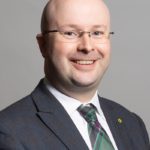
Tag: Patrick Grady

  • Patrick Grady – 2023 Parliamentary Question on Pensioner Poverty

    Patrick Grady – 2023 Parliamentary Question on Pensioner Poverty

    The parliamentary question asked by Patrick Grady, the SNP MP for Glasgow North, in the House of Commons on 6 March 2023.

    Patrick Grady (Glasgow North) (SNP)

    2. What assessment he has made of the potential impact of increasing the state pension age on trends in the level of pensioner poverty. (903869)

    The Secretary of State for Work and Pensions (Mel Stride)

    My review of the state pension age is under way. The review will consider a wide range of evidence, including two independent reports, to assess whether the rules on pensionable age remain appropriate.

    Patrick Grady

    I hope that the evidence that the Secretary of State examines includes analysis by Age UK that 1.5 million pre-state pension age households have no savings at all. Age UK warns that accelerating the rise of the state pension age

    “will condemn millions to a miserable and impoverished run up to retirement”.

    Instead of risking that increase in pensioner poverty, should he not establish an independent pensions and savings commission to ensure that pension policies are fit for purpose and reflect the demographic needs of different parts of the United Kingdom?

    Mel Stride

    The two reports to which I have just referred are independent—from the Government Actuary’s Department, on matters such as life expectancy; and from Baroness Neville-Rolfe, on the metrics that should be taken into account in determining when the next increase in the state pension age should occur. We certainly take into account issues such as pensioner poverty, on which we have an excellent record. In fact, relative pensioner poverty before housing has halved since 1999, and there are 400,000 fewer pensioners in absolute poverty—that is before or after housing—compared with 2009-10.

    Sir Desmond Swayne (New Forest West) (Con)

    Is it realistic to continue to expect people to spend a third of their lives on a pension?

    Mel Stride

    I have great respect for my right hon. Friend, but I am afraid that although he tempts me to answer that question, I cannot prejudge the decisions that I will take in the review.

  • Patrick Grady – 2023 Parliamentary Question on the 1998 Scotland Act and the Constitution

    Patrick Grady – 2023 Parliamentary Question on the 1998 Scotland Act and the Constitution

    The parliamentary question asked by Patrick Grady, the SNP MP for Glasgow North, in the House of Commons on 2 February 2023.

    Patrick Grady (Glasgow North) (SNP)

    What recent discussions he has had with Cabinet colleagues on the potential impact of the use of section 35 of the Scotland Act 1998 on the constitution.

    The Parliamentary Secretary, Cabinet Office (Alex Burghart)

    Alas, I am a mere junior Minister and I rarely get to talk to my illustrious Cabinet colleagues, but I can assure the hon. Gentleman that the Government used section 35 very carefully and very reluctantly, in order to preserve the balance of powers between our countries.

    Patrick Grady

    If the Government were so determined to resolve their dispute with the Scottish Government, they would publish the amendments that they say would make the Gender Recognition Reform (Scotland) Bill acceptable to them. Is not the reality that the Tories are prepared to veto and undermine the elected Scottish Parliament because they never really wanted devolution in the first place?

    Alex Burghart

    As the hon. Gentleman knows, section 35 of the Scotland Act is part of our constitution. He will also know that it is now for the Scottish Government to bring forward a Bill that addresses the adverse effects set out in the statement of reasons. Once again, the nationalists do not wish to take responsibility.

  • Patrick Grady – 2015 Parliamentary Question to the Department for International Development

    Patrick Grady – 2015 Parliamentary Question to the Department for International Development

    The below Parliamentary question was asked by Patrick Grady on 2015-11-23.

    To ask the Secretary of State for International Development, what steps her is taking to monitor the effectiveness of her Department’s aid spending in Nepal.

    Mr Desmond Swayne

    Across our portfolio in Nepal, monitoring plans are in place for every programme. Our strong focus on results delivery ensures we are well placed to monitor the effectiveness of our programmes in delivering planned development outcomes. Regular monitoring activities include staff undertaking field visits on a mandatory basis to verify progress on the ground, with robust annual review processes in place. We also undertake monitoring approaches that involve the beneficiaries of our programmes having the opportunity to provide feedback on programmes, including public audits and participatory monitoring approaches.

    Since the earthquake, DFID Nepal has set up a regional office in Gorkha district to increase oversight of humanitarian and reconstruction programmes. The Risk Management Office also provides effective on-the-ground monitoring directly from the districts where our programmes are implemented.

    At the bilateral level, DFID Nepal is a core member of the Nepal Portfolio Performance Review led by the government with development partners on an annual and trimester basis.

  • Patrick Grady – 2016 Parliamentary Question to the HM Treasury

    Patrick Grady – 2016 Parliamentary Question to the HM Treasury

    The below Parliamentary question was asked by Patrick Grady on 2015-12-16.

    To ask Mr Chancellor of the Exchequer, what discussions he has had with (a) UK Financial Investments and (b) Royal Bank of Scotland about the effects of decisions by the bank’s Global Restructuring Group on (i) small businesses and (ii) the economy of the UK.

    Harriett Baldwin

    The Government is aware of the reports published by Sir Andrew Large and, separately, by Dr Lawrence Tomlinson into Royal Bank of Scotland (RBS)’s treatment of customers and businesses in financial difficulty.

    The Financial Conduct Authority (FCA) has appointed Promontory Financial Group and Mazars to independently review the allegations in the reports against RBS’s practices. If the findings from the review reveal issues which come within the FCA’s remit, the FCA will consider further regulatory measures.

    The Government’s shareholding in RBS is managed at arm’s length from HM Treasury by UK Financial Investments (UKFI). However, UKFI’s role is to manage the investment, not the bank. Commercial affairs remain the responsibility of the bank’s independent management team.

    RBS is making progress to deal decisively with the problems of the past, which will allow it to become a simpler, safer and more focused bank that works for the UK economy. Under the leadership of Ross McEwan RBS has made good progress in becoming a simpler, safer and more focused bank that works for the UK economy.

  • Patrick Grady – 2016 Parliamentary Question to the Department for International Development

    Patrick Grady – 2016 Parliamentary Question to the Department for International Development

    The below Parliamentary question was asked by Patrick Grady on 2016-01-28.

    To ask the Secretary of State for International Development, what the implications are for the timescale of projects her Department funds in developing countries of the 15 year timescale that has been set for achieving the sustainable development goals.

    Mr Desmond Swayne

    The Global Goals will be the starting point for all DFID’s work in the coming years. All DFID programmes have to consider at the design stage what longer-term impact they will have and how the envisaged benefits of the programme will be sustained beyond the period of DFID’s support, and all individual DFID programmes and DFID’s overall portfolio are reviewed on a regular basis, with the rate of progress towards the Global Goals a key factor.

  • Patrick Grady – 2016 Parliamentary Question to the Home Office

    Patrick Grady – 2016 Parliamentary Question to the Home Office

    The below Parliamentary question was asked by Patrick Grady on 2016-03-21.

    To ask the Secretary of State for the Home Department, what contracts her Department has entered into with charter flight companies for the deportation of non-UK citizens to their country of origin.

    James Brokenshire

    The Home Office has a contract for the delivery of Travel Services with Carlson Wagonlit Travel Limited, which includes the provision of charter flights. The contract runs from 1st May 2010 and expires on 30th April 2017.

  • Patrick Grady – 2016 Parliamentary Question to the Foreign and Commonwealth Office

    Patrick Grady – 2016 Parliamentary Question to the Foreign and Commonwealth Office

    The below Parliamentary question was asked by Patrick Grady on 2016-06-15.

    To ask the Secretary of State for Foreign and Commonwealth Affairs, if he will issue a response to Early Day Motion 116, Slavery in Mauritania.

    Mr Tobias Ellwood

    We welcome the release of anti-slavery activists Biram Dah Abeid and Brahim Bilal Ramdhane following the decision of the Mauritanian Supreme Court. We also welcome the decision by the newly formed anti-slavery court to convict two men on charges of slavery.

    We continue to encourage the Mauritanian government to support the anti-slavery courts in prosecuting cases in full under the 2015 anti-slavery law and to take steps to facilitate the collection of data on slavery to support eradication efforts.

  • Patrick Grady – 2016 Parliamentary Question to the Home Office

    Patrick Grady – 2016 Parliamentary Question to the Home Office

    The below Parliamentary question was asked by Patrick Grady on 2016-09-02.

    To ask the Secretary of State for the Home Department, whether she plans to review the Government’s commitments on the number of refugees to be granted access to the UK at the UN General Assembly Summit on Refugees and Migrants in September 2016.

    Mr Robert Goodwill

    The Government has no plans to introduce additional pathways for refugees to come to the UK. The UK is already a leading resettlement state, offering a number of safe and legal pathways for refugees. In the year ending June 2016, a total of 3,439 people were resettled in the UK.

    In addition to the 20,000 Syrian refugees and up to 3,000 vulnerable persons from the Middle East and North Africa region that the Government has committed to resettle by 2020, the UK has also committed to relocate unaccompanied refugee children from France, Greece and Italy. Under the family reunion policy we have reunited around 22,000 refugees with their immediate family over the past five years and will continue to do so. The Government supports the principle that those who need international protection should claim asylum in the first safe country they reach. This allows vulnerable persons to receive help quickly rather than risking their lives on hazardous journeys into and across Europe or falling victim to criminal gangs who are exploiting the situation. Providing humanitarian aid in the region is the best way to provide much needed support to the majority of those fleeing persecution while working with the United Nations High Commissioner for Refugees to resettle the most vulnerable who cannot reasonably remain.

  • Patrick Grady – 2016 Parliamentary Question to the Foreign and Commonwealth Office

    Patrick Grady – 2016 Parliamentary Question to the Foreign and Commonwealth Office

    The below Parliamentary question was asked by Patrick Grady on 2016-10-20.

    To ask the Secretary of State for Foreign and Commonwealth Affairs, what his policy is on support for the findings of the UN Commission of Inquiry on Human Rights in Eritrea.

    Mr Tobias Ellwood

    The Government shares the concerns of the UN Commission of Inquiry regarding human rights in Eritrea, in particular shortcomings in the rule of law and indefinite national service.

    We have made clear to the Eritrean Government the tangible improvements we want to see, including amending its national service system and fully implementing its own constitution. We are also urging the Government of Eritrea to increase further its engagement with international human rights bodies, such as the UN Office of the High Commissioner for Human Rights, which recently visited Eritrea and was allowed access for the first time to a place of detention. We are supporting UN and EU programmes set up to address recommendations made by the Universal Periodic Review on human rights, and are funding a programme on strengthening the rule of law implemented by the Slynn Foundation.

    The mechanism of the Special Rapporteur is an important tool for the international community to strengthen its engagement with Eritrea. The UK Statement to the Human Rights Council on 21 June called on both the Special Rapporteur and the Government of Eritrea to consider ways that they might work together constructively to enhance the progress Eritrea has begun to make in its human rights observance.

  • Patrick Grady – 2015 Parliamentary Question to the Department for International Development

    Patrick Grady – 2015 Parliamentary Question to the Department for International Development

    The below Parliamentary question was asked by Patrick Grady on 2015-11-23.

    To ask the Secretary of State for International Development, whether conditions regarding respect for human rights are attached to aid funds provided to the government of Nepal.

    Mr Desmond Swayne

    DFID Nepal has signed an overarching Development Partnership Arrangement with the Government of Nepal that enshrines the partnership principles, one of which is respect for human rights. At the programme level, our Memorandum of Understandings with the Government also include a specific clause that state conditions regarding respect for human rights attached to financial aid funds.