Tag: Parliamentary Question

  • Mary Kelly Foy – 2023 Parliamentary Question on the Prosecution of Hate Crime

    Mary Kelly Foy – 2023 Parliamentary Question on the Prosecution of Hate Crime

    The parliamentary question asked by Mary Kelly Foy, the Labour MP for City of Durham, in the House of Commons on 1 February 2023.

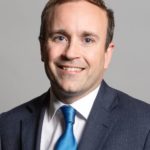
    Mary Kelly Foy (City of Durham) (Lab)

    What steps she is taking to ensure effective prosecution of hate crime.

    The Solicitor General (Michael Tomlinson)

    We are committed to delivering justice for victims of hate crime. All CPS prosecutors are trained about hate crime, and its specialist prosecutors help to lead that work. The latest figures show that the CPS has prosecuted nearly 13,000 hate crime offences, with a charge rate of 86% and, importantly, a conviction rate of 84%.

    Mary Kelly Foy

    As we mark the start of LGBTQ History Month, it was shocking to see in the year-end figures for hate crime a 41% increase in offences targeting people’s sexuality and a 56% increase in offences targeting people’s transgender identity. What are the Government doing to stop prejudice and fear, which led to that rise in crime, being stoked against the LGBTQ community?

    The Solicitor General

    In the hon. Lady’s area of the north-east, the CPS is particularly successful in getting uplifts to sentences in relation to hate crime. In the last rolling year to date, it has been successful in obtaining uplifts in 90% of cases. The question she raises is important and the CPS is working incredibly hard in that area.

  • Stuart McDonald – 2023 Parliamentary Question on Legislative Competence of the Scottish Parliament

    Stuart McDonald – 2023 Parliamentary Question on Legislative Competence of the Scottish Parliament

    The parliamentary question on Stuart McDonald, the SNP MP for Cumbernauld, Kilsyth and Kirkintilloch East, in the House of Commons on 1 February 2023.

    Stuart C. McDonald (Cumbernauld, Kilsyth and Kirkintilloch East) (SNP)

    What discussions she has had with Cabinet colleagues on the potential implications of an order under section 35 of the Scotland Act 1998 for the legislative competence of the Scottish Parliament.

    The Attorney General (Victoria Prentis)

    As I said earlier, by convention, information on whether the Law Officers have been asked to provide advice and the content of such advice are not disclosed outside Government. That convention enables candid legal advice to be given.

    Stuart C. McDonald

    Why was the prospect of a section 35 order not raised at any time before the Gender Recognition Reform (Scotland) Bill was overwhelmingly passed by the Scottish Parliament? What alternatives did the Attorney General look at? When will she set out the changes to the Bill that she wants to see before the Government would revoke the section 35 order? Those are simple questions. If she cannot answer them, all we can conclude is that the Government have lost their last shred of respect for the Scottish Parliament.

    The Attorney General

    That would be absolutely the wrong conclusion to draw. The Attorney General’s convention is clear: the UK Government respect the Scottish Parliament’s ability to legislate within its competence on devolved areas. The Government are committed to working with the devolved Administrations and strengthening the Union of the UK.

  • Aaron Bell – 2023 Parliamentary Question on Prosecutions for Fraud and Bribery

    Aaron Bell – 2023 Parliamentary Question on Prosecutions for Fraud and Bribery

    The parliamentary question asked by Aaron Bell, the Conservative MP for Newcastle-under-Lyme, in the House of Commons on 1 February 2023.

    Aaron Bell (Newcastle-under-Lyme) (Con)

    What steps she is taking to help the Serious Fraud Office investigate and prosecute fraud and bribery.

    The Solicitor General (Michael Tomlinson)

    Mr Speaker, you may remember that the SFO successfully prosecuted Glencore Energy UK Ltd and that the total amount the company will pay—£280 million—is the highest ever ordered in a corporate criminal conviction in the United Kingdom. We continue to work closely with the SFO to identify any policy changes that could support its ambitions.

    Aaron Bell

    My constituents want to see the Government crack down on corporate criminality. What measures are the Government considering in the Economic Crime and Corporate Transparency Bill to address corporate crime?

    The Solicitor General

    I am grateful to my hon. Friend for his interest. The Government recognise that the current law does not go far enough. That is why we have committed to addressing the need for a new “failure to prevent” offence in the Economic Crime and Corporate Transparency Bill. In addition, we are introducing a provision to extend the SFO’s pre-investigation powers.

  • Elliot Colburn – 2023 Parliamentary Question on Prosecution Rates for Domestic Abuse

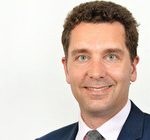
    Elliot Colburn – 2023 Parliamentary Question on Prosecution Rates for Domestic Abuse

    The parliamentary question asked by Elliot Colburn, the Conservative MP for Carshalton and Wallington, in the House of Commons on 1 February 2023.

    Elliot Colburn (Carshalton and Wallington) (Con)

    What steps she is taking to help increase the rate of prosecutions for domestic abuse.

    The Attorney General (Victoria Prentis)

    We are committed to increasing the volume of prosecutions and supporting more victims. We enacted new provisions to increase the time that victims have to report domestic abuse offences to ensure that we bring more offenders to justice.

    Elliot Colburn

    Despite Carshalton and Wallington being a relatively safe part of London, domestic violence rates there are higher than the London average. Local charities such as Sutton Women’s Centre do a great job in training people to spot the signs, but what assurance can the Attorney General give me that CPS staff have access to that same training to bring that level of crime down?

    The Attorney General

    I thank Sutton Women’s Centre for its fantastic work in training the community to spot the signs of domestic abuse. All prosecutors in London are now domestic abuse trained. Close working with the police should continue to increase the rate of prosecutions.

  • Edward Timpson – 2023 Parliamentary Question on the Backlog in the Criminal Justice System

    Edward Timpson – 2023 Parliamentary Question on the Backlog in the Criminal Justice System

    The parliamentary question asked by Edward Timpson, the Conservative MP for Eddisbury, in the House of Commons on 1 February 2023.

    Edward Timpson (Eddisbury) (Con)

    What assessment she has made of the effectiveness of the Crown Prosecution Service in tackling the backlog of cases in the criminal justice system.

    Jerome Mayhew (Broadland) (Con)

    What assessment she has made of the effectiveness of the Crown Prosecution Service in tackling the backlog of cases in the criminal justice system.

    The Solicitor General (Michael Tomlinson)

    First, I would like to pay tribute to my hon. and learned Friend the Member for Eddisbury (Edward Timpson) for his work as Solicitor General. From that work, he will know the significant amount of funding in the criminal justice system to help improve waiting times for victims. Both the Attorney General and I have seen that at first hand in our visits to regional Crown Prosecution Service areas.

    Edward Timpson

    I thank the Solicitor General for his answer. Further to the point raised by the hon. Member for Kingston upon Hull East (Karl Turner), in the first three quarters of 2022 there have been 235 ineffective Crown court trials caused by prosecution absence—the highest annual total since 2014—compared with just 19 in 2019. The recent uplift to defence fees has meant there is now more money in defending than in prosecuting, and consequently the CPS is struggling to find enough prosecutors for trials. What timescales is my hon. and learned Friend working to in order to address this situation?

    The Solicitor General

    I am grateful to my hon. and learned Friend for raising this point. Of course, I recognise the importance of ensuring that all those who work in the criminal justice system—both defence and prosecution—are paid and rewarded appropriately. He will have heard my answer earlier, and it is right that the Treasury has agreed to consider the CPS funding position. Discussions are ongoing, and I know that he will keep pressing.

    Jerome Mayhew

    The police are doing an excellent job in Broadland. They have just opened a new response centre at Postwick, improving response times and housing some of the many additional officers that this Government have provided. The CPS is the next line in the criminal justice journey. The CPS inspectorate undertook a report on local provision in March 2022. Can my hon. and learned Friend provide an update to the House on the performance since that date?

    The Solicitor General

    I recognise my hon. Friend’s expertise and interest in this matter. The inspection report for the east of England praised the quality of the work in the area, and the latest data suggests that performance continues to be strong. The area is now making all crime charging decisions more quickly than it did previously. My hon. Friend will be pleased to know that, in the face of the backlog, the conviction rate for the CPS in his region remains reassuringly high at 85%.

  • Robert Courts – 2023 Parliamentary Question on Support for Ukraine’s Judiciary and War Crimes Trials

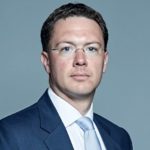
    Robert Courts – 2023 Parliamentary Question on Support for Ukraine’s Judiciary and War Crimes Trials

    The parliamentary question asked by Robert Courts, the Conservative MP for Witney, in the House of Commons on 1 February 2023.

    Robert Courts (Witney) (Con)

    What steps she has taken to support Ukraine’s judiciary in their conduct of war crimes trials.

    The Attorney General (Victoria Prentis)

    I thank my constituency neighbour for his question. This Government firmly believe in international accountability. Ukraine’s judiciary should be congratulated on prosecuting war crimes right now, in real time, during a brutal conflict. On Monday I met a delegation of Ukrainian judges in this building and heard how they are approaching this monumental task. They are grateful for our practical support, including an extensive training programme led by Sir Howard Morrison.

    Robert Courts

    What assessment has the Attorney General made of the international community’s progress in bringing Russian leadership to trial for the crime of aggression in Ukraine?

    The Attorney General

    The crime of aggression is one of the most significant in international criminal law. At Ukraine’s invitation, we have joined a core group of states to discuss the establishment of a bespoke tribunal. We are absolutely determined to play a leading role in ensuring international accountability for Russia’s actions.

    Nick Smith (Blaenau Gwent) (Lab)

    Will there be Russian war reparations to Ukraine, and how can the UK support that?

    The Attorney General

    At the moment, the international community is rightly focused on prosecuting war crimes. That is the right focus, as we hope that in so doing we will have a good effect on the behaviour of those fighting this conflict at the moment. We are undoubtedly starting to turn our minds to reparations, and there is a great deal of work going on within Government on how best to support the Ukrainians to do that. I know that the Secretary of State for Business, Energy and Industrial Strategy is very involved in that.

    Mr Speaker

    I call the shadow Minister.

    Andy Slaughter (Hammersmith) (Lab)

    Three weeks ago, the Secretary of State for Justice told me from the Dispatch Box that Russian war crimes would be pursued via Ukrainian domestic courts and the International Criminal Court, even though that denied the possibility of prosecuting Putin and his inner circle for the crime of aggression. At the time, the Attorney General appeared to share his view. Last week the Foreign Office welcomed the special tribunal necessary to try Putin, saying it would “complement established mechanisms”. That is welcome, and I think it is what the Attorney General has said today, but can she—because we know her to be a candid and thoughtful person—explain and confirm what by any definition is a screeching U-turn in Government policy?

    The Attorney General

    I am afraid I really would not describe this as a screeching U-turn—[Interruption.] No, not at all. This is a development in a very difficult area of international law. [Interruption.] I would just listen to this for a moment. It is a very delicate area of international law. This is a live and brutal conflict—we are all agreed on that—and it is right that most of the prosecutions take place in Ukraine, with real-time evidence and with witnesses present. Those prosecutions are going well, and I think we all support the Ukrainian judiciary in that. I hope very much that there will be an international moment of accountability following this war. I suspect that many courts will need to be involved, including both the ICC and any special tribunal.

    Mr Speaker

    I call the SNP spokesperson.

    Angela Crawley (Lanark and Hamilton East) (SNP)

    It is almost one year to the day since the beginning of Russia’s illegal invasion of Ukraine, and an estimated 7,000 civilian lives have been lost during this time, in one of the most barbaric atrocities against civilians recorded since the second world war. Given that the UK will host a major international meeting on war crimes in March, what further support will the Attorney General give on information sharing and testimonial gathering, and on ensuring that legal expertise will be fully utilised to hold Russian war criminals to account?

    The Attorney General

    I thank the hon. Lady for her question. It is fortuitous that the Lord Chancellor has just entered the Chamber, because in March he is hosting an important conference, with the Dutch, to discuss how further we can help and support the work of the ICC. Further, we have the work of the special tribunal that I mentioned, and we are providing a great deal of practical help on the ground in training Ukrainian judges and providing funding to help them to find evidence and to prosecute these crimes effectively.

  • Mick Whitley – 2023 Parliamentary Question on Access to Justice

    Mick Whitley – 2023 Parliamentary Question on Access to Justice

    The parliamentary question asked by Mick Whitley, the Labour MP for Birkenhead, in the House of Commons on 1 February 2023.

    Mick Whitley (Birkenhead) (Lab)

    What recent assessment she has made of the effectiveness of the Crown Prosecution Service in ensuring access to justice for victims of crime.

    The Solicitor General (Michael Tomlinson)

    All victims of crime deserve the right support, and the CPS has published the findings of independent research and is implementing changes based on that to deliver what victims need. There is new and innovative victim communication for half of CPS areas.

    Mick Whitley

    Justice delayed is justice denied, but as of September 2022 more than 17,300 Crown court cases had been outstanding for a year or more, and nearly 5,000 had been outstanding for more than two years. What does the Attorney General have to say to the victims of those crimes, whose lives have been put on hold for years while waiting for their cases to be brought to justice, and to those who cannot cope with any more delay, even if that means allowing their cases to collapse?

    The Solicitor General

    The hon. Gentleman raises an important point, and the Attorney General and I are working closely with the Ministry of Justice. There has been good progress in terms of the CPS and the time it takes for cases to be heard. The most recent figures for the CPS show that it is 171 days on average, and I am determined to see that improve and decrease.

    Mrs Flick Drummond (Meon Valley) (Con)

    Victims of crime have already been through distressing circumstances, so can my hon. and learned Friend tell me what the CPS is doing to inform and support people to navigate the criminal justice system?

    The Solicitor General

    I am grateful to my hon. Friend for her interest in this important area. The CPS has launched a new online guide for victims, ensuring that they have access to the necessary information. She is right that accessible information is the key to supporting victims and ensuring that they can navigate the criminal justice system.

    Karl Turner (Kingston upon Hull East) (Lab)

    The Solicitor General will be aware that victims of crime are being badly let down, waiting months and years for their cases to come to court. That problem is being exacerbated by the fact that there is now a disparity between criminal defence barristers’ pay and that of prosecution barristers. What does he intend to do to right that wrong and put victims first?

    The Solicitor General

    The hon. Gentleman is right to say that we should be putting victims first, and indeed we are doing so. On his specific question, the Treasury has agreed to consider the CPS funding position following publication of the criminal legal aid independent review—a report that he will know about. Discussions regarding fees and funding are ongoing, but I fully support him in putting victims first and ensuring that those cases are brought on as quickly as possible.

    Jonathan Gullis (Stoke-on-Trent North) (Con)

    I put on record my thanks to the Solicitor General for his compassion and care when dealing with the very tragic case of Sharlotte-Sky, who lost her life on Endon Road in Norton Green. He will know that Claire, Sharlotte’s mother, has felt that she has been failed, because ultimately it took over a year to get simple answers from a blood test as to whether in this case someone had been drinking and on drugs. What engagement has the Solicitor General had with the Department for Transport about its review, in order to speed up answers for our police officers and, most importantly, for victims of this horrific crime?

    The Solicitor General

    I pay tribute to my hon. Friend, who has diligently and vigorously pursued his constituent’s case—I well remember the Adjournment debate that he brought to this House and the important points that he raised concerning the unduly lenient sentence scheme. I am determined to work closely across Government, and I know that my hon. Friend will continue his campaign to pursue this.

  • Wera Hobhouse – 2023 Parliamentary Question on Prosecution Rates on Violence against Women and Girls

    Wera Hobhouse – 2023 Parliamentary Question on Prosecution Rates on Violence against Women and Girls

    The parliamentary question asked by Wera Hobhouse, the Liberal Democrat MP for Bath, in the House of Commons on 1 February 2023.

    Wera Hobhouse (Bath) (LD)

    What steps she is taking to increase the proportion of cases relating to violence against women and girls that are prosecuted.

    The Attorney General (Victoria Prentis)

    Tackling violence against women and girls remains one of the Government’s top priorities, and we are doing all we can to make streets and homes safer. We are prioritising prevention, supporting survivors and strengthening our pursuit of aggressors.

    Wera Hobhouse

    It is a well-known national scandal that only 3% of rape cases have led to charges against the perpetrator. Locally, Avon and Somerset police are making big strides towards change. They have tripled charge rates, are bringing more cases to the Crown Prosecution Service and have changed their investigative focus from the victim to the perpetrator. I am immensely proud of this progress, and I hope that my local area could become part of the ongoing pilot for specialist rape courts. Can the Attorney General confirm when a decision on the further roll-out of specialist rape courts will be made? Will my local Crown court be considered to be part of the next stages?

    The Attorney General

    Evidence is being gathered from our three specialist courts, but I should emphasise that every Crown court tries rape cases and will benefit from the learning. The south-west, as the hon. Lady has outlined, is showing the way by demonstrating new ways of working with the police, providing specialist training to all first responders. They are also, I hear, planning a community event later this month.

    Miriam Cates (Penistone and Stocksbridge) (Con)

    Prosecution rates for the appalling crime of rape against women and girls have been too low across the country. What impact does my right hon. and learned Friend believe that Operation Soteria will have on prosecuting cases of rape?

    The Attorney General

    I thank my hon. Friend for her question. She is always a great advocate for vulnerable people. Operation Soteria is focused on delivering cultural transformation in the investigation of rape offences. It looks to ensure that the victim is well supported and the case thoroughly investigated. I was glad to see joint working between the police and CPS when I visited Leeds last Friday. They are working closely together and, crucially, with support services such as independent sexual violence advisers to make sure we really deliver for victims.

    Jim Shannon (Strangford) (DUP)

    A recent revelation in Northern Ireland is that a man was punished with 140 hours of community service after domestically assaulting his wife on two different occasions. What steps will the Attorney General take to ensure that harsher sentences are given to those guilty of inflicting violence on women? We need harsher sentences.

    The Attorney General

    I thank the hon. Gentleman for raising that important case. Sentencing is, of course, a matter for the independent judiciary, the Ministry of Justice and the Sentencing Council. I know that he shares the Government’s desire to do all we can to make sure that the victims of violence against women and girls get justice.

    Sir Oliver Heald (North East Hertfordshire) (Con)

    Does the Attorney General agree that the Crown Prosecution Service is very dependent on the quality of the investigation from the outset? I therefore welcome this joint working, which is something that had been hoped for over many years and seems to be delivering results. I do not know whether she has anything she can say about its roll-out to the country as a whole.

    The Attorney General

    I thank my right hon. and learned Friend for his question. I know that this is something he has personally been working on for many years. It is true to say that joint working is the answer, and in Leeds on Friday I was able to see a police gatekeeper—that is what he is called, but I think a better word would be “interpreter”—who was able to work between the lawyers and the victim and witnesses and ensure that the case was investigated properly right from the beginning and that disclosure was managed in a sensible way.

  • Daniel Zeichner – 2023 Speech on the Agricultural Transition Plan

    Daniel Zeichner – 2023 Speech on the Agricultural Transition Plan

    The speech made by Daniel Zeichner, the Shadow Minister for Food, Farming and Fisheries, in the House of Commons on 26 January 2023.

    I thank the Minister for advance sight of the statement. It provides detail following announcements made not to this House, Mr Deputy Speaker, but to the Oxford farming conference some weeks ago. It will be scrutinised closely as farmers rightly try to work out what it will mean for them. With intense cost pressures on fertiliser, fuel and labour supply, many people are hurting and worrying. At the same time, the reduction in basic payments moves inexorably onwards. For people on the margins, especially in the uplands, the withdrawal of that essential support will make life harder and harder. Next year, half of it will be gone and the value of the other half will be eroded substantially by inflation.

    So what is on offer today? Not nearly enough, I am afraid. There are more than 100 pages of complexity. There are lots of schemes, which are worthy in themselves, but in far too many cases, I fear they will be insufficiently attractive. There is a risk that take-up will be very low, as we have seen with the SFI so far, with just 224 paid out last year, compared with the over 80,000 receiving basic payments. I hope take-up improves—we want these schemes to work—but we have real doubts. Will the Minister tell us how much of the £1 billion already cut from farmers will go back to them this year through environmental land management schemes? How many people does he expect to take up the SFI in this calendar year? I welcome the reference to tenant farmers, but can he guarantee access to those schemes, because he will be aware of the issues highlighted in the Rock review?

    There are also real questions about the environmental benefit. In the absence of a whole-farm approach, there is real risk, particularly on countryside stewardship, that the Government will pour money out to people to do pretty much what they already do and then intensify alongside that. Will the Minister tell us today what measures of environmental improvement are in place to ensure that public goods are really being secured in return for public money? Crucially, what impact does this all have on our food security? Will he tell us today whether we produce more or less food in this country this year as a consequence of these changes?

    It is fully three years since we discussed the Agriculture Bill in Committee. I asked many of the same questions then and got vague answers. We will soon be halfway through the so-called transition. The Government have been good at cutting the funding to hard-pressed farmers, but frankly woeful at guaranteeing our food production here in the UK and enabling the switch to the more sustainable nature-friendly food production system we all want to see.

    Mark Spencer

    I honestly entered the Chamber with optimism. I thought today was the day we would get a positive Opposition able to join the people up and down the country who are being positive about this. I am sure the hon. Gentleman is disappointed we have had positive comments from non-governmental organisations and farming organisations, which seem to be welcoming the plans.

    Let us get to the points the hon. Gentleman made. He said we made announcements at Oxford, but what we announced at Oxford was the lifted payments for countryside stewardship. Today we are announcing the SFI, which is the other scheme. That is on the website now. There are six extra schemes in there, some of which—the low-input grassland and improved grassland schemes, for instance—are designed to help and support exactly those upland farmers he mentioned. There is also support through countryside stewardship to assist with the maintenance of stone walls, so there are lots of things for farmers to embrace.

    The hon. Gentleman asks: can we do both? Can we keep the nation fed and improve the environment? We have full confidence that we can. Looking at the data and at history, this country gets about 1% more efficient year on year in the way we produce food. That means that in 10 years’ time we can produce the same amount of food on 10% less land. I think we can do better than that. With investment in new technology, we can be more productive on the most productive land, and on the margins around those fields we can add true biodiversity and environmental output.

    Let me give a practical example. If we convince farmers not to cut their hedgerows in August or September, as was traditional, but encourage them to cut them in February, that would provide a huge pantry of berries for small birds to feed on throughout the winter. Combining that with support for wildflower strips next to the hedgerows would encourage the development of lacewings and ladybirds, which eat aphids, which are the pests farmers use pesticides on to stop the damage to their crops. That would be a win-win by working with, not against, nature. That is what we want to encourage farmers to do, and that is how we will deliver food security, environmental benefits and better biodiversity.

  • Christine Jardine – 2023 Parliamentary Question on Blessings for Same-sex Couples in the Church of England

    Christine Jardine – 2023 Parliamentary Question on Blessings for Same-sex Couples in the Church of England

    The parliamentary question asked by Christine Jardine, the Liberal Democrat MP for Edinburgh West, in the House of Commons on 26 January 2023.

    Christine Jardine (Edinburgh West) (LD)

    Whether the Commissioners have held discussions with senior Church leaders on allowing clergy to conduct blessings for same-sex couples.

    Andrew Selous

    With you permission, Mr Speaker, following my response to the urgent question on Tuesday, the advice I was given then was by the Church legal office, and I was yesterday asked to make a small clarification. A simple majority in each of the three Houses of the General Synod could suffice to pass a measure and amending canon to change the definition of marriage in ecclesiastical law, but circumstances could also arise in which two-thirds majorities in the House of Bishops and the House of Clergy would be needed, and, as with all authorised forms of service, a two-thirds majority in each House would be required for the approval of the Synod as a form of service for the marriage of a same-sex couple. I apologise, Mr Speaker, but I was only informed yesterday. Given that I was answering questions today, I thought you would find it acceptable that I put that slight clarification on the record.

    In answer to the question from the hon. Member for Edinburgh West (Christine Jardine), it is the case that the General Synod of the Church of England can make its own decisions on these matters. Members of the Synod will have a chance to make their own views clearly known, having listened to the very forcible views expressed in this House on Tuesday. I repeat that the Church of England has apologised for past behaviours, and welcomes and values LGBTQI+ people unreservedly and joyfully.

    Christine Jardine

    I thank the hon. Member for that clarification and for his comments about welcoming the LGBTQI+ community joyfully. But can I ask him to clarify then why it is that a man and a woman who do not believe in God and do not regularly attend church are welcome to marry in the Church of England—indeed, the Church’s website says, “God’s blessing is the main attraction for many couples”—but a couple in a same-sex relationship, both of whom may have worshipped in the Church all their lives and live in the spirit of Christian faith, are denied the same right in the Church, even though similar denominations in Scotland offer that opportunity? Can the hon. Member inform the House whether the Commissioners have discussed that inequality with the Church of England?

    Andrew Selous

    The hon. Lady is right to raise this issue. These matters will be very livelily debated at the General Synod between 6 and 9 February. I can also tell her that each province in the global Anglican communion is autonomous. The majority of the provinces in the communion provide neither blessings nor marriages for same-sex couples: the Scottish Episcopal Church provides marriages, the Church in Wales provides blessings, and the Church of Ireland provides neither for same-sex couples, so the hon. Lady can see that there is a variety of practice within these islands. But I have heard what she has said and, more importantly, I will make sure that the General Synod is very well aware of her views and those of others in this House.