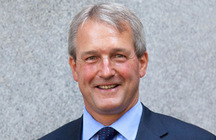
Tag: Owen Paterson

  • Owen Paterson – 2013 Speech to the Oxford Farming Conference

    owenpaterson

    Below is the text of the speech made by Owen Paterson in January 2013 to the Oxford Farming Conference.

    I am delighted to be speaking at the conference which for more than 65 years has done so much to provide a platform for debate in the farming industry.

    I must first acknowledge what a tough year this has been. The year that started in drought has ended in torrential rain and floods. Only yesterday, I saw for myself the impact of flooding on homes and farmland in Worcestershire and Gloucestershire. These difficulties have been further compounded by pressure on prices, high feed costs and diseases such as bovine TB and Schmallenberg.

    I would like to pay particular tribute to the generosity of the Prince of Wales and the Duke of Westminster whose recent donations will bolster the work of organisations, such as the Royal Agricultural Benevolent Institution, in supporting those facing “need, hardship or distress”.

    Despite these problems, there is much to be positive about. Farming in this country successfully produces food for 63.5 million people and supports industries that add nearly £90 billion to the UK economy. It also adds value in many other ways, from enhancing some of our most valuable habitats to managing the landscapes that underpin recreation and tourism.

    Our farmers and landowners demonstrate on a daily basis how you can grow the economy while improving the environment. The two are not mutually exclusive. It is these twin objectives, alongside our determination to safeguard animal and plant health, that must guide everything Defra does.

    Above all, I see Defra’s role as working to create the right conditions for rural businesses to thrive and grow. That includes investing £530 million in superfast broadband for rural areas by 2015, with £20 million for the most remote communities.

    We are also overseeing a £150 million programme to get mobile phone masts into rural areas, helping to overcome the perennial frustrations of not-spots.

    When it comes to flooding, we are investing more than £2.3 billion in flood prevention. The additional £120 million that we secured in the Autumn Statement, alongside the money brought in through our successful partnership funding programme, means that more money is being invested over this current spending review period than in any previous four year period. This investment doesn’t just focus on bricks and mortar: 59 projects completed during 2011/12 provided an improved level of flood protection to more than 74,000 hectares of agricultural land.

    I am absolutely convinced that we can only improve the environment and enable farmers to continue to make the significant contribution they do if we have a growing, prosperous economy. I want to work with you to drive that growth.

    From Turnip Townshend to Sir Joseph Nickerson, the industry has long been at the forefront of innovation through its development of new processes, technologies and land management techniques. This is something we must continue to champion.

    The world’s population has grown from 2.5 billion in 1950 to just over 7 billion today. New technologies for food and agriculture are helping us to keep pace with the growing population. Between 1967 and 2007 crop yields increased by 115 per cent but land use only increased by eight per cent. Indur Goklany has calculated that if we tried to support today’s population using the production methods of the 1950s, instead of farming 38 per cent of all land, we would need to use 82 per cent. It has also been estimated that the production of a given quantity of a crop now requires 65 per cent less land than it did in 1961.

    It is for these reasons that the UK Government as a whole invests over £410 million annually in research in the agriculture, food and drink sector. I am also working closely with David Willetts, the Science Minister, on the Agri-Tech Strategy. This will look at how best to capitalise on the UK’s world class science and technology base to increase the competitiveness of the agricultural sector, as well as addressing the challenge of food security. We need to be able to translate research into new products, processes and technologies.

    When we’re talking about innovation, we should also consider GM. In 2011, 16 million farmers in 29 countries grew GM products on 160 million hectares. That’s 11 per cent of the world’s arable land. To put it in context that’s 6 times larger than the surface area of the UK.

    I fully appreciate the strong feelings on both sides of the debate. GM needs to be considered in its proper overall context with a balanced understanding of the risks and benefits. We should not, however, be afraid of making the case to the public about the potential benefits of GM beyond the food chain, for example, significantly reducing the use of pesticides and inputs such as diesel. As well as making the case at home, we also need to go through the rigorous processes that the EU has in place to ensure the safety of GM crops. I believe that GM offers great opportunities but I also recognise that we owe a duty to the public to reassure them that it is a safe and beneficial innovation.

    The key for growth, however, must be for us to put the conditions in place so that we can get out of people’s hair and let them get on with what they are good at. I want our farmers to be farming not form-filling.

    In response to the Farming Regulation Taskforce’s recommendations, we have made 137 commitments to reduce the regulatory burden on farmers.  I am keeping in close touch with progress and met Richard Macdonald, the Chairman of the Implementation Group, just before Christmas for an update. As a result of this work, there will be 12,000 fewer dairy inspections a year.  We must now crack on to replicate this across the industry, as well as reducing further the burden of paperwork.

    I start from the position of trusting farmers. I am determined that we should move towards a system of “earned recognition”.  Such a system would acknowledge that the majority of farmers adhere to high standards and ensure that those who do are rewarded by less frequent inspections.

    While many of the changes that we have made will not have grabbed the headlines, I do believe that they are beginning to make a practical difference. Since 2011, we have removed over £13 of unnecessary compliance costs for every £1 added. There is however no room for complacency. I know, for example, that there are areas like movement of livestock that still require real work.

    I am keen to hear from farmers about how regulation affects them and their businesses, day in day out, in order to work to improve the system.

    To put farming on a sustainable footing, it needs a highly skilled workforce. We need entrepreneurial, ambitious people who have both the motivation to succeed and the skills to do so. There are half a million people employed in agriculture and horticulture. And almost 4 million in the food and drink sector in total.

    I welcome the lead the industry is taking in  promoting itself to young people and supporting new entrants, not least through the ‘Bright Crop’ initiative, which is working to change perceptions. We will continue to support the industry in its efforts to get the right people with the right skills into the right jobs and that is why David Heath, the Farming Minister, will be making a more detailed announcement on the ‘Future of Farming’ group later on today.

    There are exciting opportunities at every level of the industry, ranging from agronomy to research and engineering. We should be encouraging graduates and people with experience and skills from other sectors to take advantage of them. People need to know that many of these roles involve multi-million pound budgets and cutting-edge science. All of them put food on the nation’s plates.

    I am personally committed to ensuring that we seize the opportunities that the growing global demand for high-quality UK products presents us with. Food and drink exports were worth £18.2 billion in 2011 – the seventh year of continuous export growth.

    There are some great examples of new markets that we are opening up. After lengthy negotiations, Russia has just lifted its ban on British beef and lamb imports in a deal potentially worth £80 million over the next three years. China has also opened its doors to British pork, enabling us to export the fifth quarter for which there is little demand in the UK with a value of £50 million a year.

    In November, I visited Shanghai as part of the largest ever delegation of food and drink companies from the UK to open the Food and Hotel China trade fair. I also attended a reception in Hong Kong where I carved a prime piece of Yorkshire beef to promote our new agreement to sell beef on the bone there.  I intend to return to China later this year to build on these foundations.

    British food is increasingly marketable abroad thanks to its excellent reputation. Our animal welfare standards are some of the highest in the world. We have top quality ingredients and raw materials, coupled with rigorous food production systems. We have totally reliable traceability.

    We must not only capitalise on the opportunities that exist across the globe but also on the huge support amongst the public for UK farmers and the genuine desire to buy local products. We need to convert this support into buying decisions, supporting growth in the sector and the wider economy.

    At home, we are currently 78 per cent self-sufficient in the type of food we are able to grow in this country. We currently import 22 per cent of food that could be produced here. For example, we have a £1.2 billion trade deficit in dairy products. Each year we bring in 115,000 tonnes of ice cream – more than double the 50,000 we send abroad, 150,000 tonnes of yoghurt – six times the 25,000 we export. British fruit and vegetable growers are in a similar position.

    We can all do more and, just as everyone got behind Team GB last summer, we must get behind our food producers. By buying British, we boost the rural economy and enjoy some of the best quality produce in the world.

    In addition to the role farmers play as food producers, the public places a huge value on the work they do for the environment. The Government supports this work through its agri-environment schemes. Around 70 per cent of our agricultural land is covered by such agreements and we continue to develop our schemes with a new winter bird feeding option coming on stream this week.  Only recently, Tedney Farm in Worcestershire became our 10,000th Higher Level Stewardship scheme, delivering benefits for agriculture and the environment.

    2013 is an important year for CAP reform. That is why I plan to attend all of the Agriculture Council meetings in person. I am working hard to build alliances with other Member States, both in the Council and the Parliament. In December I hosted a lunch for like-minded agricultural ministers from countries in the Stockholm Group to explore common ground for sensible reform. It is also important that the CAP reflects how the UK works, so we’ve been working with the devolved Ministers and arguing for decision-making at regional level.

    In the current negotiations, I know where I would like European agriculture to end up, although we might not get there this time. It is clear that in this round, due to run until 2020, Pillar 1 will continue.

    I would like decisions on which food to produce to be left to the market, so farmers alone decide which crops to grow and which animals to raise according to demand in the food sector. While this is already happening, and farmers have risen to the challenge, with over 90 per cent of EU support payments now decoupled, there’s more to do. I do, however, believe that there is a role for taxpayer’s money in compensating farmers for the work they do in enhancing the environment and providing public goods for which there is no market mechanism. Farming makes a real contribution to our habitats and wildlife.  We must be able to continue to develop our agri-environment schemes.

    Throughout this process, I have made it clear to Commissioner Ciolos that if his reforms continue the process set in train by MacSharry and Fischler I will support them. If they seek to take us backwards, I will not.

    I will continue to push for greater simplification as we cannot afford another round of unnecessarily complex or costly reforms. This would risk undermining the progress that has been made at the RPA, which saw it achieve its best ever performance in December paying out more than £1.4 billion to 97,000 farmers. Last time the CAP was reformed, the changes were so horrendously complicated that we struggled to implement them and ended up paying out over €550 million in disallowance – the EU’s euphemism for clawing back our money.

    As we explore farming’s broader contribution to society, it is vital that we find ways of placing a value on nature so that we can make informed choices when it comes to assessing the economic value of one form of farming against the environmental value of another.

    We have established the Natural Capital Committee, chaired by Professor Dieter Helm, to explore how we might be able to create a value system around our natural capital which acknowledges the diversity and benefits we all enjoy from our wildlife and landscapes alongside the need for a living, working countryside.

    What potential, for example, is there for a credits system that takes into account the difference between habitats and their relative scarcity, building on the sort of offsetting approach that we are piloting in the planning system through section 106 agreements? This is an approach that is already being deployed in the USA and Australia.

    I hope that the Committee’s work will help us identify a system which recognises the importance of agricultural production and wildlife, moving us away from the polarised nature of previous debates.

    The health of our animals and the important role they play in both our economy and environment must be at the heart of everything Defra does.

    We must not only ensure that our native animals are healthy for economic reasons – in 2011 exports of beef and lamb totalled £851 million alone – but the very important role they play in supporting our landscapes and biodiversity.

    Many of our most delicate landscapes and wildlife – the landscapes which have inspired some of our most famous artists and which continue to attract millions of visitors – depend on the presence of animals such as the Herdwick in the Lake District or the Southdown on the Downs.  These animals, and the benefits we derive from them, sum up the multi-faceted contribution farming makes to society.

    Bovine TB is the most pressing animal health problem in the UK. Its impact on our cattle farmers, their families and their communities cannot be overstated. Last year TB led to the slaughter of 26,000 cattle in England at a cost of nearly £100 million. In the last 10 years bovine TB has cost the taxpayer £500 million. This will rise to an estimated £1billion over the next decade if the disease is left unchecked.

    Coming from a farming background, and representing a constituency where the cattle industry is central to both its economy and character, I have long taken a deep interest in this issue.  As a Shadow Minister I tabled more than 600 Parliamentary Questions on the subject and met international experts in the field.

    Research in this country over the past fifteen years has clearly demonstrated not only that cattle and badgers transmit the disease to each other but that the culling of badgers can lead to a reduction of the disease in cattle if carried out over a large enough area for a sufficient length of time. We must also learn from the experience of other countries which shows that TB in cattle cannot be controlled without also bearing down on it in the surrounding wildlife population. In New Zealand, the number of infected cattle and deer herds has been reduced from 1,700 in the mid 1990s to fewer than 100 in 2011. This is a result of rigorous biosecurity, strict cattle movement controls and proactive wildlife management.  A similar approach has been successfully deployed in Australia, the Republic of Ireland and the USA.

    The decision, based on the advice of the NFU, to postpone the culls last autumn was a disappointing one for us all but the right one in terms of the effective delivery of the policy. I would like to thank the NFU’s leadership, staff and members for the huge amount of work they put in on the ground and their courageous public stance on this emotive issue.

    The pilots will go ahead this summer.  That’s why I have established a project board with all the key partners – including Defra and its agencies, the NFU, Natural England and the police – to oversee the delivery of the pilot culls.  We are all committed to working together in partnership to ensure that the culls go ahead and to establish a sustainable model for future deployment.

    Culling is, however, only one element of the Government’s approach to tackling bovine TB. That is why we continue to strengthen cattle movement controls, increase our surveillance testing regime and invest in research into badger and cattle vaccines. I’m also keen to pursue better diagnostic techniques such as PCR and to work with the European Commission on a way forward on vaccination.

    With an injectable cattle vaccine and a legal and validated diagnostic test still some way off, I am acutely aware of the burden the increasingly stringent on-farm measures are placing on farmers. That’s why I am determined to use every tool at our disposal and to bear down on the disease in both cattle and badgers.

    The presence of Schmallenberg on our shores is another reminder of the many threats to our livestock. It’s a midge-borne disease so we have no way of stopping it and there is no known cure. Defra is funding research in the UK and collaboratively with other EU countries to find out more about this virus, how it spreads, how it works and what its impact is. We continue to work with the AHVLA to raise awareness and provide testing for farmers’ flocks.

    We don’t just face animal diseases though. We have to be increasingly vigilant for disease in our plants and trees. Ash dieback has served as a timely reminder of the need for us to prioritise plant health and the centrality of plants to our economy, landscape and history.

    In October, I asked our Chief Scientific Adviser, Professor Ian Boyd, to convene an Independent Taskforce on Tree Health and Plant Biosecurity to review our strategic approach to plant health and to think outside the usual political, regulatory and resource constraints. Their initial recommendations lay the groundwork for a radical reappraisal of how we approach plant health.

    The interim control plan for Chalara, published in December, builds on the tree health summit that we organised for more than 100 forestry experts, campaign groups and businesses and the two COBR meetings I chaired to co-ordinate our response across government and across the UK.

    We will reduce the spread of the disease by maintaining the ban on the import and movement of ash trees. We will work with research councils and European partners on research into spore production at infected sites and on understanding genetic resistance.  Farmers, landowners, voluntary organisations and the general public all have a crucial role to play in helping us identify diseased and potentially resistant trees. We will also work with the horticulture and nursery sectors on long-term resilience.

    I am determined that disease in trees and plants is given the same priority as that in animals.

    I have lived in the countryside all my life and represented a rural constituency for more than 15 years. I am in no doubt about the vital role farming plays in our society economically, environmentally and socially.

    I believe that government’s role is to help where it is needed and to get out of the way where it is not. That’s why we are determined to put in place the conditions that will enable the industry to capitalise on the very real opportunities that exist at home and abroad and to put itself on a firm footing for the future. By doing this, we will have a flourishing, outward-looking industry boosting growth in the economy while improving the environment: a confident industry delivering for society.

    I look forward to working with you and I wish you all a successful New Year.

  • Owen Paterson – 2012 Speech to the Women's Institute Food Event

    owenpaterson

    Below is the text of a speech made in December 2012 by the Environment Secretary, Owen Paterson, to the Women’s Institute Food Event.

    I want to start by thanking the Women’s Institute for inviting me to speak. I enjoy coming to events outside of London and getting a broader perspective on the issues that my department deals with.

    The history of the Women’s Institute makes it particularly fitting that the WI should be playing a major part in the debate of food security.

    The WI were set up in Britain in 1915 and promptly got on with helping women get involved in food production in the First World War.

    Then in the Second World War the WI played a key role on the Home Front growing and preserving over five thousand tonnes of fruit between 1940 and 1945, which otherwise would have been wasted.

    With all the practical experience the WI are bringing to the problem and their partnership with the Institute of Public Policy Research, I am sure the WI’s report will be a valuable addition to the food security debate.

    By 2050 we’re expecting the world’s population to hit 9 billion. That’s 9 billion mouths to feed in a world with increasing competition for land, water and energy.  We may need as much as a 70% global increase in food by 2050. Before we get depressed by this, let’s celebrate the fact that technology has dramatically improved our ability to feed ourselves.

    The World’s population has grown from 2.5 billion in 1950 to just over 7 billion today. New technologies for food and agriculture are helping us to keep pace with the growing population. As the WI set out in their report, between 1967 and 2007 crop yields increased by 115 per cent but land use only increased by eight per cent. Indur Goklany has calculated that if we tried to support today’s population using the methods of the 1950s, instead of farming 38% of all land, we would need to use 82%.

    There is still a massive challenge but also an exciting opportunity to rethink the way our food production works. This is a chance for us all to improve food production from farm to fork. Technology and innovation will help us to increase production while improving the environment.

    The UK is already a world leader in food security issues. In 2011 we published the Foresight report, which set out how to deal with growing world population and changing climate. I would like to pay tribute to my predecessor, Caroline Spelman, for her work on this and thank her for her achievements.

    The Prime Minister gave me clear instructions upon my appointment. I need to find ways to increase growth while improving the environment – the two are not mutually exclusive. The work the Government is currently doing on food production and food security is a key part of making this happen.

    One of my first events was a meeting at No 10 with farmers, producers, distributors and exporters.  I understand that Government needs to work in partnership with industry.

    The Green Food Project is looking at how to produce more food while simultaneously improving the environment. We’re working with partners from across the food supply chain, from farmers to retailers, to develop solutions that ensure UK food security. We need to design and implement policy that works for businesses, consumers and the environment.

    Innovation has a key role to play in food security. There are some really innovative businesses like Intake Farm in Skipton that introduced a bedding recovery unit using money from a Rural Development Grant. This will save them thousands of pounds a year and reduce the risk of lameness in their livestock.

    I am currently working with David Willetts, the Science Minister, on the Life Sciences Agri-Tech Strategy to help encourage innovation and new technologies. We want to use the UK’s world class science base to increase the competitiveness of the agricultural sector. We need to be able to translate research into new products, processes and technologies, and this should include serious consideration of GM. In 2011, 16 million farmers in 29 countries grew GM products on 160 million hectares. That’s 11% of the world’s arable land.

    The Agri-Tech Strategy will build on the world leading scientific expertise in the UK. The Government invests £400million in agri-food R&D. We need the best research, technology and knowledge transfer that we can get.  An inspiring example is the Driffield based Beef Improvement Group. Earlier this year they successfully secured a £1.2m grant from the Technology Strategy Board. They are using this to carry out an inventive project to measure Net Feed Efficiency, which will help beef producers drive down production costs and compete in the world market.

    When I was in Hong Kong three weeks ago I went to a reception promoting our new agreement to sell beef on the bone to Hong Kong. I can’t resist mentioning that the centre piece of the event was that I carved a prime piece of Yorkshire beef from Whitby.

    Government is also determined to do everything possible to improve food production. That’s why I’m so supportive of the Food and Drink Federation’s 2020 strategy: 20% sustainable growth by 2020. The Food industry contributes nearly £90 billion a year to the economy and is a key area for growth. We celebrated food exports of £18.1 billion last year.

    We need to recognise the role that exports play in our food and drink sector. My recent trip to China showed me how much things have changed there. The middle classes are aspiring to a more westernised diet that includes high-end imported goods, including dairy products.  Russia has just lifted their ban on the import of British beef and lamb, opening up a huge new market, potentially worth £80million over the next three years.

    British food is becoming increasingly popular abroad thanks to its excellent reputation. We have high quality ingredients and raw materials. We have rigorous food production standards. We have totally reliable traceability. There are great examples of internationally recognised foods from this part of the world like Wensleydale cheese and Yorkshire pudding. It’s these types of food that help to make British food popular.

    I have to mention some of the wonderful entrepreneurial UK companies that I went to China with, including Pukka and Imporient tea. Can you believe that they are selling tea to China?

    I came across all kinds of exciting business prospects while I was out there. Visiting one of Tesco’s growing number of stores, I saw for myself the opportunities for some products that there’s no market for in the UK. Like chicken feet for example. One UK company alone produces 9 million chicken feet a week. Currently, disposing of poultry heads and feet costs £17.6 million a year. The estimated market value of UK chicken and turkey feet sold to China could be £300million. Taking up an opportunity like this could reduce waste and be good for the industry.

    Incredibly in 2011 the UK threw away 15 million tonnes of food and drink waste. For an average family that is £500 worth of edible food that’s chucked out each year. At least 60% of our household food waste is avoidable. We are already making progress. Since 2006 food waste has been reduced by 13% but there’s more to do. That’s why Government introduced clearer food date labels on products.

    We have been drawn into a cult of beauty and perfection, which has no bearing on nutritious or economic value. There’s nothing wrong with ugly veg. There’s no need to throw it out.

    We all have a responsibility to do something about this. As an organisation with a diverse membership of 210,000 and a can do attitude, I would like to encourage the WI to help us as a nation cut down on food waste.

    While Government can do a lot of things, I think a big part of what Government needs to do is get out of people’s hair and let them get on with doing the things they are good at. That’s why we’re getting rid of so many regulations.

    Government can’t do this alone. I need the industry and consumers to tell me what more we can do, what other regulations we can get rid of, what processes we can improve.

    We are introducing a Groceries Code Adjudicator to even out the balance of power in the supply chain and make sure farmers get a fair deal for their hard work.

    We are continuing to support the UK dairy industry through the Code of Practice. I would like to pay tribute to Sir Jim Paice, the previous Agriculture Minister, for his tireless efforts to get this agreed. The Code means that in future, contracts between farmers and dairy processors will be freely negotiated, fairer and more transparent.

    I know that the dairy industry is a particular interest for the WI. We can all do our bit to help the industry. We have a £1.2 billion trade deficit in dairy products. Each year we bring in 115,000 tonnes of ice cream – more than double the 50,000 we send abroad. 150,000 tonnes of yoghurt – six times the 25,000 we export. We have a dessert deficit. If we all reached for dairy products with made in the UK on the label, we could make a massive difference. This includes Muller yogurts that are made in Market Drayton in my constituency.

    Farming and the food industry are now an international industry. Food prices are impacted by the global market.

    In the European Union I’m pushing other Member States hard on CAP reform. I have a clear end point that I’d like European agriculture to arrive at. Decisions on what food to produce should be left to the market, so farmers alone decide what crops to grow and animals to raise. Tax payers’ money should be used to support the environment through our excellent agri-environment schemes, so that farmers and landowners are compensated for the public goods they provide and for which there is no market mechanism.

    At the Agriculture Council in November I made it clear that sugar quotas need to go. The price of sugar is 35% higher than it needs to be; it adds an unnecessary 1% on to the weekly shopping basket. This is ridiculous when China imported £1.2billion worth of raw and refined sugar in 2011, more than double what it was the year before. We should be able to export our sugar to them.

    We produce just over half of the food we consume. We can’t produce all our own food, mangoes don’t grow well here. 22% of the food we do eat could be produced here. We should back it.

    What I want to do is create the conditions for the food industry to grow and at the same time to improve the environment.

    The food and farming industry is an amazing success story. It employs 3.6 million people in the UK. The Government has helped to secure 6000 apprenticeships in the industry presenting a great opportunity for innovative young people.

    Food security is the responsibility of us all, whether it’s Government, industry or consumers. The Government is working to capitalise on the opportunities offered by the growing global demand for high-quality British products. Industry is investing in science to keep Britain at the cutting edge of food technology. Consumers are voting with their money by demanding sustainable products and clearer labelling.

    In the UK we are well equipped to rise to the challenge of food security.

    The WI’s discussion paper has kicked off a national debate on how to achieve food security. I know it will make an important contribution and I look forward to working with you.

  • Owen Paterson – 2012 Speech to the Food and Drink Federation

    owenpaterson

    Below is the text of the speech made by the Environment Secretary, Owen Paterson, to the Food and Drink Federation on 12th December 2012.

    This time last year the FDF launched its 2020 vision for growth. This is a shared vision for the UK food and drink industry to deliver sustainable growth of 20% by 2020. I would like to take this opportunity to thank my predecessor Caroline Spelman who played a key role in its launch.

    I fully support the FDF’s work on this. It chimes well with the instructions the Prime Minister gave me on my appointment. He asked me and my Ministerial team to focus on growth while improving the environment. These two are not mutually exclusive; in fact I believe that we cannot have one without the other.

    One of the first events I attended in office was a meeting at No. 10 with farmers, producers, distributors and exporters.  I understand that Government needs to work in partnership with industry if we are to get the best from the food and drink manufacturing sector.

    This sector is a great success story. The food and drink manufacturing sector employs 3.6 million people and agricultural work employs a further half million. The manufacturing side is worth £9 billion to the UK economy. Last year exports hit £12 billion

    The Government is investing in the future of the industry. We spend over £410million on agriculture and food research annually. I know that as an industry you invest £1 billion each year in R&D. That enables a staggering 1,500 new products to be launched each quarter. Innovation has a key role to play in ensuring that the sector continues to grow and that we can expand into new markets.

    Recently I was in Shanghai to open the Food and Hotel China trade fair. Incredibly there were UK Companies who were selling tea to China. They were creating a market by offering innovative high-quality products.

    The Green Food Project is looking at how to produce more food while simultaneously improving the environment. We’re working with partners from across the food supply chain, from farmers to retailers, to design and implement policy that works for businesses, consumers and the environment.

    I am currently working with David Willetts, the Science Minister, on the Life Sciences Agri-Tech Strategy to help encourage innovation and new technologies. We want to use the UK’s world class science base to increase the competitiveness of the agricultural sector and address the global food security challenge. We need to be able to translate research into new products, processes and technologies, and this should include serious consideration of GM. It is reported that in 2011, 16 million farmers in 29 countries grew GM products on 160 million hectares. That’s 11% of the world’s arable land. To put it in context that’s 6 times larger than the whole surface area of the UK.

    We need to discuss this at national level and unblock it at EU level. Above all we need to make the case to the public. That will require government, industry and the science community to work together. I agree with Jim [Mosely] that the UK risks becoming a “food museum” if we fail to embrace new technologies such as GM, so it’s crucial we get this right.

    The Agri-Tech Strategy will build on our world leading scientific expertise in the UK. We need the best research, technology and knowledge transfer that we can get, so that the industry can continue to develop. This is a great opportunity for UK economic growth and a way to continue to increase exports. We also need to educate the public sentiment so consumers understand the possibilities that new technologies offer.

    The FDF have had a great success in achieving their pledge to double the number of apprenticeships by the end of 2012, there are now over 4,700 in the sector. The industry is really leading the way both for growth and delivering for wider society. The Graduate Excellence Scheme is exactly the sort of thing we need. It will encourage young people into this exciting, innovative industry. They will be rewarded with a fulfilling career. My sincere congratulations to all the companies who have pledged their support.

    The Food Supply Chain Skills Action Plan will help us to continue to deliver on improving the perception and image of the food and drink sector. I would like to pay tribute to Sir Jim Paice the previous Agriculture Minister for the excellent work he did on creating this plan. I discussed the issues of improving skills and improving the image of the sector when I met with the FDF Executive Committee in October this year.

    This plan is important because, as the FDF is clearly already aware, improving skills is fundamental to sustainable growth of the sector and of the economy.

    As well as investing in the future of the industry through research and skills, the Government is evening out the balance of power in the supply chain to ensure that everyone gets a fair deal for their hard work.

    We are introducing a Groceries Code Adjudicator to make sure that direct suppliers to major retailers are treated fairly. This will also mean that consumers get a good deal; they shouldn’t lose out because of unfair contractual practices. I would like to thank the FDF for their support on this initiative.

    We are continuing to support the UK dairy industry through the Code of Practice. The Code means that in future, contracts between farmers and dairy processors will be freely negotiated, fairer and more transparent.  Yesterday we made another great step forward for dairy farmers with the Dairy Package that David Heath launched on the Isle of Wight.

    We can all do our bit to help the industry. We have a £1.2 billion trade deficit in dairy products. Each year we bring in 115,000 tonnes of ice cream – more than double the 50,000 we send abroad. 150,000 tonnes of yoghurt – six times the 25,000 we export. We have a dessert deficit. If we all reached for dairy products with made in the UK on the label, we could make a massive difference.

    Increasing exports is widely seen as one of the largest opportunities for growth in the UK food and drink sector. Look at the recent deal with Russia. There’s a market just opened up worth potentially £80 million over the next three years exporting beef and lamb.

    There have been seven consecutive years of record growth in exports in the food and drink sector. This demonstrates the opportunity for exports in this sector to have an even greater impact on the UK economy.

    That’s why I am focusing so much of my energy on getting exports moving. I’ve already mentioned the trade fair in Shanghai where there was the largest ever delegation of food and drink companies to China. I also went to a highly successful reception promoting our new agreement to sell beef on the bone to Hong Kong.

    British food is becoming increasingly popular abroad thanks to its excellent reputation. We have high quality ingredients and raw materials. We have rigorous food production standards. We have totally reliable traceability. This is what the research for the FDF’s Vision for Growth showed. The research also showed that branding and new product development were particularly good.

    We’re continuing to work on this through our action plan “Driving Exports Growth in the Farming, Food and Drink Sectors”. We aim to open markets and remove trade barriers, encourage SMEs to explore overseas opportunities and build a business mindset about exporting as a key route to growth.

    If you have any problems with technical or regulatory issues please come to us. In China we found that the UKTI can offer practical advice on the ground. I want to get the message out; we are here to help.

    As well as looking at what we’re doing in the UK, we also need to look at the wider conditions we are working in.

    In the European Union with the other Member States I‘m pushing the Commission hard on CAP reform. I have a clear end point that I’d like European agriculture to arrive at although we might not get there this time. Decisions on which food to produce should be left to the market, so farmers alone decide which crops to grow and animals to raise. Tax payers’ money should be used to support the environment through our excellent agri-environment schemes, so that farmers and landowners are compensated for the public goods they provide and for which there is no market mechanism.

    I am seriously worried that some countries are looking to reverse the long-term destination set out in the MacSharry and Fischler reforms. These countries want us to continue to subsidise food production with public money. For instance the EU has agreed that sugar quotas should end in 2015. At the Agriculture Council in November I made it clear that sugar quotas need to go. The price of sugar is 35% higher than it needs to be; it adds an unnecessary 1% on to the weekly shopping basket. This is ridiculous when China imported £1.2billion worth of raw and refined sugar in 2011, more than double what it was the year before. We should be able to export our sugar to them.

    Growth is not enough on its own. As well as finding ways for the sector to continue to expand we also need to improve the environment.

    We are already making progress, since 2006 food waste has been reduced by 13% but the UK still threw away 15 million tonnes of food and drink waste in 2011. That’s £500 worth of edible food the average family chucks out each year.  As well as household waste we should think about industry by-products that have other uses, for example agricultural waste in Anaerobic Digestion plants.

    I welcome the FDF’s leadership in developing the Five-Fold Environmental Ambition. It has targets for five areas of environmental sustainability: achieving an absolute reduction in emissions by 2020, sending zero food and packaging waste to landfill by 2015, reducing the carbon impact of packaging, reducing water use, and embedding environmental standards in transport.

    I also congratulate the FDF on taking part in voluntary agreements, such as the Federation House Commitment for water saving. I thank the FDF for continuing to drive the sustainability agenda forward. Through the efforts of the members of the FDF sustainable behaviours are now the norm for the sector. This is an excellent achievement.

    My colleague Jeremy Hunt in the Department of Health has asked me to thank the FDF for its commitment to the Public Health Responsibility Deal Food Network. The FDF has done much this year to enable people to eat more healthily and we need to keep building on this success.

    I am delighted to be the Secretary of State working with the industry at such an exciting time. I am looking forward to continuing to work closely with you all.

    I want to thank all of you for the contribution you are making to increasing growth while improving the environment. Next year the FDF celebrate their centenary, they should rightly celebrate 100 years of championing the industry and supporting innovation.

    I wish you a very Merry Christmas and a most successful New Year.