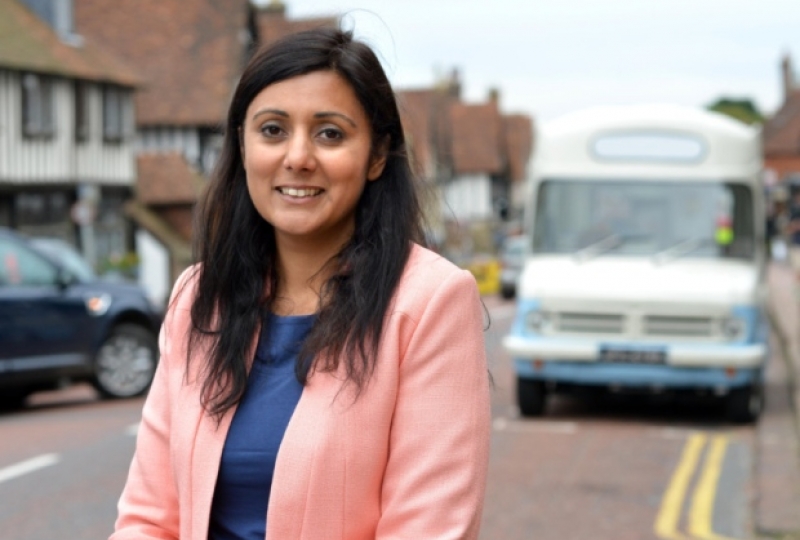
Tag: Nusrat Ghani

  • Nusrat Ghani – 2016 Parliamentary Question to the Department of Health

    Nusrat Ghani – 2016 Parliamentary Question to the Department of Health

    The below Parliamentary question was asked by Nusrat Ghani on 2016-05-24.

    To ask the Secretary of State for Health, with reference to the Answer of 9 May 2016 to Question 36176, what steps his Department is taking to support research to develop a non-invasive diagnostic technique for endometriosis.

    George Freeman

    The Department’s National Institute for Health Research (NIHR) welcomes funding applications for research into any aspect of human health, including diagnosis of endometriosis. These applications are subject to peer review and judged in open competition, with awards being made on the basis of the importance of the topic to patients and health and care services, value for money and scientific quality.

    The Director of the NIHR Diagnostic Evidence Cooperative Oxford, University of Oxford, provided mentorship and methodological expertise to support a recent systematic review and meta-analysis of the diagnostic accuracy of cancer antigen 125 for endometriosis. This was published in May this year in BJOG: An International Journal of Obstetrics and Gynaecology.

  • Nusrat Ghani – 2022 Speech on Entrepreneurs from Ethnic Minority Backgrounds

    Nusrat Ghani – 2022 Speech on Entrepreneurs from Ethnic Minority Backgrounds

    The speech made by Nusrat Ghani, the Minister for Industry and Investment Security, in Westminster Hall, the House of Commons, on 20 December 2022.

    It is a pleasure to serve under your chairmanship, Mr Hosie. First, I congratulate the right hon. Member for East Ham (Sir Stephen Timms) on securing the debate, and on raising this important issue. I do not want anyone to think I am consumed by Christmas spirit, but I very much respect him, as does everyone in the Department for Business, Energy and Industrial Strategy. We take every point that he raises very seriously.

    The right hon. Member talked about his constituents, the fact that the majority of them were not born in the UK, and the challenges they face. That is me and my community. I am delighted to speak on behalf of the Under-Secretary of State for Business, Energy and Industrial Strategy, my hon. Friend the Member for Thirsk and Malton (Kevin Hollinrake), who is responsible for enterprise, markets and small business, because I want to make sure that we take all the issues raised incredibly seriously.

    To continue with the Christmas spirit, we can certainly agree on the importance of ethnic minority entrepreneurs and their valuable contribution to our vibrant business landscape. I will not disagree with the right hon. Member on the challenges that have been mentioned. It is testament to the dynamism and resilience of ethnic minority entrepreneurs that they continue to adapt, and that they overcome so much, especially during covid. From small retail stalls to tech unicorns, the value of ethnic minority founders must not be understated. I am pleased to have an opportunity to shine a light on this community and what they do for the broader community.

    On all of the issues raised, there are no challenges from this side of the House, but let me focus on some of the barriers that were mentioned, and talk about what the Government are doing to support ethnic minority businesses and to encourage an inclusive entrepreneurship environment for all. As has been said, if we get this right, and fundamentally get finance right as well, we could make that environment incredibly dynamic, which would be a boost to all our local economies.

    The economic impact of ethnic minority entrepreneurs is far-reaching, with some estimating the contribution to the UK economy to be worth up to £25 billion. However, the crucial role of these businesses is much more than just economic. Their impact reaches much further than across the business ecosystem. As was mentioned, these businesses are most likely to invest in innovation, which is critical in helping us to achieve our ambitions around research and development investment and making the UK a science superpower. With more innovation comes improvement in productivity, so building on the potential of these businesses will be crucial to improving our productivity record.

    What really matters to me is that these businesses operate in every region of the UK, including the most deprived parts. I doubt that East Ham is different from where I was brought up, Small Heath—an area often overlooked and underestimated. The efforts of black and Asian businesses are invaluable to ensuring that we level up across the country. Even more excitingly, these businesses are most likely to export, which puts them at the forefront of our efforts to harness global opportunities, which include our changing how we do business and diversifying our business models, especially now that we have left the EU.

    Let me respond to some of the questions raised, starting with those about opportunities to access finance. Despite the impact of ethnic minority businesses, there is evidence to suggest that there are still barriers preventing them from reaching their full potential. Access to finance is regularly raised as one of the most significant issues holding those businesses back; there are reports of ethnic minority entrepreneurs keeping reservations about accessing financial assistance from traditional lenders.

    As noted in the latest “Black. British. In Business & Proud” report from the Black Business Network and Lloyds Bank, 67% of black business people state that they have experienced some form of discrimination in their past entrepreneurial efforts, with only 40% trusting banks to have their best interests in mind. That has to change. The report’s recommendations rightly focus on improving the link between financial institutions, Government and the ethnic minority community as the best way forward. I will come back to some of the points raised to show how we are supporting ethnic minority entrepreneurs in accessing finance.

    The issue of data was raised. In addition to the difficulties in accessing finance, the ongoing lack of data collection continues to inhibit funding opportunities for ethnic minority business leaders. Greater information sharing is crucial for bolstering our understanding of lending patterns, and this Government are committed to securing this transparency.

    Sir Stephen Timms

    I am grateful for the case the Minister is making, and I agree with what she has said. On the point about Companies House, would it not be a welcome step if it recorded the ethnic origin of company directors, so that we had some sense of the scale of what is happening?

    Ms Ghani

    That is a very important point. As I am not the Minister responsible for that portfolio, I do not have an exact answer. Let me get through this speech; if the right hon. Gentleman is not satisfied, I will ensure that he is written to with that information.

    Turning back to action 55, the Department for Business, Energy and Industrial Strategy is working with the Investing in Women code signatories and with trade associations to pilot data collection on the ethnicity of entrepreneurs applying for finance.

    Trust in institutions is low in many ethnic minority communities, who often struggle to get the experience or even the exposure required, or the support that they need to run a business effectively. One way that we are trying to help is by improving the communication flow between Government and the ethnic minority business community, engaging with businesses and the organisations that represent them directly to understand their specific needs. In terms of business support, black, Asian and ethnic minority business leaders value mentors more than any other ethnic group; they are more likely to want a mentor and more likely to value the impact of having one. It is reassuring to see organisations such as Be the Business championing the role of mentoring. Furthermore, our Help to Grow Management programme, with its delegated mentorship component, offers businesses a subsidised training course designed to improve leadership and management skills and address firm-level productivity challenges.

    While we should celebrate the success and impressive contributions of these businesses, we must acknowledge our role in helping to tackle the remaining barriers to growth and prosperity, which were mentioned. Off the back of the British Business Bank’s “Alone together” report, which emphasises the difficulties faced by ethnic minority entrepreneurs in accessing funding, we are working with stakeholders to understand what further interventions we can take.

    Since its launch in 2012, the Government-backed start-up loans programme has issued around 20% of its loans to black, Asian and ethnic minority businesses. The future fund has also approved 1,190 convertible loans, totalling more than £1.1 billion. More than half—61.6%, to the value of £683.5 million—of the convertible loan agreements approved have been for companies with management teams consisting solely of ethnic minority team members and those with both ethnic minority and white team members. This is promising progress, but, of course, there is no denying that we have much further to go.

    As previously mentioned, we are also delivering actions 55 and 56, set out in the inclusive written report, which aim to support and encourage those from less-advantaged backgrounds to thrive—this is where I am thinking of those from my community of Small Heath and the community represented by the right hon. Member for East Ham. Through these specific actions, we will support ethnic minority entrepreneurs in accessing finance more effectively and becoming more productive.

    The Procurement Bill includes a new duty on contracting authorities to have regard to the barriers facing small and medium-sized enterprises. Among other things, they must consider whether there is a diverse representation of businesses in the pre-market engagements. We are always looking to engage with ethnic minority business leaders and networks to better understand the issues facing them. There was a recent opportunity to do so: the Under-Secretary of State for Business, Energy and Industrial Strategy, my hon. Friend the Member for Thirsk and Malton, was asked to speak at the third anniversary reception for the all-party parliamentary group for black, Asian and minority ethnic business owners. The Department is dedicated to continued engagement with ethnic minority entrepreneurs through valuable events, including those hosted by the APPG, as well as through the ethnic minority business group, a forum that convenes bimonthly to discuss priority issues affecting entrepreneurs from diverse backgrounds to see how we can work together to find practical solutions.

    Ethnic minority leaders want to see themselves represented in the business landscape. That could be through their mentors, or through wider representation in senior leadership positions. The value of visibility and its longer-term impact on entrepreneurs cannot be overstated. Through the Parker review, we acknowledged that building a fairer economy means ensuring that the UK’s organisations reflect the nation’s diversity. The latest figures show that the number of FTSE 100 companies with an ethnic minority director on their board has increased to 89, with 42 companies having exceeded the target. The progress made so far is encouraging, but I argue that we have much further to go. We look forward to those figures increasing further, to reflect the real diversity of talent in the UK.

    A question was raised by the hon. Member for East Kilbride, Strathaven and Lesmahagow (Dr Cameron) on dealing with disability and other issues—I would expect that question from her, as she is the chair of the APPG for disability. Of course, that is another issue that we need to explore. The Father of the House talked about unkinking the pipeline of black talent, and I do not doubt that the Department will now be looking very closely at the report that he mentioned.

    The right hon. Member for East Ham raised the Government’s update on the ethnicity pay gap data. As the Government have set out, ethnicity pay gap reporting continues to be voluntary. We will not be legislating for mandatory ethnicity pay reporting at this stage, but good firms, obviously, will want to make sure that their data is on record.

    Again, I thank the right hon. Member for East Ham for introducing this important debate. Separately, I congratulate him, in his role as Chair of the Work and Pensions Committee, on today’s publication of the “Universal Credit and childcare costs” report. Affordable, accessible childcare is key to enabling parents to work and to increase their working hours; that is linked to today’s debate on entrepreneurial activity.

    I conclude by reiterating the importance and the wealth of ethnic minority talent across the UK, which we are committed to nurturing and celebrating. On the one point that the right hon. Gentleman raised that I could not respond to, I will ensure that he is written to by the appropriate Minister with a formal response. I reiterate that we want to work closely with parliamentarians across the House, and with business and financial institutions to ensure that access is equitable. We want to improve our understanding of the issues faced, and to identify practical solutions that we can offer. I remind all colleagues from across the House that we are committed to bolstering the potential of ethnic minority entrepreneurs who, in turn, will help the UK economy to thrive.

    I thank the right hon. Member for East Ham for raising this issue and, if I may be so bold, I wish you a happy Christmas, Mr Hosie.

  • Nusrat Ghani – 2022 Speech on Bus Manufacture in the UK

    Nusrat Ghani – 2022 Speech on Bus Manufacture in the UK

    The speech made by Nusrat Ghani, the Minister for Science and Investment Security, in the House of Commons on 31 October 2022.

    I congratulate my right hon. Friend the Member for Selby and Ainsty (Nigel Adams) on securing tonight’s important debate and setting out clearly some of the challenges that UK bus manufacturers face. He knows that if I were on the Back Benches, this is exactly the sort of debate that I would have instigated, so I am actually pleased that he has raised this tonight. I give him an absolute assurance that this is not the end of the discussion; now that I am aware of this, it is only the start.

    I share my right hon. Friend’s concerns that the procurement of these Chinese-made buses could adversely impact the UK bus manufacturing network and centre. In particular, I was concerned to hear my right hon. Friend say that some of these procurements that take place with China are not always the cheapest contracts, which is not great when it comes to making sure that we get good value for money. In particular, he mentioned that when councils are writing their specification tenders, UK manufacturers cannot bid as only the cheaper Chinese product fits their specification. I am sure that will be heard loud and clear in my Department and at the Department for Transport, and they will no doubt be writing in response.

    It is true that, since 2019, Chinese companies have been enjoying huge volumes of exports around the world, with 98% of electric buses being found in China. I also share the concerns of my right hon. Friend the Member for Scarborough and Whitby (Sir Robert Goodwill), who chairs the bus and coach industry all-party parliamentary group, that we can allow one country to monopolise the market and that we should be doing everything we can to make sure that our supply chains are as clean and as transparent as they can be.

    I will try my best to respond to all the points raised, but I will just run through what we are doing within the sector to help bus manufacturers. As my right hon. Friend mentioned, this sector is incredibly important for the Government’s green growth, making sure that we are levelling up across our country and driving emissions to net zero by 2050. In a previous life, I was the bus Minister, making sure that we were indeed supporting zero-emission buses.

    My right hon. Friend mentioned how important the sector is to jobs. The sector employs 155,000 people—6.1% of total UK manufacturing employment—and a further 347 jobs are estimated to be supported by the industry in the wider economy. Within the framework, UK bus manufacturers are uniquely positioned, employing more than 3,000 people across England, Scotland and Northern Ireland. This is a sector that we need to protect.

    My right hon. Friend the Member for Selby and Ainsty mentioned the prominent British companies, Alexander Dennis, Switch Mobility and Wrightbus, which employ more than 3,500 workers directly and 10,000 indirectly. These manufacturers also have the aptitude and capacity for completing the transition to fully electric bus fleets in the UK by the year 2030 without the need to import buses—that was a very important point to land.

    As I am also joined by the Secretary of State for Northern Ireland, my right hon. Friend the Member for Daventry (Chris Heaton-Harris), it would be remiss of me not to mention his visit to Ballymena factory to pay tribute to the company’s net zero emission products and to affirm the Government’s support for hydrogen. I believe that he also declared the innovative technology fund, which provided £11.2 million for Wrightbus. It is incredibly important that we are doing everything we can to support UK manufacturers.

    Ian Paisley

    It was an honour to be at the Wrightbus plant with the Secretary of State. He was so enthusiastic. I think he actually said that he was really into buses—he is a wee bit nerdy about that. It was brilliant to see a person who really took a specific interest in the manufacturing process and in understanding how important it is in terms of jobs leading through to good green technology. Will the Minister take up the point that I made during the debate, which is about ringfencing the next phase of ZEBRA funding for hydrogen buses? If that happens, British manufacturing will be protected.

    Ms Ghani

    To quickly address the hydrogen point, I am not sure that ringfencing is the appropriate word for me to use at the Dispatch Box, but there is funding available for hydrogen buses; I believe the ZEBRA scheme is helping the West Midlands Combined Authority to deliver 124 hydrogen buses and refuelling infrastructure. As my hon. Friend is raising the profile of the business in his constituency, it is right that we do everything we can to ensure that the money is spent locally within the UK.

    One point my right hon. Friend raised was why councils were shipping buses to the UK when they are not the cheapest option or carbon neutral. As he mentioned, the DFT’s latest ZEBRA scheme has been designed in line with the principles set out in the national bus strategy for England, placing partnership work between local transport authorities and bus operators at the heart of improving bus services.

    That is why the DFT has asked for local transport authorities to submit proposals that have the support of bus operators, to ensure that they work together. Once funding has been awarded to local transport authorities, they will work with bus operators to implement the proposals, but ultimately decisions about the procurement of zero-emission buses will be made locally by local transport authorities or bus operators. DFT is not able to require bidders to design their procurement process in a way that would explicitly favour UK bus manufacturers.

    Nigel Adams

    On the point about not favouring particular manufacturers, is the Minister aware that in March, in its promotional material for announcing the new fund, DFT used a sparkly new electric bus as part of that marketing? The marketing geniuses in the DFT may or may not have been aware that it was a Chinese Yutong bus that was used to promote the scheme, but the idea that we are promoting Chinese buses is slightly alarming—I am turning to the box where the Minister’s officials sit, but I am sure it is not the young lady there who was responsible. Only when UK manufacturers complained was the photograph changed to a British Alexander Dennis bus.

    Ms Ghani

    First of all, it is not a DFT official in the box, but a Department for Business, Energy and Industrial Strategy official. Secondly, as my right hon. Friend knows, I would have kept an eye out to make sure it was not a Chinese bus, but most definitely a UK bus, and I will do so in future.

    The answer I am giving is not exactly what my right hon. Friend wants to hear, but I want to repeat the issue he raised: when the procurements are put together, if they deliberately exclude UK manufacturers, that is something that needs to be looked at. Now that it has been raised in this debate, I will ensure that both BEIS and DFT officials respond in writing to ensure that that point is covered.

    To quickly cover why China has the largest electric vehicle battery industry in the world, because that is important for resilience and ensuring that we support UK manufacturing, we know that China has 98% of the market. We know that we must be resilient, and that is why we have a number of programmes in place, especially the Advanced Propulsion Centre, the Faraday Battery Challenge and Driving the Electric Revolution.

    For example, the Advanced Propulsion Centre provides £11.2 million for the development and manufacture of low-cost hydrogen fuel cell bus technology and the hydrogen centre of excellence with Wrightbus in Ballymena, as mentioned earlier, to further the development of hydrogen technology and drive product sales across the world. We need to be doing more of that kind of work with Members of Parliament, raising the profile of what can be done locally.

    We have talked about the grants available through the Advanced Propulsion Centre, but we also have the ESTHER project, which includes the provision of £9.1 million within the £22 million ESTHER project to develop hydrogen fuel cells—again, that was mentioned earlier. Then there is the consortium led by Intelligent Energy, which includes bus maker Alexander Dennis Ltd. Funding has also been provided to ensure that the ESTHER consortium develops and integrates valuable technology delivery skills, and creates supply chain advantages for the UK, so that it can capitalise on this technology and unlock additional research and development funding from UK suppliers.

    A lot of work has been taking place on localised supply of key components to meet the growing demand for electric vehicles, but we need to make sure that local companies have the opportunity to bid for tenders. I should mention the net zero strategy produced in October 2021, and the Government’s promise of £350 million over the next three years to deliver the automotive transformation fund.

    I keep talking about the funding available, but that may not exactly address the points that my right hon. Friend the Member for Selby and Ainsty raised. To conclude, the issue has been brought to our attention, and I will do my very best to ensure that DFT and BEIS respond fully. My right hon. Friend is aware that if I were on the Back Benches, I most definitely would have raised this issue, even if—especially if—he was on the Front Bench; I would have given him quite a tough time.

    I assure hon. Members that this is not the end but the start of a conversation. We need far more transparency, especially regarding those councils that seem to be giving the majority of their contracts to one particular country or place overseas; that is not good news for us here. We recognise the challenges that we face. We need to help our local authorities to procure buses from the UK. Of course, the supply chain for zero-emission buses will always be global, but we want to make sure that UK bus manufacturing remains strong, and this obviously involves the key components. I will end there. I am keen to meet my right hon. Friend as soon as possible to make sure that everything discussed today is put in writing.

  • Nusrat Ghani – 2022 Tribute to HM Queen Elizabeth II

    Nusrat Ghani – 2022 Tribute to HM Queen Elizabeth II

    The tribute made by Nusrat Ghani, the Conservative for Wealden, in the House of Commons on 10 September 2022.

    I rise with a heavy heart tonight to pay tribute to Her late Majesty the Queen. I want to start by expressing my deepest sympathies to His Majesty the King and the entire royal family, on behalf of my family and the loyal constituents of Wealden. Her late Majesty Queen Elizabeth II was loved and respected throughout my constituency, from the villages of Withyham and Eridge in the north to the town of Hailsham in the south. She was adored for her duty, loyalty and leadership in the UK, the Commonwealth and across the world.

    I want to share the words of a constituent who lives in Fletching. Libby Buchanan is 99 years old and has lived through the reigns of five monarchs, from George V to King Charles III. She said to me how deeply blessed she felt to have lived through the reign of Queen Elizabeth. Sometimes, Libby told me, the changes experienced in the world over the Queen’s reign were bewildering, yet the Queen never changed. She was always there, a constant, gentle and ever-present light. That light has now gone out but, as Libby said, the flame has been relit and is held in the safest possible hands: those of King Charles III. Long live the King.

  • Nusrat Ghani – 2021 Speech on the Treatment of Uyghur Women

    Nusrat Ghani – 2021 Speech on the Treatment of Uyghur Women

    The speech made by Nusrat Ghani, the Conservative MP for Wealden, in the House of Commons on 4 February 2021.

    I thank the Minister for his powerful statement. Yesterday, the BBC broadcast harrowing footage of Chinese state-orchestrated abuse against Uyghur women on an unprecedented scale.

    “They had an electric stick, I didn’t know what it was, and it was pushed inside my genital tract, torturing me with an electric shock.”

    That is the testimony of Tursunay Ziawudun. “They did whatever their evil minds could think of. They were barbarians. I felt I had died. I was dead.” Then there are the gang rapes of Uyghur women by the police in front of other camp detainees, as a form of re-education, seeking out those who look away to punish them even further.

    These horrifying stories add to the huge and growing body of evidence detailing atrocities perpetrated by the Chinese authorities in Xinjiang—atrocities that may even be genocidal. These horrors have led the Board of Deputies of British Jews to compare the plight of the Uyghurs to the Holocaust. But as everybody in this House knows, there is no prospect of China being held to account through the International Criminal Court or the International Court of Justice. So I ask the Minister: how will the Government get the court judgment they need to act when all international routes are paralysed by China? We cannot be bystanders to the deliberate attempt to exterminate a group of people. Not again.

    Will the Minister make a promise today that no further deepening of ties of any kind will take place with China until a full judicial inquiry has investigated these crimes? Will he commit himself to a meeting with Rahima Mahmut, a Uyghur survivor, who is known by so many in this House? Rahima is a brave woman, risking her safety to save her family and her people. The United Kingdom cannot stand by and do nothing about the extermination of the Uyghur—mass rapes, scalping and forced sterilisations. We can act and we must act.

  • Nusrat Ghani – 2019 Statement on Maritime Safety

    Below is the text of the statement made by Nusrat Ghani, the Parliamentary Under-Secretary of State for Transport, in the House of Commons on 2 July 2019.

    I am delighted to inform the House today about the launch of Maritime Safety Week 2019 following the extremely successful inaugural event last year.

    The maritime industry is crucial to the UK economy. It is a simple truth that, if safety were not a priority for the sector, it would rapidly grind to a halt.

    The UK is recognised internationally for its world-class maritime safety framework and already sets the standard in ensuring the wide variety of people who use and enjoy our waters for business or pleasure can do so in safety. It is not only Government who have achieved this reputation, through the work of organisations like ​the Maritime and Coastguard Agency and the general lighthouse authorities, but also sector bodies like the Royal National Lifeboat Institution.

    The marine environment can be dangerous, however, and there is always more that can be done to keep people out of harm’s way.

    Maritime Safety Week aims ultimately to help reduce preventable maritime accidents. The week creates a focal point to recognise the fantastic and innovative work that is already being delivered and the strong partnership between Government and the sector which is vital for further continuous improvement.

    As well as recognising the excellent safety work that already goes on, my key objectives for maritime safety week 2019 are to facilitate the sharing of knowledge, experience and best practice and to focus on some of the challenges which remain. That is why, as well as meeting many of the organisations and individuals who make a difference through their work, I will be hosting a fishing safety MP roundtable this week to consider what more can be done to make the fishing industry a safer one.

    Throughout the week I will be launching new initiatives and announcing new funding in support of maritime safety. Today I will also be publishing the Government’s first maritime safety action plan. This sets out a path for the future of maritime safety work in the UK, makes new commitments and specifies the actions which will be taken to deliver them. The action plan underpins our Maritime 2050 strategy, which I published in January, outlining our ambitious vision for the future of the sector. Copies of the maritime safety action plan have been placed in the Libraries of both Houses and are available on gov.uk.

    Ultimately, I want to reduce the number of preventable accidents in UK waters and Maritime Safety Week 2019 is an important step towards that goal. I invite Members to show their support on social media by sharing our content and using our hashtags for the week—#MaritimeSafetyWeek and #MaritimeSafetyMatters.

    The attachment can be viewed online at http://www. parliament.uk/business/publications/written-questions-answers-statements/written-statement/Commons/2019-07-01/HCWS1679.

  • Nusrat Ghani – 2019 Statement on HS2

    Below is the text of the statement made by Nusrat Ghani, the Parliamentary Under-Secretary of State for Transport, in the House of Commons on 29 April 2019.

    Completing HS2 is Government policy and is crucial to unlocking economic growth and improved productivity in the midlands and north. It is supported by Members on both sides of this House. I therefore have no intention of halting work on HS2 in Buckinghamshire or elsewhere. There are already 7,000 people and 2,000 businesses working to deliver the HS2 project, and early works are well under way. Once HS2 Ltd has reached agreement with its suppliers and the Government are satisfied about both affordability and value for money, we will make a full business case for phase 1. This will inform notice to proceed, which is the formal contractual process that enables each phase 1 supplier to move from design and development to construction. Notice to proceed is scheduled to take place later this year. The works that are now taking place are necessary to enable the construction of HS2 to move forward in accordance with the programme, following notice to proceed.

    We are aiming for HS2 to be one of the most environmentally responsible infrastructure projects ever delivered in the UK, and managing its impact on the environment during construction is a high priority. HS2 will deliver a new green corridor made up of more than 650 hectares of new woodland, wetland and wildlife habitats alongside the line. More than 7 million new native trees and shrubs will be planted, to help blend the line into the landscape and leave a lasting legacy of high-quality green spaces all along the route. It will include more than 33 sq km of new and existing wildlife habitat—an increase of around 30%, compared with what is there now. Many of the early works that are now taking place on HS2 are activities aimed precisely at creating this environmental legacy. They are being done now to ensure that they become fully established as early as possible, alongside construction of the railway.

  • Nusrat Ghani – 2019 Speech on Buses

    Below is the text of the speech made by Nusrat Ghani, the Parliamentary Under Secretary of State for Transport, on 6 February 2019.

    Good morning everyone.

    It’s a pleasure to join you this morning.

    I’d like to thank Transport Times for hosting this key event in the bus calendar. And ensuring buses remain high on the agenda as an important driver of mobility, economic growth and community cohesion.

    One hundred and twenty years after the first motorised bus services were established in Britain – buses remain by far our most popular, effective, and flexible form of public transport.

    Over that time, transport technologies have come and gone.

    And travel patterns have changed dramatically.

    Yet throughout, buses have remained a constant.

    Part of the transport fabric of every town, every city and every region.

    You may have seen reports last week that passenger journeys were down slightly.

    But the fact remains that two thirds of all public transport journeys in Britain were made by bus and coach last year.

    4.4 billion individual bus journeys last year in England alone.

    And almost nine in ten passengers say they are satisfied with their bus services.

    Which is a tribute to the whole industry.

    But these numbers are so much more than just a set of statistics.

    Mere figures don’t reflect the purpose of those journeys – nor the benefits they bring to society. Benefits like taking children to school, young people to job interview and pensioners to medical appointments.

    Buses are the glue that binds communities together. And they are a vital link for those who may otherwise be isolated and for those who live in rural areas.

    But they also keep our high streets busy while tackling congestion and air pollution.

    So I’d like to take this opportunity to talk to you about what we are doing in government to ensure that Britain’s bus network not only serves people’s transport needs. But is also set up to continue contributing in all these ways to our society and economy.

    First – if we want buses to thrive over the coming decades, it’s vital that we continue to improve, to innovate and to move with the times.

    And to do this we have to ensure that buses participate in the digital revolution all around us.

    The rise of technology highlighted by innovations such as CityMapper’s journey planning app, as well as ride sharing services like UberPool, are changing the way we get around and the way we think about transport.

    Increasingly, mobility is being viewed more as a service planned and paid for via a smartphone. So if bus services are to continue accounting for three quarters of journeys, the industry has to reach out to customers to provide easy access to information about local bus services, fares, payment method and bus stops.

    Customers are going to demand real time data about the journey all through easy and convenient apps. And there’s a lot of great work going on to speed up the pace of change.

    For example operators are developing contactless and mobile ticketing – making travel more convenient.

    But as Secretary of State Chris Grayling said in a speech to the Confederation of Passenger Transport last week the industry also needs to respond to the growth of demand-responsive transport. Through initiatives like travellers being able to request journeys through a smartphone app or minibus services which take passengers where they want, when they want.

    That’s exactly what ArrivaClick does, which I saw when I visited Kent last week, as well as Go-Ahead’s PickMeUp service in Oxford and it can do it at a lower cost than a traditional fixed-route, fixed-timetable bus.

    Technology changes like these should be seen as an opportunity for the bus industry – not a threat.

    For example, we can use innovation to make buses accessible to all.

    Last summer I launched our Inclusive Transport Strategy – to help disabled people travel easily, confidently and at no additional cost.

    And the Bus Services Act 2017 contained a range of measures to harness technology in order to create better, more accessible services.

    Measures such as Accessible Information Regulations, which will speed up the delivery of audible and visible information on board local buses, with £2 million government funding to help smaller bus operators meet this commitment.

    The Bus Open Data powers in the Act will also lead to improved services, helping passengers to plan their journeys and secure the best value tickets.

    I saw this already happening on a trip to Reading Buses last summer for the launch of their Innovation Centre.

    Lastly, the Act enables local transport authorities to partner with local bus operators and introduce benefits like multi-operator smart ticketing, connecting bus timetables and ticketing with other modes of transport, such as rail, to provide more seamless journeys.

    Today I also want to highlight greener travel.

    Buses have a clear strategic advantage over other road transport in terms of the environment because they have the capacity to reduce car use, ease congestion and improve air quality.

    Fifteen percent of the fleet already uses low emission technology, with electric buses now on the streets of Liverpool, Guildford and others, such as Harrogate, which I was pleased to see in person.

    We’re supporting innovators to make buses cleaner than ever and last year the government announced £40 million of funding for 20 local authorities through the Clean Bus Technology Fund – providing grants of up to £500,000 to upgrade buses operating in areas of poor air quality, with low emission technology.

    And today I am delighted to announce that we are awarding £48 million to operators and local authorities across the country to help buy ultra low emission buses and invest even further in charging technology.

    This funding will support the purchase of 263 ultra-low emission buses, ensuring that communities from Cardiff to Nottingham, from Yorkshire to London, from Coventry to Newport, from Manchester to Brighton and many more places around the country can enjoy the benefits of cleaner, greener bus services that benefit society as a whole.

    It will also provide £14.2 million of investment in charging infrastructure, further supporting our progress towards greener journeys.

    Indeed, this latest investment reinforces the bus industry’s role as a leading contributor to the government’s Road to Zero Strategy and also to our Future of Mobility Grand Challenge, which encourages greener journeys through technological innovation.

    But buses also benefit society because of the role they play in improving lives on an individual level.

    As lead minister on the role of transport in tackling loneliness, this is a matter close to my heart and it’s essential that we act.

    Research by campaign group Greener Journeys found that two thirds of people sometimes feel lonely – while a third admitted that they deliberately catch a bus to ease these feelings.

    There’s some really imaginative thinking going on in the industry to examine if there’s more we can do.

    For instance, last week Go Ahead launched the Chatty Bus campaign – meaning that from Newcastle to Brighton, Chatty Bus ambassadors were on board buses talking to anyone who wanted a chat.

    Stagecoach also redesigned one of its open topped buses, previously used to transport holidaymakers around Skegness into a community bus which provides a friendly place for people to chat and have a cuppa.

    And National Express and First Group have been running their own campaigns aimed especially at preventing loneliness among older people.

    But stopping the scourge of loneliness will require a much more concerted effort.

    Which is why we made a commitment last year, in the government’s Loneliness Strategy, which was itself inspired by the visionary work of my late colleague Jo Cox to work with the transport sector and take action.

    So today I am delighted to make a further announcement. That the department is launching a major collaboration with Greener Journeys to explore how we can use buses to further address the issue of loneliness.

    This initiative is supported by a pledge from four bus companies, Go Ahead Group, Stagecoach, National Express and First Group to examine the vital role of buses in addressing loneliness.

    Whether that’s looking at how bus interiors can be designed to help with social interaction or considering how to roll out even more chatty buses -which have so far proved to be a great success.

    This is just the first step and there is huge potential for the transport industry to make a real difference to the lives of people who want more human contact. So I look forward to seeing more great initiatives over the coming year.

    I want to finish by talking about a theme which has run throughout this speech – and that’s partnership.

    I firmly believe that the quickest and most effective way of improving bus services is through partnership – whether it be through initiatives with government, working with local communities or effective collaboration between operators and local transport authorities to tackle congestion.

    I know that many of you are already involved in collaborative initiatives – whether they’re as a result of the government’s £2.5 billion Transforming Cities Fund. Or whether you are taking advantage of the collaborative opportunities afforded by the Bus Services Act. Legislation which provides new and improved ways for local transport authorities to partner with bus operators, like in York, where the city council and operators have launched a customer charter which sets out the standard of service that passengers can expect.

    But while we can legislate to encourage partnerships the impetus must come from you.

    So I would encourage all of you – operators and local authorities to continue to forge strong relationships which are so critical for achieving many of the goals I’ve spoken about today.

    Because if we can build a bright future for this industry, we will also achieve a bright future for the communities you serve.

    This will be built on new technologies, like the ultra-low emission buses we are supporting today.

    On effective legislation, like the Bus Services Act.

    On understanding what customers want.

    And on collaboration to tackle issues like loneliness.

    These are our objectives for the future – not just to boost bus services and not just to provide better journeys but to build a better society too.

    And we will build it through partnership.

    Thank you.

  • Nusrat Ghani – 2019 Speech on the Maritime Sector

    Below is the text of the speech made by Nusrat Ghani, the Parliamentary Under Secretary of State for Transport, on 24 January 2019.

    Good afternoon everyone,

    As I bring today’s event to a close I would like to thank you all for attending.

    And express my gratitude to our speakers.

    Whose contributions have informed us all.

    It has been wonderful to see so many representatives from all sectors of the maritime industry here today.

    Your presence underlines the strength of your commitment.

    Towards turning the vision for our sector’s future, laid out in Maritime 2050, into a reality.

    As the Secretary of State said at the start of this event.

    Our industry is on the cusp of an era of change.

    But I think today’s event has highlighted that it is also on the edge of a time of great potential.

    There will be many opportunities over the coming decades for our industry.

    And the document we have launched today outlines a clear vision of how together we will seize them.

    And chart an ambitious course for our sector.

    As we seek to harness the opportunities of technology.

    Strengthen our status as a global maritime leader in the fields of environment, security and trade.

    And give the next generation of seafarers the skills needed to meet the challenges of tomorrow.

    Today marks an important step in our journey towards those goals.

    And I hope it will prove to be a catalyst for action to turn our shared vision into a reality.

    But while Maritime 2050 examines nearly every aspect of our industry in its more than 300 pages.

    From trade to technology.

    Security to supply chains.

    And regulation to resilience.

    At its heart is the people who make up our great industry.

    And I’d like to talk about them today.

    Without the dedication, skills and talent of its workforce, the UK’s maritime sector quite simply would not be able to function.

    For while our industry provides fantastic career opportunities.

    And our top quality maritime education institutions — along with the renewed focus on providing high quality apprenticeships — mean that British training for the maritime industry is second to none.

    There is still much more we need to do.

    Particularly in ensuring that the great career opportunities the maritime industry has to offer are open to everyone. No matter their gender or background.

    Unfortunately at present that’s not the case.

    Just 4% of the 10,600 UK certified officers active at sea are female.

    The reasons for this are many and varied.

    But one thing is clear.

    This is a situation has got to change.

    Of course there is already some great work underway through the Women in Maritime Taskforce.

    Last year it launched both the Women in Maritime Pledge and the Women in Maritime Charter — challenging companies to make progress on diversity.

    I am delighted that there are already over 100 signatories to the pledge.

    And the charter is midway through its pilot phase, with 4 organisations, from across the breadth of the maritime industry taking part.

    They are making sure the charter works for all the diverse businesses within it. From training companies to law firms, to ports and marine manufacturers.

    But we need to go further still.

    This document lays out how we plan to dramatically overhaul the diversity of the maritime sector by 2050.

    And let me be clear — this is not a tick box exercise.

    Or an attempt at virtue signalling.

    It’s handing our sector a wonderful opportunity.

    That will serve it well into the future.

    Because no industry will reach its full potential if it only takes advantage of a tiny proportion of the talent pool.

    There are so many gifted people out there.

    And we want them to see all the great things our industry has to offer.

    So through Maritime 2050 we have pledged to.

    Build on the success of the Women in Maritime Taskforce and other great joint government and industry initiatives.

    To highlight the industry’s wide variety of career opportunities, both at sea and on land, to as wide an audience as possible.

    This includes funding a project called People Like Me — that will address the image of the industry and dispel myths.

    And explore harnessing technology, such as connected ships, to enable seafarers stay in touch with family on shore.

    Making periods away from home less isolating — improving mental wellbeing and making a career at sea a possibility for a wider variety of people.

    And it’s this theme of technology opening up new horizons for our industry, which runs through Maritime 2050.

    But to take advantage of these innovations our workforce must not only be equipped with the right skills.

    It must also be ready to adapt and keep pace with technological change.

    Over the next 30 years the importance of STEM skills will increase as jobs become more skilled and data driven.

    And industry roles will become multi-disciplinary.

    For instance in future it may not be simply enough to operate a technological system.

    You will probably have to be able to create and maintain it too.

    So through Maritime 2050 we have set out our plan to create a culture of continuous learning.

    By encouraging maritime employers to offer professional development and training to their workers throughout their careers.

    In addition we have committed to develop cutting-edge seafarer training. For instance by using virtual reality technology to enable workers to get to grips with new systems.

    And to ensure the industry is fully prepared for the changing recruitment pressures of the future we plan to help assess the needs of the industry through a Maritime Skills Commission.

    A body tasked with finding ways of addressing current maritime skills gaps and anticipating future trends.

    These are all steps that will not just improve the prospects of maritime workers.

    But those of their employers as well.

    Through a lower turnover of staff.

    Because a happy workforce is a highly motivated one.

    And Maritime 2050 recognises the pressures under which many seafarers are placed.

    Whether that’s long hours, hard work and periods away from home.

    All situations that can put a strain on workers’ mental and physical health.

    So a core part of this document focuses on what we can do to help with these issues.

    And ensure we are not so entirely absorbed with dealing with technological change that we forget about the human face of the industry.

    In the short term we will work with the maritime sector to develop a social framework — laying out the UK’s expectations for the welfare of its workforce.

    And work in the near future to finalise the introduction of a National Minimum wage for mariners in our waters, while producing guidelines that will help employers ensure that workers’ mental health is properly considered.

    And we will use our influence through the IMO and International Labour Organization to push to improve conditions for seafarers on a global level. For instance through a limit on hours by shift and eradicating modern day slavery.

    A diverse and highly skilled workforce.

    Incredible technology.

    And fantastic opportunities.

    Those are just some of the many things to which our industry has got to look forward over the coming decades.

    And Maritime 2050 lays out how we can make the most of this new world.

    I know that many of you in this room have contributed and shaped this document over the past year.

    And I thank you for your efforts.

    And I want us to continue in that spirit of collaboration and cooperation.

    Industry and government.

    Working together, sharing ideas, and building a better future for the maritime sector in this country.

    And it’s difficult to think of a better example than London International Shipping Week which will take place in September.

    When government and the UK maritime industry will join forces and showcase this country’s shipping industry to the world.

    I’m very much looking forward to seeing you all there.

    It should be a great event.

    And today was certainly another.

    So finally I’d like extend my thanks to the International Maritime Organisation for hosting us this afternoon.

    And helping to ensure the launch of Maritime 2050 was a success.

    I’d also like to take this opportunity to express my gratitude to everyone who has contributed to this document.

    In particular I’d like to thank staff at my department for their efforts and hard work over the past 12 months.

    Your time has been truly well spent.

    As this document is an important milestone in preparing our industry for the coming decades.

    For it’s clear that the future of maritime in this country will be different from its past.

    But no less exciting.

    And I hope today we have sparked your imagination and stoked your ambition.

    So we can harness technology to grasp the opportunities of the future.

    So that we can build a sector that is open to everyone.

    And so we can create a maritime industry ready to lead the world.

  • Nusrat Ghani – 2019 Statement on Future Maritime Policy

    Below is the text of the statement made by Nusrat Ghani, the Parliamentary Under Secretary of State for Transport, to the House of Commons on 24 January 2019.

    I am today announcing the publication of Maritime 2050: Navigating the Future, the government’s landmark strategy setting out our vision and ambitions for the future of the British maritime sector.

    Our nation depends on the wide range of benefits the maritime sector delivers. It contributes over £14 billion a year to the UK economy and directly supports an estimated 186,000 jobs. Around 95% of British imports and exports are moved by sea. The leisure and marine sectors are vital to our enjoyment of the seas. Our maritime clusters around the UK showcase the diversity of our regional economies, from professional services in London to ship management and educational excellence in Scotland.

    We rightly take pride in our maritime past. Maritime 2050 is about looking forward; anticipating the challenges and opportunities ahead and recognising the UK’s strengths so we are well placed to capitalise on them. Maritime 2050 looks at these across 7 themes and under each makes short, medium and long-term recommendations:

    UK competitive advantage
    people
    environment
    technology
    infrastructure
    trade
    security and resilience

    It highlights multi-billion pound commercial investment in maritime infrastructure at ports and beyond. Our unwavering commitment to safety and security. Our reputation for innovation, paving the way on regulatory frameworks and technology to facilitate smart shipping and autonomy; leading the way in clean maritime growth. But no matter how far advances in ships and technology take us, it sets out how the people graduating from our maritime training and academic institutions will reflect the world around us and continue to be sought after across the globe for their skills.

    As the global maritime sector adapts to challenges such as climate change, rapid technological advances and security concerns, Maritime 2050 sets a series of strategic ambitions around which government and the sector will focus its efforts, and core values which we will be guided by.

    The partnership between government and the maritime sector has been vital to the development of this strategy. It began in March 2018 with a call for evidence, seeking to reach all branches of the sector, complemented by workshops around the UK to capture the views from across our maritime clusters, and interviews with leaders in industry and academia. Maritime 2050 has also benefited from the advice and scrutiny of an independent panel of 13 internationally respected academics, industry leaders, maritime business services providers and promotional bodies. As a result, Maritime 2050 reflects the depth and breadth of the UK’s rich maritime sector.

    A copy of Maritime 2050 has been placed in the library of both Houses and is available on GOV.UK, together with the trade and technology route maps setting out in greater detail the steps needed to achieve the UK’s strategic maritime ambitions.