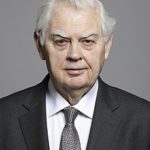
Tag: Norman Lamont

  • Norman Lamont – 2022 Speech on the Growth Plan (Baron Lamont of Lerwick)

    Norman Lamont – 2022 Speech on the Growth Plan (Baron Lamont of Lerwick)

    The speech made by Norman Lamont, Baron Lamont of Lerwick, in the House of Lords on 11 October 2022.

    My Lords, it is a personal pleasure to follow the noble Lord, Lord Burns, who always gave me very wise advice in the Treasury, just as he has to the House today. I also welcome my noble friend Lady Neville-Rolfe back to her position on the Front Bench. We have lost a doughty Back-Bencher but regained a formidable Minister.

    I welcome many of the measures in the Government’s growth plan, particularly the radical deregulatory ones—IR35, the pensions cap and the planning reforms. Provided they can be delivered they are the sorts of measures that will make a real difference to our growth rate. I also welcome the energy price guarantee. It is a major intervention but, as the Minister said, one that, because of the death of the Queen, was not widely recognised and is still not widely known among the public. The package is very important not only for the relief it gives to hard-pressed consumers but economically, because of the 5% it knocks off the rate of inflation. This by itself could help to stave off a deep recession, as high energy prices can be both inflationary and deflationary.

    However, it has to be recognised that the energy price guarantee is potentially a massive commitment and adds huge uncertainty to the borrowing figures. The Government’s support to consumers as a percentage of GDP, according to the Goethe Institut and Conservative Central Office, dwarfs that of other countries. It is, potentially, more than double that of Germany, which funded its package out of taxation. It was the hugeness of the money at stake, together with the absence of the OBR assessment of the cost of tax cuts, that produced the market reaction that it did. The Government also made something of a rod for their own back with some of the rhetoric that was carried forward from the leadership election about rejecting orthodoxy and the attacks on “bean counters” and people peddling “abacus economics”. I am sure it was not intended to, but it sounded very like a Conservative belief in the magic money tree. Since then, the Chancellor has emphasised that he believes in fiscal discipline and in a declining debt-to-GDP ratio.

    Going for growth is a certainly laudable objective, but it has to be recognised that there can be a conflict between going for growth and getting inflation down. A stimulus to growth from unfunded tax cuts may mean that inflation stays higher for longer, and that could mean higher interest rates holding back growth. If fiscal and monetary policy point in opposite directions, the result is again likely to be higher interest rates and thus slower growth. So the stage is set for something of a battle between the Treasury and the Bank of England as the Government push for growth and the Bank raises interest rates to tame inflation.

    This dilemma could of course be resolved if tax cuts always paid for themselves. That would be wonderful—we would never have to discuss taxation again—but as the noble Lord, Lord Burns, said, they do not always pay for themselves. It depends on whether the rates are set at confiscatory levels or, technically put, where precisely the rate is on the Laffer curve. Ronald Reagan’s tax cuts resulted in increased debt, a fact that he later acknowledged and regretted.

    Fiscal responsibility is not the enemy of growth. It produces the stability that is essential for it. I welcome the fact that the Chancellor is drawing up a debt reduction plan and plans to bring forward the OBR assessment of that plan. It is very important that the plan set out is credible and does not consist of just easing the present fiscal rules or back-ending all the pain that is going to be necessary. If we do not face reality, reality is going to face us. Fortunately, the Chancellor has, I believe, the resolve and determination to face these challenges, and I wish him well.

  • Norman Lamont – 1986 Statement on the Royal Air Force

    Below is the text of the speech made by Norman Lamont, the then Minister of State for Defence Procurement, in the House of Commons on 26 February 1986.

    I am delighted to have the opportunity to open this debate on the Royal Air Force, a service which occupies a key place in British defence policy. Its role in United Kingdom air defence is central not only to this country, but to NATO’s ability to withstand any Warsaw pact attack on western Europe. The crucial place of United Kingdom air forces is illustrated by the fact that the Commander-in-Chief of RAF Strike Command occupies an important senior post in the NATO command structure.

    In the central region, too, Royal Air Force Germany plays a vital role in support of our ground forces in the land battle —strike-attack, close air support and reconnaissance. The RAF is also vital for out-of-area commitments. The defence of the Falklands and the airbridge to the islands is only the best known of a range of activities which require men and machines of great diversity and first-rate quality.

    Perhaps I could briefly remind the House of the great improvements in Soviet capability which are currently taking place. The Fulcrum agile, all-weather fighter-interceptor is coming into service. It is similar to the F-18, a very advanced and formidable aircraft. The Flanker air superiority fighter, which is similar to the F-15, is also nearing deployment. They are supported, and their effectiveness increased, by the new Soviet airborne early warning aircraft. A cruise missile carrying variant of the Bear bomber is now in production.

    This list is by no means exhaustive but it illustrates the considerable improvements in quality which the Soviet forces are steadily achieving. These improvements are to forces which substantially outnumber those of the NATO Alliance. The Warsaw pact deploys some 2,700 fixed wing tactical aircraft on the central front to NATO’s 1,300. The Warsaw pact production rate of aircraft is at a ratio of 1·4:1 against that of NATO. Against that background it has been this Government’s policy to carry through a major re-equipment programme for the RAF, making it one of the most sophisticated air forces in NATO.

    The RAF share of the defence equipment budget is some 36 per cent, in the current year. That is a share of a defence equipment budget which has grown from 39 to 46 per cent. of the entire defence budget since 1979. That defence budget is about one fifth larger in real terms than when we entered office.

    These figures are the measure of the extra resources that we have been able to devote to the re-equipment of the RAF. It is a capital-intensive service and takes a large part of the equipment budget, and for that reason the majority of my speech will be about equipment.

    By any standards, a major milestone in the continued progress of this re-equipment programme occurred last year when the national armament directors of the United Kingdom, Germany, Italy and Spain signed the Turin agreement to proceed collaboratively with the new European fighter aircraft.

    Following on from the success of Tornado, EFA was in fact the logical next step in terms of European collaboration. The United Kingdom will need a new agile combat aircraft to replace its Phantom and Jaguar aircraft from the mid-1990s. Other European ​ countries have a similar need in the same timescale. It is one thing to perceive a need and an opportunity, another to turn that into a collaborative programme. By his initiative and energy my right hon. Friend the Member for Henley (Mr. Heseltine) gave impetus to this project and, despite great difficulty in reaching a consensus on requirements, secured its launch: a tremendous political achievement.

    Work on the project is proceeding well. The industries of the four countries started on the project definition stage last September shortly after the national armament directors reached agreement on the technical and organisational basis of the project definition study. One of the major technical characteristics relates to aircraft weight, about which there has recently been considerable press comment. I confirm that it has always been, and remains, our firm intention that aircraft design shall respect the characteristics which were agreed last summer in Turin. I welcome this opportunity to make that position clear.

    It would be wrong to imply that the task that has been set for EFA is easy. The definition and design of such an aircraft, incorporating state-of-the-art technology, is inevitably a challenging process. There is clearly much to be done during the coming months before the industrial reports are submitted to the four Governments for appraisal later this year. But we are fortunate to have the firm technical foundation of the Tornado partnership to work on. Moreover, we have the political and industrial resolve to follow up the success of that programme with an even more ambitious and exciting one.