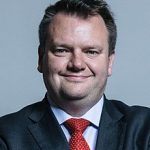
Tag: Nick Thomas-Symonds

  • Nick Thomas-Symonds – 2025 Speech at the Conference on Baltic Studies in Europe

    Nick Thomas-Symonds – 2025 Speech at the Conference on Baltic Studies in Europe

    The speech made by Nick Thomas-Symonds, the Minister for European Union Relations, at the University of Cambridge on 24 April 2025. This version was supplied by the civil service, so the political content has been removed.

    Introduction

    It’s a pleasure to be here with you all. Before I begin, I would like to thank the Association for the Advancement of Baltic Studies for hosting this important conference.

    I would also like to thank my friend Charles Clarke, not only for the invitation to speak here today.

    [political content removed]

    As part of that career, his time as Home Secretary, he had to deal daily with the implications of a complex and dangerous world, encapsulated by the heinous 7/7 attacks.

    While the nature of the threats our country faces have evolved since then – we know that the threats to our security, our economy and way of life are as pronounced now as they have been at any time in post war history.

    And these challenges do not just face the UK – or any one of our allies – alone; we face them, together. Therefore, it is crucial to ask how we can leverage our longstanding international relationships – and build upon them – to face these challenges together.

    The United Kingdom and the Baltic States enjoy an alliance built on shared values, on open trade, on a strategic, robust approach to defence.

    We respect one another, and it is through this respect that we work alongside each other – whether directly or through international organisations – to the benefit of our societies.

    Our citizens not only celebrate freedoms, but also realise that they are hard won and must be defended.

    I believe that – through the UK’s mission to go beyond the status quo with the European Union and grow our strategic alliance with our biggest trading partner – we could build on our relationship even further, to make us more prosperous, safer and better defended.

    I should clarify that – in the spirit of this broad alliance – while I will mainly be talking about Estonia, Latvia and Lithuania, I will also be touching on the Baltic Sea States, the other countries that share the same icy waters, including Sweden, Poland and Finland, which I understand follows the remit of this centre.

    Relationship with the Baltics

    Just over a month ago, the Times journalist Oliver Moody gave a talk at this university – at the Centre for Geopolitics – about his book ‘Baltic: The Future of Europe’.

    He spoke about the remarkable journey that the Baltic Sea States have taken over the last century: not just armed conflict, but the push and pull between independence, occupation and independence again.

    Reflecting on where we are now, he said: “This is the most coherent that north-eastern Europe has ever been. You have the Nordic and Baltic States working on a more equal footing than ever before, you have Poland starting to look north, and Germany is getting more involved”. He capped his remarks off by saying that this teamwork would have delighted the former Prime Minister of Estonia – Jaan Tonisson – who campaigned for a Scandinavian Superstate in 1917. Moody said that this cooperation is nothing short of “Jaan Tonisson’s dream, on steroids”.

    That claim is probably for the experts in this room to take a view on, but what is clear is the sheer depth of the shared objectives, opportunities and challenges.

    When you consider the history of these countries, this state of play is all the more remarkable. After all, to study the 20th Century developments of the Baltic States is to study world history. I am proud to say that, in many ways, the United Kingdom has been a positive part of that history, especially with Latvia, Lithuania and Estonia.

    When the British public were rejoicing throughout the UK on Armistice Day in 1918, the Royal Navy had no time to rest, as they started their campaign in the Baltic. They were playing their part to establish an independent Estonia and Latvia, providing weapons, ammunition and much-needed support, where over 100 naval servicemen bravely lost their lives for Baltic independence. In May 2022, the UK and Lithuania agreed a Joint Declaration to mark 100 years of bilateral relations, but it also looked towards the future. It outlined an agreement to boost defence and security collaboration, build closer trade ties, and promote people-to-people links.

    We already start from a strong place, as the UK is a home to many Baltic people – well over 350,000 of them.

    We host Latvia’s largest diaspora, as well as Lithuania’s and Estonian’s largest European diaspora. Our trading relationship is positive, which accounts for over £6bn in goods and services – up from last year. Who would have thought, from just over thirty years of Estonian independence, that there would be an Estonian bank running offices in London, Manchester and Leeds, or an Estonian defence company setting up a production facility for air defence missiles in Wales.

    I greatly admire the spirit, the fortitude and the determination of the Baltic States; they have known what it is to lose their freedom, their independence and – as a result – are embracing its benefits. The Baltic tech sector – for example – has one of the strongest and most innovative ecosystems within Europe, a fact elegantly demonstrated at this year’s Oscars, when a wholly digitally designed film from Latvia won the Best Animated Feature, against long-established studios like the US’s Pixar and the UK’s Aardman Animations.

    Many Baltic firms are key investors in the UK, and have excelled in areas where others have stumbled, because they have had a clear focus on innovation and progress.

    Indeed, I have deeply appreciated my time with the Baltic Sea States. Last year, in Opposition, I visited Estonia – to meet with various leaders who are working tirelessly to defend their homeland. I was struck not only by the scale of the Russian threat their face – especially in areas like cyber-warfare – but also by their determination to rise to that challenge.

    Also, during a visit to Stockholm, I went to the SAAB Headquarters – who recently announced that they will be supplying the Latvian Government with a short-range ground-based air defence system. We spoke openly about the importance of cross-Europe defence, and they were very grateful for the UK’s renewed focus on European defence, and the Prime Minister’s leadership.

    Ukraine

    This historic collaboration – these well-defined relationships – only adds to our collective strength when we consider countering the complex situation, facing the world reshaped by the Russian invasion of Ukraine.

    Of course, to many of the Baltic Sea States, Russian aggression is nothing new. Indeed, Estonia, Latvia and Lithuania are ardent supporters of the Ukrainian fighters seeking to overcome this illegal Russian invasion. And they have shown this support in many ways – including as key hosts for Ukrainian refugees. According to the U.S. think tank The Wilson Centre, Estonia has hosted approximately 40,000 Ukrainian refugees, Latvia has around 50,000, and Lithuania has issued more than 50,000 visas.  A record of support that the UK also shares, and I am proud of the role my own constituency is playing in hosting Ukrainian families.

    In stepping up to defend the freedoms the UK and Baltic nations enjoy we recognise the hard-won sovereignty and dignity which the Baltic States have worked so hard to secure.

    I know from my own personal experience from meeting those defence officials – many with frontline experience on their border with Russia and Ukraine – that the threat they feel is not theoretical, it is existential. The defence of the Baltic Sea is – unquestionably – as important now as ever. That is why NATO takes this issue so seriously, launching the ‘Baltic Sentry’ mission to increase surveillance of ships crossing those cold waters.

    The UK also takes the security of the Nordic and Baltic states incredibly seriously. It’s why we were so supportive of NATO expansion for Latvia, Lithuania and Estonia – and others – in 2004. As the then UK Prime Minister – and Charles’s former boss – Tony Blair, said these invitations meant “a significant contribution to European security, and secures the place of the new Allies in the Euro-Atlantic community”.

    It’s also why we formed – with our Baltic counterparts and Nordic countries – the Joint Expeditionary Force, set up in 2018. To ensure our commitment to European security and international stability remains strong.

    It was only in November last year that we demonstrated the effectiveness of this Force with ‘Exercise Joint Protector’. More than 300 personnel were deployed to Liepāja in Latvia, and worked with staff in the UK. This – and the many other exercises the Force has undertaken – shows just how ready we and our partners are to respond to crises in the Baltic and Nordic regions.

    Keir visited British troops serving with NATO in December 2023 in Estonia.  There is an incredibly powerful image of him on that trip – standing with our brave troops.  Showing how committed he is to supporting the vital work they do, working with NATO allies to keep this continent safe.

    [Political content removed]

    The UK and Euro-Atlantic Security

    Here in the UK, we have been unequivocal about the need to bolster security across the European continent. We must look at how we safeguard each other – through our alliances; NATO, the Joint Expeditionary Force and through direct country-to-country connections too.

    We need to work better together on key issues facing our continent’s security. I mean everything – from how we improve our defence capabilities to ensuring we have the technological edge in conflict, how we finance these improvements, to how we bolster our industrial capacity across the continent. The Prime Minister will make this point on the world stage at the Joint Expeditionary Force Summit in Oslo next month, and NATO’s Hague Summit in June.

    Much of this work is underway. You may have seen His Royal Highness the Prince of Wales visit British troops in Estonia last month, who – under Operation Cabrit – are providing a deterrent to Russian aggression, bolstering NATO’s presence in Europe.

    At the centre of this is our absolute commitment to securing a just and lasting peace in Ukraine. The Prime Minister has been clear that for this plan to succeed, it must have strong US backing – and he is working closely with President Trump on this. I know other leaders – including those in the Baltics – have joined the chorus demanding that Ukraine’s voice must be at the heart of any talks.

    The importance of this cannot be overstated. Indeed, it was a point the Prime Minister made absolutely clear at the ‘Leading the Future’ Summit hosted here in the UK. There, he convened the ‘Coalition of the Willing’, building on our efforts to put pressure on Putin, keep military aid flowing to Ukraine and strengthen sanctions on the Russian war machine. This was followed by the announcement from the Defence Secretary of an additional £450m to Ukraine, which will fund hundreds of thousands of new drones, anti-tanks mines and supplies to make necessary repairs to military vehicles.

    This work is of vital importance. When Europe is under threat, then the Europeans have to – and are – stepping up on defence and security.

    We are living through a generational moment in the history of our continent. This is a point I made at a recent Baltic Breakfast event where I welcomed the further expansion of NATO to include Finland and Sweden. With both these countries, we are building on our defence and security relationship – whether it’s the strategic partnership we share with Sweden or the Memorandum of Understanding between the UK and Finland on civil nuclear, strengthening our energy security.

    The UK knows we have a responsibility to help secure the continent and that, even though we have left the EU, we would never turn our back on our allies in Europe. That’s why we have committed to reaching 2.5% of GDP on defence spending by 2027, with an ambition to achieve 3% in the next parliament. In practice, that means spending over £13 billion more on defence every year from 2027. This is the biggest sustained increase in defence spending since the Cold War, and it will safeguard our collective security and fund the capabilities, technology and industrial capacity needed to keep the UK and our allies safe for generations to come.

    It has been good to see other European nations doing the same, especially across the Baltic States. Lithuania continues to set the standard within NATO. Your desire to increase defence spending to 5% or even 6% GDP is admirable. Latvia now spends 3.45% of its GDP on defence, and is investing heavily in areas, such as air and coastal defence. And Estonia is aspiring to increase defence spending to 5% of its GDP.

    Given the political context, it is of vital importance for European countries to take on responsibility for their own security. As one of Europe’s leading NATO powers, it is essential that the UK and the EU work together to strengthen European security. We have substantial shared interests and objectives and, crucially, we both have the means and influence to effect change on a global stage.

    But we cannot shy away from the reality of the situation we find ourselves in. Europe faces war on the continent, as well as an urgent need to ramp up our collective defence capabilities, and we have already seen a step-change in European cooperation.

    At the same time the UK and EU are facing global economic challenges. These are shared problems which require a collective response, with mutual interests.

    And I believe a firm alliance between the UK and the EU is undeniably a part of that – and mutually beneficial. We need to put an end to ideology and build a new strengthened partnership with Europe.

    Now, Charles, I promise not to make a point of mentioning you throughout my lecture, but I wanted to touch on something from the recent past.

    After he left Government, Charles became the Visiting Professor at the University of East Anglia for their School of Political, Social and International Studies, where – during a series of lectures – he posited the idea of the ‘Too Difficult Box’, the place where important political decisions get put when things got too complicated to solve.

    As he explained in a lecture eleven years ago at the University of South Wales – just south of my constituency of Torfaen – plenty of short-term challenges face politicians when they are trying to solve the long-term problems this country faces, which means decisions get delayed, politicians don’t feel empowered or convinced enough to act, the ‘Too Difficult Box’ fills up.

    I think everyone in this room can recognise at least one important national decision that has been left to grow dust in the ‘Too Difficult Box’.

    Which is why this Government has chosen to behave differently towards our national interests. Indeed, it is precisely the difficulty of our challenges which urges us to act. The ‘Plan for Change’ recognises the complex world we live in and redefines the way that Central Government responds to the problems of the day, to work across-Departments to tackle some of the most challenging problems we face – whether it’s breaking down the barriers to opportunity, making the UK a clean energy superpower, or building an NHS that is fit for the future.

    At the heart of all of this work are what we call our ‘Strong Foundations’, which are economic stability, secure borders and national security. To me, these priorities are inseparable; you cannot have one without the other two.

    I also believe that our relationship with the European Union has an important role in these foundations, we must find pragmatic solutions that work in the national interest.

    The kind of pragmatic approach that Charles promoted with the ‘Too Difficult Box’ is exactly the kind of approach we must take when redefining our relationship with the EU, as we move towards a strengthened partnership with our biggest trading partner.

    So far, by my count, we have seen over seventy different direct engagements between UK Ministers and their EU counterparts.

    This work was exemplified by the meeting the Prime Minister had with the President of the European Commission last October, a meeting where both agreed to put our relationship on a more solid, stable footing. They agreed to work together on some of the most pressing global challenges including economic headwinds, geopolitical competition, irregular migration, climate change and energy prices. In December, the Chancellor attended a meeting of the EU finance ministers – the first time a British Chancellor has been invited to the Eurogroup since Brexit. And I have been having regular meetings with my counterpart Maroš Šefčovič to maintain forward momentum on our shared agendas.

    However, I want to be clear: we fully respect the choice made by the British public to leave the European Union, that was clear in our manifesto.  As were the clear red lines we set out, around the Customs Union, the Single Market and Freedom of Movement.

    We are also demonstrating our role as good faith actors through the implementation of the Trade and Co-operation Agreement and the Windsor Framework.

    But I also believe that this global moment requires us to go further. It is an opportunity to build our partnership – where our continental security is paramount, where our collective safety is guaranteed, where our respective economies flourish together. It is in our mutual self interest.

    The Three Pillars

    I mentioned that the defining structure of our future relationship with the European Union has three important pillars – prosperity, safety and security.

    On prosperity, we must boost growth and living standards, by creating export and investment opportunities for UK business and reducing barriers to trade with our biggest trading partners.

    Already we have started work on this. We have said that we will seek to negotiate a Sanitary and Phytosanitary agreement – which is one of the clear barriers to trade across the continent, and it was particularly pleasing to see a number of UK businesses writing in last weekend’s Financial Times supporting this plan.

    Let me turn to safety. Now, of all audiences, I don’t need to explain the importance of a strong and secure border, but we must do all we can to strengthen our continental collective ability to tackle organised crime and criminality, working together on irregular migration. We see – every day – the threats across our continent from criminals with no respect for international borders.  From terrorism, to vile people smuggling gangs and drug smugglers – the threat to our communities is real. If we want to protect our respective borders and keep our citizens safe, then we need to work together.

    Already, we have made important progress on this work. Within the first few weeks of coming into power, the Prime Minister stated that border security would be at the very heart of our plans to reset our relationship with the European Union. We have committed to deepening our partnerships with Europol and its European Migrant Smuggling Centre. But I believe that we can go further in this work. We need to find ways to better coordinate law enforcement. We must do all we can to strengthen the tools available to aid our collective ability to tackle organised crime, which will only lead to more secure borders.

    We recognise that the Baltic states have faced a unique challenge when it comes to irregular migration, Russian led instrumentalisation of migration is an appalling use of human beings for political gain.

    I saw the nature of this myself on a recent visit to the Polish / Belarussian border. We absolutely condemn states instrumentalising human beings and putting them in danger, and support efforts to combat this issue at the EU’s external border. Whilst the UK may face different migration challenges, there are clear commonalities – underlining the imperative of working together on the shared priority of securing our borders.

    Which brings me on to the final point, security. I have made clear throughout this lecture that we must respond to the collective security challenge that we all face. An ambitious UK-EU security and defence relationship must be a part of this.

    All of us in the UK Government appreciate the steps that the EU is taking on this, and we welcome their recent Defence White Paper, which recognises the UK as an “essential European ally”. But we should also recognise the importance of the Baltic Sea States within that Paper.

    As Oliver Moody pointed out in his talk, the significance and the symbolism of that paper cannot be overlooked. He said: “It was presented by an Estonian high representative, a Lithuanian defence commissioner, with a great deal of input from a Latvian economics commissioner, a Polish budget commissioner, a Finnish vice-president of the commission for technological sovereignty and security, all in tandem under the leadership of a German president of the European Commission […] this would have been completely unimaginable in the 1990s.”

    He’s right to point out the importance of this unity, both in the Baltic region and across our continent.

    We have made it clear to our EU partners that we are ready to negotiate a Security & Defence Partnership with the EU. We believe it should build on the EU’s existing partnership agreements with other third countries, while recognising the unique nature of our security relationship. It will complement NATO and our NATO First approach, while boosting our bilateral cooperation with European partners.

    But we want to go further, trying to create new ways to ramp up our defence industrial capacity, financing and capability development.

    UK-EU Summit

    All of these points I have mentioned will no doubt be crucial discussion points when the UK welcomes European Union leaders to the first UK-EU Leaders’ Summit on 19th May.

    The Prime Minister will host the President of the European Council, António Costa, and the President of the European Commission, Ursula von der Leyen.

    The Summit will provide an opportunity to make further progress on our shared priorities and we shall set out further details in due course. What I can tell you now is that this will be the first of regular UK-EU summits, which we committed to when the Prime Minister met the President of the European Commission in October last year. We expect these to take place annually, in addition to regular engagements at Ministerial level, recognising that new agreements will take time to agree.

    Conclusion

    Ladies and gentlemen, it is clear to me that the future of Europe – whether that’s innovative businesses or the most resilient of responses to Russian aggression – has a home in the Baltic.

    The UK wants to be an important part of that future, and we are working hard – right across the Government – to change our relationship with the EU for the mutual benefit of all European states.

    We are living through a time of generational challenge to our very way of life.  I know that in the face of this, an alliance – across our continent, in pursuit of freedom – will be vital.

    So, I thank all of you here for your interest in this vital area, I thank Charles for the invitation to address this group – and I look forward to working with many of you to deliver a secure and prosperous future for our people.

  • Nick Thomas-Symonds – 2025 Speech at the UK-EU Parliamentary Partnership Assembly

    Nick Thomas-Symonds – 2025 Speech at the UK-EU Parliamentary Partnership Assembly

    The speech made by Nick Thomas-Symonds, the Cabinet Office Minister, on 17 March 2025.

    It really is a pleasure to be here with you all today.

    But I do want to just begin, by joining Maros in wishing all our Irish friends a very happy St Patricks Day.

    I’d also like to thank the Assembly…

    …especially the Chairs, Sandro and Marsha…

    …for giving Maros and I this opportunity to speak to you all today.

    And it is that idea of opportunity that I want to talk about…

    …because we have a chance to strengthen the strategic alliance between the UK and the EU…

    …and I want to talk about how – by being ruthlessly pragmatic – we can harness this opportunity, for the benefit of the people that we are all elected to serve.

    Now this is the very first meeting of the reconstituted Assembly…

    … and I know that you are welcoming members, both new and old.

    Since this Government came into power, we have worked tirelessly to change the UK’s approach.

    In the recent past, we have been too focused on what divides us…

    …and it’s those differences that have too often defined the agenda.

    But I believe these groups and these meetings must be used for our collective good.

    This Assembly was set up under the Trade and Cooperation Agreement…

    …to ensure the voices of parliamentarians – and, in turn, our citizens – can be heard.

    You’re all serving the interests of the people who voted for you…

    …and we must use every opportunity available to us to build trust…

    …and improve cooperation.

    And all of you here today – through your membership in the Assembly – are essential to that work.

    Now, I have already met members of both delegations – and I am committed to maintaining that engagement.

    The UK and EU’s future will be defined by how we both tackle our shared challenges together.

    We are living through a period of generational challenge…

    …and I know as political leaders – we all feel the scale of this moment.

    War in Ukraine…

    …people smuggled in treacherous conditions by treacherous criminals…

    …the price of energy and the cost of inflation…

    …achieving growth and prosperity to boost living standards for our citizens…

    …all of these challenges are exacerbated by a mindset of division.

    They are problems across our continent…

    …and they require a coordinated response.

    Just look at the actions of our Prime Minister this year.

    He was delighted to be a part of the European Leaders retreat last month…

    …where he made the case for greater cooperation between the EU and the UK.

    On 2 March, he hosted European leaders, as well as the NATO Secretary General and the Presidents of the EU Commission, EU Council and indeed welcomed Canada…

    …for a summit focused on Ukraine.

    The importance of these meetings cannot be overstated.

    They are emblematic of how seriously this Government takes European security.

    And there is no greater imperative to this than supporting Ukraine.

    In the face of Russia’s illegal and barbaric invasion, we must be resilient.

    It is why we recently announced an increase in UK defence spending to 2.5% of GDP.

    We are stepping up, and we know that the EU is stepping up, too.

    It was heartening to see – on the anniversary of the invasion – that the EU reaffirmed its unwavering support.

    And at the European Council meeting earlier this month, where EU leaders agreed a significant increase in defence spending.

    I know that, together, we are determined to help Ukraine prevail…

    …and rebuild.

    We must keep pushing – together – to find new ways to achieve this.

    At a time of such intense global change, I believe it is vital to recognise what unites the UK and the EU…

    …and understand how our mutual priorities can be realised through teamwork.

    We saw that in action this January…

    …where, on the same day, the UK Chancellor and the President of the European Commission gave speeches about the challenges facing them.

    Both spoke about their desire for growth…

    …both spoke about how their potential had been held back…

    …and both spoke too about the importance of trade openness.

    In fact, both our Prime Minister’s ‘Plan for Change’ and the President’s ‘Competitiveness Compass’ focused on the same priorities…

    …like reducing red tape, improving skills and a more resilient economy.

    The UK government was elected on a mandate to increase our security, keep our citizens safe and to encourage growth.

    Europe is a crucial partner in these priorities…

    …and, indeed, Europe shares those concerns.

    That is why we are living up to the obligations we have in existing Agreements and Frameworks…

    …that is how trust is earned.

    No more threats to break international law in ‘limited and specific ways’…

    …and no more undermining of the ECHR.

    So we are respectful of the TCA and the Windsor Framework…

    …and we want to build on that structure to address emerging challenges and opportunities.

    The Prime Minister has tasked me with leading these discussions with Maros…

    …supported by our new EU Sherpa Micheal Ellam.

    And I want to thank Maros – not only for the way he has been so constructive in his relationship with me…

    …but for the many years – and no doubt late nights – that he has dedicated to the EU – UK relationship…

    …but also the pragmatism he is known and respected for.

    And in our discussions I have always been clear about our desire to strengthen our alliance – and I focus on the three priorities I mentioned…

    …on security, safety and prosperity…

    …where I believe there is much benefit to be gained.

    And it’s these priorities I would like to focus on.

    First, security.

    Now, I’ve already spoken about how seriously we’re taking this…

    …and I know that it is a topic you will be discussing later today.

    But it bears repeating: to keep Europe secure, we need to support allies like Ukraine…

    …and work with NATO on security and defence.

    As the Prime Minister said in the UK Parliament recently, we have:

    “A recognition of the fact that once again, we live in an era where peace in Europe depends upon strength and deterrence.”

    So, we are seeking a broad UK-EU cooperation on security and defence matters…

    …and we’re ready to negotiate a Security and Defence Partnership.

    This has been central to the Prime Minister’s approach with European leaders.

    When he visited the informal European Leaders’ Summit, he discussed what this partnership could include…

    …and what it could address.

    He suggested a focus on R&D…

    …improved military mobility across Europe …

    …greater co-operation on missions and operations…

    …and building on our industrial collaboration.

    Building on that commitment, let me turn to the next pillar: safety.

    I am clear that if we want to protect our respective borders…

    …and keep our citizens safe…

    …then we need to work together.

    The criminals that we all try and combat pay no respect to our borders…

    …whether they’re taking part in the vile global trade in human trafficking…

    …or planning a terrorist attack to push their agenda and terrify our citizens.

    These challenges plague us all…

    …and I believe that it is only through greater cooperation that we can remain safe.

    It’s why we have already increased the UK’s presence at Europol…

    …but I believe we should be going further.

    We need to think of new ways to coordinate our security…

    …and ensure we have the intelligence and skills to combat cross-Europe criminal enterprises.

    And finally, prosperity.

    The European Union is the UK’s biggest trading partner…

    …with trade totalling over £800bn in 2023.

    And while that figure is still impressive, we know it is not as good as it could be.

    A study published last year by Aston University Business School showed that, compared to a counterfactual scenario without Brexit, between 2021 and 2023, the goods EU businesses export to the UK were down by 32%…

    …while UK goods exports to the EU were down by 27%.

    What I’m hearing from businesses that I speak to is that this drop is down to them facing more barriers and more costs.

    They’re frustrated, and I can understand why.

    As ‘Businesseurope’ set out in a report this Autumn, and I quote: “There remain many unnecessary barriers to trade and investment. Following the elections of new governments in the EU and UK, there is a clear opportunity to upgrade the relationship to deliver for businesses and citizens.”

    And that is why we want to build on the structures we have – the TCA and the Windsor Framework…

    …to tear down trade barriers and make Brexit work better for the British and European people.

    We have already said that we will seek to negotiate a sanitary and phytosanitary agreement…

    …to help boost trade…

    and deliver benefits to businesses and consumers in both the UK and the EU.

    Now, all these issues have been at the forefront of our Government’s discussions with the EU.

    In fact, since the UK election, there have been over 70 direct engagements between UK ministers and their EU Counterparts.

    We have agreed to hold regular UK-EU Summits…

    …with the very first one, as Maros has said, being hosted in London on 19th May…

    …which will be a great opportunity to strengthen this work further.

    But ultimately, this is all about building trust…

    …and this Government wants to keep its word…

    …and become a trusted and stable partner.

    Our discussions continue on the full implementation of the TCA and the Withdrawal Agreement …

    …with almost all of our Specialised Committees meeting last year…

    …and there are plans in place to meet again in the coming months.

    The co-chairs continually update each other on their progress…

    …whilst monitoring and reporting on their passage to full and faithful implementation.

    We fully believe in these structures…

    …but we also fully believe in the opportunities to improve the status quo.

    So, ladies and gentlemen, the time for ideologies is over.

    The time for ruthless pragmatism is now.

    And it is the only way we can seek a closer, more cooperative relationship.

    After all, a stronger UK-EU relationship means a stronger Europe.

    This Assembly will be a vital part of that journey…

    …where that mutual interest will be demonstrated and discussed.

    I also know that many of you have deep expertise, insights and passion for this agenda…

    … and I am sure that this forum will be a fantastic way to bring these to bear.

    I want to thank you for the time you have given me to discuss my work. To say how much that I am looking forward together.

    This forum, this Assembly is such an important part of hat shared future and what a pleasure it is to discuss this with you today.

    Thank you.

  • Nick Thomas-Symonds – 2025 Speech at the EU-UK Forum

    Nick Thomas-Symonds – 2025 Speech at the EU-UK Forum

    The speech made by Nick Thomas-Symonds, the Minister for European Union Relations, on 4 February 2025.

    Many thanks, Paul, and many thanks to the EU-UK Forum for organising this conference.

    And, of course, for the invitation for me to come along to speak.

    I suppose I should also say a big thank you to the Prime Minister for the warm-up act last night.

    It’s a real pleasure to share a stage with my EU counterpart Maros Sefcovic.

    Even though, of course, Maros joined us virtually, our mutual goal of reaching a better UK EU relationship is very real.

    And today, I want to explain why that is so important…

    …what it could mean for the UK and for Europe…

    …and what I believe the defining structure of that relationship could look like.

    It is obvious to me – as I am sure it is to all of you – that at a time of such intense global change, the UK and the EU have many mutually aligned interests and challenges.

    We want increased prosperity…

    … we want to strengthen our security…

    …and we want our citizens to be safe.

    Those joint challenges that we face were powerfully set out by our UK Chancellor, Rachel Reeves…

    …and, indeed, the President of the European Commission, Ursula von der Leyen just last week.

    In her growth speech, my Friend the Chancellor didn’t shy away from the economic challenges that we are confronting. She said:

    “Growth will not come without a fight. Without a government willing to take the right decisions now to change our country’s future for the better.

    “But for too long, that potential has been held back.”

    On the same day, the President von der Leyen presented the ‘Competitiveness Compass’ saying that, and I quote:

    “Europe has everything it needs to succeed. But, at the same time, we must fix our weaknesses to regain competitiveness.”

    The ‘Competitive Compass’ sets out the importance of “trade openness”, “not only for sustaining Europe’s prosperity, but also for enhancing its resilience”.

    We know that low growth is not the destiny for our economies.

    Research and innovation…

    …reducing red tape…

    …a new skills agenda…

    …boosting productivity…

    …a more resilient economy…

    …all these elements found in the Compass are also crucial parts of the Prime Minister’s Plan for Change.

    These are areas of mutual interest to both of our economies

    It is also clear about the vital interconnection between security and prosperity…

    …that is why the work we are all engaged in – that Maroš and I are driving forward – is so vital.

    In the UK and indeed in Brussels – we are clear-eyed about the scale of challenges that we face – and the opportunities for growth and innovation.

    The European Union is the UK’s biggest trading partner, with trade totalling – in 2023 – over £800bn.

    Many of our best education and science facilities have lifelong links…

    …and our collaboration on research and development has been the springboard for hugely successful innovations that have driven growth and jobs.

    And in a more uncertain world, we are regularly reminded that allies are more secure together than they are apart.

    This Government’s position is simple: the UK and the EU are linked through trade and international organisations like NATO…

    …and even though we voted to leave the EU, our role as key allies and trade partner remains.

    We know that for these relationships to flourish, trust is a vital ingredient.

    This Government recognises that the UK’s signature means something.

    So, we are committed to implementing the Trade and Co-operation Agreement and the Windsor Framework and building on that structure to address emerging challenges and opportunities.

    Now, I want to say – straightforwardly – that we see real opportunities to improve the status quo.

    As ‘Businesseurope’ set out in their report this Autumn:

    “There remain many unnecessary barriers to trade and investment. Following the elections of new governments in the EU and UK, there is a clear opportunity to upgrade the relationship to deliver for businesses and citizens.”

    I agree with them.

    A study published last year showed that between 2021 and 2023, the goods EU businesses export to the UK were down by 32%…

    …while UK goods exports to the EU were down by 27%.

    That is not good for British business or European businesses…

    …especially at a time when our economies need a kickstart.

    Reducing trade barriers is of mutual benefit to the UK and the EU.

    [redacted political content]

    It was vital that we re-joined Horizon…

    …we should never have left in the first place…

    …but the gap in continuity and other challenges means we haven’t together achieved as much as we could have done.

    It’s especially bad when global competition for innovation has never been fiercer.

    When the UK should have been working more closely with international law enforcement on security…

    …we frankly wasted years undermining the role of the ECHR, in pursuit of a doomed Rwanda deportation scheme.

    We cannot continue in this way with one of our largest, most important partners…

    …that is why this Government will always work in the UK’s national interest…

    …and for me, that means being a ruthlessly pragmatic negotiator.

    That means making the case for closer working with our allies in the EU, to make people across the UK and the EU safer, more secure and more prosperous…

    …that means making sure that we are working to strengthen cooperation, moving away from a zero sum, win, lose dynamic we have seen in recent years…

    …and that is the spirit I take into discussions with the EU.

    The UK and the EU have many mutually beneficial interests…

    …I want to build on these as we work to reset our relationship…

    …to help construct a more secure, a safer and a more prosperous UK and EU.

    Now this British Government was elected on a mandate…

    …to strengthen national security by reconnecting with our allies…

    …to increase people’s safety through strong borders…

    …and increase prosperity through growth.

    Our European friends are a part of every single one of those priorities…

    …and I believe it’s these priorities that form the three pillars of a reset in our relationship.

    On security – you saw yesterday how seriously we’re taking this.

    Our Prime Minister met with all 27 of the EU leaders and the Secretary General of NATO…

    …discussing the common threats we face…

    …and the value that closer EU-UK cooperation on defence could bring…

    …whether it’s securing undersea cables or working together on research and development.

    On safety – I am clear that if we want to protect our respective borders and keep our citizens safe, then we need to work together.

    That is the only way we’re going to break up the vile global trade in human trafficking…

    …that’s the only way to tackle organised crime and terrorism, which plagues us all.

    And on prosperity – if we want to grow our economies…

    …and boost our living standards…

    …then we need to reduce barriers to UK and EU trade.

    And I am pleased to say that – that on all three of these issues – we are making progress.

    On security, the Prime Minister and the President of the European Council have made clear they wanted closer cooperation on security and defence…

    …and the EU High Representative and the Foreign Secretary have already agreed to new six-monthly Foreign Policy dialogues

    On safety, we have already increased the UK’s presence at Europol…

    …but I want us to go further.

    We need to find to find ways to better coordinate law enforcement so that we can smash the gangs behind the small boats.

    To make people safer, we must do all we can to strengthen our collective ability to tackle organised crime and work together on illegal migration.

    Afterall, these are shared challenges.

    And on prosperity, we have said we will seek to negotiate a Sanitary and Phytosanitary agreement to remove barriers to trade…

    …and find ways to resolve issues like the Mutual Recognition of Professional Qualifications.

    We can go much further on energy and the green transition.

    Our Government’s commitment is to Make Britain a Clean Energy superpower by 2030…

    …and together, we need to deliver energy security so that we are never again left exposed as we were when Russia – illegally – invaded Ukraine.

    These challenges all span borders and we must work together to seize opportunities that lie ahead.

    All of this work is supported by much greater cooperation between the UK Government and the EU.

    Right from the very top – with the Prime Minister meeting with President von der Leyen and Council President Costa…

    …agreeing to a leader-level summit that will be held in May, where we hope we can deliver a balanced, yet ambitious outcome to benefit all of our citizens.

    Just before Christmas, our Chancellor attended a meeting of the EU finance ministers…

    …the first time a British Chancellor has been invited to the Eurogroup since Brexit.

    These meetings form only some of the nearly 70 direct engagements…

    …between UK Ministers and our EU counterparts since coming into Government…

    …and I look forward to many more ahead.

    And I say to you all: I look forward to working with you throughout this year and into the future.

    But ladies and gentlemen – the time for ideologically-driven division is over…

    …the time for ruthless pragmatism is now.

    It is through a new partnership between the UK and the EU that we will deliver for the people of the United Kingdom, and for people across the continent.

    The future of the EU and the UK lies beyond the status quo…

    …reaching forward to deliver benefits for all our people to share.

    So, let us rise to our shared challenges and grasp this opportunity.

    Because together we will create a stronger UK and we will create a stronger Europe.

    Thank you very much.

  • Nick Thomas-Symonds – 2023 Speech on Conclusion of CPTPP Negotiations

    Nick Thomas-Symonds – 2023 Speech on Conclusion of CPTPP Negotiations

    The speech made by Nick Thomas-Symonds, the Shadow Trade Minister, in the House of Commons on 17 April 2023.

    I am of course grateful to the Secretary of State for giving me advance sight of her statement, but having listened, the detail is paper thin. The published negotiating strategy from the UK Government was limited and even the policy paper that was published alongside the announcement on 31 March is very general indeed. The Secretary of State herself has been on the airwaves questioning the projections of her own Department that this offers 0.08% to our GDP. And while there has finally been progress in the CPTPP accession talks, this does not make up for the failure to deliver the India trade deal, or indeed the US trade deal, promised by the end of last year. Perhaps the Secretary of State can tell us when that US deal might be completed, given that negotiations are now not expected even to begin until 2025.

    We on the Labour Benches are pro-trade, pro-business and pro-worker. Accessing new markets is essential, and it is particularly welcome because of the Government’s dreadful record on trade. The Office for Budget Responsibility forecasts that UK exports are due to fall by 6.6% this year, which is a more than £51 billion hit to the UK economy. That will only further impact on our public services, which are already under incredible pressure, and make the cost of living crisis even worse.

    What exactly Ministers have agreed to in these accession talks will need to be scrutinised carefully, because I have watched Ministers come into this Chamber to laud trade deals, only to criticise them when they leave office or, in the Prime Minister’s case, when they are temporarily out of office—he said the Australia deal is “one-sided.”

    This announcement was slipped out on the last day before recess. Of course it is great that the Secretary of State is here, but answers are needed. First, other countries that have joined CPTPP have secured important safeguards and support for their producers. It is vital that Ministers set out the details of what they have negotiated. In her statement, the Secretary of State mentioned that all trade deals involve a quid pro quo, but she did not say what the quid pro quo is in respect of CPTPP.

    Specifically, New Zealand put in place side letters with all the other signatories to opt out of the investor-state dispute settlement mechanism, which could give investors from abroad the right to sue the Government for choosing to regulate in a particular area. The Government seem to have excluded ISDS with Australia and New Zealand, but not with the other countries. Why have they done that, and what assurance can the Secretary of State give that the Government can legislate in the interests of the British people without the threat of being sued under this mechanism?

    The Secretary of State mentioned maintaining certain protections for agriculture, but can she be more specific? What particular support will the Government offer to the agricultural sector and when, particularly given the strong feeling that Ministers sold out our farmers to get the Australia deal over the line? Have specific conditions been put in place to address concerns about the importation of palm oil, which has been linked to deforestation?

    The Secretary of State did not even mention the devolved Governments in her statement. What engagement does she proposes to have with them? What detailed assurances can the Government provide that the CPTPP agreement will not undermine the Windsor framework?

    The Secretary of State also mentioned our influence as a member of CPTPP. We know that China applied to join in September 2021, so what assurances on economics and security have Ministers asked for from existing members in respect of China’s application?

    The Secretary of State also mentioned the chapters in CPTPP, including on workers’ rights, on which she will know there are concerns in particular member countries. How will Ministers assure us that the strongest possible workers’ rights are adhered to, to ensure that UK workers operate on a fair playing field and that vulnerable workers internationally do not face exploitation?

    I know that the Secretary of State does not accept the estimate that accession is worth 0.08% of GDP but, rather than debate the figure, what proactive steps will the Government now take to support our exporters to ensure the figure is driven up?

    Kemi Badenoch

    I am very grateful to the right hon. Gentleman for his questions. I know it must be difficult to sit on the Opposition Front Bench and find a way to celebrate while we agree this fantastic trade deal. The Labour Front Bench look like they have been sucking lemons. I am thrilled to be able to answer pretty much all his questions.

    First, the right hon. Gentleman claims that this deal has happened at the expense of the India free trade agreement, but I stood at this Dispatch Box and told him that it is about the deal not the day. I know the Labour Front Bench would like us to rush into a deal that does not get the best for this country so that they have something to criticise, but we are not going to do that. We are going to negotiate a free trade agreement that is of mutual benefit and meets the needs of both UK and Indian citizens.

    The right hon. Gentleman is right to say that we have not got a US FTA, but that is because the US is not doing FTAs with any countries; this has nothing to do specifically with the UK. When Administrations change, we cannot control what the partner country wants to do. So instead of just moaning, we have got on and signed memorandums of understanding with US states. Indeed, the Minister of State, Department for Business and Trade, my hon. Friend the Member for Mid Worcestershire (Nigel Huddleston) is not here today because he is on a plane to Oklahoma to sign such a deal. I am pleased to let the House know that.

    The right hon. Gentleman talks about a quid pro quo, and this is absolutely right. One trade lesson 101 that I would like to give him is: you cannot agree a trade deal where you get everything you want and tell the people on the other side that they can have nothing. If he has a formula for negotiating a deal where we can sell everything to other countries and they cannot sell anything to us, he should come to the Floor of the House and explain how that can be done. A quid pro quo means having a deal that is of mutual benefit: we open our markets and they open theirs. When the legal text is done and we sign the agreement, there will be plenty of time to scrutinise—[Interruption.] He is chuntering from a sedentary position, “What is it? What is it?”. I would like him to read the statement or listen to it. We have said that 99% of goods will be tariff-free. That is something that we have negotiated across all parties. We have also talked about what we get from rules of origin.

    The right hon. Gentleman was clearly listening to me on the radio when he heard me dispute the 0.08% figure. That is not because the figure is wrong; it is because it is doing something different from what he thinks it is doing. It is a model, not a forecast. What we do with models is quite different from what we do with forecasts. The model he is touting at the moment is not tailored for the specific behaviour and dynamics of the UK economy, it uses data from 2014 and it excludes growth in the membership of the bloc to those who have applied. So what we should not look at is the 0.08% figure, as it is purely a measure of what would happen if we did not have this trade deal—that is how the model works, and models are not forecasts. Instead, I ask him to focus on the facts, which I have repeated time and time again: the global middle class is going to be coming from the Indo-Pacific; we are talking about 500 million consumers; and by 2050, it is going to outstrip the European Union. We are getting in from the ground up and we are going to be shaping the future of the UK for future generations. This is not about trying to grow trade in the next five minutes. I have used the example previously, but this is like investing in a start-up and complaining that it is not brought any money in as soon as you have signed the agreement. We are thinking about the future, not the past.

    The right hon. Gentleman also mentioned what we are doing for the agricultural sector, and I point to what the National Farmers Union said. We know that British farming is not going to succeed unless we can export. We have created an exporting deal; this is not just about the exports, but the services. All of that is going to benefit farmers and the agricultural sector, to the point that the NFU has come out to support this deal. I hope that Opposition Members can do that, even though it was us who negotiated it. I would like it if they would think about the country and not just about party politics.

  • Nick Thomas-Symonds – 2015 Parliamentary Question to the Department of Health

    Nick Thomas-Symonds – 2015 Parliamentary Question to the Department of Health

    The below Parliamentary question was asked by Nick Thomas-Symonds on 2015-11-19.

    To ask the Secretary of State for Health, for which drugs he is the marketing authorisation holder; and under what circumstances he became the marketing authorisation holder for each such drug.

    George Freeman

    The Secretary of State currently holds a market authorisation for one drug, Healthy Start Children’s Vitamins Drops.

    This product was originally granted a licence in 1972 as licence of right. The reasons for this likely stem from the need to ensure supply of this product when a commercial supply of a similar product could not be procured.

  • Nick Thomas-Symonds – 2016 Parliamentary Question to the Attorney General

    Nick Thomas-Symonds – 2016 Parliamentary Question to the Attorney General

    The below Parliamentary question was asked by Nick Thomas-Symonds on 2016-02-08.

    To ask the Attorney General, pursuant to the Answer of 18 January 2016 to Question 22400, if he will meet the hon. Member for Torfaen to discuss the case of Norman James.

    Robert Buckland

    I am happy to meet any Honourable Member where appropriate to discuss any issues for which I am accountable to this House. However, in this case I do not believe that a meeting would serve a particular purpose as I am accountable only for the decisions of the Crown Prosecution Service, and the specific allegations raised by Mr James are ones that would be more appropriate for the police to investigate. As I pointed out in my previous answer the CPS has no investigatory powers in this regard.

  • Nick Thomas-Symonds – 2016 Parliamentary Question to the Wales Office

    Nick Thomas-Symonds – 2016 Parliamentary Question to the Wales Office

    The below Parliamentary question was asked by Nick Thomas-Symonds on 2016-10-11.

    To ask the Secretary of State for Wales, what discussions he has had with the Welsh Government on its role in negotiations on the UK leaving the EU.

    Alun Cairns

    The Prime Minister has committed to full engagement with the Devolved Administrations to get the best possible deal for all parts of our United Kingdom as we leave the EU.

    We will give the Welsh Government every opportunity to have their say as we form our negotiating strategy and we will look at any suggestions they put forward.

  • Nick Thomas-Symonds – 2015 Parliamentary Question to the Department of Health

    Nick Thomas-Symonds – 2015 Parliamentary Question to the Department of Health

    The below Parliamentary question was asked by Nick Thomas-Symonds on 2015-11-19.

    To ask the Secretary of State for Health, what discussions he has had with NICE on conducting health technology appraisals for off-patent drugs that have been proven to be effective in new indications.

    George Freeman

    My Rt. hon. Friend the Secretary of State has had no discussions with the National Institute for Health and Care Excellence (NICE) on the subject of technology appraisals for off-patent drugs in new indications. NICE does not routinely appraise drugs outside their licensed indications.

    NICE does, however, issue evidence summaries which summarise the published evidence for selected unlicensed or off-label medicines that are considered to be of significance to the NHS, where there are no clinically appropriate licensed alternatives. They support decision-making on the use of an unlicensed or off-label medicine for an individual patient, where there are good clinical reasons for its use, usually when there is no licensed medicine for the condition requiring treatment, or the licensed medicine is not appropriate for that individual. Examples of evidence summaries can be found at:

    http://www.nice.org.uk/advice?type=esuom

  • Nick Thomas-Symonds – 2016 Parliamentary Question to the Department for Work and Pensions

    Nick Thomas-Symonds – 2016 Parliamentary Question to the Department for Work and Pensions

    The below Parliamentary question was asked by Nick Thomas-Symonds on 2016-02-11.

    To ask the Secretary of State for Work and Pensions, what progress his Department has made on developing proposals for implementing the Youth Obligation; and what organisations his Department are consulting to inform that process.

    Priti Patel

    The detailed policy design is still under development. We will set out our policy design for the Youth Obligation in due course.

    We will be conducting a stakeholder engagement exercise with organisations and employers shortly.

  • Nick Thomas-Symonds – 2016 Parliamentary Question to the Department for Work and Pensions

    Nick Thomas-Symonds – 2016 Parliamentary Question to the Department for Work and Pensions

    The below Parliamentary question was asked by Nick Thomas-Symonds on 2016-05-18.

    To ask the Secretary of State for Work and Pensions, how many safety inspections the Health and Safety Executive carried out in the last year for which figures are available; and what estimate he has made of the number of such inspections the Executive will be able to make with the planned budget for 2019-20.

    Justin Tomlinson

    The Health and Safety Executive undertook approximately 18,000 targeted inspections in 2015/16, and will seek to maintain current levels of its core regulatory activities, including inspection, each year.