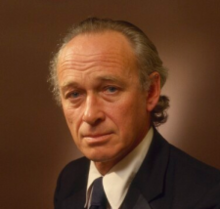
Tag: Nicholas Ridley

  • Nicholas Ridley – 1986 Statement on the Channel Tunnel

    Below is the text of the statement made by Nicholas Ridley, the then Secretary of State for Transport, in the House of Commons on 10 February 1986.

    I beg to move,

    That this House approves the Government’s White Paper on the Channel Fixed Link (Cmnd. 9735).

    I am delighted, but surprised, that the Opposition want this debate on the Channel tunnel. I am delighted because many of my right hon. and hon. Friends have important points to raise, and surprised because I do not understand what the Opposition seek to gain. Perhaps they want to embarrass the Liberals, as the hon. Member for Isle of Wight (Mr. Ross) is in favour of our decision, but the Liberal candidates in east Kent are all against it. That is strange. The Liberal manifesto for the 1984 Euro-elections advocated
    “Community Investment in major transport links, including a Channel Tunnel”.
    I wonder whether the Kent Liberal candidates dissociated themselves from the manifesto at the time of the campaign.

    Mr. Stephen Ross (Isle of Wight)

    I continue to support our manifesto, and the Secretary of State congratulated me on that recently during Question Time. I suspect that some Conservative Back-Bench Members are not keen on the scheme.

    Mr. Ridley

    I am not criticising the hon. Gentleman. I was merely wondering whether he could have a word with some of his candidates.

    The Labour party also has its problems. Some Labour Members are in favour of our decision, and some are against it. So why choose to debate it? It puts the hon. Member for Aberdeen, North (Mr. Hughes) in a terribly embarrassing position. He must steer between the Scylla of the hon. Member for West Bromwich, East (Mr. Snape) who represents the National Union of Railwaymen, and the Charybdis of the hon. Member for Kingston upon Hull, East (Mr. Prescott), who represents the National Union of Seamen. It is beastly of the Labour party to make him run the gauntlet again between those two political rocks. Surely he found it unpleasant enough the first time.

    But the Labour party has a worse failure to answer for. Labour Members keep demanding more infrastructure spending. They have debate after debate about the need for spending, and more jobs. Indeed, there is another one this week. Yet here is a massive infrastructure project, which will create a great number of jobs—we estimate about 40,000 man-years of employment. The jobs will by no means all be in the south-east. There could be orders of £700 million to £800 million for railway equipment alone which can be fulfilled only by midlands and northern firms. There are also great opportunities for more employment on railway operations. The tunnel will bring benefits to all regions of the kingdom by providing quicker, cheaper, more reliable means of transport to the Continent, thus helping employment. But what does the ​ Labour party do? It voted against the tunnel before Christmas, and it has a three-line whip to vote for its amendment tonight. Does it want jobs, and infrastructure, and investment, or not?

    When I announced the invitation to promoters last year the hon. Member for Crewe and Nantwich (Mrs. Dunwoody), who was then Labour’s transport spokesman, said:

    “We welcome any suggestion of considerable investment in the infrastructure. Indeed, we have been asking the Government for many years for precisely this sort of infrastructure development, with its impact on jobs and industry.”—[Official Report, 2 April 1985; Vol. 76 c. 1078-79.].

    How can the Opposition say that with one transport spokesman, and with another ask the House to vote against the project that they welcomed? The Labour party’s inconsistency is extraordinary, although some individual hon. Members hold different views.

    Mr. Robert Sheldon (Ashton-under-Lyne)

    The main point is that the infrastructure development will assist the south-east. Many of us are worried that the White Paper pays no regard to transport links with the north. The bottlenecks around London will become more constricted, not less, as a result of the link. Expenditure is needed on the road network to the north, but that will be even harder as a result of the Channel link. The right hon. Gentleman should be providing better links to the north, not to London.

    Mr. Ridley

    I know that the right hon. Gentleman is in favour of the link and sees the importance of connecting it to all areas, and I entirely agree. For that reason we are building the M40 as a relief to the Ml. It is as quick to go from London to Birmingham up the M6 via Oxford as it is via the Ml. There is massive infrastructure development taking traffic from the south-east to all quarters. There is a huge road programme to the south-west. Wherever we can, we are investing in roads to improve the position. Moreover, there are great opportunities for the railways to run through services from the north to the Continent. The right hon. Gentleman must welcome our decision and encourage all concerned to grasp the opportunities.

    Mr. Teddy Taylor (Southend, East)

    What evidence prompted my right hon. Friend to make the statement that the Channel tunnel could offer a “cheaper” means of transport across the Channel? Does he accept that the more British people hear about the tunnel, the less they like it? That is clear from a recent opinion poll which shows that more than half the population do not want the tunnel, and that only one third are in favour of it.

    Mr. Ridley

    First, the magic has worked even quicker than I believed because the ferries are now saying that they will cut the cost of the journey by 30 per cent. That is even before the tunnel is built. Therefore, my hon. Friend must concede that the tunnel route is cheaper. That shows what a little competition can do. Secondly, if my hon. Friend intends to steer a course according to every favourable opinion poll, I do not know what he will do when they are unfavourable. That is not a sound basis for forming opinions.

    There is another dilemma. The Labour party complains that all the benefits of the tunnel will go to east Kent, and not to the north of England. But my right hon. and hon. ​ Friends from Kent have expressed the opposite concern, that the tunnel will have unfortunate employment effects on the county. Let me tell the House my view of the truth, which is also contained in the White Paper.

    For the next eight years, during the construction period, there will be growing employment in Kent, both because of the increasing ferry business, and the construction work on the tunnel, roads, railways and so on. There could even be a shortage of labour during that period. In the long term, after the tunnel is open, a great deal depends upon the extent to which it attracts traffic which would otherwise be carried by the ferries, and also upon the extent to which local authorities in Kent can use, imaginatively, the opportunities created by the link to generate new employment in the county. When the link opens, employment on the ferries will certainly fall. On the basis of the promoters’ estimates of traffic, the Government judge that the total direct employment on cross-Channel transport operations will be some 1,500 less than it is now. But thereafter, employment will rise again, both on the link and the ferries. Moreover, there will be jobs from associated developments, so I suggest that the truth is that the long-term employment effects are fairly neutral.

    Mr. Andrew Rowe (Mid-Kent)

    My right hon. Friend will be aware that there is anxiety in the Medway towns that the very considerable infrastructure improvements to cope with the direct effects of the fixed link may militate against the essential project which the Medway towns are proposing to improve what is almost the blackest unemployment spot in Kent. Will my right hon. Friend reassure the Medway towns that he will look with considerable sympathy upon their proposals for a third Medway crossing?

    Mr. Ridley

    The M20 is the main road to the Channel ports and will be the main road to the Channel tunnel. That road will be developed to three lane motorway standard irrespective of whether there is a Channel link. Traffic going to the Channel ports will be so great that it will demand that upgrading in any case. Building the link does not add to the road programme in respect of that road as that road is already allowed for in the programme. In no sense is money being taken from other parts of the road programme because of the decision on the fixed link.

    I have already said that we shall look extremely sympathetically at any other roads needs which arise in Kent because of the link, and the discussions are already planned to start such an investigation.

    Mr. Jonathan Aitken (Thanet, South)

    Before my right hon. Friend leaves the employment consequences which he said would amount to a loss of only 1,500 jobs at the ferry ports, I draw his attention to the fact that that figure is based on what, by the White Paper’s own admission, is a most misleading basis. The White Paper bases that calculation on two ferry ports only, Dover and Folkestone. My right hon. Friend must know that there are well founded fears in at least 15 ports up and down the country, including the second largest Channel port, Ramsgate, which is not mentioned in the White Paper. One would not base a calculation on test cricket on the basis of what happened at Lords or the Oval and make no mention of Old Trafford, Headingley, Trent Bridge, and so on.​

    Mr. Ridley

    I was a little confused about the last part of my hon. Friend’s intervention and I confess I do not see the relevance of that, but the figure I gave was based on the estimates of tunnel traffic made by the Channel Tunnel Group. That includes the whole of the ferry industry, not just the two ports that my hon. Friend mentioned. We believe that some ferry ports will increase employment as the link opens rather than reduce their employment. I cannot give my hon. Friend detailed figures for every port. I would have to have the wisdom of Solomon to say what will happen, but my hon. Friend knows my views about the future of Ramsgate.

    Mrs. Ann Clwyd (Cynon Valley)

    I recently wrote to the right hon. Gentleman to ask if his Department had estimated the effect which the Channel tunnel would have on the container ports. He replied that that information was confidential. How is it possible for container ports to plan for the future if they do not know what the tunnel’s effect will be on their trade?

    Mr. Ridley

    That is true of all industrial enterprises at all times. When the west coast ports lost business to the east coast, nobody was able to warn them or provide any precise estimates. That is normal business risk. It is quite impossible to make a detailed forecast of the effect on every port.

    The White Paper sets out the reasons for our choice of the Channel Tunnel Group’s scheme. This was the joint choice of the British and French Governments. Both Governments would have liked to see a drive-through scheme, but the uncertainties and risks of all three drive-through alternatives led us to believe that there was a risk that they might prove too expensive to finance. I repeat that no Government funds or guarantees will be available. The CTG scheme appeared to the Governments to offer the best prospect of proceeding to completion. It has other advantages as well and these are set out in detail in annexe B of the White Paper.

    The main purpose of the White Paper is to look forward. It is not the job of the Government to set out the virtues of the CTG scheme and its potential attractiveness to customers and therefore to investors. That is for the promoters to do over the next few months as they set about raising the capital. We believe the Channel tunnel will greatly enhance the choice for travellers between Britain and France by adding to the existing air and ferry options a shuttle service for road vehicles and an efficient city-centre to city-centre rail link. For road travellers, the shuttle link will reduce the crossing time, with all stops included, by well over half compared with the ferries.

    The rail link from London to Paris and Brussels will be very competitive with air transport. These are great benefits. Already, there is talk of reducing fares in order to compete. That, too, is excellent news. The Government’s task is solely to consider the impacts of the scheme upon the transport network, and the environment.

    Mr. Roland Boyes (Houghton and Washington)

    Surely the Government’s task is to consider the impact on employment. Paragraph 39 of the White Paper states:

    “Firms in the East and West Midlands will be well placed to compete for contracts to build the shuttle trains, and there are firms in Scotland and the North-East able to supply construction materials.”

    As the Minister knows full well, I believe that the Channel tunnel will have a negative effect on jobs in the north-east. We shall lose jobs as a consequence. It might ​help the situation if the Minister can give me a guarantee that the construction materials that firms in the north-east are able to supply will be the ones which the tunnel builders will order or will the Minister say that it is a free for all where the construction firms can shop around the Continent and the world and get their goods at the cheapest price?

    Mr. Ridley

    I have already dealt with the employment aspects. If the hon. Gentleman did not hear what I said, he can read it in Hansard. I made it clear what the employment consequences are likely to be. I said that in my opinion the jobs which will go to the midlands, the north and Scotland were considerable as there were £700 million to £800 million worth of railway orders alone to go, as well as the building material orders to which the hon. Gentleman referred. He knows full well that I cannot promise that those orders would go to any particular firm. His constituents have the opportunity to gain employment if they can win these contracts. I am certain that they have a very good chance of doing so.

    I was about to describe the effects on the transport network. British Rail is to invest between £290 million and £390 million in rolling stock, the Waterloo terminal and certain other limited improvements between Folkestone and London. The impact upon the roads programme in the foreseeable future is not large. The Government’s proposals for the M20 from London to Folkestone are already in the programme and would be necessary whether a fixed link were built or not. We shall also press ahead as fast as possible with the replacement of the A20 between Folkestone and Dover. We shall also consider with Kent county council what improvements to local roads may be necessary.

    The environmental impacts of the Channel Tunnel Group’s scheme are set out in some detail in the appraisal by Land Use Consultants and their associates of the promoters’ environmental impact assessments. That is a valuable independent report. It does not necessarily represent the Government’s views on all points, but it forms the basis of the Government’s assessment of the environmental aspects of the further work that needs to be done. It quite deliberately looks far into the future.

    It is not surprising that if one looks 30, 40 or 50 years ahead, the M20 may need to be widened to four lanes in each direction. It will not, by any means, be the only motorway requiring such treatment by then. It would be for our successors to deal with these problems. In the short term, however, our concern is to make the scheme environmentally as acceptable as possible, in matters such as the arrangements for the disposal of spoil, the workings at the foot of the Shakespeare cliff, the landscaping of the Cheriton site, and the arrangements for the construction of the tunnels under Holywell Coombe.

    Mr. David Howell (Guildford)

    Does my right hon. Friend accept that one of the important impacts could be the attraction of freight away from the roads and back to rail when the Continental freight network is linked with the British network and substantial savings are achieved? Has he received any more recent estimates of the impact of that change, and does he recall that an earlier estimate was that only about 250,000 tonnes of road freight would go to rail? Will he comment on whether that is rather an underestimate? Does he agree that it might be considerably ​ more than that, with great benefit for the environment generally and a reduction in the number of heavy lorries rolling through villages?

    Mr. Ridley

    My right hon. Friend is entirely right. I speak without having a figure before me, but I think that the latest estimate is that there may be a fivefold increase in the amount of freight that the railways carry across the Channel as a result of the project. If I have misremembered the figure, I shall correct myself in writing to my right hon. Friend. There will be a considerable increase.

    We have retained the right to require the promoters to investigate and then implement the most acceptable arrangements, and the promoters accept this. My right hon. Friend the Secretary of State for the Environment and I intend to work closely together on this and my hon. Friend the Minister of State, Department of Transport will be consulting locally in Kent about it. If he is fortunate enough to catch your eye later, Mr. Deputy Speaker, he will describe the plans for consultation.

    With the tunnel becoming nearer to a reality, the natural conservatism of the British people is coming to the fore. Will rabies come? Will the Russians invade along the tunnel? Should Britain not remain an island? I sympathise with these emotional arguments, but I do not believe that they are rational. I shall conclude by answering the most frequently asked question, which is “Do we really need a tunnel?” Those who do not want to use it need not do so. Nor will they be asked to pay for it. But if millions want to use it and pay for using it, whether they be tourists, businessmen, importers or exporters, what right have we to stop them? It is for the Channel Tunnel Group to persuade the investors that we need a tunnel. If it considers that it should be built and is ready to pay for it, I do not think that the House would want to stop it.

    Mr. Jim Craigen (Glasgow, Maryhill) rose—

    Mr. Ridley

    I shall not give way. I must bring my remarks to an end.

    It is remarkable that the two Governments were in the invidious position of having to choose between four schemes. All were well prepared and those behind them were prepared to raise the money and to take the risks. What a transformation this is from the drab, centrally planned, Socialist concept of soak the taxpayers and ram it down their throats because the gentleman in Whitehall knows best. It is a sign of the virility of our entrepreneurs, our economy and our engineers that we can give the Channel tunnel the green light.

  • Nicholas Ridley – 1986 Statement on the Channel Tunnel

    Below is the text of the statement made by Nicholas Ridley, the then Secretary of State for Transport, in the House of Commons on 20 January 1986.

    With permission, Mr. Speaker, I should like to make a statement about the Channel fixed link.

    My right hon. Friend the Prime Minister and the President of France, meeting earlier today in Lille, announced the decision of the two Governments to take together the necessary steps to facilitate the construction of a fixed link across the Channel by the Channel Tunnel Group. Copies of the joint statement are being made available in the Vote Office.

    We will publish as soon as possible a White Paper that will give the full reasons for this decision. It will also chart the next steps to give effect to that decision, the treaty, the concession agreement and the legislation.

    The two Governments were faced with four proposals of outstanding quality which reflect great credit on the firms involved. It is remarkable that such keen competition could develop to provide and finance privately a project of this magnitude. The key factors that led the Government to select the Channel Tunnel Group were as follows.

    Eurobridge was eliminated largely on technical grounds. It is an imaginative and forward-looking proposal, but the technical risks make it too speculative for the two Governments to believe that it was likely to be financed and successfully completed.

    The choice between Channel Tunnel Group, Channel Expressway and EuroRoute was a more difficult one. They differ widely as to their technical characteristics, their impact on the environment, their effect upon shipping, and their vulnerability to terrorist attack—all factors in the decision. The invitation to promoters made it clear that any fixed link had to be financed, constructed and operated without support from public funds, and without Government guarantees against technical and commercial risks. It is thus for investors ultimately to determine whether a fixed link is built. The Governments had to try to select the scheme which offered the best prospects of attracting investors’ support.

    Both EuroRoute and Channel Expressway answer the popular desire to drive from one country to the other with the independence and freedom of a drive-through link, but both have large technical risks. CTG’s is a well-developed project, relying on well-proven technology and is both less risky and less expensive. It offers a fast and efficient rail shuttle service for road passengers and freight, with very frequent departures and no booking. It presents no problems to maritime traffic in the Channel, and is the least vulnerable to terrorist attack. Its environmental impact can be reduced to an acceptable level. The Government concluded that CTG was the best scheme to go forward to the market.

    The Government remain very much aware of the arguments that the public would like a drive-through link. In due course, the conditions may arise when a drive-through link would be viable. We have therefore secured an undertaking from the CTG that it will put forward by the year 2000 a proposal for a drive-through link to be undertaken as soon as its technical feasibility is assured, and economic circumstances and the growth of traffic allow it to be financed without undermining the return on ​ the original link. At a later stage, the Governments will be free to invite competitive bids for a further link coming into operation not before the year 2020.

    I expect the signature of the Anglo-French treaty to take place in February, and the concession agreement between the Governments and the Channel Tunnel Group to be concluded shortly thereafter. The legislation will then be introduced into this House as soon as possible. Construction could begin by summer 1987.

    Consultations in Kent have so far focused on the question of which scheme the Government should adopt. We must now concentrate upon making the chosen scheme as acceptable as possible. We will want to minimise the environmental impact, and to consider carefully the employment consequences of this development. We will be sympathetic if problems seem likely to arise in east Kent when the link opens some seven years from now.

    We must arrive at satisfactory arrangements with the promoters for the disposal of spoil and on other environmental matters, and we will ensure that the necessary road infrastructure is provided. The White Paper will deal with these questions.

    The Channel tunnel is a massive and difficult project. It will be a challenge to our engineers, our technicians and our financial institutions. Equally, I believe that it will be of great benefit to travellers and exporters alike in giving them cheaper, quicker and more reliable access to the continent of Europe.

    Mr. Robert Hughes (Aberdeen, North)

    In opting for the Channel Tunnel Group tender, the Government—against the instincts and prejudices of the Prime Minister—have chosen a fixed link which has the potential of matching Britain’s needs for an integrated transport policy. However, in rushing this decision through in such a tight time scale, the Secretary of State has broken his promise to Parliament on 9 December that he would publish a White Paper on the same day as the decision was announced. I suspect that this will not be the last of his broken promises.

    A number of questions must be answered. Exactly when will the White Paper be published? Will the Secretary of State fight in the Cabinet to get a debate in Government time before the treaty between Britain and France is signed? The right hon. Gentleman said that the White Paper would refer to the treaty and various other things. Will the right hon. Gentleman therefore answer this question precisely: will he fight in the Cabinet to get a debate in Government time?

    Will the right hon. Gentleman confirm that no obstacles will be placed in the way of those most affected by the scheme and that their views will be thoroughly canvassed by the Select Committee? What guarantees can the right hon. Gentleman provide that the British share of construction costs will be spent on British goods and that British labour will be employed on the project? As we know that the French are keen to gain the maximum advantage from this fixed link and to have the maximum investment in SNCF, will the right hon. Gentleman produce an investment plan in conjunction with British Rail so that BR can maximise the opportunities which the link may offer?

    Will the right hon. Gentleman do what he can to establish customs clearance facilities in major regional centres in order to encourage the carriage of long-haul freight by British Rail? Will he ensure that the terminal ​ points from which passengers may travel are spread throughout the regions? Will the right hon. Gentleman guarantee that any public expenditure on infrastructure will he new money and will not be taken out of existing budgets?

    Now that the Government have taken the decision, it is their duty to ensure that any benefits are evenly spread throughout the country. The Government have a responsibility to the nation as a whole.

    Mr. Ridley

    I was not clear whether the hon. Gentleman was in favour of the link. It is curious that we have had such a grudging response to this statement on the day when the Leader of the Opposition has made a speech—I saw the Tape as I came in—calling for a massive programme to reverse the decline in the British economy.

    I shall publish a White Paper giving a mass of the information which the hon. Member for Aberdeen, North (Mr. Hughes) has sought and which other hon. Members will seek. The decision was taken only a day or two ago, so it seems right that I should postpone publication until full details of the decision can be included in the White Paper. I hope that the details will be published within a week or two, or shortly thereafter.

    The question of a debate is, of course, one for my right hon. Friend the Leader of the House to consider.

    The hon. Gentleman asked me to ensure that objectors to the scheme would have an opportunity to put their views. I confirm that they will be able to present their case as petitioners before the Select Committee in this House and in another place, if the Select Committee is prepared to give them status. I shall encourage the Select Committee to be as wide as possible in accepting petitioners.

    I can tell the hon. Gentleman-he might even be pleased to hear this—that I believe that a good deal has been done between the British and the French railways, and between those railways and the promoters, which will result in large-scale orders for rolling stock. I am certain that all those who are concerned on the British side will do their utmost to provide as many jobs as they can on this side of the Channel.

    We hope to site national customs controls as far as possible next to each other at the entry to the link of each direction of travel so that there will not be duplication or stopping for through passengers, but there still have to be customs and immigration controls.

    As to public spending on infrastructure, there will be new money, in the sense that this is a new project. However, whether or not a new link is built, there will still be a need to expand the road system to the channel ports because of the great increase in traffic that is taking place.

    Mr. Geoffrey Rippon (Hexham)

    As one of my right hon. Friend’s predecessors as Secretary of State for Transport who brought similar proposals before the House more than a decade ago, I congratulate him and welcome his conversion to the project. I express my appreciation at the success of his negotiations and promise my wholehearted support to the scheme.

    Mr. Ridley

    I am grateful to my right hon. and learned Friend for those wise words. In mitigation of what he said about me, I should point out the small difference between his attempt to get his link constructed and mine, which is that on this occasion no taxpayers’ money will be involved.

    Mr. Stephen Ross (Isle of Wight)

    We welcome the decision that has been made today, and we are grateful for the fact that this project has been chosen and not one of the others.

    The right hon. Gentleman said of the chosen scheme: “Its environmental impact can be reduced to an acceptable level.” Does he agree that that can be done only if British Rail has adequate capital resources to make full use of the whole network, including the midlands, the north and Scotland? I realise that this is not in his hands, but will he try to persuade the Select Committee to hold hearings in Dover and Folkestone. This would be the right way forward, because people would be able to make their views heard.

    Mr. Ridley

    I am grateful to the hon. Gentleman for the support that he brings on behalf of the Liberal party for the decision that we have made to choose the Channel Tunnel Group. I am sure that that will be as welcome to Liberals throughout east Kent as it is to the Government. I congratulate him on his courageous support for what he knows to be right. Massive investment will be required by British Rail. A conventional-speed train system will need about £290 million, and a high-speed train system about £390 million, and there will be further investment in the shuttle rail equipment, which will be undertaken by the Channel Tunnel Group. Some large orders from the promoters and the railways are to come for this part of the project. It opens up great new opportunities for extending the railway system right from the north of our country into the farthest corners of Europe. I join the hon. Gentleman in hoping that the Select Committee on the hybrid Bill will be prepared to travel and hear evidence in the affected areas of Kent.

    Mr. Peter Rees (Dover)

    Will my right hon. Friend recognise that his statement will not allay the c’eep and legitimate concern in east Kent about the implications of a fixed link?

    Therefore, will he accept the need for close and continuing consultation with the local interests likely to be affected? Can he give the House any reassurance that there will be a proper and continuing role for the ferries and ports of Dover and Folkestone? Will he reassure the House that any extra economic activity generated by the fixed link will be retained in east Kent and not be drawn to north-west France?

    Mr. Ridley

    I should like to be as helpful as I can to my right hon. and learned Friend, who has done so much to represent to me the views and fears of his constituents—as has my hon. and learned Friend the Member for Folkestone and Hythe (Mr. Howard) who, as we all know, cannot speak for himself.

    My hon. and learned Friend has made clear, as has my right hon. and learned Friend the Member for Dover (Mr. Rees), the views and fears of constituents on the south-east coast of Kent. As a result of their representations I have decided to set up a joint committee consisting of officials, local authority representatives of the area and the promoters. It will be chaired by my hon. Friend the Member for Hampshire, North-West (Mr. Mitchell), the Parliamentary Under-Secretary of State, and it will go into all the points of local concern and difficulty, in the hope of improving the impact of the scheme on both the environment and the economics of the affected areas.

    I cannot accurately forecast the effect on the ferries to which my right hon. and learned Friend referred. ​ However, I believe that there will be a continuing role for them, even after the link has been opened. Dover has some of the longer distance routes, as well as short sea routes. The growth in traffic is expected to be very great, and I am sure that the ferries will have a share of it. I am also certain that many people will prefer to choose one mode of transport rather than another.

    When it is opened, I believe that this huge new artery will carry an immense number of passengers as well as a vast amount of trade between the continent and this country and that it will act as a magnet for new economic development and investment. If the planning policies of the local councils are right, there will be great opportunities for additional development in the east Kent area.

    Mr. Donald Stewart (Western Isles)

    Is the right hon. Gentleman aware that some of us view this project as simply the biggest election bribe in history? It is clear that this decision has been arrived at without due consideration of its implications for Scotland and other parts of the United Kingdom and of its effect upon the merchant service. Will the right hon. Gentleman hold up this project until a commission has fully investigated all these aspects?

    Mr. Ridley

    The link will greatly benefit constituents throughout the country, including those in Scotland. If goods can be sent to the continent more quickly, more cheaply and without the risk of delay, and if people can travel to the continent more quickly, more cheaply and without the risk of delay, that will aid the competitiveness and trade of the whole country. These are not Government funds which could be spent in other directions. A great deal of this money will be international money. A great deal of this capital will go only to projects which are chosen internationally. It will not be possible to direct it elsewhere.

    Mr. David Howell (Guildford)

    Will my right hon. Friend accept that the Government have made by far the best and most sensible choice by choosing the Channel Tunnel Group’s scheme from among the other fixed link options? Will he also accept that this is the only scheme that ensures that a substantial amount of the growth in traffic will still go to the ferry operators? Will he say a word about the plans for streamlining the handling of customs and immigration, in particular the possibility of on-train customs handling, since this would represent an important asset for the project?

    Mr. Ridley

    I am very grateful to my right hon. Friend. I welcome his support because he, too, studied this matter in depth when he had my responsibilities. He is correct in saying that this choice means that the opportunities for continuing the ferry operations are great indeed, although it is difficult to be specific about the precise amount.

    My right hon. Friend asked about customs and immigration. We are working hard on this matter. My hon. Friend the Minister of State, Treasury is still hoping to find ways to improve this service. For many reasons, we shall need both customs and immigration. The reasons include the prevention of disease through plants and animals being carried through the link. Controls will therefore be needed.

    I am anxious that a special arrangement should not be provided for the through trains which use the link which ​ would be competitively disadvantageous for the ferries or for any other forms of transport. To concentrate both the French and the English controls at the point of departure in each direction will mean at least that passengers are stopped only once, and that control acts only once.

    Mr. Gordon A. T. Bagier (Sunderland, South)

    In making the decision to have a fixed link, I congratulate the right hon. Gentleman on following the guidance of the Select Committee on Transport. I only wish that he had done so on the occasion of the Bill dealing with buses.

    The courage of the Minister has been mentioned, so I congratulate him on taking the hazardous line of disagreeing with his right hon. Friend the Prime Minister on her reported preference for another scheme. Will the Minister give an undertaking that when the White Paper is published he will make strong representations to his right hon. Friend the Leader of the House to ensure that it is debated and that a decision is taken by the House before the treaty with France is signed?

    Mr. Ridley

    I am grateful to the hon. Gentleman. The report of the Select Committee on Transport was most helpful. I am pleased that we have been able to agree with it entirely. The hon. Gentleman did a quick and expert job, and the Government are grateful to him.

    This has been a rather frustrating time for the press, because its members have been unable to discover what has been happening. Some hon. Members may have seen misleading statements in the press, which, I am happy to say, are untrue. The Government are united in their choice, and we agree with the French as well.

    Debates are a matter for my right hon. Friend the Leader of the House, but there will be a Second Reading debate on the hybrid Bill.

    Sir Julian Ridsdale (Harwich)

    Is my right hon. Friend aware that his optimism about the future of the ferries is not shared by some of the ferry operators? Will he consider the matter carefully, to ensure that this decision has not sounded the death knell for the British merchant marine, which has served this country so well?

    Mr. Ridley

    Some ferry operators are more pessimistic than I have been this afternoon about the prospects. However, it will be seven or eight years before any link can be opened. During that time we expect a massive growth in traffic to the continent, which will result in extra business for the ferries. The extent of the business that they will retain is hard to predict, but I am not pessimistic about the prospects for my hon. Friend’s constituency.

    Mrs. Gwyneth Dunwoody (Crewe and Nantwich)

    As the transport unions have been especially careful to offer positive co-operation, will the Secretary of State suggest to the chairman of the Channel Tunnel Group that it is unhelpful to give the impression that he would be prepared to use non-union labour on a fixed link?

    Mr. Ridley

    Far be it from me to make suggestions to the chairman of the Channel Tunnel Group after we have made our decision and accepted the final proposals as modified. However, there may be some disagreement about what the hon. Lady has said. The customers using the link will place great reliance upon the fact that it will not be subject to strikes and interruption. The hon. Lady’s question is a strange one. To ask to ensure the possibility of unionised activity and strikes is to sound a warning note of the true face of the Labour party.​

    Mr. David Crouch (Canterbury)

    Is my right hon. Friend aware of how bitter the opposition is in east Kent to the proposition? Is he further aware that, although I give the proposition my support on national grounds, I am sorry that I am unable to carry my constituents with me? Will my right hon. Friend offer my constituents and the environmental societies more than a hybrid Bill as a means of registering their complaints? Will he offer them consultation with officers in his Department, so that they will feel that they are being heard and that something is being done about their complaints?

    Mr. Ridley

    I am fully aware of the feelings in east Kent. My hon. Friend and I have visited the area and discussed the matter with local people. I share my hon. Friend’s view that there is still much apprehension. In response to this, we shall undertake a major consultative programme in the area and, in addition, my hon. Friend the Under-Secretary of State will chair a co-ordinating committee of the local authorities, the promoters and the Government as problems arise.

    The procedures of the hybrid Bill Committee will allow almost anyone who is affected to make representations, not just to the Committee in this House but to the Committee in another place. Those are full and proper arrangements for hearing local objections, and I confirm that the Government and the promoters will do what they can to adapt the scheme to local requirements.

    Mr. Bruce Millan (Glasgow, Govan)

    Is the Secretary of State aware that many of us are resolutely opposed to a Channel fixed link, whether this project or any other, for the reason which the right hon. Gentleman acknowledged in answer to a previous question, namely, that this will suck further economic activity into the south-east of England, which is the last place in Britain that needs such stimulus? This is just another project that will widen the north-south divide, and it will be bitterly opposed, especially in Scotland.

    Mr. Ridley

    My hon. Friends who represent Kent have expressed concern about the effect on Kent, although not in the sense that it will suck jobs from Scotland into Kent. I believe that the link will create some growth in jobs. The orders that will be placed for rolling stock and other manufactures will be of great benefit to the entire country. The fact that Scottish exports will be able to reach the continent more cheaply and more quickly should be recognised as a help to the competitiveness of the right hon. Gentleman’s constituents and, therefore, to their advantage.

    Sir Hector Monro (Dumfries)

    Will my right hon. Friend conduct careful consultations about conservation before producing a White Paper? Will he have discussions with the Nature Conservancy Council, which is the Government’s adviser, and which wishes to put strong points to him?

    Mr. Ridley

    We are always keen to take what action we can to assist in improving arrangements for conservation. My hon. Friend will know that geography dictates where the tunnel will come out and where the service area will have to be. It would be difficult to change that now.

    Mr. Roland Boyes (Houghton and Washington)

    Is the Secretary of State aware that I and the majority of my constituents completely oppose the building of the fixed ​ link? We live in an area of high unemployment, and we cannot understand why the Government can encourage the expenditure of billions of pounds on building a hole in the ground, instead of encouraging such expenditure on building structures above the ground. The construction of new schools, houses and hospitals would reduce unemployment in my area. This project will increase unemployment there.

    Mr. Ridley

    This is not Government cash which could be used to build schools, hospitals or other structures in the hon. Gentleman’s constituency. It is international capital, which will go to projects only where investors believe they can earn a reward. It is far better that that capital should be used to build a Channel link than to build factories on the continent, which might make the competitiveness of the hon. Gentleman’s constituents even worse. I repeat that a most useful benefit to the north of England and Scotland will be the fact that goods will be transported more cheaply to their markets. Transport is an important factor in industrial costs, and anything that we can do to reduce transport costs will help industry.

    Sir John Wells (Maidstone)

    Is my right hon. Friend aware of the great opportunities that will be created for new employment in Kent, despite fears of early local unemployment on the ferries and elsewhere? Will he encourage Kent county council and the district authorities to grant planning permission, so that Kent may grow, with great prospects for our people? In north Kent unemployment is as high as it is anywhere in the country.

    Mr. Ridley

    I agree with my hon. Friend that there is great potential for further development arising from the link. However, such development must depend on the planning policies pursued by district councils. I have been in close touch with the chairman of Kent county council, who came to Lille with me early this morning. We have throughout discussed the problems and opportunities which the link presents. I undertake to keep in close touch with the Kent local authorities to ensure that every opportunity is taken to help.

    Mr. John Cartwright (Woolwich)

    Given the considerable public interest in having a drive-through link in addition to the rail tunnel, does the Secretary of State accept that the year 2000 seems a long way off? What steps will he take to encourage the CTG to tackle the technical problems involved well before that deadline, and how firmly committed are the French Government to the concept of a drive-through link at a future date?

    Mr. Ridley

    Both Governments would have liked to see a drive-through link, but the problems are fairly formidable, in the sense of a 5 or 6-kilometre stretch near the French coast where the strata are difficult and unknown. It will be of great assistance to drive the bored tunnels of the CTG through those strata, whet more information about the possibility of a bigger tunnel for a drive-through link can be gathered. There was always doubt about the ventilation system proposed by Channel Expressway. With further advances in that technology, and with the greater geological information that we hope to obtain, it may be possible to drive a bigger tunnel through at a later stage. The CTG’s undertaking, which will be spelt out and put into the White Paper, makes it possible to do that fairly soon, or, in default of that, for a further invitation to be made to promoters so that a drive-through link would come into existence by the year 2,020.

  • Nicholas Ridley – 1985 Speech on Airports Policy

    Below is the text of the speech made by Nicholas Ridley, the then Secretary of State for Transport, in the House of Commons on 17 June 1985.

    I beg to move,

    That this House approves the Government’s White Paper on airports policy, Cmnd. 9542.

    In proposing an airports policy to the House on 5 June, I had to try to reconcile two interests which conflict. The first is the need to provide the airport capacity that is likely to be needed in each region of the country. The second is the strong views of many thousands of people living near airports about whether further development should take place in their localities. These matters had to be decided. Perhaps the worst policy of all would have been to postpone decisions.

    In their 1978 White Paper, the Labour Government foreswore forcing airlines and passengers to go where they did not want to go:

    “The Government rejects the suggestion that the air transport industry should be subject to the damaging restrictions on its operations which could be the outcome of the forced diversion of traffic to regional airports.”

    I agree with that. But by virtue of our joint rejection of that course, there is no alternative to providing more capacity in south-east England.

    However the Labour party may wriggle today, in a position of responsibility it would have had to accept the logic of providing capacity in the south-east for between 72 and 79 million passengers per annum by 1995, just as the inspector did. Economic growth, foreign earnings, and, most important, jobs in the aviation industry are at stake. So is the convenience of both business and holiday travellers.

    On the other hand, the Government are acutely conscious of the inconvenience, noise, and development that airports bring to their neighbours. For these reasons we have not sought to provide any more capacity than is necessary, and to phase it so that it is provided only when it is necessary. I will discuss other aspects of environmental protection later in my speech.

    I particularly understand and sympathise with the worries of people living near Stansted. They have fought long and hard against a busy airport there. My hon. Friend the Member for Saffron Walden (Mr. Haselhurst) and many other hon. Friends have put their case with consistent force and skill. It is in recognition of this concern that we have restricted expansion at Stansted to the minimum necessary.

    We have done our best to meet the concerns of those who really speak for Stansted. The development of the airport will be phased, with the first phase restricted to 7 million to 8 million PPA, an increment of only 5 million to 6 million on Stansted’s current capacity. The growth of traffic will be gradual, the new terminal will open around 1990, but it is impossible to say when it will reach capacity. Gradual growth will make it easier for local authorities to plan supporting development which may be needed, such as housing and services, road improvements, and so on. It will help to guard against the strains imposed by rapid expansion on a relatively small community. Good and sympathetic design of the new terminal and associated developments will be very important, and I am sure that the British Airports Authority and the local planning authority, which will need to approve the detailed plans, will strive for it.

    Mr. Bowen Wells (Hertford and Stortford)

    Can my right hon. Friend explain exactly how planning approvals will be given, in view of his statement that the expansion will be phased? Is he aware that many of my constituents would accept a phased terminal expansion—say to 4 million to 5 million PPA at the most, which is what is needed at Stansted according to the White Paper, and not between 7 million and 8 million? Is he aware, further, that the British Airports Authority made it clear to me when I visited its headquarters on Friday that it was bent on building a 15-million-PPA terminal. How will that be handled by my right hon. Friend?

    Mr. Ridley

    My hon. Friend seeks an assurance, which I am happy to give him. The British Airports Authority can apply for a 7 million to 8 million PPA terminal—I think that it is 50,000 sq m in area. It is again controlled by the number of air traffic movements, to which we hope the House will agree to restrict Stansted. If the authority makes detailed application—it has only outline planning permission at present—which is outside that restriction, I would expect the local planning authority to refuse it, and there is always the appeal mechanism if it does not. I assure my hon. Friend that the planning defences are there to make sure that the Government’s phasing of this development is adhered to accurately.

    Our proposal to impose a limit on air transport movements at the airport commensurate with the first phase of development will, I hope, provide further reassurance to my hon. Friends and to local residents about the rate of growth of traffic. The legislation, which I intend to introduce at the earliest opportunity, will provide that the limit can be raised only with the approval of Parliament, which will have to be satisfied that this is necessary to meet the demand. This mechanism will ensure direct control by Parliament over the use of the airport. We cannot now be sure of the amount of demand at any time in the future, how much can be accommodated at Heathrow, Gatwick and Luton, and, above all, how successful the regional airports will be, with the Government’s help, in attracting traffic. Parliament will be able to judge all these factors.

    Aircraft noise at Stansted is being significantly reduced by bans on the noisier aircraft types, and we shall seek further to reduce the impact at Stansted by improving on the current noise abatement measures, which include restrictions on night operations. There is a review of night sleep disturbance currently under way. Quiet take-off and ​ landing procedures and noise preferential routes will be required. They will be supplemented with new measures, including a noise insulation grants scheme for the Stansted area.
    In the light of the decision on phasing the development of the airport, British Rail will be examining the case for a rail link to Stansted. The cheapest option would be a simple spur to the Liverpool Street-Cambridge line, costing perhaps £50 million. The options will be assessed on exactly the same terms as a rail link to Manchester airport. I understand that British Rail thinks that the Stansted study could be completed by the end of this year. The Manchester study could probably be completed sooner than that, I look forward to reading them both.

    Mr. Andrew F. Bennett (Denton and Reddish)

    The Secretary of State will be aware that some people in the Greater Manchester area are worried that British Rail may be loading the question of the Manchester airport link because of its reluctance to see people changing from train to plane to travel from Manchester to London. Will he make sure that the development of a rail link to Manchester airport is looked at in terms of its international impact rather than simply in terms of its competition with British Rail on journeys from Manchester to London?

    Mr. Ridley

    I shall seek to make sure of that. It is for British Rail to work out the figures and appraise the nature of the investment, but it is for me to approve it or otherwise. I shall make sure that this work is done properly. It will also be done in conjunction with Manchester city council and Manchester international airport so that they, too, can make sure that there is no suggestion—I am sure that the hon. Gentleman does not suspect that there is any such possibility—of the figures being wrongly put together.

    I know there are many people in the Stansted area who oppose any more than a relatively small expansion. But there are also many who welcome the new jobs development will bring. Estimates of the number of jobs arising from expansion of the airport to a capacity of 15 million passengers per annum, both directly and indirectly, vary from 18,000 to 25,000. The inspector appeared to place more reliance on the lower figure; I have no better estimates as yet, but even on this basis it seems likely that development restricted initially to 7 million to 8 million passengers per annum would generate perhaps 10,000 jobs for the unemployed at Harlow, Braintree, Basildon, north-east London and even further afield—for instance, north-east Kent, which now enjoys good road access to the airport. Many people presently commuting to London from the area may obtain airport-related jobs. The more people from neighbouring areas take jobs there, the less will be the pressure for more housing to be provided.

    My hon. Friends representing constituencies near Stansted are also concerned that low charges at Stansted might draw traffic away from the regions. This is also a fear shared by hon. Members from the north of England. For this to happen would be contrary to one of our main objectives, which is to encourage the growth of traffic at the regional airports. I assure the House that we will take the necessary steps to ensure that Stansted does not have an unfair advantage.

    ​ First, under the legislation I shall be introducing, the structure of the BAA, with seven separate companies under one holding company, will require separate accounts for each subsidiary and full financial transparency; this will inhibit cross-subsidisation. Secondly, the role of the Civil Aviation Authority, in regulating the general level of airport charges, will prevent any predatory price cutting at Stansted. Thirdly, if individual airport companies borrow from within the group or outside it, they will have to pay full commercial rates of interest. The expansion of Stansted will have to be a commercial investment. It follows that charges at the airport will need to rise steeply to meet the costs of expansion. The BAA board, since the decision on 5 June to approve the development of Stansted, has said that it will be consulting its airline customers on the increased charges required to meet the costs of providing the new capacity. The Government are determined to ensure that traffic is not attracted away from the regions by unfair competition.

    Mr. Cecil Franks (Barrow and Furness)

    My right hon. Friend said that the structure of the British Airports Authority and the seven subsidiary companies would inhibit subsidy. Many Conservative Members would like the word “prohibit” to be substituted for the word “inhibit”, for many people are very sceptical about the good faith of the British Airports Authority.

    Mr. Ridley

    With respect to my hon. Friend the Member for Barrow and Furness (Mr. Franks), I said that to set up seven separate companies will require separate accounts for each subsidiary and full financial transparency, but that is only part of what I said. I went on to say that we should insist—most probably through the articles of association—upon a commercial rate of interest being charged upon inter-company loans. Furthermore, the Civil Aviation Authority will supervise all charges to ensure that none of them is predatory. That is perhaps the most important measure. Any one of them, taken alone, is not adequate but, taken together, I believe that they will prove to be adequate for the purpose.

    Mr. Alfred Morris (Manchester, Wythenshawe)

    The Secretary of State is referring to the future. Is he aware that what is happening now is a scandal? Last year, Stansted lost £3·88 million, an average subsidy of £8 per passenger. Its landing charges are one quarter of the landing charges in Manchester. Is the Secretary of State unable to take some action immediately to end that scandal?

    Mr. Ridley

    If the right hon. Gentleman will support the Bill which is to be placed before the House not only by his vote but by curtailing his speech, the sooner shall we have the power to do what he seeks, but in advance of that legislation I have no such power.

    Mr. Robert C. Brown (Newcastle upon Tyne, North)

    The Secretary of State has said that he does not wish Stansted to draw traffic away from the regional airports. Will he give a categorical assurance that there will be no hidden subsidies or cross-subsidisation for Stansted?

    Mr. Ridley

    I have already said this at length twice, so the hon. Gentleman already has my assurance. Our policy is the reverse of Stansted being in a position to attract traffic away from the regions. Its purpose is to help to meet the growth of unavoidable demand in the southeast, not to divert traffic which would otherwise have used the regional airports.

    ​Finally, on Stansted, we have made it clear that no second runway should be built there. I am requiring the British Airports Authority to sell all surplus land that would be needed for a second runway. Its external financing limit will be set on the basis of receiving the proceeds of sale of this land.

    Mr. Gerald Howarth (Cannock and Burntwood)

    Will my right hon. Friend say how many international airports operate in the 1980s with one runway?

    Mr. Ridley

    Without notice I am unable to give to my hon. Friend the answer that he seeks, but perhaps he would answer this question: how would our airports policy fare if I were to propose second runways at the three London airports which have only one runway at present?

    Mr. Tony Favell

    (Stockport): Will my right hon. Friend confirm, first, that the intention of the British Airports Authority is that Stansted should primarily be a charter flight airport? Secondly, how does he intend that the CAA should supervise the charging policy at Stansted? Thirdly, is there anything to prevent Stansted from making losses and also is there anything to ensure that it declares dividends to the holding companies?

    Mr. Ridley

    I do not confirm that the intention is that Stansted should be a charter airport. The White Paper has asked the CAA to consult all the airlines to establish what would be the right traffic distribution policy. I very much hope that the growth of scheduled services as well as charter flights will take place at Stansted. Secondly, with the information provided by separate company accounting, the CAA will undoubtedly have the power to supervise charges, both to prevent the exploitation of monopoly and to prevent predatory pricing. That is, there will be a limit both at the top and at the bottom. We shall ensure during the passage of the legislation that the powers to be made available are adequate. Thirdly, it is probable that Stansted will make losses in the early years as it develops. It is making losses already. Whether it is a separate company or whether it is part of the BAA, there still has to be the ability for it to make losses. Prestwick is also making losses. We cannot prevent a company from making losses, but we can roll up those losses in the balance sheet of the company so that it has to pay interest on them and finally redeem them when it enters a profitable period.

    Mr. Anthony Steen (South Hams)

    Does my right hon. Friend agree that if besides privatising it we changed the management structure of the British Airports Authority we might find that no losses would be made? Will he consider changing the management of the BAA as well as privatising it?

    Mr. Ridley

    I have complete confidence in the management of the BAA, and it is not part of my plans to do as my hon. Friend suggests. We shall have enough on our plate with this legislation.

    Mr. Lewis Carter-Jones (Eccles)

    Will the right hon. Gentleman give way?

    Mr. Ridley

    I must make a little more progress.

    Mr. Carter-Jones

    Perhaps the Secretary of State would give way just on this point.

    Mr. Ridley

    I shall give way to the hon. Member for Eccles (Mr. Carter-Jones), but after that I shall have to restrict interventions to those who have a constituency interest, otherwise I shall never finish my speech.

    Mr. Carter-Jones

    I am most grateful to the Secretary of State. I served, as did the Secretary of State, on the Standing Committee on the Civil Aviation Bill, which fell apart and disappeared. He mentioned that there is to be legislation. A White Paper has been published and eventually legislation will be introduced. Will he say in what way that legislation will differ from the Bill that we considered earlier this year?

    Mr. Ridley

    The contents of the legislation are to be found in the last chapter of the White Paper, which I am sure the hon. Gentleman has studied. The Bill will contain the proposals that were included in the Civil Aviation Bill which the Government abandoned. It will be a wider Bill than the Civil Aviation Bill, but it will include many of the same powers.

    On the subject of Heathrow, I must make it clear that we have not simply postponed or fudged the building of terminal 5. I have not ruled out the possibility for all time, but I am not convinced on present forecasts that it is necessary at all. Terminal 4, which is due to open early next year, will handle some 8 million PPA. Thereafter, the major constraint at Heathrow will be runway, not terminal capacity. When the runways reach saturation in the rush hours, growth in passenger throughput at the airport can come only from spreading the traffic to off-peak periods, which is unattractive to both airlines and passengers, or from an increase in the average number of passengers carried on each flight.

    During the 1970s, particularly the first half, there were substantial increases in average passenger loads per aircraft at Heathrow, resulting from the introduction of larger aircraft. That growth has slowed down in recent years.

    Some have suggested that rapid growth in the average number of passengers per aircraft will be resumed, once runway capacity is reached. But many of the signs point in the opposite direction.

    First, it is our policy to increase competition between airlines on domestic routes and to continue pressing for more liberalisation in European markets.

    Secondly, commuter routes are growing in importance, with a preference for frequent services and smaller aircraft. Thirdly, we are determined to maintain access to Heathrow for services from regional airports. Fourthly, aircraft manufacturers’ order books suggest that there is now less interest in bigger “stretched” aircraft for long-haul services and, indeed, more airlines are considering operating twin-engined jets across the Atlantic.

    The conclusion that I draw is that growth in passengers per flight at Heathrow is likely to be relatively slow, and that it is the runways which will be the constraint. Even if I am wrong, it will be a long time before extra capacity is needed. I ask the House to support the Government’s decision to abandon the 275,000 air traffic movement limit, and to allow us to go back on our undertaking. The Government tried to implement this commitment in the Civil Aviation Bill, but the House did not entirely support us.

    Mr. Harry Greenway (Ealing, North)

    I appreciate the impossible problem that my right hon. Friend had with that Bill, from the Labour and Liberal parties and from the ​ SDP, as well as from one or two of my hon. Friends. However, any decision to abandon the 275,000 flight limit will be viewed extremely seriously in west London. Will my right hon. Friend go instead for an increased number of passengers on each flight and stick as near as humanly possible to the 275,000 limit? Will he give an undertaking not to increase the number of passenger flights using Northolt?

    Mr. Ridley

    The market will determine the size of aircraft and the number of passengers carried. On our forecasts, it is unlikely that the number of passengers per aircraft will increase or that there will be a very great increase in the number of flights, as Heathrow is already fairly close to capacity. It would be better to let Heathrow determine how best to use its capacity to the full.

    Mr. Robert McCrindle (Brentwood and Ongar)

    Should not my right hon. Friend turn his attention to another factor—the type of flying that is likely to become more popular as we move into the 1990s? Do not many in the aviation industry predict a far greater use of scheduled rather than charter flights? If Stansted were developed primarily as a charter airport, might not any future decision about expansion come down quite easily in favour of terminal 5?

    Mr. Ridley

    I have already said what the Government think about terminal 5. With an ever more competitive and free airline industry, which extends into Europe, the difference between scheduled and charter flights will probably become less and less clear. I do not want to bind any given airport or airline to a particular policy. After all, the operators know best what they want to do and where they want to go. I believe it wise to run traffic distribution policy with the lightest rein possible.

    On the subject of the ATM limit, I do not quite understand the point made by the hon. Member for Crewe and Nantwich (Mrs. Dunwoody). On 5 June, she criticised me for abandoning the limit, yet on every occasion her troops voted against a Bill that would have imposed it. I should make it clear that we shall continue with the policy of restricting night flights at Heathrow. Indeed, the studies that I referred to earlier could well alleviate night disturbance there. Quieter aircraft are already beginning to alleviate the nuisance at night, as well as during the day.

    Dr. Alan Glyn (Windsor and Maidenhead)

    My right hon. Friend has given the impression today that terminal 5 will not be constructed at Heathrow in the foreseeable future. That is in direct conflict with what the White Paper says on page 59. Furthermore, there is a widespread belief that the removal of the sludge works must be a first step towards constructing terminal 5. Will my right hon. Friend give an undertaking that terminal 5 will not be constructed in the foreseeable future?

    Mr. Ridley

    My hon. Friend has anticipated my comments. If the House will allow me, I shall proceed, as interventions take up too much time.

    We attach the utmost importance to airline competition and liberalisation. It has already yielded substantial benefits for the passenger. It is the most effective stimulus of all for extra regional traffic. If the choice is between more passengers using Heathrow and more competition, there is no doubt that the passengers have more to gain from competition. That explains why we may not need terminal 5.

    In addition, the development of Luton and Stansted will bring more runway capacity into effective use in the London airport system. It may be possible, as a result, to improve the utilisation of the existing terminals at Heathrow to cater for up to 42 million PPA, thus again reducing the need for a fifth terminal. But I accept that there are uncertainties about the mix of aircraft and the pattern of demand in the longer term, and that a fifth terminal might—I emphasise “might”—one day be needed, although possibly of lower capacity than 15 million PPA. That would not be a realistic option if the Perry Oaks site continues to be occupied by a sludge disposal facility.

    The Perry Oaks works were there before the airport began to develop. They are an incongruous neighbour for the airport and I do not doubt that they would be better moved. The land they occupy would in any event provide valuable relief for the cramped Heathrow site. We have therefore asked the BAA and the Thames water authority to study the possibility of moving them, the costs, the alternative sites and methods of disposal, and the time that it would take. When those questions are answered, and we have a clearer view of how traffic will develop, we shall be in a position to assess whether there is a need for more terminal capacity.

    On the question of road and rail links to Heathrow, we undertook in the White Paper to examine urgently what could be done to reduce congestion and to improve passenger access to the airport. I intend to appoint consultants to look at options for investment in the corridor between London and Heathrow. The study will cover road access by public and private transport, the Underground, and rail services. The large number of options to be considered inevitably means that this study will take some time. I am also establishing a working group, with the local authorities concerned, to look at options for traffic management in the vicinity of Heathrow.

    As I said, all forecasts suggest that we need to provide capacity in the south-east for 72 million to 79 million PPA by 1995. Capacity will run short in the early 1990s. Even if we could provide a fifth terminal at Heathrow after the Perry Oaks sludge works have been moved, that would not solve the problem because it is primarily one of runway capacity. Further provision is needed at airports with spare runway capacity, which means Luton and Stansted.
    Looking further ahead, south-east traffic can grow only by use of the five runways we have: two at Heathrow and one each at Gatwick, Luton and Stansted. Our policy is to make the best use of those resources. We have provided for 1995 and allowed room for expansion. We need not commit ourselves before we have to, but equally it would be senseless not to retain the capability to meet the growth in demand, if it happens. I believe that our decisions will provide the scope that our civil aviation industry needs to expand and prosper.

    Our decisions have been widely welcomed by the industry, especially the independent airlines operating from regional airports. The airlines know that more capacity is needed at the London airports to provide for the growth of air traffic and the jobs that go with it. Nothing would stifle competition and damage the interests of the travelling public more than a shortage of capacity.

    That is why they have welcomed the Government’s decisions.​

    Mr. Allan Roberts (Bootle) rose—

    Mr. Ridley

    I shall not give way because I must make progress. I am about to talk about the regions, so perhaps the hon. Gentleman will wait to see whether I cover his point.

    Our assumptions for the capacity needed in the southeast include an appreciation of how much traffic can be attracted away from the south-east to regional and Scottish airports. It is a prime aim of our policy to seek to get more traffic to go there, for three reasons. First, it will encourage development and activity in those parts of the country. Secondly, it will serve the interests of passengers there better to fly from local airports. Thirdly, it will relieve the pressure on the south-east. That is why we will look for every possible way of encouraging more flights to regional airports. Our record, as my hon. Friend the Member for Manchester, Withington (Mr. Silvester) said on 5 June, bears witness to our determination. In the last six years we have authorised £200 million of capital investment at regional airports, compared with only £14 million in the last five years of the Labour Government. International scheduled services from Manchester now total 33—of which 14 are new this year. The figures for Birmingham are 15, of which four are new this year.
    What regional airports need is more concrete flights, not more concrete. We cannot force airlines to provide unprofitable services, but we can help by pressing for more liberalisation in Europe and by promoting regional airports when we negotiate air service agreements with other countries. No one can gainsay what we have already achieved. We have indeed done far more for regional airports than the Labour Government who preceded us, and who published a White Paper with dismissive comments about

    “Limited scope for diverting passengers from the London airports to those in other regions.”

    Imagine, therefore, the brazen nature of the Labour party’s amendment today, which states:

    “totally fail to foster a modern strategy for the regional airports”.

    Since we are the first Government to do that very thing, the hon. Lady’s amendment can be described only as breathtaking.

    Mr. Allan Roberts

    The Minister has not dealt with the point that I wished to make—and nor has the White Paper. Nowhere is Liverpool airport mentioned—[Interruption.] Hon. Members may groan, but it is important to the people of Merseyside. There is great anxiety on Merseyside that the proposals in the White Paper, coupled with the Bill to abolish the Merseyside county council, will cause Liverpool airport to close. Will the Minister give an undertaking that he will protect Merseyside from that eventuality?

    Mr. Ridley

    Liverpool airport will belong to the joint board that will be set up after abolition. However, if the districts can agree, it could belong to them in proportion to their shareholding after abolition. The decision of what to do with Liverpool airport will rest entirely with the districts and/or the joint board. I cannot give an assurance that it will or will not close; the decision is theirs, nor mine.

    Mr. Churchill (Davyhulme)

    May I, as a Manchester Member, say how much I appreciate the fact that since we last debated this matter in February, due to my right hon. Friend’s liberalisation policy there has been a 75 per cent. ​ increase in the number of scheduled destinations to which one can fly from Manchester? It is important to my constituents and to the north-west as a whole, and we thank him for it. We further appreciate his undertaking that landing fees at Stansted will cease to be predatory. How soon is that likely to happen?

    Mr. Ridley

    I am grateful to my hon. Friend. As I said earlier, the BAA board has already decided to start consultations with airlines about the increase in charges at Stansted that will be necessary. I imagine that those will come in within the reasonably near future.

    The Government are committed to the development of Manchester as the major hub gateway international airport for the north of England. British Airways has begun services to New York this summer and will be adding Dubai, Bangkok and Hong Kong from November. But we have also encouraged foreign carriers to operate long-haul services from the airport—Qantas to Australia, El Al to Israel, and Singapore Airlines to the far east. We are also ready to negotiate with the United States Government the basis on which their airlines may operate direct scheduled services to Manchester, and an early date had already been fixed for these negotiations.

    American Airlines wishes to begin a Chicago-Manchester service next summer. I hope that the negotiations with the United States Government, which could pave the way for other United States airline services, can be speedily and satisfactorily concluded. Manchester International Airport is being fully consulted about these negotiations. We have established a good working relationship with MIA and are discussing with its management a five-year plan for increasing the range of international services. We have already asked for work to be put in hand to assess the viability of a joint rail link to Manchester airport.

    I think that that meets 95 per cent. of the demands of the North of England Regional Consortium—a limited development at Stansted, fair competition on airport charges, and positive policies for developing traffic to and from regional airports. But it has also asked for free access to regional airports for foreign carriers. That particular suggestion is not in its best interests. There are indeed advantages in services by foreign airlines, but a reasonable price must be paid by foreign Governments in return in the form of new rights for United Kingdom airlines or a more liberal agreement between us.

    Even the United States, with its liberal policies and competitive aviation industry, insists on a satisfactory quid pro quo for its airlines, and so will we. To give up in advance any advantage we can obtain in negotiations for British aviation interests would be the worst possible deal, particularly for the regions.

    The reason for that is simple. More jobs at any airport derive from the services flown by United Kingdom airlines than by foreign-based airlines which centre their operations overseas. The key to the development of regional airports is a strong network of services by British Airlines and the creation of local hubs, locally-based airline support services and local employment. We must strengthen their position, not damage their commercial prospects. The role of foreign airlines is important, but complementary.

    These proposals have been welcomed by regional airports. Manchester airport welcomed our White Paper. The chief executive described it on television as: ​

    “Good news for Manchester and good news for job prospects in the North West”.

    Even the northern consortium, formed by northern local authorities, stated that the White Paper:

    “may form the basis for the kind of development of regional airports which we would have liked to have seen after the 1978 White Paper”.

    It called for an assurance that the Government and their successors would honour the White Paper’s commitments. As long as this Government and this party are in office, it has that assurance.

    So why did the hon. Lady call the White Paper a

    “slap in the face for regional airports”?—[Official Report, 5 June 1985; Vol. 80, c. 312.]

    Why did the hon. Member for Burnley (Mr. Pike) describe it as a “kick in the teeth”? Why did the hon. Member for Bradford, West (Mr. Madden) describe it as a “hammer blow” to the regions, or the hon. Member for Denton and Reddish say that most people in Greater Manchester would be “disgusted”? The same day, the Manchester Evening News carried the banner headline, “Boosts for Ringway”. Evidently Opposition Members are not even in touch with opinion in the North.

    Just as we seek to encourage more direct services from Manchester to meet the demand in its catchment area, so we seek more direct services from the Scottish airports to meet Scottish demand. We will encourage new long-haul transatlantic services to Scotland, and more direct services to European destinations from Glasgow, Edinburgh and Aberdeen. Glasgow and Edinburgh have done very well in attracting new services; Glasgow now has scheduled services to 10 international destinations, three of them new this year, while Edinburgh serves six European destinations, two of them new this year.

    I have recently confirmed the present traffic distribution policy. We now look to the BAA to develop Prestwick as Scotland’s gateway international airport for long-haul services, by exploiting Scotland’s undoubted attractions for tourism and by providing services to assist its important new businesses. Prestwick, as a separate airport company, will probably operate at a loss initially, but I hope that it can be brought into profit very shortly. Our proposals give Prestwick a new opportunity to thrive.

    These are our measures aimed at providing additional capacity in the south-east and encouraging more flights from regional and Scottish airports. Time allows me to deal only briefly with our proposals to privatise BAA and convert the major local authority airports into companies. We will have opportunities enough to discuss these proposals during the passage of the legislation.

    These policies are complementary to our general aviation policy of encouraging airline competition, leading to an efficient industry providing a cheap and attractive service to consumers. We need to provide the country with an efficient and enterprising airports system responsive to the needs of airlines and their customers. Selling the BAA and imposing company disciplines on local authority airports will, I believe, meet this objective.

    It is interesting that, apart from the hon. Member for Crewe and Nantwich, no hon. Member on 5 June questioned the decisions to privatise the BAA and to make the local authority airports into public limited companies. There are arguments we can have about whether the BAA should be privatised in one or two or seven airports. But they will arise in debating the legislation, as I said, and ​ I believe that we have the right answer. I also assure the Liberal party that there will be adequate proposals for regulating these airports and their changes as described in the White Paper, and I say that in view of the amendment which stands in the names of Liberal and SDP Members.
    I believe that the policy described in the White Paper will provide the right framework for the expansion of our civil aviation industry, that it will allow enough, but not excessive, airport capacity to be built, and that it will cause the least possible disturbance to those who are adversely affected by airport development. I commend it to the House.

  • Nicholas Ridley – 1960 Maiden Speech in the House of Commons

    Below is the text of the maiden speech made in the House of Commons by Nicholas Ridley, the then Conservative MP for Cirencester and Tewkesbury, on 5 April 1960.

    It is with great trepidation that I rise to address the Committee for the first time. It is extremely difficult to think of much to say on the Budget which is not in some sense controversial. I hope that the Committee will forgive me, as I will endeavour not to try the patience of hon. Members for too long.
    I have the honour to represent the Cirencester and Tewkesbury Division of Gloucestershire. Many hon. Members will know that beautiful countryside and reckon me one of the luckiest Members from that point of view. I also have the honour to follow in the footsteps of Mr. Speaker’s predecessor, Lord Dunrossil. He earned for himself a great name, both in the House of Commons and outside it. When looking through some of his earlier speeches the other day I found that in one of his very first speeches, on the Budget in 1932, he used the following sentence: All taxation is bad …”—[OFFICIAL REPORT, 23rd March, 1932; Vol. 263, c. 1091.] If Lord Dunrossil thought that in those days, he would certainly think so very much more strongly now, because in the Budget of 1930 Income Tax stood at 4s. 6d. in the £ and yielded about £250 million only in a full year.

    Many of my constituents are farmers, and they have a double ordeal at this time of year—the February Price Review, followed by the Budget. In most years they gain on the roundabouts what they lose on the swings, but they may not be quite so happy this year. It seems that they are asked every year to increase their efficiency by £25 million. How nice it would be if the Government similarly assumed that they would increase their own efficiency by a similar amount before the Budget was drawn.

    However, I am sure that farmers throughout the land will be very glad to hear that the worst loopholes of tax farming are about to be stopped up. Tax farming is not in the interests of the farming community as a whole. There are marginal cases where rich men occupy land and more earthy gentlemen might feel that they would like to occupy the same land. There are those cases which are arguable either way. At least, the better-off gentleman put extra capital into the land through certain tax expenses which, in the long run, is to the benefit of agriculture. We must be careful not to carry the rooting out of expenses so far that we kill genuine and good investment.

    There are many other forms of tax dodgers. The hon. Member for Gloucester (Mr. Diamond), my neighbour, dwelt very long on that subject. It is so complicated. Many people have to employ accountants to keep within the law, let alone to get anything further. I suggest to the hon. Member for Gloucester that it might be a good idea to introduce a 100 per cent. tax on accountants’ fees to discourage such gentlemen from going too far.

    We must pursue the dishonest in this respect, but I think that a strong reason why people try to evade tax is that the general level of taxation is too heavy year by year. This is especially true of the income range between £1,500 and £3,000 a year gross. I shall quote some figures to show how much those people pay in tax, compared with when Lord Dunrossil, thirty years ago, said, “All taxation is bad”. Since 1930, the cost of living has risen by 172 per cent. A man earning £1,500 a year now pays £227, or 15 per cent. of his total income, in Income Tax. The equivalent salary in 1930 was £550. A man earning that salary paid £12 Income Tax, or 2½ per cent. of his income. Therefore, that type of Englishman pays six times as much as he used to.

    Further up the scale, a married man with two children earning £2,500 a year now pays £670 Income Tax, or 27 per cent. of his income, whereas a man earning the equivalent salary of £900 thirty years ago paid £62, or 7 per cent. of his income. Therefore, the incidence of Income Tax in that income group has risen by nearly four times. I believe that in Germany a married man with two children earning £2,500 a year would pay £350, or about half as much.

    This group comprises about half a million families, and includes those engineers, technicians, young managers and skilled workers on whom our industrial future depends. No wonder that they are tending to go abroad. No wonder that they are looking across the Atlantic, where they can expect to receive a higher net income. There is even a genuine and honest fear of Surtax itself. People feel that there is something wrong and intimidating about crossing the £2,000 mark. I was asked by someone whose salary I once put up to leave it at £1,999, though he added that he would not mind having a firm’s car.

    In this class are those who try as far as they can to educate their children, saving the Exchequer considerable sums. They try to pay for their own doctors— and have to pay for their own drugs if they do. They also find that when their children go to the university they are debarred from grant because of the means test.

    I know that we cannot suggest a tax relief without saying where the money is to come from, and we shall not get enough from stopping up loopholes of taxation expenditure and evasion to pay for the scale of relief I feel is necessary for these people. It is, perhaps, a pity, with the modern theory of economy about which the Chancellor spoke so convincingly yesterday, when he described how the volume of demand had grown, and said that we must not do anything at this stage to make it grow further, that we have come to the conclusion that our Budget must not be one that gives much away when the nation is prosperous and doing well, and we are nearing full employment, and that, conversely, in a time of slump, we can look to tax reliefs to stimulate the economy.

    Tax relief that is not spent—that is saved—would be a benefit even at the present time, as I am sure the Chancellor would agree, and I suggest that this class of people, when they have paid for their education and health, and have met other calls upon their purse, will, in the main, be prepared to try to put by something for their old age, and that a relief in that direction might not have been as inflationary as my right hon. Friend may have feared.

    With that qualification. I think that this is a good Budget, and one making for stability. It is fair to all sections of the population, and it is the type of Budget that we must suffer from time to time. However, if the situation next year is more favourable—which would mean, perhaps, that we were not quite so prosperous, which is the anomaly— I hope that the Chancellor will turn his attention to these long-suffering people whose case I have tried to make out this afternoon.