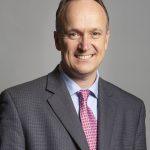
Tag: Neil Hudson

  • Neil Hudson – 2025 Comments on Asylum Seekers, Borders and Migration

    Neil Hudson – 2025 Comments on Asylum Seekers, Borders and Migration

    The comments made by Neil Hudson, the Conservative MP for Epping Forest, in the House of Commons on 1 September 2025.

    Home Secretary, please: we have a tinder-box situation in Epping. We have the Bell hotel, with alleged sexual and physical assaults, and now twice-weekly major protests, some of which became violent, with injuries to police officers. Appallingly, last week the Government successfully appealed against the injunction on the hotel, prioritising the rights of illegal migrants over the rights and, indeed, safety of the people of Epping. Our community is in distress. The situation is untenable. This week the schools are back. The hotel is in the wrong place, right near a school, and many concerned parents have contacted me. When will the Home Secretary and the Government listen to us, address this issue and do the right and safe thing: close the Bell hotel immediately?

    Yvette Cooper

    I agree that all asylum hotels need to be closed as swiftly as possible, including the Bell hotel. That needs to be done in an orderly and sustainable manner so that they are closed for good. The hon. Gentleman is not right in the characterisation of the Government’s case, because we are clear that all asylum hotels need to close. We need to ensure that that is done in an ordered way that does not simply make the problem worse in other neighbouring areas or cause the kind of disordered chaos that led to the opening of so many hotels in the first place. We also need to strengthen the security and the co-operation with policing, and we want to strengthen the law on asylum seekers who commit offences and can be banned from the system. That will be part of our Border Security, Asylum and Immigration Bill as well.

  • Neil Hudson – 2023 Parliamentary Question on Sentencing and Rural Crime

    Neil Hudson – 2023 Parliamentary Question on Sentencing and Rural Crime

    The parliamentary question asked by Neil Hudson, the Conservative MP for Penrith and the Border, in the House of Commons on 10 January 2023.

    Dr Neil Hudson (Penrith and The Border) (Con)

    What discussions he has had with Cabinet colleagues on tackling rural crime.

    Daniel Kawczynski (Shrewsbury and Atcham) (Con)

    What recent discussions he has had with Cabinet colleagues on the effectiveness of sentencing policy in reducing levels of rural crime.

    The Minister of State, Ministry of Justice (Edward Argar)

    My right hon. Friend the Deputy Prime Minister has regular meetings with Cabinet colleagues and others to ensure a joined-up approach to tackling crime, including rural crime. Rural crime has a huge impact on those individuals and communities affected, which is why prevention, policing and prosecution are all vital to tackling rural crime, which remains a priority.

    Daniel Kawczynski

    I thank the Minister for that answer. I raise the question on behalf of Councillor Dan Morris and Stuart Jones, who are both farmers in my constituency. Does my hon. Friend agreed that rural crime is often linked to organised crime groups who target and exploit rural communities across a range of crime types, such as organised plant and livestock theft, burglary targeting firearms, fly-tipping and poaching? Sentencing needs to reflect the serious organised criminality involved in these offences.

    Edward Argar

    My hon. Friend highlights a number of crimes that particularly impact rural communities—crimes highlighted in the National Police Chiefs’ Council strategy on rural crime. It is important that the courts have appropriate sentences available to them. Although sentencing in individual cases is a matter for the judiciary, sentencing guidelines are clear that offending that involves a high degree of planning or that is committed for profit, as is often seen in organised crime, will attract tougher sentences.

    Dr Hudson

    Rural and wildlife crime sadly continues to affect our local communities, from theft of farm machinery, fly-tipping and vandalism to the distressing theft of animals and animal cruelty. These are just some of the issues facing rural areas. Cumbria has the excellent Cumbria farm watch and horse watch schemes—partnerships between people and Cumbria police. What reassurances can my hon. Friend give my constituents that the Government are supporting the police and communities in the fight against rural crime?

    Edward Argar

    My hon. Friend is right to highlight the work going on in Cumbria. I pay tribute to the work of the police and crime commissioner Peter McCall and Cumbria police to tackle rural crime through Operation Lantern. Alongside Government investment in 20,000 more police officers nationally, we are supporting the police through the Police, Crime, Sentencing and Courts Act 2022 by introducing new hare coursing offences and supporting the private Member’s Bill introduced by my hon. Friend the Member for Buckingham (Greg Smith) to prevent quad bike theft.

    Stephanie Peacock (Barnsley East) (Lab)

    Fly-tipping has doubled in Barnsley during the last year, costing the local council nearly £200,000 to deal with. What discussions has the Minister had with colleagues across Government to ensure that fines and sentences for fly-tipping are a strong enough deterrent?

    Edward Argar

    The hon. Lady is quite right to highlight a rural crime that blights both rural and urban communities, but predominantly rural communities including mine in Leicestershire. We have regular discussions with colleagues in both the Department for Environment, Food and Rural Affairs and the Department for Levelling Up, Housing and Communities about issues such as this. I am happy to meet her in due course if she wants to highlight any cases.

    Jim Shannon (Strangford) (DUP)

    I thank the Minister for his answer to those questions. Back home in Northern Ireland the Ulster Farmers Union, in which I declare an interest as a member, have regular meetings with the Police Service of Northern Ireland to put invisible markings on machinery and to have visibility on tractors. One of the big problems is machinery from Northern Ireland and from the UK mainland going down to the Republic of Ireland. Has the Minister had any opportunity to talk to the Garda Síochána to work across the border to ensure that those criminal gangs involved in machinery theft are curtailed?

    Edward Argar

    I have not had any direct discussions with the Garda on this matter, but in looking at the National Police Chiefs’ Council’s rural crime strategy I have seen the work being done in Northern Ireland to highlight exactly the issue that the hon. Gentleman raises—both marking and the challenges around farm machinery. If he wants to write to me with further details from his constituency perspective, I would be very happy to receive that.

  • Neil Hudson – 2022 Speech on the Avian Influenza Outbreak

    Neil Hudson – 2022 Speech on the Avian Influenza Outbreak

    The speech made by Neil Hudson, the Conservative MP for Penrith and the Border, in Westminster Hall, the House of Commons on 30 November 2022.

    It is a privilege to serve under your chairmanship, Sir George. I pay tribute to my right hon. Friend the Member for Maldon (Sir John Whittingdale) for raising this important issue. I declare a strong personal and professional interest as a veterinary surgeon. My thoughts go out to the farmers, vets, officials and anyone on the frontline in this catastrophe. It is incredibly distressing. I pay tribute to the vets and officials at the APHA for all their work at this unprecedented time.

    We have heard about the impact of the disease on birds in the domestic market and on wild birds. I want to talk about its impact on people on the frontline. I sit on the EFRA Select Committee and in our urgent session on avian influenza yesterday, we looked at the impact not only on birds but on humans. It very much goes in parallel with our inquiry on rural mental health and the long-term effects of these situations on those on the frontline.

    I spent a period as a veterinary surgeon on the frontline during the foot and mouth crisis, and I witnessed sights that I never want to witness again in my lifetime. People on the frontline in the current situation are seeing things on a similar scale. We need to be cognisant of that moving forward. In the Committee’s session yesterday, we found that there needs to be more collaboration and more data collection, so that we understand more about the incidence of the disease in the wild bird population and the transmission pathway.

    My right hon. Friend the Member for Maldon mentioned that we have learned lessons from covid. Work needs to be done at pace to develop a vaccine. This is a highly pathogenic H5N1 strain, and the available vaccine is not suitable for this particular strain. This work needs to be done internationally; we need international collaboration and Government support. There needs to be a lot of research on the difference between naturally infected birds and birds that have been vaccinated. That technology needs to be moved forward at pace. We have learned lessons from covid, and this is a similar situation. Where there is a will, there is a way.

    We need to remember that viruses do not respect international or domestic borders. We need to have a UK approach and a global approach to tackle the disease. I pay tribute to the people at the APHA. They really are on the frontline and they are coping at this point. The EFRA Select Committee had the chief executive and the chief vet before us yesterday.

    As a member of the EFRA Committee, I guested on the Public Accounts Committee with the National Audit Office for the session on the APHA site at Weybridge. It needs a radical redevelopment and it is going to cost £2.8 billion. We know that there are fiscal constraints, but it is so important that we spend that money now to prevent us from having to spend a lot more in the future and, as we have heard, to stop the devastating impact on human and animal health. I urge the Minister to bat for DEFRA and make the case that it needs that £2.8 billion; £1.2 billion has been earmarked and we need the additional £1.6 billion as a priority. The APHA is coping, but heaven forbid that we get something else like foot and mouth disease, African swine fever or African horse sickness coming in. The potential outbreaks could be catastrophic for our country. We need resources, people and expertise.

    In some quarters, this situation has been likened to fighting a war with a peacetime army. That is probably where we are now. We are coping, but we must make preparations to ensure that we are resilient into the future, so we need sufficient vets and officials. The EFRA Committee has produced reports that recommend that the Government look at veterinary workforce issues and workforce issues across the agricultural sector, and ensure that our farming communities, who are so important to food security, are supported with the workforce they need.

    We have talked about compensation, and this highly pathogenic strain means that the compensation needs to kick in earlier in the cull process. I would like to hear from the Minister—this has been raised by other colleagues—whether there could be some help through insurance schemes, perhaps underwritten by Government, to help farmers have a bit of security. In addition, at what point would the Government act according to the Agriculture Act 2020 and say that we are in exceptional market conditions and that they can use the powers in the Act to help farmers?

    The hon. Member for Lancaster and Fleetwood (Cat Smith) spoke about free-range classification and that movement from post-16 weeks to not being free range. There is discussion at EU-level about whether, if the state vets say that the birds need to be indoors, the free-range status can be carried on longer. The UK needs to be cognisant of that and make preparations to ensure that our farmers are on a level playing field. I thank everyone on the frontline; my thoughts, feelings and prayers are with them. I look forward to hearing from the Minister.

  • Neil Hudson – 2022 Speech on the Supported Housing Bill

    Neil Hudson – 2022 Speech on the Supported Housing Bill

    The speech made by Neil Hudson, the Conservative MP for Penrith and The Border, in the House of Commons on 18 November 2022.

    It is a great pleasure to follow my hon. Friend the Member for Heywood and Middleton (Chris Clarkson). I pay tribute to my hon. Friend the Member for Harrow East (Bob Blackman) for introducing this Bill, but in the top trumps of adulation, I do not think that I can compete with my hon. Friend the Member for Ipswich (Tom Hunt).

    My hon. Friend the Member for Harrow East is a proud champion of speaking up for the most vulnerable in society, and I pay tribute to him for all the work he has done in this area and for introducing this important Bill. I am really pleased that it has so much cross-party support, as it shows the importance of what he is doing. This House is at its best when we are united in the common good of trying to protect the most vulnerable in society.

    I also welcome the Minister to her place, and I look forward to hearing from her later. What really resonated with me, as a vet and a scientist, was when my hon. Friend and other colleagues talked about the paucity of data in this area. If the data are not there, we just do not know what we are looking at. We can make good policy with evidence-based decisions, and we need the evidence out there. This debate today has highlighted the importance of that data collection.

    It is clear that those who are protected by this Bill are among the most vulnerable in our society. I pay tribute to those across my constituency of Penrith and The Border who support the most vulnerable people. In the housing arena, I pay tribute to Eden Housing Association, which is celebrating its 25th anniversary this year. I hope that the Bill complements the work of people up and down the land who are supporting the most vulnerable in society. At a time of economic crisis, when people’s livelihoods have been affected, forcing them to live from day to day, it is so important that we are putting forward good legislation to provide help in these troubling times.

    I welcome the fact that the Bill will try to stamp out the awful practices that have been highlighted today of rogue landlords exploiting people. There have been some pretty harrowing examples from Members on both sides of the House, and it is so important that the Bill will clamp down on these practices and rid them from society. These people on benefits are really struggling, as are many people across the country. As we have heard today, this is a compassionate piece of legislation, and when we are driving Bills with cross-party support through the House, it is so important that compassion is at the heart of that. To get political, I welcomed the Conservative Government showing some of that compassion yesterday with measures in the autumn statement, and the fact that we are now uprating benefits in line with inflation is critical to that compassionate conservatism.

    We have heard from many Members, including esteemed medical colleagues, about the mental health implications in the supported housing sector, and we have also heard about physical wellbeing. Something that has really resonated with me today is the mental health impact of the situations that these people find themselves in; that impact is lasting, profound and very damaging for them. The mental health stresses in this sector compound the trauma that many of these people have experienced, having faced domestic violence, homelessness and all other manner of challenges in their lives. If they are then challenged in their own homes, that exacerbates the awful problems in their lives.

    In rural areas such as my constituency of Penrith and The Border in Cumbria, the factors that challenge mental health are compounded by rural isolation. I have pressed the Government to ensure that policy making reflects the challenges we face in different parts of the country. Rural communities often struggle to get the mental health support they need due to the long distances and poor connectivity, whether that is physical or virtual connectivity or even mobile phone signal. This is something I feel very strongly about. I sit on the Environment, Food and Rural Affairs Committee, and I initiated an inquiry on rural mental health. We looked at some of the trigger factors for people in rural communities, and we found that challenges in the housing sector were among those.

    The Bill has to be part of an holistic approach, to protect the most vulnerable in exempt accommodation. We have heard today about mental health, and I feel passionately that mental health needs to have parity of esteem with physical health. The two go hand in hand, and they need to be balanced together.

    To segue into another issue, as a vet, I am passionate about animal health and welfare. As a dog owner, I know the impact that animals have on people’s lives and the importance of people being able to have animals in their accommodation. I have worked with Ministers on various types of legislation, and we want people in the rental sector to be able to have pets in their accommodation. Responsible pet owners should be allowed to have a pet, to give them that companionship and to help their mental health and the health of the animal. That is something we can move forward with.

    Dr Luke Evans

    My hon. Friend is making an excellent point about the impact of animals on mental wellbeing. Does he agree that having an animal to provide that support is even more important in rural areas, where loneliness is such a big problem?

    Dr Hudson

    I very much agree with my medical colleague about the role of animals in society and in supporting us, and the support we can give to our animal friends, and that is pivotal in rural communities. We love animals in rural areas and in towns and cities. Our love for the animal world is something that unites us in humanity and across the Chamber.

    I welcome the statutory requirement on local authorities to publish a strategy for supported housing, so that they can respond to the needs of their area. In rural areas such as my constituency, the importance of local councils and local democracy cannot be overstated. Local councils and parish councils are at the heart of these communities, in terms of community engagement and providing the key services on which we all rely daily.

    I urge central Government to take care that the Bill’s statutory requirements on the Secretary of State at national level do not create inertia or an inability to act at local level. We have seen a bit of inertia in Cumbria with local government restructuring, as we move to two unitary authorities. Sadly, local democracy has ground to a halt as people jockey for position and decide who is in charge of which parts of the county. Parish councils are struggling to get things through, and grant applications are not being looked at. For local democracy, we have to make sure that we do not have inertia after decisions are made. This is a really good Bill and, when it gets on to the statute book with cross-party support, we need to make sure the process is lubricated.

    I echo the comments of my hon. Friend the Member for Truro and Falmouth (Cherilyn Mackrory) highlighting the lack of housing in rural areas, exacerbated by the upsurge in short-term holiday lets and Airbnb, which is also a critical issue for us up in Cumbria. I welcome the fact that the Government are listening to Back Benchers who have raised the lack of housing. In our rural communities, we see people being driven out of their local area because they cannot find rented accommodation, so I welcome the fact that Ministers are looking at this issue on a cross-departmental basis. There has been a consultation on short-term holiday lets, and I look forward to the Government working through the Levelling-up and Regeneration Bill to make sure we have sensible legislation so that people in rural communities can live, work, study and have their kids go to school in their local community. I very much hope the Government move on that, too.

    There is a huge impact on employers in rural Cumbria, as they are not able to attract staff to come and work in their pubs, restaurants and farms because of the lack of housing due to short-term holiday lets. I welcome the fact that my hon. Friend the Member for Truro and Falmouth has raised this issue, as have I in Cumbria and as have other colleagues from up and down the land. It is a key point, and I hope the Minister will look at it in parallel legislation.

    Again, I pay tribute to my hon. Friend the Member for Harrow East for bringing forward this Bill. I welcome the strong cross-party support, including from the Government, as the compassion at the heart of this Bill has my firm support.

  • Neil Hudson – 2022 Speech on Levelling Up Rural Britain

    Neil Hudson – 2022 Speech on Levelling Up Rural Britain

    The speech made by Neil Hudson, the Conservative MP for Penrith and the Border, in the House of Commons on 9 November 2022.

    It is a great pleasure to follow the jazz odyssey that is three Dorset contributions on the bounce. May I take the House from the deep south up to rural Cumbria? I thank my hon. Friend the Member for North Devon (Selaine Saxby) for securing this vital debate. As we have heard, levelling up is not just about towns and cities; it has to include rural areas. Rural communities need support more than ever now; the cost of living crisis has become even more acute than when I raised the issue of levelling up rural Cumbria in an Adjournment debate a few months ago.

    At the heart of the issue is the potential of our rural communities, which we can unlock if we level them up. The key theme is that rural areas are not London; Cumbria is not London. Their unique nature puts them on the front line of the cost of living crisis. We have spoken about people, households and businesses off grid. At home in Brampton I am on heating oil, and the £100 supplement does not even touch the sides, because people have to make minimum orders of sometimes 500 litres. I urge the Government to review that.

    It is not just households that are off the grid but businesses as well. Hospitality and tourism are crucial to Cumbria and Penrith and the Border. I firmly believe that those businesses need the emergency support measures that this Government brought in during the pandemic. I am very pleased to be working with Eden District Council and supporting the levelling up bid for the Inspiring Eden Enterprise Hub near Penrith, which I hope the Government look at favourably.

    As we have heard from many colleagues across the House, housing is pivotal for rural communities. That is very much the case in rural Cumbria; it is so important for families and young people to get homes and for those who work in agriculture, tourism and hospitality to be able to live in the areas where they work. We desperately need more accommodation in rural areas, and we need Government to look at amending planning processes to tackle the issue of second homes and short-term lets.

    On agriculture, I am proud to stand up for our Cumbrian and British farmers, who are the best in the world and farm to the highest animal welfare standards. The agriculture sector is on the front line in the crisis of fuel, animal feed and fertiliser costs. We as a Government need to look favourably on our farmers who produce food for us, while also supporting our environment. The Environment, Food and Rural Affairs Committee has been looking at that in its food security inquiry and, as we have heard, the ELMS transition inquiry. I firmly believe that the Government need to look at that, review the schemes and make sure that our hard-working farmers who produce fantastic food for us are supported.

    We have heard much about connectivity. Transport links are vital in rural areas. We need to support railway development, such as the borders railway coming down through Longtown in my constituency and on to Carlisle, and reopen stations such as Gilsland. We need to improve the train services that come up to rural Cumbria. The Avanti West Coast service is in special measures now; it has been looked at and it has six months’ notice. I firmly believe that we need strong action on that.

    We have heard about ticket offices. We must protect our ticket offices in stations such as Penrith and Appleby. We have heard a lot about buses as well. In rural parts of the world, volunteer groups often step up where there are gaps in provision, such as the Fellrunner service or the Border Rambler service. I urge central Government to work with local government to use moneys sensibly. I urge Cumbria County Council to review its decision and the new unitary authorities to look at using central Government moneys to subsidise rural bus routes. That is an important point.

    Hon. Members have spoken about education. It is so important that young people post 16 are able to get to their next place of training or education. I have been working with communities in Alston to help provide that. I urge the sensible use of central Government moneys. I hope that local government can put in provision. I want policy change that mandates local authorities to provide post-16 transport for our young people. Education is pivotal in my part of the world. We have fantastic schools. I urge central Government to look at rebuilding some of our important rural schools. Ullswater Community College in Penrith in the heart of my constituency is in need of a radical rebuild.

    We have heard much about virtual connectivity, and Project Gigabit and the shared rural network are welcome. We have rays of light in Cumbria with B4RN—Broadband for the Rural North—providing services and working with the Government vouchers. We need to support communities to stay connected, we need to support our local radio stations and we need to support the terrestrial TV that people rely on. I firmly believe that we need to have policies made in London that reflect rural areas. We need to allow rural parish councils to meet virtually or in hybrid format so that local democracy can take place in areas where there are challenges. I firmly believe that rural areas need to be looked out for. Cumbria is not the same as London.

  • Neil Hudson – 2022 Speech on the Genetic Technology Bill

    Neil Hudson – 2022 Speech on the Genetic Technology Bill

    The speech made by Neil Hudson, the Conservative MP for Penrith and the Border, in the House of Commons on 31 October 2022.

    It is a great pleasure to speak in this debate and to follow the hon. Member for Brighton, Pavilion (Caroline Lucas), who is a passionate advocate for the environment and animal welfare issues.

    I firmly believe that this Bill is an important piece of legislation. I first declare an interest: as a veterinary surgeon, I am passionate about animal health and welfare. I also represent Penrith and The Border, a huge rural constituency with a huge farming footprint. We have the most fantastic farmers in Cumbria, and across the UK, who farm to the highest animal welfare standards. I firmly believe that we do not have anything to fear from this legislation, but I do understand some of the concerns that have been raised, and I will speak to some of the amendments and new clauses.

    It is important to reaffirm from the outset that this Bill is to do with gene editing, which is very different from genetic modification, where genetic material from an exogenous species is potentially inserted. That is not the case with what this Bill is concerned with. Gene editing is very different from genetic modification. When the Government move forward with this Bill, it is important that they keep articulating and communicating that to the public, to try to alleviate some of those concerns.

    I firmly believe that there are huge benefits to be gained from this legislation to animals, plants, the environment and the human race. I respectfully disagree with amendment 1, because I firmly believe that it is important that animals are included within the scope of the legislation. I will try to articulate why I believe that. There will be huge benefits to animal health and welfare from the development of animals and potentially birds that have more resistance to diseases, as colleagues have touched on. As a veterinary surgeon, I firmly believe that is a good cause, because if we can reduce the incidence of disease, that is an animal health and welfare gain.

    We have talked about birds becoming more resistant to avian flu, and we have seen how this country is being ravaged at the moment by avian influenza. Technology that helps us to mitigate that is to be welcomed. In addition, in the pig world, pigs with resistance to porcine reproductive and respiratory syndrome, PRRS, will be another good development. Anything that can reduce morbidity and mortality in the animal world is something to be welcomed. As some Members have touched on in interventions, ultimately that could also lead to a reduction in the use of veterinary medicines. That will be of benefit to the animals, but it will also be of indirect benefit to humans. If we can reduce the amount of antimicrobials used, that will mitigate the blight of antimicrobial resistance that is affecting the whole world. I firmly believe that there are indirect benefits to the human race as well.

    As I have touched on, we are seeing widespread cases of avian flu across the UK, which leads me to stress to the new ministerial team that we really need DEFRA to adequately fund the Animal and Plant Health Agency. Certainly, the Weybridge headquarters in Surrey is in urgent need of refurbishment, which has been estimated at £2.8 billion. The Public Accounts Committee has looked at that, as has the Environment, Food and Rural Affairs Committee. I really push the Government to invest in the APHA to try to prevent diseases and outbreaks in the future. That is very important.

    I firmly welcome anything that can reduce morbidity and mortality in farming. I speak as a vet with a lot of first-hand experience through the patients I have treated, but also through my experiences in the foot and mouth crisis of 2001. The trauma that infectious diseases can create for rural communities is something that we are still living with in Cumbria and other parts of the UK. When a farmer who is farming his or her stock gets the vets involved to treat disease, that has a toll on the vets and on the farmer. No one working there wants to see animals suffering from disease.

    I firmly believe that if we can improve animal health and welfare with such technology, that will have an indirect benefit on human mental health. We on the Environment, Food and Rural Affairs Committee have looked at that in our rural mental health inquiry. If we reduce the amount of medicines, that will help animals and people.

    I also firmly believe that the Bill will help with food security, as other hon. Members have said. If we can develop climate resilient and disease resistant crops, that will reduce the need to use pesticides and fertiliser. In the food security crisis in the UK and across Europe, we have seen how critical the supply of fertiliser is to the country. We have two plants, one of which, the Ince plant, has been mothballed and one of which, the Billingham plant, has ceased to produce ammonia. Anything that can help to reduce the use of fertilisers will help with critical infrastructure too.

    As I said, I understand some of the concerns that have been raised tonight and in Committee. To mitigate and alleviate some of those concerns, the Government could tweak the Bill in the other place, or the Minister could give reassurances at the Dispatch Box tonight that the Government are looking at some of those suggestions and will move forward with them.

    On amendment 11, regarding exogenous material, that point has been well made. As I said earlier, however, gene editing is different from genetic modification where exogenous material comes in. If the Government could be clearer with the public and articulate again that the gene editing procedure does not include exogenous genetic material being inserted, many of the fears outside this place would be mitigated.

    I share some of the concerns about consumer confidence in terms of transparency, the providence of our food and how it is produced, so the Government could indicate that they will look at giving more information to consumers through labelling and information about how some of those products are produced. We have nothing to fear from this technology, so I do not think that we have anything to fear from being clear with the public about the technology. If the Government could give reassurances on that, it would help people inside and outside this place.

    I take on board the concerns about animal health and welfare. People fear that the Bill might lead to different practices that will exacerbate animal health and welfare issues in farmed animals. It is important to remember that in this country, we farm to the highest animal welfare standards and that there are robust mechanisms for monitoring animal health and welfare in our farming practices. People should be reassured by that, but equally, there is scope within the Bill for increased monitoring of animal health and welfare in terms of the animals that are produced through this technology. So again, we have good regulatory mechanisms and there is scope within the Bill to improve them. If the Government could give reassurances on that, it would alleviate some of the fears.

    We in this country should be proud of farming to the highest animal health and welfare standards and we can be a beacon for the rest of the world in that area. I support the Bill, but I understand some of the concerns that have been raised. If we can get some clarity and assurances from the Government, the House could come together, as the Bill progresses to the other place, to say that this will ultimately benefit animal health and welfare. As I said, I think it will help animal health and welfare and the environment, and support human and public health and the mental health of people working with animals. I wish it well as it progresses.

  • Neil Hudson – 2022 Comments on Penny Mordaunt Becoming Prime Minister

    Neil Hudson – 2022 Comments on Penny Mordaunt Becoming Prime Minister

    The comments made by Neil Hudson, the Conservative MP for Penrith and The Border, on Twitter on 21 October 2022.

    I am backing Penny Mordaunt to be Prime Minister as I believe she has the leadership attributes, experience, empathy and compassion to unite our country and lead us through these challenging times.

  • Neil Hudson – 2020 Speech on Covid-19

    Neil Hudson – 2020 Speech on Covid-19

    Below is the text of the speech made by Neil Hudson, the Conservative MP for Penrith and the Border, in the House of Commons on 12 May 2020.

    The covid-19 pandemic has affected all our lives in so many ways. First, I offer my condolences and prayers to all those who have lost loved ones during this crisis. I pay tribute to all those on the frontline in our NHS and the care sector who have been working tirelessly to look after people and to keep us safe. I also thank the key ​workers who have kept society going, be that in looking after children, supporting our food supply lines or working in our vital public services.

    I thank all those who have come together in Cumbria to support our local communities: our local resilience forums, local volunteer groups, emergency groups, churches and the like. It has been so heartening how people have rolled up their sleeves and are looking out for their neighbour and providing much needed help and support, especially to the vulnerable at this time.

    I very much welcome the unprecedented support measures that the Government have put in place during this crisis, which have provided the lifeline and bridge to allow jobs and businesses to be there on the other side. I also thank the Government for listening to feedback from me and other colleagues and adapting the support schemes so that more people can be included.

    In my constituency of Penrith and The Border, key changes that have helped our tourism sector include the expansion of business grants to bed and breakfasts. I am also so grateful to the Department for Environment, Food and Rural Affairs for responding to our calls for a dairy hardship fund. I hope that the Government can further and widen the support to include directors of companies who have paid themselves a salary through dividends, to expand the flexibility of the furlough scheme —I very much welcome the Chancellor’s announcements today—and to widen the business grants and rates relief strategies. That will really help vital businesses such as vets and dentists.

    As a vet, I pay tribute to the profession of which I am a proud member. Vets, nurses and their allied staff have stepped up in this crisis to provide necessary care for our animals and support for our food supply chains. In addition, the veterinary sector has transferred much needed medical equipment, such as ventilators, into the NHS, and veterinary staff have stepped up in large numbers to volunteer in the NHS and in their communities.

    As we are now looking ahead to the transition phase, it is important that support is in place and is targeted at businesses that may be slower to recover, such as those in the tourism and hospitality sectors, which are so important for Cumbria. [Inaudible].

    The covid pandemic has thrown into sharp relief the importance of food production and security, and the critical areas of health and social care. Newton Rigg College in Penrith has over 1,000 learners and 130 staff, and provides education in vital areas such as agriculture, land-based studies, and health and social care. The college is now the subject of a local provision needs analysis by the Further Education Commissioner’s office, creating uncertainty over its future. It is critical that the Government work with local stakeholders to try to secure a viable and sustainable future for this important institution. Now more than ever, we must look after colleges such as Newton Rigg, that play such a big role in supporting our vital farming industry and providing important career options for our local communities. Covid-19 can and will be overcome, but we must make sure that our communities, businesses and institutions are supported to be there for the long term.

  • Neil Hudson – 2020 Maiden Speech in the House of Commons

    Below is the text of the maiden speech made by Neil Hudson, the Conservative MP for Penrith and the Border, in the House of Commons on 13 February 2020.

    It is a great honour to stand to make my maiden speech as the Member of Parliament for Penrith and The Border. It is a tremendous privilege to be in this House, and I thank my electors for putting their trust in me. The three MPs before me—William Whitelaw, Lord David MacLean, and Rory Stewart—had amazing parliamentary careers, covering roles such as Home Secretary, Chief Whip and International Development Secretary. I pay special tribute to my predecessor, Rory Stewart. When I was selected as the candidate for my seat, Rory reached out to me and was extremely kind and generous with his support, for which I am grateful.

    Rory was a tireless champion for Penrith and The Border, famously walking around the entire vast constituency—even that did not tire him out. He helped ​countless numbers of constituents and campaigned hard for better broadband, overcoming rural isolation, protecting the environment, and flood management, which sadly has been critical again in Cumbria in recent days—my sympathies go out to the people of Appleby at this time. As a Minister, he was incredibly thoughtful, articulate and rational in portfolios such as the environment and prisons and, latterly, as International Development Secretary. As he moves on, I wish him and his family well. By the way, Rory, when you are next in Cumbria, you are welcome to come and kip with me.

    Penrith and The Border has a population of over 82,000 and an area of 3,120 sq km. As such, it is geographically vast and sparsely populated. The constituency contains many diverse and beautiful villages and towns. I will name but a few, with apologies to those that I miss out: Penrith, Wigton, Appleby, Longtown, Brampton, Alston, Kirkby Stephen and Shap. I am also proud to have parts of the original Hadrian’s wall in my constituency, as well as parts of the original “blue wall”.

    Agriculture is the lifeblood of the constituency, accounting for about 50% of land use, but there are other industries, too. Tourism is a hugely important sector for our local economy. Indeed, Cumbria has one of the largest tourist economies in the UK. There were 47 million visits to Cumbria in 2018 alone. In addition, there are over 5,700 businesses in Penrith and The Border. Such businesses are absolutely vital to our communities.

    Such a vast area has problems with connectivity, be it virtual or real. Whether it is broadband, mobile phone coverage or transport links such as trains and rural buses, communities and people need to be connected and joined together so that people can interact with and access their local services. I will champion these causes.

    As the name suggests, my seat goes right up to the Scottish border. I will join hands with my colleagues along and across the border. Working together, we can bring investment and infrastructure to the area through initiatives such as the Borderlands Partnership. I will also passionately stand up with all my heart for the precious Union that is our United Kingdom.

    I am a veterinary surgeon by background, and I believe I may be the first vet to be elected to the House of Commons since 1884, when Sir Frederick Fitzwygram was elected as the Member of Parliament for Fareham. The other vets at Westminster have included the late, great Professor Lord Soulsby, who was brought up in Penrith and was the dean of Cambridge Veterinary School, where I trained. Now there is Professor Lord Trees, who sits in another place. All three served as president of the Royal College of Veterinary Surgeons, of which I am proud to be a fellow.

    So why has this particular vet ventured into politics? My involvement as a veterinary inspector in the 2001 foot and mouth crisis spurred me into wanting to use my background in public service. I am sure Members will recall the dreadful scenes from that crisis—scenes we hope are never repeated. Supervising the culling of many, many animals is sadly emblazoned in my memory. Nationally, over 6 million animals were slaughtered. Cumbria was hit especially hard, with over 1.25 million animals lost. Forty-five per cent. of Cumbria’s farms were subject to culls, and this rose to 70% in the north. ​The crisis had severe effects on agriculture and the economy, and also on the mental health and welfare of the people who live and work in this area.

    As we all know, agriculture is incredibly important to the UK, contributing £9.6 billion to UK economic output in 2018, but it goes much wider than this. We are a nation of animal lovers. Some 40% to 50% of households have a pet and, as an equine vet, of particular relevance to me is the fact that there are over a quarter of a million horses in the UK. Issues in areas such as animal health and welfare, disease surveillance, public health and trade are pivotal, now more than ever, as we enter a crucial time of legislation and common frameworks in these areas.

    It is vital that, now we have left the EU, we stand up for our first-class standards of farming and animal welfare as we go on to secure trade deals. Indeed, this will be a great opportunity for the UK to be a beacon to the rest of the world on animal welfare. We can send out the message that if other countries want to trade with us, they need to bring their animal welfare standards up to our level.

    Sadly, the veterinary profession is over-represented in mental health issues and the incidence of suicide. I very much welcome the cross-party and, indeed, Government commitment to parity of esteem between mental health and physical health so that people, both young and old, can access the best mental health care in hospital and in the community.

    On a lighter note, being a vet in politics has some advantages on the doorstep. As I said, half of households have a pet, frequently a dog. When I am out canvassing and a dog hears a vet knocking at the door, either they run a mile, thinking they are about to get an injection or, worse, have their anal glands emptied—“anal glands” is something you will not read in Hansard every day—or they run towards me. I am reminded of the time a dog did just that and latched on to my leg, not in an aggressive fashion but more in an amorous manner. I looked down and said to the owner, “Well, I think I’ve secured his vote.” To which the owner smiled and replied, “Well, you’ve got mine now, too.”

    Finally, I would like to thank some specific people. First, I thank my family and friends for their enduring and steadfast love and support over the years—I could not have done this without you. I also thank Penrith and The Border Conservative association for all its help and support.

    I also thank specific Members of this House and another place for their support and encouragement in my journey here. To my right hon. Friends the Members for North Somerset (Dr Fox), for Epping Forest (Dame Eleanor Laing), for North East Cambridgeshire (Steve Barclay) and for Dumfriesshire, Clydesdale and Tweeddale (David Mundell), my hon. Friends the Members for Aldridge-Brownhills (Wendy Morton), for Berwickshire, Roxburgh and Selkirk (John Lamont) and for Moray (Douglas Ross) and, in another place, Lord McInnes of Kilwinning, thank you so much.

    On the other side of the House, I specifically mention the hon. Member for Edinburgh South (Ian Murray), whom I was up against as a candidate in 2010. When I was selected as the candidate for Penrith and The Border, he contacted me to wish me well, and he did so again when I arrived here. I feel strongly about that ​spirit of cross-party working. If someone on the other team has an idea that is good for the country, we should work together to bring it forward for the benefit of everyone. It is in that spirit that I enter this House and hope to continue.

    Finally, if you will permit me, Madam Deputy Speaker, I will say a final few words about someone you knew well, as he was a constituent of yours. My father, Christopher Hudson, sadly passed away just a few days ago. I have debated whether to say this and, indeed, whether to go ahead with my maiden speech this week, but I know it is what he would have wanted me to do.

    My dad, Christopher Hudson, was a professor of obstetrics and gynaecology, and he devoted his life to the service of his patients in the NHS and in Australia, and during periods spent in Nigeria and Pakistan. He notably worked to reduce maternal mortality and postpartum complications in the developing world. He delivered countless babies and saved countless lives through pioneering surgery in this area and, especially, in cancer surgery—those procedures are still making a difference today. In addition, he trained and mentored so many health professionals right up until the end. I am so sorry that he is not here today, but he is at peace now. With all my heart and soul: thank you, mum and dad. God bless you, dad. This one’s for you.