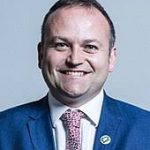
Tag: Neil Coyle

  • Neil Coyle – 2024 Speech on the Loyal Address

    Neil Coyle – 2024 Speech on the Loyal Address

    The speech made by Neil Coyle, the Labour MP for Bermondsey and Old Southwark, in the House of Commons on 17 July 2024.

    This is the first time I have ever been able to speak from the Government side of the House, having first been elected in 2015, which was six Prime Ministers ago. In the 2015 general election, Bermondsey and Old Southwark was so far down Labour’s target list—it was No. 84, I think—that the rule of thumb was that if I won, we would be in government. I will not ask where everyone else has been for the last nine years, but I will thank them and congratulate them on being here today, especially colleagues who have already made their maiden speeches and those who will make them in the coming weeks and months. It is amazing finally to be on this side of the House, but I cannot say that it has been worth the wait, given what the Tories have done to our country over the past few years.

    My constituents’ overwhelming sentiment since the election is one of relief, and of shaking off the sense of shame and embarrassment about the previous Government and the country’s economic devastation. My constituents are still paying higher bills and mortgages as a result of Tory economic incompetence, but there is relief that the shame of the last Government is over. We saw the Equality and Human Rights Commission have to investigate the Department for Work and Pensions because of its unlawful behaviour towards disabled people. Through political incompetence and maladministration, the second biggest spending Government Department was unable to support disabled people properly. Change in the leadership of that Department could not be more refreshing.

    Another cause for relief is that the Rwanda policy is scrapped. It was an unlawful, immoral international embarrassment that was raised with our Foreign Office and raised on every trip I went on with the Foreign Affairs Committee, to the UN, to the US and to Brazil. Wherever we went, countries saw that we were shirking responsibility while others shouldered a greater responsibility. It is also a relief for taxpayers because it was such a colossal waste—a humongous, knuckle-headed nonsense.

    I cannot even repeat what Tory Ministers called the scheme when they were in government, because it would be unparliamentary language, but it cost hundreds of millions of pounds at a time when my constituents were being told that the £20 uplift on universal credit was unaffordable, that seeing a doctor or dentist was just not possible and that having enough police was a luxury and somehow not a Government priority, all while millions were poured down the Rwanda drain. And for what? A scheme that sent no one but Tory Home Secretaries to Rwanda at an outrageous cost. For the price of sending one person to Rwanda you could send six people into space, and the electorate gave their verdict two weeks ago when they blasted the Tories into space. And yes, terrible puns were on my leaflets in the election.

    The Leader of the Opposition—it feels good to say that—said today that he wished to work with the new Government on certain policies. I say to new MPs that from opposition I was able to improve the laws on housing rights for women fleeing domestic violence, on some terminally ill disabled people receiving support from the personal independence payment and on support for communities affected by terror attacks. I say to them: take the Prime Minister up on his offer. He said that the door was open, so take him up on that offer to seek improvements that benefit your constituents.

    Since the election, I have had constituents come in to Parliament. Two schools have come in: St Michael’s college in Bermondsey and the Southwark inclusive learning service from London Bridge. It has been amazing to speak to young people about the new priorities and how the new Government are already beginning to mend and heal the UK with the work done in the first week and announced today in the Gracious Speech. This includes lifting the ban on onshore wind despite Green opposition, boosting UK investment, beginning to fix our NHS, tackling crime and antisocial behaviour and reasserting targets for house building, which is a very welcome priority for my constituency in Southwark, where housing is always the No. 1 priority.

    I flag to the new Government and new Ministers that the Bakerloo line extension would bring 20,000 new homes at least, and benefit not just transport infrastructure and homes but jobs across the country, and boost our economy. I hope to see the Bakerloo line extension delivered under the new Government, offering new hope and new ambition for Britain from a Government who finally say to people not what they cannot have but what we are seeking to achieve for our country and for our people’s future, including today. Of particular personal importance to me is fixing mental health services. My mum had schizophrenia, a mental health condition, and that was my route into public policy awareness and politics. To have the chance to influence and shape mental health services as we in the Labour party begin to fix them and build out better is an enormous privilege.

    I want to end today with a special thank you to the wonderful people of Bermondsey and Old Southwark for giving me my fourth win, including defeating an independent Corbyn candidate; to the Labour members in my constituency who fought so hard, both locally and in other target seats; and importantly, to my local Labour party executive for all their hard work and support, in the last Parliament in particular and over the election period. I look forward to delivering the better Britain they fought for, under this Labour Government.

  • Neil Coyle – 2023 Personal Statement in the House of Commons for His Behaviour

    Neil Coyle – 2023 Personal Statement in the House of Commons for His Behaviour

    The statement made by Neil Coyle, the Independent MP for Bermondsey and Old Southwark, in the House of Commons on 3 March 2023.

    The report of the Independent Expert Panel into my conduct has been published today. I want to say how sorry I am for the upset and offence my behaviour caused last year. I wish to specifically apologise to the two complainants who were subject to my drunk and offensive behaviour and attitude. I cannot apologise enough for the harm and upset caused, and I am, frankly, ashamed of my conduct. It should not have happened. No one should leave any MP’s company so shocked or appalled at their inappropriate behaviour or failure to meet the standards rightly expected of this office.

    I also apologise to my constituents in Southwark. They faithfully put their trust in me to stand up for their values here in Westminster in three consecutive general elections, and I failed to represent them in the way they deserve or a way they would recognise. I owe a debt of gratitude too large to ever repay to my constituents for the privilege of serving our wonderful, diverse community. I am ashamed that this apology is both necessary and overdue. I apologise to the members of my local Labour party, who also expect me to represent the best of our values in this place, and who last year I also let down so badly.

    With permission, Mr Deputy Speaker, I also wish to thank the two complainants for their bravery. I do not doubt that it was not easy to submit the complaints. Their courage has ensured that standards have been upheld through an independent process that I was proud to support the establishment of, and that exists to tackle the problematic behaviour I sadly exhibited last year. It is right and proper that I have been held to account and sanctioned accordingly, and I take my punishment on the chin. I fully accept my failings and, again, express my sincere apologies. I will use the time for which I am suspended to reflect on self-improvement, and I have already undergone some training, including on tackling unconscious bias, which I recommend to all Members and their teams.

    I owe the complainants my further gratitude for calling out my upsetting words and actions. It forced me to recognise that my drinking had become a dependency and to seek help. On 1 March this week, I celebrated a year since I stopped drinking, and I would not have been able to stop without their effective intervention. In the healthcare I have received since last February, it has also been made abundantly clear to me that, had I not stopped, my drinking would likely have caused a significant stroke or worse. Their intervention has quite possibly saved my life.

    Going forward, I will remain abstinent to offer the greatest chance for my own health to continue to improve, for the best relationship with my daughter and family to continue to grow, and for the best service to my constituents to continue. I hope that in speaking out publicly about ending my alcohol dependency, I am also able to support others struggling to maintain or regain control.

    In closing, I thank the Speaker’s Office and the wider parliamentary team, including the Whips, the Serjeant at Arms team and those in the health and wellbeing service, for all the support provided over the last 12 months, especially to enable me to stop drinking. I could not have done it without the tremendous help along the way, especially from my own small team who work wonders for Southwark, and who I will cherish even more for their hard work throughout the difficult, overstretched period I created for them in the last year.

    Going forward, I will endeavour to be a stronger ally to the east and south-east Asian community in order to prove my apology to the journalist who had the courage to complain, as well as to my constituents, who too often see the downplaying of the discrimination and hate crime they experience, and to my own family, who I have let down. Two of my brothers have Chinese wives and I have two Chinese nieces and a nephew. I also need to show them that this was an aberration and ensure that they can, once again, be proud of me.

    I wholly and unreservedly apologise again for my offensive language and behaviour last year. I know that I let a huge number of people down, and I am sorry to everyone who saw drink get the better of me. I am resolute that it will never happen again.

  • Neil Coyle – 2016 Parliamentary Question to the Department for Communities and Local Government

    Neil Coyle – 2016 Parliamentary Question to the Department for Communities and Local Government

    The below Parliamentary question was asked by Neil Coyle on 2015-12-16.

    To ask the Secretary of State for Communities and Local Government, how much he expects local authorities to raise through the proposed social care precept arrangements; and what steps he is taking to ensure those funds are ring-fenced for care services.

    Mr Marcus Jones

    I refer the hon. Members to information accompanying the provisional local government finance settlement 2016-17, which was announced by my rt. hon. Friend, the Secretary of State for Communities and Local Government (Greg Clark) 17 December 2015, Official Report, Column 1722.

    This is available at:

    https://www.gov.uk/government/publications/council-tax-in-2016-to-2017 and https://www.gov.uk/government/uploads/system/uploads/attachment_data/file/486708/Core_spending_power_supporting_information.xlsx

  • Neil Coyle – 2016 Parliamentary Question to the Department of Health

    Neil Coyle – 2016 Parliamentary Question to the Department of Health

    The below Parliamentary question was asked by Neil Coyle on 2016-02-22.

    To ask the Secretary of State for Health, what steps his Department is taking to prepare for RansomWare attacks on NHS facilities.

    George Freeman

    The Department, the Health and Social Care Information Centre and strategic partners, have created the Care Computer Emergency Response Team service (CareCERT).

    CareCERT was launched in September 2015 and is a centre of excellence for Cyber Security advice and Security Incident Management.

    The CareCERT service is available to provide specific advice and guidance to organisations that may become affected. CareCERT maintains links with the United Kingdom National Computer Emergency Response Team and the Communications Electronic Security Group, and is able to call upon the expertise of these organisations should a larger incident be identified.

    CareCERT send regular alerts and advisories to every National Health Service organisation and local authority on a range of Cyber Security issues, three of which have, to date, contained information regarding ransomware.

  • Neil Coyle – 2016 Parliamentary Question to the Department for Work and Pensions

    Neil Coyle – 2016 Parliamentary Question to the Department for Work and Pensions

    The below Parliamentary question was asked by Neil Coyle on 2016-03-16.

    To ask the Secretary of State for Work and Pensions, if he will review the way in which the shared accommodation rate is calculated to mitigate the effect of the housing benefit cap in the social sector.

    Justin Tomlinson

    There are no current plans to review how the shared accommodation rate is calculated within the Local Housing Allowance scheme.

    For those under 35, not in supported housing, the existing exemptions that already apply to the shared accommodation rate for private rented sector tenants will be applied to the social sector as a minimum.

    In addition, for those in supported housing, we are working closely with the supported housing sector to ensure appropriate protections are in place. For this reason we are awaiting the outcome of a Support Accommodation research project and subsequent policy review, to ensure support is focused on the most vulnerable, and appropriate safeguards are in place.

    In addition, an enhanced package of Discretionary Housing Payment funding (£870 million over 5 years) will enable Local Authorities to provide support to the most vulnerable claimants.

  • Neil Coyle – 2016 Parliamentary Question to the Department for Transport

    Neil Coyle – 2016 Parliamentary Question to the Department for Transport

    The below Parliamentary question was asked by Neil Coyle on 2016-05-23.

    To ask the Secretary of State for Transport, what steps his Department is taking to make public transport more accessible for people with guide dogs.

    Andrew Jones

    The Department is committed to building transport networks which work for everyone, including ensuring that disabled people have the same opportunities to travel as other members of society.

    From the 1st January this year all single deck buses designed to carry over twenty two passengers on local and scheduled routes have had to comply with the Public Service Vehicles Accessibility Regulations (PSVAR), which require vehicles to include contrasting handrails, priority seating and other features of benefit to visually impaired people. At least one priority seat on each bus must have sufficient space to accommodate an assistance dog with its owner. Double deck buses must comply with PSVAR by the 1st January 2017.

    Positive interactions with staff can also give visually impaired people the confidence to use bus services. We are working with Mott MacDonald to review disability awareness training from across the transport sector, and to produce best practice guidance by the end of 2016, to help equip bus drivers with the skills and knowledge they need to provide disabled passengers with a first class service.

  • Neil Coyle – 2016 Parliamentary Question to the Department for Work and Pensions

    Neil Coyle – 2016 Parliamentary Question to the Department for Work and Pensions

    The below Parliamentary question was asked by Neil Coyle on 2016-07-11.

    To ask the Secretary of State for Work and Pensions, if his Department will publish any research it holds on attendance allowance claimants and how such claimants use that funding.

    Justin Tomlinson

    The Department publishes its research and statistics on Gov.uk, with links to research available on https://www.gov.uk/government/organisations/department-for-work-pensions/about/research. There are no current plans to publish any further research on Attendance Allowance claimants outside the regular statistical publications it produces.

  • Neil Coyle – 2016 Parliamentary Question to the Department for Culture, Media and Sport

    Neil Coyle – 2016 Parliamentary Question to the Department for Culture, Media and Sport

    The below Parliamentary question was asked by Neil Coyle on 2016-10-10.

    To ask the Secretary of State for Culture, Media and Sport, what steps she will take to ensure that people with audio or visual impairments benefit from the Digital Economy Bill; and if she will assess how on-demand services will meet such people’s needs.

    Matt Hancock

    Ofcom is the regulator with responsibility for on-demand programme services (ODPS). Ofcom are presently consulting on how to improve access services.

  • Neil Coyle – 2016 Parliamentary Question to the Department of Health

    Neil Coyle – 2016 Parliamentary Question to the Department of Health

    The below Parliamentary question was asked by Neil Coyle on 2015-12-16.

    To ask the Secretary of State for Health, what estimate he has made of the potential effect of replacing student bursaries with loans on the number of British students entering nursing courses in each of the next five years; and what assessment his Department has made of whether there will be a need to increase international recruitment to the NHS as a consequence of that change.

    Ben Gummer

    The Government assessment undertaken to date is that nursing is consistently one of the most popular courses on University Central Administration Service (fifth), with 57,000 applicants for around 20,000 nursing places in 2014. Midwifery and Allied Health Professional courses receive higher than average applications as well.

    A maximum £9,000 tuition fee for other subjects at higher education institutions was introduced in 2012. Between 2012 and 2014 the number of English domiciled applicants to enter full-time undergraduate courses in the United Kingdom increased by 7.5% (from 454,000 in 2012 to 487,870 in 2014).

    We estimate that the reforms will allow universities to be able to offer up to 10,000 more nursing, midwifery and allied health training over this parliament. Nursing is currently on the Home Office Shortage Occupation List (SOL) and we recognise the valuable contribution that international nurses have and will continue to make but the Government is committed to reducing the need for overseas nurses within this parliament, nursing will only stay on the SOL list for as long as they are needed.

  • Neil Coyle – 2016 Parliamentary Question to the Foreign and Commonwealth Office

    Neil Coyle – 2016 Parliamentary Question to the Foreign and Commonwealth Office

    The below Parliamentary question was asked by Neil Coyle on 2016-02-22.

    To ask the Secretary of State for Foreign and Commonwealth Affairs, what steps his Department is taking to ensure there are sufficient safeguards to respect individual privacy in place in respect of intelligence gathered by GCHQ.

    Mr Tobias Ellwood

    GCHQ’s intelligence gathering powers are authorised under legislation, including the Regulation of Investigatory Powers Act 2000, the Data Retention and Investigatory Powers Act 2014, and the Intelligence Services Act 1994. Its work, including its respect for privacy, is scrutinised by the Intelligence and Security Committee, the Interception of Communications Commissioner and the Intelligence Services Commissioner.